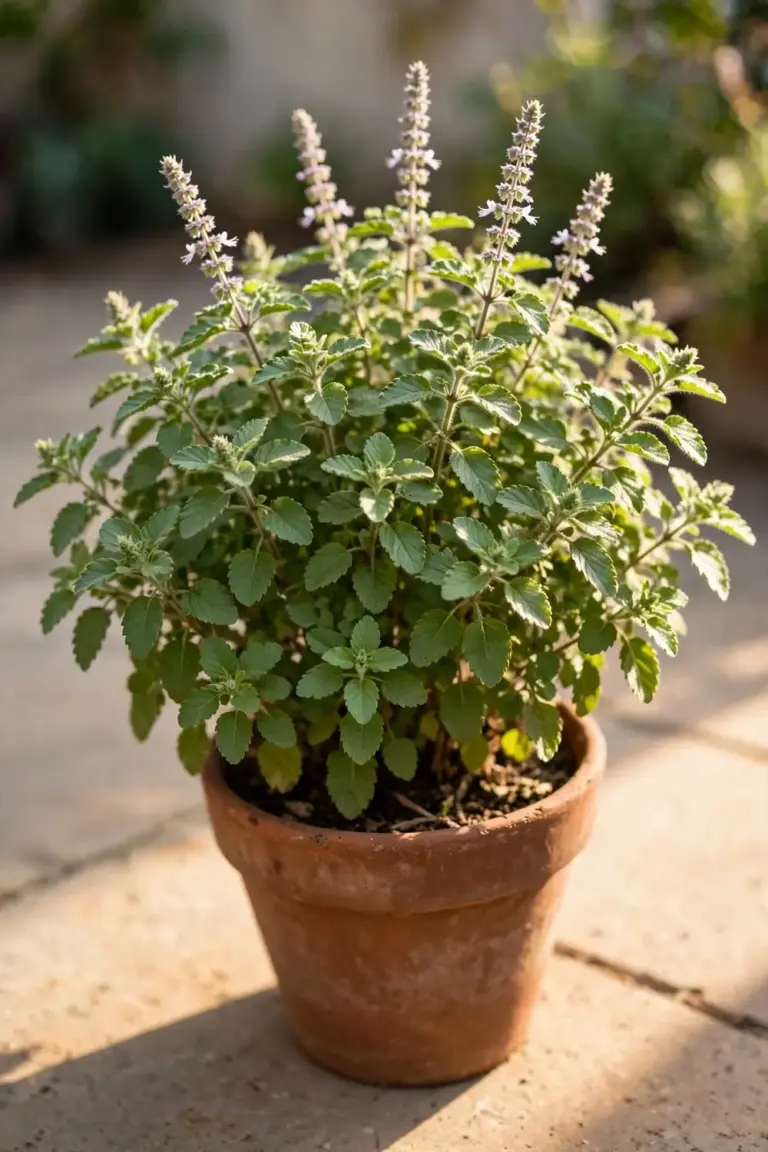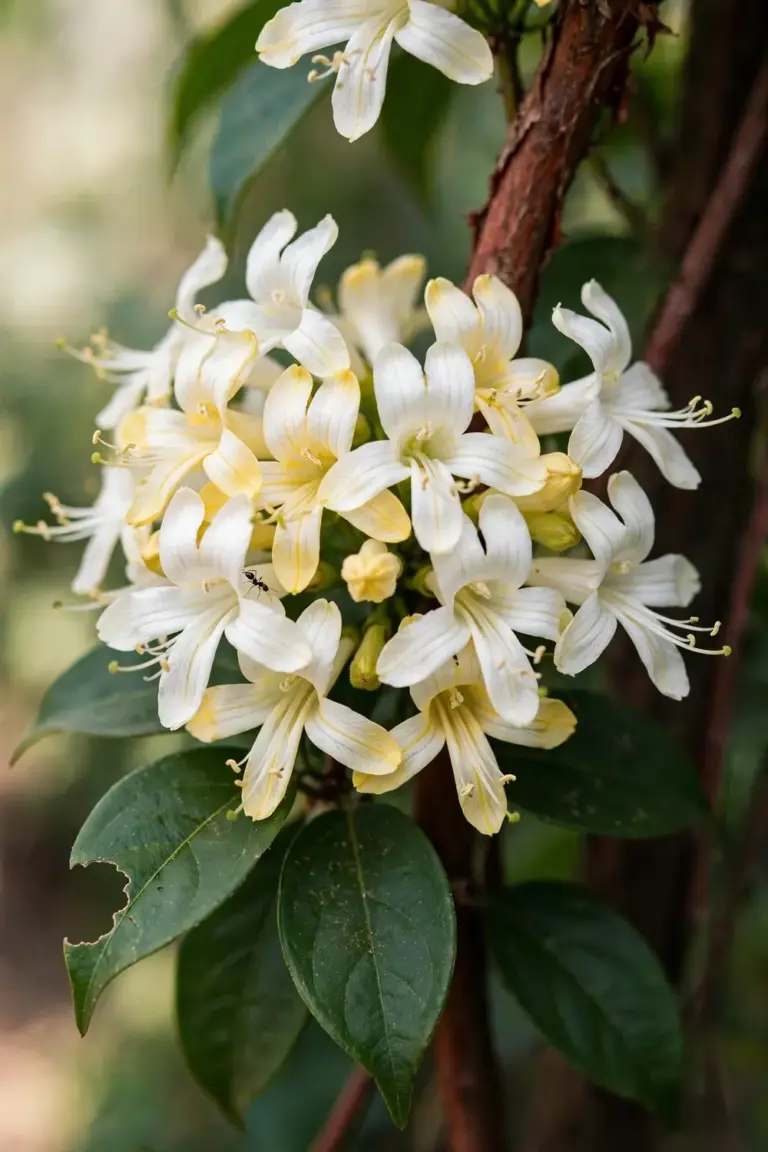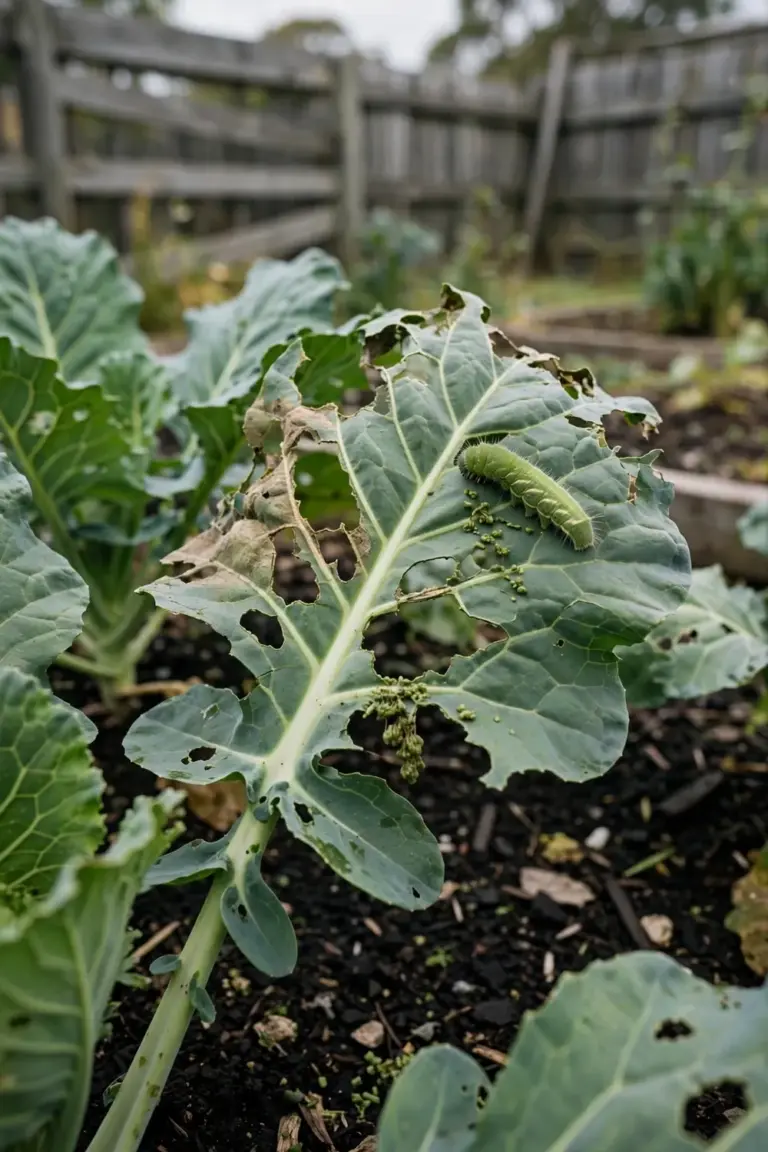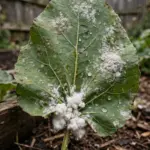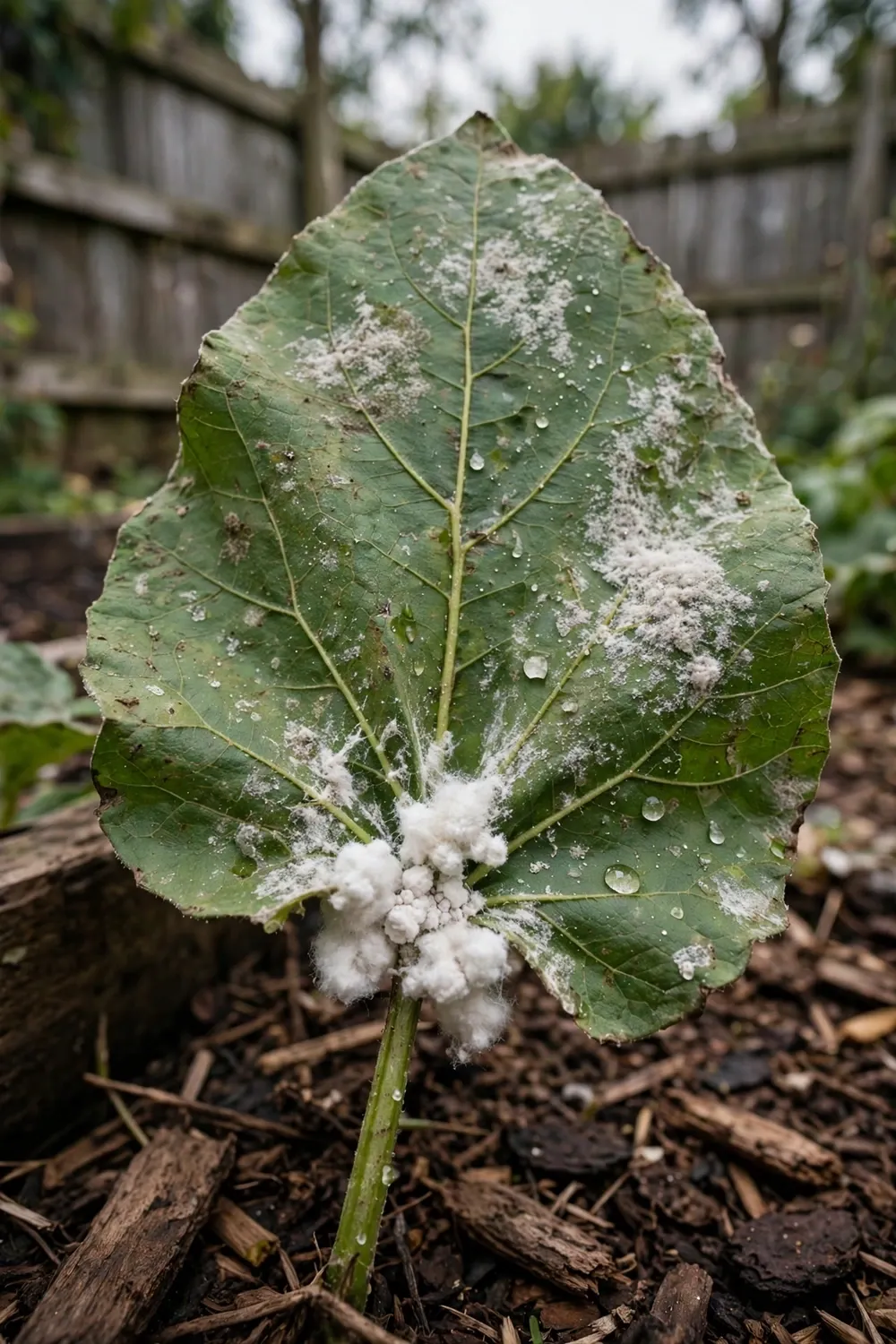

White stuff on plants in Australia comes from 3 culprits in most gardens: mealybugs, powdery mildew, or scale. Run 3 tests before you spray anything. The rub test names the culprit. The sticky test confirms it. The disturb test rules out the lookalikes.
I have learned that a fingertip test beats a week of guessing.
The rest of this page walks the 3 tests, then gives each culprit its own identification and treatment plan, plus the lookalikes, the ant problem, prevention, and the one case where you report instead of treat. For the wider organic approach behind these fixes, the organic pest control overview covers the method in full.
Identify the White Stuff in 3 Tests
Three quick tests separate the 3 culprits in under a minute. Work through them in order. Each test rules one culprit out.
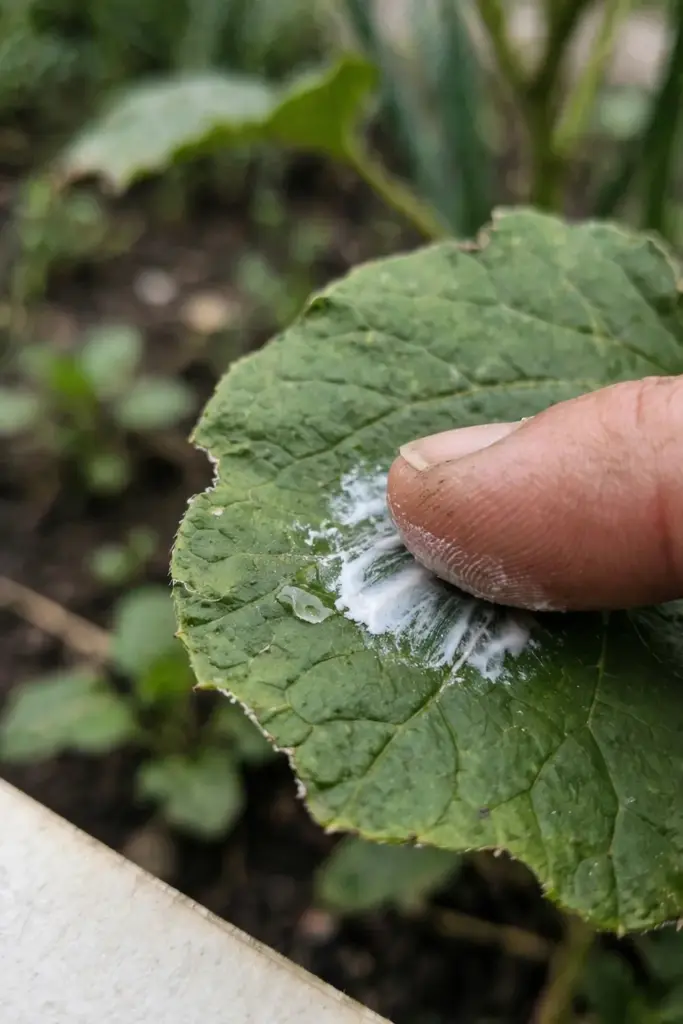
Test 1 is the rub test. Rub the white patch gently with a fingertip in good daylight. Powdery mildew smears off as dry flour-like dust. Mealybug clumps smear as soft wax and reveal small oval insects underneath. Scale bumps stay stuck to the stem or leaf, and a fingernail scrapes one away in a single piece.
Test 2 is the sticky test. Touch the leaves below the white stuff. Sticky leaves mean honeydew, and honeydew means sap-sucking insects. Mealybugs and soft scale both excrete honeydew, while powdery mildew never produces a drop. Ants marching up the stem point the same way, since ants farm honeydew producers and protect them from predators.
Test 3 is the disturb test. Tap the stem and watch. Whitefly adults lift off in a small cloud and settle again. Mealybugs, scale, and mildew stay put. Use this test when the white patch sits on leaf undersides and you cannot tell insects from fungus.
| Culprit | What It Looks Like | Touch Test | Where It Sits | First Fix |
|---|---|---|---|---|
| Mealybugs | Soft cottony clumps with waxy filaments | Smears as wax, insects underneath | Leaf joints, stem joints, crevices, fruit calyx | Prune, hand-pick, then dab or spray |
| Powdery mildew | Flat flour-like dust on the surface | Smears off as dry powder | Leaf surfaces and shoots, top first | Prune, wash off spores, then protect |
| Scale | Hard or soft bumps, no legs visible | Stays stuck, scrapes off in one piece | Stems, midribs, leaf undersides, bark | Scrape, then oil at crawler stage |
| None of these | Cloud that flies off, tufts on bark, crust on pots | Varies | Leaf undersides, bark, pot rims | See the lookalikes section |
Write down which test gave the answer. The treatment sections below assume you already know the culprit, and the wrong treatment wastes the week. When two tests disagree, trust the rub test first. The rub test shows what the white stuff physically is, while stickiness and flight can mislead on a plant that hosts two problems at once. A rose can carry mildew on its upper leaves and mealybugs in its joints in the same month.
Mealybugs: Cottony Clumps in the Leaf Joints
Mealybugs are soft, oval, wax-covered insects that feed in colonies in protected spots. Look in the crown of the plant, in branch crotches, on stems near the soil, between two touching fruits, and where a leaf stem meets the main stem. The colonies show as white cottony clumps, often with cottony egg sacs tucked among them. Older insects carry wax filaments around their body margins, and some species carry long tail filaments at the rear.
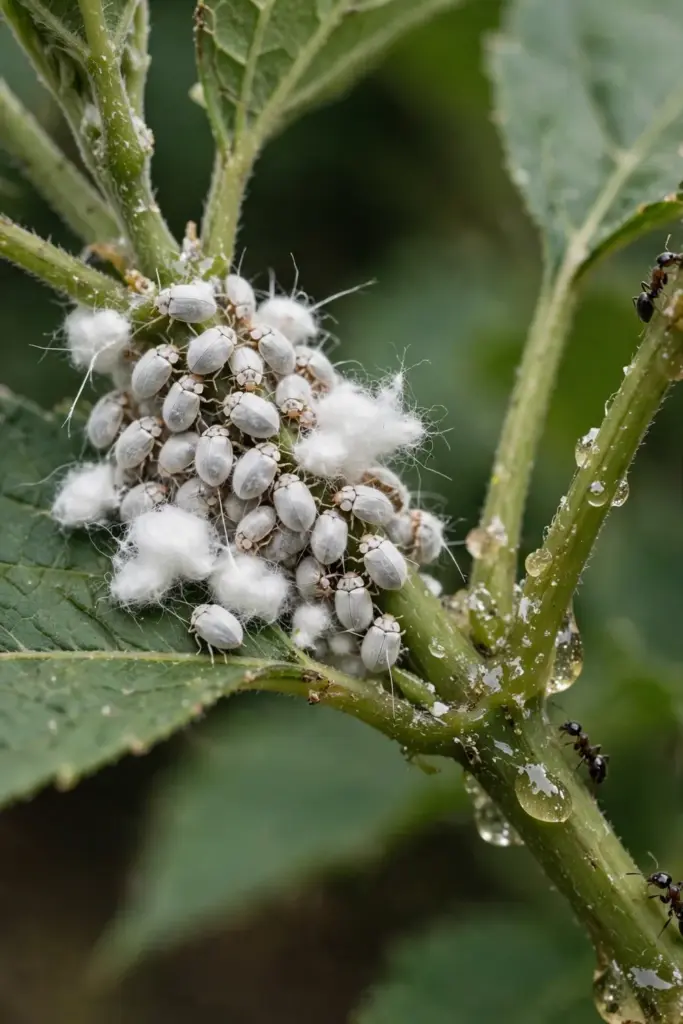
Mealybugs suck sap from plant phloem, and they excrete sticky honeydew. Black sooty mold grows on the honeydew, and ants feed on it. High populations slow plant growth and cause leaf drop, while healthy plants tolerate low populations without much damage. Adult females of most mealybug species lay 100 to 200 or more eggs in cottony egg sacs over a 10 to 20 day period, and mealybugs may run 2 to 6 generations a year depending on species and climate, according to the UC IPM mealybug notes. Warm weather favors them, and indoor plants can host every life stage through the year.
Three mealybug species matter most in Australian gardens. The longtailed mealybug carries two tail filaments longer than its body and gives birth to live nymphs, and it occurs throughout Australia. The citrophilus mealybug carries short, thick tail filaments and stays confined to south-eastern Australia. The tuber mealybug occurs in parts of Western Australia and eastern Australia. These distribution notes come from the Plant Health Australia mealybug factsheet. The species name matters less than the colony: every mealybug colony gets the same treatment in the section below.
Mealybugs hide well, so inspect the whole plant. Check the undersides of leaves, the joints, the crown, and the pot rim. Check new plants before they join the garden. A single infested nursery pot can seed a whole bed. On deciduous plants, mealybugs may overwinter on or under bark as eggs inside egg sacs or as first-stage nymphs, so a winter check of bare stems catches the next season early.
Powdery Mildew: Flour Dust on the Leaf Surface
Powdery mildew is a fungal disease, not an insect. White powdery growth forms on leaf surfaces and shoots, sometimes on flowers and fruit. Spots start small on both leaf surfaces and expand as the infection grows. Leaves turn yellow or brown and drop early. Leaves or shoots can twist or distort. New growth may come out dwarfed and distorted.
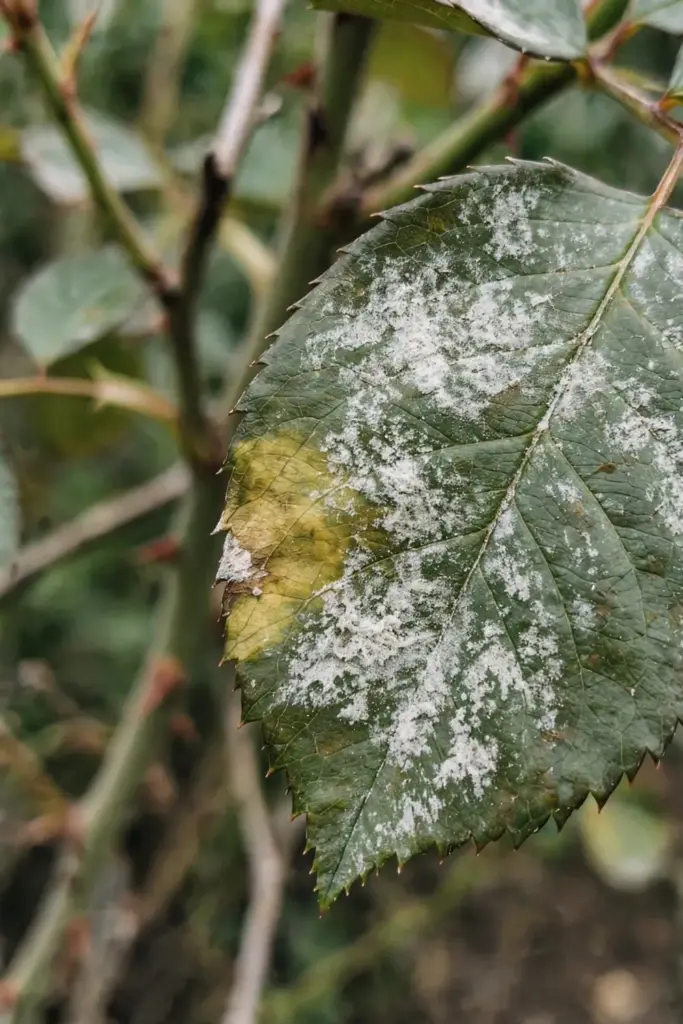
Every powdery mildew fungus needs living plant tissue to grow, and its spores ride the wind to new hosts. Spores can germinate and infect without water on the plant surface, and water sitting on leaves for long periods inhibits germination and kills the spores of most powdery mildew fungi. Moderate temperatures of 60 to 80 degrees Fahrenheit (15.6 to 26.7 degrees Celsius) and shady conditions favor powdery mildew development, and temperatures above 95 degrees Fahrenheit (35 degrees Celsius) may suppress the fungus, according to the UC IPM powdery mildew notes. Shade plus still air is the danger combination.
Common hosts include rose, crape myrtle, zinnia, dahlia, cucurbits, and grape. Each mildew species infects its own set of hosts, so mildew on a rose does not jump to a cucumber. The white coating stays on the surface. It never produces honeydew, never draws ants, and never shows insects under a hand lens.
Do not confuse powdery mildew with downy mildew. Downy mildew favors low temperatures of 50 to 70 degrees Fahrenheit (10 to 21.1 degrees Celsius), relative humidity of 90 percent or higher, and free moisture on the plant surface, according to the UC IPM powdery mildew notes. Its spores grow mostly on lower leaf surfaces. The two diseases need opposite conditions, so the distinction changes the fix.
Scale: Bumps That Will Not Brush Off
Scale insects are immobile bumps that suck plant juices from trees, shrubs, and houseplants. Adults show no obvious head or legs and do not resemble most other insects. Their coverings run 1.0 to 6.4 mm long. Immature scales, called crawlers, are often yellow to orangish and carry legs. Crawlers walk to a feeding spot, settle down, lose their legs, and become immobile adults.
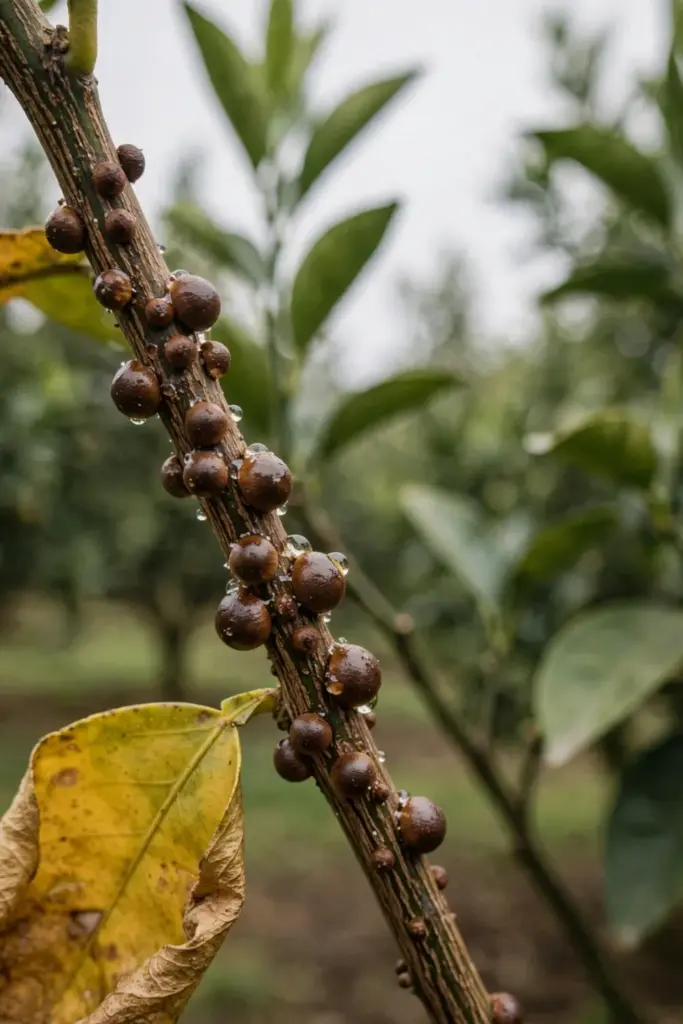
Two groups matter, and the group changes the diagnosis. Armored scales are tiny and flat, with covers that usually lift off the body, and they secrete no sticky honeydew. Their covers run under 3.2 mm across. Soft scales are larger, rounder, and humped, and their cover is the actual body wall of the insect, so flipping the cover removes the insect with it. Soft scales feed on phloem sap and excrete abundant sticky honeydew, which drips onto plants and surfaces below and feeds black sooty mold, according to the UC IPM scale notes.
Scale damage shows as yellowing or premature leaf drop, sticky honeydew, and blackish sooty mold. Plant parts can distort or die back when populations run high. Most plants tolerate low to moderate numbers of scales, so a few bumps on a strong tree need watching, not war.
Find scale by looking where it settles. Check stems, bark, the midrib on leaf undersides, fruit, and tight crevices. A hand lens helps on small plants: the cover of an armored scale lifts as a separate shell, while the cover of a soft scale comes away with the insect attached. Citrus, olive, oleander, camellia, gardenia, and many ornamentals host scale. Citrus growers can compare notes with the citrus scale prevention and control guide for the citrus-specific picture.
Whitefly, Woolly Aphid, and the Other Lookalikes
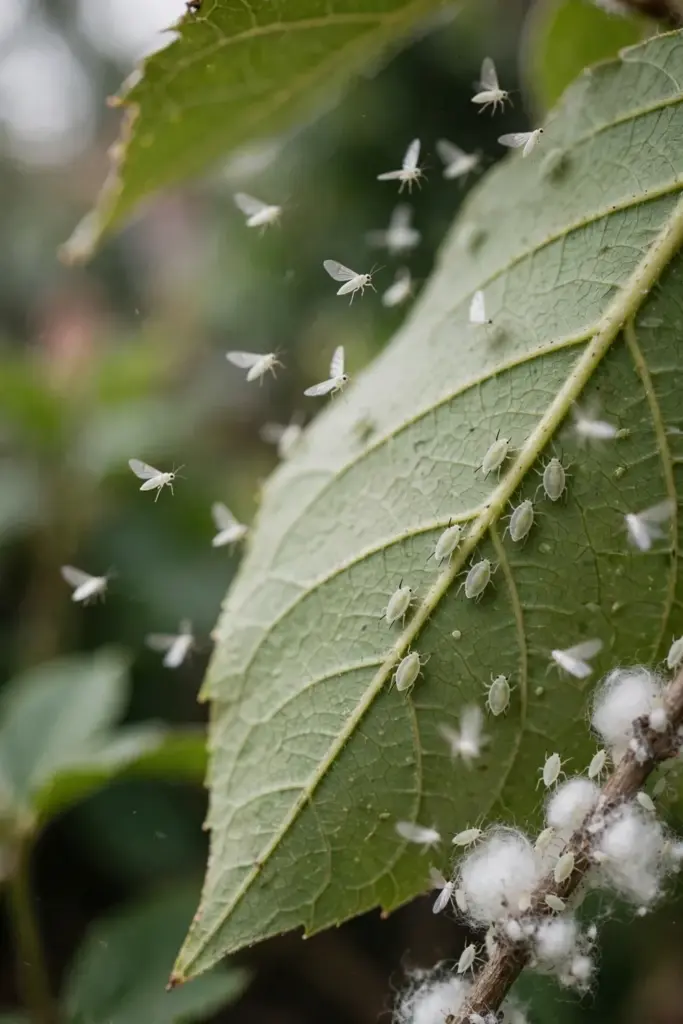
Whitefly adults look like tiny white moths on leaf undersides. Tap the leaf and the adults fly off in a cloud, then settle again. The nymphs stay behind as flat, oval, scale-like discs that barely move. Whitefly nymphs excrete honeydew, so sticky leaves plus a flying cloud means whitefly, not mildew. The disturb test in the first section settles it in seconds, and a hand lens confirms the flat nymphs on the underside.
Woolly aphids form cottony tufts on bark, twigs, and leaf joints. The tufts look like mealybug colonies at a glance. A hand lens separates them: woolly aphids are pear-shaped insects with visible legs and antennae clustered in a woolly mass, while mealybugs are oval and segmented with wax filaments. Woolly aphids also feed in colonies and excrete honeydew, so the treatment overlaps with the mealybug plan. The distinction matters mainly for the record, not for the spray.
Downy mildew grows mostly on leaf undersides as a gray-purple felt. It needs wet leaves and cool, humid air, the opposite of powdery mildew. If the white growth sits on the underside after wet weather, suspect downy mildew and check the conditions before treating.
Salt and fertilizer residue leaves a white crust on pot rims and the soil surface, never on the leaves. The crust wipes off dry and feels gritty. Flush the pot with plain water and ease off the fertilizer. Sunscald shows as white papery patches on leaves or fruit after a sudden move into strong sun. The patch is flat, dry, and dead tissue, not a coating that rubs off. Move the plant back into filtered light and leave the damaged leaf in place until new growth replaces it.
Treat Mealybugs Without Harming the Predators
Start with the physical controls. Prune out the worst growth and bin it. Hand-pick the colonies you can reach. A strong stream of water knocks exposed mealybugs off sturdy plants, and repeating the spray at several-day intervals catches the next hatch. Check pots, stakes, and saucers for egg sacs and clean them. Discard a plant when the infestation runs through the whole crown and the plant has stopped growing.
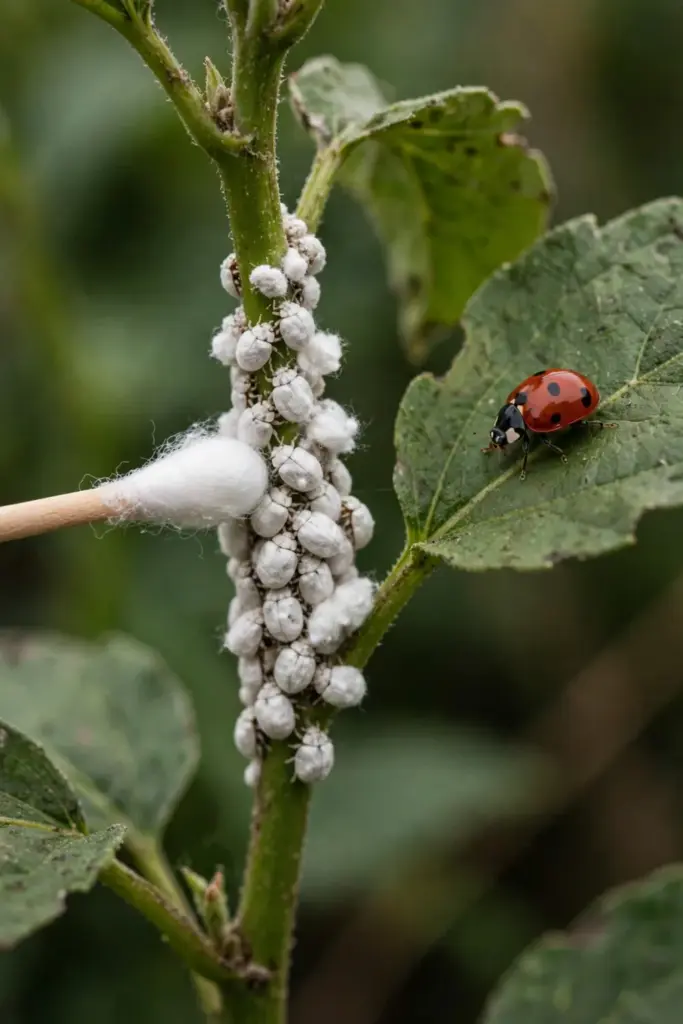
Dab small colonies with a cotton bud dipped in a solution of 70 percent or less isopropyl alcohol and water, according to the UC IPM mealybug notes. Test on a small part of the plant first and watch for leaf burn. The alcohol dissolves the wax coat and kills the insect underneath. Insecticidal soaps, horticultural oils, and neem oil applied directly to immature mealybugs can reduce numbers, according to the UC IPM mealybug notes. The waxy coat of adult mealybugs and their habit of hiding makes contact sprays less effective on adults, so aim at the crawlers and the young nymphs. Follow the label on any bought product. Keep pets and children away until the spray dries.
Protect the predators that eat mealybugs. Parasitic wasps lay eggs in or on developing mealybugs. Lady beetles, lacewings, spiders, minute pirate bugs, and predaceous midge larvae all feed on mealybugs. The mealybug destroyer lady beetle, Cryptolaemus montrouzieri, is the most important predator in many areas. Broad-spectrum insecticides kill these allies and hand the garden back to the mealybugs. The beneficial insect guide names the allies worth keeping. Citrus growers can compare notes with the citrus mealybug control guide for the citrus-specific picture.
Ease off nitrogen fertilizer on infested plants. High nitrogen rates plus regular irrigation push soft new growth, and mealybugs lay eggs on that growth. A plant fed hard grows the food its pests prefer.
Treat Powdery Mildew Before It Covers the Plant
Prune out small infections and bin the infected parts. Properly maintained compost piles should kill the spores, so infected material can go into an active compost heap, a green waste bin, or the trash. Do not leave pruned mildew leaves on the soil under the plant.
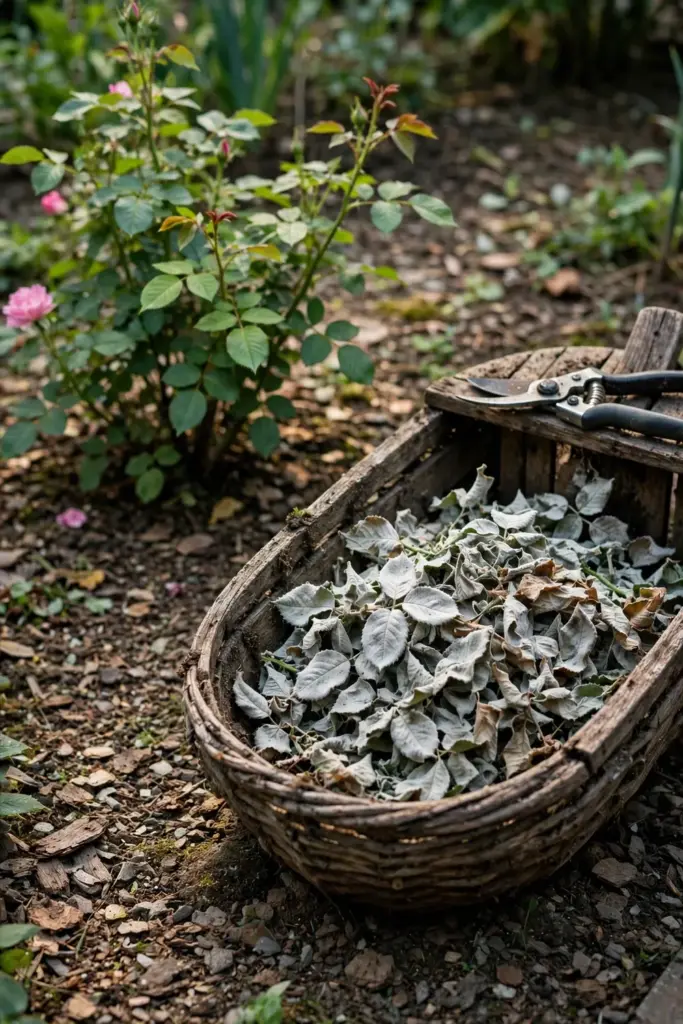
Wash spores off infected plants with overhead sprinkling. Run the sprinkler midmorning so the leaves dry fast. The wash removes spores from the surface, and water sitting on the leaf inhibits the spores that remain. This single step sounds backward for a disease, and it works because powdery mildew spores die in free water.
Sulfur products prevent new infections. They do not cure infections that already show. Apply sulfur before the disease appears on susceptible plants, and repeat as new leaves grow. Do not apply sulfur when the temperature sits near or above 90 degrees Fahrenheit (32.2 degrees Celsius), and never apply oil within 2 weeks of a sulfur spray, or the combination may injure the plant, according to the UC IPM powdery mildew notes.
Oils work best as eradicants on mild to moderate infections. Horticultural oil and neem oil both check mildew on contact. Potassium bicarbonate products also eradicate mildew, and they can injure infected plants, so use them with care and skip advanced infections. Fungicide sprays need thorough coverage of every susceptible part, since they work only on contact. Reapply at 7 to 10 day intervals, or at the interval the product label states, while conditions favor the disease. Follow the label. Keep pets and children away until the spray dries.
Resistant varieties end the cycle on plants that mildew every year. Rose, crape myrtle, euonymus, and sycamore all have resistant cultivars on the market. A resistant cultivar removes the need for a spray program entirely. Check new growth weekly after treatment. New leaves show fresh infection first, and a second spray at the label interval stops the cycle before it rebuilds. A plant that keeps mildewing in the same spot wants more sun and wider spacing, not a stronger spray.
Treat Scale by Timing the Crawlers
Scrape scale off small plants by hand. A fingernail or a soft brush lifts the bumps. Wash crawling juveniles off with water. Prune out heavily infested branches when few in number. Dispose of the pruned material. These physical controls suit houseplants, small shrubs, and young trees.
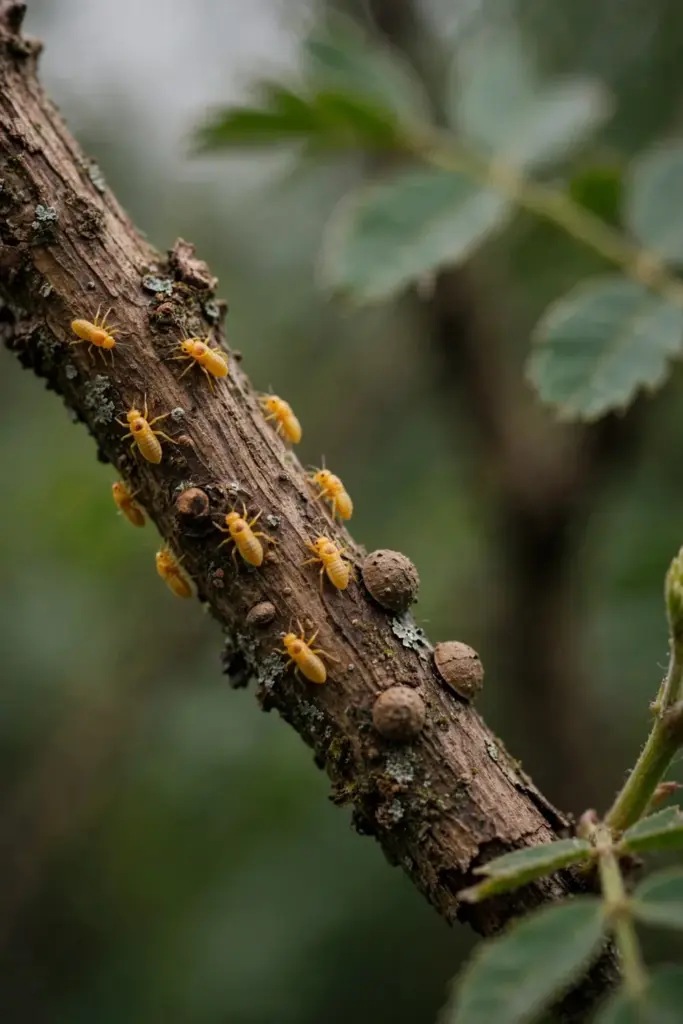
Time oil sprays to the crawler stage. Adult scale sit under a cover that shields them from contact sprays. Crawlers walk exposed with no cover. Apply a thorough horticultural oil spray during the dormant season or when scale crawlers are active in the growing season, according to the UC IPM scale notes. Coverage decides the result: the spray must wet every bump and every crawler. Miss a branch and the colony rebuilds from it. Follow the label. Keep pets and children away until the spray dries.
Know which group you face before you spray. Armored scale produces no honeydew, so sticky leaves rule armored scale out. Soft scale produces honeydew, so sticky leaves plus bumps point to soft scale. The oil timing stays the same for both groups, and the distinction stops you chasing ants on an armored-scale plant that has none.
Protect the predators. Lady beetles, lacewings, and tiny parasitic wasps attack scale. Parasite emergence holes in scale covers show the wasps at work. Broad-spectrum insecticides kill these allies. Most plants tolerate low to moderate scale numbers, so a light infestation on a strong plant needs monitoring, not chemicals. Recheck the plant a fortnight after oiling. Dead scale stays stuck to the bark, so a bump that remains does not mean the spray failed. Scratch one open: a dry, hollow shell means dead, while a moist body means alive. Respray only the live patches.
Stop the Ants That Farm Your Pests
Ants farm mealybugs and soft scale for honeydew. Ants carry mealybugs to clean plants, tend them for honeydew, and protect them from natural enemies. A mealybug colony with an ant guard lasts longer than one without. Break the ant link and the predators do the rest.
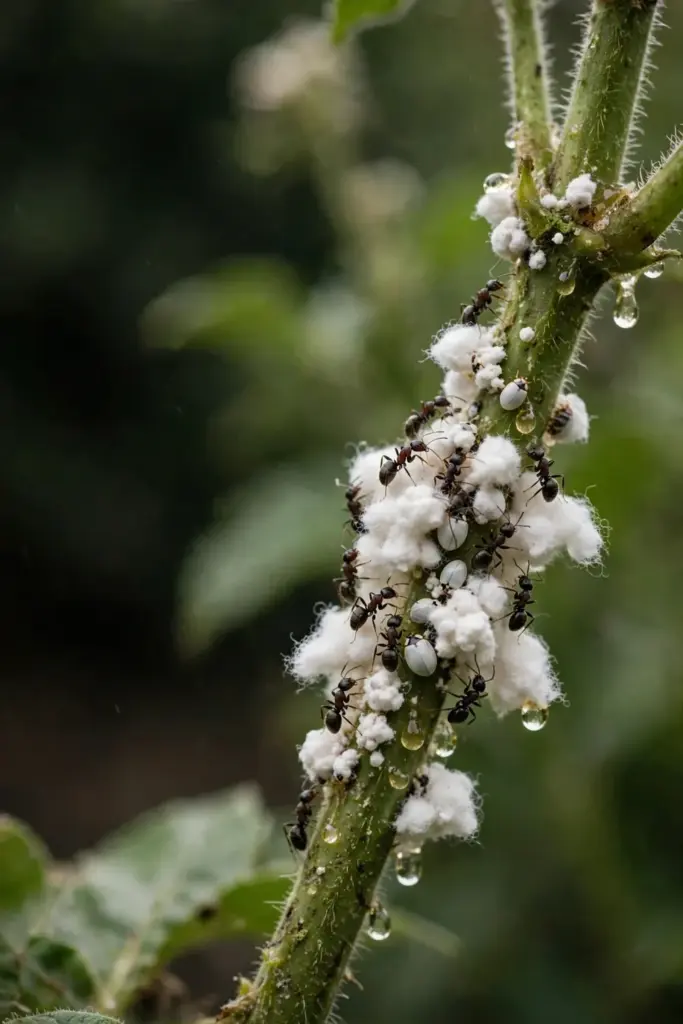
Sticky barriers on trunks block ants from climbing into the canopy. Wrap the barrier around the trunk and check it weekly for bridges of leaves or debris. Insecticide baits aimed at the ant nest beat sprays aimed at the canopy. Set baits along the ant trail, not on the plant, and let foraging ants carry the active ingredient back to the nest. Follow the label on any bait product. Keep pets and children away until baits are set and dry.
Cut the honeydew supply at the same time. Treat the mealybug or scale colony while the barrier holds the ants out. Either step alone fails. The barrier without treatment leaves the colony feeding. Treatment without the barrier lets ants rebuild the guard within days.
Prevent the Next White Coating
Inspect every new plant before it joins the garden. Look at the joints, the crown, the leaf undersides, and the pot rim. Quarantine a suspect plant for a fortnight away from the collection. Discard a plant you cannot clean. One infested nursery pot seeds a whole bed, and the cheapest control is the plant you never brought home.
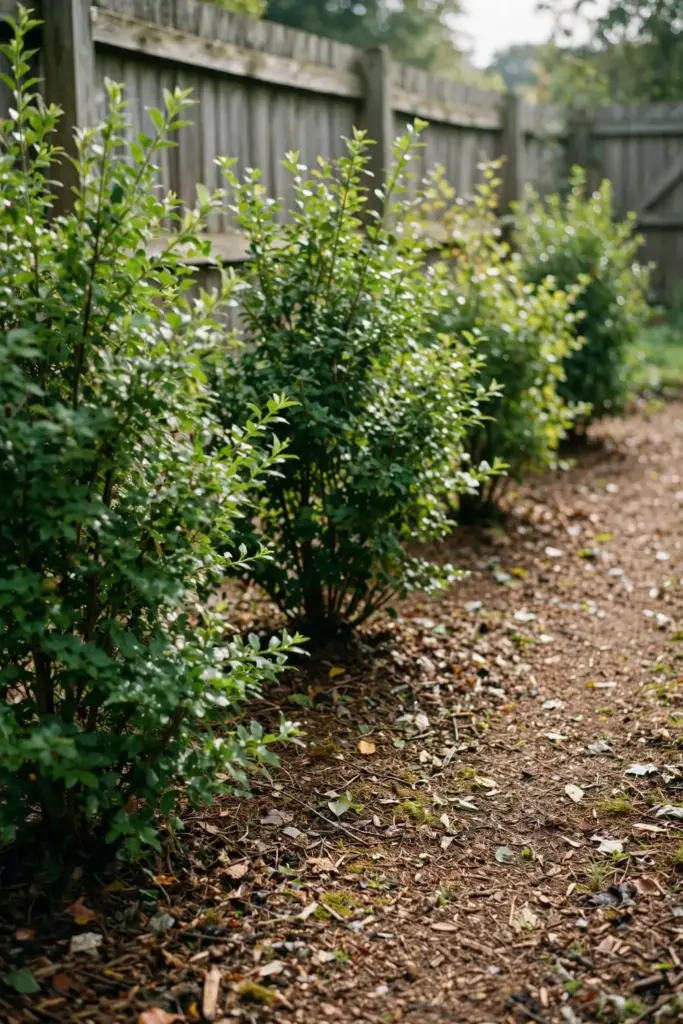
Give plants sun, space, and moving air. Grow mildew-prone plants in sunny spots, space them for good air circulation, and prune excess foliage that shades the interior. These steps cut powdery mildew pressure without a single spray.
Water with care. Overhead sprinkling midmorning washes mildew spores off and lets leaves dry fast. Watering late in the day leaves leaves wet overnight, which suits other fungi. Avoid excess nitrogen fertilizer. Soft, fast growth feeds mealybugs and shades the interior for mildew. Feed to the label rate and no more.
Clean up at season end. Remove fallen leaves and spent growth from under susceptible plants. Wash pots and stakes before reuse. Check stored pots for egg sacs before planting into them. Wash secateurs and hands after handling an infested plant, before moving to the next plant. A clean garden starts the next season with fewer hiding places.
Report an Infestation That Looks Wrong
Most white stuff in a home garden is one of the 3 culprits above, and the treatment sections here handle it. One case needs a phone call instead. If mealybugs or signs of mealybug infestation look unusual, run far more severe than usual, or fail to respond to normal management, report it to the Emergency Plant Pest Hotline on 1800 084 881, according to the Plant Health Australia mealybug factsheet.

Do not move plant material off the property until an expert has checked it. Moving an infested cutting or pot spreads the pest to the next garden. Bag the sample, note the host plant and the date, and wait for advice. The hotline exists for exactly this case, and one call protects every garden in the district.
Frequently Asked Questions About White Stuff on Plants in Australia

Water helps against mealybugs and mildew, and it rarely finishes the job alone, so treat it as the first pass rather than the whole fix. A strong stream knocks mealybugs off sturdy plants, and repeating the spray at several-day intervals catches the next hatch before it settles. Overhead sprinkling midmorning washes mildew spores off the leaves, while scale adults stay stuck through any hose, so scraping or oil at crawler stage still matters. Hose first, then treat what remains.
Powdery mildew is a plant-only fungus, and it does not infect people or pets. Wash fruit and leaves before eating. Keep pets and children away from sprayed plants until the spray dries. The risk in mildew season sits with the plant, not the household. A badly mildewed plant loses leaves. It weakens. That is the damage worth preventing.
Three reasons cover most repeats. Eggs and crawlers hide in crevices the spray missed. Ants rebuild the guard around sap-sucking colonies. The conditions that grew the first outbreak still stand: shade, still air, soft nitrogen-fed growth. Fix all three at once. Cover every surface on respray. Break the ant link. Open the canopy and ease off nitrogen.
The same 3 culprits attack indoor plants, and mealybugs lead indoors. Indoor plants sit in year-round mild temperatures with no natural enemies, so mealybug colonies build fast and every life stage stays present through the year. Isolate an infested pot at once. Dab small colonies with alcohol on a cotton bud. Prune hard or discard a plant that stays infested after two rounds.
Discard a plant when the infestation runs through the whole crown, growth has stalled, and two treatment rounds changed nothing. A plant that far gone feeds the next outbreak and puts every neighbor at risk. Bin the plant, wash the pot, and check its neighbors. A strong plant with a light infestation earns treatment. A weak plant with a heavy infestation earns the bin.
Name It First, Then Treat It
White stuff on a plant is a question, not a verdict. The rub test, the sticky test, and the disturb test answer it in under a minute. Mealybugs smear as wax, and mildew smears as dry flour. Scale stays stuck to the stem, and a fingernail scrapes it away. Each answer carries its own fix, and the right fix starts with the right name.
Start with one plant and run the 3 tests on it. Treat what you found, break the ant link, and open the canopy for air. The next white patch gets easier, because the first one taught the hand what to feel for.