
Spots on pepper leaves have no cure once the bacteria establish. The 8 strategies below prevent bacterial spot in the garden, starting with the clean seed and transplants that keep the bacteria out of the bed.
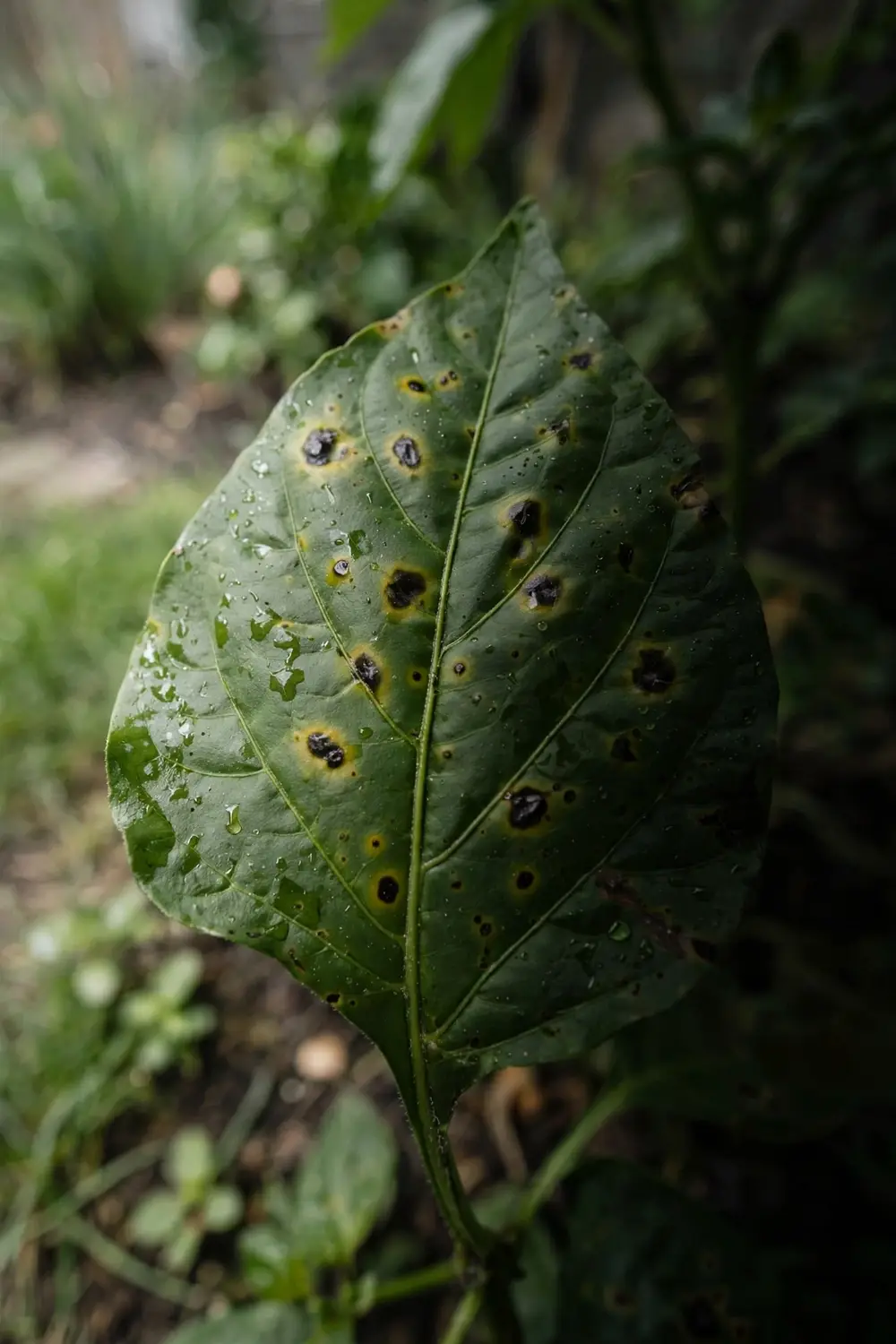
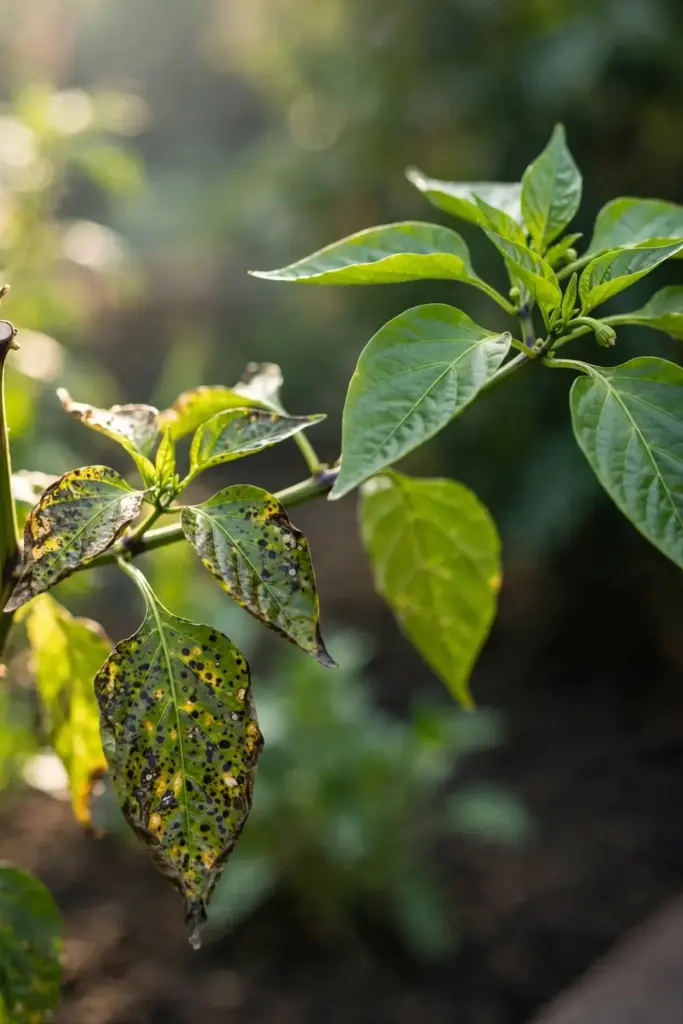
The signature is small, dark, water-soaked spots on leaves, sometimes with a yellow halo, that turn brown and drop out, leaving ragged holes. The bacteria spread by water splash, on seed, and on tools. Prevention is the whole game.
The rest of this page runs the order a gardener should follow. Understand the disease first, learn its signs, then work the 8 strategies from clean seed to copper as a last resort. I have learned that the spotted lower leaf I strip today is the healthy upper leaf that feeds the peppers next week.
What Spots on Pepper Leaves Actually Are
Spots on pepper leaves are almost always bacterial spot. The bacteria Xanthomonas species cause bacterial spot on pepper and tomato.
The naming-honesty paragraph comes once, then the article moves on. “Pepper spot” is gardener vocabulary, not a formal disease name. Spots that home gardeners see on pepper leaves are almost always bacterial spot, caused by Xanthomonas species. A different bacterial disease called peppery spot, caused by Pseudomonas syringae pv. maculicola, hits crucifers, not peppers. After this paragraph, the article uses “bacterial spot” throughout, and it never re-litigates the name.
The Midwest Vegetable Production Guide gives the home-garden framing: plant pathogen-free seed and disease-free transplants, sanitize equipment, rotate with non-solanaceous crops, stake and mulch, avoid working wet fields, and treat copper as a preventive with resistance concerns.
The bacteria survive in debris, in seed, and on solanaceous weeds and volunteers. Delaware Extension notes that bacterial spot is common and widespread, that the pathogen survives on seed and overwinters on solanaceous weeds and volunteers, and that splash spreads it. The bacteria enter through wounds and natural openings on wet leaves. Wet leaves give the bacteria the hours they need. Dry leaves break the chain. The disease starts on lower leaves and climbs the plant. The lower leaves are the beachhead. The upper leaves and the fruit are the prize.
The scope stays on home-garden peppers, with tomato as the same-pathogen secondary. The same Xanthomonas spot complex hits tomato, and the same prevention playbook covers it. Tomato gets one section at most, not a second article. Crucifer peppery spot gets the one-line disambiguation above and no more. Commercial pepper production stays out. This article is a prevention-first care guide, not a treatment guide.
The live genus-level Bacterial Leaf Spot article on this site covers bacterial leaf spot in general. This article covers host-specific prevention for pepper, with tomato as the same-pathogen secondary, in the reader’s own vocabulary: spots on pepper leaves. The genus article carries the genus content. This article carries the pepper prevention. The two articles link to each other. They do not duplicate each other.
How to Spot Bacterial Spot on Pepper Leaves
Small, dark, water-soaked spots on leaves, sometimes with a yellow halo, turning brown and dropping out, point at bacterial spot.
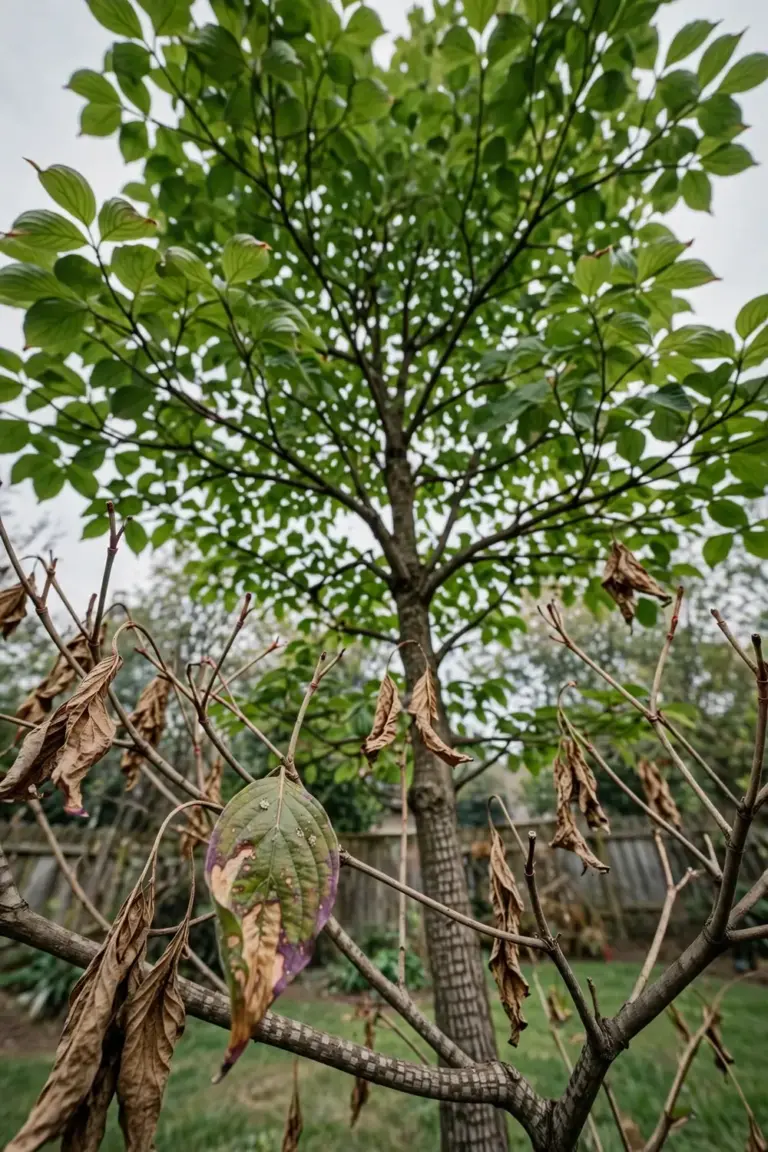
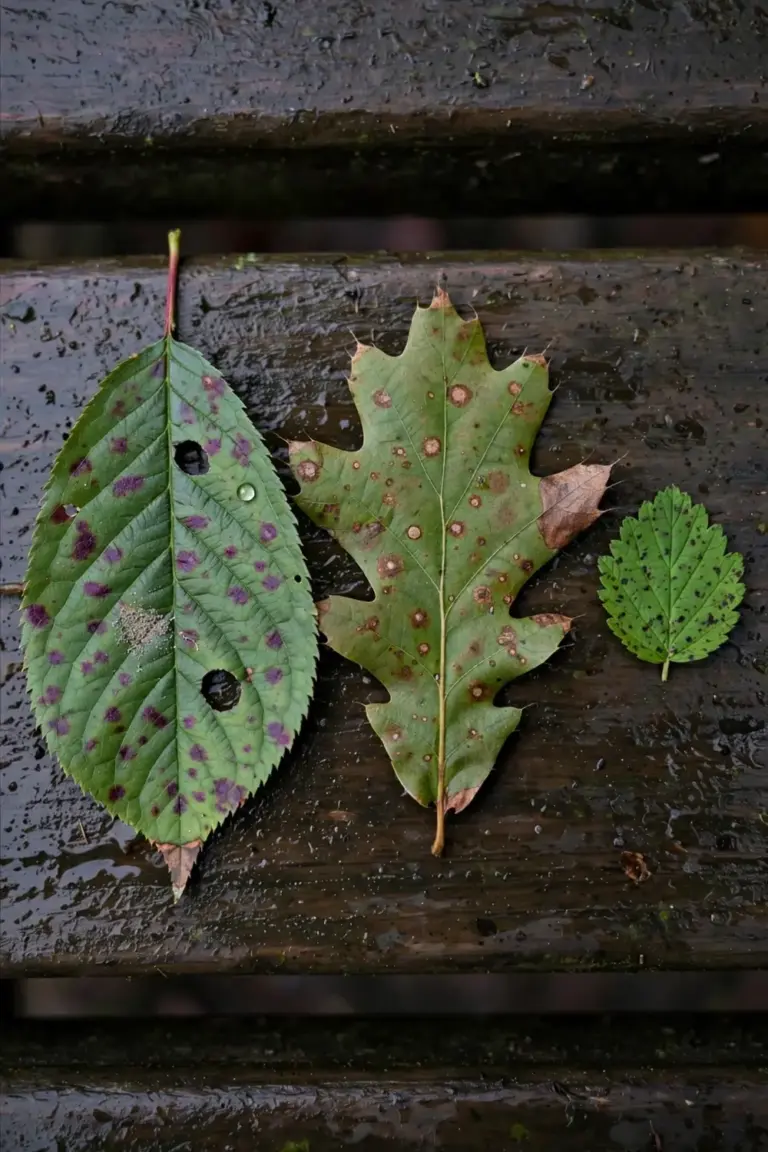
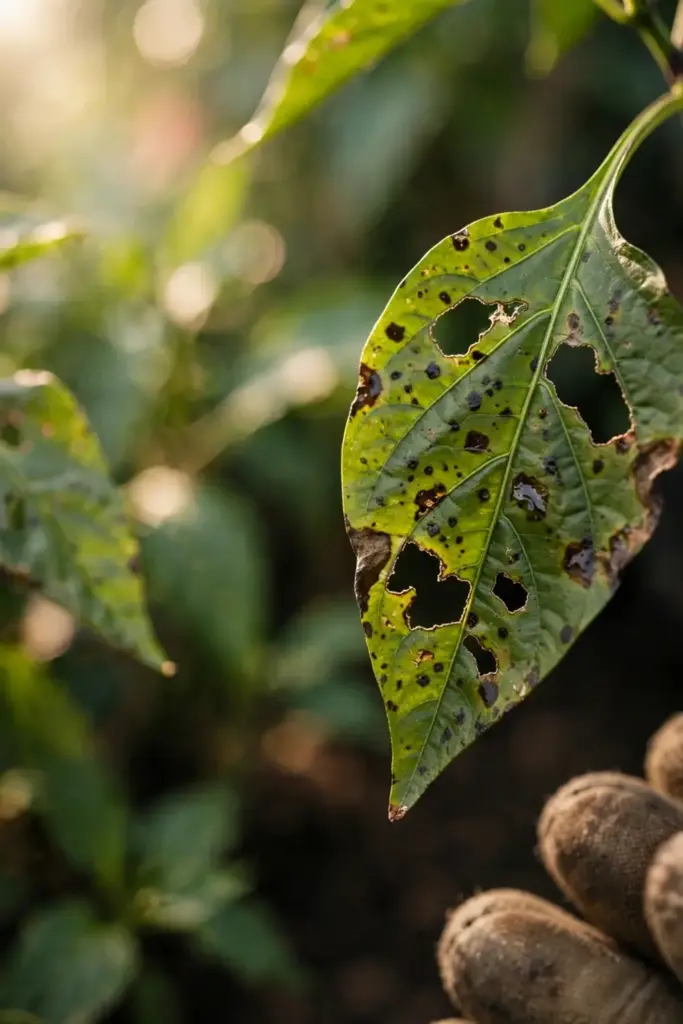
Look at the leaves first. The spots start small, dark, and water-soaked, sometimes with a yellow halo around them. The spots turn brown and dry. The dead centers drop out, leaving ragged holes and tattered leaves. A leaf with small dark spots, yellow halos, and ragged holes is a bacterial spot leaf. A leaf with large, fuzzy, concentric-ring spots is a fungal leaf spot leaf. The small, dark, water-soaked start is the bacterial mark.
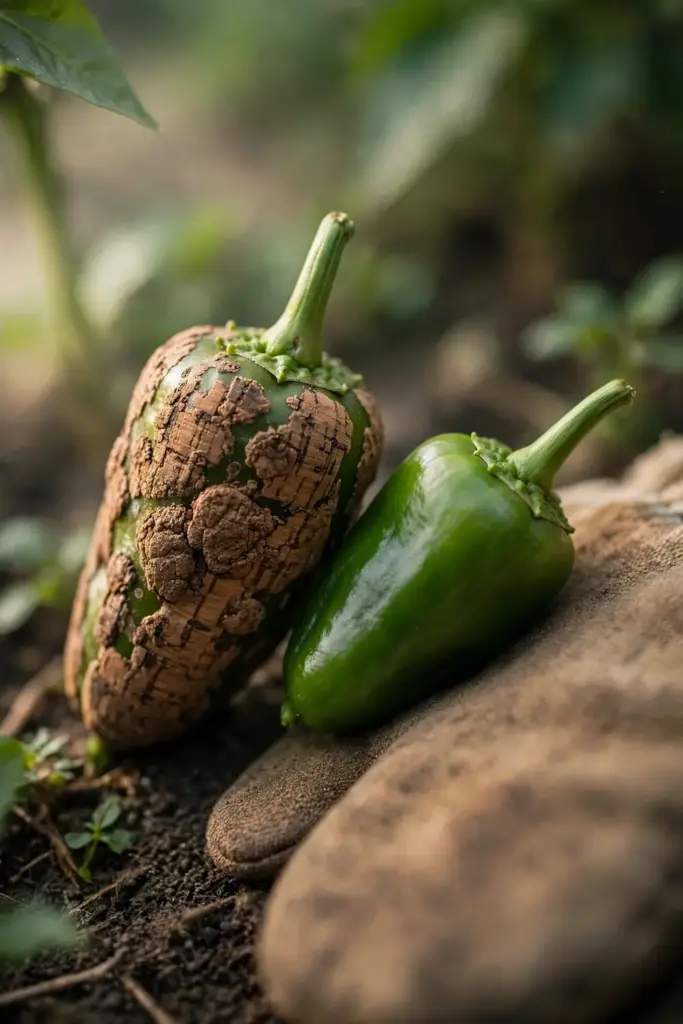
Look at the fruit next. Bacterial spot raises small, scabby spots on pepper fruit. The spots are raised, rough, and corky. The fruit stays edible around the spots, but the spots ruin the market look and the keeping quality. A pepper with raised, scabby fruit spots and leaf spots is a bacterial spot pepper. A pepper with soft, sunken fruit spots is a different problem.
Look at the pattern. Bacterial spot starts on lower leaves and climbs the plant. The pattern is bottom-up. A plant that spots from the bottom up, after a rainy week, is a bacterial spot suspect. A plant that spots from the top down, after a hailstorm, points at wounding. The bottom-up climb plus the water-soaked start names the disease for home purposes.
Field identification is presumptive. Bacterial spots overlap fungal leaf spots, including Cercospora, and other bacterial spots. A home gardener cannot separate them by eye. Treat small, dark, water-soaked spots as a prompt to act: strip the spotted leaves, sanitize the tools, dry the foliage, and prevent the next infection. The spots are enough to start the routine. The lab confirms where it matters.
Check the whole planting, not one plant. Bacterial spot on one pepper in a bed points at that plant’s transplant or that plant’s seed. Bacterial spot across a whole pepper row after a rainy week points at the row’s watering and spacing. The spread of spots across the planting tells the gardener whether the problem is one transplant or one habit.
| Stage | Signs | First Action |
|---|---|---|
| Early leaf spots | Small, dark, water-soaked spots, sometimes yellow halo | Strip spotted leaves, bag and trash, disinfect tools |
| Late leaf spots | Spots turn brown, centers drop out, ragged holes | Strip spotted leaves, improve airflow, water at base |
| Fruit spots | Raised, scabby, corky spots on pepper fruit | Remove affected fruit, protect the rest, harvest promptly |
| Whole plant | Spots across most leaves, defoliation, weak growth | Pull and destroy the plant, clear debris, rotate |
Strategy 1: Buy Certified Disease-Free Seed and Transplants
Buy certified disease-free seed and disease-free transplants. Inspect every transplant before planting.
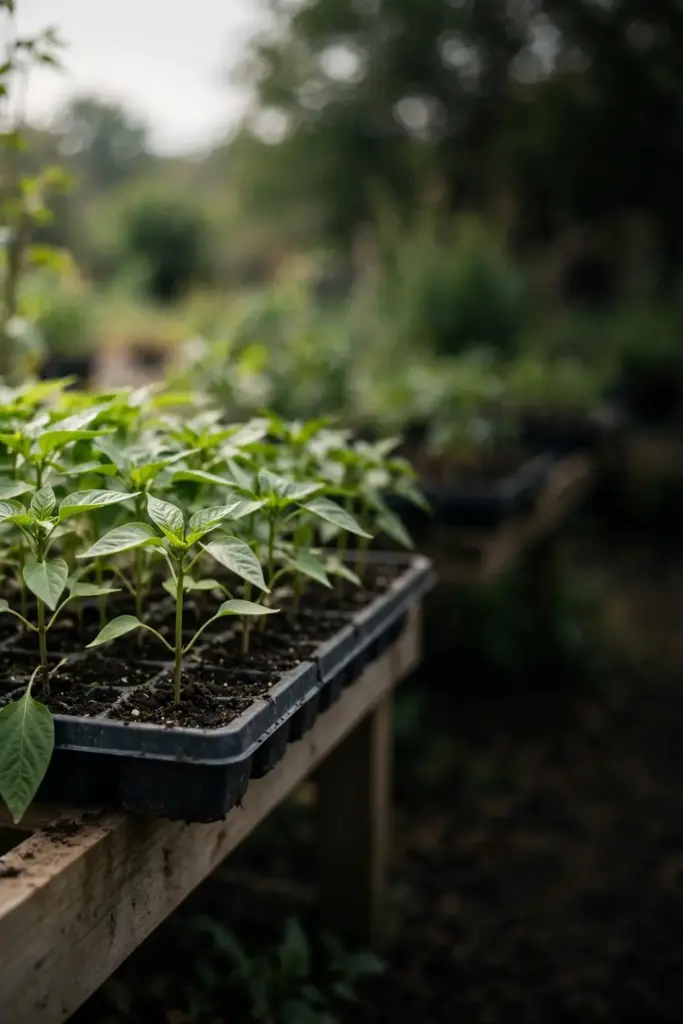
The Midwest Vegetable Production Guide gives this as the first prevention step: plant pathogen-free seed and disease-free transplants. A certified seed packet passed testing for the pathogens that matter in pepper. A disease-free transplant grew in a clean bed. A seed packet of unknown status may carry the bacteria. A transplant of unknown status may carry the bacteria. The price difference between certified and uncertified stock is small. The cost difference between a clean bed and an infected bed is large.
Inspect transplants before planting. Look at the lower leaves for small, dark, water-soaked spots. Look at the stems for lesions. Look at the plants beside the one you want. A whole flat of peppers with spotted lower leaves is a nursery problem, not a bargain. Buy the clean flat from the clean bench.
Quarantine new transplants when the garden already holds valuable plants. Hold a new flat apart from the main beds for a few days, water it at the base, and watch the lower leaves. A flat that shows spots in quarantine stays out of the main bed. A flat that stays clean joins the garden. Quarantine costs nothing and catches the infection that inspection missed.
Do not buy a symptomatic flat to rescue it. A gardener who buys spotted transplants at a discount imports the bacteria into a clean garden. Rescue feels kind. It spreads disease. The kindest purchase is the healthy flat from the clean nursery. Leave the spotted flat for the nursery to destroy under its own protocols.
Strategy 2: Sanitize Saved Seed With Hot Water or Bleach
Sanitize saved seed with hot water or bleach. State the germination trade-off plainly: seed treatment reduces germination, and heat treatment affects germination if not done accurately.
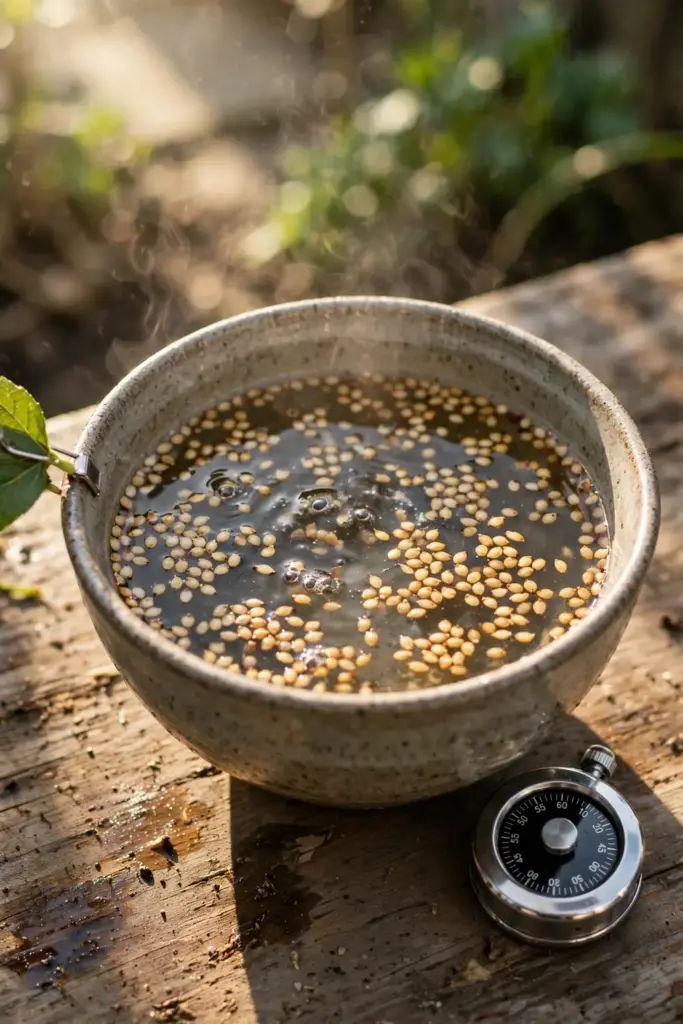
The Midwest Vegetable Production Guide gives the hot-water rule: treat pepper seed in hot water at 125 degrees Fahrenheit for 30 minutes. The treatment kills bacteria on the seed coat. The treatment also stresses the seed. A seed treated at the right temperature and time germinates well. A seed treated too hot or too long loses germination. The thermometer is the treatment. The timer is the treatment. A seed treated by guesswork is a seed gambled.
The University of Georgia homeowner guidance gives the bleach rule: a Clorox treatment reduces germination. West Virginia University Extension agrees: heat treatment affects germination if not done accurately. The trade-off is real. A gardener who treats saved seed accepts lower germination for cleaner seed. A gardener who skips treatment accepts bacteria for higher germination. The choice is the gardener’s. The article states the trade-off and lets the gardener choose.
Do not present seed treatment as risk-free. The treatment carries a germination cost. The cost is the reason many gardeners buy certified treated seed instead of treating their own. Certified treated seed passed the treatment at the supplier, with the germination tested. A gardener who buys certified treated seed buys the treatment without the gamble. The bought seed is the safe seed.
Do not save seed from infected plants. The University of Georgia homeowner guidance gives the rule: do not save seed from infected plants. A seed packet saved from an infected bed carries the bacteria into the next season’s bed. A seed packet bought from a reputable source carries tested seed. The saved packet feels thrifty. The saved packet costs the next planting. Buy clean seeds. The seed packet from the shop is the safe packet.
Strategy 3: Rotate Away From Solanaceous Crops for 2 to 3 Years
Rotate away from solanaceous crops for 2 to 3 years. Never plant peppers, tomatoes, eggplant, or potatoes in the same spot year after year.
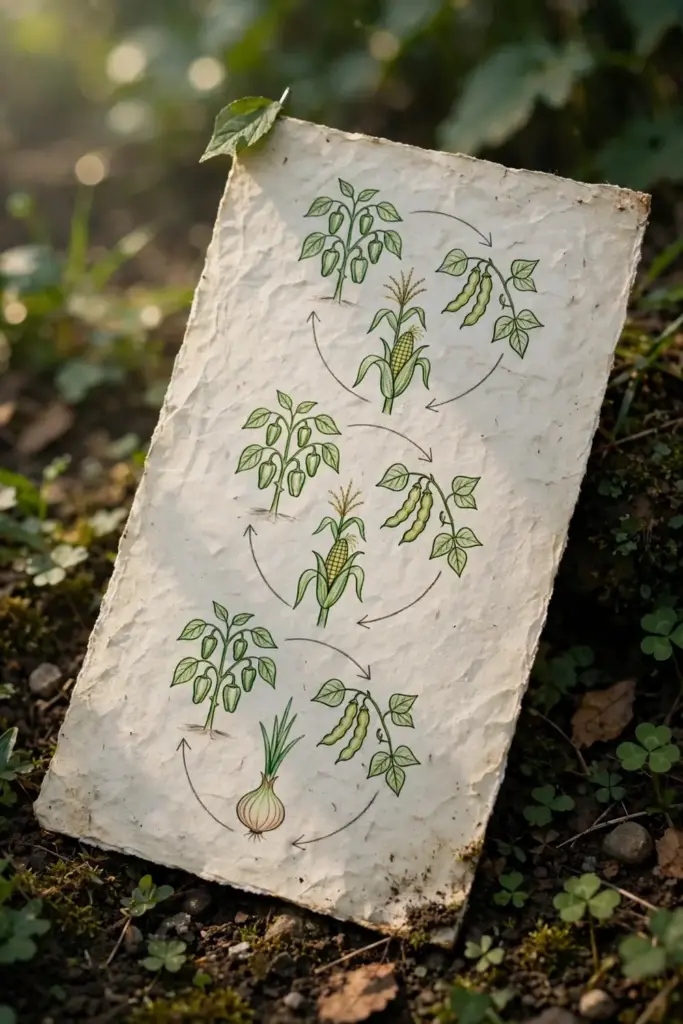
The Midwest Vegetable Production Guide gives the rotation rule: rotate with non-solanaceous crops for 2 to 3 years. Delaware Extension agrees: do not plant peppers after tomatoes. The bacteria survive in debris and on solanaceous weeds and volunteers. A bed that holds peppers this year and tomatoes next year holds the bacteria through both years. A bed that holds peppers this year and beans, corn, or onions for two years starves the bacteria. The rotation is the treatment. The monoculture is the risk.
Rotate with non-solanaceous crops. Beans, corn, and onions are safe rotation partners. Solanaceous crops are not: pepper, tomato, eggplant, and potato all host the bacteria or its close relatives. The rotation must move the whole host family out of the bed, not only the crop that showed spots. A bed that swaps pepper for tomato swaps one host for another. The bacteria stay. The rotation must leave the host family behind.
Plan the rotation on paper. A garden map with last year’s crops, this year’s crops, and next year’s crops takes an hour in winter. The map prevents the spring mistake of planting pepper where pepper grew last year. A gardener who plans the rotation on paper plants the rotation in the soil. A gardener who plans it in memory plants pepper in the same bed twice.
Clear solanaceous weeds and volunteers from the rotation bed. Nightshade, ground cherry, and volunteer tomato carry the bacteria through the rotation. A rotation bed with nightshade is a rotation bed with a host. A rotation bed without nightshade is a rotation bed that starves the bacteria. Pull the weeds. Pull the volunteers. The rotation works when the bed holds no host.
Strategy 4: Water at the Base and Never Overhead
Water at the base, and never overhead. Splash is the main spread route for bacterial spot.
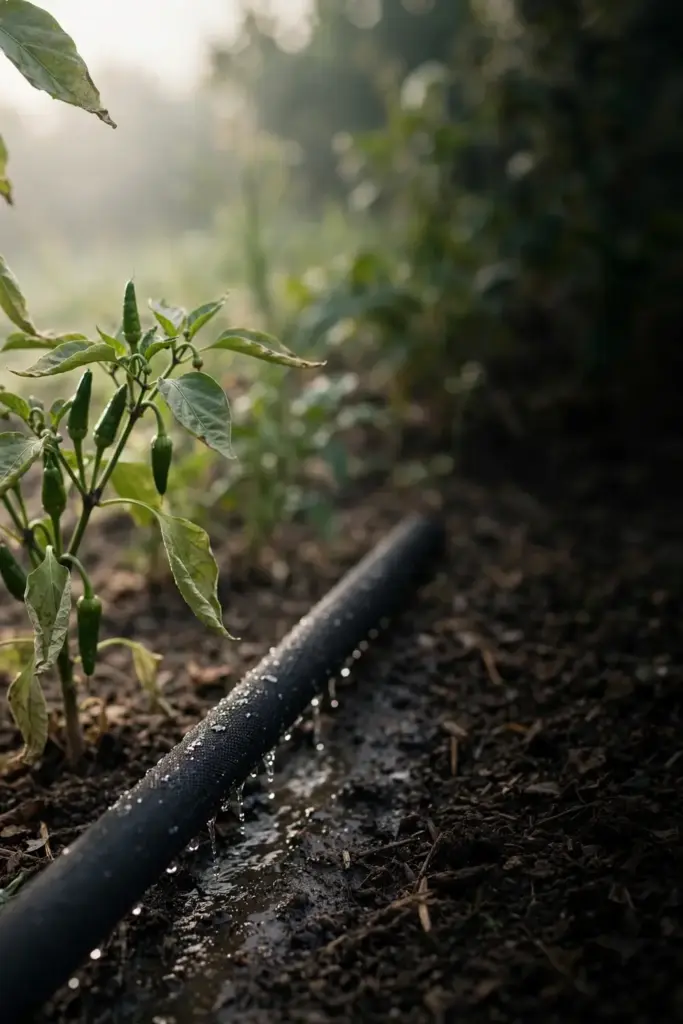
The University of Georgia homeowner guidance gives the watering rule: avoid overhead irrigation. Delaware Extension agrees: splash spreads the bacteria. Overhead watering soaks the canopy and splashes bacteria from leaf to leaf. A sprinkler that arcs across a pepper bed every evening is an overhead irrigation system by accident. The splash carries bacteria from a spotted leaf to a clean leaf. The wet canopy gives the bacteria the hours they need. The overhead sprinkler is the disease’s best friend.
Use drip or soaker watering at the root zone. Lay drip line or a soaker hose along the bed, not over the plants. Water slowly so the soil absorbs it without runoff. Water in the morning so any splash that reaches low foliage dries during the day. A morning base watering that splashes a little beats an evening overhead watering that soaks the bed overnight.
Fix sprinklers that hit peppers and tomatoes. A lawn sprinkler that arcs across a pepper bed every evening is an overhead irrigation system by accident. Redirect the head, shorten the arc, or move the sprinkler. A bed that gets sprayed every night will show bacterial spot no matter how well the rest of the routine runs.
Reduce leaf wetness after rain too. Rain cannot be controlled, but its aftermath can. An open planting dries fast after rain. A mulched, well-drained bed does not pond water under the plants. Plants with space around them catch wind that dries the foliage. The spacing in Strategy 7 and the watering in Strategy 4 work together. One dries the planting from inside. The other stops wetting it from above.
Strategy 5: Sanitize Tools, Hands, and the Work Routine
Sanitize tools, hands, and the work routine. Disinfect tools between plants, wash hands, and never work plants when wet.
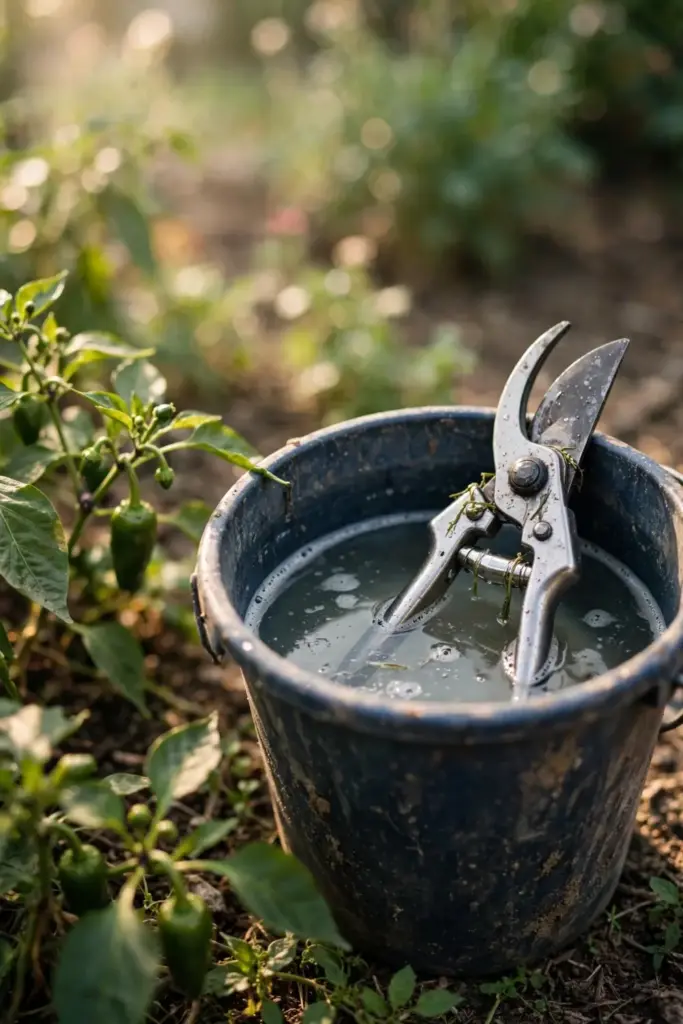
The Midwest Vegetable Production Guide gives the sanitation rule: sanitize machinery and materials with 10 percent chlorine bleach. Disinfect tools between plants. Dip the blades, wipe them, and cut again. Keep the disinfectant bucket within arm’s reach of the bed. A bucket left at the shed does not get used. A blade that cuts an infected plant and then cuts a healthy plant moves the bacteria. A blade disinfected between cuts does not.
Wash hands after handling infected plants. Hands carry bacteria from a spotted leaf to a clean leaf. Gloves carry bacteria the same way. Wash hands with soap and water. Change gloves. The habits are cheap. The habits close the pathway between plants.
Never work plants when wet. Wet tissue tears easier than dry tissue, and wet hands and tools move bacteria. The University of Georgia homeowner guidance gives the rule: do not work plants when wet. Wait until the foliage dries before thinning, staking, harvesting, or stripping leaves. A morning wait until the dew dries costs an hour. A wet-weather work session costs a bed. The rule is simple: dry plants, dry hands, dry tools.
Control solanaceous weeds and volunteers. Nightshade, ground cherry, and volunteer tomato carry the bacteria through the season. A bed kept weed-free all season breaks the bridge. A bed weeded once and left alone rebuilds the bridge. Pull the weeds. Pull the volunteers. The weeding habit is the cheapest insurance in the whole routine, and it never expires.
Strategy 6: Remove and Destroy Infected Leaves and Plants Promptly
Remove and destroy infected leaves and plants promptly. Trash them, never compost them.
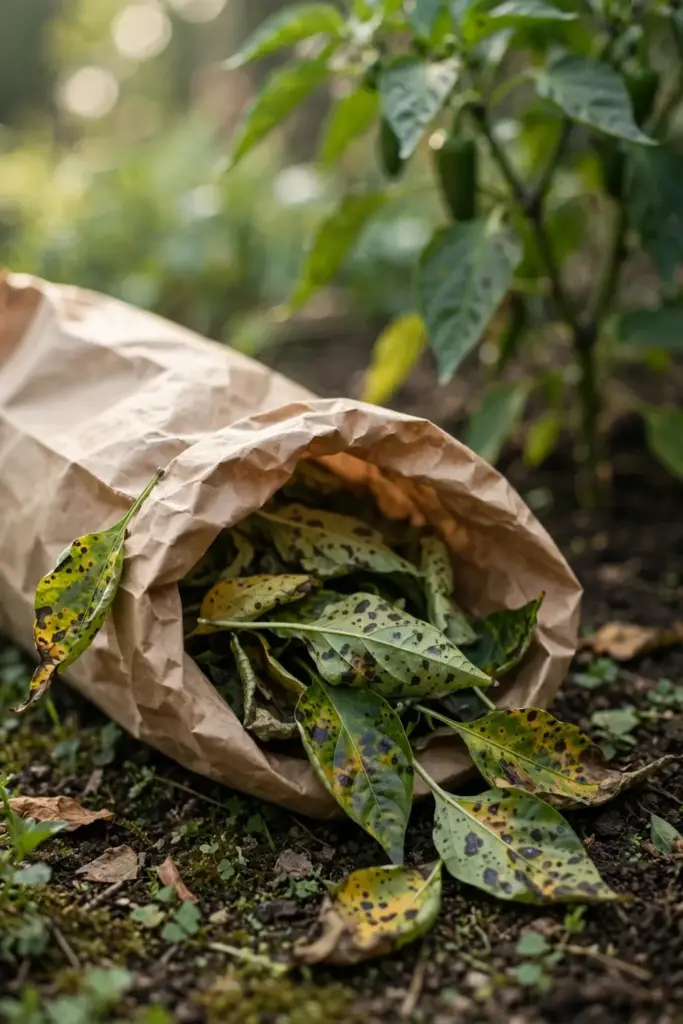
The University of Georgia homeowner guidance gives the removal rule: remove and discard infected material immediately. An infected leaf left on the plant sheds bacteria onto healthy leaves below it every time rain or dew wets it. An infected plant left in the bed sheds bacteria onto its neighbors. Removal stops the shedding. A plant stripped of its spotted leaves keeps its upper leaves clean. A plant left with its spotted leaves loses its upper leaves next.
Pick off infected leaves by hand when the count is small. Hold the leaf by the petiole, snap it off, and drop it straight into a bag. Do not drop it on the ground and pick it up later. The bag travels with you around the bed. A leaf dropped on the ground is a leaf that may stay on the ground.
Pull and bag a whole plant when the infection covers most of its leaves. A plant with bacterial spot across most of its leaves will not recover, and it sheds bacteria while it declines. Bag the whole plant, including the root ball and the media around it. Do not shake soil off the roots over the bed. The soil around an infected plant carries bacteria.
Clear all debris at season’s end. Pull spent plants, including roots. Rake up fallen leaves. Bag everything and trash it. Do not leave debris piled beside the bed for later. Later rarely comes, and the pile sheds bacteria all winter. A bed cleaned in autumn starts spring clean. A bed left dirty in autumn starts spring infected.
Strategy 7: Space, Stake, and Mulch for Airflow and Splash Control
Space, stake, and mulch for airflow and splash control. Airflow dries leaves, and mulch blocks the splash that carries bacteria from soil to leaf.
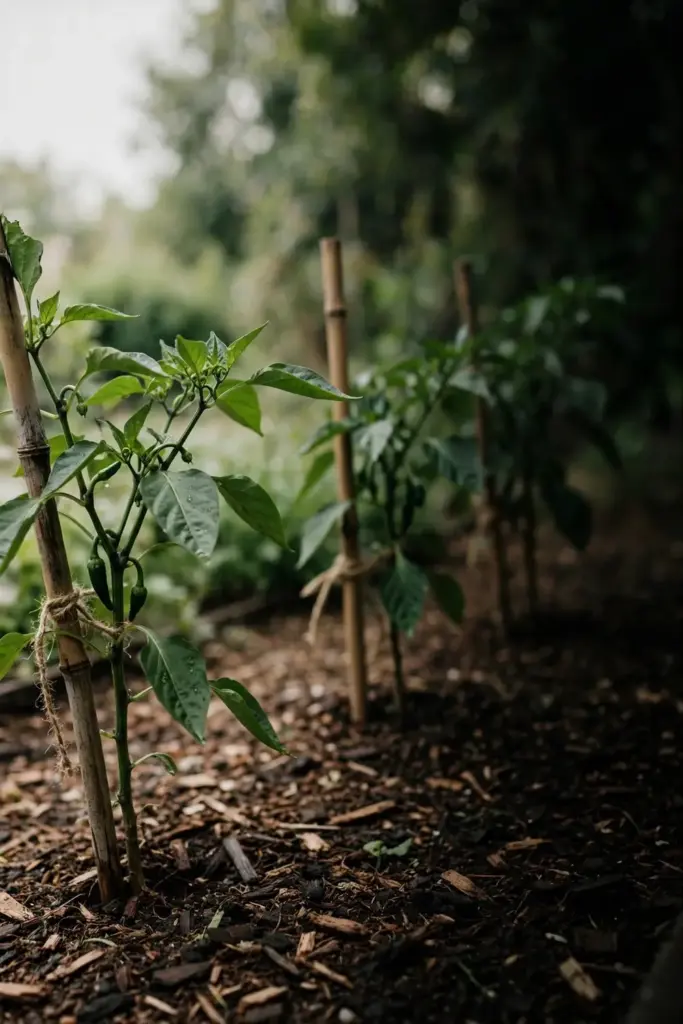
Space peppers for their mature size. A pepper planted tight for instant fill pays for that fill with wet foliage and bacterial spot. Read the mature width on the tag, and plant at that spacing. A bed with air between plants at maturity needs less thinning, dries faster, and shows fewer spots. The spacing is the airflow. The crowding is the wetness.
Stake peppers. A staked pepper holds its leaves off the soil and opens air channels through the plant. A sprawling pepper lies on wet soil and traps moisture under its leaves. The stake lifts the plant into the air. The air dries the leaves. The drying breaks the chain. The Midwest Vegetable Production Guide lists staking among the core controls.
Mulch to block soil splash. A 2 to 3 inch layer of straw, shredded leaves, or wood chips covers the soil and blocks the splash that carries bacteria from debris to lower leaves. Rain that falls on mulch splashes mulch, not soil. The bacteria stay in the mulch. The leaves stay clean. The mulch is the shield. Keep the mulch pulled back from stems by a few inches, so the stems stay dry.
Keep plants vigorous with adequate, not excessive, fertility. A pepper fed to a soil test grows steady tissue that resists infection. A pepper fed by guesswork gets either starved or pushed. Both extremes open the door. Test the soil, feed to the result, and stop when the result says stop. Steady feeding grows steady tissue. Steady tissue resists the bacteria.
Strategy 8: Use Preventive Copper as a Last Resort Only
Use preventive copper as a last resort only. Copper is a bactericide used preventively. It does not cure established disease.
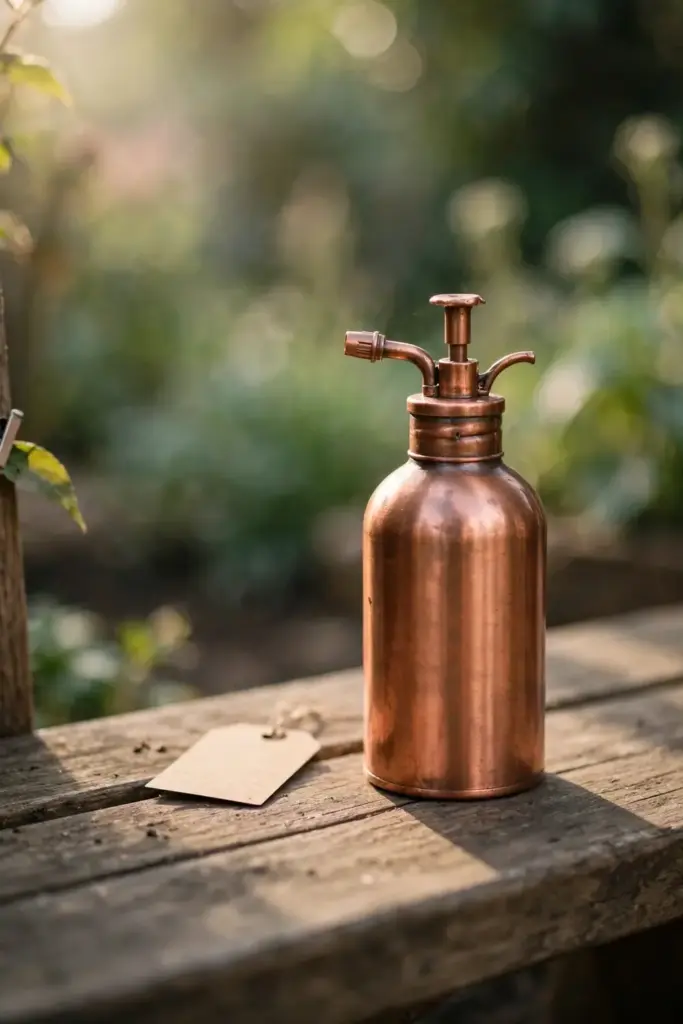
The University of Georgia homeowner guidance gives the copper rule: copper is a preventive, applied before infection, with coverage that matters, and only before infection. Copper coats uninfected tissue and slows bacterial growth. Copper does not cure a spotted leaf. A spotted leaf sprayed with copper stays spotted. The copper protects the next leaf, and only when the cultural steps run alongside it.
Correct the sloppy wording in home blogs. Home blogs often call copper a fungicide for bacteria. That wording is wrong. Copper is a bactericide when used against bacteria. A fungicide kills fungi. A bactericide kills bacteria. The article uses the correct word. The correct word matters, because the wrong word buys the wrong product.
Know the copper resistance. The Midwest Vegetable Production Guide notes that copper resistance is common in Xanthomonas populations. A copper sprayed against a resistant population wastes money and selects for more resistance. Copper is a tool with a shrinking margin. The cultural steps carry the prevention. Copper is the last resort, not the default.
Verify the label and home-garden suitability before using copper. Read the label for the crop, the rate, and the timing. Do not apply a commercial rate to a home bed. Do not apply copper after infection and expect a cure. The label is the law. The label is the limit. The cultural steps are the prevention.
Living With Bacterial Spot Damage You Cannot Undo
Some damage stays. A spotted leaf never heals, and a defoliated pepper never regrows its leaves until the next flush.
Strip the damaged leaves and let the plant replace them. A pepper pushes new leaves from the tip. The new leaves need the same routine: dry foliage, clean tools, steady spacing. A plant that keeps its new leaves clean earns its place. A plant that spots every new flush needs a harder look at site, drainage, and watering.
General bacterial blight care follows the same order: cut, clean, destroy, then keep the canopy dry. The guide to bacterial blight simple solutions covers that order for bacterial blight problems across the garden. The pathogens differ. The habits do not.
The live genus-level bacterial leaf spot article covers bacterial leaf spot in general, with the genus content. This article covers pepper prevention in the reader’s own vocabulary. The genus article carries the genus. This article carries the pepper. The two articles link to each other. They do not duplicate each other.
Do not present resistant varieties as a full solution. Resistance to bacterial spot is race-specific. No variety is resistant to all strains. No resistant varieties exist for specialty peppers, per trade-press guidance. A resistant variety lowers the odds for one race. The routine covers all races. Buy the resistant variety when the catalog offers it, and run the routine anyway. The variety is one layer. The routine is the rest.
Do not replant peppers in the same dirty bed and expect a different result. The bacteria stay. The debris stays. The wet soil stays. A new planting in the same bed faces the same season with the same disadvantage. Fix the bed first: clean it, rotate it, space the plants, fix the watering, and give the new planting sun and air flow from the day it goes in. The guide to growing bell peppers covers starting and growing peppers at home for readers who want the full growing routine.
Frequently Asked Questions
No cure exists for bacterial spot once it is established. Prevention and slowing the spread is the whole game. Remove and destroy infected leaves and plants, protect the rest, and prevent the next infection. Copper is a preventive bactericide, not a cure. It coats uninfected tissue and slows bacterial growth. It does not cure a spotted leaf. The 8 strategies above are the prevention. Prevention is the whole game.
Do not use fungicide on bacterial spot. Fungicides kill fungi. Bacterial spot is caused by bacteria. A fungicide sprayed on bacteria wastes money and chemistry. Copper is a bactericide, not a fungicide. The article uses the correct word. A gardener who buys a fungicide for a bacterial disease buys the wrong product. Read the label. Match the product to the pathogen. The label is the law.
Do not save seeds from infected plants. The University of Georgia homeowner guidance gives the rule: do not save seed from infected plants. A seed packet saved from an infected bed carries the bacteria into the next season’s bed. A seed packet bought from a reputable source carries tested seed. The saved packet feels thrifty. The saved packet costs the next planting. Buy clean seeds. The seed packet from the shop is the safe packet.
Rotate peppers away from solanaceous crops for 2 to 3 years. The Midwest Vegetable Production Guide gives the rule: rotate with non-solanaceous crops for 2 to 3 years. Delaware Extension agrees: do not plant peppers after tomatoes. Rotate with beans, corn, or onions. Clear solanaceous weeds and volunteers from the rotation bed. The rotation starves the bacteria of its hosts. The monoculture feeds it. The rotation is the treatment.
Copper does not cure bacterial spot. Copper is a preventive bactericide, applied before infection, with coverage that matters. It coats uninfected tissue and slows bacterial growth. It does not cure a spotted leaf. Copper resistance is common in Xanthomonas populations, per the Midwest Vegetable Production Guide. The cultural steps carry the prevention. Copper is the last resort, not the default. A spotted leaf sprayed with copper stays spotted.
Pepper spot and peppery spot are different diseases. Pepper spot is gardener vocabulary for bacterial spot on peppers, caused by Xanthomonas species. Peppery spot is a bacterial disease of crucifers, caused by Pseudomonas syringae pv. maculicola. The names share a word. The hosts differ. The pathogens differ. This article covers pepper bacterial spot only. The crucifer disease gets one line and no more. The name is the confusion. The host is the separation.
Where to Go From Here
Start with the lowest leaves. Strip the spotted ones, bag them, and trash them today.
The order is clean seed and transplants, sanitize saved seed, rotate 2 to 3 years, water at the base, sanitize tools, remove infected tissue, space and mulch, and copper as a last resort. One next action beats ten good intentions. Strip the lower leaves. Clean the tools. The bed stays clean next season because the gardener cleaned it this season.