
Reniform nematode has no cure once it is established. The 10 strategies below prevent it in the home vegetable garden, starting with the soil assay that names the nematode before a single seed goes in.
The signature is no signature. Stunting, yellowing, wilting, and reduced roots could be any nematode or another problem entirely. Only a lab assay confirms reniform. The goal is keeping populations low enough to prevent serious damage, because elimination is impossible.
The rest of this page runs the order a gardener should follow. Understand the nematode first, learn why field identification fails, then work the 10 strategies from assay to clean starts. I have learned that the assay I run in fall is the bed I plant with confidence in spring.
What Reniform Nematode Actually Is
Reniform nematode is a plant-parasitic nematode of vegetable gardens. The nematode Rotylenchulus reniformis causes reniform nematode damage.
The honest frame comes first. There is no cure once the nematode is established. Louisiana State University Extension states that it is virtually impossible to eliminate nematodes totally from the garden. The management goal is keeping populations low enough to prevent serious damage. A gardener who chases elimination chases a goal that does not exist. A gardener who manages populations protects the harvest. The management is the article.
The nematode is named for the female’s kidney shape. The adult female swells into a kidney, or reniform, shape as she feeds on roots. The nematode feeds on roots, lays eggs in masses on the root surface, and completes its life cycle in 18 to 20 days. Many generations run in one season. A small population in spring becomes a large population by fall. The fast cycle is the reason early prevention matters. The fast cycle is the reason a single assay in fall sets the next season.
The nematode survives air-dried soil for about 7 months, and it survives deeper than 1 meter. Solarization and fallow reduce populations. Solarization and fallow do not eradicate them. The nematode waits out the treatment in deeper soil and in dried soil, then returns when the host returns. The treatment is population control, not elimination. The article states that plainly, because the promise of elimination is the most common lie in nematode advice.
The scope stays on home vegetable gardens, with a warm-climate emphasis. Reniform nematode is limited by low winter temperatures, and the sources are Southern: Louisiana State University, University of Georgia, and University of Florida IFAS. Cotton, commercial sweetpotato, and soybean framing stay out. This article is a prevention and care guide, not a treatment guide. Chemical control is not viable in home vegetable gardens.
The University of Georgia gives the chemical rule: chemical control is not viable in home vegetable gardens. The University of Georgia guide for interpreting nematode assay results carries the home-garden assay guidance, including the reniform threshold and the chemical rule. Nematicides are commercial and licensed-only tools. A home gardener who buys a nematicide wastes money and risks the soil. The cultural steps carry the prevention.
How to Spot a Possible Reniform Problem (Assay First)
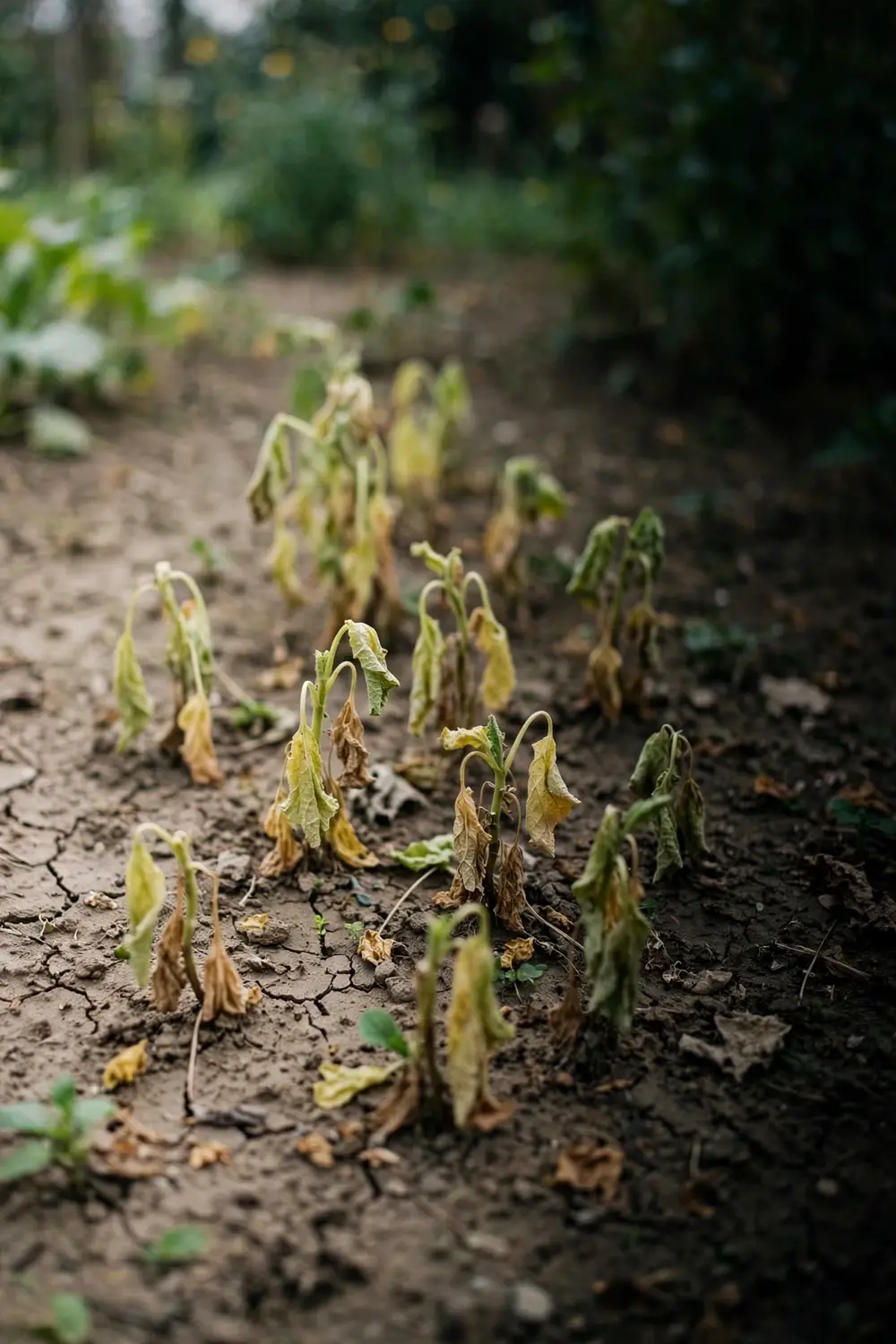
No distinctive symptoms mark reniform nematode. Stunting, yellowing, wilting, and reduced roots could be any nematode or another problem entirely. The lab assay confirms.
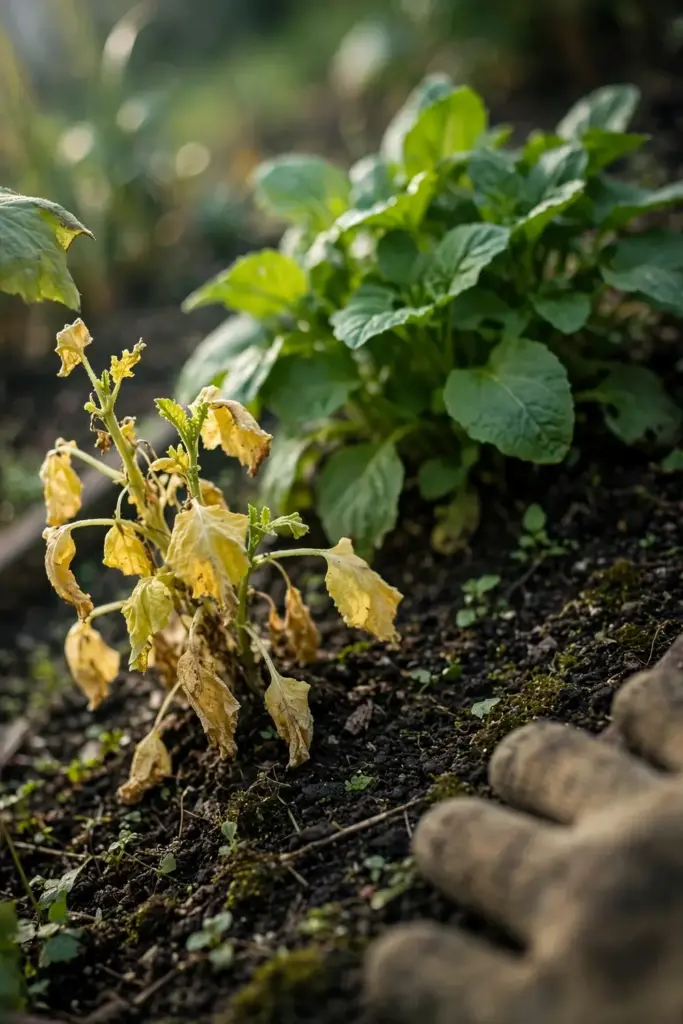
Look at the aboveground symptoms with suspicion, not certainty. Louisiana State University Extension Publication 3095 lists the aboveground signs: stunting, uneven heights, early wilting, and poor yields. The signs are real. The signs are also the signs of drought, nutrient deficiency, root-knot nematode, lesion nematode, and a dozen other problems. A stunted, yellowing plant is a suspect. A stunted, yellowing plant is not a diagnosis.
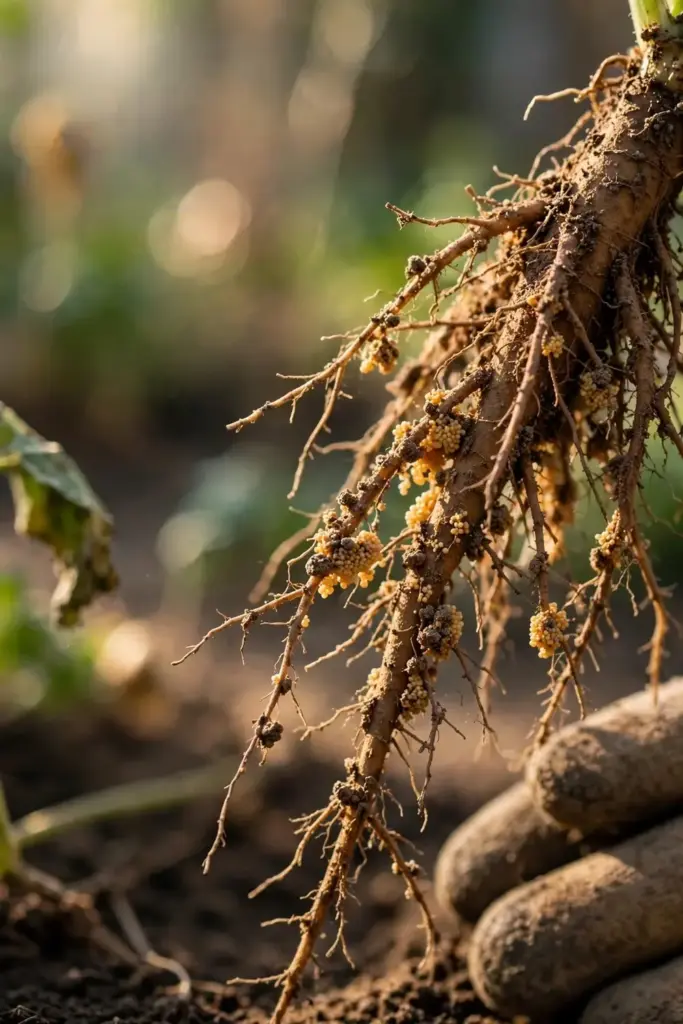
Look at the roots with the same suspicion. The publication lists the root signs: thinning, reduced feeder roots, dead tissue, and a gritty feel from egg masses on the roots. The signs are real. The signs are also the signs of other nematodes and root diseases. A root system with thinning and grit is a suspect. A root system with thinning and grit is not a diagnosis.
Read the publication’s own warning: none of these symptoms are completely reliable for making a diagnosis in the field. The best method is to collect a soil sample. The warning is the article’s spine. A gardener who diagnoses from symptoms guesses. A gardener who assays knows. The assay costs a fee. The guess costs a season.
One management distinction may appear as plain text, not a differential table. Corn rotation reduces reniform nematode, but corn is a root-knot nematode host. A bed with reniform nematode can rotate to corn. A bed with root-knot nematode cannot. The assay result changes the rotation plan. The assay is the decision. The symptoms are not.
Check the whole bed, not one plant. Reniform damage on one plant points at that plant’s stress. Reniform damage across a whole bed, with uneven heights and early wilting, points at the bed’s nematode load. The spread of symptoms across the bed tells the gardener whether the problem is one plant or one bed. The assay tells the gardener which nematode.
| Assay Result | What It Means | Action |
|---|---|---|
| Reniform count below threshold | Population too low to matter | Grow normally, keep the routine |
| Reniform at or above threshold (UGA: 1 or more) | Vegetable crop may be affected | Rotate with a non-host, fallow, solarize |
| Reniform high, roots gritty, plants stunting | Population damaging the crop | Remove crops and roots, fallow, solarize, rotate |
| Any count, symptoms absent | Nematode present without damage | Monitor, keep the routine, retest next fall |
Strategy 1: Soil-Test First With an Extension Nematode Assay
Soil-test first, with an Extension nematode assay, best in fall or winter after harvest. The assay names the nematode before a single seed goes in.
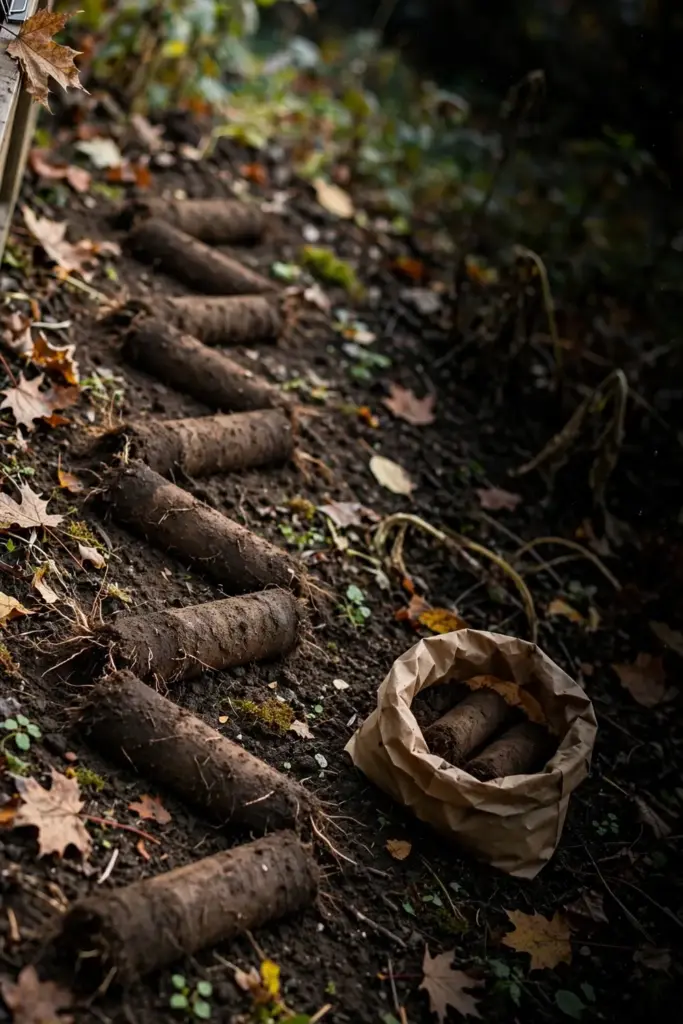
Louisiana State University Extension gives the sampling rule: the best time to test is fall or winter, after harvest. The University of Georgia gives the same window. A fall assay measures the nematode load at the end of the season, when populations peak. A fall assay sets the next season’s plan: rotate, fallow, solarize, or plant. A spring assay measures the load after winter decline, and it undercounts the threat. Fall is the window. Winter is the backup. Spring is too late.
Take the sample correctly. Take 6 to 8 inch deep cores, zig-zagged across the bed, and mix about 1 quart of soil. The zig-zag covers the bed. The depth reaches the root zone. The quart is the lab’s sample. A sample taken from one corner measures one corner. A sample zig-zagged across the bed measures the bed. The zig-zag is the sampling. The corner is the guess.
Submit the sample to the Extension nematode assay lab. The lab reports the genus and the count. The count tells the gardener whether reniform is present at a level that matters. The University of Georgia home-garden assay guide gives the reniform threshold: a count of 1 or more means the vegetable crop may be affected, and the recommendation is to rotate with a non-host. The threshold is low. The recommendation is rotation. The assay is the decision.
Do not plant susceptible vegetables into a bed with a known reniform history without a test. A tomato planted into a bed that held infected okra faces the same nematodes that fed on the okra. The nematodes carry no virus here, but they feed on the new roots. The new plant becomes the next host. Test first. Plant second.
Strategy 2: Rotate With Reniform-Resistant or Non-Host Crops
Rotate with reniform-resistant or non-host crops. Broccoli, cauliflower, corn, onion, peanut, radish, and turnip break the cycle.

Louisiana State University Extension’s 2024 guide lists the rotation crops: broccoli, cauliflower, corn, onion, peanut, radish, and turnip. Those crops resist reniform or do not host it. A bed that holds broccoli this season holds no reniform host. A bed that holds broccoli for a season starves the nematode. The rotation is the treatment. The monoculture is the risk.
Rotate with the full host family out of the bed. A bed that swaps tomato for pepper swaps one host for another. The nematode stays. The rotation must move the host family out. A bed that holds corn for a season holds a non-host. A bed that holds broccoli for a season holds a non-host. The rotation works when the bed holds no host. The rotation fails when the bed holds a host under a different name.
Remember the corn distinction from the identification section. Corn rotation reduces reniform nematode, but corn is a root-knot nematode host. A bed with reniform nematode can rotate to corn. A bed with root-knot nematode cannot. The assay result changes the rotation plan. The assay is the decision. The rotation follows the assay.
Do not present okra as a reniform-resistant rotation crop. The sources conflict. The Louisiana State University 2024 guide lists okra among reniform-resistant crops. Louisiana State University Publication 3095 lists okra among very good hosts. This article defaults to the host-list side and does not recommend okra as a rotation crop until the conflict resolves. The conflict is the honest fact. The safe side is the host side.
Do not present sweetpotato cultivar resistance as settled. The sources conflict. The Louisiana State University 2024 guide lists Avoyelles, Bellevue, Bonita, Burgundy, Evangeline, Covington, and Jewel as reniform-resistant sweetpotato cultivars. A Louisiana State University sweetpotato document states that currently, no varieties have any resistance to the reniform nematode. This article does not carry the cultivar names as settled. The conflict is the honest fact. The safe side is no resistance.
Do not present tomato, lima bean, or southern pea varieties as reniform-resistant. Louisiana State University garden pages list those varieties as resistant to root-knot nematode, not reniform. The resistance does not transfer. A tomato variety resistant to root-knot faces reniform without resistance. The article never mixes the two nematodes’ resistance lists.
Strategy 3: Fallow a Full Growing Season and Rototill Monthly
Fallow the bed for a full growing season, and rototill the fallow monthly to keep it weed-free. Fallow starves the nematodes.
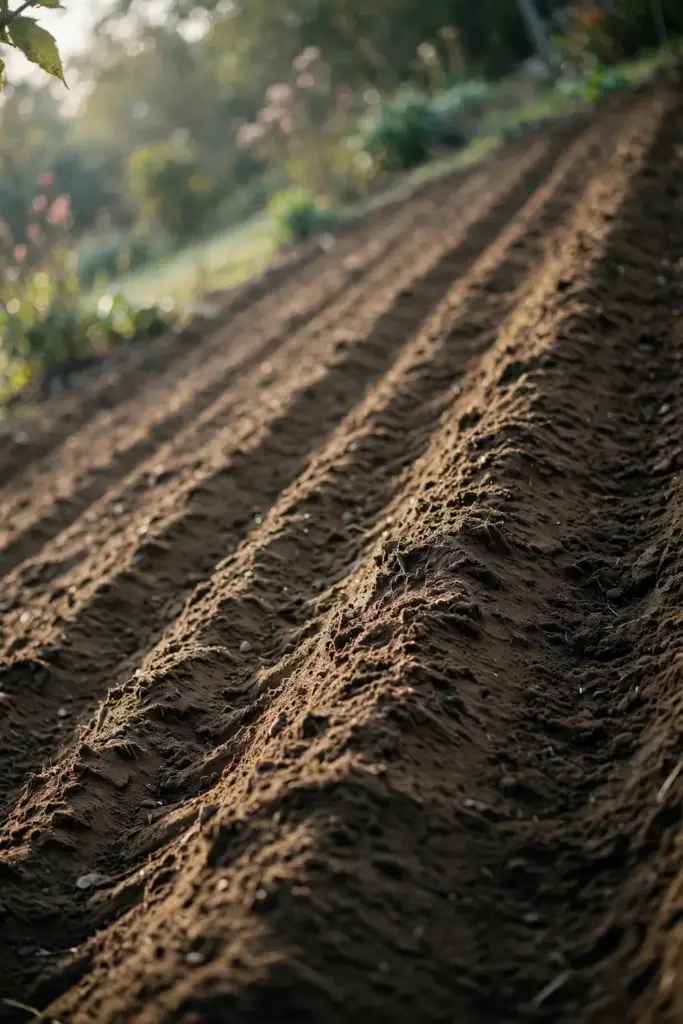
The University of Georgia gives the fallow rule: fallow for a full growing season, and rototill the fallow monthly. Fallow means no host in the bed for the full period. No tomato, no pepper, no okra, no bean. The nematodes lose their food source. The population declines. The bed resets. The fallow is the treatment. The monoculture is the risk.
Rototill the fallow monthly. Rototilling turns the soil, exposes nematodes to drying and predators, and kills the weeds that would feed them. A fallow rototilled monthly stays clean. A fallow left untilled grows weeds. The weeds feed the nematodes. The fallow fails. The rototilling is the fallow. The untilled fallow is theater.
Keep the fallow bed weed-free. Weeds in a fallow bed defeat the fallow. A morningglory in a fallow bed feeds nematodes. A cocklebur in a fallow bed feeds nematodes. A weed-free fallow starves the nematodes. A weedy fallow feeds them. Weed the fallow bed through the full period, or the fallow is theater. Strategy 7 covers the weed hosts in full.
Fallow is hard for a home gardener. A bed that sits empty for a season feels wasted. The honest framing matters: fallow is the price of a clean replant. A gardener who replants at once into a bed with a nematode history buys a second infection. A gardener who fallows for a season buys a clean planting. The fallow is not wasted time. It is the treatment.
Strategy 4: Turn Soil in Empty Beds Through Fall and Winter
Turn the soil in empty beds several times through fall and winter. Turning exposes nematodes to cold and drying.
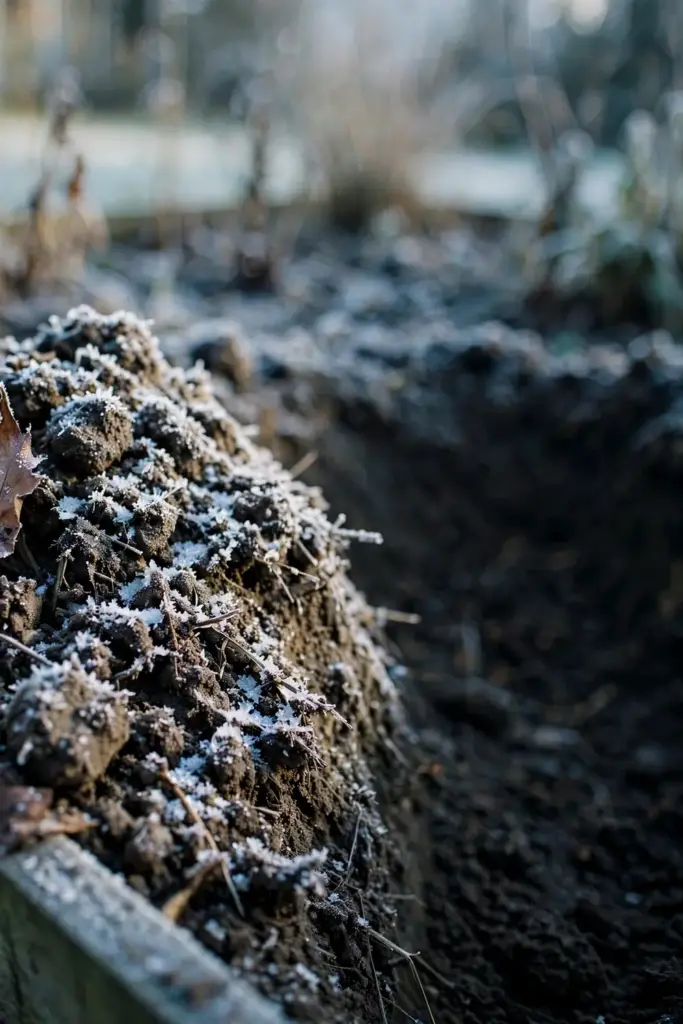
Louisiana State University Extension gives the turning rule for gardens: turn the soil in empty beds several times in fall and winter. Turning brings nematodes to the surface. Cold air dries them. Winter sun dries them. Predators eat them. A bed turned several times through winter loses nematodes with every turning. A bed left untilled through winter keeps them. The turning is the treatment. The untilled bed is the shelter.
Turn the soil on a dry, cold day. A turning on a dry day exposes nematodes to drying. A turning on a wet day exposes them to wet soil. The dry day is the treatment. The wet day is the stir. Turn when the soil is dry and the air is cold. The cold and the drying work together.
Turn deeply enough to reach the root zone. A shallow turning scratches the surface. A deep turning reaches the nematodes. Turn 6 to 8 inches deep, the same depth as the assay cores. The depth reaches the nematodes. The shallow turn misses them.
Do not turn the soil and leave it bare to erode. A bed turned and left bare loses soil to winter rain. A bed turned and covered with mulch or a cover crop holds its soil. Turn the bed, then cover it. The turning kills nematodes. The cover holds the soil. The cover is part of the turning routine.
Strategy 5: Solarize With Clear Plastic for at Least 6 Weeks
Solarize the bed with clear plastic, on moist soil, for at least 6 weeks of intense sun. Solarization cooks the nematodes in the top soil.
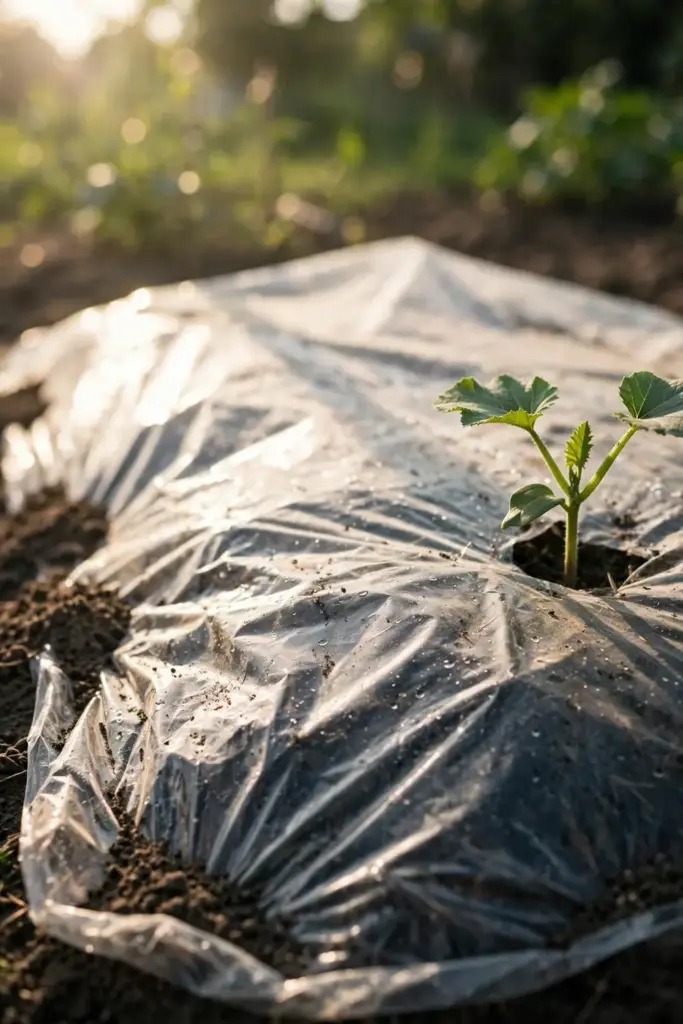
The University of Florida IFAS Extension gives the solarization rule: clear plastic, moist soil, at least 6 weeks of intense sun. The University of Georgia agrees: solarization needs weeks of intense radiation. Clear plastic over moist soil traps the sun’s heat. The soil temperature rises. Nematodes in the heated soil die. The heat is the treatment. The plastic is the trap.
Prepare the bed before solarizing. Clear the bed. Remove crops and roots. Water the soil until it is moist through the top foot. Lay clear plastic over the bed, and seal the edges with soil. The sealed plastic traps the heat. The moist soil conducts the heat. A bed solarized dry heats unevenly. A bed solarized wet heats through. The moisture is the conductor. The plastic is the trap.
Solarize in the hottest weeks of summer. A bed solarized in July heats to killing temperatures. A bed solarized in October heats weakly. The summer sun is the treatment. The autumn sun is the warm blanket. Time the solarization for the hottest window. The hottest window is the treatment.
State the solarization honesty plainly. Reniform nematode survives air-dried soil for about 7 months and deeper than 1 meter. Solarization heats the top soil. Solarization does not heat the deep soil. The deep nematodes survive. The dried nematodes survive. Solarization reduces the population. Solarization does not eradicate it. The reduction is the value. The eradication is the myth.
Strategy 6: Feed the Soil and Keep Plants Vigorous
Feed the soil and keep plants vigorous. Healthy plants tolerate nematodes better than stressed plants.
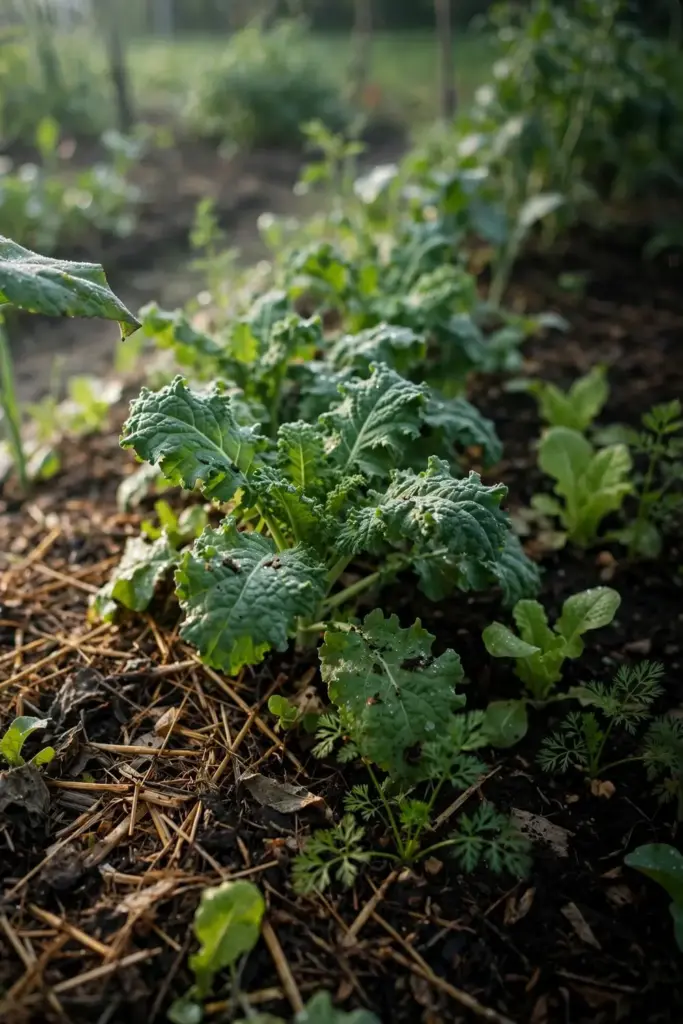
The University of Florida IFAS Extension, Louisiana State University Extension, and British Columbia guidance agree: healthy plants tolerate nematodes better. A vigorous plant with a strong root system outgrows nematode feeding. A stressed plant with a weak root system stalls. The vigor is the tolerance. The stress is the vulnerability.
Add compost, mulch, and manure to the bed. Organic matter feeds soil life. Soil life feeds on nematodes. Soil life competes with nematodes. A bed rich in organic matter holds a soil food web that suppresses nematodes. A bed poor in organic matter holds nematodes without competition. The compost is the food web. The food web is the suppression.
Correct pH and fertility to the soil test. A bed fed to its test result grows steady tissue with moderate vigor. A bed fed by guesswork gets either starved or pushed. Both extremes open the door. Test the soil, feed to the result, and stop when the result says stop. Steady feeding grows steady roots. Steady roots tolerate nematodes.
Water steadily. A plant watered deeply and infrequently grows deep roots. A plant watered lightly and often grows shallow roots. Deep roots tolerate nematode feeding. Shallow roots do not. Water deeply. Water infrequently. Let the soil surface dry between waterings. The deep watering is the tolerance. The shallow watering is the stress.
Strategy 7: Keep the Garden Weed-Free
Keep the garden weed-free. Morningglory, cocklebur, sow thistle, jimsonweed, and other weeds host reniform nematode.
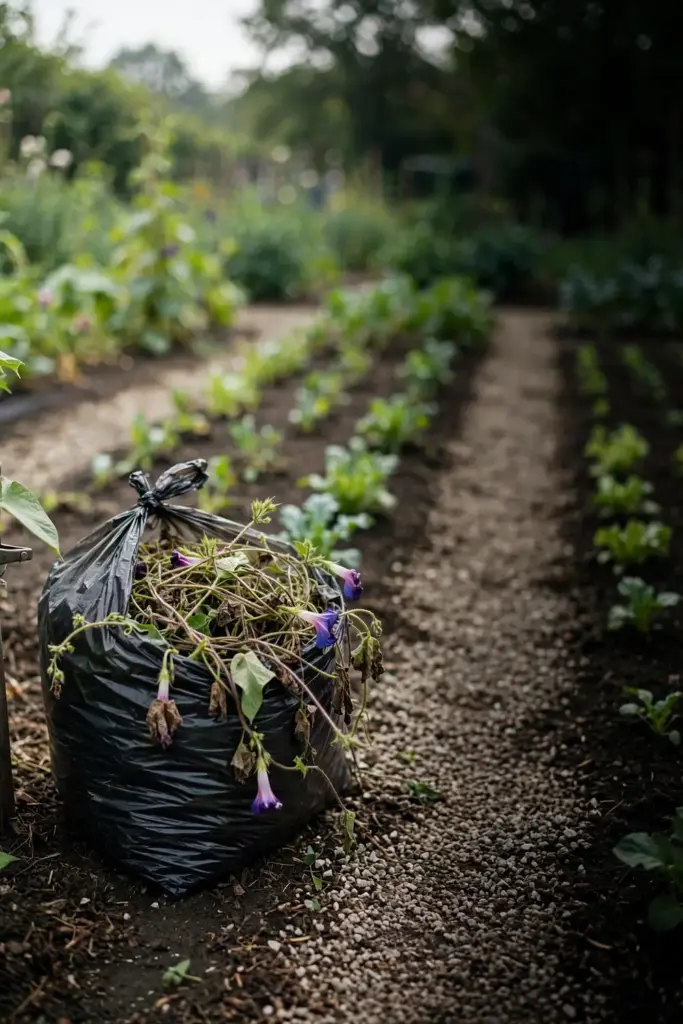
Louisiana State University Extension Publication 3095 lists the weed hosts: morningglory, cocklebur, sow thistle, jimsonweed, and others. The University of Georgia agrees: weeds in a fallow bed negate the fallow’s benefit. Weeds in and around the bed carry the nematode through the season. A weed that grows beside a tomato row feeds nematodes to the row. A weed-free row faces only its own nematodes. The weeding is the prevention. The weed is the bridge.
Pull weeds in and around the bed, including the edges and the paths. Weed roots are the reservoir. Weeding that leaves roots in the ground leaves the reservoir. Pull the whole plant, roots and all, when the soil is moist and the roots come clean. Bag and trash weeds from a bed with a nematode history. Do not compost them.
Mow the edges and the paths. A lawn edge that holds morningglory beside a vegetable bed is a reservoir at the bed’s doorstep. A mowed edge that holds no morningglory is a clean border. The edge matters as much as the bed. The nematodes do not respect the border between the lawn and the bed.
Do not present marigolds as a reniform trap crop. Louisiana State University Extension notes that marigolds are effective against root-knot nematode. No reniform evidence supports marigolds as a reniform trap crop. The marigold claim belongs to root-knot. The article never transfers it to reniform. The trap crop for root-knot is not a trap crop for reniform.
Strategy 8: Plant Early and Use Cooler Seasons
Plant early, and use cooler seasons. Nematodes thrive in warmth. Plant annuals as early as possible in spring.
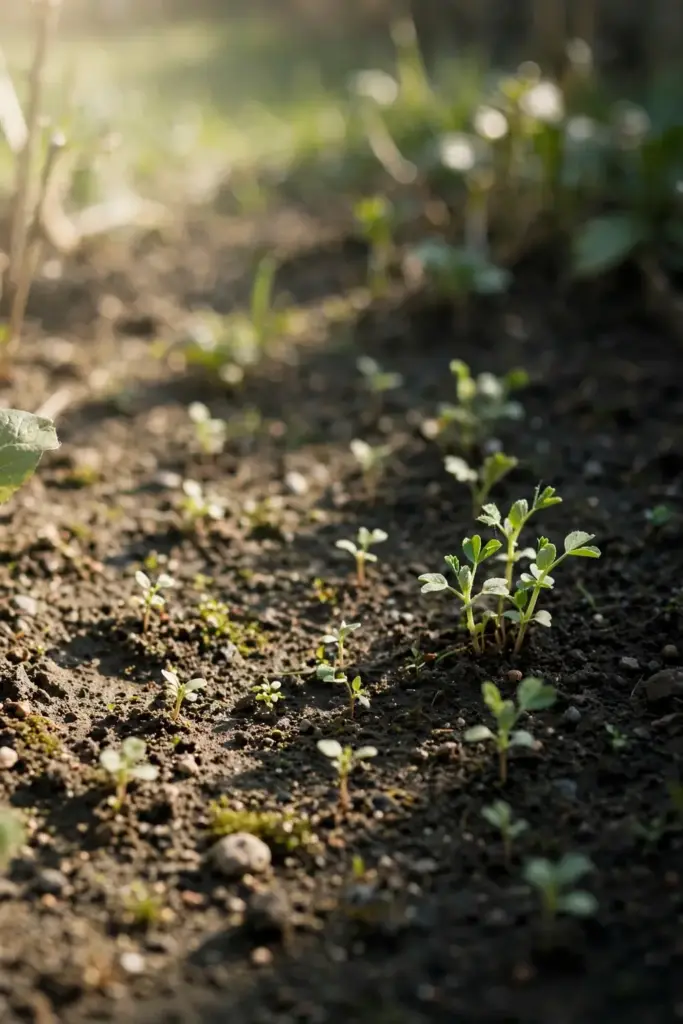
The University of Florida IFAS Extension gives the planting rule: plant annuals as early as possible in spring. The Louisiana State University guide agrees: plant early, before nematodes become active. Nematodes thrive in warmth. A plant set out in cool spring soil grows before the nematodes wake. A plant set out in warm summer soil faces active nematodes from day one. The early planting is the head start. The late planting is the handicap.
Use cooler seasons for susceptible crops. A fall planting of susceptible vegetables faces declining nematode activity. A summer planting faces peak activity. The cooler season is the window. The warmer season is the risk. A gardener who plants susceptible crops in the cooler window buys a head start. A gardener who plants them in the heat buys a handicap.
Do not plant susceptible crops into warm soil after a nematode history. A tomato planted into warm soil in a bed with a reniform history faces active nematodes from day one. A tomato planted into cool soil in the same bed faces dormant nematodes. The soil temperature is the difference. The thermometer is the decision. Plant when the soil is cool. The cool soil is the head start.
Strategy 9: Remove Crops and Roots Immediately After Harvest
Remove crops and roots immediately after harvest. A root left in the ground keeps feeding nematodes.

Louisiana State University Extension’s guide gives the removal rule: remove crops and roots immediately after harvest. A crop left in the bed after harvest keeps its roots alive. Live roots keep nematodes fed. Nematodes on live roots lay eggs. The eggs hatch. The population grows. A crop pulled at harvest stops the feeding. A crop left after harvest feeds the next generation. The pull is the prevention. The leftover is the feeding.
Pull the whole plant, roots and all. A root left in the ground keeps feeding nematodes. A stump left in the ground keeps the nematode in the soil. Dig the root ball out, bag it, and trash it. Do not shake soil off the roots over the bed. The soil around infected roots carries nematodes. The bag is the whole strategy. Carry it with you around the bed.
Do not leave crop residue to rot in place in a bed with a nematode history. Rotting roots feed nematodes for a season after the plant is gone. A bed cleared to bare soil stops the feeding. A bed left with residue feeds the nematodes through winter. Clear the bed. The clearing is the prevention. The residue is the feeding.
Strategy 10: Start Clean and Never Move Soil From Infested Areas
Start clean. Inspect transplant roots, do not move soil from an infested area, and clean tools and equipment.
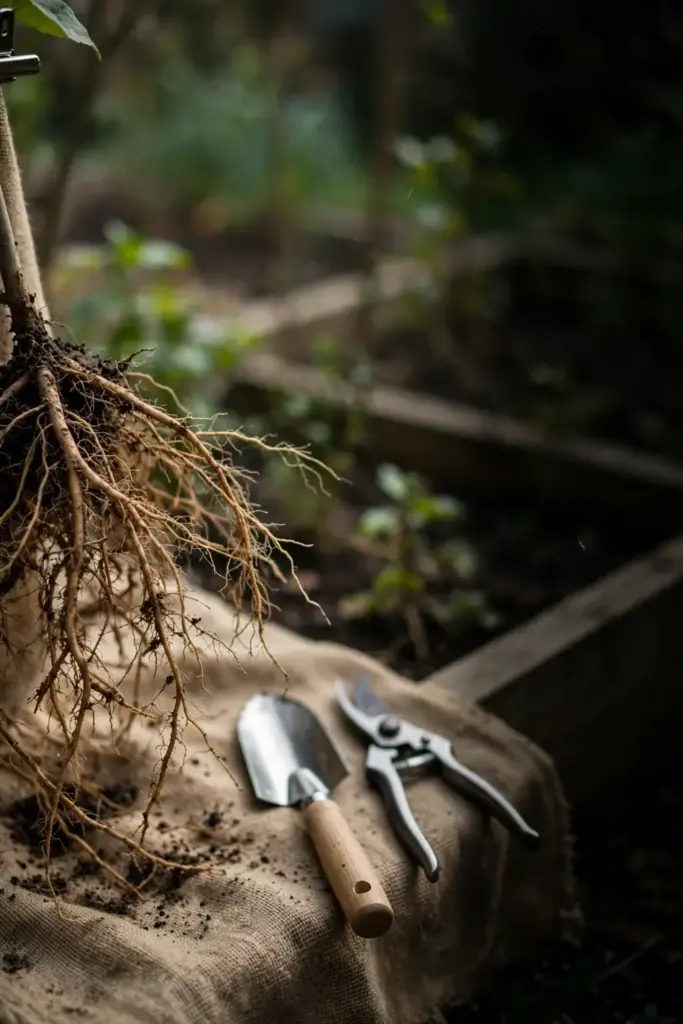
Inspect transplant roots before planting. A transplant with sparse, dark, or stunted roots may signal a nematode problem. A transplant with full, pale, firm roots is a healthy start. The roots tell the truth that the leaves hide. Trust the roots. Reject a transplant with suspicious roots. The rejection costs a plant. The planting costs a bed.
Do not move soil from an infested area to a clean bed. A wheelbarrow of soil from an infested bed carries nematodes into the clean bed. A shovelful of soil on a boot carries nematodes to the next bed. The soil is the nematode’s home. Moving the soil moves the nematode. The University of Florida IFAS Extension and British Columbia guidance agree: reniform survives on equipment moved from field to field. The equipment is the vector. The cleaning is the prevention.
Clean tools and equipment after working in an infested bed. Knock off soil. Wash tools with soap and water. Rinse boots. A tool that digs an infested bed and then digs a clean bed moves nematodes. A boot that walks an infested bed and then walks a clean bed moves nematodes. The cleaning habit closes the pathway. The cleaning takes minutes. The minutes save the clean bed.
Do not present outdated or banned chemicals as options. Nemagon, Mocap, Dasanit, Nemacur, Furadan, Temik, Vydate, and carbofuran are outdated or banned. This article never lists them as options. The home routine is the assay, the rotation, the fallow, the turning, the solarization, the soil feeding, the weeding, the early planting, the removal, and the clean start. The chemical bottle is not part of the home routine.
Living With Reniform Nematode Damage You Cannot Undo
Some damage stays. A bed with a reniform history lives under prevention habits for as long as the bed is in use.
Keep the bed under the routine through every season. The assay in fall. The rotation in spring. The weeding all season. The removal at harvest. The turning in winter. The routine never expires. A bed kept under the routine holds populations low. A bed left off the routine lets populations rebound. The routine is the management. The management never ends.
General bacterial blight care follows the same order: cut, clean, destroy, then keep the canopy dry. The guide to bacterial blight simple solutions covers that order for bacterial blight problems across the garden. The pathogens differ. The habits do not.
Do not replant a susceptible vegetable into a bed with a nematode history without testing, rotation, and fallow. The nematodes stay. The weeds return. The soil stays. A new plant in the same bed faces the same season with the same disadvantage. Fix the bed first: test the soil, rotate the crops, fallow the bed, and give the new planting a clean start. The guide to spring pruning techniques covers clean cut placement for garden plants in full.
Frequently Asked Questions
Reniform nematode cannot be eliminated from the garden. Louisiana State University Extension states that it is virtually impossible to eliminate nematodes totally from the garden. The nematode survives air-dried soil for about 7 months and deeper than 1 meter. Solarization and fallow reduce populations. They do not eradicate them. The management goal is keeping populations low enough to prevent serious damage. The management is the article. The elimination is the myth.
A home gardener cannot know from symptoms alone. Stunting, yellowing, wilting, and reduced roots could be any nematode or another problem entirely. Louisiana State University Extension Publication 3095 states that none of these symptoms are completely reliable for making a diagnosis in the field. The best method is to collect a soil sample. Submit the sample to the Extension nematode assay lab. The lab reports the genus and the count. The assay is the diagnosis. The symptoms are not.
Solarization reduces reniform nematode populations, but it does not eradicate them. Clear plastic over moist soil for at least 6 weeks of intense sun heats the top soil and kills nematodes there. Reniform survives air-dried soil for about 7 months and deeper than 1 meter. The deep nematodes survive solarization. The dried nematodes survive. Solarization is population control, not elimination. The reduction is the value. The eradication is the myth.
Corn rotation reduces reniform nematode, but corn is a root-knot nematode host. A bed with reniform nematode can rotate to corn. A bed with root-knot nematode cannot. The assay result changes the rotation plan. The assay is the decision. The rotation follows the assay. A gardener who rotates to corn without an assay may trade reniform for root-knot. Test first. Rotate second.
Marigolds are not a reniform trap crop. Louisiana State University Extension notes that marigolds are effective against root-knot nematode. No reniform evidence supports marigolds as a reniform trap crop. The marigold claim belongs to root-knot. The article never transfers it to reniform. The trap crop for root-knot is not a trap crop for reniform. The rotation, fallow, and solarization carry the reniform prevention.
Okra resistance to reniform nematode is unsettled. The sources conflict. The Louisiana State University 2024 guide lists okra among reniform-resistant crops. Louisiana State University Publication 3095 lists okra among very good hosts. This article defaults to the host-list side and does not recommend okra as a rotation crop until the conflict resolves. The conflict is the honest fact. The safe side is the host side. Do not plant okra as a reniform rotation crop.
Where to Go From Here
Start with the assay. Submit a soil sample to the Extension nematode assay lab this fall.
The order is assay, rotate, fallow, turn, solarize, feed the soil, weed, plant early, remove crops and roots, and start clean. One next action beats ten good intentions. Test the soil. Rotate the bed. The garden stays productive because the gardener tested first.