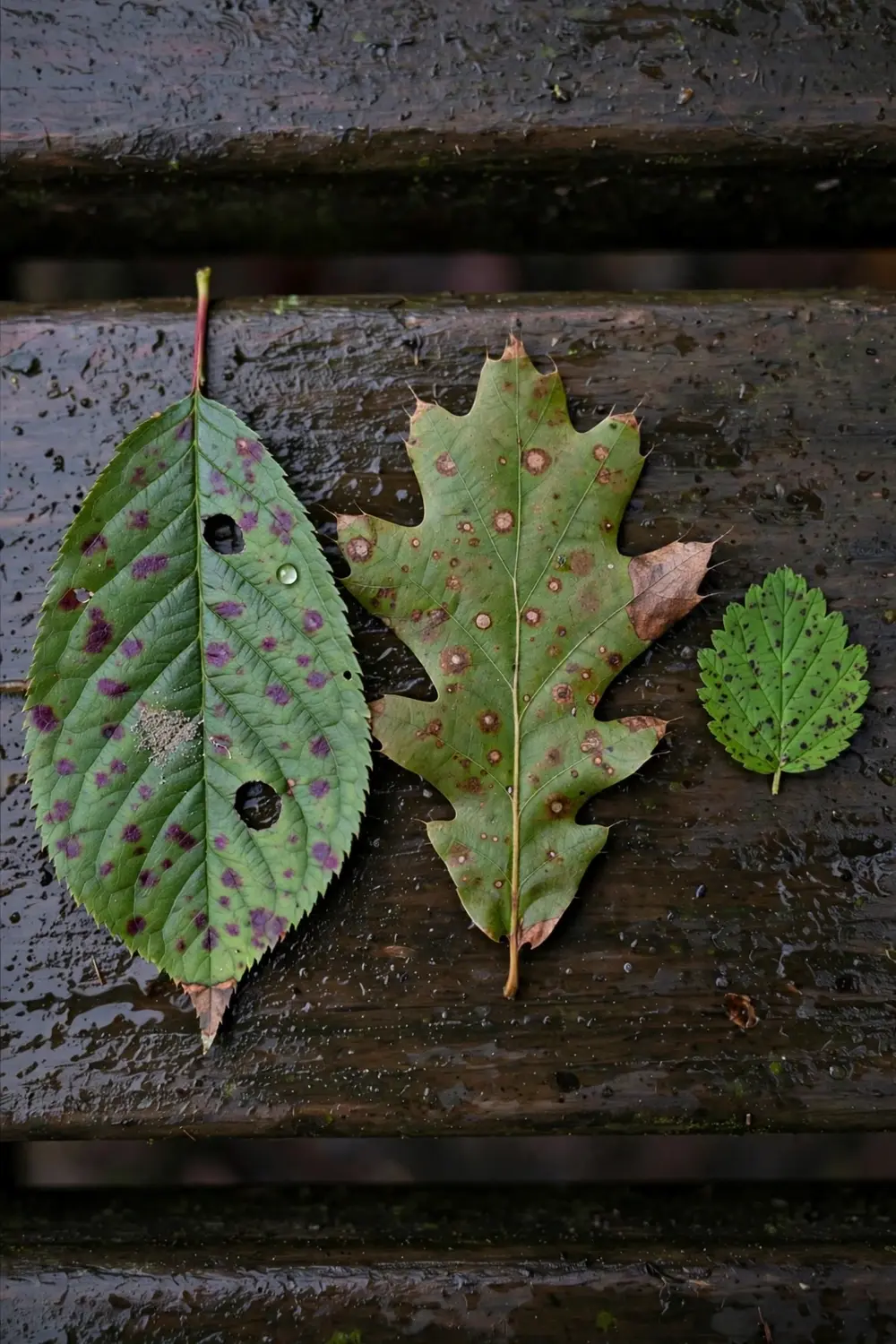

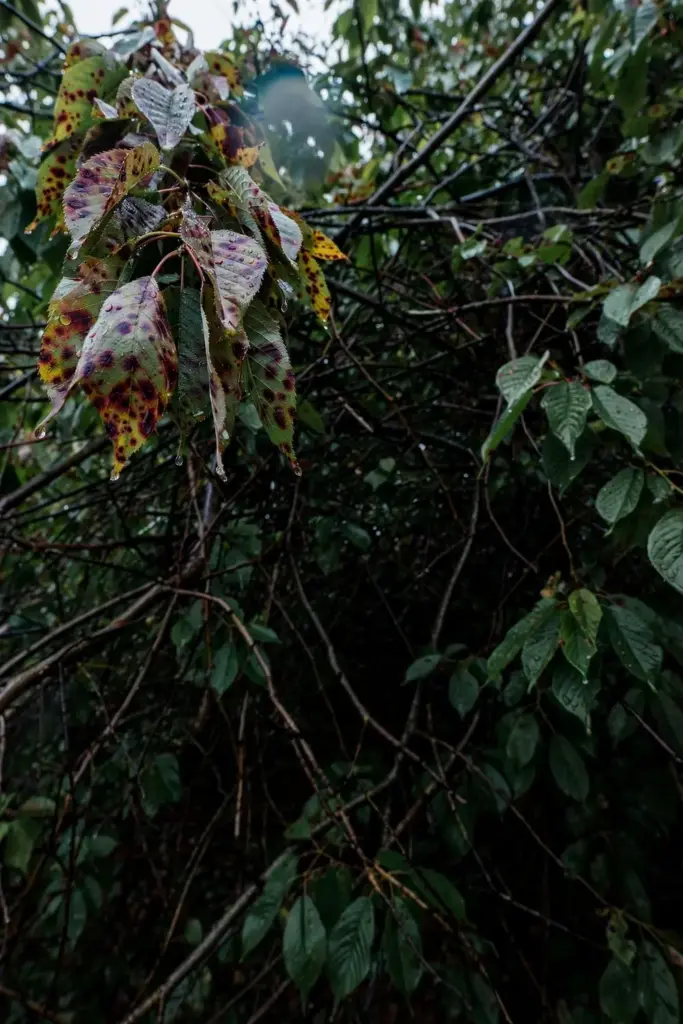
Cylindrosporium leaf spot is a fungal leaf spot disease that shows up as small purple-red spots, yellowing leaves, and round holes where dead tissue drops out. The same genus attacks 6 host groups: cherry, oak, spiraea, mulberry, apple, and crucifer crops, and the cherry form is only one member of that group. Cherry trees suffer the worst damage, and severely infected cherry trees drop their leaves early, sometimes by midsummer.
The fix starts on the ground. Fallen leaves carry the fungus through winter, so raking and removing them cuts next spring’s infection at the source. I have learned to check the undersides of leaves before deciding what the spots mean.
Cherry deserves its own deep dive, and that detail lives on the site’s cherry leaf spot guide. This page stays on the genus: how the disease looks across hosts, how to tell the fungal form from the bacterial one, and what to do about each.
The rest of this page runs from identification through the four steps that break the cycle, then the questions readers ask most.
1. What Cylindrosporium Leaf Spot Actually Is
Cylindrosporium leaf spot is a group of fungal leaf diseases caused by species of the genus Cylindrosporium. Each species favors its own hosts, and the leaf symptoms look alike across them: small spots that darken, die, and sometimes fall out. The genus name is the thread that ties a cherry orchard problem to a spiraea shrub problem and an oak shade-tree problem.
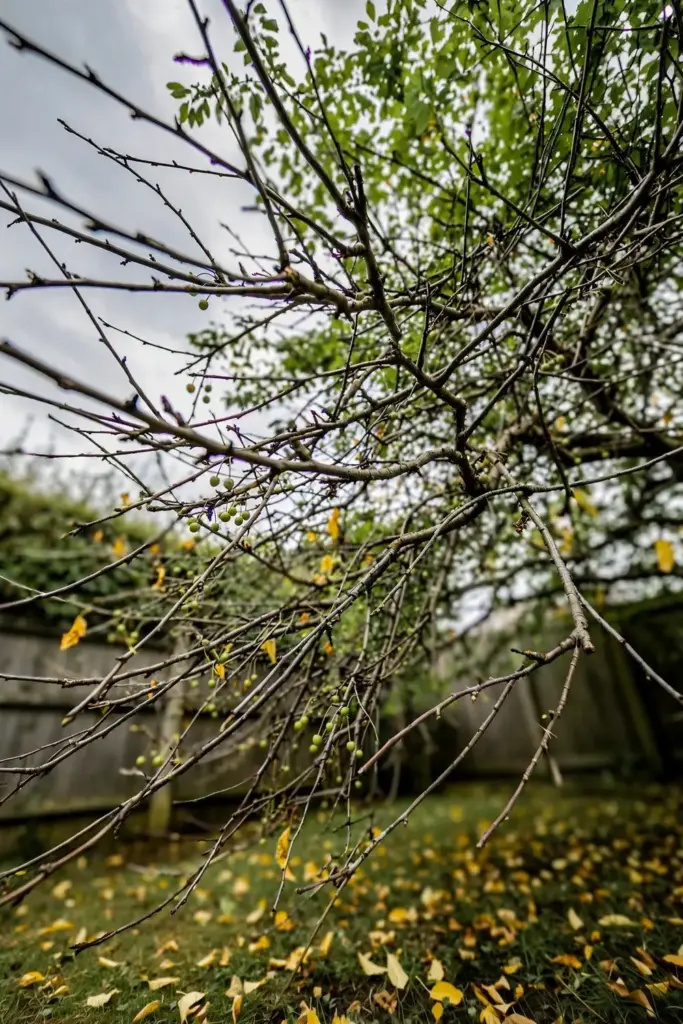
The naming takes some untangling. The cherry fungus carries several names in the literature because the sexual and asexual stages were described separately. Its sexual stage is Coccomyces hiemalis, and its asexual spores carry the Cylindrosporium name, often written as Cylindrosporium padi. Modern references call the same fungus Blumeriella jaapii. One fungus, three labels. The label on the page matters less than the behavior: it winters in fallen leaves and reinfects new foliage in wet spring weather.
Oak leaf spot comes from Cylindrosporium quercus, spiraea leaf spot from Cylindrosporium filipendulae, and mulberry leaf spot from Cylindrosporium maculans. The practical point stays the same across all of them: the fungus lives in dead leaf tissue, releases spores in wet weather, and enters through leaf pores. Learn that cycle once. The whole genus gets easier.
One caution belongs here. The genus has been associated with leaf spots on many woody plants, and proof of pathogenicity has not been established for many tree genera. Association is not proof. A Cylindrosporium fungus found on a spotted leaf may be the cause, or it may be a bystander on tissue that another stress already damaged. Cherry is the proven heavy hitter. For minor hosts, treat the diagnosis as likely rather than certain, and weigh the response accordingly.
2. How to Identify Cylindrosporium Leaf Spot on Leaves
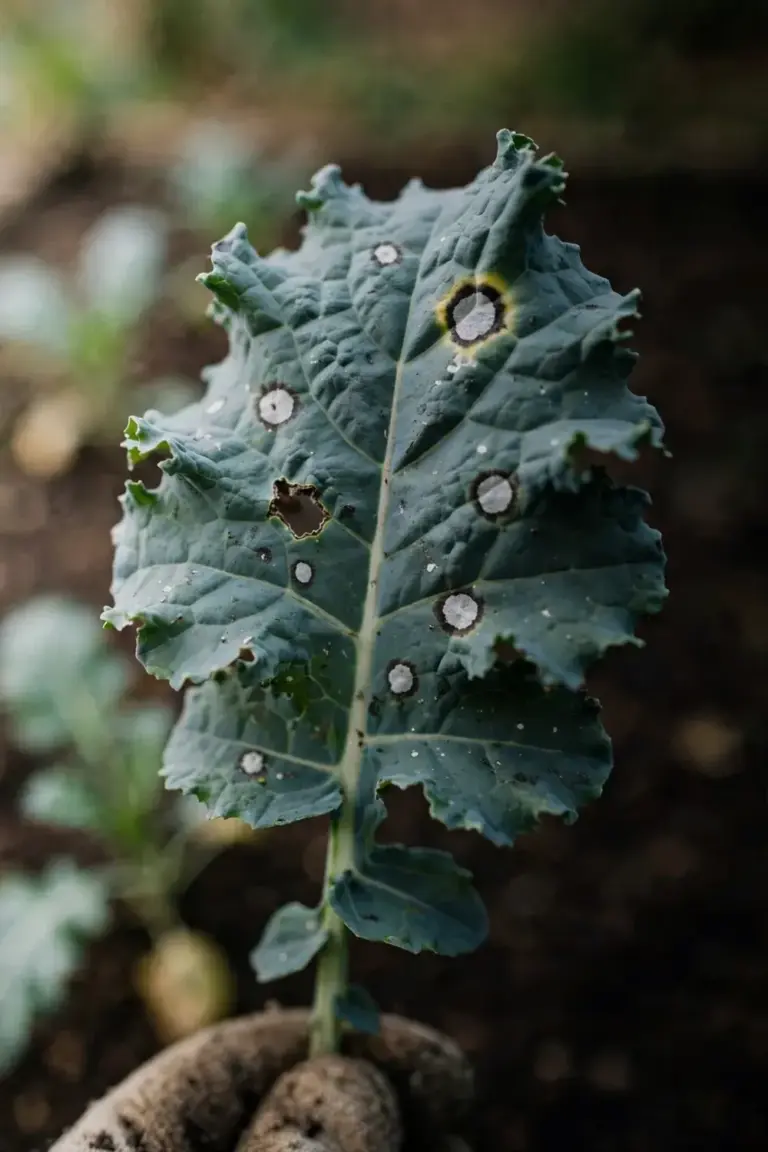
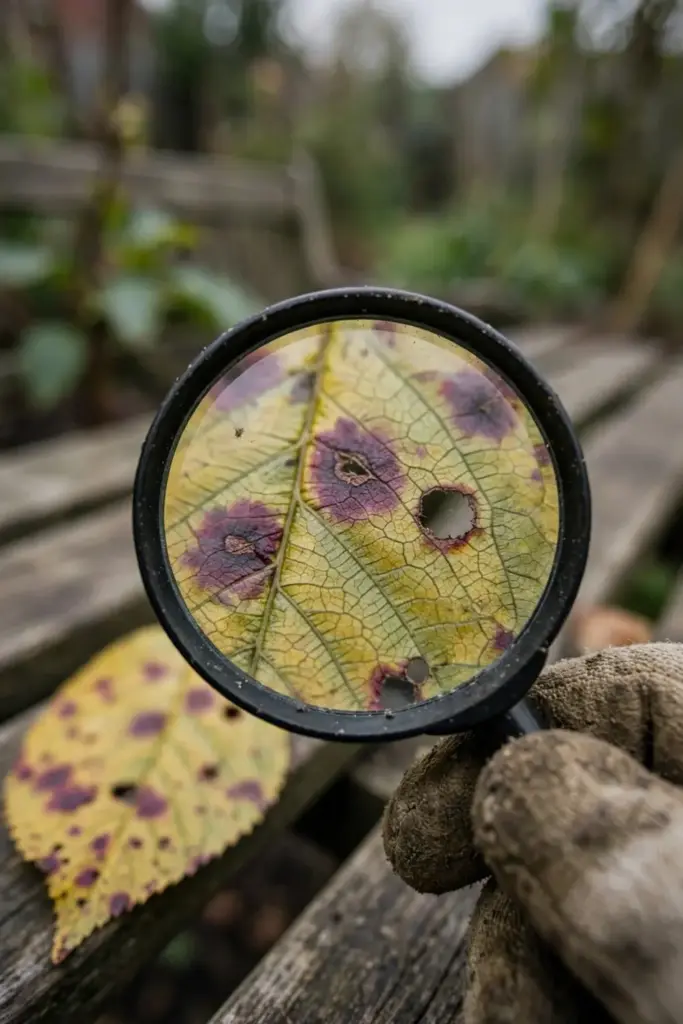
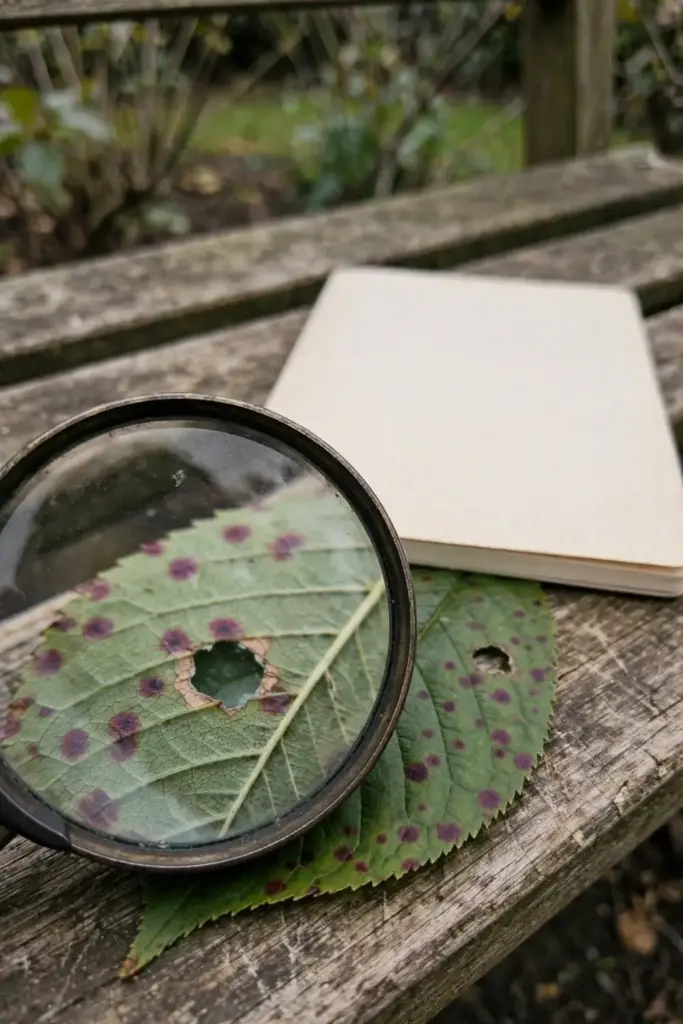
Look for small purple-red spots on the upper leaf surface that darken to brown as the tissue dies. The dead center often separates from the living leaf and drops out, leaving a clean round hole with a thin brown rim. Leaves with many infections turn yellow and fall early. That sequence of spot, hole, yellow, drop is the signature across hosts.
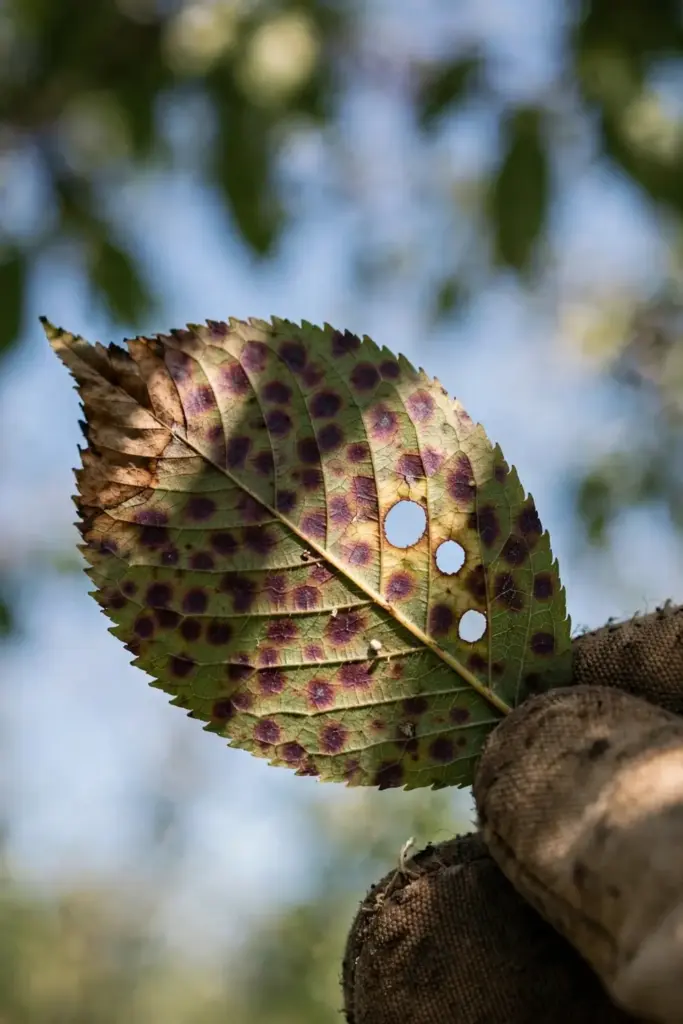
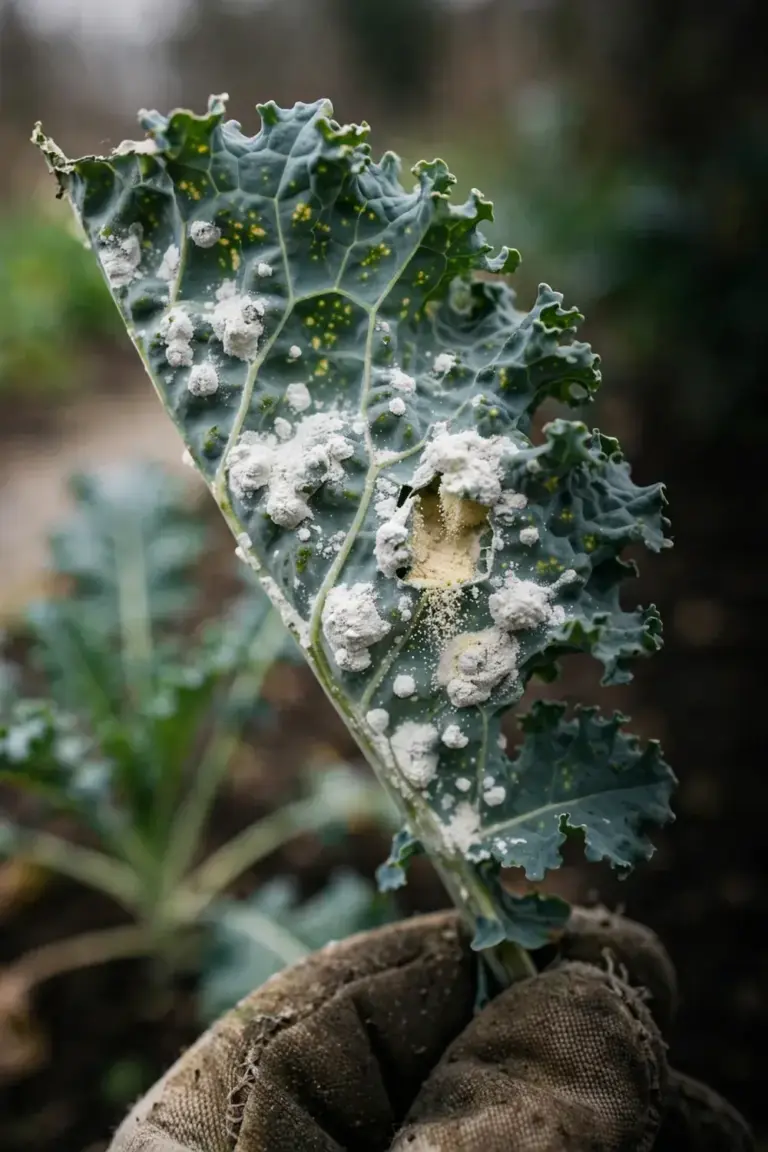
The underside of the leaf carries the confirming sign. In humid weather, a white spore mass may be visible on still intact lesions of infected leaves. Flip a spotted leaf on a damp morning and look at the underside with a hand lens. White to pale pink masses sitting under intact spots point toward the fungal form. The masses wash away in dry weather, so a dry-afternoon check can miss them. Check early, while dew still sits on the foliage.
Spot size and speed vary by host. On spiraea, the lesions usually measure between 1 and 2 mm in diameter, according to the Florida bulletin on Cylindrosporium leaf spot of spiraea. Under heavy inoculum pressure and severe infection, those lesions can coalesce and blight leaves, and extensive defoliation can follow. On cherry the spots grow larger and the defoliation risk runs higher. On oak the spots tend to stay small and cosmetic. Same genus, different stakes. Match the response to the host in front of you rather than to the name on the diagnosis.
Yellowing deserves a second look before you blame the fungus. Nutrient shortage, drought, and other leaf diseases all yellow leaves. The fungus gives itself away through the spots and the holes. A leaf that yellows with no spots and no holes points elsewhere. A leaf that yellows around spotted lesions, with holes dropping out of the worst spots, points at Cylindrosporium leaf spot.
3. How to Identify Cylindrosporium Leaf Spot on Fruit, Petioles, and Twigs
The disease reaches past the leaf blade on cherry. It attacks the leaves, leaf stems, fruit, and fruit stems, according to the West Virginia University cherry leaf spot fact sheet. Lesions on fruit stems cut the supply line to developing fruit, and heavy leaf loss starves the tree of the stored energy it needs for next year. The leaf spots get the attention. The fruit-stem and defoliation damage does the real harm.
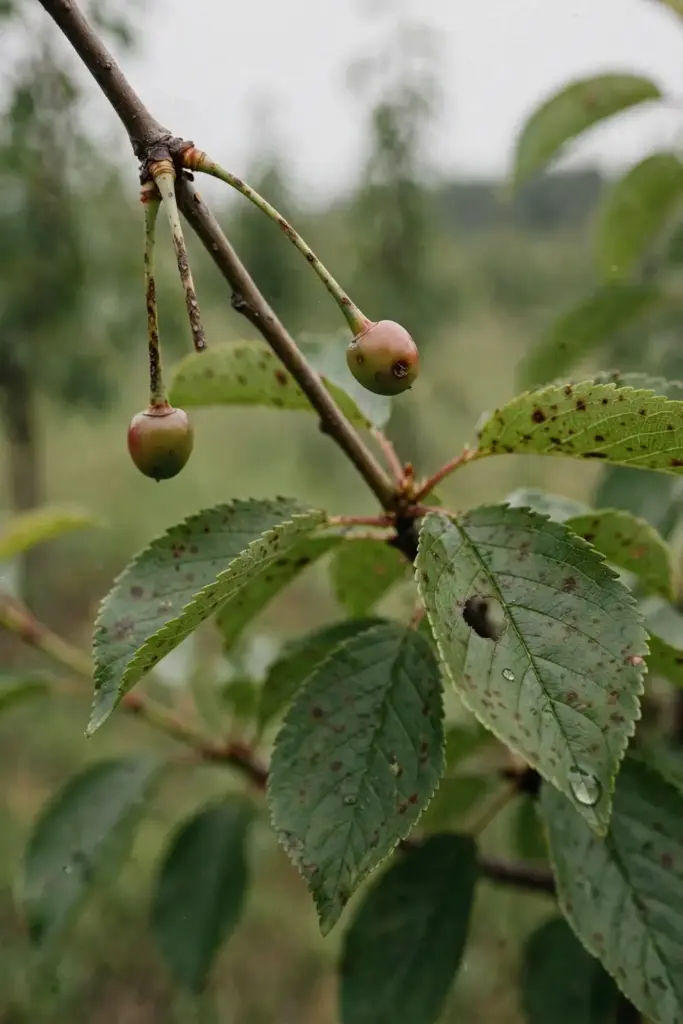
Early leaf drop is the bridge between leaf symptoms and tree health. Early leaf drop interferes with fruit ripening and color development, resulting in poor tasting, small, off-color fruit. Severely affected trees have poor reserves of stored carbohydrates and are ill prepared for winter, making them prone to winter injury and dieback. A cherry tree that drops its leaves in July does not just lose a season of looks. It walks into winter short of fuel.
Fruit lesions themselves are less common than leaf lesions, and they show up under heavy pressure. Small spots on young fruit or on fruit stems warn that the infection is running hard. On spiraea and oak, fruit damage is not part of the picture. Spiraea loses leaves. Oak loses looks. Cherry loses crop, vigor, and winter hardiness. The host sets the stakes again.
Twigs tell a different story, and the difference matters for the differential. The fungal form does not make cankers on branches. Sunken dead bark with gum points toward a bacterial cause or another disease entirely. Run a finger along the twigs below spotted leaves. Smooth bark with leaf spots above it fits the fungus. Sunken, gummy bark below spotted leaves fits something else, and that something else needs a different response.
4. Which Hosts Get Hit Hardest
Cherry sits at the top of the damage list, and nothing else in the genus comes close. The cherry fungus defoliates trees, cuts fruit quality, and drains winter reserves. Sweet cherry and tart cherry both catch it, and tart cherry shows more susceptibility in orchard reports. A cherry tree with repeated early defoliation loses vigor year after year. That is the host where treatment earns its keep.
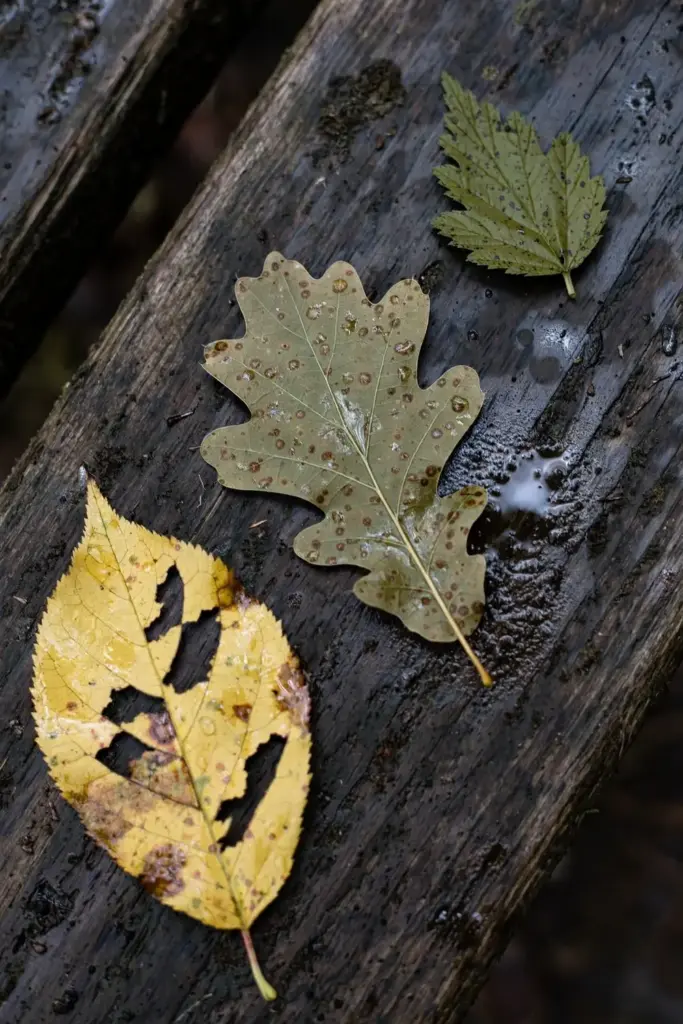
Oak sits at the other end. A Cylindrosporium fungus was isolated from circular leaf spots on northern red oak and identified as Cylindrosporium quercus, and in inoculation trials typical symptoms appeared on only 1 of 56 inoculated oak seedlings, according to the Arboriculture and Urban Forestry paper on Cylindrosporium leaf spot of oak. One seedling out of 56 is a weak pathogen on oak, not a tree killer. The same paper lists the genus as associated with leaf spots on many woody plants, including shepherdia, willow, elm, alder, hazel, black locust, sumac, walnut, mulberry, hophornbeam, cherry, birch, chestnut, ash, maple, hackberry, hornbeam, and oak. Association is not proof, and oak proves the point. Spots on an oak leaf call for cleanup, not alarm.
Spiraea falls in the middle. The Florida bulletin describes lesions of 1 to 2 mm that can coalesce and blight leaves under heavy pressure, with extensive defoliation possible. Spiraea is an ornamental shrub, so the loss is looks and leaf cover rather than crop. A spiraea that defoliates once usually leafs out again. A spiraea that defoliates three years running loses shape and vigor. Treat spiraea as a cleanup job first and a spray job only when defoliation repeats.
Mulberry, apple, and crucifer crops round out the reported host list with thinner home-garden evidence. Mulberry carries Cylindrosporium maculans leaf spots. Apple carries Cylindrosporium pomi fruit spots. Crucifer seed crops carry a light leaf spot form. Home-garden data for these three is thin, and no home-garden spray program exists for them in the sources behind this page. Sanitation and dry foliage carry the whole response for minor hosts. If spots show up on a minor host, confirm the diagnosis with a local extension clinic before reaching for any product.
| Host | Fungus Name | Damage Pattern | Evidence Strength |
|---|---|---|---|
| Cherry | Blumeriella jaapii, Cylindrosporium padi | Spots, shot holes, early defoliation, poor fruit, weak winter reserves | Strong, extension fact sheets |
| Oak | Cylindrosporium quercus | Small circular spots, mostly cosmetic | Research paper, weak pathogen on oak |
| Spiraea | Cylindrosporium filipendulae | Small spots, coalescing blight and defoliation under heavy pressure | State agriculture bulletin |
| Mulberry | Cylindrosporium maculans | Leaf spots | Reported, thin home-garden data |
| Apple | Cylindrosporium pomi | Fruit spots | Reported, thin home-garden data |
| Crucifer crops | Cylindrosporium species | Light leaf spot on seed crops | Reported, commercial-crop literature |
5. Cylindrosporium Leaf Spot vs Bacterial Shot Hole
Two different organisms make the same holes. The fungal form and the bacterial form both produce shot-hole lesions, and telling them apart decides the response. A fungicide does nothing against bacteria. A bactericide does nothing against fungus. Guessing wastes a season.
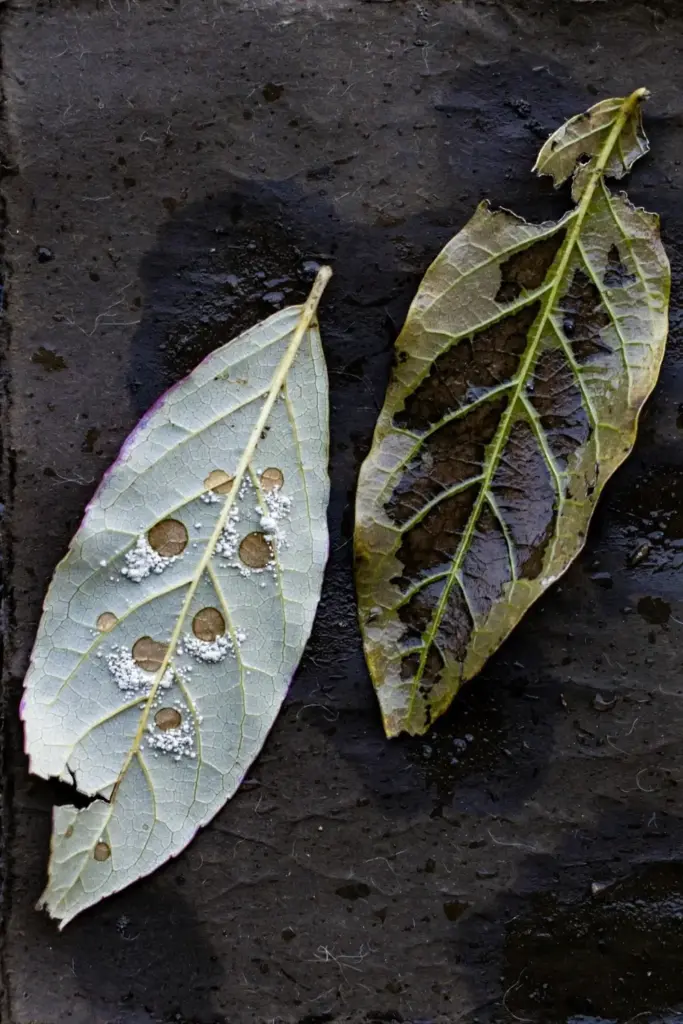
The underside test is the fastest separator. The fungal form sporulates on the undersides of intact lesions in humid weather, leaving white spore masses the reader can see with a hand lens. The bacterial form makes no spore masses. No masses does not prove bacteria, since dry weather hides fungal masses too. Masses present prove fungus. Check on a damp morning for the best odds.
The branch check is the second separator. The fungal pathogen overwinters on fallen leaves. The bacterial pathogen overwinters within cankers on branches. Sunken dead bark, gum, and dead twigs below spotted leaves point toward the bacterial side. Clean bark below spotted leaves points toward the fungal side. Both causes start as small purple or red spots that turn brown as the tissue dies, so the early spots alone cannot separate them.
A third name adds to the confusion. Shot hole disease, caused by the fungus Stigmina carpophila, is a separate disease that also drops holes out of leaves. It attacks cherry and other stone fruit, and it reaches fruit and twigs as well as leaves. The table below covers the two causes gardeners confuse most often. When fruit and twig symptoms dominate, or when the table below does not settle the case, a local extension clinic can confirm the organism from a fresh sample.
| Clue | Fungal Cylindrosporium Leaf Spot | Bacterial Shot Hole |
|---|---|---|
| Organism | Fungus, Blumeriella jaapii and related Cylindrosporium species | Bacterium, Pseudomonas syringae pv. syringae |
| Leaf spots | Small purple-red spots that darken, die, and drop out as round holes | Small purple or red circular or angular spots that darken, die, and drop out as holes |
| Underside sign | White spore masses on intact lesions in humid weather | No spore masses |
| Overwintering site | Fallen leaves | Cankers on branches |
| Weather favoring it | Warm temperatures with wet foliage | Cool, wet spring weather with standing water on leaves |
| First move | Rake and remove fallen leaves | Check branches for cankers and confirm the diagnosis before spraying |
Both causes are described on the Agriculture Canada chokecherry leaf spot page, which treats the fungal and bacterial forms together because both produce the same shot-hole lesions. Bacterial canker on branches is a related but separate bacterial problem, and the site’s bacterial canker guide covers canker care in fruit trees. Apple growers face a separate lookalike on fruit, and the site’s apple scab control guide covers that disease.
6. Why Fallen Leaves Drive the Whole Cycle
One habit explains the whole disease: the fungus winters in dead leaves. The fungus overwinters in the lesions on fallen leaves, and in the spring, around bloom time, the sexual spores mature and discharge into the air during or shortly after rain, according to the West Virginia University cherry leaf spot fact sheet. The optimum temperature for disease development sits between 17 and 20 degrees Celsius. At those temperatures, only 5 hours of wetting or high humidity are needed for infection to take hold. Infection takes place through the stomates on the undersides of leaves. New lesions appear 10 to 15 days after infection.
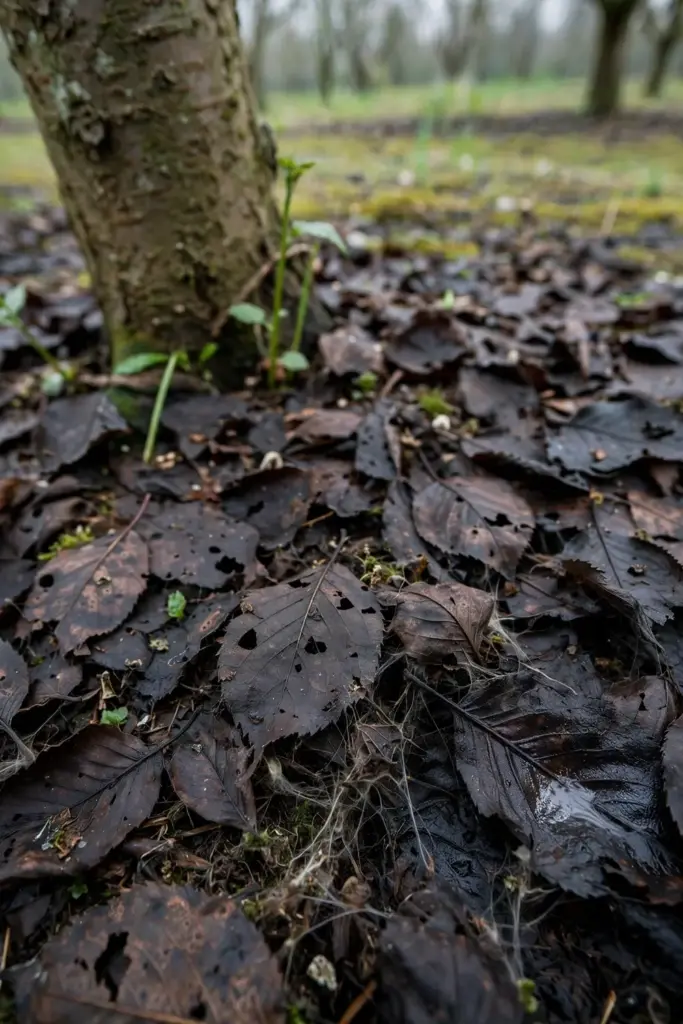
That timetable sets the whole management calendar. Spores rise from the leaf litter just as new leaves unfold. Five hours of wet leaf surface is enough, which is one rainy night or one heavy dew that lingers past sunrise. The 10 to 15 day gap means the spots you see today started two weeks ago, in weather you have already forgotten. Spraying spotted leaves cannot undo infections that already took hold. The work has to happen before the rain, or the season before, in the leaf litter.
Summer adds a second cycle. The asexual spores form as white masses on infected leaves and spread to healthy foliage in wet weather. Each wet stretch through summer can start a new round. The fungus does not need a second host or a soil phase. Leaf litter in spring, leaf lesions in summer, leaf litter again in autumn. Break any one link and the cycle weakens. Break the litter link and the spring wave never starts.
Warm weather favors the fungal form, while cool wet spring weather favors the bacterial form. That split explains why the same garden can show fungal dominance one year and bacterial dominance the next. The weather picks the winner. The gardener’s job stays the same either way: remove the overwintering material, keep foliage dry, and protect new leaves during the wet window.
7. What Makes Cylindrosporium Leaf Spot Worse in a Home Garden
Wet foliage is the first accelerator. Overhead sprinklers, rain, and heavy dew all hold leaves wet long enough for infection. Five hours of wetting is the threshold at the optimum temperature, and a sprinkler that runs at dusk easily clears it. Leaves that dry by midmorning after a rain carry less risk than leaves that stay wet past noon. Water at the soil line and the disease loses its easiest opening.
A dense canopy is the second accelerator. Crowded branches trap humid air and shade the interior leaves, so the inner canopy stays wet hours after the outer leaves dry. Unpruned cherry trees and packed spiraea hedges hold moisture the way a closed room holds breath. Airflow is the cheapest fungicide in the garden, and it costs one pruning session a year.
Skipped autumn cleanup is the third accelerator. Every spotted leaf left under the tree is a spore source for next spring. A single season of skipped raking restocks the litter bank. The fungus does not travel far on its own, so a clean garden next to a neglected one stays cleaner than a neglected garden alone. Wild cherry, chokecherry, and neglected plum trees near the garden carry the same pathogens and reseed the litter bank from outside the fence. Clear the wild hosts within reach, or accept a higher baseline of pressure.
Stress is the quiet fourth accelerator. A tree short of water, short of nutrients, or already defoliated fights worse than a vigorous one. The fungus still needs wet leaves to infect, and a stressed tree still needs the same cleanup. Stress does not cause the disease. Stress decides how much damage the disease does once it lands. Feed and water the tree on a normal schedule, and spend the disease effort on litter, airflow, and dry foliage.
8. Step 1: Decide Whether Treatment Is Actually Worth It
Start with the host and the damage, not the spray shelf. A cherry tree that defoliates early two years running and crops poorly earns a full program of cleanup plus protection. An oak with a scattering of cosmetic spots earns cleanup alone. A spiraea that loses some leaves in a wet year earns cleanup and watchful waiting. The same fungus does not mean the same response. The host and the history set the budget.
Count the cost honestly. A spray program costs product, time, and repeat trips through the wet season, and it protects only the leaves it covers before the rain. Sanitation costs a rake, a tarp, and an afternoon, and it cuts the spring wave at the source. Most home gardens get most of their control from sanitation alone. Spray enters the picture when sanitation plus dry foliage still leaves a cherry tree defoliating early.
Set one rule before you act. If the diagnosis is uncertain, confirm it before spraying anything. The fungal and bacterial forms look alike, and the wrong product wastes money and leaves the real cause untouched. A fresh sample to a local extension clinic costs less than a season of wrong sprays. Treat first, identify later is backwards. Identify first, then treat what is actually there.
9. Step 2: Strip the Inoculum Out of the Garden
Rake every fallen leaf from under every host tree and shrub in autumn, after leaf fall finishes. Work outward from the trunk to the drip line and past it, since wind scatters spotted leaves beyond the canopy edge. Bag the leaves and remove them from the garden. Do not pile them against the fence to deal with later. Later is spring, and spring is when the spores rise.
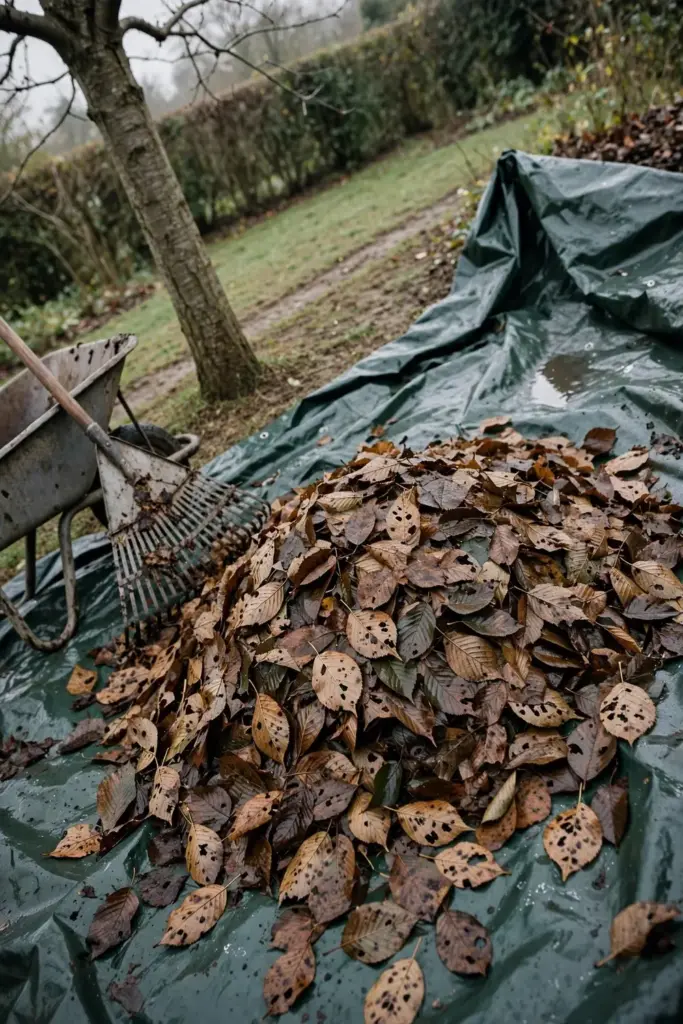
Clean the spots rakes miss. Leaves lodge in hedge bases, behind pots, and under low shrubs. Those pockets hold moisture and hold spores. Pull them out by hand and bag them with the rest. Check under wild cherry, chokecherry, and neglected plum trees near the garden too. Wild hosts reseed the litter bank from outside the fence, and one uncleaned wild tree can undo a clean garden.
Clean tools between cuts when bacterial disease is suspected. Wipe blades with a disinfectant between trees, and between cuts on the same tree when cankers are present. The habit takes seconds and stops the pruner from becoming the vector. Rakes, tarps, and gloves get a wash at the end of the job. Spores ride on gear as easily as on leaves.
Repeat the cleanup after storms. A windstorm can strip spotted leaves midseason and scatter them across clean ground. A quick rake after a summer storm keeps the litter bank from refilling. The habit matters more than the heroics. One thorough autumn cleanup plus quick storm pickups beats a single frantic spring effort.
10. Step 3: Open the Canopy and Keep Foliage Dry
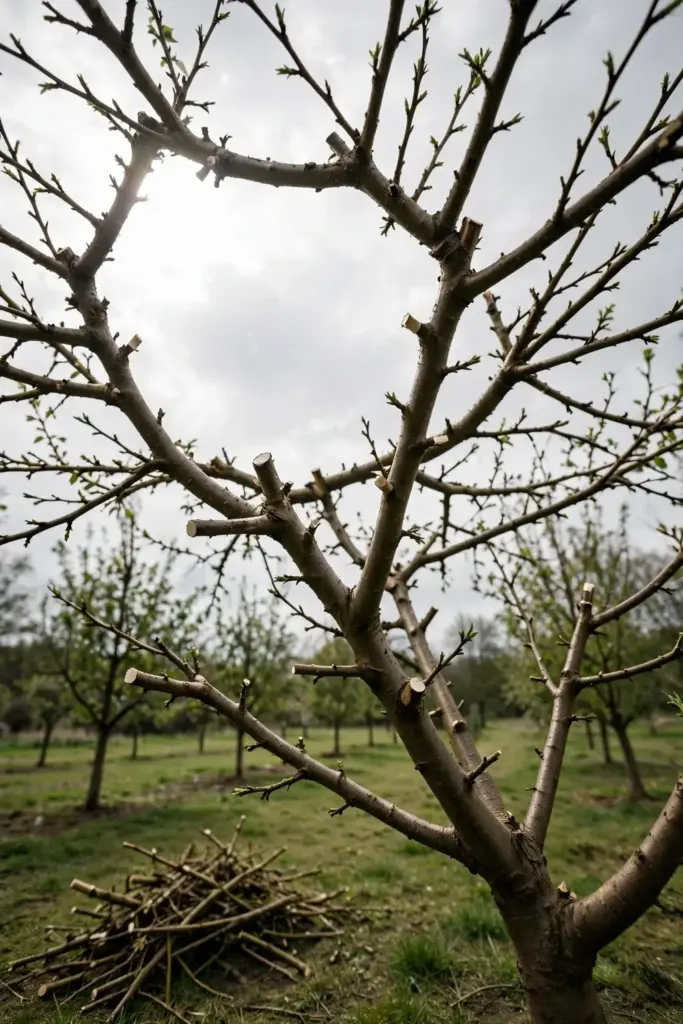
Prune for air and light. An open canopy dries hours faster than a crowded one, and dry leaves resist infection. Remove crossing branches, inward growth, and dead wood. Leave space between limbs so wind moves through the crown. The site’s spring pruning techniques cover the cuts and the timing for fruit trees. Prune in dry weather, and clean the tools when bacterial disease is suspected.
Water at the soil line. Drip lines, soaker hoses, and a slow hose at the base put water on roots, not leaves. Overhead sprinklers wet the whole canopy and hold it wet into the evening, which hands the fungus its 5-hour window on a schedule. If overhead watering is the only option, run it in the morning so leaves dry by midday. Evening overhead watering is the worst choice in a disease year.
Space new plantings for airflow from day one. A cherry tree crammed against a fence dries slowly and sprays badly. A spiraea hedge packed tight holds humidity in its center. Give each plant the room its mature width needs. Moving a planted tree is harder than spacing it right the first time. When replacing a lost tree, use the gap to fix the spacing that helped the disease.
Mulch helps, with one condition. A mulch layer under the tree holds soil moisture and keeps mowing from throwing litter back into the canopy. Keep the mulch off the trunk and off the crown. Mulch piled against bark holds moisture against tissue that should stay dry. A flat ring of mulch, clear of the trunk, is the right shape.
11. Step 4: Protect New Leaves in Wet Springs
New leaves need protection during the wet window, and only during it. The spring spore wave rises from the litter just as leaves unfold, and the infection window runs through wet spring weather. Protectant fungicide on healthy new leaves, applied before rain, blocks the spores that land there. Spray after the rain, on already infected leaves, protects nothing. Timing beats product choice.
Read the label as the whole instruction. The label sets the host, the rate, the interval, and the stop rules for your area. Home-garden products and rates differ by region, and the label on the bottle in your hand outranks any general advice. Follow the reentry and harvest intervals exactly. Rotate products with different modes of action across the season rather than repeating one product until it stops working.
Stop when the window closes. Once the spring wet period passes and new growth hardens, the pressure drops. Continuing to spray through a dry summer spends money and product for no gain. Watch the weather, not the calendar. A dry spring needs fewer applications than a wet one. The goal is a full canopy into autumn, not a spray diary.
Keep expectations honest. Fungicide protects healthy leaves. It does not heal spotted leaves, close shot holes, or regrow fallen foliage. A tree that already lost half its leaves in spring will still look thin in July, even with perfect spray timing. The payoff shows next year, when a protected canopy builds the reserves that carry the tree through winter. One good season of protection buys the next season’s vigor.
12. Living With Existing Damage
Holes do not heal. A leaf with shot holes keeps those holes until it falls. No spray, feed, or tonic closes them. The damage is done, and the leaf finishes its life with the holes in it. Accept that and spend the effort on the leaves still to come. A tree with holed leaves and a full canopy is a tree coping, not a tree dying.
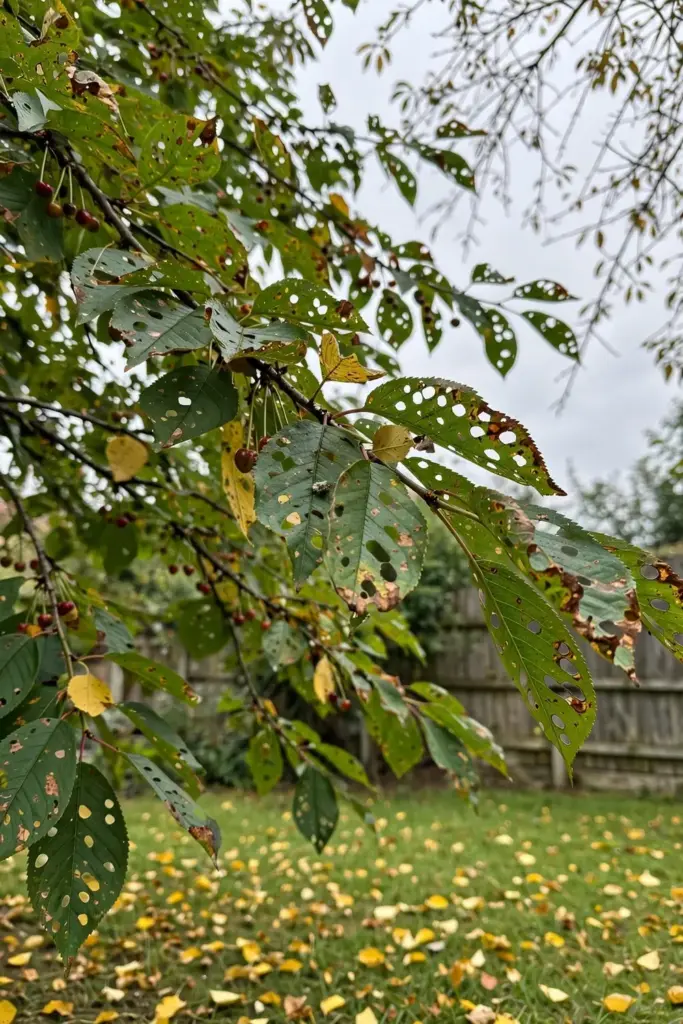
Do not strip the remaining leaves. A damaged leaf still photosynthesizes around its holes, and a tree that lost half its canopy needs every working leaf it has left. Stripping spotted leaves midseason removes the tree’s remaining fuel supply. The time to remove leaves is autumn, when they fall on their own and carry the fungus with them. Midseason stripping helps the fungus by weakening the tree.
Feed and water on a normal schedule. A tree recovering from defoliation needs steady water in dry spells and its usual feeding, not a rescue dose of fertilizer. Heavy late feeding pushes soft growth that ripens poorly before winter, and a tree short of reserves needs hard, mature wood going into the cold. Steady care beats heroic care.
Watch the autumn after a bad year. A tree that defoliated early enters winter with low reserves and faces a higher risk of winter injury and dieback. Reduce extra stress: water during dry autumn weeks, avoid new wounds, and leave the late-season pruning for the dormant window. If the same tree defoliates early a second year, escalate from sanitation to the full protection program in Step 4. Two bad years in a row is a pattern, not bad luck.
13. Frequently Asked Questions About Cylindrosporium Leaf Spot
Yes, on cherry. Cherry leaf spot is the common name for the cherry form of this disease, caused by Blumeriella jaapii, whose asexual spores carry the Cylindrosporium name. The genus covers more hosts than cherry, including oak, spiraea, mulberry, apple, and crucifer crops. Cherry is the best studied host and the hardest hit. When a source says cherry leaf spot, it means this disease on cherry.
Rarely on its own, and cherry is the exception that proves the rule. A single defoliation year weakens a cherry tree but seldom kills it. Repeated early defoliation drains reserves, cuts winter hardiness, and can kill a cherry tree after several bad years. Oak and spiraea almost never die from it. The real risk is cumulative: year after year of early leaf loss, not one bad spring.
Not in the way the question implies. Each Cylindrosporium species favors its own hosts, so the cherry fungus does not jump to apple and start the same epidemic. Apple carries its own Cylindrosporium fruit spot form, and the two problems need separate diagnoses. Sanitation helps both, since fallen leaves carry each form through winter. Keep the leaf litter cleaned up under every host.
White spore masses on intact lesions in humid weather are the fungal form sporulating. The masses appear on the undersides of spots while the lesions are still intact, and they wash away in dry weather. Their presence confirms the fungal form rather than the bacterial one. Check on a damp morning with a hand lens for the best view. No masses does not prove bacteria, since dry weather hides them.
No. Bag the fallen leaves from infected hosts and remove them from the garden. Home compost piles rarely heat evenly enough to destroy the fungus in every leaf, and a compost pile of spotted leaves becomes a spore bank beside the garden. Municipal green waste collection is the safer outlet. Clean litter is the single highest value habit in this whole program.
14. Where to Go From Here
Walk the garden with a bag and a hand lens. Flip a few spotted leaves and check the undersides on a damp morning. Rake the litter under every host tree and shrub. Those three moves, done this week, cut next spring’s infection more than any product.
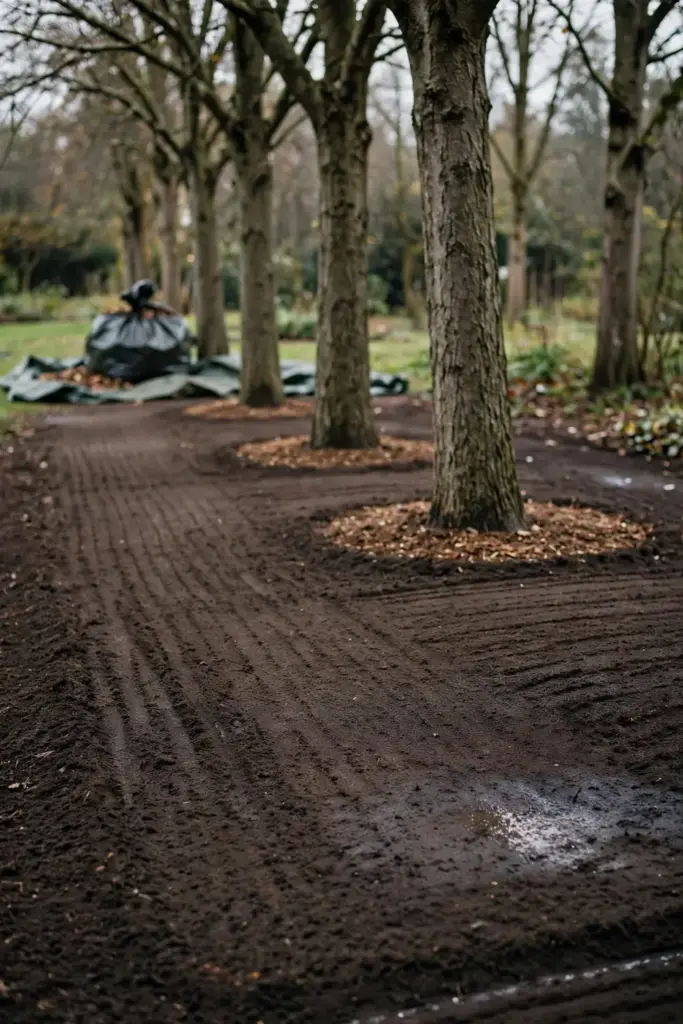
Then set the calendar. Autumn cleanup, dormant-season pruning for airflow, and protection of new leaves through the wet spring window. The cycle is simple and the work is ordinary. The fungus wins when the litter stays. Remove the litter and the garden wins.