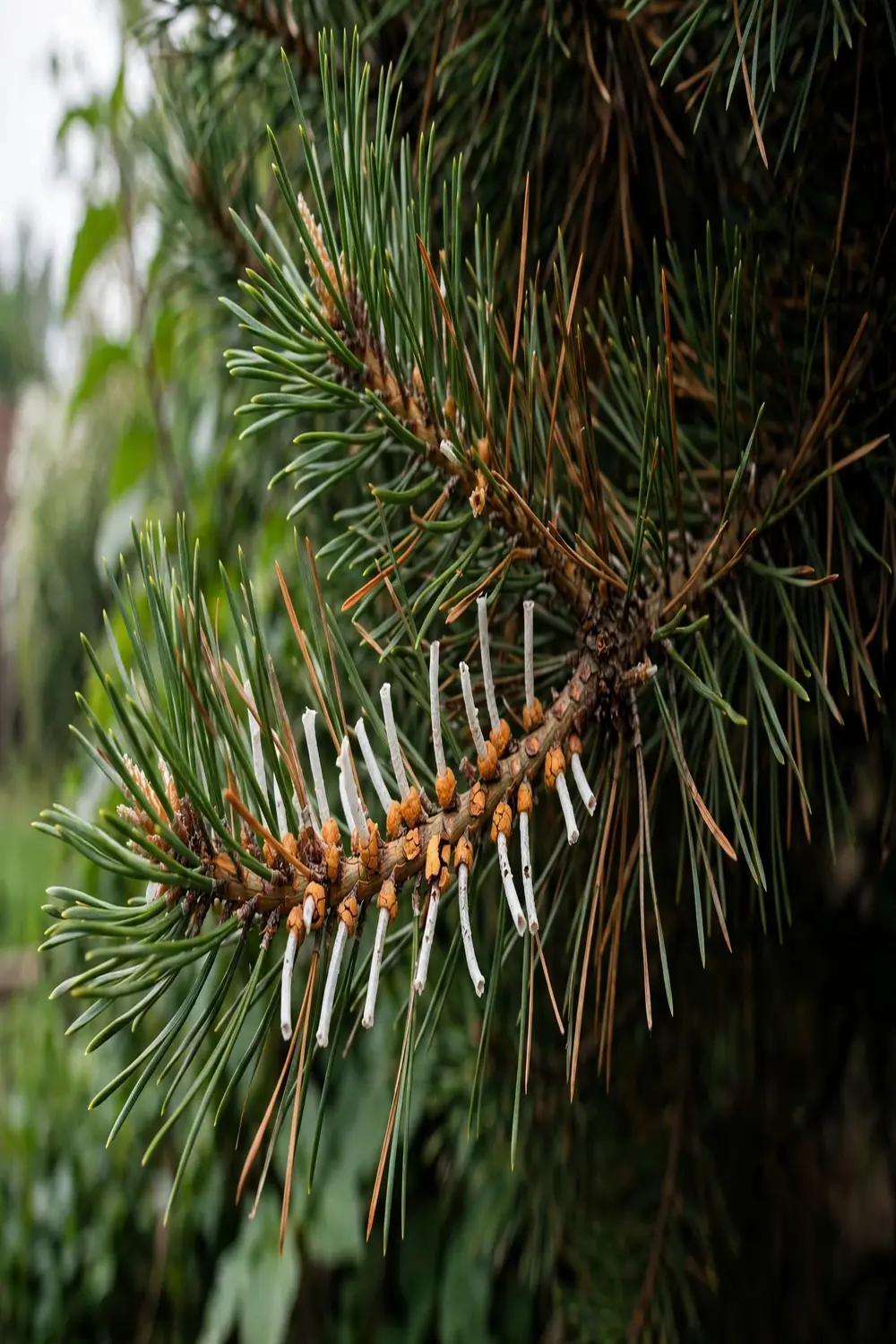

Pine needle rust on a mature pine is harmless. The 5 checks below tell whether it is harmless and protect young trees, starting with the spring blister check that confirms the identification.
The signature is orange blisters and white tubes erupting from needles, on lower branches first, with young trees hit hardest. The disease does very little overall harm to well-established trees. The value of this page is stopping the reader from spraying or panicking, plus the young-pine exception and the alternate-host cycle-break.
The rest of this page runs the order a gardener should follow. Understand the rust first, learn its signs, then work the 5 checks from identification to new plantings. I have learned that the mature pine I leave alone is the pine that outgrows the rust on its own.
What Pine Needle Rust Actually Is
Pine needle rust is a fungal rust disease of pine needles. Fungi in the Coleosporium group cause pine needle rust.
The honest frame comes first. The disease does very little overall harm to well-established trees. University of Minnesota Extension states that the disease does very little overall harm to well-established trees. Missouri Botanical Garden, Clemson University Extension, and Iron Tree guidance agree: management is rarely required, chemical control is usually not necessary, and the disease may be ignored on mature trees. This article leads with that consensus, because the orange blisters scare gardeners into spraying a harmless disease.
The rust needs an alternate host to complete its life cycle. The pine is the main host. Asters and goldenrods are the alternate hosts. Spores from pine needles infect asters and goldenrods. Spores from asters and goldenrods infect pine needles. The cycle runs pine to aster to pine, year after year. A yard pine beside a goldenrod patch faces the full cycle. A yard pine far from asters and goldenrods faces a lighter cycle. The alternate-host link matters, and Check 3 covers it.
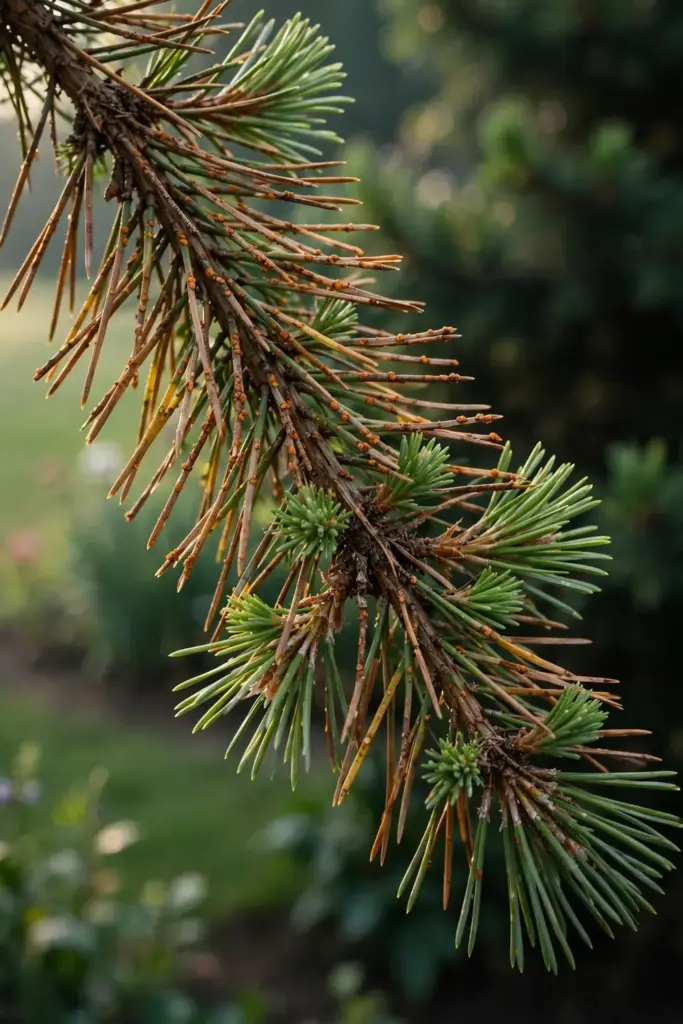
The rust infects needles, not bark or wood. The fungus grows inside the needle and erupts through the surface in spring, showing orange blisters and white tubes. The infected needle yellows, browns, and drops. The tree grows new needles. The tree does not lose wood. The tree does not lose structure. The needle loss is cosmetic on a mature tree. The needle loss matters only on a young tree, where heavy needle loss slows growth.
The cycle runs on a seasonal clock. In spring, spores from asters and goldenrods infect pine needles, and the infected needles erupt with orange blisters and white tubes. Through summer, the fungus cycles on the alternate hosts, multiplying on aster and goldenrod leaves. Before August, the infected alternate hosts produce basidiospores, the spore stage that flies back to pine needles. In autumn, infected pine needles yellow and drop, and the fungus waits out winter in the fallen needles and in the alternate hosts. The seasonal clock is the reason Check 3 carries an August deadline. A goldenrod patch mowed before August breaks the clock. A goldenrod patch left standing through August runs it.
The scope stays on landscape and yard pines: 2-needle and 3-needle pines, including Austrian, jack, red, ponderosa, mugo, Scots, loblolly, slash, and lodgepole. Nursery production, Christmas-tree plantations, and forestry stay out. This article is a care explainer, not a treatment guide. There is no treatment to apply on a mature tree.
Two disambiguation notes belong here and nowhere else. White pine blister rust, caused by Cronartium ribicola, is a bark and stem canker disease, a killer, and a different disease. Fusiform rust is a trunk and branch gall disease, a killer, and a different disease. Pine needle rust is a needle disease, cosmetic on mature trees, and the opposite of those two killers. The article never mixes them.
How to Spot Pine Needle Rust on Yard Pines
Orange blisters and white tubes erupting from needles, on lower branches first, with young trees hit hardest, point at pine needle rust.
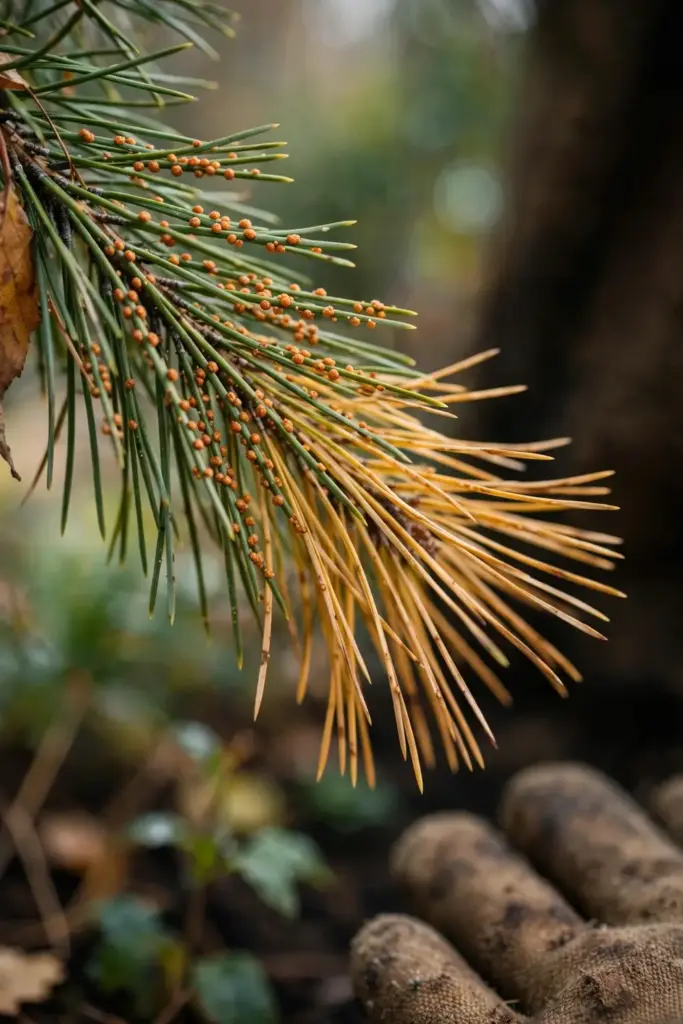
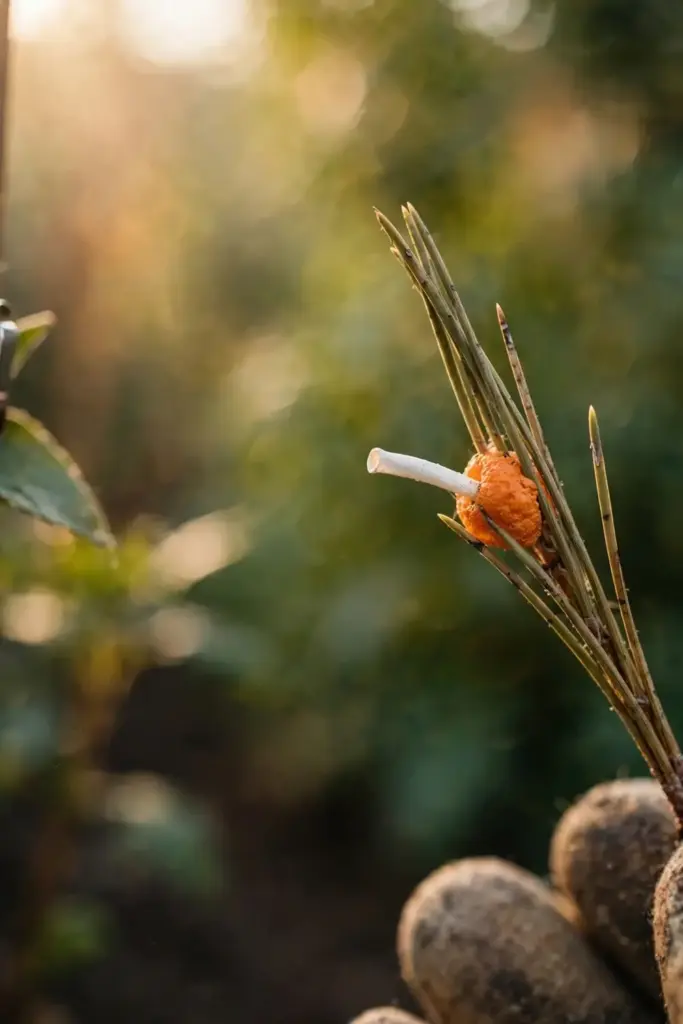
Look at the needles in spring. The USDA Forest Service pocket guide to Christmas tree diseases describes the sign: orange blisters erupting from needles on lower branches in spring. The blisters are the spore masses. The white tubes are the spore structures. A needle with an orange blister and a white tube in spring is a pine needle rust needle. A needle with a yellow spot and no blister is something else.
Look at the lower branches first. The rust starts on lower branches, where the needles stay wet longest and where the spores from asters and goldenrods land first. A pine with blisters on lower branches and clean upper branches fits the pattern. A pine with blisters across the whole crown fits a heavy year. The lower-first pattern is the mark.
Look at the young trees first. The USDA pocket guide notes that the rust is most common on young trees up to sapling size, with unsightly foliage and slowed growth. A young pine with blisters is the common case. A mature pine with blisters is the uncommon case. The age pattern is part of the diagnosis. A sapling with blisters earns attention. A mature tree with blisters earns a shrug.
Field identification is strong for the blister itself. An orange blister erupting from a pine needle in spring is pine needle rust until proven otherwise. The lookalikes are few: needle cast diseases spot needles without blisters, pine needle scale is an insect, and normal fall needle drop yellows older interior needles in autumn without blisters. The blister separates them. The season separates fall drop from spring rust.
Check the whole tree, not one branch. Pine needle rust on one lower branch points at that branch’s exposure. Pine needle rust across the whole lower crown points at the tree’s site and the alternate hosts nearby. The spread of blisters across the tree tells the gardener whether the problem is one branch or one site.
| Sign | What It Means | Action |
|---|---|---|
| Orange blisters and white tubes on needles, lower branches first, spring | Pine needle rust | Confirm the ID, then check the tree’s age |
| Orange blisters on a mature, established tree | Cosmetic infection | Do nothing, live with it |
| Orange blisters on a young or sapling pine | Infection that can slow growth | Protect the young tree, check for combined damage |
| Yellowing older interior needles dropping in autumn, no blisters | Normal fall needle drop, not disease | Do nothing, do not spray |
| Bark or stem cankers, trunk or branch galls | Different disease: blister rust or fusiform rust | Get an arborist assessment, not a spray |
Check 1: Confirm the ID With Spring Blisters on Lower Branches
Confirm the identification with spring blisters on lower branches. The blister check is the gate.
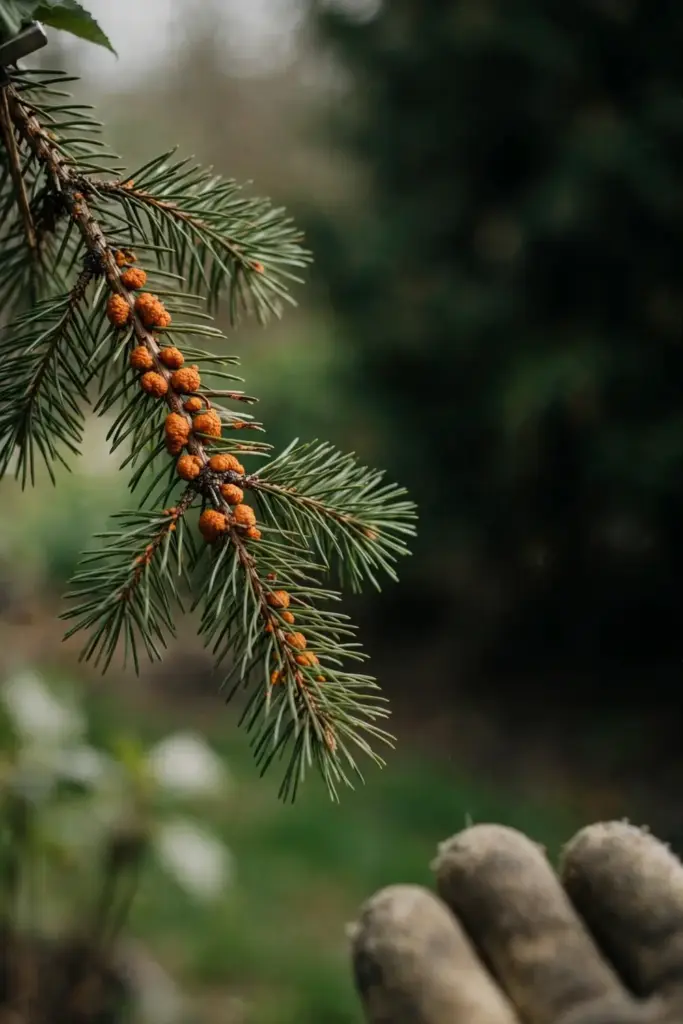
Walk the pines in spring and look at the lower branches. Look for orange blisters erupting from needles. Look for white tubes. A needle with a blister and a tube in spring is a pine needle rust needle. A needle with a spot and no blister is not. The blister is the diagnosis. The season is the confirmation.
Check the alternate hosts too. Asters and goldenrods near the pine carry the other half of the cycle. A pine beside a goldenrod patch with blisters fits the cycle. A pine far from asters and goldenrods with blisters still fits, because spores travel on the wind. The alternate hosts confirm the cycle. The blisters confirm the disease.
Do not confuse pine needle rust with white pine blister rust or fusiform rust. White pine blister rust shows bark and stem cankers. Fusiform rust shows trunk and branch galls. Pine needle rust shows needle blisters. The tissue separates them: needles versus bark versus wood. A gardener who sees needle blisters has pine needle rust. A gardener who sees cankers or galls has a different disease and a different response.
Do not confuse pine needle rust with normal fall needle drop. Normal fall needle drop yellows older interior needles in autumn, without blisters, and drops them. Colorado State University Extension notes that no spray is needed for normal autumn shedding. Fall drop is seasonal, interior, and blister-free. Pine needle rust is spring, lower-branch, and blistered. The season plus the blister separates them.
Check 2: Do Nothing on Mature, Established Trees
Do nothing on mature, established trees. Live with it. The do-nothing check is the headline honesty of this article, not a gap.
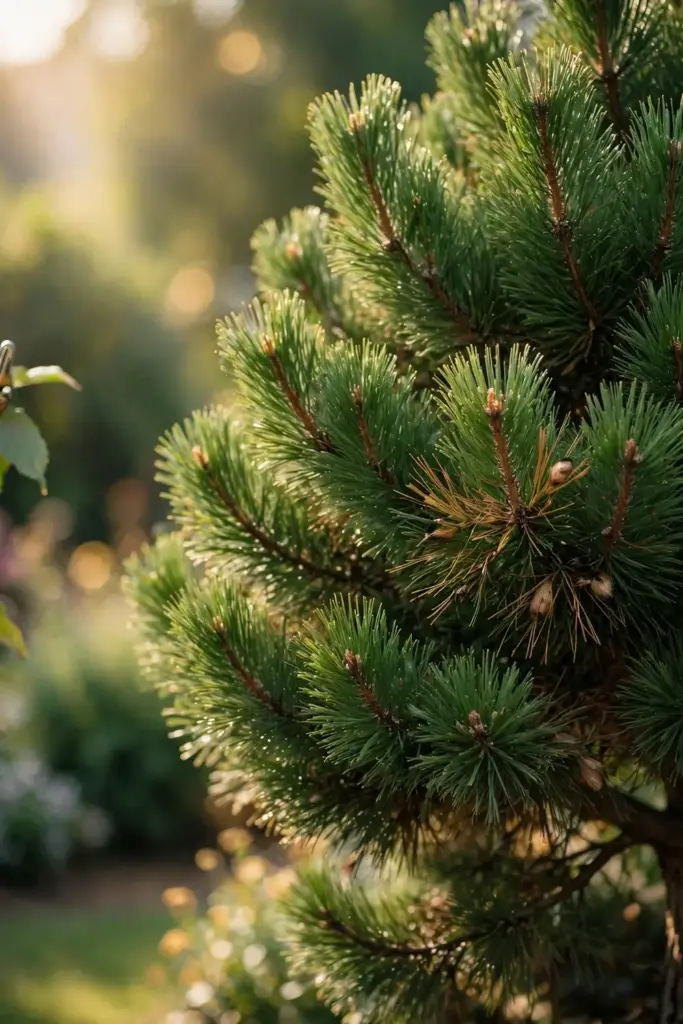
University of Minnesota Extension states that the disease does very little overall harm to well-established trees. Missouri Botanical Garden, Clemson University Extension, and Iron Tree guidance agree: management is rarely required, and chemical control is usually not necessary. A mature pine with pine needle rust loses some needles. The pine grows new needles. The pine does not lose wood. The pine does not lose structure. The pine does not need a spray. The pine needs nothing.
Do not spray a mature pine for pine needle rust. No fungicide is currently registered for pine needle rust, per the Reforestation, Nurseries, and Genetics Resources guidance. Clemson University Extension notes that chemical control is usually not necessary. A gardener who sprays a mature pine wastes money and chemistry on a disease that needs nothing. The spray bottle stays in the shed. The pine stays healthy without it.
Do not prune a mature pine for pine needle rust. Pruning removes the blistered needles, but the blisters return next spring from the alternate hosts. Pruning a mature pine for needle rust costs time and opens wounds for no benefit. The mature pine outgrows the needle loss. The pruning does not help. The pruning hurts.
Do not panic. A mature pine with orange blisters looks alarming. The blisters are cosmetic. The pine is healthy. The gardener who panics sprays, prunes, and worries. The gardener who knows the disease does nothing. The nothing is the right thing. Walk past the mature pine. Check the young pines. The young pines are the ones that need attention.
Check 3: Remove or Mow Asters and Goldenrods Near Valuable Pines Before August
Remove or mow asters and goldenrods near valuable pines, before August, when infected alternate hosts produce basidiospores.
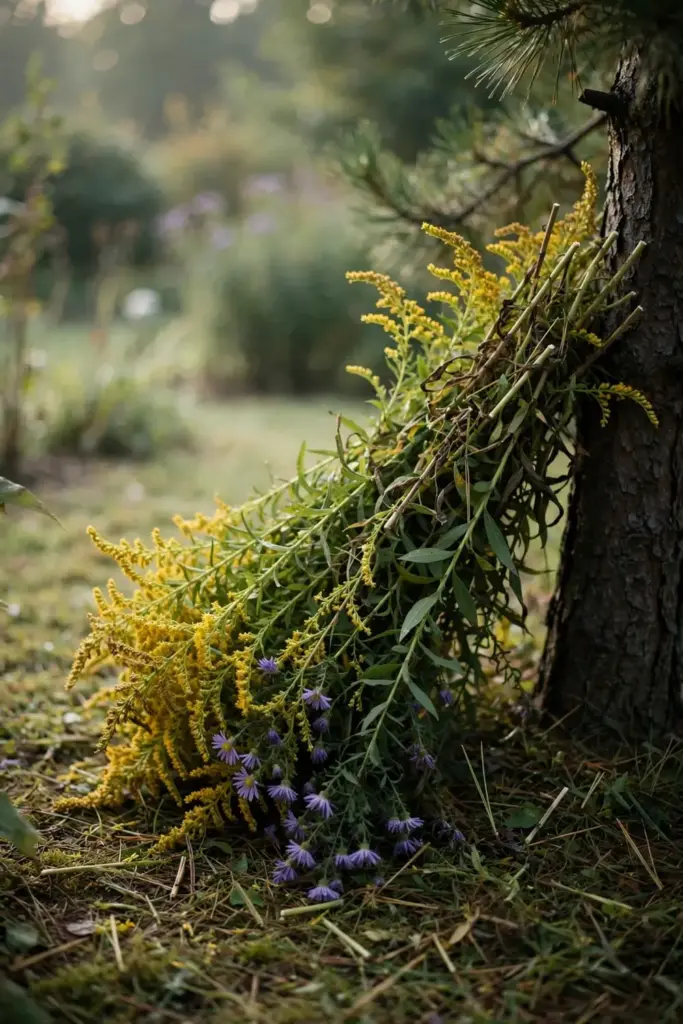
The Reforestation, Nurseries, and Genetics Resources guidance gives the timing: before August, when infected alternate hosts produce basidiospores. The basidiospores are the spores that infect pine needles. A goldenrod patch left standing through August sheds basidiospores onto the pines. A goldenrod patch mowed before August sheds nothing. The August deadline is the cycle-break. The mowing is the break.
Mow the asters and goldenrods near the yard. A mower is the home version of the guidance. Mow the goldenrod patch beside the pines. Mow the aster clump at the yard’s edge. Mow before August. The mowing removes the alternate hosts before they shed spores. The pines face a lighter spore load next spring.
Remove the alternate hosts by hand when the patch is small. A small aster clump pulls cleanly when the soil is moist. A small goldenrod patch digs out with its roots. A large patch earns the mower. The method fits the size. The timing fits the cycle. Before August is the rule for every method.
Clemson University Extension, Iron Tree, and Missouri Botanical Garden agree on alternate-host removal as one cycle-break. The consensus is the guidance. The mowing is the home version. The nursery and forestry versions, with herbicide zones and barrier trees, stay out of home advice. The home version is the mower. The mower is enough.
Do not present alternate-host removal as a complete cure. Two autoecious exceptions spread pine to pine without an alternate host: Cronartium crowellii on pinyon pine, and Cronartium pinicola on Virginia pine. Alternate-host removal does not break their cycle. The exceptions get one line and no more. The general rule covers the common pines. The exceptions cover two pines. The article never presents the exception as the rule.
Check 4: Protect Young and Sapling Pines, the Only Case Where Action Matters
Protect young and sapling pines. The young-pine exception is the only case where action matters.
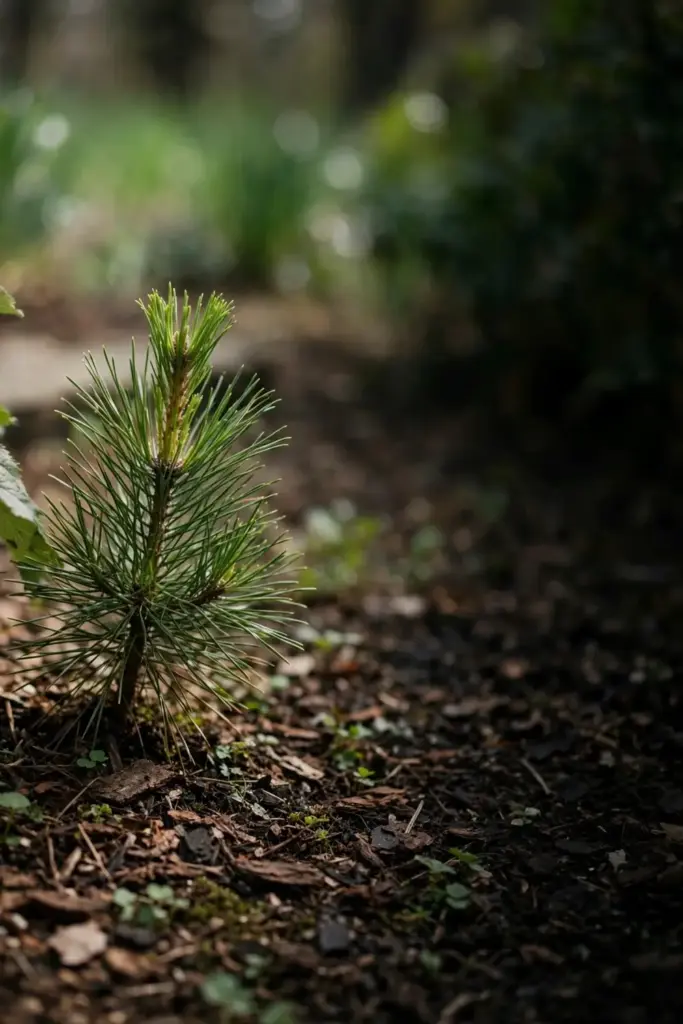
Young pines carry the real risk. The USDA pocket guide notes that the rust is most common on young trees up to sapling size, with unsightly foliage and slowed growth. ForestPests guidance notes that the rust occasionally destroys enough foliage to retard growth of young trees, but usually causes little damage. The young pine that loses most of its needles grows slowly. The young pine that loses a few needles grows normally. The difference is the needle loss. The action is protecting the young pine’s needles.
Do not transplant infected seedlings. A seedling with blisters is a seedling to destroy, not a seedling to plant and hope about. Hope is not a disease control. The infected seedling goes in the bag. The clean seedling goes in the ground. A clean seedling in a clean site grows clean. An infected seedling in a clean site infects the site.
Keep young trees vigorous. Water a young pine in drought. A young pine in dry soil grows slowly and holds its needles weakly. A young pine watered deeply once a week in drought grows steadily and holds its needles. Water at the base, not overhead, so the needles stay dry while the roots drink. Mulch a young pine to hold soil moisture. A 2 to 3 inch mulch ring, pulled back from the trunk, holds moisture in the soil and cools the roots. The mulch also shields the base from mower damage. A mulched young pine faces fewer mower nicks and steadier moisture than an unmulched one. Do not over-fertilize a young pine. A young pine pushed with heavy nitrogen grows soft, succulent needles that the rust infects easily. A young pine fed to a soil test grows steady needles that resist infection. The vigor is the resistance, and steady feeding grows the vigor. A vigorous young pine outgrows needle loss. A stressed young pine stalls. The watering and mulching are the protection. The vigor is the resistance. A young pine that grows steadily resists the rust’s slowing effect.
Watch the lower branches. The rust starts on lower branches. A young pine with blisters on lower branches earns a watch. A young pine with blisters across the whole crown earns a closer look. The spread of blisters across the young pine tells the gardener how hard the rust is hitting.
Get an arborist assessment when rust combines with insect or other foliage damage. The Reforestation, Nurseries, and Genetics Resources guidance notes that combined attack may seriously damage or kill seedlings. Rust alone seldom kills a seedling. Rust plus insect damage can. Rust plus another foliage disease can. The combination is the danger. A young pine with rust and insects earns a professional look. The arborist measures the combined damage and decides. The gardener does not guess.
Check 5: Choose Less-Susceptible Species for New Plantings
Choose less-susceptible species for new plantings. A species choice is the longest-lasting prevention on this page.
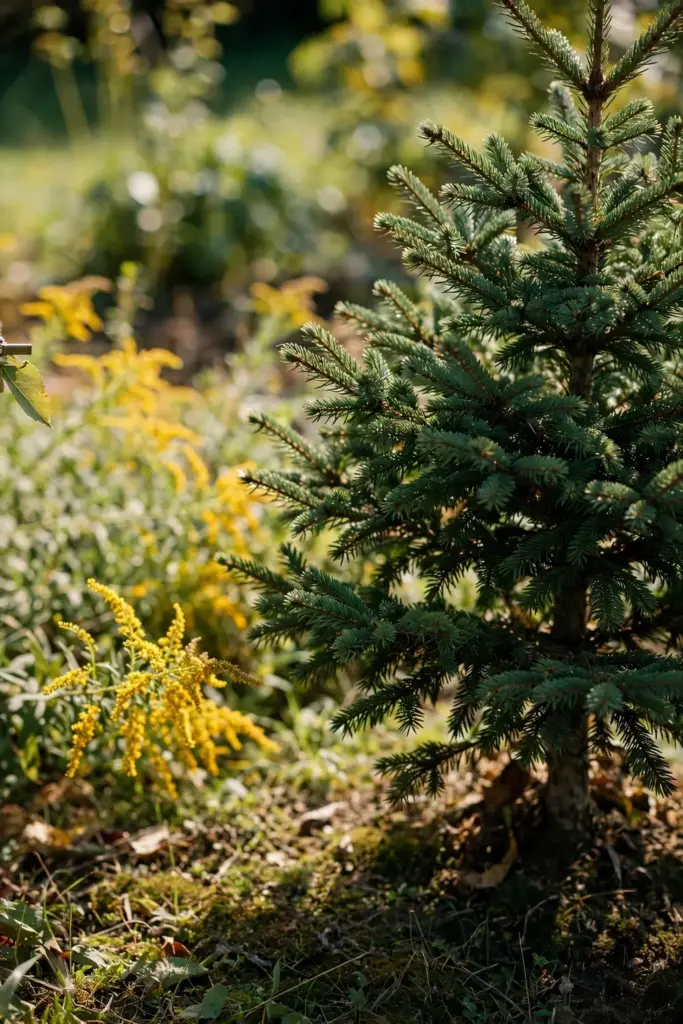
Iron Tree guidance names less-susceptible species: spruce, white pine, and balsam fir. Missouri Botanical Garden names Colorado spruce and Norway spruce. A yard beside a goldenrod patch that plants spruce instead of susceptible pine buys resistance with the species choice. A yard beside a goldenrod patch that plants susceptible pine buys the full routine. The species choice is the longest-lasting decision in the article.
Plant the less-susceptible species beside the goldenrod patch. A spruce beside a goldenrod patch faces a lighter rust load than a pine beside the same patch. A white pine beside a goldenrod patch faces a lighter load than a Scots pine beside the same patch. The site and the species work together. A resistant species in a bad site still needs the routine. A susceptible species in a good site still needs the routine. The routine never leaves the article.
Do not plant a susceptible pine next to a goldenrod patch and expect a different result. The goldenrod stays. The spores stay. The pine faces the same spring with the same disadvantage. Plant the spruce. Move the goldenrod. The species choice is the prevention. The goldenrod patch is the reservoir.
Ask the nursery about susceptibility. The nursery knows which pines carry susceptibility in the region. A nursery that lists susceptibility plainly earns the sale. A nursery that cannot answer earns no sale. The question costs nothing. The susceptible pine costs the routine.
Living With Pine Needle Rust Damage You Cannot Undo
Some damage stays. A needle lost to rust never returns, and a young pine slowed by rust never regains the lost season.
Let the tree replace the needles. A pine pushes new needles from healthy shoots. The new needles need the same routine: alternate-host mowing, young-pine protection, and species choice. A pine that keeps its new needles clean earns its place. A pine that blisters every new flush needs a harder look at site, goldenrods, and species.
Run the yearly calendar. In spring, walk the pines and check the lower branches for orange blisters. Before August, mow the asters and goldenrods near valuable pines. In autumn, check the young pines for needle loss and combined insect damage, and note which trees need a closer look next spring. Three checks a year, a few minutes each, carry the whole routine. A gardener who runs the calendar catches the blisters in spring, breaks the cycle before August, and protects the young pines in autumn. A gardener who skips the calendar finds the blisters after they have already shed spores. The calendar is the routine.
General bacterial blight care follows the same order: cut, clean, destroy, then keep the canopy dry. The guide to bacterial blight simple solutions covers that order for bacterial blight problems across the garden. The pathogens differ. The habits do not.
Tip blight on pines has its own lookalikes and its own article. The guide to Diplodia tip blight on pines covers the pine tip blight that most often confuses gardeners, with its own shoot and canker signs. Pine needle rust blisters are a different disease. The blister plus the needle plus the spring names it for home purposes.
Do not replant a susceptible pine in the same goldenrod patch and expect a different result. The goldenrod stays. The spores stay. The pine faces the same spring with the same disadvantage. Fix the site first: mow the goldenrods, choose a less-susceptible species, and give the new pine sun and air flow from the day it goes in.
Frequently Asked Questions
Do not spray fungicide on pine needle rust. No fungicide is currently registered for pine needle rust, per the Reforestation, Nurseries, and Genetics Resources guidance. Clemson University Extension notes that chemical control is usually not necessary. A mature pine needs nothing. A young pine needs vigor and alternate-host control, not spray. The spray bottle stays in the shed. The pine stays healthy without it.
Pine needle rust will not kill a mature pine. University of Minnesota Extension states that the disease does very little overall harm to well-established trees. The rust infects needles, not wood. The tree grows new needles. The tree does not lose structure. A young pine with heavy needle loss plus insect or other foliage damage faces a harder case, and it earns an arborist assessment. Rust alone seldom kills a seedling. The combination can.
Do not prune blistered branches for pine needle rust. Pruning removes the blistered needles, but the blisters return next spring from the alternate hosts. Pruning a mature pine for needle rust costs time and opens wounds for no benefit. The mature pine outgrows the needle loss. The pruning does not help. The pruning hurts. Leave the branches. Mow the goldenrods. The mowing is the control.
Pine needle rust and white pine blister rust are different diseases. Pine needle rust is a needle disease, cosmetic on mature trees, caused by Coleosporium species. White pine blister rust is a bark and stem canker disease, a killer, caused by Cronartium ribicola. The tissue separates them: needles versus bark versus wood. A gardener who sees needle blisters has pine needle rust. A gardener who sees cankers has a different disease and a different response.
Mowing asters and goldenrods near valuable pines before August breaks the cycle. The alternate hosts produce basidiospores that infect pine needles. A goldenrod patch mowed before August sheds no basidiospores. A goldenrod patch left standing through August sheds spores onto the pines. The mowing is the home version of the guidance. The nursery and forestry versions, with herbicide zones and barrier trees, stay out of home advice. The mower is enough.
Yellow needle drop in autumn is usually normal fall needle drop, not pine needle rust. Normal fall drop yellows older interior needles in autumn, without blisters, and drops them. Colorado State University Extension notes that no spray is needed for normal autumn shedding. Pine needle rust shows orange blisters on needles in spring. The season plus the blister separates them. Fall drop is seasonal, interior, and blister-free. Spring rust is spring, lower-branch, and blistered.
Where to Go From Here
Start with the spring blister check. Walk the pines and look for orange blisters on lower branches today.
The order is confirm the ID, do nothing on mature trees, mow asters and goldenrods before August, protect young pines, and choose less-susceptible species. One next action beats ten good intentions. Check the young pines. Mow the goldenrods. The pines stay healthy because the gardener knew which ones to leave alone.