
Asthma weed uses belong in the identification and safety column, not the planting column. Patikan kebo is Euphorbia hirta, a low hairy weed that bleeds white latex when snapped, and one plant can produce up to 3,000 seeds. That latex is toxic on ingestion and highly irritant on skin. Traditional herbalists have used the plant for breathing complaints and dysentery for generations, and no human clinical trial proves that it works.
Do not plant patikan kebo. The plant shows up uninvited in gardens, roadsides, and waste ground across the tropics. I have learned to treat any plant that bleeds white latex as a look-but-do-not-touch plant. This guide shows how to name the plant in front of you, how tradition used it, and how to handle a plant you find. It gives zero cultivation instructions.
The honest starting point is the name. Asthma weed covers three different plants, and only one of them is patikan kebo. No home-gardener guide to planting this weed exists, and this guide does not try to write one. It teaches use and identification, and it puts the latex warning first.
1. Name the Plant in Front of You: Euphorbia hirta, Not Asthma Weed Alone
Call the plant Euphorbia hirta. That botanical name is the only label that points to one plant. Asthma weed is a nickname shared by three plants, and patikan kebo is the Indonesian name for one of them. The full name keeps every later check honest.
Euphorbia hirta sits in the spurge family, Euphorbiaceae, inside a genus of about 2,000 species, according to the PROTA Euphorbia hirta profile. The genus ranges from tiny lawn weeds to large succulent trees, so the genus name alone never identifies a plant. The species name does the work. Older botanical names for the same plant include Chamaesyce hirta and Euphorbia pilulifera, and both appear in old herbals and seed lists. Treat them as the same plant under retired names, not as separate species.
The other names for this plant change by country: tawa-tawa in the Philippines, dudhi, dugdhika, or amman pacharisi in India, and pill-bearing spurge, garden spurge, snakeweed, or asthma herb in English. None of these names travels safely on its own. A seller listing dudhi may mean this plant or a different one, and a label reading asthma weed may mean this plant or one of two unrelated plants. Check the botanical name on any product, packet, or article before you trust it.
2. Identify Patikan Kebo in 6 Field Marks
Patikan kebo shows six field marks that separate it from most small weeds. Check all six before you name any plant. A single mark never settles an identification, because spurges share most of them.
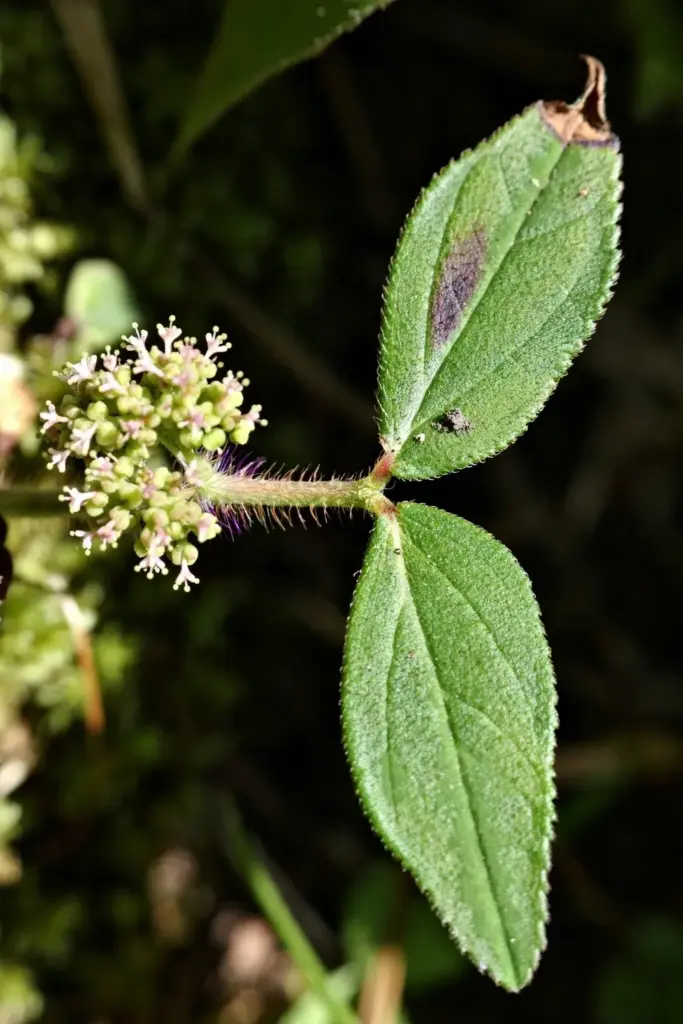
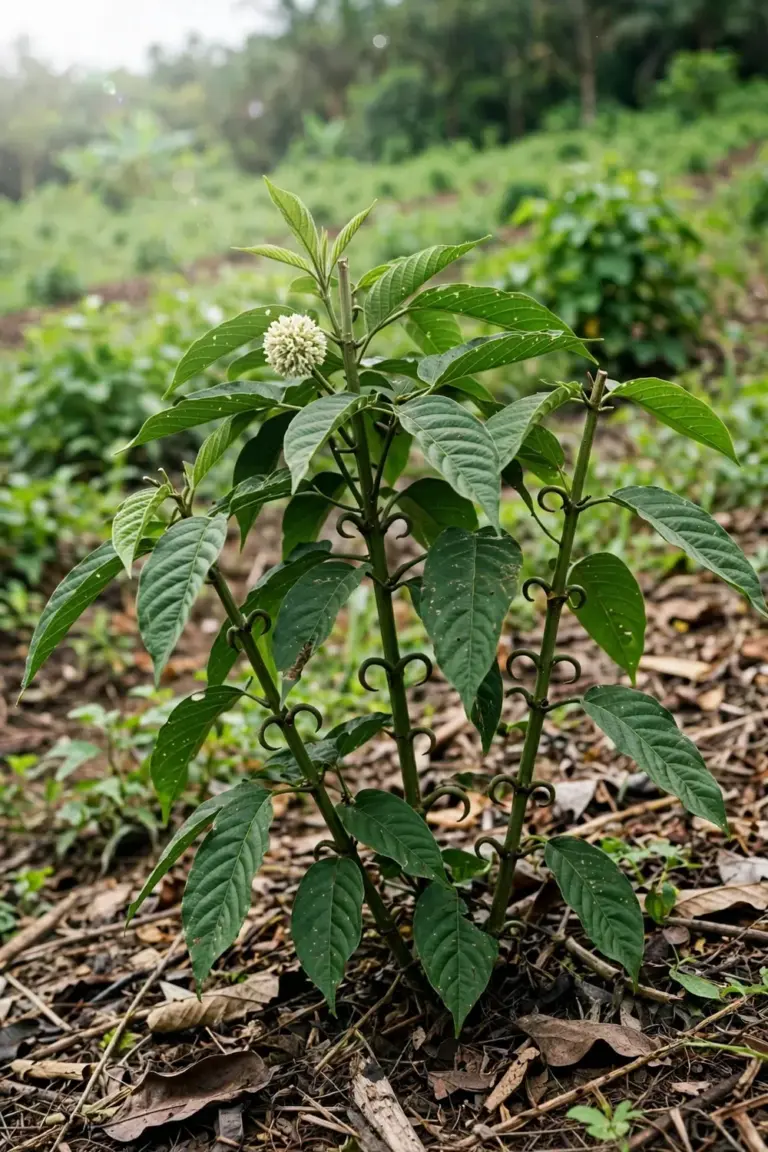
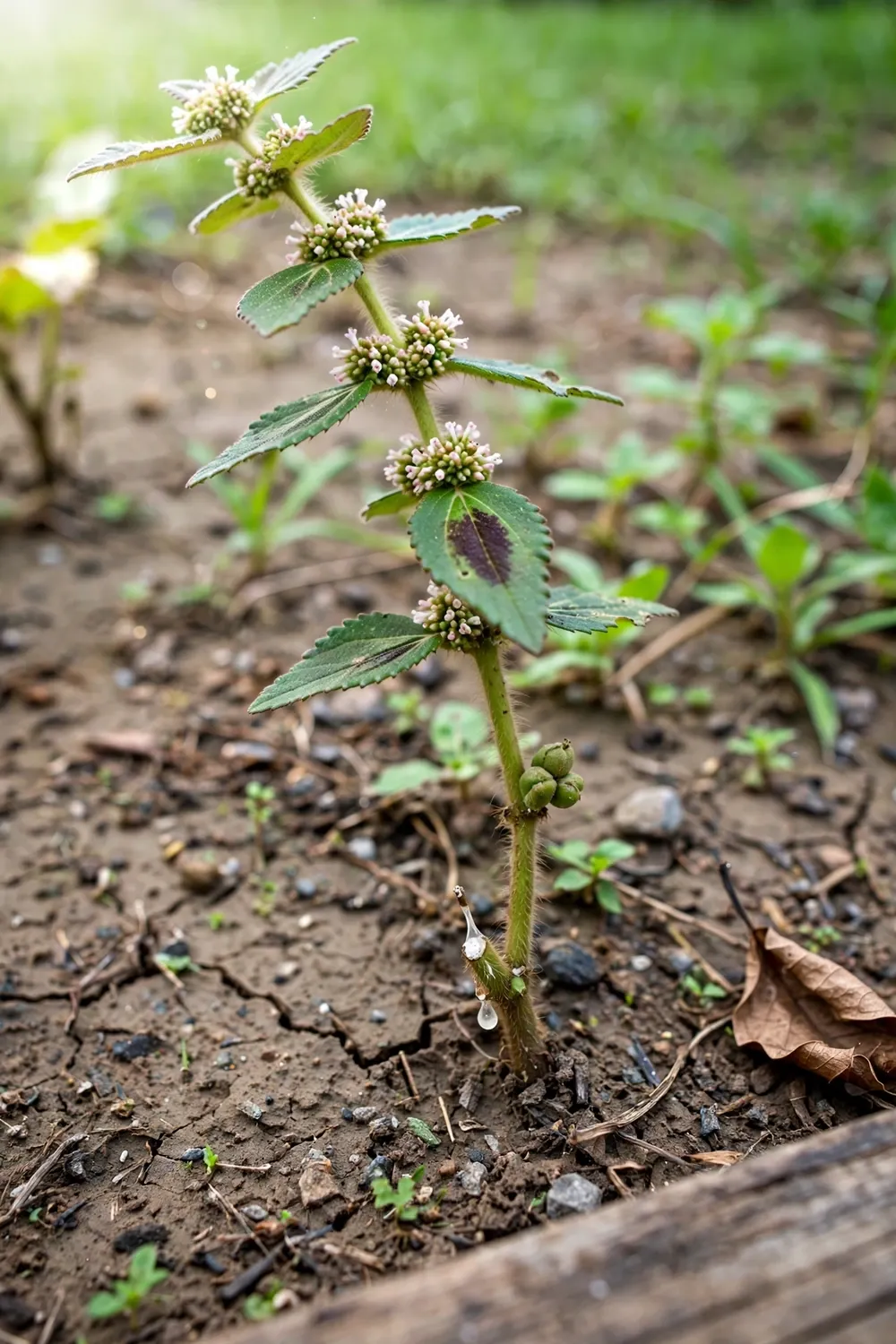
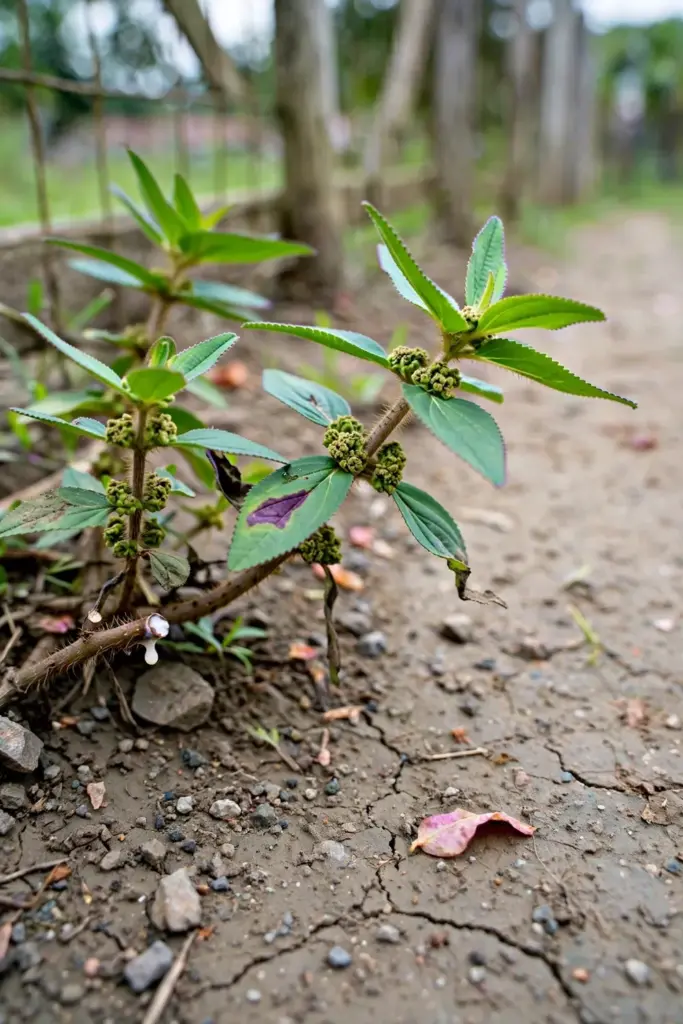
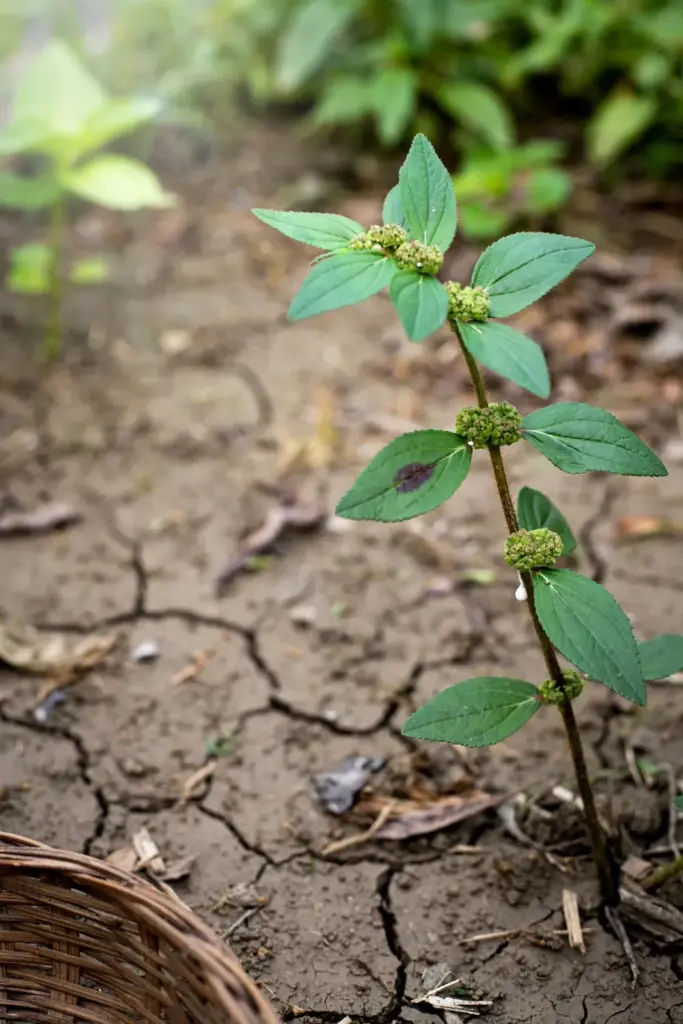
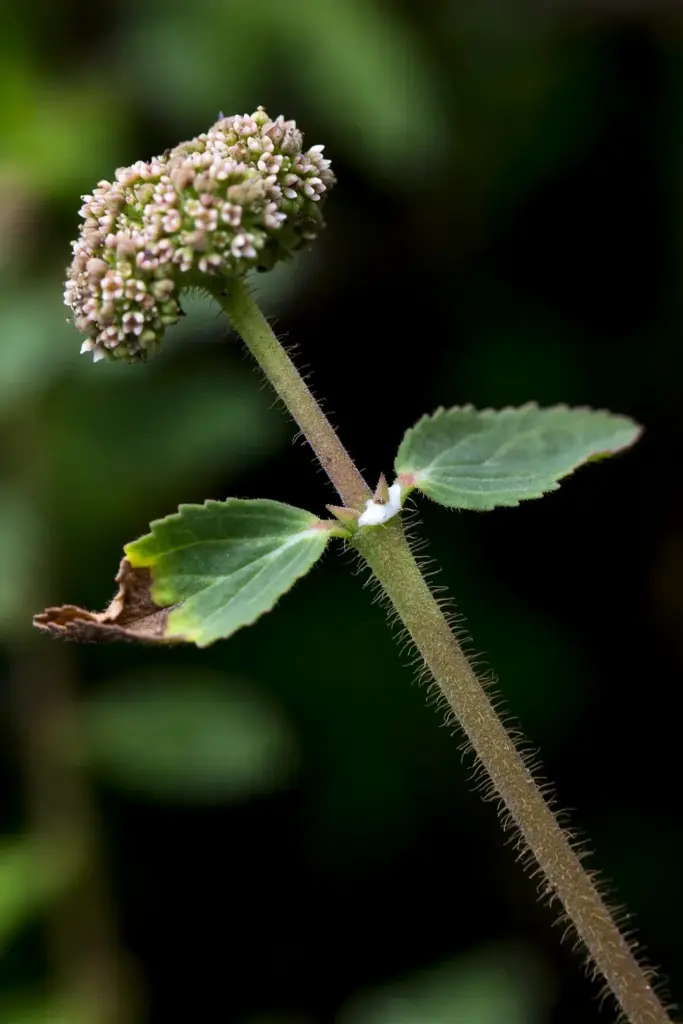
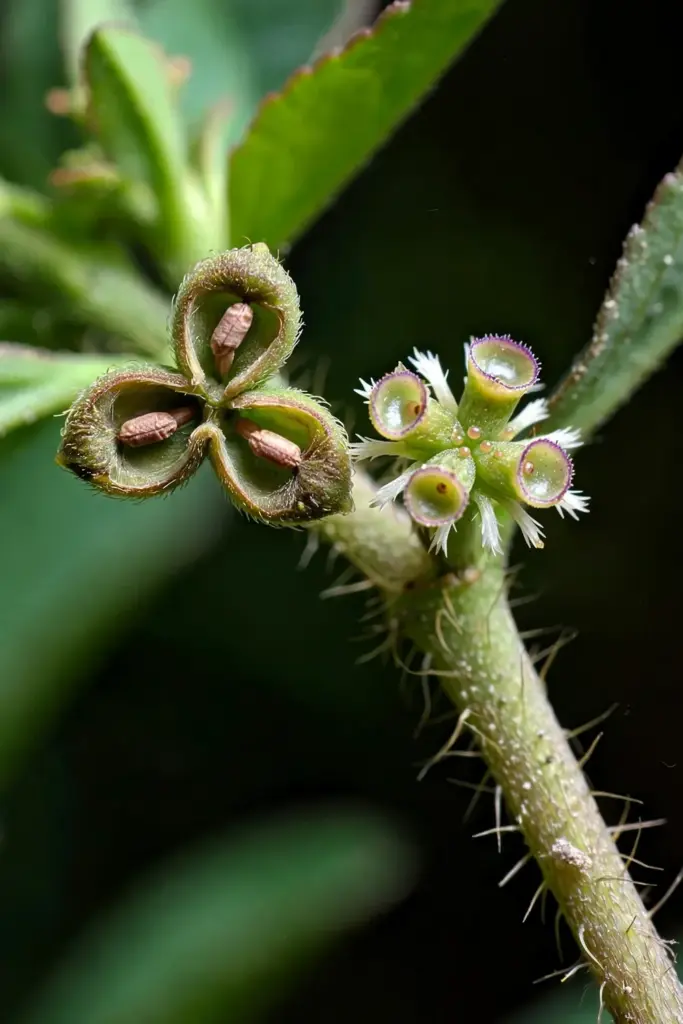
First, the plant grows as a low branched annual herb, with branches to 50 cm long, prostrate to ascending, and every part carries short hairs plus sparse yellow hairs about 1.5 mm long, according to the PROTA Euphorbia hirta profile. Second, the leaves sit opposite each other on the stem, with blades ovate, 1 to 4 cm long and 0.5 to 2 cm wide, and the base is very unequal, one side wedge shaped and the other side rounded. Third, the leaf margin is finely toothed, and the blade often carries a purple blotch near the midvein. Fourth, the flowers cluster into dense head-like cymes about 15 mm across, and each tiny cyathium carries four glands with minute white to pink appendages. Fifth, the fruit is a three-lobed capsule about 1 mm across, holding three seeds that are oblong-conical, about 1 mm long, and pinkish brown. Sixth, any break in the plant releases white latex.
The cyathium deserves one extra look, because it is the spurge signature. A cyathium is a cup-shaped structure that holds one female flower ringed by many male flowers, and it looks like a single tiny flower to the naked eye. A hand lens shows the cup, the glands, and the appendages. A plant with showy petals in the usual five-petal pattern is not a spurge. A plant with clustered cups and white latex sits squarely in the spurge group, and the six marks above narrow it to patikan kebo.
3. Read the Milky Latex Warning Before You Touch the Plant
Treat the latex as the danger in this plant. The sap contains a latex that is toxic on ingestion and highly irritant externally, causing photosensitive skin reactions and severe inflammation, especially on contact with eyes or open cuts, according to the Practical Plants Euphorbia hirta page. The same page warns that toxicity can remain high even in dried plant material, and that prolonged and regular contact with the sap is inadvisable because of its carcinogenic nature.
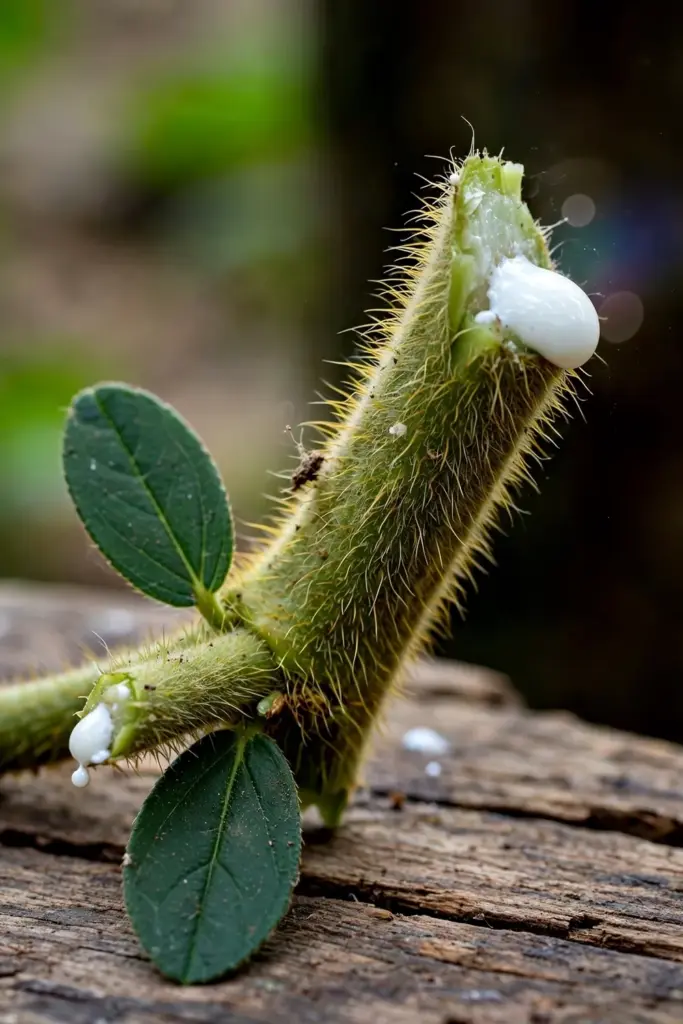
Laboratory chemistry backs the caution without settling the cancer question. The latex contains phorbol-type and ingenol-type diterpene esters plus the highly toxic tinyatoxin, according to the PROTA Euphorbia hirta profile. The same profile notes that drying the plant before extraction considerably reduces the cytotoxic activity of certain extracts, which sits in tension with the older warning that dried material stays highly toxic. The honest reading is that the evidence conflicts, and the safe rule covers both readings. Handle dried material with the same caution as fresh material.
The carcinogenic warning needs the same honest framing. It traces to an older herbal lineage, and the laboratory data concerns isolated compounds, including shikimic acid, which has shown toxicity, mutagenicity, and carcinogenicity in laboratory assessments of the isolated compound. Neither source proves that touching the plant causes cancer. The warning still earns respect. Repeated sap contact is a risk to avoid, not a settled cancer finding, and no part of this plant belongs on skin on purpose.
Five contact rules follow from the evidence. Wear a worn garden mitt and eye protection before you touch an unnamed milky-sap plant. Keep the sap away from eyes, mouth, and open cuts. Wash hands, tools, and mitts after contact. Keep children and pets away from a plant you have not yet named. Seek medical care at once for sap in the eyes, and bring the plant name with you.
4. Separate Patikan Kebo From the Other Spurges in the Yard
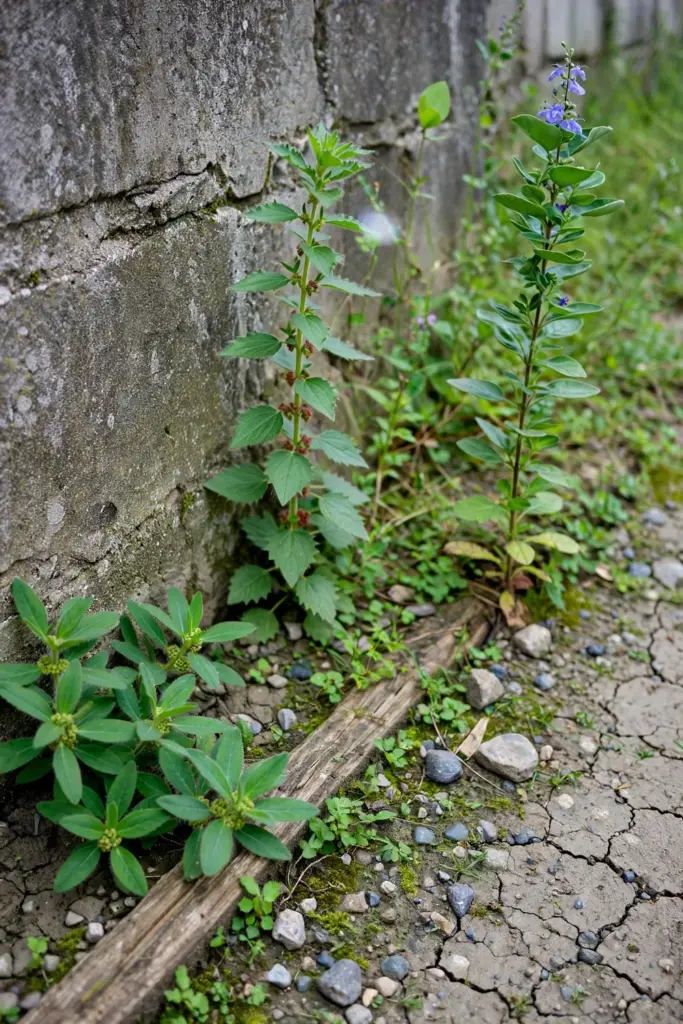
Other spurges share the two big traits, milky latex and cyathia, so a white sap test alone never names patikan kebo. The genus holds about 2,000 species, according to the PROTA Euphorbia hirta profile. Garden spurges range from flat lawn mats to upright ornamentals, and several of them volunteer in the same beds and path edges where patikan kebo appears.
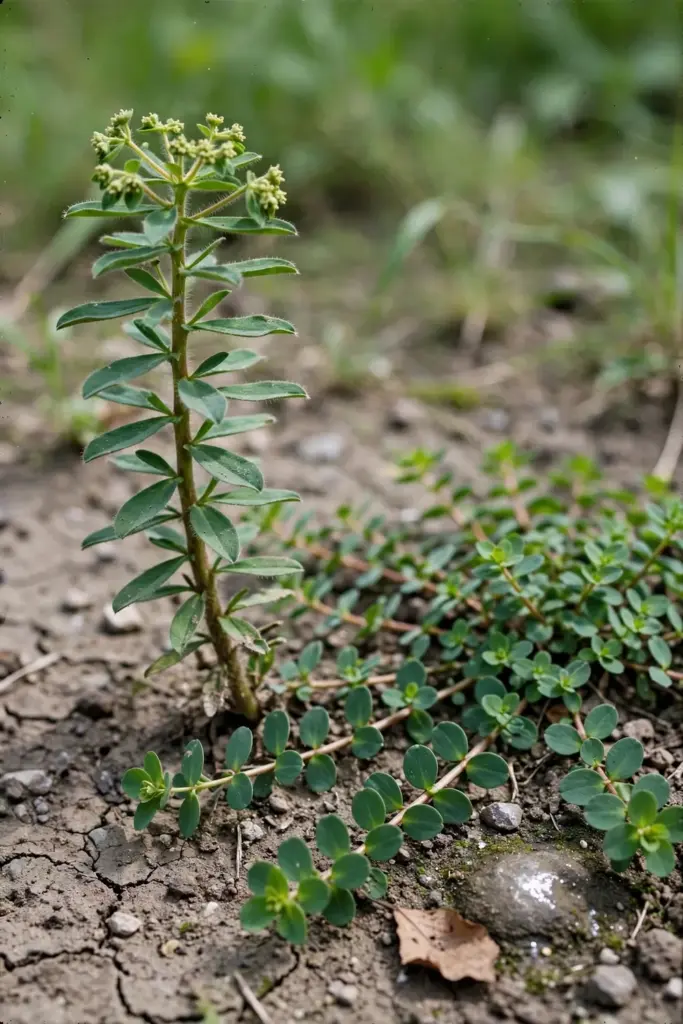
Use the full six-mark set from the identification section, not the sap alone. Patikan kebo stands more upright than the flat lawn spurges, grows visibly hairy stems, and carries opposite leaves with unequal bases and finely toothed margins. The clustered cyathia, about 15 mm across as a group, and the tiny three-lobed capsule confirm the call. A low spurge that grows flat against the soil in a mat, with smaller smoother leaves and no purple blotch, points to a different species. A tall spurge with showy bracts and a woody stem points to an ornamental, not to this weed.
Euphorbia hirtella is a separate species, and its name causes label confusion in plant databases. Do not merge it with patikan kebo. The two plants share a genus and a similar name, and they are not the same plant. The same rule covers every other spurge in the yard. If the six marks do not all fit, treat the plant as an unnamed milky-sap spurge for handling purposes, and keep the gloves on. Never taste-test any plant that bleeds white latex. Bitterness tells you nothing about safety, and a taste test puts the toxin in your mouth.
5. Rule Out Pellitory: The Australian Asthma Weed
Pellitory is the second plant called asthma weed, and it is a completely different plant. Parietaria judaica carries the common names pellitory and asthma weed, and it sits in the nettle family, Urticaceae, according to the PlantNET FloraOnline Parietaria judaica page. It is native to Europe, western and central Asia, and northern Africa, and it is naturalised in the Sydney area, where it is declared noxious. Its name follows the sneezing, not a cure. Its pollen can cause allergic responses in some individuals.
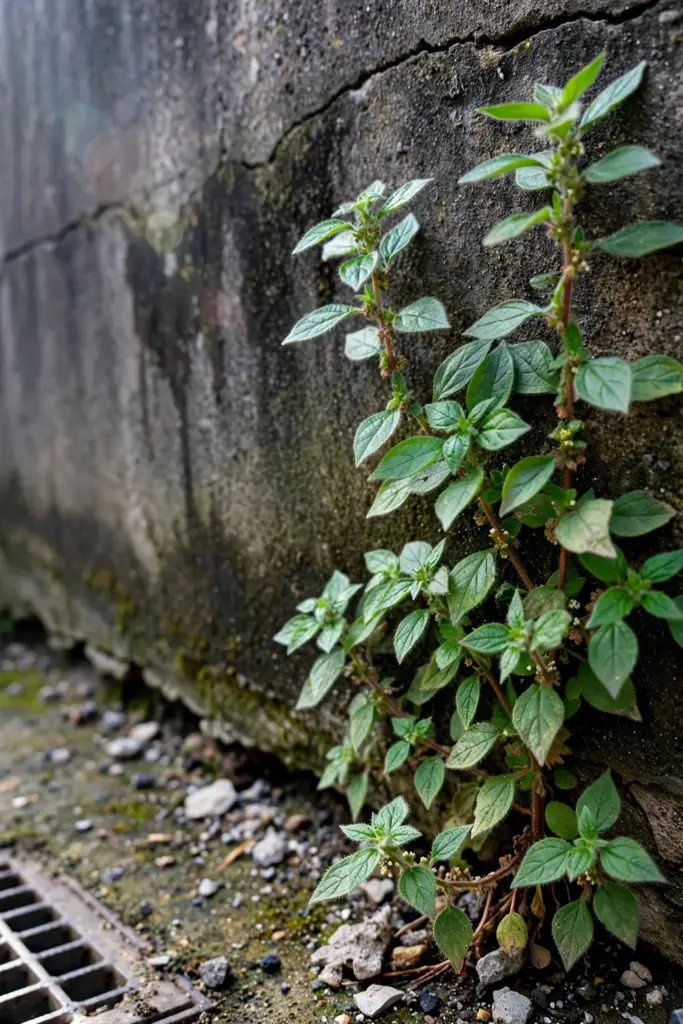
The field marks separate the two plants at a glance. Pellitory grows as a perennial herb with spreading to erect stems to 80 cm long, and its leaves are rhombic, 1 to 5 cm long, with both surfaces distinctly hairy, according to the PlantNET FloraOnline Parietaria judaica page. It thrives in cracks, especially against walls, and it shows up on roadsides and gardens where water seeps. It carries no cyathia, no capsule, and no milky latex. Its flowers are small and inconspicuous, and its fruit is a single-seeded dry achene. A wall-crack plant with rhombic leaves, no latex, and dust-like flowers is pellitory, not patikan kebo.
The stakes differ too. Pellitory is a declared noxious weed in the Sydney region, and its pollen drives allergy complaints, while patikan kebo is a pantropical weed whose danger sits in its latex. Mixing them up sends a reader toward the wrong response: a pellitory patch needs allergy-aware removal and local weed-rule checks, and a patikan kebo plant needs latex-aware handling. The shared nickname earns neither plant a shared treatment.
6. Rule Out Indian Tobacco: The Poisonous American Asthma Weed
Indian tobacco is the third plant called asthma weed, and it is poisonous. Lobelia inflata sits in the bellflower family, Campanulaceae, and it grows as an acrid poisonous annual with slightly hairy stems and tiny lavender or blue-violet to white flowers in terminal leafy elongated clusters, according to the Lady Bird Johnson Wildflower Center Lobelia inflata page. It reaches about 3 feet tall, and it grows in fields, open woods, and roadsides across eastern North America.
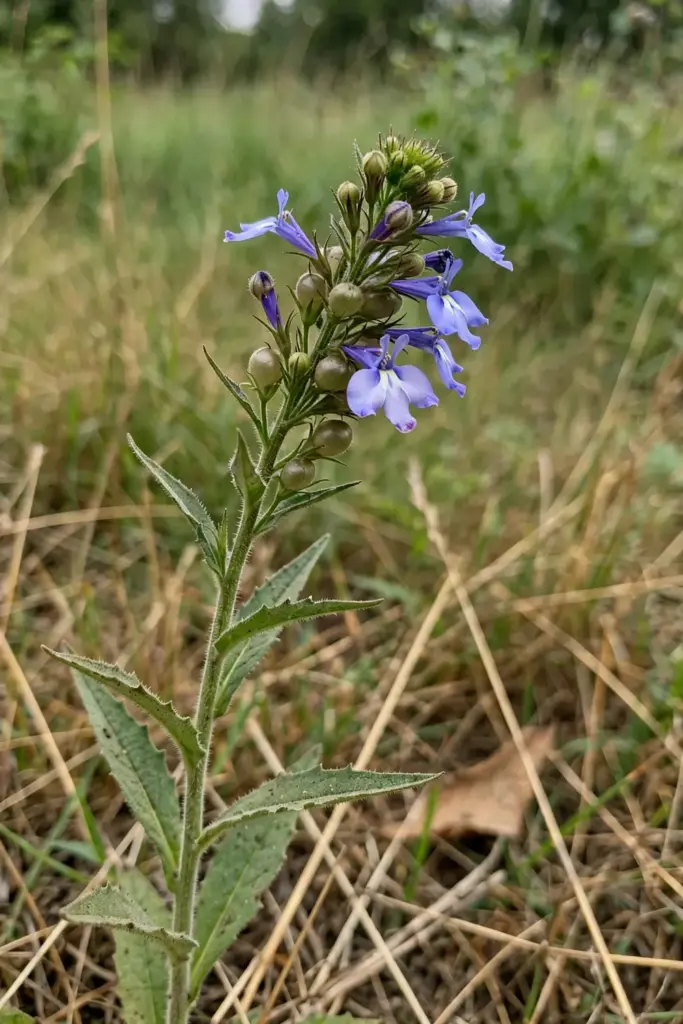
Every part of Indian tobacco is poisonous. The Wildflower Center lists all parts as poisonous, with toxic principles including the alkaloids lobelamine and lobeline, and symptoms including nausea, vomiting, diarrhea, salivation, exhaustion and weakness, dilation of pupils, convulsions, and coma. The same page warns that the root should not be eaten, since a large quantity can be fatal. Those facts close the case on any home use. No tea, no smoke, and no tincture from this plant belongs in a home remedy kit.
The field marks separate it from patikan kebo without a lens. Indian tobacco carries small tubular blue-violet flowers and inflated seed capsules, and it bleeds no white latex. Patikan kebo carries clustered cyathia with white to pink appendages, a tiny three-lobed capsule, and white latex on any break. One plant has blue-violet tubes and no sap. The other has clustered cups and white sap. Confusing them would mean mistaking a poisonous plant for a latex-toxic plant, and neither one is safe to use at home.
One cross-link between the two plants needs a warning. Older herbals list Lobelia inflata as a traditional companion herb used alongside Euphorbia hirta for asthma. Do not recreate that combination. Pairing a heart-depressing plant with a poisonous one does not make either safer. The historical pairing is a record of old practice, not a recipe.
7. Sort Out the Name List: Tawa-Tawa, Dudhi, and Pill-Bearing Spurge
The name list for this plant is long, and every name on it needs a sorting rule. Names that belong to the same plant travel together. Names that belong to different plants must stay apart. The table below sorts the full list into those two groups, with one check per name.
| Name | What It Is | One Check That Settles It |
|---|---|---|
| Patikan kebo | Indonesian name for Euphorbia hirta | Opposite leaves, unequal leaf base, white latex |
| Tawa-tawa | Philippine name for Euphorbia hirta | Same plant, same six field marks |
| Dudhi, dugdhika, amman pacharisi | Indian names for Euphorbia hirta | Same plant, same six field marks |
| Pill-bearing spurge, garden spurge, snakeweed, asthma herb | English names for Euphorbia hirta | Same plant, same six field marks |
| Chamaesyce hirta, Euphorbia pilulifera | Older botanical synonyms for Euphorbia hirta | Retired names, same plant |
| Pellitory (Parietaria judaica) | Different plant, nettle family, Australian asthma weed | No latex, rhombic leaves, wall cracks, allergy pollen |
| Indian tobacco (Lobelia inflata) | Different plant, bellflower family, poisonous | Blue-violet tubular flowers, no latex, all parts poisonous |
| Euphorbia hirtella | Different species in the same genus | Separate species, do not merge with Euphorbia hirta |
| Other garden spurges | Different species in the same genus | Milky latex plus cyathia, but the six marks do not all fit |
Two habits keep the list straight. First, ask for the botanical name before you trust any common name, on a product, a packet, or an article. A product labeled asthma weed without a botanical name could be any of the three plants. Second, never substitute one thistle or spurge for another in food or herbal use. Gardeners who want the real milk thistle should read the site’s milk thistle guide and never substitute a yellow-flowered weed or a milky-sap spurge for it. The shared word in a common name is never proof of a shared plant.
8. Trace Where Patikan Kebo Came From and Where It Grows Now
Patikan kebo is not an Indonesian native. Euphorbia hirta is native to Central America and a very common weed of the tropics and subtropics, occurring throughout tropical Africa and also in South Africa, according to the PROTA Euphorbia hirta profile. Patikan kebo is an Indonesian use of a pan-tropical weed, not an Indonesian origin story. The plant reached Indonesia the way weeds travel, through trade, soil, and disturbed ground, and it stayed because the climate suits it.
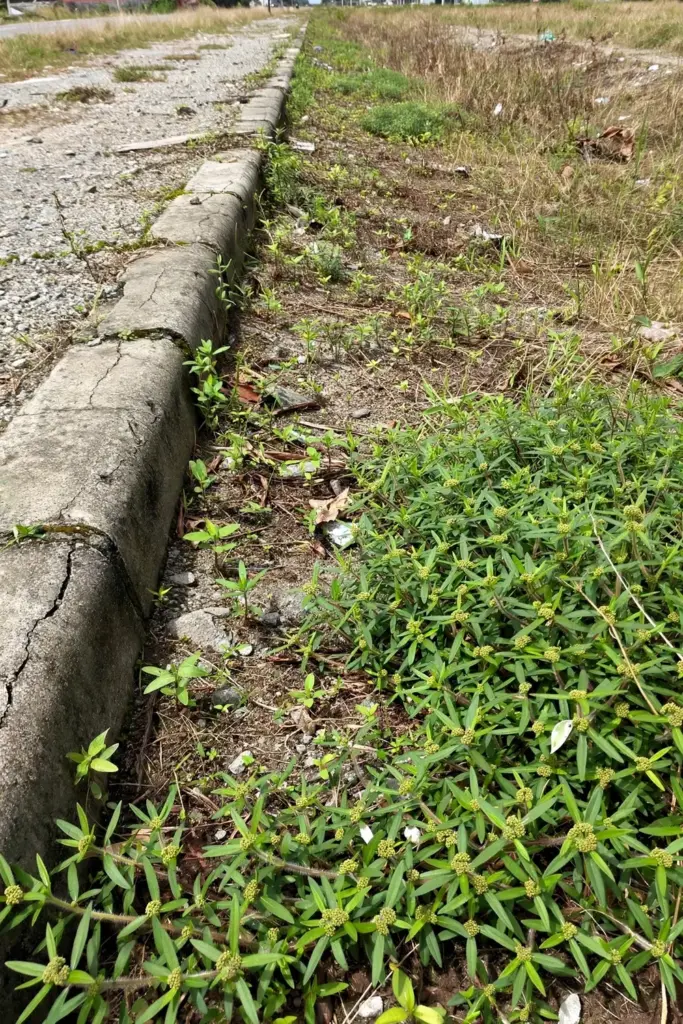
The habitat list explains why gardeners keep meeting it. Euphorbia hirta grows in cultivated fields, gardens, roadsides, and waste places, from sea level up to 2,000 m altitude, according to the PROTA Euphorbia hirta profile. It favors open sunny ground and disturbed soil. A weeded bed, a path edge, a construction strip, and a cracked driveway all qualify. The plant is an annual, so each plant lives one season, and the population returns through seed, not through perennial roots.
The seed numbers explain why nobody needs to plant it. One plant produces up to 3,000 seeds, with a germination rate of up to 92 percent, according to the PROTA Euphorbia hirta profile. A single overlooked plant can seed a whole bed. That arithmetic is the core argument against cultivation. Planting a weed that seeds this freely gives the gardener a permanent volunteer crop and the neighbors a new weed source. The plant already grows where it grows. It needs no help.
9. Put Asthma Weed Uses in Their Place: Tradition, Not Proof
Asthma weed uses rest on tradition plus animal and laboratory studies. No human clinical evidence in the linked sources proves that any of them work. That sentence is the load-bearing wall of this article. Every use below sits on one side of it, and no use crosses to the proven side.
The traditional record is broad and old. Euphorbia hirta is an important medicinal herb used throughout its distribution area, and it is included in the African pharmacopoeia of the Organization of African Unity as a dysentery medication, according to the PROTA Euphorbia hirta profile. Traditional use covers respiratory complaints, gut disorders, skin affections, and diuretic use. A long traditional record shows that people valued the plant. It does not show that the plant works, and it does not set a safe dose.
The laboratory record is real and limited. PROTA reports in-vitro and animal studies behind several traditional uses, including antidiarrhoeal, antibacterial, antiplasmodial, analgesic, antipyretic, and anti-inflammatory activity. A rat result is a starting point for more research. It is not evidence that a cup of leaf tea treats asthma, dysentery, or fever in a person. No dosage appears below, by design. No standardized human dose exists in the sources this article links, and traditional preparation varies by seller and region.
Two circulating claims stay out of this article on purpose. Claims about dengue platelet counts circulate online, and this guide does not carry them. Claims comparing the plant to diabetes drugs come from rat studies, and this guide does not carry them either. A reader who meets either claim elsewhere should ask for the human trial behind it. No such trial appears in the linked sources. The herb should not be used without expert guidance, since large doses cause gastro-intestinal irritation, nausea, and vomiting, according to the Practical Plants Euphorbia hirta page.
10. Weigh the Respiratory Tradition Against the Heart Warning
The respiratory tradition is the reason this plant carries its English name. Asthma weed has traditionally been used in Asia to treat bronchitic asthma and laryngeal spasm, though in modern herbalism it is more used in the treatment of intestinal amoebic dysentery, according to the Practical Plants Euphorbia hirta page. The stem, taken internally, is famed as a treatment for asthma, bronchitis, and various other lung complaints. The same page records the counterweight in one sentence. The herb relaxes the bronchioles but apparently depresses the heart and general respiration.
That counterweight decides the practical question. A plant that relaxes airways while depressing the heart and general respiration is the wrong tool for self-treatment of breathing trouble. An asthma attack needs emergency medical care, not a roadside weed. A person with asthma, bronchitis, or any heart condition should talk to a clinician before using this plant in any form, and should never stop prescribed medication for an herbal experiment. The tradition explains the name. The heart warning explains why the name is not a recommendation.
Two historical practices around this plant need explicit rejection. Older herbals describe leaves mixed with Datura metel in asthma cigarettes, and the same sources describe Euphorbia hirta combined with Grindelia and Lobelia inflata. Do not recreate either practice. Datura is a toxic plant, Lobelia inflata is poisonous in all parts, and smoking any of them adds lung damage to the existing risks. Historical practice is a record of what people tried. It never clears a practice as safe, and it never serves as a recipe.
11. Cover the Digestive, Skin, and Famine-Food Uses Tradition Records
The digestive tradition is the strongest strand after the respiratory one. The whole plant is decocted and used in the treatment of athlete’s foot, dysentery, enteritis, and skin conditions, according to the Practical Plants Euphorbia hirta page. PROTA records the same breadth: decoction or infusion for gastrointestinal disorders, including intestinal parasites, diarrhoea, peptic ulcers, heartburn, vomiting, and amoebic dysentery, plus diuretic use for uro-genital diseases such as kidney stones, in the PROTA Euphorbia hirta profile. Laboratory work supports the antidiarrhoeal direction in vitro and in animals. Human proof still does not follow from it. Anyone with dysentery, bloody stool, dehydration, or a kidney condition needs a clinician, not a weed.
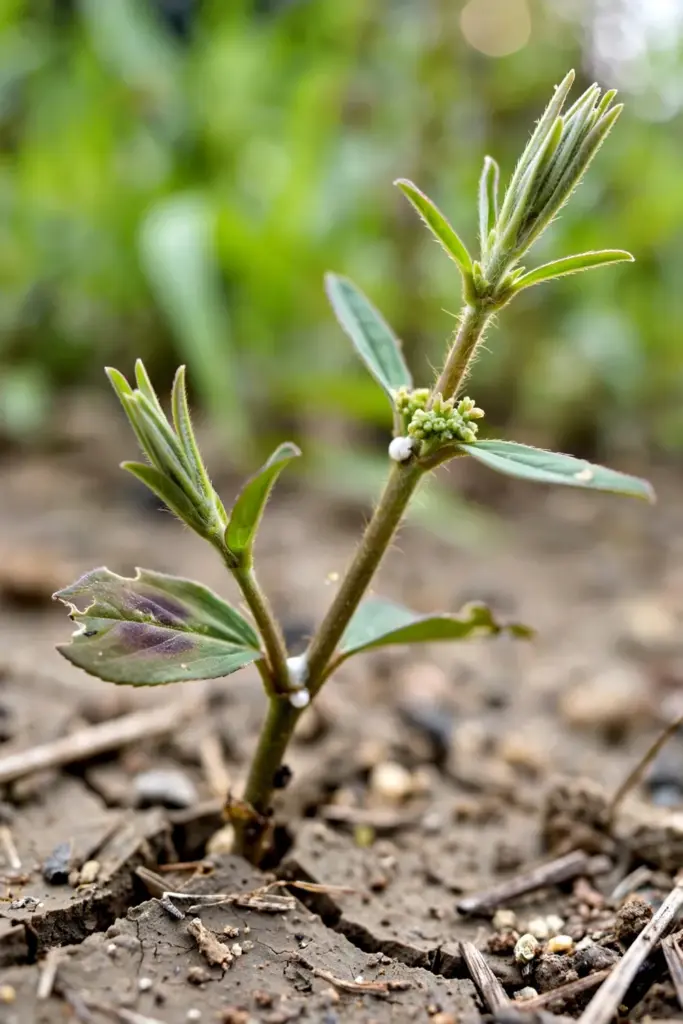
The skin tradition collides directly with the latex warning, and the warning wins. Traditional records list the plant for warts, scabies, tinea, thrush, wounds, sores, and conjunctivitis. The latex is highly irritant externally and causes severe inflammation, especially on contact with eyes or open cuts. Putting irritant latex on a wound, a sore, or an eye is the opposite of treatment. The wart tradition is the sharpest example. Older sources describe sap applied to warts to destroy them. Destroying tissue with an irritant is not healing, and the same sap on surrounding skin causes the inflammation the warning describes. Do not apply the sap to skin.
The food record is the shortest strand, and it reads like a warning label. In Java and India the tender shoots serve as famine food, raw or steamed, but they may cause intestinal complaints, according to the PROTA Euphorbia hirta profile. Famine food means food eaten when all else fails, not a garden green. Foragers who want a gentler wild green should start with dandelion, a well known edible with a long record as food, which teaches the same careful identification habit in a lower risk plant, from the site’s dandelion guide. Patikan kebo never suits a first wild green eaten on a guess.
12. Handle a Plant You Find: 5 Rules for Safe Contact and Removal
A patikan kebo plant in a garden bed is a removal job, not a harvest opportunity. Five rules keep the job safe and keep the plant from spreading.
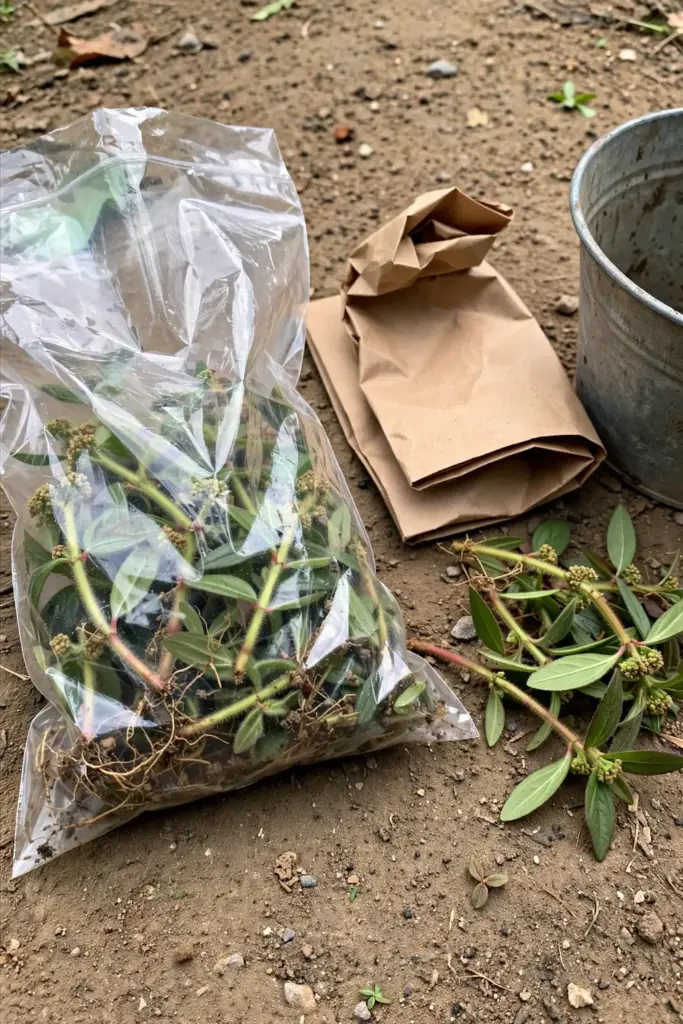
First, confirm the identification with all six field marks before you touch the plant. A milky-sap plant you cannot name stays an unnamed milky-sap plant, and the gloves stay on. Second, wear a worn garden mitt and eye protection, and wash hands, tools, and mitts after contact. Keep children and pets away from the plant until it is gone. Third, pull the plant before its capsules ripen, grip low, and take the whole plant. Bag the plant at the spot, seal the bag, and send it with household trash where local rules allow. Never compost seed-bearing material. Fourth, never move soil from the patch to another bed, and never share seeds or plants with another gardener. One plant carries up to 3,000 seeds, and a handful of moved soil carries the next patch. Fifth, check the patch again after a week. Seedlings emerge fast, and a second pull catches what the first one missed.
The same weed habits apply here. The site’s organic weed control guide covers mulch, cover, and competition in detail. Gardeners fighting a different persistent weed will find a parallel story in the site’s field bindweed guide. Both plants punish half measures. Both yield to steady removal before seeding, season after season. Call your local extension office when the patch covers a large area or sits near a crop field. Never reach for a herbicide on a label you have not read, and never spray near water, food beds, or a neighbor’s fence without checking the label and the local rules first.
Frequently Asked Questions
Patikan kebo is one of three plants called asthma weed, and the nickname alone never identifies it. The plant is Euphorbia hirta, a low hairy spurge with white latex, opposite leaves with unequal bases, and clustered cyathia. The other two asthma weeds are pellitory, a nettle-family plant with no latex, and Indian tobacco, a poisonous bellflower-family plant with blue-violet flowers. Check the botanical name before you trust any product or article using the nickname.
Do not self-treat asthma with this plant. Tradition used it for bronchitic asthma and laryngeal spasm, but the same sources warn that the herb relaxes the bronchioles while apparently depressing the heart and general respiration. No human clinical evidence proves that it works. An asthma attack needs emergency medical care, not a roadside weed. Talk to a clinician before using this plant in any form, and never stop prescribed medication for an herbal experiment.
Yes. The sap contains a latex that is toxic on ingestion and highly irritant externally, causing photosensitive skin reactions and severe inflammation, especially on contact with eyes or open cuts. Toxicity can remain high even in dried material, and prolonged regular contact is inadvisable. The latex contains phorbol-type diterpene esters plus the highly toxic tinyatoxin. Wear a worn garden mitt and eye protection, wash after contact, and seek care at once for sap in the eyes.
Do not. A pot does not contain this plant. One plant produces up to 3,000 seeds with a germination rate of up to 92 percent, according to the PROTA Euphorbia hirta profile, and seeds escape through drainage holes, on tools, and on boots. The plant is a pantropical weed of gardens, roadsides, and waste ground. Learn identification from plants that already grow wild instead of planting it. Never share seeds or plants with another gardener.
No, not as a regular food. Tender shoots serve as famine food in Java and India, but they may cause intestinal complaints. Famine food means food eaten when all else fails. The latex is toxic on ingestion, and large doses cause gastro-intestinal irritation, nausea, and vomiting. Never eat a plant you named from a single photo, and never eat a milky-sap plant on a guess. Start with a known edible such as dandelion if you want to learn foraging.
Check the latex first. Patikan kebo bleeds white latex from any break, carries opposite leaves with unequal bases, and grows clustered cyathia with a tiny three-lobed capsule. Pellitory carries no latex, grows rhombic leaves on stems to 80 cm, and thrives in cracks against walls. Pellitory pollen can cause allergic responses. A wall-crack plant with rhombic leaves and no latex is pellitory. A low hairy plant with white latex and clustered cyathia is patikan kebo.
Make the Honest Call on Patikan Kebo
Asthma weed uses make sense only in one direction. Learn the plant, name it correctly, respect the latex, and keep it from spreading. That is the full program. It needs no seed packet, no garden bed, and no cultivation advice. The plant already grows where it grows, and it seeds faster than any gardener can use it.
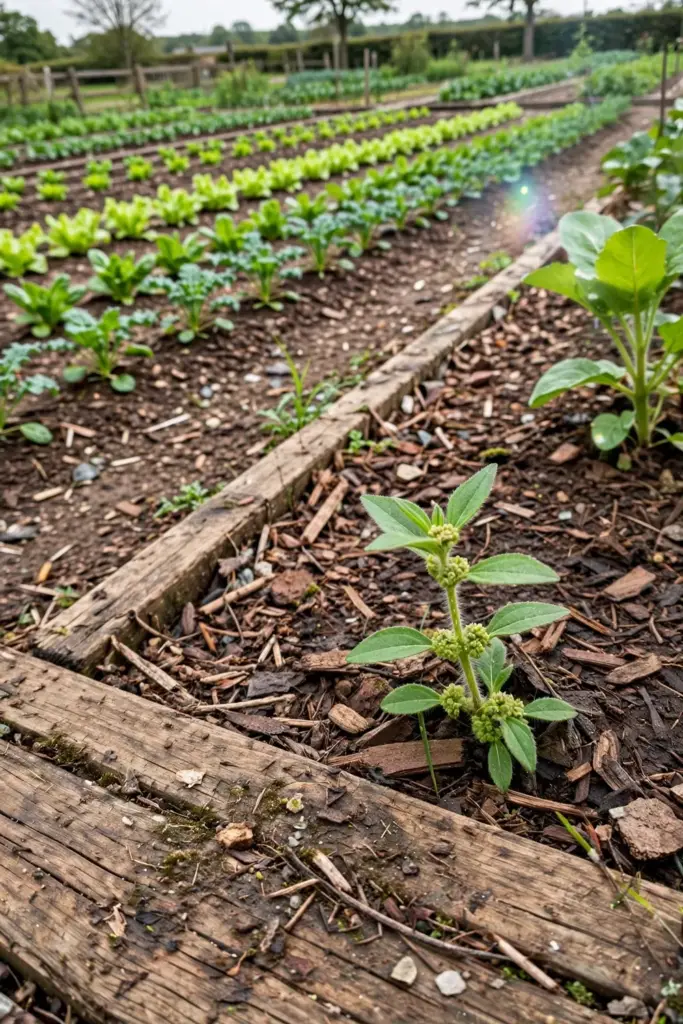
The honest call is a three part habit. First, check every low hairy weed against the six field marks before you name it. Second, treat white latex as a danger, never as a remedy, and never apply sap to skin. Third, keep tradition in its place: a record of what people tried, not proof that it works, and never a reason to skip medical care. A plant this common deserves respect in both directions. Learn it well where it already stands, and never give it a new address.