
Learn how to grow stink beans from Indonesia, and start with the tree, not the recipe. A stink bean tree reaches 30 to 45 m tall, needs year-round tropical warmth, and takes about 5 years to bear its first pods. The seeds inside the long twisted pods taste rich and savory, and the tree behind them belongs in a lowland rainforest, not in a backyard vegetable bed.
I have learned to read the pod as the harvest of a rainforest tree, not as a vegetable patch. If you want a fast tropical harvest from seed, growing papaya from seed in under a year gives you fruit while a stink bean seedling is still a nursery plant. Stink beans reward a different kind of grower, one with land, warmth, and years to spare.
The sections below give 18 moves, from naming the species correctly to drying surplus seed. One thread runs through them. Most readers should buy pods. A few readers with tropical land should plant trees. The rest of this article shows both groups how to decide.
| Spec | Detail |
|---|---|
| Botanical name | Parkia speciosa (Fabaceae) |
| Indonesian names | Petai, pete (Javanese), peuteuy (Sundanese) |
| Other names | Stink bean, bitter bean, twisted cluster bean, sataw, yongchak |
| Plant type | Large tropical legume tree |
| Height | To 30 m in the PROSEA account, up to 45 m in the Singapore account |
| Trunk | To 1 m in diameter, with buttress roots |
| Flowers | Tiny flowers in a pear-shaped pendulous head on a stalk 20 to 45 cm long |
| Pods | Twisted pods 35 to 45 cm long, 12 to 18 seeds per pod |
| Seeds | Broadly ovoid, 2 to 2.5 cm long, green, foul smelling |
| Leaves | Alternate, bipinnate, with 14 to 18 pairs of pinnae |
| Main propagation | Seed; stem cuttings and budding also recorded |
| Cold floor | No frost-survival figure exists in the sources checked. Treat any frost as a killing risk |
| Kitchen uses | Seeds eaten raw, cooked, or roasted; dried seeds steeped, then cooked |
| Native range | Malaysia, Brunei, Indonesia, peninsular Thailand, Philippines (Palawan) |
1. Decide Whether a 30-Meter Tree Belongs on Your Land
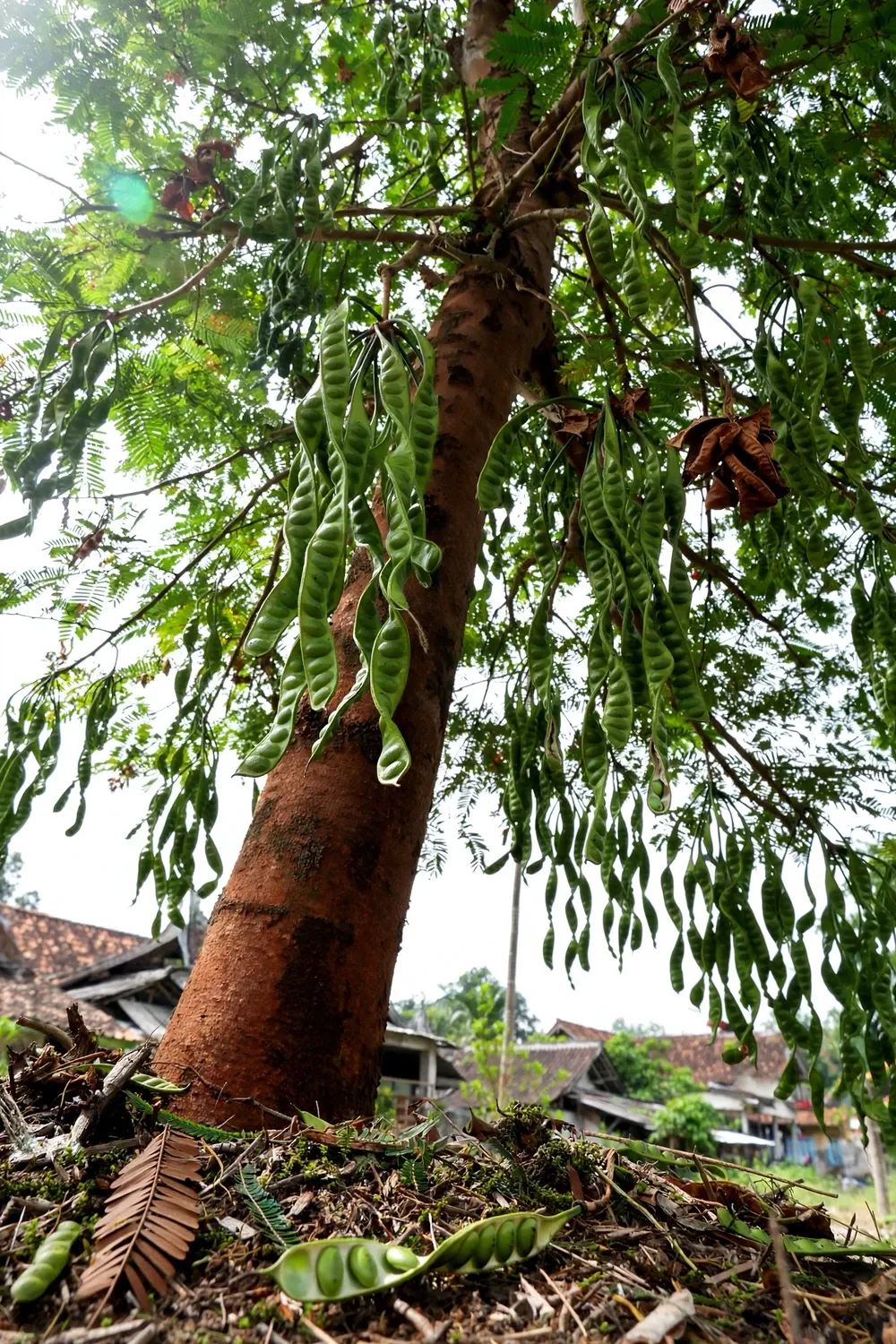
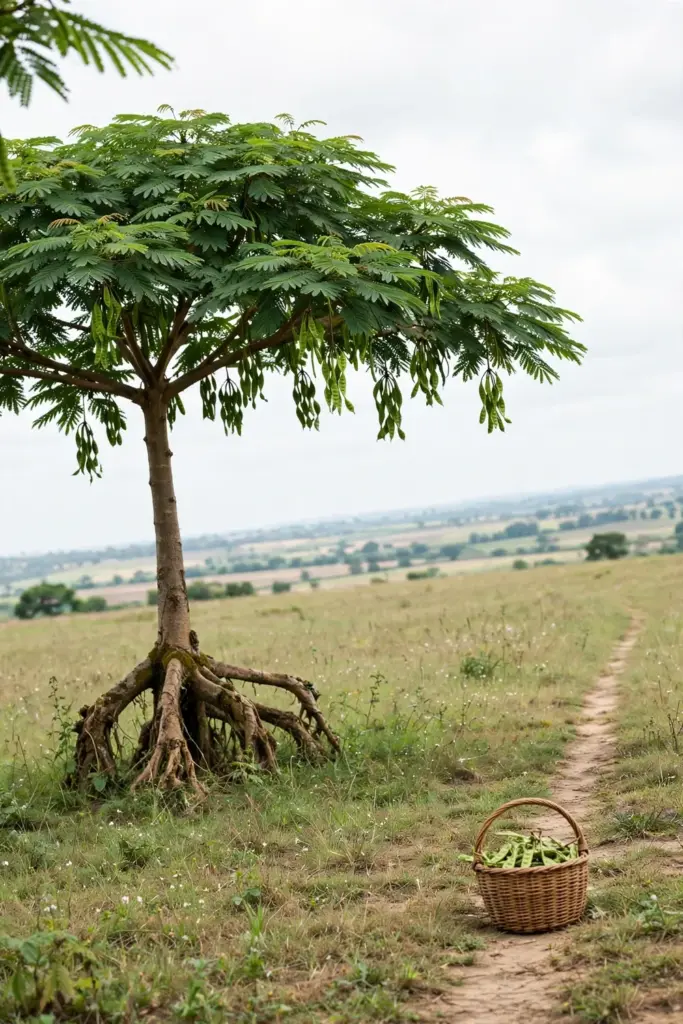
Decide on the tree first, and the seeds second. Learning how to grow stink beans means accepting a plant that outgrows every structure in a home garden. The Singapore botanic gardens account describes an umbrella-shaped tree that grows up to 45 m tall, with pinkish or reddish-brown bark and buttress roots, and a trunk up to 1 m in diameter, according to the NParks Flora and Fauna Web page for Parkia speciosa. A tree that size shades a house, drops pods across a wide radius, and needs a crew, not a ladder, for canopy work.
That scale sets the first filter. A suburban lot fails it. A farm or a village home garden with room for a 10 m spacing grid passes it. A community orchard or an agroforestry plot passes it if the members agree to wait years for the first harvest. Measure your land before you order seed. Draw a circle with a 10 m radius around the planting spot and check what falls inside it. Roof lines, power lines, drains, and a neighbor fence all count as failures.
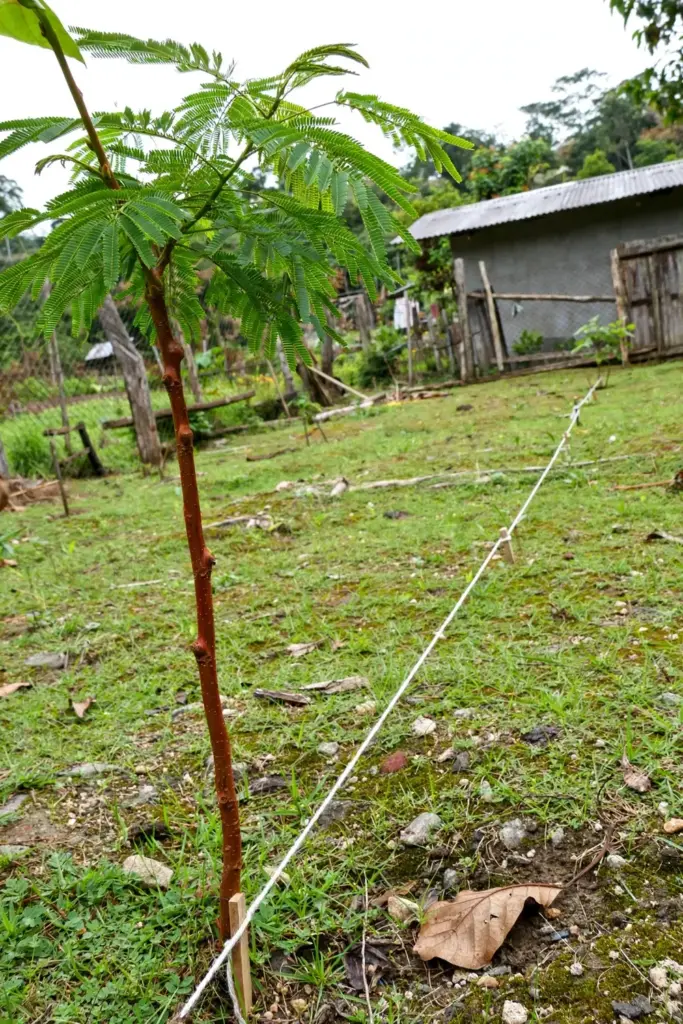
The second filter is time. The PROSEA account puts first bearing at about 5 years. Treat 5 years as the earliest case, not the promise. A seedling that fruits at 5 years is a fast one. Plan your labor, your spacing, and your patience around a tree that pays nothing for its first several seasons and then produces for decades.
2. Confirm the Species Before You Buy Stink Bean Seed
Check the botanical name before you buy seed or follow any growing advice. Parkia speciosa is one species in a genus where several cousins share the common name petai, and the cousins differ in pod shape, seed hardness, and use. A packet labeled only “petai” tells you almost nothing.
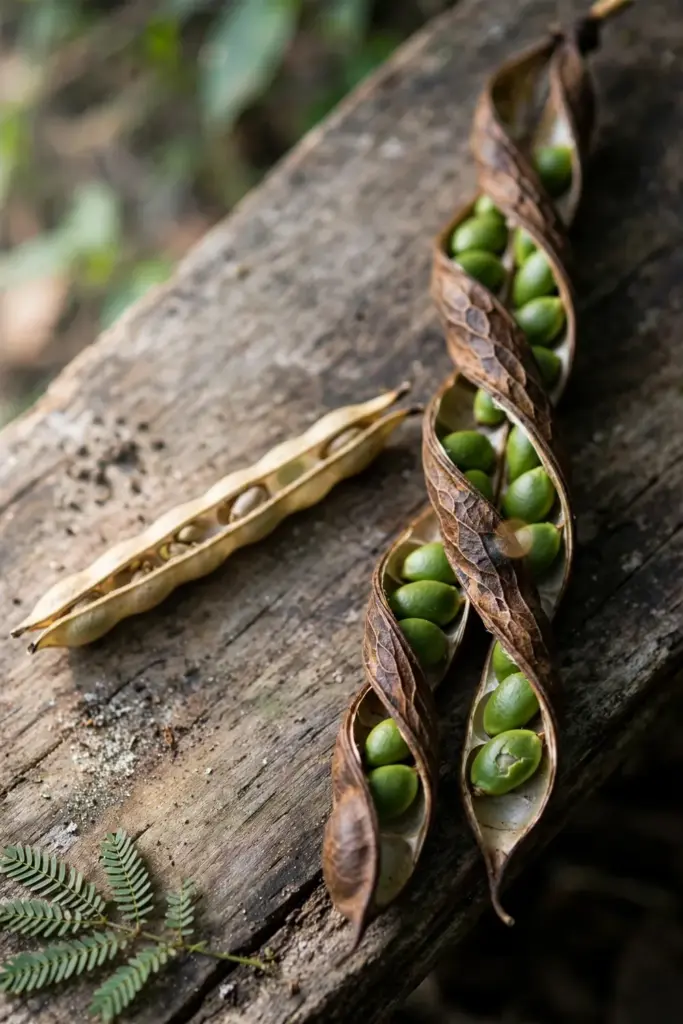
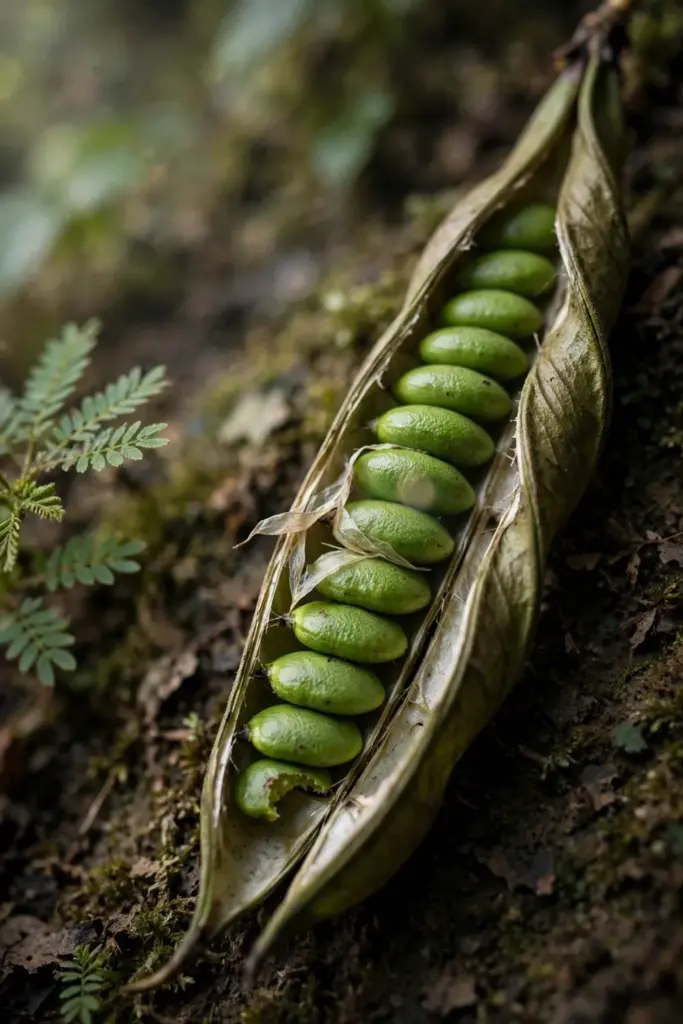
Parkia speciosa carries twisted pods 35 to 45 cm long and 3 to 5 cm wide, usually strongly twisted and prominently swollen over 12 to 18 seeds, according to the PROSEA account for Parkia speciosa). The leaves are alternate and bipinnate, with 14 to 18 pairs of pinnae and 31 to 38 pairs of narrow leaflets per pinna. The flower head is pear-shaped and pendulous, 2 to 5 cm across, on a stalk 20 to 45 cm long. Those traits together separate it from the rest of the genus.
| Name | What sets it apart | Why it matters |
|---|---|---|
| Parkia speciosa | Twisted pods 35 to 45 cm, 12 to 18 seeds, bipinnate leaves | The true stink bean, petai, pete |
| Parkia timoriana | Tree bean, kedahung. Straight pods, smaller and harder seeds | A different species, also used as budding stock for P. speciosa |
| Parkia biglobosa | African locust bean. An African species | Different continent, different tree, different food tradition |
| Archidendron pauciflorum | Jengkol, jering. A different genus entirely | Carries djenkolic acid. Never transfer jengkol warnings to petai |
The jengkol fence deserves its own paragraph. Djenkolism, the kidney injury linked to djenkol beans, belongs to jengkol, not to petai. The djenkol bean contains djenkolic acid at 0.3 to 1.3 g per 100 g wet weight, with about 93 percent in the free state, according to the Dove Medical Press review of djenkolism. Petai smells strong because its seeds hold sulfur compounds, per the same PROSEA account. A strong smell is not the same as djenkolic acid. Keep the two beans apart in your notes, your shopping, and your advice to others.
Buy seed sold under the full botanical name. A seller who prints Parkia speciosa on the packet has done the first check for you. A seller who prints only “petai” or “stink bean seeds” has not, and the seedlings could grow into any cousin in the table.
3. Match Stink Beans to a Lowland Rainforest Climate
Grow Parkia speciosa outdoors only where the climate stays warm all year. The same PROSEA account records cultivation from the plains up to 1,500 m, with the best growth between 500 and 1,000 m. Pest pressure rises at low elevations, and productivity falls above 1,000 m. Wild trees stand in primary and secondary forest, mostly at low elevations. That profile describes a humid tropical tree, not a temperate garden plant.
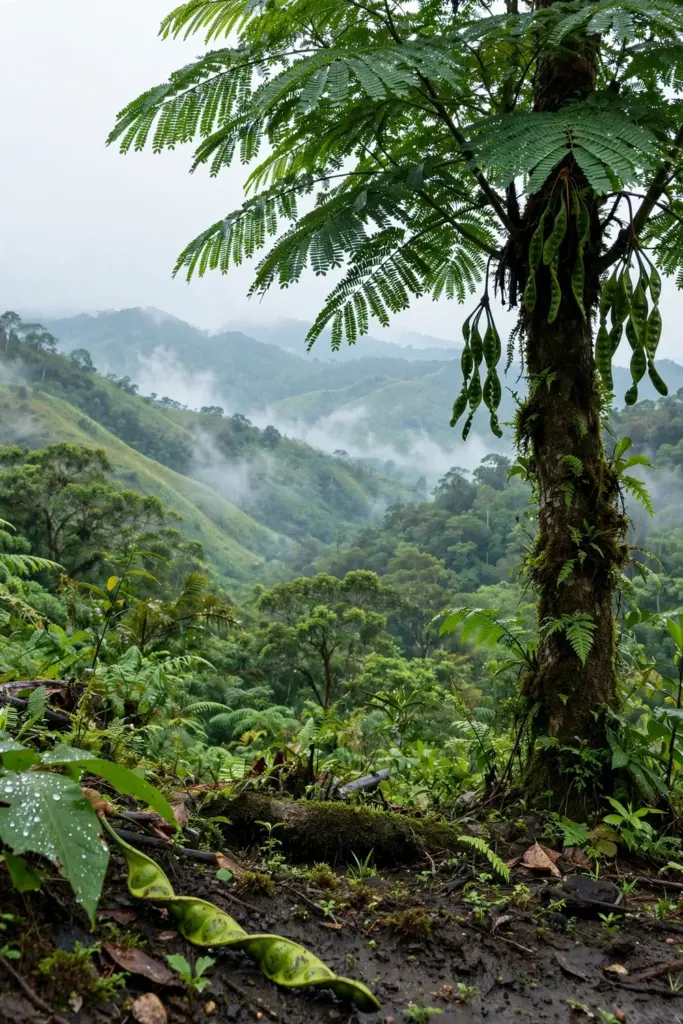
No source checked for this article gives a frost-survival figure for Parkia speciosa. Treat any frost as a killing risk. A single hard freeze can end a young tree outright, and no table in the sources checked promises recovery. Gardeners who see frost in most winters have no outdoor path for this tree, and the honest options are to buy pods or to plant something else. Growing mango from seed or grafted stock suits a wider range of warm gardens, and it still needs real heat.
Rainfall and soil follow the same tropical pattern. The tree grows wild near riverbanks and in lowland rainforest, on ground that stays moist without staying waterlogged. A site with a long dry season and thin soil will stress it. A site with deep, moist, fertile soil and steady rain suits it. If your garden needs irrigation for nine months of the year to keep tropical plants alive, count that cost before you plant a tree that lives for decades.
4. Buy Pods for Dinner Before You Plant a Tree
Buy pods first, and plant second, if dinner is the goal. Most demand for stink beans is a buying demand. Cooks want fresh pods, pickled pods, or brined seeds for the table, and a market pod delivers that tonight. A planted tree delivers it in about 5 years, on a 30 m frame, after seasons of watering, weeding, and waiting. Learning how to grow stink beans starts with asking which of those two timelines you actually want.
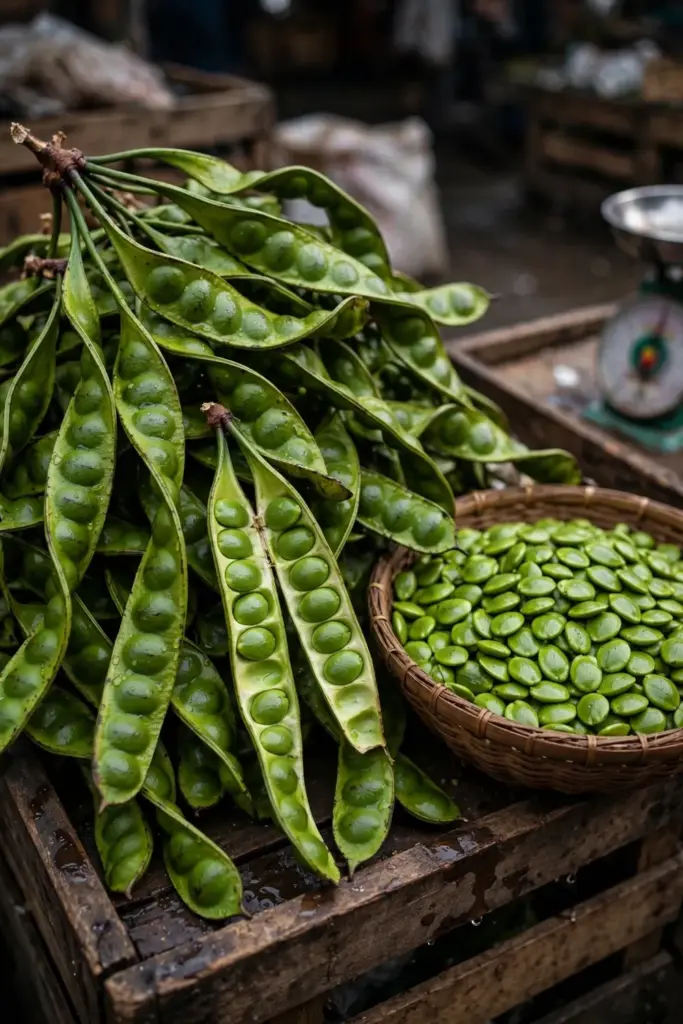
Petai fetches a good price and often runs short, per the same PROSEA account, and prices climb sharply in times of scarcity. That shortage is real, and it tempts gardeners to plant. Do the arithmetic first. A household that eats petai twice a month buys a small pile of pods a year. A single mature tree can produce 200 to 5,000 pods a year, per the same PROSEA account. The tree suits a seller, a village, or a farm. It overshoots one kitchen by a wide margin.
Shop with the species check from the second section. Fresh pods should look green, firm, and twisted, with seeds that swell visibly inside the pod wall. Ask the seller for the origin and the name on the box. A market that sells petai beside jengkol is the exact place where the two beans get mixed up, so check the pod before you pay. The pods you buy for dinner can also supply seed, which the next section covers.
5. Source Fresh Seeds From a Ripe Pod
Source seeds from a ripe pod, and sow them fresh. The same PROSEA account says farmers sow freshly harvested seeds in a seed bed or in individual baskets or polybags, and that farmers often collect young seedlings from wild trees. Freshness matters because the seed coat hardens as the seed dries, and a hard coat slows water uptake. A pod that still bends without cracking holds better seed than a pod that rattles.
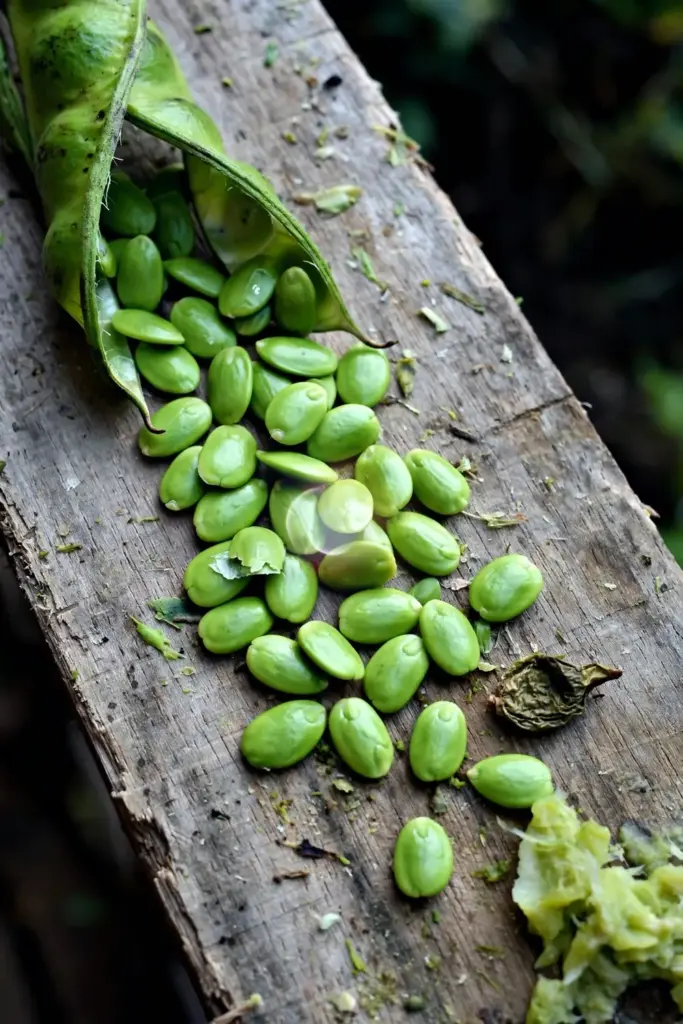
Open the pod along its seam and slide the seeds out. Each pod holds 12 to 18 seeds, per the same PROSEA account, and each seed measures 2 to 2.5 cm long and 1.5 to 2 cm wide. Keep the plump, green, intact seeds. Discard seeds that look shriveled, cracked, or moldy. Wash the kept seeds to remove pulp, then sow them the same day when you can.
Grocery-store pods can supply seed, but no viability figure exists in the sources checked for seed taken from market pods. Data not available covers that gap, so treat market-pod seed as an experiment, not a plan. Sow more seeds than you need, label the batch with the shop and the date, and watch what comes up. Growing your own rambutan fruit from seeds follows the same fresh-seed logic, and it shows how fast tropical seed loses vigor once it dries.
6. Shell the Seed Coat to Speed Germination Without Cutting the Seed
Shell the seed coat, and do not cut the seed. A germination trial on petai tested shelling, cutting, and both together, and the results split cleanly. Shelling speeds emergence. Cutting slows the seedling. The combination of the two is worse than shelling alone.
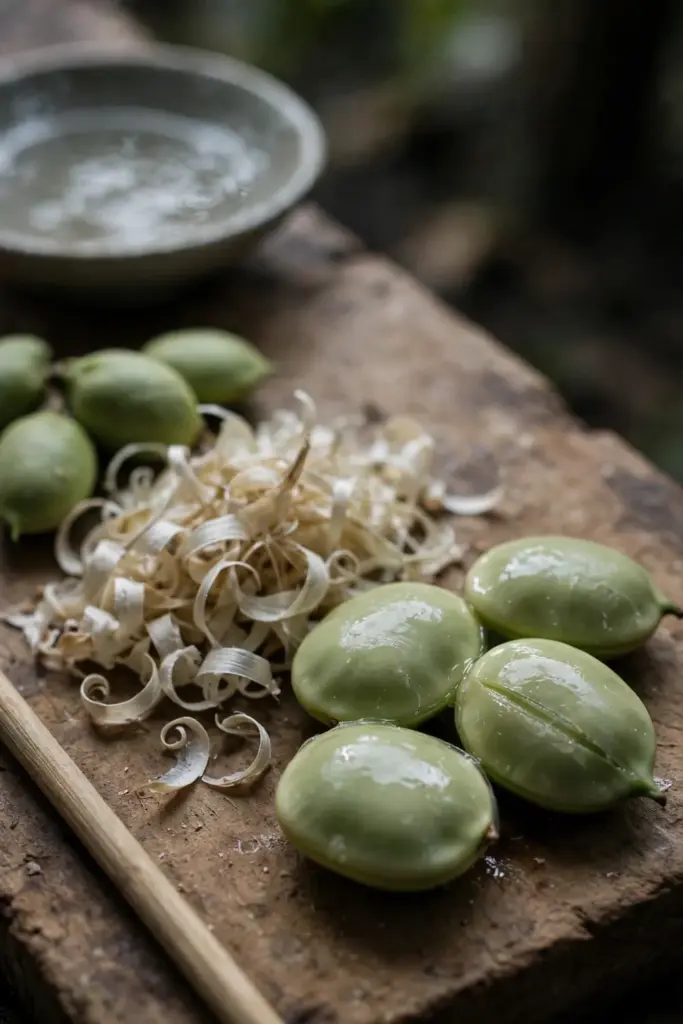
The trial found that shelling and cutting both accelerated germination without increasing the final rate, according to the ResearchGate record of the petai germination trial. Nine days after sowing, the treatments lifted germination by 27 to 32 percent over untreated controls, and the combination lifted it by a maximum of 70 percent, per the same trial record. By day 35, every treatment, including the untreated control, had reached 100 percent germination, per the same trial record. Speed was the only prize. Total germination was never at stake.
Cutting carried a cost. Seed cutting reduced seedling diameter and height growth, per the same trial. The combination of no shelling with half cutting raised seedling mortality over the study period. Farmers in the study region cut seeds partly to keep a piece for the kitchen, and the trial supports dropping that practice for nursery seed. Shell the coat off the whole seed, keep the embryo intact, and sow the whole seed.
Work with dry hands and a blunt edge. Peel the thin coat away from the seed instead of slicing into it. The coat of a fresh seed comes away with patience. The coat of a dried seed resists, and force then damages the embryo. If a seed resists shelling, soak it in room-temperature water until the coat softens, then peel it.
7. Sow One Seed Per Bag in a Loose Seed Mix
Sow one seed per bag, in a loose mix that drains freely. The same PROSEA account lists individual baskets or polybags as standard nursery practice, and one seed per container keeps the taproot intact at transplant time. A shared tray forces you to pull seedlings apart later, and pulled roots set the tree back for months.
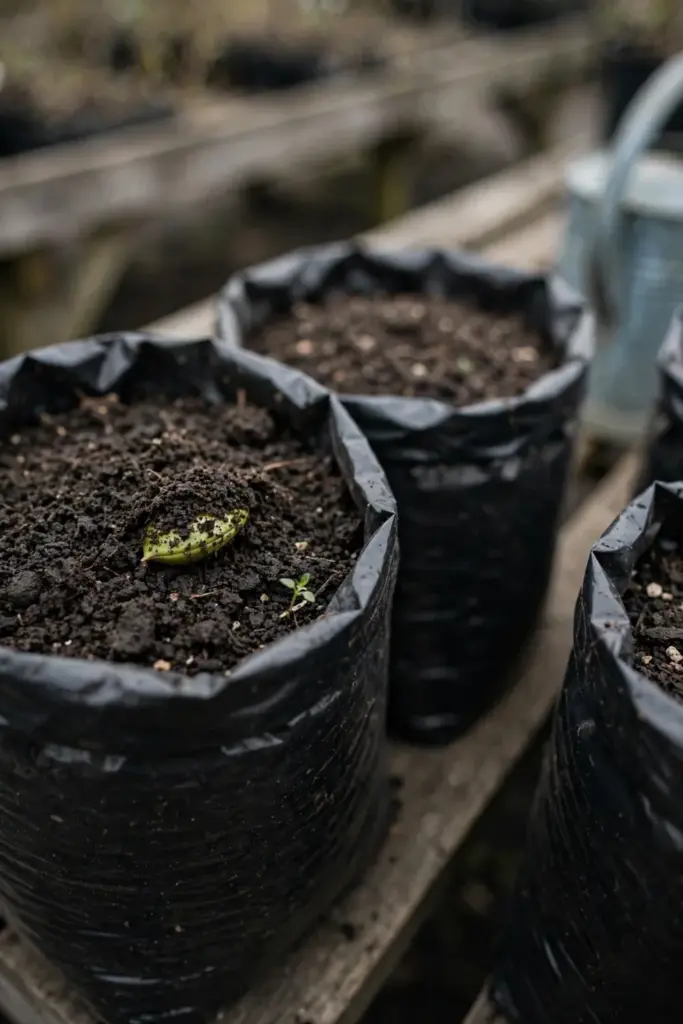
Exact sowing depth is data not available in the sources checked. Cover the seed lightly with mix, so the coat sits just under the surface, and press the mix gently to close air pockets. Water the bag until the mix is evenly moist through its depth, then let the surface dry slightly between waterings. Soggy mix rots seed. Dry mix stalls emergence.
Place the bags where they get bright light and steady warmth, out of direct midday sun for the first weeks. A shaded nursery bench under a tree, a covered porch, or a shade house all serve. Label each bag with the sowing date and the seed source. Expect emergence across several weeks, not on one day. The trial in the sixth section reached full germination by day 35, so give the batch at least five weeks before you judge it.
8. Hold Seedlings One Full Year to 0.5 to 1 Meter
Hold seedlings in the nursery for one full year, until they stand 0.5 to 1 m tall. The same PROSEA account gives that exact timetable for field transplanting. A seedling moved at 20 cm has a small root system and a thin stem, and field weeds, drought, and pests overwhelm it. A seedling moved at 0.5 to 1 m has wood in its stem and roots through its bag, and it survives the move.
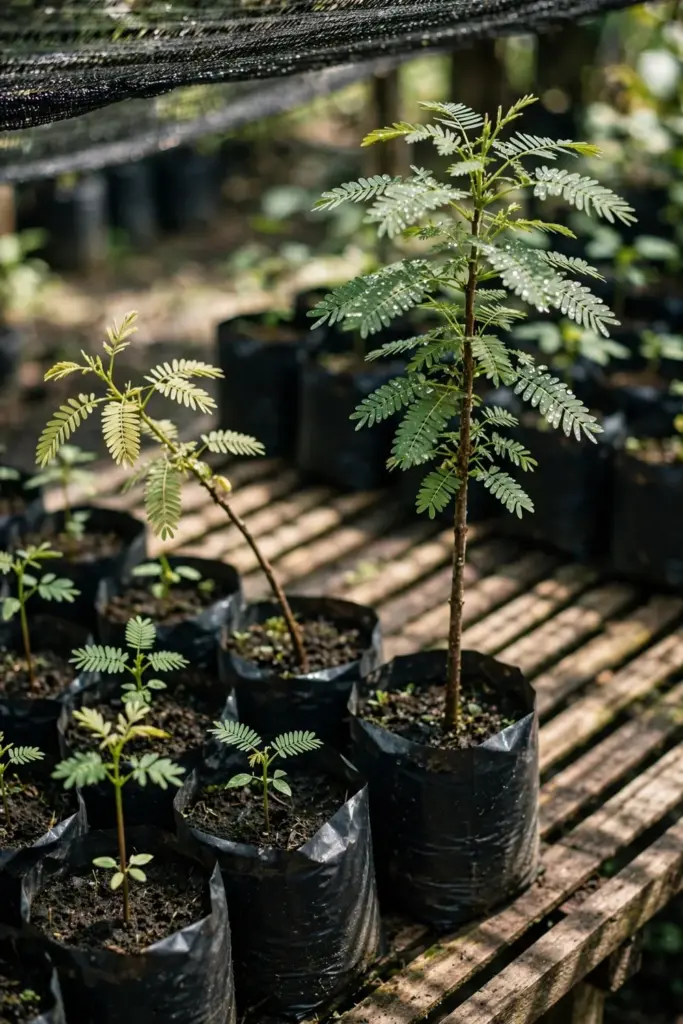
Water through the nursery year on a steady rhythm. Keep the mix moist, never waterlogged, and increase the interval slowly as the stem hardens. A seedling that never dries out between waterings grows soft and rots at the collar. A seedling that dries to wilt grows slowly and drops leaves. The middle path, moist with a short dry interval, grows the sturdiest stem.
Move the bags to stronger light as the seedlings grow. Start in shade, shift to morning sun, then to full sun over several weeks. A seedling that jumps from shade to full sun scorches. A seedling that stays in shade grows tall and thin, with a weak stem that bends in the first storm. Watch the stem, not the calendar, for the signal. A thick, straight stem with firm leaves is ready. A thin, leaning stem needs more light and more time.
9. Space Field Trees at Least 10 Meters Apart
Space field trees at least 10 m apart in each direction. The same PROSEA account sets that floor for field planting, a 10 m by 10 m grid. A tree with a trunk to 1 m in diameter and an umbrella crown needs that room, and two trees planted closer will fight for light, water, and root space for decades.
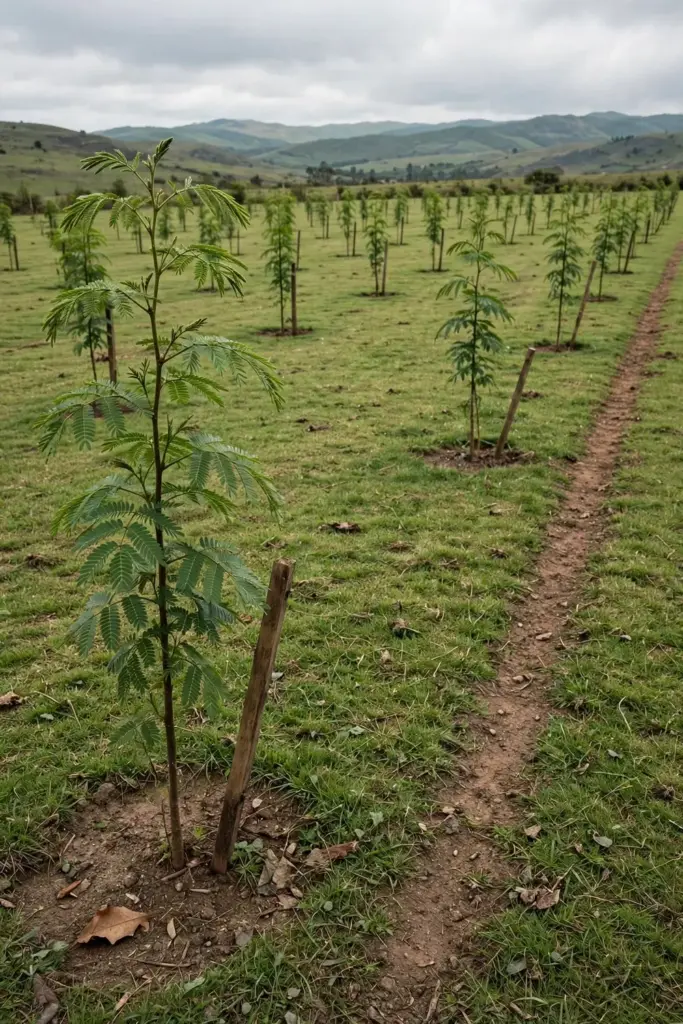
Mark the grid before you dig. Drive a stake at each planting point, then walk the grid and check every stake against roofs, power lines, drains, paths, and fences. A stink bean tree at 30 m drops pods across a wide radius, and a pod that lands on a roof or a road is a nuisance, not a harvest. Move the stake now, while moving it costs nothing.
Dig the hole wide, not deep. Loosen the soil to twice the width of the bag, keep the root collar at the same depth it held in the bag, and firm the soil gently around the root ball. A buried collar rots. A raised root ball dries out. Water deeply on planting day, then mulch around the seedling with a ring that stays clear of the stem. The mulch holds moisture and suppresses weeds while the roots settle.
10. Feed Young Trees NPK 16-20-0 Twice a Year
Feed young trees with complete fertilizer NPK 16-20-0 twice a year. The same PROSEA account gives that exact grade and rhythm for young trees. The higher first number supports leaf and stem growth in the establishment years, and the twice-a-year rhythm keeps feeding steady without flooding the soil.
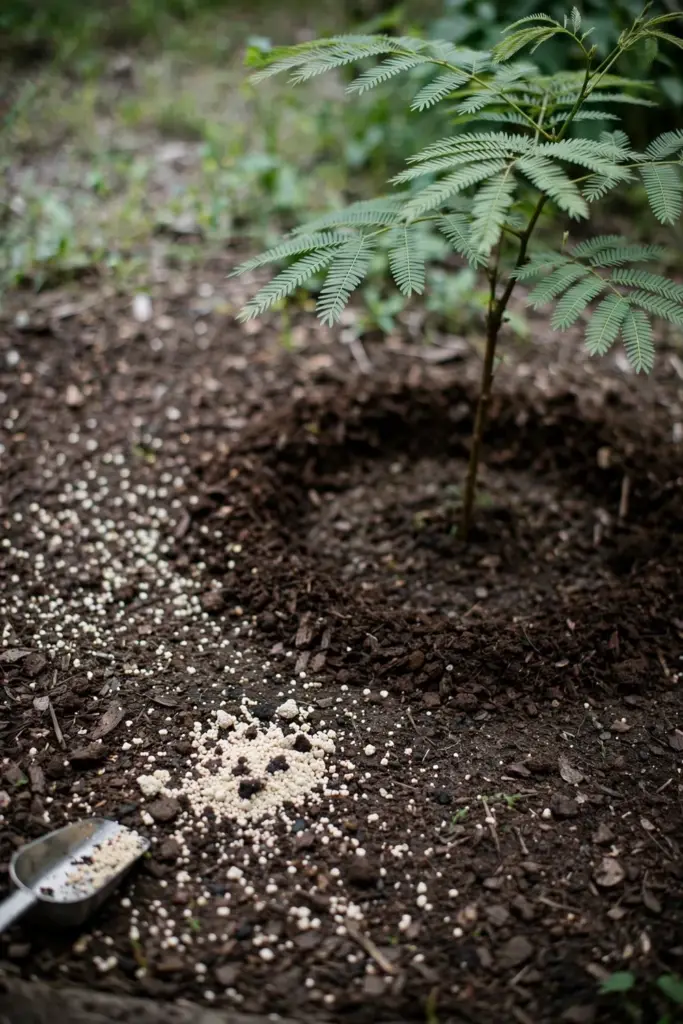
Apply the fertilizer to moist soil, spread it across the root zone, and keep it clear of the stem. A pile of granules against bark burns the tissue and invites rot. Water after feeding so the nutrients move into the root zone instead of sitting on the surface. A young tree in deep, fertile soil still benefits from the scheduled feed, because the feed replaces what the fast-growing canopy pulls out.
No label rate appears in the sources checked, so follow the rate printed on the bag you buy. Data not available covers the gap, and the bag rate is the honest substitute. A rate from another crop, another soil, or another country would mislead. Weigh the dose. Record it with the date, and watch the tree. Deep green new leaves and a straight leader say the rate suits the site, while pale leaves and stalled growth say the site needs a soil test, not a bigger handful.
11. Switch Mature Trees to NPK 12-24-12 Twice a Year
Switch mature trees to NPK 12-24-12 twice a year. The same PROSEA account gives that grade for mature trees, with the same twice-a-year rhythm. The higher middle and last numbers support flowering and pod set, and the lower first number trims leaf growth once the canopy is built.
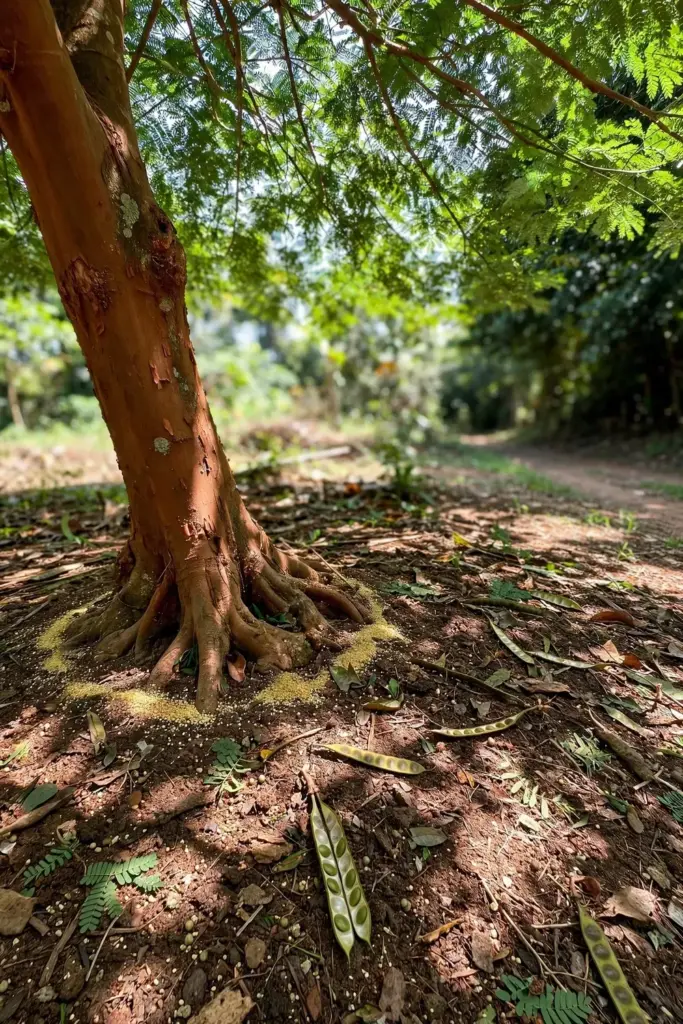
Make the switch when the tree starts bearing, not on a birthday. A tree that still pushes a tall leader and a wide crown is still a young tree for feeding purposes. A tree that flowers, sets pods, and holds its canopy shape is a mature tree. The flower, not the calendar, tells you when to change grades.
Spread the feed across the drip line, where the fine feeder roots live, and keep it off the trunk. A mature tree with a 1 m trunk and buttress roots has a wide root zone, and a small ring of fertilizer near the trunk feeds almost nothing. Walk the drip line, scatter evenly, and water the feed in. Record the date and the grade. Two feeds a year, timed before the main growth flush and before the flowering peak, keep the tree steady.
12. Clear Competing Weeds at Least Once a Year
Clear competing weeds at least once a year. The same PROSEA account gives that minimum for petai plantings. Weeds steal water and nutrients, and tall grass around a young tree hides pests and slows the stem. A tree that competes with weeds for its first years grows slowly and fruits late.
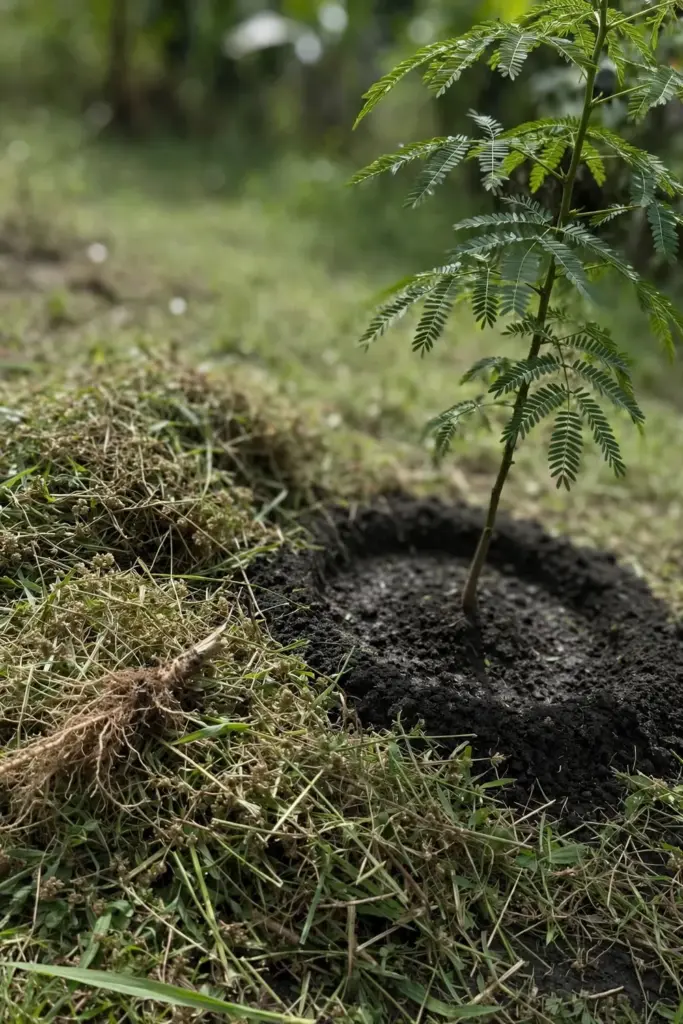
Clear by hand or with a blade, and pull the weeds out by the roots where you can. Cut weeds at ground level when the roots hold the slope together, and return before they seed. Keep the cleared ring wide around young trees. Around mature trees it can run narrower, because the canopy shades the ground itself. Never pile cut weeds against the trunk, since a damp pile against bark holds fungi and borers.
Once a year is the floor, not the target. A wet tropical site grows weeds year-round, and two or three clearings a year suit such ground. Judge by the weeds, not by the calendar. If grass reaches the seedling’s lower leaves, clear it. If vines climb the stem, pull them the day you see them. A clean ring and a clear stem cost an afternoon and save a season.
13. Watch Stem Borers, Pod Borers, and Leaf Caterpillars
Watch for borers first, because they kill trees. The same PROSEA account names the stem and bark borers Xystrocera festiva and Cossus subfuscus as pests that cause extensive damage, even death of the tree, particularly at lower elevations in Java. A borer hole with fresh frass, a weeping patch on the bark, or a dying branch on an otherwise healthy tree all point to borers. Check the trunk monthly, and act on the first hole, not the tenth.
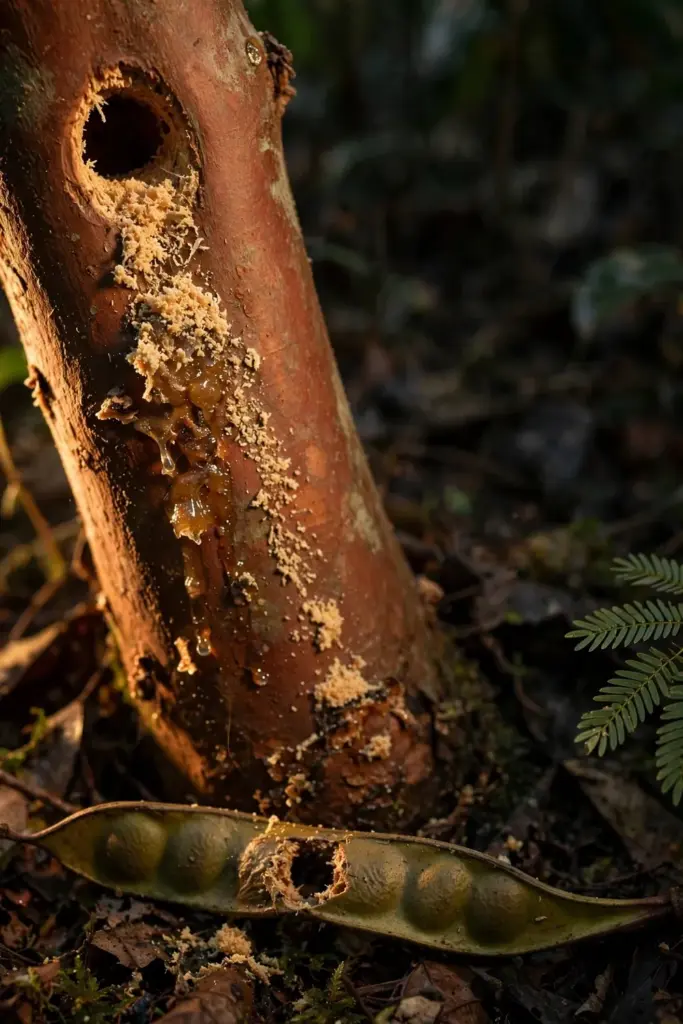
Pod borers come second. Cryptophlebia ombrodelta and Mussidia pectinicornella bore into pods, per the same PROSEA account, and a bored pod holds damaged seed. Open a sample of pods at harvest and check the seeds. A pod with a small entry hole and frass inside goes to the compost, not the kitchen. Heavy pod borer pressure argues for harvesting promptly instead of leaving pods to hang.
Leaf caterpillars come third. The caterpillars of Polyura hebe, Eurema blanda, and Eurema hecabe feed on leaves, per the same PROSEA account, and the Singapore account adds moth larvae attacking seeds and the Lyctus beetle boring wood. Leaf damage looks alarming and rarely kills a large tree. Pick caterpillars off young trees by hand, and leave a mature canopy to outgrow light feeding. Spraying a 30 m canopy is a hazardous job for the applicator, per the same PROSEA account, so reserve sprays for nursery stock and young trees, and follow the label exactly.
14. Leave Pollination to Bats and Wait 60 to 70 Days
Leave pollination to bats. The same PROSEA account states that bats pollinate the flowers of Parkia speciosa, and the Singapore account agrees. The flower head hangs on a long stalk, opens at night, and offers nectar that draws bats. No hand pollination method appears in the sources checked, and none is needed. A tree that flowers in a landscape without bats still sets pods when moths and other night visitors work the heads, but a bat-rich site sets the heaviest crop.
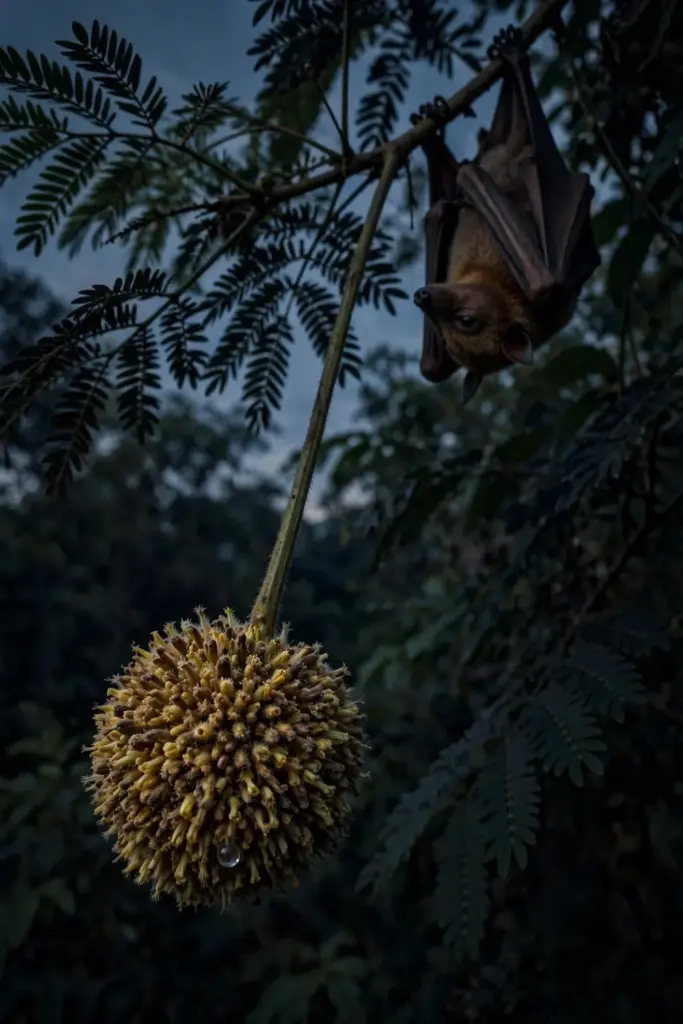
Count 60 to 70 days from flowering to ripe pods, per the same PROSEA account. That window sets the harvest calendar. Mark the flowering date when the heads open, then check the pods weekly from day 50 onward. A pod that still feels flat and thin needs more time. A pod that swells visibly over each seed, firms up, and twists is near ripe.
Production runs year-round with one or two peak periods, per the same PROSEA account. The Singapore account records the main season between August and October, with a smaller peak between January and March. A tree in your garden will set its own rhythm in the first bearing years, so record flowering dates and harvest dates for three seasons before you call any month the peak.
15. Harvest 200 to 5,000 Pods Per Tree Each Year
Harvest with a long pole, a tall ladder, and a second person on the ground. A mature tree yields 200 to 5,000 pods a year, per the same PROSEA account, and a harvest of 1,000 pods per tree per year counts as satisfactory. Those numbers explain why one tree feeds a village and overshoots a kitchen. Pick pods when the seeds swell firmly inside the pod wall and the pod still looks green and fresh.
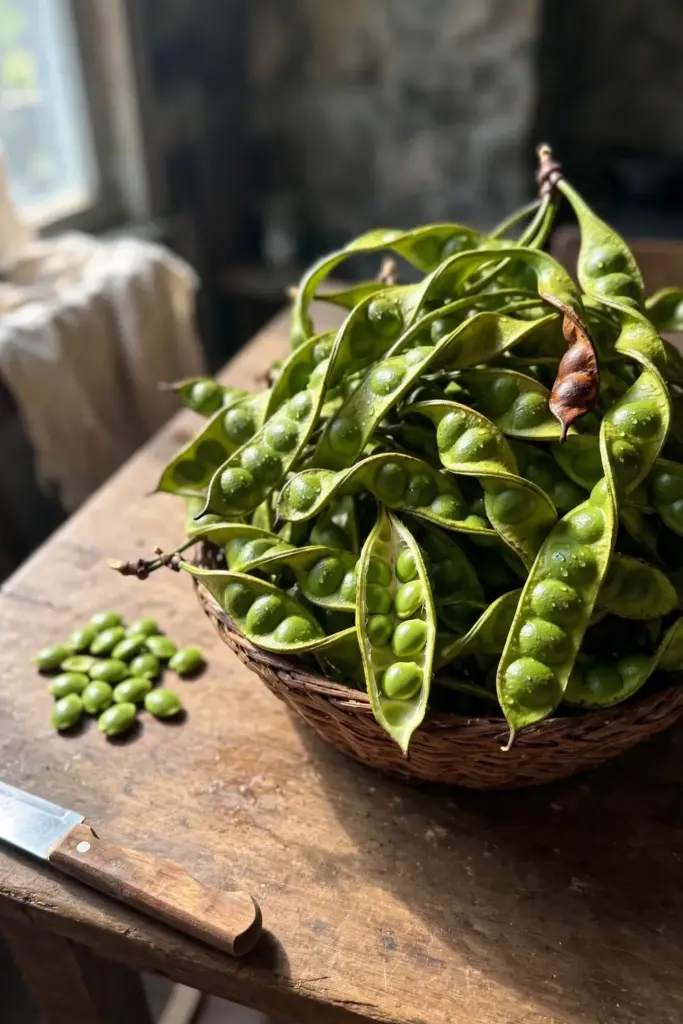
Work from the ground first. A hooked pole pulls low pods within reach, and a helper gathers them into a basket. Climbing a 30 m tree for pods is a job for a trained climber with ropes, not for a gardener with a ladder. Falls from petai trees injure people, and the pods are never worth that risk. If you cannot reach the pods safely, hire the climber and pay the rate. Mangosteen, which takes many years to bear, teaches the same lesson about patience, and petai adds height to the waiting.
Sort pods at the tree. Keep firm, green, unbroken pods for the kitchen. Set aside pods with borer holes, mold, or soft spots. Count the kept pods and record the number with the date. A written harvest record turns the wide PROSEA yield range into your tree’s own number, and that number tells you whether the feed, the weeding, and the spacing are working.
16. Eat Fresh Seeds Raw, Roasted, or Steeped for 24 Hours
Eat fresh seeds raw, roasted, or cooked, and heat them if the smell bothers you. The same PROSEA account lists all three ways, and it notes that the seeds stay relished despite their strong smell when properly heated. Raw seeds taste sharp and savory. Roasted seeds taste deeper and nuttier. Cooked seeds in a stir fry or a curry carry the flavor through the whole dish.
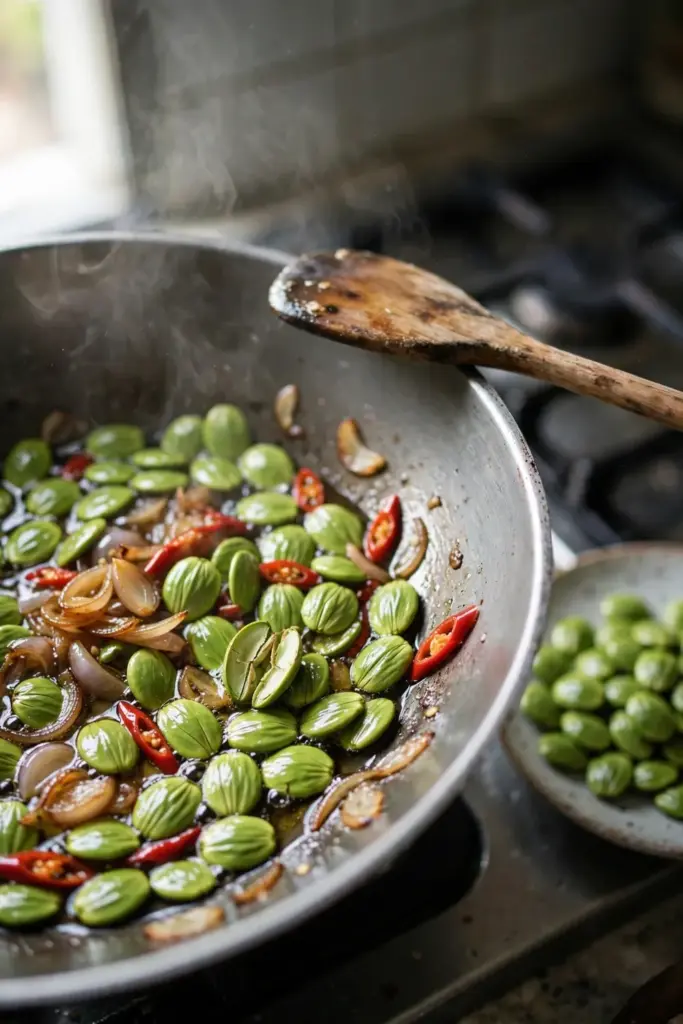
Steep dried seeds before cooking them. The same PROSEA account says seeds preserved by sun drying should be peeled before use, and that they are fried in oil or steeped in water for 24 hours and cooked. Peel the thin coat off the dried seed, cover the seeds with water, wait a full day, then cook them. The steep softens the seed and evens the texture. Skipping the steep leaves hard centers in the dish.
Use the whole flower head with restraint. The same PROSEA account notes that young leaves and the pear-shaped receptacle of the flower head can be eaten raw as lalab, but that they are not used to a great extent. Keep the harvest to the seeds for everyday cooking. A 100 g serving of fresh seeds carries 8 g of protein, 8 g of fat, and 11 g of carbohydrate, with an energy value of 630 kJ, per the same PROSEA account), and the seeds also carry tannins at 6 percent on a dry weight basis. Those numbers describe a real vegetable, not a garnish.
17. Dry Surplus Seeds in the Sun for Storage and Transport
Dry surplus seeds in the sun to store them and to carry them further. The same PROSEA account says sun drying improves storability and eases transport over long distances. Spread the seeds in a thin layer on a clean mat, turn them daily, and bring them inside before rain and at night. Seeds that dry evenly keep their flavor. Seeds that sit wet grow mold.
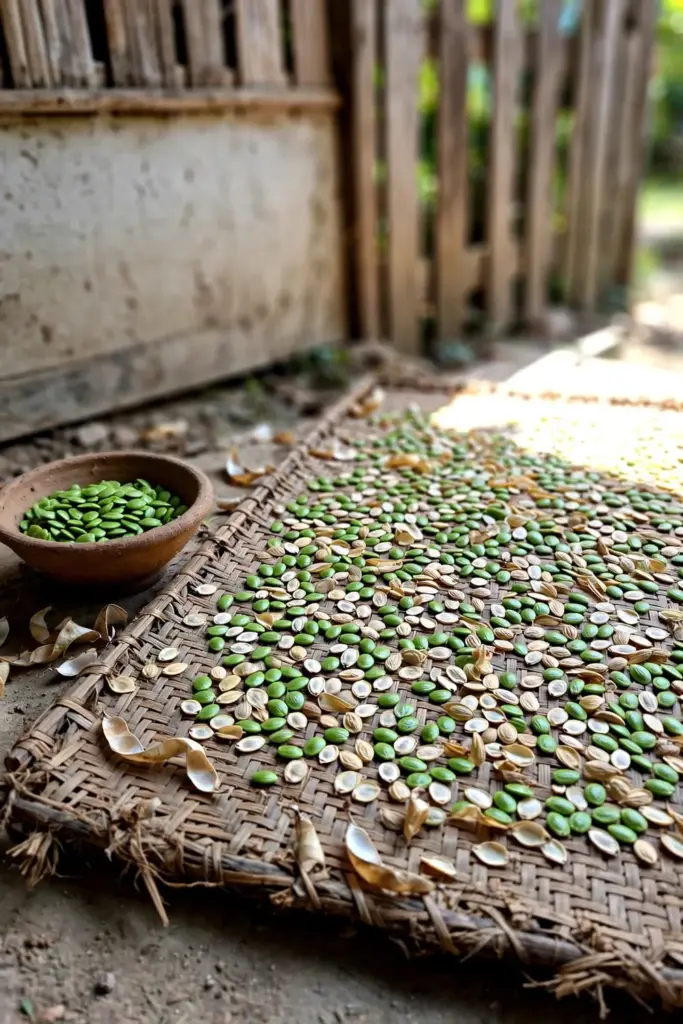
Peel dried seeds before cooking, per the same PROSEA account. The thin coat turns papery as it dries, and peeling takes seconds once the seed is fully dry. Store the peeled seeds in a dry, airtight container, away from heat and sunlight. Check the container weekly for the first month. Any hint of dampness or mustiness means the batch needs another day in the sun.
A small canning and deep-freeze industry has grown around petai in its home region, per the same PROSEA account. That industry needs uniform seeds in size, color, and age, which a home harvest rarely supplies. Do not judge your harvest against factory standards. Judge it by flavor, by firmness, and by whether the batch cooks evenly. A home harvest that meets those three tests is a good harvest.
18. Skip the Pot, the Greenhouse, and the Temperate Shortcut
Skip the pot. No source checked describes a temperate container method for Parkia speciosa that ends in pods. A pot holds a seedling for its nursery year, and that is the one honest container job here. A pot cannot hold a 30 m tree to fruiting, and pruning cannot shrink a rainforest canopy into a patio plant while keeping the pod crop. Anyone who promises a potted petai harvest is selling a seedling, not a method.
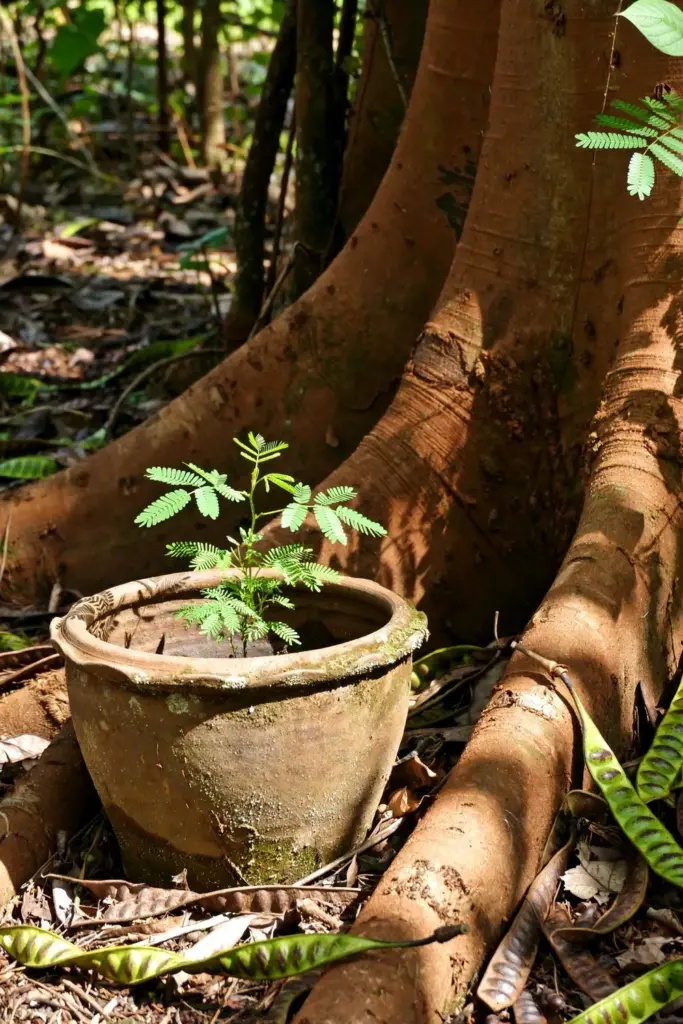
Skip the greenhouse shortcut too. A heated glasshouse that holds a 30 m tree is not a home greenhouse. It is a botanical garden palm house, with staff, with heating bills, and with a roof that opens for a crane. A home greenhouse grows seedlings, and it grows them well. It does not fruit a canopy tree. Moving a large tree indoors for winter is equally impossible at scale, and the sources checked describe no overwintering regime for this species.
Pruning offers no escape hatch either. No pruning regime for size control appears in the sources checked, so the honest statement is that a dwarfing method is data not available. A tree that loses its canopy to hard pruning loses its pods with it. The temperate shortcut does not exist, and pretending otherwise wastes years. Buy pods, grow a different tree, or move to the tropics. Those are the three honest options, and the first one is available this week.
Frequently Asked Questions
A seedling grows in a pot for its nursery year. A fruiting tree does not. The tree reaches 30 to 45 m, needs a 10 m spacing grid, and flowers for bats, so no indoor pot, balcony, or home greenhouse carries it to pods. Keep a seedling potted for its first year if you enjoy the experiment, then plant it in tropical ground or compost it. Cooks without tropical land should buy pods.
Plan on about 5 years to first bearing, per the PROSEA account, and treat 5 years as the earliest case. A seedling that fruits at 5 years is a fast one, and a slower tree may need longer. Once flowering starts, count 60 to 70 days to ripe pods. Production then runs year-round with one or two peak periods, so the long wait buys a long harvest.
Fresh pods from a grocery store can supply seed, but no viability figure exists in the sources checked for market-pod seed. Open a firm, green pod, keep the plump intact seeds, shell the coat, and sow promptly. Sow more seeds than you need, because market pods may hold old or chilled seed. Expect a tree, not a quick crop, from any seed that sprouts.
No. Djenkolism belongs to jengkol, Archidendron pauciflorum, a different genus, and its cause is djenkolic acid. Petai smells strong because its seeds hold sulfur compounds, and a strong smell is not the same as djenkolic acid. Keep the two beans apart in shopping, cooking, and advice. Direct any medical question about kidney symptoms to a clinician, not to a gardening article.
Sulfur compounds in the seeds pass through the body and leave in breath and urine. The PROSEA account traces the offensive smell to sulfur compounds in the seed. Heating the seeds tames the smell in the kitchen, and the same sulfur chemistry explains the lingering odor after eating. The smell is a normal effect of the food, not a sign of poisoning, and it fades as the compounds clear.
Heat them. Eat the seeds raw, roasted, or cooked, and choose cooked when the smell bothers you. Peel dried seeds, steep them in water for 24 hours, then cook them through. Stir frying and curries carry the flavor while the heat softens the smell. Young leaves and the flower-head receptacle can be eaten raw, but the seeds carry the dish, so cook the seeds well.
Make the Honest Call on Stink Beans
Make the call with the tree in view, not the recipe. Learning how to grow stink beans means planting a 30 to 45 m rainforest tree, spacing it 10 m from its neighbors, feeding it twice a year, waiting about 5 years for the first pods, and harvesting from a canopy that needs a pole or a climber. That is a farm tree, a village tree, or an agroforestry tree. It is not a backyard vegetable, and this article never pretended otherwise.
Buy pods if dinner is the goal. The market gives you fresh, pickled, or brined petai this week, at a good price, with no waiting and no ladder. Plant a tree if you hold tropical land, steady warmth, and years to spare. Give it sun, moisture, a 10 m grid, and the two fertilizer grades, and it will pay you back in pods for decades. Either choice is honest. The only wrong choice is planting a rainforest giant in a temperate garden and expecting a vegetable patch to result.