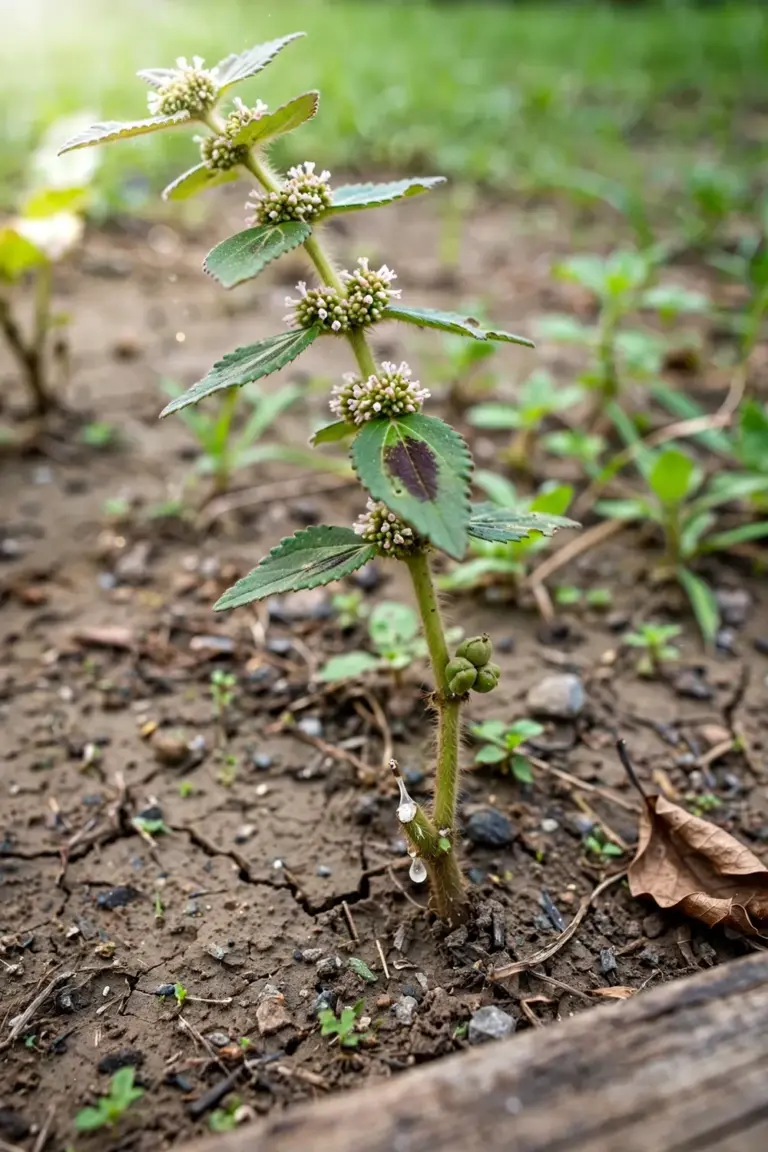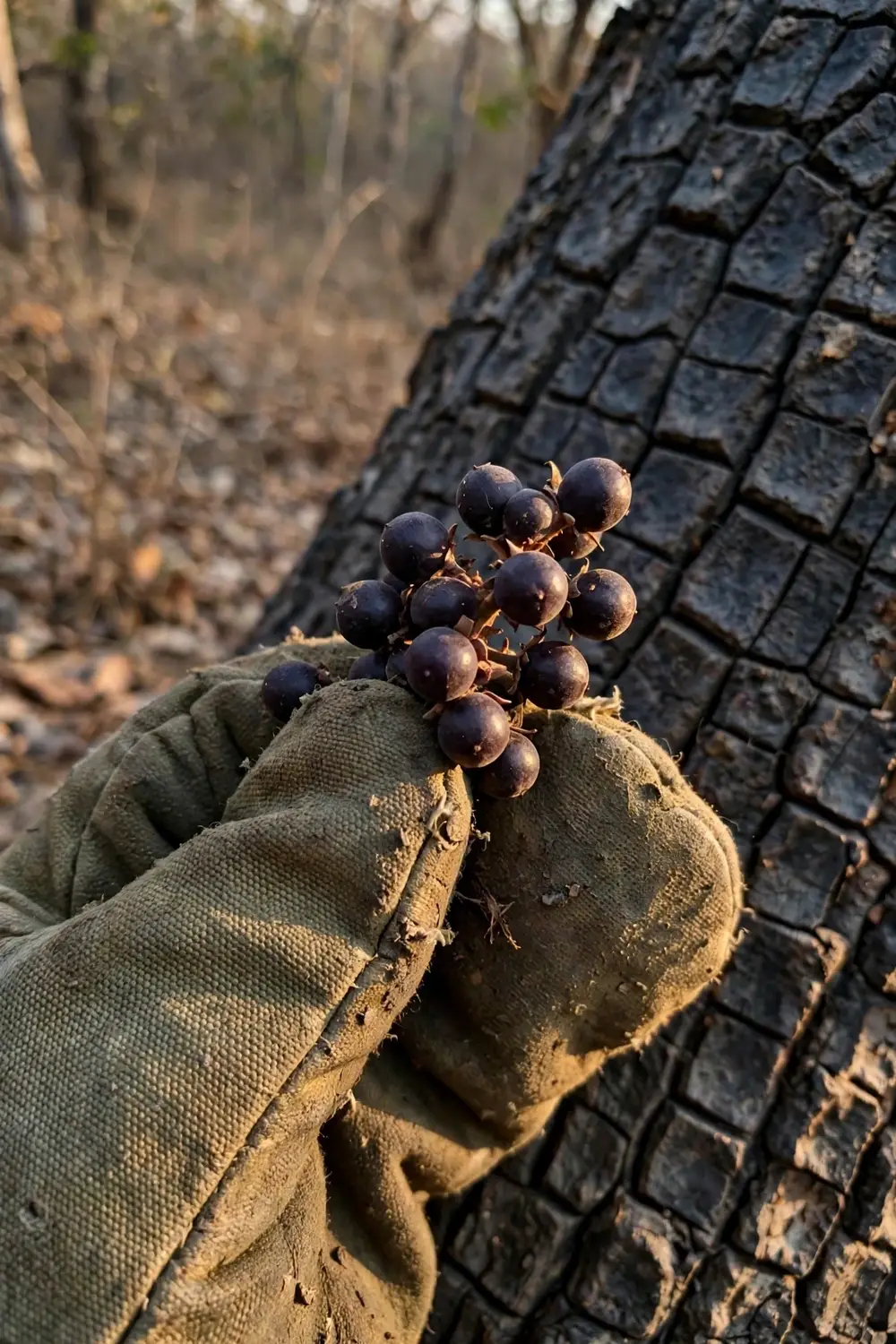

Plan to wait 12 to 15 years before a seed-grown chironji tree gives you its first real harvest. That single number is the whole reason this is a different kind of growing guide. Chironji is not a home-garden crop with a quick seed packet and a summer harvest. It is a wild forest tree of central India whose kernels are gathered from the wild, cracked out of hard drupes, and sold as charoli, the almond-tasting seed in Indian sweets.
If that sounds discouraging, read the rest before you give up. Researchers have worked out how to break the hard shell and get 83 percent germination in 18 days, per the published chironji germination research, and grafted plants can flower from the fourth year. I have learned that trees with hard-coated seeds punish impatience more than they reward effort, and chironji rewards the patient and the methodical. This guide explains how to grow chironji from India the way the forest and the research say it works, not the way optimistic seed packets describe it.
1. Face the Honest Truth: Chironji Is a Wild-Harvested Forest Tree
Chironji is not commercially cultivated in India at any meaningful scale. The standard line from encyclopedias is blunt: chironji has no commercial cultivation in India, and the fruit is collected by local people from the forests and sold directly to local markets, per Wikipedia’s Buchanania lanzan entry. A survey of forest commons found only about 4,880 trees in the study area, which shows how scattered the resource is. This matters because most seed sellers describe chironji as a crop you can plant and harvest like an almond orchard. It is not.
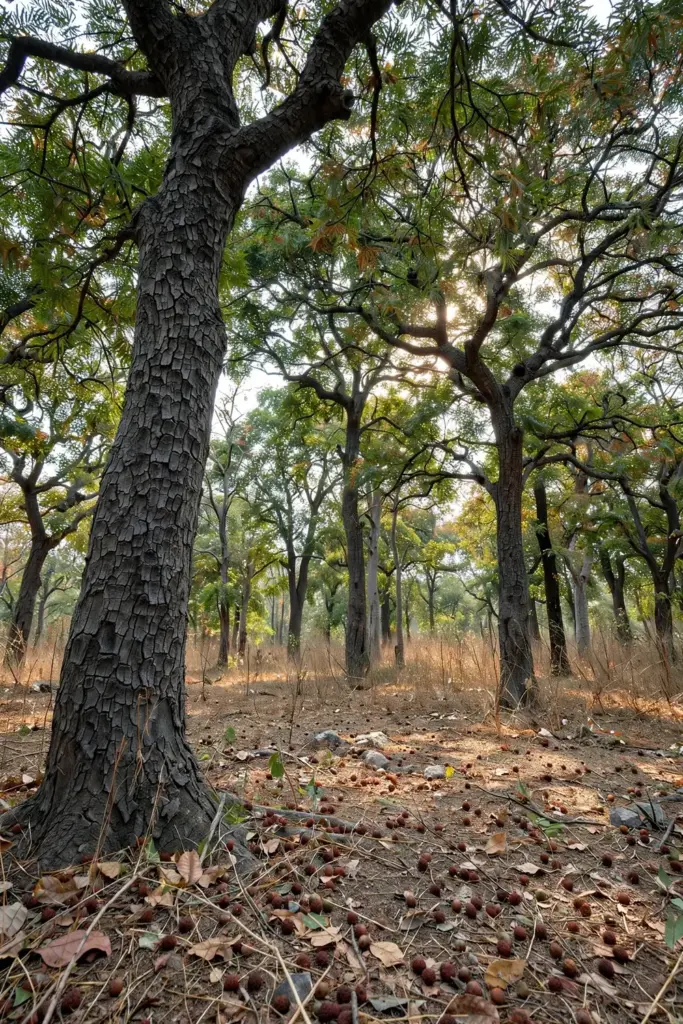
That does not mean growing it is pointless. Forest departments in Bundelkhand have started seed-collection drives and branded the produce as “Kalinjar Herb,” and the ICAR Central Institute for Arid Horticulture treats chironji as a potential dry fruit for dry lands. You are planting a long game: an agroforestry tree for dry, degraded land, a conservation tree for a vulnerable species, and eventually a kernel tree. That is the honest way to grow chironji from India. Accept that framing and everything below makes sense. Fight it and you will plant with the wrong expectations.
2. Know the Tree: Buchanania cochinchinensis, Not a Backyard Almond
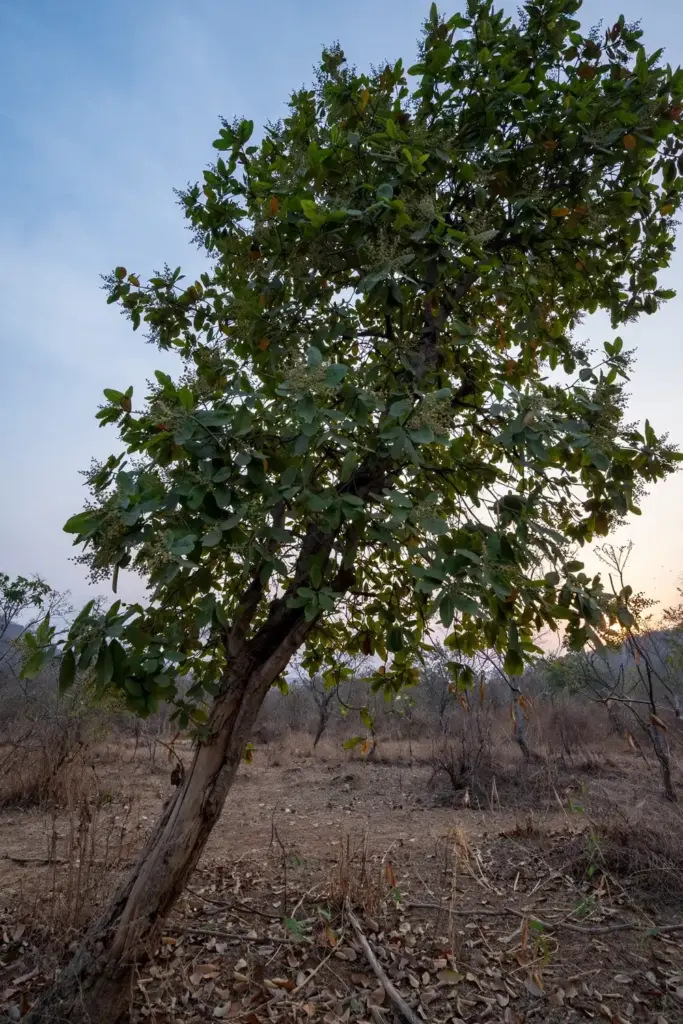
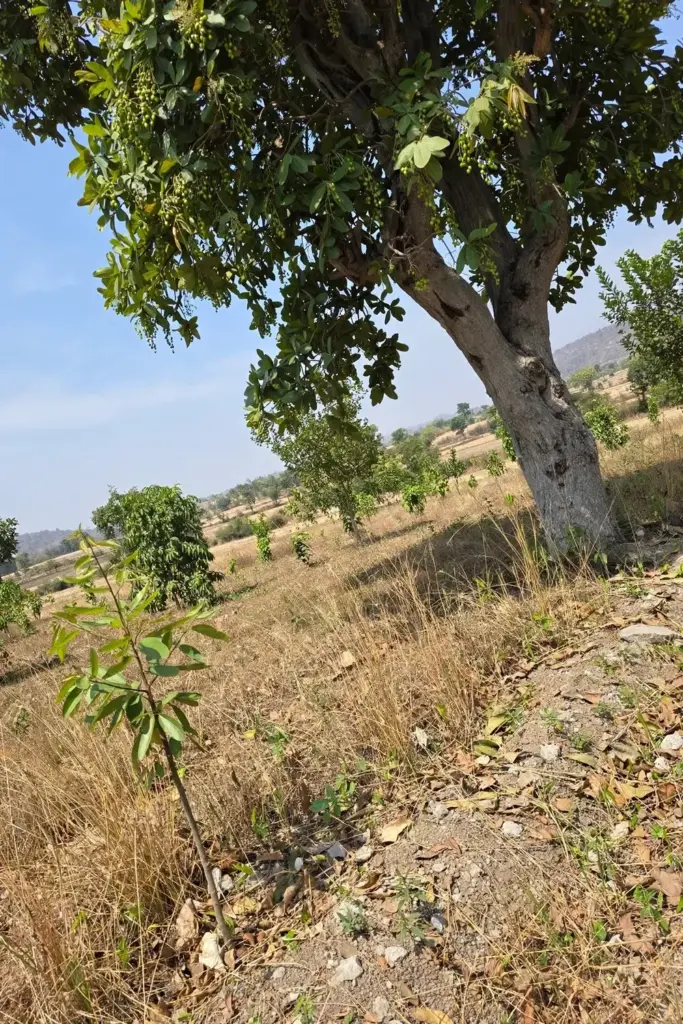
The accepted botanical name is Buchanania cochinchinensis, and Buchanania lanzan is the widely used synonym you will see on most seed packets and papers, as the Useful Tropical Plants profile confirms. It belongs to the cashew family, Anacardiaceae, and grows as an evergreen or shortly deciduous tree up to 18 metres tall. Its bark is dark gray and crocodile-like with a red blaze, which helps identify the tree in the field, according to the IJCMAS chironji review.
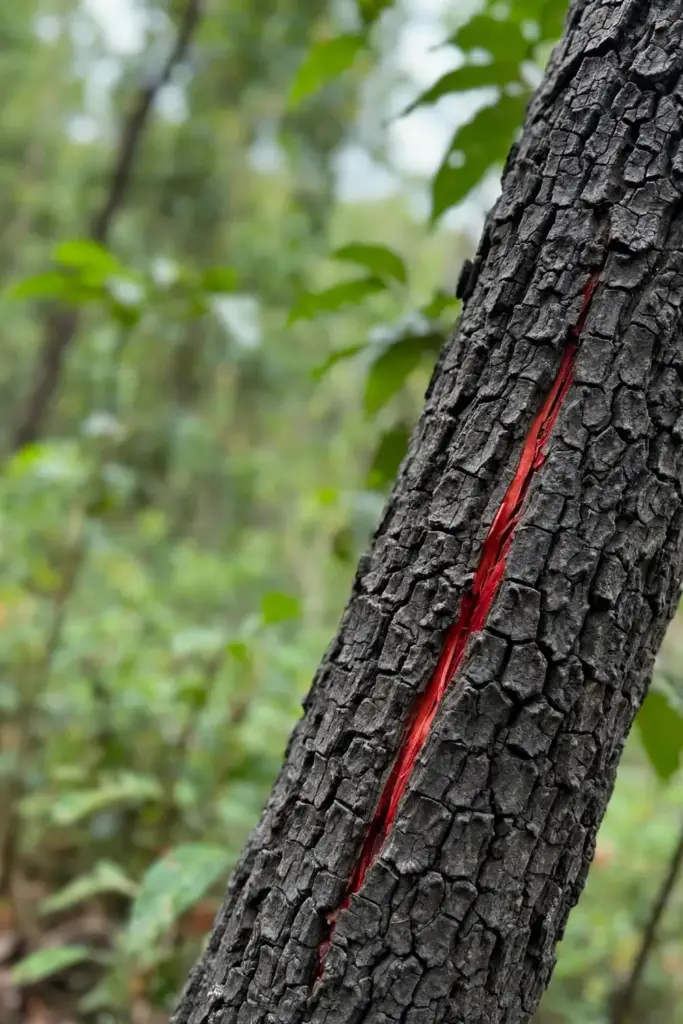
The natural home is open dry deciduous forest in central, western, and northern India, especially Chhattisgarh, Jharkhand, Madhya Pradesh, and the Bundelkhand region of Uttar Pradesh. It is a tree of poor, rocky, yellow sandy-loam soils and drier climates. The day temperature window for best growth runs 32 to 42 degrees Celsius with tolerance from 5 to 48, and annual rainfall of 1,000 to 1,500 mm is ideal, though it tolerates 750 to 2,200 mm. Soil pH near 5.5 to 6 suits it best, with tolerance from 4.9 to 7.2. One common confusion needs one sentence: kalonji is black seed (Nigella sativa) and has nothing to do with chironji. Different plant, different product, different growing method.
3. The Seed Is the Spice: Chironji Kernels, Charoli, and the Drupe
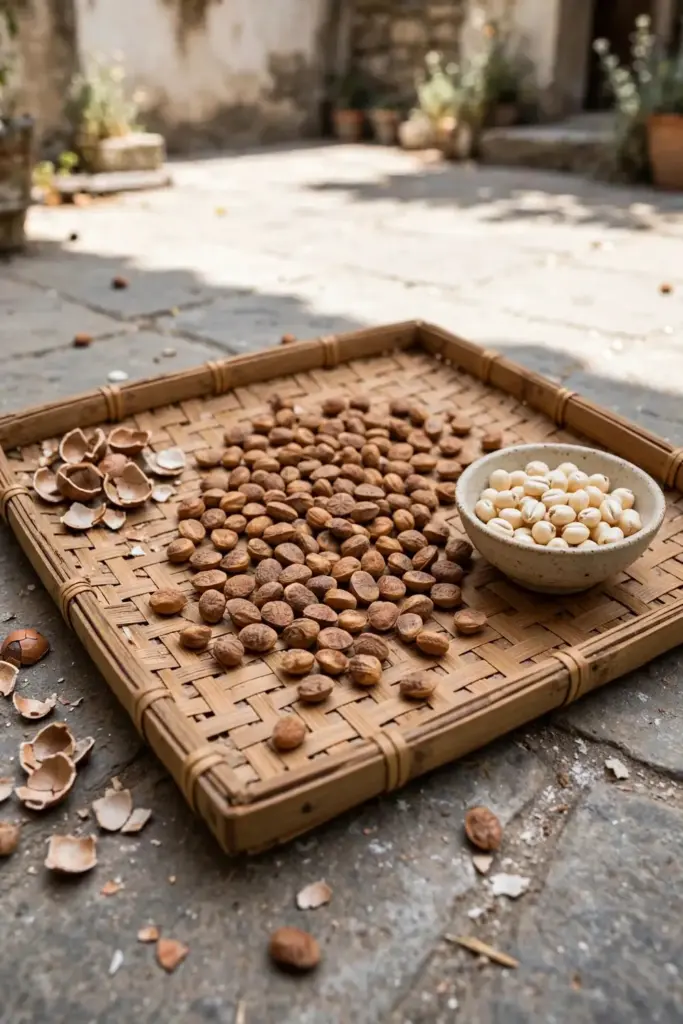
Chironji is the kernel inside a hard drupe, not a nut in the botanical sense. The ripe fruit is about 15 mm long and hangs on the tree for a while after ripening. Inside sits a stony endocarp that must be cracked to reach the seed, which is only about 7 mm long. That seed is the charoli of the market, with an excellent flavor that sits between almond and pistachio, per the botanical profile.
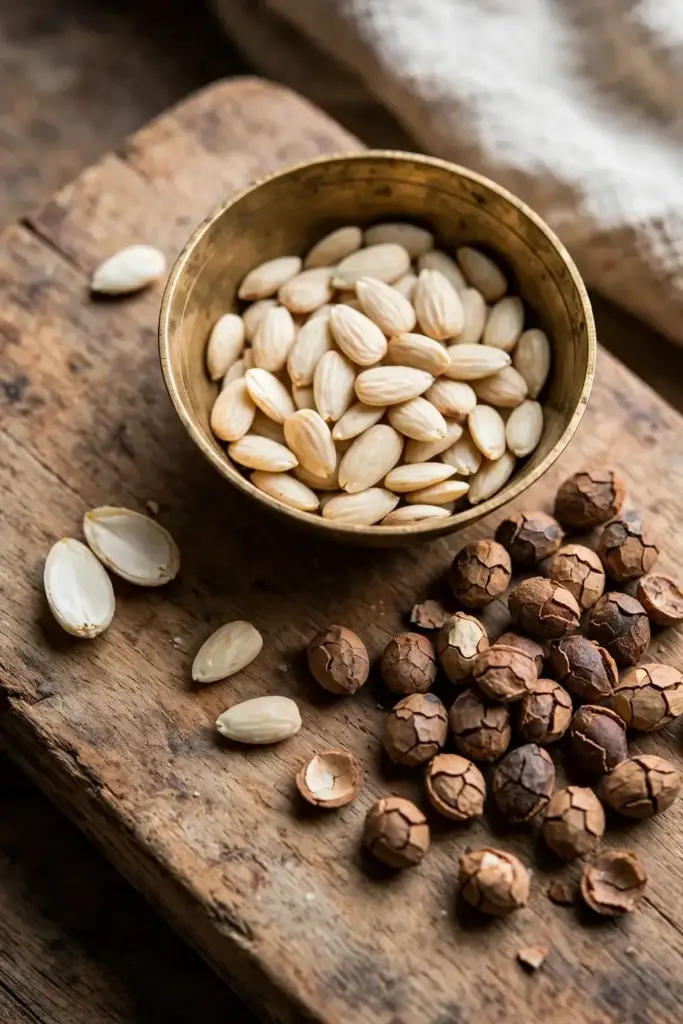
The fresh fruit has its own pleasant sweetish, subacid flavor. Eaten fresh or dried, it is the quick reward. The commercial prize, though, is the kernel: kernel oil is high, with the botanical profile reporting 50 percent, a processing paper%20202-204.pdf) measuring 52 percent, and the IJCMAS review finding 34 to 47 percent fatty oil. The review also notes the kernels are nutritional, palatable, and used as a substitute for almonds in confectionery, which is the market fact behind everything below.
4. Why the Timeline Runs 12 to 15 Years (and What Shortens It)
Seed-grown chironji takes 12 to 15 years to flower and fruit, a figure Indian cultivation guides repeat consistently. Grafted plants, including the ‘Thar Priya’ selection promoted for agroforestry, can flower from the fourth year. Commercial blogs that promise harvest in 4 to 5 years from seed are describing commercial optimism, not the measured record. Set your plan around the long number and treat anything shorter as a bonus.
| Option | Years to First Real Harvest | Cost and Effort |
|---|---|---|
| Seed-grown seedling | 12 to 15 | Low cost, high patience, variable quality |
| Elite seedling, selected mother tree | 12 to 15 | Low cost, better kernel size odds |
| Softwood grafted plant | 4 to 6 | Nursery cost, known variety like ‘Thar Priya’, faster and truer |
The 12-to-15-year figure is the reason nobody has planted chironji at orchard scale: investors and farmers do not wait that long for a return when the market is supplied by cheap wild collection. Grafting exists precisely to break that deadlock. Softwood grafting in July has been standardized for elite genotypes, and vegetative propagation gives you a known tree instead of a lottery seedling. If you are planting, plant grafted stock or keep grafting as the year-two upgrade.
5. Crack the Shell: Seed Biology and Scarification Science
The hard stony endocarp is the single biggest barrier between a chironji fruit and a seedling. Mechanical breaking of that shell lifted germination to 83 percent in 18 days in a trial at the Jhansi agroforestry research station, reported in the chironji germination review. Fresh seeds sown without treatment gave 70 percent germination in another researcher’s hands, per the same review. The same review notes that mechanical breaking is slow and risks embryo damage, so crack carefully.
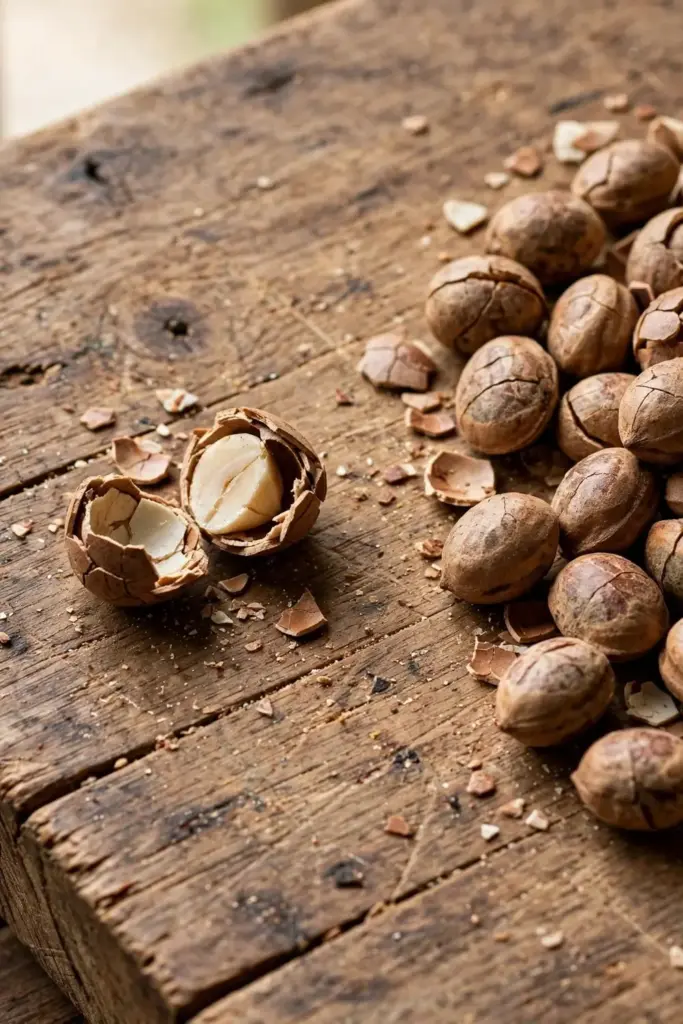
A second research route combines scarification with gibberellic acid: 300 ppm GA3 plus scarification reached 72.22 percent germination in 21 days in a Vidarbha trial, also reported in the chironji germination review. For home-scale work, the easiest grower treatment researchers mention is alternate wetting and drying of the seed, which mimics the monsoon cycle. Do not use roasted or processed kitchen chironji as seed. Roasted seeds are dead, and the Google AI Overview for this very query says plainly that store-bought roasted chironji will not germinate. Start from fresh ripe fruits gathered in April to May, or from a nursery that sells fresh seed in June.
6. Fresh Seed Only: The 3-Month Recalcitrant Rule
Chironji seeds are recalcitrant: they lose viability roughly 3 months after harvest, according to seed-biology studies cited in the IJCMAS review. This is the practical reason wild collection dominates the trade. A seed that dies in three months cannot sit in a warehouse and ship in autumn.
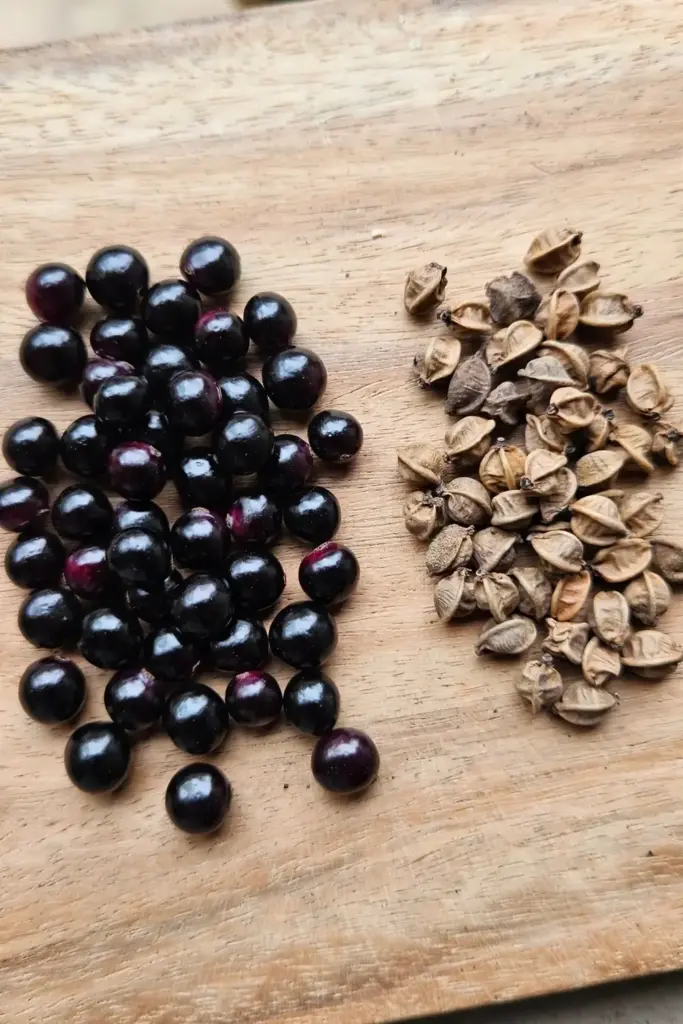
The working calendar is therefore fixed by the tree itself. Fruits ripen and fall in April to May. Extract the drupes, crack or scarify promptly, and sow in June to July with the monsoon onset. Buying chironji seed in winter or keeping it until next year is how beginners fail before they start. If your supplier cannot tell you the harvest month of the seed lot, find another supplier.
7. Sow in June to July: The Germination Method, Step by Step
Use a polybag nursery. The standard medium is a 1:1:1 mix of soil, sand, and farmyard manure in partial shade, which keeps moisture even around the hard-coated seed.
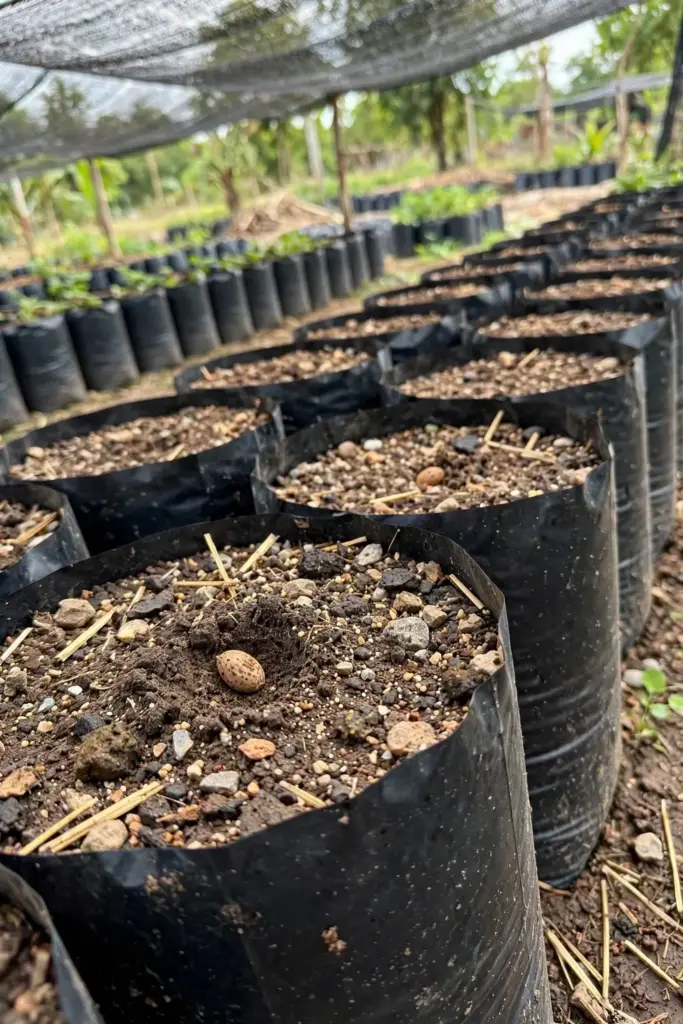
| Step | Action | Time |
|---|---|---|
| 1 | Collect ripe fallen fruits in April to May; discard bruised ones | Harvest window |
| 2 | Depulp and clean the drupes; shade-dry the stony shells for 2 to 3 days | Same week |
| 3 | Crack or scarify the endocarp carefully, or alternate wetting and drying for 3 days | Before sowing |
| 4 | Sow 1 to 2 cm deep in 1:1:1 soil:sand:FYM polybags, one seed per bag | June to July |
| 5 | Keep in partial shade, water to stay moist, never waterlogged | 15 to 25 days to emergence |
| 6 | Harden seedlings in open sun for 2 weeks before field planting | At 6 to 8 months |
Emergence takes 15 to 25 days for treated seed, and untreated seed may take weeks longer or fail entirely. Keep the medium moist but never soggy. Chironji is a tree that dies in waterlogged ground, and soggy polybags rot the seed before it can push a shoot. The nursery routine here follows the same small-seed discipline as our seed starting guide.
8. Grow the Seedlings: Nursery Care in the First Year
Hold seedlings in the nursery for 6 to 8 months, which means a June sowing is field-ready by the following January or February, or you wait for the next monsoon and plant at the start of the rains. Transplant at the start of the monsoon, July to August, into pits of 1 by 1 by 1 metre, following the commercial-cultivation procedure published on ResearchGate. Water every 7 to 10 days through the first dry season. The seedling is tough once established, but a first-year plant with a small root system is not.
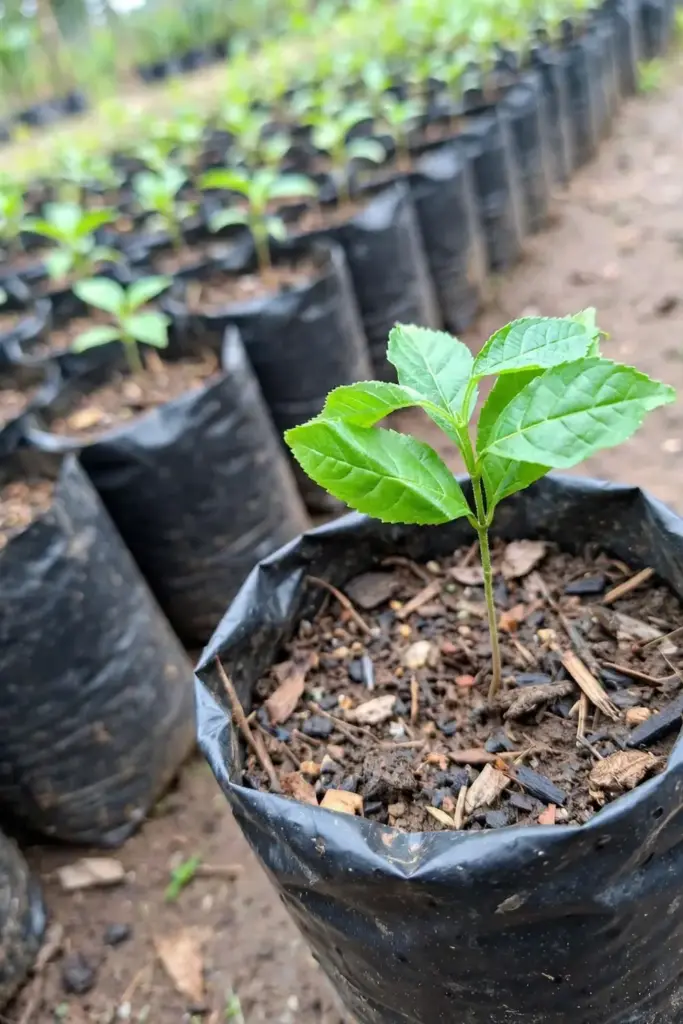
Shade in the nursery is partial, not full. The species tolerates considerable shade when small, per the botanical profile, but grows best in full sun as a mature tree. Shift the bags toward open sun over two weeks before planting out. A seedling that never felt full sun sunburns in its first week in the field.
9. Plant for Agroforestry, Not a Pot: Spacing and the 8-Meter Rule
Chironji is a 10 to 18 metre tree, so it is not a container crop and not a small-garden crop. Plant it where it belongs: farm boundaries, degraded land, wasteland rehabilitation, and agroforestry rows. The spacing used in cultivation research is 8 to 10 metres between trees, with pits 60 to 100 cm across and deep, as laid out in the published chironji cultivation procedure. The tree avoids waterlogged areas but occurs naturally on yellow sandy loam, so pick a raised, free-draining spot.
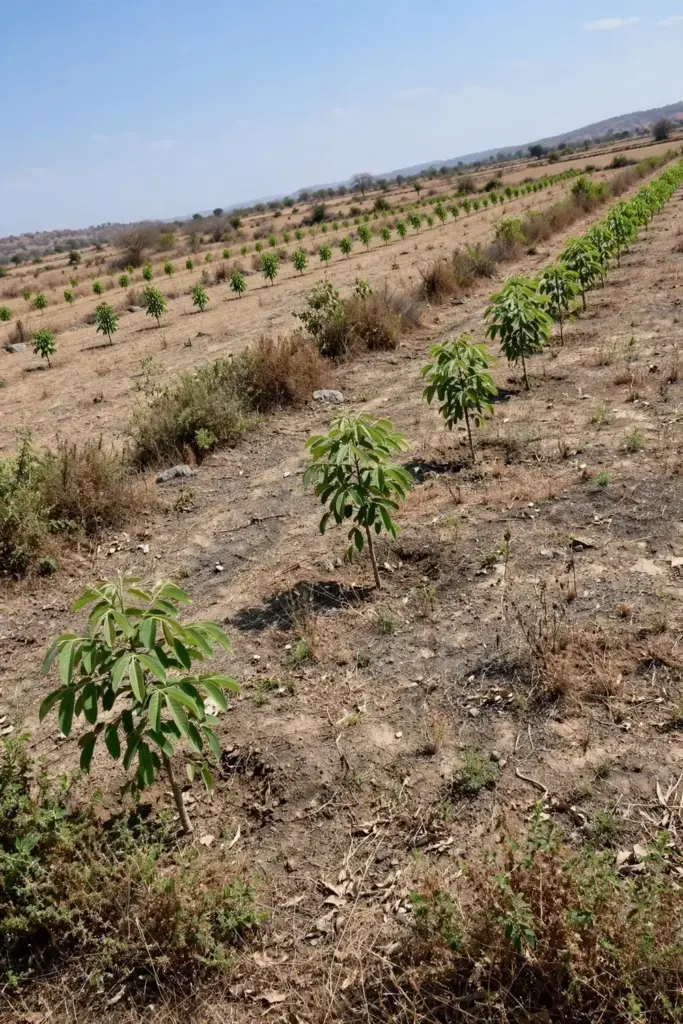
The honest land question is whether you have room. One tree needs the footprint of a small room and fifteen years. A boundary row of five to ten trees is a realistic family-scale planting; an orchard of a hundred trees is an agroforestry project with a labor and protection budget. For scale reference, a mango planting follows a similar logic of spacing and grafted-vs-seedling choice, as the mango growing guide shows for tropical trees. Do not plant chironji against a house wall or under power lines. The tree will outgrow both, and growers who learn how to grow chironji from India on real land say the first rule is room.
10. Give It Deep Loam: Soil That Never Waterlogs
Deep, well-drained loam is ideal, and the species is forgiving of rocky, gravelly red soils as long as water drains away. The pH target is 5.5 to 6, with tolerance from 4.9 to 7.2, from the botanical profile. Mix the pit backfill with farmyard manure and a little sand where the soil is heavy clay.
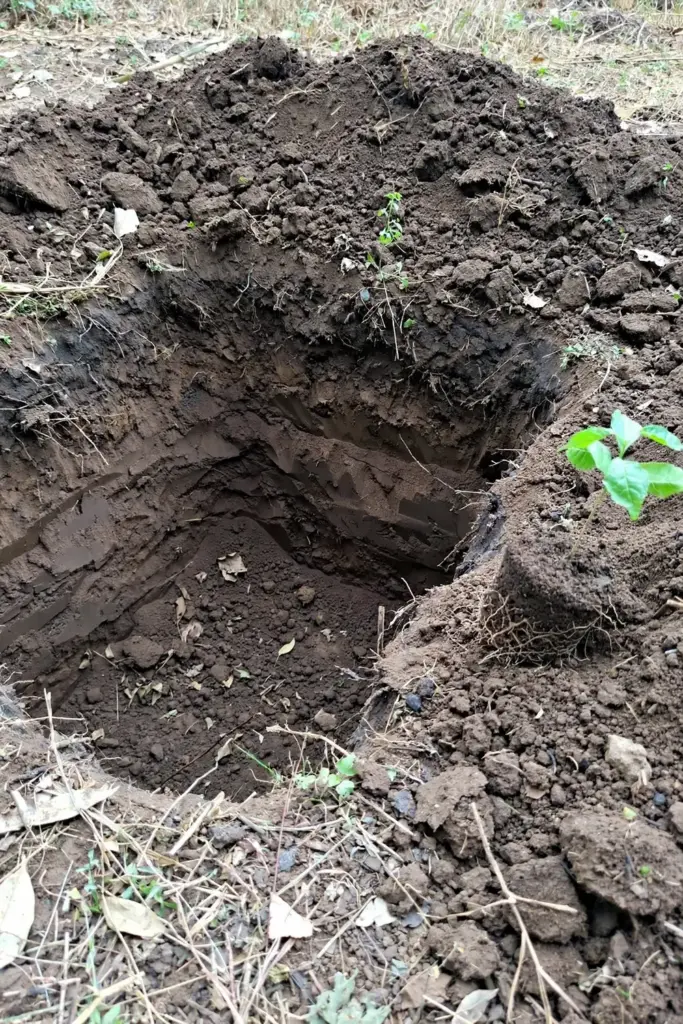
Waterlogging is the one soil condition that kills chironji outright, as the IJCMAS review states plainly. In low-lying land, mound-plant: raise the pit into a 30 to 40 cm mound so the crown sits above monsoon flooding. If you are building soil for a long-lived tree, the same soil-health principles that feed any garden apply here, just on a longer clock.
11. Water and Feed: Drought Hardy, Not Drought Starved
Chironji withstands drought admirably once established, which is why it suits dry lands and degraded slopes. In the first two years, though, drought hardiness means survival, not vigor. Water every 7 to 10 days in the first dry season, then taper as the root system goes deep. A mulch ring of dry leaves around the base, kept 15 cm off the trunk, holds moisture and feeds the soil as it breaks down.
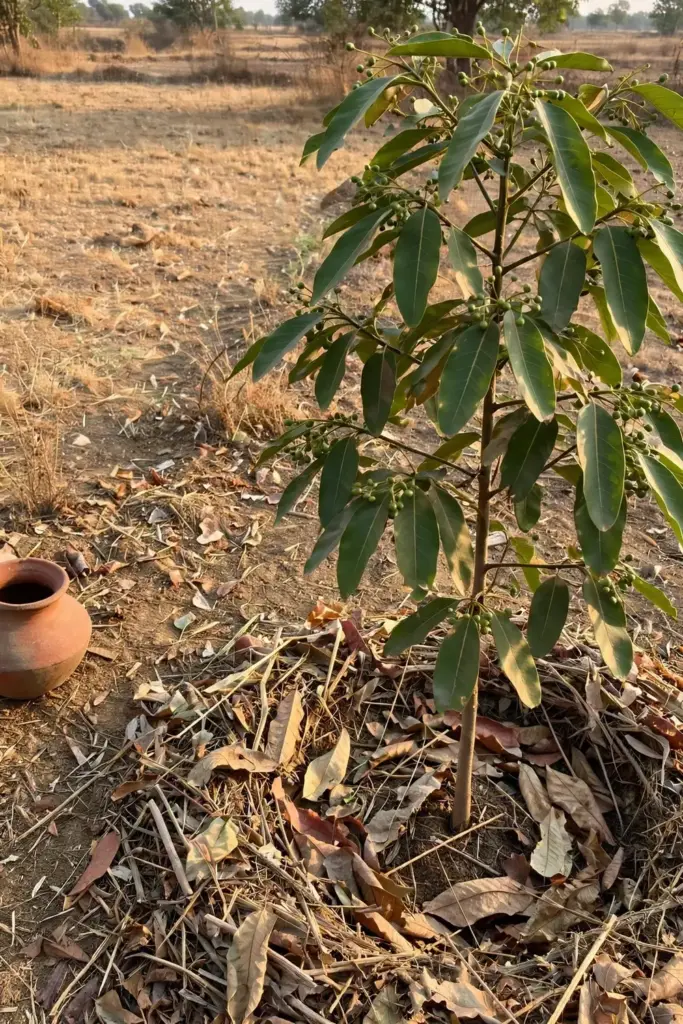
Feeding is modest. Ten to fifteen kilograms of farmyard manure per tree per year in the monsoon, worked lightly into the topsoil, is the standard agroforestry practice. Avoid nitrogen-heavy chemical doses near young trees; forced soft growth burns in summer and invites pests. The tree evolved on poor soils. It responds to feeding, but it does not need a plantation fertilizer schedule.
12. Prune and Protect: Fire, Grazing, and Form
The threats to a young chironji are not subtle: forest fire and grazing animals. In the wild, trees grow in dry fire-prone forests, and young plantings need a firebreak and protection from livestock for the first three to four years. A simple thorn-brush fence or a wire guard around each seedling costs little and saves the tree.
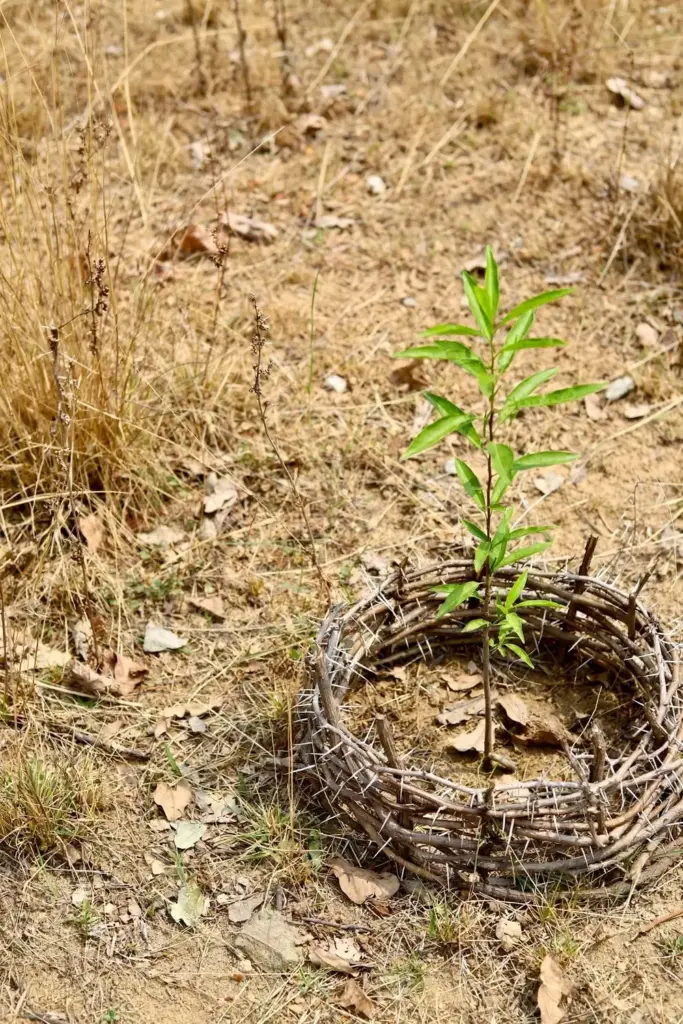
Prune lightly for form in years two to four: remove crossing branches and the lowest fork to give a clean trunk of 1.5 to 2 metres. Chironji has a naturally spreading crown, so the goal is one clear trunk and an open middle, not a shaped canopy. After year five, leave the tree alone. Over-pruning a slow tree just delays the bearing date you are already waiting for.
13. Know the Enemies: Pests and Diseases of the Forest Tree
Chironji faces a modest, well-documented pest and disease roster in Indian literature. Insect pests include leafhoppers, mealybugs, and bark-eating caterpillars of the Indarbela genus. The recorded diseases are gummosis and powdery mildew. Mealybug on young shoots and powdery mildew in humid monsoon months are the two most likely to affect a home-scale planting.
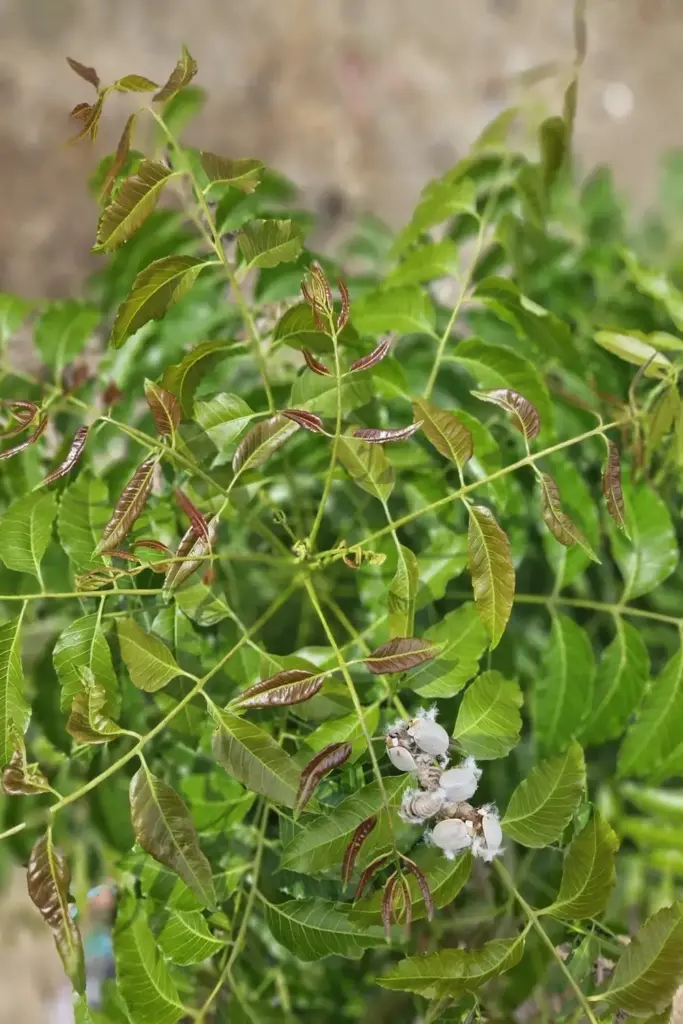
Control follows the standard playbook: blast mealybug off with a strong water jet before reaching for anything, encourage ladybird beetles and other predators by avoiding broad-spectrum sprays, and keep the crown open so air moves through it. Gummosis is a stress signal, usually tied to wounds or waterlogging, so fixing the cause matters more than treating the ooze. On a tree you will live with for decades, prevention beats rescue every time.
14. Harvest April to May: From Fruit to Kernel
Fruits mature in April to May, about a year after flowering. In the wild, collectors gather fallen ripe fruits, and the village method is to depulp, sun-dry the stony drupes carefully, and crack them on a stone slab, separating the delicate kernels by hand. Kernel breakage is the main quality loss in traditional processing, because broken kernels fetch far less.
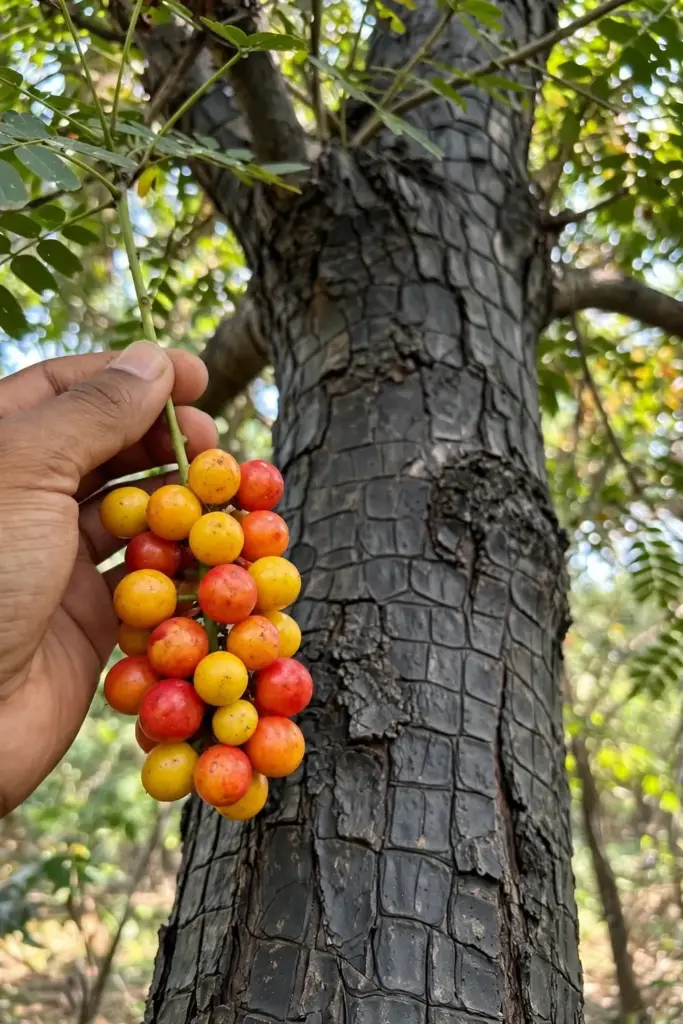
For a cultivated tree, spread a clean tarpaulin under the crown at the start of the season and collect daily. Handle the harvest gently. The kernel is small, about 7 mm, and cracks easily once extracted. Expect roughly 1 to 1.5 kg of kernels per tree per year once bearing well, which explains both the price and why a single tree is a spice source, not an income.
15. Dry and Store: Kernel Quality Is the Whole Game
Dry the cracked drupes in full sun until the shells are fully hard and dry, then crack and winnow the kernels. Moist kernels mold, and molded chironji is unsellable. Store kernels in airtight jars in a cool, dark place. Buyers grade on kernel wholeness and color, so grade before you store: whole pale kernels for sale and gifting, broken pieces for your own kitchen.
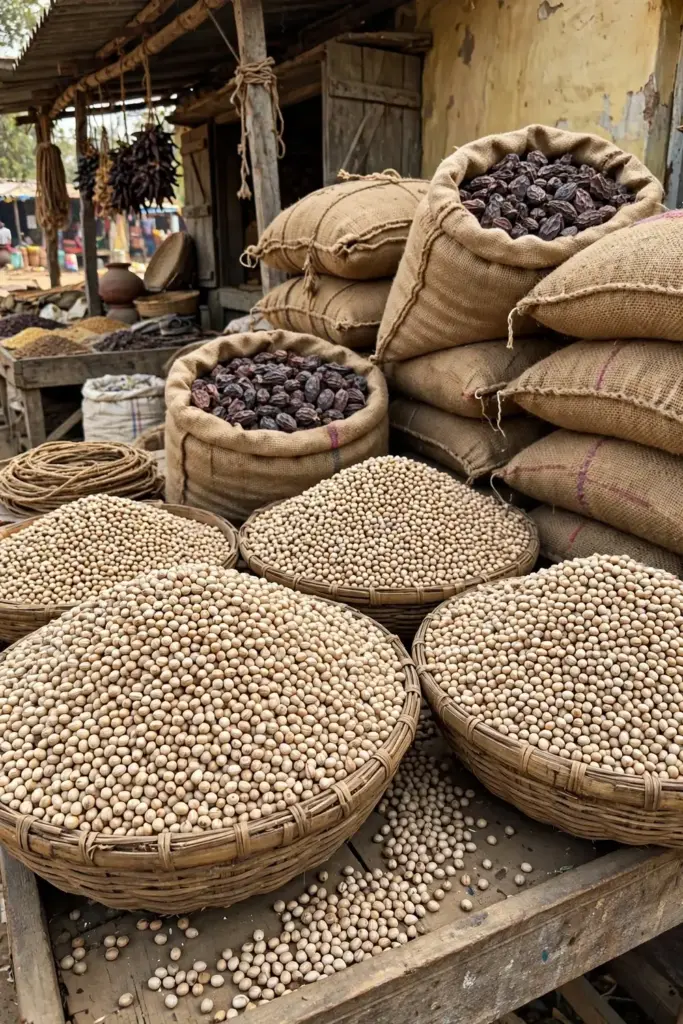
The national trade runs 100 to 200 MT per year, and market prices run from about Rs. 700 to Rs. 1,200 per kilogram, reaching Rs. 1,500 in urban markets. Those figures explain the wild-collection economy: at that price, tribal collectors earn a living from the forest, and at that scale, no one has invested in a 15-year plantation cycle. Your tree joins a small, real market rather than a mass one.
16. The Economics: Wild Collection vs Cultivation
The case against planting is honest: wild collection supplies the market now, the tree takes over a decade, and organized plantations barely exist. The case for planting is conservation and the future. Chironji is a vulnerable species listed in the IUCN Red Data Book, and foresters report severe genetic erosion from deforestation and unsustainable harvest, as the IJCMAS review documents.
| Route | Who Harvests | Scale | Sustainability |
|---|---|---|---|
| Wild collection | Tribal collectors in MP, Chhattisgarh, Jharkhand, Odisha | 100 to 200 MT/yr nationally | Declining, over-harvest pressure |
| Forest-dept drives | Bundelkhand “Kalinjar Herb” branding | Small but growing | Better prices for collectors |
| Agroforestry planting | Farmers on degraded land | Near zero today | Long horizon, grafted stock shortens it |
The ICAR Central Institute for Arid Horticulture has published a technical bulletin calling chironji a potential dry fruit for dry lands, and research on chironji-based agroforestry systems shows positive crop interactions for farmers. Planting is therefore a vote for the future: on a 20-year landscape plan, especially on land too dry for thirstier crops, chironji pays back in kernels, shade, and a living seed bank. A 5-year spreadsheet will tell you to walk away.
17. Use Chironji in the Kitchen: Almond-Like, Conservative
In the kitchen, chironji behaves like a small almond with a slightly softer, more delicate texture. It goes into kheer, halwa, sweets, and rich Mughlai dishes like shahi tukda and meaty korma, usually added late so the kernels do not break apart. Fresh fruit eaten raw has a pleasant sweetish, subacid flavor, though the kernel is the part you will actually use.
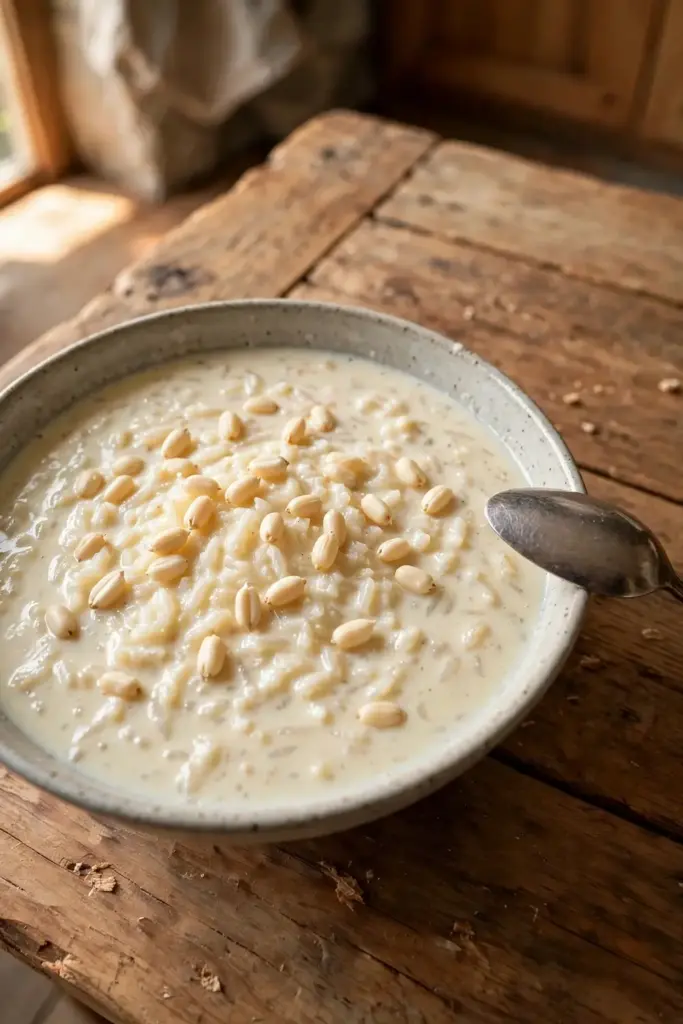
Keep health claims restrained. Traditional uses of the bark, gum, leaves, and roots are documented in Indian ethnobotany, and the oil treats skin conditions in folk practice, but those are not reasons to dose yourself. Use chironji as food, in the small quantities sweets call for, and leave the medicine to clinicians. A pantry jar of home-grown charoli is the reward; it is not a pharmacy.
18. Mistakes That Waste Years
The expensive mistakes are all about time. Chironji sells you years, not seasons. Sowing stale or roasted seed is the classic opener: nothing emerges and the season is gone. Whole drupes sown without scarification give slow, patchy germination that wastes a monsoon, and a waterlogged spot kills the tree that survived everything else.
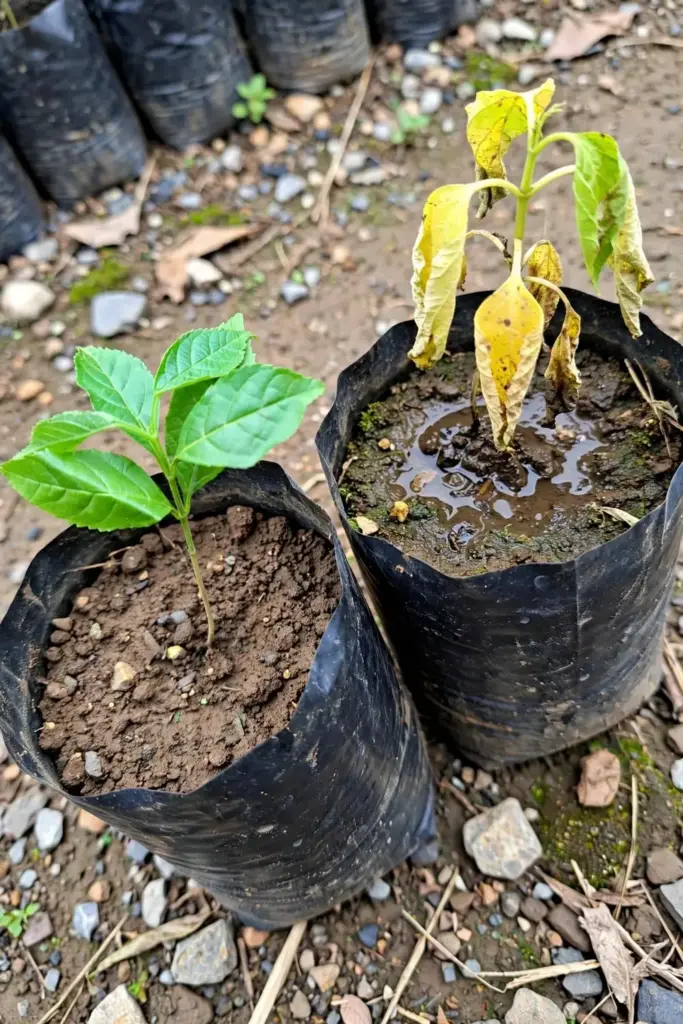
Other mistakes are spatial and social. Putting the tree where a future house or road will need it, skipping fire and grazing protection, and expecting grafted-speed harvests from seedling stock all waste years of waiting. The biggest mistake of all is treating chironji like a vegetable plot crop: it is a tree on a forest timeline, and it only rewards growers who think in decades.
19. Troubleshooting
Yellow leaves in the first monsoon usually mean waterlogging, not hunger. Check drainage first, then feed. Seedlings that refuse to emerge are usually unsown-coat seed or dead stored seed, not bad weather. Scarify the next batch and use fresh April harvests.
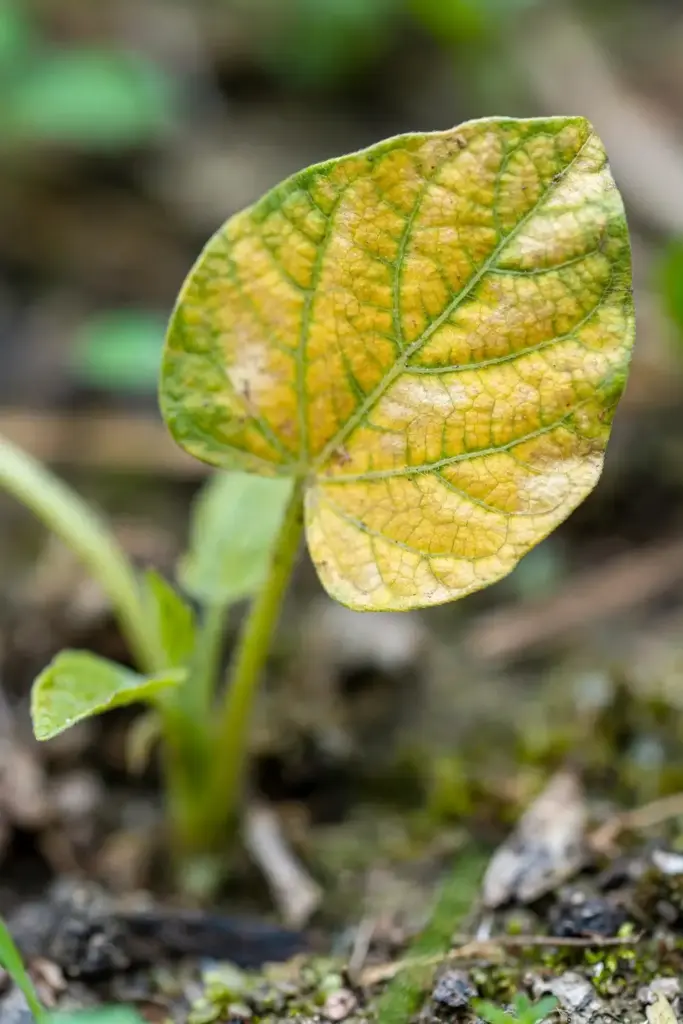
Powdery mildew on young leaves appears in humid spells and rarely threatens a tree; open the crown and it passes. Mealybug clusters on shoot tips get a water blast and predator time. If a grafted tree throws thorny wild shoots below the graft union, cut them off immediately. Rootstock suckers steal vigor and, left alone, can overtake the elite top.
Frequently Asked Questions
No. Kitchen charoli is roasted or processed seed, and dead seed cannot germinate. You need fresh, mature, unroasted seed from ripe April-to-May fruits, sown within about three months of harvest because the seed is recalcitrant. Ask the supplier for the harvest month, and walk away from any seller who cannot answer.
Twelve to 15 years from seed is the standard figure from Indian cultivation guides. Grafted plants, including the ‘Thar Priya’ selection, can flower from the fourth year. Blog claims of harvest in 4 to 5 years from seed are commercial optimism. Plan your planting around the long number.
No. Kalonji is black seed from Nigella sativa, a small annual herb. Chironji is the kernel of the forest tree Buchanania cochinchinensis. They share a rough flavor family and a name that sounds similar, but they are completely different plants with completely different growing methods.
No, not realistically. This is a tree that reaches 10 to 18 metres, with a deep root system and a 12-to-15-year bearing clock. A pot cannot hold it past the seedling stage. Grow seedlings in polybags for the nursery year, then plant them in the ground where they have room.
The price reflects labor and biology. Kernels are hand-collected from wild trees, sun-dried, cracked on stone slabs, and separated by hand, and only whole unbroken kernels earn the top price. Market prices run about Rs. 700 to Rs. 1,200 per kilogram, reaching Rs. 1,500 in urban markets, for a national trade of 100 to 200 MT per year.
The species is listed as vulnerable in the IUCN Red Data Book, and Indian foresters report severe genetic erosion from deforestation and unsustainable harvest. That is one of the strongest arguments for planting it. Every cultivated tree is one more seed source that does not depend on stripping the wild ones.
Where This Leaves You
Chironji is the opposite of a quick win, and that is exactly why it belongs on this site. Anyone who learns how to grow chironji from India learns to think like a forester, not a vegetable grower. The wild-harvest reality, the 12-to-15-year timeline, the recalcitrant seed, and the 83-percent scarification breakthrough tell one coherent story: a vulnerable forest tree that the market undervalues and the future needs. Plant it for the landscape, for the pantry jar in year fifteen, and for the proof that you grew the slow things too. For a different slow tree in the same patience class, our mangosteen long-term guide shows what years-to-bear discipline looks like in practice.