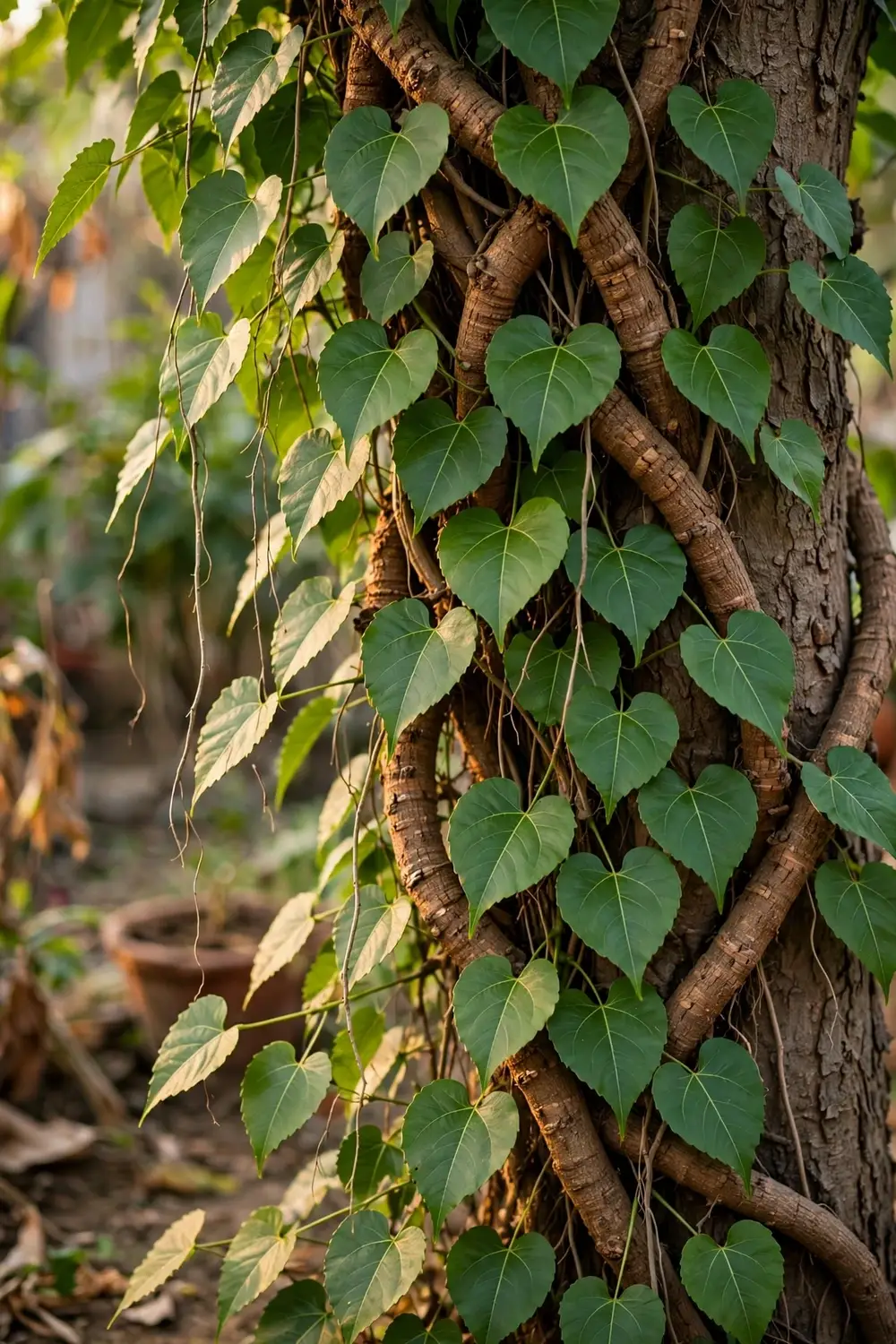

You can harvest your first giloy stems about 9 to 12 months after planting a cutting, and the plant keeps producing for years afterward. That is the whole pitch: one monsoon, one stick in the soil, one support, and then a climbing vine that grows itself. Giloy (Tinospora cordifolia) is a large, deciduous, twining climber from the Menispermaceae family, native to India and grown in Ayurvedic gardens across the country as guduchi or amrita. The learning curve is short, but the few details that matter are non-negotiable: stem cuttings root while seeds mostly fail, the vine must have something to climb from day one, and shade during rooting decides whether a cutting lives or rots. Here is exactly how to grow giloy from India, from cutting to stem harvest. Growers searching for how to grow giloy from India usually want the stem for home Ayurvedic use, and cuttings are the fastest path there.
Most home gardeners meet this plant under two or three names and assume they are different species. They are not. Giloy is the common North Indian name, guduchi is the classical Ayurvedic name, and amrita is an older Sanskrit name meaning immortal. Grow one and you grow all three. If you are new to starting plants indoors, seed-starting fundamentals for tray setup and germination apply, though for giloy you will reach for cuttings first.
1. Mark the One-Year Stem Harvest Clock First
Count on stems worth harvesting between 9 months and one year after planting. The stem needs to be separated into pieces and dried in the shade before storage, and mature stems hold the compounds the plant is grown for. A vine grown from a June cutting during the monsoon can give you harvestable material by the following winter or early spring.
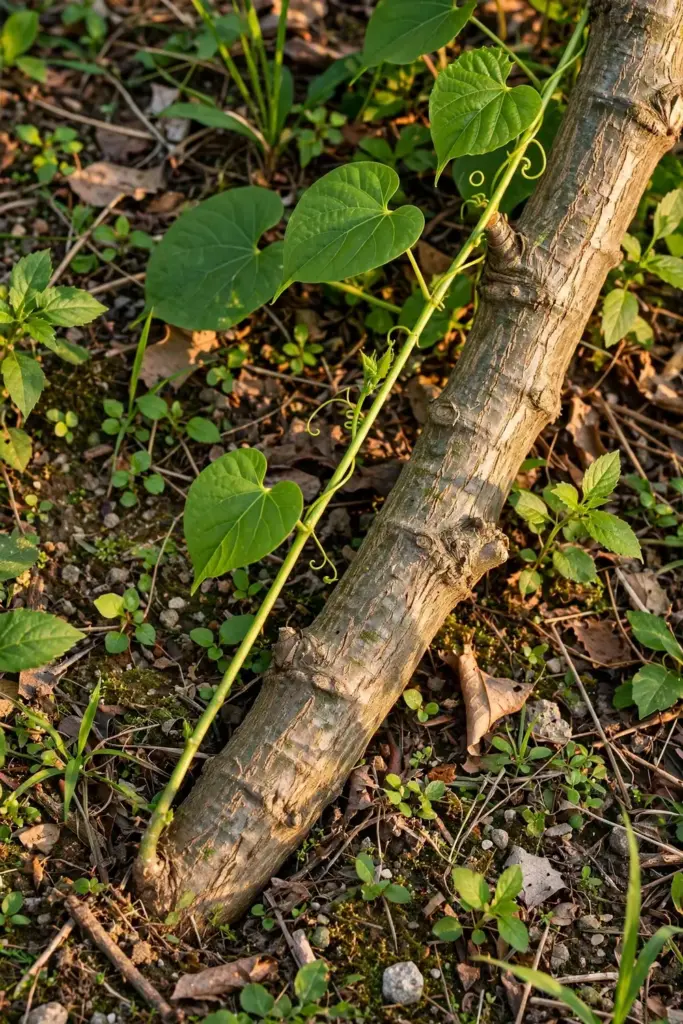
Commercial growers track a harder number. Stems are ready when they reach more than 2.5 cm in diameter, according to field agrotechnology research on giloy, which also reports about 1,500 kilograms of fresh stem per hectare reducing to 300 kilograms of dry stem in about two years. Home gardeners never weigh harvests like that, but the diameter rule travels well. A pencil-thick cutting planted in June becomes a rope-thick stem in roughly a year when it has full support and monsoon water.
2. Take Stem Cuttings: Seeds Are the Backup Plan, Not the Plan
Stem cutting is the best propagating material of this plant, and it is mainly done in the month of June-July, according to Krishi Jagran’s scientific cultivation guide, which also reports hydroprimed seeds germinating in 8 to 10 days with 80 to 90 percent success against 30 to 35 percent for dry-sown seeds. Seeds do work, but only just. Nursery time for seedlings is about one and a half months. Cuttings skip the nursery entirely.
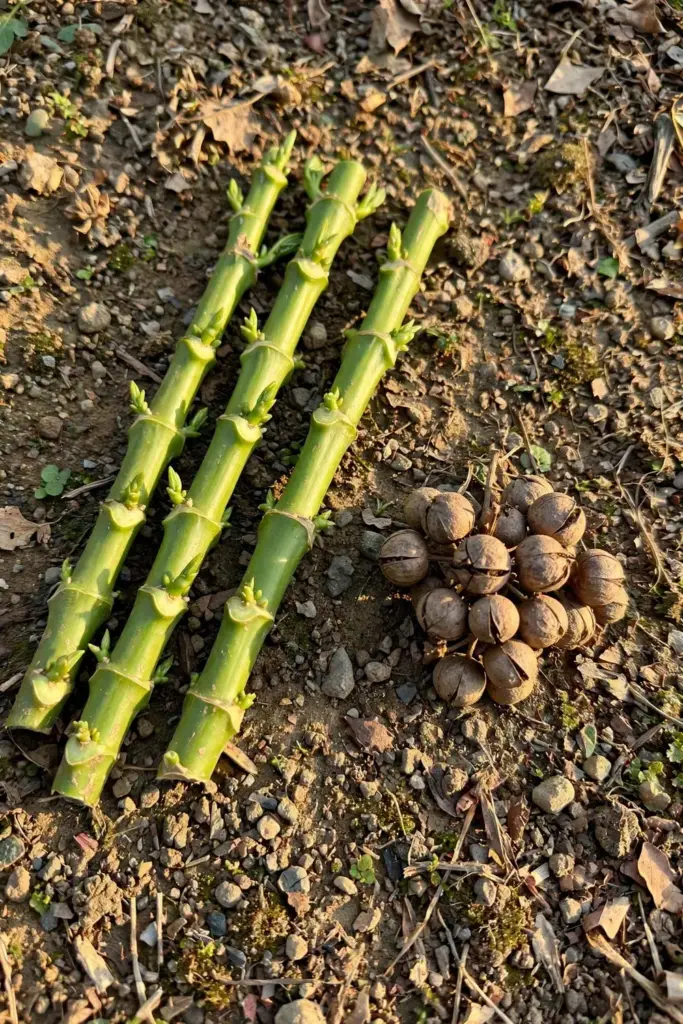
There is a second reason cuttings win. Seeds of Tinospora cordifolia are recalcitrant, losing viability fast, and a home gardener rarely has fresh seed. A mature stem cutting planted directly in soil roots in the monsoon rains with almost no help. Take the cutting, plant it the same day, and let the weather do the work. If someone offers you dry seed in October, start planning around cuttings instead.
3. Cut 25 to 30 cm of Semi-Hardwood With 3 or More Nodes
Choose a healthy, disease-free stem from the mother plant and cut a 25 to 30 cm section with at least 3 nodes. Make the bottom cut at a 45-degree angle just below a node. The angled cut sheds water instead of pooling it on the cut face, and the node is where roots actually form. Semi-hardwood stems of pencil thickness root fastest, though thicker stems also take.
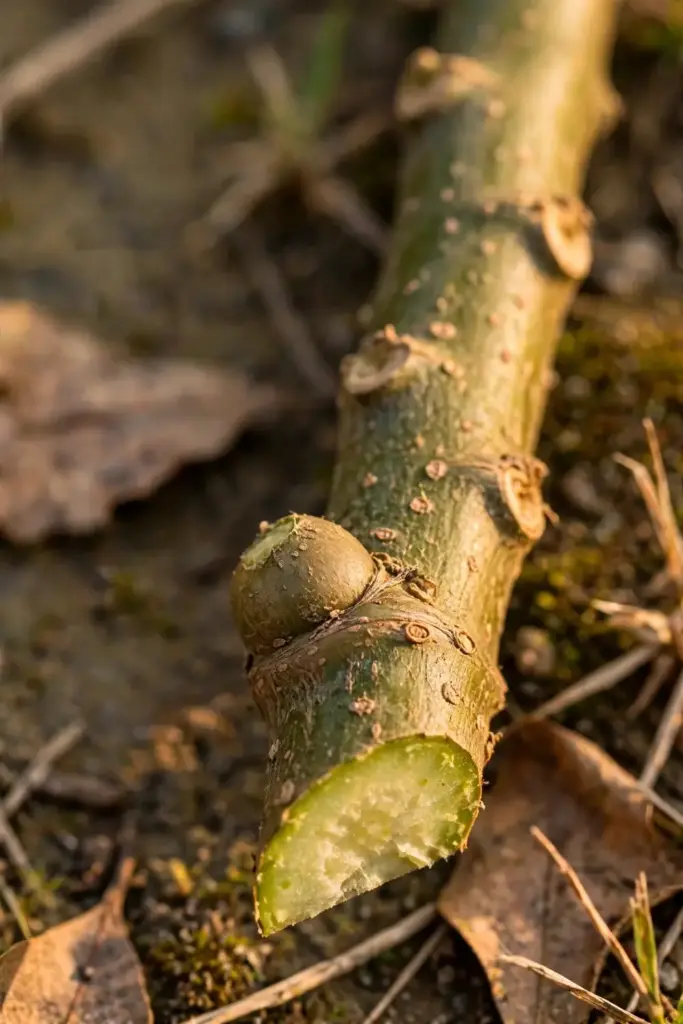
Strip the leaves from the lower half of the cutting so nothing rots under the soil line. Rooting hormone is optional for giloy; the plant roots eagerly in monsoon conditions without it. One note on length: the Chandigarh government medicinal-plants page lists 8 to 10 cm cuttings for nursery and field work, while home-grow guides converge on 25 to 30 cm sections. Longer cuttings carry more stored energy and more nodes, which is why they win in pots and home beds. Plant within 24 hours of cutting. A cutting left drying on a table for two days has already lost most of its advantage.
| Step | Action | Time |
|---|---|---|
| 1 | Select a disease-free semi-hardwood stem of pencil thickness | Morning of planting day |
| 2 | Cut 25 to 30 cm with 3 to 6 nodes, bottom cut at 45 degrees below a node | Same morning |
| 3 | Strip leaves from the lower half; dip in water if the wait is more than an hour | Immediately |
| 4 | Plant 5 to 8 cm deep in moist, free-draining soil with at least one node buried | Within 24 hours |
| 5 | Keep soil evenly moist and the cutting in bright shade | 10 to 15 days to first roots |
The depth figure deserves a note. Some summaries say 2 to 3 cm deep; field practice in India runs deeper, and 5 to 8 cm anchors the cutting against monsoon winds. Shallow planting is bed-level guidance. In a pot or garden bed at home, bury at least one full node and press the soil firm.
4. Root the Cutting in Water or Soil: Two Ways, One Rule
You can root giloy cuttings in a jar of water or straight into soil, and both work. Water rooting is the fastest way to see action. Place a cutting in a jar of plain water, change the water every few days, and roots emerge in 1 to 2 weeks. Transplant it to soil when the roots are 2 to 3 cm long, before they grow so long they tangle or rot.
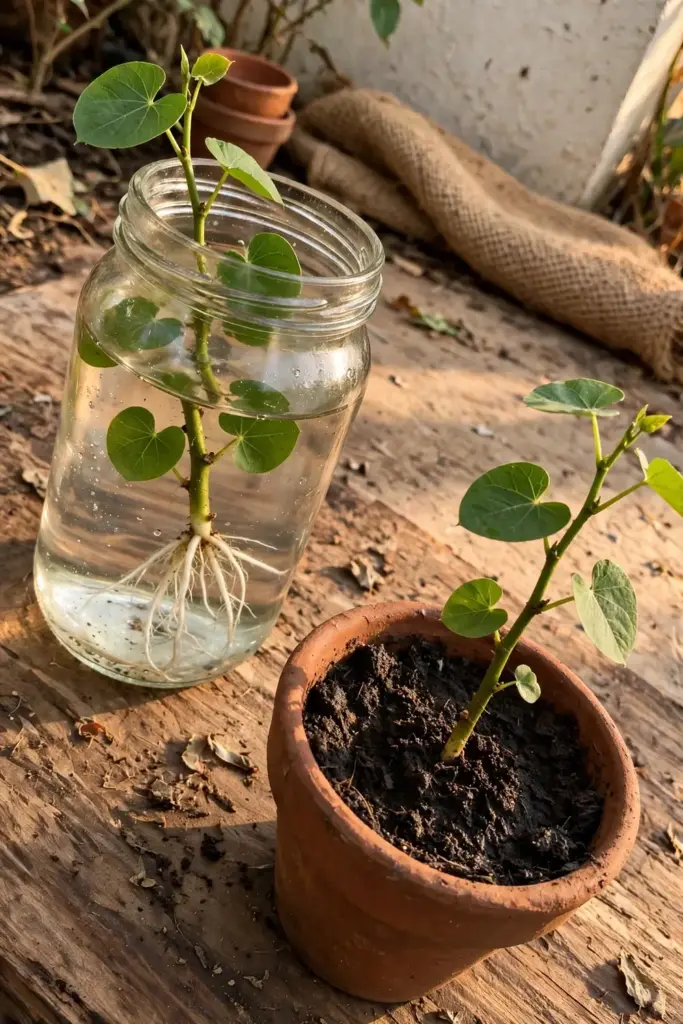
Soil rooting is lazier and usually stronger. Push the prepared cutting into moist, well-draining soil, water it in, and leave it in bright shade. Roots form in 10 to 15 days in warm monsoon weather, though a cutting taken in a cooler climate can take 4 to 6 weeks. The one rule for both methods: warmth and steady moisture, never standing water. A cutting that sits in a waterlogged pot rots from the base up, and the base shows no mercy.
5. Give the Vine a Trellis, Tree, or Fence From Day One
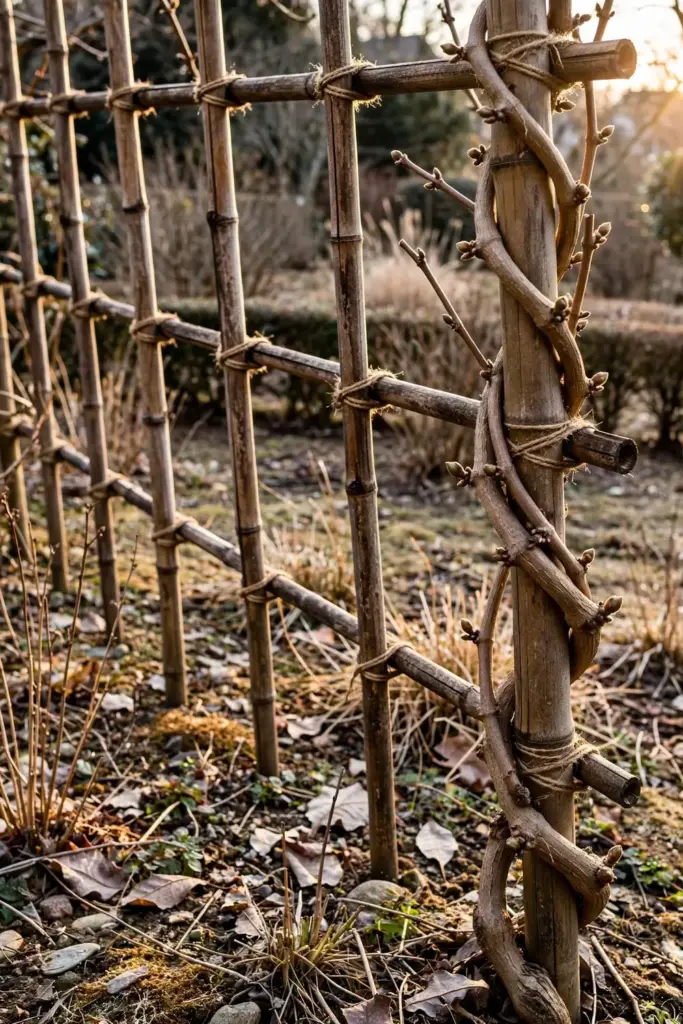
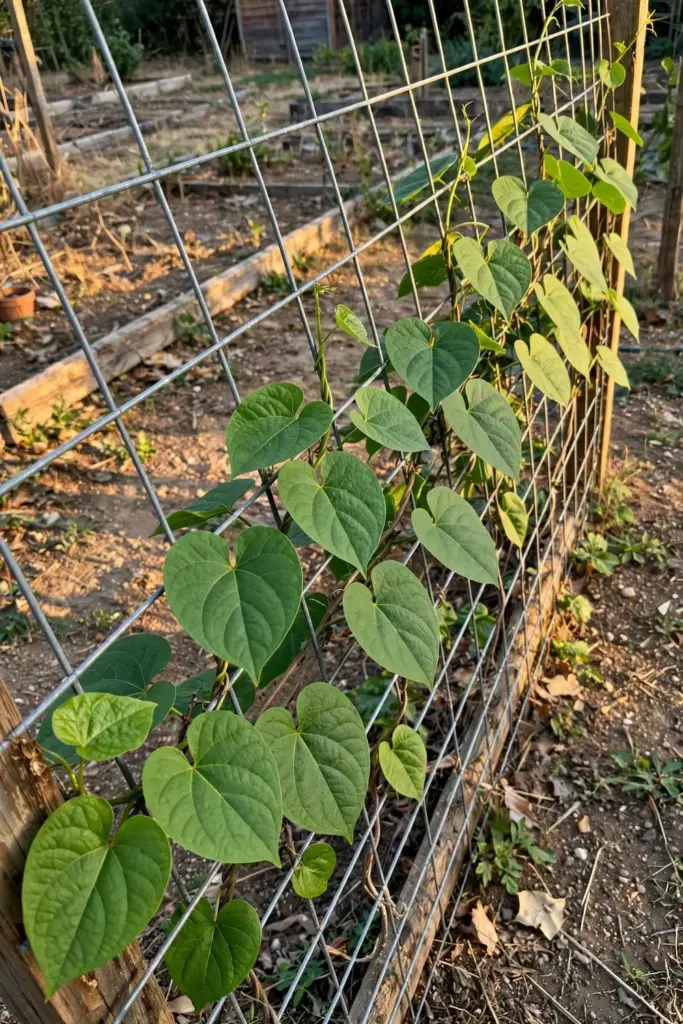
Giloy is a twining climber, not a wall-clinger, and it needs a climbable structure from the very first week. Install the support before or at planting, never as an afterthought. A cutting trained onto its support in week one grows thick and fast; one left crawling on the ground grows pale and weak. In my experience, the support decision made on planting day is the single biggest predictor of whether the vine looks vigorous by September.
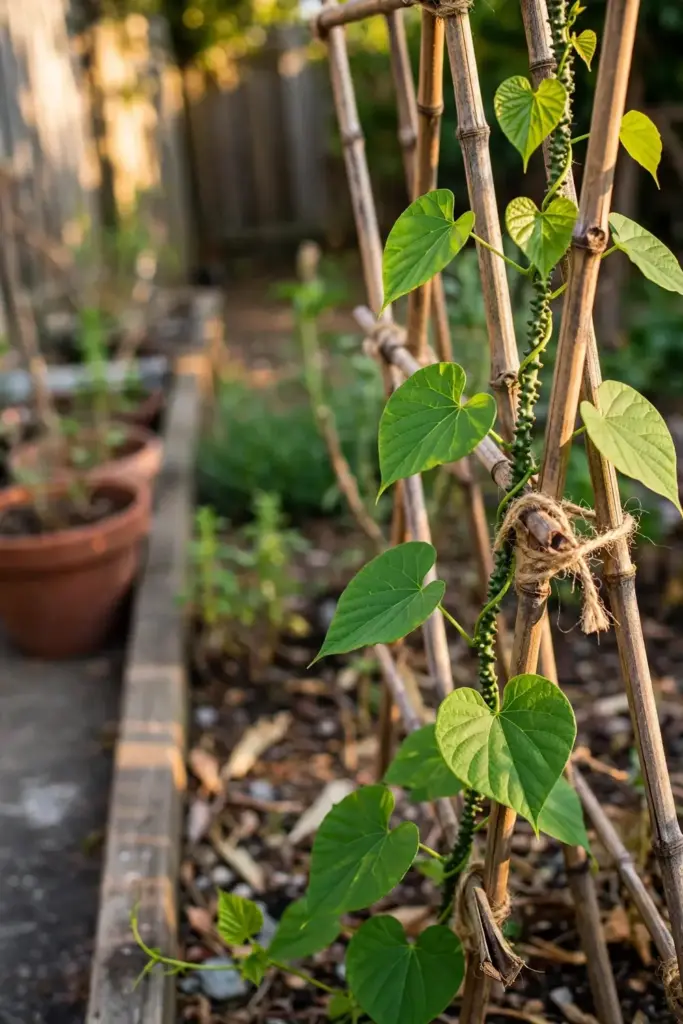
Living supports are the traditional choice. The plant is cultivated with support, preferably neem and mango trees, and traditional sources say such plants possess better medicinal values, according to the same Krishi Jagran cultivation guide. Treat the medicinal claim as tradition. The gardening logic is solid on its own: a mature tree gives the vine height, shade, and a rough bark surface to twine around. Moringa and jatropha work the same way.
No tree? A wooden post, bamboo stake, or wire trellis does the job. Give each plant 3 to 5 feet of spacing so vines do not strangle each other. Tie new growth loosely with soft twine until the stem starts twining on its own. A mature garden vine reaches 3 to 15 metres on a strong frame, while a potted vine stays 60 to 120 cm. In the wild, the plant climbs to the tops of tall trees and sends down long, thread-like aerial roots several metres in length that root when they touch the ground, as the Useful Tropical Plants database documents. A garden vine stays smaller. The climbing habit stays the same.
6. One Plant, Three Names: Giloy, Guduchi, Amrita
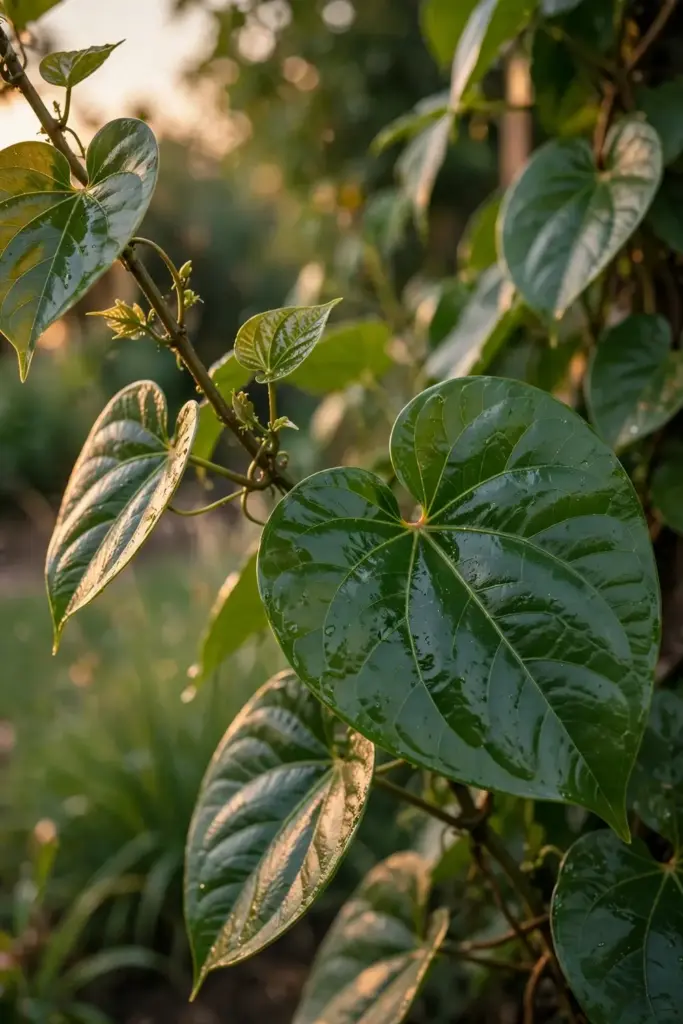
Nursery labels use all three names, sometimes on the same tag. The table below settles it so you never buy the wrong plant.
| Name | Language | Context |
|---|---|---|
| Giloy | Hindi, North India | The common garden and market name |
| Guduchi | Sanskrit, Ayurvedic texts | The classical medicinal name |
| Amrita | Sanskrit | Older name meaning immortal, used in texts |
| Gulvel | Marathi | Regional name in Maharashtra |
| Tinospora cordifolia | Latin | The scientific name on seed and nursery labels |
One caution: check the Latin name on anything you buy. Giloy is dioecious, meaning male and female flowers grow on separate plants, and berries only form when both sexes grow near each other. A single vine fruits rarely, which is exactly why stem cuttings, not seed collection, are the way to propagate at home.
7. Match the Climate: 20 to 38°C, Tropical to Subtropical
Giloy grows well in tropical and subtropical conditions across a wide range of soils and climates. Working figures: 20 to 38°C as the comfort zone, with full sun to bright indirect shade. Give it morning sun and afternoon shade in the hottest plains regions. It suits the humid monsoon climate of most of India.
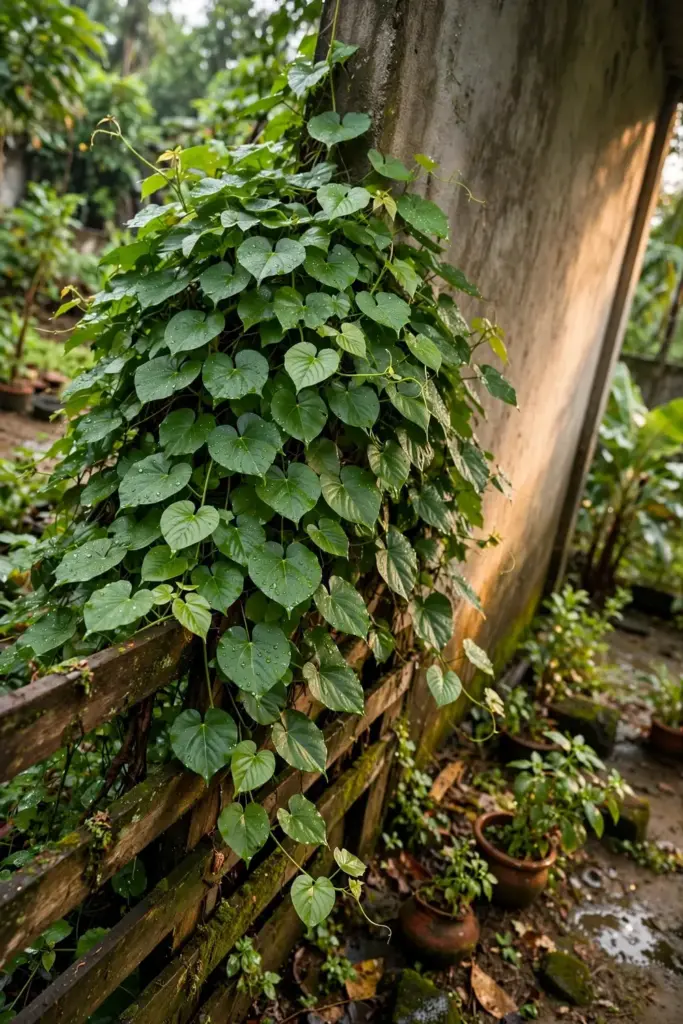
The vine is frost-tender. Cold snaps that would not bother a hardy perennial can push giloy into full dormancy or kill it outright. In USDA-style terms, zones 9b and warmer grow it outdoors year-round; everyone else grows it as a container plant that moves indoors before frost. It suits the humid monsoon climate of most of India, tolerates the hot dry season by dropping leaves and slowing down, then grows aggressively with the first rains.
8. Prepare Loamy Soil That Drains Fast
Light sandy loam, rich in organic matter, with good drainage suits this crop. The plant is sensitive to waterlogging, which is the single biggest killer of young cuttings. Before planting, loosen the soil to 30 cm and mix in compost or well-rotted farmyard manure. At field scale, growers apply a basal dose of 10 tonnes of farmyard manure per hectare; at home-garden scale, that translates to roughly 1 to 2 kg of compost per square metre of bed.
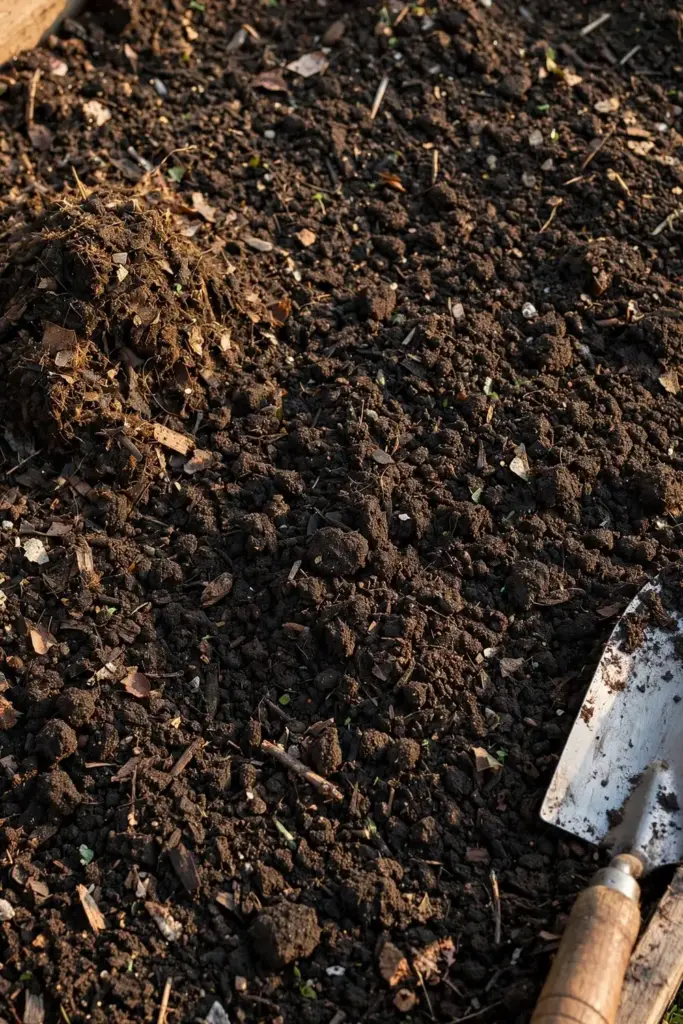
Aim for pH 6.0 to 7.5. Exact soil chemistry matters little for giloy. Standing water matters a lot. Heavy clay beds should be raised or amended with coarse sand and compost until water drains through in minutes, not hours. Building strong, living soil from the start pays off for the whole season; the guide to building soil health and pest resistance walks through the full foundation approach.
9. Plant in May to July: Ride the Monsoon
The best planting window is May to July, at the start of the rainy season. Warmth plus humidity is the combination giloy cuttings are built for. Planting in May gives the cutting the whole monsoon to establish; planting in July still works, since the vine grows aggressively during the rains. Planting outside the warm months is possible in frost-free zones, but rooting slows dramatically.
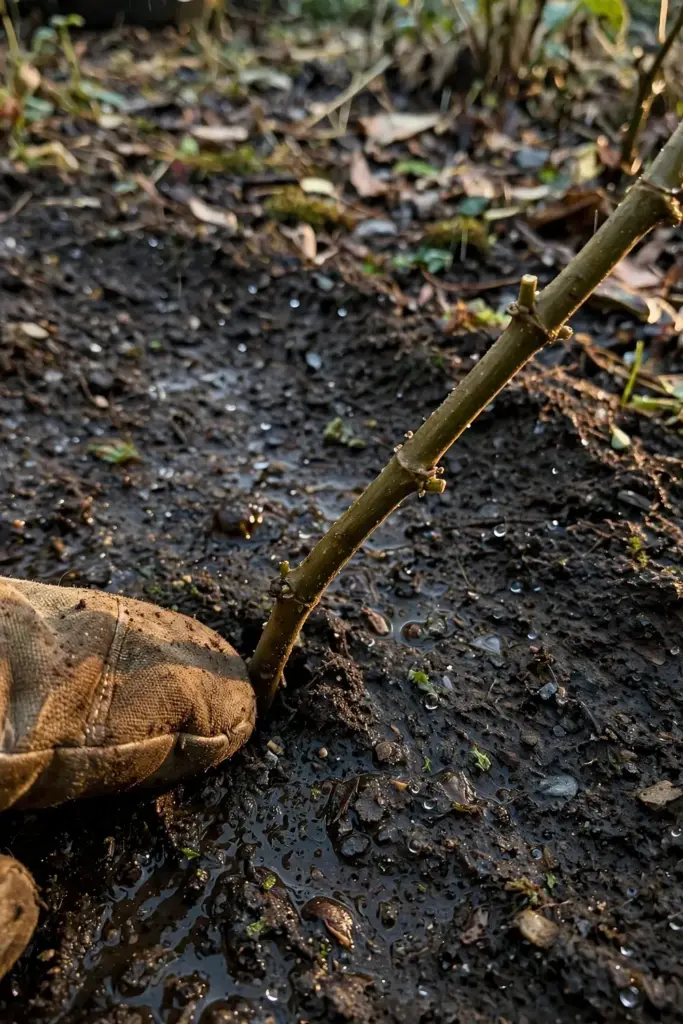
Spacing matters more than it looks. Field growers use 3 metres by 3 metres for full vine development, and about 2,500 stem cuttings per hectare are recommended for good crop growth. In a home garden, one vine per 3 to 5 feet of trellis run is plenty. Crowded vines compete for light, stay thin, and produce less harvestable stem.
10. Grow Giloy in a 12 to 16 Inch Pot With a Trellis Inside
Pots work, with one non-negotiable: the pot gets a support structure inside it. A 12 to 16 inch diameter pot with drainage holes holds one plant comfortably; a 20 to 25 litre grow bag gives better growth. Shallow pots starve the root system, so go deep rather than wide. Indoor herb growing principles apply when the pot lives on a balcony or windowsill.
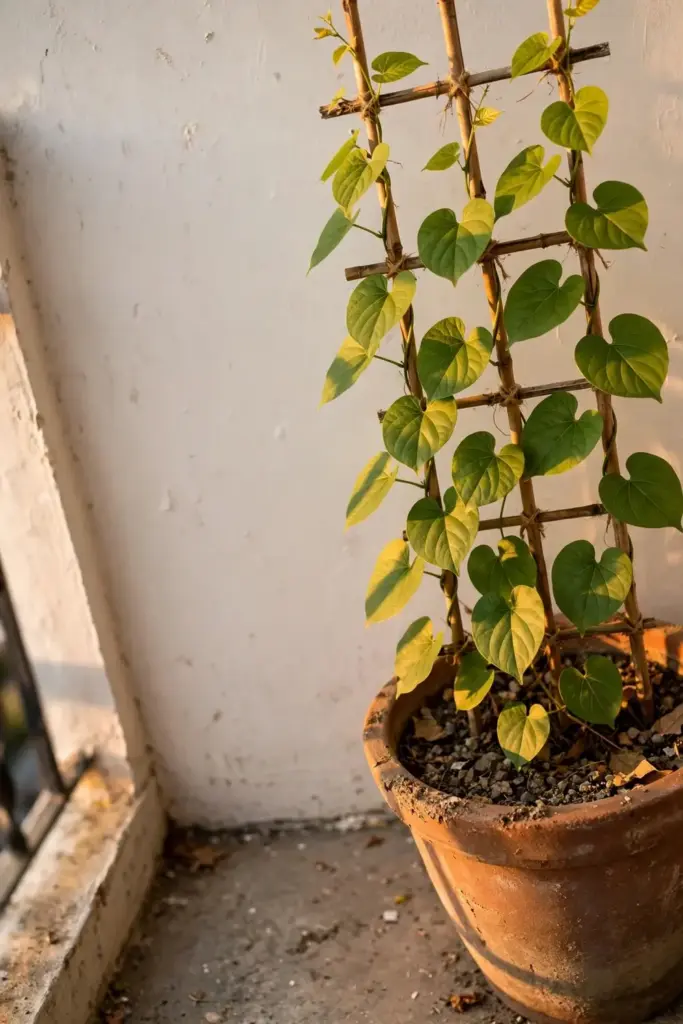
Use a simple mix: equal parts garden soil, compost, and sand or coco peat. Sink a sturdy bamboo pole or small wire trellis into the pot before planting the cutting, and tie the stem to it as it grows. A potted vine reaches 60 to 120 cm, far less than a garden vine, but it still gives harvestable stems in its second season. Water when the top inch of mix dries out, roughly once a week in mild weather and more often in hot, dry spells.
11. Water for Steady Moisture, Never Puddles
Newly planted cuttings need consistent moisture for the first few weeks. Water when the top 2 to 3 cm of soil dries, keeping the mix moist but never waterlogged. Once established, giloy tolerates the rhythm of monsoon plus dry spells and is largely grown as a rain-fed crop. Weekly or fortnightly irrigation during dry stretches is enough in the field.
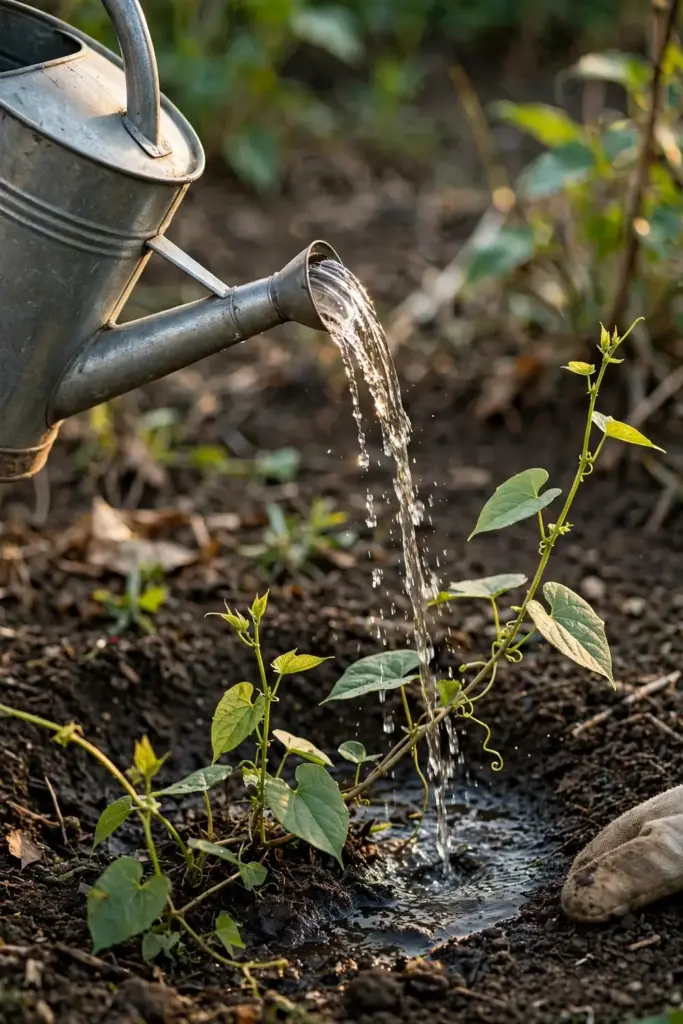
Container plants need more attention because pots dry out faster. Mulch the pot surface with dry leaves or straw to hold moisture between waterings. In winter, cut watering back; the vine may drop its leaves and rest. A leafless vine in December is dormancy, not death.
12. Feed Lightly: Compost Over Chemicals
At planting time, compost or organic manure is preferred at the nursery level. A handful of vermicompost per pot or a 2 to 3 cm top-dressing of compost around a garden vine each spring covers its needs. Field trials found farmyard manure at 10 tonnes per hectare and vermicompost at 5 tonnes per hectare sufficient for higher yield, with a general 75:50:50 NPK kg per hectare meeting crop demand.
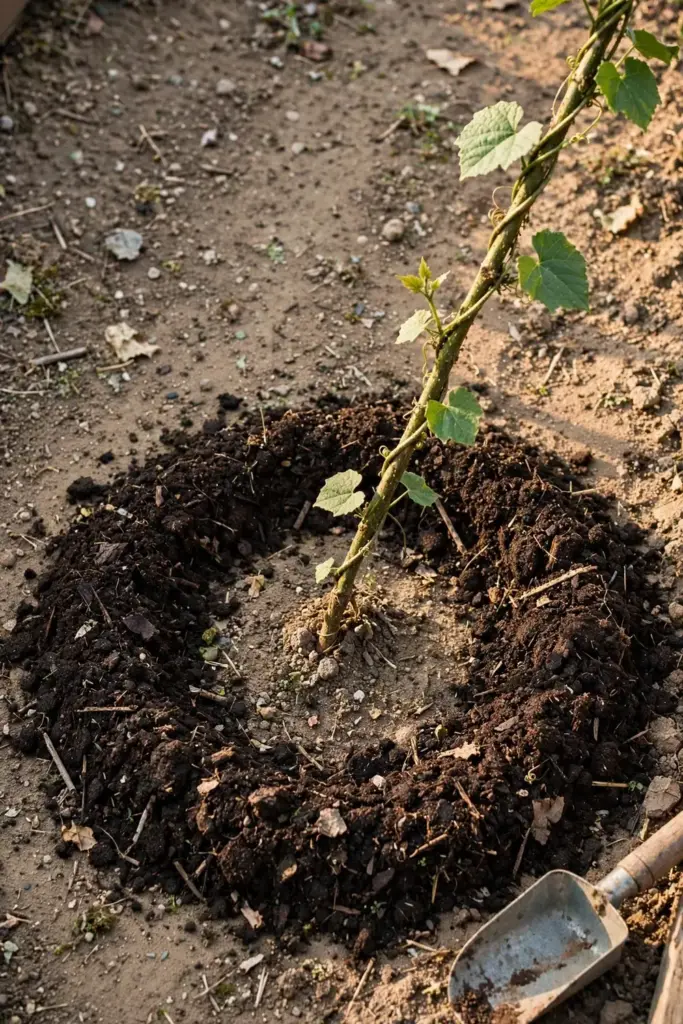
Do not overfeed. Excess nitrogen pushes soft, watery growth that is more attractive to pests and produces thinner stems. For a home vine grown for its own harvest, compost once a season beats any fertilizer schedule. Skip chemical fertilizers entirely unless a soil test shows a genuine deficiency.
13. Train the Twining Stems Every Week
Giloy climbs by twining its stems around a support, so training is a light weekly chore in the growing season. Check new growth every few days and guide wandering tips back onto the trellis, pole, or tree trunk. Tie loosely with soft cloth or twine; the stem thickens fast and a tight tie girdles it.
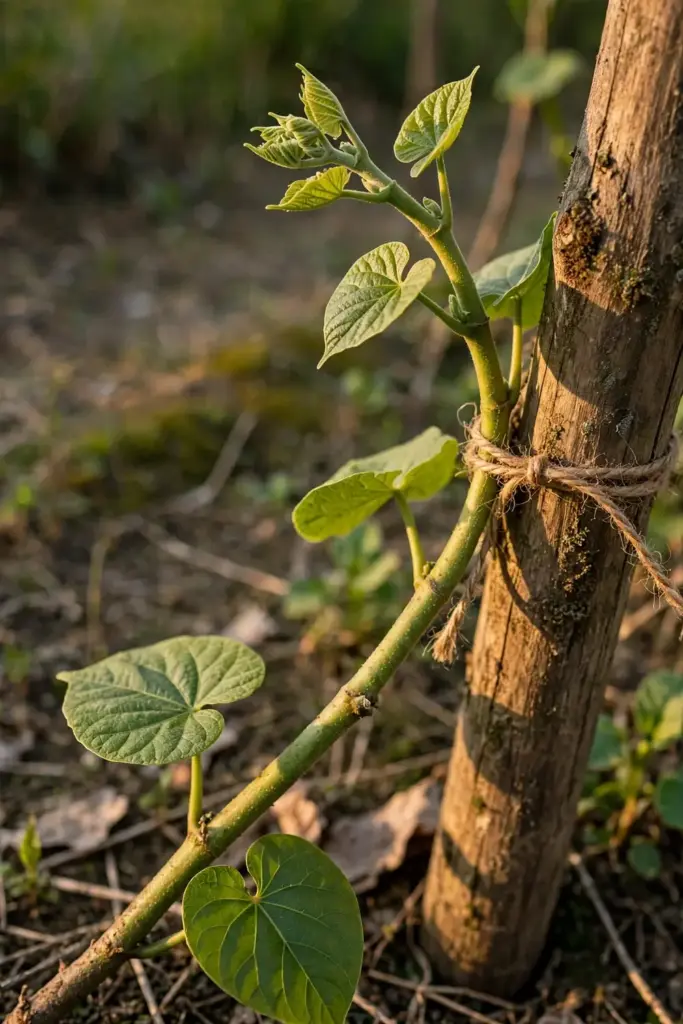
Remove dead or damaged stems as you train. If two stems are winding around each other and choking, unwind one and redirect it. The goal is a fan of stems climbing evenly up the support, not a tangled knot at the base. Aerial roots that dangle from the stem are normal; if one reaches the ground and roots, you have a free new plant.
14. Prune for Stem Production, Not for Fruit
Pruning giloy is about keeping the vine productive and manageable. Cut back overly long, thin tips to redirect energy into thicker main stems, since thick stems are the harvest. After the first harvest, cut stems back hard; the vine resprouts from the base in the next growing season. Regular pruning also keeps a garden vine from swallowing its support.
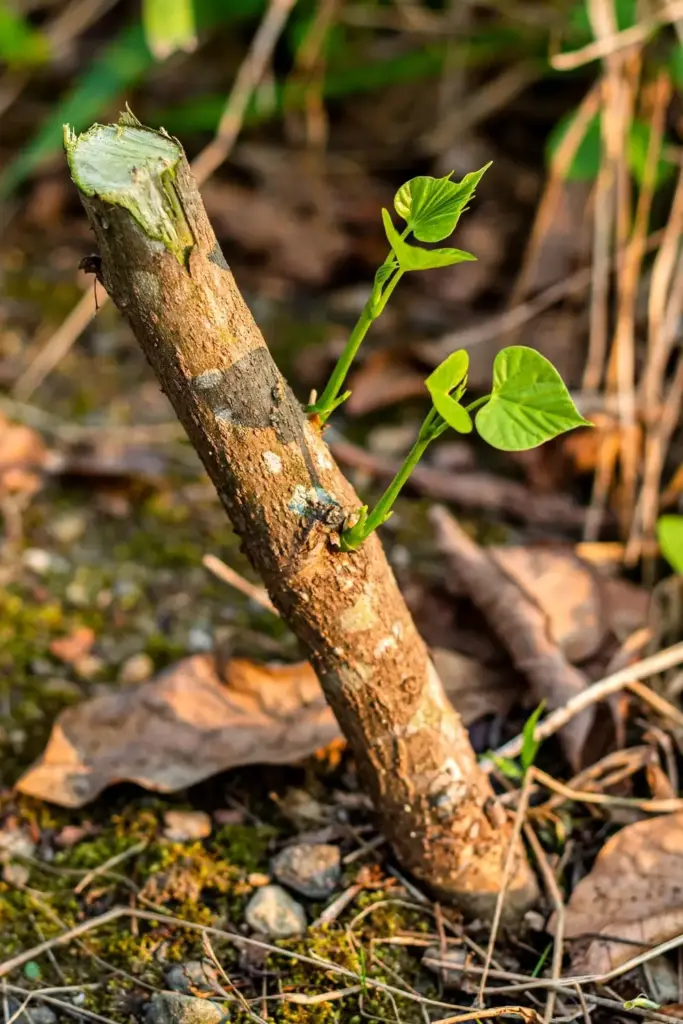
Time major pruning for late winter, just before the spring flush. The vine is partly dormant then, and cuts made now heal cleanly when growth resumes. Never prune more than a third of the canopy at once. A vine that looks butchered in March will look magnificent by August if it has support and water.
15. Let It Go Dormant in Winter: Do Not Panic
In cooler months, giloy drops its leaves and may look dead. This is dormancy, and it is normal. Stop fertilizing, reduce watering to barely-moist, and leave the support and stems in place. New growth emerges from the woody base when warmth returns.
Protect the vine from actual frost. A light frost that browns the tips is cosmetic; a hard freeze that kills the woody base ends the plant. In zones colder than 9b, move the pot indoors before the first frost and park it in the brightest window you have. Growth stops, the plant waits, and spring brings it back. Plan your winter dates around the fall planting calendar so the move-in happens before the first hard freeze, not after.
16. Pests and Diseases: Almost a Non-Issue
As such, no serious insect pest or diseases are reported in this crop. That is not marketing copy; it is the field record. The one real threat is waterlogging, which rots the stem base and the roots. Everything else, from aphids to leaf spots, is cosmetic on a plant this vigorous.
Keep the base of the vine clear of weeds and mulch. Two hand weedings during the first 50 days of establishment are sufficient to check weeds at field scale. Good airflow around the vine and fast-draining soil prevent the one disease that matters: rot.
17. Harvest Stems at 2.5 cm Diameter
The harvest signal is stem thickness. When a stem reaches more than 2.5 cm in diameter, it can be harvested. At home, this usually means the main stems in the second growing season, with lighter picking of thick laterals from the first year onward. The matured stem may be obtained between 9 months and one year, though thicker stems come with a second year of patience.
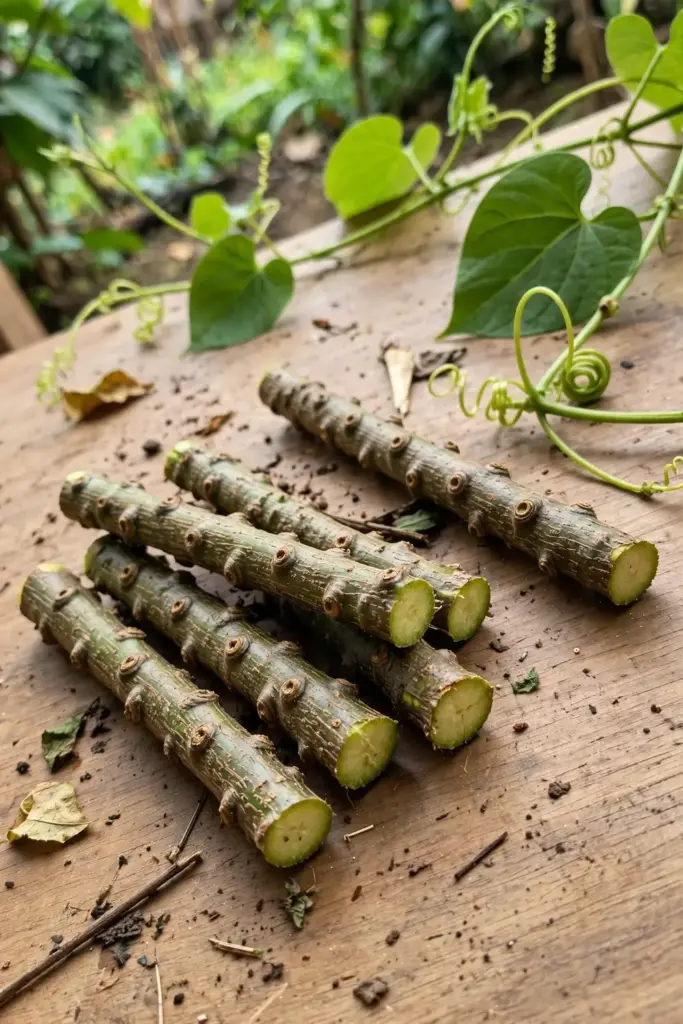
Cut stems into manageable lengths and separate them from leaves. Traditional harvest leaves the base and a few growing tips on the vine so it regrows. Strip harvesting everything to the ground forces the vine to restart from the roots, which works but costs you a season. Take the thickest third of the canopy and leave the rest to grow.
18. Dry the Stems in Shade, Then Store Dry
Cut the harvested stems into small pieces and dry them in the shade. Direct sun breaks down the compounds the plant is valued for, so shade-drying under a covered veranda or airy shed is the right method. Turn the pieces every couple of days so they dry evenly.
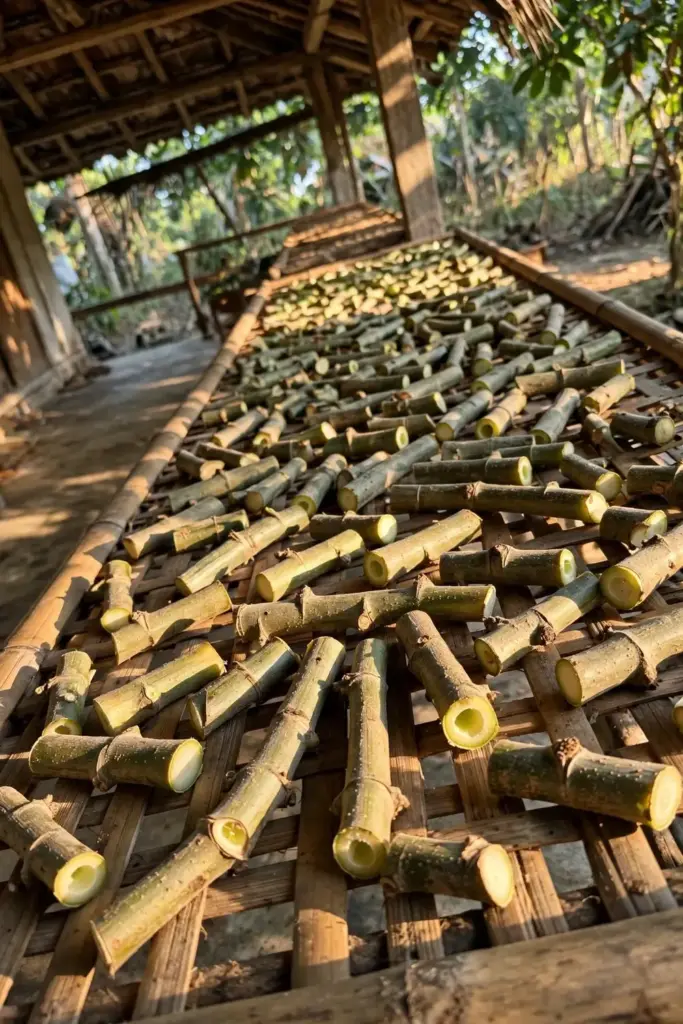
Store the fully dried pieces in a cool, dry place in gunny bags or airtight containers. The stem needs to be separated into little pieces, dried in the shade, kept in a cool place, and kept in gunny bags. Check stored pieces monthly for moisture or mould during the first monsoon after harvest; damp storage ruins a good harvest faster than any pest.
19. The Ayurvedic Uses, Framed Honestly
Giloy is one of the important plants in Ayurveda, described as a rasayana drug traditionally believed to enhance general body resistance and promote longevity. Almost all parts of the plant are used in Ayurvedic formulations, and in Hindi the plant is known as giloy while Ayurveda calls it guduchi. The traditional dose recorded on the Chandigarh government medicinal plants page is 3 to 6 grams of stem powder, though that figure comes from traditional practice, not clinical trial data.
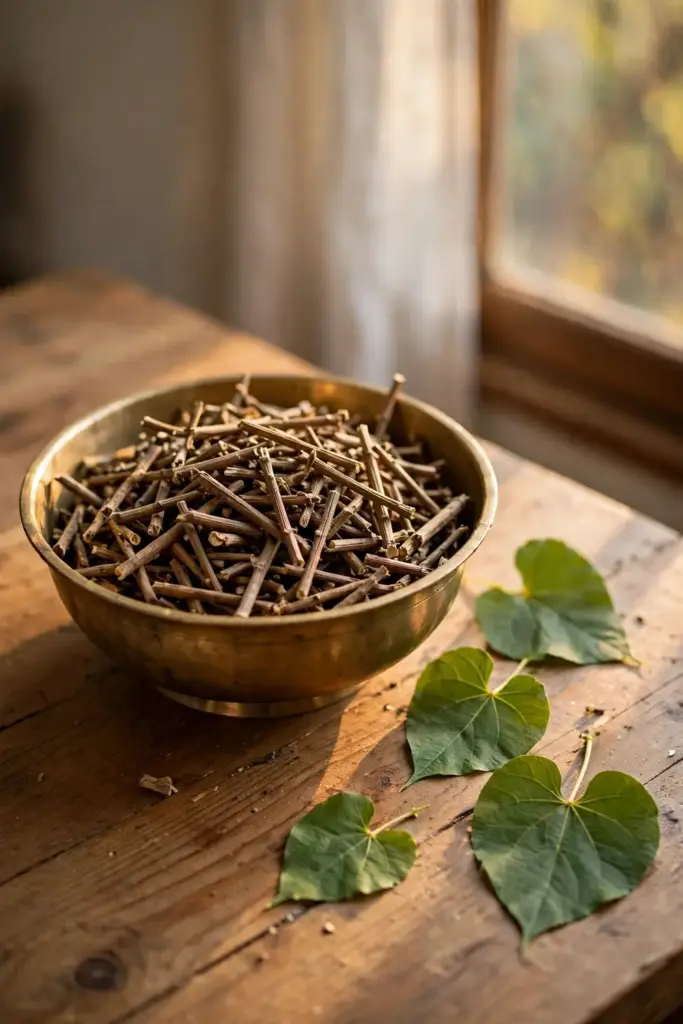
Say this plainly: the stem is thought to have the most beneficial compounds, and research papers list dozens of studied activities, from immunomodulatory to hepatoprotective effects. None of that is growing advice, and none of it is medical advice. If you are considering giloy for a health reason, talk to a clinician or a qualified Ayurvedic practitioner first, especially if you take medication for blood sugar or immunity, since traditional sources describe it as active in those areas. Grow it, enjoy the vine, dry the stems, and keep health decisions with professionals.
20. Avoid the Four Mistakes That Waste a Growing Season
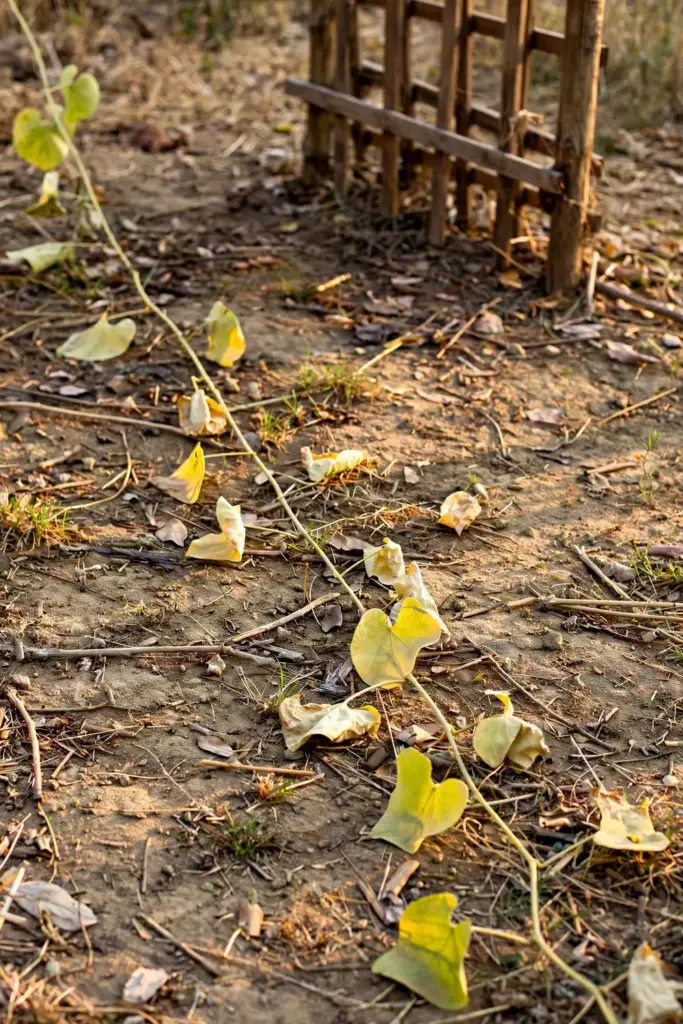
First, planting with no support. A cutting left to crawl produces a weak, pale vine that never thickens. Install the trellis or pole before the cutting goes in. Second, planting too deep or in a waterlogged spot. Giloy rots faster than it roots when the base sits in water. Third, sowing old seed and waiting. Recalcitrant seeds die in storage; if your seed is more than a few months old, buy or beg a stem cutting instead. Fourth, harvesting in the first three months. Thin, green stems have not developed the compounds or the diameter worth drying. Wait for 2.5 cm.
21. Troubleshoot the Common Problems
Cutting wilted within days? It dried out between cutting and planting. Giloy cuttings should be sown within 24 hours of being taken, kept shaded and moist in the meantime. Cut a fresh section, plant it the same morning, and water it in.
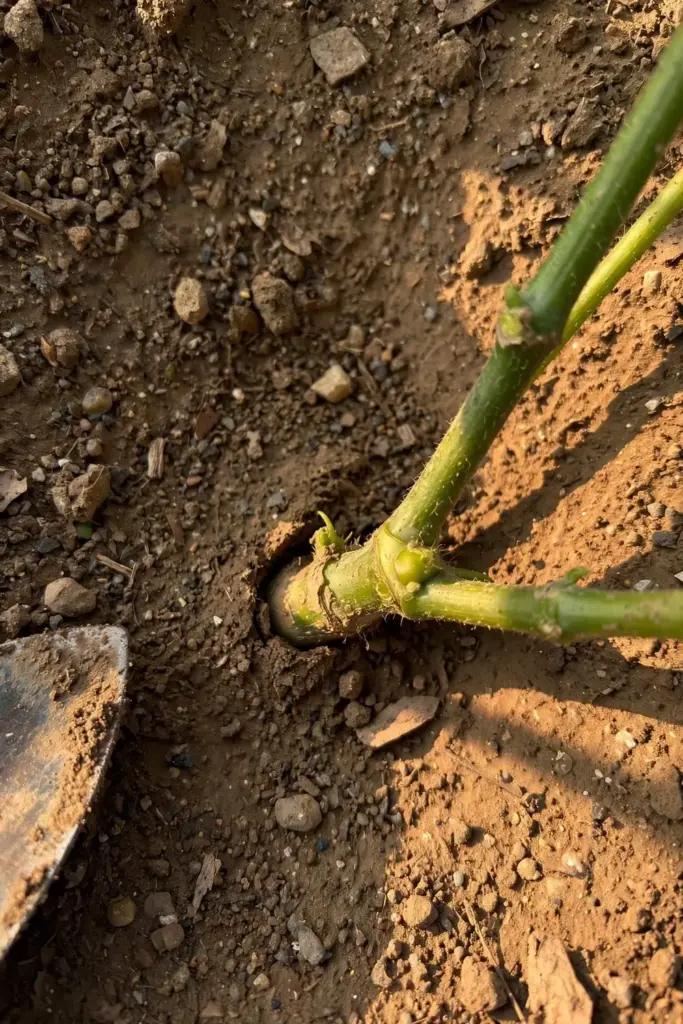
No roots after six weeks? The cutting was taken outside the warm season, or the soil stayed too wet and the base rotted. Check the buried end: brown and mushy means rot, so start fresh in the warm months. Firm and callused means it is slow, so keep waiting and keep it moist.
Vine climbing the wrong plant? Giloy twines around anything nearby, including your rose bush. Check weekly and redirect tips onto the intended support. A vine that reaches a neighbour’s tree is almost impossible to move later.
Leaves yellowing in summer? Usually overwatering or waterlogged soil, not hunger. Giloy handles heat and dry spells well once established. Let the top layer dry between waterings before adding fertilizer to the suspect list.
Frequently Asked Questions
Stems reach harvestable size between 9 months and one year after planting a cutting, with thicker 2.5 cm stems usually coming in the second growing season. The vine keeps growing for many years afterward, climbing 3 to 15 metres on a strong support. A single cutting planted one monsoon becomes a permanent garden fixture.
Yes, in a 12 to 16 inch deep pot with drainage holes, or a 20 to 25 litre grow bag for better growth. Sink a bamboo pole or small trellis into the pot before planting, because the vine still needs to climb. Water when the top inch of mix dries, and expect a smaller plant, 60 to 120 cm, than a garden vine.
Yes. Giloy is the common North Indian name and guduchi is the classical Ayurvedic name for the same plant, Tinospora cordifolia. Amrita and gulvel are older or regional names for the same species. Always confirm the Latin name on nursery labels, since several climbing herbs share the common names in casual use.
No, it is one of the easiest medicinal vines to grow. A stem cutting planted in the monsoon roots in 10 to 15 days with almost no help, and field sources report no serious insect pests or diseases. The two requirements that matter are a support to climb and soil that drains fast.
You can, but cuttings are far more reliable. Hydroprimed seeds germinate in 8 to 10 days at 80 to 90 percent success, while dry-sown seeds manage only 30 to 35 percent, per Krishi Jagran’s scientific cultivation guide, and giloy seeds lose viability quickly in storage. Unless you have fresh seed, take a 25 to 30 cm stem cutting instead.
It usually goes dormant rather than dying. The vine drops its leaves and rests in cool weather, then resprouts from the woody base in spring. Protect it from hard frost, since a deep freeze can kill the base. In cold zones, move the pot indoors before the first frost and keep it in a bright spot until spring.
Keep the Vine Climbing and the Stems Coming
That is how to grow giloy from India at home: take a 25 to 30 cm stem cutting in May to July, plant it 5 to 8 cm deep within 24 hours, give it a trellis or a neem tree to climb from day one, and wait 9 to 12 months for the first thick stems. The plant asks for very little and forgives a lot, which is exactly why it has spread through so many Indian home gardens. Start with one cutting, train it well, and you will have a vine that outlives most of your other plants.