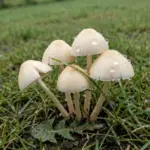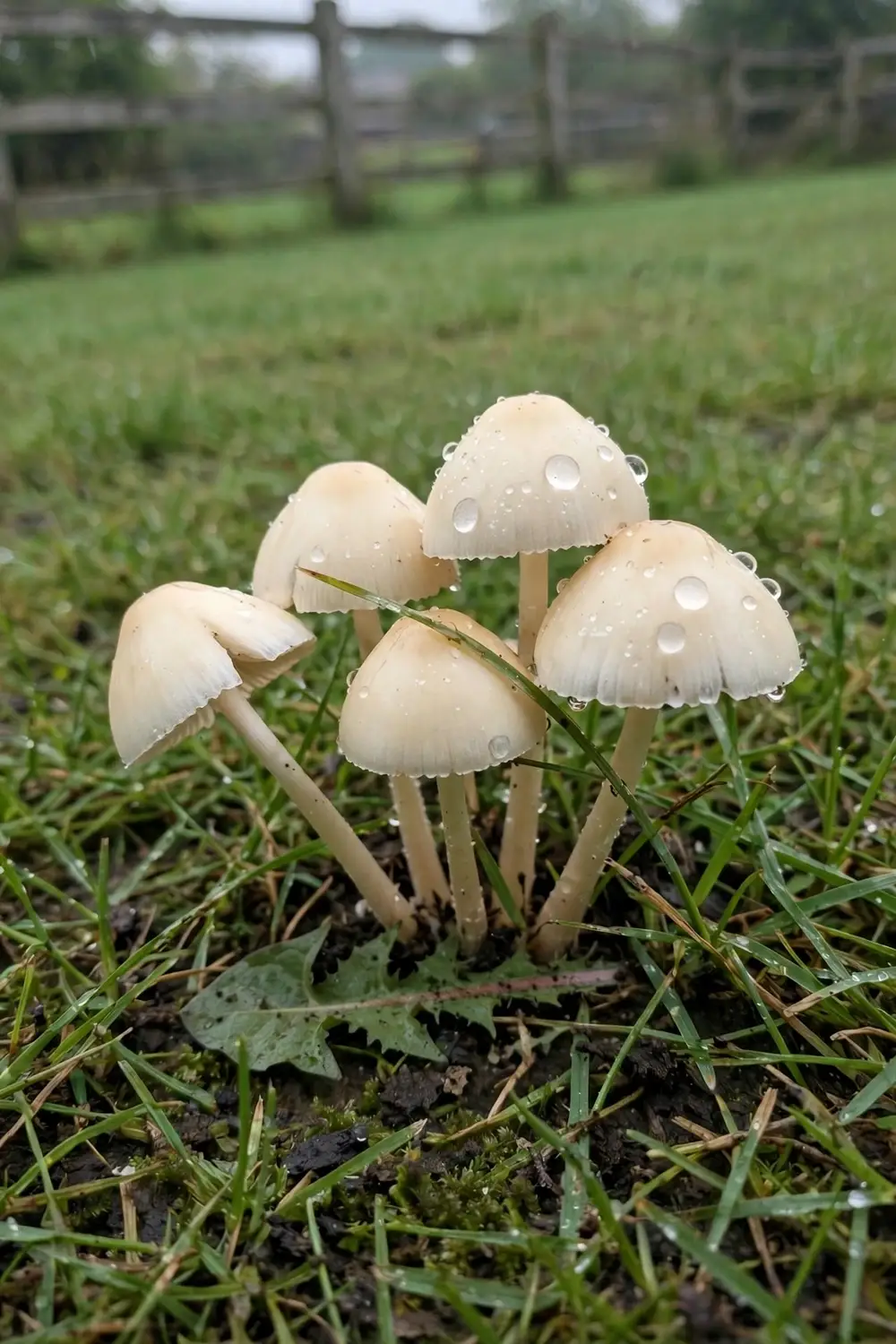

Run 3 moves to stop mushrooms growing in your lawn: bag every cap, dry the surface, and remove the food the fungus eats. A lawn mushroom is the fruiting body of a fungus. The fungus itself lives underground as threads, and the cap is its spore factory. I have learned that the cap I bag before the dog goes out does more for safety than any spray I own.
The rest of this page shows how to stop mushrooms growing in your lawn in 8 moves, from the safety rule to the fix order. Work from the top if caps are standing in the lawn right now.
Never eat a lawn mushroom. Keep children and pets off the lawn until the caps are bagged and binned.
1. Never Eat a Lawn Mushroom
Never eat a mushroom from your lawn. No lawn cap is worth the risk, and no home test can sort a safe cap from a toxic one.
You cannot tell a toxic mushroom by taste, and no simple reliable test shows which mushrooms are safe to eat. Even mushroom experts can have difficulty identifying some species, because the appearance of a type of mushroom changes with its stage of growth. A poisonous cap can look like an edible supermarket variety. That is why the only safe rule for a lawn cap is to leave it out of every mouth.
The green-spored parasol is the lawn mushroom Australians meet most often. The Queensland Poisons Information Centre profile describes it as very common in lawns and garden beds during wet periods of spring, summer and autumn, occurring in groups or fairy rings. Its caps run 10 to 30 cm across, whitish to brown, with concentric circles of pinkish-brown to chocolate-brown scales. The gills stay white at first, then turn greenish as the spores mature. Symptoms usually begin within 30 minutes to two hours and include drowsiness, severe vomiting and diarrhoea, sometimes with bleeding from the gut. Fatalities in young children have been reported.
The Death Cap is the other name to know. The Food Safety Information Council deathcap warning names it as a deadly species that grows near oaks and other introduced trees in parts of Victoria, South Australia and Canberra. A Death Cap can kill. If a cap near an oak looks like a pale field mushroom, photograph it, keep everyone away, and call 13 11 26 for advice instead of handling it.
If someone eats a wild mushroom, act at once. Queensland Government mushroom poisoning advice says anyone who becomes ill after eating a wild mushroom should seek urgent medical attention, and anyone suspected of eating one should contact the Poisons Information Centre on 13 11 26. Do not induce vomiting or give the person anything to drink unless the Poisons Information Centre or another medical professional advises it. If possible, take a sample of the mushroom or a photo to help identify the species. Symptoms can be delayed by 6 to 24 hours after eating poisonous mushrooms and may last for 2 to 3 days, so do not wait for symptoms before seeking help.
While you wait for help, note the time the mushroom was eaten and the first symptoms you saw. Bring that note with the sample or the photo. Keep the person still and calm, and do not offer food or drink unless the Poisons Information Centre or another medical professional advises it. A clear note and a clear sample help the clinic name the mushroom faster than a description from memory.
Pets face the same rule. Dogs are the usual victims because dogs mouth things they find. If a dog eats a lawn cap, call a vet at once and keep the cap or a photo for identification. Keep the dog off the lawn until every cap is bagged.
2. Learn What a Lawn Mushroom Actually Is
A mushroom is the fruiting body of a fungus. The fungus itself lives underground as a web of threads called mycelium, and the cap is the part that releases spores.
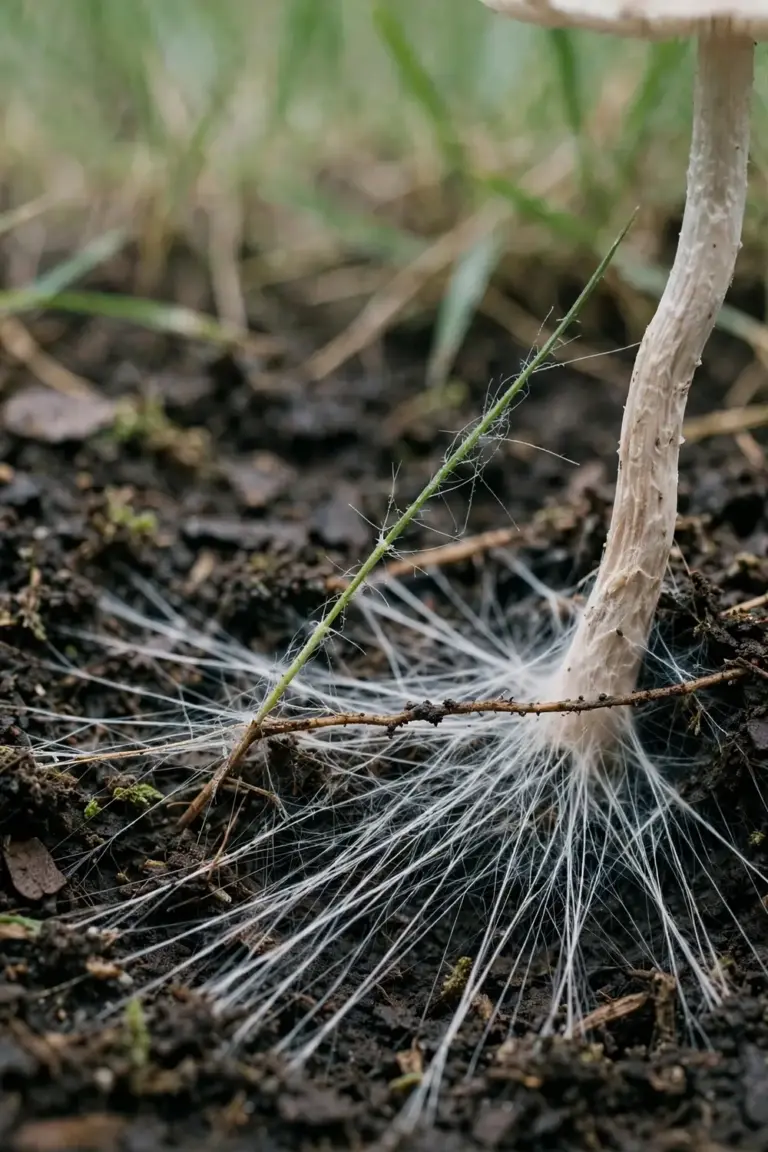
Think of the cap the way you think of a flower. A flower is the reproductive part of the plant, and a mushroom is the reproductive part of the fungus. Picking the cap removes the spore factory. It does not remove the fungus. The mycelium stays in the soil and can fruit again while its food and damp conditions remain.
The web spreads through the soil wherever food and moisture allow. It threads through thatch, wraps around buried roots, and settles into any patch of rotting matter. Caps cluster where the food sits thickest, which is why a flush often maps the shape of a buried stump or an old garden bed. Each cap sheds spores that drift on the breeze and settle where the lawn stays damp, so a single flush can seed the next one.
Caps seem to appear overnight because the fungus is already in place. The mycelium waits in the soil through dry weeks, and a good rain switches it to fruiting. Warm wet nights speed the flush, which is why a lawn that looked clear in the evening can hold caps by morning. That speed surprises gardeners, and it explains why a single dry day does not end a flush that already started. University of Maryland Extension notes that mushrooms can appear suddenly when adequate moisture is present, and that the fungi behind them break down organic matter in the soil. That breakdown releases nutrients, which is why a ring of grass near a fungus can grow darker green. The fungus is doing soil work. It is not attacking the lawn.
A scattered flush after rain is usually a nuisance, not a disease. The caps look alarming, and they vanish as the lawn dries. The exception is a fairy ring that kills grass, and that pattern gets its own plan later in this page. A lawn with mushrooms usually has active soil biology, which is why building soil health matters more than chasing caps with products.
3. Find Why Mushrooms Appear in Your Lawn
Mushrooms appear when wet soil meets dead matter to eat. Fix those two, and the flush stops.
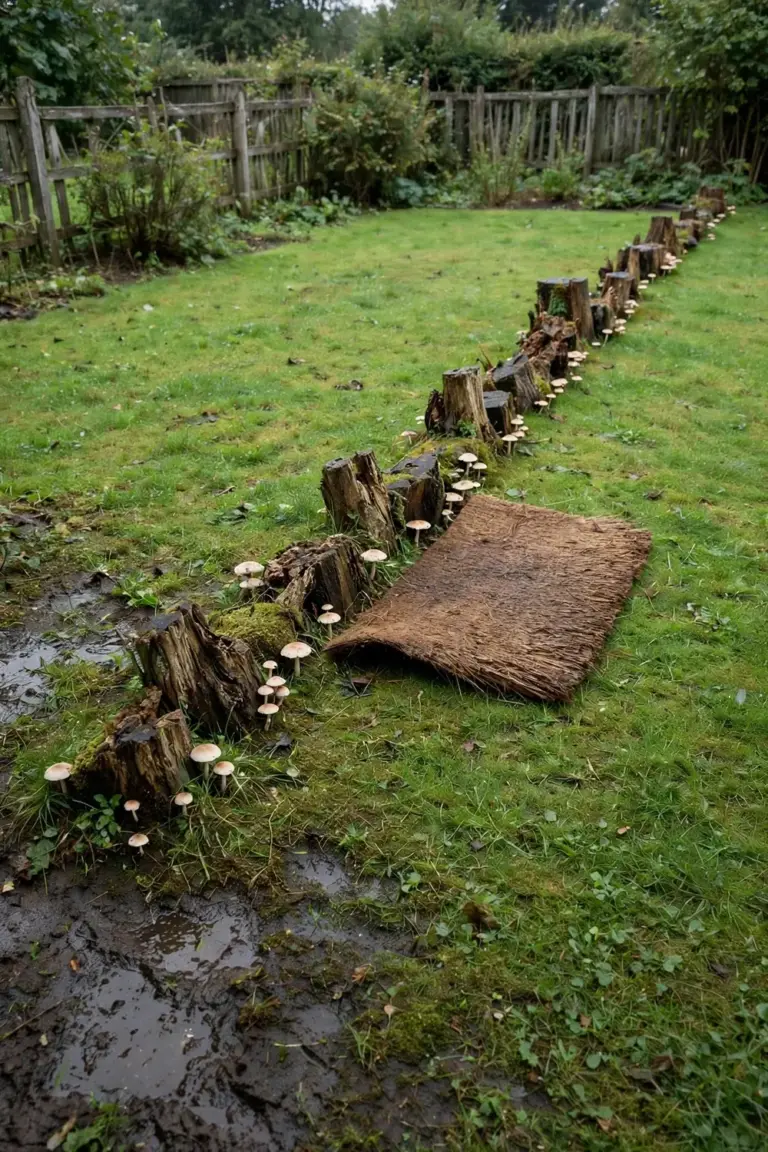
Three causes drive most flushes. The first is moisture. Rain, heavy irrigation, poor drainage, or a shaded corner that never dries all keep the surface wet long enough for caps to form. The second is food. Thatch, buried wood, old tree roots, and heavy mats of clippings all feed the fungus. The third is still air and shade. A corner under a fence, behind a shed, or under a dense tree holds damp air and stays cool, which suits fungi.
In most of Australia, the biggest flushes follow cool wet autumn weather and summer storms. Buffalo, couch, and kikuyu lawns all grow mushrooms when those two conditions line up. The grass type does not decide it. The water and the food decide it. Caps in a straight line often trace an old root or a buried length of timber, so a line of caps is a clue to dig in that line. After a storm, walk the lawn the next morning and look for fresh caps along those lines, since the first flush after rain often traces the food below.
| What You See | Cause | Fix |
|---|---|---|
| Scattered caps after rain | Wet soil plus buried organic matter | Bag the caps, then dry the lawn |
| Ring of darker grass or a circle of caps | Fairy ring fungus feeding in a circle | Rake the caps, aerate the ring, soak it |
| Caps near an old stump or tree | Decaying roots or wood below the surface | Remove the wood where you can reach it |
| Caps in a shaded damp corner | Shade plus poor airflow | Open light and air, fix drainage |
| Caps after heavy watering | Overwatering keeps the surface wet | Water in the morning, only when the lawn needs it |
Read the table from left to right. Match what you see, name the cause, then run the fix. The rest of this page walks each fix in order.
4. Remove the Caps the Safe Way
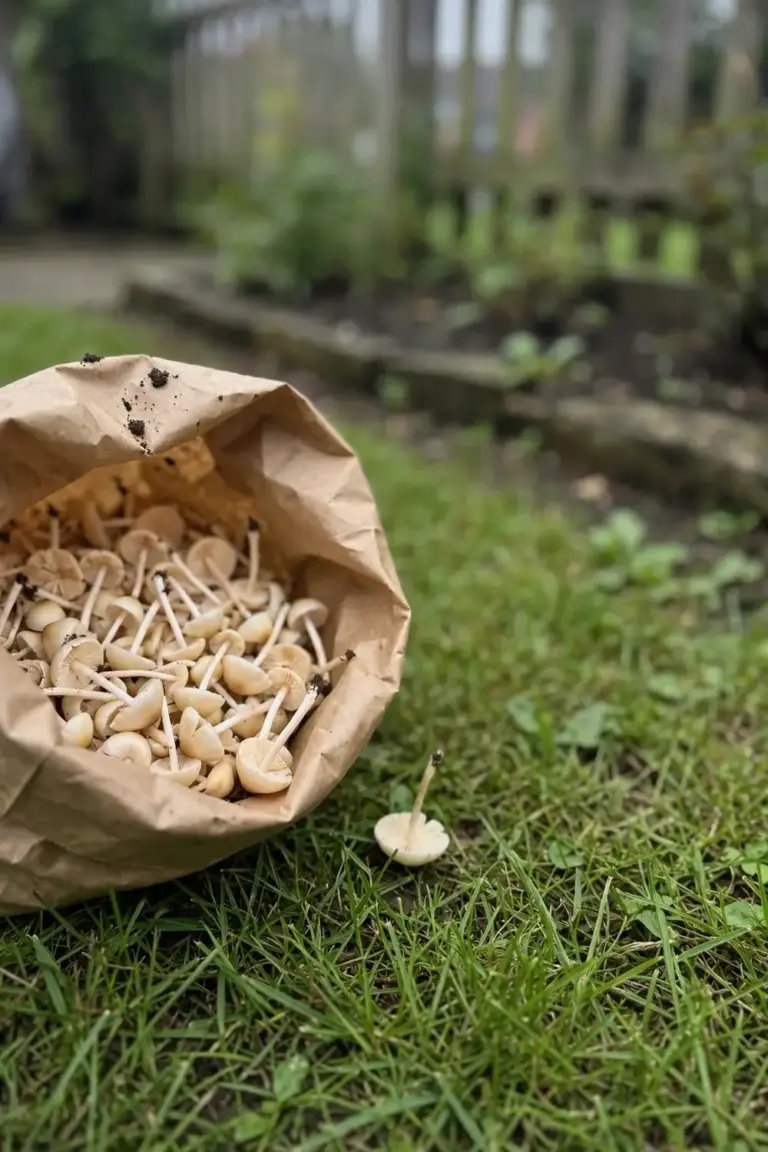
Bag every cap you see, then bin the bag. Picking caps stops spores and keeps children and pets safe.
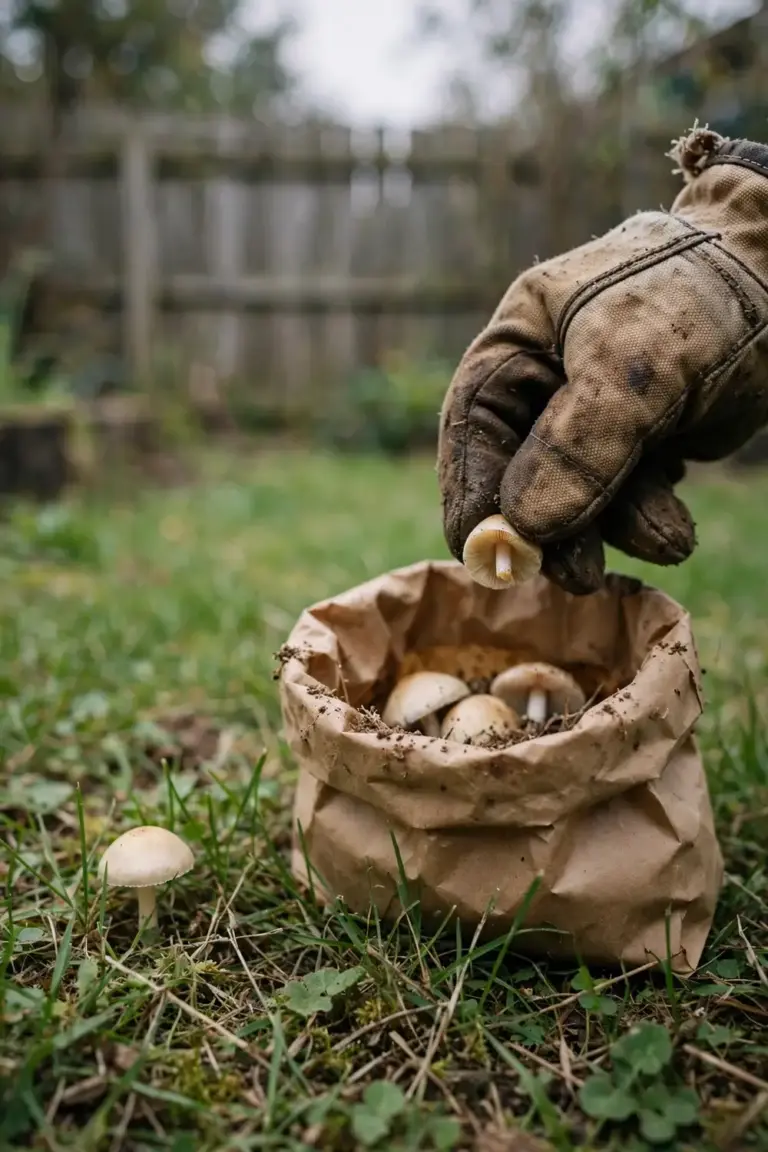
Put on gloves and pick the caps by hand, or knock them over with a rake. Work early, before the caps flatten and shed their spores. Drop every cap into a bag as you go. Tie the bag and put it in the rubbish bin. Do not compost caps. Do not leave picked caps on the lawn, where pets can still find them.
Check the lawn each morning while a flush lasts. Caps grow fast in warm wet weather, and a lawn that looked clear yesterday can hold fresh caps today. Walk the whole lawn, beyond the patch where you saw the first caps. Pay attention to the spots the table in the previous section names: stump lines, shaded corners, and low ground where water sits.
Mowing also works. A mower knocks caps flat and removes them with the cut. If caps are standing when you mow, bag the clippings on that pass so the caps leave the lawn with the cuttings. Mow before the caps open where you can, since earlier removal spreads fewer spores. Sweep caps off paths and driveways too, so feet and paws do not carry them back onto the lawn. When a lawn holds a heavy flush, work in sections from the house outward, and tie each bag before you start the next section. Wash your gloves and hands when you finish, and rinse the rake before you store it.
Picking caps does not kill the fungus. The mycelium stays in the soil. Caps are the visible part, and removing them is a safety move and a spore move. It is not a cure. The cure is the dry lawn and the removed food in the next two moves. Until then, keep children and pets off a lawn that still holds caps.
5. Remove the Food That Feeds the Fungus
Take away the dead matter and the fungus starves. Thatch, buried wood, and old roots are the usual menu.
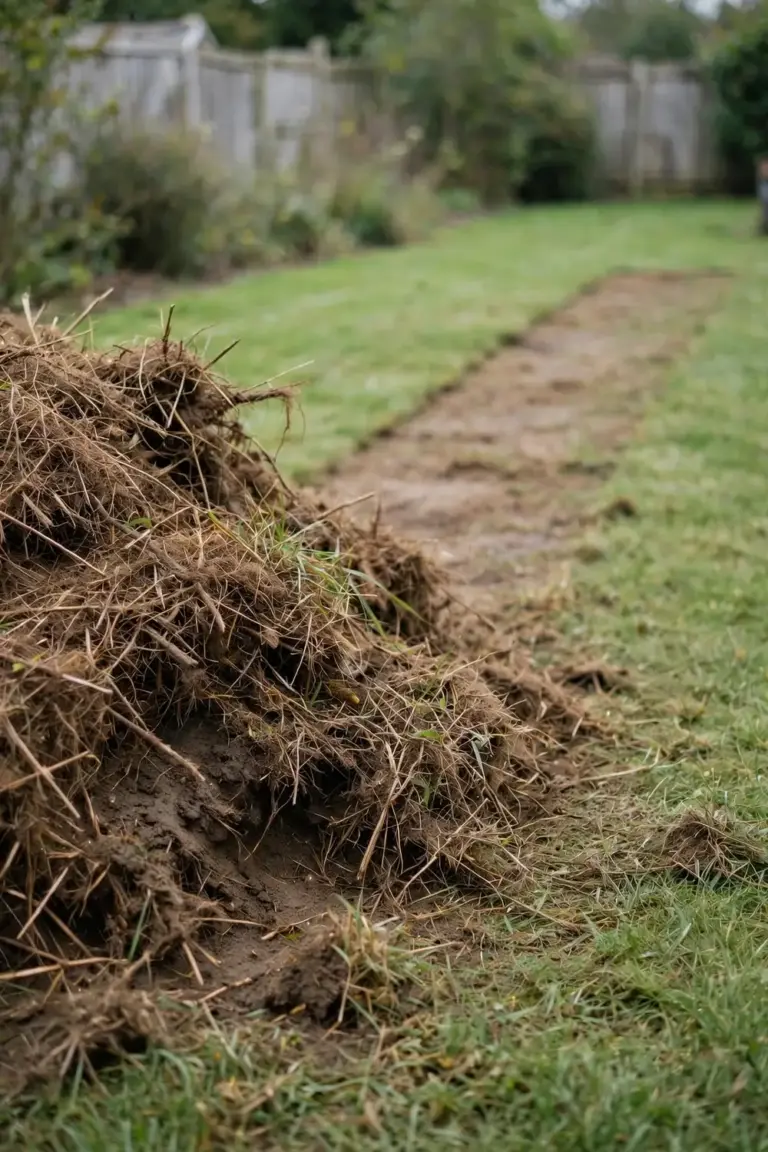
Start with thatch. Thatch is the mat of dead stems and roots at the soil surface. A thin layer is normal. A thick mat holds moisture and feeds fungi. Push your fingers into the turf and look at the mat. If it feels spongy underfoot and holds water after rain, it is thick enough to feed fungi. Rake it out with a lawn rake or a dethatching rake, then bin the rakings. Work when the lawn is growing strongly so it recovers fast.
Next, hunt buried wood. Old tree roots, buried stumps, builder timber, and buried fence posts all feed lawn fungi for years. If you can find the wood, dig it out. Where a stump sits too deep to dig, mushrooms will return above it until the wood finishes rotting. That is a waiting game. Keep bagging the caps while the wood rots.
Lawns laid over old garden beds deserve a second look. A bed that once held trees or shrubs leaves roots behind when it becomes lawn. Those roots rot slowly under the turf and feed flushes for seasons. The same holds for builder waste buried during construction. If caps keep returning to one patch year after year, buried wood is the likely cause, and digging is the only fix that ends it. When you dig, work a little wider than the cap patch, since the food often runs past the edge of the visible flush. Bag the dug matter with the caps and bin it.
Clear heavy clippings after mowing. A light scattering of clippings feeds the lawn, but a heavy wet mat feeds fungi. Rake up thick mats and bin them. Leaves follow the same rule. A deep leaf layer over the lawn holds moisture and rots into fungus food.
Watch fresh manure and unfinished compost. Both can carry the organic matter fungi love. Let compost finish before you spread it, and keep fresh manure off the lawn. Finished compost, spread thin, is soil food. Fresh manure is fungus food.
6. Dry the Lawn Out
Dry the surface and the fungus goes quiet. Water in the morning, fix drainage, and open the shade.
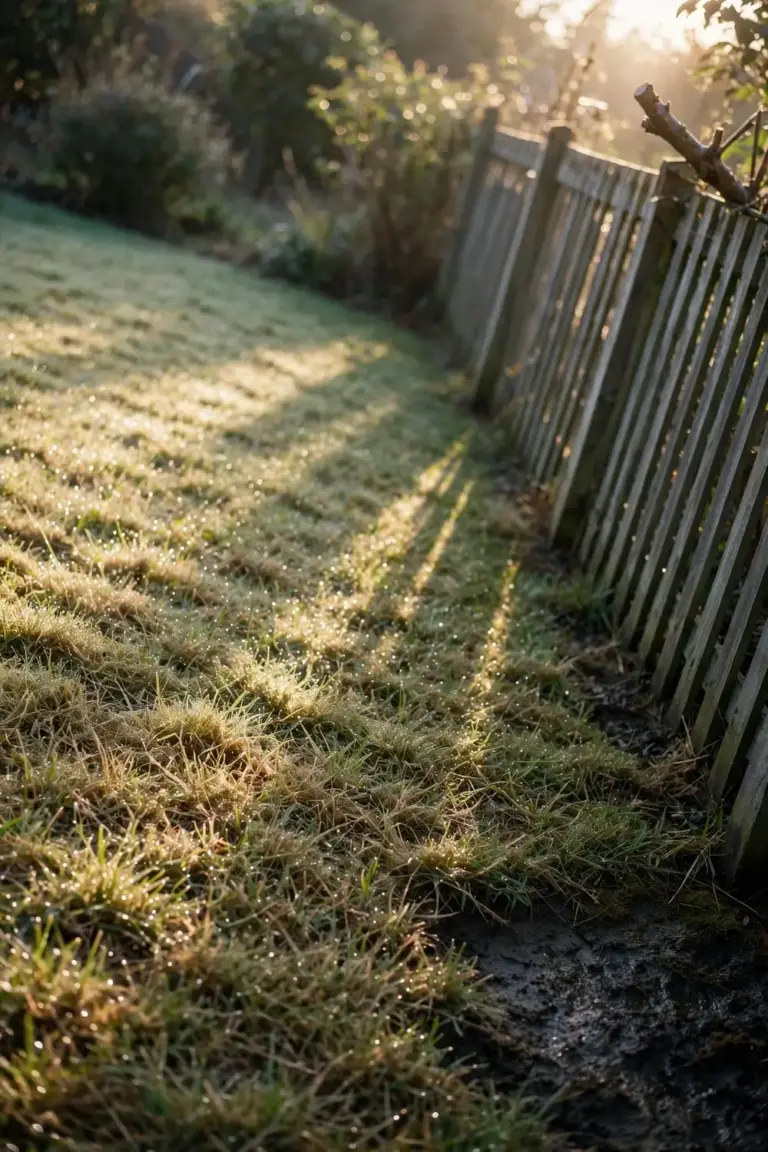
Morning watering gives the lawn the water it needs and leaves the whole day to dry the blades, while evening watering leaves the surface wet all night, which is when fungi fruit. Water only when the lawn needs it. A lawn that stays damp between waterings grows mushrooms. A lawn that dries between waterings does not.
Fix drainage where water sits. Compacted soil holds water at the surface, and a lawn that ponds after rain will grow caps in the pond line. Core aeration punches holes through the compaction so water drains and air reaches the roots. Fill low spots where puddles linger after rain. A lawn that drains grows grass, while a lawn that ponds grows fungi.
Test compaction with a screwdriver. Push it into the soil after rain, and if it slides in with ease, the soil drains. If it stops hard a few centimetres down, the soil is compacted, and aeration is due. Run this test in the wettest patch first, since that patch decides where caps appear.
Check the irrigation itself. A sprinkler head that overshoots onto one patch keeps that patch wet while the rest of the lawn dries. A leaking join does the same. Walk the system while it runs, watch where the water lands, and fix the head or the leak before you blame the weather. A timer that runs after a storm wastes water and grows caps, so switch it off when rain has already wet the lawn. If the timer runs on a fixed schedule, shift it to a soil-moisture setting or a manual check, so a wet week does not add water the lawn never needed.
Open the shade and the airflow. Prune overhanging branches so sun reaches the lawn. Keep fences and sheds clear of dense planting that blocks the breeze. A shaded corner that never dries is a mushroom corner. Sun and moving air dry it. Spring lawn care sets the seasonal rhythm for this work, since a lawn dried out in spring stays drier through the wet months.
Match the rhythm to your climate. Brisbane and the subtropics cop summer storms that wet the lawn no matter what you do, so drainage and airflow do the work after the storm passes. Perth summers run dry, so overwatering is the usual cause there. Melbourne and the cool south get long wet autumns, so the autumn flush is the one to plan for. You cannot stop the rain anywhere. You can stop the lawn from staying wet.
7. Treat a Fairy Ring as Its Own Problem
A fairy ring is a circle of fungus that can change grass color or kill it. Rake the caps, aerate the ring, and soak it with water.
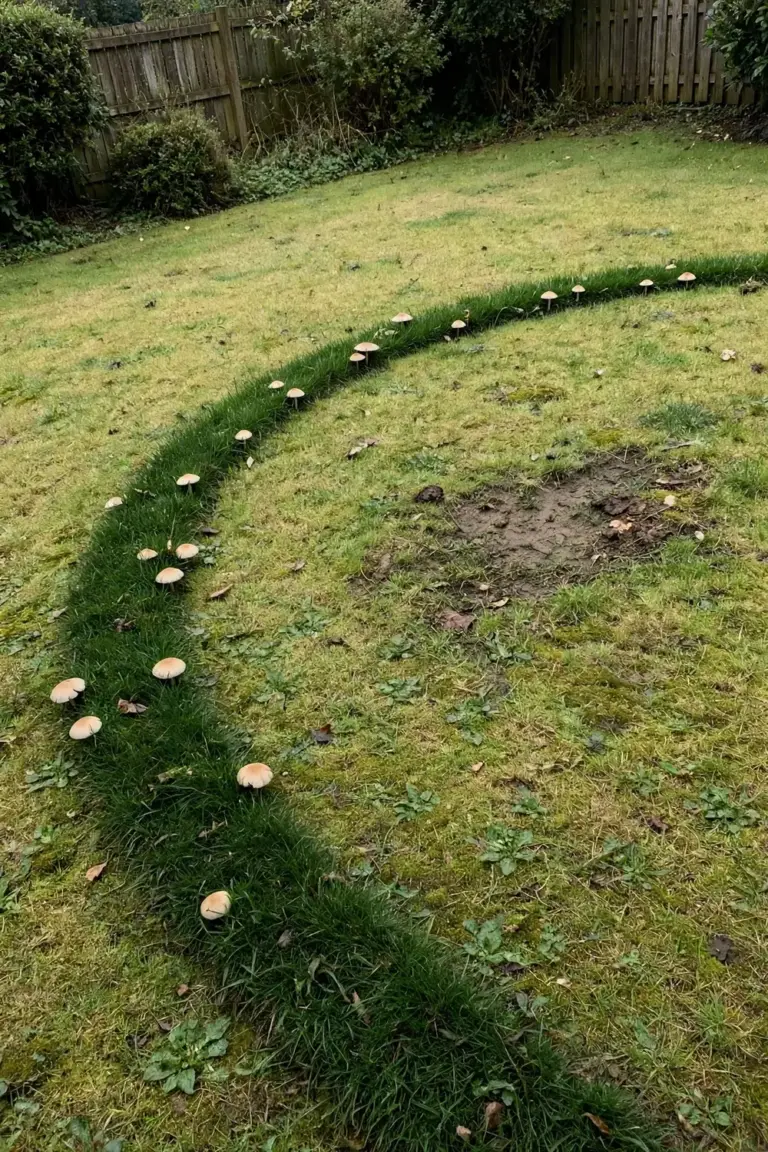
Fairy rings come from soil fungi that grow outward in a circle. University of Nebraska-Lincoln Extension counts 50 species of soil fungi behind fairy rings, and reports that rings range from 2.5 cm to 18 m across, though most stay under 4.6 m. The ring can show as a circle of mushrooms alone, a circle of darker grass, or both.
The ring grows outward year by year as the fungus eats its way into fresh food at the edge. The center goes quiet once the food there is spent, which is why an old ring can look like a bare circle with a green rim. A ring that keeps expanding is still feeding. A ring that stops expanding has run out of food.
Not every ring damages the lawn. University of Maryland Extension describes three types. Type 2 turns the grass greener, because the fungus releases nitrogen as it breaks down organic matter. Type 3 shows mushrooms only, with no visible benefit or damage to the grass. Type 1 is the hard case. It can kill turf during dry spells, because the dense fungal mat repels water and the soil inside the ring stops absorbing rain or irrigation.
Treat a ring in three moves. First, rake or mow the caps off, the same way as any other flush. Second, aerate the ring by coring, so water can reach past the water-repellent mat. Third, soak the ring with water so the soil inside the ring wets through. A ring that keeps killing grass despite that treatment is a digging job: remove the soil inside the ring and replace it. That is the last resort, not the first move.
Skip fungicide. It does not remove the food or the moisture that grew the caps, so it does not stop the next flush. The ring answers to water, air, and time, not to a spray. Do not dig up the whole lawn for a ring that only shows mushrooms. The digging cure suits a ring that kills grass, not a ring that merely shows caps.
A ring is not the only circle a lawn can show. Dog urine spots run yellow at the center with a green rim, and they carry no caps. Mower scalping runs in straight lines where the blades cut too low. Fertilizer burn follows the spreader path in patches. None of those three shows a ring of caps, and none of them needs the ring treatment. When caps stand in the circle, treat it as a ring. When the circle holds no caps, look for the other cause first.
8. Leave Harmless Mushrooms Alone When They Qualify
Leave scattered caps alone when no child or pet can reach them and the grass looks fine. Mow them off with the next cut.
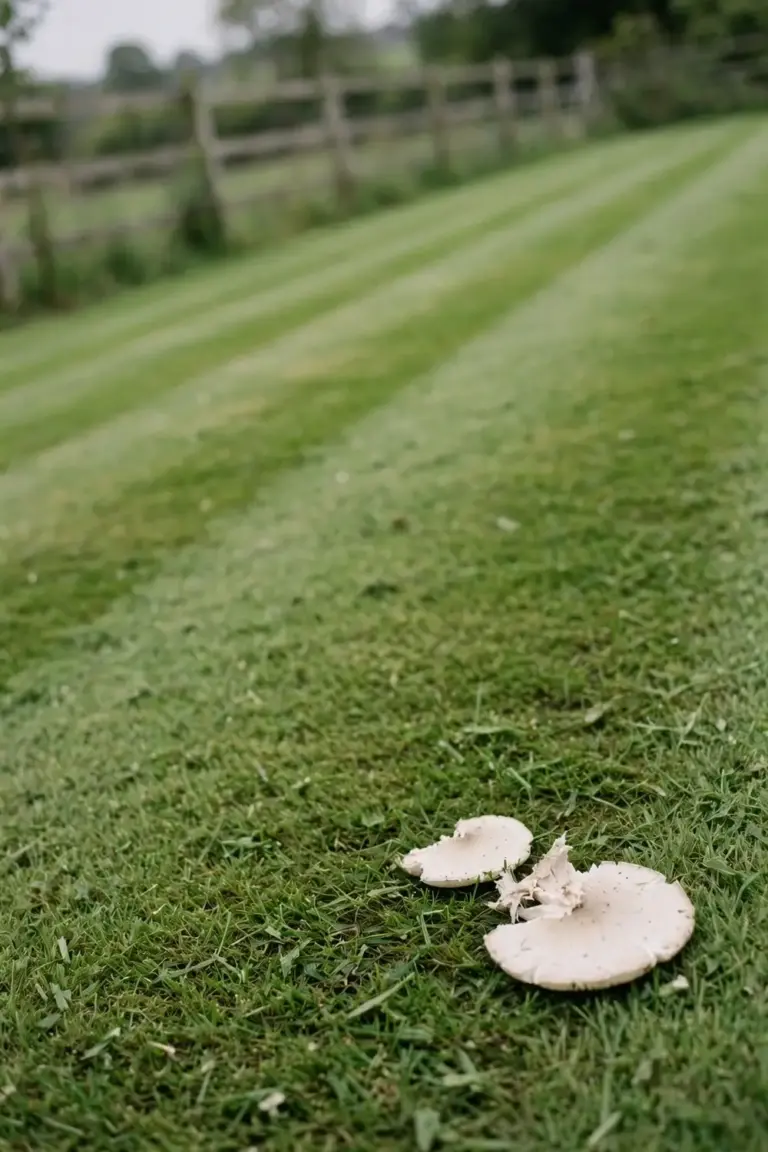
A flush qualifies as harmless when three things are true: the caps stand scattered rather than in a ring, the grass around them looks healthy, and no child or pet plays on that patch. If all three hold, the caps are a nuisance, not a problem. Mow them off and move on.
Caps collapse on their own as the lawn dries. The flush ends when the wet spell ends. No product speeds that up; patience and a dry lawn do the work.
Do not chase every cap with a spray. Sprays do not remove the food or the moisture, and they cost money for nothing. Save the effort for the causes: dry the lawn, remove the food, and the flush stops by itself.
Act anyway when the situation changes. If a ring appears, treat it as a ring. If children start playing on the patch, bag the caps. If a dog roams the lawn, bag the caps before the dog goes out. Leaving caps alone is a choice for a quiet lawn with no mouths at risk, not a rule for every lawn.
Frequently Asked Questions About Lawn Mushrooms
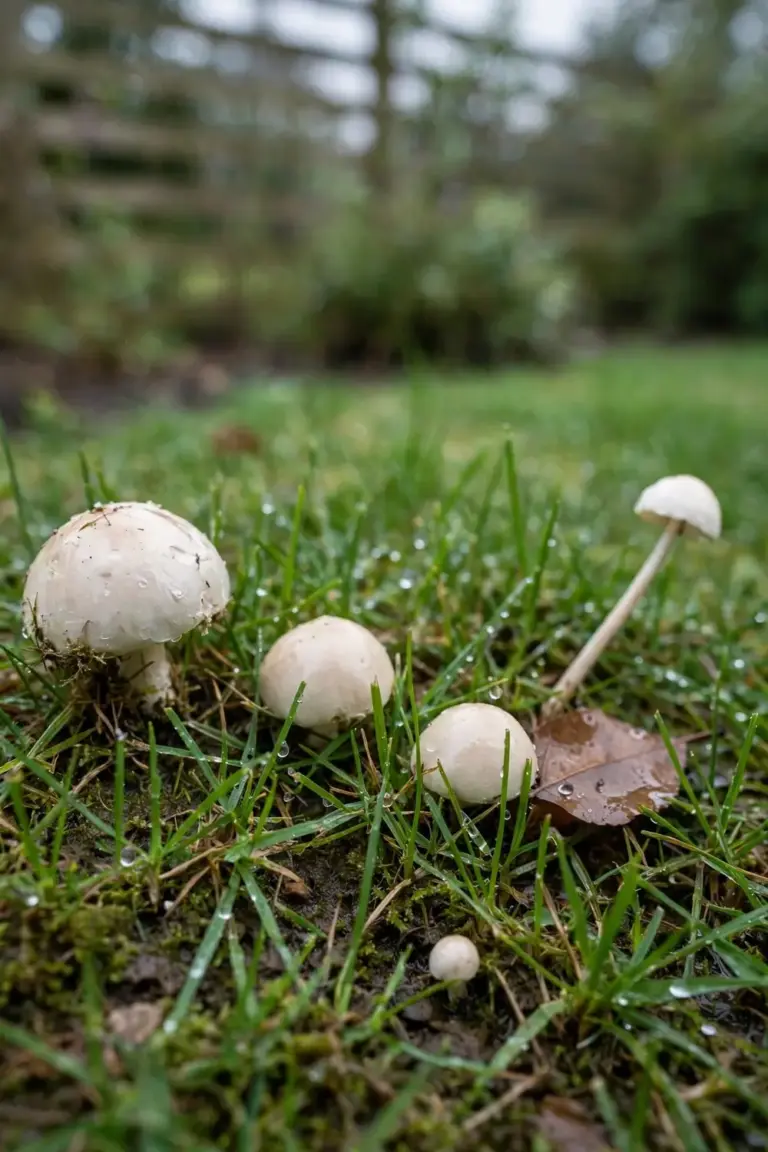
Some are, and you cannot tell which by looking. The green-spored parasol is common in Australian lawns and causes severe vomiting and diarrhoea. The Death Cap can kill. Treat every lawn cap as poisonous. Never eat one, keep children and pets away until caps are bagged, and call the Poisons Information Centre on 13 11 26 if someone eats one.
Yes. Mowing knocks caps flat and removes them with the cut. Bag the clippings on that pass so the caps leave the lawn. Mow before the caps open where you can, since earlier removal spreads fewer spores. Mowing removes the caps only. The fungus stays in the soil and can fruit again after the next wet spell.
No. Fungicide does not remove the food or the moisture that grew the caps, so it does not stop the next flush. The fungus lives underground as mycelium, and a spray on the surface does not reach it. Skip the spray. Bag the caps, dry the lawn, and remove the dead matter that feeds the fungus.
Usually the opposite. A flush means the soil holds active fungi and the surface stayed wet, which is normal after rain. The caps feed on dead matter, not on living grass. The exception is a fairy ring that kills grass in dry weather. Scattered caps on healthy grass are a nuisance, not a disease, and they fade as the lawn dries.
Picking removes the fruiting body, not the fungus. The mycelium stays in the soil with its food supply. While that food and damp conditions remain, the fungus fruits again after the next wet spell. The flush ends when the food rots away or the lawn stays dry. Remove the food and dry the lawn, and the returns stop.
Run the 4-Move Routine That Stops Mushrooms in Your Lawn
Run 4 moves after every flush. Bag the caps and bin the bag. Dry the lawn by watering in the morning and fixing drainage. Remove the food: thatch, buried wood, heavy clippings. Watch for rings, and treat a ring with aeration and soaking.
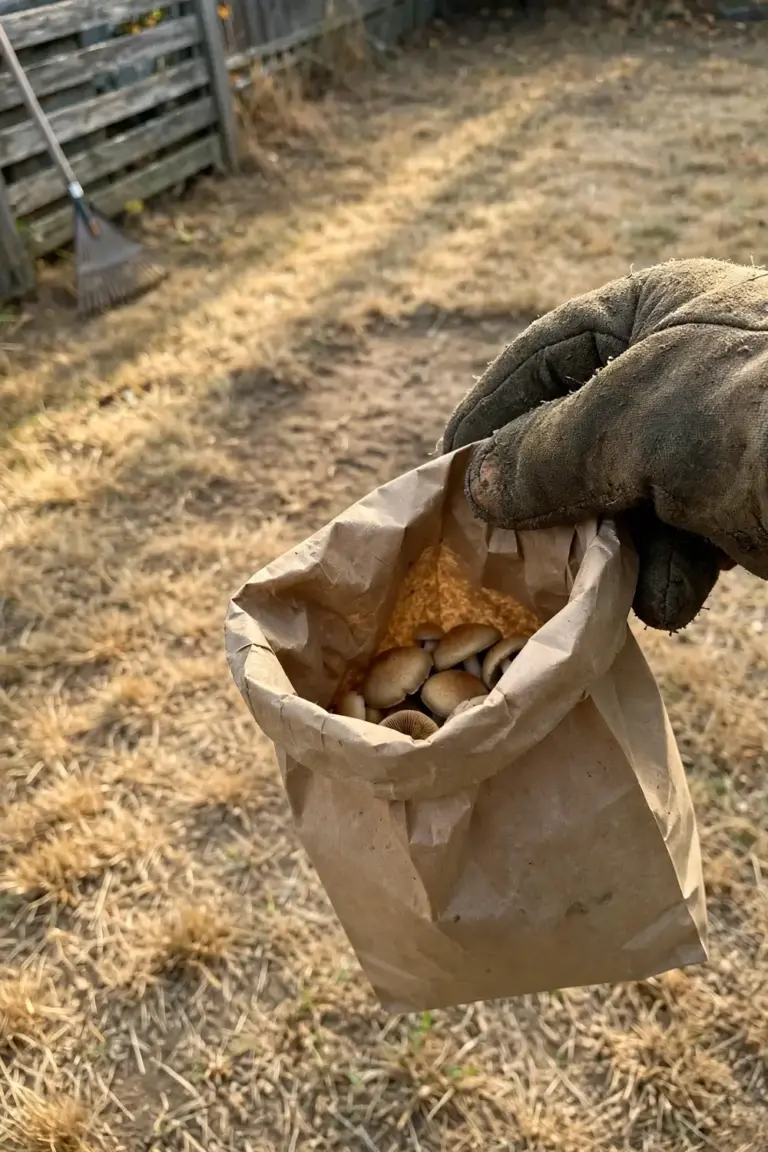
Walk the lawn after rain. Bag what you find. Check the wettest patch and the shaded corner first, since those spots fruit first. Run the screwdriver test in the pond line once a season. A dry lawn with little dead matter grows grass, not mushrooms.
Keep the safety rule first every time. Never eat a lawn cap. Bag caps before children and pets use the lawn. Call 13 11 26 if someone eats one. The flush that used to alarm you becomes a short chore, and the lawn gets drier and cleaner with each round.
Set a seasonal watch. Check the lawn after the first autumn rain, after each summer storm, and whenever you change the irrigation. A flush caught early is a handful of caps in one bag. A flush caught late is a lawn full of open caps shedding spores. The early check costs minutes. The late one costs a morning.