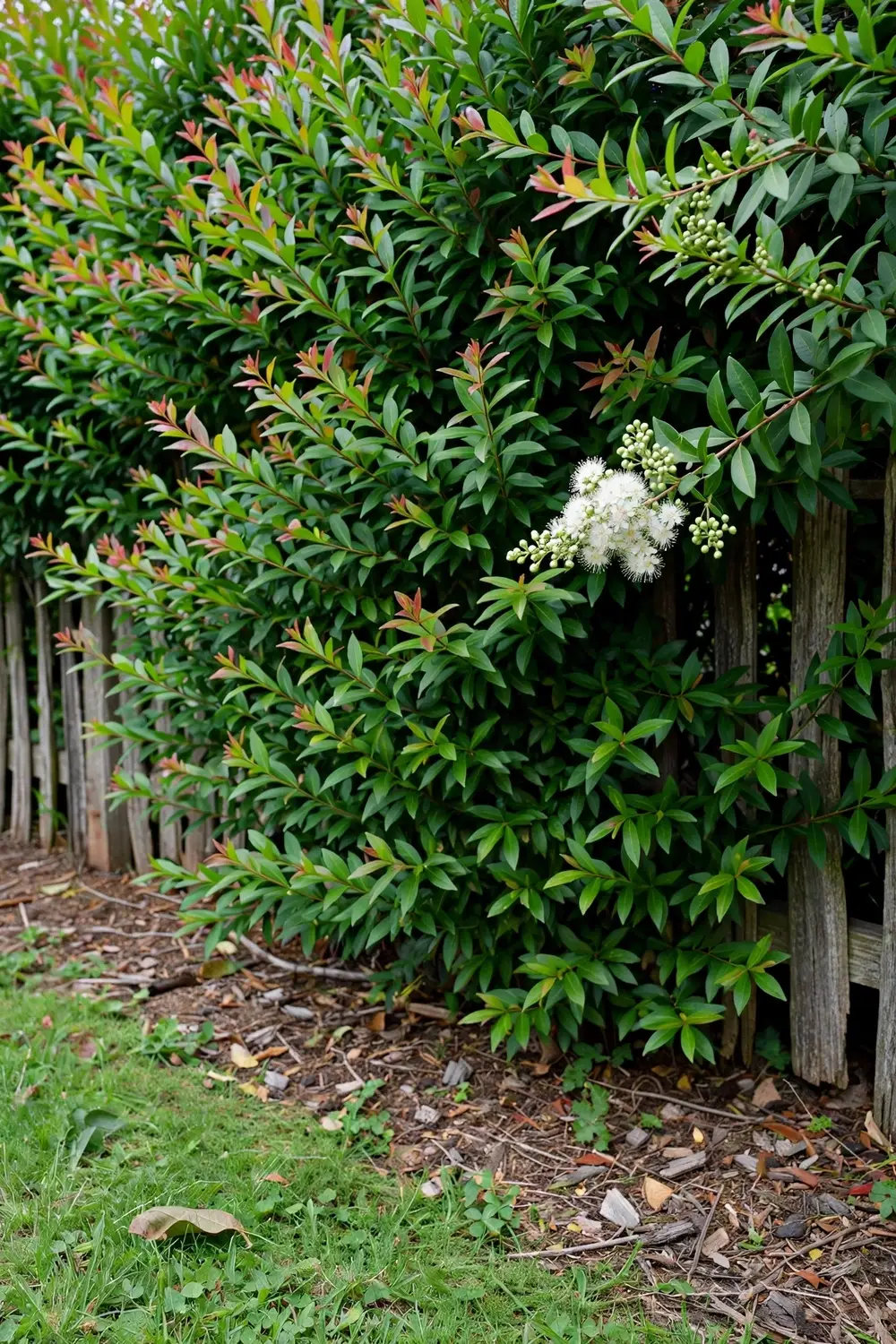

Plant lemon myrtle 1 to 1.5 m apart, tip prune from the first season, and give a 300 mm pot plant about five to seven seasons to reach a 3 m screen. That is a lemon myrtle privacy screen: one native tree, planted as a row, pruned for density, and left to close the gaps.
Lemon myrtle is Backhousia citriodora. The lemon in the name is scent, not family. The tree sits in Myrtaceae, the myrtle family. It is not citrus. The rest of this page is 7 moves, from the screen test to the first-year routine.
Walk the gap first. Measure the height you need, the sun it gets, and the frost it collects. Buy plants after the test, not before.
1. Run the Screen Test: Will Lemon Myrtle Screen Your Gap?
Lemon myrtle screens a gap up to about 5 m high in full sun to part shade on well-drained soil, with shelter from frost while young. A gap that needs more height, more shade cover, or wetter soil fails the test.
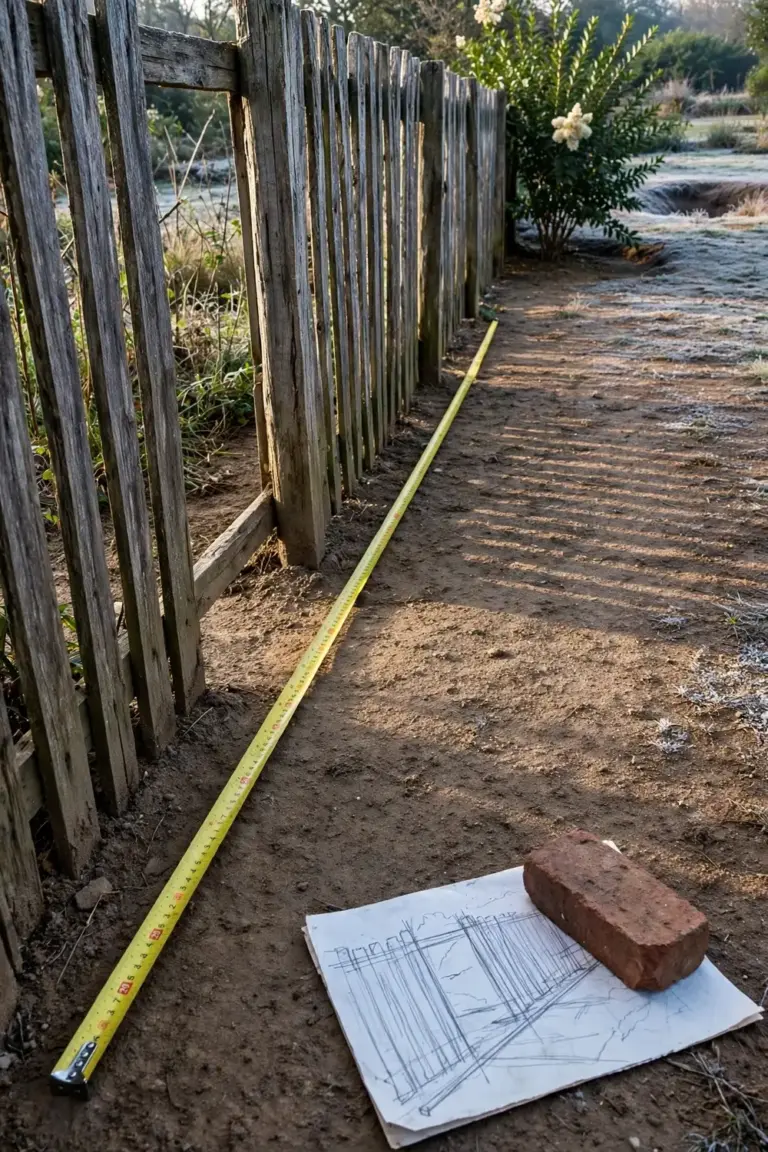
Height decides first. The Australian Native Plants Society profile notes that lemon myrtle rarely exceeds about 5 metres in cultivation, though wild trees reach 20 metres. A fence-line gap that needs 3 m of screen sits inside the range. A two-storey gap that needs 6 m sits outside it. Measure the height from the ground to the line you need to block. Add half a metre. That total is the screen height you need. If the total passes 5 m, pick a taller tree.
Width decides second. Count plants before you buy them. Divide the gap length by the spacing, then add one plant for the end. A 6 m gap at 1 m spacing takes 7 plants. A 6 m gap at 1.5 m spacing takes 5 plants. The spacing itself comes from the planting section below. The count keeps you from buying a row with a hole in the middle.
Sun decides third. Lemon myrtle grows in full sun to part shade. Deep shade sits outside that range. Soil must drain. The same ANPSA profile notes the tree tolerates all but the poorest drained soils, which makes a boggy strip a fail. Frost needs shelter while plants are young. An established screen handles a mild frost. A frost hollow that ponds cold air on clear winter nights is the wrong site for a young row.
Climate bands decide fourth. Lemon myrtle comes from subtropical rainforest on the Queensland coast, from Brisbane to Mackay. It grows in warm temperate to subtropical districts, and in frost-free parts of Victoria and Western Australia. Cold districts slow it down. A warm coastal garden grows it fast. A cold inland garden grows it slow. Match the plant to the district you actually live in, not the one on the label.
Stand where the neighbour stands. A screen must block sight from the place people look, not from the place you stand. Walk to the boundary. Crouch to sitting eye height. Look at the gap. The screen must close the view from that spot. A row that looks dense from your kitchen may show a gap from the neighbour’s deck. Test the view from both sides before you plant.
Sketch the gap on paper before you buy. Draw the fence line. Mark where the sun falls in the morning and where it falls in the afternoon. Mark the low spot where water sits after rain. Mark the frost hollow. The sketch turns a vague gap into a measured job. It also stops you buying plants for a gap you have not measured. A sketch also settles arguments before they start, because two people looking at one drawing argue less than two people looking at one gap.
Lilly pilly and bottlebrush are the two natives gardeners usually weigh against lemon myrtle. Both sit in Myrtaceae, so myrtle rust watches them too. Lemon myrtle wins the comparison on fragrance and leaf use. It loses on speed in cold districts, where it grows slow. Pick it for scent and leaves. Pick a faster tree if the screen must close this season.
2. Space and Plant a Lemon Myrtle Privacy Screen, Not a Specimen
Space plants 1 to 1.5 m apart for a dense informal screen, 80 cm apart for a formal hedge, and 3 to 4 m apart only if you want separate feature trees. Evergreen Trees’ lemon myrtle guide gives those three spacings, plus 40 to 60 cm of growth a year once established. A specimen spacing leaves gaps that never close. A screen spacing closes them.
Match the spacing to the screen you want. The table below sets the four goals side by side. Kept heights for screens sit at 2 to 3 m, the height the same guide gives for a maintained hedge. Feature trees run to the full 5 to 8 m mature height.
| Screen Goal | Spacing | Kept Height | Pruning Rhythm |
|---|---|---|---|
| Dense informal screen | 1 to 1.5 m | 2 to 3 m | Tip prune late winter + summer |
| Formal hedge | 0.8 m | 2 to 3 m | Light shaping 2 to 3 times a year |
| Loose multi-trunk screen | 2 m | 3 to 5 m | Tip prune late winter + summer |
| Feature tree (not a screen) | 3 to 4 m | 5 to 8 m | Shape only |
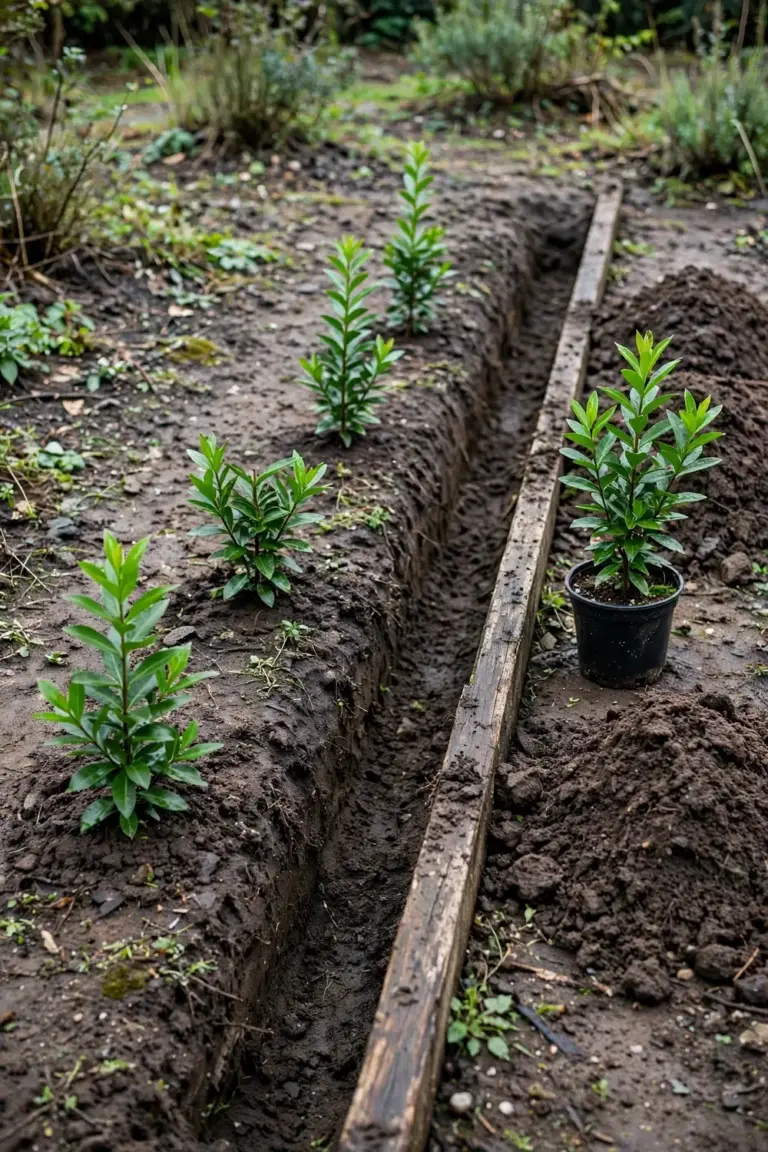
Dig one trench along the line, twice as wide as the rootball and the same depth. Set each plant level with the surrounding soil. Backfill, firm, and water deeply so the soil settles around the roots. A trench beats single holes on a screen row. Roots run along the line instead of circling in separate pits.
Plant on your side of the boundary. A screen on the line becomes a shared argument. A screen 30 cm inside your line stays your screen. Check the boundary pegs before you dig, because a trench on the wrong line is a trench you dig twice. The trench runs straight when the line is marked first.
Plan the timeline from the growth rate. Measure the plant you buy. Subtract its height from 3 m. Divide the rest by 40 to 60 cm a year, then add one slow first season. That total is your wait. A 60 cm plant, for example, needs 2.4 m more. At 40 to 60 cm a year, that is four to six seasons, plus a slow first season. Five to seven seasons covers it.
A double staggered row closes faster than a single row. It takes twice the plants and twice the width. A narrow side passage has room for one row only. A wide boundary has room for two. Pick the single row unless the gap is wide and the screen is urgent.
Bigger pots cost more. They also close the screen sooner. A small pot saves money and spends seasons. A large pot spends money and saves seasons. Weigh the price against the wait, and let urgency decide: a screen that must close this season earns the bigger pot. Buy the largest pot the budget allows when the screen is urgent. Buy small when time is cheap.
Skip the specimen habit. A screen row is not five feature trees. Feature spacing leaves a gap at eye level for years. Tight spacing closes the gap, and pruning keeps the row at the height you want. The row wins on density. The specimen wins on shape. Pick the row.
3. Prune for Density: Tip Prune, Then Shape
Tip prune new growth from the first season, then shape twice a year. A screen that is pruned young stays dense low down. A screen that is left alone runs tall and goes bare at the base.
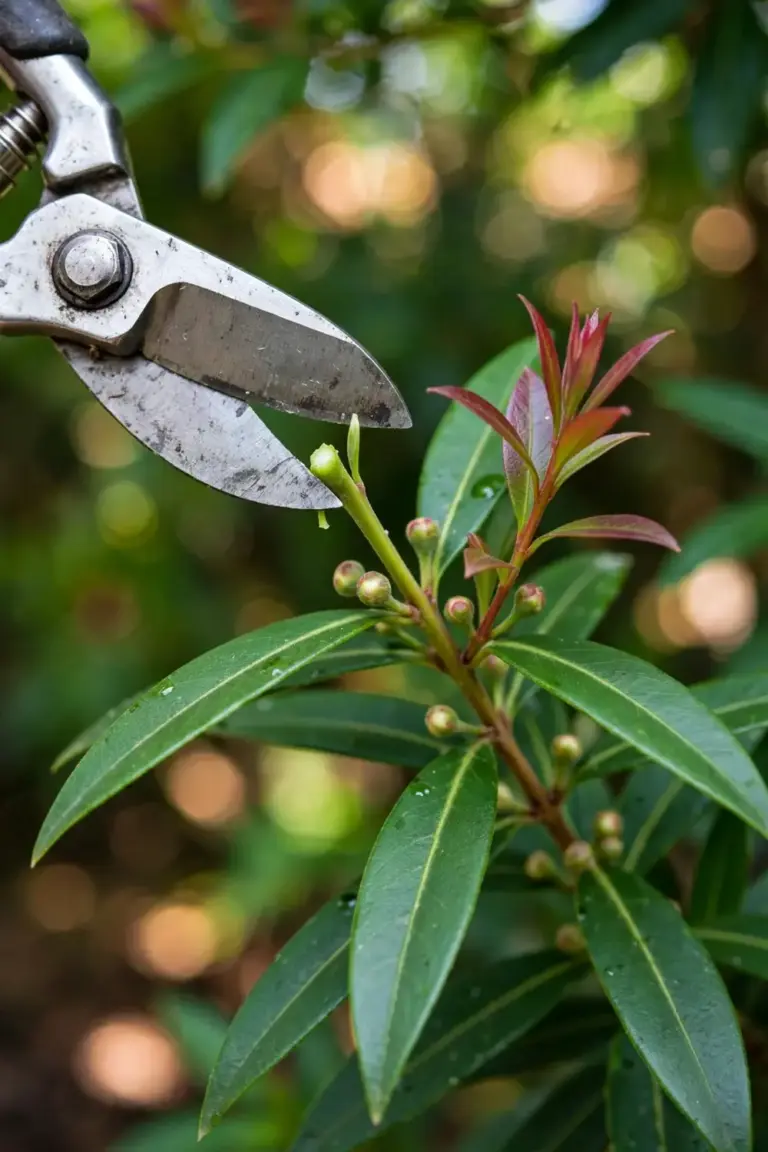
I have learned that the screen I tip-prune in its first season fills in low down, while the one I leave to run tall stays bare at the base.
Tip pruning means cutting the soft tip of each shoot. Leave the leafy growth below the cut. The cut wakes side buds, and side buds become side branches that fill the row. The same nursery guide recommends tip pruning in late winter and again in summer, with light shaping two to three times a year for a formal hedge.
An informal screen needs the tip prune only. A formal hedge needs shaping too. Keep the base wider than the top. Light reaches the bottom branches. The bottom stays leafy through the season, which is the whole point of the wider base. A hedge that runs wider at the top shades its own base, and the base thins.
Run the calendar across the year. Late winter brings the first tip prune, before the spring flush. Summer brings the second, after the main growth push. Autumn brings a check, not a cut. Winter brings rest. Two cuts a year hold the shape. One cut a year lets the row run tall between visits.
Use hand shears on a young row. Move to hedge trimmers once the row is long enough to make shears slow. The site’s hedge trimmer guide covers the choice between the two. Spring pruning techniques cover the general cut: clean, angled, outside a bud.
Drop the clippings under the row. They fall as mulch. They feed the soil as they break down. They cost nothing. Keep clippings from a rust-infected row out of the mulch. Bag those and bin them instead. The problems section below covers the rust check.
Tip pruning does not fix every mistake. It does not close a gap planted at specimen spacing, because no amount of cutting pulls two plants 3 m apart into one screen. It does not replace water in a dry first year. It does not rescue a row in deep shade. Pruning shapes growth that already exists. The site, the spacing, and the water must be right first. Pruning comes after.
Clean the blades between plants. Sap on a blade carries disease from one plant to the next. A quick wipe with disinfectant between cuts breaks the chain. The habit takes seconds. It matters most after rain, when rust spores move easiest. A clean blade also cuts cleaner, which heals faster than a torn cut.
4. Rule Out the Sites Where Lemon Myrtle Will Not Work
Skip lemon myrtle where frost pools, where shade stays deep all day, where soil stays wet, or where the gap needs more than 5 m of screen. Those four sites waste the plants.
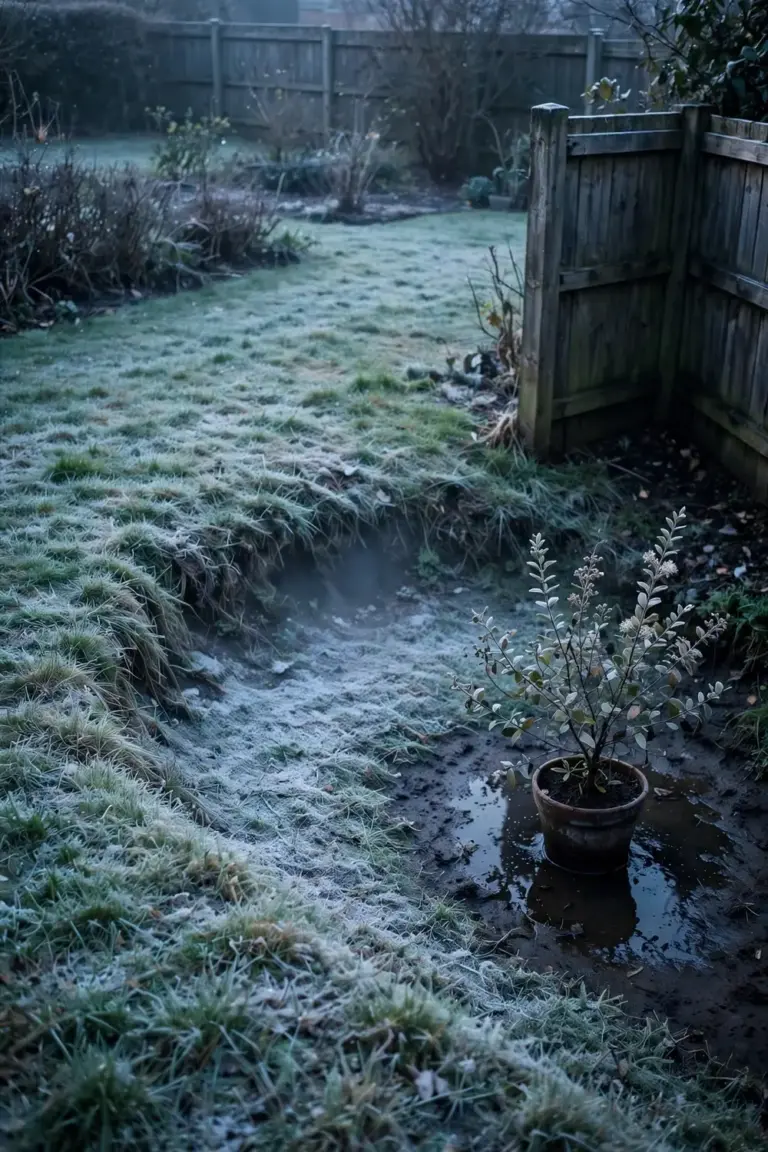
Frost pools kill young rows. The Australian National Botanic Gardens notes lemon myrtle is slightly frost-tender when young, and its Rainforest Gully specimens survived temperatures as low as minus 8°C with canopy shelter. Shelter and semi-shade carry young plants through frosty districts. A frost hollow with no shelter is the wrong site. Wait for establishment before trusting the row to an open frost.
Deep shade starves the row. Full sun to part shade is the working range. A gap that holds shade all day grows a thin screen that never closes. A gap with morning sun and afternoon shade grows a full screen. Measure the sun on the gap before you buy.
Wet soil rots the roots. The ANPSA profile notes the tree tolerates all but the poorest drained soils. A strip that holds water after rain is a fail. Dig a test hole 30 cm deep after rain. Water still sitting in the hole the next morning means the strip stays wet. Pick another plant for that strip. A wet strip grows rushes on its own, which tells you the soil never dries.
Small space fails too. A tree that reaches 5 m in cultivation needs room above and beside the row. A 2 m courtyard strip under a 5 m tree is the wrong fit. A narrow gap beside a driveway leaves no room for a trunk and a canopy. Pots hold a single plant, not a screen. A screen needs ground.
No published root-setback distance exists for lemon myrtle, so treat that figure as data not available. Keep the row clear of drains and pipes as a precaution. A root in a drain is a plumber’s bill. A row clear of drains is a screen with no argument.
A strip that holds water can still take a raised row. Mound the planting line 20 to 30 cm above the surrounding soil, and let the ridge carry the row above the wet. The mound drains. The roots sit above the wet. The trench becomes a ridge. A raised row suits a strip that holds water for a day after rain. A strip that holds water for a week needs a different plant.
A pot holds a single plant, not a screen. A lemon myrtle in a large pot screens a balcony corner. It does not screen a boundary. The same nursery guide lists pots of 40 litres and up for a single plant. Buy the pot for the corner. Buy the row for the boundary.
5. Claim the Edible-Leaf Bonus: One Tree, Two Jobs
Lemon myrtle leaves are edible, and the citral form is the one grown for flavour. A screen row doubles as a leaf supply. The screen stays the job. The leaves stay the bonus.
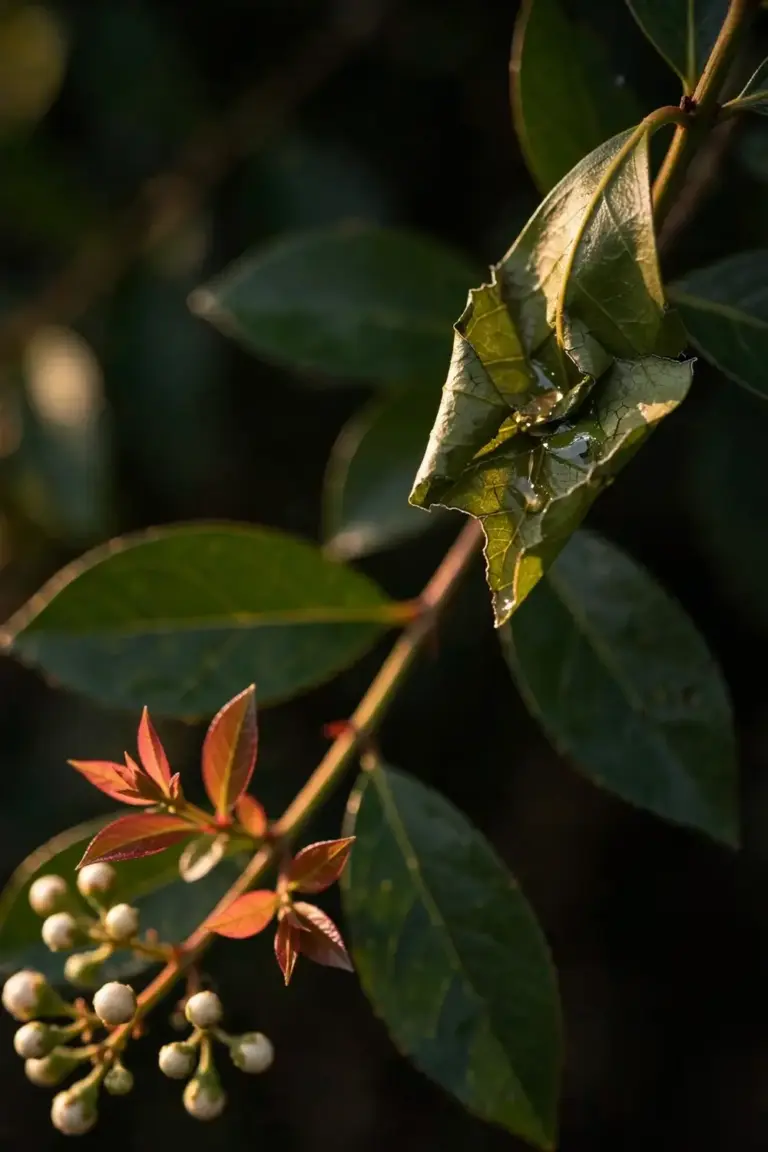
Two chemical forms exist. The ANPSA profile describes one richer in citral and one richer in citronellal. The citral form is much commoner, and growers select it for its sweet lemon-type perfume and flavour. Ask the nursery for the citral form if flavour matters. A seedling of unknown form may carry the weaker scent.
Use the leaves where a lemon flavour fits, and let the dish carry the rest. Tea, baking, marinades, and savoury dishes all take the leaf. Name the use, then stop there: no quantities, no methods, no recipe follows. This page stays on the screen.
Pick leaves as you need them. Pruning cuttings carry the same leaves. A row grown for leaves gets the same pruning as a row grown for screening. The two jobs share one cut. The tip prune fills the row and fills the basket at the same time.
Confirm the plant is Backhousia citriodora before eating any leaf. A screen row of the wrong plant is a screen row, not a pantry. Check the name on the nursery tag. Check the crushed leaf. The scent should read as clean lemon. If the name or the scent doubts you, do not eat it.
The bonus has a limit. A screen row yields a handful of leaves at each prune, not a harvest. The tip prune fills a small basket. The summer shape fills another. A cook who wants leaves every week needs a second use for the row, not a second row. The screen feeds the kitchen between cuts. It does not replace a herb bed.
6. Establish the First Year: Water, Mulch, and Patience
Water deeply twice a week through the first 12 months, mulch 5 to 7 cm deep with 5 cm clear of each trunk, and expect slow growth in year one. The first year builds roots. The screen comes after.
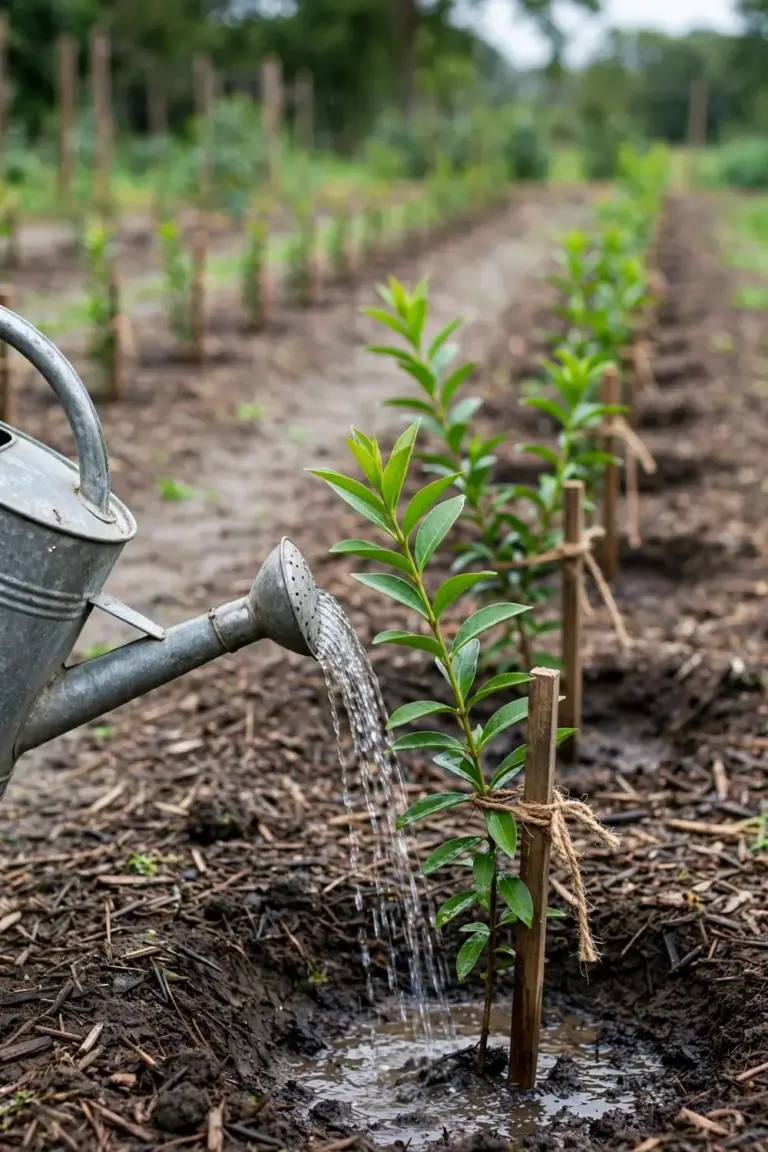
Soil sets the start. The ANBG notes call for soil that is rich, moist, well mulched, and well composted. Dig compost through the trench before planting. The site’s soil health guide covers the longer work of building soil that holds moisture without holding water.
Water settles the row. A deep soak at planting drives soil around the roots. Twice-weekly deep watering through the first year keeps growth moving. Mulch holds the moisture. Keep the mulch 5 cm clear of each trunk. Mulch against bark holds damp against the stem.
Stake a plant that rocks in the wind. A loose plant tears new roots with every gust. Tie the stake low, with room to move, and check the tie each month so it never bites into the stem. Remove the stake once the roots hold. A stake left on for years girdles the stem it was meant to save.
Feed once in spring with a slow-release native fertilizer, applied exactly as its label directs. The ANPSA profile notes lemon myrtle responds well to slow-release fertilizer. Growth stays slow in year one. Expect 40 to 60 cm a year once the row is established. Patience in year one buys density in year three.
Ease off in year two. Once established, the row holds on rainfall plus a deep soak in extended dry spells. Water still matters in a heatwave. A row that wilts in week two of a dry spell needs a soak, not a schedule. Read the soil. The finger test settles it: dry 5 cm down means water.
Learn what established looks like. New growth runs across the whole row, not one plant. Leaves hold their color between waterings. The row stands steady in wind without a stake. Those three signs mean the roots have found the soil. A row that shows them needs less of you, not more.
7. Check Problems Early: Rust, Scale, and Stress
Check new growth after wet weather for myrtle rust, and check stems and leaf undersides for sap-suckers. A screen that is checked monthly stays ahead of both.
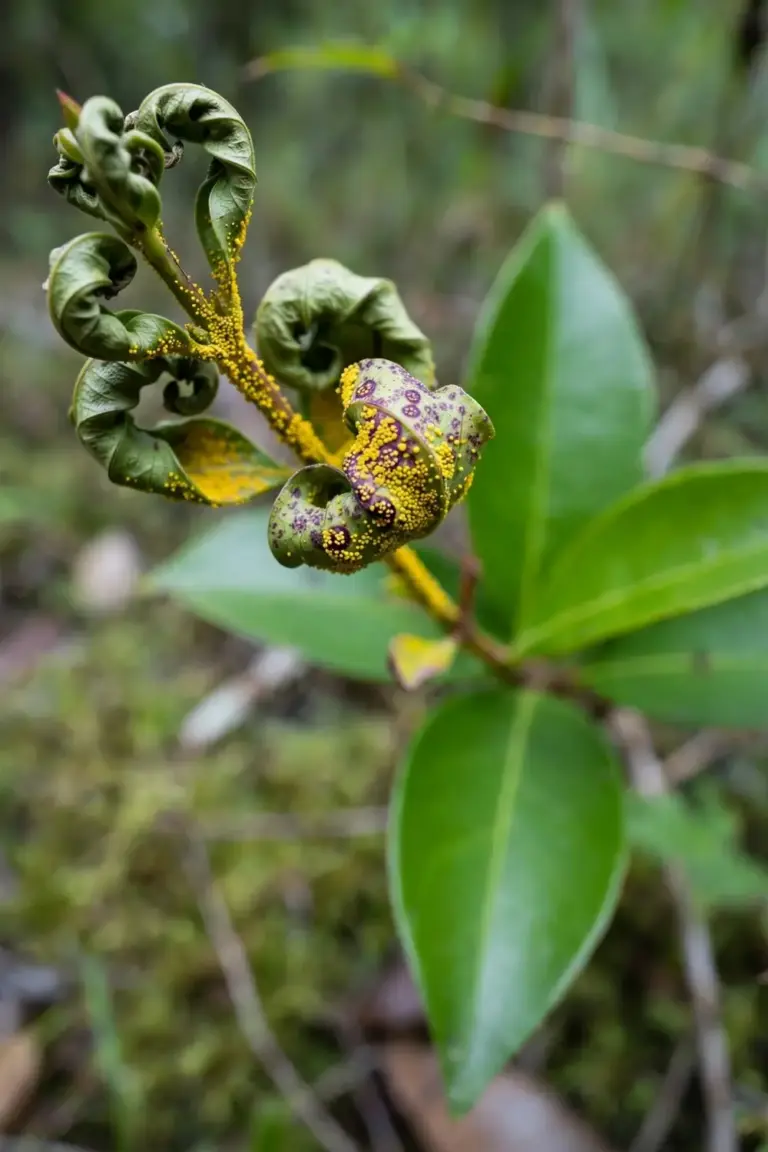
Myrtle rust is the disease that matters. Myrtle rust (Austropuccinia psidii) attacks young, actively growing Myrtaceae parts, raising pustules 0.1 to 0.5 mm across that release bright yellow spore masses, and heavy infection distorts growth, strips leaves, and dies back branches. Spores germinate at 15 to 25°C with 6 or more hours of leaf wetness and 8 or more hours of darkness. Spores stay alive for up to 3 months. Lemon myrtle is Myrtaceae, so new growth on a screen sits in the rust’s target zone.
Inspect new growth after rain. Bag and bin infected shoots. Disinfect tools between cuts. Keep clothing and boots clean between gardens. Fungicides registered for myrtle rust exist, and any use follows the label exactly, with no home-mixed rates and no guesswork. The same source lists hygiene and removal before chemicals. Follow that order.
Sap-suckers settle on stressed rows. Run a finger along stems and leaf undersides. Bumps that do not move and cottony clusters both mean sap-suckers. Dab them with horticultural oil, applied exactly as its label directs, or prune the worst stems out. The site’s organic pest control guide covers the full routine. Yellowing leaves point back to water and drainage first. A bare base points back to missed tip pruning, not disease. Fix the cause. The symptoms follow.
Call for help when the job leaves the ground. A large dead branch overhead belongs to an arborist, not a ladder. A screen that loses a whole plant to rust needs a replacement plan, not a spray. A row that keeps failing in one spot needs a soil check, not a third plant in the same hole.
Walk the row on the first weekend of each month. Carry shears and a bag. Check new growth for rust. Check stems and leaf undersides for sap-suckers. Check the mulch depth. The walk takes minutes on a short row. It catches every problem while it is still small.
8. Frequently Asked Questions
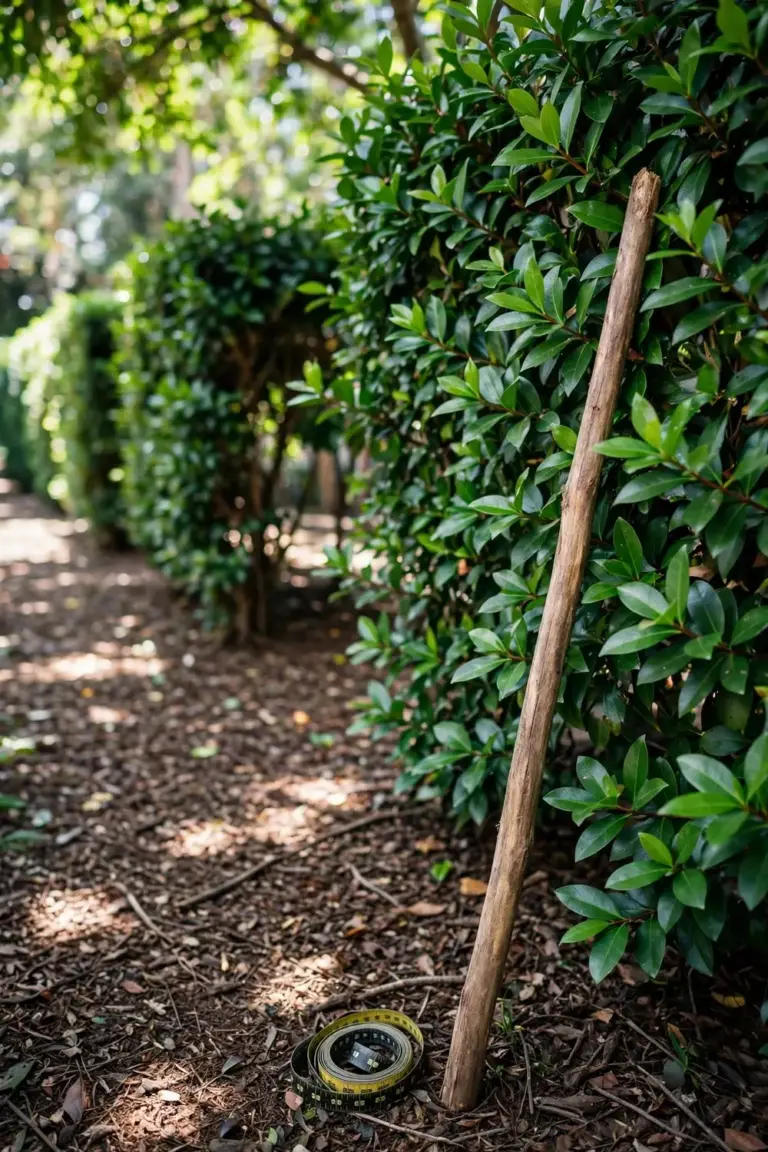
Five to seven seasons from a 300 mm pot. The first season runs slow. Later seasons add 40 to 60 cm a year once the row is established. Measure the plant you buy, subtract its height from 3 m, divide the rest by that yearly growth, then add one slow first season. A 60 cm plant needs 2.4 m more, which lands at five to seven seasons.
Plant 1 to 1.5 m apart for a dense informal screen. Plant 80 cm apart for a formal hedge. Plant 3 to 4 m apart only for separate feature trees. Count plants before buying: divide the gap length by the spacing, then add one plant for the end. A 6 m gap at 1 m spacing takes 7 plants.
It grows in full sun to part shade. Deep shade all day grows a thin screen that never closes. Morning sun with afternoon shade suits it. Frosty districts need shelter and semi-shade while plants are young. Measure the sun on the gap before buying. A gap that holds shade all day needs a shade-tolerant tree instead.
Yes, when the plant is Backhousia citriodora of the citral form. The citral form carries the sweet lemon flavour growers select. The citronellal form carries a weaker scent. Ask the nursery for the citral form before you buy, since the form on the tag decides the flavour you get. Confirm the plant name before eating any leaf. Leaves flavour tea, baking, marinades, and savoury dishes. This page gives no recipes.
Yes. Myrtle rust (Austropuccinia psidii) attacks young, actively growing Myrtaceae parts, and lemon myrtle is Myrtaceae. Watch new growth after wet weather for yellow pustules. Bag and bin infected shoots. Disinfect tools between cuts. Fungicides registered for myrtle rust exist, and any use follows the label exactly. Hygiene and removal come before chemicals.
9. Start With the Gap, Not the Plant
A lemon myrtle screen starts with a tape measure, not a nursery trolley. Measure the gap. Test the sun, the soil, and the frost. Count the plants. Then buy.
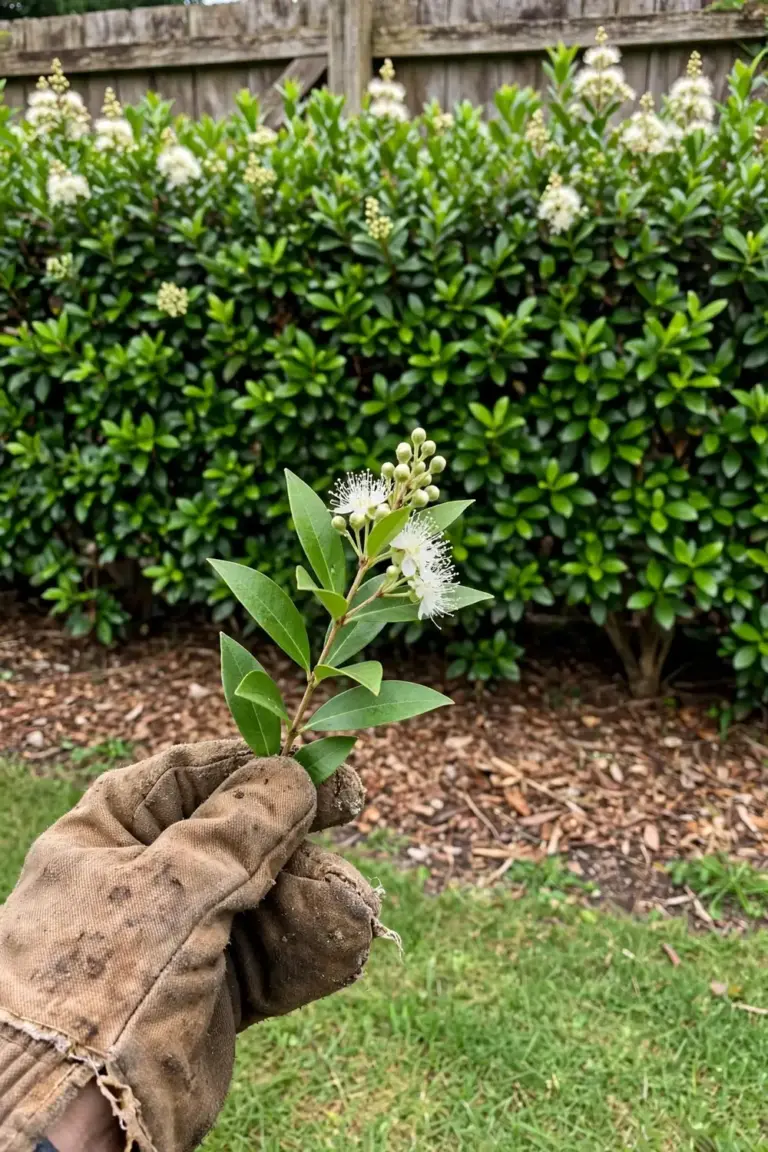
Plant the row at screen spacing and tip prune from the first season. Water deeply through the first year. Check new growth after rain. The screen closes on that routine. The scent and the leaves ride along free, which is the bonus a screen row pays without asking for extra work.
Buy from a nursery that names the form. Slip the pot off and look at the roots before you pay. White tips mean a live plant. A solid mat of circling roots means a plant that will sulk. Pick the plant with roots that fill the pot without strangling it.