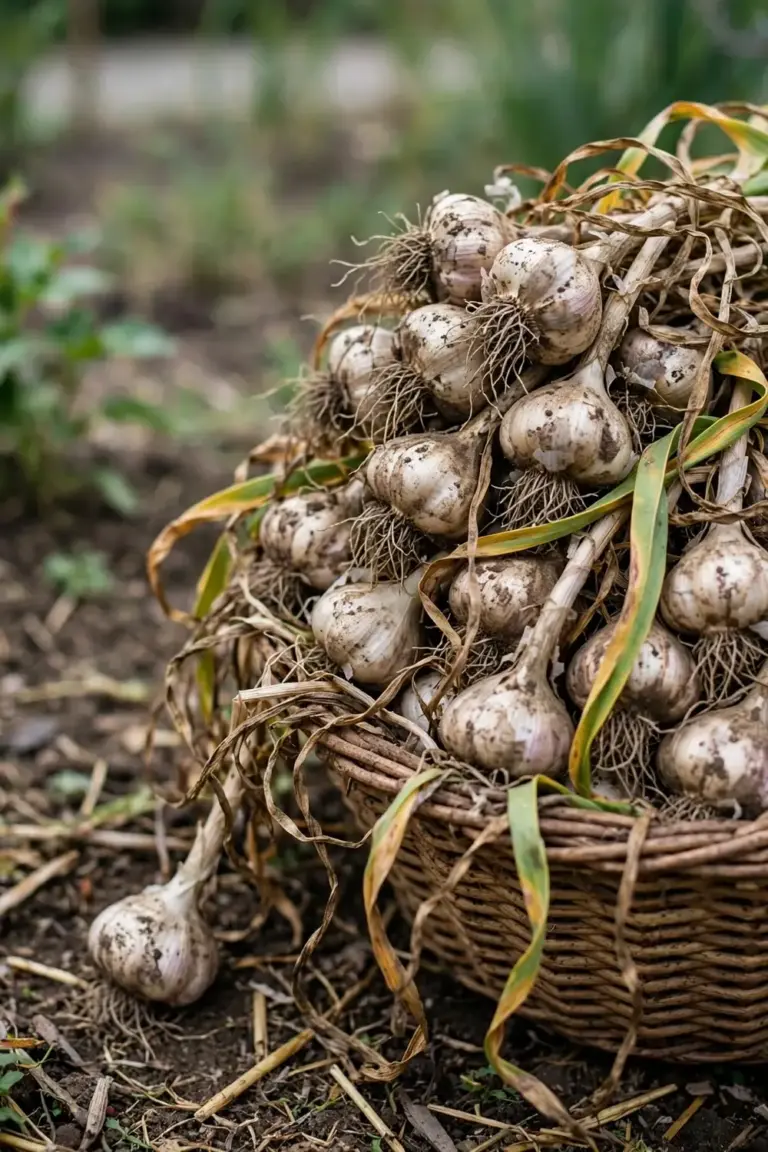

Plant one garlic clove in autumn and lift a full bulb 150 to 200 days later. That is growing garlic in Australia: a long, slow crop that rewards patience and punishes wet feet. I have learned that the garlic I plant from a local grower outbulbs the garlic I plant from the supermarket shelf.
The rest of this page walks the full season, from choosing softneck or hardneck to curing the harvest. It covers the six-zone planting calendar, the sourcing rule, pots, feeding, scapes, rust and white rot, harvest signs, curing, and storage.
1. Plant Cloves, Not Seeds, One Clove Per Bulb
Garlic grows from cloves, not from true seed. Break a bulb apart and each fat clove becomes one full bulb by summer. The clove is the planting material, the food store, and the starter root system in one wrapper.
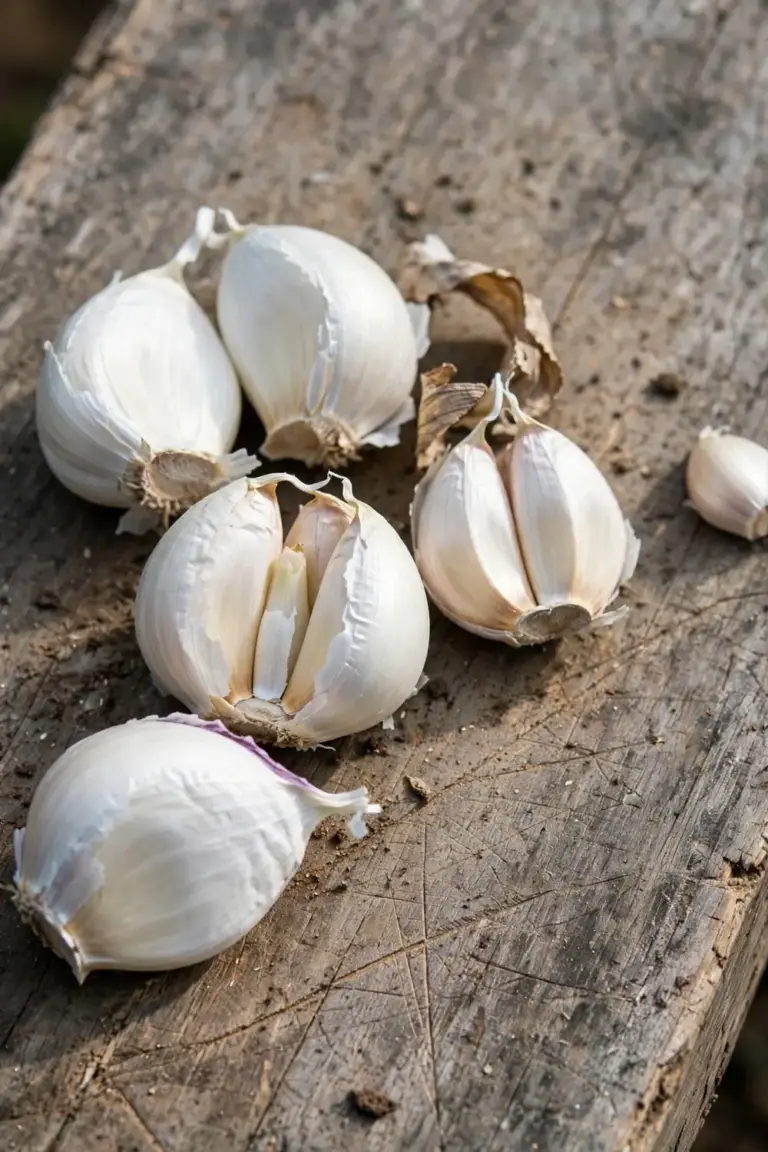
Break bulbs apart a day or two before planting, not weeks ahead. Separated cloves dry out and lose vigour. Keep the papery skin on each clove. The skin protects the clove from rot in damp soil, and peeling risks nicking the basal plate where roots form.
Pick the largest, firmest cloves for planting. Small cloves grow small bulbs, and soft or bruised cloves rot before they root. Eat the small cloves. Plant the best cloves and the harvest repays the choice.
2. Choose Softneck or Hardneck for Your Climate
Two types of garlic grow in Australian gardens, and climate picks the winner. Softneck garlic suits warm regions and stores for months. Hardneck garlic suits cool and cold regions and sends up a curly flower stalk called a scape.
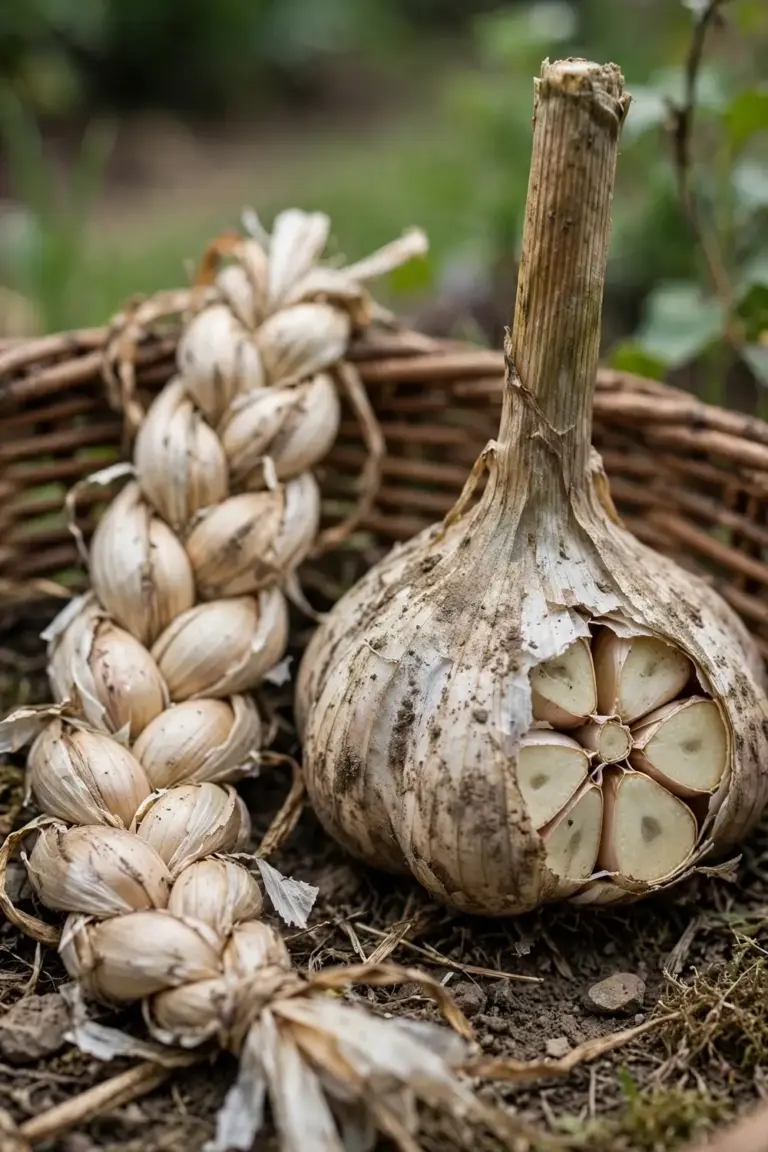
Softneck bulbs carry many small cloves in layered rings and no stiff central stem. The necks stay soft, which is why softneck braids. Supermarket garlic is almost always softneck. Sustainable Gardening Australia puts softneck varieties in warm temperate regions and notes that softneck garlic does not usually set a flower.
Hardneck bulbs carry fewer, larger cloves around a stiff central stem. Hardneck needs a real winter chill to divide into cloves, and it grows a scape in spring. The same SGA guide puts hardneck varieties in cool to cold areas.
Choose by winter, not by flavour. Warm-zone gardeners who plant hardneck harvest single round bulbs with no divisions. Cold-zone gardeners who plant softneck still harvest, but hardneck outclasses it. Brisbane and north plant softneck. Tasmania and the cold highlands plant hardneck. Temperate gardeners grow either type and let storage decide.
Elephant garlic is a leek, Allium ampeloprasum, not garlic at all. It grows big mild cloves and follows leek rules, not garlic rules, so do not plant it expecting garlic flavour at garlic strength.
3. Plant Garlic on the Six-Zone Calendar
Garlic planting runs on autumn, not on a single national date. The six-zone calendar below compiles Sustainable Gardening Australia planting windows with Gardenate zone calendars. Frost dates shift each window by weeks, so treat the months as ranges, not deadlines.
| Zone | Plant | Harvest | Type |
|---|---|---|---|
| Tropical (Cairns, Darwin) | May to June, after fridge chilling | October to November | Softneck |
| Subtropical (Brisbane, coastal NSW north) | April to May | October to November | Softneck |
| Warm temperate (Sydney, Perth, Adelaide) | April to May | November to December | Softneck |
| Cool temperate (Melbourne, Hobart lowlands) | March to May | December to January | Either type |
| Cold (Tasmania highlands, alpine) | March to April | January to February | Hardneck |
| Arid (Alice Springs, inland) | April to May | October to November | Softneck |
Autumn planting gives roots months to establish before winter. Spring planting still grows, but bulbs run smaller because the root system starts late. The old folk rule says plant on the shortest day and harvest on the longest. Gardening Australia calls that rule a myth in Australian conditions and advises planting earlier, through autumn.
Tropical gardeners need one extra step. Garlic needs a cold period to divide into cloves, and the tropics never deliver one. Chill cloves in the fridge for at least a month before planting, per Homestead and Chill, to fake the winter the bulb expects. Fridge chilling works for softneck in the tropics. Hardneck stays a cold-climate crop even with chilling. Keep fridge-chilled cloves in a paper bag, not a sealed plastic bag, so condensation never sits on the skins.
Zone lines blur at the edges. A gardener in the Blue Mountains plants on the cool-temperate calendar, while a gardener in coastal Brisbane plants on the subtropical one. Microclimate moves the window: a frost pocket runs two weeks behind a sunny slope in the same suburb. When your suburb sits between two rows, plant half the bed on each calendar and let the harvest tell you which row fits.
4. Buy Certified Seed Garlic, Not Supermarket Bulbs
Buy certified seed garlic from a local grower or a reputable nursery. Certified stock carries the right type for your climate, and it arrives free of the problems that follow imported eating garlic.
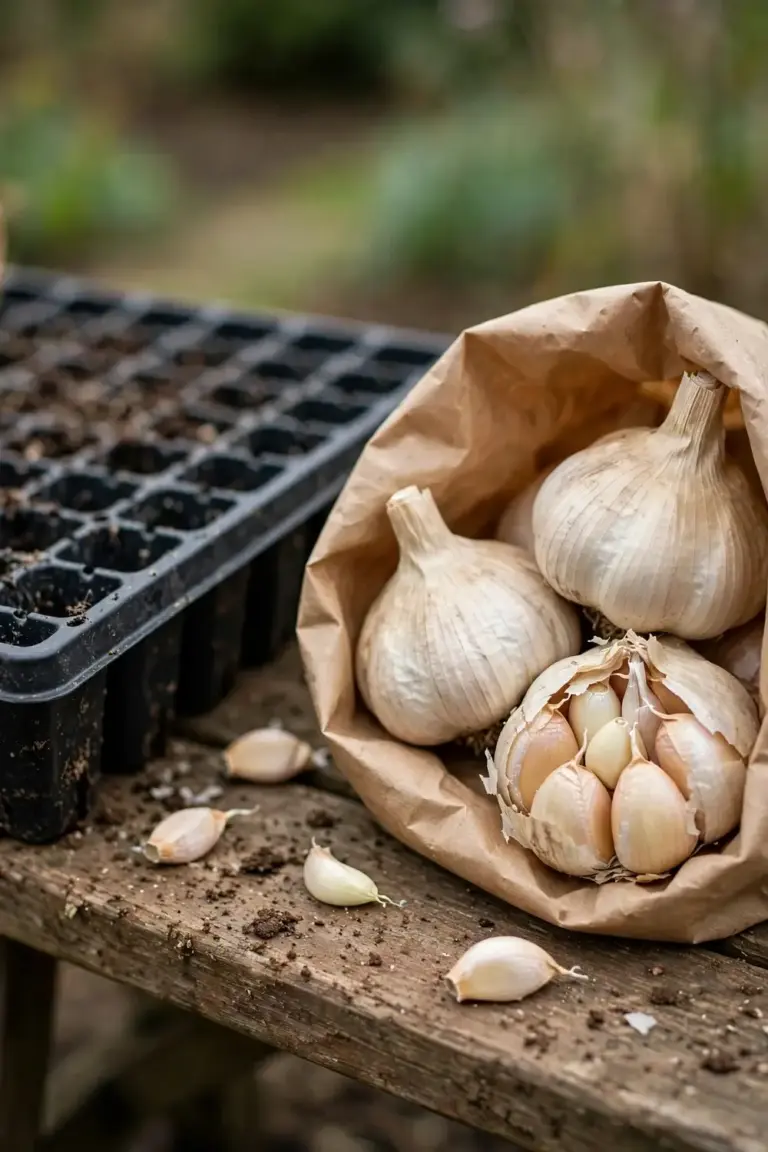
Supermarket garlic fails three ways. Much of it comes from overseas and suits another climate. Much of it carries virus that shrinks bulbs year after year. Much of it is treated to stop sprouting on the shelf, so it never starts in soil. Aussie Green Thumb warns that store garlic is usually highly treated and that planting it can carry fungus into the soil.
Local seed garlic costs more per bulb than eating garlic. One bulb of seed garlic breaks into six to ten cloves, and each clove returns a full bulb. The first harvest pays for the seed, and the best bulbs of that harvest become next year’s seed. Save the largest bulbs from each harvest and replant their cloves. That selection loop adapts the variety to your own soil within a few seasons.
Check the label before buying. Certified seed garlic names the variety and the type. “Garlic” with no variety name is eating garlic, not seed garlic. Ask the seller which type it is if the label stays silent.
5. Give Garlic Full Sun and Free-Draining Soil
Garlic wants full sun and soil that drains fast. Six hours of direct sun grows fat bulbs, while shade grows leaves and thin necks that never fill out. Pick the sunniest bed in the garden and keep it for garlic through winter.
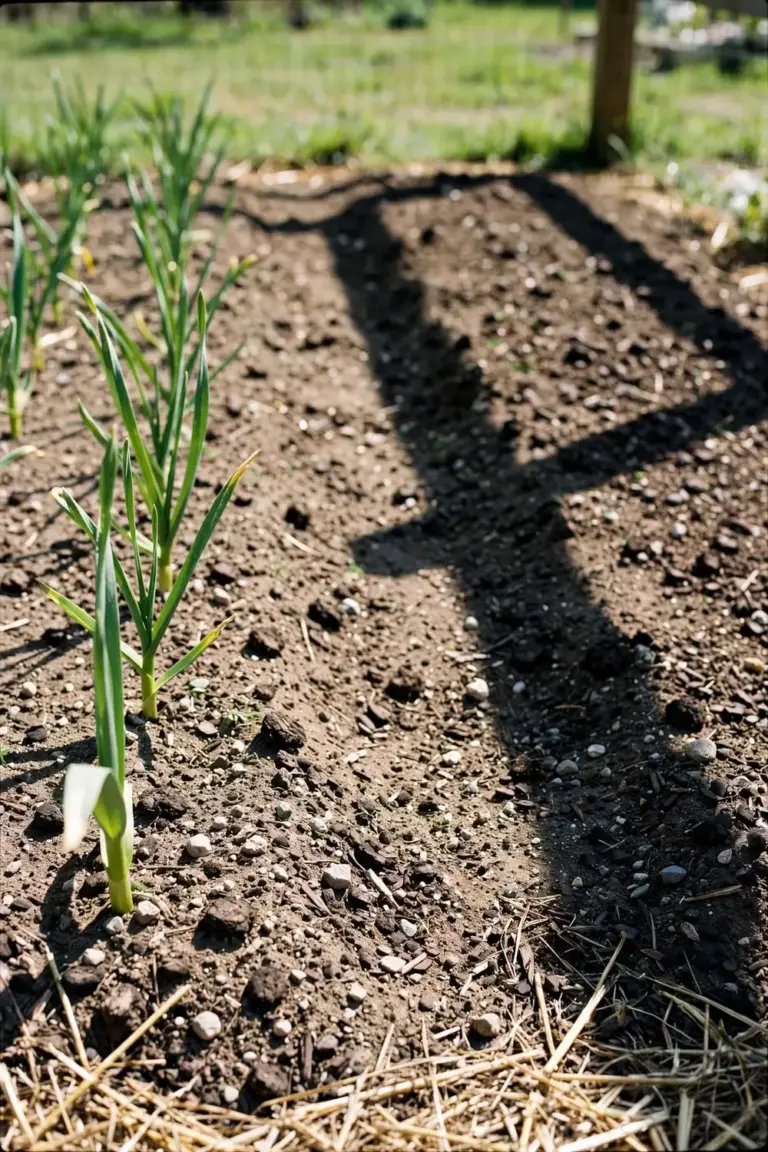
Soil must stay moist without ever sitting wet. Garlic roots sit shallow and rot in standing water. Raised beds fix heavy clay. A fork-loosened bed with compost mixed through grows strong roots. Soil health decides how much water the bed holds between rains, so build the soil before planting, not after.
Garlic likes a soil pH between 6.0 and 6.5, per the University of Tennessee Extension. Victorian DPI notes garlic tolerates pH up to 8, so slightly alkaline soil still grows garlic. A soil test settles the question in one reading. Fall garden bed prep covers testing and compost in full.
Garlic shares the allium rotation rule with onions. Never plant garlic where garlic or onions grew in the last three years, per Cornell. Rotation starves soil-borne disease of its host. White rot waits in the soil for alliums, so a fresh bed matters more than fertilizer.
Keep garlic away from peas and beans. Sustainable Gardening Australia warns against planting garlic near legumes. Lettuce makes the better neighbour. Lettuce grows between garlic rows and finishes before bulbs swell, so one bed carries two crops.
6. Plant Each Clove Pointy End Up
Plant cloves pointy end up, flat root plate down. The pointy end is the shoot. The flat end grows roots. A clove planted upside down still grows, but the shoot bends around and the bulb forms crooked.
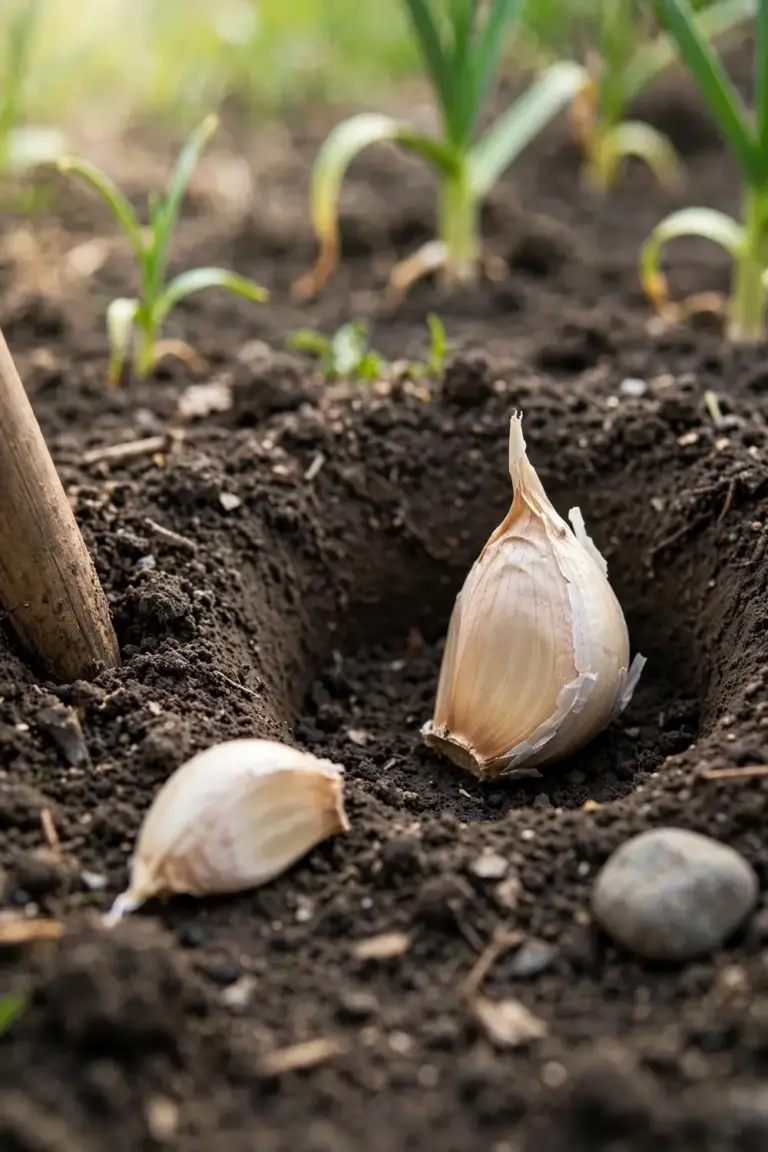
Set each clove up to 3 cm deep in home-garden soil, per Sustainable Gardening Australia, and space cloves 10 to 15 cm apart. Rows sit 30 to 40 cm apart, which leaves room for a hoe and for air to move between rows. In cold districts, plant deeper: Cornell puts cloves 5.1 to 7.6 cm deep with rows 30 to 61 cm apart. Deeper planting anchors cloves against frost heave, where freezing and thawing push shallow cloves out of the soil.
The University of Tennessee Extension puts the full cycle at 150 to 200 days from planting to harvest, which is why autumn planting matters. Roots grow through autumn and winter while the top sleeps. Spring growth then runs on an established root system.
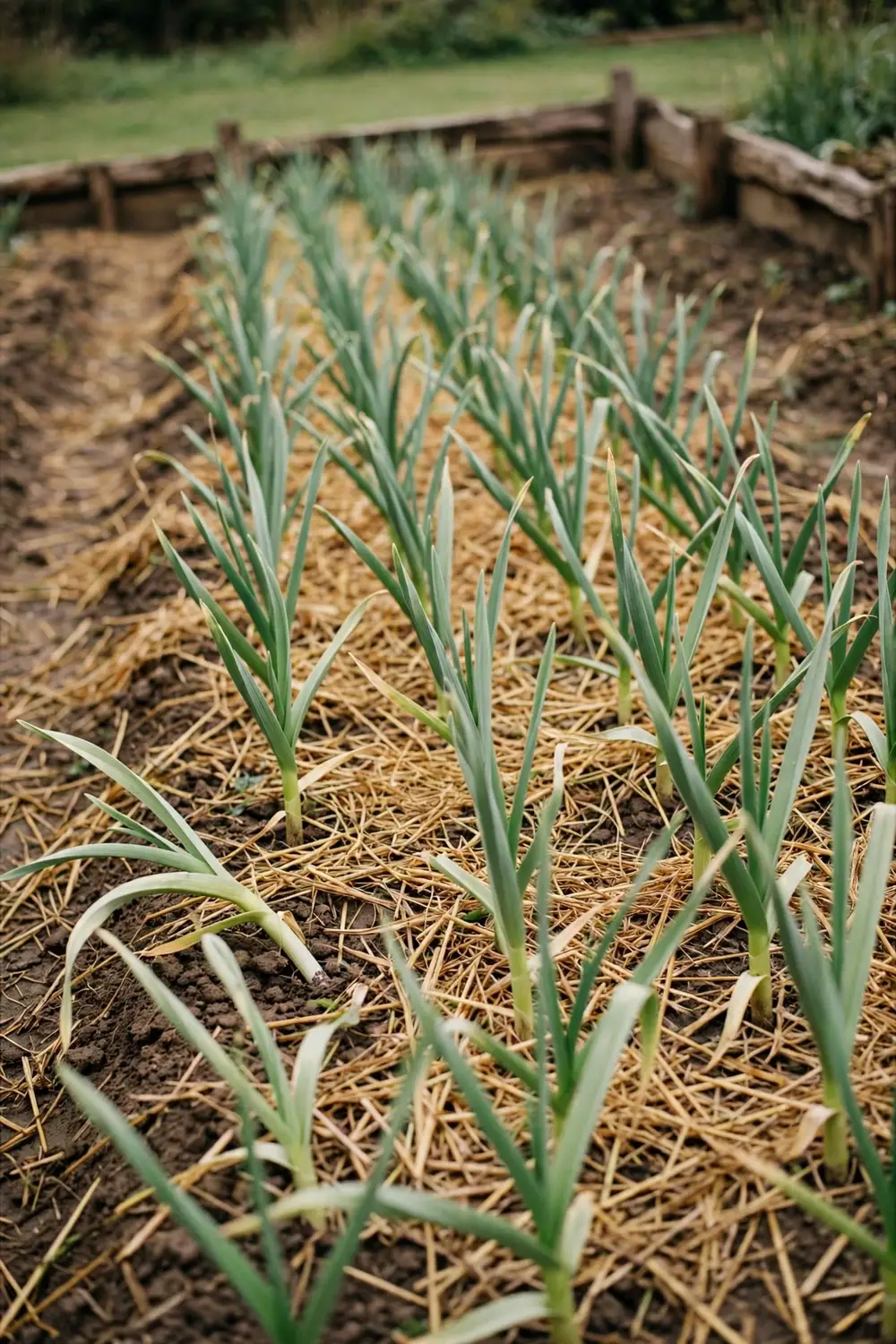
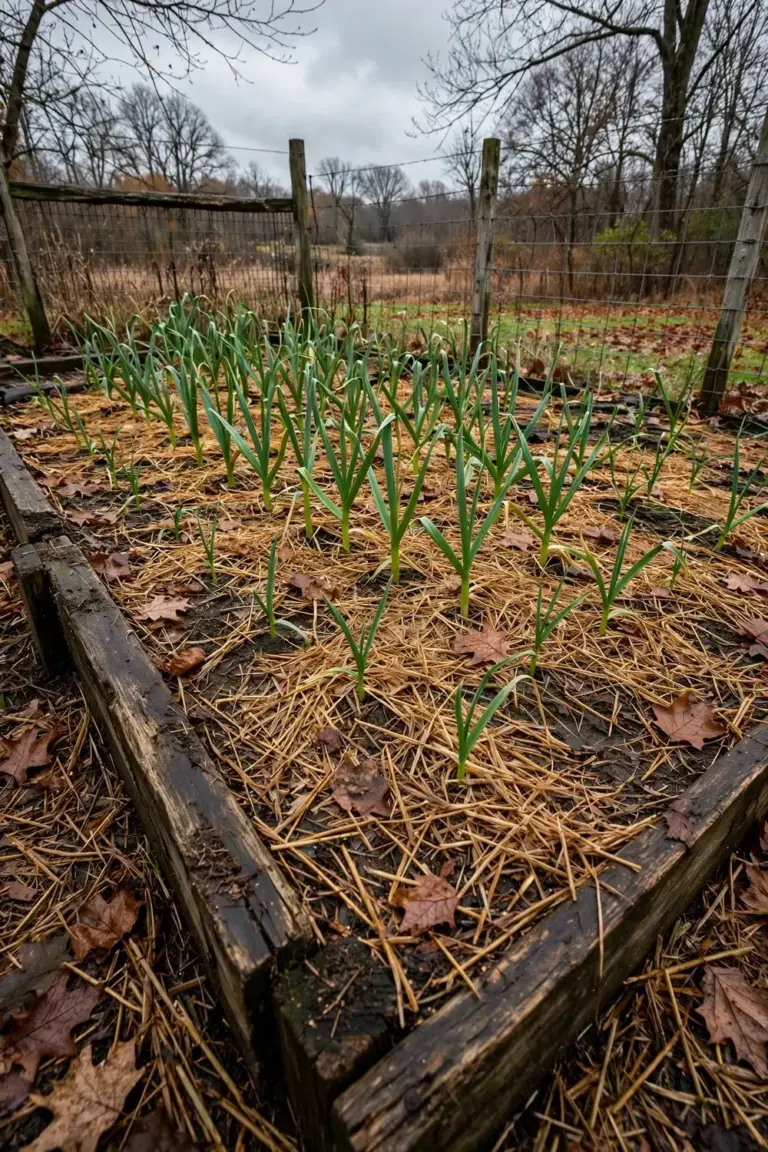
Water the bed in after planting. Mulch with straw once shoots appear, because mulch holds moisture, steadies soil temperature, and blocks weeds through winter. Garlic hates competition, and weeds steal water from shallow garlic roots all winter long.
7. Water Steady, Then Ease Off Before Harvest
Garlic wants steady moisture from planting to bulbing, then drier soil as harvest nears. Water when the top few centimetres of soil feel dry. A deep soak once a week beats a daily sprinkle, because deep water pulls roots down and shallow water keeps them at the surface.
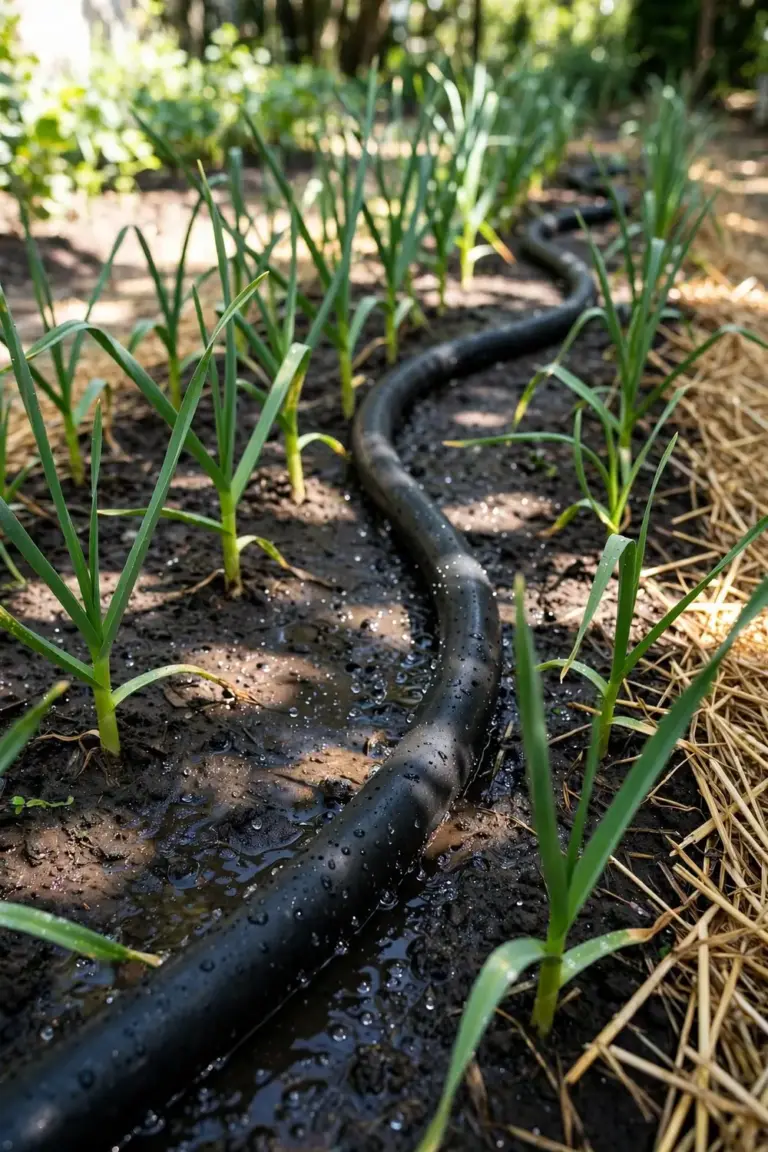
Victoria DPI advises plenty of moisture right up to a critical point 2 to 3 weeks before harvest, then easing off. Wet soil near harvest swells bulbs fast and then rots them. Dry soil near harvest firms the skins and hardens the bulb for storage.
Watch the leaves, not the calendar. Leaves that yellow from the bottom up in late spring signal bulbing, not thirst. Keep watering through bulbing. Stop watering once most leaves yellow and fall, and lift the bulbs on a dry day.
Overhead watering invites rust in humid weather. Water at the base with a soaker hose or a watering can at soil level. Dry leaves stay healthy. Wet leaves feed fungus.
Rain counts as watering. A wet winter in a temperate district can carry garlic for weeks with no hose at all. Check the soil before turning on the tap. A bed that already holds moisture from rain needs nothing. A bed that dries between fronts needs a soak. Garlic forgives a dry week far more easily than a wet month, because dry soil only slows growth while wet soil rots cloves.
8. Feed Early and Stop When Bulbs Swell
Garlic feeds early and fasts late. Mix compost through the bed before planting. Compost feeds the soil all season and holds moisture through dry spells. A bed rich in compost grows garlic with no extra feeding for the first months.
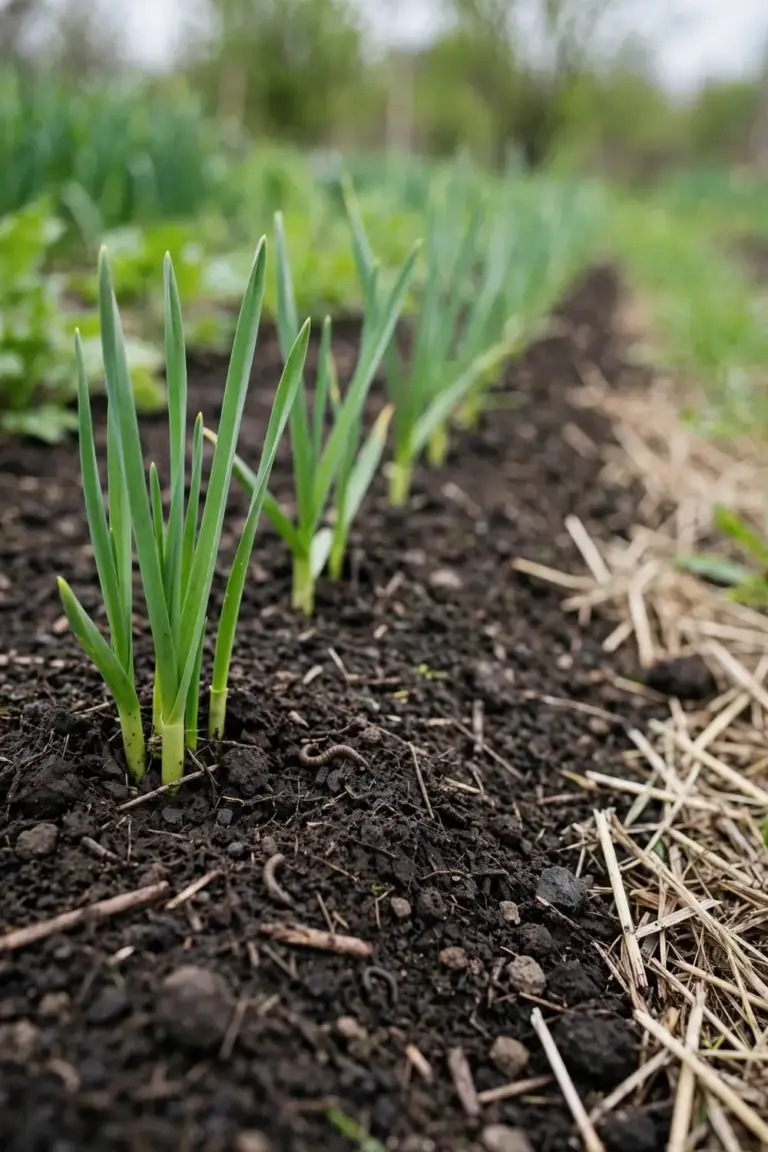
Feed once in spring, when shoots stand tall and growth speeds up. Best fertilizer for fall vegetables covers balanced organic options. Sustainable Gardening Australia suggests worm or seaweed tea once a month or so for garlic. Liquid feed reaches shallow roots fast and washes through just as fast, so little and often beats one heavy dose.
Stop feeding when bulbs start to swell. Late nitrogen grows soft bulbs with thick necks that never cure properly. Soft bulbs rot in storage. A bulb that grew on compost and one spring feed stores better than a bulb pushed hard with late nitrogen.
Yellow leaves in spring can mean hunger, but check water first. Garlic starved of water yellows the same way as garlic starved of nitrogen. A finger pushed into the soil tells the truth. Dry soil means water. Moist soil with yellow leaves means feed.
9. Snap Scapes Off Hardneck Garlic
Hardneck garlic grows a curly flower stalk called a scape in late spring. The scape curls once, then twice, then straightens and flowers. Snap it off while it still curls. The plant then sends its energy into the bulb instead of into flowers and seed.
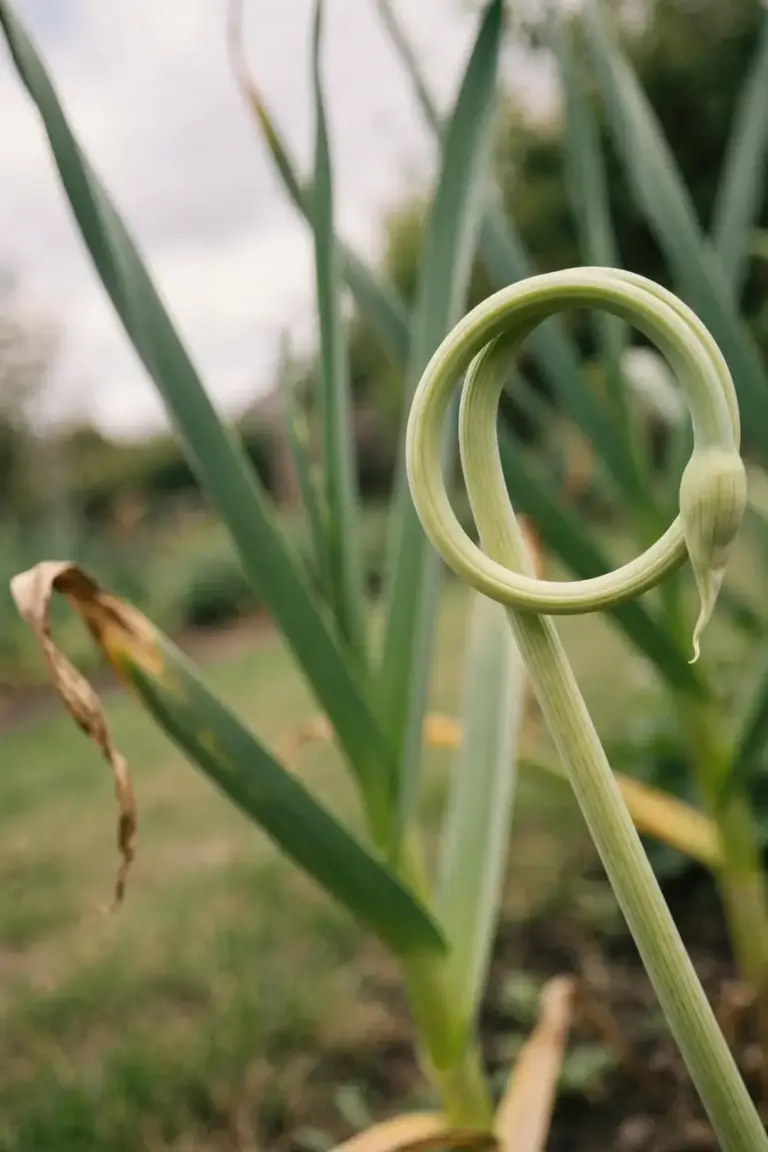
Snap scapes by hand. Hold the stem below the curl and bend until it breaks. The break heals fast and the plant barely notices. Ohio State Extension advises cutting scapes once they start to curl.
Scapes are edible. They taste like mild garlic with a green bite. Eat them fresh, grill them, or chop them into stir-fries. Leaving one or two scapes standing tells you when bulbs near harvest: straight scapes mean the season is ending.
Softneck garlic rarely grows scapes. A softneck plant that throws a scape is not sick. It is responding to stress or to a cold snap. Snap it off the same way and let the bulb finish.
10. Grow Garlic in Pots When Soil Stays Wet
Pots grow good garlic where garden soil stays wet. A pot drains fast, warms early, and moves under cover before heavy rain. Pots suit balconies, courtyards, and any garden where the bed floods in winter.
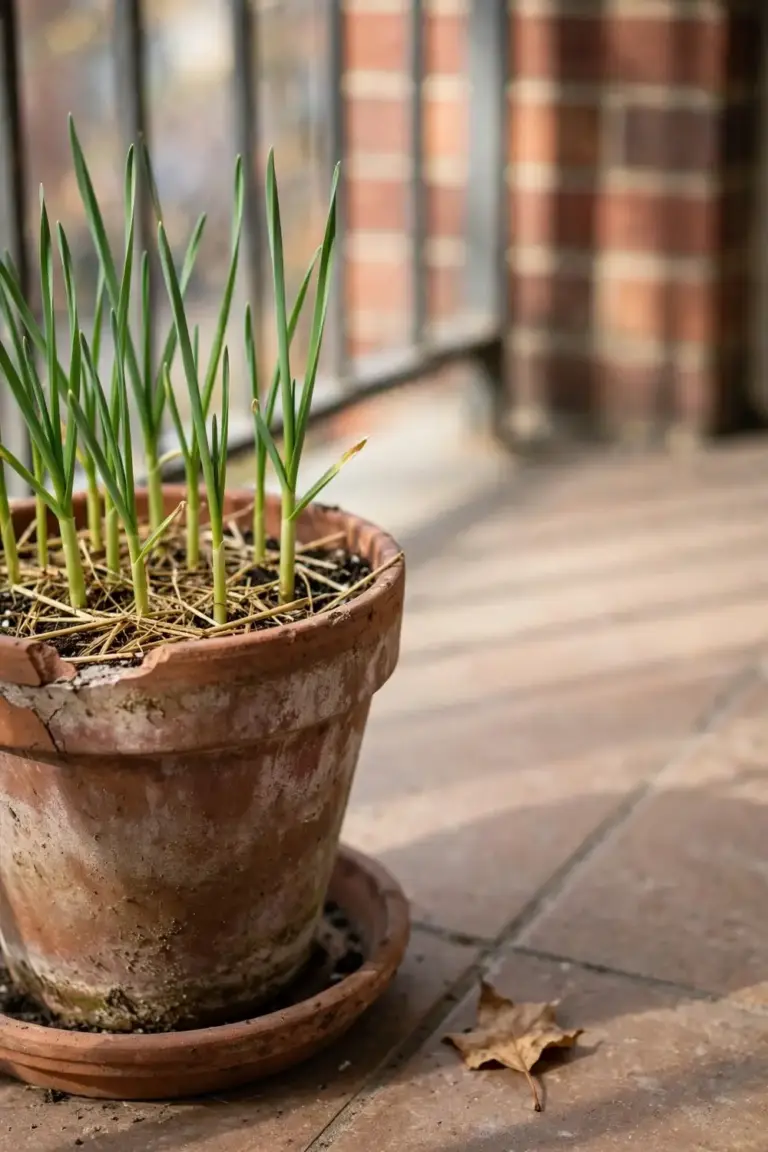
Use a pot at least 30 cm deep and 30 cm wide. Garlic roots run shallow, but the pot must hold enough soil to stay moist between waterings. One pot that size holds four to six cloves. Drill drainage holes if the pot lacks them. A pot with no drain grows rot, not garlic.
Fill the pot with a free-draining potting mix, not garden soil, because garden soil compacts in pots and drowns roots within weeks. Mix compost through the potting mix and top with straw mulch. Plant cloves at the same depth and spacing as bed garlic.
Pots dry faster than beds. Check the soil twice a week in spring and water when the top few centimetres feel dry. Pots also freeze faster than beds in cold districts, so move pots against a warm wall or into a sheltered corner for the coldest weeks. Small cloves mass-planted in one pot near the back door grow garlic greens: cut the leaves for fresh garlic flavour while the main crop still grows, per Gardening Australia.
11. Watch for Rust, White Rot, and Thrips
Garlic carries few pests, and most trouble comes from wet leaves or infected soil. Check plants weekly from spring onward. Early catches save the crop. Late catches only limit the damage.
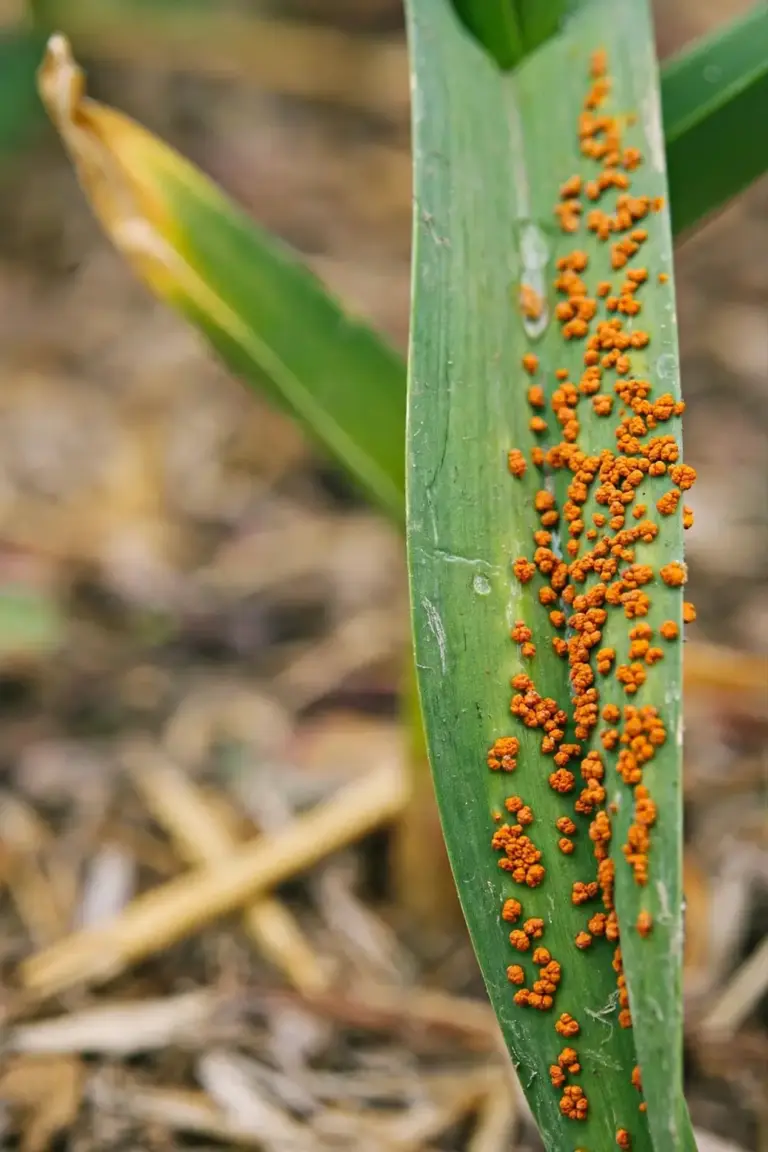
Rust shows as orange pustules along the leaves in wet weather. Rust weakens the plant but rarely kills the bulb. Improve airflow by widening spacing next season, and harvest early if rust spreads fast. Aussie Green Thumb notes that leek rust usually appears in very wet weather and advises harvesting immediately to stop spread to other plants.
White rot is the serious one. White rot shows as yellowing leaves, stunted growth, and a white fluffy fungus at the base of the bulb. The fungus spreads through soil and attacks every allium, including shallots and leeks. Aussie Green Thumb notes there is no control once white rot appears, and recommends removing and burning affected plants. The resting structures persist in soil for 30 or more years, per California garlic and onion research, so never replant alliums in an infected bed. Grow clean stock in pots with fresh potting mix instead.
Thrips rasp the leaves and leave silvery streaks. Thrips rarely ruin a garlic crop, but heavy numbers slow growth noticeably. A strong jet of water knocks thrips off leaves. Remove the worst-affected leaves and bin them, since composting spreads the problem.
Never compost diseased garlic material. Compost heat rarely kills white rot, and infected compost spreads the fungus to clean beds.
12. Harvest When Leaves Yellow and Fall
Harvest garlic when the leaves tell you, not when the calendar says. Lift bulbs once about half the leaves have yellowed and browned, per Cornell. Five or six upper leaves should still stand green. Green tops mean the skins still wrap the bulb. Fully dead tops mean the skins already split underground.
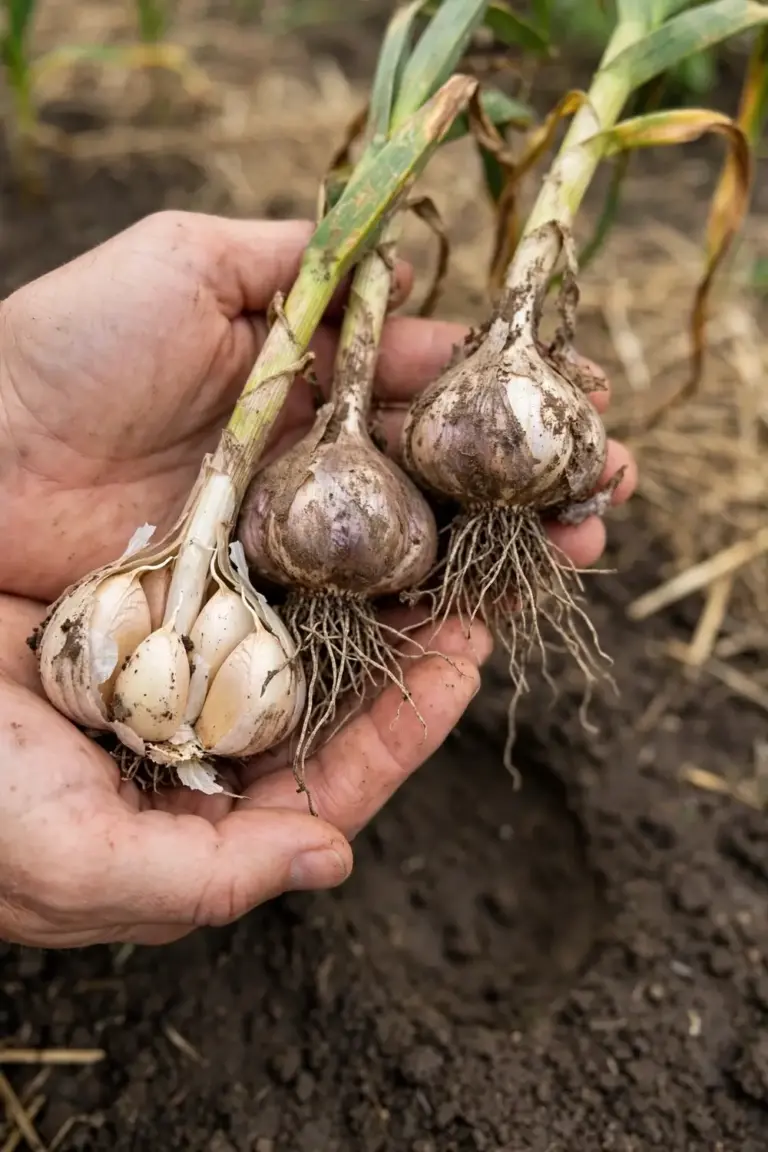
Test one bulb before lifting the bed. Loosen the soil with a fork and pull one plant to inspect it. A ready bulb fills its skins with firm, well-defined cloves. An early bulb shows small cloves and thick skins. A late bulb shows split skins and loose cloves that never store.
Lift on a dry day. Loosen the soil with a fork first, then pull by hand. Pulling hard on the stem tears the bulb from its roots and bruises the skins. Bruised bulbs rot in storage. Lay lifted bulbs on the soil for an afternoon to dry the outer skins, then move them under cover before dew falls.
Harvest too early and cloves stay small and store poorly. Harvest too late and cloves burst from their skins and invite mould. The window runs about two weeks. Check daily once the first leaves yellow.
13. Cure Garlic Dry, Airy, and Out of Sun
Curing turns fresh garlic into keeping garlic. Fresh bulbs hold water in their skins and necks, and that water feeds rot in storage. Curing dries the skins to paper and seals the neck shut. Uncured garlic rots within weeks. Cured garlic keeps for months.
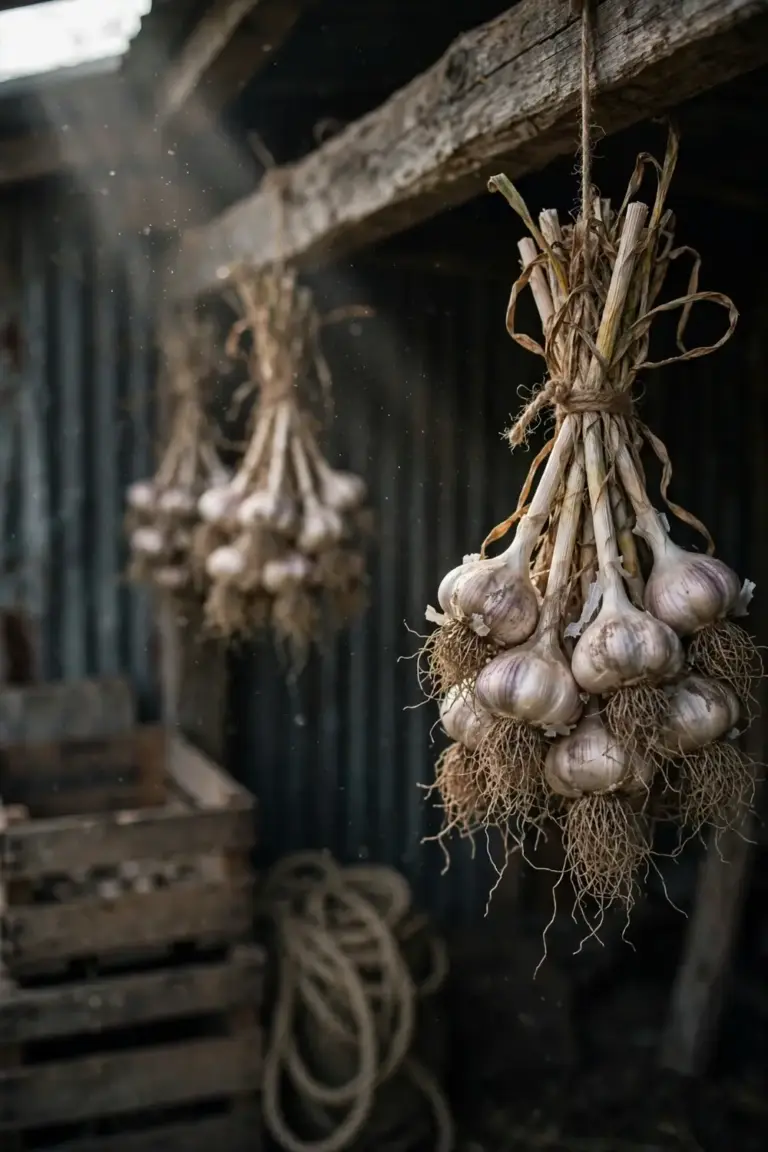
Hang bulbs in bunches or lay them on racks in a shaded, airy spot. Air must move around every bulb. A covered porch, a carport, or an open shed all work. Keep bulbs out of direct sun. Sun scorches the skins and cooks the cloves inside. Curing takes two to four weeks, depending on airflow: Ohio State Extension advises about a month, while Gardening Australia hangs bulbs in a shady dry spot for a week or two.
Test a bulb before storing. The neck should feel dry and tight, and the outer skins should rustle like paper. Cut one bulb open. Firm cloves with dry skins mean the batch is ready. Soft necks mean another week of air.
Store cured garlic cool, dry, and dark with air moving around it. A mesh bag in a pantry beats a sealed container in a cupboard, because trapped moisture softens skins and wakes mould. Keep bulbs away from onions in storage. Onions release moisture as they age, and damp garlic rots beside them. Eat hardneck first, since softneck keeps longer. Check the bag monthly and pull any bulb that softens before it spreads.
Clean cured bulbs gently, rubbing off loose dirt and the dirtiest outer skin. Leave two or three wrapper skins on each bulb, since those skins protect the cloves in storage. Trim roots short and cut stems to a hand length. Braiding works for softneck only, because hardneck stems stay stiff and snap. Braid softneck stems together and hang the braid in a cool, dry room.
14. Fix Thin Bulbs, Early Sprouting, and Rotting Cloves
Thin bulbs trace back to small seed, late planting, or shade. Plant the largest cloves next season. Plant in autumn, not spring. Move the bed into full sun. One fix rarely rescues a thin crop, but all three together change the next harvest.
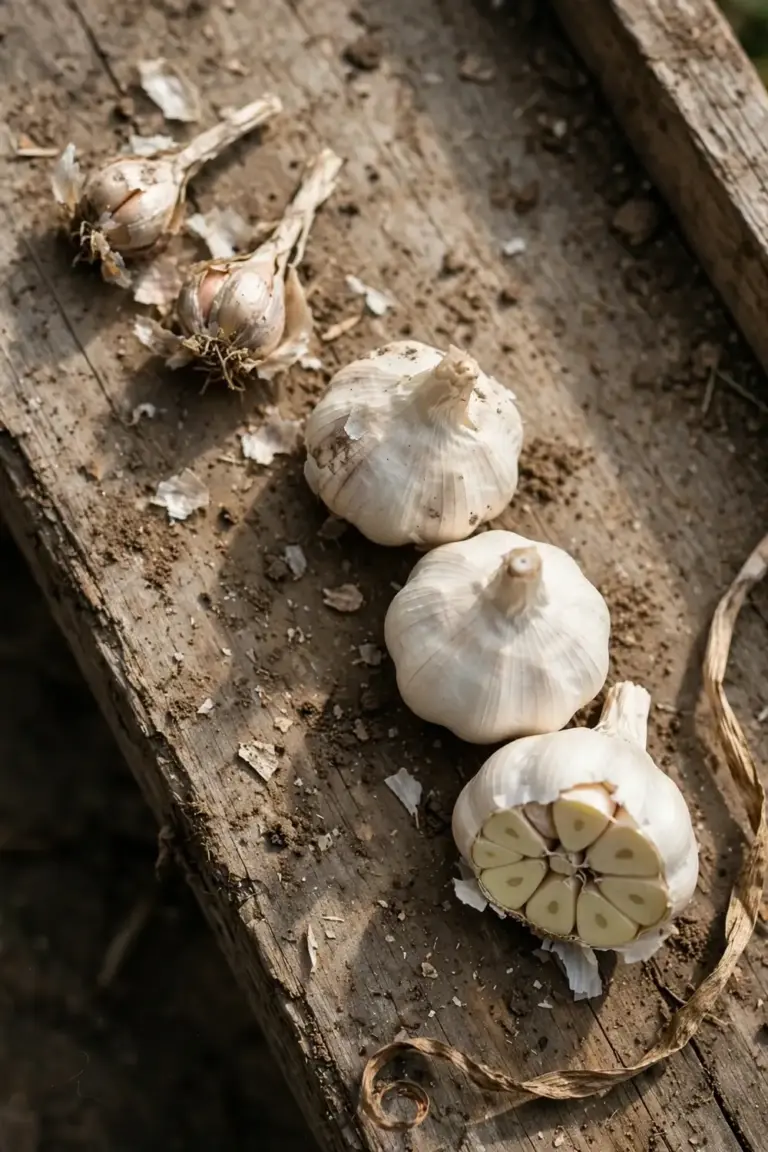
Early sprouting in storage means the bulb sat warm and damp. Store garlic cool, dry, and dark with air moving around it. A mesh bag in a pantry beats a sealed container in a cupboard. Sprouted cloves still cook fine, so eat them first and save firm bulbs for planting.
Rotting cloves in the ground mean wet soil or infected stock. Improve drainage before the next planting, or switch to raised beds or pots. Buy certified seed garlic and never replant cloves from a bed that showed white rot. Rotation and clean stock beat every cure, because no cure exists for white rot once it takes hold.
Green shoots in winter are normal. Garlic roots in autumn and shoots through winter in mild districts. Frost may nip the tips, but the bulb below keeps growing. Leave winter shoots alone. The plant knows its season.
Split or doubled bulbs usually mean a late harvest or a double-planted clove. Two cloves planted in one hole grow into one tangled bulb with a seam down the middle. Separate cloves fully before planting, and lift on time. A split bulb still cooks fine, so eat it fresh instead of storing it.
15. Frequently Asked Questions About Growing Garlic
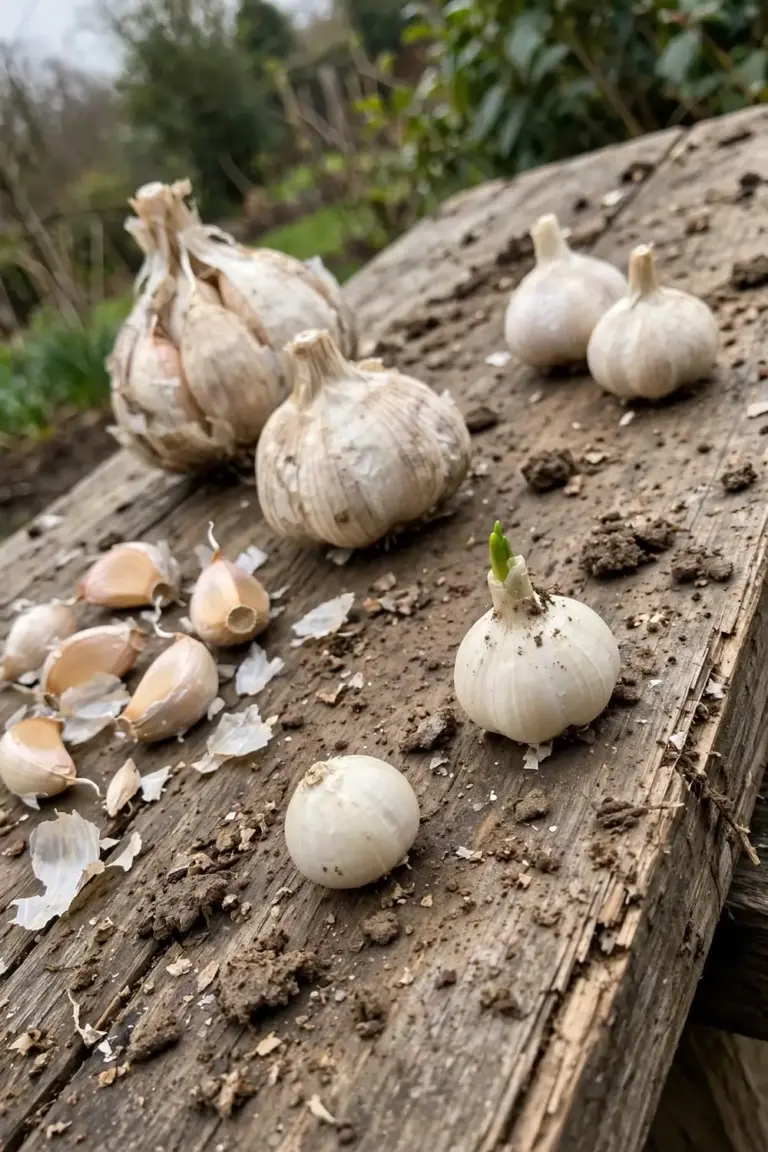
You can, but the odds run against you. Supermarket garlic is often imported, treated to stop sprouting, and may carry virus. Local certified seed garlic suits your climate and arrives disease-free. One bulb of seed garlic breaks into six to ten cloves, and each clove returns a full bulb. Spend the extra money once and save your own seed after that.
Garlic needs a cold period to divide into cloves. Cold winters deliver it in the ground. Warm districts fake it by chilling cloves in the fridge for at least a month before planting. Without enough cold, cloves grow into single round bulbs with no divisions. The rounds still taste like garlic, but they are not the bulb you planted for.
Garlic takes 150 to 200 days from planting to harvest in Australia. Autumn planting gives roots months to establish before winter, then bulbs swell through spring and finish in early summer. Tropical growers plant later and harvest earlier on a shorter season. Check the leaves, not the calendar: half the leaves yellowed and browned means lift time.
One big clove means the bulb never divided, which points to too little cold. Warm winters, missing fridge chilling, or spring planting all cause it. Hardneck garlic in a warm district fails this way most often. Next season, chill cloves in the fridge for at least a month before planting, or switch to softneck varieties that divide with less cold.
Pots grow good garlic on a balcony with at least six hours of direct sun. Use a pot 30 cm deep and wide, free-draining potting mix, and four to six cloves per pot. Pots dry faster than beds, so check soil twice a week in spring. Move pots against a warm wall for the coldest weeks. Harvest and cure pot garlic exactly like bed garlic.
16. Start With One Bed of Local Seed Garlic
Garlic asks for one autumn afternoon and six months of patience. Buy local seed garlic, pick the sunniest free-draining bed, and plant fat cloves pointy end up. Water steady, feed once in spring, and snap the scapes. Lift when half the leaves yellow, cure dry and airy, and store cool and dark. Next year’s seed comes from the largest bulbs of this year’s harvest.