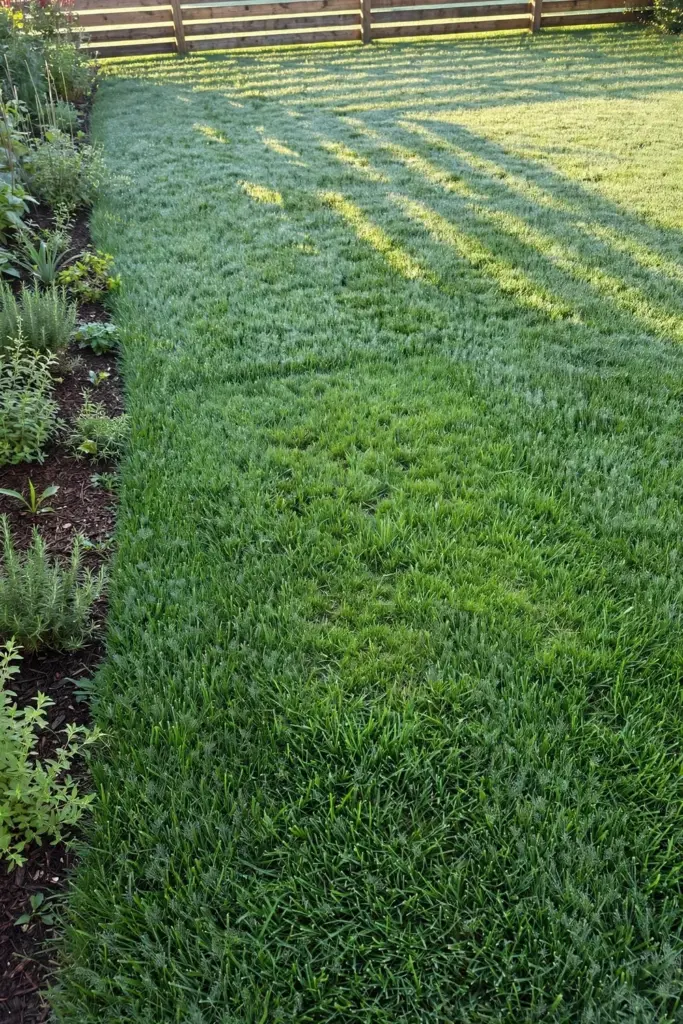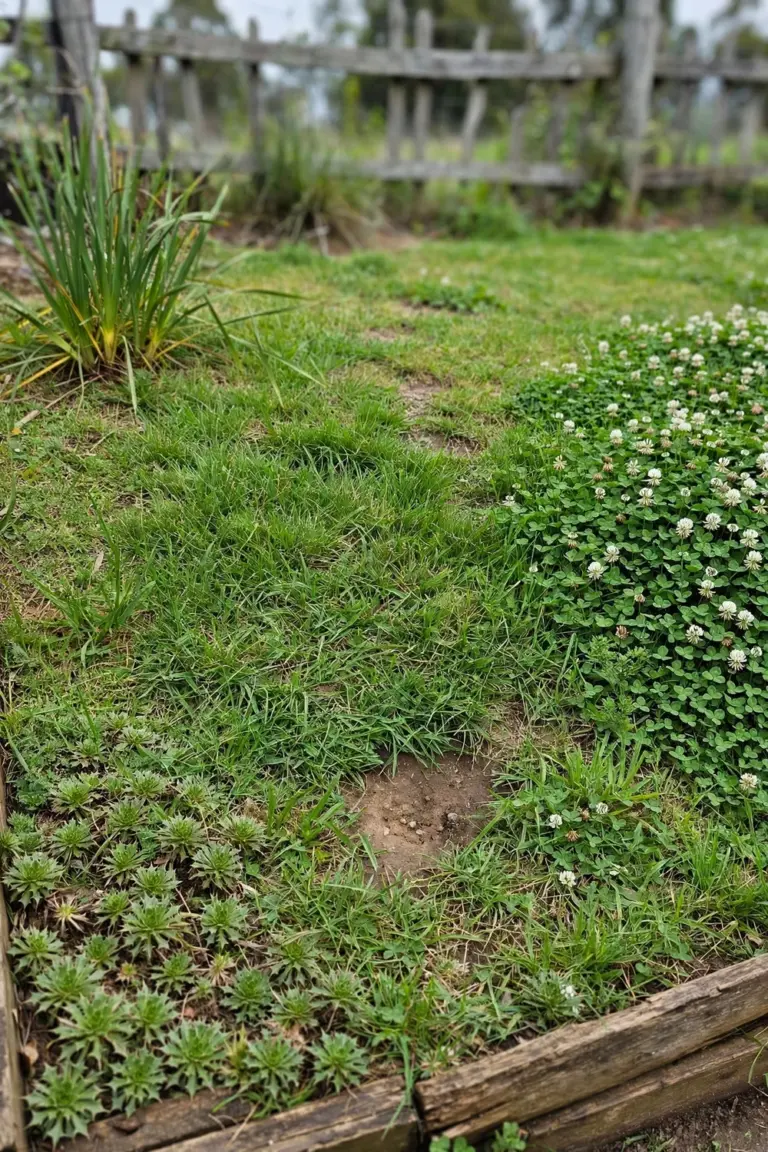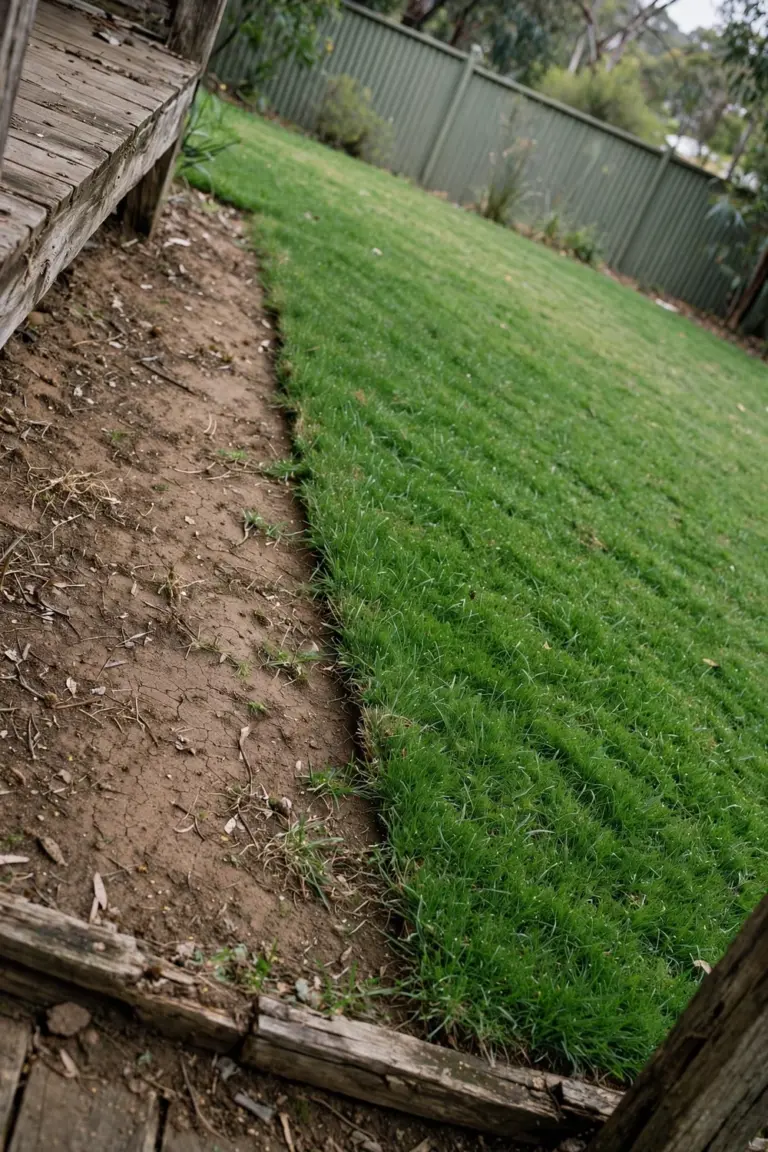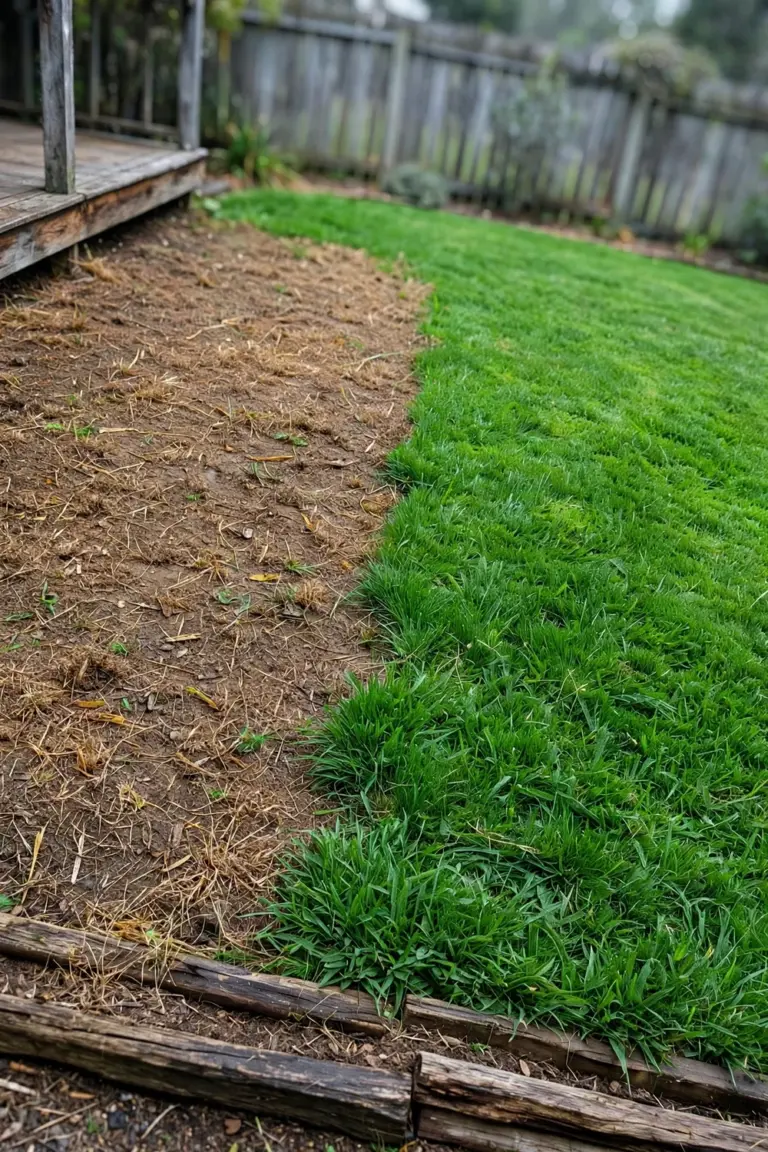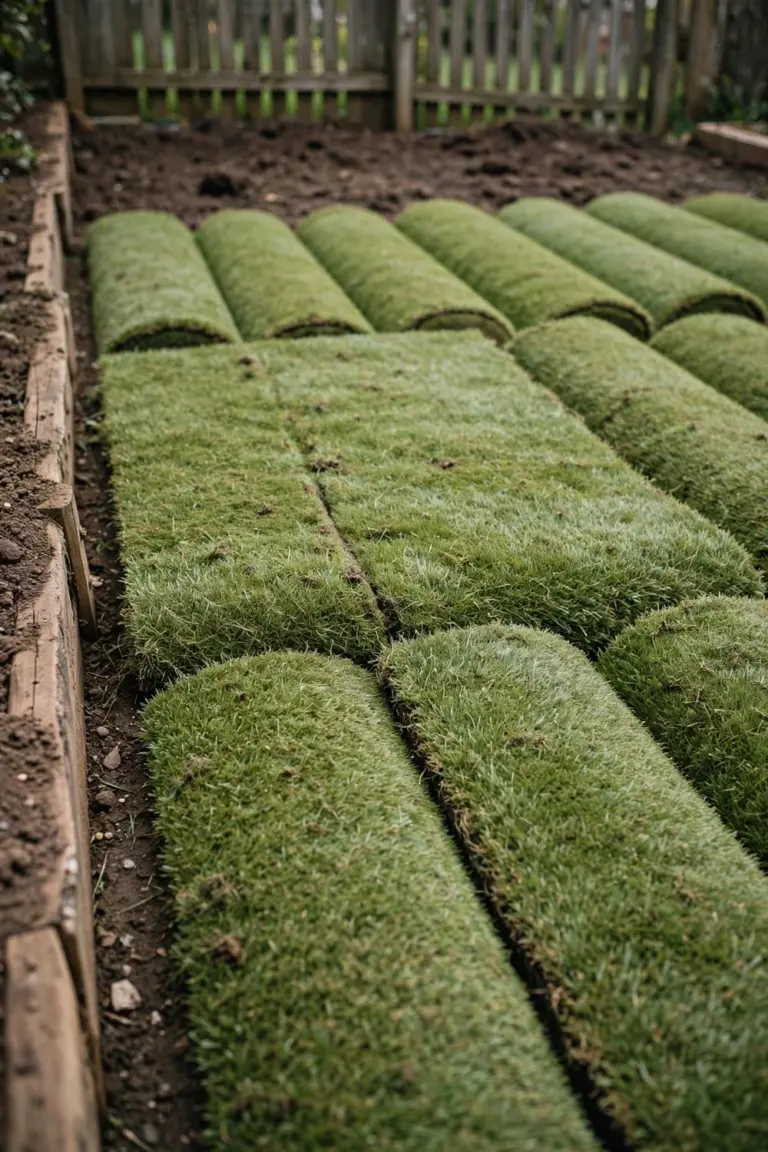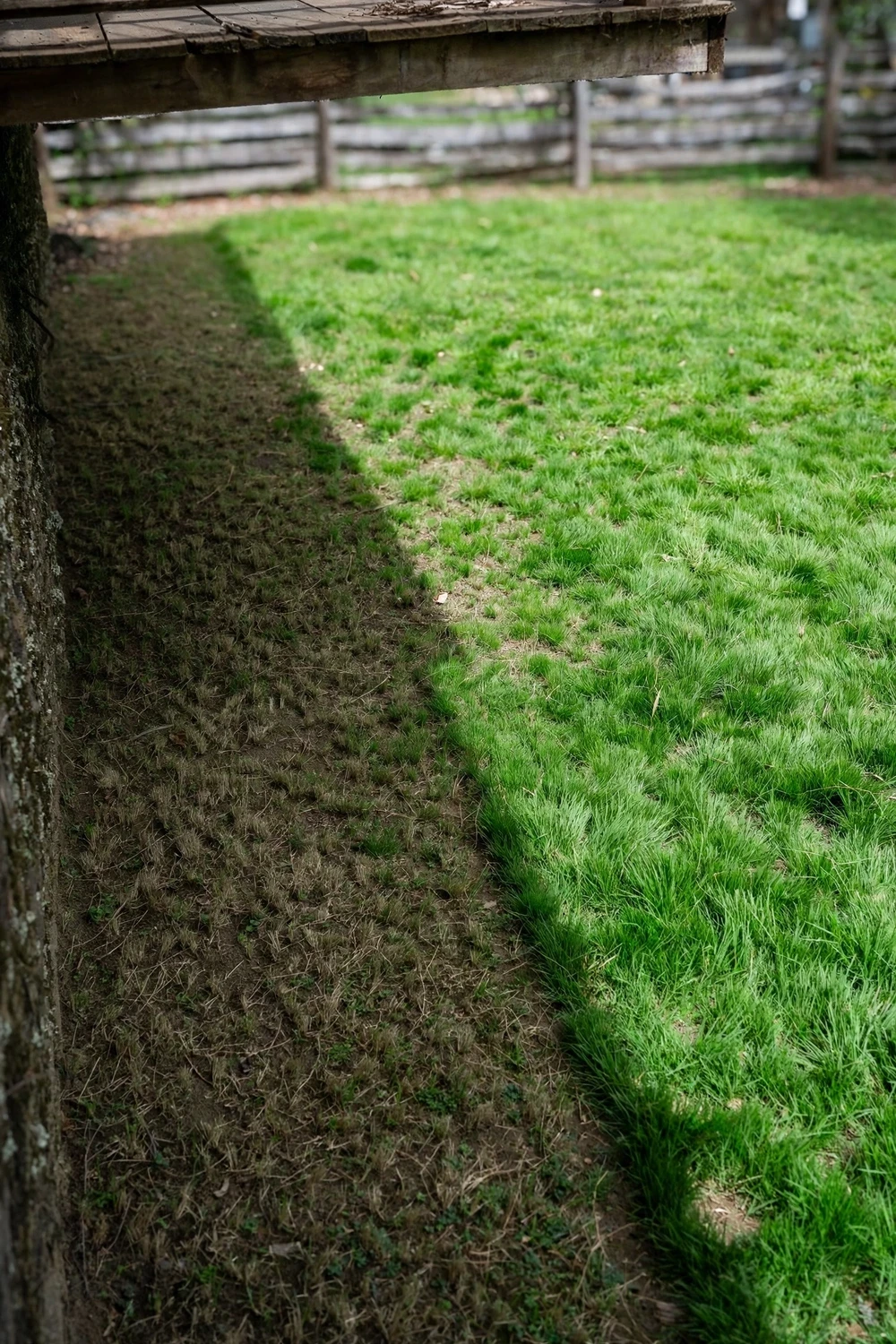

Count 3 to 4 hours of direct sun on the patch before you repair anything. A Buffalo patch that receives that much sun can recover with more light, higher mowing, and runners pegged into the bare soil. A patch that receives less than 2 hours of direct sun will not hold grass no matter how much you feed it, and the honest fix is a different surface. I have learned that measuring the sun before replanting saves more runners than any fertilizer ever will.
Shade starves a Buffalo lawn of light. Leaves convert sunlight into chemical energy through photosynthesis. Less light means slower growth, thinner blades, and a canopy that thins until soil shows through. Buffalo spreads by stolons, above-ground runners that root at the nodes, so a shaded patch fills slowly even after the cause is fixed. Australian Buffalo is Stenotaphrum secundatum, the same species that United States extension services call St. Augustinegrass, which is why their shade research applies directly to an Australian Buffalo lawn.
This page shows how to repair shaded patches in Buffalo lawns in 9 moves, from confirming shade is the cause to keeping the repaired patch alive through its first summer. Work them in order. Light comes first. Repair comes last. Gather these tools before you start: a tape measure for the sun check, a screwdriver for the soil check, a rake for leaves and topdressing, a mower with a sharp blade, landscape pins or bent wire for pegging runners, and secateurs for canopy work. Each move below names the tool it needs. Nothing on the list is special order.
1. Confirm Shade Is the Cause Before You Repair
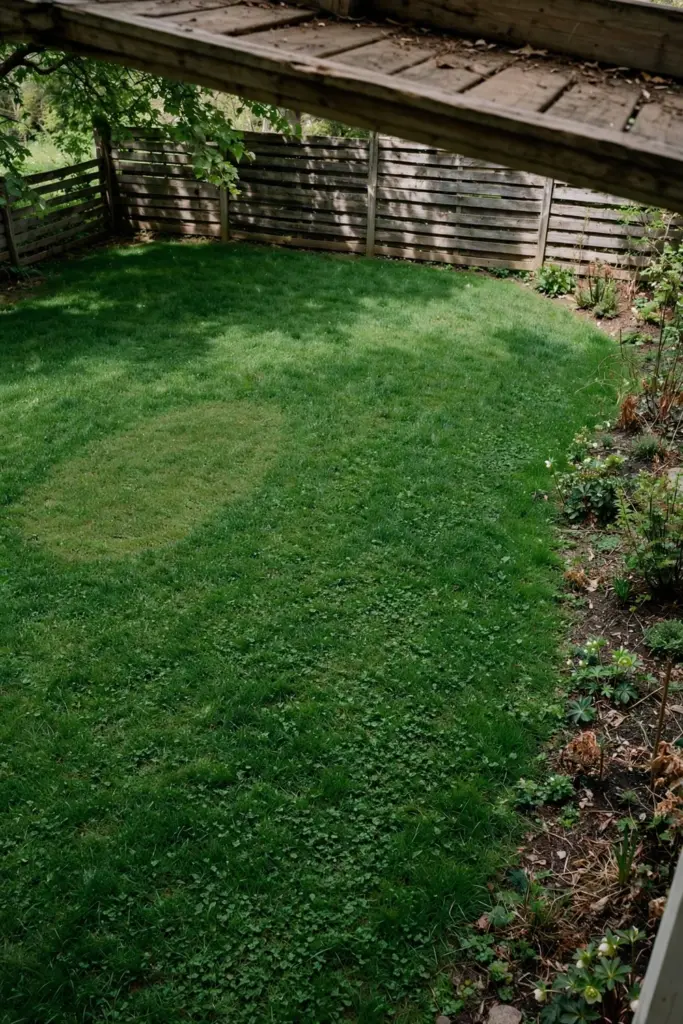
Shade is the cause when the thin patch sits under a tree, beside a tall fence, or on the shadow side of the house, and the grass in full sun nearby grows thick. Walk the lawn at mid-morning, midday, and mid-afternoon. Shade patches stay in shadow at two of those three checks while healthy turf sits in sun. The patch edge follows the shadow line. A patch that crosses sun and shade equally points to a different cause, such as compaction, a leaking pipe, or grub damage, and shade repair will not fix it.
Moss on the patch is a second clue. Moss grows where soil stays damp and light stays low, and shade delivers both: it slows evaporation, so shaded soil holds moisture longer than sunny soil. The same damp shade that starves Buffalo suits moss. Moss is a symptom of too much moisture plus too little sun. Kill the moss without fixing the light and the moss returns.
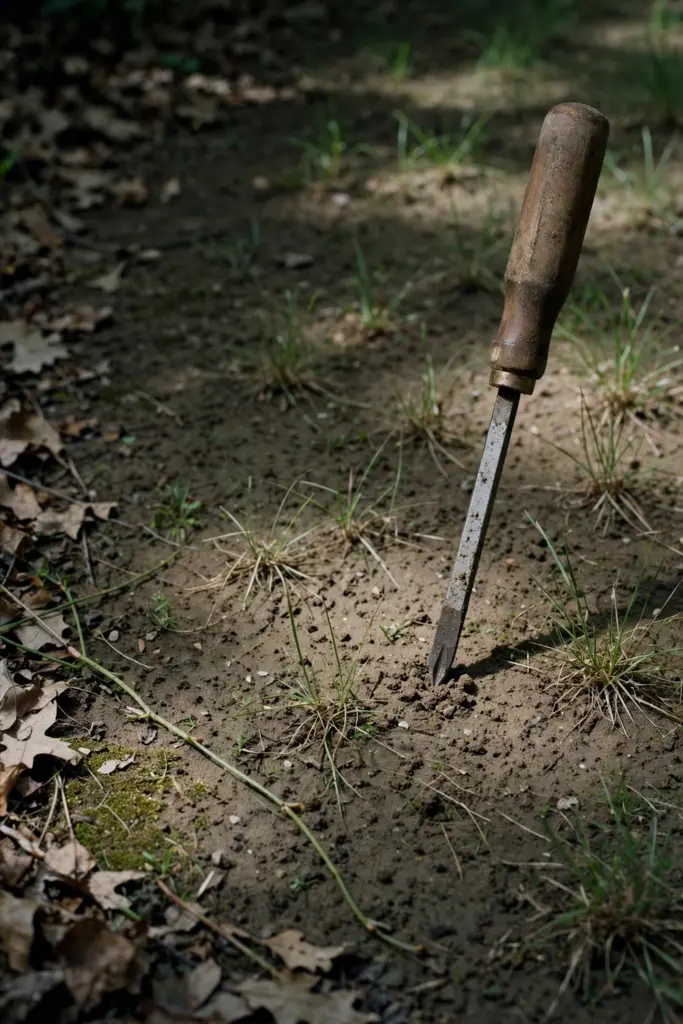
Check the soil before you blame the light alone, and push a screwdriver into the patch: in moist soil it should slide in 10 to 15 cm without force. A screwdriver that stops at 3 cm means compaction is part of the problem, and the patch needs aeration along with shade work. Soggy soil that smells sour means drainage is part of the problem. Shade repair works when shade is the main cause. It fails when a drainage or compaction problem underneath keeps the roots wet and airless.
2. Measure the Shade in Hours, Not Guesses
Count the hours of direct sun that fall on the patch. Stand at the patch on a clear day and note each hour when full sun hits it. Dappled light through leaves counts as partial sun, not direct sun. A phone photo taken from the patch at 9 am, noon, and 3 pm gives a record you can compare across seasons. The sun sits lower in winter, so a patch that receives 4 hours of sun in January can receive 2 hours in July. Measure in the season when the shade is deepest, because that season decides whether grass can hold.
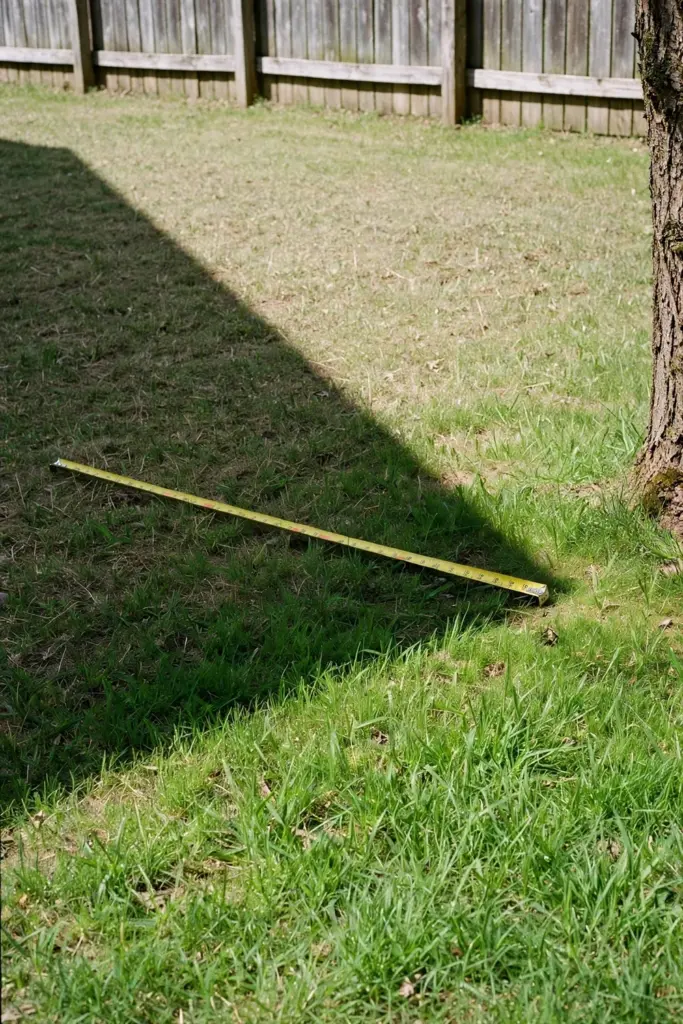
Use the table below to read your number. Treat the thresholds as source ranges, not one false-precise cutoff, because cultivar, soil, and season shift the line.
| Shade Level | Direct Sun per Day | What Works |
|---|---|---|
| Light shade | 4 to 6 hours | Buffalo recovers with higher mowing and normal repair |
| Moderate shade | 3 to 4 hours | Buffalo survives with canopy work, shade care, and runner repair |
| Heavy shade | 2 to 3 hours | Only the most shade-tolerant Buffalo types cope; alternatives deserve a hard look |
| Deep shade | Less than 2 hours | Grass will not hold; choose a different surface |
Most turfgrasses need 4 to 6 hours of full sunlight to grow properly, according to LSU AgCenter’s shade and warm-season turfgrass guide. Buffalo sits at the tolerant end of that range. The middle rows draw on Australian sources: Lawn Solutions for Buffalo’s floor, a cultivar comparison for Sapphire, and Lawn Solutions again for Sir Walter.
Note the type of shade as well as the hours. Tree shade changes through the day and drops leaves in winter, so light reaches the patch in some months. Fence shade and house shade stay fixed all year, and no amount of pruning moves them. A patch under a deciduous tree has a better future than a patch in the permanent shadow of a two-story wall. Record both facts, hours and shade type, before you spend money on runners or turf.
3. Open the Light by Lifting the Canopy
Prune the tree or shrub that casts the shade. Cut the lowest branches to lift the canopy, so morning and late-afternoon sun reaches under it. Remove crossing branches inside the canopy, because a thinner canopy throws a lighter shadow. Cut one branch at a time and step back to watch the shadow move. A few well-placed cuts change the light on the patch more than a heavy lopping that shocks the tree.
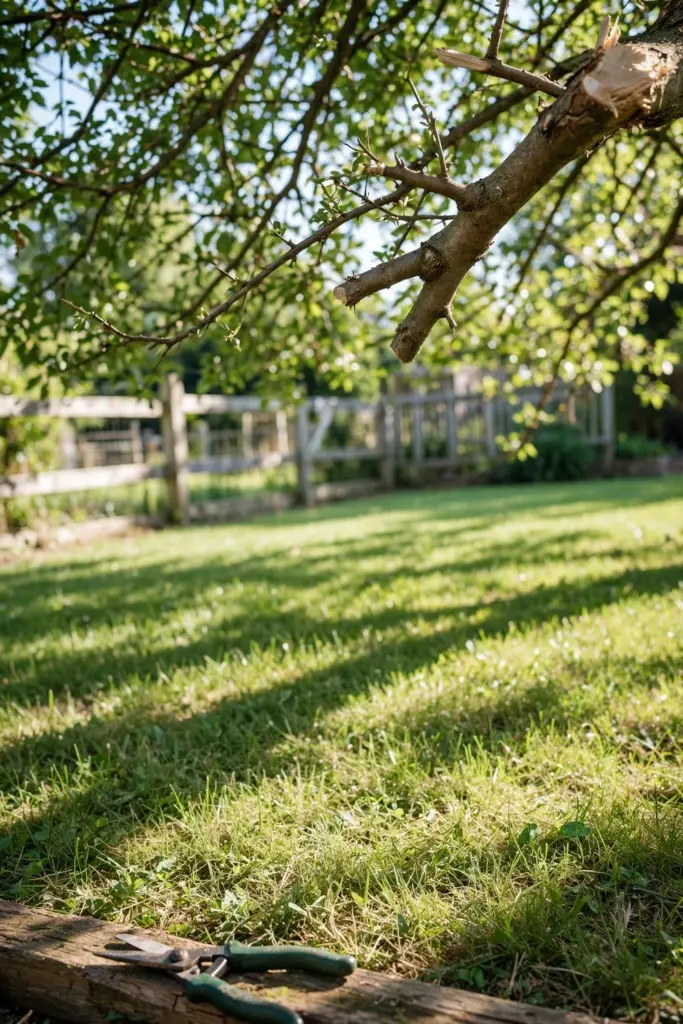
Trees may be pruned to allow greater light penetration, notes LSU AgCenter’s shade guide. The same guide warns that pruning can also stimulate denser tree growth over time, which deepens the shade again. Prune for light every year or two, not once. A tree that is never pruned closes the gap you opened.
Replace a solid fence with a trellis or slatted screen where the fence is the shade source. A solid fence throws a hard shadow all day. A trellis lets broken light through, and a climbing plant on it softens the shade further. This fix suits a fence that you own and can change. It does not suit a neighbor’s wall or a house shadow, and those patches need the alternatives in move 8 instead.
Clean the canopy, not just the branches. Fallen leaves that mat over a shaded patch block the little light that reaches it. Rake leaves off the patch weekly through autumn. A leaf mat also holds moisture against the crowns, which feeds moss and fungus in shade. The patch gets more light and less disease from a clean surface.
Recheck the sun after pruning. The same 9 am, noon, and 3 pm photos tell you whether the canopy work bought enough light. A patch that gained an hour of direct sun moves up one row in the table, and the repair plan changes with it. A patch that gained nothing needs a bigger cut, a different branch, or the alternatives in move 8. Do not guess the result of the pruning. Measure it.
4. Raise the Mower and Cut Less Often in Shade
Set the mower one notch higher over the shaded patch than over the sunny lawn. More leaf means more surface to catch light. A shaded Buffalo plant with a short leaf starves, because it has little blade left to photosynthesize. A shaded Buffalo plant with a taller leaf harvests the light it gets. Raise the whole lawn if the shade covers most of it. Raise only the shaded zone if the rest of the lawn grows in full sun.
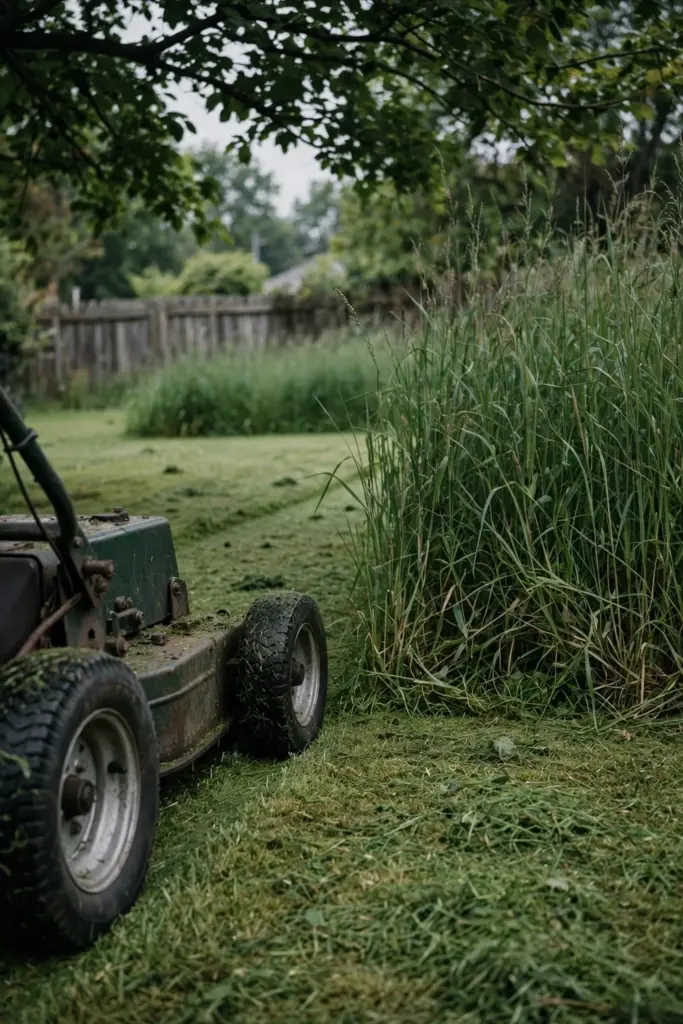
In sunny areas, St. Augustinegrass can be mowed at a height of 2.5 to 3 inches, and in shade, raising mower blades to 3 to 3.5 inches leaves the grass with more surface area to intercept light, and no mowing should remove more than one-third of the leaf blade at once, according to LSU AgCenter’s St. Augustinegrass care guide. Converted to metric, that is 6.4 to 7.6 cm in sun and 7.6 to 8.9 cm in shade. Set the mower to 7.6 to 8.9 cm over the shaded patch. Measure the cut with a ruler after the first mow, because mower dials lie.
A shaded plant that loses two-thirds of its leaf in one cut has no energy reserve left to regrow, because shade already limits its photosynthesis. Mow the shaded patch more often, in smaller cuts, through the growing season. Skip the mow when the soil is saturated, because a mower ruts wet soil and compacts the patch. Wait for the surface to dry, then cut.
Sharp blades matter more in shade than in sun. A blunt blade tears the leaf and leaves a ragged edge that dries brown and invites disease. A sharp blade leaves a clean cut that heals fast. Sharpen or swap the blade at the start of the repair, and check it again halfway through the season. The 15 essential lawnmower tips cover blade care and mower setup in detail.
5. Rest the Patch and Keep Traffic Off It
Keep feet, pets, and wheels off the shaded patch while it recovers. Traffic compacts soil, and compacted soil holds less air and water at the root zone. A shaded plant grows slowly, so it replaces crushed leaves slowly. One shortcut across a recovering patch can undo a month of growth. Lay a plank or a flat paver as a temporary path if the patch sits on a route people must use.
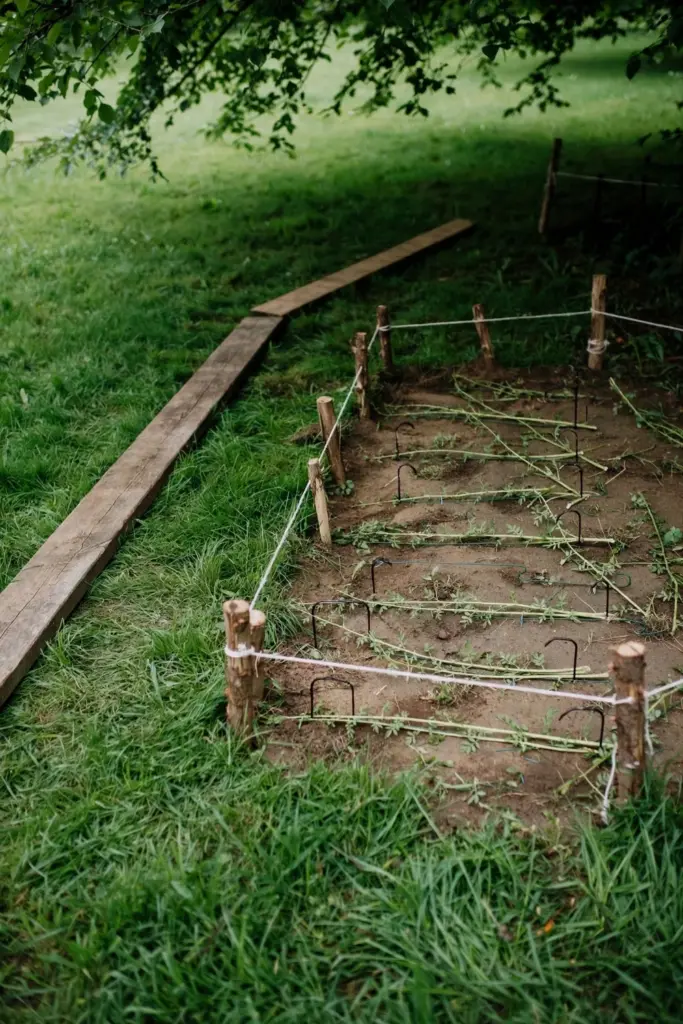
LSU AgCenter’s shade guide advises limiting traffic across shaded turf to prevent stress. The same guide warns against mowing when the soil is saturated, because a mower ruts soil and damages tree roots. Apply the same rule to foot traffic. Wet shade soil compacts under a single footstep. Dry shade soil bounces back.
Mark the patch so the household respects it. A few short stakes with string around the repair zone cost little and stop most traffic. Remove the string once runners knit across the patch and the canopy closes. A patch that nobody walks on recovers visibly faster than an identical patch on a shortcut, because the runners root undisturbed and the soil stays loose.
6. Feed Lightly and Water Less in Shade
Feed shaded Buffalo at half the rate you feed sunny Buffalo. Shade limits photosynthesis, so the plant cannot use a full feed. Extra nitrogen pushes soft vertical growth that exhausts stored energy and invites pests, because the plant grows tall without growing dense. A light feed keeps the color without forcing growth the light cannot support.
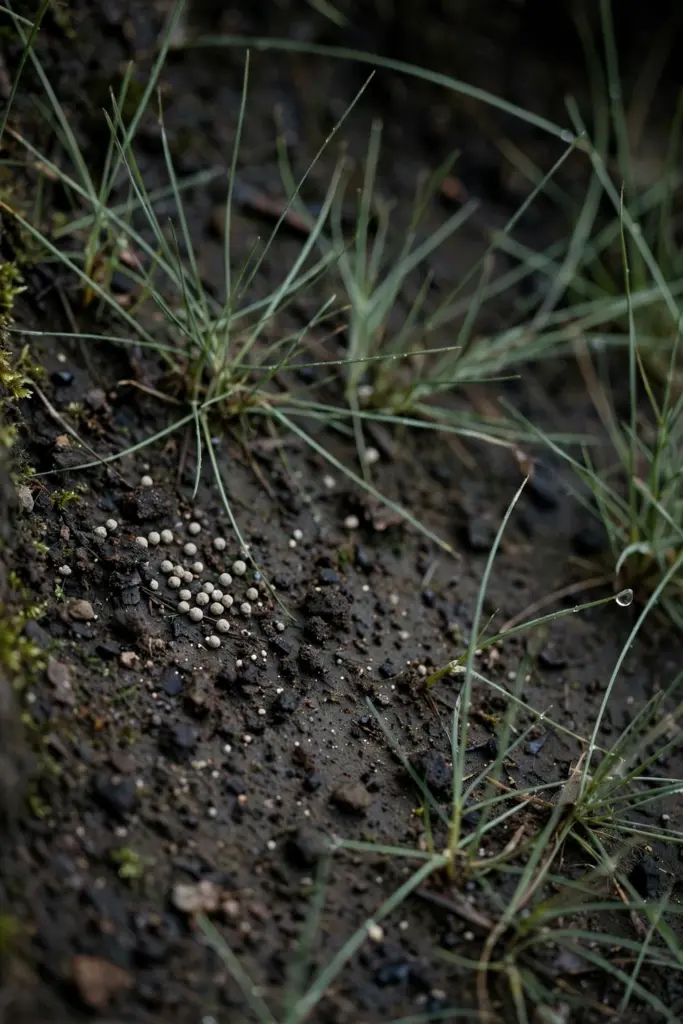
Turfgrass growing in shaded areas should be fertilized at lower rates of nitrogen and less frequently, with nitrogen at rates up to 0.5 pounds per 1,000 square feet per application, according to LSU AgCenter’s shade and warm-season turfgrass guide. Converted to metric, that is about 2.4 grams of nitrogen per square meter per application. Fertilize only when the turf is actively growing. A feed applied in winter dormancy sits unused and washes away with the next rain. The best time to fertilize a lawn in spring sets the seasonal window for the first feed of the year.
Water shaded soil less often than sunny soil. Shade slows evaporation, so shaded soil stays moist longer after rain or irrigation. Water only when the top 2 to 3 cm of soil feels dry. Overwatering in shade keeps the crowns wet, and wet crowns in shade grow moss and fungus. Water early in the morning so the leaf dries during the day. Evening watering leaves the leaf wet overnight, which suits disease.
Watch the patch after rain. A shaded patch under a tree competes with the tree for soil moisture, while a shaded patch beside a fence holds moisture longer than the open lawn. The two patches need different watering. Check the soil with a finger before you water, and skip the irrigation if the soil is already damp at 5 cm deep. Soil health explains how organic matter and structure decide how long soil holds that moisture.
7. Topdress and Peg Runners Into the Patch
Repair the patch only after the light is improved. Runners pegged into shade that is still too deep fail again, because the cause is still there. Light first, repair second. That order decides whether the repair holds.
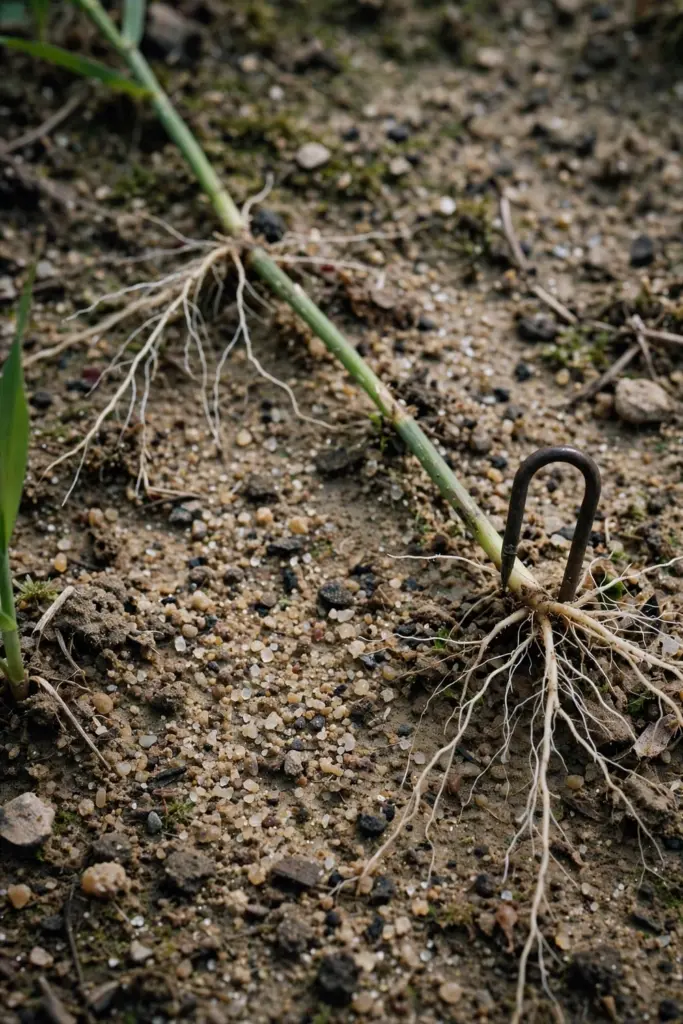
Buffalo has no viable seed. Seed heads on a Buffalo lawn are sterile, so repair runs on vegetative material only: runners, plugs, or turf pieces. Buffalo spreads by stolons alone, with no rhizomes, so it fills a patch more slowly than kikuyu or couch. Expect a slow knit, not a quick fill. Patience is part of the method.
Start by loosening the bare soil. Scratch the surface 2 to 3 cm deep with a rake. Spread a thin topdressing of sandy loam or fine compost, no deeper than 1 cm, so the runners sit on soil rather than on thatch. A thick topdressing buries the crowns and smothers the repair. Keep the layer thin enough that you can still see soil between the crumbs.
Peg runners from a healthy part of the same lawn. Cut stolons 15 to 20 cm long, each with several nodes. Lay them across the patch, pin each node to the soil with a landscape pin or a bent wire, and press soil lightly over the nodes. Water the patch until the soil is damp, then keep it damp until the nodes root. Plugs work the same way at larger scale. St. Augustine grass can be established by stolons, plugs, or sod, with 3 to 4 inch square sod plugs planted on 12-inch spacing, according to the University of Hawaii’s St. Augustine grass notes. Converted to metric, that is plugs 7.6 to 10.2 cm square on 30.5 cm spacing.
Use turf pieces for a patch wider than a hand span. Cut a piece from a healthy area of the same lawn or buy Buffalo turf of the same type. Butt the edges tight, water it in, and keep it damp until it roots. Turf gives instant cover, but it costs more than runners and it still needs the same light. A turf piece laid into deep shade dies like a runner does, only more expensively.
Water the pegged runners on the day you peg them. Soak the patch until the top 5 cm of soil is damp, then check daily for the first week. A runner that dries out before its nodes root dies, and a runner that sits in waterlogged soil rots. Damp is the target. Once the nodes resist a gentle tug, shift to watering only when the top 2 to 3 cm dries.
| Repair Method | Best For | What It Costs |
|---|---|---|
| Pegged runners | Small patches under 30 cm wide | Time only, taken from your own lawn |
| Plugs | Medium patches, 30 cm to 1 m wide | A few dollars per plug, or free from your own lawn |
| Turf pieces | Large bare areas over 1 m wide | Highest cost, instant cover |
8. Decide When Shade Cannot Be Improved in a Buffalo Lawn
Stop replanting grass when the patch receives less than 2 hours of direct sun a day. The threshold is not a failure of effort. It is a property of the site. Grass needs light to photosynthesize, and no feed, runner, or turf piece changes the hours of sun that reach the soil. A third replanting into the same deep shade wastes the same money twice.
Shade-tolerant lawn grass needs about 4 hours of sunlight to perform properly, according to UF/IFAS Extension’s Nassau County notes on shaded St. Augustinegrass sites. That figure sits above Buffalo’s 3-hour floor, which shows how far cultivar and local conditions move the line. Use the range, not one number, and watch the patch. A patch that thins again within one season after repair is telling you the shade is too deep, whatever the table says.
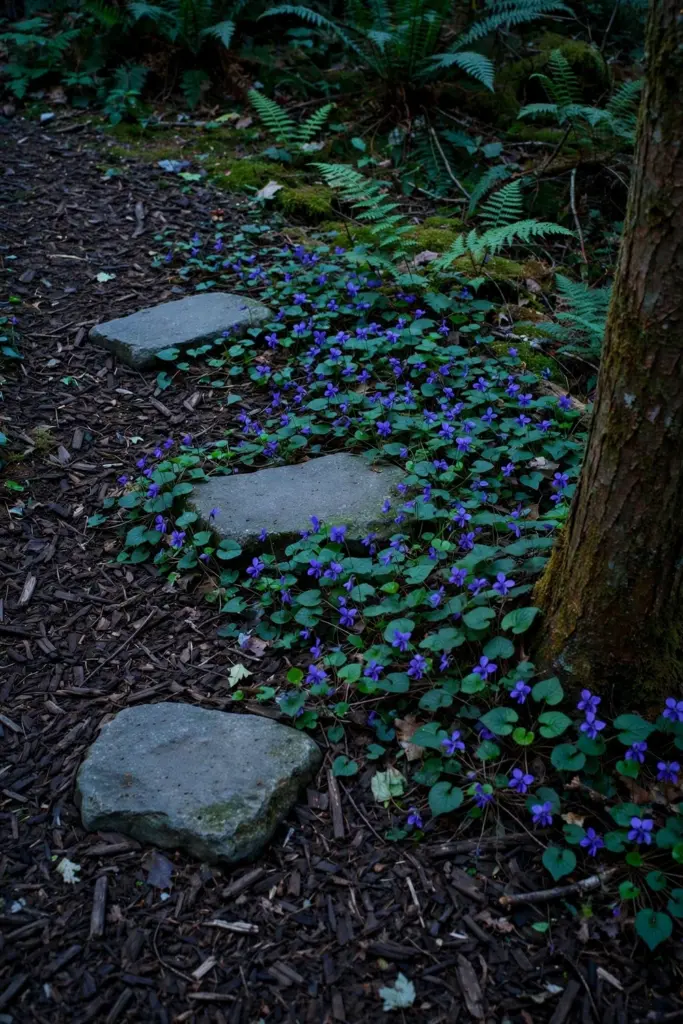
Replace grass with a different surface in deep shade. Stepping stones or a gravel path suit a walkway. A garden bed suits the base of a tree, where mulch and shade plants thrive. A mulch bed suits a narrow strip beside a fence. Each option ends the cycle of replanting and mowing a patch that cannot hold grass. Mulch also prevents weeds, retains moisture, and reduces erosion on bare ground, according to LSU AgCenter’s shade guide.
Plant groundcovers where the site suits living cover, and for ground under 4 hours of sun, landscape advice lists native violet (Viola banksia), kidneyweed (Dichondra repens), star jasmine, liriope, and blue bugle (Ajuga reptans). LSU AgCenter adds liriope, Asiatic jasmine, and holly fern for shaded sites. Match the groundcover to the site: native violet and kidneyweed suit damp shade, liriope suits dry shade under trees, and star jasmine softens a shaded fence. Groundcovers get one paragraph here, not a growing guide. Pick one. Plant it. Let it cover.
A re-turf with a different grass is the last option, not the first. Shadetuff zoysia is sold as a shade-tolerant zoysia, and its maker claims it tolerates shade better than Buffalo varieties. Treat that claim as marketing, not trial data. A re-turf changes the lawn’s texture and color, and a zoysia patch inside a Buffalo lawn shows as a different grass. Choose it only when the whole shaded zone is re-turfed as one piece.
9. Follow the Aftercare Calendar for the Repaired Patch
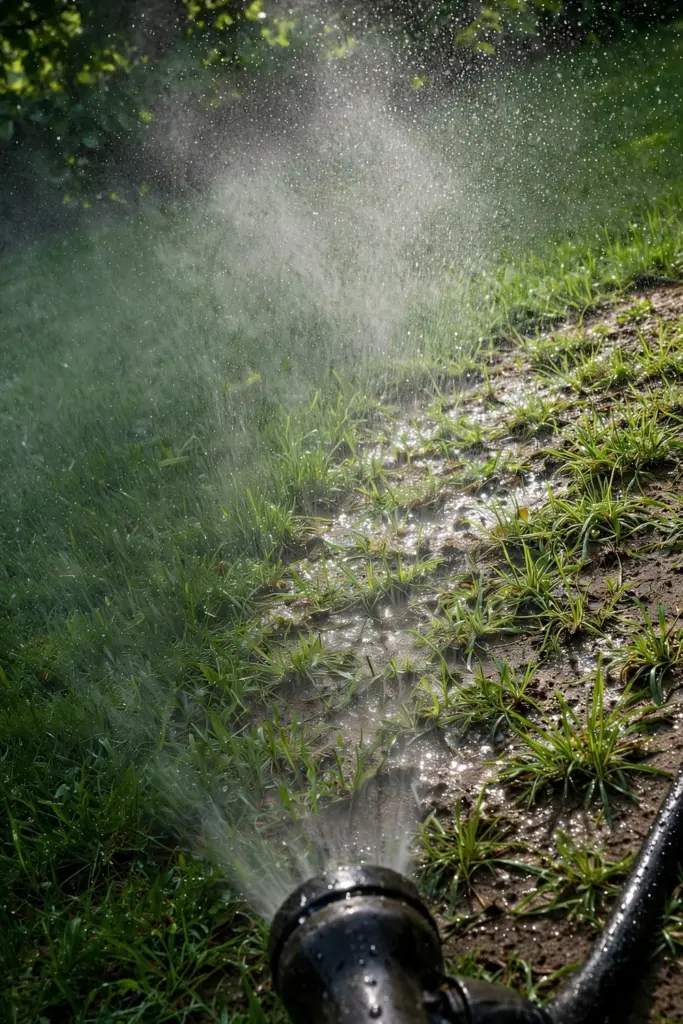
Water the repaired patch until the runners root. Keep the soil damp, not wet, through the first month. Check the nodes weekly. A node that resists a gentle tug has rooted. A node that lifts cleanly has not, so press it back down and keep watering. Once the runners knit, shift to deep, infrequent watering, the same rule as the rest of the lawn.
Hold the high mow through the first growing season. The patch needs its full leaf to photosynthesize while it fills. Drop the height only after the canopy closes and the patch looks as dense as the surrounding lawn. A early cut to sunny-lawn height starves the patch just as it starts to hold. The spring lawn care tips set the seasonal rhythm for that first full season.
Feed the patch lightly, once, in active growth. Use the shade rate from move 6. Skip the second feed if the patch is still thin, because feed cannot replace light. Watch for weeds in the thin canopy. Hand-pull weeds while the patch is open, because weeds compete for the little light the patch receives. A weed that seeds in a thin patch becomes next season’s weed problem.
Walk the patch at the end of the season and judge it honestly. A patch that closed to full cover stays grass. A patch that thinned again goes to the alternatives in move 8. The calendar is not a promise. It is a check. Grass that holds earns another season. Grass that thins gets replaced by a surface that suits the shade.
Check the patch after the first heavy rain. Rain shows whether the topdressing stayed put and whether water pools on the patch. A pool that sits for a day means the soil under the patch drains slowly, and the patch needs a forked aeration before the next dry spell. Pooled water also tells you the patch sits in a low spot, and a low spot in shade stays wet longer than the rest of the lawn. Fix the drainage before you feed again, because feed on waterlogged soil feeds fungus, not grass.
Frequently Asked Questions
Buffalo holds on 3 to 4 hours of direct sun a day with shade care. Sapphire copes on 2 to 3 hours. Below 2 hours, grass thins no matter how you feed or water it, so choose a groundcover, mulch, or garden bed instead. Measure in the season when shade is deepest.
No. Buffalo seed heads are sterile, so no Buffalo seed exists to sow. Repair runs on runners, plugs, or turf pieces, all vegetative material. Buffalo spreads by stolons only, with no rhizomes, so it fills a patch more slowly than kikuyu or couch. Expect a slow knit.
Prune the tree first. Light comes before repair. Runners pegged into shade that is still too deep fail again, because the cause is still there. Lift the canopy, measure the sun again, and repair only when the patch reaches 3 hours of direct sun or more.
Moss grows where soil stays damp and light stays low. Shade slows evaporation, so shaded soil holds moisture longer, and moss suits those conditions. Fix the light and the drainage, not just the moss. Moss killer alone fails, because the damp shade that grew the moss is still there.
Native violet and kidneyweed suit damp shade. Liriope suits dry shade under trees. Star jasmine softens a shaded fence. Asiatic jasmine and holly fern also work in shade. Match the groundcover to the site, plant it, and let it cover. Groundcovers end the cycle of replanting grass that cannot hold.
Keep the Repaired Patch Alive Through Summer
The repair is not finished when the runners knit. The first summer decides whether the patch holds. Keep the mower high, keep traffic off it, and water only when the soil dries. Check the patch monthly through summer, and pull weeds while the canopy is still open. A patch that survives its first summer with full cover becomes ordinary lawn. A patch that thins again tells you the shade is too deep, and the alternatives in move 8 are the honest next step.