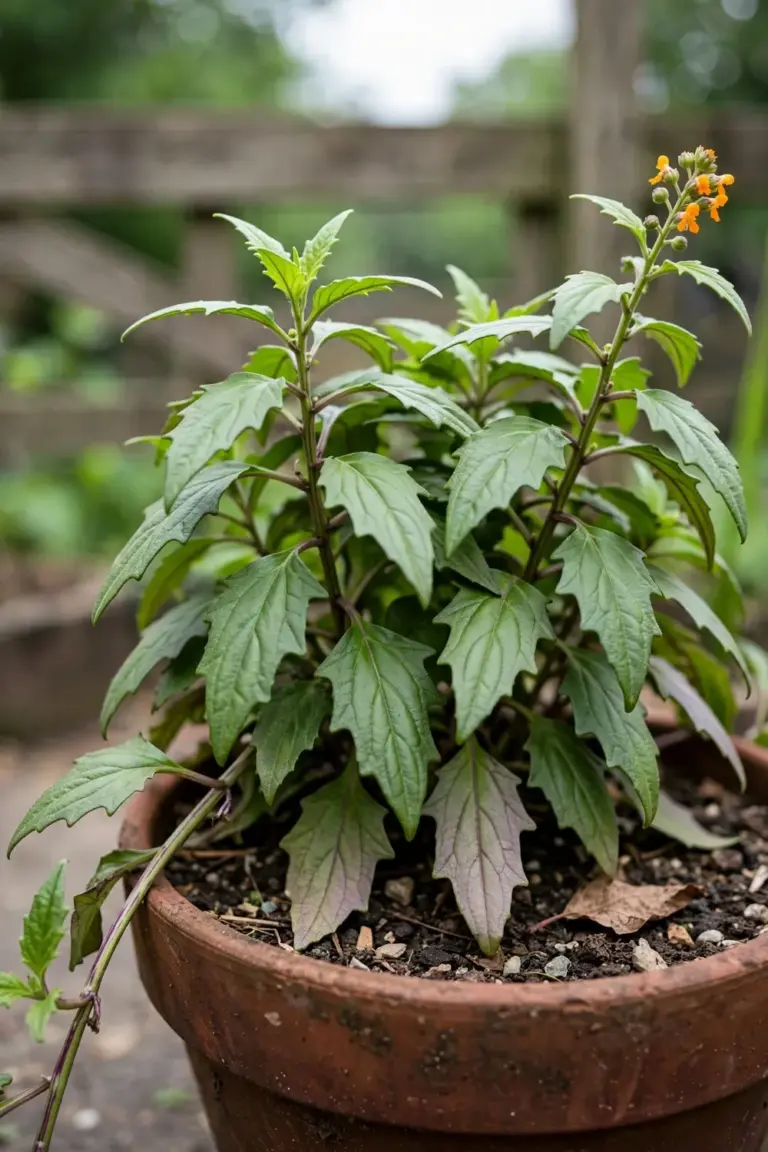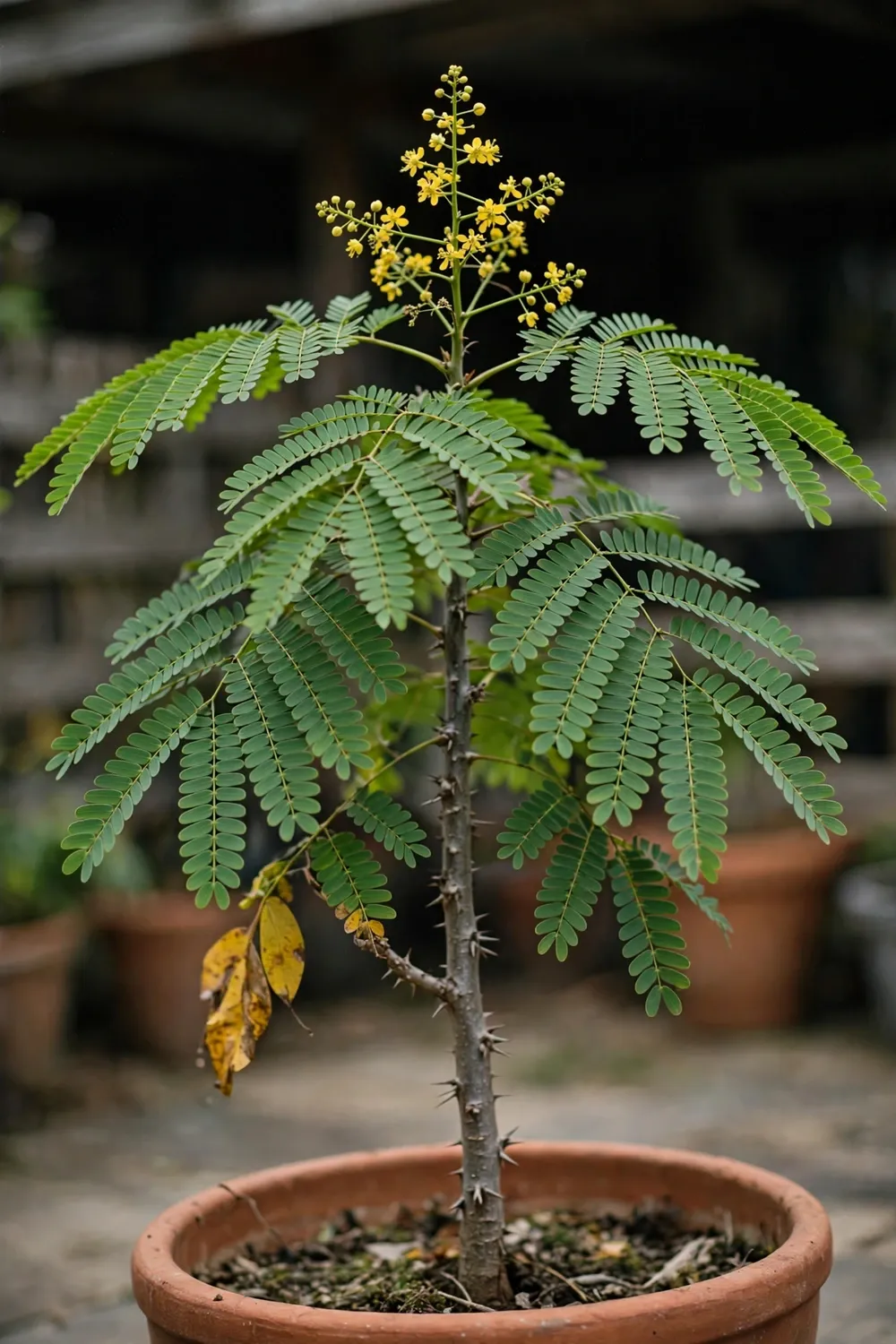

Dip sappanwood seeds in boiling water for 5 seconds, soak them for 12 to 24 hours, and seedlings emerge within a few days to 4 weeks in a warm spot. That is how to grow sappanwood from Indonesia in a temperate climate. Start a tree that reaches 7 m in the ground, keep it in a pot, move it indoors before frost, and wait 6 to 8 years for harvestable dyewood heartwood.
Sappanwood is kayu secang, the red heartwood behind wedang secang and the red dye in cloth. Botanists now place the tree in Biancaea as Biancaea sappan, and seed packets still print the older synonym Caesalpinia sappan. The rest of this page is 16 moves from seed packet to dye pot. If you have started a tomato or a pepper from seed, you already own the first half of the skills this tree asks for. The seed starting guide covers trays, domes, and lights once more, in case your setup needs a refresh.
A sappanwood pot asks for four things. Heat at germination. Sun and drainage through the season. A hard frost deadline in autumn, plus patience measured in years. I have learned to treat this tree as a long-term project, because the dyewood heartwood needs 6 to 8 years to develop. Give it those four things and the tree grows into a handsome potted specimen long before it ever yields a single red dyebath.
| Spec | Sappanwood |
|---|---|
| Botanical name | Biancaea sappan (L.) Tod., syn. Caesalpinia sappan L., family Fabaceae |
| Common names | sappanwood, secang, kayu secang, sibukaw, Eastern brazilwood, Indian redwood |
| Life cycle | evergreen tree, perennial |
| Height | to 7 m in the ground, pruned smaller in a pot |
| Outdoor range | frost-free climates, hardy to UK zone 10 |
| Sun | shade for young plants, full sun for older trees |
| Soil | well-drained, pH 5 to 7.5 |
| Germination | a few days to 4 weeks with scarification and soaking |
| Propagation | seed, softwood cuttings |
| Dyewood harvest | every 6 to 8 years by coppicing |
1. Buy Biancaea sappan Seed by the Latin Name
Buy seed only from a packet that prints the exact binomial Biancaea sappan or Caesalpinia sappan. Common names in the dyewood trade run loose, so the Latin name on the packet is the one thing you can trust.
Kew’s Plants of the World Online accepts Biancaea sappan and lists its native range across tropical Asia from the eastern Himalaya to Vietnam, with introduction across Malesia including Jawa, according to Kew’s Plants of the World Online. Seed sellers still use the older name on most packets. Both names describe the same tree. The table below separates the real thing from the two dyewoods most often confused with it.
| Packet says | What it is | Check |
|---|---|---|
| Biancaea sappan | sappanwood, secang, kayu secang | the plant this page describes, a spiny tree to 7 m |
| Caesalpinia sappan | same plant, older name | the name most seed packets still print |
| Paubrasilia echinata | Brazilian brazilwood, pau-brasil | a different, endangered tree from Brazil, never a substitute |
| Haematoxylum campechianum | logwood | a different dyewood entirely, do not follow this page for it |
Sappanwood carries the common name Eastern brazilwood because traders knew it first. The country of Brazil took its name from the related New World dyewood, not from this Asian tree. That history explains the shared name. It does not make the two trees interchangeable. Buy from a seed house that lists the binomial and the packed date, not from a marketplace listing with a stock photo of a different plant. If the packet prints only a common name with no Latin name, skip it.
2. Dip the Seeds in Boiling Water for 5 Seconds
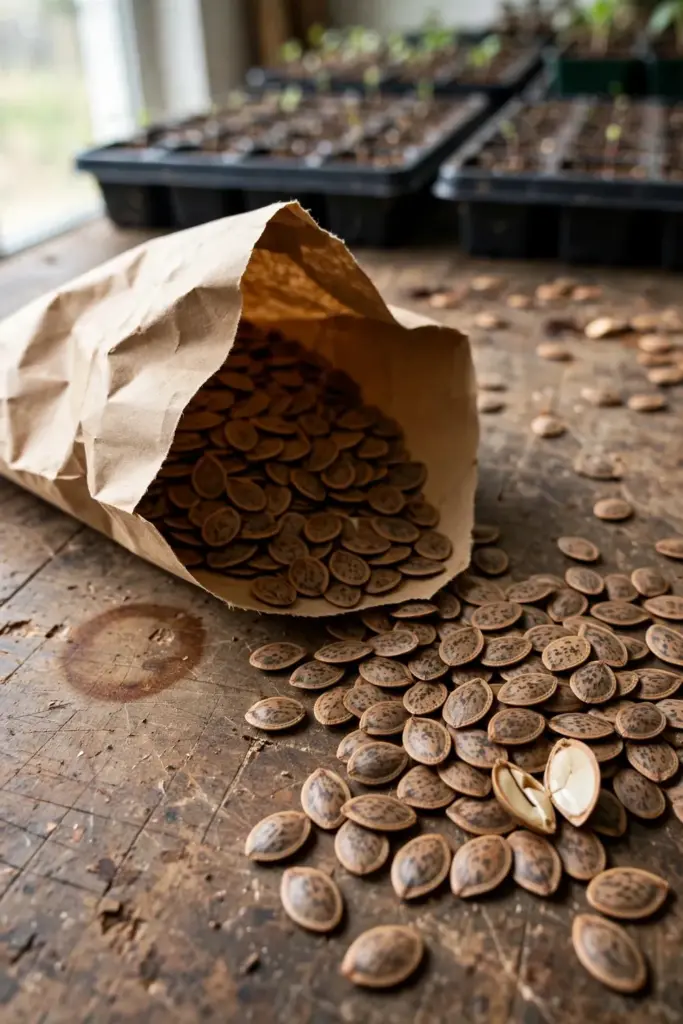
Dip the seeds in boiling water for 5 seconds to break the hard seed coat. Sappanwood seeds wear a tough coat that blocks water, and the brief dip cracks it without cooking the embryo inside.
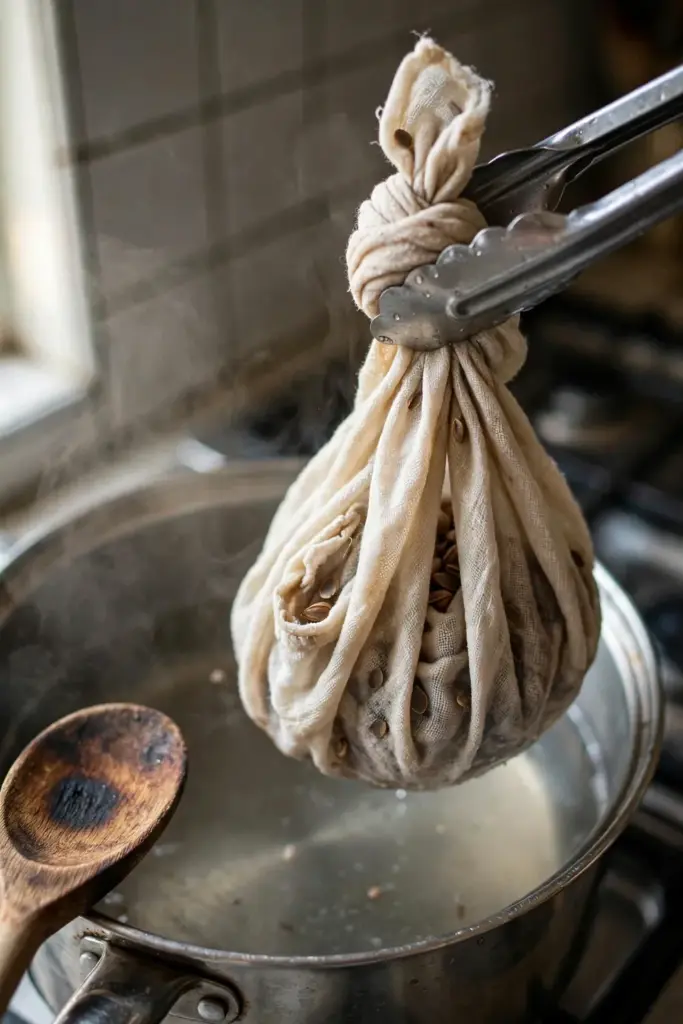
Wrap the seeds in a square of cotton cloth and tie the corners. Hold the bundle in boiling water for 5 seconds by a timer, then drop it straight into cool water. Germination rate is then about 90 percent, according to PROSEA). The cloth keeps the small seeds together and keeps fingers away from the boiling water. Use tongs to hold the bundle. Count out loud. Five seconds is short, and an extra ten seconds can kill the seed.
Work in small batches of 10 to 20 seeds. A big bundle heats unevenly, and the seeds in the middle stay hard while the ones on the outside cook. Spread the dipped seeds on a dry cloth after the cool-water rinse and inspect them. Seeds with a hairline crack in the coat are ready for the soak. Seeds that still look glossy and sealed can take one more 5-second dip. Two dips is the limit. A seed that resists two dips is likely old or empty, and a third dip will not rescue it.
3. Soak the Seeds for 12 to 24 Hours
Soak the dipped seeds for 12 to 24 hours in warm water before sowing. The soak lets water reach the embryo and starts germination on an even clock.
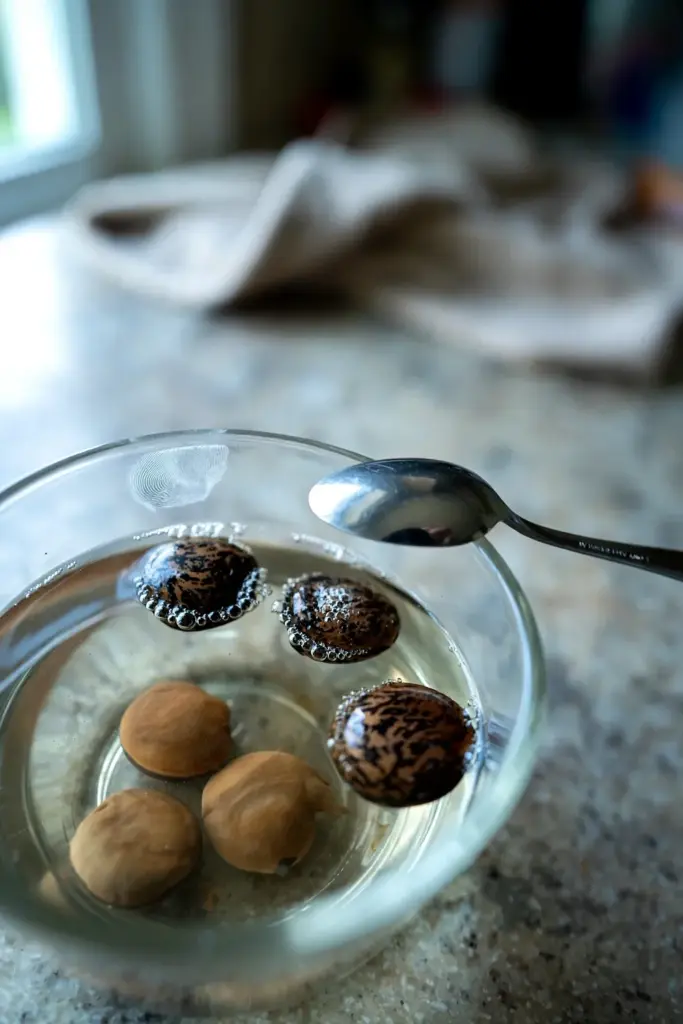
Put the seeds in a cup of warm water, not hot. Change the water once if it cools to room temperature and turns cloudy. Pre-soak for 12 to 24 hours in warm water prior to sowing, and the seed usually germinates within a few days, according to Plants for a Future. Warm water swells the seed visibly. A swollen seed has taken up water through the cracked coat. A seed that stays small and hard after a full day needs another dip, as the previous section describes.
Sow the swollen seeds the same day they finish soaking. Seeds left sitting in water for two days or more can rot before they ever reach soil. Drain the cup through a tea strainer so no seed washes down the sink. Keep the seeds damp on a wet paper towel while you fill the pots. The whole point of the soak is a head start. Drying the seeds out again throws that head start away.
4. Sow Seeds 1 cm Deep at 25 Degrees Celsius
Sow each seed 1 cm deep in a warm spot at 25 degrees Celsius or warmer. Shallow sowing plus steady warmth gives the fastest, most even emergence.
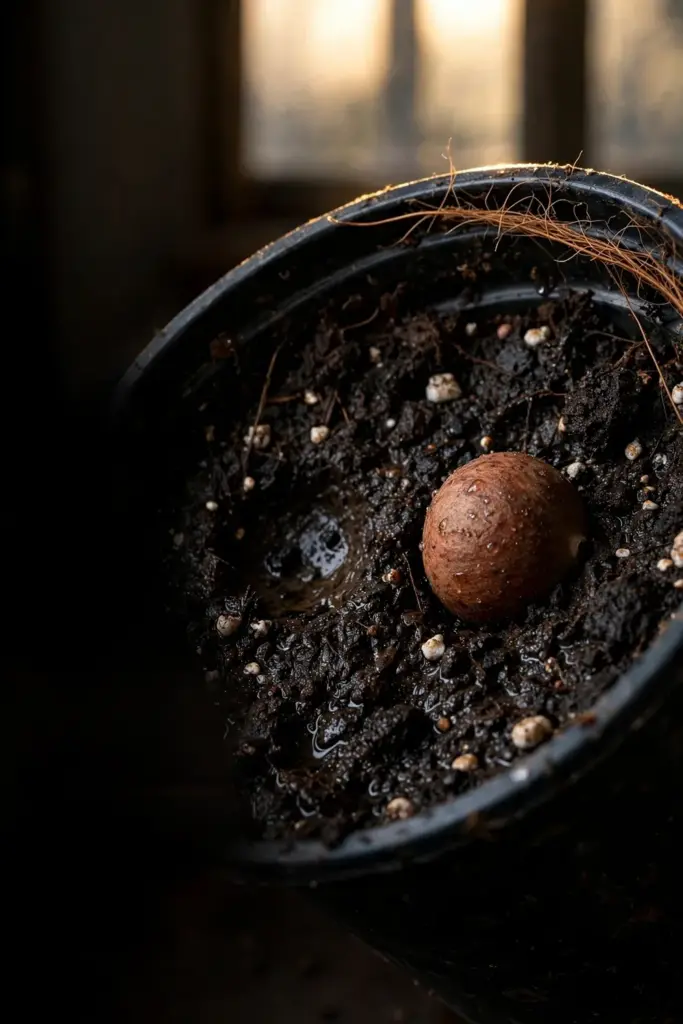
Fill small pots with coir or sowing mix blended with sand or perlite. Press one seed into each pot at 1 cm deep and cover it loosely. Keep the mix constantly moist, never wet. Germination takes about 2 to 4 weeks at 25 degrees Celsius or warmer in bright light, according to a seed supplier’s growing notes. A heat mat under the pots holds the temperature steady on cold nights. A clear cover over the pots holds moisture in. Lift the cover daily for air, and remove it the moment green shows.
The two germination numbers in this page describe two methods. Pre-soaked seed after the boiling-water dip emerges within a few days. Seed sown after a hot-water pour and a plain soak takes 2 to 4 weeks. Both numbers are honest. The dip is what buys the speed. When the seedlings are large enough to handle, prick them out into individual pots and grow them on until large enough to plant out, as Plants for a Future advises. Handle seedlings by a leaf, never by the stem. A crushed stem kills a seedling that a torn leaf would survive.
5. Grow Seedlings in Bright Light With Shade at Noon
Grow young sappanwood seedlings in bright light with shade at midday. Young plants grow best in the shade of trees in the forest or in forest borders, and older trees require a position in full sun, according to Plants for a Future.
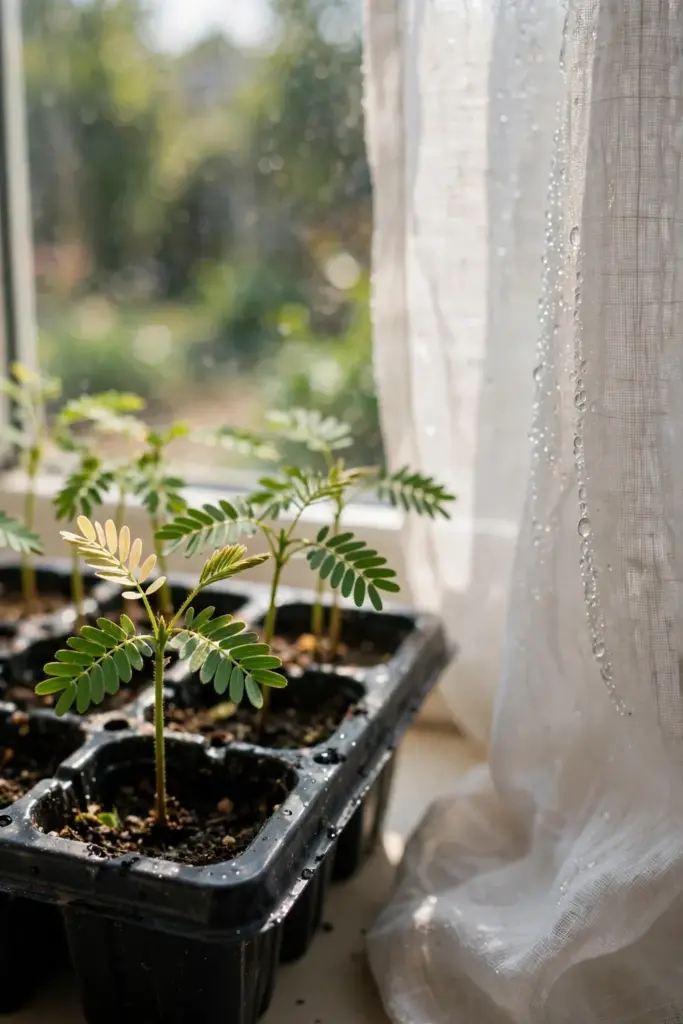
A bright windowsill with a sheer curtain suits a seedling. A balcony that catches morning sun and afternoon shade suits it better. Move the pot into full sun gradually over two weeks once the plant passes 30 cm and carries several pairs of true leaves. Leaves that bleach to pale yellow-green in direct sun are asking for shade. Leaves that stretch with long gaps between pairs are asking for more light. Watch the gap between leaf pairs. Short, tight gaps mean the light is right. That shade-then-sun sequence is the core of how to grow sappanwood outside the tropics.
Move the pot outdoors only after the last frost. Nights below 10 degrees Celsius stall a seedling, and one frost kills it. Set the pot in a sheltered corner for the first week outside, out of strong wind. Wind dries small pots fast and snaps soft stems. Check the mix with a finger each morning during that first week. A pot that dries out between morning and evening needs a bigger pot or a shadier corner, and no amount of careful watering fixes a pot that is too small.
6. Pot Seedlings Into Individual Pots With Drainage
Pot each seedling into its own pot once it has true leaves. One plant per pot gives the taproot room and stops the roots of neighbors from tangling.
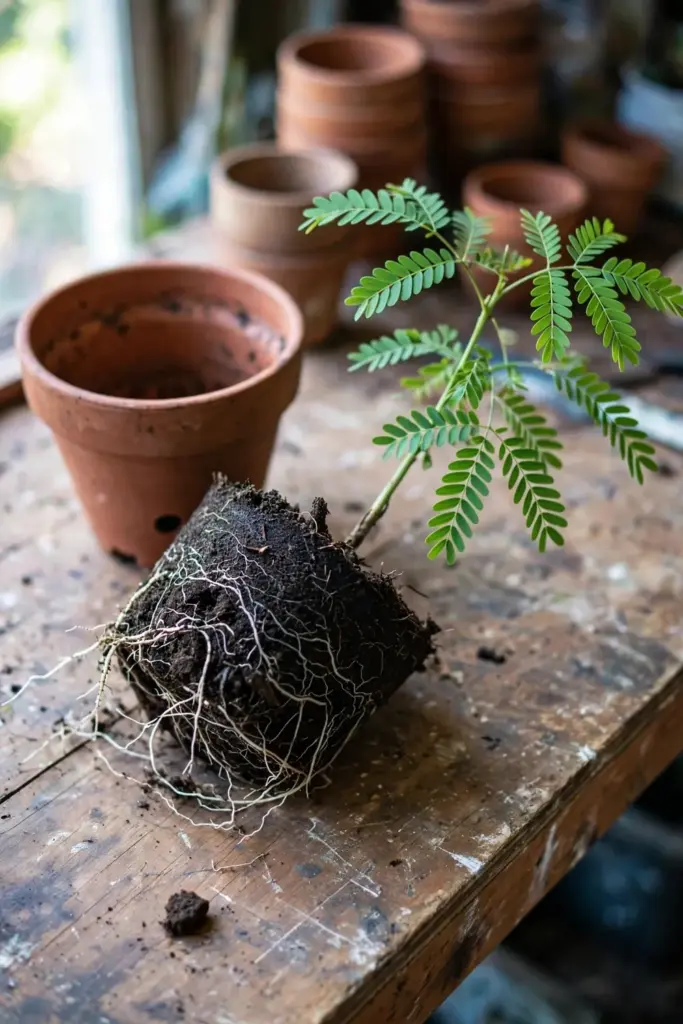
Choose a pot with drainage holes in the base. A pot without a hole drowns a tropical tree seedling in a wet week. Terracotta breathes and forgives heavy-handed watering. Plastic holds moisture longer and suits hot balconies where pots dry by noon. Either works. What does not work is a decorative pot with no hole and a layer of pebbles at the bottom pretending to be drainage. Drill the hole or pick another pot.
Set the seedling at the same depth it grew at before. Burying the stem invites rot at the soil line. Water the pot well after potting, then let the surface dry before the next watering. Roots grow into moist mix. They rot in soggy mix. A seedling that wilts the day after potting usually needs shade and a day of quiet, not more water. Give it both before you reach for the watering can again.
7. Mix a Free-Draining Loam at pH 5 to 7.5
Fill the pot with a loose, free-draining mix at pH 5 to 7.5. Sappanwood tolerates a soil pH of 5 to 7.5 and does not tolerate too wet soil conditions, according to PROSEA).
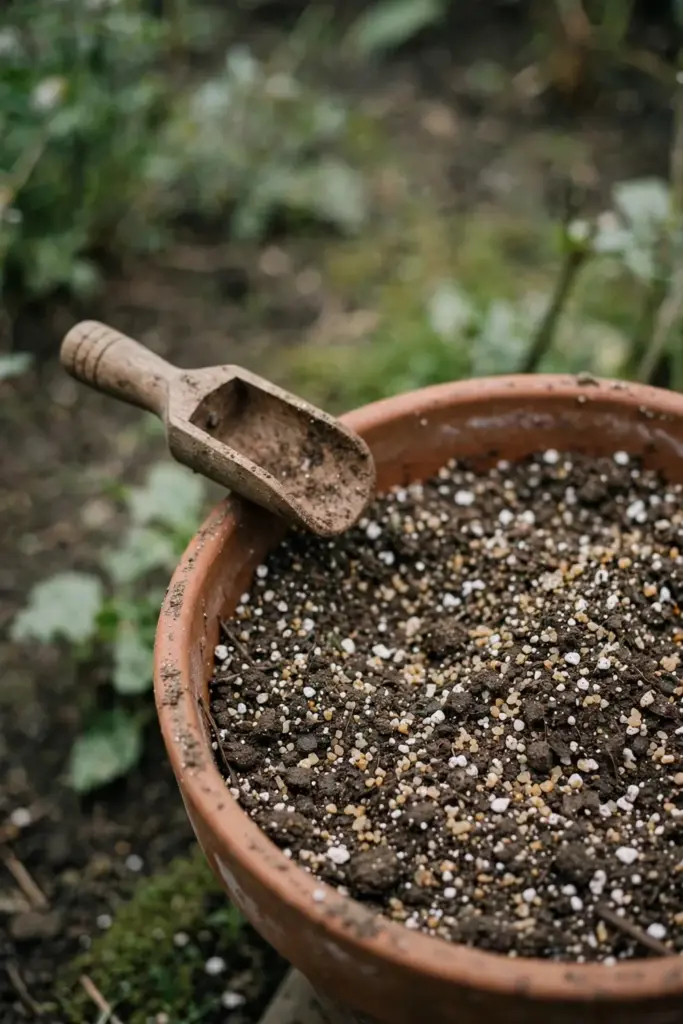
A workable home mix is one part potting soil, one part coarse sand, and one part perlite. That trio holds moisture without going soggy, which matches what this tree wants. Healthy soil does half the pest and disease work before it starts, so spend the effort here rather than on rescue treatments later. Skip garden soil straight from the bed. It compacts in pots, drains badly, and carries weed seeds that outcompete a young tree.
Sappanwood tolerates an annual precipitation of 700 to 4,300 mm in its native range, per the same PROSEA reference. That wide band tells you the tree handles wet seasons and dry seasons alike, as long as the roots never sit in standing water. In a pot, drainage is the whole game. A saucer left full after watering undoes a perfect mix in a week. Empty the saucer 30 minutes after watering, every time.
8. Water Deeply, Then Let the Surface Dry
Water deeply, then let the surface dry before watering again. Sappanwood prefers dry or moist soil and cannot grow in standing water, per Plants for a Future.
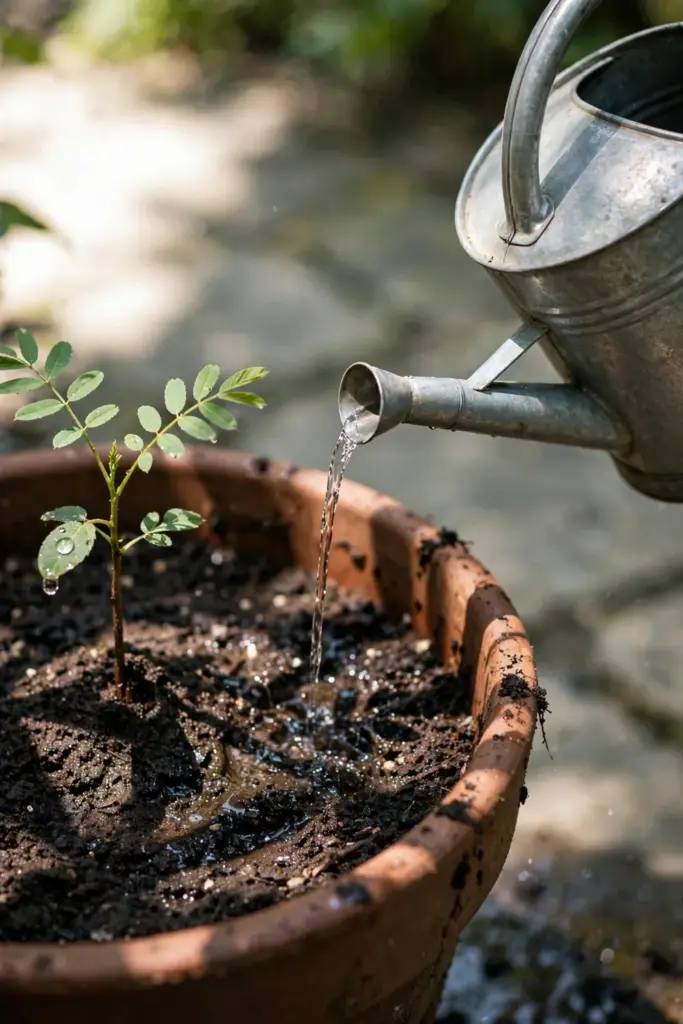
Check with a finger, not a schedule. Hot weeks may need watering every day. Cool cloudy stretches may need none for days. Water in the morning so the leaf surface dries by evening. A pot that stays wet for a week grows algae on the surface and rot below it. A pot that dries out completely between waterings drops its lower leaves, and on a young tree those leaves do not regrow fast.
Reduce watering in winter once the tree moves indoors. Short days and cool rooms slow growth, and the roots drink far less. A winter pot that stays wet grows mold on the mix surface and invites fungus gnats. Let the top few centimeters dry in winter. The tree rests. The watering can rests with it. Resume normal watering when spring growth starts and new leaves appear at the shoot tips.
9. Feed Lightly With a Balanced Fertilizer
Feed sappanwood lightly through the growing season with a balanced liquid fertilizer at half the label rate. This is a light-feeding legume tree, and heavy feeding buys soft, floppy growth that pests love.
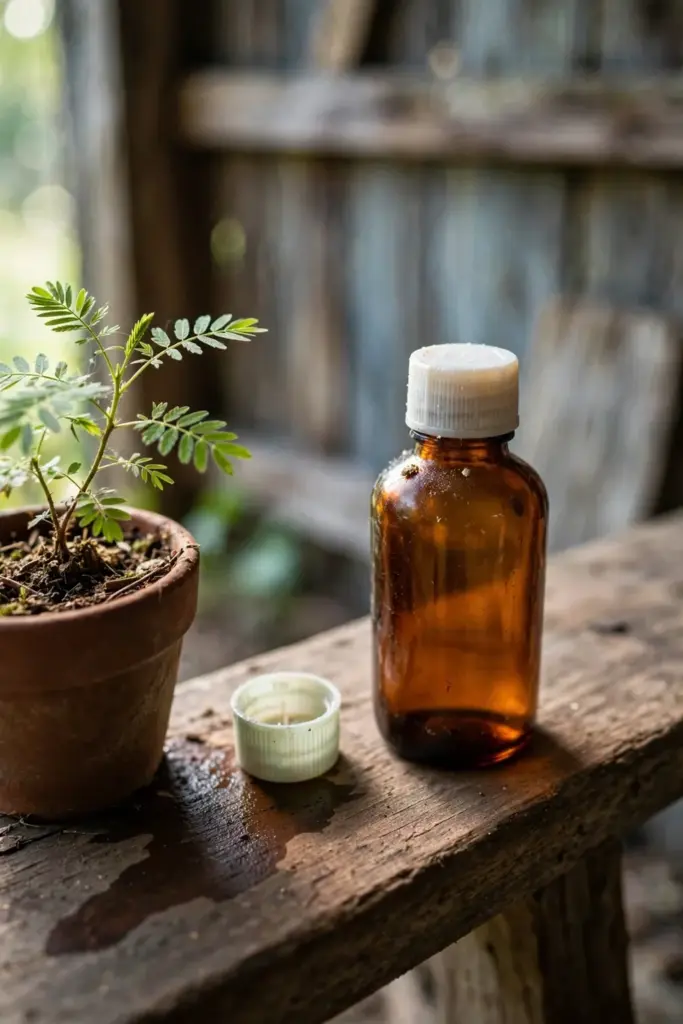
Start feeding 3 weeks after potting, once the roots have claimed the pot, and feed every 3 to 4 weeks through spring and summer. Stop feeding 4 weeks before the expected first frost so the growth hardens naturally toward winter. Pale older leaves that yellow from the bottom up usually signal hunger. Dark green, leggy stems with wide leaf gaps usually signal too much feed, and the fix is to cut back, not add more.
Sappanwood fixes nitrogen through nodules on its roots, a trait it shares with other legumes, according to Plants for a Future. That trait cuts its appetite for nitrogen fertilizer. A top-dress of compost at potting covers most of what this tree will ever ask for. If you already feed a mixed herb pot on a monthly rhythm, sappanwood fits that schedule without any special treatment.
10. Prune Young Trees Into a Single Trunk
Prune a young sappanwood into a single trunk with a clear head. The tree grows straight at first, then the branches droop and entwine once it passes about 2.5 m, according to PROSEA). In a pot, that drooping habit turns into a tangled shrub unless you prune for shape.
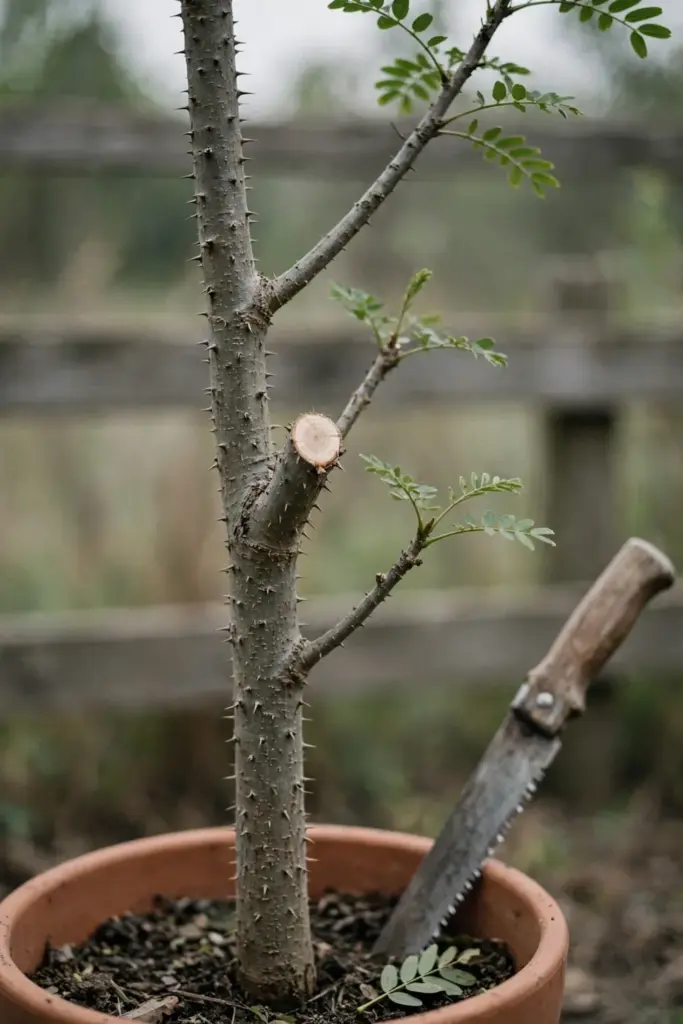
Wear thick gloves and long sleeves for every pruning session. The trunk and branches carry prickles, and a bare forearm against a spiny stem ends the session early. Cut out crossing branches and any shoot that grows inward. Keep one strong central leader and three to five well-spaced side branches. Shorten side branches that outgrow the leader. The goal is a small tree with an open crown that light reaches, not a dense thicket.
Prune in late winter before spring growth starts. Spring pruning techniques cover the clean-cut basics once more, in case your saw needs a refresh. Cut just above an outward-facing bud. Never leave a stub. Stubs die back and invite decay into the branch. A potted tree needs this shaping every year. Skip two years and the crown closes into a thorny ball that no amount of careful cutting opens again without a fight.
11. Move the Pot Indoors Before the First Frost
Move the pot indoors before the first frost, because frost kills sappanwood. The tree is hardy to UK zone 10, according to Plants for a Future. In a temperate climate, the pot lives outdoors for the warm months and indoors for the cold ones.
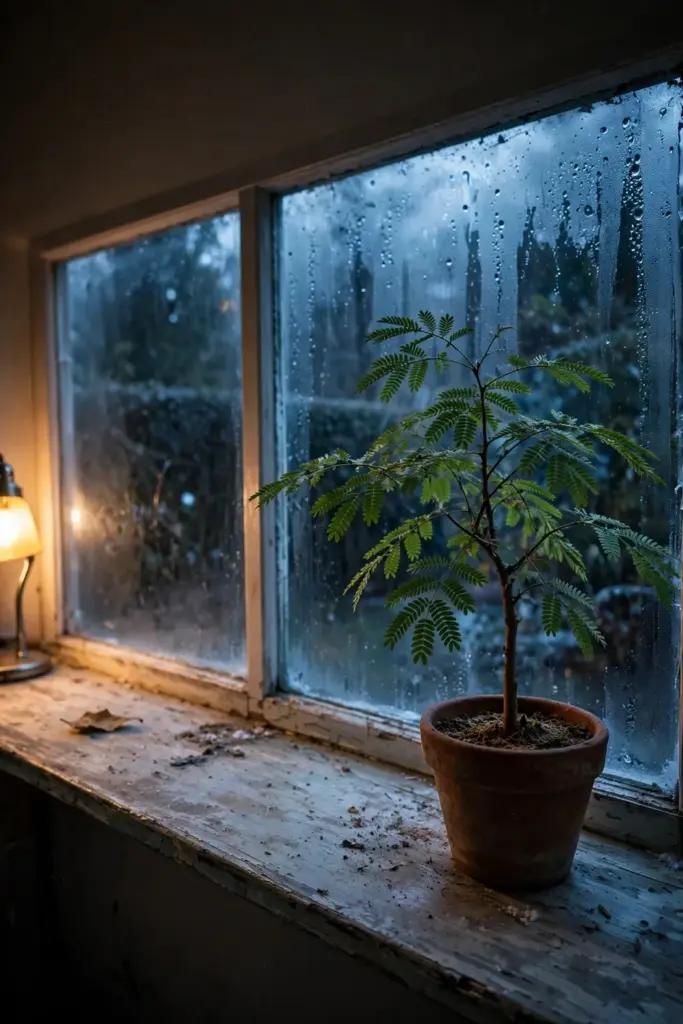
Watch the 10-day forecast from early autumn. Set your move date a week ahead of the first expected frost. Indoors, give the tree the brightest window you own and keep the room above 10 degrees Celsius through winter, per a seed supplier’s growing notes. A cool bright room suits winter rest better than a hot room with dry air. Expect some leaf drop in the first two weeks inside. The tree is adjusting to lower light, not dying.
Water lighter indoors, as the previous watering section describes. Check the leaf undersides weekly for spider mites, which thrive in dry indoor air. A weekly shower with a gentle spray of water knocks mites off before colonies build. Move the pot back outside only after the last spring frost, and harden it off in shade for a week first. A tree moved straight from a windowsill to full sun scorches, and scorched leaves do not heal.
12. Cut the Tree Back to a 1 m Stump Every 6 to 8 Years
Cut the tree back to a stump 1 m above the ground every 6 to 8 years to harvest the dyewood. For use as a dyewood the tree must be harvested every 6 to 8 years, to allow the heartwood to become fully developed, according to Plants for a Future.
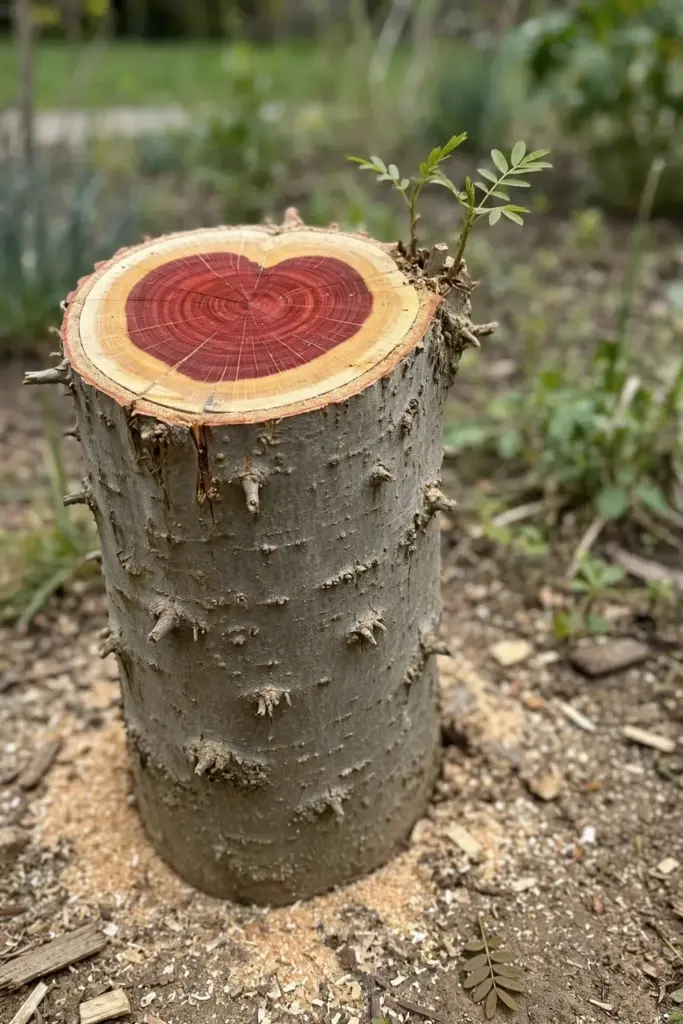
Cut in the dry season when the wood is firmest. Saw the trunk cleanly at 1 m. The tree is cut about 1 metre above the ground to allow sprouts to grow from the stump, per the same reference. The stump sprouts again within two weeks. New shoots rise from the cut, and the tree rebuilds its crown from those shoots. Coppicing renews the tree. The harvest is not the death of the tree. It is the restart of it.
Split the felled trunk and separate the heartwood from the sapwood. The heartwood is the dyewood. The pale sapwood carries little color. How trees add a new ring of wood each year explains the ring-by-ring buildup that turns sapwood into heartwood over the years. For firewood, the same tree may be harvested every 3 to 4 years when the trunk has attained a diameter of 5 to 6 cm, per Plants for a Future. Firewood harvests come early. Dyewood harvests wait. No published data gives a dyewood weight per potted tree, so judge by trunk diameter and the chip test in the next section.
13. Test the Heartwood With a Hot-Water Chip
Test a chip of heartwood in hot water before committing a whole trunk to the dye pot. The test takes 10 minutes and saves a wasted afternoon.
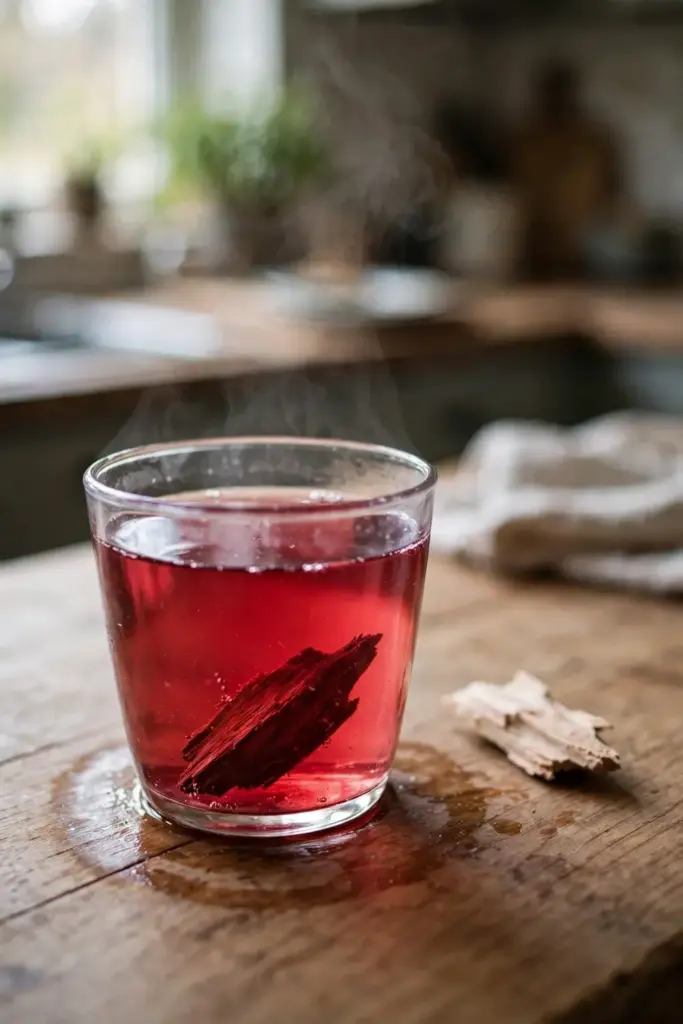
Cut a chip the size of a thumbnail from the inner wood of a pruned branch. Drop it in a cup of hot water and wait 10 minutes. A chip from true heartwood turns the water red, while a chip from pale sapwood barely tints it. The color shift is the test. Heartwood holds brazilin, which oxidizes into brazilein, the red pigment, while sapwood holds almost none of it.
Keep the chip from a young branch in mind. A 2-year-old branch carries thin heartwood and gives a weak tint. A 6-year-old trunk carries deep heartwood and gives a strong red. The test tells you when the tree is ready. A weak tint means wait another year, while a strong red means the coppice harvest will pay. Dry the rest of the harvested heartwood in chips or coarse powder for storage. Dry chips keep for months in a sealed jar away from light.
14. Dye Cloth With Alum-Mordanted Sappanwood
Dye cloth with sappanwood only after mordanting the fiber. The mordant binds the dye to the fiber, and without it the color washes out.
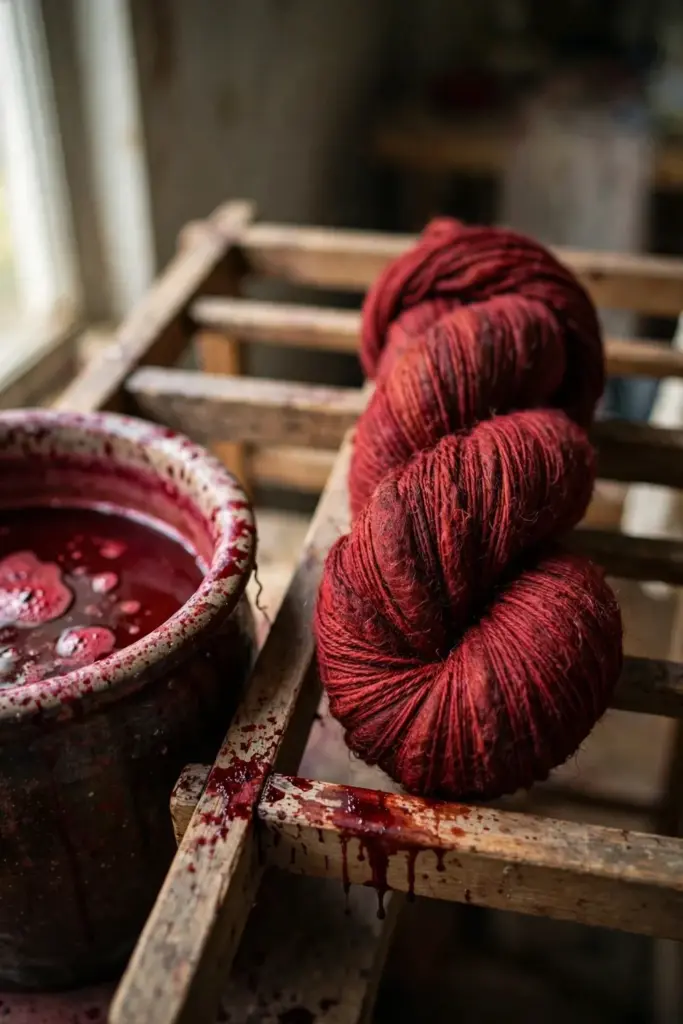
Start with a small test swatch, never a full garment. Grind the heartwood into a coarse powder, moisten it with water, and allow it to ferment for a few weeks to increase the coloring power of the dye, according to Plants for a Future. Boil the fermented wood in water, strain the liquid, and use it at once or evaporate it to a dry extract for later use. Silk, wool, cotton, matting, and basket fibers can all be dyed with it, per the same reference.
| Mordant | Color range |
|---|---|
| Aluminum acetate | red to pink |
| Stannic salts | red shades |
| Oxalic acid | red to pink |
| Iron | darker, browner tones |
The mordant determines the final color of the cloth, which can vary from shades of red to pink, violet, and brown, per Plants for a Future. Mordant the fiber first, then enter it into the strained dyebath. Keep the bath below a rolling boil once the fiber is in. Hard boiling felts wool and weakens cotton. Test a swatch in a sunny window before dyeing a full garment. Dye lots vary with the age of the wood, the water, and the mordant, and a swatch is the only honest preview.
15. Brew Wedang Secang Without Medical Claims
Brew wedang secang as a traditional drink, and keep medical claims out of it. Wedang secang is the hot Indonesian drink of sappanwood chips with ginger and spices. It is a cultural drink with a red color and a warm spice flavor.
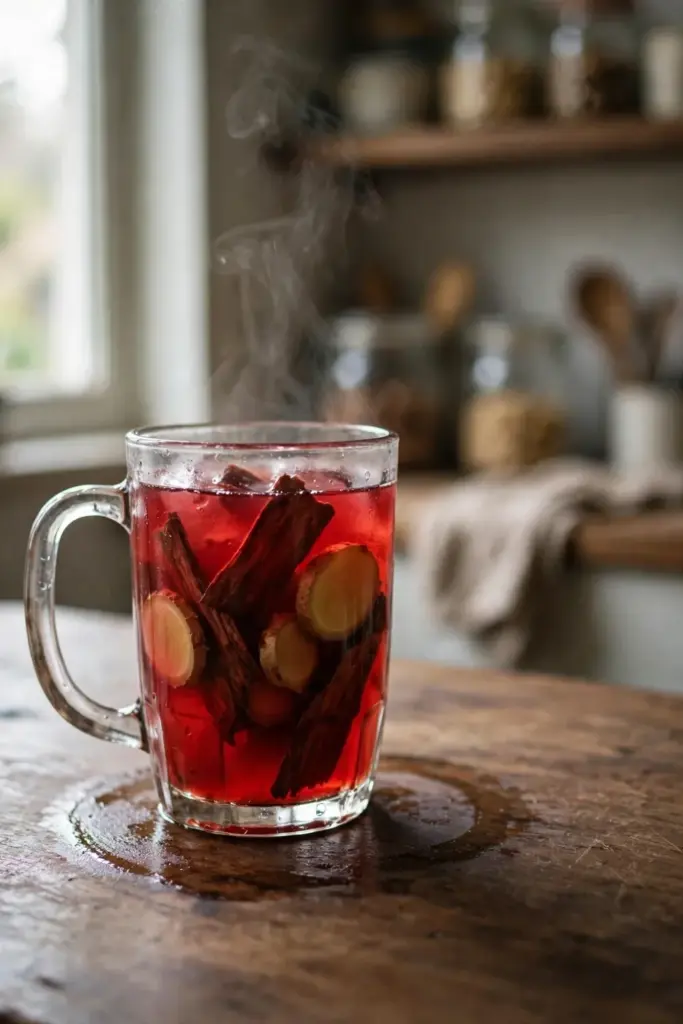
A few drops of wood extract in drinking water is considered refreshing, due to the fragrance and color it imparts, according to Plants for a Future. The dye obtained from the wood is sometimes used to color food, per the same reference. That is the whole food story this page tells. This page gives no dosage, no daily-drinking advice, and no disease claims. Sappanwood appears in jamu tradition, and jamu tradition is not a prescription. Anyone with a health condition, anyone pregnant, and anyone taking medication should talk to a clinician before drinking herbal preparations of any kind.
Grow the tree for the dye pot and the garden. Enjoy a cup of wedang secang as a cultural drink if you choose. Keep the two lanes apart. The gardening page teaches growing. It never teaches dosing.
16. Watch for Twig Dieback and Spider Mites
Watch the shoot tips and leaf undersides weekly for twig dieback and spider mites. Sappanwood is a tough tree, and a weekly look catches the two problems that do show up.
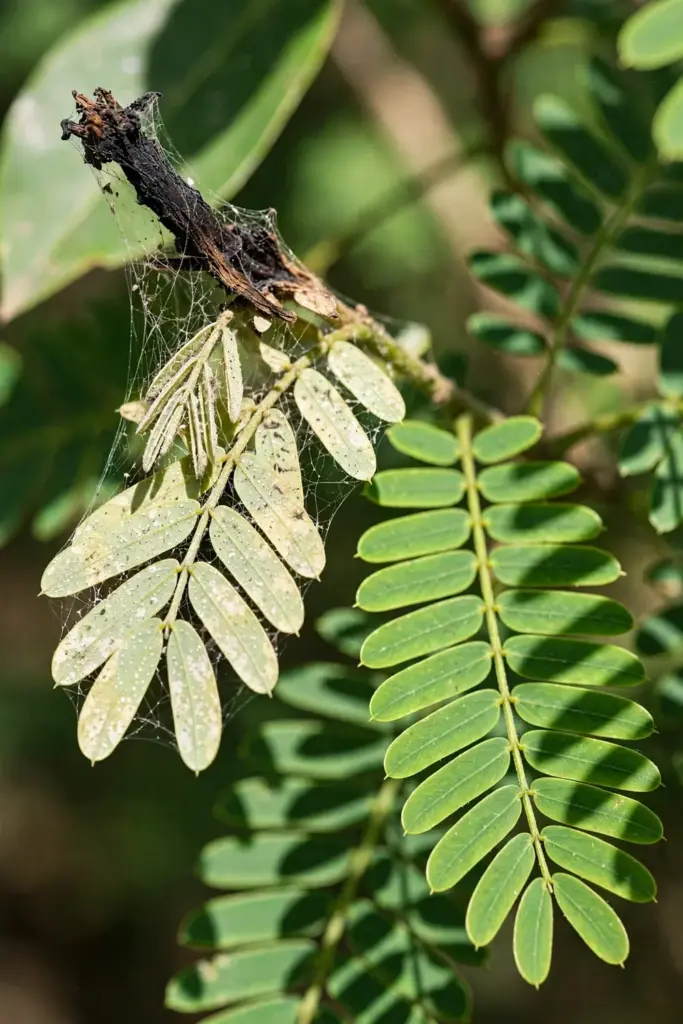
No serious diseases and pests have been reported for this tree, although fungi such as Auricularia auricula-judae and Meliola caesalpiniae can attack it, according to PROSEA). Twig dieback shows as a shoot tip that blackens and dies back from the end. Cut the affected shoot back to healthy wood with clean shears, and clear the fallen leaves from the pot surface. Do not compost diseased prunings. Bag them and bin them.
Spider mites favor dry indoor air and show up under glass, per a seed supplier’s growing notes. Fine webbing on leaf undersides and stippled pale leaves mark their colonies. A strong jet of water dislodges them. Repeat the jet every 3 days for two weeks to break the breeding cycle. Plants in this genus are notably resistant to honey fungus, according to Plants for a Future. That resistance removes one worry from the list. Airflow, drainage, and a weekly look handle the rest.
Frequently Asked Questions
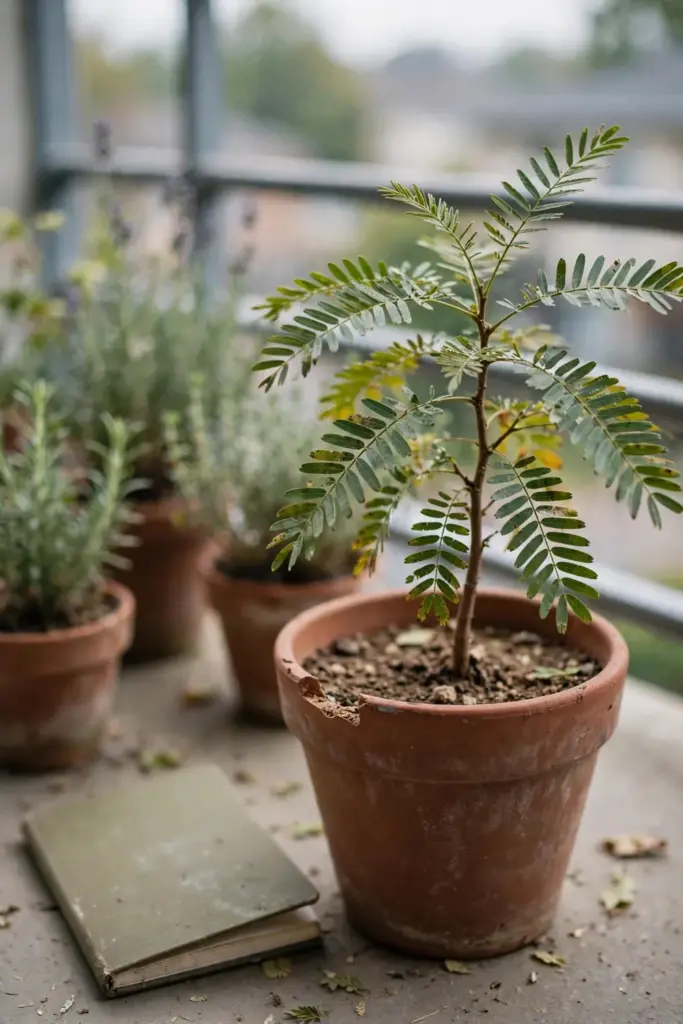
Yes. Grow sappanwood in a pot in your brightest window and keep the room above 10 degrees Celsius through winter. Prune it yearly to hold the size. Many growers keep it inside through its whole life. Flowering and fruiting may stay sparse indoors, since the tree wants full sun and a long warm season to bloom well. Take the pot outside for the warm months whenever you can.
Wait 6 to 8 years before the first dyewood harvest. The heartwood needs that time to develop fully. Coppice the tree at 1 m, split the trunk, and keep the heartwood for the dye pot. The stump sprouts again within two weeks and rebuilds the crown. A potted tree grows slower than a tree in the ground, so judge readiness with the hot-water chip test rather than the calendar alone. A weak tint means wait another year.
No. Sappanwood is Biancaea sappan, the Eastern brazilwood from tropical Asia. Brazilian brazilwood is Paubrasilia echinata, a different and endangered tree from Brazil. The two share a dye and a history. The country of Brazil took its name from the New World dyewood, not from this Asian tree. Buy seed by the Latin name and the mix-up never reaches your garden. The two trees need different care and carry different conservation stories.
This page does not answer that question. Sappanwood chips color hot water red and give the traditional drink wedang secang. This gardening guide gives no dosage, no daily-drinking advice, and no health claims of any kind. Anyone with a health condition, anyone pregnant, and anyone taking medication should talk to a clinician before drinking herbal preparations. Grow the tree for the dye pot and the garden. Treat drinking questions as medical questions, not gardening ones.
Yes. Softwood cuttings in sand in a frame root, according to Plants for a Future. Take cuttings from new spring growth, keep them warm and humid, and pot them up once roots show. Seeds remain the easier path for most growers. Seed gives a stronger root system and a straight trunk for the coppice cycle. Either route still needs the same 6 to 8 year wait for dyewood.
The hard seed coat is the usual cause. Seeds sown without scarification can sit in warm mix for months and never swell. Dip the next batch in boiling water for 5 seconds, soak 12 to 24 hours, and sow at 25 degrees Celsius or warmer. Old seed is the second cause, so buy fresh seed with a packed date. Cold mix is the third. A pot on a cold windowsill in winter germinates nothing.
Where to Go From Here
Sappanwood earns its pot the way a fruit tree earns its corner: a long-term tree that asks for one warm season at a time, a sunny corner, a frost deadline on the calendar, and patience measured in years. Learning how to grow sappanwood in a pot is mostly calendar discipline. Scarify the seed, soak it, sow warm, pot on, prune yearly, move indoors before frost, and wait for the heartwood. The dye pot at the end of that wait is the payoff for six to eight years of steady care. The how-to-grow-herbs archive holds the sibling guides for the rest of the warm-season herb shelf, so your secang never sits alone on the balcony.