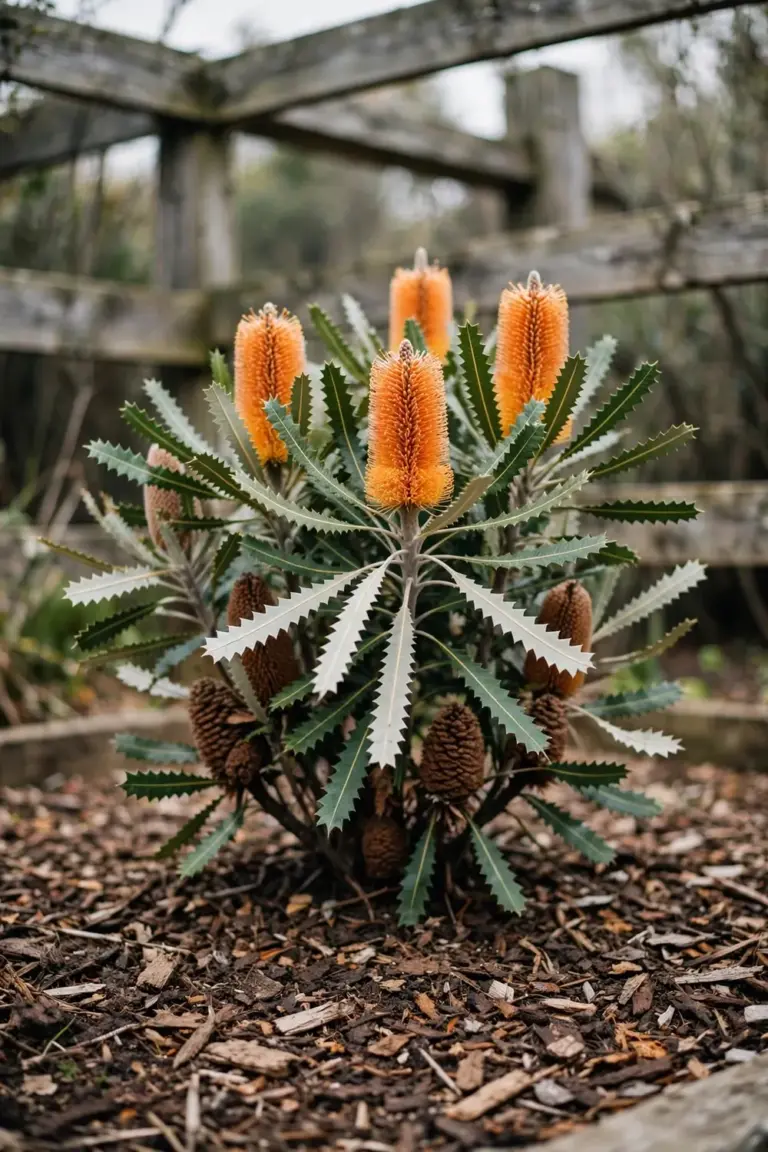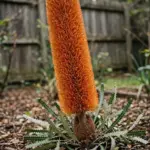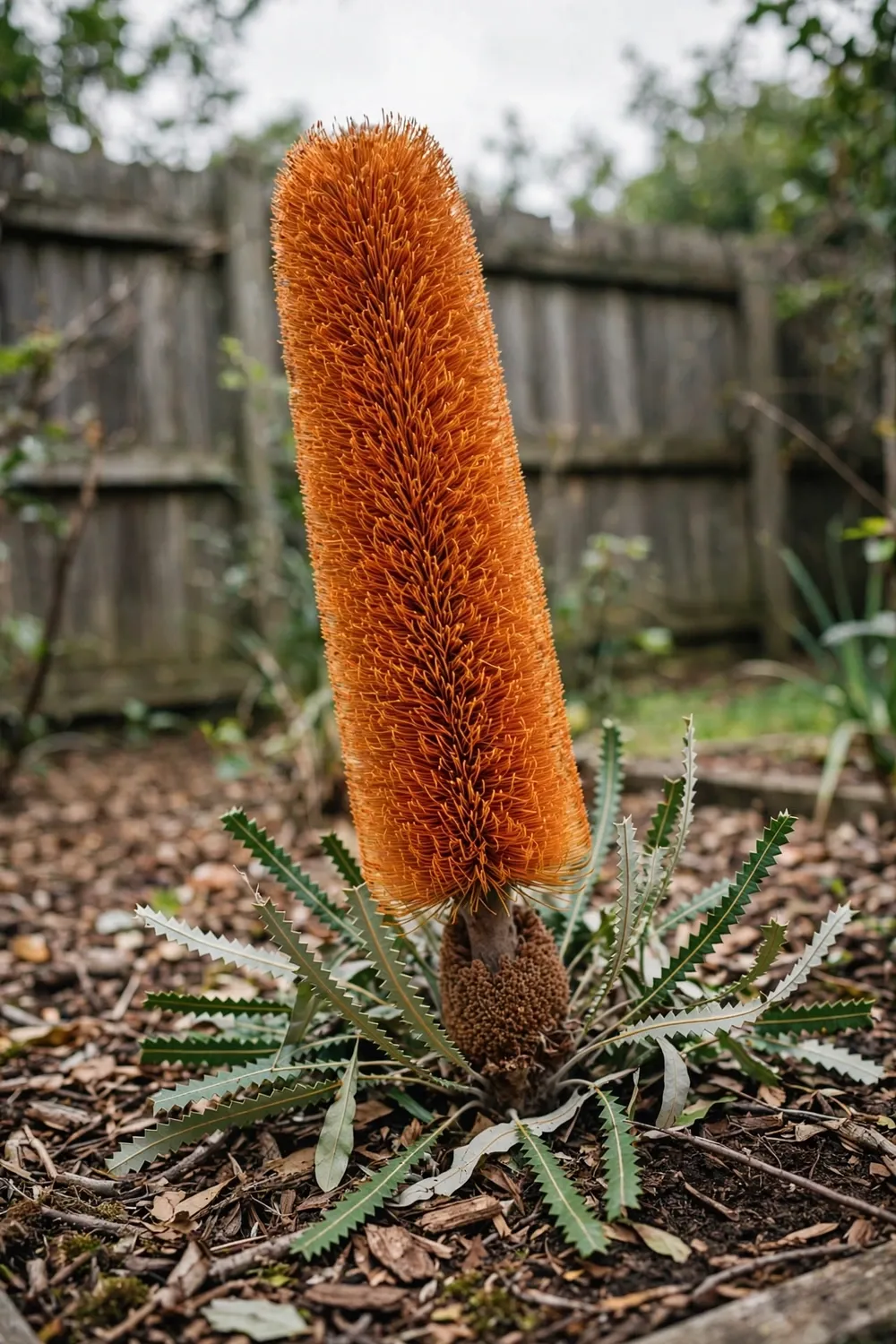

Pick the banksia that fits the space before you fall for the flower. The 15 picks below run from a 45 cm dwarf to a 25 m tree, and each one carries its mature height, its spread, its flower color, and the climate it suits. Buy the plant that fits the gap you measured, not the bloom that caught your eye at the nursery.
I have learned that the label’s mature height matters more than the flower on the pot.
The genus holds 173 species, from groundcovers under half a meter to trees that reach 25 m. The 15 best banksia varieties below sort by garden job: pots, groundcovers, hedges, feature trees, wet spots, coastal sites, and cut flowers. Read the table first. Buy the tree second.
Compare the 15 Picks at a Glance
Start with the table, then read the picks that fit your gap. Height and spread are garden figures. A plant in rich soil with regular water grows bigger than the same plant on a dry slope.
| Variety | Mature Height | Mature Spread | Best For |
|---|---|---|---|
| Birthday Candles | 45 cm | 1 m | Pots, rockeries, low borders |
| Pygmy Possum | 30 cm | 2 to 3 m | Groundcover, banks, rockeries |
| Honey Pots | 1 m | 1.5 m | Pots, low hedge, mass planting |
| Roller Coaster | 20 to 40 cm | 3 to 4 m | Cascading groundcover, coastal banks |
| Heath Banksia | 2 to 6 m | 2 to 5 m | Hedge, screen, winter flowers |
| Hairpin Banksia | 1.5 to 3 m | To 2 m | Shrub, screen, bird garden |
| Silver Banksia | 2 to 8 m | 1 to 5 m | Hedge, windbreak, cold gardens |
| Coast Banksia | 5 to 25 m | About 3 m | Coastal tree, shade, wind |
| Saw Banksia | 2 to 10 m | 2 to 7 m | Feature tree, gnarled character |
| Swamp Banksia | 2 to 3 m | 2 m | Wet spots, swales, dam edges |
| Wallum Banksia | 3 to 8 m | 1 to 4 m | Sandy coastal screen, feature shrub |
| Giant Candles | To 5 m | To 3 m | Cut flowers, medium screen |
| Firewood Banksia | 2 to 10 m | 2 to 8 m | WA feature, cut flowers, dry gardens |
| Scarlet Banksia | 2 to 4 m | 1 to 2 m | WA cut flowers, red spikes |
| Acorn Banksia | 6 to 10 m | 3 to 5 m | WA feature tree, orange spikes |
Sizes in the table are garden figures. Wild trees can grow taller. Check the label on the plant you buy. For the soil side of the job, building soil health covers structure and drainage in full.
East versus west is the selection rule that matters most. Eastern species handle east-coast humidity far better, while western species need sharp drainage and dry summers. A western banksia in a humid Sydney summer rots at the roots. An eastern banksia in a dry Perth garden thrives. Match the origin to your climate before you match the flower to your taste.
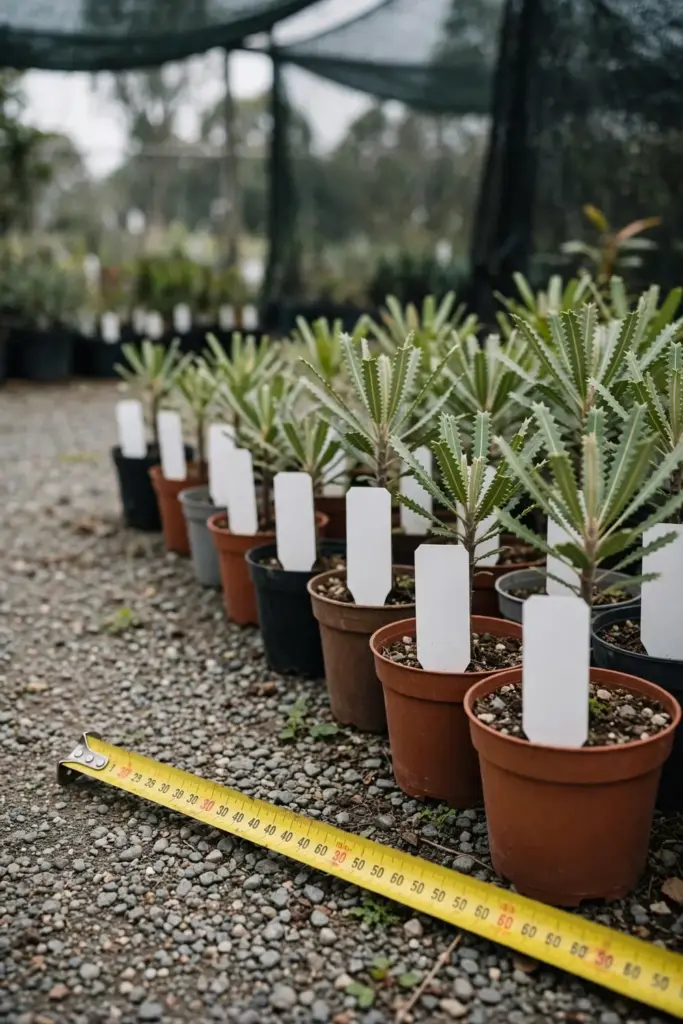
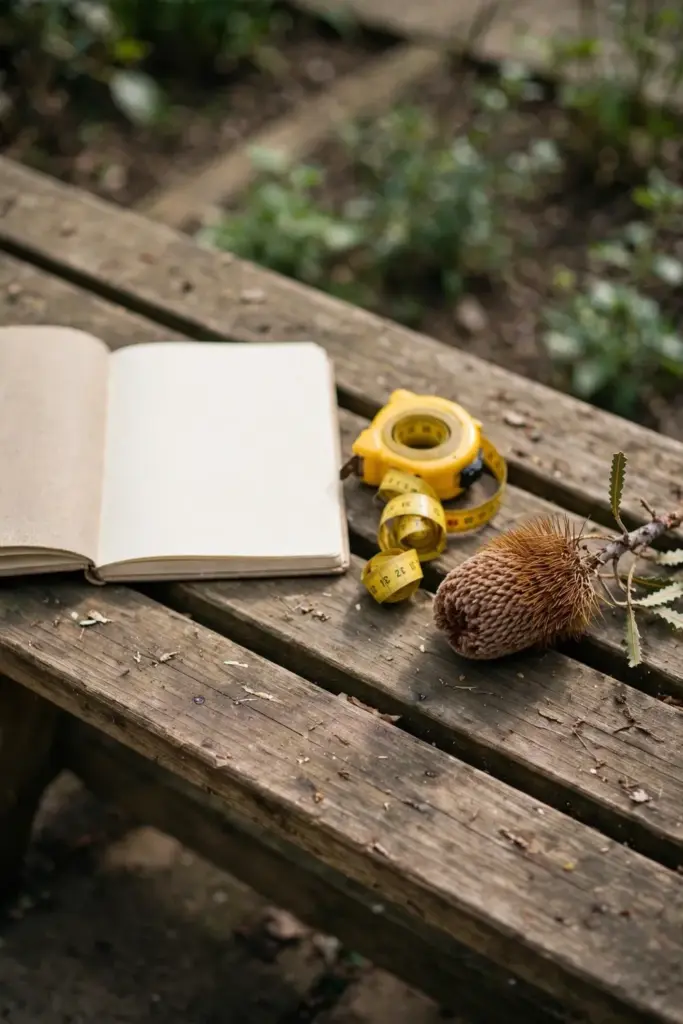
Measure first, then shop. Walk the gap with a tape and write down the height and spread the spot allows. A plant that needs 5 m of spread gets 5 m of clear ground, not 3 m and a hope. The table above turns that measurement into a short list in minutes.
1. Birthday Candles
Birthday Candles gives a pot or a rockery a true dwarf banksia with gold spikes tipped in red.
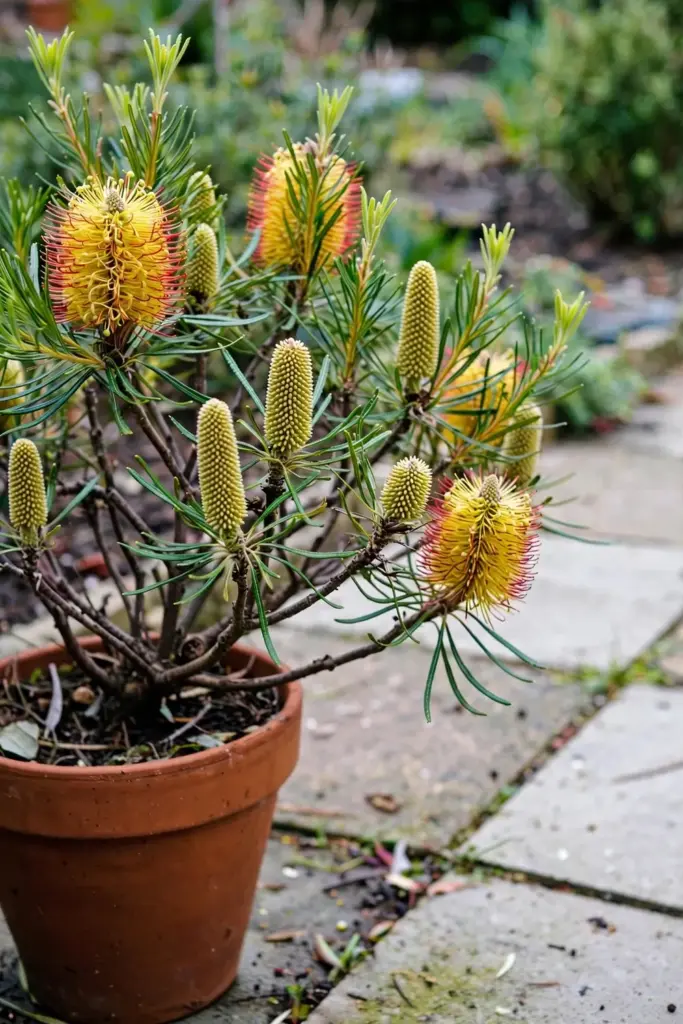
Banksia spinulosa var. spinulosa ‘Birthday Candles’ grows 45 cm tall and about 1 m across, with red-styled gold flowers 15 cm high by 6 cm across. The leaves are narrow with lime green new growth, and the stems grow naturally crooked. The plant comes from an exposed headland near Ulladulla on the New South Wales south coast. It suits a pot on a patio, a rockery, or a low border where a small plant reads at eye level.
Give it one care pointer. Keep it in a pot where summers run humid. The dwarf form fares better in pots than in humid garden soil, and a pot gives the sharp drainage it wants.
Expect quirks. Some plants flower heavily one year and rest the next, and the cultivar carries a reputation for a short life in novice hands. A pot with sharp drainage and a light hand on fertilizer gives it the best run.
2. Pygmy Possum
Pygmy Possum gives a bank or a rockery a groundcover that stays ankle high and spreads 3 m wide.
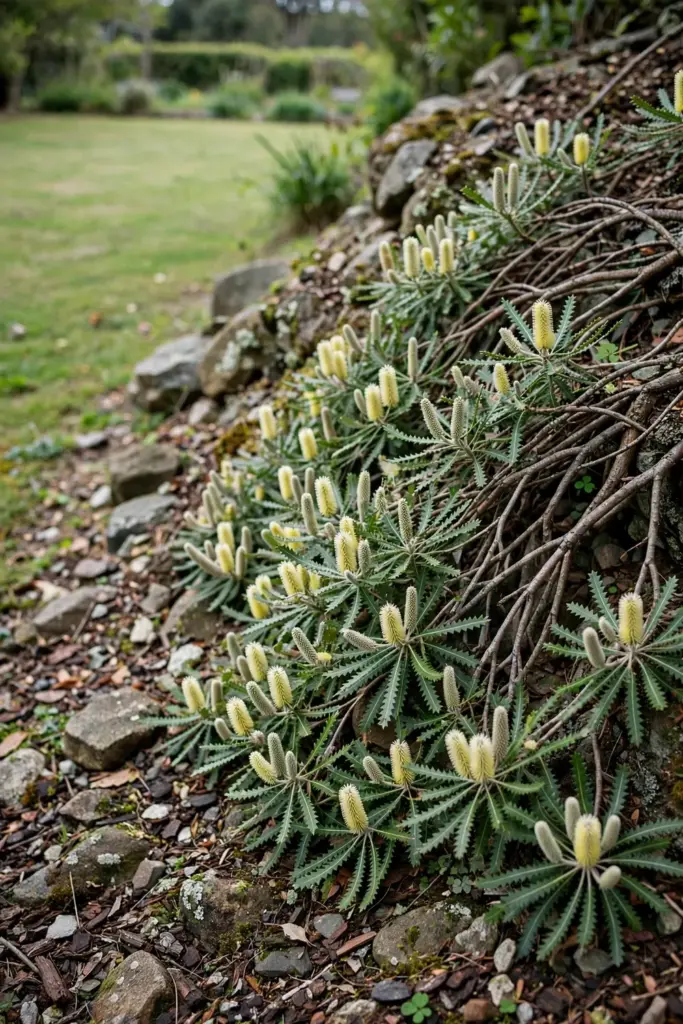
Banksia serrata ‘Pygmy Possum’ is a prostrate form of Old Man Banksia. It grows 30 cm high and 2 to 3 m wide, with dense arching branches that knit into a mat. The large silver-yellow spikes open in summer and autumn and carry heavy nectar. The plant suits a bank, a rockery, or a low wall where a cascading mat beats a lawn. It handles full sun to part shade and well drained clay to sandy loam.
Give it one care pointer. Prune lightly after flowering to keep the mat dense. A skipped year lets the center open up and thin out.
The mat also holds a bank. Roots grip sandy soil and slow runoff, and the dense foliage shades out weeds beneath it. A Pygmy Possum on a slope does two jobs at once: groundcover and erosion control.
3. Honey Pots
Honey Pots gives a pot or a low hedge a compact shrub with all-gold spikes that smell of honey.
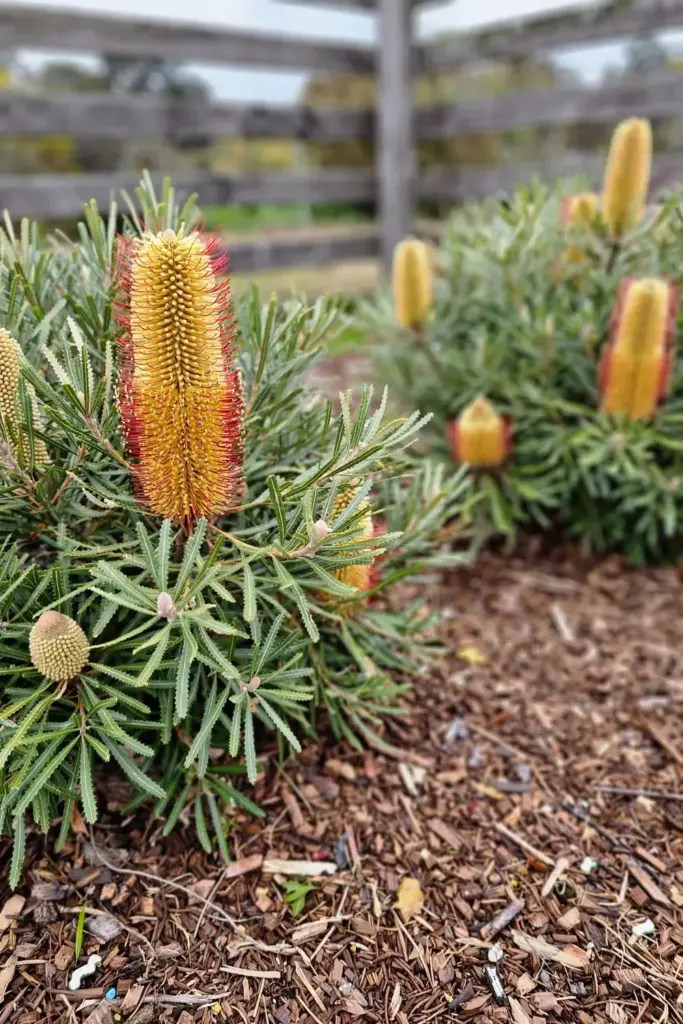
Banksia spinulosa ‘Honey Pots’ grows 1 m tall and 1.5 m wide, with golden flowers with red styles, according to the Australian Cultivar Registration Authority Honey Pots record. The spikes run 50 to 200 mm long, and flowering runs March to August. The same record rates frost hardiness high. The plant comes from a coastal area in southern Victoria. It suits a pot, a mass planting, or a low hedge where a dense shrub earns its keep.
Give it one care pointer. Propagate it from cuttings, never from seed. Seedlings will not hold the cultivar’s size and flower color.
Lean in close on a warm day. The spikes carry a strong honey fragrance, which is the trait the cultivar record names first. A Honey Pots in flower perfumes a patio, and the same spikes cut well for a vase.
4. Roller Coaster
Roller Coaster gives a coastal bank a cascading groundcover that hugs the ground and holds sand.
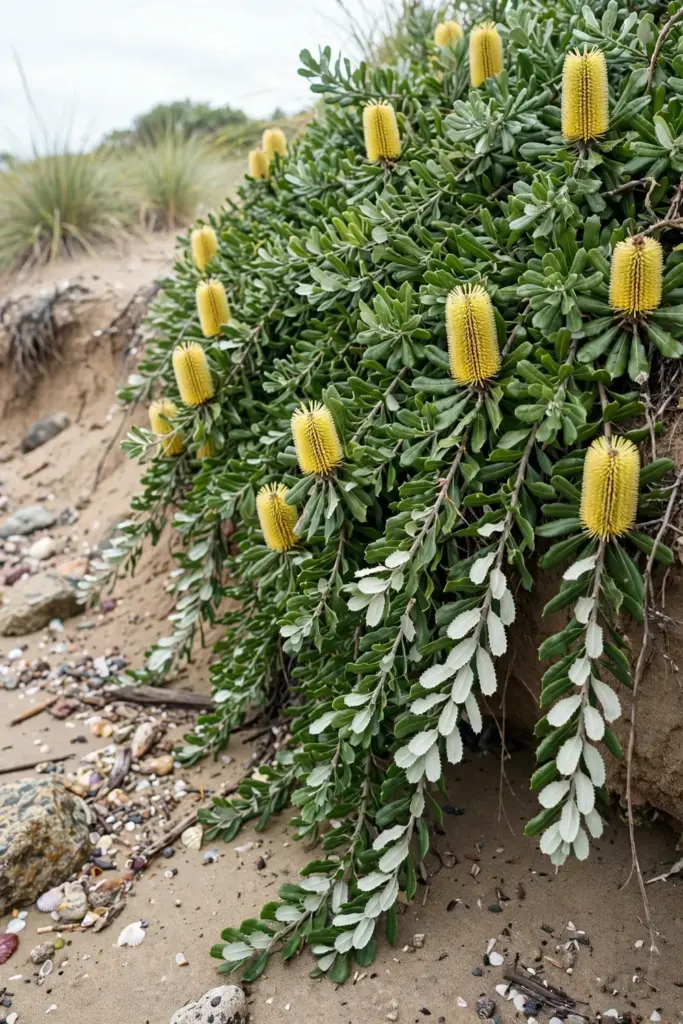
Banksia integrifolia ‘Roller Coaster’ grows 20 to 40 cm tall and 3 to 4 m wide, with yellow flower spikes in autumn and winter. The dense low foliage gives cover to skinks and small lizards, and birds feed on the nectar-rich flowers. The plant suits banks, rockeries, and the borders of shrubberies, and it handles coastal sandy soil well. It grows in sub-tropical, warm temperate, cool temperate, and Mediterranean climates.
Give it one care pointer. Let it cascade. A plant pegged flat or cut back hard loses the falling form that makes it worth growing.
Use it where lawn fails. A steep bank, a sandy strip, or a rocky edge all suit a cascading mat better than turf. The plant covers ground that a mower never reaches, and it flowers while it does it.
5. Heath Banksia
Heath Banksia gives a garden a winter screen with orange-red spikes that pull honeyeaters into the cold months.
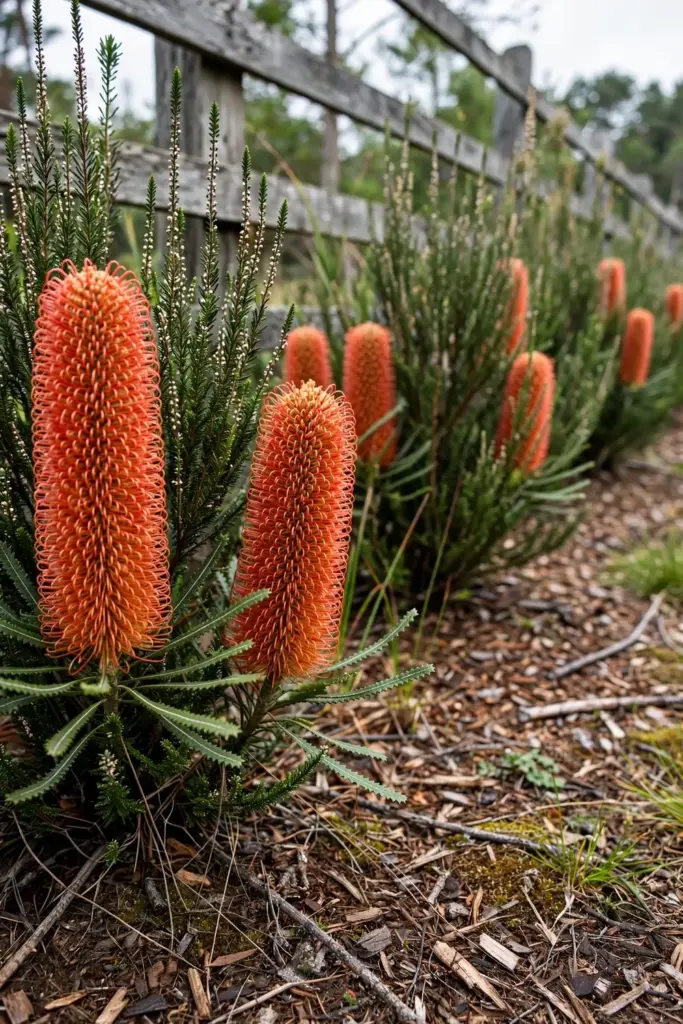
Banksia ericifolia grows 2 to 6 m tall and 2 to 5 m wide, with large cylindrical spikes in orange to red. Flowering runs through autumn and winter, generally March to August, and a mature shrub can carry dozens of spikes at once. The fine heath-like leaves give the plant its common name. The plant suits a screen, a windbreak, or a feature shrub in full sun. It grows on the sandy heaths of coastal New South Wales.
Give it one care pointer. Prune lightly after flowering to hold a dense screen. For the general method, spring pruning techniques covers tool care and cut placement in full.
Birds do the advertising. Wattlebirds, New Holland honeyeaters, and eastern spinebills work the spikes through winter, and the dense prickly foliage gives small birds safe nesting cover. A Heath Banksia screen is a habitat wall, not just a boundary.
6. Hairpin Banksia
Hairpin Banksia gives a garden a tough mid-size shrub with dark orange spikes and fine leaves.
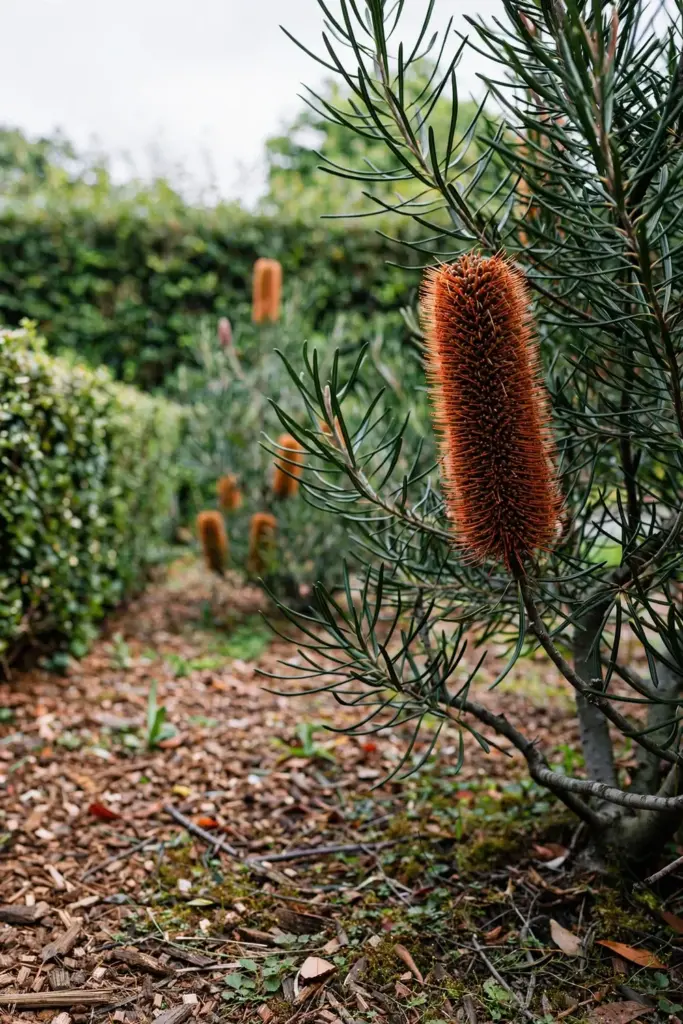
Banksia spinulosa grows 1.5 to 3 m tall and to 2 m wide, with fine leaves and dark orange flower spikes. The species ranges along the eastern coastline from Victoria to central Queensland. It suits a shrub border, an informal hedge, or a bird garden in full sun. It handles light frost and sandy or clay soils once established, and it tolerates Canberra winter frosts once established, according to the Australian National Botanic Gardens hairpin banksia page.
Give it one care pointer. Wait for flowers. Seedlings take two to three years before flowering, and five to six years to reach full height.
The species is the parent of many dwarf cultivars on this page, including Birthday Candles and Honey Pots. Breeders started from the same fine leaves and dark orange spikes and selected smaller, denser forms. The species plant stays the benchmark for toughness.
7. Silver Banksia
Silver Banksia gives a cold garden a tough hedge with silver-backed leaves and pale yellow spikes.
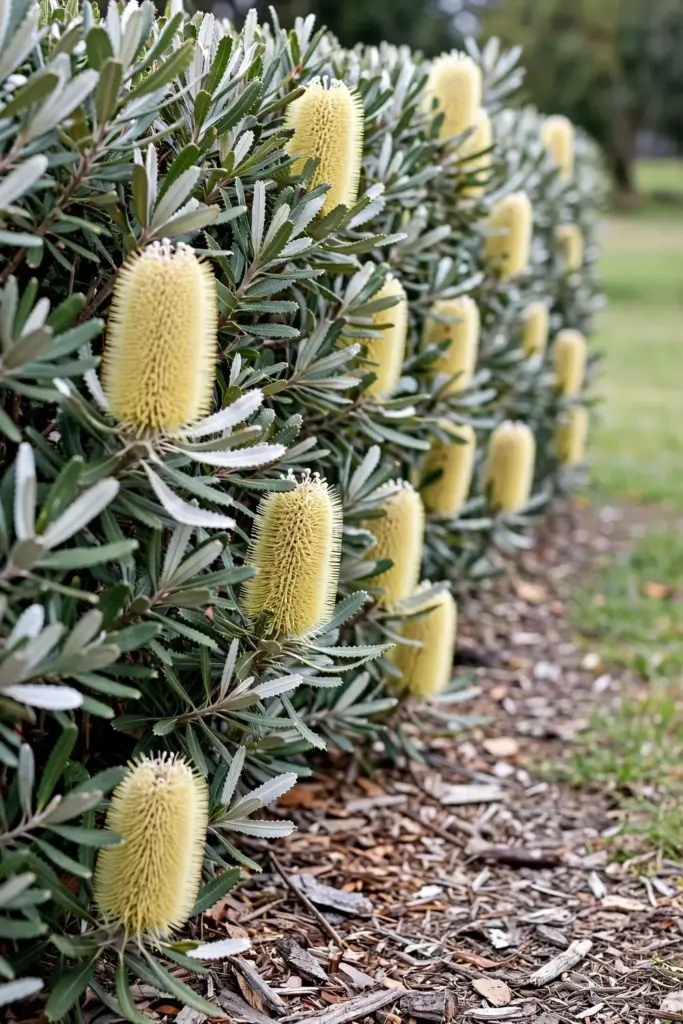
Banksia marginata grows 2 to 8 m tall and 1 to 5 m wide, with narrow leaves that carry a silvery gray underside. The spikes are pale yellow, 5 to 10 cm tall, and open in spring, summer, and autumn. The plant is frost resistant and grows from Victoria and south eastern South Australia through eastern New South Wales and Tasmania. It suits a hedge, a windbreak, or a screen in full sun or dappled shade. It tolerates salt and lime, and it grows in sand, loam, or clay.
Give it one care pointer. Prune after flowering to hold a dense hedge. An unpruned plant turns straggly as it ages into a tree.
Buy the form that matches the job. The species varies from a dense shrub to a tree, and some plants carry a lignotuber that resprouts after fire while others regenerate from seed. A nursery label that names the form saves a decade of guessing.
8. Coast Banksia
Coast Banksia gives a coastal garden a tough shade tree that takes wind and salt spray head on.
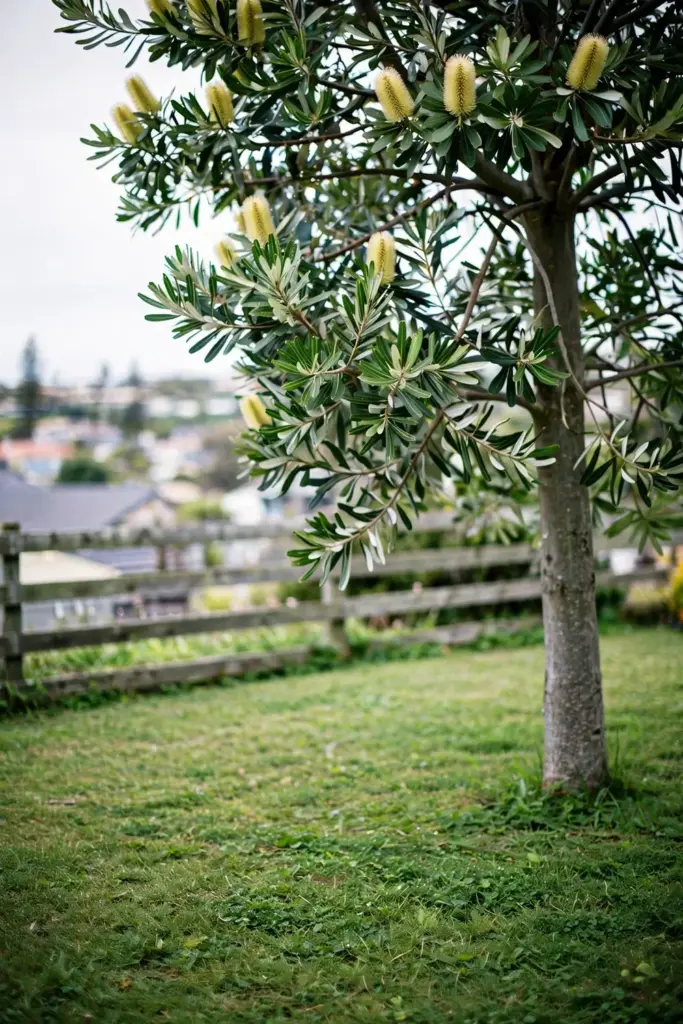
Banksia integrifolia grows 5 to 25 m tall with a spread of about 3 m, and it tolerates wind and salt spray, according to the Australian National Botanic Gardens banksia guide. The pale yellow spikes run about 12 cm long and open January to July. The leaves carry entire margins, which the species name records. The plant suits a coastal block, a large garden, or a street tree where salt and wind rule out softer trees. It grows along the eastern coast from Queensland into New South Wales and Victoria.
Give it one care pointer. Give it room. A tree form in a courtyard fails, and a Coast Banksia in a small block becomes a removal job.
The nectar does quiet work in autumn, when few other plants flower. Birds and mammals feed on the spikes through the lean months, and beekeepers value the autumn and winter flowering because it keeps hives going when little else blooms.
9. Saw Banksia
Saw Banksia gives a large garden a gnarled feature tree with corky bark and silver-gray spikes.
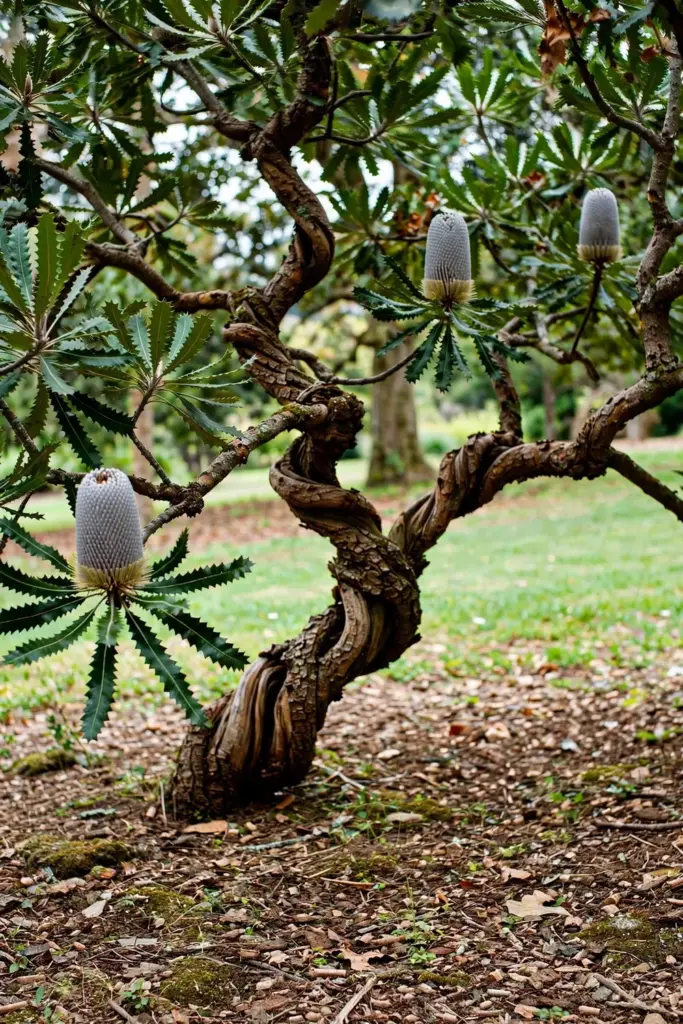
Banksia serrata grows 2 to 10 m tall and 2 to 7 m wide, with serrated leaves and a rough cork-like bark that withstands fire. The flower spikes are silvery gray with cream or golden styles, and the cones hold many follicles. The plant carries a lignotuber, an underground structure that stores energy for regrowth after fire. It suits a feature spot, a coastal garden, or a large native bed in well drained sandy soil. It grows from Wilsons Promontory in Victoria to Maryborough in Queensland, and in Tasmania.
Give it one care pointer. Let the gnarl develop. A Saw Banksia pruned into a neat ball loses the twisted character that makes it a feature.
Age is the point. A young plant looks plain. A decades-old tree grows a short twisted trunk, grotesque spreading branches, and bark like cork. The gardener buys the character early and waits for the tree to grow into it.
10. Swamp Banksia
Swamp Banksia gives a wet corner the one banksia that treats damp soil as home, not a threat.
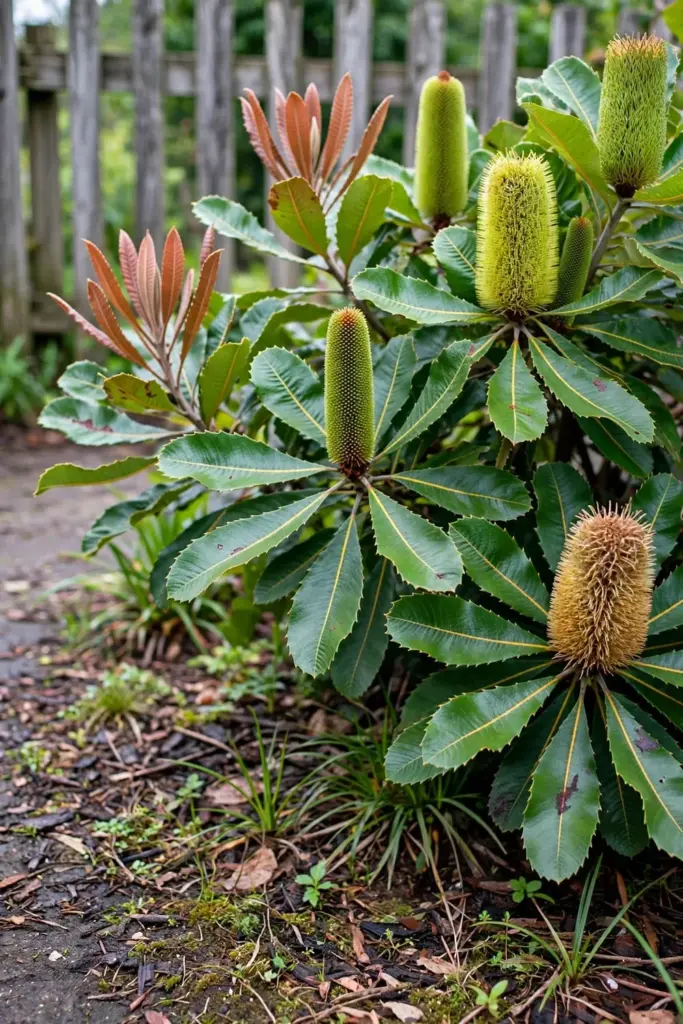
Banksia robur grows about 2 to 3 m tall and 2 m wide, with broad leathery leaves 30 cm long at their largest. The spikes open lime green and age to bronze gold, and flowering runs December to May. The plant grows in coastal swamps and along creek beds from New South Wales to the top of Queensland. It suits a swale, a dam edge, a damp low spot, or a bed that stays soggy after rain. It tolerates frost and salt spray, and it handles humidity better than most banksias.
Give it one care pointer. Water it more than other banksias. A swamp banksia in dry soil sulks, while a swamp banksia in damp soil thrives.
Watch the new growth. Young leaves open russet, then harden to deep green, and the plant regrows after fire from its base. The spent cones hold their shape long after flowering and give the shrub structure through winter.
11. Wallum Banksia
Wallum Banksia gives a sandy coastal garden a tough screen with wrinkled orange bark and cream-yellow spikes.
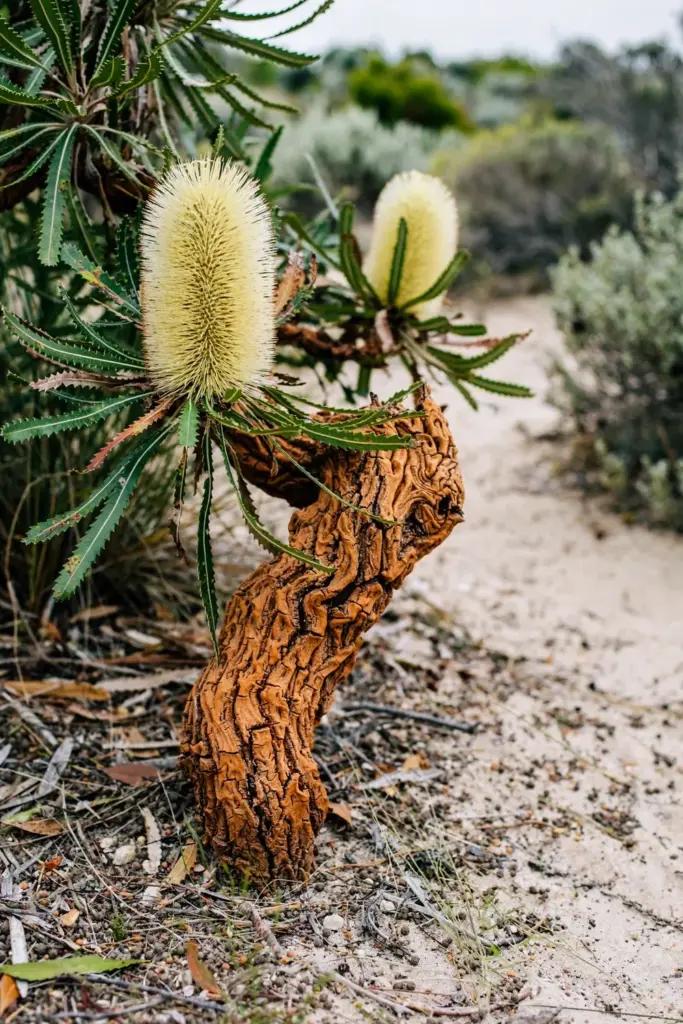
Banksia aemula grows 3 to 8 m tall and 1 to 4 m wide, with long narrow serrated leaves to 22 cm long. The large creamy yellow conical spikes grow to 20 cm tall and open in autumn. The trunk carries wrinkled orange bark, and the plant resprouts from a lignotuber after fire. It grows on sandy soil in coastal heath from around Sydney to Bundaberg. It suits a coastal screen, a feature shrub, or a windbreak on sand. It tolerates drought, light frost, and salt laden wind.
Give it one care pointer. Prune after flowering to hold a dense screen. An unpruned plant grows open and leggy on sand.
It stays the less common choice beside its close relative Saw Banksia, and that is a shame. The brighter flowers, the wrinkled orange bark, and the flexible habit make it a strong alternative for a coastal screen that also cuts well for arrangements.
12. Giant Candles
Giant Candles gives a garden the biggest banksia flower show of any pick on this page, on a shrub a home garden can hold.
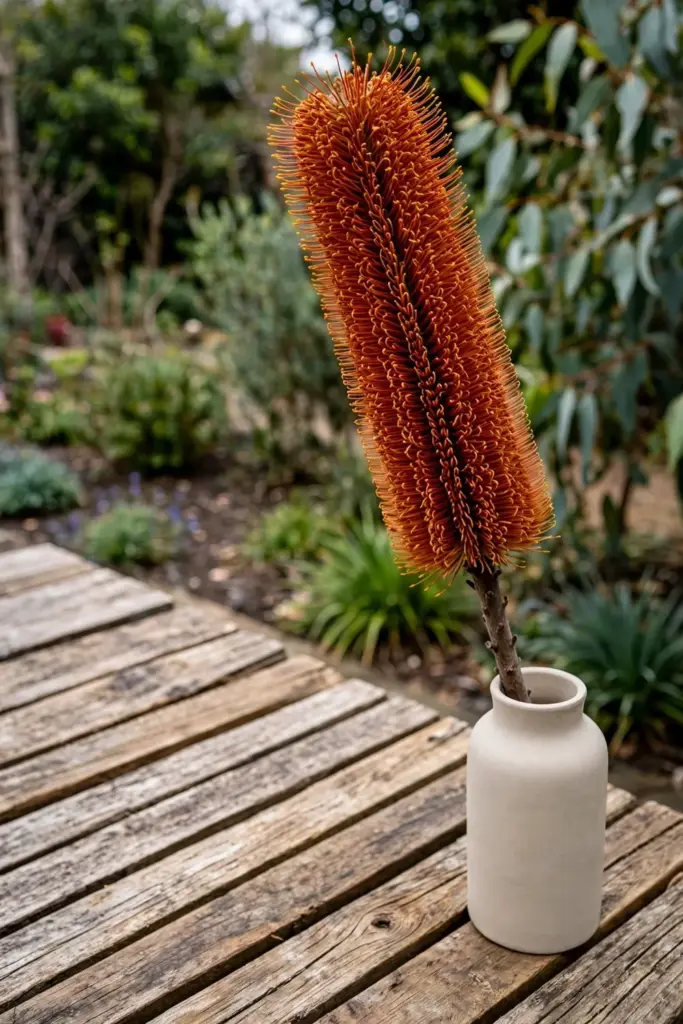
Banksia ‘Giant Candles’ is a hybrid of Banksia ericifolia and Banksia spinulosa. It grows to around 5 m if left unpruned, with flower spikes 40 cm long. The deep orange heads open over autumn and winter, when few other flowers bloom. The plant suits a medium screen, a feature shrub, or a cut-flower row in full sun. It is very adaptable and draws birds to the nectar-rich flowers.
Give it one care pointer. Propagate it from cuttings only. Seedlings will not hold the hybrid’s spike size or flower color. For conditioning and vase life, fall cut flowers covers harvest and vase care in full.
Cut one spike and the vase is full. The deep orange heads open over autumn and winter, when the garden holds few other flowers. A single stem in a tall vase carries the whole display.
13. Firewood Banksia
Firewood Banksia gives a dry garden two-toned spikes in red and yellow on a tree that earns a feature spot.
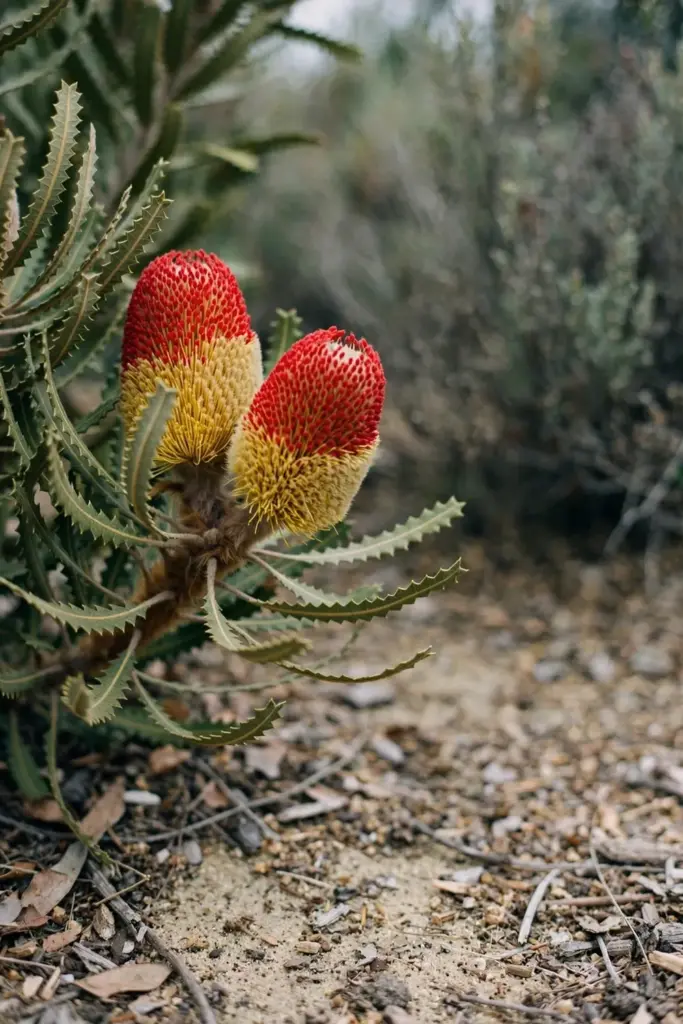
Banksia menziesii grows 2 to 10 m tall and 2 to 8 m wide, with acorn-shaped spikes of pink and orange flowers in autumn and winter, according to the Botanic Gardens of South Australia plant selector. The serrated leaves are dull green with paler new growth. The plant grows on sandy soils in scrubland and low woodland from Perth north to the Murchison River. It suits a feature tree, a nature strip, or a dry garden in a Mediterranean climate. It needs sharp drainage and dry summers.
Give it one care pointer. Skip it where summers run humid. The species is sensitive to Phytophthora dieback and turns short-lived in humid-summer districts such as Sydney.
Ask about the dwarf form when the block runs small. A dwarf Firewood Banksia grows to about 2 m and keeps the same two-toned spikes. The dwarf form flowers a little later in spring and fits a courtyard the species tree never could.
14. Scarlet Banksia
Scarlet Banksia gives a dry garden red and white spikes shaped like a bottlebrush, and the best cut flower in the genus.
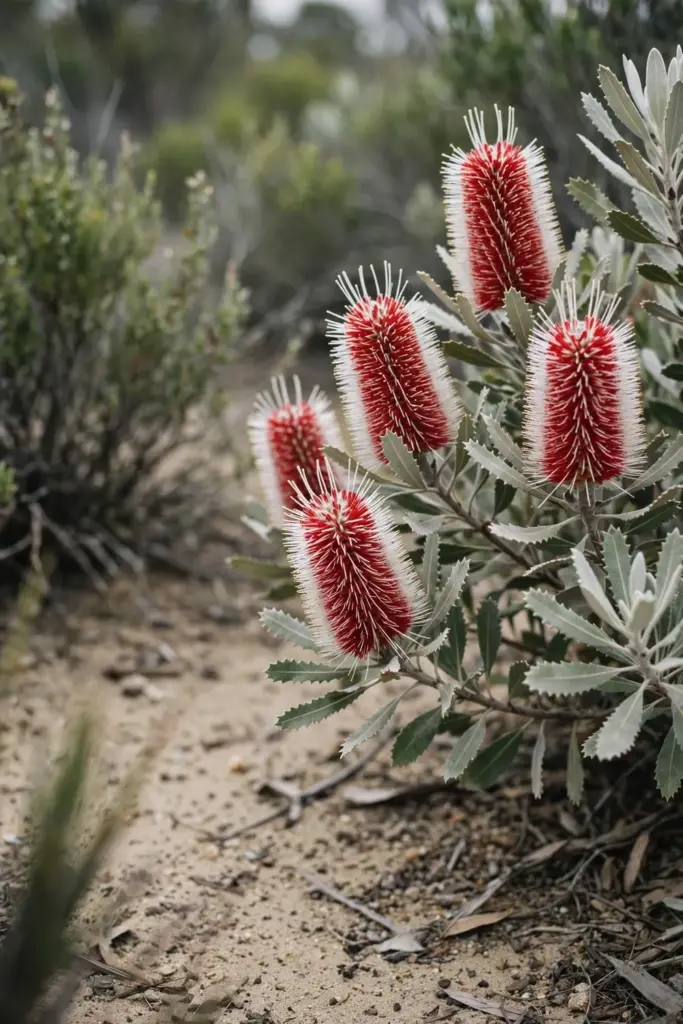
Banksia coccinea grows 2 to 4 m tall and 1 to 2 m wide, with oval leaves 3 to 9 cm long. The spectacular red and white spikes open in spring and summer and sit at the stem tips, which makes them easy to cut. The plant grows on sandy soil on sand dunes, heathland, and sandplains on the south coast of Western Australia from Albany to west of Esperance. It suits a feature shrub, a cut-flower row, or a dry garden in full sun. It is difficult to grow in eastern states where summer humidity runs high.
Give it one care pointer. Cut the spent stems after flowering. The cut keeps the shrub dense and sets up the next flower season.
Florists prize it. The species ranks among the most important banksias for the cut flower trade, and growers raise it commercially in several countries. A home garden plant gives the same red spikes without the freight.
15. Acorn Banksia
Acorn Banksia gives a large dry garden orange spikes shaped like acorns on a tree that reads from down the street.
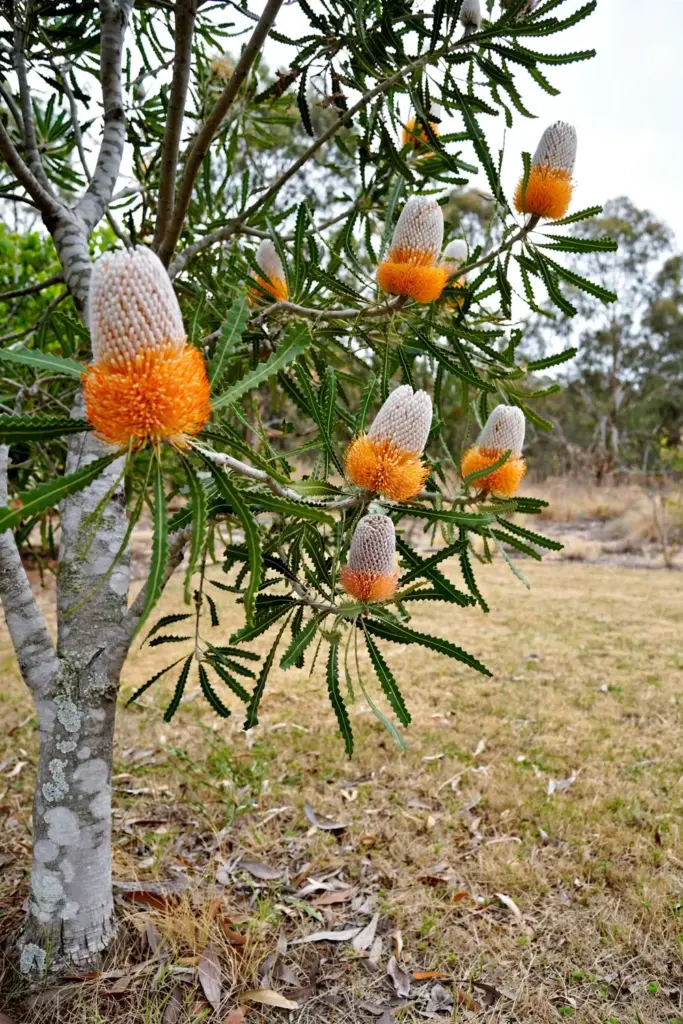
Banksia prionotes grows 6 to 10 m tall and 3 to 5 m wide, with smooth gray bark and long narrow leaves with triangular lobes. The acorn-shaped spikes open orange in autumn and winter, from buds that start woolly white. The plant is endemic to Western Australia, from Shark Bay in the north down past Perth to near Albany. It suits a large garden, a feature tree, or a cut-flower row in full sun and well drained soil. It tolerates moderate frost and dry summers, and it has no lignotuber, so it cannot resprout after fire.
Give it one care pointer. Plant it where the orange spikes show. A tree hidden behind a shed wastes the brightest flower in the genus.
The spikes sit at the branch tips, so the color reads from a distance. Cut-flower growers prize the terminal spikes for the same reason. A tree on open lawn shows the full display, and the birds find it fast.
Frequently Asked Questions About the Best Banksia Varieties
Birthday Candles stays smallest at 45 cm tall and 1 m across, and Honey Pots follows at 1 m tall and 1.5 m wide. Both suit pots with sharp drainage and a native potting mix. Pick a dwarf cultivar by name. Never buy a seedling labeled plain banksia, because a tree banksia in a pot outgrows the pot, starves, and dies. For more container natives, best Australian native plants for container gardens covers the wider range.
Heath Banksia is best for a tall hedge, at 2 to 6 m with dense fine foliage. Silver Banksia follows for a cold-climate hedge, at 2 to 8 m with silver-backed leaves. Honey Pots suits a low hedge at 1 m. Plant hedge rows 1 to 2 m apart for density. Prune lightly after flowering to hold the shape. A hedge left unpruned turns open and flowers poorly.
Eastern species handle humidity best. Swamp Banksia tops the list, since it grows in coastal swamps and tolerates damp soil. Coast Banksia, Heath Banksia, and Wallum Banksia handle east-coast humidity well. Western species suffer in humid summers. Firewood Banksia, Scarlet Banksia, and Acorn Banksia need dry summers and sharp drainage, and they turn short-lived in humid districts.
Giant Candles makes the best cut flower, with spikes to 40 cm long on a shrub to 5 m. Scarlet Banksia follows, with red and white spikes at the stem tips that cut cleanly. Firewood Banksia and Acorn Banksia also cut well. Cut in the morning, recut the stem underwater on a slant, and strip the lower leaves. Change the vase water every three days.
Swamp Banksia suits a wet spot, at 2 to 3 m tall with broad leathery leaves. It grows in coastal swamps and handles damp soil that kills other banksias. Wallum Banksia tolerates less well-drained soil than most banksias and suits a sandy damp site. Every other pick on this page wants sharp drainage. Plant them on a mound where water pools.
Buy the Label, Not the Flower
A banksia lives for decades, and the choice you make at the nursery outlives the planting day. Measure the gap first. Match the pick to the climate second. Buy the labeled plant third. The smallest banksia that does the job gives flowers, birds, and structure without a fight against the house, the fence, or the drain.
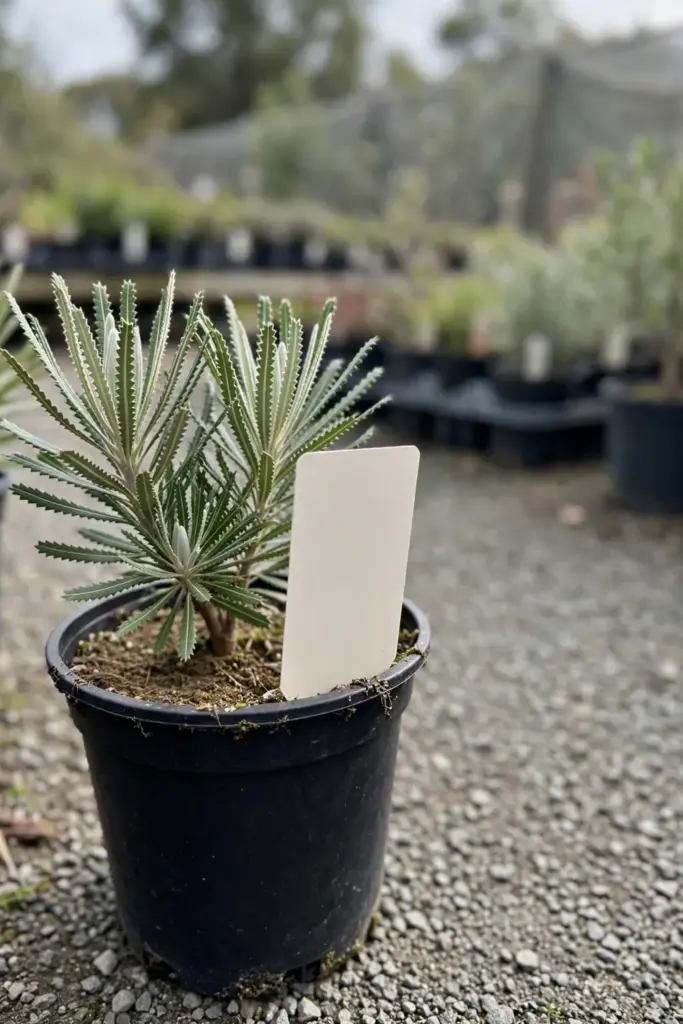
Start with one plant. A single well-placed banksia teaches the gardener more in a season than a row of guesses teaches in five years. Watch how it handles the first summer, the first frost, and the first dry spell. The second banksia gets easier, because the first one showed what the block actually grows.
Keep the list handy at the nursery. Fifteen picks fit on one page, and the table narrows them to three in a minute. The right banksia is the one that fits the gap, the soil, and the summer you actually have.