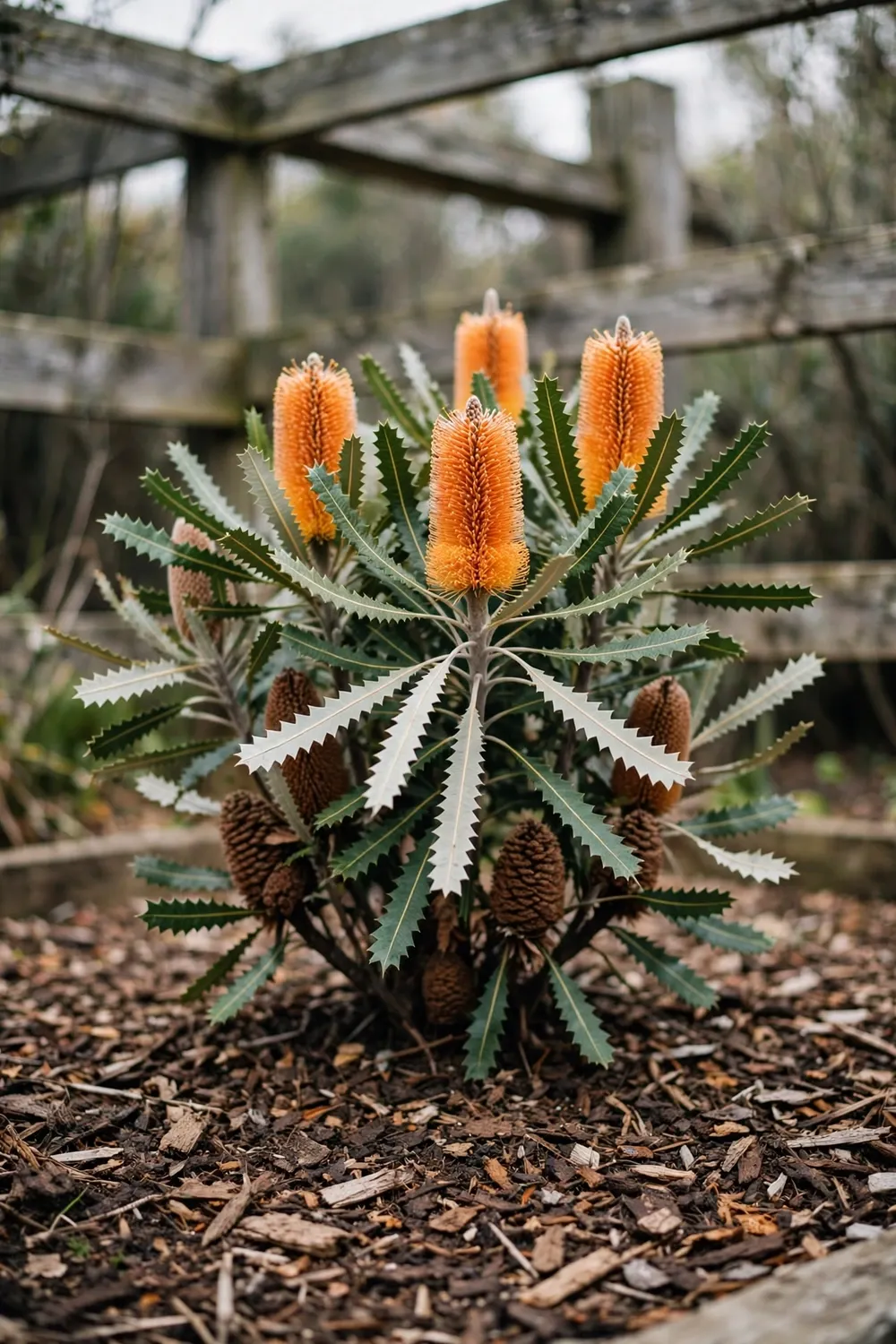

Pick a banksia that fits the space, the soil, and the summer humidity you actually have. The genus holds 173 species, from groundcovers under half a meter to trees that reach 25 m, according to the Australian National Botanic Gardens banksia guide. That range is the whole game. A tree form in a courtyard fails. A dwarf form in a large bed looks lost.
I have learned that a banksia forgives neglect faster than it forgives kindness.
Three rules carry the article. Drainage comes first. Phosphorus stays out. The plant stays where you put it. The rest of this page walks through form, climate, planting, watering, feeding, pruning, pots, propagation, problems, and cut flowers.
Choose the Right Banksia Form for Your Garden
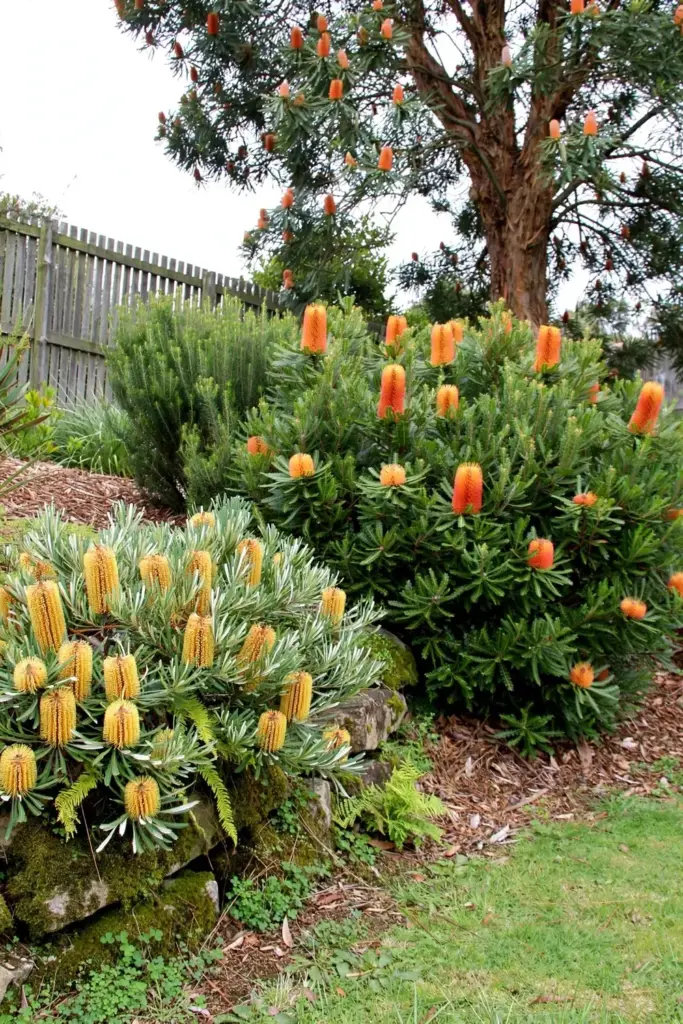
Match the form to the gap in the garden, not to the flower on the label. A banksia lives for decades. The mature height decides the spot. Three forms cover most home gardens.
| Form | Example | Mature Height | Best For |
|---|---|---|---|
| Dwarf groundcover | Banksia spinulosa ‘Birthday Candles’ | Under 1 m | Pots, rockeries, low borders |
| Shrub or screen | Banksia ericifolia | To 5 m | Screens, windbreaks, cut flowers |
| Tree | Banksia integrifolia | To 25 m | Large blocks, shade, coastal sites |
The dwarf form suits a pot or a low border. The shrub form suits a screen. The tree form suits a large block only. Coast banksia reaches 25 m, according to the same Gardens guide, so it needs a block with room for a tree, not a courtyard.
Buy a labeled plant. The label should name the full botanical name and the mature height. A plant sold as plain “banksia” hides the mature size, and the mature size is the number that matters.
Buy a tube or a small pot, not a large advanced plant. A young banksia settles faster than a big one. Its roots establish before the first summer, while a large plant spends the season sulking in a root ball that never grips the surrounding soil. Check the pot before you buy. Roots circling the base in a tight mat mean the plant sat too long. Roots just reaching the pot wall mean a healthy young plant ready to move.
Space each plant to its mature width. A screen of ericifolia needs 2 m between plants. A groundcover needs room to spread. Crowded banksias shade each other, flower poorly, and trap damp air that invites rot. Measure the gap with a tape before you dig.
Match the Origin to Your Climate
Buy an eastern species for an east-coast garden. Buy a western species only when the drainage is sharp and the summer air stays dry. The genus splits cleanly by coast. South western Australia holds the greatest diversity, with 60 species recorded, according to the same Gardens guide. No species occurs naturally on both coasts except the tropical Banksia dentata.
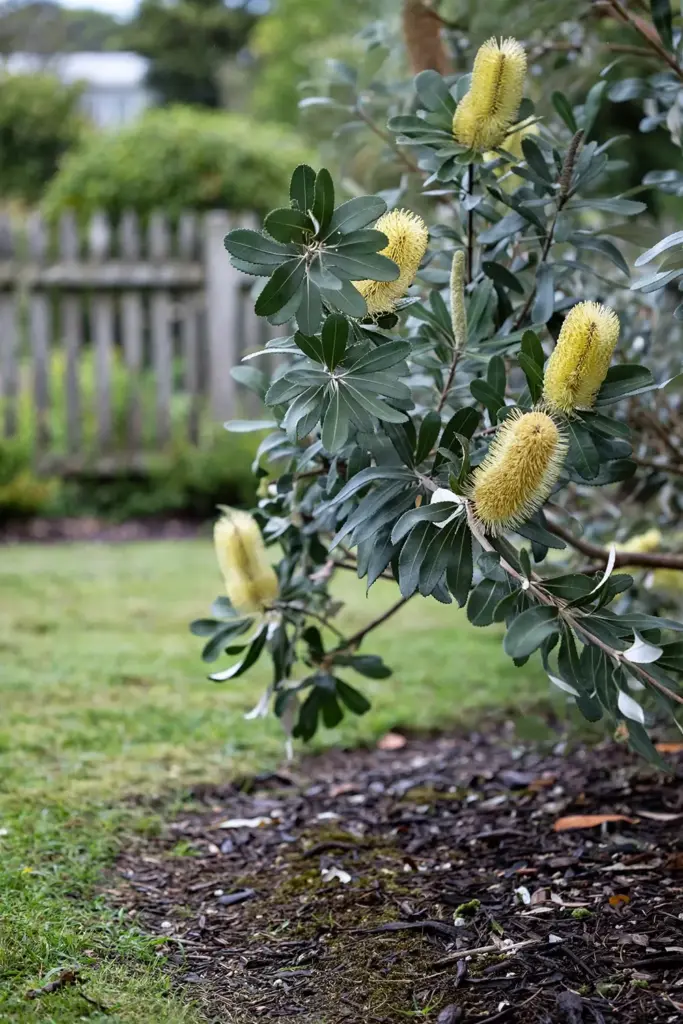
Western species suffer in humid summers. The Gardens guide states that species native to Western Australia are prone to root-rot fungus and generally do not grow well where summer brings high humidity and rainfall. An eastern species handles east-coast humidity far better.
Frost rarely kills an established banksia. Young plants are the tender stage. Frost tolerance when young can be a problem, with the critical temperature at minus 3 degrees Celsius, according to the Banksia and Dryandra species guide. Shelter a young plant under wide eaves or against a wall on frost nights. Hairpin banksia tolerates Canberra winter frosts once established, according to the Australian National Botanic Gardens hairpin banksia page.
Wind and salt shape the choice too. Heath banksia tolerates frost and salt spray, according to the same Gardens guide. Coast banksia grows well in coastal areas and tolerates salt spray. A banksia behind a coastal fence still copes with salt air, but a plant on an exposed headland needs one of these two tough species. Inland gardens face the opposite problem: dry wind that strips moisture from leaves. A windbreak of hardy shrubs on the windward side protects a young banksia through its first summer.
In the far north, the choice narrows to one species. Tropical banksia, Banksia dentata, occurs across northern Australia, according to the same Gardens guide. It handles the wet-dry tropical cycle. Temperate banksias fail in the Top End humidity and the monsoon wet. A Top End gardener plants dentata or skips banksias altogether.
Pick a Sunny Spot With Sharp Drainage
Give a banksia full sun and soil that drains fast. Banksias grow best in well drained soils in a sunny position, according to the same Gardens guide. Shade gives open, spindly growth and few flowers. Hairpin banksia turns open and spindly under dense shade or heavy plant competition, according to the same hairpin banksia page.
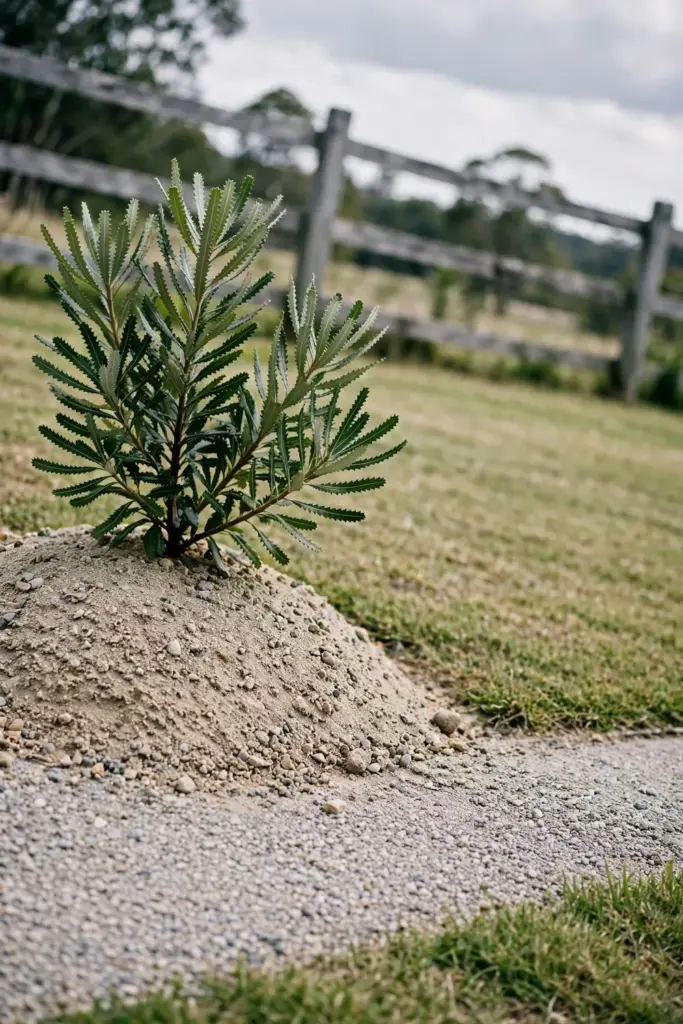
Test the drainage before you dig. Dig a hole 30 cm deep and fill it with water. Water that still sits after an hour means the spot drains too slowly. Pick another spot or build a mound.
Plant on a low mound on clay. The mound lifts the root zone above the wet layer. Heavy loam or clay soils can be lightened with coarse sand or gypsum worked through, according to the same species guide. Gypsum breaks up clay structure without changing the pH much. Sand alone in clay can set like concrete, so mix it through rather than layering it.
Keep the trunk clear. Mulch sits around the plant, never piled against the trunk. A mulch volcano holds moisture against bark and invites rot. For the soil side of the job, building soil health covers structure and drainage in full.
A raised bed fixes a flat clay site. Build the bed 30 cm high with native garden soil mixed with coarse sand. The raised bed drains like a mound but gives a flat planting surface. A banksia in a raised bed grows as well as one on a mound, and the bed suits a row of shrubs better than scattered mounds.
Plant It Once and Plant It Right
Plant in autumn in the southern states, when the soil still holds warmth and the mild months ahead let roots settle. Plant in early spring in the far north, ahead of the wet season growth. A banksia hates root disturbance and rarely transplants well, so choose the spot once and commit to it.
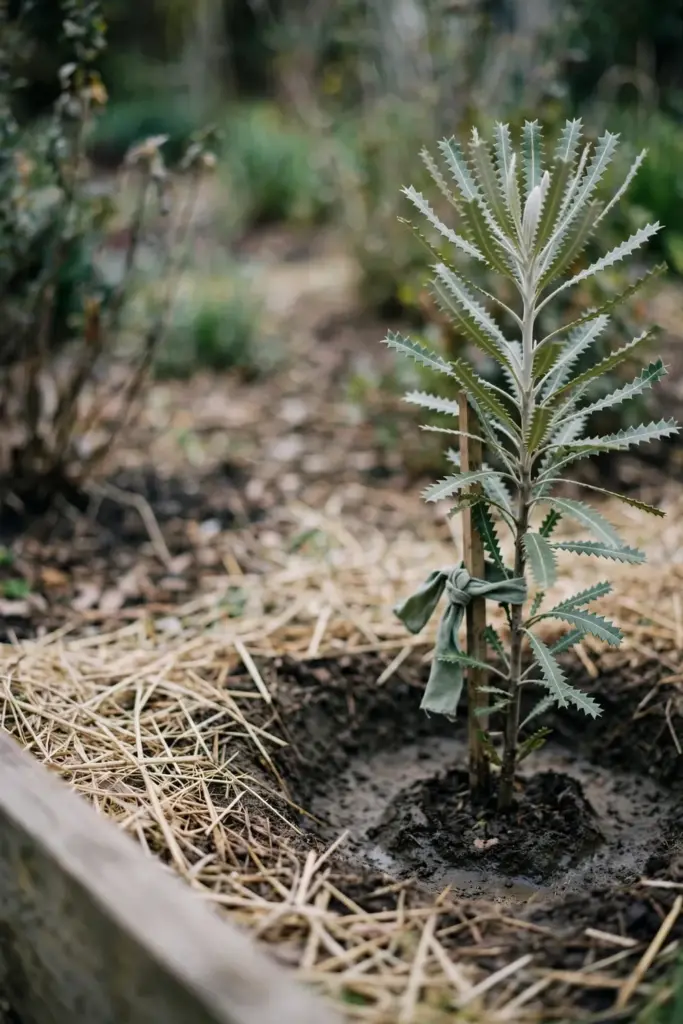
Dig the hole the same depth as the pot and twice as wide. Set the plant at the same level it sat in the pot. Burying the stem invites rot. Backfill with the soil you dug out. Do not enrich the hole with manure, compost, or mushroom compost. Rich fill feeds phosphorus straight to proteoid roots that evolved for poor soil.
Water the plant in deeply. Soak the root zone until water runs off the surface, then let it drain. A slow soak settles soil around the roots and removes air pockets.
Stake only when the plant cannot stand on its own. Tie loosely with a soft tie and remove the stake once the roots grip. A stake left for a season rubs bark and weakens the stem.
Mark the planting date on the label and keep the label on the plant. The date tells you when the first year of watering ends. The label reminds you of the species when you come back to prune or troubleshoot a year later. A garden without labels forgets its own plants.
Water for Establishment, Then Back Off
Water regularly through the first year or two, then cut back. Banksias build deep roots when water arrives in deep soaks with dry gaps between them. Shallow daily watering builds shallow roots, and shallow roots fail in the first dry summer.
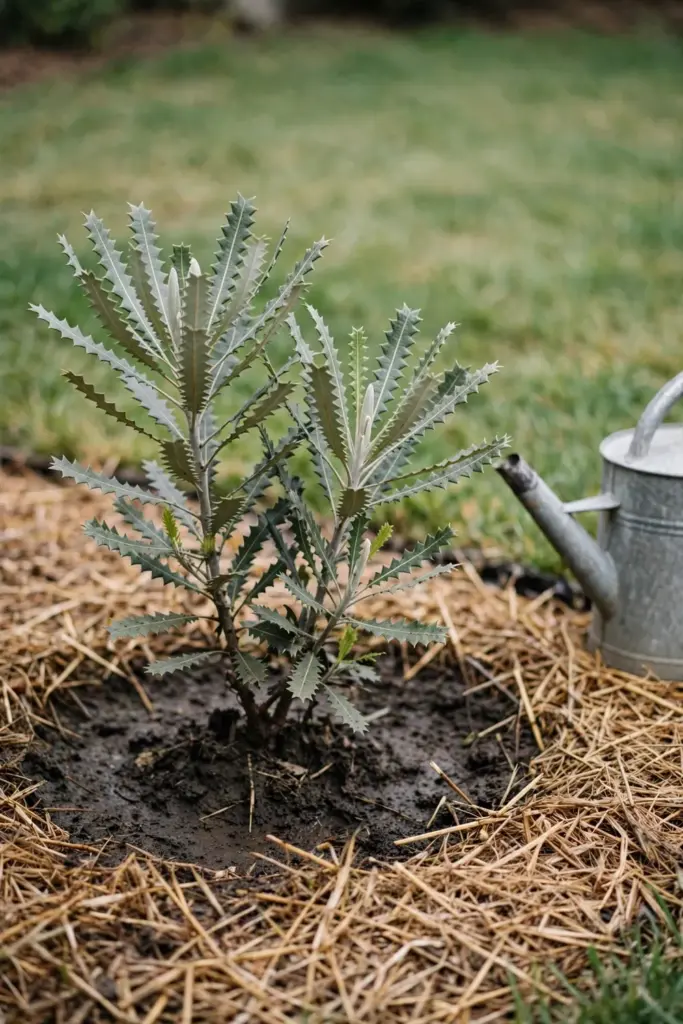
Water the roots, not the foliage. Watering is best done in early morning or late afternoon, with care taken to water the roots and not the foliage, according to the same species guide. Wet foliage overnight invites fungal attack. Morning watering lets leaves dry by midday.
Once established, reduce watering or stop it to promote root development, according to the same species guide. An established banksia lives on rainfall in most districts. Water again only in a long dry spell, when leaves dull and new growth stalls.
A potted banksia breaks this rule. Pots dry fast. Check the mix with a finger each week. Water when the top 5 cm feels dry, and let the pot drain fully. A saucer full of standing water rots roots within weeks.
Heat waves test a young banksia hardest. Leaves curl and dull in a heat wave. A deep soak the evening before a hot day carries the plant through. A light sprinkle on the hot day itself evaporates before it reaches the roots. Shade cloth over a young plant on a 40-degree day saves leaves, but the cloth comes off when the heat breaks.
Feed Low Phosphorus or Feed Nothing
Feed a banksia low-phosphorus native fertilizer only, or feed nothing at all. Banksias carry proteoid roots, dense clusters of short rootlets that mine phosphorus from poor soil. Those roots pull phosphorus from soil that other plants find barren. Added phosphorus overwhelms the system and poisons the plant.
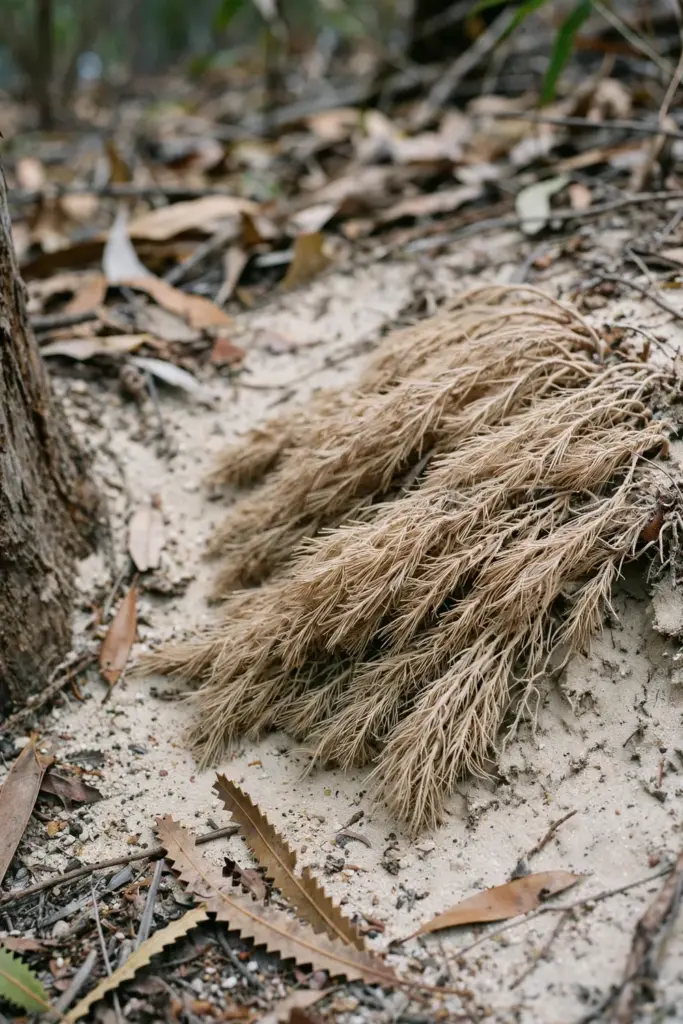
Standard garden fertilizer kills banksias. Poultry manure, mushroom compost, and general-purpose fertilizer all carry phosphorus loads that banksia roots cannot handle. Keep them out of the bed entirely. A bag labeled for natives still deserves a label check. Read the phosphorus figure before you buy.
In reasonable soil, nothing beats nothing. Banksias in the wild grow on some of the poorest soils on earth. A garden bed with decent structure and a leaf litter layer already feeds a banksia. Fertilizer adds risk without adding growth.
When you do feed, use one light dose of slow-release low-phosphorus native fertilizer in early spring. Fern-like banksia takes fertilizer in early spring with slow-release fertilizer, and organic fertilizer in summer, with fertilizers kept low in phosphorus, according to the Australian National Botanic Gardens fern-like banksia page. One dose covers the season. A second dose invites yellow leaves.
Read the label before you buy any fertilizer. The three numbers on the bag give nitrogen, phosphorus, and potassium in that order. A native fertilizer keeps the middle number low. A general-purpose fertilizer with a high middle number belongs nowhere near a banksia bed. When the label gives no numbers, put the bag back on the shelf.
Yellow leaves after feeding point to phosphorus. Stop feeding. Flush the bed with deep water to move salts down. New growth should emerge green. Old yellow leaves rarely recover, and pruning them off keeps the plant tidy.
Prune Light and Stay in Green Wood
Prune after flowering to shape the plant and remove spent spikes. Most banksias respond to light pruning, according to the same Gardens guide. Tip prune young plants to build a bushy frame. A light tip prune after flowering keeps the plant compact and sets up the next flower season.
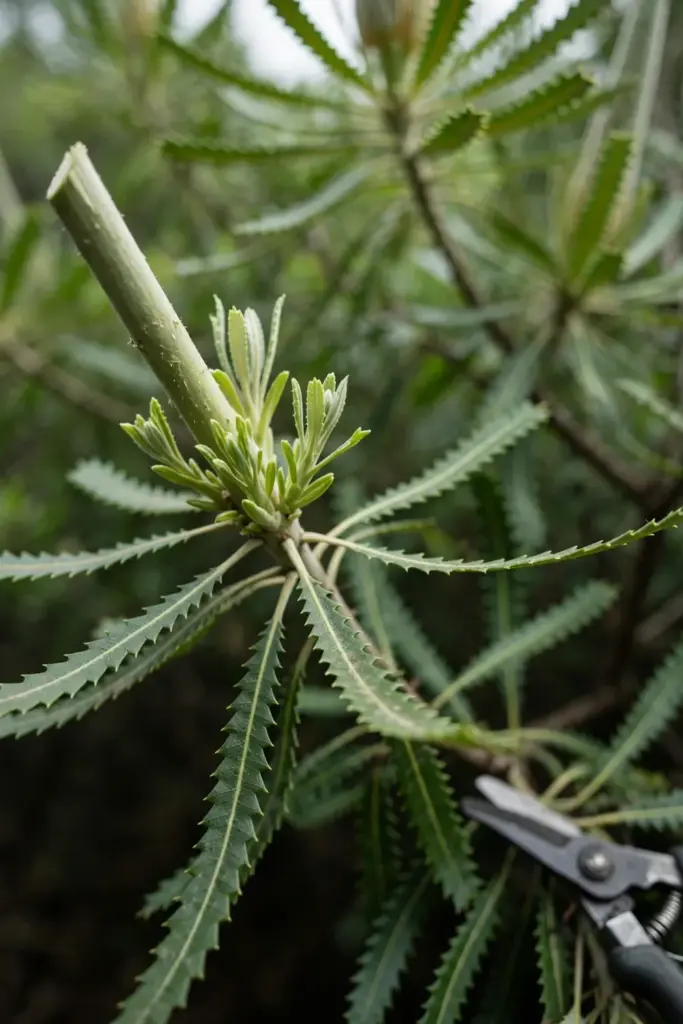
Lignotuber species take harder pruning. Plants with lignotubers can be heavily pruned on the upper branches, but not the trunk, according to the same species guide. The lignotuber holds dormant buds under the bark that respond to fire or pruning. Those which form a woody rootstock can be heavily pruned, according to the same Gardens guide.
Non-lignotuber species regrow only from green wood. Plants without lignotubers require more care, according to the same species guide. Their new growth comes at the nodes on the branches. Prune only on branches bearing green foliage, never below that point. Remove whole growth intervals, leaving a node to shoot.
Never cut into bare old wood on a non-lignotuber banksia, because bare wood carries no buds and the branch dies back to the next green node or dies entirely. A cut that looks tidy in winter leaves a dead stub by spring.
Cut cleanly and cut sparingly. A clean cut heals fast. A torn cut invites dieback. For the general method, spring pruning techniques covers tool care and cut placement in full.
Deadhead spent spikes only when you want a tidy plant. A spent spike left on the plant forms the woody cone that holds next season’s seed. A spike cut off after flowering keeps the plant neat and pushes energy into new growth. Both choices work. Cut the spike when the plant looks messy, leave it when you want seed.
Grow Dwarf Banksias in Pots
Grow only dwarf or groundcover banksias in pots. A tree banksia in a pot outgrows the pot, starves, and dies. Dwarf forms such as Banksia spinulosa ‘Birthday Candles’ stay small enough to live in a container for years.
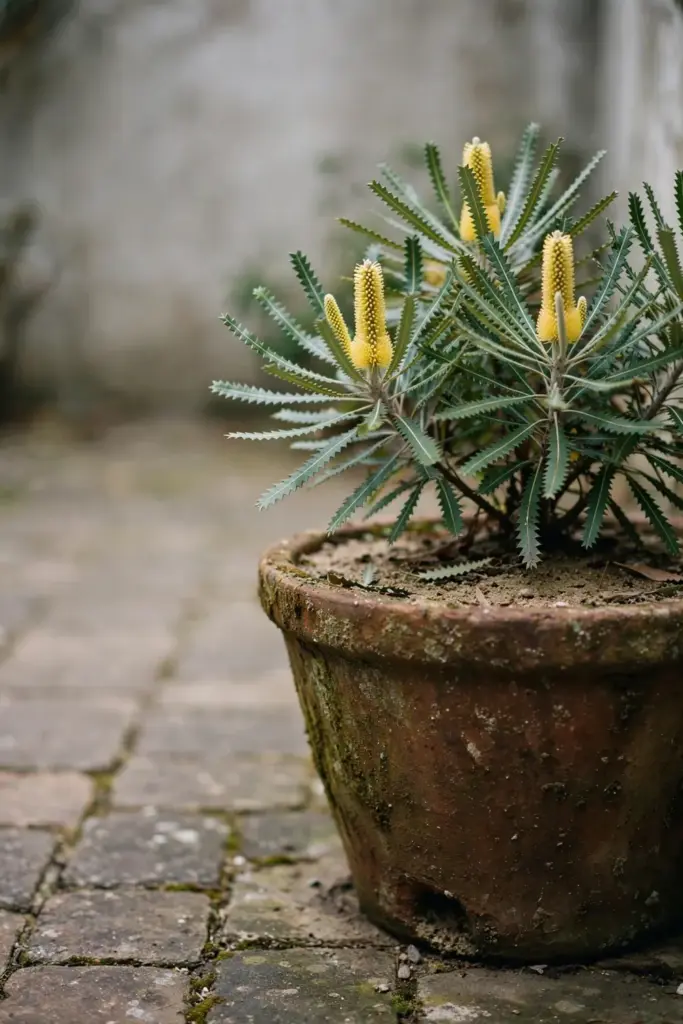
Use a large, deep pot. A deep pot holds a stable root zone and drains better than a shallow bowl. One drainage hole is not enough. Check that water runs freely from every hole before planting.
Fill the pot with native potting mix. Standard potting mix carries added fertilizer, often with phosphorus. A mix labeled for Australian natives keeps phosphorus low. Add coarse sand or perlite for extra drainage if the mix feels heavy.
Water a potted banksia more often than one in the ground. Pots dry from all sides. Feed once a year at most, with low-phosphorus native fertilizer. Repot only when roots circle the pot hard, and move the plant once. Every repot disturbs the proteoid roots.
A potted banksia also suits a balcony or courtyard where the ground is paved. The pot becomes the garden. For more container ideas, best Australian native plants for container gardens covers the wider native range.
Move a potted banksia slowly into full sun. A plant raised under shade cloth burns in a day of direct sun. Shift the pot into morning sun for a week, then into full sun. The leaves harden gradually and the plant settles without scorch.
Propagate From Seed or Cuttings
Propagate banksias from seed or from cuttings, with seed suiting species plants and cuttings suiting cultivars, which never come true from seed. Banksia ‘Giant Candles’ must be propagated from cuttings, according to the same Gardens guide.
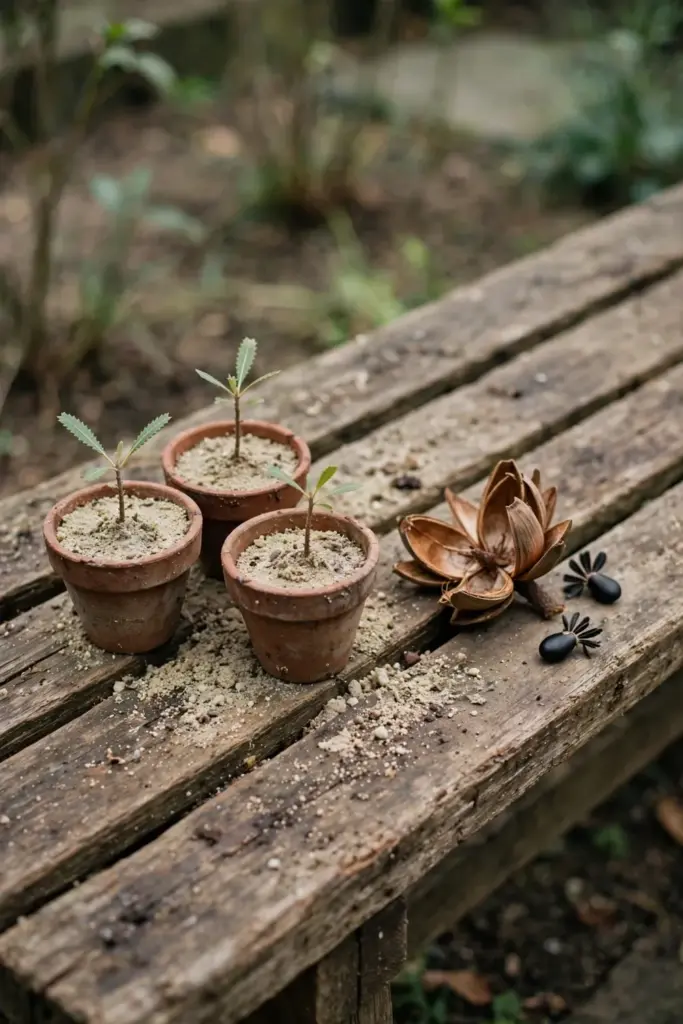
Many banksias hold seed in woody follicles until fire or heat opens them. The fruits protect the seeds from foraging animals and from fire, according to the same Gardens guide. In many species the fruits will not open until they have been burnt or completely dried out. A kitchen oven simulates the heat. Place the cone in an oven at 120 to 140 degrees Celsius for about an hour, according to the same Gardens guide. The follicles open and the seeds come out with tweezers. Two black winged seeds sit in each follicle, with a separator between them.
Sow seed in a very freely draining seed-raising mix. Keep the mix moist but never wet. Banksia seedlings are prone to fungal attack, so sterilize the seed-raising mix before planting, according to the same Gardens guide. Transplant seedlings into small pots as soon as the first true leaves appear. A potting mix of equal parts river sand, loam, and leaf mould suits young plants, according to the same Gardens guide.
Seed-grown banksias take years to flower. Hairpin banksia seedlings take two to three years before flowering and five to six years to reach full height, according to the same hairpin banksia page. Germination comes two to five weeks after sowing. Fern-like banksia flowers in 4 to 5 years, according to the same fern-like banksia page.
Take cuttings in late spring to keep a cultivar true. Cuttings taken in late spring retain specific color forms, according to the same hairpin banksia page. Use semi-hardened stems, keep the mix moist, and shade the cuttings from hot sun.
Collect cones only from your own garden or with permission. Wild banksias feed birds and hold seed for the next generation. A cone with a small hole in the woody fruit signals insect larvae inside, and that seed will not germinate, according to the same Gardens guide. Pick cones without holes for the best seed.
Store dry seed in a paper envelope in a cool, dark drawer. Hairpin banksia seed remains viable for several years, according to the same hairpin banksia page. Label the envelope with the species and the collection date. Seed in a sealed plastic bag traps moisture and molds. Paper breathes and keeps the seed dry.
Stop the Three Problems Before They Start
Root rot kills more banksias than any other problem. Western species are prone to root-rot fungus, according to the same Gardens guide. Wet feet cause it. Sharp drainage prevents it. Plant on a mound, keep mulch off the trunk, and never let a pot sit in a saucer of water.
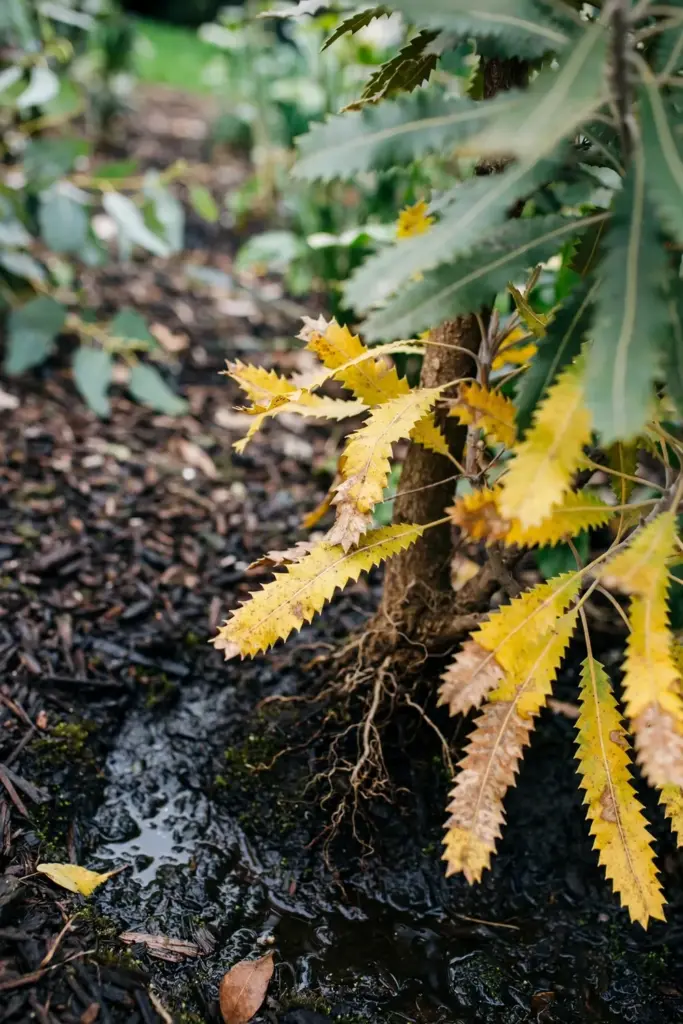
Phosphorus poisoning shows as yellow leaves and stalled growth. The cause is almost always fertilizer, manure, or compost with phosphorus. Stop feeding. Flush the bed with deep water. The plant recovers slowly or not at all, so prevention beats cure.
No flowers usually means shade, youth, or overfeeding. A banksia in shade flowers poorly. A seedling under three years old has not matured yet. A plant fed with standard fertilizer puts energy into leaves, not spikes. Fix the light, wait out the youth, and cut the fertilizer.
Borers tunnel into stressed wood. Healthy banksias resist them. A plant stressed by wet feet or bad pruning attracts borers. Remove a dead branch promptly. Keep the plant vigorous and the borers stay away.
Spot root rot early by watching the leaves. A banksia wilting in wet soil has root trouble, not thirst. Leaves yellow from the base upward. Growth stops. The trunk base feels soft. Dig gently at the root zone. Brown, mushy roots confirm rot. Cut away the dead roots, improve the drainage, and let the soil dry before watering again.
Fire ecology shapes banksia seed, and the fire side of the story lives on 2 pyrophytic plants found in Australia. The growing guide stays on the garden. The fire article covers serotiny and regeneration in full.
Cut Flower Spikes for the Vase
Cut banksia spikes for the vase when the flowers open fully. A spike cut at full color lasts two weeks in water. Cut in the morning, when stems hold the most moisture, and recut the stem underwater on a slant before it goes in the vase.
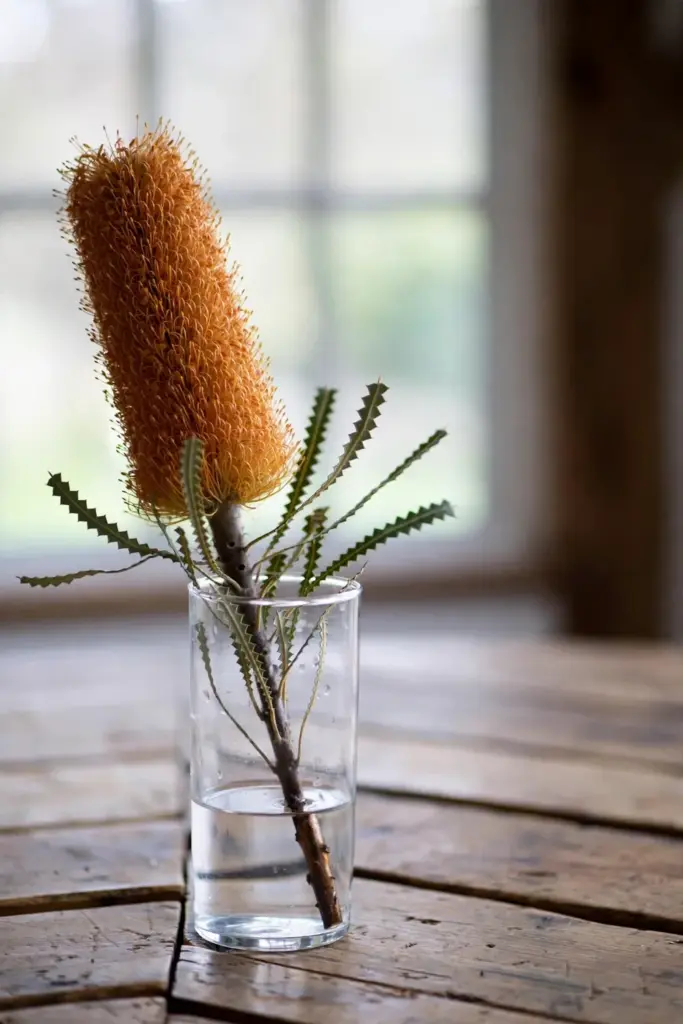
Banksia ‘Giant Candles’ grows flower heads to 40 cm long, according to the same Gardens guide. One spike fills a vase on its own. The deep orange heads open over autumn and winter, when few other flowers bloom.
Leave some spikes on the plant. Spent spikes form the woody cones that hold next season’s seed. Birds feed on the nectar and the insects that visit the flowers. A plant stripped of every spike loses its seed and its wildlife value.
Strip the lower leaves from the cut stem. Leaves underwater rot and cloud the water. Change the water every three days. A clean vase keeps the spike fresh for the full two weeks.
Dry a spike for a long-lasting arrangement. Stand the cut spike upright in an empty vase in a dry room. The woody cone holds its shape for months. A dried spike suits a shelf or a mantel where fresh flowers fade fast. Keep dried spikes away from open flame, since the dry wood catches easily.
Frequently Asked Questions About Growing Banksia in Australia
Yes, with a mound and drainage work. Plant on a low mound so the root zone sits above the wet layer. Work coarse sand or gypsum through heavy clay. Never let water pool around the trunk. Hairpin banksia grows in light to moderately heavy soils with good moisture and drainage, according to the same hairpin banksia page. A waterlogged clay bed kills banksias fast.
Phosphorus tops the list. Standard fertilizer, poultry manure, or mushroom compost poisons proteoid roots and yellows the leaves. Stop feeding and flush the bed with deep water. Alkaline soil also yellows leaves. Hairpin banksia grows poorly and yellows in soils with high lime content, according to the same hairpin banksia page. Waterlogging yellows leaves too. Check drainage before you feed anything.
Expect years, not months. Hairpin banksia seedlings take two to three years before flowering, according to the same hairpin banksia page. Fern-like banksia flowers in 4 to 5 years, according to the same fern-like banksia page. Cuttings from a mature plant flower sooner because the wood already carries adult growth. Buying a potted plant in flower gives the fastest result of all.
No, in practice. Banksias hate root disturbance and rarely transplant well. Proteoid roots sit shallow and break easily. A moved banksia sulks for months and often dies. Choose the spot once, at planting time, and commit to it. A plant in the wrong spot is better replaced with a new tube than moved.
No. Most banksias grow well without any fertilizer. In reasonable soil, leaf litter and rainfall feed the plant. When you do feed, use one light dose of slow-release low-phosphorus native fertilizer in early spring. More fertilizer does not mean more flowers. It means yellow leaves and a shorter life.
Plant One Banksia and Leave It Alone
A banksia asks for three things. Sun. Drainage. No phosphorus. Give it those three and the plant does the rest. Plant once, water deep through the first year or two, prune light after flowering, and step back.
Start with one plant. A single banksia teaches the gardener more in a season than a row of guesses teaches in five years. Watch how it handles the first summer, the first frost, and the first dry spell. The second banksia gets easier, because the first one showed what the block actually grows.