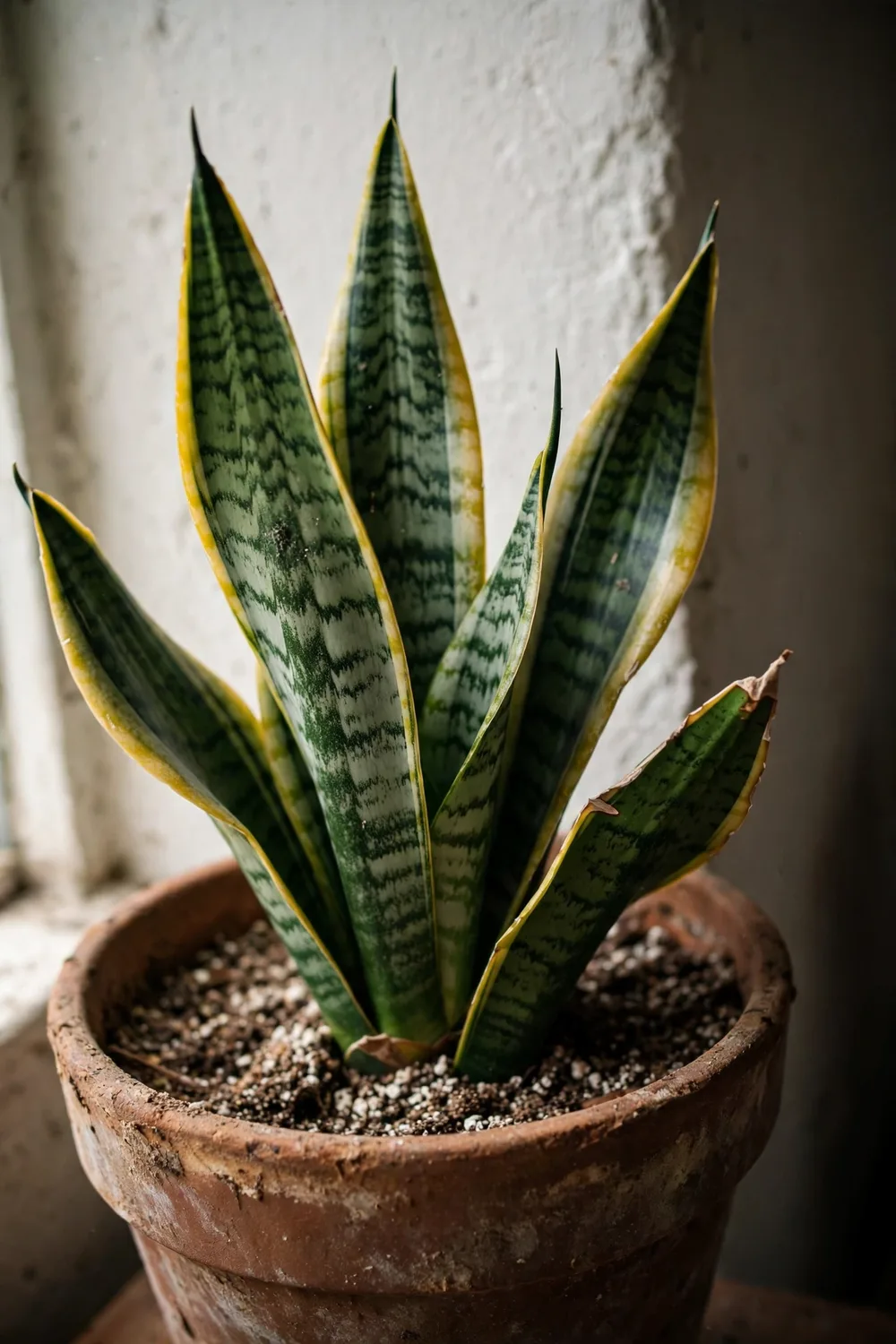

Buy a snake plant, give it bright indirect light, and water it only when the soil has dried through. Water it 2 times a month in summer and once a month in winter. In my experience, the snake plants that die are almost always the ones on a fixed weekly watering schedule.
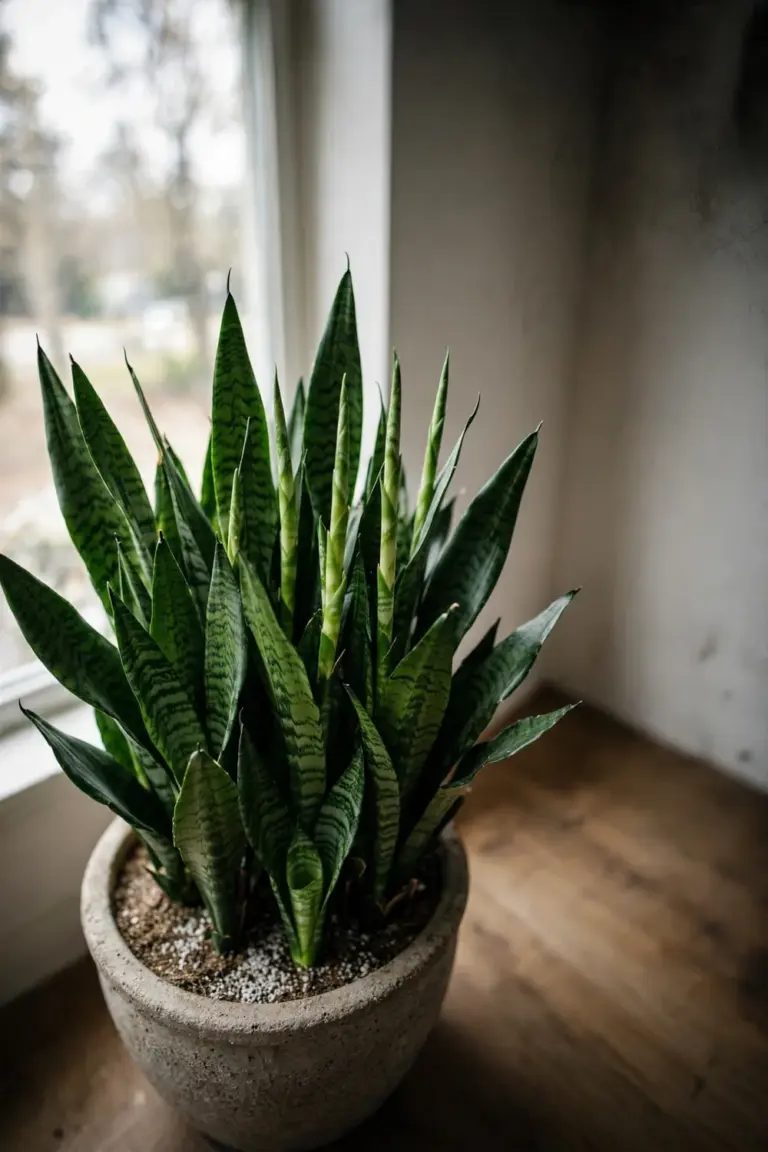
That is how to grow snake plant, the nearly unkillable indoor plant sold under two Latin names: Dracaena trifasciata, syn. Sansevieria trifasciata. The snake plant is a stemless evergreen perennial from tropical West Africa that stores water in thick upright leaves and creeping rhizomes, which is why it survives months of neglect and rots in days from kindness. Its stiff sword leaves rise 60 to 90 cm in most homes, dark green with pale gray-green cross-banding, and it asks for almost nothing besides dry feet.
The rest of this page is 12 moves, from the name on the label to a healthy clump you can divide for free plants. It includes the name-change explainer, the watering rhythm that actually works, the one propagation rule that decides whether your ‘Laurentii’ keeps its yellow edge, an honest reading of the NASA air-cleaner claim, and a pet-toxicity warning you should read before the plant shares a room with a cat.
| Snake Plant at a Glance | |
|---|---|
| Botanical name | Dracaena trifasciata (syn. Sansevieria trifasciata) |
| Family | Asparagaceae |
| Native range | Tropical West Africa, from Nigeria east to the Congo |
| Indoor height | 60 to 90 cm; mature leaves reach 70 to 90 cm long and 5 to 6 cm wide |
| Light | Bright indirect, with 2 to 6 hours of direct sun; tolerates low light |
| Water | Let the soil dry between waterings; roughly every 2 to 3 weeks in the growing season, every 1 to 2 months in winter |
| Temperature floor | Above 10°C (50°F); no frost |
| Pets | Toxic to dogs and cats if chewed |
| Growth rate | Slow |
1. Call It One Plant: Learn the Two Names
The plant in your cart is one entity with two Latin names. The accepted name is Dracaena trifasciata, and Sansevieria trifasciata is the older name that nurseries and labels still use everywhere.
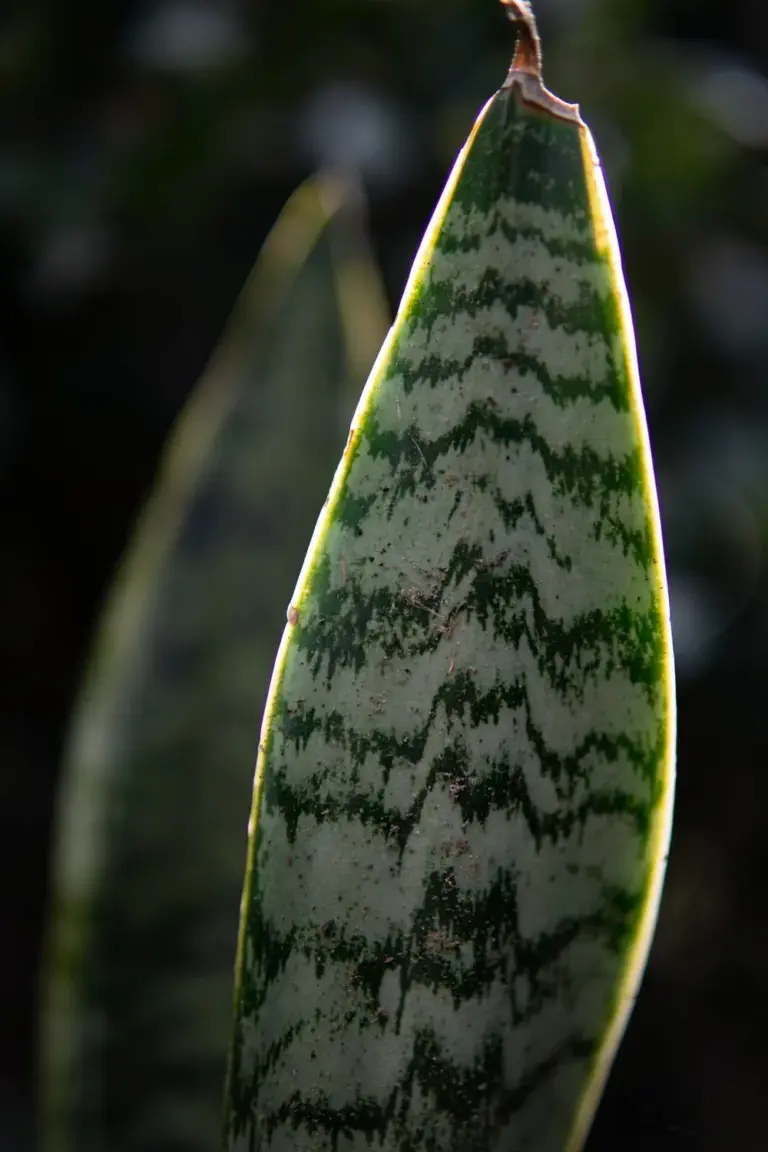
Botanists merged the entire Sansevieria genus into Dracaena in 2017 after DNA work showed snake plants nested inside the Dracaena family tree, and Kew’s World Checklist now treats Sansevieria trifasciata as a synonym of Dracaena trifasciata. Read about the reclassification on the Dracaena trifasciata species page. Horticulture kept the old label because every grower already knew it. Either tag on a pot points to the same plant, so never treat the two names as two different species.
You will also meet the common names snake plant, mother-in-law’s tongue, Saint George’s sword, and viper’s bowstring hemp. The plant spreads by a creeping rhizome, sometimes running above ground, sometimes below, which is why a healthy specimen forms dense strands of leaves rising stiffly from a basal rosette. Two plants that are NOT this one: the cylindrical snake plant is a different species entirely, and cane-type Dracaena cousins like lucky bamboo relatives drink far more water and follow different care rules. Keep those fences up and the watering advice below will never steer you wrong.
2. Place It in Bright Indirect Light With 2 to 6 Hours of Sun
Set the pot where it gets a few hours of direct sun each day, then bright indirect light for the rest. NC State’s Extension Gardener Plant Toolbox recommends direct sunlight for 2 to 6 hours a day, and notes the plant tolerates very low light.
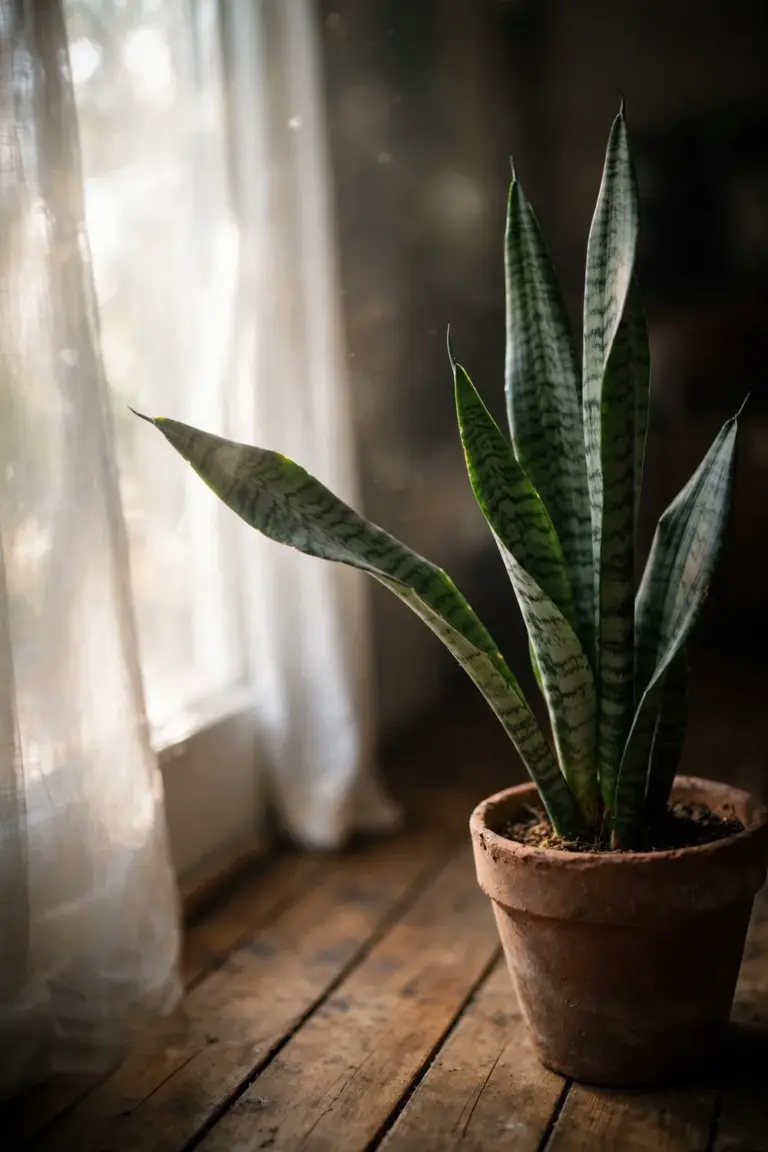
Tolerates is doing heavy work in that sentence. A snake plant in a dark hallway survives. It stops growing, and its leaves settle into a darker, duller green. Move it within a few meters of a window and growth resumes. The ZZ plant is the closest relative in spirit on this site: another drought-tolerant indoor survivor that forgives a dim corner but pays you back for a brighter one.
Variegated cultivars are fussier about light than plain green ones. Give ‘Laurentii’ or ‘Moonshine’ the brighter end of the range, because the yellow edges and silvery cast fade when the plant has to stretch for photons. Keep the pot off the glass in full afternoon sun, since leaves can scorch behind hot windowpanes. Rotate the pot a quarter turn every few weeks so the clump grows straight instead of leaning toward the glass. In a room with no usable daylight, a basic full-spectrum grow light on a day-length timer does the job; snake plants are not picky about spectrum, only about dose.
3. Water Every 2 to 3 Weeks in Summer, Every 1 to 2 Months in Winter
Wait until the potting mix has dried through, then water deeply and let it drain. From spring to autumn, let the soil dry between waterings; in winter, water only every one to two months, according to the NC State profile.
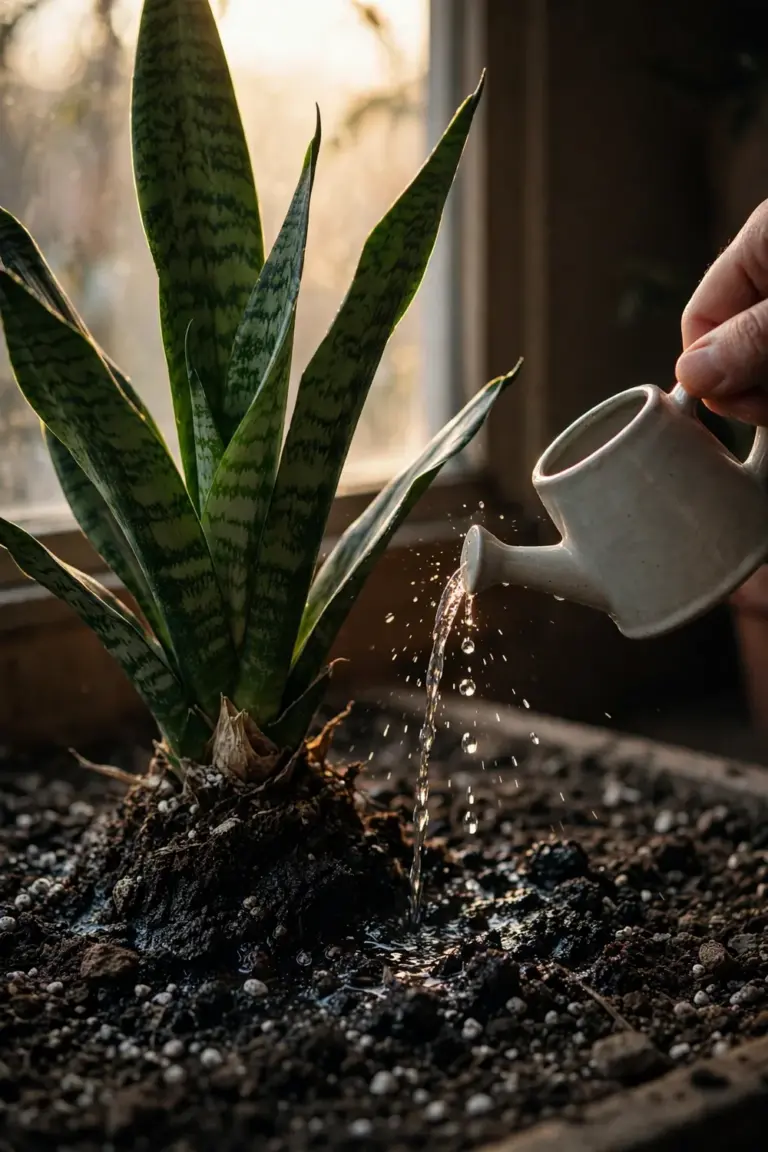
Overwatering is the single reliable way to kill this plant. Soggy mix starves the rhizomes of oxygen and they turn to mush, often before the leaves show any complaint. The leaves then go yellow, then soft, then the whole rosette collapses. Almost nobody underwater a snake plant to death. Thousands rot theirs from a fixed weekly schedule.
Skip the calendar. Stick a finger two knuckles into the mix, or lift the pot and feel its weight. Water only when it reads dry. Pour until water runs freely from the drainage holes, empty the saucer, and never pour water into the center of the rosette, where it sits and rots the newest growth, a rule the Missouri Botanical Garden plant finder states plainly. Aloe vera plays the same game: fleshy leaves, long droughts, and a grudge against wet feet.
When you are unsure whether it is dry enough, wait another week. A snake plant shrugs off a missed watering without a mark. It never forgives a watering it did not need.
4. Plant It in a Gritty Mix With Drainage Holes
Use a cactus or succulent potting mix, or cut standard potting mix with extra perlite or coarse sand. The structure matters more than the brand. Water must rush through the pot, not linger in it.
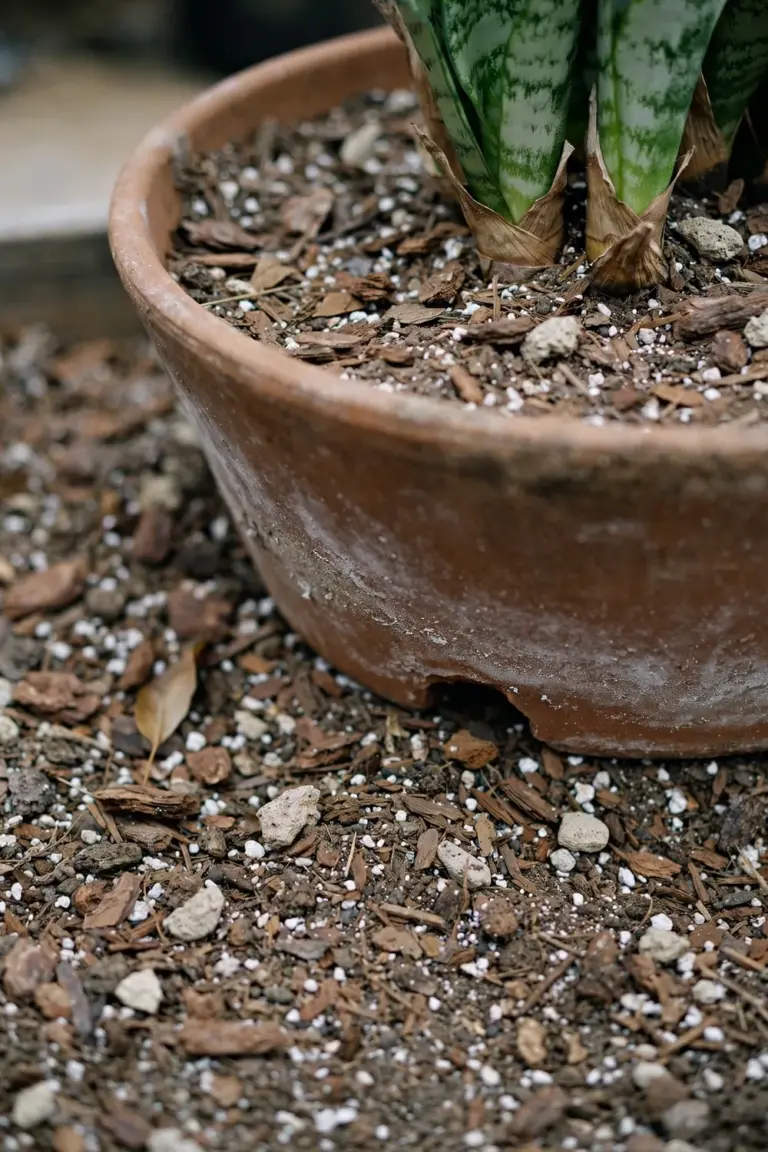
Every pot needs a drainage hole. A sealed decorative cachepot turns the bottom third of the mix into a swamp. If you love the look of a sealed pot, keep the plant in a nursery pot with holes and set that inside the pretty one, then tip the inner pot to drain after each watering.
Set the crown exactly at the soil surface. Burying the base of the leaves invites the rot you are trying to avoid. Test the mix before you commit: water the potted plant once and watch. Water should run from the drainage hole within seconds, not pool on the surface. If it pools, the mix is too dense. Mix in more perlite or start over with a grittier blend. Snake plants grow tall and narrow, so choose a heavy pot that is wider than it is tall; the Missouri Botanical Garden’s plant finder notes that clay pots wider than they are high keep this top-heavy plant from tipping. Terracotta earns its keep here too, because the porous wall lets the mix breathe and dry between waterings.
5. Keep It Above 10°C and Out of Frost
Treat it as a warm-house plant. NC State’s profile says the snake plant tolerates cool temperatures down to 10°C (50°F), but frost is the hard limit, and the Missouri Botanical Garden rates it winter hardy only in USDA Zones 10 to 12.
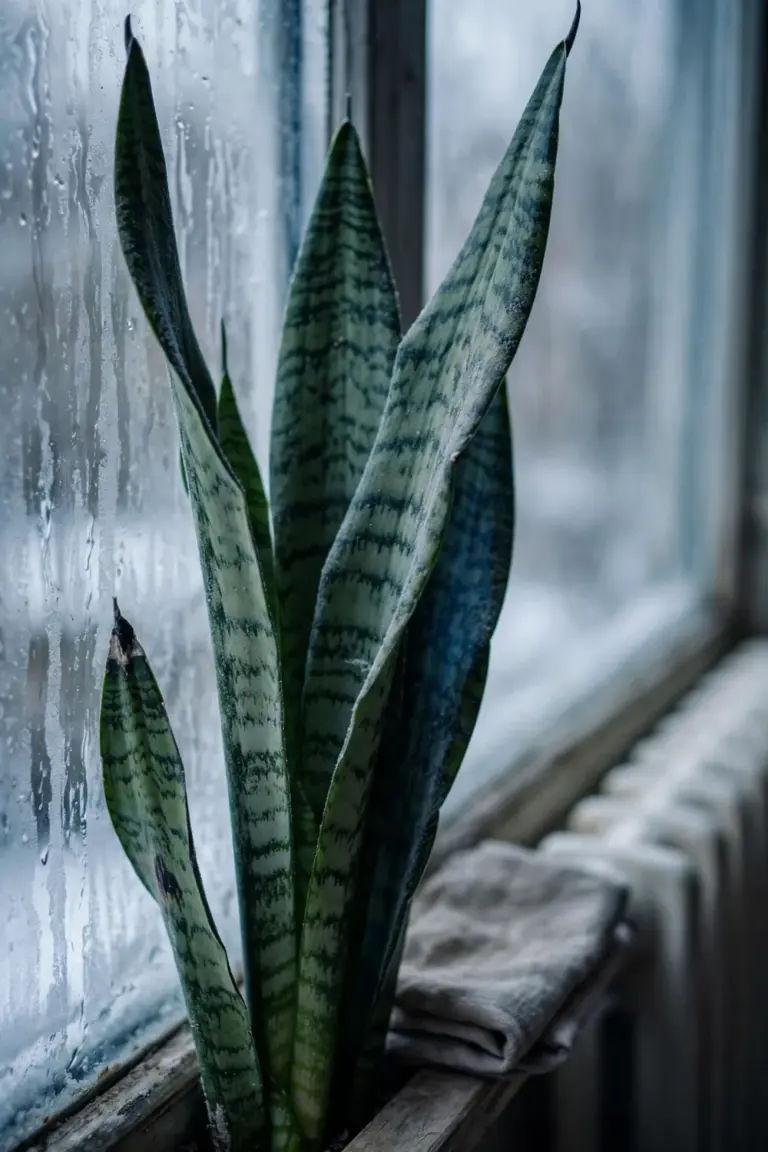
Normal indoor temperatures suit it year round. The danger spots are the ones you forget: a windowsill that drops near freezing on winter nights, a draft blasting from an air conditioner, a door left open onto a cold balcony. Leaves chilled below their tolerance go water-soaked and dark, and the damage shows days after the cold snap. Pull the pot a hand’s width back from the glass in deep winter.
In warm months, a snake plant appreciates a holiday outdoors. The Missouri Botanical Garden notes that indoor plants can sit in shady outside locations through summer, which toughens the leaves and speeds growth. Keep it out of direct afternoon sun, which scorches leaves accustomed to glass, and bring it back inside well before the first cold night.
Low humidity is fine year round. NC State’s profile lists low-humidity tolerance as one of the plant’s strengths, so skip the pebble tray and the humidifier. Dry indoor air in a heated winter room bothers the snake plant far less than the extra water most owners add to compensate.
Snake Plant in Australia
Australia splits the snake plant into two growing realities. North of the frost line, in the tropical and subtropical north, it can live outdoors year round in pots or sheltered beds within the frost-free zones. South of that line, keep it as an indoor plant and never leave it out through a frosty night.
One caution for outdoor growers: the plant is listed as a potential environmental weed in Australia, a status recorded as far back as a 1998 Queensland Department of Natural Resources assessment and carried by the species page. Rhizomes creep, and discarded garden waste can naturalise near bushland. Grow it in a contained pot, and never dump trimmings where they can take root.
6. Feed It Sparingly in Spring and Summer
This is a slow plant with a frugal metabolism. Feed lightly, and only while the plant is actively growing. A light application of diluted balanced houseplant feed in spring, repeated once in midsummer, covers the whole year. Skip autumn and winter entirely; the plant is barely growing and salts build up in the dry mix. Overfed snake plants do not grow faster. They grow pale, leggy leaves that flop.
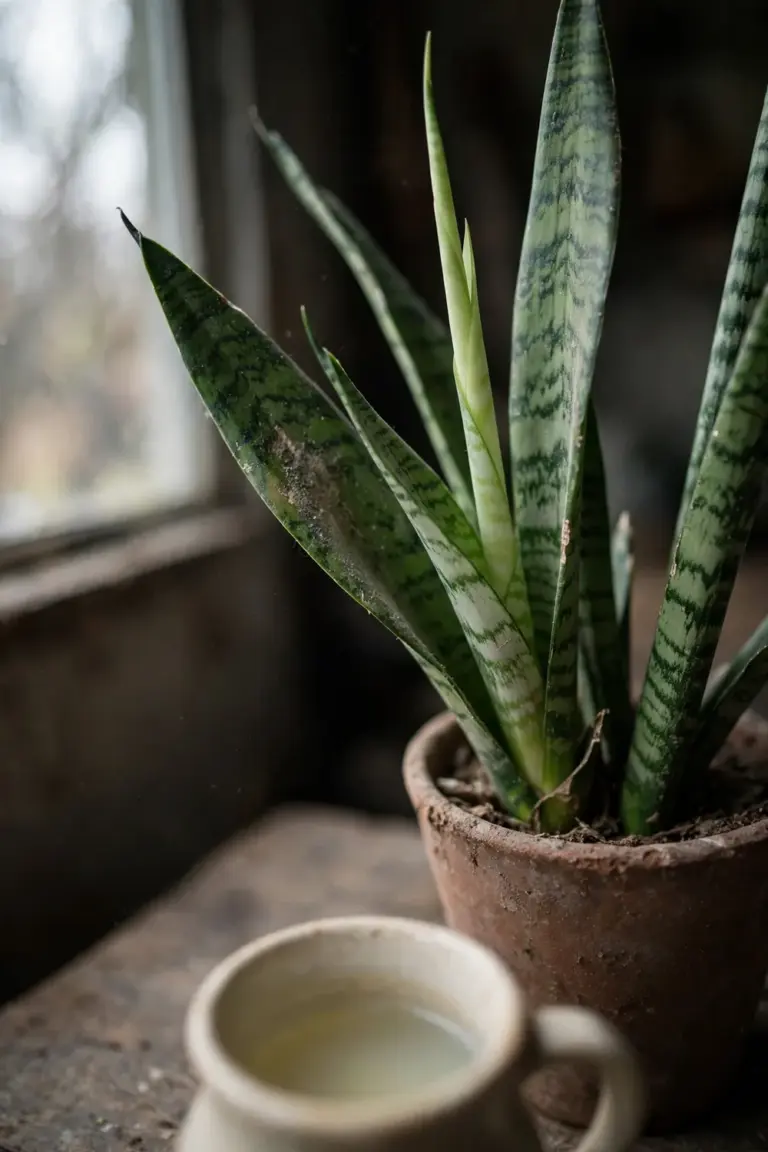
If you repotted into fresh mix this spring, skip feeding altogether for that season. Fresh potting mix carries enough nutrition for the first few months, and this plant would rather go hungry than sit in fertilizer salts. A white crust on the mix surface is the sign you overdid it: flush the pot with plain water and feed half as often next year.
7. Repot Only When the Rhizomes Run Out of Room
Do not repot on a schedule. A snake plant is content in a tight pot, and disturbing its roots on a calendar invites the only stress this plant takes seriously: wet, unsettled mix around damaged rhizomes.
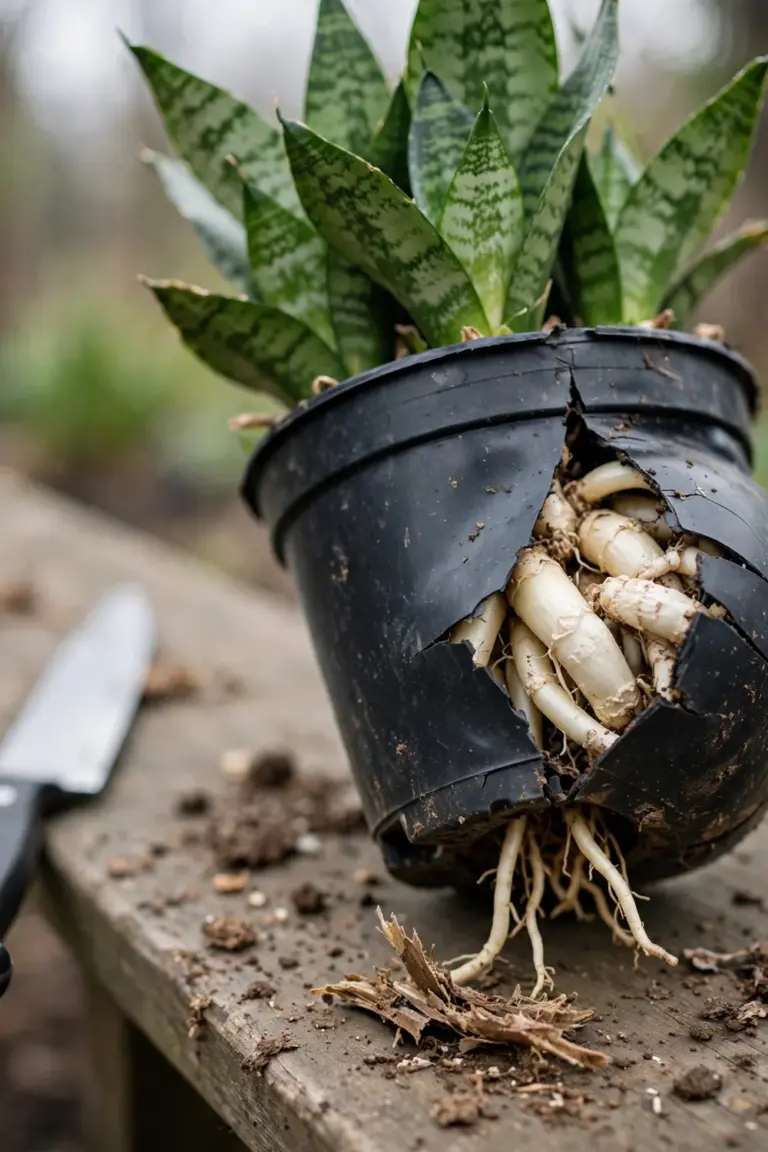
Wait for the signs. Roots push through the drainage hole, the clump lifts itself above the rim, or a plastic pot starts to bulge and crack under the pressure of the rhizomes. A severely rootbound plant may need its pot sacrificed: cut a plastic nursery pot away rather than tearing the roots to free them. Spring is the right season, when growth restarts and the plant heals fastest. Move up one pot size only, never two, because a large empty ring of fresh mix stays wet long after the roots have drunk.
Set the plant at the same depth it grew before, crown at the surface, and hold off watering for a few days so any nicked roots callus. Then resume the normal dry-between rhythm. The plant may sulk for a few weeks. New leaves appearing from the center means it has settled.
8. Propagate by Division to Keep the Yellow Edge
Division is the honest way to multiply a snake plant. Slide the plant from its pot and shake or wash off enough mix to see the thick rhizome connecting the leaf fans. Cut through the rhizome with a clean sharp knife so each section keeps roots and several leaves, then let the cut surfaces dry for a day before potting. Plant each division at the same depth in fresh gritty mix, water it in once, and leave it alone.
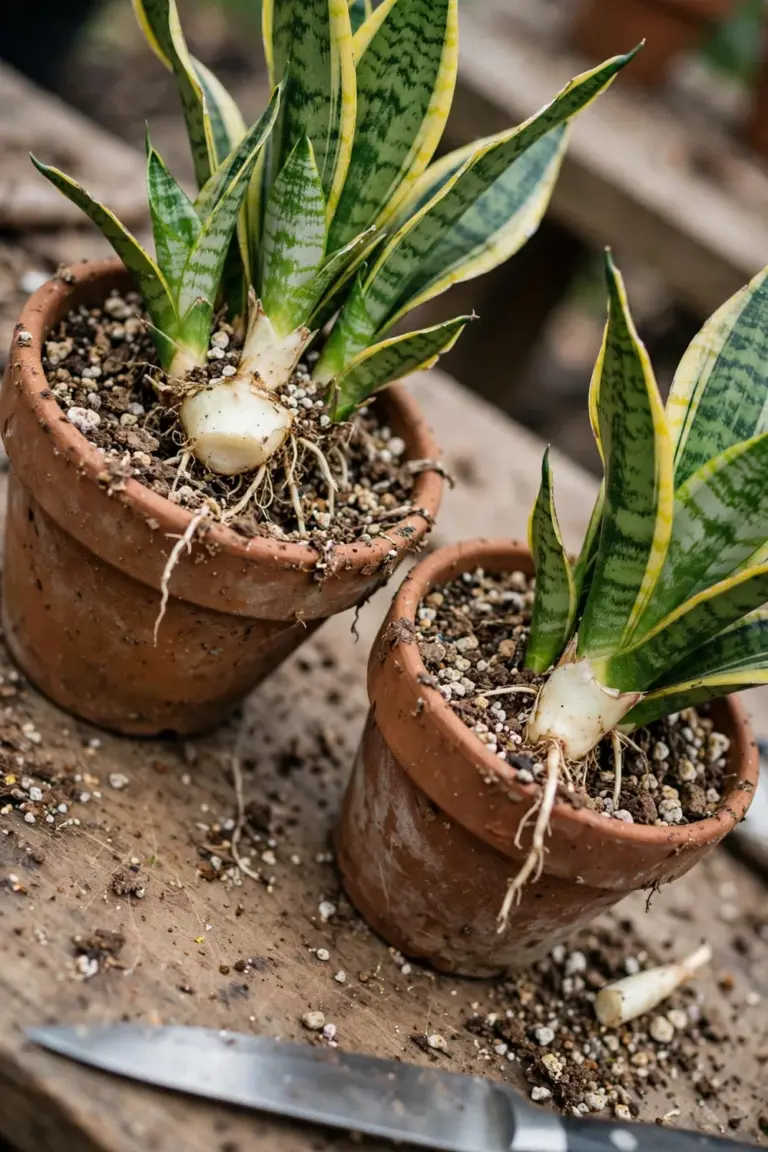
Division preserves the cultivar. This matters more than most guides admit. Leaf cuttings root readily, but any plant grown from a leaf cutting of a variegated cultivar comes back plain green. The species page states the trade-off directly: cuttings propagate fine, but the variegation is lost. If your ‘Laurentii’ matters to you, divide it. Never take leaf cuttings from it.
Water each new division once, then leave it alone until the mix dries. Fresh divisions often sit still for weeks while their roots re-establish. That pause is normal. Do not feed a new division in its first season; the fresh mix carries everything it needs.
Leaf cuttings still have their place for plain green forms. Cut a healthy leaf into sections, keep track of which end was down, and let the cut ends callus for a day before pushing them into moist mix. Plantlets sprout from the base of each section within weeks. Both methods work best in warm spring weather, when the plant wants to grow anyway.
9. Pick a Cultivar That Suits Your Room
Every cultivar below is the same species, Dracaena trifasciata, bred for a different look. Care does not change between them, except that the bolder the variegation, the more light the plant wants.
| Cultivar | Look | Habit |
|---|---|---|
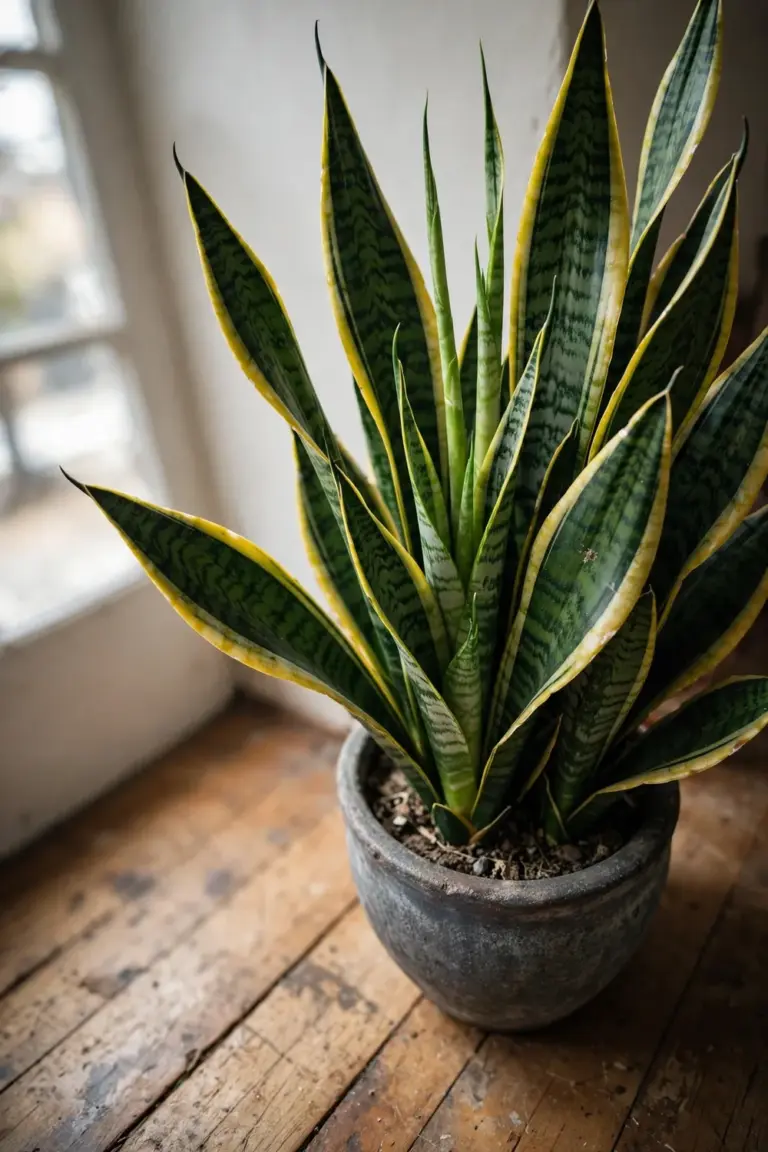
| ‘Laurentii’ | Deep green leaves banded gray-green, edged in golden yellow | Tall, upright, the classic |
| ‘Moonshine’ | Silvery-green leaves with a soft sheen | Upright, slightly broader |
| ‘Black Gold’ | Near-black green centers with gold margins | Upright, dramatic contrast |
| ‘Hahnii’ | Dark green with pale banding | Dwarf bird’s-nest rosette for shelves and desks |
‘Laurentii’ is the one most people picture when they hear snake plant, and it is the most forgiving of the variegated forms. ‘Moonshine’ reads almost silver in a bright room and holds its color best near a window. ‘Black Gold’ is the statement piece. ‘Hahnii’ fits a shelf or desk where a tall sword-leaf would look absurd.
Buy the plant, not the photo. Check that new leaves are rising from the center, that the leaf bases are firm rather than soft, and that the yellow edge on a ‘Laurentii’ runs cleanly to the tip. A damaged leaf tip never regrows upward, so pick plants with intact points. Match the cultivar to the container: tall forms want a heavy floor pot they cannot topple, while ‘Hahnii’ thrives in a shallow bowl on a desk.
10. Keep Every Leaf Out of Reach of Pets
Read this before the plant shares a room with a cat or dog. Snake plant leaves contain saponins, compounds that irritate the mouth and gut of animals that chew them. The ASPCA lists mother-in-law’s tongue as toxic to dogs and cats, with nausea, vomiting, and diarrhea as the clinical signs.
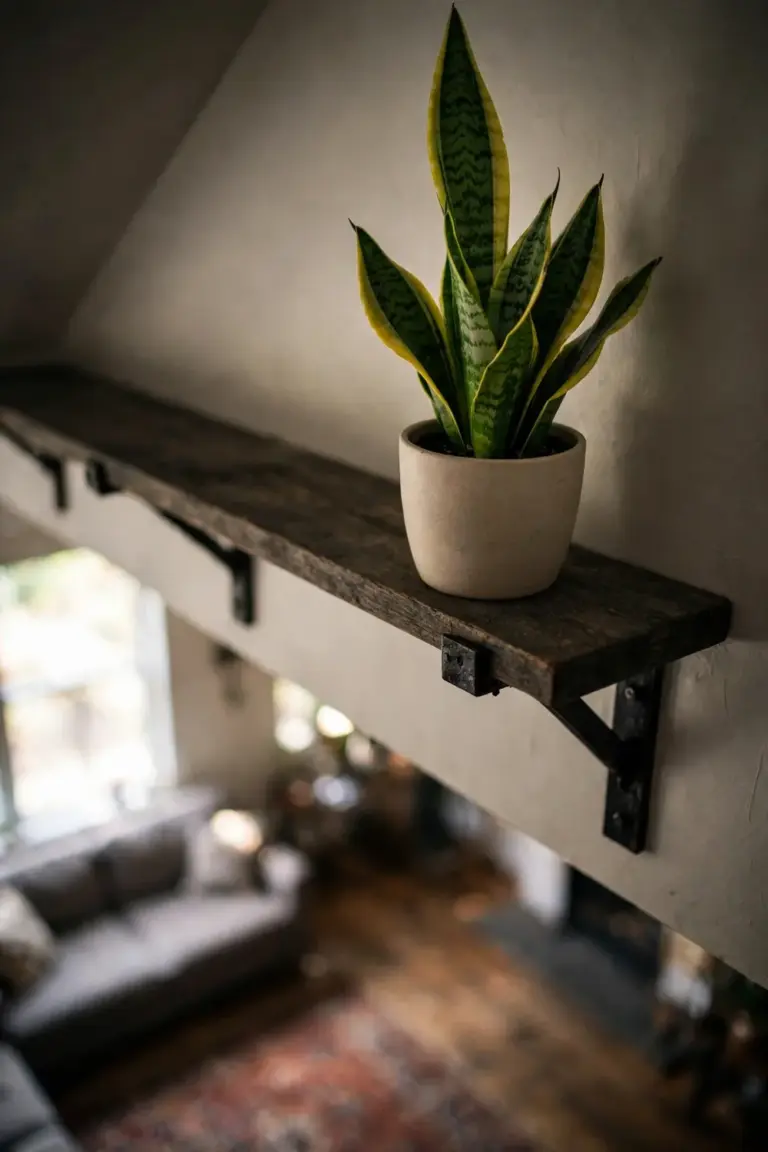
Severity is usually mild to moderate. A single nibbled leaf tip typically produces drooling and a vomit or two, not a veterinary emergency, though any persistent symptoms deserve a call to the vet. The risk rises with curious kittens, teething puppies, and bored indoor cats that graze greenery.
Place the pot where animals cannot reach it: a high shelf, a hanging bracket, or a room with a closed door. A tall floor pot is the worst placement in a pet household, because the leaf tips sit exactly at dog-nose height. The same rule covers small children. Nobody decorates with a plant their toddler can chew.
If a pet does chew a leaf, remove the plant from reach and watch the animal. Most cases stay mild and pass within a day or two. Call your veterinarian if vomiting persists, if the animal refuses food and water, or if you are unsure how much was eaten. The ASPCA’s page lists the clinical signs to describe when you call.
11. Read the NASA Claim Like a Scientist
Product pages love this sentence: NASA proved the snake plant purifies your air. The real story is more interesting and less useful. In 1989, NASA researcher B. C. Wolverton tested snake plants in small sealed chambers and found they could filter indoor air, removing four of the five main toxins linked to sick building syndrome, as recorded on the species page.
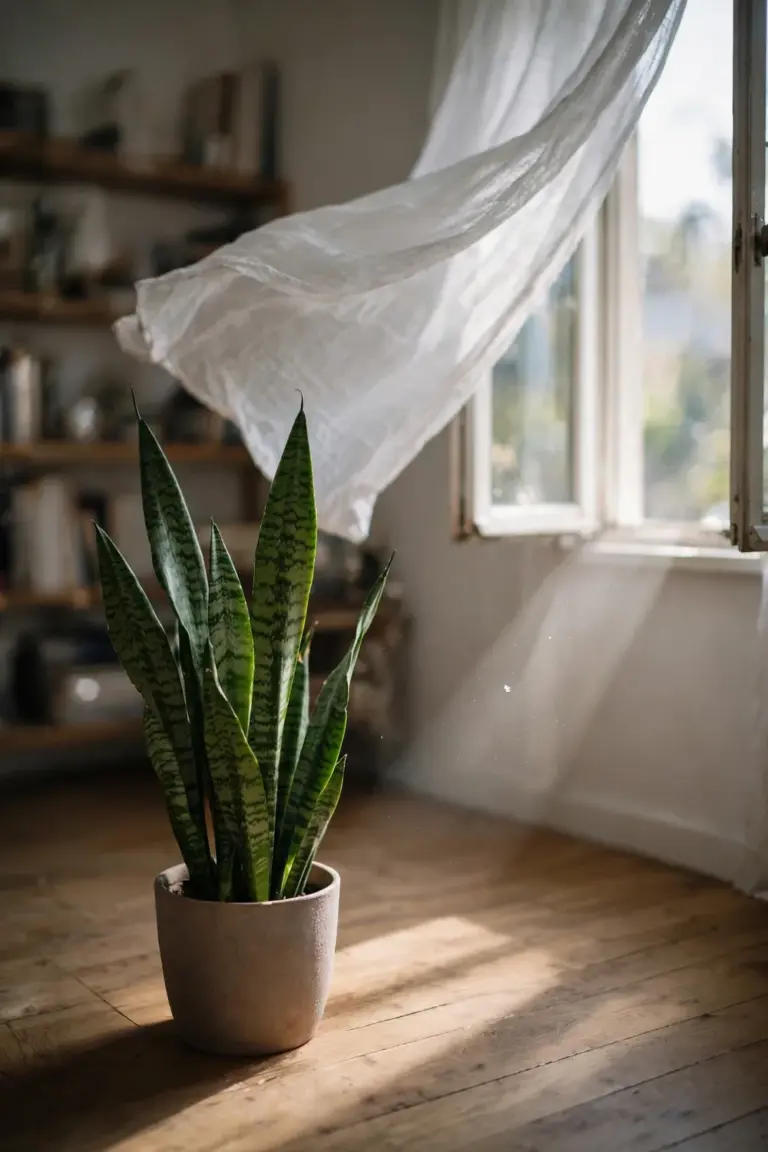
Sealed chamber is the phrase that changes everything. Those chambers held still air, controlled light, and no ventilation. Your living room exchanges its air constantly through doors, windows, and gaps you cannot see. A 2019 review in the Journal of Exposure Science and Environmental Epidemiology looked at the whole body of plant-filtration research and concluded the filtration rate is too slow for practical indoor use. You would need a jungle, not a houseplant, to move the needle.
Buy the snake plant for what it actually does. It survives your schedule, it looks architectural in an empty corner, and it runs crassulacean acid metabolism, opening its leaf pores at night instead of by day so it trades gases without losing water in the heat. That nighttime gas exchange is the garbled origin of the “oxygen at night” marketing claim: the plant genuinely takes in carbon dioxide after dark, but the amount changes nothing measurable about your room’s air. Open a window for clean air. Keep the plant for everything else.
12. Diagnose Yellow Leaves, Brown Tips, and Stalled Growth
Start with the leaves, because they report the crime. Yellow, soft, or mushy leaves mean overwatering and probable rhizome rot. Stop watering immediately, slide the plant from its pot, and cut away any brown or foul-smelling rhizome with a clean knife. Repot what is firm into dry fresh mix and wait a week before watering.
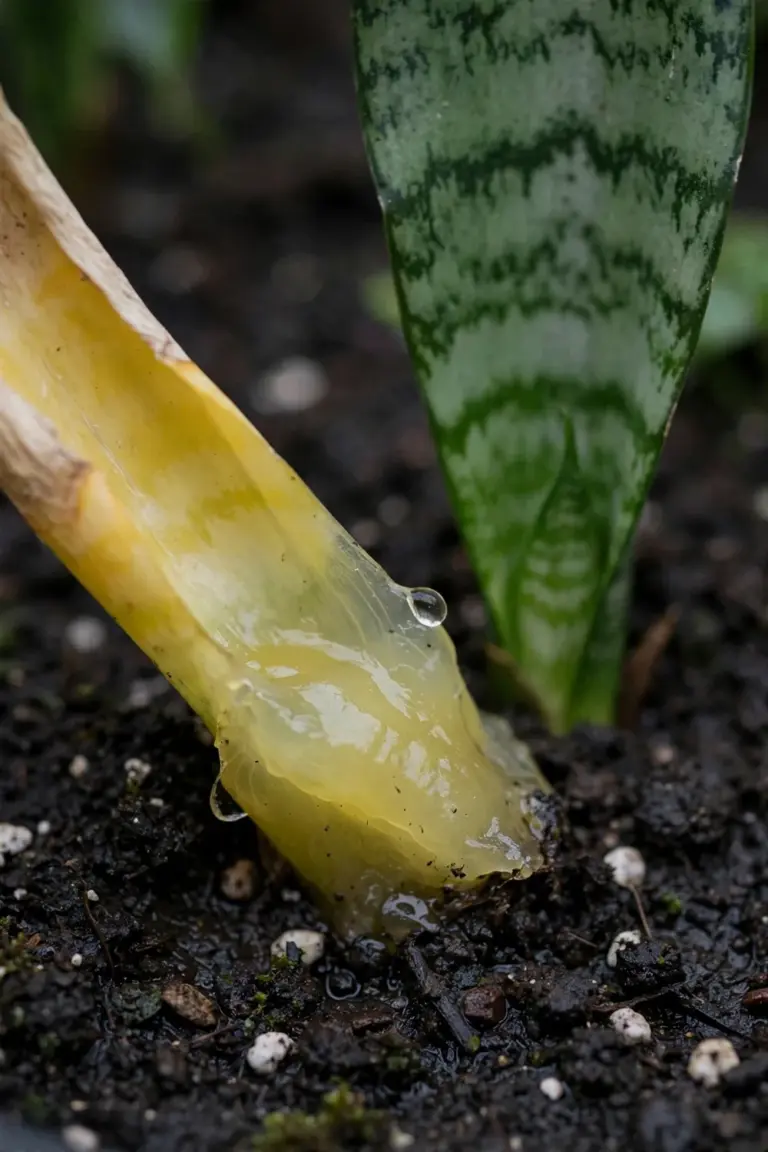
Brown, dry, crispy leaf tips mean the opposite kind of stress: too much direct sun, long droughts followed by floods, or salt buildup from hard water and overfeeding. Trim the dead tip with clean scissors, cutting just into the brown so you do not wound green tissue, and even out the watering rhythm. The trimmed tip never regrows. The leaf below it keeps working.
A plant that leans or flops has either outgrown its light or lost roots to rot. Check the base first. Firm base with pale stretched leaves means more light is needed. Soft base means rot, and the treatment is the same as for yellow leaves above.
Growth that stops is usually not a problem. Snake plants stall in low light and in winter, and they resume when conditions improve. Pests are rare; watch for mealybugs in leaf axils and the fine webbing of spider mites, the two pests the Missouri Botanical Garden flags. A serious mealybug colony is a different job, and the site’s mealybug control guide walks through it. Protect the leaf tips while you work. A bruised or broken tip stops that leaf’s upward growth for good.
Frequently Asked Questions About Growing Snake Plants
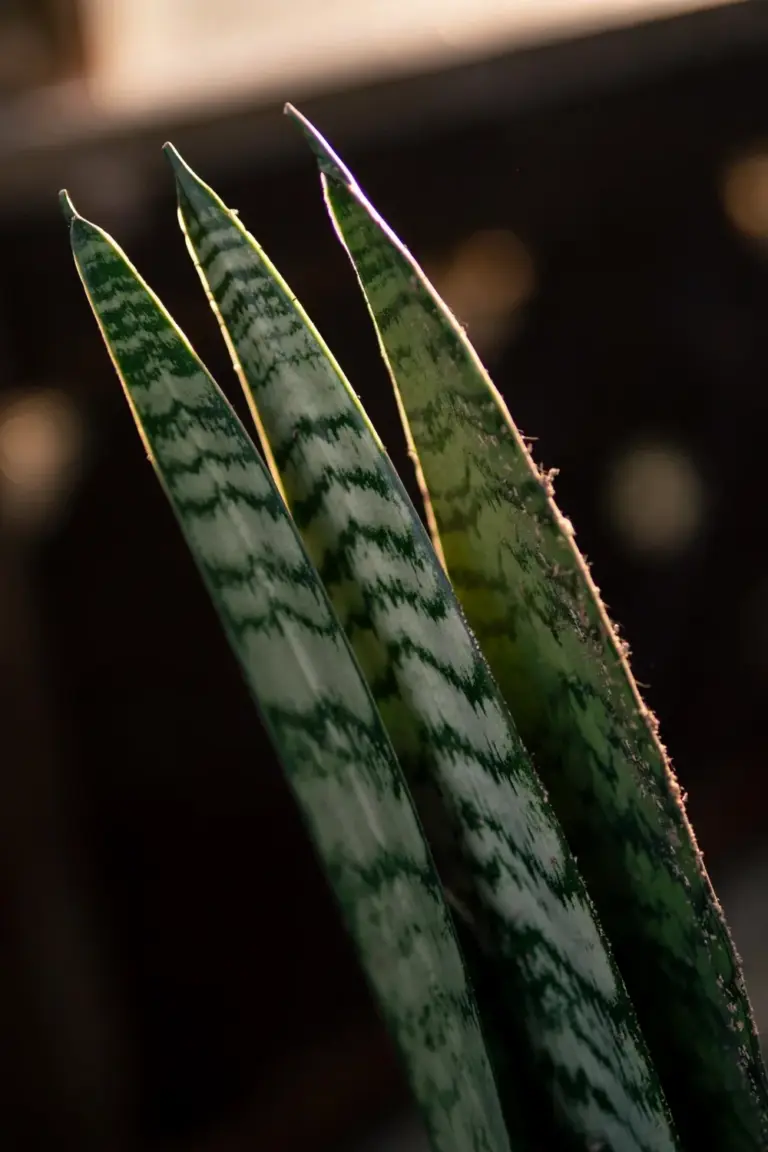
Slowly. A healthy indoor snake plant pushes out a handful of new leaves each growing season, and a young plant can take several years to fill a large pot. Bright indirect light and a warm room speed it up, while a dark corner and cold drafts stall it. Slow growth is normal, not a deficiency, so do not try to force it with extra fertilizer or water.
It survives for months, but it does not thrive. The plant tolerates very low light and will sit unchanged in a windowless office or bathroom, slowly drawing on its stored reserves. For actual growth it needs at least bright indirect light or a few hours of direct sun. Rotate a second plant into the dark spot every few weeks, or add a basic grow light.
No. Misting does nothing for this plant and can cause harm. Snake plant leaves store their own water and prefer dry air; NC State’s profile notes it tolerates low humidity. Water sitting in the leaf axils or the center of the rosette invites rot. If dust dulls the leaves, wipe them with a damp cloth instead.
Two possible causes. First, low light fades variegation, so move the plant toward a brighter spot. Second, and permanent: if the plant grew from a leaf cutting rather than a division, the yellow edge never develops, because cuttings of variegated cultivars revert to plain green. Only division preserves the cultivar. Buy or propagate accordingly.
No. The ASPCA lists snake plant as toxic to both cats and dogs. Chewing the leaves releases saponins that cause drooling, nausea, vomiting, and diarrhea, usually mild to moderate in severity. Keep the plant on a high shelf or in a room pets cannot enter, and call a veterinarian if symptoms persist after a pet chews a leaf.
Because it almost never flowers indoors. In its native African habitat the snake plant blooms in winter, but as a houseplant it rarely flowers at all. Mature plants occasionally send up a spike of fragrant greenish-white flowers, sometimes followed by orange berries, usually in spring. Flowering is a bonus, never a sign of health or a goal to chase. A plant that never blooms can live for decades.
Where to Go From Here
One rule carries this whole plant: let the soil dry between waterings. Everything else, light, mix, temperature, feeding, is a distant second.
Start with the pot you already own if it has a drainage hole, move the plant into brighter light this week, and check the soil before you ever water on a schedule. Through summer, water 2 times a month and feed once. Through winter, cut back to one watering a month or two and skip the feed entirely. When the clump doubles and crowds its pot, divide it in spring and hand the spare to a friend. That is the entire hobby. A plant this forgiving leaves you free to spend your attention on the fussy ones.