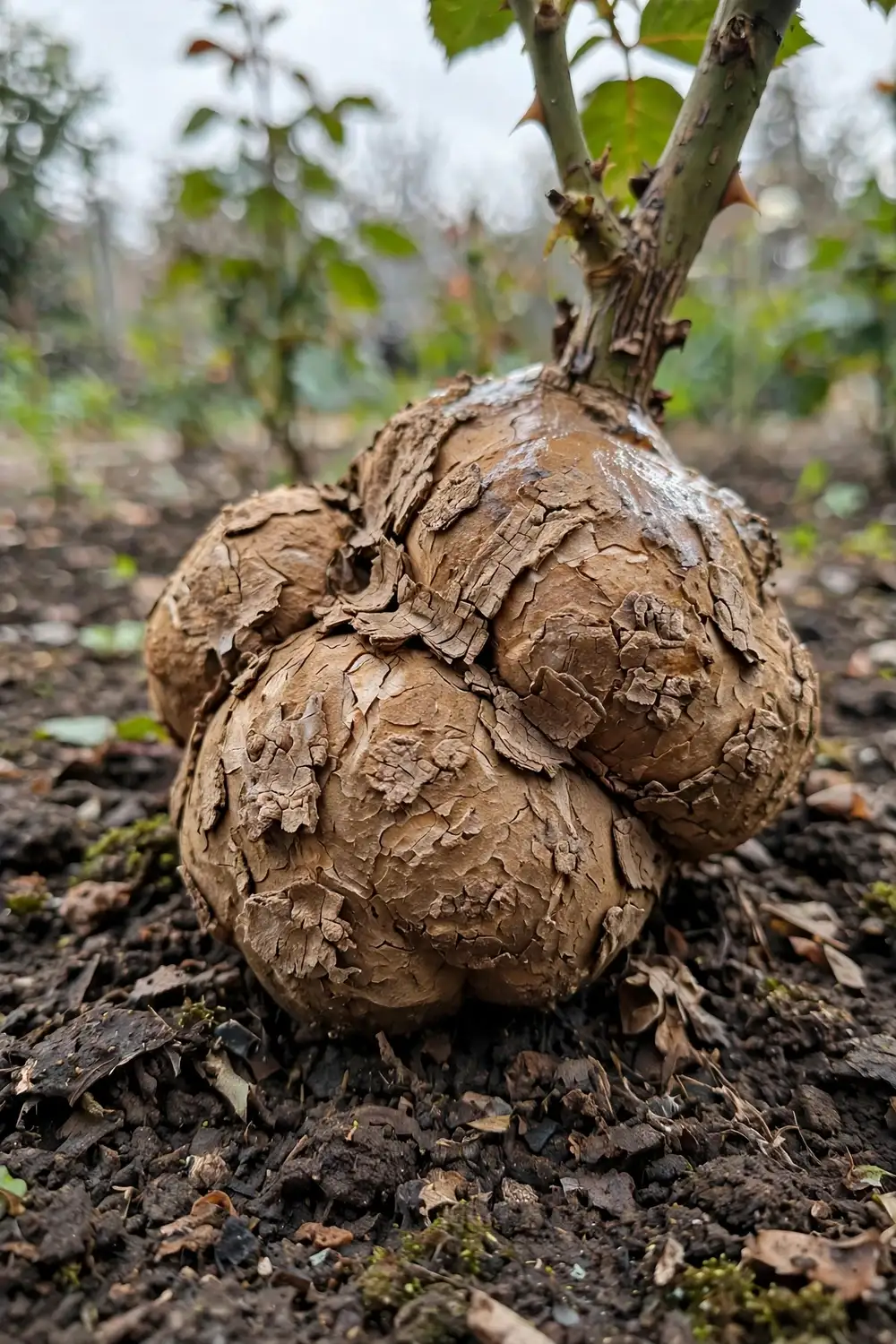

The lumpy growth on your rose’s crown is probably crown gall, and here is the sentence most articles bury three screens down: there is no cure. Galls can take several weeks to 12 months or more to appear after the infection happened, which means the damage was done long before you saw anything. What you can do is confirm the diagnosis, remove the plant before the bacteria spread, and make sure the next rose you plant never meets the same fate.
Crown gall is caused by the soil bacterium Agrobacterium tumefaciens, and it is one of the few plant diseases that behaves like a slow-motion accident. The infection happens underground, invisibly, at a wound you probably never noticed. If you are still choosing roses, our roses for fall planting guide covers how to pick and plant healthy stock. If you already have a gall, this guide walks you through the only honest crown gall roses treatment plan: confirm, remove, sanitize, rest the soil, and replant smarter.
You will learn what crown gall actually is, how to tell it apart from harmless burls and callus, why one small wound is all it takes, and the five steps that protect the rest of your garden. No false cures. No miracle sprays.
What Crown Gall Actually Is
Crown gall is a bacterial disease of roses and hundreds of other plants, caused by Agrobacterium tumefaciens, a soil-dwelling bacterium that enters through wounds and forces the plant to grow tumors. The bacterium carries a small loop of DNA called the Ti plasmid. During infection it transfers part of that plasmid into the plant’s own cells, and the plant’s genome then carries permanent instructions to divide out of control. The result is a gall: a rough, woody lump that keeps growing even if the bacterium itself is long gone.
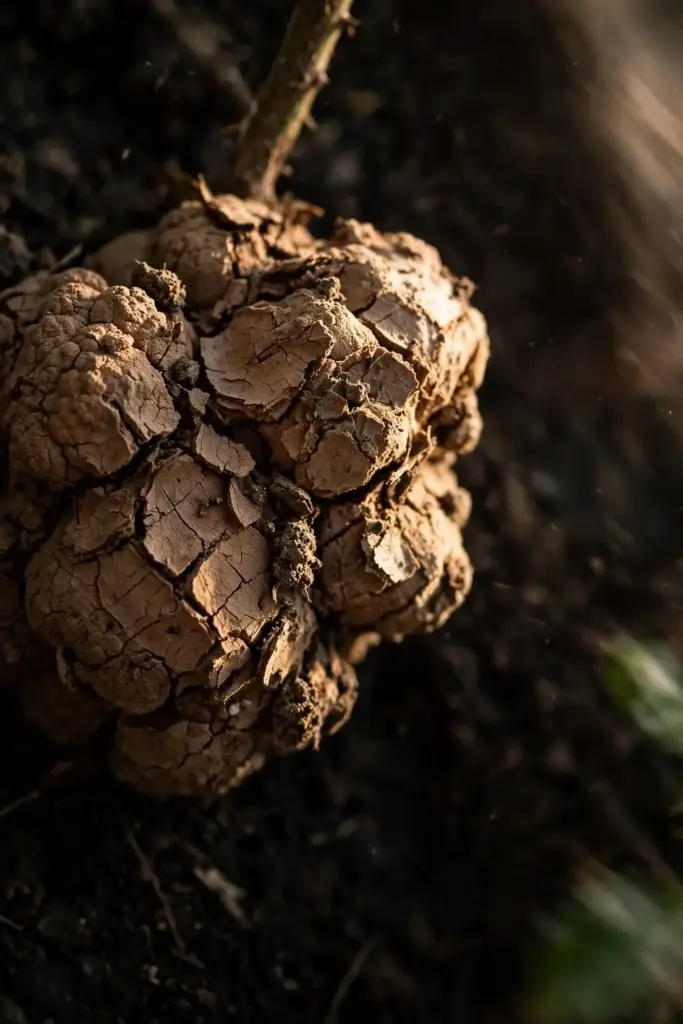
This is what makes crown gall different from nearly every other rose disease in this series. Powdery mildew sits on the leaf surface. Black spot rots tissue. Crown gall edits the plant. That is why fungicides do nothing, why copper sprays do nothing, and why cutting the gall off does not end the story. The University of Wisconsin Plant Disease Diagnostics Clinic states it plainly: there is no cure for crown gall once galls begin to form, and galls can keep enlarging even after the bacterium is no longer present.
The bacterium survives in soil for years, especially around old roots left behind after a plant is pulled. It needs a wound to enter: a nick from the trowel at planting, a tear from rough handling, a pruning cut, even the tiny wounds insects and nematodes make underground. No wound, no entry. That single fact shapes every prevention step below.
How to Identify Crown Gall on Rose Crowns and Roots
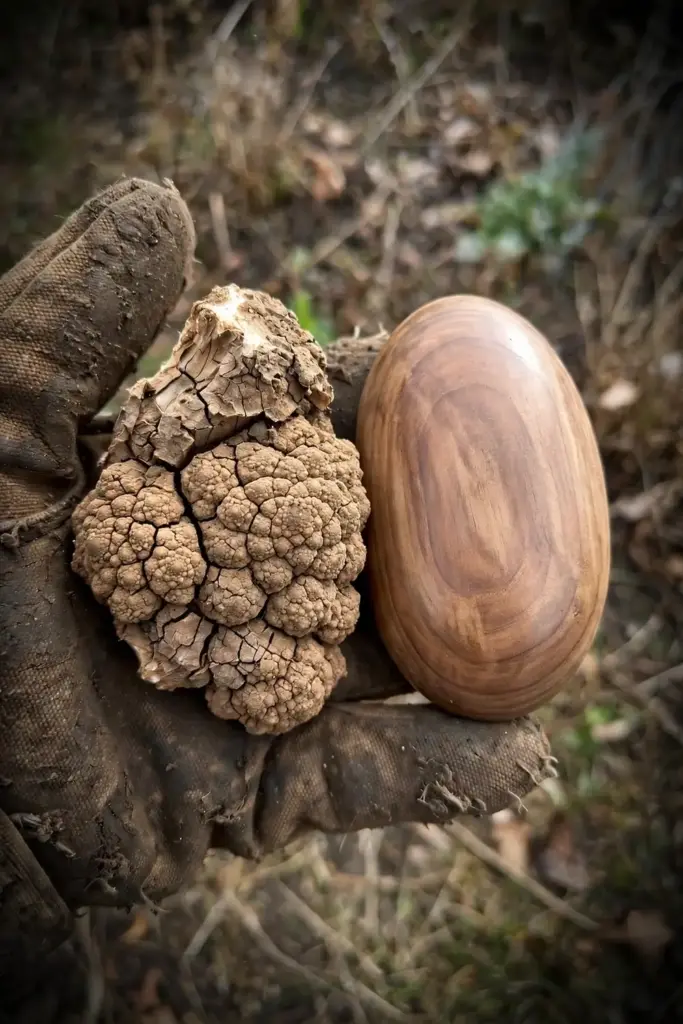
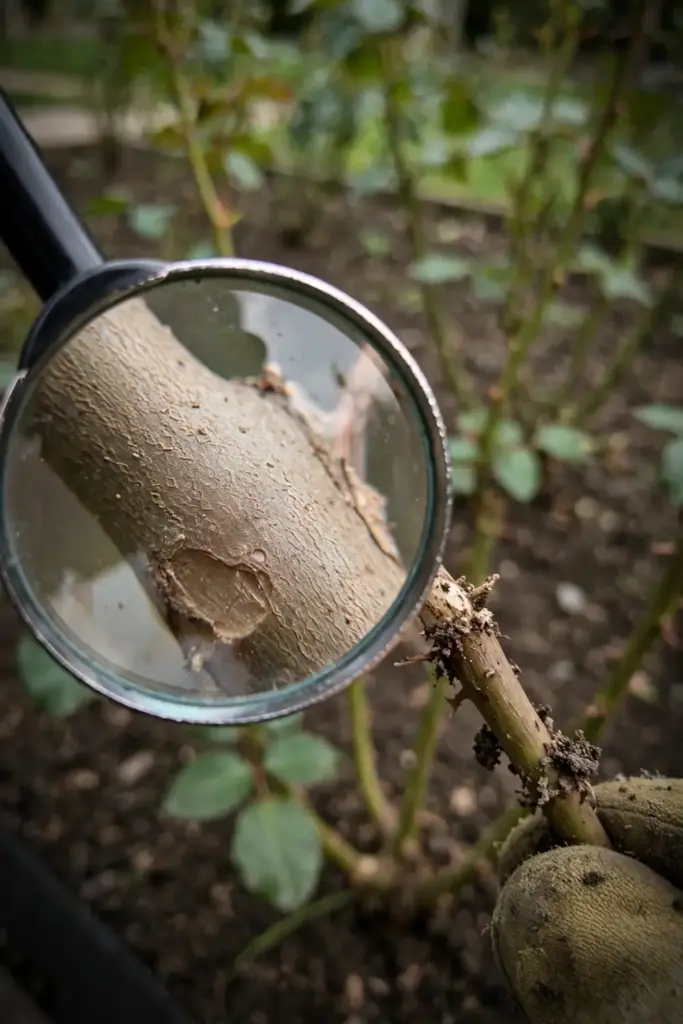
Crown gall on roses shows up as rough, rounded, woody lumps at or just below the soil line, on the crown where stem meets roots, and sometimes on the roots themselves. Young galls start soft and pale, almost like cauliflower, and harden with age into dark, bark-covered knobs that can reach the size of a walnut or larger. On grafted roses, check the graft union first. That knobby scar tissue is normal, but a gall growing on or beside it is not.
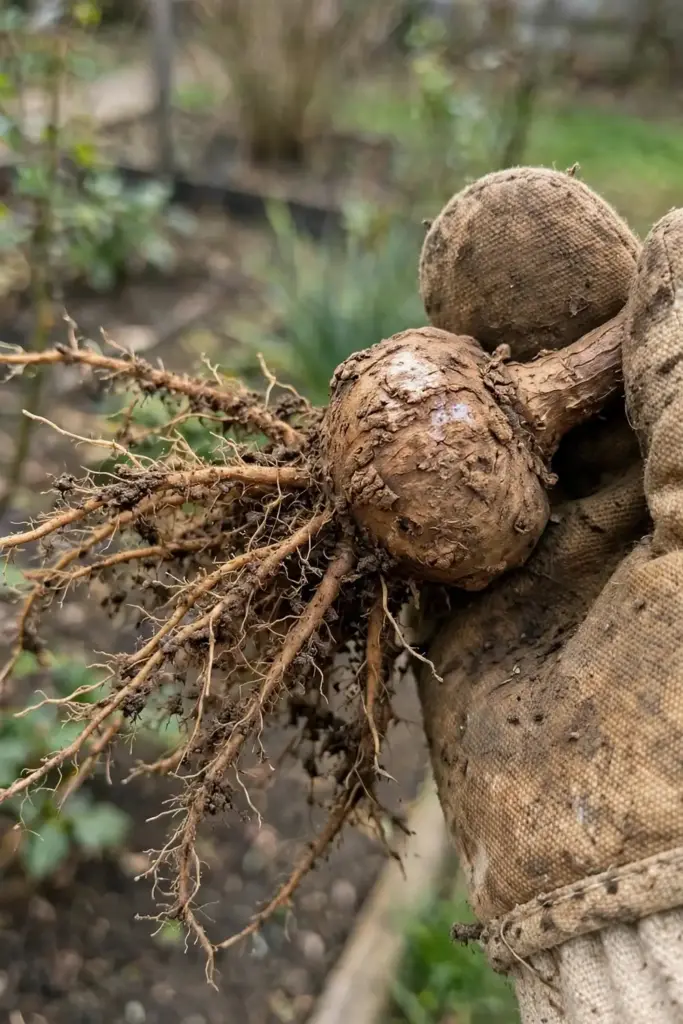
The signature location is the giveaway. Crown gall favors the crown, the root flare, and major roots. It rarely appears high on healthy canes without a wound nearby. If you unpot a suspect rose or dig around its base, look for lumps attached to roots that do not crumble when you press them. Feeder roots near a gall often look stunted or dark, because the tumor diverts the plant’s resources.
Timing matters for diagnosis. Because galls can appear a year or more after infection, a rose bought healthy-looking last spring can develop its first gall this fall. Do not assume a new gall means a new infection. It usually means an old wound finally finished its work.
How to Identify Crown Gall on Rose Stems and Canes
On stems and canes, crown gall appears as swollen, cracked lumps, often at old pruning cuts, thorn scars, or anywhere the bark was nicked. These aerial galls start as smooth, pale swellings and roughen as they age, sometimes splitting the bark as they expand. They are firm, not mushy. A mushy, foul-smelling swelling is rot, not crown gall.
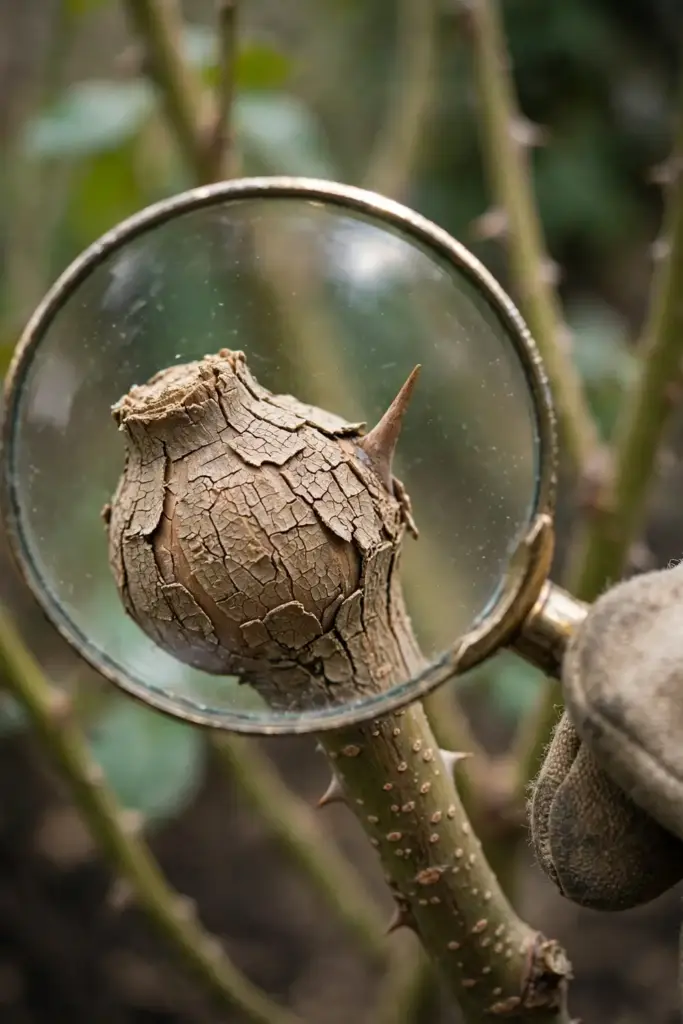
Check every pruning wound on a suspect plant. The bacterium enters through cuts, so a gall sitting exactly on last season’s pruning stub is a classic presentation. Galls can also form where a tie rubbed the cane against a stake all summer, or where a mower nicked a low cane. Each of those is a wound story with the same ending.
One caution: do not confuse gall tissue with the normal swelling that forms when a rose heals a large cut. Healing callus is smooth, even, and stops growing once the wound closes. A gall keeps growing, gets rougher, and often outgrows the wound that started it.
Which Roses Get Crown Gall Hardest
All roses can get crown gall, but grafted roses carry extra risk because the graft union is a built-in wound. Most modern roses are budded onto rootstock, and that union sits right at the soil line in the bacterium’s favorite zone. A graft union that was nicked during planting or buried too deep is the single most common infection site on garden roses.
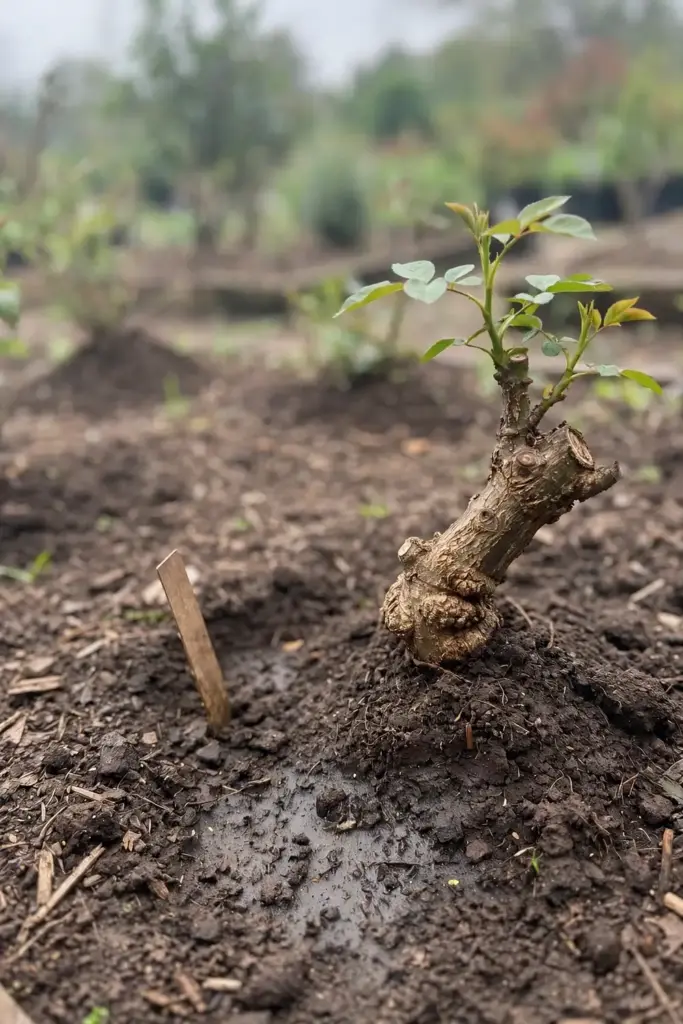
Own-root roses skip the graft-union vulnerability entirely. They can still get crown gall through any planting wound, but one major entry point is gone.
Beyond roses, the bacterium attacks hundreds of species: fruit trees, brambles, grapes, willows, euonymus, and many perennials. This matters in a mixed garden. A gall on the old apple tree you ignored can seed the soil that your new rose bed sits in. When you plan a rose bed, look at what grew there before, not just what is growing there now.
Crown Gall vs Burls vs Callus vs Insect Galls
Misidentification is the most expensive mistake a rose grower can make, because the cure for crown gall is removal, and you do not want to remove a rose over a harmless burl. Use this table before you touch the shovel.
| Feature | Crown gall | Burl | Healing callus | Insect gall |
|---|---|---|---|---|
| Cause | Agrobacterium tumefaciens bacteria | Natural wood growth, stress response | Normal wound healing | Gall wasp or midge larvae |
| Texture | Rough, woody, irregular; soft and pale when young | Smooth to gnarled, solid wood grain | Smooth, even, donut-shaped around the wound | Often round and uniform, sometimes with a tiny exit hole |
| Growth | Keeps growing year after year | Grows very slowly or not at all | Stops once the wound closes | Stops when the insect emerges |
| Location | Crown, root flare, roots, wound sites | Trunk or large limbs, often high up | Exactly on the wound, nowhere else | Leaves, buds, or young stems, rarely the crown |
| Inside | Disorganized tumor tissue, no chambers | Normal wood grain, sometimes beautiful | Normal callus bridging the wound | Hollow chamber or larva inside when cut open |
| What to do | Remove and destroy the plant | Nothing; it is harmless | Nothing; it is healing | Usually cosmetic; prune off if unsightly |
The fastest field test is the growth test. Healing callus closes a wound and stops. Insect galls finish when the insect leaves. A burl sits quietly for years. Crown gall keeps building. If the lump is bigger this year than last, and it sits at the crown or a wound, treat it as crown gall until proven otherwise.
Bacterial canker is another confusion worth one sentence. Cankers are sunken, dead areas of bark, while galls are raised growths. If the spot sinks inward instead of bulging outward, read our bacterial canker guide instead.
Why One Wound Can Rewrite a Rose’s DNA
The mechanism is the reason nothing cures crown gall, so it deserves two minutes of your attention. Agrobacterium tumefaciens is sometimes called nature’s genetic engineer, because it does deliberately what laboratories do with equipment. When the bacterium finds a wound, it attaches to the plant’s cells and injects a piece of its Ti plasmid, the T-DNA, directly into the plant cell nucleus.
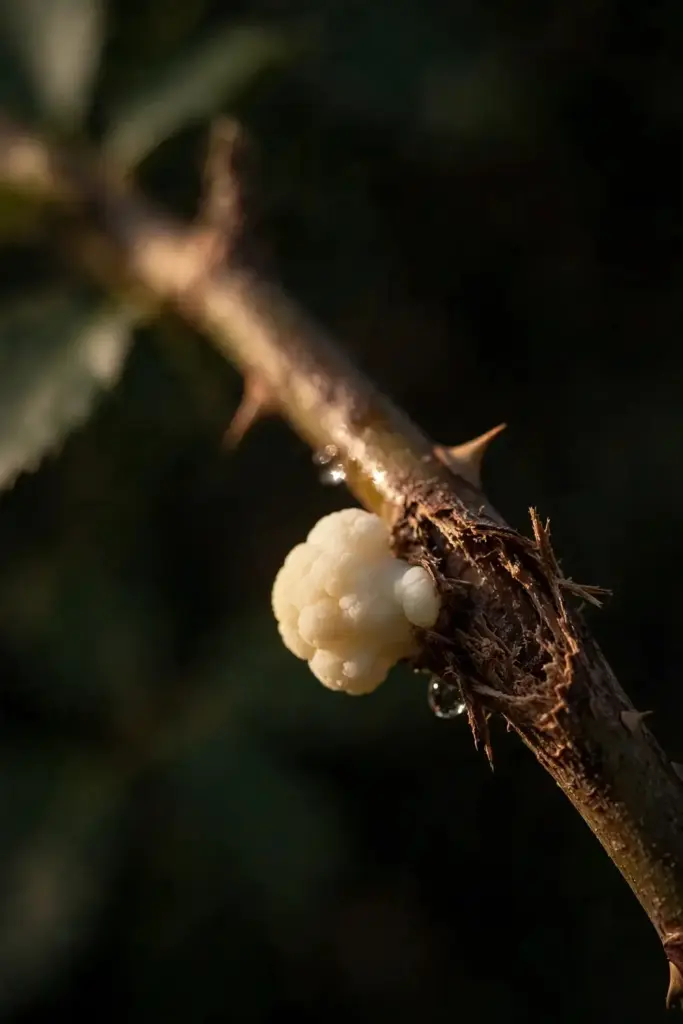
The plant cell then treats that foreign DNA as its own. The inserted genes switch on two programs: make plant growth hormones in excess, and make opines, strange compounds the plant would never normally produce. The hormones drive the uncontrolled cell division you see as a gall. The opines feed the bacterium, which eats what the tumor produces. The bacterium does not even need to stay. Once the T-DNA is in, the plant runs the tumor program by itself. That is why galls keep enlarging after the bacterium is gone, and why no spray can reach the instructions.
Understanding this also explains the prevention logic. The bacterium cannot inject DNA through intact bark or an unbroken root. Every prevention step below is, at bottom, a wound-management step: fewer wounds, cleaner wounds, and no wounds at planting time.
What Makes Crown Gall Worse in a Home Garden
Wounds are the first risk factor and the only one that matters at the start. Rough handling at planting tears more roots than gardeners realize. Cultivating close to the crown with a hoe nicks the bark. String trimmers are gall factories: one season of bark stripped at the base gives the bacterium a highway. Mulch piled against the stem holds moisture on bark and softens it, which invites both wounds and infection.
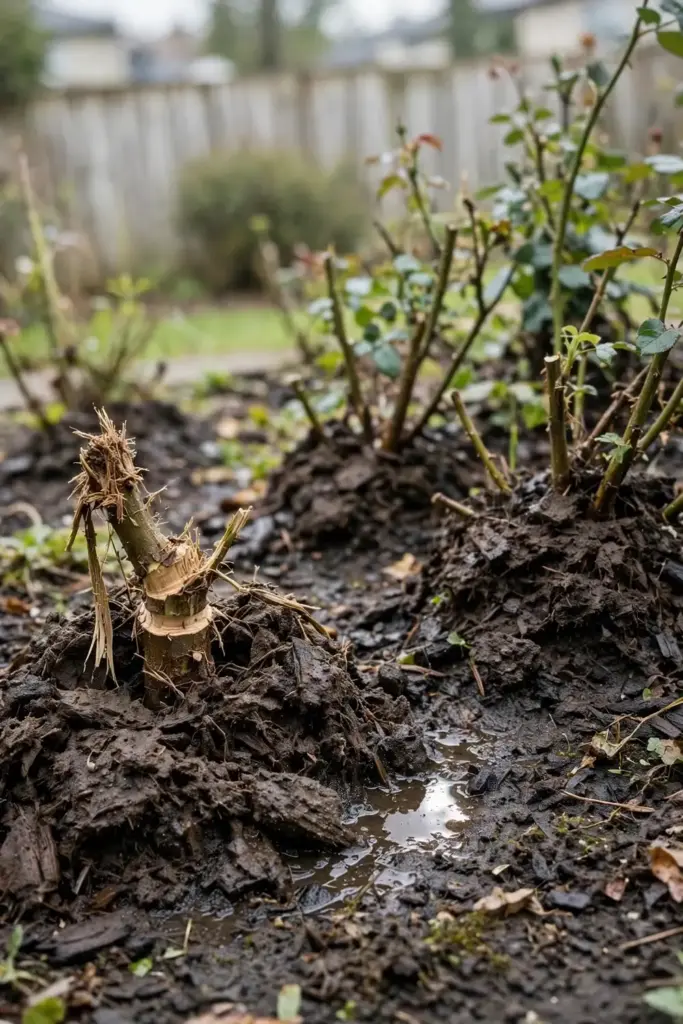
Infested soil is the second risk factor. The bacterium persists for years around old root fragments. If you pull a galled rose and plant a new one in the same hole next weekend, you have planted into the problem. Nurseries have the same issue, which is why reputable growers inspect roots and crowns before a plant ever ships. Buy from growers who do that inspection, and do your own before the roots go in the ground.
Wet, heavy soil is the third. The bacterium moves in water films and survives well in moist ground. Poorly drained beds keep the crown zone wet, which keeps wounds open longer and the bacterium mobile. This is the same drainage story that runs through every soil disease on this site, and our soil health guide covers how to fix the structure that invites it.
The fourth is replanting too fast. Impatience is a risk factor. Gardeners who lose a rose to crown gall often want the hole filled the same month. The honest timeline is measured in years, not weekends, and Step 4 explains why.
Step 1: Confirm It and Face the No-Cure Verdict
Crown gall roses treatment starts with the hardest step, and it is not a treatment at all. It is a decision. Confirm the diagnosis using the table above, then accept what every extension service agrees on: there is no cure for crown gall on roses. No spray, no drench, no paste, and no pruning technique reverses it. Products marketed for galls, such as Gallex, can kill visible gall tissue on woody plants, but galls may recur and the product has no activity against the systemic infection. Copper products are completely ineffective once infection has occurred.
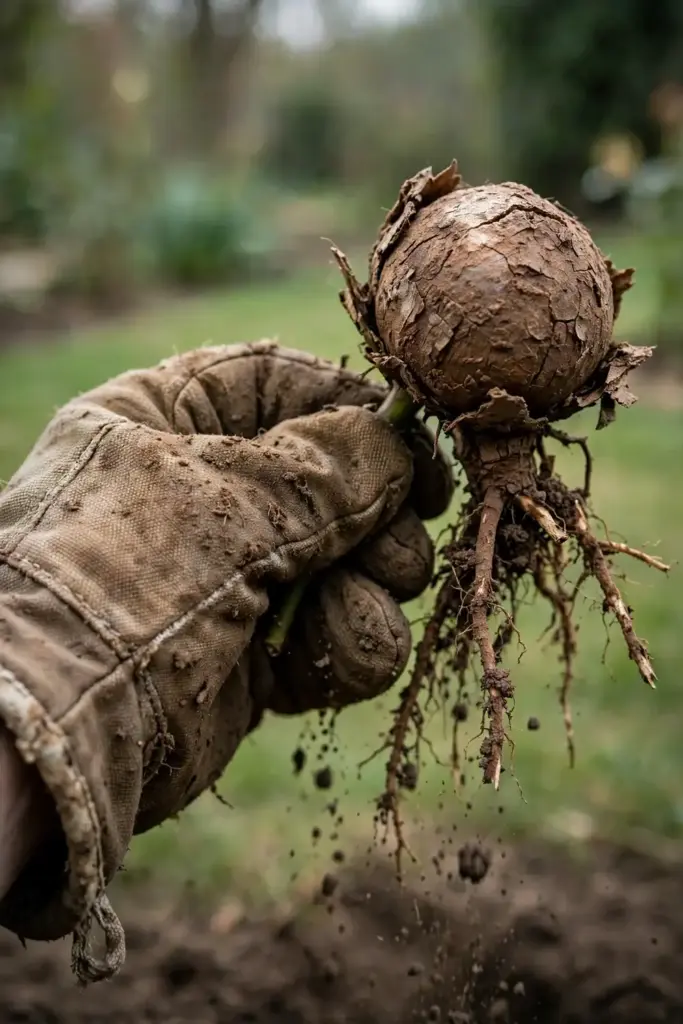
Here is the honest cost-benefit math. A rose with a small gall on one lateral root and vigorous top growth can sometimes live for years, and some gardeners choose to keep it while watching. But it remains infected, it sheds bacteria into the soil with every watering, and it puts every neighboring rose at risk. A rose with galls at the crown or graft union is already compromised at its most important junction. Keeping it is a sentimental choice, not a horticultural one.
Ask yourself one question: is this rose worth the soil it sits in? If the bed holds other roses you care about, the answer is almost always no. The rest of this article assumes you choose removal, because that is the only choice that protects the garden. If you choose to keep a mildly affected plant, skip to the Living With section and follow the sanitation rules as if the plant were already gone.
Step 2: Remove and Destroy the Infected Rose
Dig out the entire rose, roots and all, on a dry day. Work outward from the crown and lift as much of the root system as you can. The bacterium survives in old root fragments, so broken roots left behind are future infections. Shake the soil off the roots back into the hole, then get the plant itself into a bag. Do not drag it across the garden.
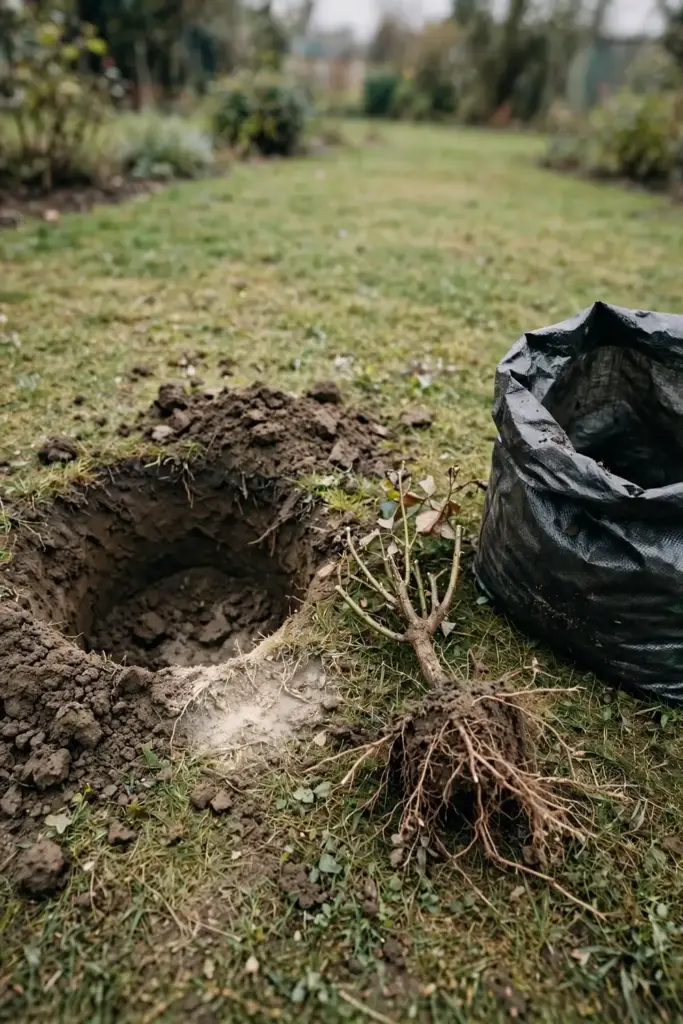
Destroy the plant. Burn it where burning is allowed, or bag it and send it with household trash. Never compost a galled rose. Home compost does not get hot enough to kill the bacterium, and municipal compost is not a gamble worth taking with a soil pathogen that survives for years. The University of Massachusetts extension service is explicit: discard infected plants as soon as the disease is diagnosed, and do not compost, since the bacterium can survive in the soil.
Remove the surrounding soil too. The Wisconsin clinic advises removing infected plants, the surrounding soil, and as many of the infected plant’s roots as possible. Take the soil from the planting hole and a generous margin around it. Replace it with clean soil from elsewhere in the garden, not from another bed that once held roses or fruit trees.
Step 3: Sanitize Every Tool and Surface It Touched
Crown gall moves on tools. Pruners that cut a galled cane carry the bacterium to the next cut, and that next cut is a fresh wound. This is how one infected rose becomes three. Sanitation is not optional housekeeping. It is containment.
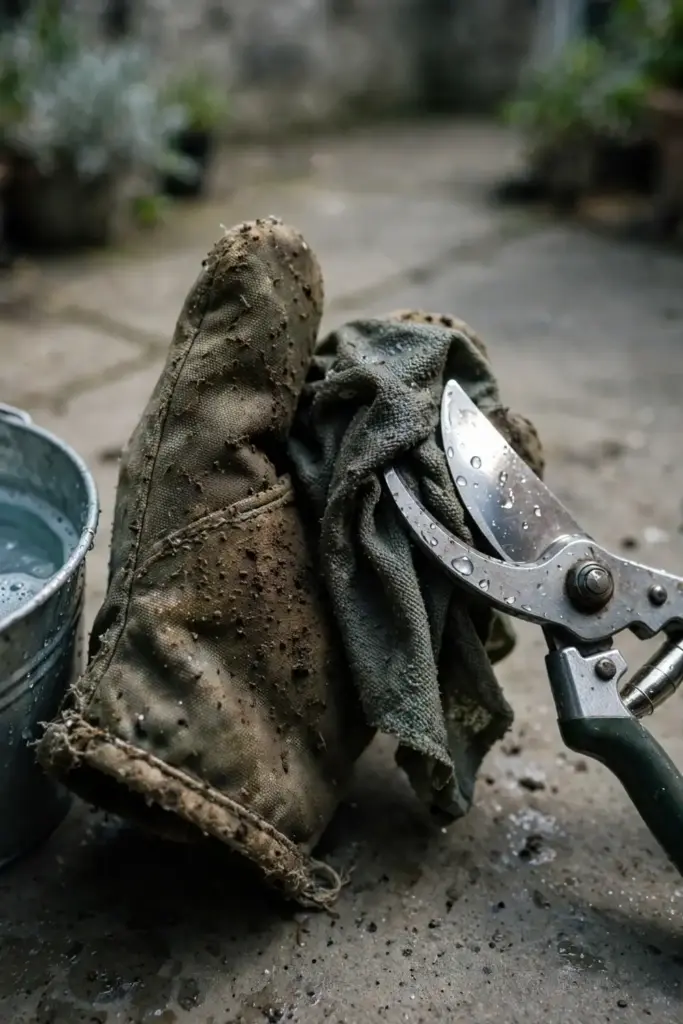
Disinfect pruners, loppers, trowels, and shovels with 10 percent bleach or 70 percent alcohol, with at least 30 seconds of contact time, every time you work on or near an infected plant. Between cuts on the same plant is the gold standard; at minimum, disinfect when moving from the infected rose to any other plant. Rinse bleach-treated tools with water afterward and oil the pivot, because bleach corrodes steel.
Do not forget the soft goods. Gloves, kneeling pads, and boots carry soil, and soil carries the bacterium. Wash gloves, knock soil off boots before leaving the bed, and disinfect any stake or tie that touched the plant. If you used a wheelbarrow to haul the debris, rinse it out. Containment is a system, and systems fail at the part you skip.
Step 4: Rest the Soil and Starve the Bacteria
With the plant gone, the soil still holds the bacterium, and this is where patience pays. Agrobacterium tumefaciens survives in soil for years, but it survives best where susceptible host roots feed it. Take away the hosts and the population declines. The Wisconsin clinic’s guidance is concrete: in areas with infested soil, rotate to a non-susceptible plant such as grass for 3 years.
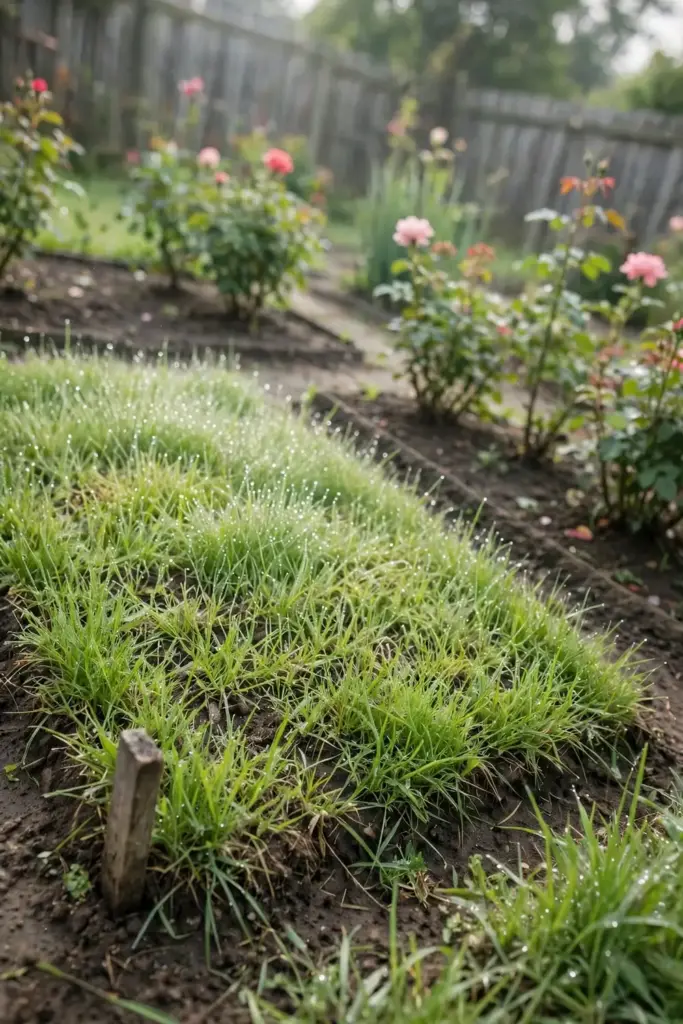
Three years feels long, and it is honest. Do not plant another rose, fruit tree, bramble, or grapevine in that spot during the rest period. Grass is the classic rotation because the bacterium does not gall grasses. Annual flowers from non-host families also work. What you must not do is treat the rest period as optional and replant a rose next spring. The bacterium will still be there, and the new rose’s planting wounds are fresh invitations.
Solarization can help in hot climates but do not oversell it. Clear plastic over moist soil in high summer knocks back many soil organisms, but results against Agrobacterium are inconsistent, and it does nothing about bacteria sheltering in old root pieces you missed. Think of solarization as a supplement to the rotation, not a shortcut around it.
Step 5: Plant the Next Rose So This Never Happens Again
Prevention at planting is where crown gall is actually beaten, because every infection starts at a wound. Start with the plant itself. Buy from reputable nurseries and inspect the roots and crown before planting. Reject any plant with lumps, swellings, or suspicious growths at the graft union, no matter how good the price is. A bargain galled rose is the most expensive rose you will ever buy.
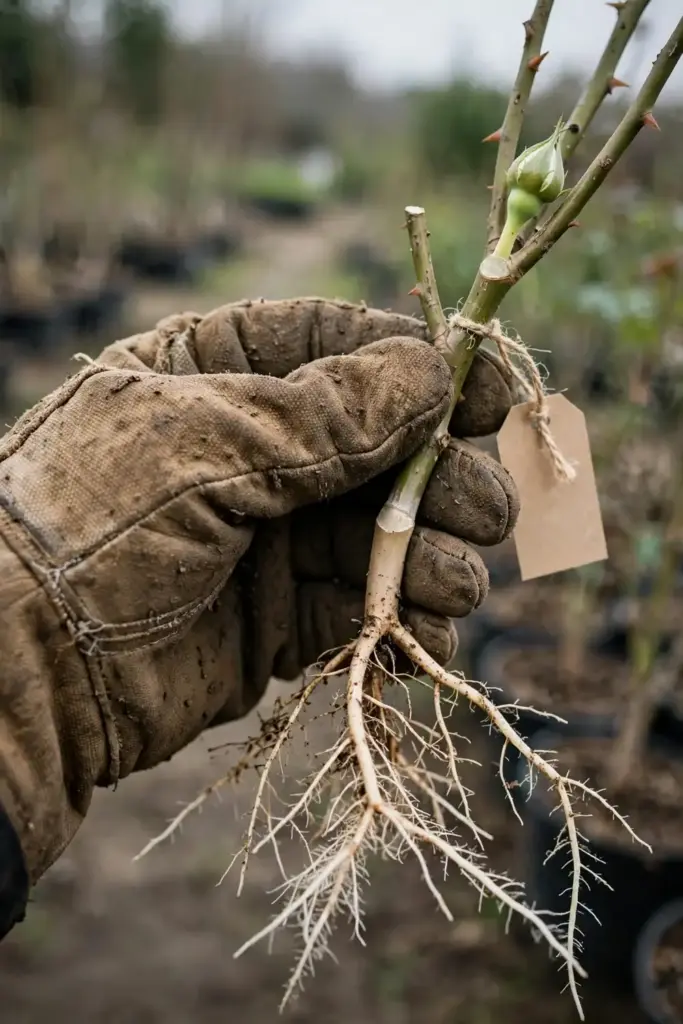
Handle roots like they matter, because they do. Tease out circling roots gently instead of ripping them. Plant at the right depth so the graft union sits just above the soil line, not buried. Backfill with loose soil and water in; do not stomp the root ball into submission. Every torn root is a wound, and wounds are the whole story.
Keep wounds away from the crown for the life of the plant. Mulch generously, but pull it back from the stem so bark stays dry. That string trimmer? Retire it near rose bases. Hand shears handle the nearby grass fine, or install a simple guard once and forget it. Prune with sharp, clean tools, and disinfect between plants as a habit, not an emergency measure. Our spring pruning techniques guide covers the clean-cut basics that keep every wound small and quick to heal.
For new plantings in ground with a gall history, consider biological prevention. Products containing Agrobacterium radiobacter, the non-pathogenic relative sold as Galltrol or Nogall, are applied to roots at planting time. They work by occupying wound sites and producing a compound that inhibits the pathogen. Be clear-eyed about the limits: these are preventatives applied before planting, not cures, and they do not work against every strain. For a home gardener planting one precious rose into rested soil, they are reasonable insurance, not magic.
Living With a Garden That Had Crown Gall
If you chose to keep a mildly affected rose, or if the gall history belongs to a previous owner, here is how to live with it honestly. First, stop expecting recovery. The gall will not shrink. Your goal is containment: keep the bacterium away from wounds on every other susceptible plant in the garden.

Make sanitation a reflex. Disinfect tools between roses, not just after the sick one. Water at the base instead of overhead to reduce splash movement of soil. Keep up the mulch-free zone around each crown and the trimmer-free zone around each bed. These are small habits, and they are the entire difference between one galled rose and five.
Watch the neighbors. Inspect the crowns of adjacent roses twice a year, spring and fall, when you are already in the bed. Early detection shortens the time an infected plant sheds bacteria into shared soil. It never saves the plant itself. And when you finally replace a galled rose, give the spot its rest years. The garden will still be there. Plant annuals, enjoy them, and plant the next rose on schedule, not on impulse.
Frequently Asked Questions
No. There is no cure for crown gall once galls begin to form, according to the University of Wisconsin Plant Disease Diagnostics Clinic and every other extension source. The bacterium inserts DNA into the plant’s own cells, so the tumor program runs independently. Sprays, drenches, and pastes cannot reach the instructions. Removal and prevention are the only effective responses.
It needs help to spread. The bacterium moves in soil, water splash, and on tools, and it enters only through wounds. Shared tools, splashing water, and root-to-root contact in the same bed give an infected rose every opportunity to pass it along. Without those bridges, neighboring roses usually stay safe. Sanitation breaks the chain.
No. Agrobacterium tumefaciens infects plants, not people or animals. The galls are plant tumors, not contagious growths, and handling an infected rose is safe. The famous laboratory cousin of this bacterium is used in plant genetic research precisely because its DNA-transfer trick works on plants. Wash your hands after gardening as usual, and worry about the roses, not yourself.
Cutting the gall off does not cure the plant. The Wisconsin clinic notes that galls can be pruned away, but new galls may reform elsewhere on the plant, because the infection is systemic. Worse, each cut is a new wound, and contaminated tools spread the bacterium to the fresh cut. If you prune a gall for cosmetic reasons, disinfect the tool before and after, and understand you are managing appearance, not disease.
Not right away. Remove the infected plant, the surrounding soil, and as many roots as possible, then rest the spot. The Wisconsin guidance is rotation to a non-susceptible plant such as grass for 3 years. Planting a new rose into the same hole next season puts fresh planting wounds into soil that still holds the bacterium. Wait the years, then plant with the prevention steps above.
Gallex is marketed for visible galls on woody plants including roses, and it can kill the gall tissue it touches. But galls may recur, and the product has no activity against the systemic infection inside the plant. Think of it as cosmetic at best. It does not change the no-cure verdict, and it does not make an infected rose safe to keep near healthy ones.
Where to Go From Here
If you arrived here searching for crown gall roses treatment, here is the whole plan in one paragraph. Crown gall on roses has exactly one honest plan, and now you hold it. Confirm the diagnosis with the table. Remove and destroy the infected plant, roots, and surrounding soil. Sanitize every tool that touched it. Rest the bed for three years with grass or non-host annuals. Then plant the next rose with clean stock, careful handling, and wounds kept to a minimum.

The no-cure verdict feels like bad news, but it is actually the most useful sentence you will read on this topic. It tells you exactly where not to spend money and effort: no miracle sprays, no gall pastes, no hoping. Everything you do instead protects the roses that are still healthy, and that is a trade worth making.