
Verticillium wilt has no cure once it enters the xylem. The fungus plugs the water pipes from inside, so a maple wilts in moist soil and no spray reaches the blockage. 10 strategies below protect the plants around the sick one, starting with the triage cut that tells you whether to pull it today.
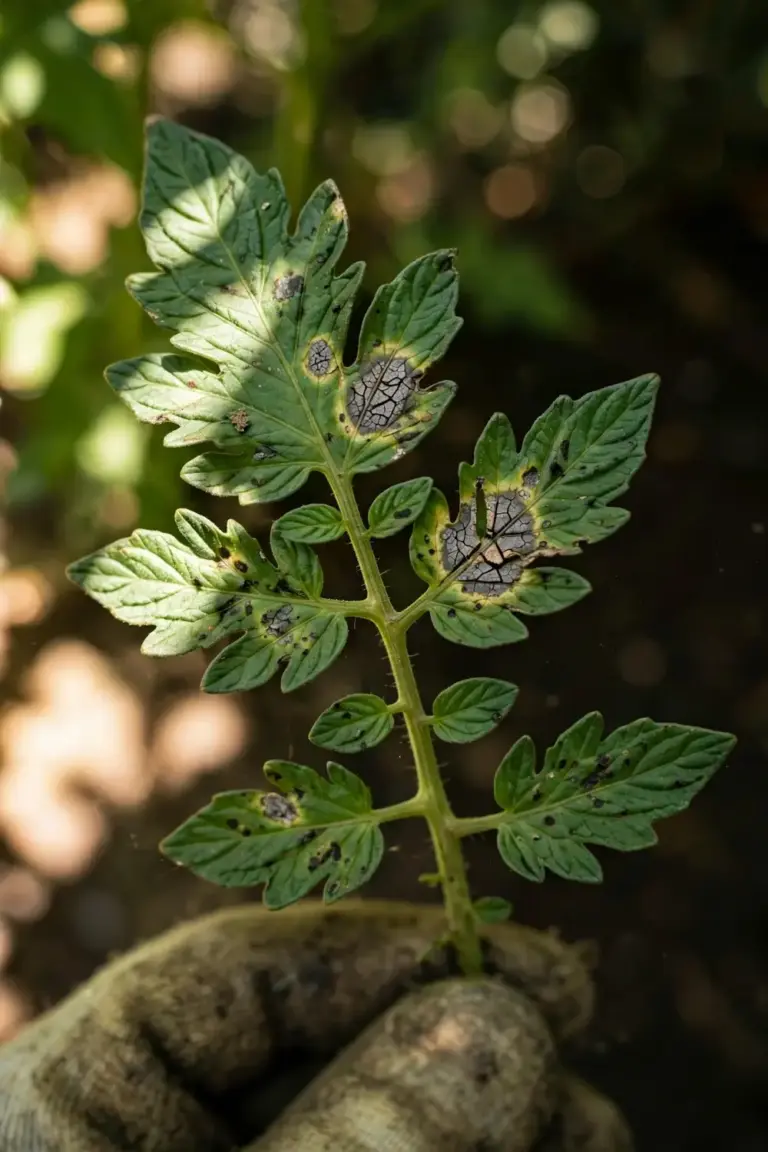
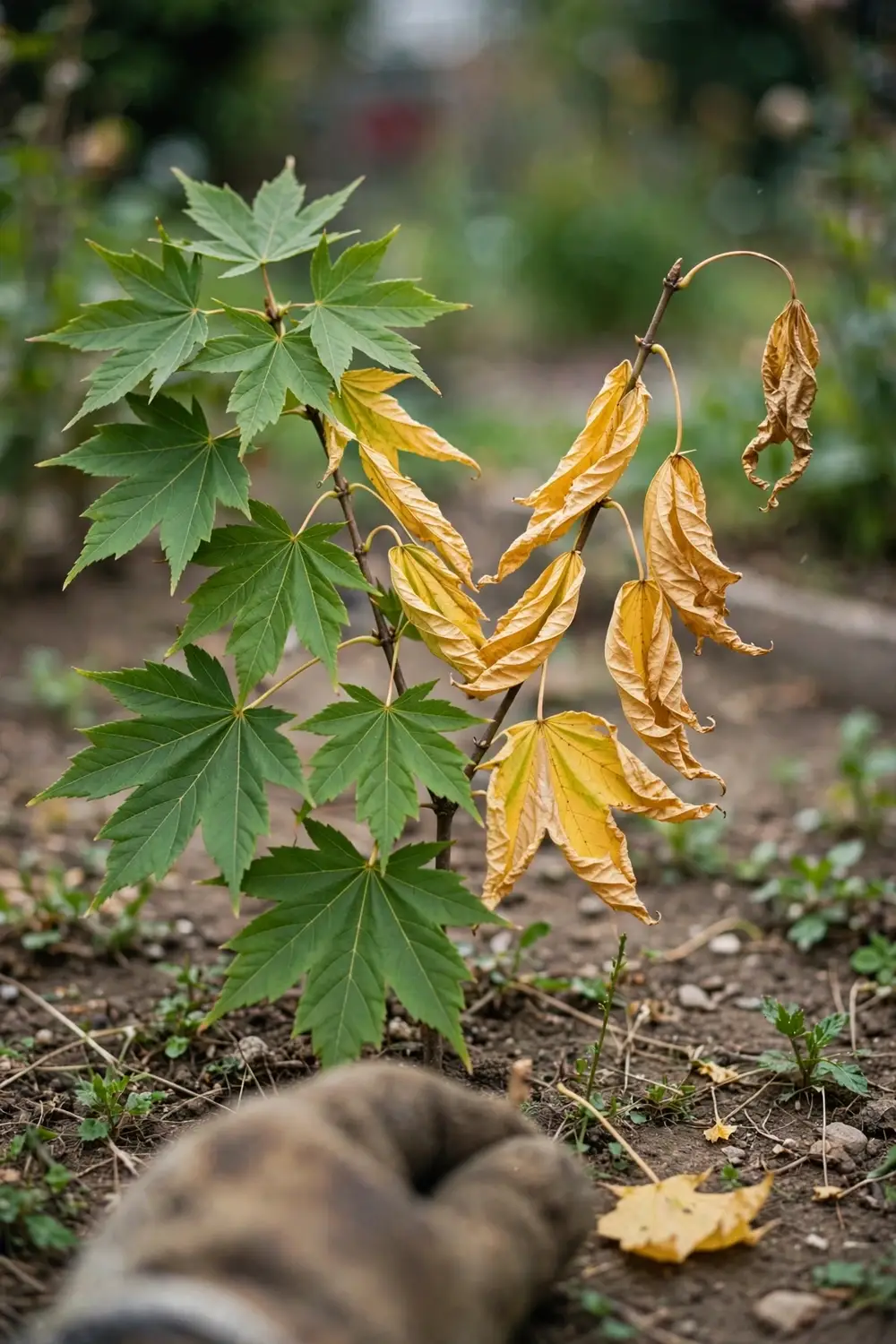
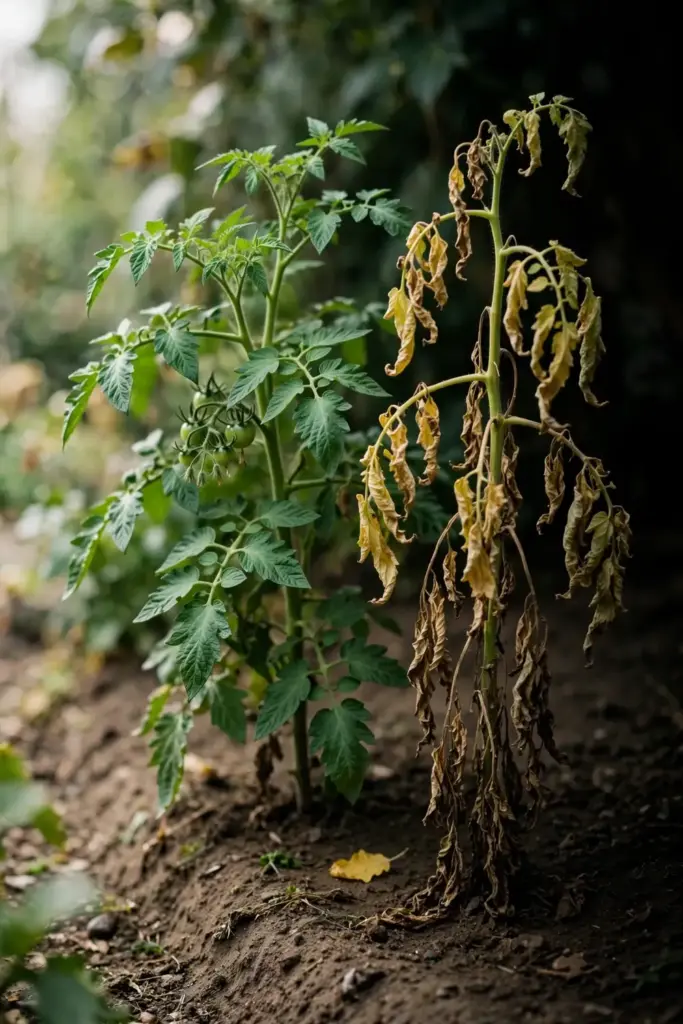
The signature is V-shaped yellowing. Leaf tissue yellows in a fan pattern from the leaf margin inward, often on one side of the plant first, then the leaf wilts, browns, and drops. That pattern repeats branch by branch. The whole plant declines slowly, and small plants can die in a single season while a mature tree may linger for years.
The rest of this page is 10 moves, from the triage cut to clean starts next season. Read the identification sections first if the plant still stands. Start at Step 1 if the plant already collapsed.
What Verticillium Wilt Actually Is
Verticillium wilt is a soilborne disease of trees, shrubs, and vegetables. The pathogen is Verticillium dahliae, a true fungus that lives in soil for many years. It enters through root tips and wounds, then grows upward into the xylem, the water-conducting tissue.
The fungus is a generalist. The University of California IPM guide to Verticillium wilt lists hosts from maple, ash, and elm to rose, chrysanthemum, tomato, potato, and eggplant. Iowa State University Extension puts the host count at more than 300 woody and herbaceous plants. That breadth is the core difference from Fusarium wilt, whose strains attack narrow host lists.
It survives as microsclerotia, tiny black resting structures that wait in soil without a host. The Cornell eggplant Verticillium guide reports that microsclerotia can survive about 14 years, germinating when host roots grow near. A bed that held Verticillium once holds it still.
It travels on ordinary garden traffic. Infested soil moves on boots, tools, and mower wheels. Infected transplants and nursery stock carry it into clean beds. Fallen leaves from a sick tree blow across the yard and drop microsclerotia where they land. Clean stock and clean tools are the first defense, long before any product.
A second species, Verticillium albo-atrum, causes the same disease in cooler soils. Home gardeners rarely need to separate the two. The symptoms match, the management matches, and only a lab culture names the species with certainty.
How to Identify Verticillium Wilt on Leaves and Stems
Verticillium wilt starts low and one-sided. Lower leaves yellow first, often in a V shape from the margin inward, or on one side of the plant. Growth stalls. Leaves wilt in afternoon heat and recover at night, then stop recovering as the blockage spreads.

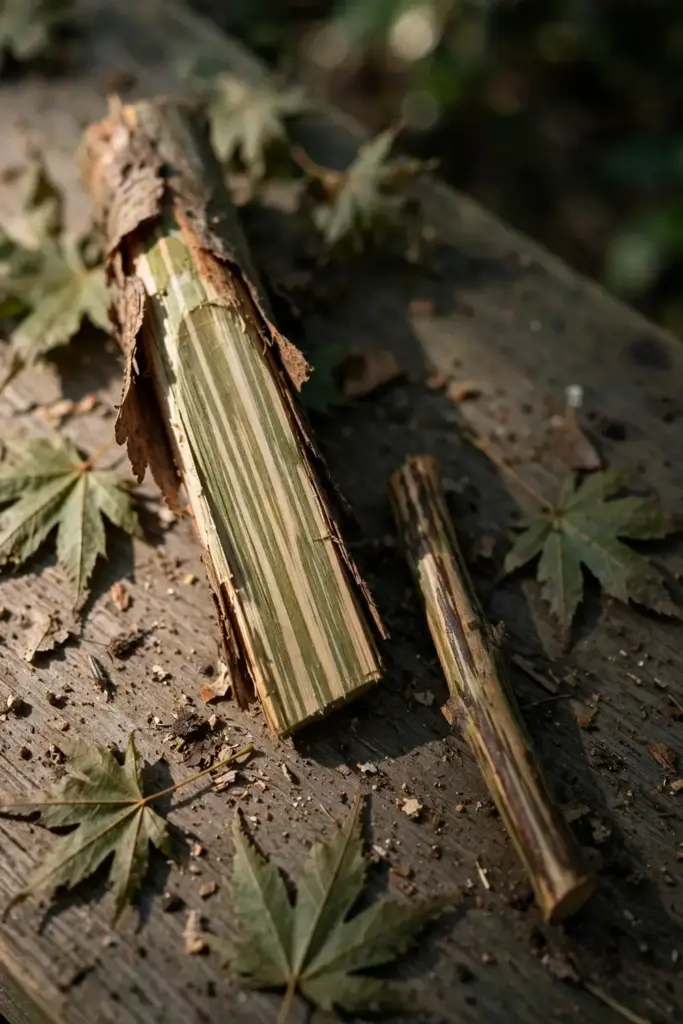
Trees show the pattern branch by branch. One branch wilts while the rest of the canopy looks green. Dead leaves may cling to the branch for months. Michigan State University Extension notes that the sapwood under the bark tells the story, with light green to olive green streaks in maple and brown streaks in elm.
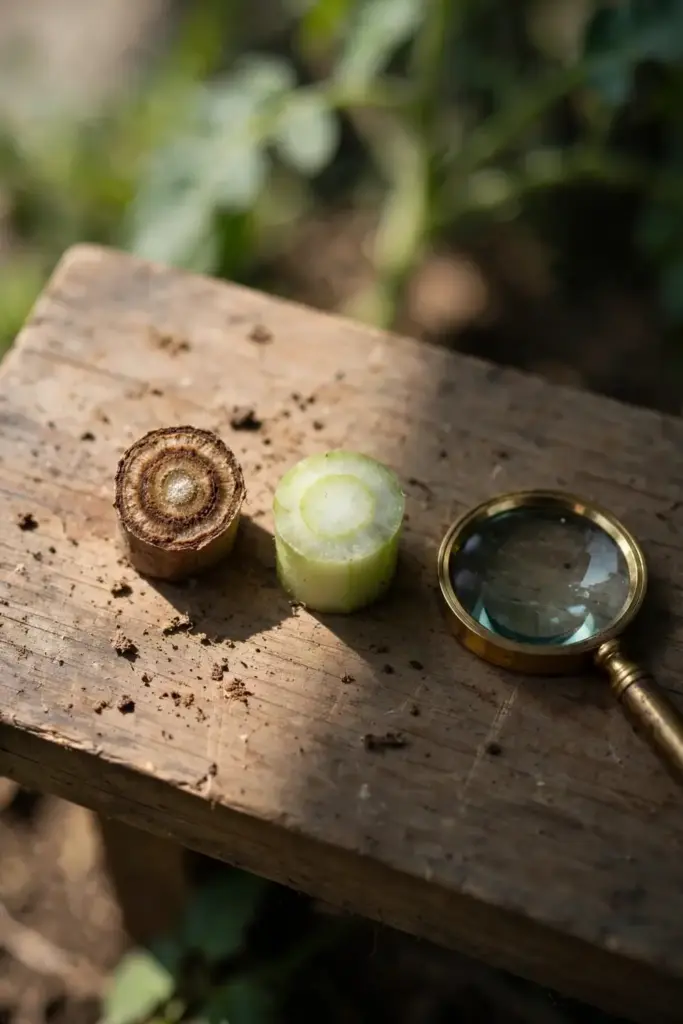
Cut a wilting branch to confirm. Peel back the bark on a symptomatic branch and look for streaks in the sapwood just under the bark. Streaking is common in maple and redbud, and often absent in ash and lilac, so a clean branch does not clear the tree. The University of California IPM program notes that Verticillium and Fusarium symptoms can look identical and may need lab culturing for a firm identification.
Watch for remission. A tree that wilts one year can leaf out normally the next, because hot summer weather suppresses the fungus in aboveground wood. The University of California IPM program notes that mature trees may take many years to die and may suddenly recover if conditions turn favorable. A single good year does not mean the fungus left.
How to Identify Verticillium Wilt on Roots and Fruit
Verticillium wilt shows little on the roots at first. Roots may look normal while the stem already carries brown streaks. The University of California IPM program notes that eggplant roots infected with Verticillium dahliae show no external discoloration or decay, while root rots brown and rot the outer cortex. That gap is why digging up the plant and finding clean roots does not clear it. The stem split is the test that counts.
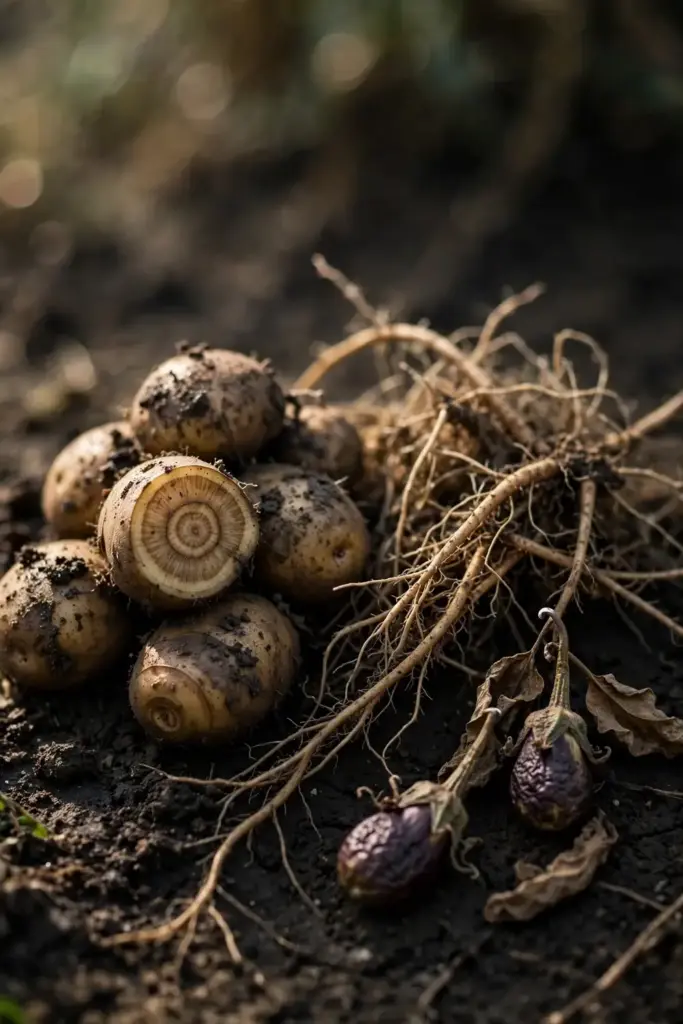
Fruit tells the story late. Infected plants set few fruit, and the fruit that sets stays small. Eggplant leaves roll inward at the edges, then dry, and shriveled fruit stays attached to plants that die. Pick sound fruit and eat it. The fungus harms the plant, never the eater.
Potatoes carry a distinct mark. Utah State University Extension describes a light tan discoloration of the vascular tissue just below and just above the soil line, plus tan or blackened rings in infected tubers near the stem end. Infected tubers are safe to eat. Peel them and cook them as usual.
Seedlings show a different face. Infected seedlings stunt, droop, and yellow from the base up. A seedling that collapses in cool spring soil after a good start deserves the same stem-split test as a mature plant. Early infection kills fast in small plants.
Which Trees, Shrubs, and Vegetables Get Hit Hardest by Verticillium Wilt
Maples sit at the top of the risk list. Japanese maple, Norway maple, and red maple all collapse from Verticillium wilt, and the disease is the first suspect when one branch of a maple wilts in spring. Ash, elm, redbud, catalpa, olive, and stone fruit trees follow close behind. Smoke tree, lilac, rose, and viburnum carry the shrub risk.
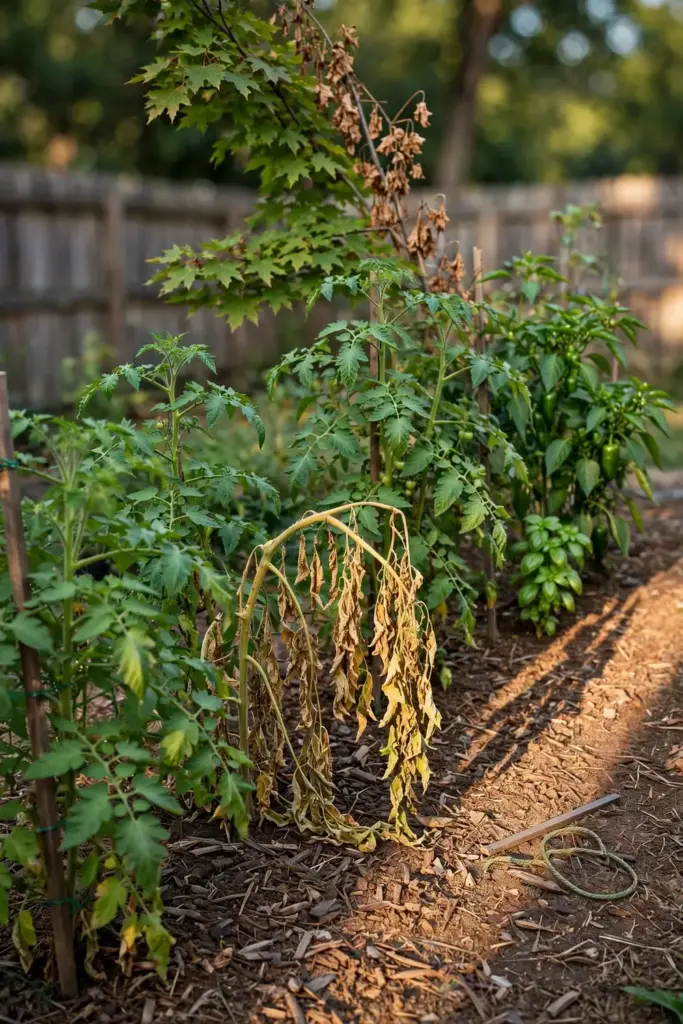
Vegetables split into two ranks. The University of Wisconsin Extension names tomato, potato, pepper, eggplant, cucumber, muskmelon, pumpkin, and watermelon as commonly and severely affected. A second rank, including asparagus, bean, beet, broccoli, cabbage, cauliflower, lettuce, onion, peas, and spinach, catches the disease with milder symptoms. Sweet corn stands immune.
Resistance varies by variety and by strain. Iowa State University Extension warns that some species appear on both the resistant and the susceptible lists because susceptibility depends on the variety and on the strain of Verticillium in that soil. A resistant label is a starting point, not a guarantee.
Conifers escape it. Pines, spruces, firs, and other conifers appear immune to Verticillium wilt, and Cornell University notes that most grasses resist it too. A bed that killed a maple can still grow a spruce, a lawn, or a grain cover crop without fear.
Verticillium Wilt vs Fusarium Wilt
Temperature splits them first. The University of California Master Gardener comparison of the two wilts puts Fusarium at warm soil near 80 degrees Fahrenheit and Verticillium at cool soil from 55 to 75 degrees Fahrenheit. A wilt that arrives in summer heat points to Fusarium. A wilt that arrives in cool spring soil points to Verticillium.
| Clue | Verticillium Wilt | Fusarium Wilt |
|---|---|---|
| Pathogen | Verticillium dahliae | Fusarium oxysporum f. sp. lycopersici |
| First symptom | V-shaped yellowing from leaf margins, fan pattern | Yellowing of older lower leaves, often one-sided |
| Wilt pattern | Slower decline, plants often survive stunted with green tops | Midday wilt with night recovery early, then permanent |
| Vascular discoloration | Lighter brown, seldom more than 10 to 12 inches above the soil on tomato | Dark brown, extends far up the stem |
| Temperature sweet spot | Cool soil from 55 to 75 degrees Fahrenheit | Warm soil near 80 degrees Fahrenheit |
| Host range | More than 300 plant species | Tomato only for this strain |
| Soil survival | Resting structures survive about 14 years | Resting spores persist many years |
| Best defense | Resistant varieties with a V code | Resistant varieties with F1, F2, or F3 codes |
| Field test | V lesions plus stem split with brown streaks, lab culture settles close calls | One-sided yellowing plus stem split with brown ring, pith healthy |
Kansas State University Extension supplies the 10 to 12 inch figure for Verticillium browning on tomato. When the table leaves doubt, a lab culture settles it. Both fungi invade through fibrous roots and disrupt water uptake. Both persist in soil from year to year. Fusarium Wilt is the mirror companion to this article, written from the Fusarium side of the same pair.
Bacterial wilt moves faster and from the top down. Youngest leaves wilt first while staying green, and the whole plant can collapse in days. Cut a fresh stem and stand it in a glass of clear water. Milky ooze streaming from the cut means bacteria. No ooze and a brown vascular ring mean fungus. The bacterial wilt guide covers the third wilt with a separate field test.
Why Verticillium Wilt Clogs the Water Pipes
Verticillium wilt kills by plumbing failure. The fungus enters through root tips and wounds, then grows into the xylem. The plant plugs its own vessels with gels and outgrowths to wall the fungus off. Those plugs stop the fungus and stop the water at the same time.
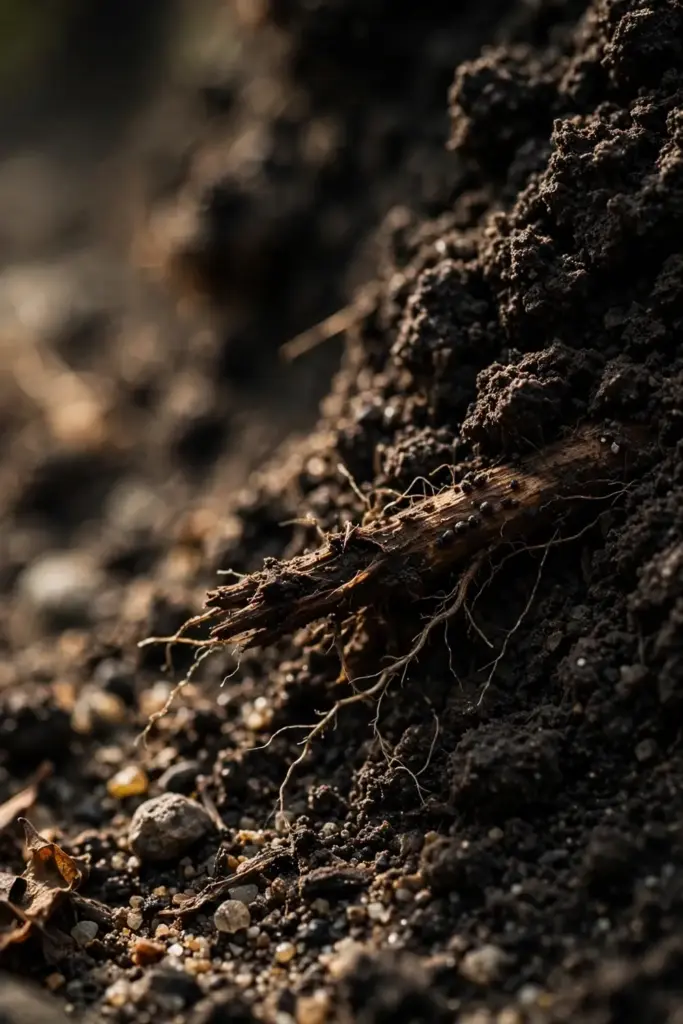
That is why watering fails. Soil can sit moist while leaves wilt. The roots may still take up water, but the blocked pipes cannot lift it to the canopy. More water only wets the soil the fungus already owns.
The Connecticut Agricultural Experiment Station explains the second half of the clog. As the fungus grows in the xylem, it produces enzymes and toxins, and the plant responds by plugging and gumming its own water-conducting vessels. The physical blockage plus the gumming together choke off water and nutrients.
Resting structures make the blockage permanent. When infected tissue decays, microsclerotia release into the soil. Cornell University reports that they survive about 14 years without a host. The University of California IPM program adds that the fungus can disappear from aboveground wood in hot summer weather, then strike again as a new infection the next year. A tree that recovers in August can wilt again the following spring.
Canopy demand is the crunch point. The plant moves more water than at any earlier stage once leaves expand and fruit sets, and blocked pipes cannot keep up. A cool spring favors the fungus while the canopy still demands water. That is why a tree that looked fine in winter flags in the first warm weeks of spring.
What Makes Verticillium Wilt Worse in a Home Garden
Cool moist soil is the trigger. The University of Illinois Extension puts the infection window at 55 to 86 degrees Fahrenheit, with an optimum near 75 degrees Fahrenheit. Cool spring soil sits squarely in the risk window. Saturated soil raises the chance of infection further, so a bed that stays soggy after rain invites the fungus in.
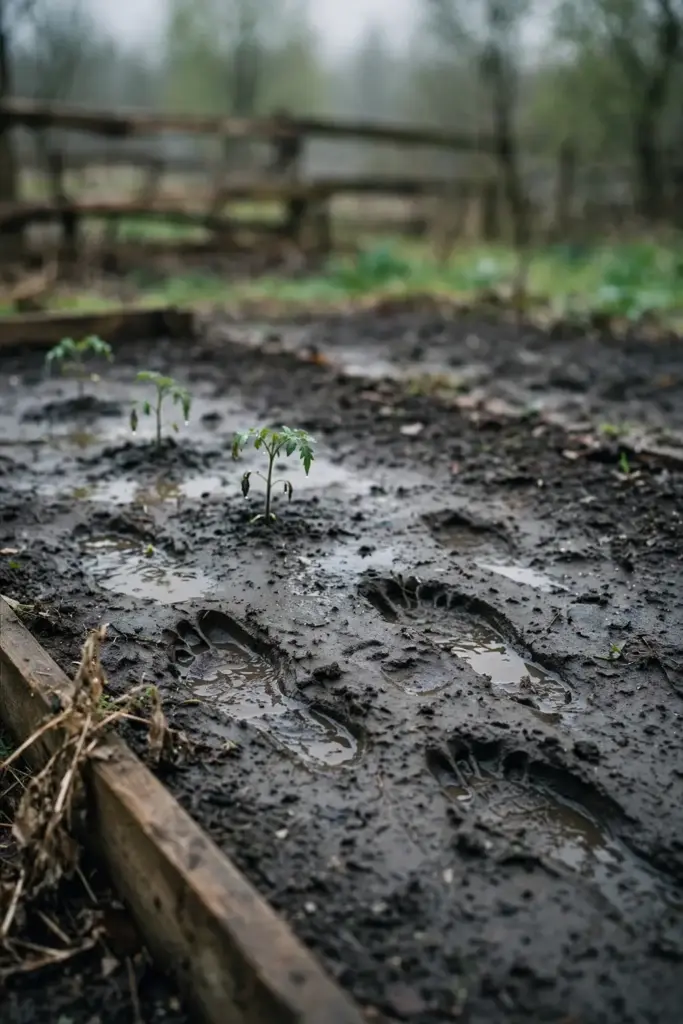
Wounds and dirty stock spread it. Cultivation nicks, transplant shock, and root-knot nematode feeding all open doors in roots. Infected transplants, nursery stock, and soil on tools carry the fungus into clean beds. Each plant catches it on its own through its roots. The fungus does not spread above ground from plant to plant.
Stress tilts every infection. Drought stress, overfertilization, and root damage all weaken the plant faster than the fungus alone. Iowa State University Extension notes that moderately fertile soil with slightly high potassium and low nitrogen increases resistance to infection. Soft overfed growth with starved roots is easy prey.
Dirty mulch and fallen leaves keep the bed infectious. The University of Wisconsin Extension warns against mulch produced from infected trees or of unknown composition, and tells gardeners to collect and discard fallen leaves from symptomatic trees at once. Both mulch and leaves carry microsclerotia. A tidy bed is disease work, not decoration.
Nightshade weeds host the fungus silently. Cornell University notes that Solanaceous weeds such as nightshade carry Verticillium without showing it. A bed that looks empty while nightshade weeds stand in the corners stays infectious. Pull the weeds through the fallow years.
Step 1: Decide Whether Saving This Plant Is Worth It
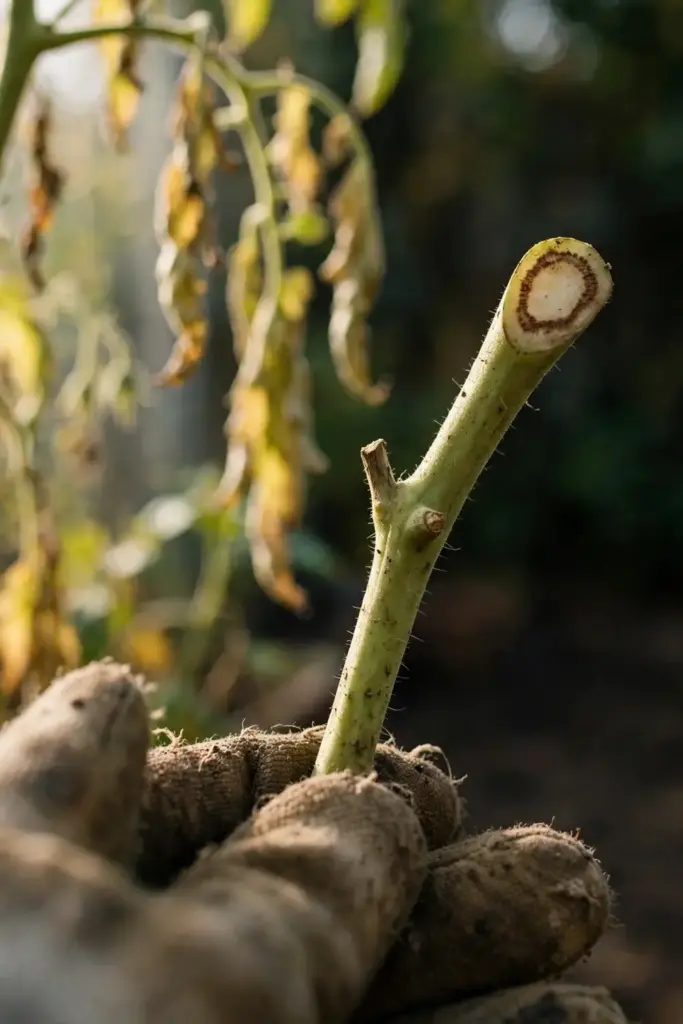
Cut before you spend. Split a lower stem or peel bark from a wilting branch and read the vascular tissue. Brown streaks in the sapwood confirm Verticillium wilt. A vegetable with that streak through the whole stem and a full canopy wilt will not recover.
No spray reverses a blocked xylem. The Connecticut Agricultural Experiment Station states the limit plainly. Fungicides are not effective for control of Verticillium wilt. Cornell University adds that there are no conventional chemical fungicides for this disease. Garden sprays cannot reach fungus inside the water pipes, and they cannot clear the plugs the plant already formed.
Trees get a different triage than vegetables. Michigan State University Extension states that trees showing general or severe wilt cannot be saved and should be cut down and disposed of. A tree with wilt on one branch or a small portion of the canopy may be saved, or its useful life prolonged, with water, fertilizer, and pruning. The cut decides which tree you own.
Pull the doomed vegetable and save the season. A transplant costs a few dollars and weeks of lead time, and a season nursing a dead plant costs the whole bed. The exception is a tray where only one seedling shows symptoms. Cull the sick one. Watch the rest.
Step 2: Rogue the Plant and Sanitize Every Tool It Touched
Pull infected plants whole, roots and all. Bag them for municipal waste. Home compost piles rarely sustain the heat that kills microsclerotia, so composting a sick plant seeds next season’s beds with the same fungus.
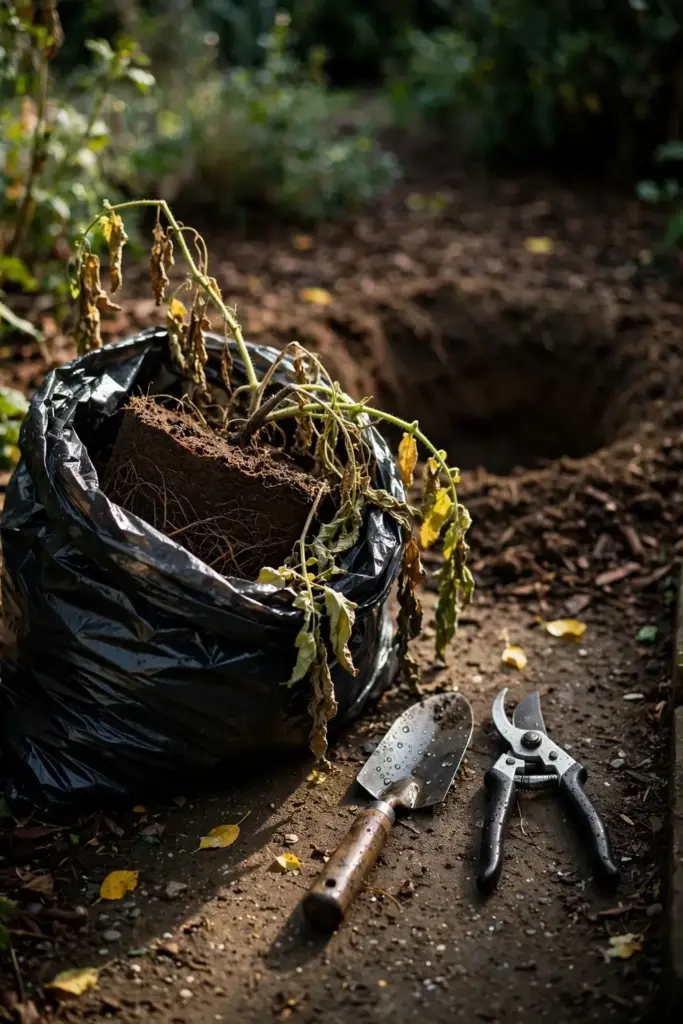
Do not chip infected wood. Michigan State University Extension warns that the fungus can live for some time in chips and grow as a saprophyte in the soil if adequate organic matter is present. Chip mulch from a sick tree spreads the disease. Burn the wood or haul it to a dumping area where allowed.
Sanitize everything the plant touched. Wash soil off tools, stakes, pots, and boots. Use a 10 percent bleach solution, one part household bleach to nine parts water, then rinse and oil tools to prevent rust. The University of Wisconsin Extension gives the same protocol for pruning tools, with a dip of at least 30 seconds between cuts. Clean the tools again before you put them away.
Work sick beds last. Move through healthy beds first, then the infected bed, so shoes and tools never carry soil from sick to healthy. Change gloves between beds if you wear them. Collect fallen leaves from symptomatic trees and discard them at once.
Step 3: Plant Resistant Varieties With the Right Code
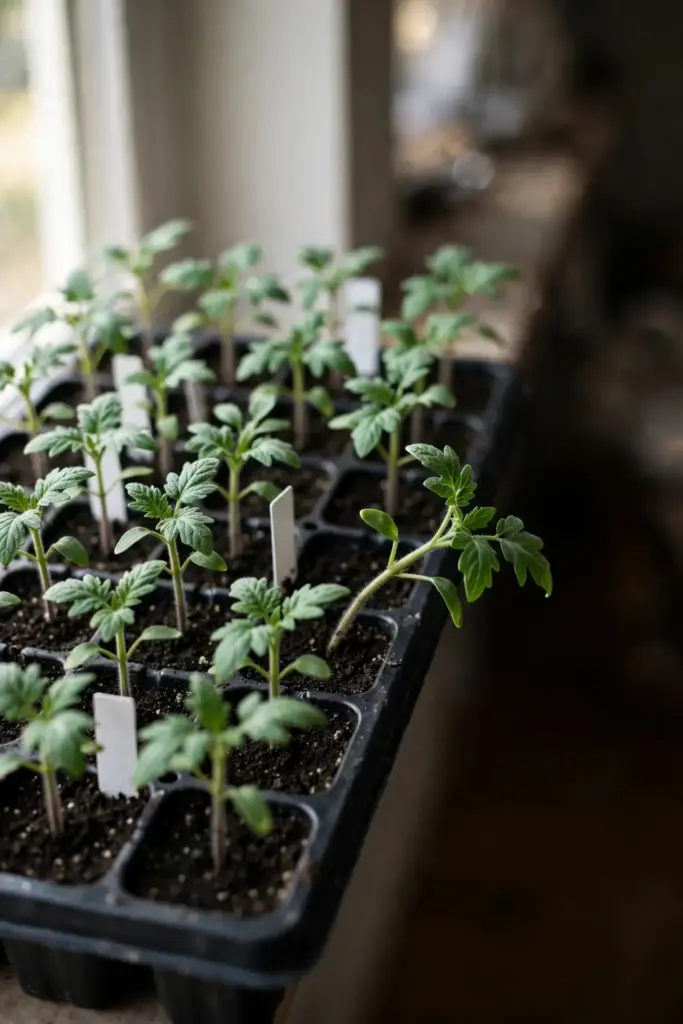
Read the label before you buy. Resistant tomato varieties carry a V code for Verticillium. A VFN label means resistance to Verticillium, Fusarium races 1 and 2, and nematodes. Match the code to the disease in your soil. A lab diagnosis is the only way to name the fungus living there.
Tomato resistance has a race problem. University of California vegetable specialist Steven Koike notes that race 2 of the Verticillium pathogen developed after race 1 resistant varieties spread, so varieties that once held now die from the new race. A V code still buys a harvest. It does not promise immunity.
Eggplant has real options. Cornell University names Black King and Irene as resistant eggplant varieties, and lists Classic, Rosa Bianca, and Epic among varieties that hold yields despite infection. Check current catalogs for the codes, since variety resistance changes as seed lines change.
Trees and shrubs get a resistant list too. The University of Wisconsin Extension list of resistant trees and shrubs includes apple, aspen, azalea, beech, birch, crabapple, dogwood, ginkgo, hackberry, hawthorn, hickory, holly, honeylocust, katsura tree, mountain-ash, oak, pear, poplar, sweetgum, sycamore, walnut, and willow. Conifers appear immune to the disease. Plant from that list where Verticillium killed the last tree.
Step 4: Graft Vegetables Onto Resistant Rootstock
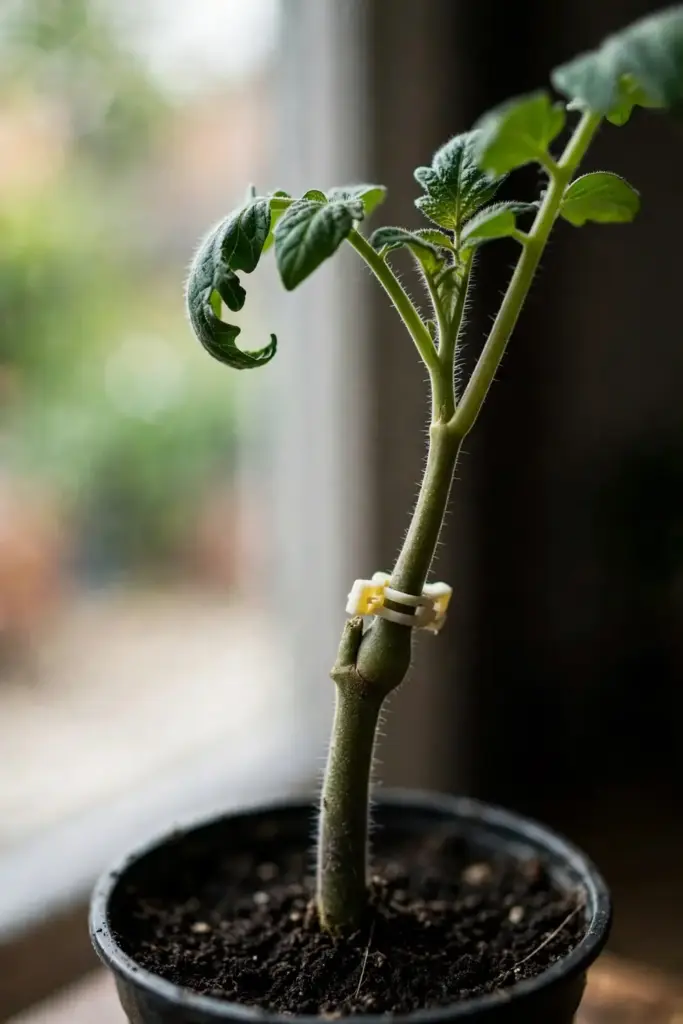
Grafting saves the heirloom. Grow the flavorful scion on a resistant rootstock and the roots fight the fungus while the top grows the fruit you want. Buy grafted plants if you would rather skip the bench work. Seed suppliers now sell grafted heirlooms for infested beds.
Rootstock choice matters. Utah State University Extension names Estamino and Maxifort among rootstocks used against Verticillium wilt in vegetables. Both add vigor on top of resistance. Ask the supplier which Verticillium races the rootstock covers before you buy.
Keep the graft union above the soil and mulch line. A buried union lets the scion root into infested soil and voids the whole trick. Stake the plant so wind never bends the union into the soil. Check the union at planting time and again after the first heavy rain.
Grafting fits vegetables, not landscape trees. No Verticillium resistant rootstock exists for stone fruit or shade trees, so grafting cannot save a maple. For trees, the resistant species list in Step 3 is the equivalent move.
Step 5: Solarize the Bed Before You Replant
Solarize the bed in the hottest stretch. Wet the soil, lay clear plastic edge to edge, and bury the edges so heat cannot escape. Black plastic will not work. Sunlight must pass through the sheet and trap heat underneath.
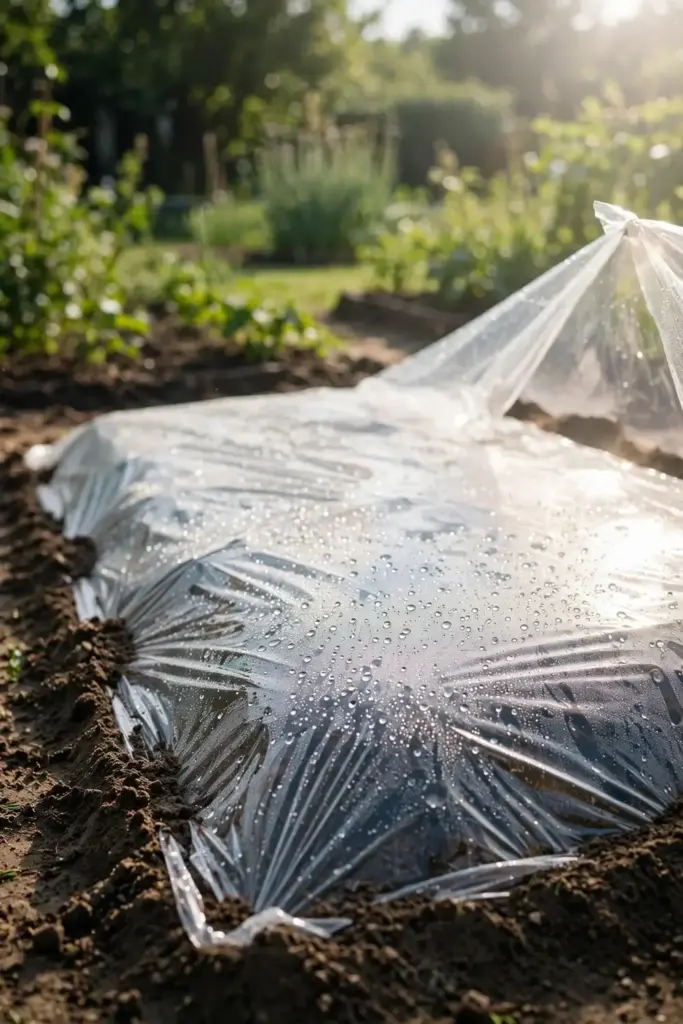
Six weeks does the job in most summers. Louisiana State University AgCenter reports that the top 6 to 8 inches of covered soil reach 100 to 130 degrees Fahrenheit, hot enough to knock down fungi, nematodes, and weed seed. The highest heat sits in the top 2 to 3 inches. Deep microsclerotia survive, so solarization cuts the population rather than sterilizing the bed.
Leave the soil alone after you pull the plastic. Do not till. Tilling drags up weed seed and microsclerotia from below the heated layer. Let the bed cool for a few days, then plant into the undisturbed surface.
Solarization fits vegetable beds, not tree pits. A tree pit is too small and too shaded to heat well, and the roots of nearby trees extend under the plastic. Save this move for open beds in full sun.
Step 6: Rotate Out of Susceptible Crops for 4 to 7 Years
Rotate out of susceptible crops for 4 to 7 years. The University of Illinois Extension calls for rotations with nonsolanaceous crops for at least 4 years, and Kansas State University Extension gives 4 to 6 years for Fusarium and Verticillium wilt together. A home garden should plan for the long end of that range, since microsclerotia outlive any single season.
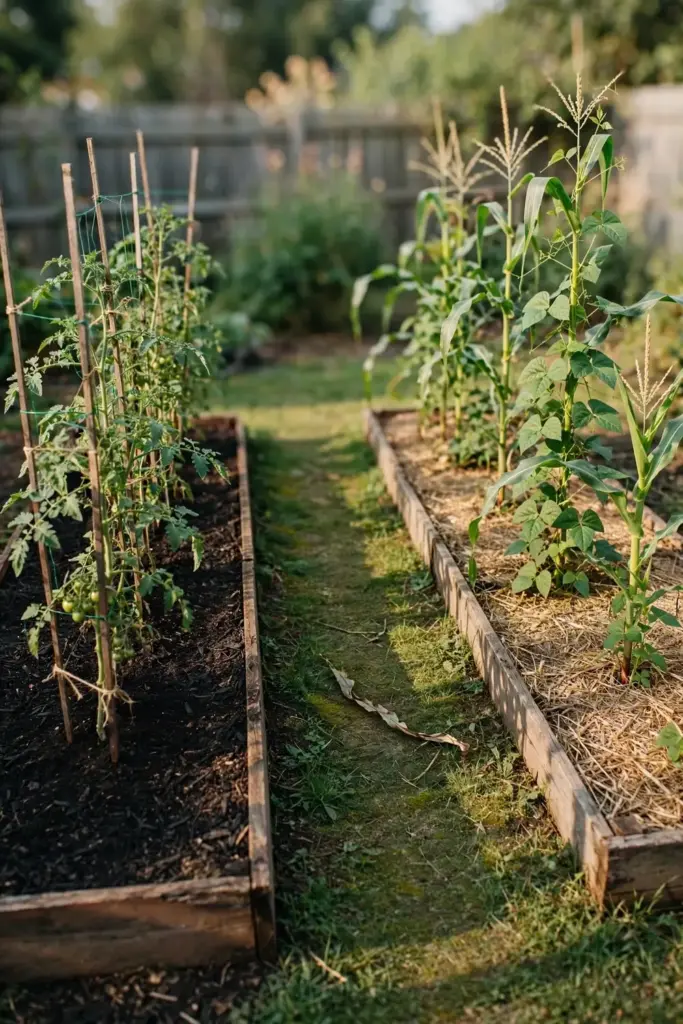
Fill the fallow years with non-hosts. Corn, beans, peas, asparagus, and grains break the cycle. Cornell University notes that most grasses resist Verticillium, so a grass cover crop in the off season adds organic matter while the bed rests. A mustard cover crop adds a biofumigation effect as it breaks down.
Pull nightshade weeds through the fallow years, because nightshade weeds host the fungus silently and keep the bed infectious while it looks empty. Keep the bed free of tomato and potato volunteers too.
Never follow a susceptible crop with another susceptible crop. Tomatoes after eggplant keep the fungus fed. Map the bed on paper.
Step 7: Grow the Next Crop in Fresh Containers
Containers dodge the bed entirely, and that clean break is the whole point of this step. Fresh sterile mix carries no soil history and no fungus, so a tomato or eggplant in a clean container on a patio grows free of the bed that killed its cousins. Containers are the honest shortcut when a bed cannot be trusted.
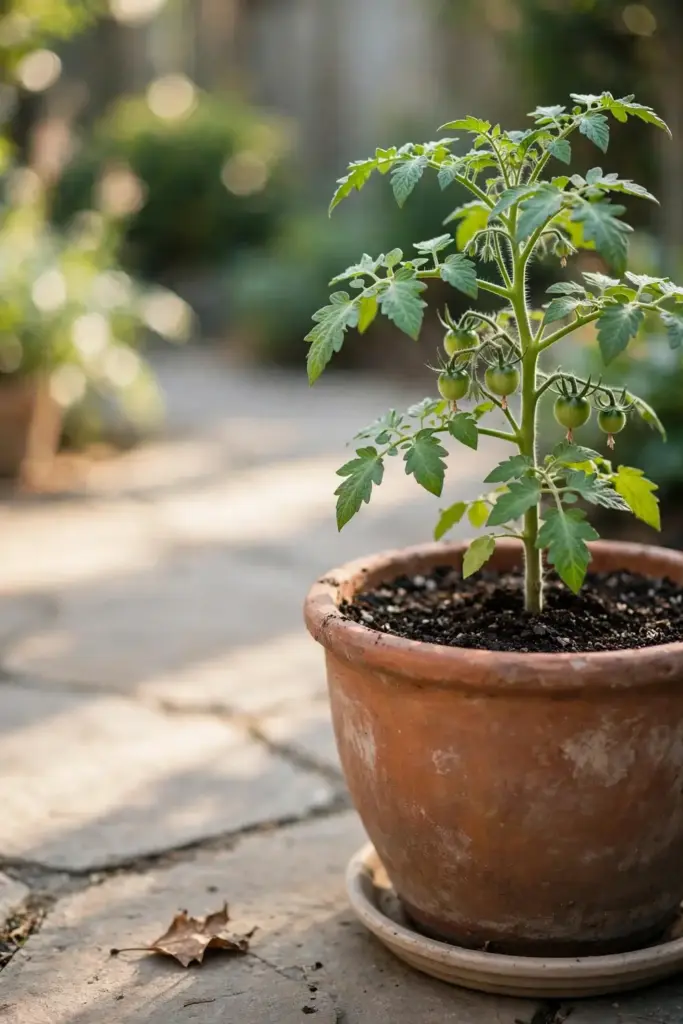
Keep infected soil out of the pot. Never fill containers with bed soil, even soil that looks fine. One scoop of bed soil seeds the pot with microsclerotia that survive about 14 years. Use fresh sterile mix from a sealed bag.
Drainage decides container success. Drill holes if the pot lacks them, set the pot where morning sun dries the surface, and empty saucers within half an hour. A pot that sits in standing water trades Verticillium for root rot.
Move the pots to clean ground. A container sitting on infested bed soil wicks microsclerotia up through the drainage holes. Set pots on a patio, on pavers, or on a clean gravel pad. Keep them off bare bed soil.
Step 8: Water for Steady Moisture and Mulch for Cool Roots
Water established trees and shrubs steadily. The University of Wisconsin Extension advises about 1 inch of water per week for established trees and shrubs. Steady moisture prevents drought stress, and drought stress is the opening Verticillium exploits. A tree that never wilts from thirst fights the fungus longer.
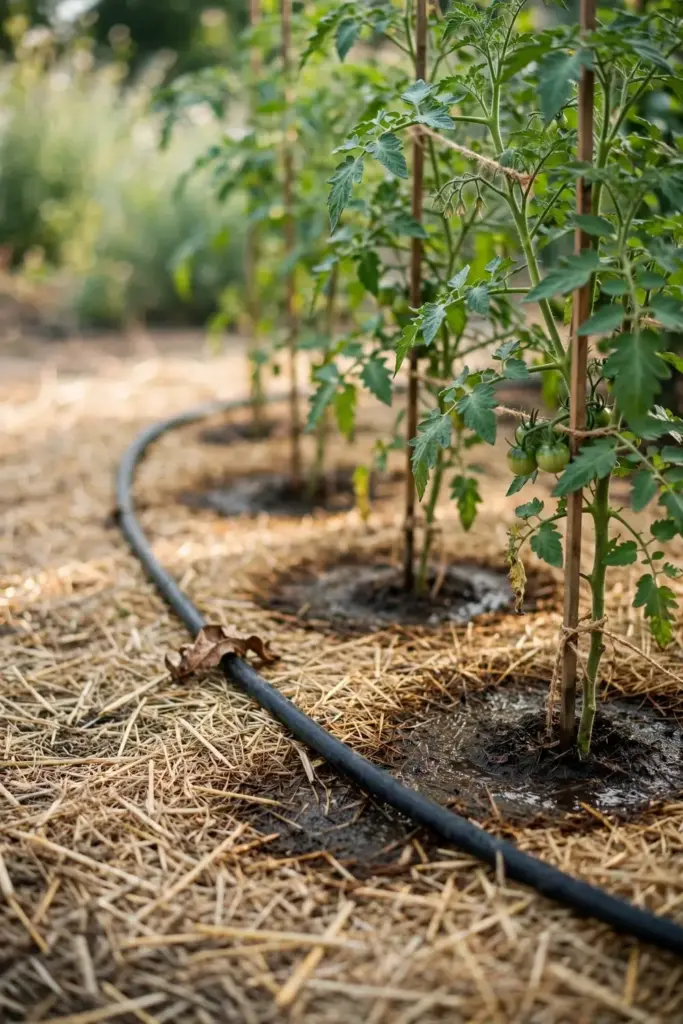
Water in the morning at the root zone. Drip lines and soaker hoses beat overhead watering because they keep water where roots drink and keep stems dry. Water deeply. Let the top inch dry before watering again, and the deep roots that follow will sit where moisture holds steady.
Mulch for even moisture, not for cold soil. Spread 2 to 3 inches of clean straw or shredded bark around the plants, keeping it a finger width off the stems. Mulch holds moisture even, suppresses weeds, and stops soil splash onto lower leaves. Never use mulch produced from infected trees or of unknown composition.
Skip overhead watering in cool spring weather. Splash lifts infested soil onto stems and lower leaves. A narrow-spout can aimed at the mulch does the job on a small bed. Morning water dries any incidental wetness during the day.
Step 9: Feed for Vigor Without Pushing Soft Growth
Test the soil before you feed it. A ten-dollar soil test tells you pH and nutrient levels. The Connecticut Agricultural Experiment Station advises fertilizing based on a soil test for trees under Verticillium pressure. Guesswork feeds the fungus as often as the plant.
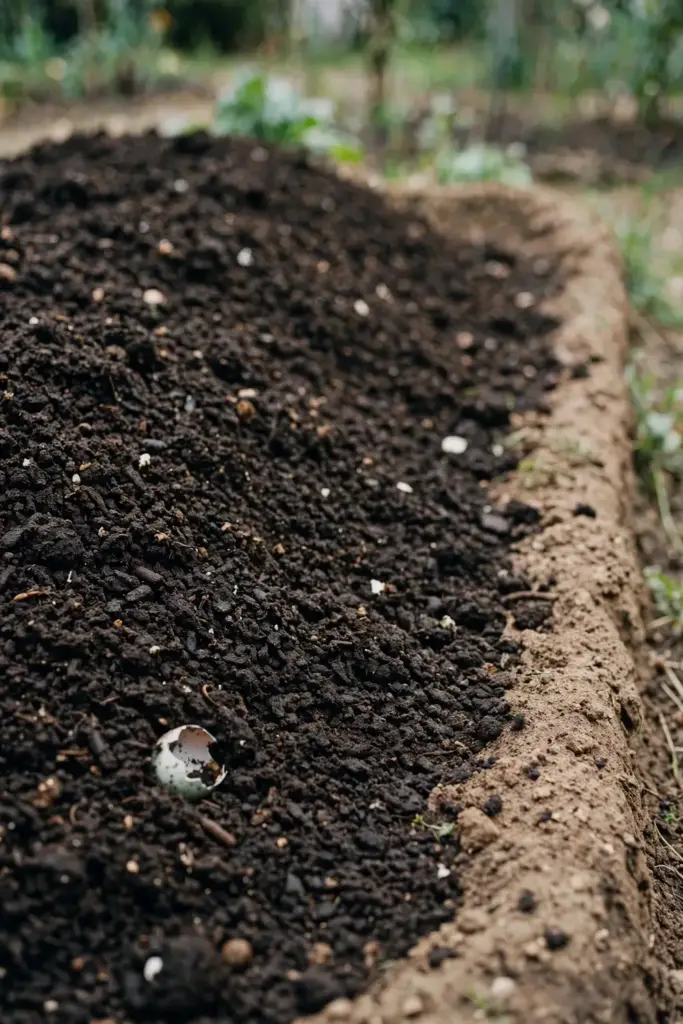
Feed balanced, not heavy. Iowa State University Extension notes that moderately fertile soil with slightly high potassium and low nitrogen increases resistance to infection. Excess nitrogen pushes soft growth the fungus colonizes with ease. A soil test before planting pays for itself here.
Build the soil underneath the fertilizer. Well-made compost adds the microbes that compete with Verticillium for root space and food. Work compost into the top layer of the bed between seasons. The soil health guide walks through structure, organic matter, and drainage in practical detail.
Prune dead wood as it appears. Dead branches invite secondary fungi and insects that finish what Verticillium started. Prune symptomatic branches with sanitized tools, and disinfect between cuts with the 10 percent bleach dip from Step 2.
Step 10: Start Clean Next Season With Certified Stock and Sterile Mix
Start clean next season. Buy certified disease-free seed and transplants from a reputable supplier. Inspect every transplant before it leaves the store. Any wilted, stunted, or off-color seedling stays behind.
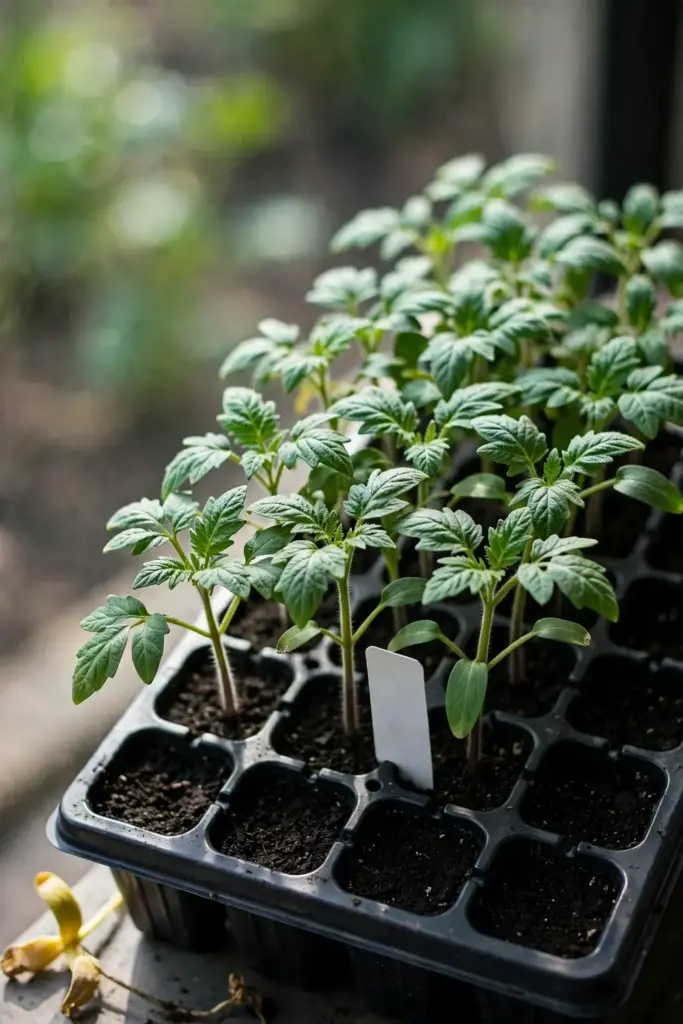
Sterilize the seed-starting setup. Use fresh sterile seed-starting mix, new or disinfected trays, and clean water. The seed starting guide covers clean technique from sowing to transplant. Use the same 10 percent bleach soak from Step 2 for trays, then rinse and dry.
Save seed only from healthy plants. Verticillium can travel on seed in some crops, so seed from a bed with a history of wilt is a gamble. Label every bed and keep a notebook of which bed held Verticillium and which resistant variety grew there. Memory fades. The fungus does not.
Check nursery stock before it enters the yard. Examine trees and shrubs closely for wilt, dieback, or poor vigor before purchase. A sick tree planted in clean soil imports the fungus into ground that never had it.
Living With Verticillium Wilt in a Bed You Already Own
A bed with Verticillium is not a dead bed. It is a managed bed. Plant resistant varieties there as the default. Grow heirlooms in containers or on grafted rootstock. Solarize between seasons when the calendar allows.
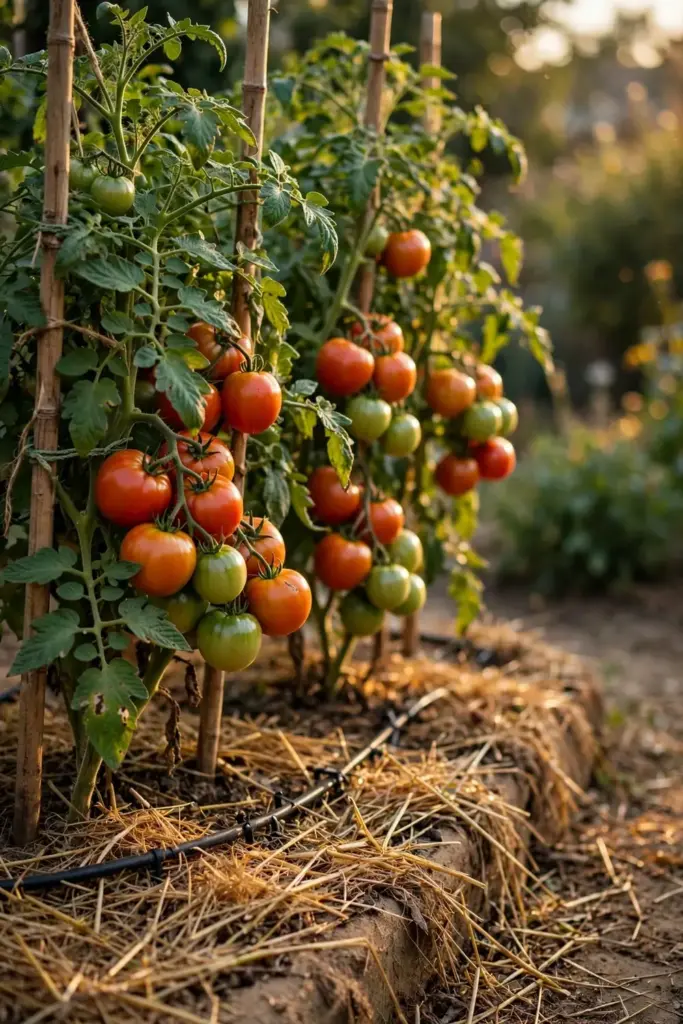
I have learned that a bed with Verticillium rewards patience more than products.
Stop three habits. Do not plant susceptible varieties in that bed to test it. Do not reuse its soil in seed trays. Do not compost its sick plants. Keep the sanitation, watering, and rotation discipline every season, because the resting structures wait longer than any gardener’s memory.
Give a mildly affected tree time. A tree that wilts on one branch can recover the next year, and the University of California IPM program notes that mature trees may suddenly recover when conditions turn favorable. Prune dead wood, water steadily, and wait a season before you condemn a tree that still leafs out.
Keep a bed map on paper. Write down which bed held Verticillium, which resistant variety grew there, and which year. The map stops next spring from repeating this spring.
Frequently Asked Questions
No. Verticillium wilt lives inside the water pipes and as microsclerotia in the soil. An infected plant never clears the fungus on its own, and the soil inoculum persists for many years. What can change is the pressure. Resistant varieties, sanitation, and soil management let you garden around the fungus, but the fungus itself does not leave.
Yes, if the fruit looks sound. Verticillium wilt is a plant disease, not a human one. Harvest fruit from infected plants and wash it as usual. Discard rotted or moldy fruit. Utah State University Extension notes that infected potato tubers are safe to eat. The real loss is yield, not safety, so pick what ripens before the canopy fails.
No. Garden fungicides cannot reach fungus inside the xylem, and they cannot clear the plugs the plant already formed. The Connecticut Agricultural Experiment Station states the limit plainly. Fungicides are not effective for control of Verticillium wilt. That is why the plan above skips synthetic fungicides entirely. Prevention, resistant varieties, and soil work carry the whole plan.
About 14 years without a host. Microsclerotia wait in soil until a susceptible root grows past. Cornell University reports that survival span for Verticillium microsclerotia. Plan as though the fungus never leaves. Every other decision in this plan gets easier once you accept that. Rotation, resistant varieties, and clean starts all assume a permanent soil resident.
Not for susceptible plants, and not in seed trays. Microsclerotia ride in that soil for years. You can reuse it for non-host crops from unrelated families, such as corn, beans, or grasses, or solarize it first and still plant resistant varieties. For containers and seed starting, use fresh sterile mix instead. One bag of infected soil can seed Verticillium into every pot it touches.
Yes. Resistant varieties are the single most effective tool a home gardener has against this disease. Match the V code on tomato labels and check current eggplant and tree lists. Under severe pressure even resistant plants can show symptoms, and resistant plants can harbor the fungus silently. Resistance manages the disease. It does not erase it.
Where to Go From Here
Verticillium wilt rewards fast triage and steady soil work. Confirm the V-shaped yellowing and the brown vascular streaks. Make the honest triage call in Step 1. Then work the sequence: rogue, sanitize, plant resistant varieties, solarize, rotate, and start clean.
Next season, start clean. Fresh sterile mix, disinfected trays, and morning watering will prevent more Verticillium wilt than any product treats. The blossom blight guide is a useful companion read if you are building a broader disease-identification habit, since it trains the same look-closely-at-symptoms approach.