
Your lawn has thin, yellow patches that ignore water and fertilizer. A single cup of infested soil can hold 1,000 of them, each thinner than a human hair. You have ruled out grubs, you have ruled out fungus, and the spots keep spreading in slow, irregular rings. The culprit is underground and invisible to the naked eye. This ring nematode treatment lawn guide walks you through identifying the real problem, testing before you spend, and working seven cultural steps before you ever call a nematicide.
Ring nematodes are microscopic roundworms that feed on the outside of grass roots, and they are one of the few lawn problems you cannot diagnose by looking at the grass alone. That is the first honest thing to know. The second: most home lawns never need a nematicide. The steps below are ordered by cost and effort, cheapest and most effective first, with the professional chemical call saved honestly for last.
One quick disambiguation before we start. This article is about plant-parasitic ring nematodes (Mesocriconema species, formerly Criconemella and Criconemoides) on turfgrass. It is not about red ring nematode of palms (a different organism, Bursaphelenchus cocophilus, that attacks coconut and oil palms). It is not about human parasites. And it is definitely not about ringworm, which is a human skin fungus that keeps showing up alongside the word “nematode” through pure name confusion. If your lawn is the patient, you are in the right place.
What Ring Nematodes Actually Are
Ring nematodes are ectoparasitic roundworms, most commonly Mesocriconema species (still listed as Criconemella or Criconemoides in older extension publications), that live in soil and feed on turfgrass roots from the outside. An adult female looks segmented like a tiny earthworm under magnification, though the “segments” are actually corrugations of the outer membrane. Each worm pierces root cells with a hollow, needle-like stylet and sucks out the cell contents, stunting root growth a few cells at a time.
They are animals, not fungi and not bacteria, which matters because fungicides and antibiotics do nothing to them. Thousands of them can live in a single cup of soil without you ever seeing one. Damage shows only when populations get high enough, or when the grass is stressed by heat, drought, or low fertility at the same time. University of Florida turf scientists classify ring nematodes as strictly ectoparasites: they never enter the root, which is exactly why they are so hard to reach with treatments.
How to Identify Ring Nematode Damage Above Ground
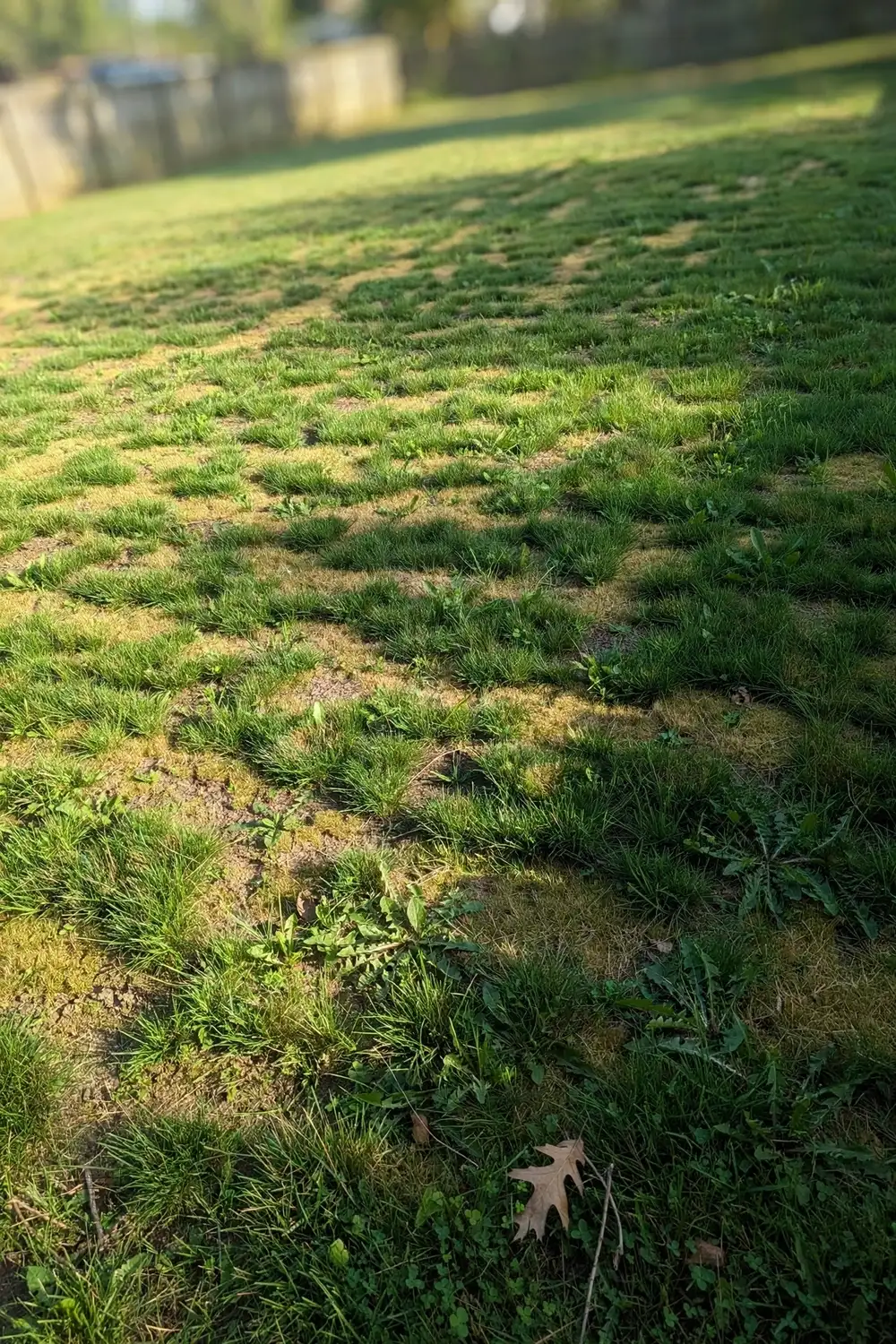
You cannot confirm ring nematodes from the top of the lawn, but the above-ground pattern tells you when to suspect them. Look for irregularly shaped patches of thin, yellowing grass that wilt faster than the surrounding lawn and do not respond to extra water or fertilizer. The patches enlarge slowly over months, not days, and weeds like spurge, sedges, or Florida pusley move into the thin spots first.
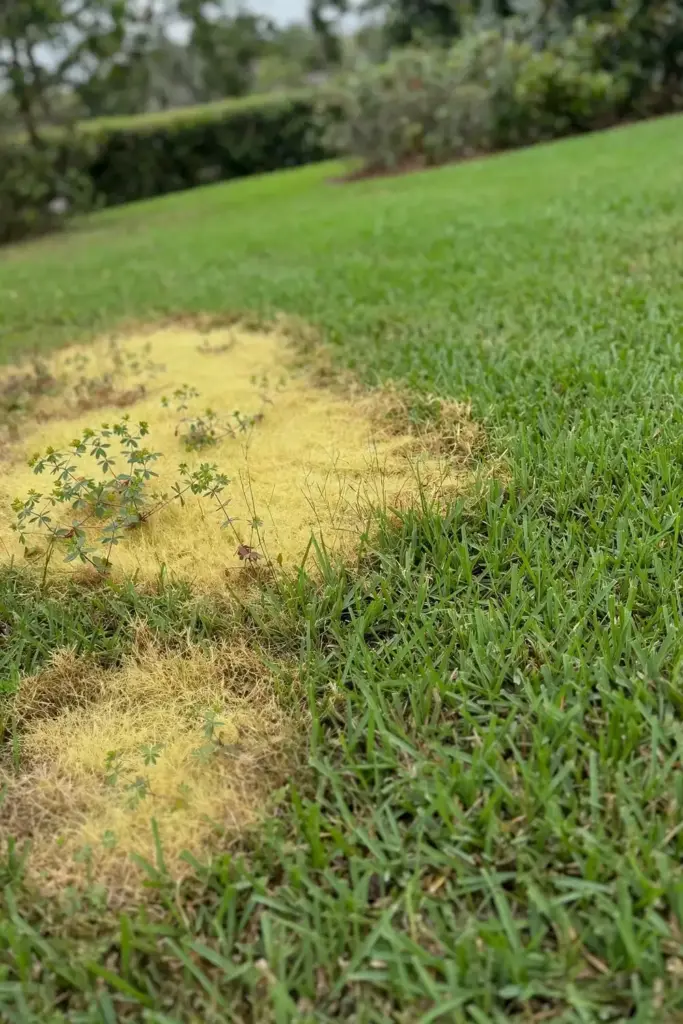
The key phrase is “does not respond.” Dollar spot, brown patch, and drought all improve when you fix the underlying cause. Nematode patches do not, because the roots themselves are too short and damaged to use the water and fertilizer you apply. Months can pass with no change. If you have already treated for grubs and fungus and the patches persist through a full growing season without improving, nematodes move to the top of the suspect list. The next step is not a product. It is a soil sample sent to a lab, which Step 1 covers in detail.
If your patches look like classic turf disease instead, compare notes with a brown patch recovery plan before you go down the nematode path. Fungal patches and nematode patches are the two most confused lawn problems in warm climates.
How to Identify Ring Nematode Damage on Roots
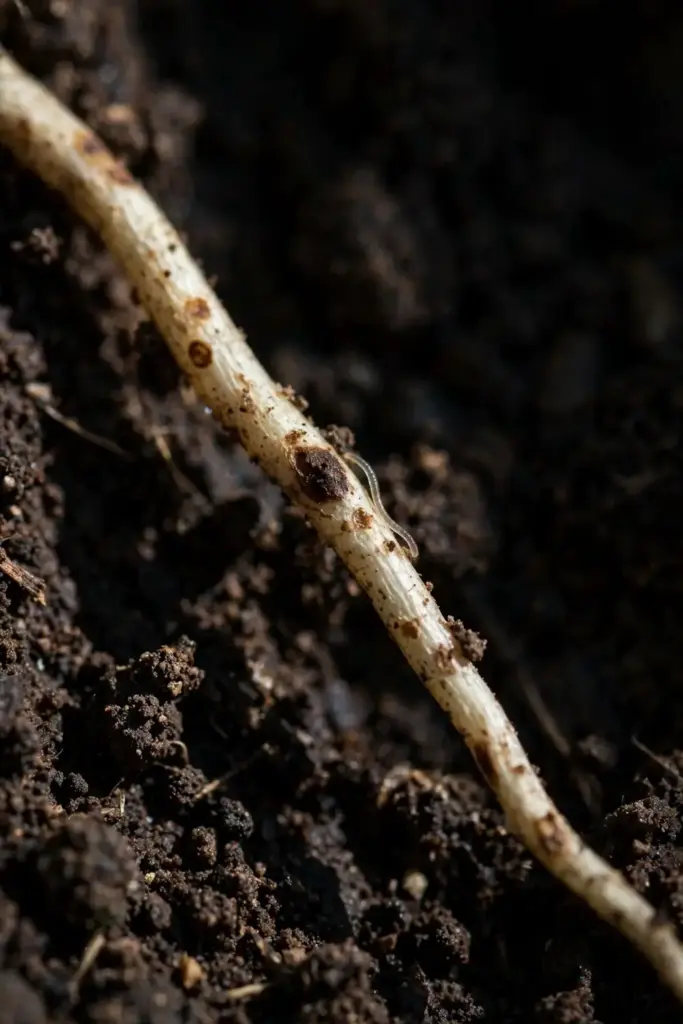
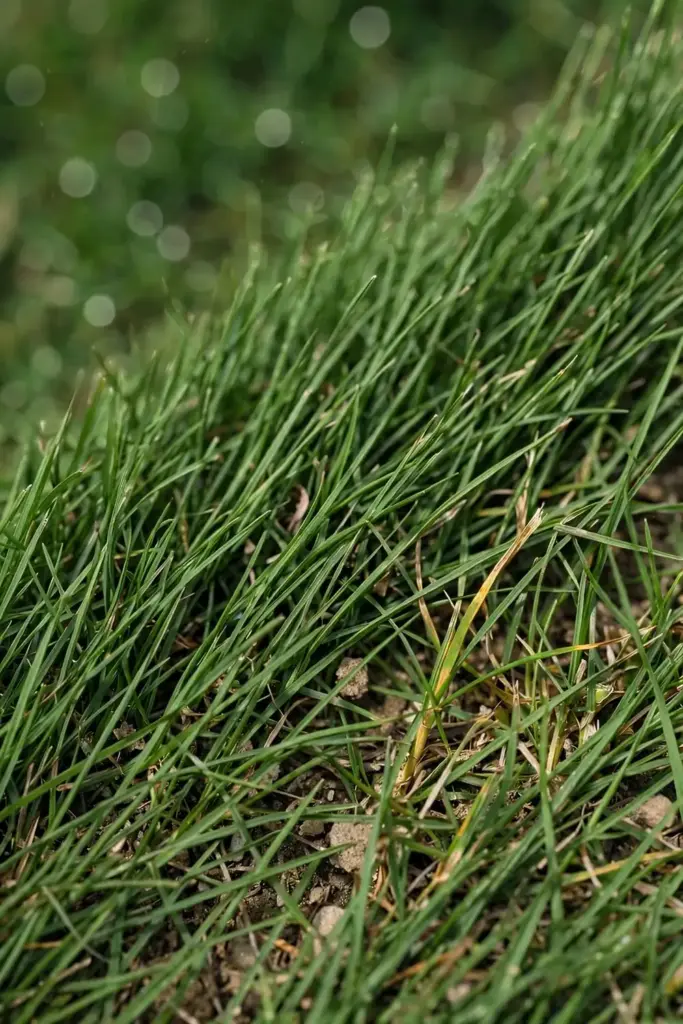
Pull up a plug of declining turf and wash the soil off the roots. Healthy grass roots are white to cream colored, fibrous, and several inches long. Roots chewed by ring nematodes are stubby, discolored, and cropped short, with tiny lesions where the stylets pierced them. The whole root system looks shallow and dark compared to a plug pulled from a healthy part of the same lawn.
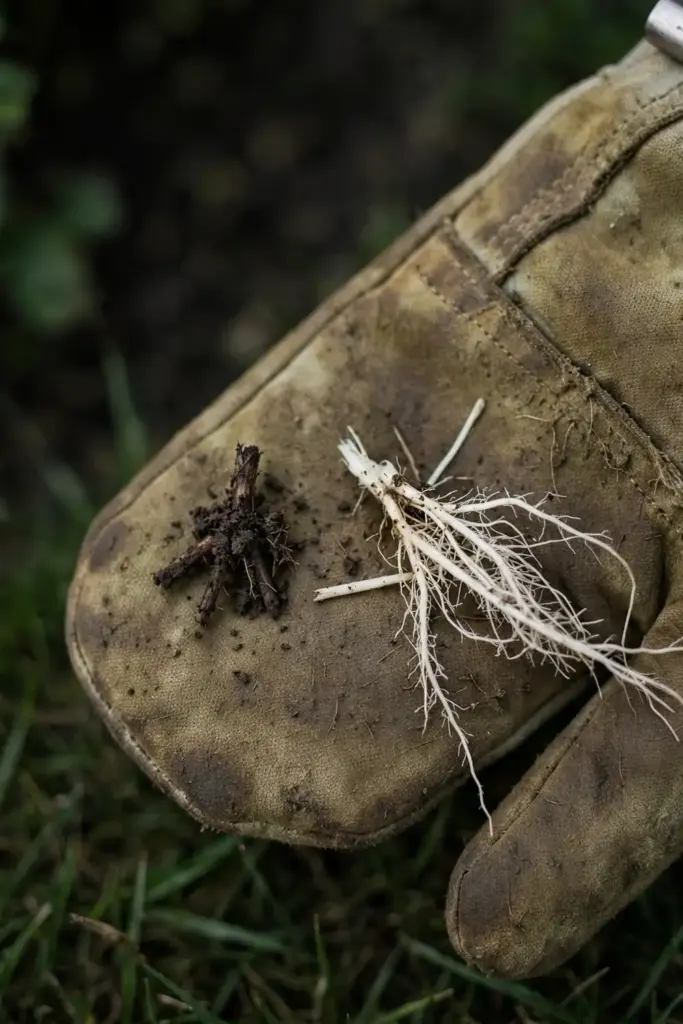
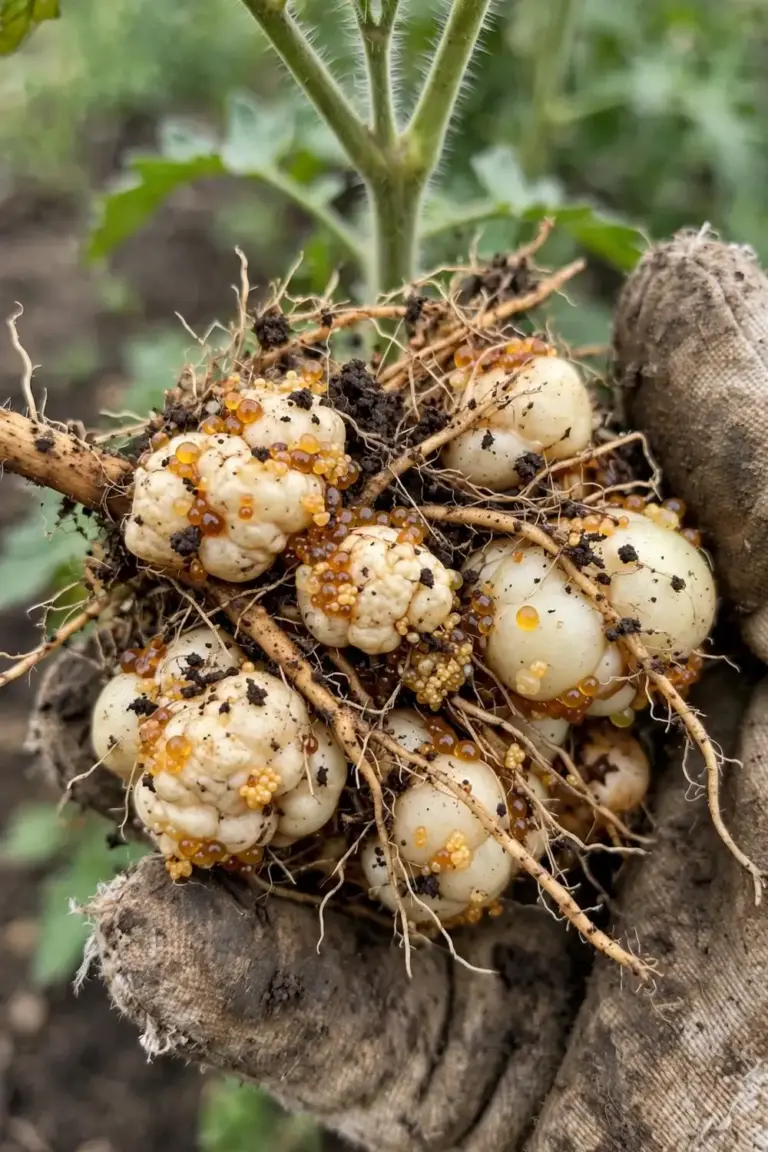
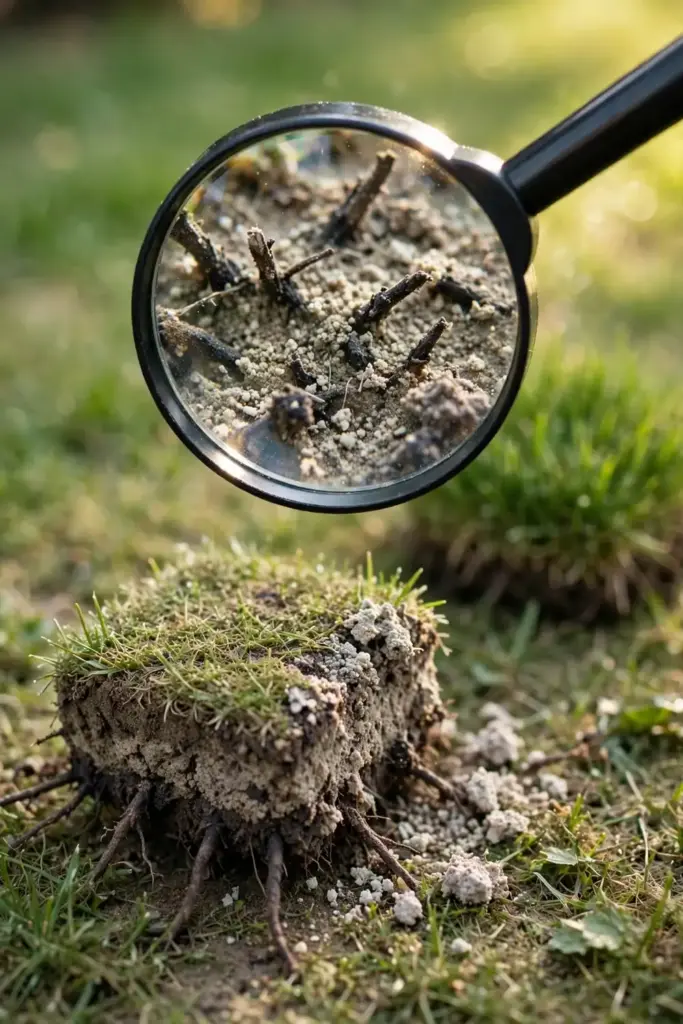
Do not expect to see the worms. Even at high populations they are invisible without a microscope, and a soil core examined by eye reveals nothing. Root-knot nematodes leave small galls or knots on turf roots, which helps separate them: ring nematode damage shows discolored, shortened roots with tiny lesions and no galls. Take your comparison plug from green, healthy turf a few feet away so you are comparing the same grass, the same soil, and the same season.
Which Lawns Get Hit Hardest
Centipedegrass is the standout victim. Clemson University’s turf specialists call the ring nematode a major pest of centipedegrass specifically, while noting it can damage bermudagrass and zoysiagrass when populations climb high enough. St. Augustinegrass hosts ring nematodes too, and Louisiana State University lists them among the nematodes infesting all four major southern turfgrasses: bermudagrass, centipedegrass, St. Augustinegrass, and zoysiagrass.
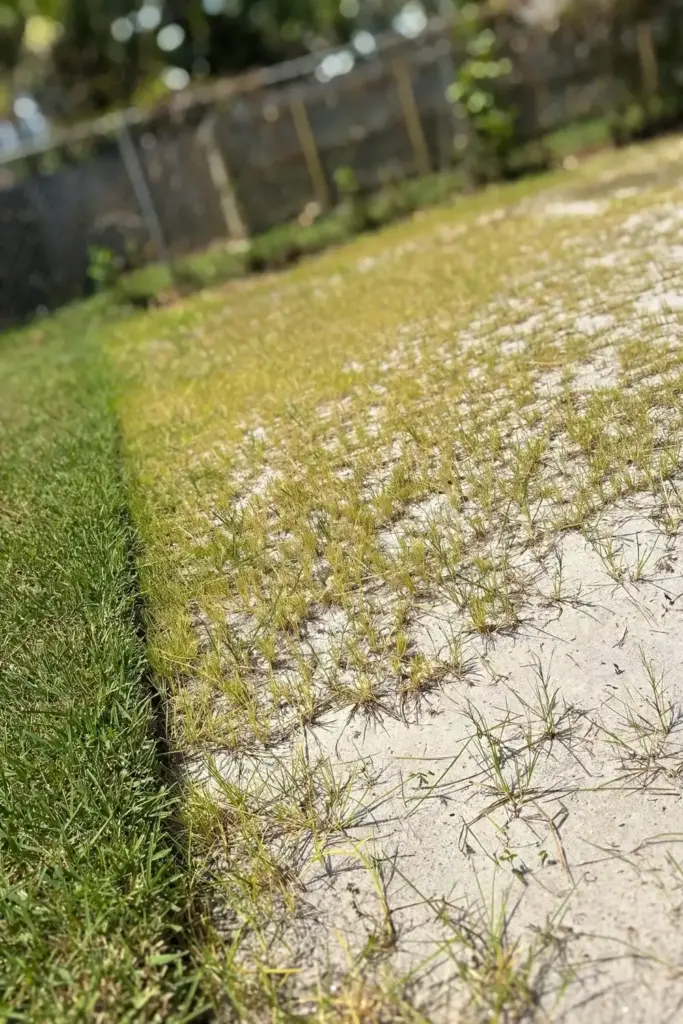
Soil texture decides more than grass species. Sandy, coarse-textured soils are the danger zone, because nematodes move and feed most easily between large sand particles. The Sandhills region of the Carolinas and sandy coastal soils are classic hotspots. Heavy clay soils rarely see serious ring nematode damage. If your lawn sits on fill sand or a new subdivision’s scraped subsoil, your risk is higher than the grass type alone suggests.
Population numbers give the only objective answer. Arkansas Extension publishes action thresholds for ring nematodes (Criconemoides) in lawns: 500 per 100 cubic centimeters of soil is the medium-risk line, and 1,000 per 100 cc is high risk. Mississippi State’s bermudagrass thresholds run 330 in spring and summer, rising to 440 in fall. Below those numbers, the worms are present but not worth treating. A lab assay reports your count against exactly these thresholds, which is why Step 1 exists.
Ring Nematode vs Sting Nematode vs Root-Knot vs Drought and Grubs
Four problems and two non-problems all produce thin, yellowing, slow-spreading patches. This table sorts them before you spend money on the wrong fix.
| Problem | What the roots look like | Above-ground clue | How it is confirmed |
|---|---|---|---|
| Ring nematode (Mesocriconema) | Stubby, discolored, tiny lesions, no galls | Slow-spreading thin patches, no response to water or fertilizer | Lab soil assay, 500+ per 100 cc |
| Sting nematode (Belonolaimus) | Severely cropped, stubby, large lesions | Rapid decline in very sandy soil, worst of all turf nematodes | Lab soil assay, far lower thresholds (10 to 25 per 100 cc) |
| Root-knot nematode (Meloidogyne) | Small galls or knots on roots | Similar thinning, galls visible on washed roots | Lab assay plus visible galls |
| Drought stress | Roots normal length, just dry | Whole lawn fades evenly, recovers within days of deep watering | Water test: improves fast |
| White grubs | Roots chewed off, turf peels back like carpet | Patches lift easily by hand, grubs visible in soil | Peel test, count grubs per square foot |
A related leaf-spot disease can mimic the patchy look from a distance, so if your blades show distinct spots rather than general thinning, check a bipolaris leaf spot identification guide before assuming nematodes.
Why Ectoparasites Are So Hard to Reach
The single mechanism that drives this whole article: ring nematodes feed from outside the root and move vertically through the soil profile with the seasons. A systemic product taken up by the plant never touches them, because they never go inside the plant. A contact drench poured on the surface has to travel down through thatch and soil to where the worms are feeding, and research on turf nematicides shows some products bind to thatch and reach the nematodes only inconsistently.
Vertical movement makes timing treacherous. Clemson specialists note that some nematode species move up and down in the soil profile depending on the season, so a treatment applied when the population sits deep misses most of the worms. University of Florida researchers add that nematode damage usually appears in irregular patches that enlarge slowly, which means by the time you notice the problem, the population has been building for months or years. This is why the cultural steps come first: they work on the grass, which you can reach, instead of chasing worms you cannot.
What Makes Ring Nematodes Worse in a Home Lawn
Sand is the first risk factor, and everything else multiplies it. Overseeding is the surprise second: turf researchers have found that the heaviest nematode population increases happen during overseeding, because fresh ryegrass or Poa roots give the worms a sudden feast. If your lawn does not truly need overseeding, skipping it removes a major population boost.
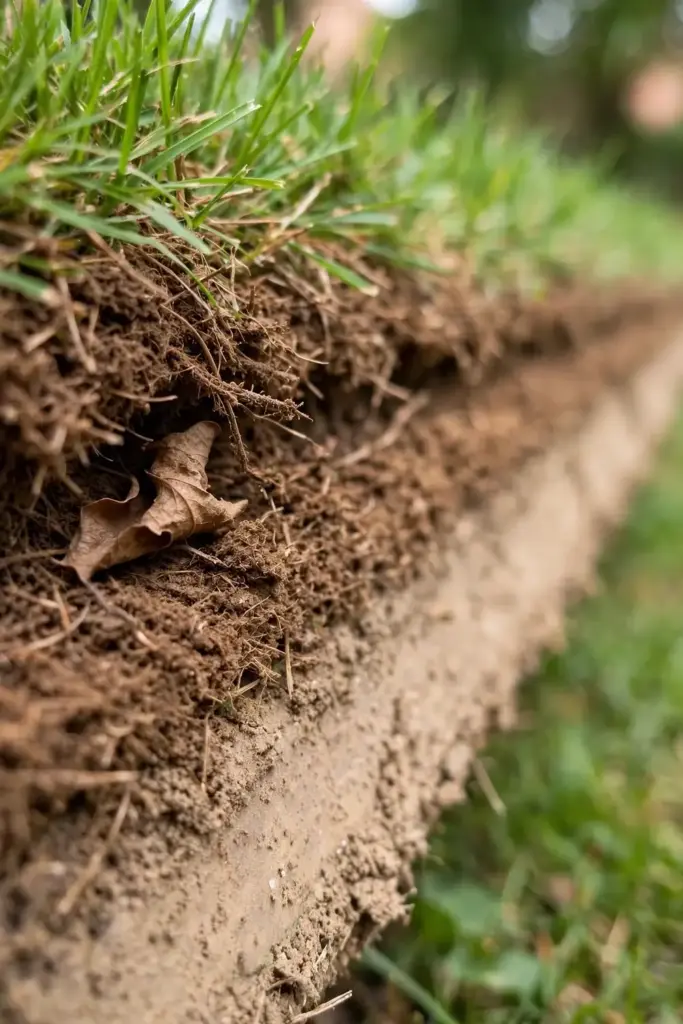
Thatch thicker than half an inch shelters nematodes and intercepts treatments. Compaction forces roots shallow, right where feeding pressure is worst. Drought stress is the trigger that turns a tolerable population into visible damage: infested grass needs more water than healthy grass just to stand still, because its root system is a fraction of normal size. Excess nitrogen pushes soft, succulent growth the worms exploit, while starving the lawn weakens it further. The pattern is consistent: anything that stresses the grass hands the advantage to the worms.
Step 1: Decide Whether a Lab Test Is Worth Your Money
This is the honest cost-benefit gate for the entire article. A nematode assay from your state extension or a private lab typically costs less than a single bag of premium fertilizer, and it is the only way to know whether you actually have a ring nematode problem. Guess wrong and you will spend far more on the wrong products.
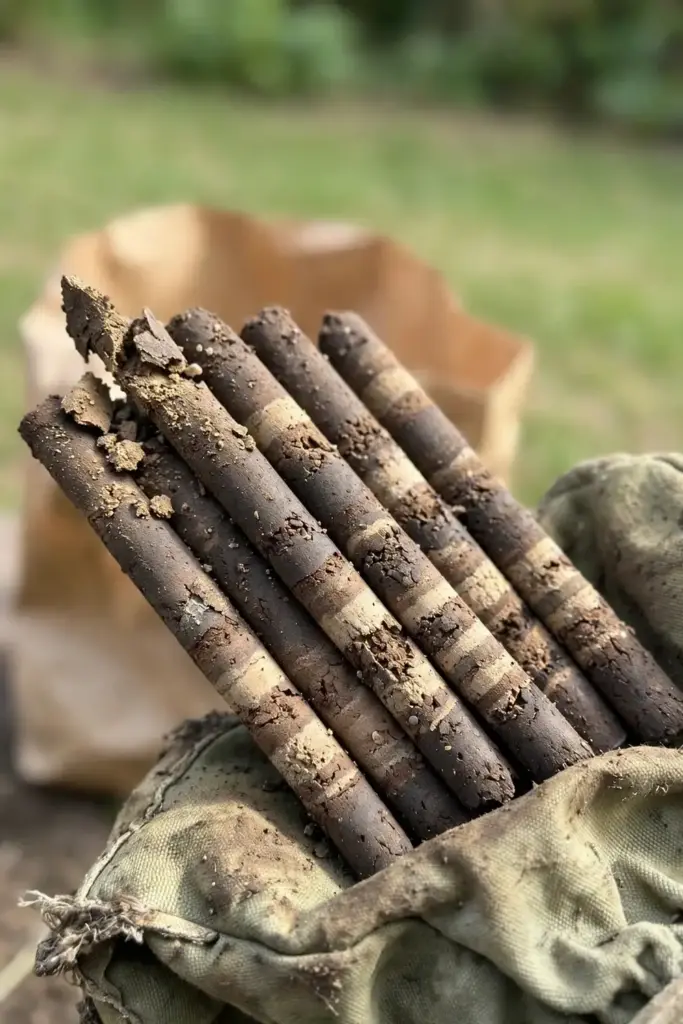
Send a sample when three things are true: the lawn has patchy thinning that does not respond to water, fertilizer, or grub treatment; the soil is sandy; and you grow a susceptible grass like centipedegrass. Take cores 6 to 8 inches deep from the edge of declining patches (where worms are actively feeding), not the dead centers, and keep the soil cool and moist in transit. Heat kills the sample and heat-killed worms do not get counted.
Read the report against thresholds, not against zero. A few hundred ring nematodes per 100 cc of soil is background noise. Arkansas Extension’s 500 medium and 1,000 high thresholds, or your own state’s numbers, are the decision lines. Below threshold, put the lab report in a drawer and work the cultural steps for general lawn health. Above threshold on a susceptible grass, the steps below earn their effort. No test, no treatment: that is the rule that keeps this from becoming an expensive guessing game.
Step 2: Fix Watering and Mowing Height Before Anything Else
Infested roots are short roots, so the lawn needs water delivered the way short roots can use it. Water deeply but less often, soaking the top 4 to 6 inches and then letting the surface dry, which encourages whatever healthy roots remain to push deeper. Light daily sprinkling keeps the surface wet and the roots shallow, exactly where feeding pressure is highest. During heat waves, infested areas may need extra cycles, because damaged roots cannot keep up with transpiration the way healthy ones do.
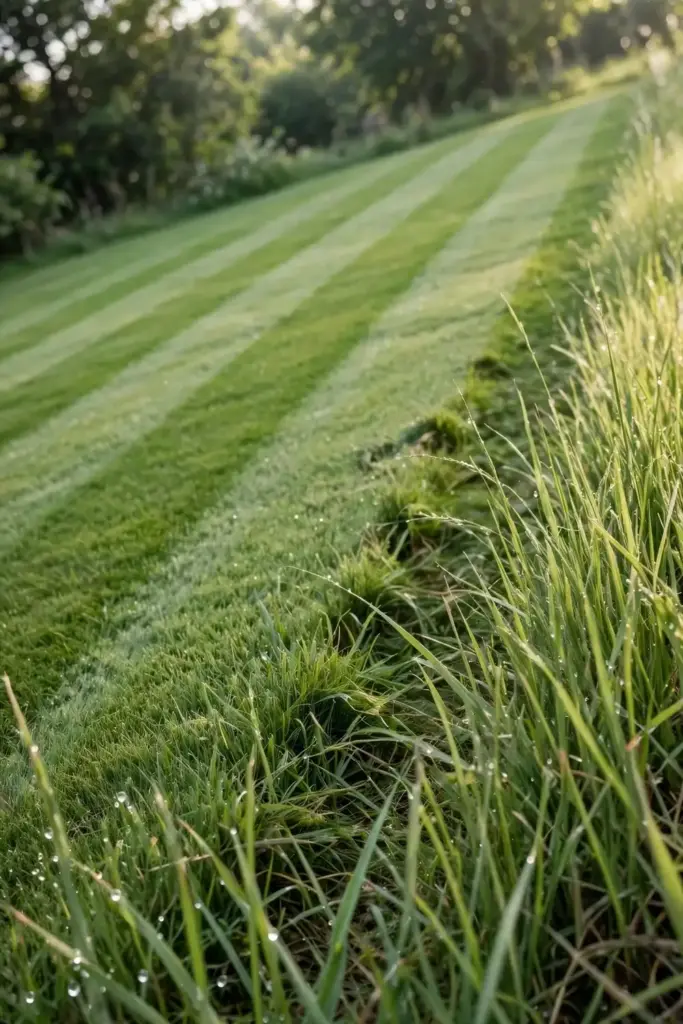
Raise the mowing height. Taller grass grows deeper roots, and deeper roots tolerate feeding damage better. For St. Augustinegrass and centipedegrass this often means mowing at 3 to 4 inches instead of scalping at 2. Never remove more than one-third of the blade in a single cut, and keep the mower blades sharp: ragged cuts stress the plant and open entry points for disease on top of the nematode pressure.
Check your watering depth with a screwdriver, not a timer. Push a long screwdriver into the soil a few hours after irrigation: it should slide easily to 4 to 6 inches in the watered zone. If it stops at 2 inches, you are wetting only the shallow layer where the worms feed most. Adjust run times until the screwdriver test passes, then water on that schedule. These two changes cost nothing and they help every lawn problem, nematodes included.
Step 3: Starve Them During Renovation
Nematodes eat living roots. No living roots, no food. If you are renovating a badly infested section, a fallow period with repeated tilling through hot, dry weather brings the worms to the surface where sun and drying kill them. Clemson Extension’s vegetable-garden guidance uses tilling every 10 days through summer for root-knot, and the starvation principle applies to turf renovation the same way.
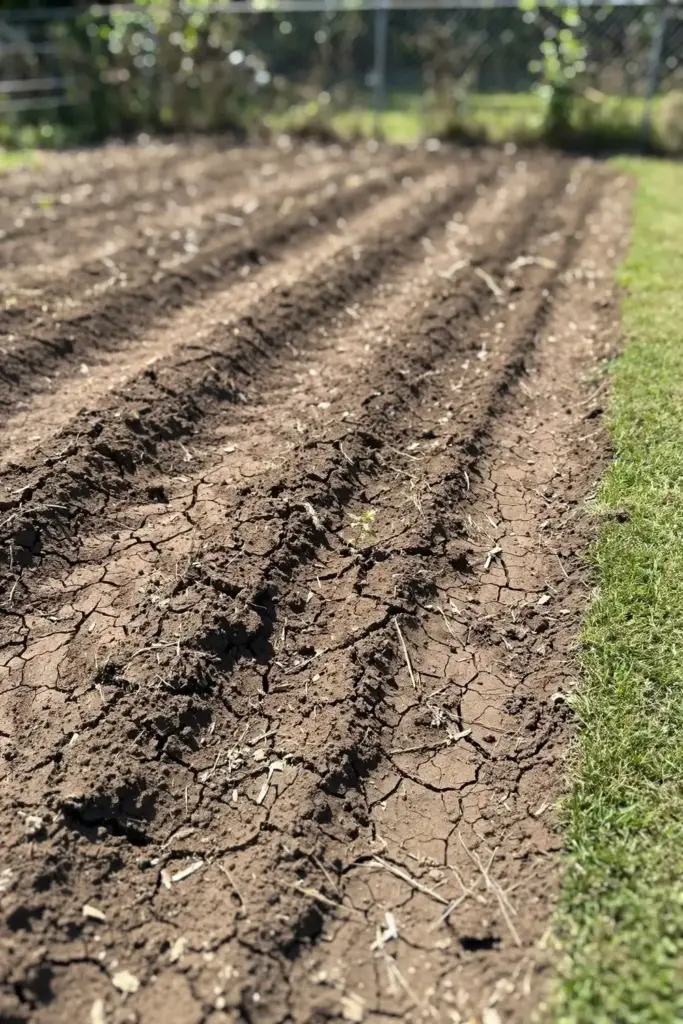
The more common mistake runs the other direction: spreading the problem. Nematodes travel in soil, sod, and sprigs. University of Florida turf scientists advise working uninfested areas first and infested areas last, and cleaning mowers, aerators, and hand tools before moving between zones. If you are resodding, buy certified clean sod. Planting infested sod into a clean lawn is how a small problem becomes a whole-yard problem in a single afternoon.
Step 4: Dethatch and Aerate, Carefully
Thatch thicker than half an inch is a nematode refuge and a treatment barrier in one. Dethatch or power rake when the grass is actively growing so it recovers fast, and remove the debris instead of mulching it back in. Follow with core aeration on compacted soil: pulling plugs opens the soil, lets water reach deeper, and gives roots room to grow below the worst feeding zone.
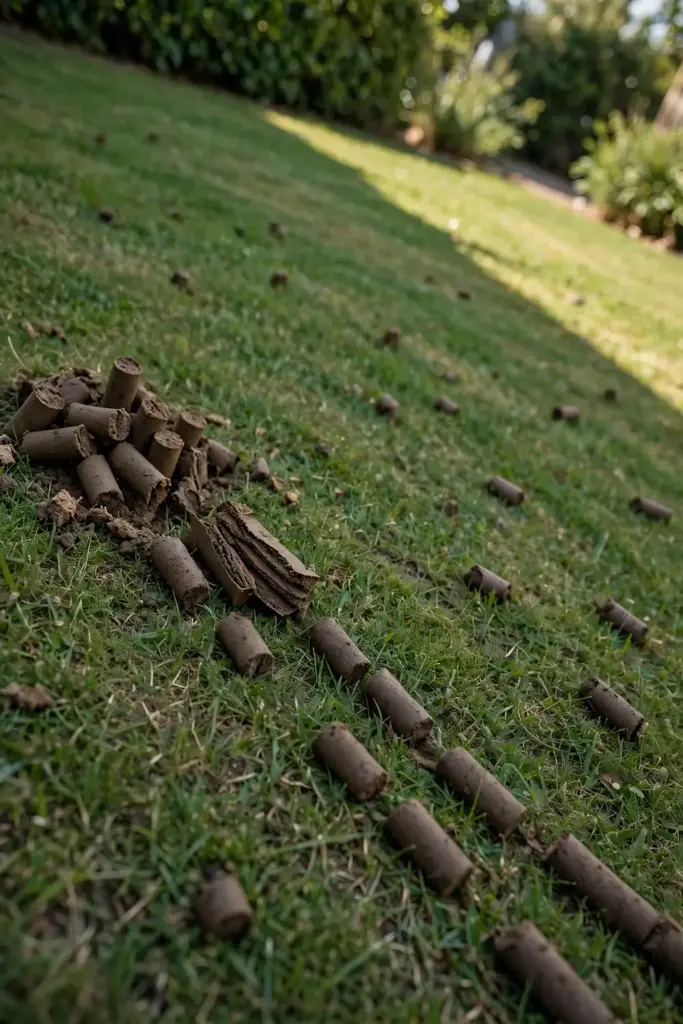
Do the sanitation math first. Aerating an infested lawn and then aerating a clean one with the same machine spreads worms. Clean the tines between zones, or aerate the healthy areas first. Bag the cores from badly infested patches rather than letting them break down back into the lawn. Equipment hygiene feels fussy until you compare it to the cost of a second infested lawn.
Soil structure is the long game underneath this step. A soil health building guide covers organic matter and compaction in depth, and every point of improvement there shrinks the nematodes’ home-field advantage in sand.
Step 5: Feed Light and Often
A nematode-damaged lawn cannot use a heavy dose of nitrogen efficiently, and the excess feeds weeds in the thin spots. University of Florida researchers recommend smaller, more frequent fertilizer applications to maintain turf health under nematode pressure. Light monthly feeding during the growing season keeps the grass growing steadily without the feast-or-famine cycle that stresses roots.
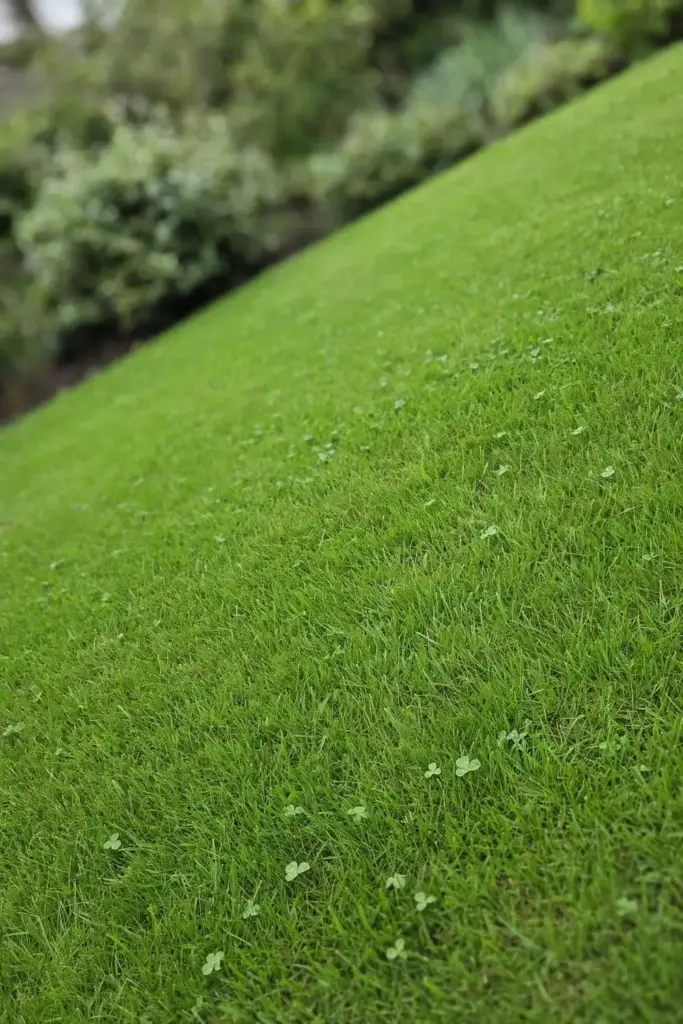
Get the timing right for your grass. Cool-season lawns want most of their nitrogen in fall; warm-season grasses want it through summer. A spring lawn fertilizer timing guide lays out the calendar so you feed the grass, not the weeds colonizing the thin patches. Soil-test every couple of years: potassium and phosphorus deficiencies weaken roots independently of nematodes, and fixing them is cheap.
Step 6: Weigh Organic and Biological Options Honestly
Here is the honest accounting this step owes you. For home lawns, no organic product has extension-trial evidence of controlling ring nematodes at the level a homeowner would notice. Beneficial nematodes are a different branch of the family entirely (insect parasites, not plant parasites) and do not eat ring nematodes. Mustard seed meal and biofumigation show effects in research plots, not in backyard spreader applications.
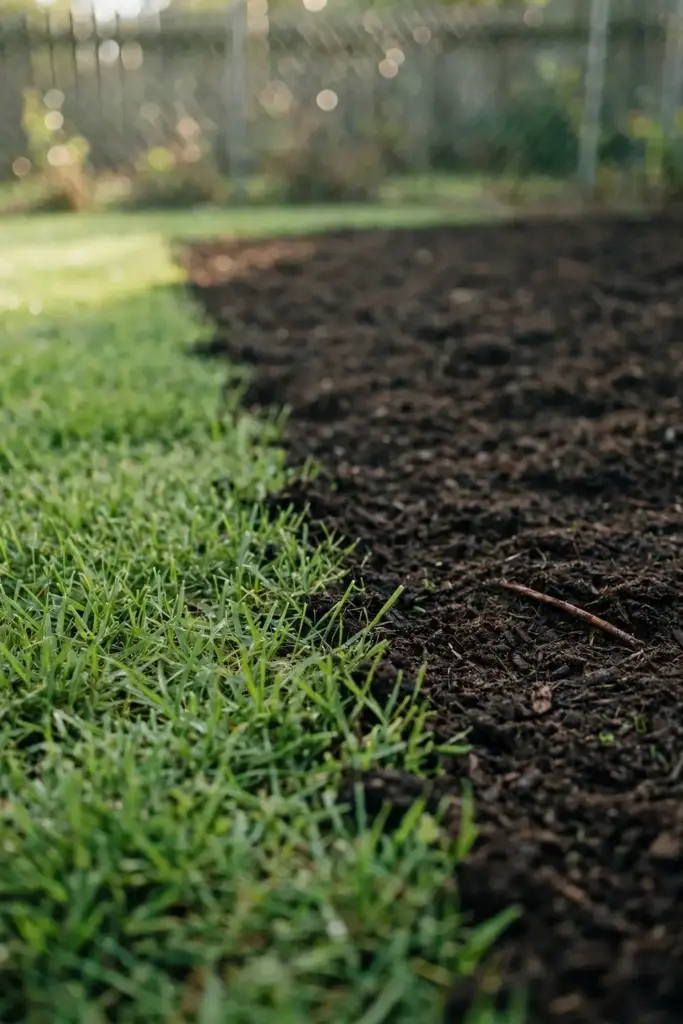
That does not make the category worthless. Compost topdressing improves soil biology and root vigor, which helps the grass outgrow moderate feeding pressure. A quarter-inch layer of finished compost worked into the canopy each spring or fall is the standard homeowner rate, and it doubles as a mild fertilizer. Some microbial products show suppression in trials, but results vary by product, soil, and species, and none are labeled as reliable ring nematode controls for home lawns. Spend organic dollars on soil health and root vigor, which are proven, rather than on anti-nematode claims, which are not. If a product promises eradication, it is selling something the science does not have.
Step 7: When to Call a Certified Applicator About Nematicides
This is the last step for a reason, and the owner-picked title puts it here deliberately: everything above is what you do before you call. A professional ring nematode treatment lawn service starts where these cultural steps leave off. Chemical control in the home lawn exists, but Clemson Extension states plainly that it must be done by certified pesticide applicators and can get pricey, partly because nematodes move vertically in the soil profile and repeat visits are often needed.
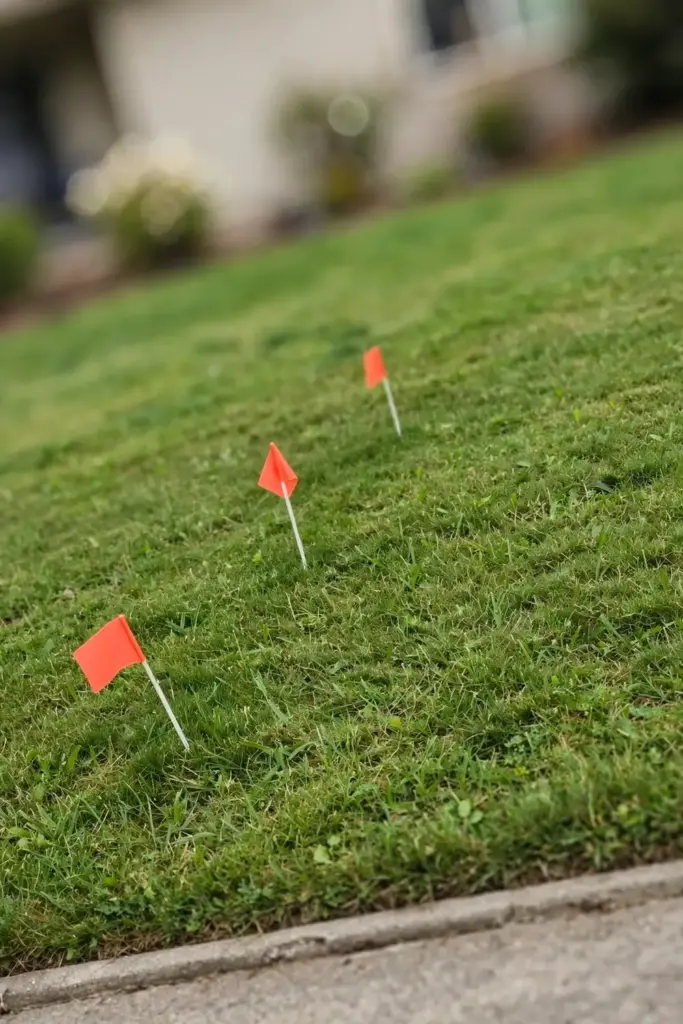
Know what the professional has to work with. Turf researchers currently rate fluopyram (sold as Indemnify) as the most effective turf nematicide in trials, with strong activity against several nematode types. Abamectin products (Divanem and others) have broad-spectrum activity but bind to thatch, so results are hit-or-miss depending on delivery. The fumigant 1,3-dichloropropene (Curfew) is registered for turfgrass only in a handful of southeastern states: North Carolina, South Carolina, Georgia, Florida, Alabama, Mississippi, Louisiana, and Texas. Outside those states, homeowners have no equivalent option.
Three rules if you go this route. First, the label is the law: rates, timing, and reentry intervals are legal requirements, not suggestions. Second, time it for spring when the grass breaks dormancy and the worms are active near the surface, not late summer when populations peak but sit deep. Third, no nematicide has shown resistance problems yet, but rotating modes of action is still the professional standard. A good applicator will insist on a lab assay first. If yours does not, find another applicator.
Living With a Lawn That Has Ring Nematodes
Eradication from soil is not on the menu. Management is. A lawn with moderate ring nematode pressure can look perfectly acceptable under a maintenance routine built for it: taller mowing, deep watering, light frequent feeding, and prompt weed control in thin spots so invaders never get established. Many southern lawns live with background nematode populations for years without the owner ever knowing.
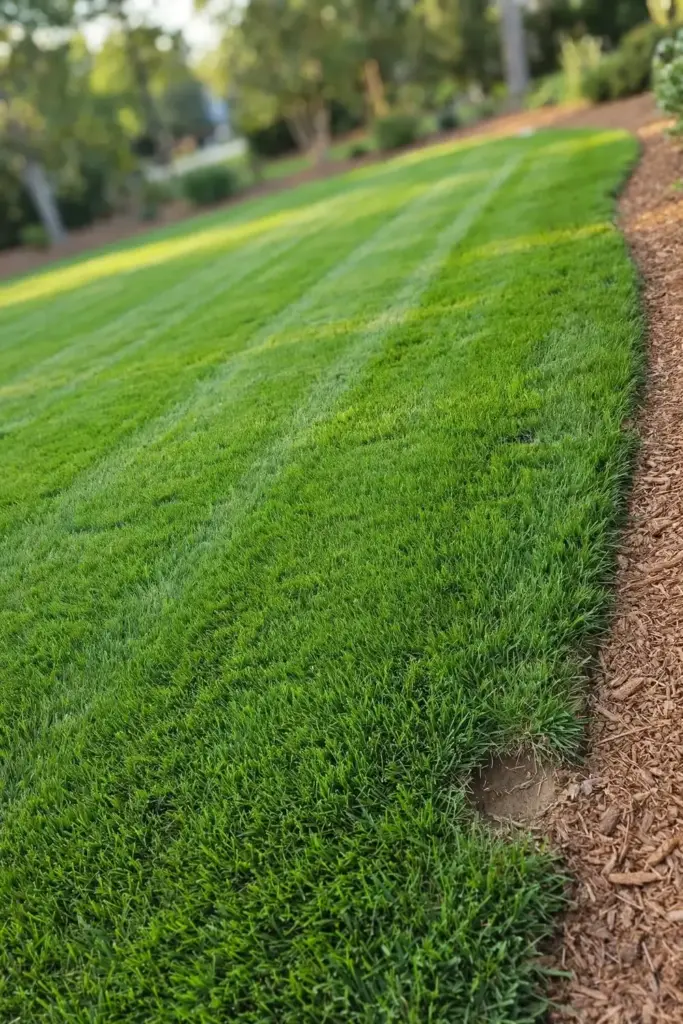
Adjust expectations by grass. Centipedegrass lawns with high counts are the hardest case, and replacing a failing centipedegrass lawn with a better-adapted grass for your soil is sometimes the rational call. During renovation, the fallow-and-starve approach in Step 3 plus certified clean sod gives you the closest thing to a reset that exists.
Keep a simple map. Sketch the lawn once a season and shade in the thin patches, noting the date. Persistent patches in the same location confirm a soil-driven problem rather than a passing stress, and the map shows whether your cultural work is shrinking them year over year. Bring the map to the lab with your soil sample: diagnosticians read patch patterns the way doctors read symptoms, and a two-year map is worth a paragraph of description. Keep the lab assay on a two-year cycle if you have a history of problems: catching a climbing population early is cheaper than rescuing a collapsed lawn late.
Frequently Asked Questions
No. Plant-parasitic ring nematodes (Mesocriconema species) feed only on plant roots and cannot infect people or animals. Human intestinal parasites are completely different organisms, and ringworm is a skin fungus, not a worm at all. The names collide because of the word “ring,” not because of biology. None of these lawn treatments apply to human or pet health.
You need the test. Ring nematode damage looks identical to drought, grub damage, and several turf diseases from above ground, and the treatments for those problems do nothing for nematodes. A lab assay costs less than one bag of premium fertilizer and reports your count against published thresholds, so you treat a confirmed problem instead of guessing through hundreds of dollars in products.
Probably the opposite. Turf research shows the heaviest nematode population increases happen during overseeding, because the fresh roots of new ryegrass or Poa give the worms a sudden food supply. If nematodes are confirmed, skip overseeding unless the lawn truly needs it, and never overseed an infested lawn with the idea that more grass will outrun the worms.
No, and anyone selling complete eradication is overselling. Ring nematodes are native soil organisms across the Southeast, and management means holding populations below damage thresholds through culture, sanitation, and, in severe cases, professional nematicide applications. A well-maintained lawn tolerates background populations indefinitely. The goal is a good-looking lawn, not sterile soil.
Because the conditions that favor the worms have not changed. Sandy pockets, compacted areas, and low spots hold higher populations year after year, and the worms recolonize from the surrounding soil each season. Persistent patches in the same location are actually a diagnostic clue: map them, sample their edges, and focus your cultural work on those zones instead of treating the whole yard identically.
Yes. Plant-parasitic nematodes are microscopic soil animals that feed on roots; they do not bite, sting, or infect people or pets. The lawn itself is the only victim. Normal play, mowing, and gardening are all fine. The one caution is the reverse: clean shoes and tools after working in infested areas so you do not track the worms to clean parts of the yard.
Where to Go From Here
You now have the full sequence: confirm with a lab test, fix water and mowing, starve and sanitize during renovation, feed light and often, weigh organics honestly, and call a certified applicator only when the thresholds and the budget both say so. Your ring nematode treatment lawn plan is a management program, not a single product, and the lawns that win are the ones whose owners work the cheap cultural steps consistently.
Start this week with the cheapest high-value move: raise your mowing height and check your thatch depth. If patches persist through one full growing season of good culture, send that soil sample. The lab report will tell you whether you are fighting worms or chasing a ghost, and everything after that gets simpler.