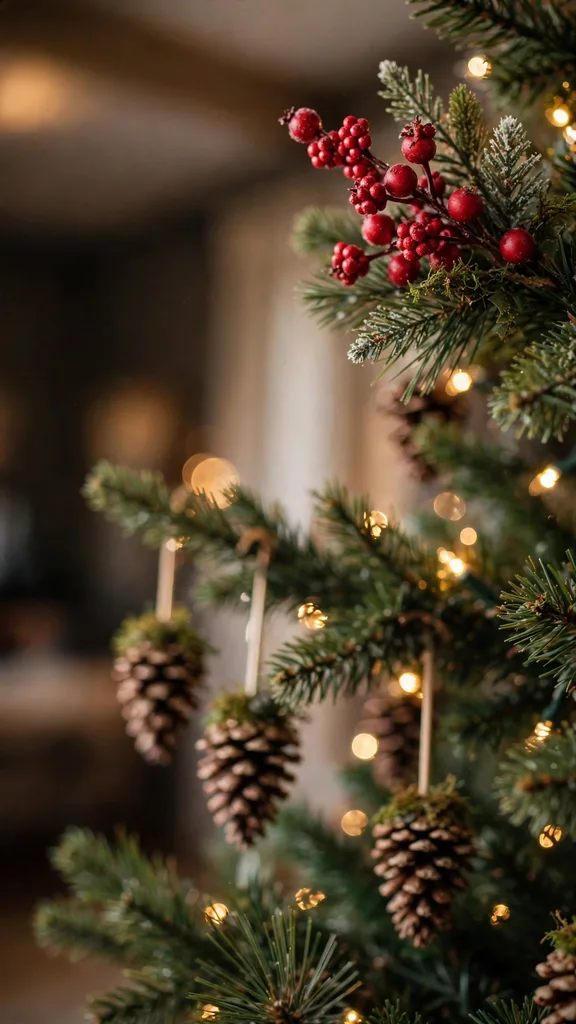
A tree pick is a short stem of decoration, berries, a cone cluster, a dried flower head, wired onto a stick or wire stem and pushed into the tree where the eye needs it. Florists use picks, usually 6 to 14 inches of stem, to put color exactly where a tree is thin, dark, or dull, and gardeners can make better ones than the shops sell, because the garden’s materials are real: winterberry cut from your own bush, cones from your own pine, seed heads and dried flowers from your own beds. This guide covers the making from harvest to placement: what to gather through the year, how to build a stem that stays put, the main pick families, and how to place them so the tree looks grown rather than decorated.
The making season runs all year, which is the garden pick’s whole advantage. Cones gather in autumn, seed heads dry on the tray in October, dried flowers come from the summer boxes, and only the berry sprays wait for December. I keep a pick box with the ornament boxes, stems sorted by family, and building a set of picks is a November evening’s work at the table. A tree dressed with garden picks and garden ornaments has a coherence no shopping trip produces, and every pick on it cost a walk and a wire.
| Pick Family | Material | Stem Length | Make When | Lasts |
|---|---|---|---|---|
| Berry sprays | Winterberry, holly, rose hips | 8 to 12 inches | December, fresh | The season, fresh |
| Cone picks | Pinecones, single or clustered | 6 to 10 inches | Autumn | Years |
| Seed head picks | Allium, poppy, teasel, nigella | 8 to 14 inches | Autumn | Years, stored dry |
| Dried flower picks | Strawflower, statice, hydrangea | 6 to 10 inches | Summer to autumn | 1 to 2 seasons |
| Herb picks | Rosemary, lavender, bay | 6 to 8 inches | Autumn to December | The season, scent fades |
| Citrus picks | Dried orange and lemon slices | 4 to 6 inches | November | 1 to 2 seasons |
What a Pick Is and Why Garden Ones Beat Bought
A bought pick is a plastic berry cluster or a glittered cone on a wire, made to be seen at arm’s length in a shop. A garden pick is the actual object, with the weight, matte surface, and slight irregularity that read as real across a room and in photographs. On a real tree especially, plastic berries announce themselves; on an artificial tree, real picks are what rescue it from looking manufactured.
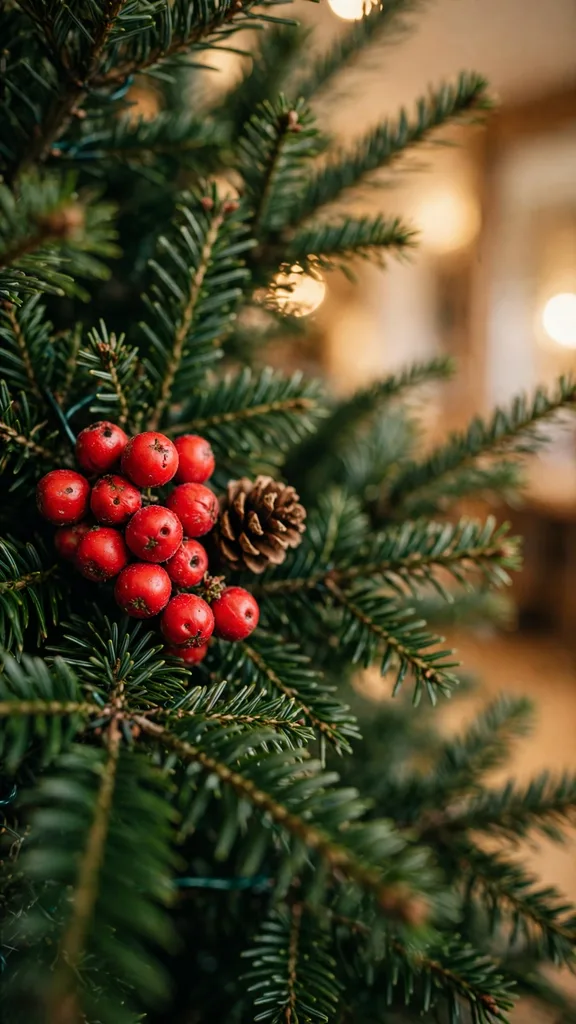
Picks also solve real problems that ornaments cannot. They fill the dark interior gaps where no ornament hangs well, they carry color up into the tree’s thin top, they add the red note at exact intervals, and they bulk out a sparse side without another bauble. A dozen good picks change a tree more than a dozen more ornaments, and the garden produces them as a by-product of pruning, deadheading, and the autumn clear-up.
Harvest Materials Through the Year
Build the pick box across the seasons. In summer, dry extra strawflowers, statice, and lavender with the ornament harvest, keeping the stems longer than ornament work needs, since picks want six to ten inches. In autumn, gather cones dry and open, cut allium, teasel, poppy, and nigella heads with their full stems, and dry them upright in jars so the stems stay straight.
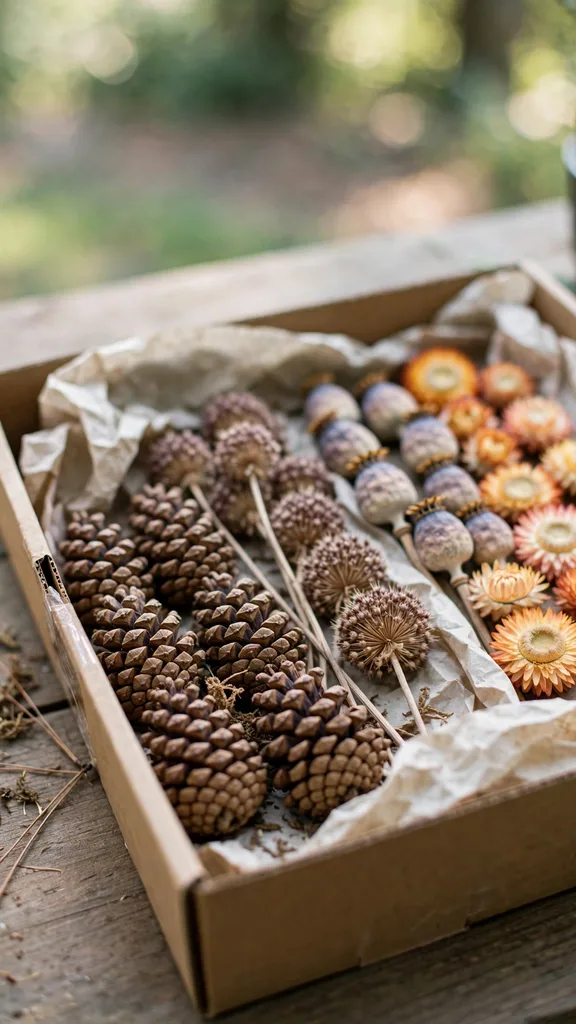
In late autumn, pick rose hips after the first frosts sweeten their color, and cut any seed heads the birds have left. In December, cut the berry sprays fresh: winterberry and holly the week the tree goes up, since fresh berries hold color for the season and dried ones shrivel. Store the dry families in the pick box with tissue between layers, and keep a note of what ran out last year; the garden plants next spring against that list.
Build the Stem: Wire, Skewer, and Floral Picks
Every pick needs a stem stiff enough to push into the tree and hold its angle. Three builds cover everything. For light materials, dried flowers, single cones, citrus slices, twist the material’s own stem together with a length of floral wire and tape or bind the join with twine. For clusters, wire the pieces to a wooden skewer or a short bamboo stick, which gives the grip and stiffness to place heavy cone clusters deep in the tree. For berry sprays and seed heads with strong natural stems, the stem is already built; just trim it to length and sharpen the end to a point.
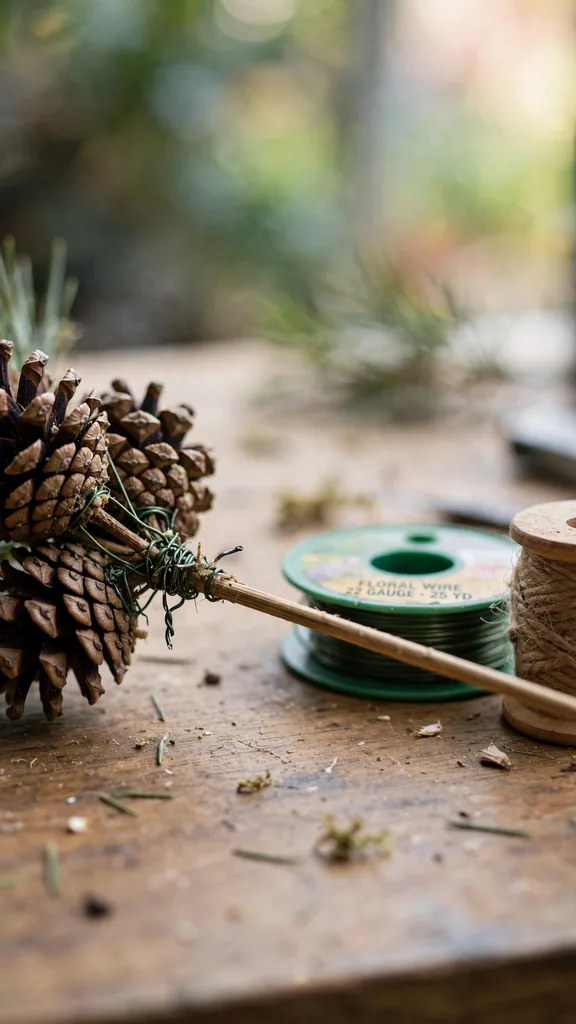
Bind every join firmly; a pick that sheds its head inside the tree is worse than no pick. Wrap wire joins with floral tape or a turn of twine so no sharp wire end waits for the hand that adjusts the tree at midnight. Test each pick with a shake before it goes in the box. The building is quick, a minute or two per pick, and a November evening produces a tree’s worth.
Berry Spray Picks That Hold Their Color
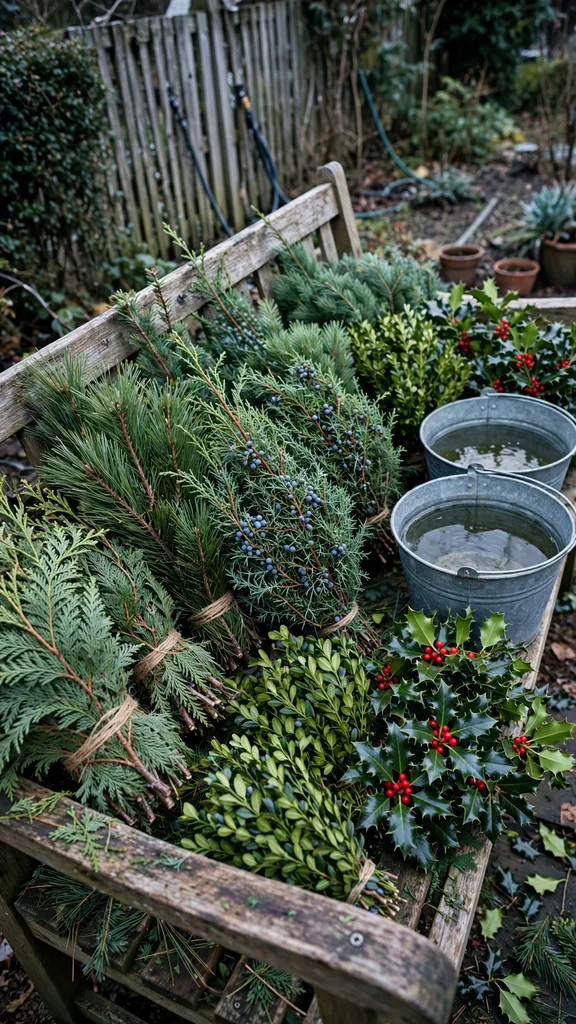
Berry picks are the red engine of the garden tree. The NC State Extension Plant Toolbox entry for Ilex verticillata describes the winterberry holly grown for its leafless stems loaded with red berries, which is exactly the pick material: cut stems of eight to twelve inches, each carrying berries along its length, pushed into the tree at intervals so the red reads as rhythm rather than clutter. Holly sprays with leaves give the glossy green-and-red version, and rose hips give the softer, orange-red note that suits a natural tree.
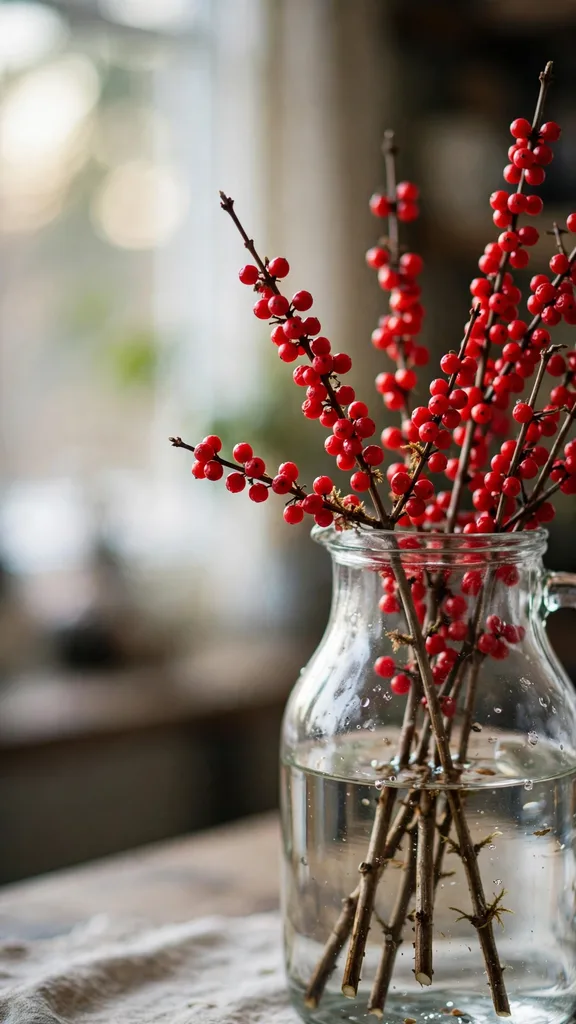
Cut berry sprays the week the tree goes up and keep the stems in water until placing; berries cut fresh hold through the season, while berries cut weeks early shrivel as they dry. Work berry picks in odd numbers, three or five per side, at varied depths, some at the branch surface and some pushed deeper so the color glows from inside the tree. Keep berry picks out of reach of pets and small children, since holly berries are not food, and say so to the household once, clearly.
Cone and Seed Head Picks
Cone picks are the structure family. A single handsome cone wired to a skewer makes a pick for the tree’s outer third; a cluster of three small cones makes a heavier note for the middle. Seed heads bring the shapes nothing else has: allium stars, teasel cones, poppy pods, nigella balloons, each on its own dried stem, needing only a wire extension when the stem runs short.
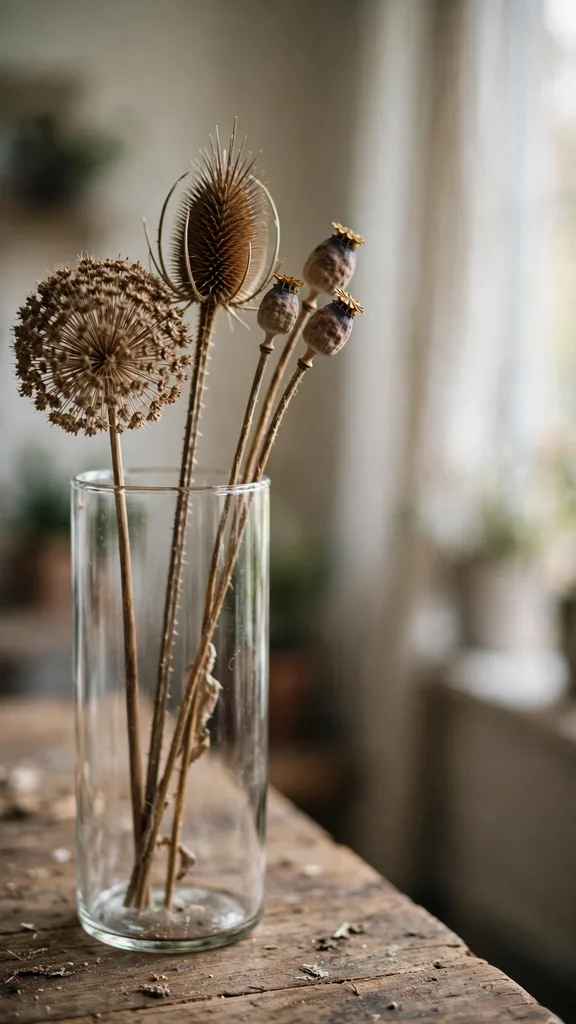
These picks are the long-lived ones, years in the box with dry storage, and they suit the tree’s top half where fresh material would dry fastest. Spray nothing on them; the matte, natural surface is the point. Place seed heads where the lights sit behind them, since an allium star backlit is the single most photographed thing on a garden tree. Broken stems from the ornament box graduate to picks, so the two boxes feed each other all autumn.
Dried Flower and Herb Stem Picks
Dried flower picks carry the summer garden into the tree: strawflower clusters wired as small bouquets on one stem, statice sprigs for filler, a single hydrangea head on a skewer for the big soft note. Build flower picks gently, since dry stems snap, and wire them while the material is at its most flexible, which for most dried flowers is the day they come off the drying rack.
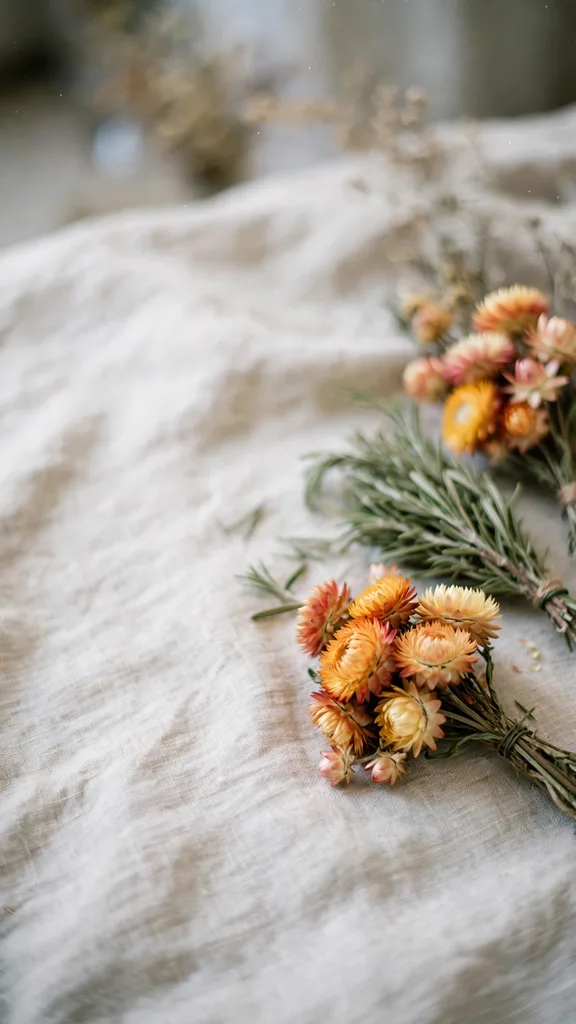
Herb picks are the scent family: rosemary sprigs wired in small fans, lavender bundles on stems, bay leaves threaded or wired as small sprays. Herb picks fade in scent over the season and are remade each year from the autumn pruning, which is no hardship. Place scent picks at the tree’s front and at hand height, where a brushed branch releases them, and keep the fragile dried flowers higher, out of the traffic zone.
Citrus and Fruit Picks
Dried citrus slices make the warmest picks in the box: a slice wired through its rind to a short stem glows amber wherever a light sits behind it. The Clemson Extension guide to drying oranges for holiday decorations gives the working numbers for slices that dry fully and keep: about 1/8 inch thick, a low oven, turning until the slices are dry and light, which for picks matters twice, since a damp slice in the warm tree will mold where a dry one lasts two seasons.
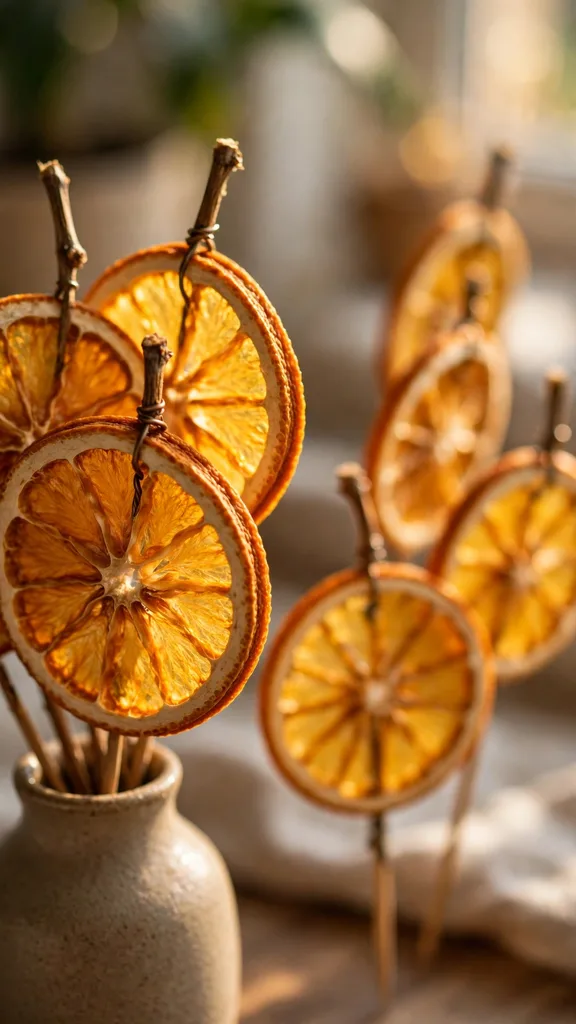
Dried apple rings and small dried crabapples on stems join the citrus for the orchard version. Fruit picks suit the kitchen tree and the natural tree alike, and they pair with the cone picks in clusters, amber against brown. Make more than the tree needs; citrus picks are the ones that migrate to wreaths, garlands, and gift wrap all December, and the box empties itself.
Place Picks Like a Florist: Depth, Rhythm, and the Rule of Three
Place picks after the lights and before or with the ornaments, working in a set order: berry picks first for the color rhythm, then the big structure picks, cones and hydrangea heads, then seed heads and flowers, and citrus last where the lights will strike it. Push picks at varied depths, surface, mid-branch, and deep, because a tree lit and colored at three depths looks three times its size.

Work in threes and odd numbers, and step back to the doorway after every family goes in; picks are placed from the viewing distance, not from inside the branches. Keep the top third lighter and finer, small picks and single stems, and the bottom third bolder, since the eye reads the tree as a triangle and the picks should respect its geometry. The same placement thinking runs through the outdoor Christmas tree decorating list on this site, where the picks’ weatherproof cousins do the same work outdoors.
Make Picks Last and Store Them for Next Year
Fresh berry picks end with the season; compost the stems and count the berries as the birds’ share if the tree stood outdoors. Every dry family stores: lay picks in the box in a single layer per family, tissue between, stems aligned, and keep the box dry, dark, and cool. Label the box’s families on the lid, since December-you opens boxes in a hurry.
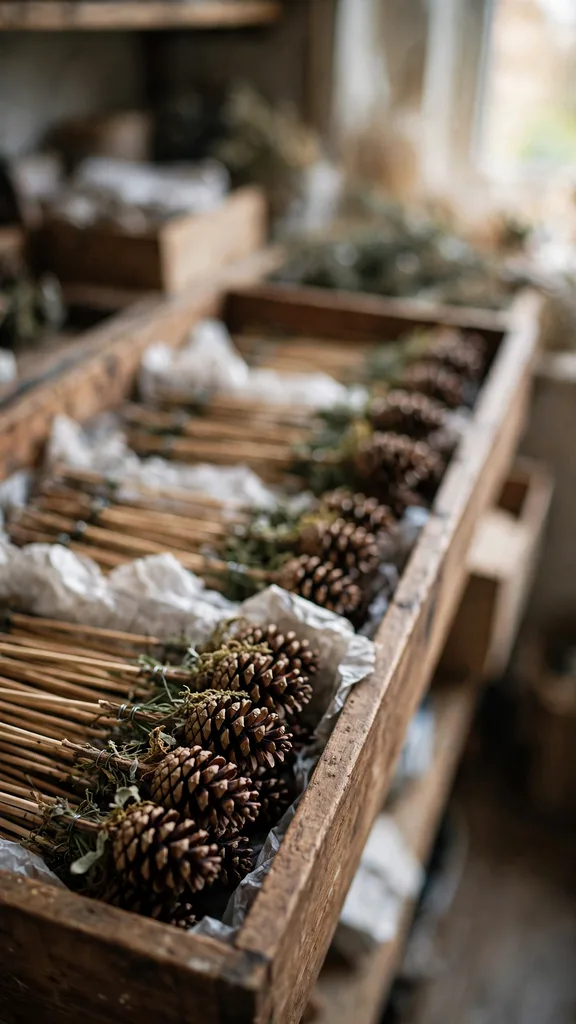
Repair is part of storage: rewire loose heads, replace snapped stems, and note the families that ran short while the evidence is in your hands. Citrus and herb picks are inspected for mold or staleness and remade fresh each year as needed; their making is quick and their freshness is their value. A pick box maintained this way grows richer annually, and after a few years the tree’s dressing becomes an act of curation rather than manufacture.
Safety and Honesty: Berries, Pets, and Bought Additions
Two house rules close the guide. First, safety: holly and other ornamental berries are not food, so berry picks go high and out of reach where pets and small children are part of the household, and any pick material you cannot name stays off the tree. Yew, sometimes offered as greenery, never becomes a pick in this house; its foliage is toxic and its red arils tempt exactly the wrong audience.
Second, honesty about materials: a pick box may legitimately hold a few bought stems, cinnamon sticks, wooden skewers, the wire itself, without breaking the garden rule. What makes the tree a garden tree is that its berries, cones, seed heads, flowers, and fruit grew in your soil. Guests can tell the difference at a glance, and so can photographs. The Christmas garden ideas pillar gathers the ornaments, garlands, and arrangements that share the tree with these picks.
Frequently Asked Questions
For a six-foot tree, start with 18 to 24 picks: six to eight berry sprays for the color rhythm, six structure picks of cones or hydrangea, and the rest seed heads, flowers, and citrus for detail. Sparse trees and dark interiors take more, since picks fill gaps ornaments cannot reach. Add in families and step back between each; the tree tells you when the count is right, usually one family earlier than enthusiasm suggests.
Build the stem stiff and long enough: six inches of stem inside the branches is the minimum for a pick to hold its angle, and heavy clusters belong on wooden skewers, not wire alone. Push picks in at a slight downward angle along a branch, and where a pick must hold on a thin branch, twist its wire once around the branch itself. A pick that survives a shake test at the table survives the tree.
Yes, and the prunings from shaping the tree are the freshest greenery picks of all: short fir or pine tips wired into small fans fill the tree’s gaps with its own foliage, invisible and perfectly matched. Use them fresh the day the tree goes up. The same trick fills a wreath’s thin spots. Nothing from the tree need be wasted; even the trunk’s offcuts become fire starters in this house.
One to two seasons stored dry in the dark, with strawflowers and statice at the long end and hydrangea heads, which crush, at the short end. Colors fade slowly in storage and faster on a lit tree near a window. Make dried flower picks a little generously each summer so the box can retire the faded third annually. Seed head and cone picks, by contrast, last for years and only need their wires checked.
Treat all ornamental berries as not food: holly berries can make pets and children ill, so place berry picks high, out of jumping and grabbing range, and sweep up fallen berries daily, since a berry on the floor is at exactly pet height. Households with determined climbers should skip berry picks indoors and use rose hips sparingly or citrus and cone picks instead, which carry the color without the worry.