
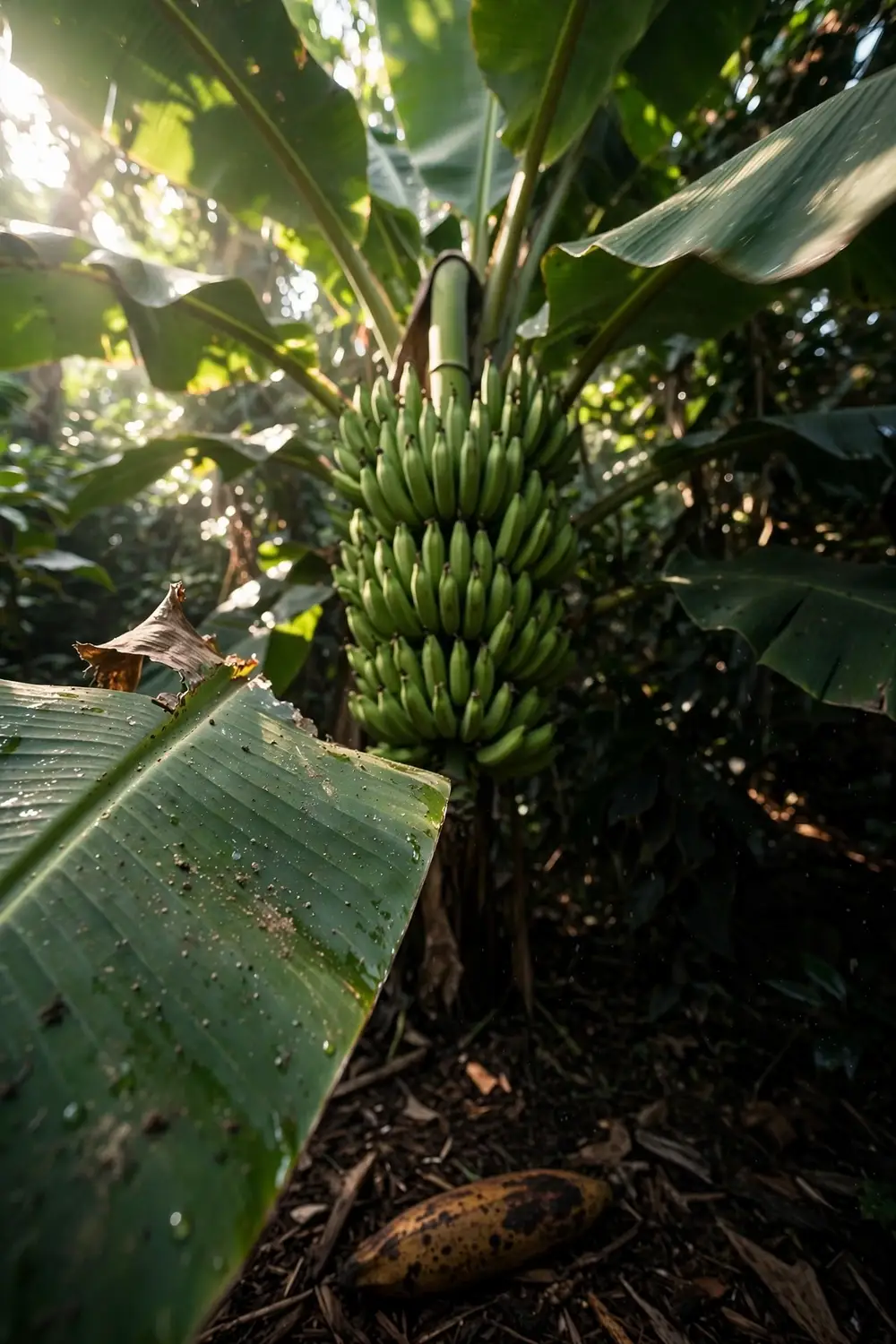

Plantains (Musa × paradisiaca) grow from suckers, not seeds. A healthy 12 to 20 inch sucker planted in full sun, in fertile well-drained soil, fruits in 10 to 18 months. This guide walks you through the whole cycle, from picking the right variety to cutting the bunch and starting the next one.
If you have ever searched for growing tips and found advice about a lawn weed, you are not alone. Two plants share the name plantain. This article is about the fruit, the tall starchy cousin of the banana, and it flags the mix-up right at the start so you never plant the wrong thing.
For readers who grow tropical fruit already, the propagation logic here will feel familiar: pick healthy planting stock, plant it in compost-rich soil, keep it fed and watered, then manage the regrowth cycle. The How to Grow Papaya Fruit guide is a good companion read if you want another fast tropical crop.
1. Plantain, the Fruit, Not the Weed
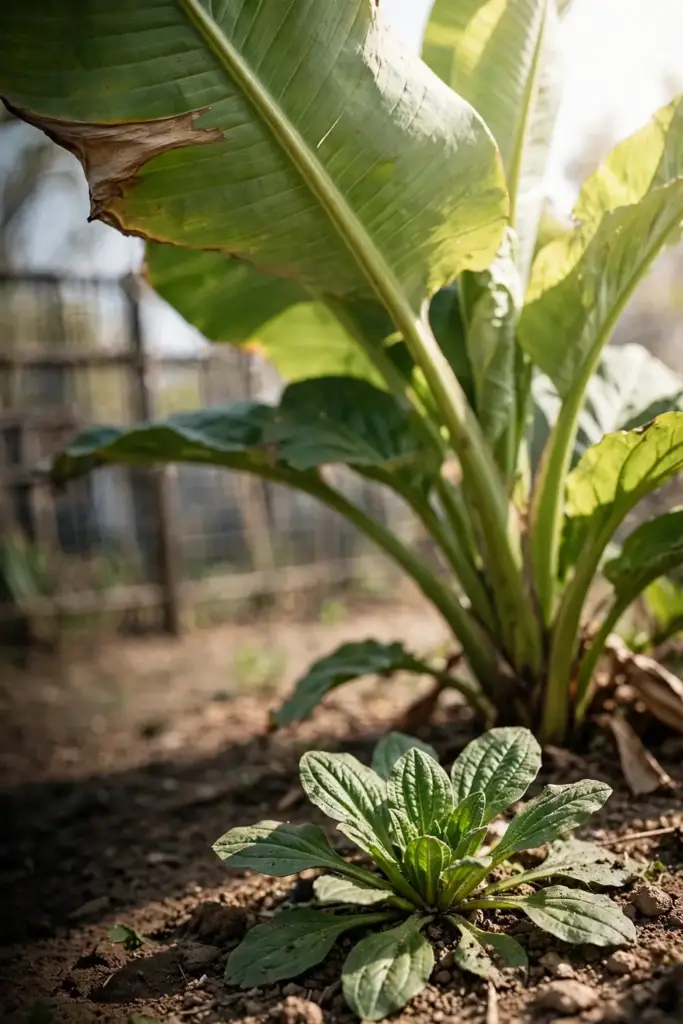
Two plants share the name plantain, and much of the growing advice out there is about the wrong one. The fruit you want to cook is a 10 to 20 foot tropical herb in the banana family, Musa × paradisiaca. The weed is a low rosette of ribbed leaves in your lawn, Plantago major, a medicinal herb. They are not related. They do not cross. Nothing written about sowing Plantago seed in rocky soil applies to the fruit, and nothing below applies to the weed.
| Feature | Plantain (the fruit) | Plantain (the weed) |
|---|---|---|
| Latin name | Musa × paradisiaca | Plantago major |
| Family | Musaceae, the banana family | Plantaginaceae |
| Size | 10 to 20 feet tall | A 4 to 8 inch ground rosette |
| Edible part | Starchy fruit, always cooked | Leaves and seed heads, raw or cooked |
| Propagation | Suckers and corms, never seed | Seed, often self-sowing |
| Hardiness | USDA zones 8 to 11 | USDA zones 3 to 12 |
When shopping for planting stock, ignore anything sold as seed. True plantain fruit plants are seedless and propagate vegetatively. A “plantain seed” packet on a marketplace is almost certainly the weed.
2. Plantain at a Glance
This table is the short version of the whole article. Each number is unpacked in its own section below.
| Requirement | Target |
|---|---|
| Latin name | Musa × paradisiaca |
| Hardiness | USDA zones 8 to 11 outdoors, containers elsewhere |
| Frost tolerance | None; hardy only to about 25°F |
| Sun | Full sun, 6 to 8 hours daily |
| Wind | Sheltered from strong wind |
| Soil | Fertile, loamy, well drained |
| Soil pH | 5.0 to 6.5, slightly acidic |
| Planting hole | 2 feet wide by 1 foot deep, compost in the bottom |
| Sucker size | 12 to 20 inches tall, strong corm |
| Spacing | 5 to 6 feet each way |
| Water | Consistently moist, about 8 inches per month |
| Feeding | Every 4 to 6 weeks in the growing season |
| Time to fruit | 10 to 18 months from planting |
| Fruits per stem | One bunch, then the stem dies back |
| Height | 10 to 15 feet typical, up to 25 feet |
3. Climate and Location: Zones 8 to 11
Plantains are tropical plants with little tolerance for cold. Growveg’s grow guide states they are hardy only to about 25°F, and freezes kill the foliage. The rhizome underground can survive down to about 22°F, sending up new shoots in spring, but you lose the season’s growth. Fruiting needs eight months or more of warm weather, with nights at 70°F and days above 80°F, according to the plantain grow guide at Growveg, so only reliably warm regions produce outdoor bunches.
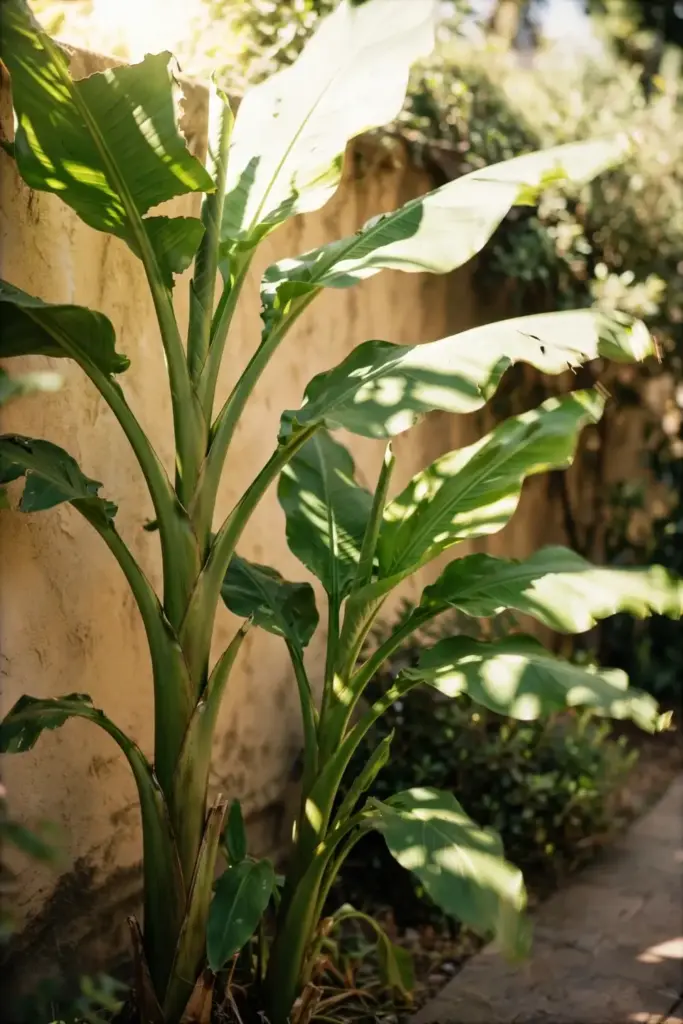
In the USA that means zones 8 to 11: southern Florida, the Gulf Coast, southern Texas, southern California, Hawaii, and Puerto Rico. The LA Times reported that Florida nurseries sell certified nematode-free plants, and Southern California gardeners grow them near warm ocean breezes as annual ornamentals, reaching 10 to 20 feet in a season.
Site selection matters as much as zone. Give the plant full sun, 6 to 8 hours of direct light, and shelter from strong wind. The giant leaves shred in gales, and wind can pull a fruiting plant over. Reflected heat off a wall or paved area helps in marginal spots.
If you live outside zones 8 to 11, containers are your path. Warm months outdoors. Winter indoors. The container method further down covers the details.
4. Plantain vs Banana: Know the Difference
New growers often ask whether plantains and bananas grow on the same plant. They do not. They are different cultivar groups of the same genus, Musa, grown the same way but producing very different fruit.
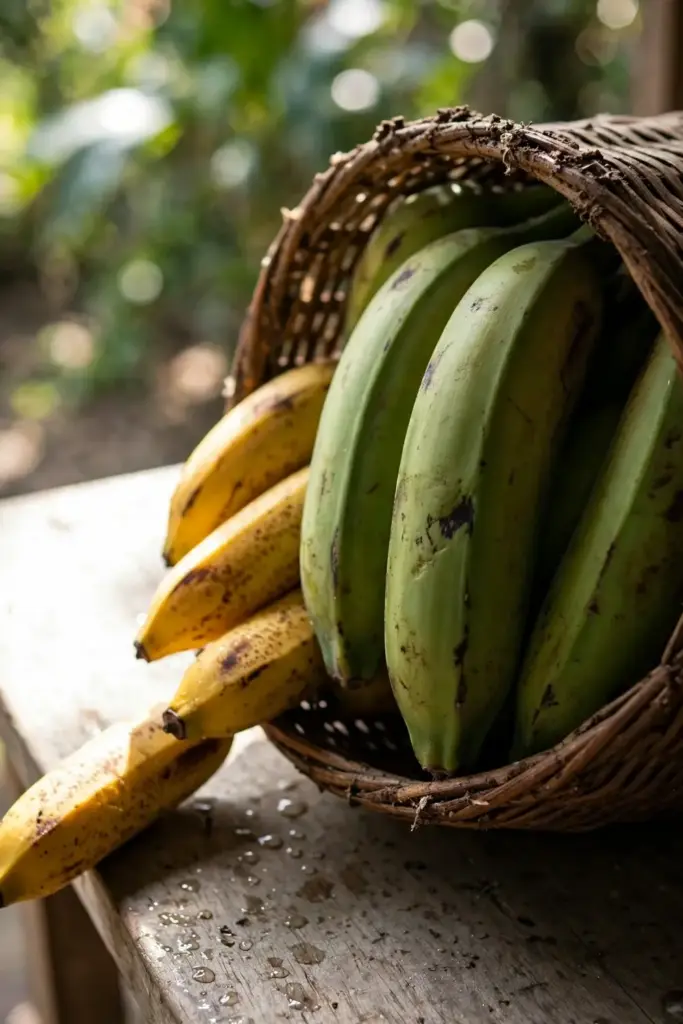
| Feature | Plantain | Dessert banana |
|---|---|---|
| Use | Cooked, green or ripe | Eaten raw |
| Flesh | Starchy, firm | Sweet, soft |
| Peel | Thicker, harder to remove green | Thinner, peels easily |
| Size | Larger, often angular | Smaller, curved |
| Ripening | Eaten green, yellow, or black ripe | Eaten yellow |
| Botanical group | True plantains, AAB group | Cavendish and others, AAA group |
Both are giant herbs, not trees. The “trunk” is a pseudostem of tightly wrapped leaf sheaths, and each pseudostem fruits once, then dies back. Both propagate from suckers. If you can grow a banana, you can grow a plantain with the same care.
5. Choose Your Variety: Cooking Types vs Dessert Types
Botanically, the term plantain covers true plantains, the cooking cultivars of the AAB group, plus other starchy cooking bananas of the AAB, AAA, ABB, and BBB groups. The currently accepted name for all of them is Musa × paradisiaca. In the garden, the practical split is simpler: cooking types for the pot, dessert types for eating out of hand.
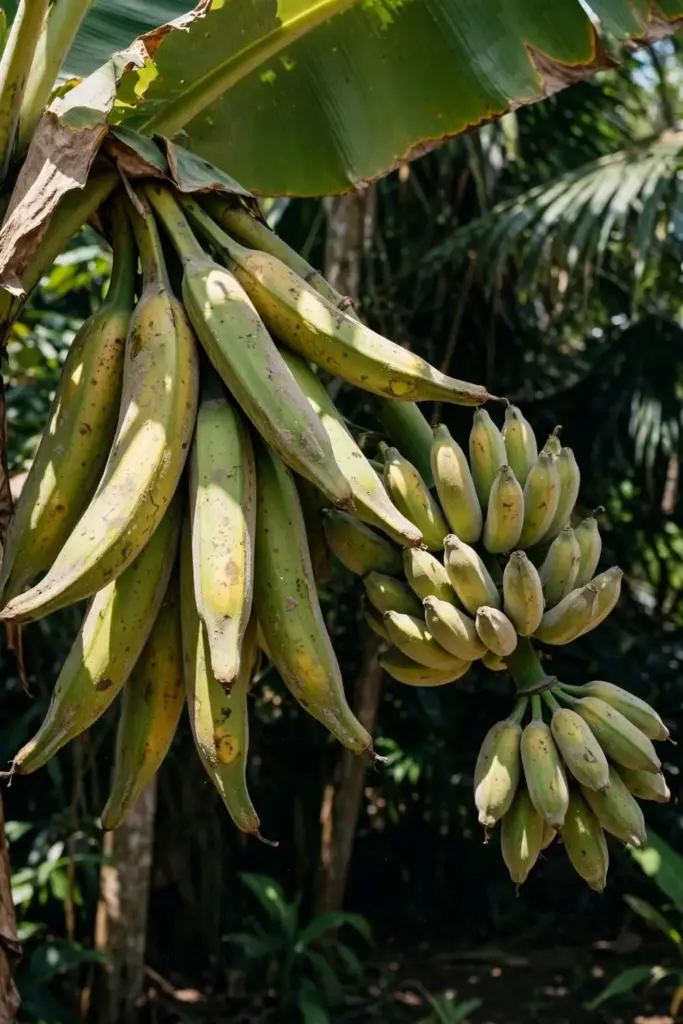
| Type | Examples | Best for |
|---|---|---|
| Cooking plantain | ‘Dominico’, ‘Horn’ | Tostones, mofongo, chips, boiling |
| French plantain | ‘Nendran’, ‘Obino l’Ewai’ | Boiling, roasting |
| French Horn | ‘Batard’, ‘Mbang Okon’ | Cooking, flour |
| Horn types | ‘Ishitim’, ‘Pisang Tandok’ | Large fruit, cooking |
| False Horn | ‘Dominico-Harton’, ‘Agbagba’ | Cooking |
| Dessert banana | ‘Lady Finger’, ‘Red Dacca’ | Eating raw |
For a home grower, the safest purchase is a named cooking cultivar from a reputable tropical nursery, preferably certified nematode-free. Unlabeled “plantain trees” sold as landscaping ornamentals may be dessert bananas or ornamental types with poor fruit quality. Ask the seller which group the plant belongs to before you buy.
6. Where Plantains Come From: Suckers, Not Seeds
Here is the single most important fact to carry into the nursery: commercial plantains are seedless. The edible Musa cultivars produce fruit without pollination, so no seeds form inside. You cannot grow a plantain from fruit the way you can grow a papaya. Propagation runs entirely vegetative, through suckers and corms on the underground rhizome.
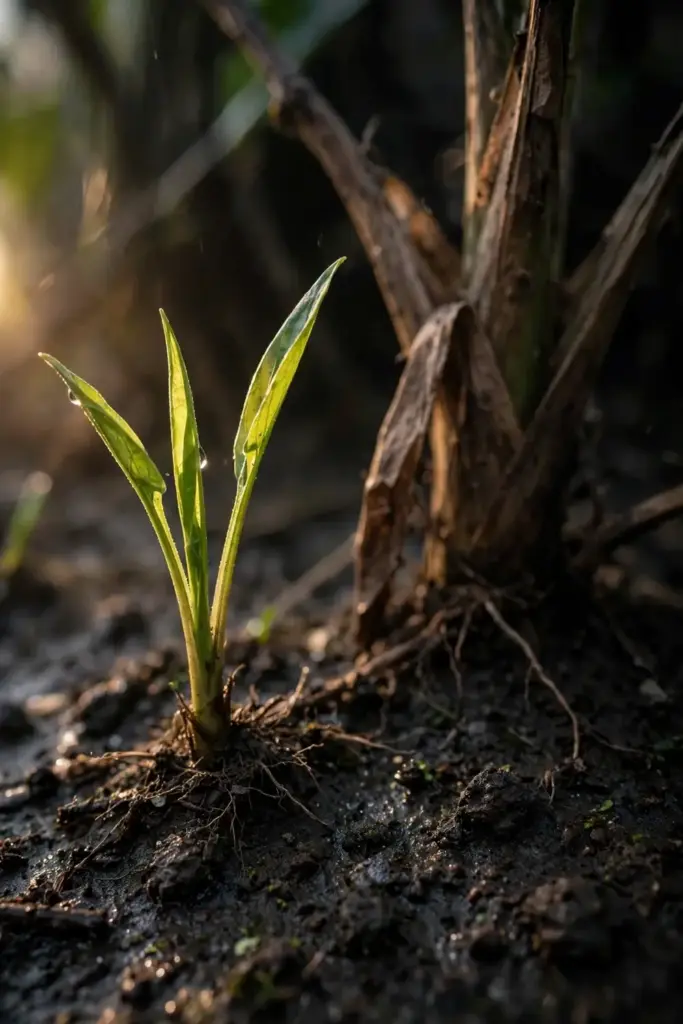
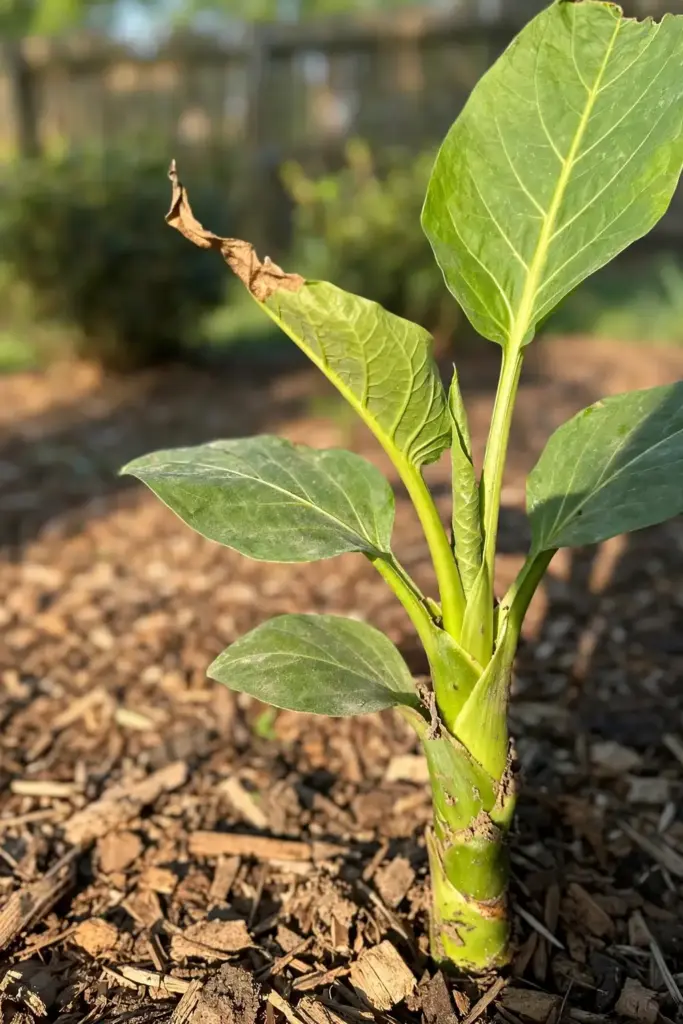
A sucker, also called a pup, is a young shoot that rises from the corm at the base of the mother plant. Growers sort suckers into two kinds. Sword suckers have narrow, upright, blade-like leaves and grow directly from the corm with their own root system forming. They establish fast and are the preferred planting material. Water suckers have broad, leafy growth and attach weakly, with less vigor. Take the sword suckers. Leave the water suckers alone or remove them.
Corms are the bulb-like underground stems. A corm can be cut into pieces, each with an eye, to multiply plants quickly by damaging the center to trigger more suckers. For a home grower, one healthy sword sucker per planting hole is the simple, reliable start.
Never buy plantain “seed” online. As the scout research found, every seed packet marketed as plantain is Plantago, the weed. If someone sells you Musa seed, it is either mislabeled or a wild seeded species you do not want to eat.
7. Source Healthy Suckers: Start Clean
Because plantains multiply vegetatively, every disease in the mother plant travels with the sucker. The two enemies to screen for are nematodes and banana weevils, both of which live in the roots and corm. A planting started with infested stock fights an uphill battle for its whole life.
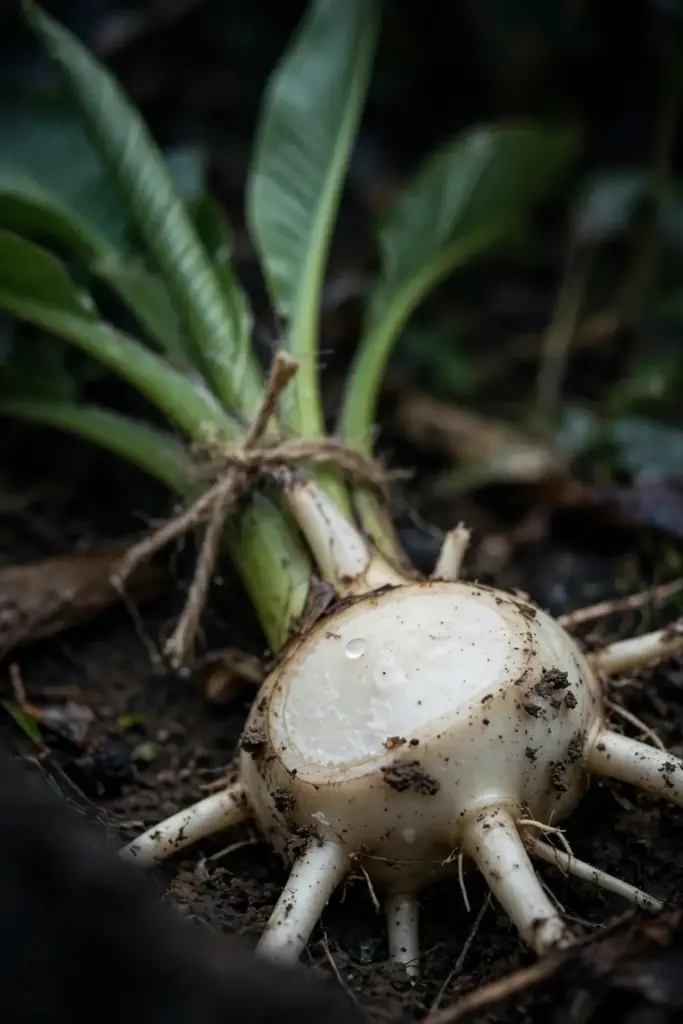
Buy certified nematode-free plants when you can. Florida nurseries sell them, and the LA Times has reported on this certified stock as the safe route for new plantings. If you take a sucker from a friend’s mat, inspect it first: slice a thin shaving off the corm and look for dark tunnels or discolored streaks, which signal weevil or nematode damage. Clean corm tissue is white to cream throughout.
Trim old and damaged roots from the sucker before planting, but keep the corm intact. A 12 to 20 inch sucker with a firm, heavy corm and no soft spots is ideal. Smaller pups establish too, but they take longer to reach fruiting size. Avoid suckers with yellowed, streaked, or torn leaves, which can indicate virus problems.
In regions where plantains grow commercially, respect local biosecurity rules. Growveg’s guide notes that biosecurity measures in commercial plantain areas may affect your choice of plants. Moving uncertified suckers into a commercial zone risks spreading Panama disease and other problems.
8. Plant the Sucker, Step by Step
Plant in warm weather, after the last frost in marginal zones, when soil temperatures hold above 60°F. In the deep tropics you can plant year-round.
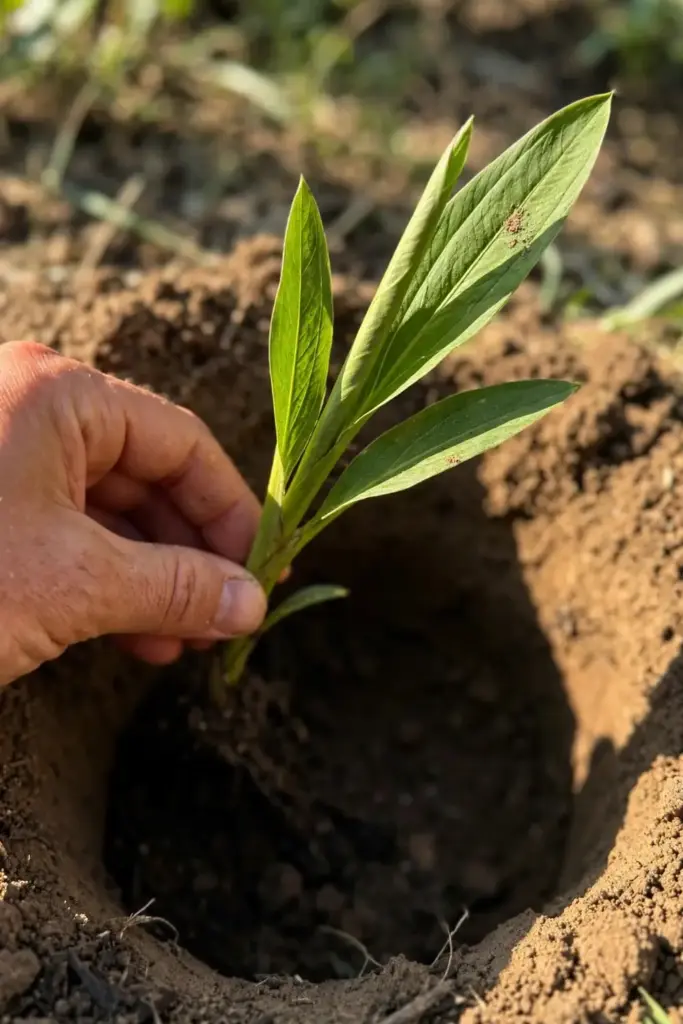
Dig a hole about 2 feet wide and 1 foot deep. Work compost or aged poultry manure into the bottom of the hole. If your soil is heavy clay or depleted, review the soil health guide before you dig, since the mat will live in that spot for years. Planting depth is forgiving, but keep the corm buried and the base of the pseudostem slightly low in the hole so water collects around it.
Set the sucker upright in the center of the hole. Fill the soil back in only halfway at first, firming it around the corm, then water thoroughly. Fill the rest of the soil in over the next few weeks as the plant settles. This two-stage fill improves root-to-soil contact and keeps the base slightly low to retain moisture, a detail many YouTube growers emphasize.
Space plants 5 to 6 feet apart in each direction. Each plant forms a clump, called a mat, of several stems, so tight spacing creates a crowded, disease-prone thicket within two years. Growveg lists 6 feet minimum each way. Water immediately and deeply, then mulch.
9. Mat Management: The Heart of Plantain Growing
A plantain grows as a mat, a clump of connected stems all rising from one rhizome. Understanding the mat is the difference between a productive planting and a tangled one. Each individual pseudostem fruits once and then dies back. The mat lives on through its suckers, producing a continuous relay of new stems.
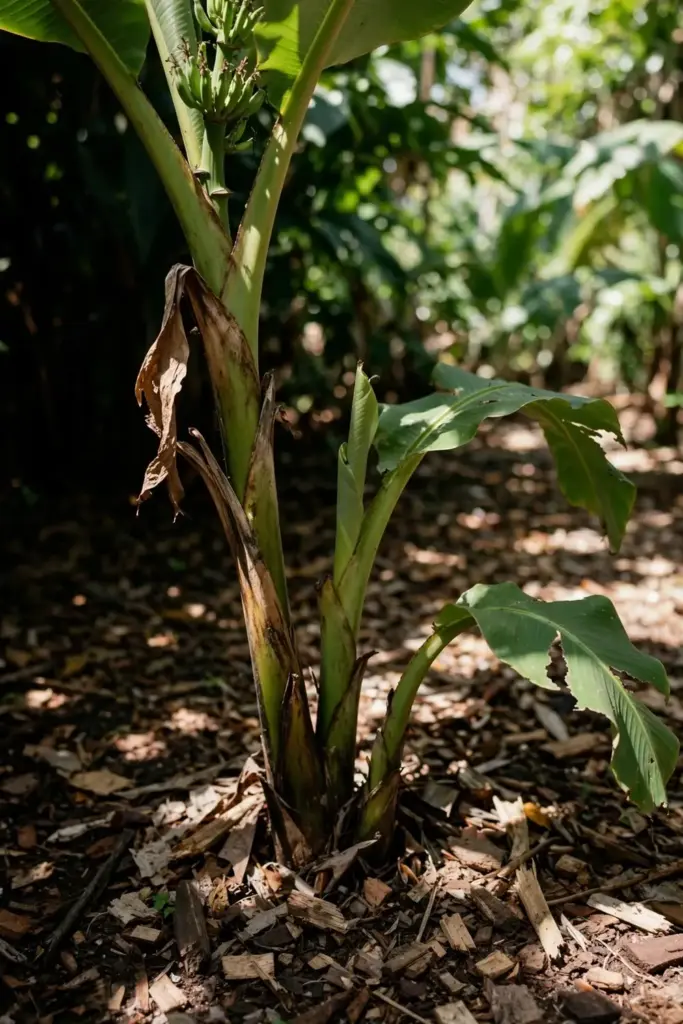
Manage the mat as a three-generation system. Keep one fruiting mother stem, one half-grown daughter sucker, and one small granddaughter sucker. Remove all other suckers as they appear, cutting them off at the corm or digging them out. This directs the rhizome’s energy into the three stems that matter instead of spreading it across a dozen weak shoots.
When you harvest the bunch, cut the spent pseudostem down to the ground soon after. Chop the trunk and leaves and spread them as mulch around the mat, which recycles the nutrients and suppresses weeds. The daughter sucker then takes over as the new mother, and the cycle repeats, a ratoon cycle that can continue for years without replanting.
A neglected mat tells on itself. Bunches get smaller, stems get thin, and leaves yellow early. The fix is always the same: thin back to three stems, cut out the spent ones, feed, and mulch. Annual thinning is not optional maintenance. It is the crop.
10. Watering: Deep, Consistent, Never Soggy
The number one rule of plantain care is simple: do not let the soil dry out. Plantains are giant herbs with enormous leaves that pump out water all day. They need consistently moist soil, especially in hot, dry weather. The rule of thumb is 1 to 1.5 inches of water per week, with some guides putting the monthly target around 8 inches.
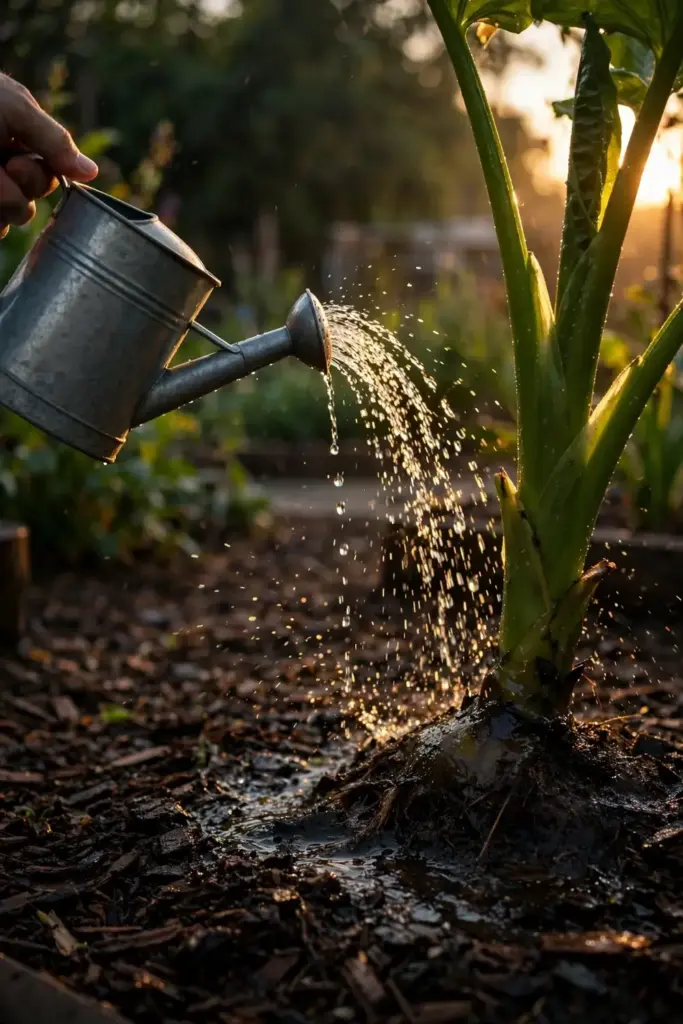
Deep soak the root zone one to two times per week rather than sprinkling daily. The roots are shallow, so frequent light watering encourages a weak surface root system. A deep soak that wets the top 12 to 18 inches of soil, followed by a thick mulch layer, carries the plant through the week in most climates.
Drainage matters as much as supply. Waterlogged soil rots the corm. If your soil holds puddles after rain, plant on a low mound 6 to 12 inches high and widen the spacing so air moves through the mat. Container growers should check drainage holes every month, because roots pack the pot fast.
Watch the leaves for signals. Rolled, folded leaves on a hot afternoon are normal heat response and recover by evening. Leaves that stay folded in the morning, or edges that brown and crisp, mean the plant is genuinely thirsty. New leaves emerging pale and small can signal drought stress during the critical bunch-filling period.
11. Feeding a Heavy Feeder
Plantains are among the hungriest plants a home gardener can grow. A 15 foot pseudostem, a dozen giant leaves, and a 30 pound bunch all come from the soil, and the mat replaces them continuously. Feed generously and regularly.
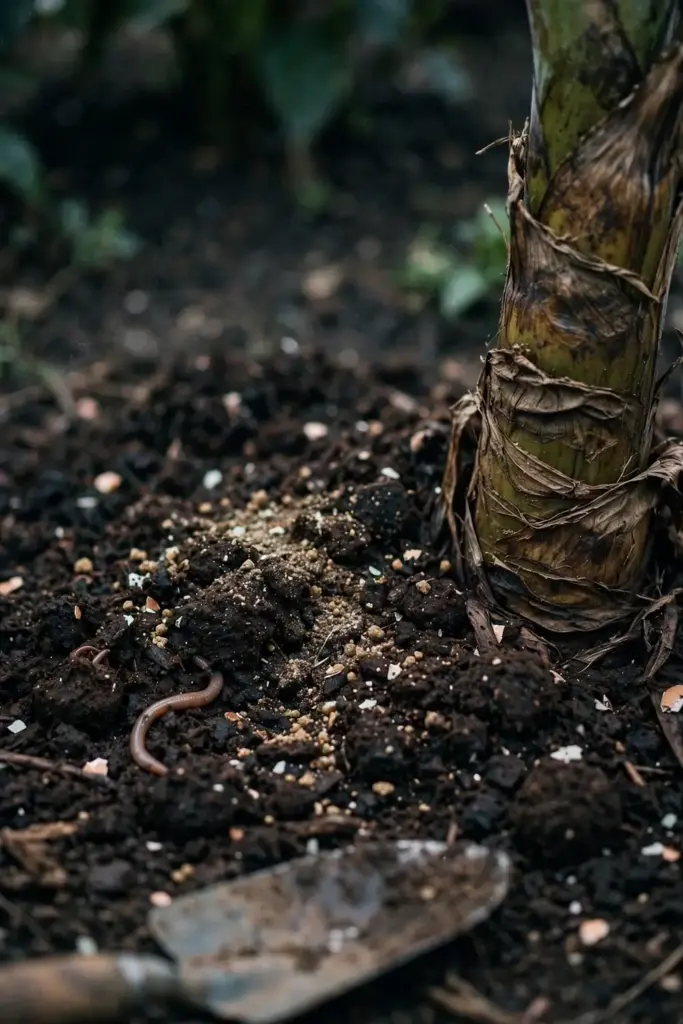
During the growing season, fertilize every 4 to 6 weeks. Grower guides cite chicken manure with a 5-4-2 analysis as a standard organic option. A monthly high-potassium fertilizer, around a 3-1-6 ratio, supports bunch development, since potassium drives fruit fill in bananas and plantains. Gardening Know How recommends a monthly slow-release 8-10-8 through summer for mature plants, at 1 to 2 pounds spread in a 4 to 8 foot radius and lightly worked into the soil.
Organic growers can lean on compost and manure. A 4 to 6 inch layer of compost under the mulch each spring, plus monthly liquid feed through the growing season, keeps a backyard mat productive. The organic slow-release options in the fall vegetable fertilizer guide suit heavy feeders like plantain too. Growveg’s guide lists a monthly liquid feed as standard. Wood ash is a traditional potassium source that Florida growers use, but apply it lightly and keep it away from the pseudostem.
Newly planted suckers need less. Wait until the first new leaf unfurls before feeding, then start at half strength. Overfeeding a fresh sucker burns the young roots and sets establishment back by weeks.
12. Mulch and Staking
Mulch is not decoration on a plantain mat. It is the water budget and the fertilizer program. Spread 4 to 6 inches of organic mulch, wood chips, straw, or chopped leaves, in a wide circle around the mat, keeping it about 6 inches away from the pseudostem to prevent rot at the base. Gardening Know How specifies a 4 to 6 foot wide circle. The mulch holds moisture in the shallow root zone, feeds the soil as it breaks down, and suppresses weeds that compete with the mat.
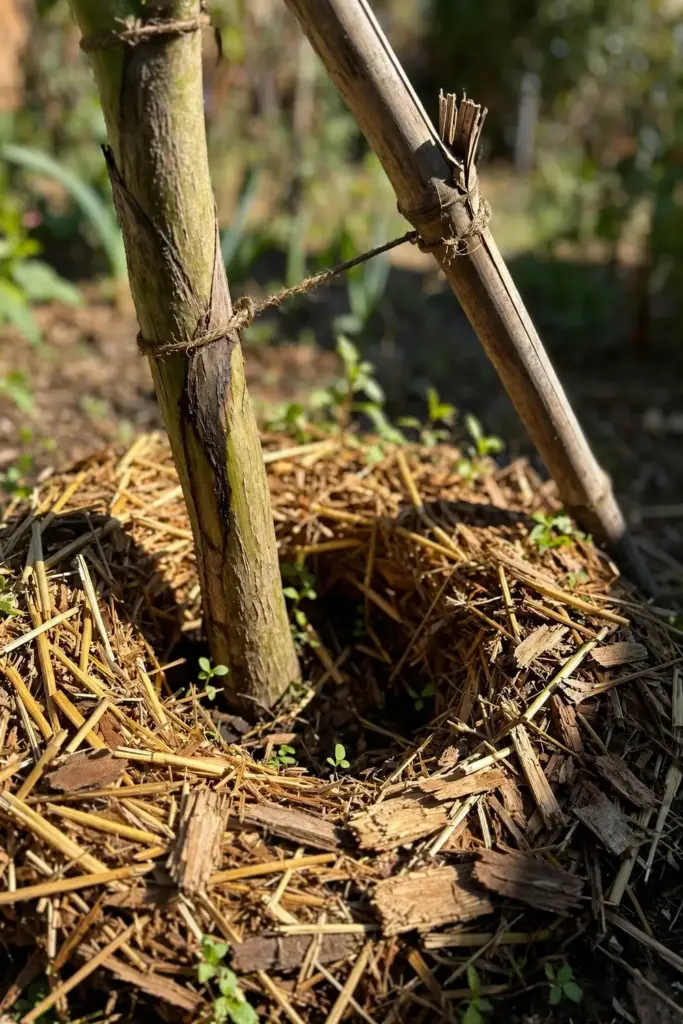
Refresh the mulch as it decomposes, which happens fast in warm, wet climates. The chopped remains of harvested pseudostems make excellent mat mulch, closing the nutrient loop. Never pile fresh grass clippings thickly against the stem, since they heat up and can damage the base.
Stake young and fruiting plants in windy sites. A simple wooden or bamboo prop placed beside the stem, with the top tied loosely, keeps a top-heavy plant upright through storms. For a fruiting stem, cross two bamboo poles under the bunch itself to carry the weight. A fallen plantain rarely dies, but the bent pseudostem stops feeding the bunch, and the fruit ripens unevenly.
13. Prune the Pseudostem
Plantain pruning is minimal but regular. Remove dead and tattered leaves as they brown, cutting the leaf stalk close to the pseudostem without gouging it. A mat with three to five clean green leaves per stem looks tidy and photosynthesizes well. Leave the green leaves alone. Every leaf you remove early is bunch weight lost.
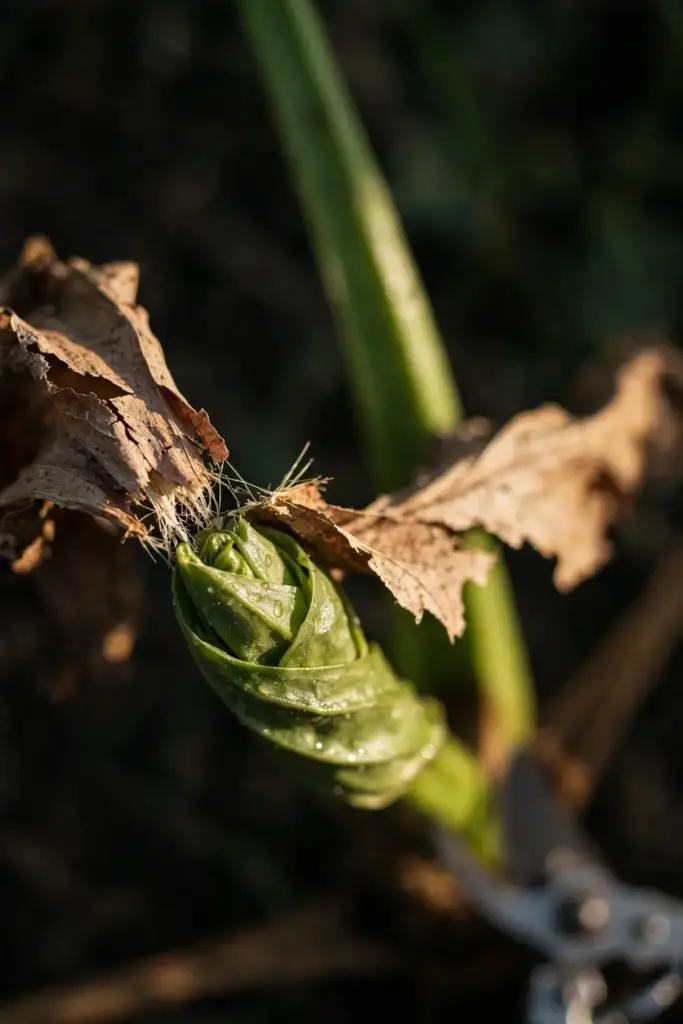
Cut out spent pseudostems promptly after harvest. Saw or machete the trunk at ground level, then chop the whole trunk and crown into pieces and spread them as mulch. Do not leave the cut stump standing tall. Hollow, rotting stumps harbor weevils and provide a bridge for disease into the corm.
Remove unwanted suckers while they are small. A sharp spade driven between the sucker and the mother corm severs it cleanly. Dig the sucker out with as much of its own root as possible if you want to plant it elsewhere, or slice it off at the corm and let it die back if you do not. Monthly sucker checks during the growing season take five minutes and prevent the mat from turning into a thicket.
14. Pests and Diseases
Healthy, well-fed mats resist most problems, but a few pests and diseases deserve attention. The Penn State Plant Village page on plantain documents the crop’s disease and pest profile in detail and is the authoritative reference for diagnosis.
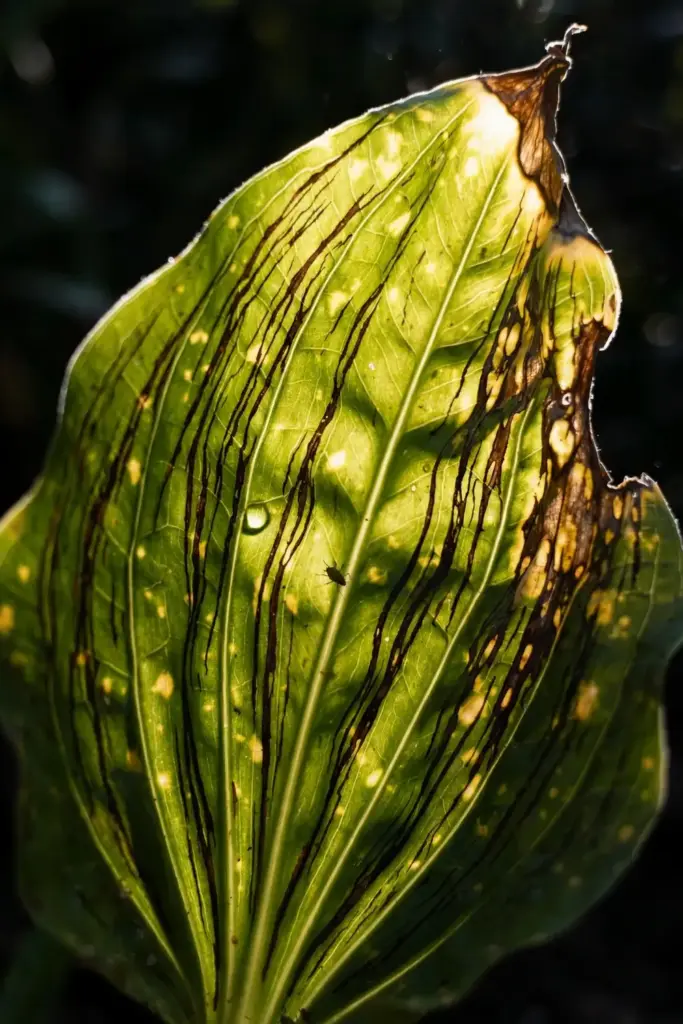
Nematodes are the hidden enemy. These microscopic soil worms attack the roots and corm, stunting the plant and making it prone to toppling. The damage shows as poor growth, yellowing, and plants that fall over in wind despite looking fed and watered. Prevention beats cure: start with certified nematode-free stock, avoid moving soil from infested areas, and rotate the planting site if an old mat declines.
Banana weevils bore into the corm and pseudostem base. Adults are hard black beetles that hide in debris around the mat. Keep the mat clean, chop and spread harvested pseudostems promptly rather than leaving them to rot standing, and destroy badly infested corms rather than replanting their suckers.
Leaf diseases show as streaks, spots, and premature yellowing. Good air circulation from proper spacing, regular removal of dead leaves, and avoiding overhead watering all reduce pressure. In humid climates, some leaf spotting is cosmetic and normal. Worry when new leaves emerge already streaked, which suggests a systemic problem, and remove affected plants rather than nursing them.
15. Overwintering and Cold Protection
Outside the tropics, winter is the main event in plantain growing. The plant has no dormancy strategy. It keeps growing until cold stops it. Your job is to keep the rhizome alive and get the foliage through the cold months with as little damage as possible.
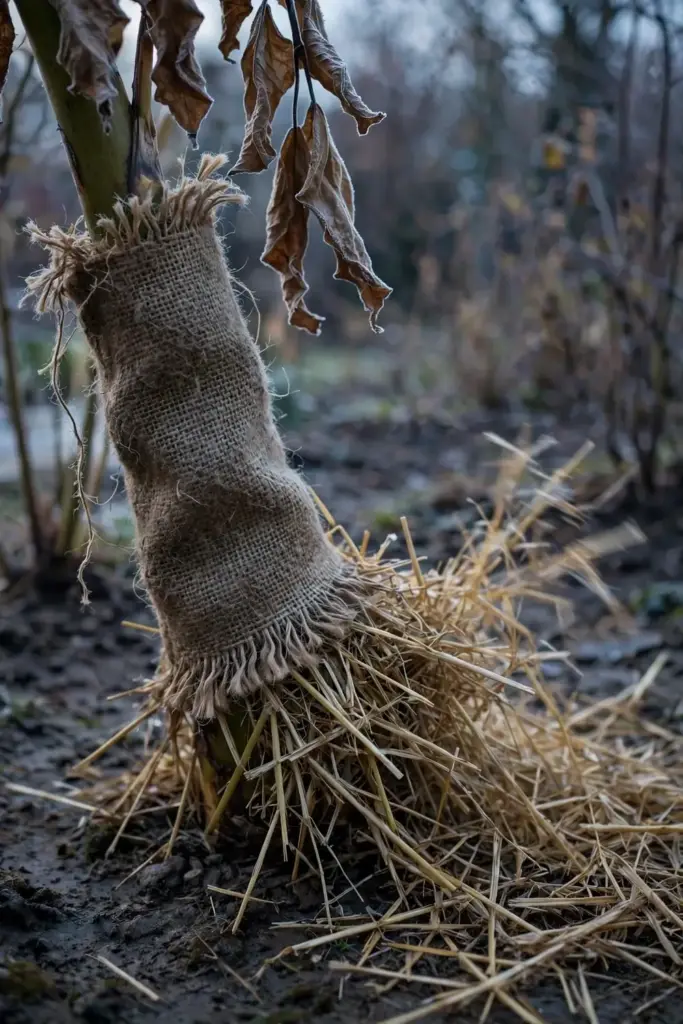
In zone 8 and warm zone 9, in-ground plants can survive with protection. Before the first freeze, wrap the pseudostem in burlap or frost cloth and pile a thick layer of dry leaves or straw around the base. Some growers build a simple cage of wire around the stem and fill it with dry leaves. The goal is insulation, not heat. The foliage may still die back in a hard freeze, but the protected rhizome resprouts in spring.
Gardening Know How describes the emergency version: cover the plant with a blanket during cold snaps and put a light bulb or string of holiday lights underneath for gentle warmth. Rhizomes survive underground to about 22°F, while the above-ground plant dies back in freezing temperatures.
In zones colder than 8, dig the plant up or grow it in a container from the start. Cut the leaves back, store the corm in a cool, dry, frost-free spot over winter, and replant after the last frost. Container growing, covered next, is simpler for most gardeners and avoids the annual dig.
Time your spring planting for after the last frost, when nights stay above 60°F. A sucker planted into cold, wet soil sits and rots instead of rooting.
16. Growing Plantains in Containers
Containers bring plantains within reach of gardeners in zones 7 and colder, and the video demand is strong: “How To Successfully Grow Plantains In Containers” is among the most watched plantain topics on YouTube. The method works, with honest limits.
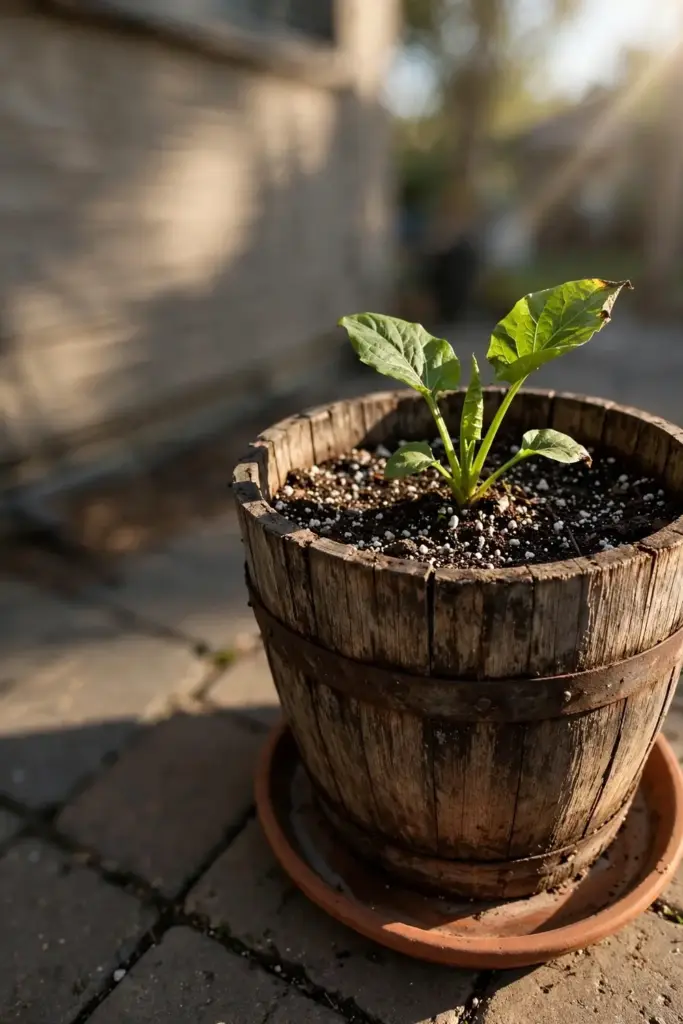
Use the largest container you can move. A half whiskey barrel or a 25 gallon pot is the practical minimum for a plant that wants to reach 10 feet. Fill it with rich, well-drained potting mix amended with compost. Plant one sucker per container, at the same depth it grew before. Water deeply and mulch the surface.
Expect a smaller plant and a smaller bunch than in-ground specimens. Container mats fruit, but the restricted root run caps the bunch size. Feed monthly through the growing season, since pots leach nutrients fast. Check drainage holes for root packing each month.
The real payoff is mobility. When nights drop toward 40°F, wheel the pot into a garage, greenhouse, or bright indoor spot. Cut the leaves back by half so it fits through doors. Keep the soil barely moist through winter. Move it back out after the last frost, and the same plant can fruit for years.
17. Harvest: When to Cut the Bunch
Patience pays at harvest. A bunch picked too early never develops full flavor, and the starches do not convert properly in cooking. Watch the fingers, not the calendar.
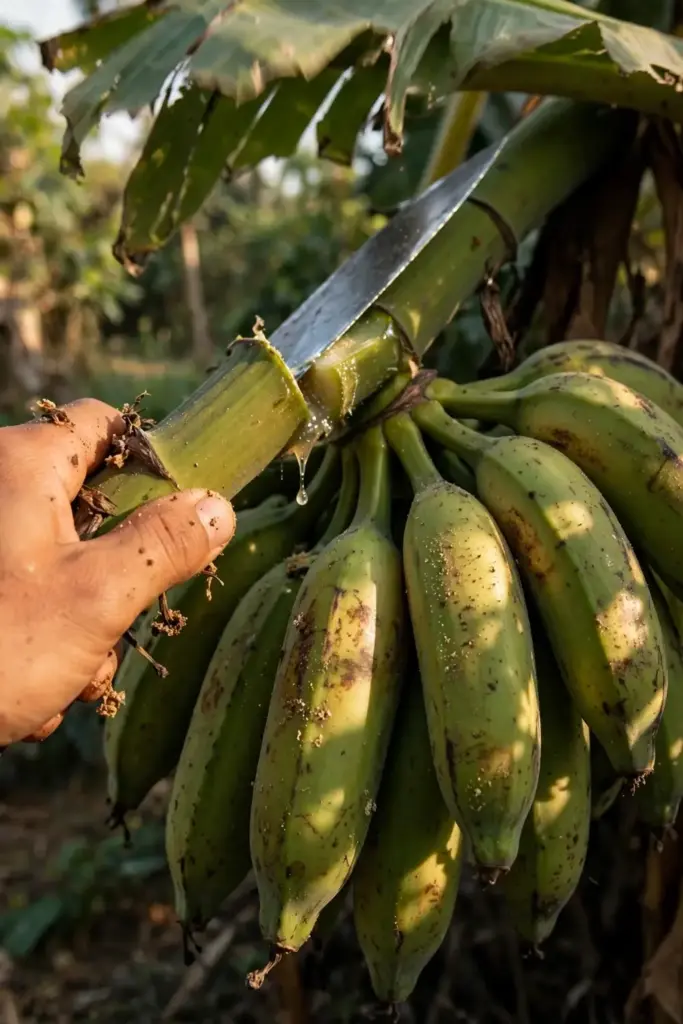
A bunch is ready when the individual fruits have filled out and rounded, the ridges along the fingers have smoothed, and one or two fingers on the first hand start to lighten or yellow. Growveg’s guide gives a practical field test: the bunch is ready to cut when the dried flower remnants at the ends of the fruits rub off easily with your fingers. African farming guides describe the same stage as a 3 to 4 month old bunch with the first hand beginning to turn.
Cut the whole bunch with a sharp knife or machete, supporting it so it does not drop and bruise. Leave a generous length of stalk on the bunch for carrying. Green plantains store for one to two weeks in a cool spot; they continue ripening slowly off the plant. For tostones and chips, use them green and firm. For sweet fried tajadas, wait until the peel turns mostly black.
From a spring-planted sucker in a warm climate, expect the flower to emerge 10 to 12 months after planting and the harvestable bunch 3 to 4 months after that, landing in the 10 to 18 month window. Cooler or container plants run longer.
18. After Harvest: Cut the Stalk and Start the Ratoon Cycle
The moment the bunch comes off, the mother stem’s job is done. It will never fruit again. Cut it down promptly to feed the next generation.
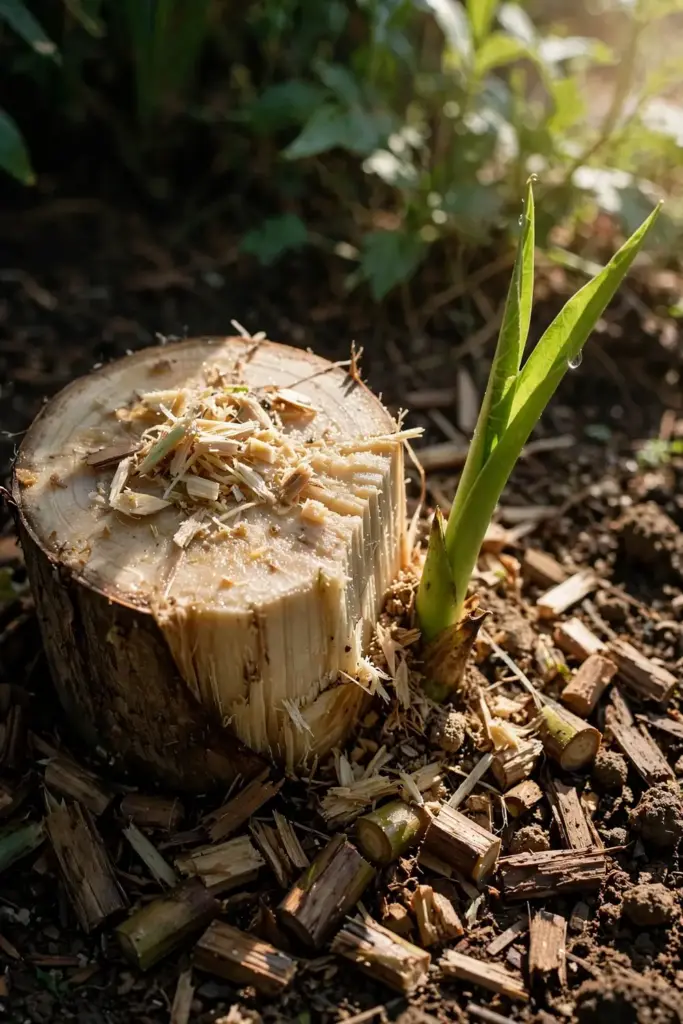
Saw the spent pseudostem at ground level. Chop the trunk, crown, and leaves into manageable pieces and spread them as mulch around the mat. This returns a large pulse of potassium and organic matter exactly where the daughter sucker needs it. The one caution from farming guides: chop the material rather than leaving the stump standing, because intact rotting pseudostems shelter weevils.
The daughter sucker you selected months ago now becomes the mother. Choose its own successor, one healthy sword sucker, and remove the rest. The mat continues without replanting, a ratoon cycle that productive plantings sustain for many years.
Replant the mat entirely only when it declines: bunches shrink over several cycles, stems thin, and feeding no longer restores vigor. Dig out the old corm, rest the spot or rotate it, and start fresh with certified clean stock in amended soil.
19. Troubleshooting
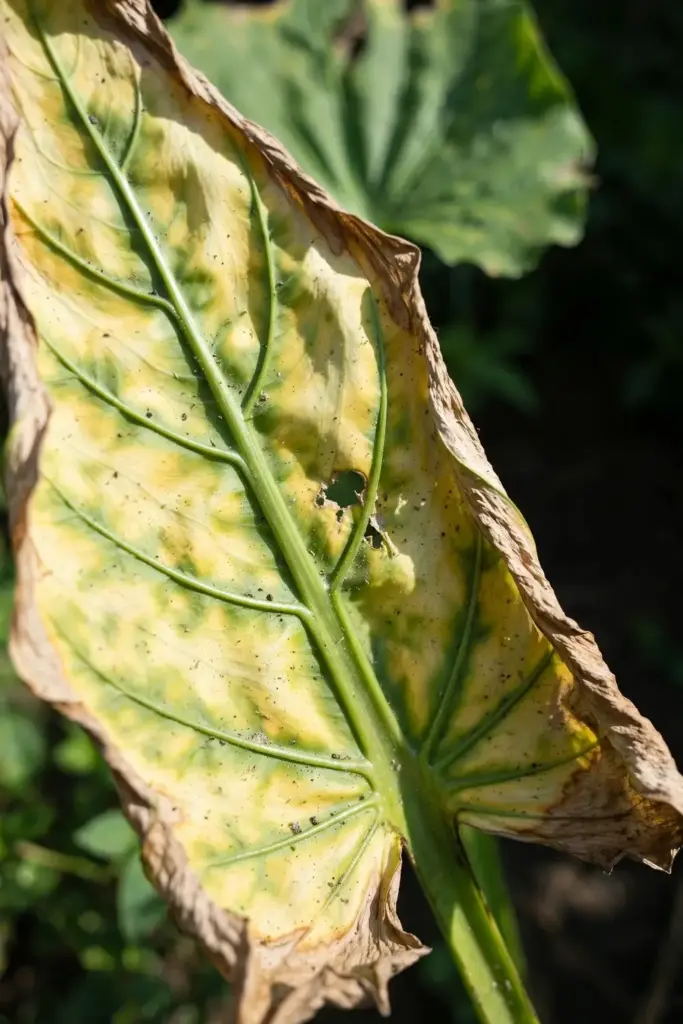
Yellow leaves with green veins usually mean the mat is hungry, not sick. Feed and mulch first, diagnose disease second. Plantains show nutrient hunger fast because they grow fast.
A sucker that sits for months without new growth was likely planted into cold soil or buried too deep. Wait for warmth, check that the corm is firm, and be patient. Soft, foul-smelling corm tissue means rot. Dig it out and start over with fresh stock.
Leaves shredding in wind is cosmetic. The plant keeps growing, and new leaves emerge intact. Only stake or relocate if the whole plant leans or the pseudostem creases.
No flower after 18 months usually means the plant is too young, too shaded, or too hungry. A sucker planted late in the season may need a second warm season before flowering. Check sun exposure first, then feeding, then patience.
Small bunches on an old mat mean the mat is crowded. Thin back to the three-stem system, remove all spent pseudostems, feed heavily, and mulch. The next cycle’s bunch will tell you whether the mat recovers or needs replanting.
Fruit splitting or poor fill points to uneven watering during bunch development. Keep the deep-soak schedule steady from flowering through harvest. When the fingers are swelling, never let the mat dry out.
20. Plantains and the USA: A Growing Map
The PAA question “Can plantains grow in the USA?” deserves a direct answer: yes, in the warm third of the country, and in containers everywhere else.
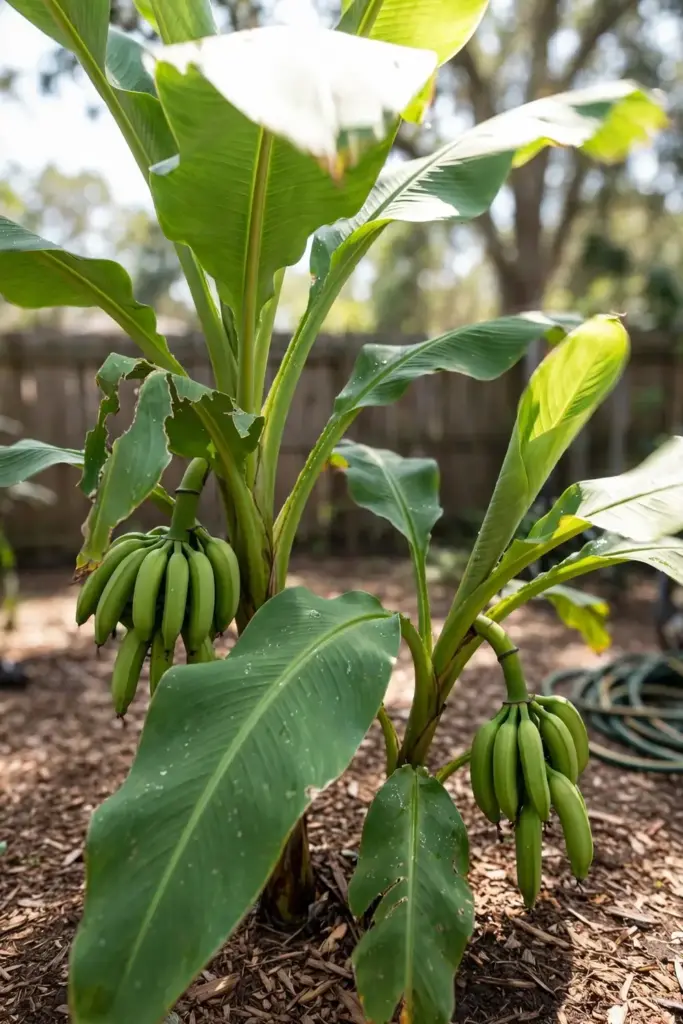
Southern Florida is the easiest mainland region. The climate mirrors the Caribbean, nurseries sell certified nematode-free plants, and in-ground mats fruit reliably. The same warm pockets suit other tropical fruit crops, so the guides on how to grow mango fruit and grow guava fruits make good companion reading for a tropical corner of the garden. The Gulf Coast from Texas to Florida works with winter protection in zone 8. Southern Texas and the Rio Grande Valley produce bunches in warm years. Southern California’s coastal strip grows plantains as annual ornamentals and, in the warmest pockets, fruits them. Hawaii and Puerto Rico are ideal.
In zone 8, plant after the last frost and protect before the first freeze. The growing season is just long enough for a vigorous sucker to flower and fill a bunch. In zone 7 and colder, commit to containers or treat the plantain as an annual ornamental, enjoying the tropical foliage for a season.
Greenhouses change the math everywhere. A heated greenhouse that holds above 60°F through winter lets a mat cycle continuously in any zone. Unheated high tunnels extend the season by weeks on each end, which is enough to tip a marginal zone 8 planting into reliable fruiting.
Frequently Asked Questions
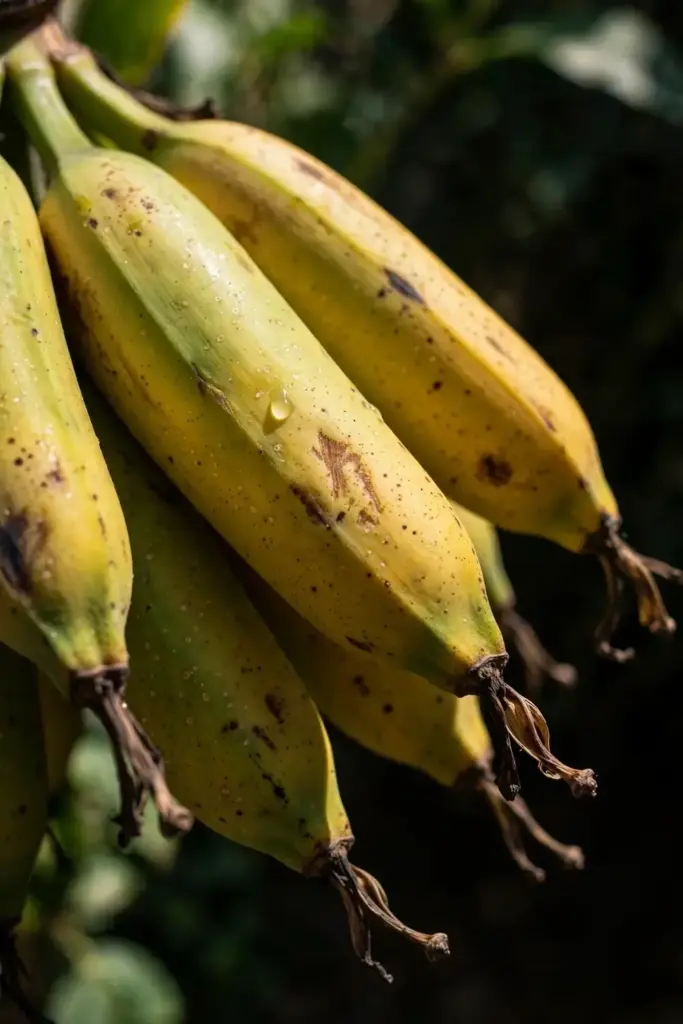
From a planted sucker, expect flowering in 10 to 15 months and a harvestable bunch 3 to 4 months later, for a total of 10 to 18 months. Warmth is the throttle. Plants in the deep tropics hit the short end of the range, while marginal climates and containers run longer.
No. They are different cultivar groups of the genus Musa, grown as separate plants. True plantains belong to the AAB group and are cooked before eating. Dessert bananas like Cavendish belong to the AAA group and are eaten raw. The plants look alike and grow the same way.
Not the fruit. Edible plantains are seedless, so there is no seed to plant. Every seed packet sold as plantain is Plantago, the lawn weed, which is a completely different plant. This trips up many first-time growers, since the packets look legitimate. If you want the starchy cooking fruit, buy a sucker or a certified nematode-free plant from a tropical nursery and ignore anything labeled plantain seed.
Plant when the soil is warm and stays warm, after the last frost in seasonal climates. In the tropics you can plant year-round. In the USA Gulf states, late spring planting gives the sucker the longest warm runway before winter.
Each pseudostem produces one bunch, typically 30 to 50 pounds with dozens of fingers, then dies back. The mat continues through its suckers, so a well-managed three-stem mat yields a bunch every year or so indefinitely. Container plants and marginal-climate mats produce smaller bunches, often 15 to 25 pounds. Thinning the mat back to a mother, daughter, and granddaughter stem is what keeps bunch size up year after year.
The most common cause is hunger, especially nitrogen or potassium deficiency in a fast-growing mat. Feed and mulch first. Persistent yellowing with stunted growth can signal nematodes in the roots. Yellowing after a cold snap is frost damage, and the plant usually recovers from the rhizome.








