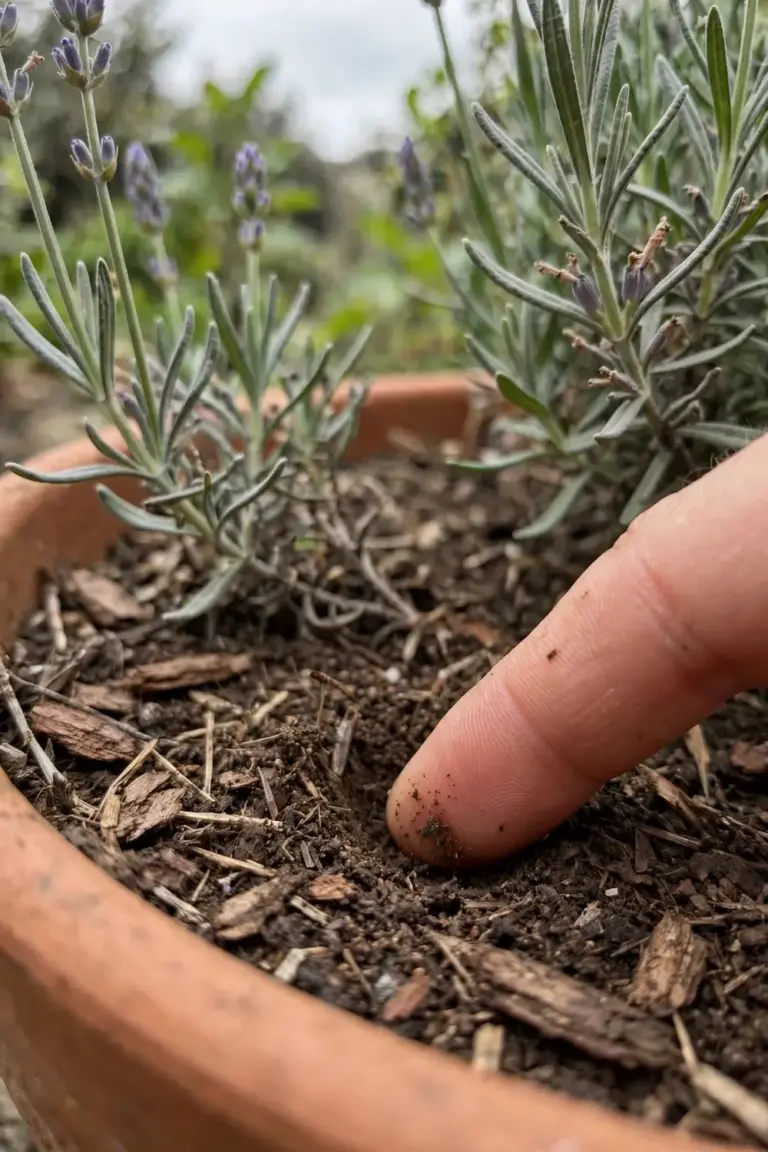

Why are my drought-tolerant plants struggling? 7 hidden conditions decide the answer, and drought is rarely the one that kills them. Your lavender, rosemary, grevillea, or banksia struggles because the label promised survival after establishment, and the plant has not reached establishment yet, or because winter wet feet, phosphorus feed, or a climate mismatch broke it first. Run the finger test before you buy a replacement: push one finger 5 cm into the soil beside the plant and check whether the soil is wet or dry.
I have learned that the lavender I watered least in winter outlived the one I watered on schedule. That is the drought-tolerant paradox in one bed. Plants sold as tough die from kindness, not neglect. The rest of this page runs the 7 causes in the order to check them, from the finger test to the feed bag.
Drought-tolerant means a plant survives dry periods once established. Established means its roots have spread into the surrounding soil and find water without help. A plant in its first summer is neither drought-tolerant nor established, and treating it as either kills it.
1. Accept the Paradox: Drought-Tolerant Does Not Mean Never Water
Drought-tolerant means the plant survives dry periods after establishment. It never meant the plant needs no water.
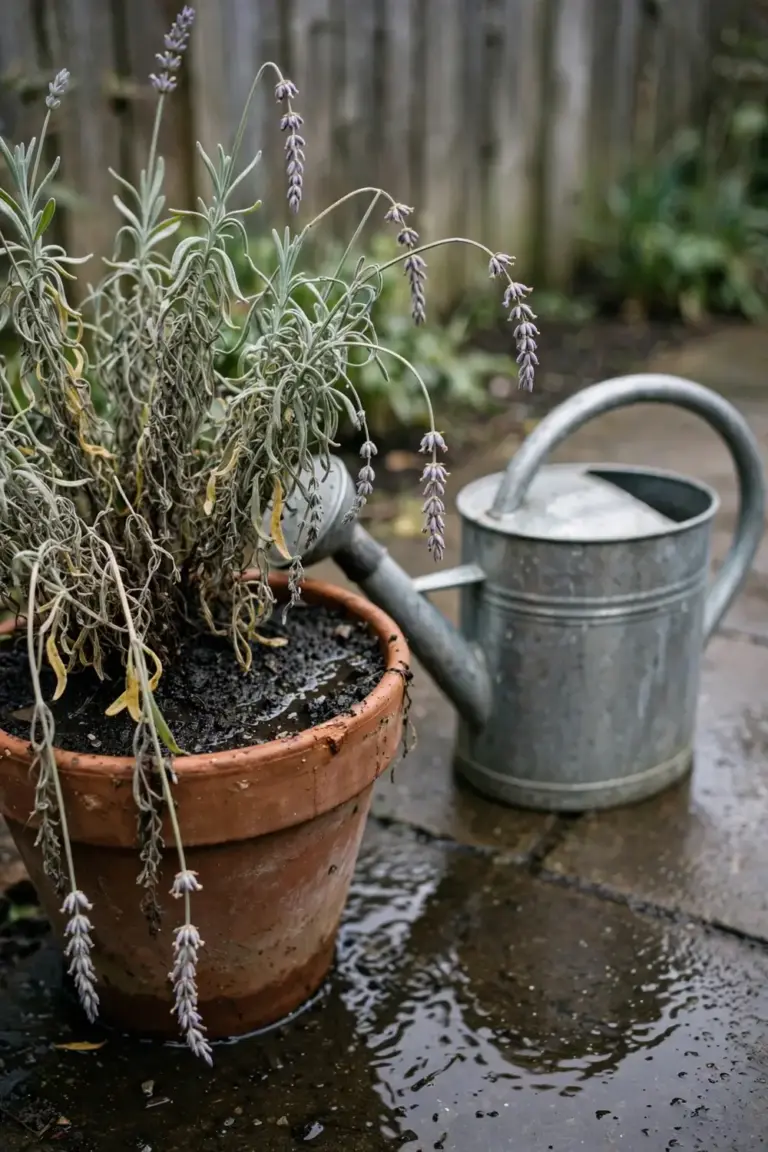
Oklahoma State University Extension states the point plainly. A plant labelled drought-tolerant still needs water, and trees, shrubs, and flowers need regular watering in their first year to build a healthy root system. The label describes a mature plant in its home climate. It does not describe a new plant in your soil. Read the full statement in the Oklahoma State University Extension drought-tolerant guide.
Drought-tolerant plants carry built-in features that cut water loss and lift water uptake. Some grow small leaves or needles that expose less surface to dry air, while others coat their leaves in wax that holds water inside the tissue. Some grow fine hairs that trap moisture at the leaf surface. Others grow deep roots that pull moisture from well below the surface. Those features work once the root system exists. A new plant has none of that depth yet.
The label carries three pieces of fine print that nobody reads at the nursery. First, the label describes a plant after establishment, not a plant fresh from a pot. Second, the label describes the plant’s home climate, not every climate. Third, the label describes survival, not beauty. A drought-tolerant plant that survives a dry summer can still drop leaves, stop flowering, and look half dead while it waits for rain. Survival and thriving are different promises, and the label only makes the first one.
The paradox bites hardest in Australian gardens because the label travels further than the climate. A lavender bred for dry Mediterranean hills lands in a humid Brisbane summer. A grevillea from sandy Western Australia lands in Sydney clay. The label stays the same. The soil, the rain, and the winter change completely. The plant fails, and the gardener blames drought, because drought is what the label warned about.
2. Read the 7 Hidden Conditions Behind the Label
Seven hidden conditions decide whether a drought-tolerant plant survives your garden. Check each one against your plant before you change anything.
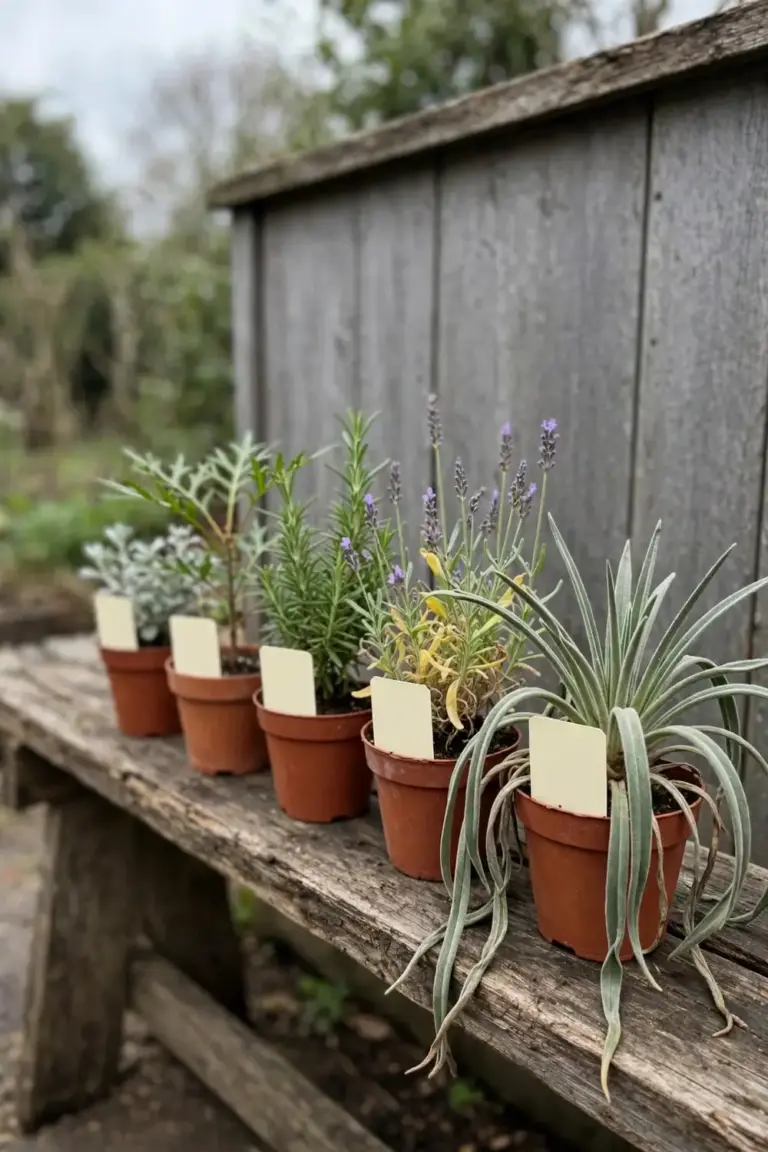
| Cause | What It Means | Test |
|---|---|---|
| Not yet established | Roots still sit in the original rootball | Tug test: the plant shifts under a gentle pull |
| Wet winter feet | Roots sit in water through cool months | Drainage test: a filled hole still holds water after an hour |
| Overwatering | Irrigation runs on a thirsty-plant rhythm | Finger test: soil 5 cm down feels wet |
| Climate mismatch | A Mediterranean plant drowns in a humid subtropical summer | Compare your summer humidity with the plant’s home climate |
| Phosphorus feed | Proteaceae roots take up phosphorus until it poisons them | Check the last fertilizer bag for its phosphorus number |
| Pot baking | A pot heats from all sides and mix shrinks from the wall | Lift the pot and check the gap between mix and wall |
| Rich feeding | Heavy feed pushes soft growth the plant cannot sustain | Check whether growth is soft, leggy, and pale |
Run the tests in table order. The first failed test names the cause. Fix that cause before you touch anything else.
Two tests can fail at once. A new plant on flat clay fails the drainage test and the establishment test together, and a fed grevillea fails the feed test while its leaves copy thirst. Fix the fastest killer first. Drainage kills in weeks, while a feed error kills in months, so mound the bed before you worry about the bag. Establishment watering comes next, because a new plant on a drained mound still needs its first summer of deep soaks.
Log each test result on paper before you act. A one-line note per test turns a guess into a record, and the record stops you from re-testing the same cause twice. Write the date, the test, and the result. A week later the log shows whether the fix worked or whether the plant slid further. Memory fades in a week. Paper does not.
3. Test Water First: Too Much Water or Too Little
Test the soil before you water. Wet soil plus soft leaves means too much water, and dry soil plus crisp leaves means too little. The pair of tests takes one minute and beats every guess.
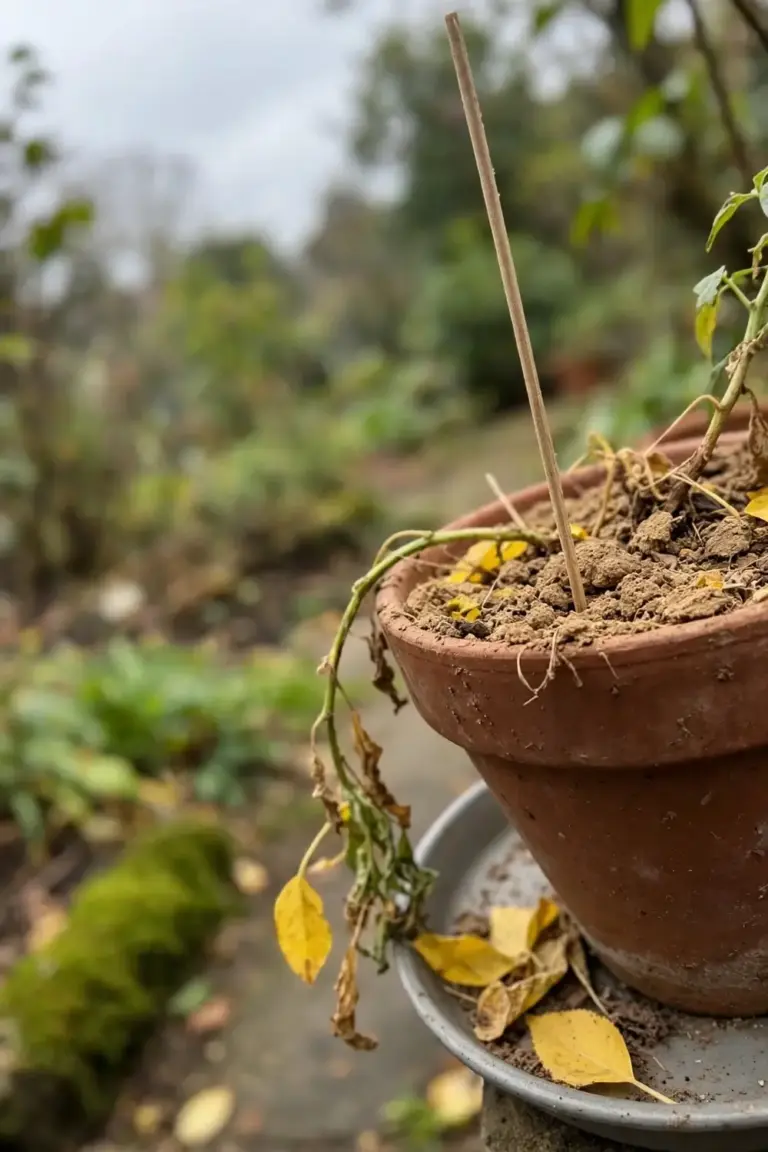
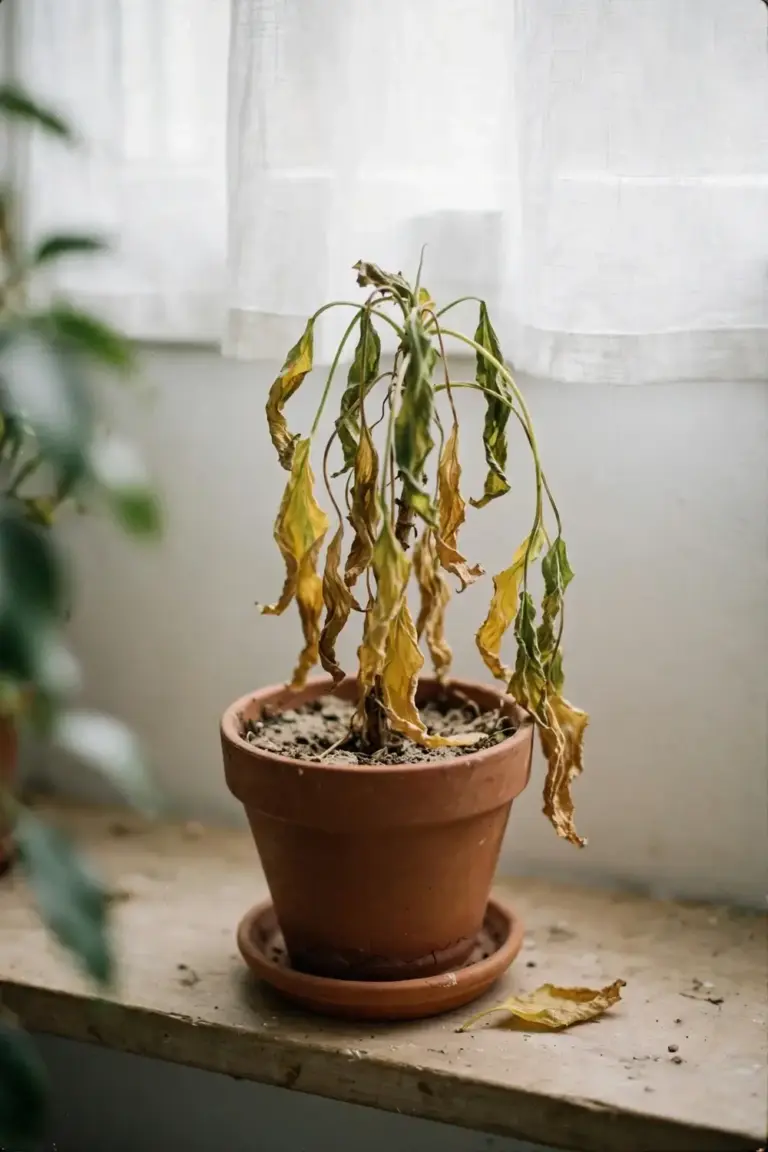
Wilting misleads every gardener. A plant wilts when roots cannot deliver water to leaves, and roots fail for two opposite reasons. Dry roots deliver nothing because no water exists, while drowned roots deliver nothing because rot has destroyed them. Watering a drowned plant drowns it further. BrightView’s diagnostic notes separate the two cases with a leaf test. Soft, limp, yellowing leaves on wet soil point to overwatering, and crisp, dry leaves on dry soil point to underwatering. The leaf texture names the cause faster than any photo of the whole plant.
The finger test settles it. Push one finger 5 cm into the soil beside the plant. Wet soil at that depth means the plant has water and cannot use it, while dry soil at that depth means the plant has no water to use. The lift test backs the finger test up. Lift the pot. A heavy pot holds water. A light pot holds air. Use both tests on pots, because a pot surface dries while the core stays wet.
Irrigation systems cause half the overwatering in this group. One drip line often serves a whole bed, and the line runs on the thirstiest plant’s schedule. Roses and hydrangeas set the rhythm, and the lavender beside them drowns on it. A daily sprinkle does the same damage in a quieter way. It wets the top 2 cm, teaches roots to stay shallow, and leaves the deep soil dry. The plant then wilts in the first hot week despite daily water, because its roots never grew past the wet crust.
Recovery tells you which cause you had. An underwatered plant perks up within hours of a deep soak, because its roots still work. An overwatered plant does not perk up, because rot has already damaged its roots. Watch the plant for one day after a deep soak. Fast recovery confirms underwatering. No recovery confirms a root problem, and the fix moves to drainage in the next section.
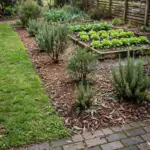
Grouping prevents the most common overwatering mistake. Drought-tolerant plants belong together in one bed, and thirsty plants belong in another. A shared bed forces one rhythm on two different needs. The thirsty plants set the rhythm, and the drought-tolerant plants drown on it. The same notes from Oklahoma State University Extension carry the rule. Group drought-tolerant plants together so they do not get overwatered, and water thirsty plants separately. A simple bed split works: lavender, rosemary, westringia, and kangaroo paw on the sunny dry side, and thirsty shrubs and leafy vegetables on the side that gets the daily soak.
Pots bake from all sides. A pot in full sun heats its whole rootball, and dry potting mix shrinks away from the pot wall, so water runs down the gap and out the base without wetting the roots. The plant looks watered. The roots stay dry. Check the gap before you water a struggling pot. Push the mix back against the wall, soak the pot in a bucket until bubbles stop, and move the pot into afternoon shade through the first summer.
4. Fix the Soil Before You Feed the Plant
Fix drainage and feed before you blame drought. Wet clay and phosphorus feed kill more Australian drought-tolerant plants than dry soil.
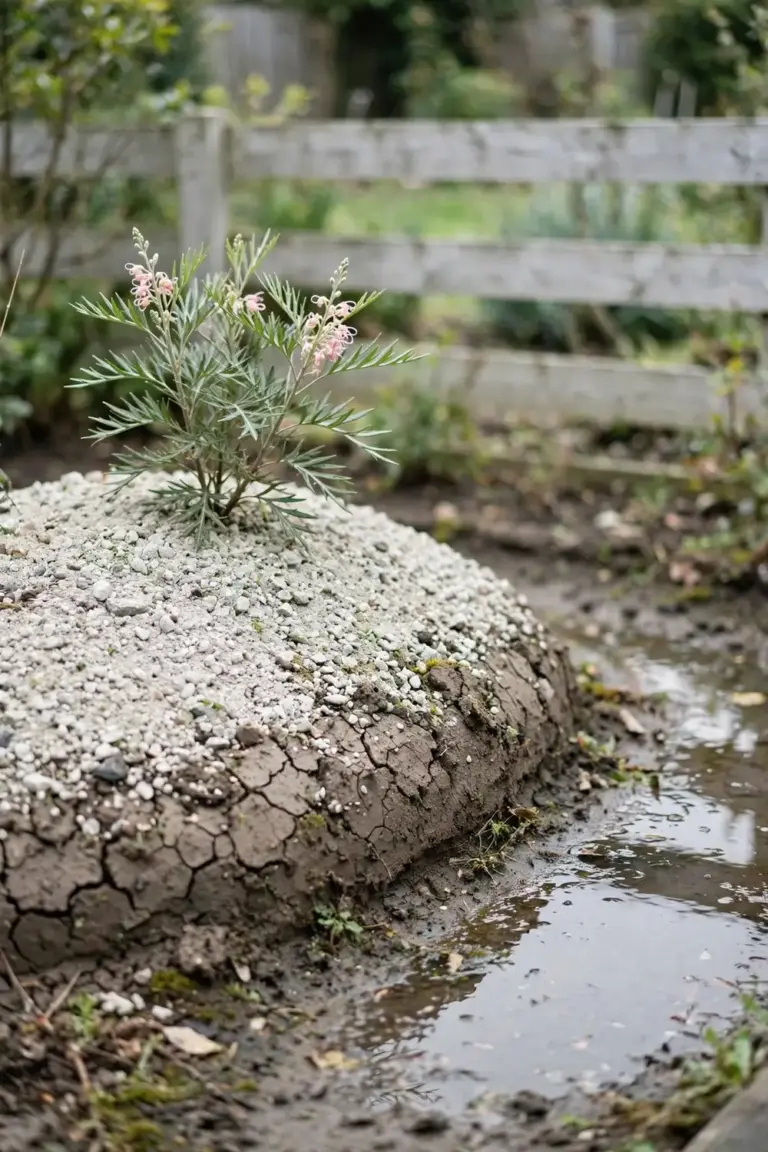
Wet winter feet kill more waterwise plants in Australia than drought does. Clay holds winter rain around the roots for weeks, and cool wet roots rot while the gardener waits for spring. Nursery Near Me’s succulent guide carries the fix in plain terms. Plant raised on clay, mix gravel through the soil, use gravel mulch rather than organic mulch, and never plant in a low point where water collects after rain. The same guide states the core truth for the whole group. Rot, not drought, is what kills them here. Read the full advice in the Nursery Near Me succulents guide.
Australian soils split into two opposite traps. Perth sand drains so fast that a new plant dries out between waterings, and the fix is more frequent deep soaks through the first summer. Sydney clay drains so slowly that a new plant sits in winter water, and the fix is a mound plus gravel. The same species needs opposite treatment in the two soils, which is why a single watering rule fails across the country. Test your own soil before you follow any schedule.
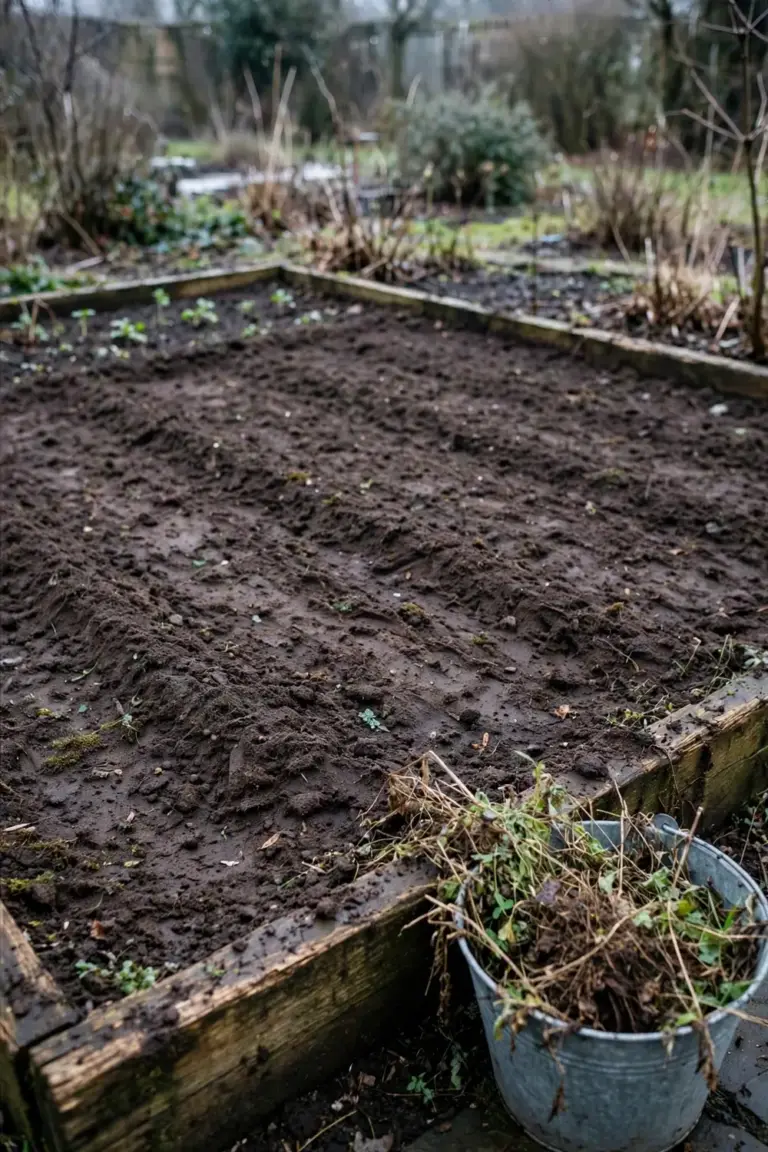
Mound clay beds before planting. Nursery Near Me’s drought-tolerant explainer puts the mound at 200 to 300 mm on heavy clay. A mound lifts the crown above winter water and lets the rootball drain. Dig the planting hole into the mound, not into the flat clay below it, because a hole dug into flat clay becomes a sump, and the sump fills first. Building soil health starts with drainage, and drainage starts with height.
Hydrophobic soil adds a second trap. Sandy soil that has dried out can repel water, so irrigation beads on the surface and runs off instead of soaking in. Scratch the surface with a finger. Water that sits in beads instead of sinking signals repellency. A wetting agent breaks the repellency, and a slow soak follows it. Water in short bursts, let each burst sink, then repeat. One heavy pour runs off. Three slow pours soak in. Skip the dish-soap shortcut. Dish soap is not a labelled wetting agent, and its salts and surfactants can burn leaves and soil life. Use a garden wetting agent and follow its label.
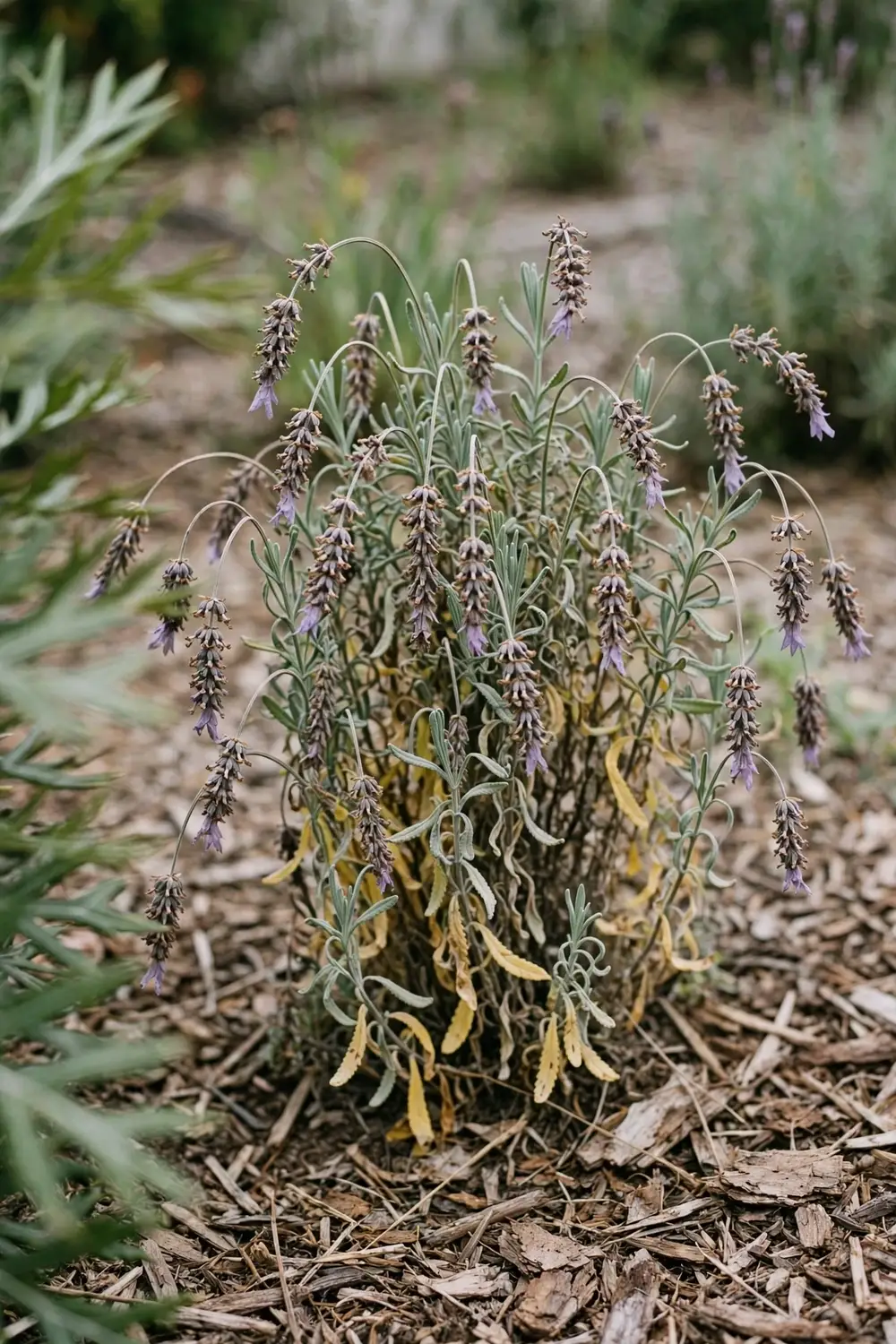
Phosphorus poisons the plants Australians love most. Grevilleas, banksias, hakeas, and waratahs belong to the Proteaceae family, and Proteaceae roots take up phosphorus far past the point other plants stop. The Australian Plants Society notes that it is safe to assume all Proteaceae genera are sensitive, and its list runs from grevillea and banksia through hakea, isopogon, and waratah. See the full sensitive-plant list in the Australian Plants Society native fertilizer guide. Phosphorus toxicity shows as leaf tip burn, yellowing between leaf veins, older leaf drop, and branch dieback. The gardener reads those signs as hunger and feeds again, which deepens the poisoning.
Read the fertilizer bag before you feed. The NPK numbers on the bag state nitrogen, phosphorus, and potassium in that order, so a bag marked 14-4-8 carries 14 parts nitrogen, 4 parts phosphorus, and 8 parts potassium. A high middle number near a grevillea or banksia is the warning sign. A native-specific low-phosphorus fertilizer suits sensitive plants, and no fertilizer at all suits most established natives better than the wrong fertilizer.
The feed rule for natives is restraint. The Australian Plants Society advises nitrogen-only or nitrogen-plus-potassium fertilizer at planting, and generally no fertilizer after establishment. A general-purpose fertilizer with a high phosphorus number has no place near a grevillea or banksia. Read the bag before you feed. A native-specific low-phosphorus fertilizer suits sensitive plants. No fertilizer at all suits most established natives better than the wrong fertilizer.
Rich feeding pushes soft growth the plant cannot sustain. Heavy nitrogen grows long soft stems with thin cuticles that lose water fast and burn in the first hot week. The plant looks vigorous for a month, then collapses in heat it should have survived. Feed lightly or not at all. A drought-tolerant plant fed for show grows the wrong tissue for its climate.
5. Water New Plants Like Thirsty Plants for One Summer
Water a new drought-tolerant plant like a thirsty plant for its first summer. The drought-tolerant label starts after establishment, not at planting.
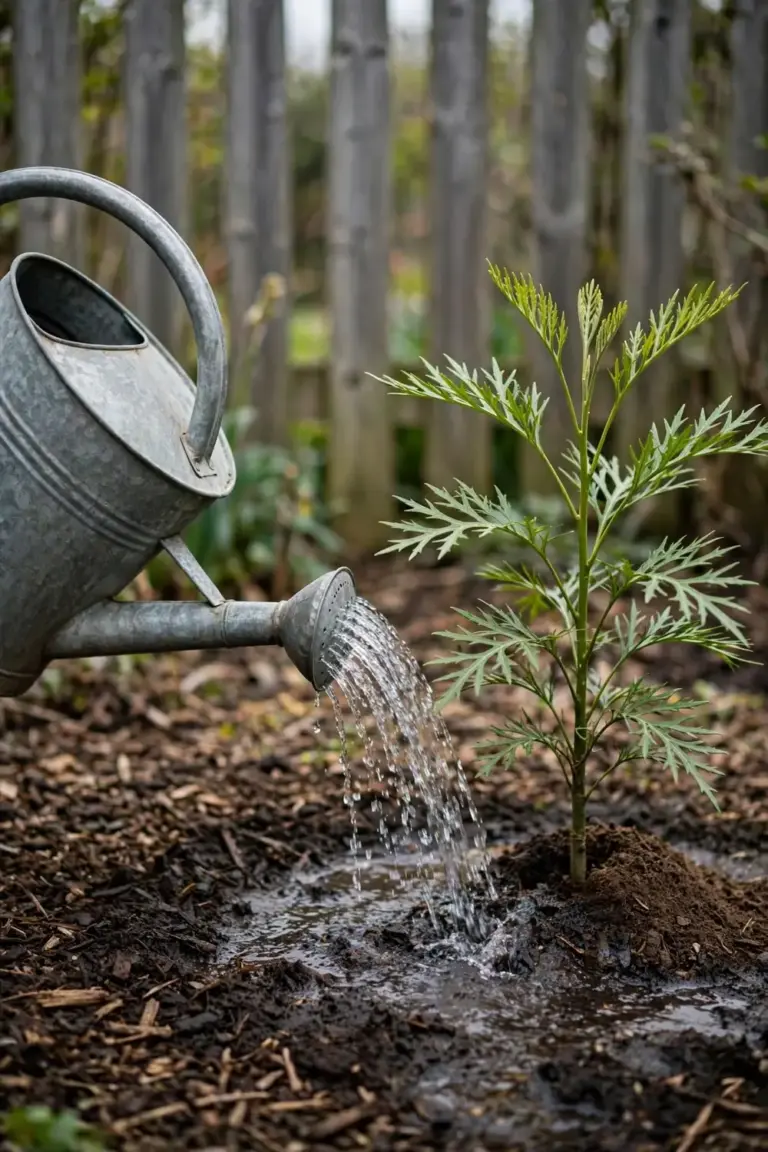
University of Illinois Extension states the establishment rule directly. Water a new plant well in its first year. Water deeply but less frequently, because deep watering pulls roots deeper, and most plants grow best with at least 2.5 cm of water per week. After drought-tolerant plants are established, watering is only needed to keep them healthy through a prolonged dry period. The same notes add the planting window. Plant perennials in autumn at least six weeks before the first frost, so roots have time to develop before cold weather. Read the full guidance in the University of Illinois Extension drought-tolerant gardens guide.
Nursery Near Me’s drought-tolerant explainer puts an Australian rhythm on the same rule. Water deeply twice a week through the first summer, then taper off as roots move out. Deep watering twice a week beats a daily sprinkle. A sprinkle wets the top 2 cm and teaches roots to stay shallow. A deep soak pulls roots down into cooler soil where summer moisture lasts.
Taper by watching the plant, not the calendar. Cut to once a week when the plant holds its leaves through a hot week without wilting, and cut to fortnightly when the tug test shows roots in the surrounding soil. A plant that wilts on the new rhythm is not ready, so return to the old rhythm for another fortnight. Autumn planting helps the taper, because winter rain takes over as you cut back, and the plant meets its first summer with roots already spread.
Mulch holds the moisture a deep soak delivers. Mulching cools the soil, slows evaporation, and keeps the root zone even through hot weeks. Keep mulch clear of the stem. Mulch piled against the stem holds moisture where rot starts. A clear gap around the stem keeps the crown dry while the root zone stays cool.
The establishment test is the tug test. Grip the stem low and pull gently. A plant that resists has roots in the surrounding soil. A plant that shifts still lives in its original rootball. Keep watering the plant that shifts. Taper watering only after the plant resists.
6. Check Pests and Disease Before You Blame Drought
Check pests and disease before you blame drought. Root rot, crown rot, and sap-sucking insects copy drought symptoms.
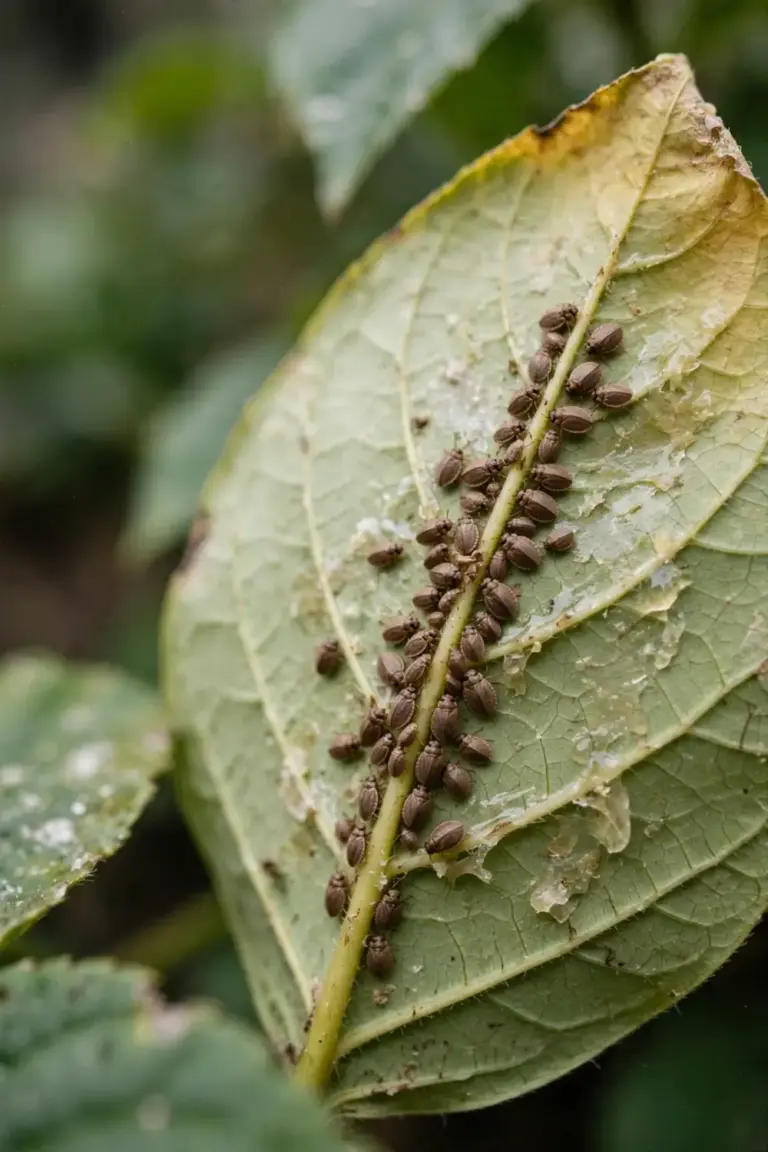
Smell the soil first. A sour or rotten smell at the base points to root rot, and root rot follows the wet-feet causes in the earlier sections. Check the crown where stem meets soil. A soft, dark, or sunken crown means rot has reached the stem, and that plant needs the drainage fix, not more water. Check leaf undersides for scale and mealybug. Sap-sucking insects drain leaves and cause yellowing that looks like hunger or thirst. Treat the insects, not the watering.
Decide whether the plant is worth saving before you treat it. A plant with firm roots and green tissue below the damage recovers. A plant with a fully soft crown and black roots through the rootball does not recover, and replacing it costs less than weeks of rescue watering. The honest call saves more plants than the rescue attempt, because it frees the bed for a plant matched to the site.
Isolate a potted plant that shows insects. Move the pot away from healthy plants before you treat it, because scale and mealybug crawl to the next pot. A fortnight of separation plus a weekly leaf-underside check stops one sick plant from becoming a shelf of sick plants.
This section stays a pointer. Pests and diseases get identification and treatment in their own guides. The job here is to stop you from watering a pest problem or feeding a rot problem.
7. Run the Fix Order: Diagnose, Then Act
Run the fix order before you act. Diagnose first, then change one thing at a time.
This fix order is the article’s own decision rule. It puts the cheapest tests first and the most expensive changes last.
Step 1: run the finger test. Push one finger 5 cm into the soil beside the plant. Wet soil means stop watering. Dry soil means water deeply now.
Step 2: run the leaf test. Soft, limp leaves on wet soil mean overwatering. Crisp, dry leaves on dry soil mean underwatering. Match the leaf to the finger test before you act.
Step 3: run the drainage test. Dig a hole 30 cm deep beside the plant, fill it with water, and watch. Water that still stands after an hour means the roots sit in a sump. Mound the bed or move the plant.
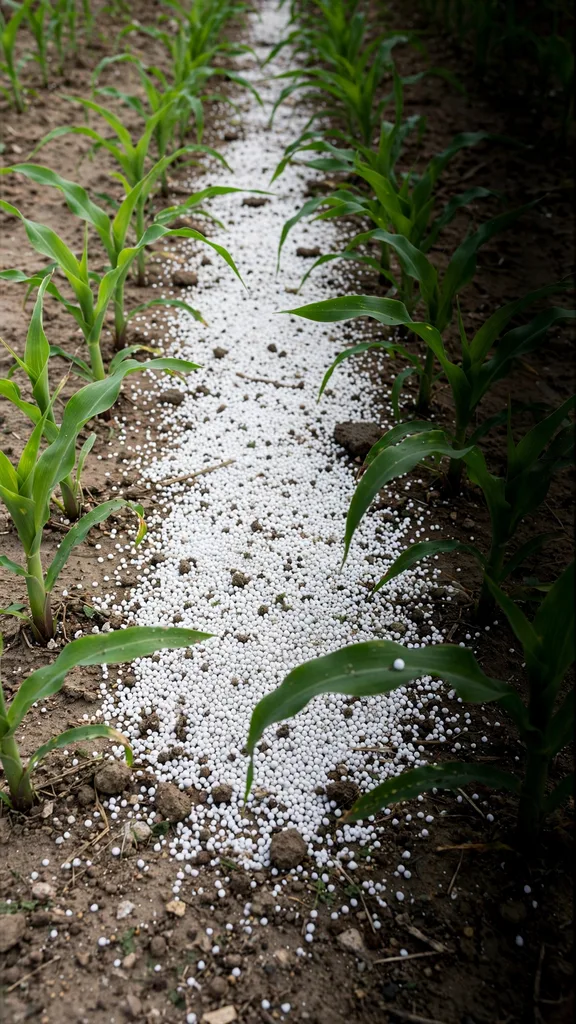
Step 4: check the feed bag. Read the phosphorus number on the last fertilizer you used. A high number near a grevillea, banksia, or hakea names the cause. Stop feeding and flush with plain water.
Step 5: check the climate match. Compare your summer humidity with the plant’s home climate. A Mediterranean lavender in humid Brisbane needs sharp drainage and air movement to survive the wet season. A grevillea from sandy Western Australia needs free-draining soil, not the heavy clay of a Sydney backyard. Fall garden bed prep covers the mounding and drainage work that fixes a mismatch before planting.
Change one thing, then wait. A plant that gets a new bed, a new feed, and a new watering rhythm on the same day tells you nothing about which change worked. One fix per fortnight keeps the diagnosis honest.
Success looks quiet. New growth appears at the tips, leaves firm up, and the plant holds its color through a hot week without wilting. Those signs arrive weeks after the fix, not days. Roots rebuild before leaves show it. Give the plant a full fortnight on each fix before you judge it, and log the date of each change so the next check compares against a known starting point.
Replace the plant when the fix order runs out. A plant with a fully soft crown, black roots through the rootball, and no green tissue left has no recovery path. Replant on a mound, in free-draining soil, with the right climate match, and the replacement inherits a bed that no longer kills it.
Frequently Asked Questions
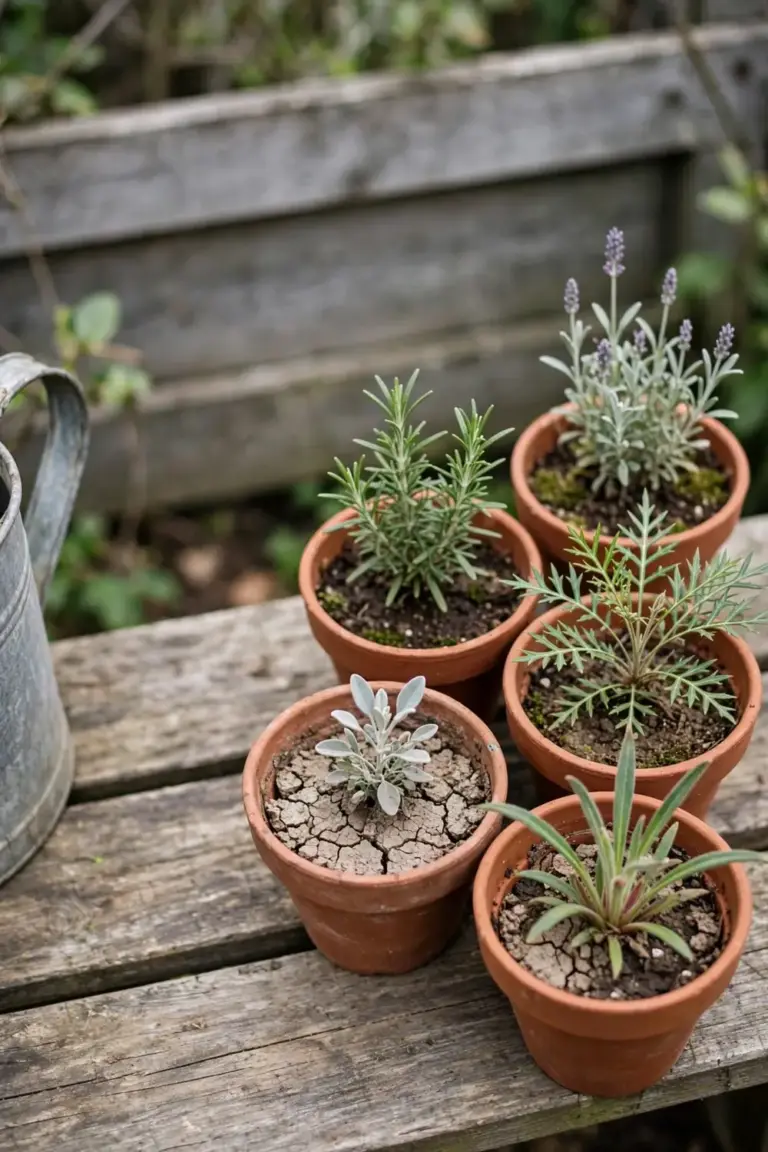
Yes. Too much water kills more drought-tolerant plants in Australian gardens than drought does. Wet soil starves roots of air, and airless roots rot. Rot stops water uptake, so the leaves wilt on wet soil. The gardener reads wilt as thirst and waters again. Stop watering, check drainage, and let the soil dry to 5 cm down before the next soak.
One full growing season is the working rule. University of Illinois Extension advises watering well through the first year, and Nursery Near Me’s explainer describes deep watering through the first summer before tapering. A plant that resists a gentle tug has roots in the surrounding soil. A plant that shifts still lives in its original rootball and still needs establishment watering.
No, not until you know the cause. Feeding a plant that suffers from wet feet, rot, or phosphorus toxicity makes every one of those causes worse. The Australian Plants Society advises nitrogen-only or nitrogen-plus-potassium fertilizer at planting, and generally no fertilizer after establishment. Diagnose first. Feed only when the finger test, the leaf test, and the drainage test all clear water and soil.
Climate mismatch explains it. Lavender comes from dry Mediterranean hills with hot dry summers and sharp drainage. Perth offers dry summers and sandy soil that match that home climate, while Brisbane offers humid subtropical summers where warm wet air and wet soil rot the crown. The same plant thrives where the climate matches and fails where it does not. Sharp drainage and air movement narrow the gap but never close it fully.
Yes. A pot heats from all sides, dries faster than a bed, and lets dry mix shrink away from the wall so water bypasses the roots. Soak a struggling pot in a bucket until bubbles stop, push the mix back against the wall, and move the pot into afternoon shade through the first summer. Check potted plants with the finger test twice as often as bed plants, because pots swing between wet and dry in a single hot day.
Start With the Finger Test, Not a New Plant
Start with the finger test, not a new plant. Push one finger 5 cm into the soil beside the struggling plant today. Wet soil means stop watering and check drainage. Dry soil means water deeply now. Then run the fix order, one step at a time. The label did not lie. It described a plant that survives dry periods once established, and your job is to get it to establishment alive.