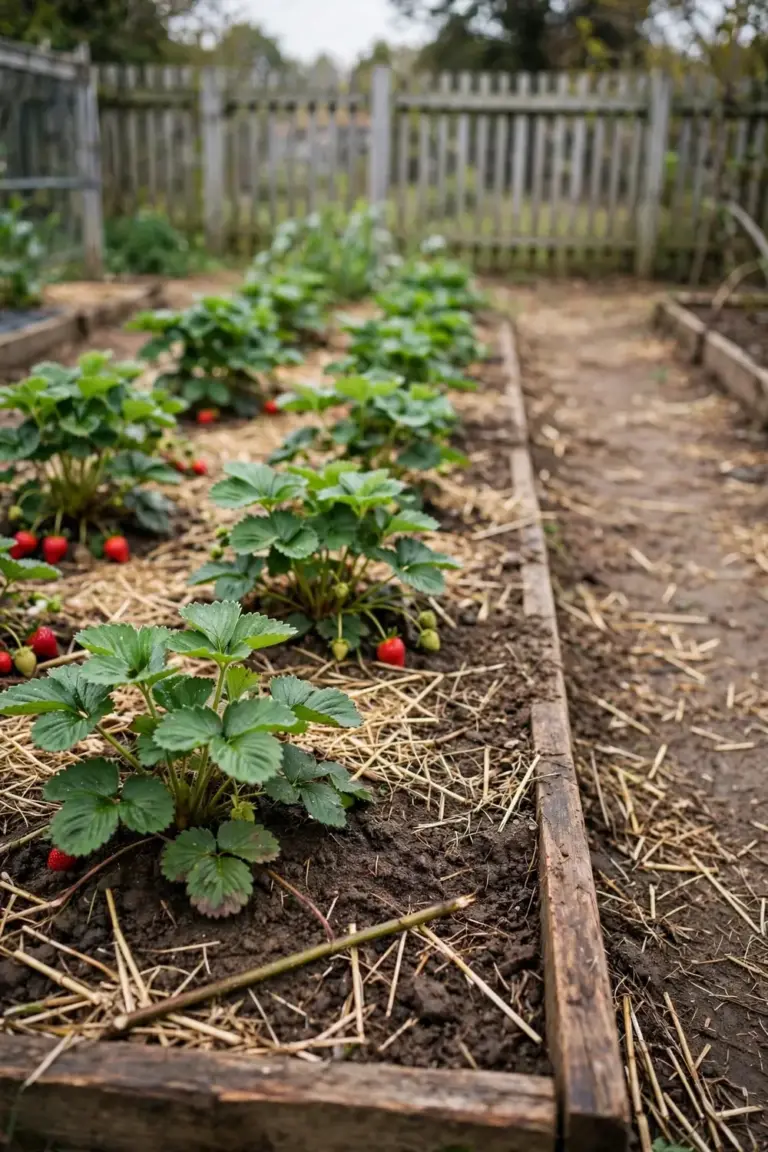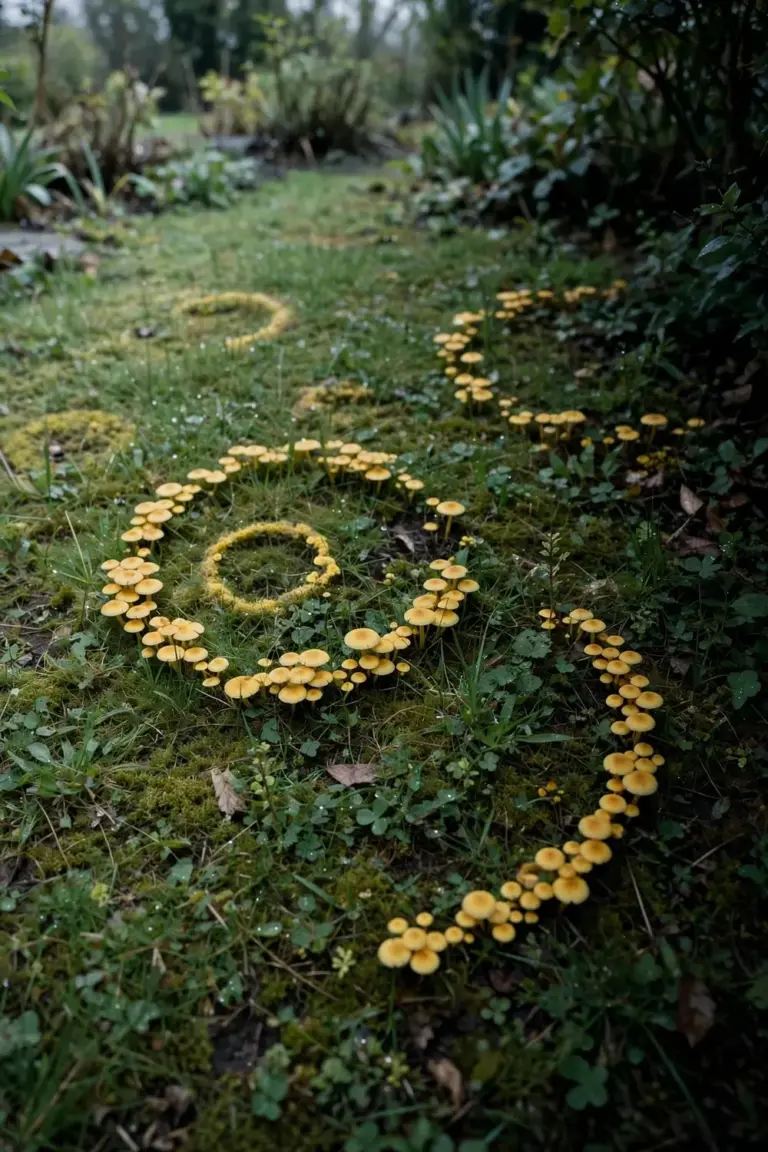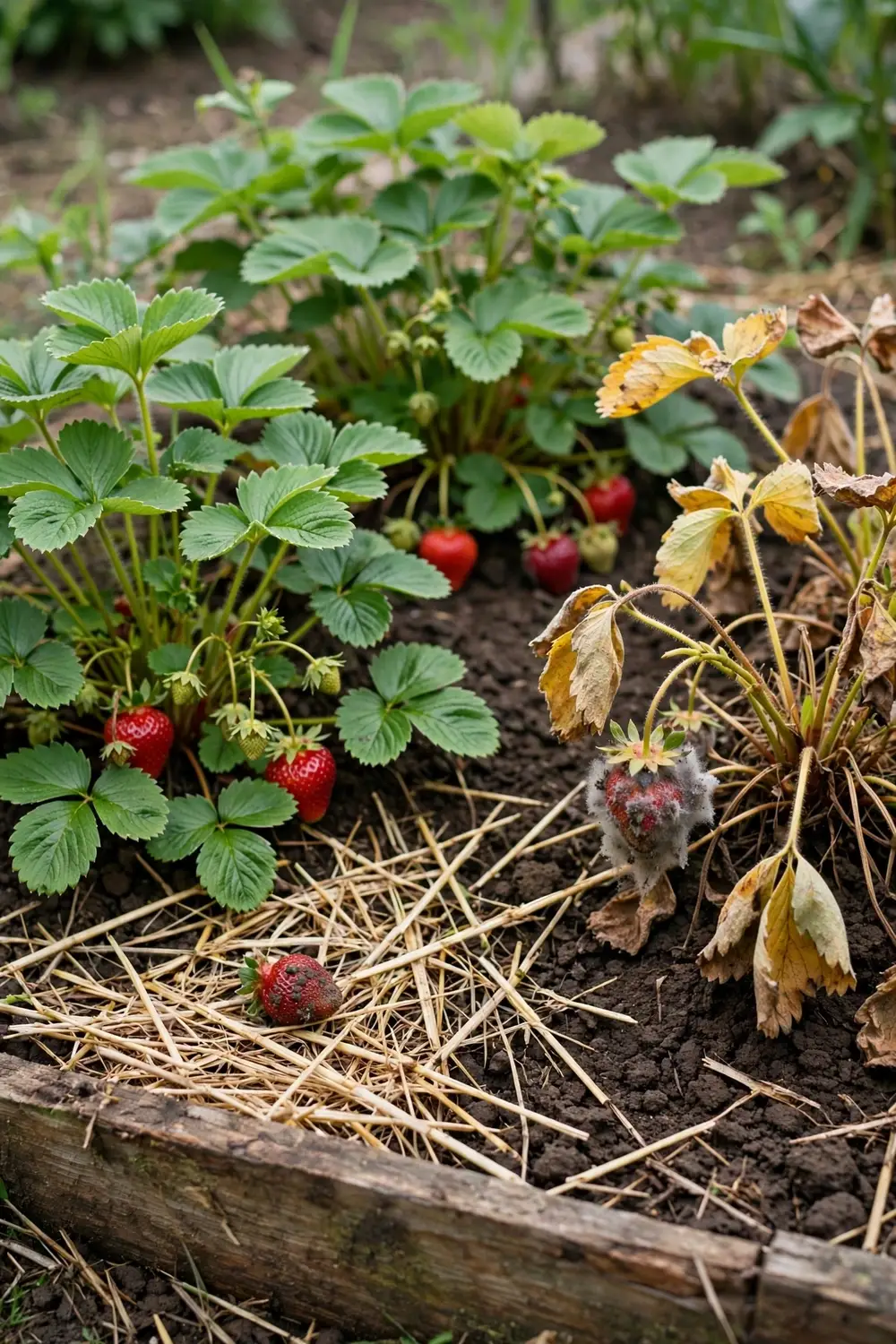

When you ask what’s wrong with my strawberry plant, start with where the damage sits. 11 common problems cover almost every sick strawberry plant in Australia. Fruit damage points to gray mold, birds, or slugs. Leaf damage points to mildew, leaf spot, or a nutrient gap. A whole plant that wilts points to crown or root rot.
I have learned that the strawberry plant I lift the mulch on at dusk tells me more than any photo of a spotted leaf does.
The rest of this page runs 14 numbered moves, from the location check to the fix order, then questions and the next step.
A strawberry is Fragaria × ananassa. A wild strawberry is a different species, and it answers to different problems, so this page stays with the garden strawberry. Work from the top when the plant looks sick. Check the symptom, match it in the table, then run the fix order. Australian beds run the same problems on a southern calendar. Check after rain and after hot spells, when most problems show first.
1. Start With Where the Symptom Sits on Your Strawberry Plant
Where the symptom sits narrows the problem before anything else, so read the location first and name the cause after it.
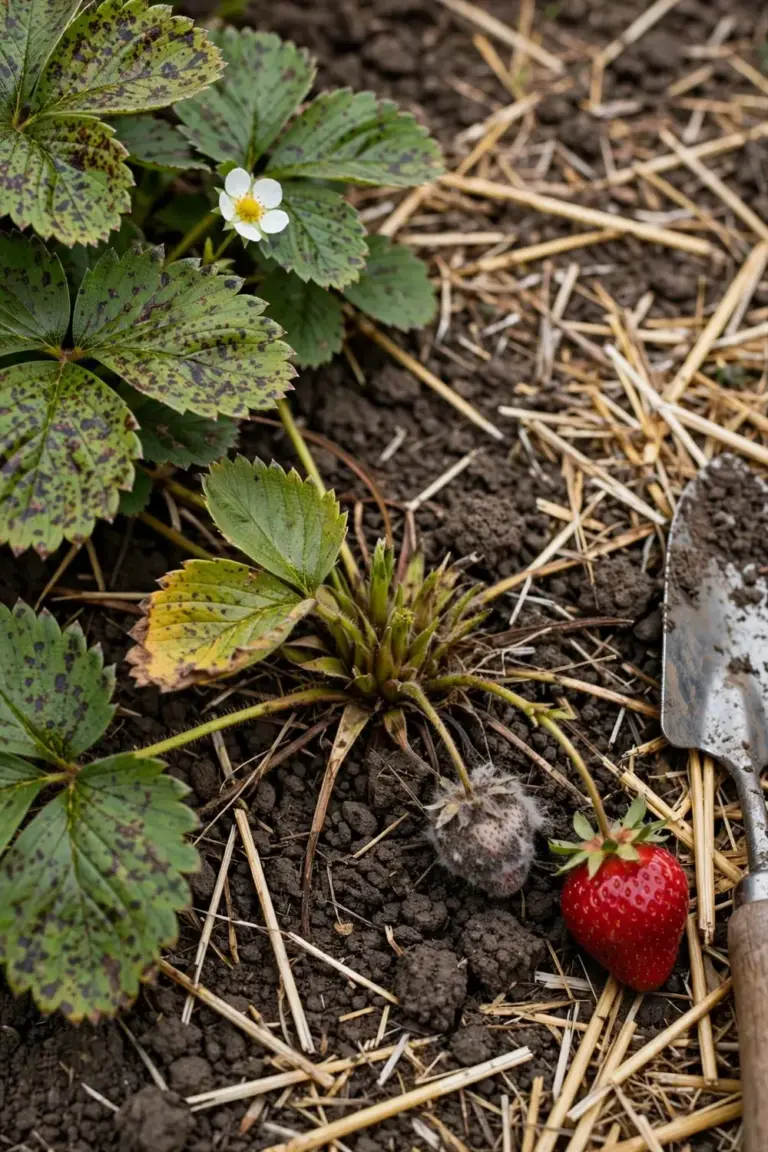
Four zones carry the whole diagnosis. Leaves carry mildew, leaf spot, scorch, blight, and nutrient gaps. Fruit carries gray mold, black spot, slugs, and birds, while the crown and roots carry crown rot, root rot, a buried crown, and watering trouble. The whole plant carries crown and root rot, old plants, and severe nutrient trouble.
Check the zones in order. Look at the leaf undersides first, because mildew and mites hide there. Lift the mulch next, because slugs and crown rot hide under it. Feel the crown last, because a soft crown settles the worst question fast.
Two zones can show damage at once. A plant with spotted leaves and moldy fruit still has one first problem. Name the zone that changed first, and start there.
Carry three things on the check: a torch for the dusk slug check, a finger for the soil test, and secateurs for the worst leaves. The check takes minutes, and it beats guessing from a photo.
2. Match the Symptom to 1 of 11 Problems
The table below turns the symptom into a first check. Find your row, run its check, then read that problem’s section.
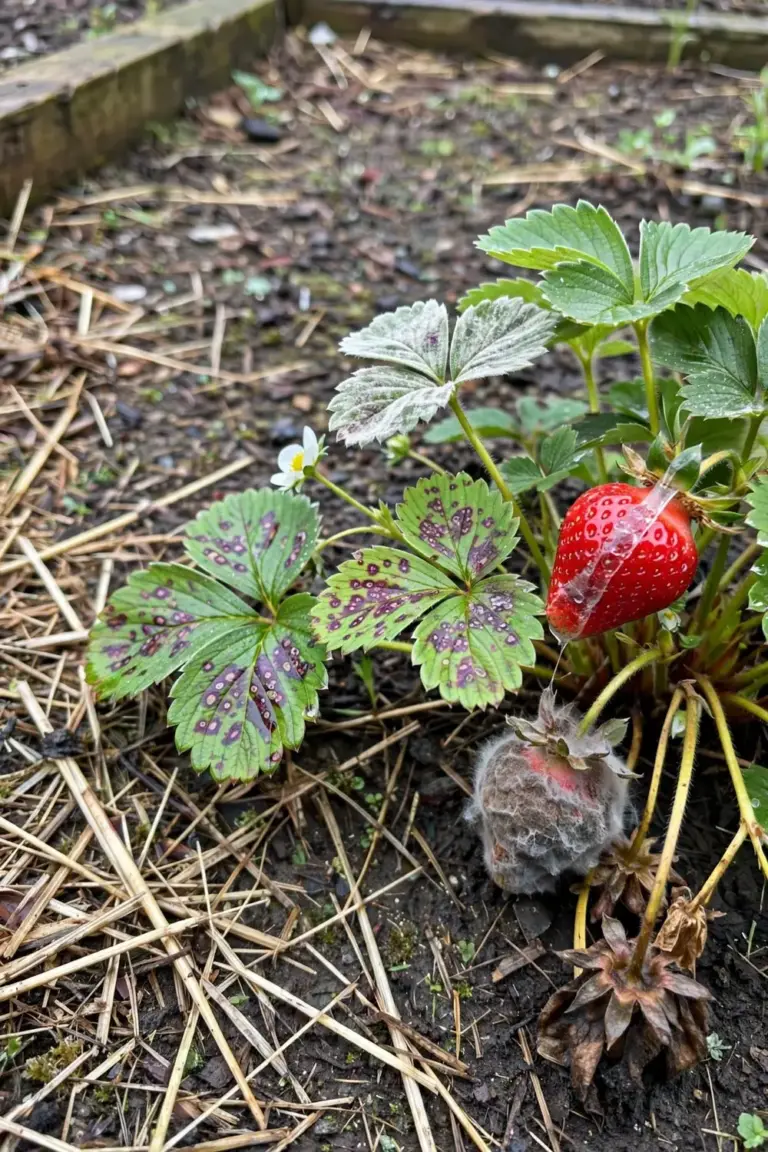
The table covers the 11 problems this page treats. Each row names the symptom, the zone, the most likely problem, and the first check. Run the check before you treat, because two problems share most symptoms.
| Symptom | Where | Most Likely Problem | First Check |
|---|---|---|---|
| Fuzzy gray growth on soft fruit | Fruit | Gray mold | Remove moldy fruit, keep fruit off soil |
| White powdery dust on leaves | Leaves | Powdery mildew | Check leaf undersides, improve air |
| Sunken black spots on fruit | Fruit | Black spot (anthracnose) | Remove spotted fruit, keep fruit dry |
| Spots, brown edges, dead patches on leaves | Leaves | Leaf spot, scorch, and blight | Water at base, remove worst leaves |
| Whole plant wilts, crown soft and brown | Crown and roots | Crown and root rot | Lift crown, check drainage |
| Deep holes in ripe fruit, slime trails | Fruit | Slugs and snails | Check at dusk, look for slime |
| Clean pecks, berries gone | Fruit | Birds | Net before fruit colors |
| Yellow older leaves, small fruit | Leaves and fruit | Nutrient deficiency | Soil test, feed after harvest |
| Wilt in wet soil, crown buried | Crown | Watering and buried crown | Finger test, set crown at soil level |
| Dense mat, tiny fruit, damp center | Whole plant | Runner crowding | Thin runners, restore spacing |
| Few small fruit on old plants | Whole plant | Old plants past year 3 | Check plant age, renew the bed |
One row can share symptoms with another. Gray mold and slugs both ruin fruit. The first check separates them. Slime means slugs. Fuzz means mold.
When two rows fit your plant, run both first checks. A plant with yellow leaves and a soft crown has two problems at once, and the crown check comes first. Fix the crown, then feed the leaves.
3. Gray Mold Turns Ripe Fruit Fuzzy
Gray mold turns ripe fruit soft, brown, and fuzzy. The fungus Botrytis cinerea causes it, and wet fruit invites it.
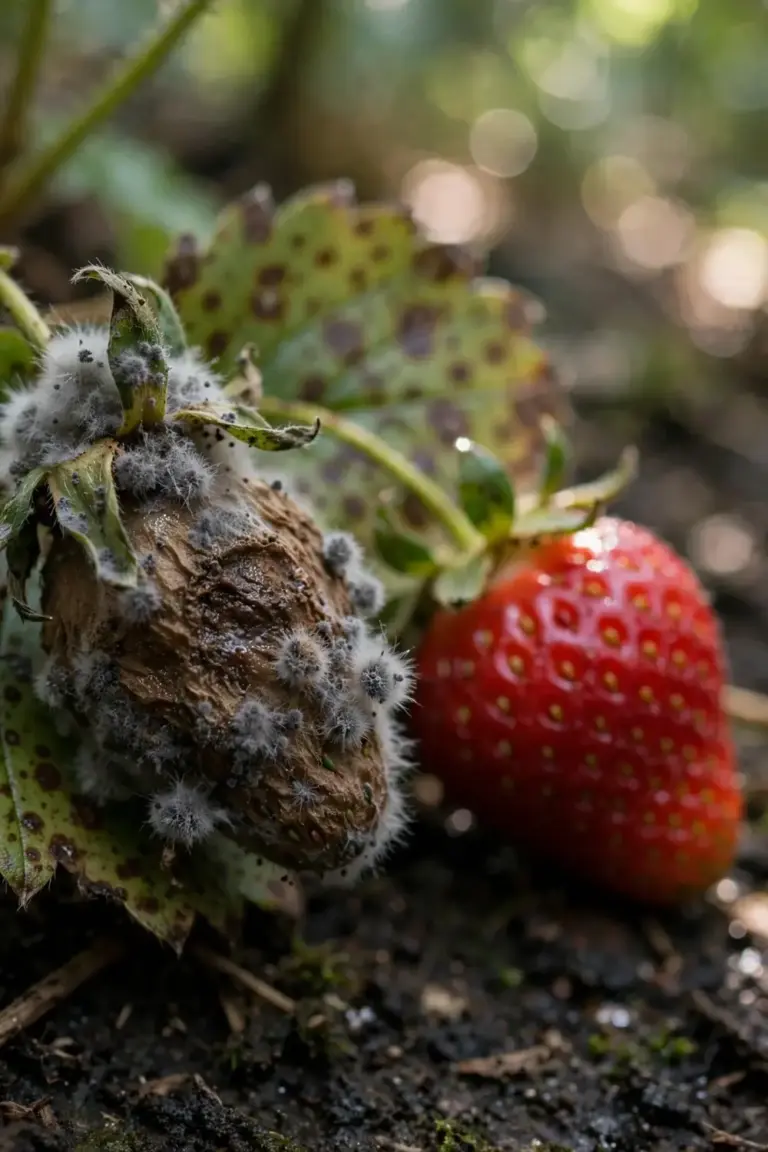
Spores infect open flowers and stay quiet. The rot shows when the fruit ripens. Wind and splashing water carry spores to the next flower. Rotted berries dry into mummies that hold spores into the next season. Botrytis is most active at about 18 to 24 degrees Celsius, according to UC IPM’s gray mold notes on strawberries. Cornell Extension’s gray mold notes add that infection can start with as little as 6 hours of leaf wetness.
Remove moldy fruit the day you see it, bin it, and do not compost it. Mulch under the fruit so berries sit off wet soil, and space plants for air. Water at the base in the morning so leaves dry by night, and pick ripe fruit often, because overripe fruit molds first. Drip irrigation keeps water off fruit and flowers.
Confirm gray mold before you treat. The fuzz looks gray in daylight and sits on soft fruit. Pick one berry and look at the cap end, where rot starts most often. A berry that smells fermented and collapses under a light squeeze is mold, not bruising. Bruised fruit stays firm under the mark.
Prevention beats cure with gray mold. Space plants for air at planting time, and mulch under fruit before the first berries ripen. Water at the base through the season. Each step keeps fruit dry, and dry fruit molds last.
Left alone, one moldy berry seeds the whole row. The fuzz you see is spores, and each one can start a new rot.
4. Powdery Mildew Dusts Leaves White
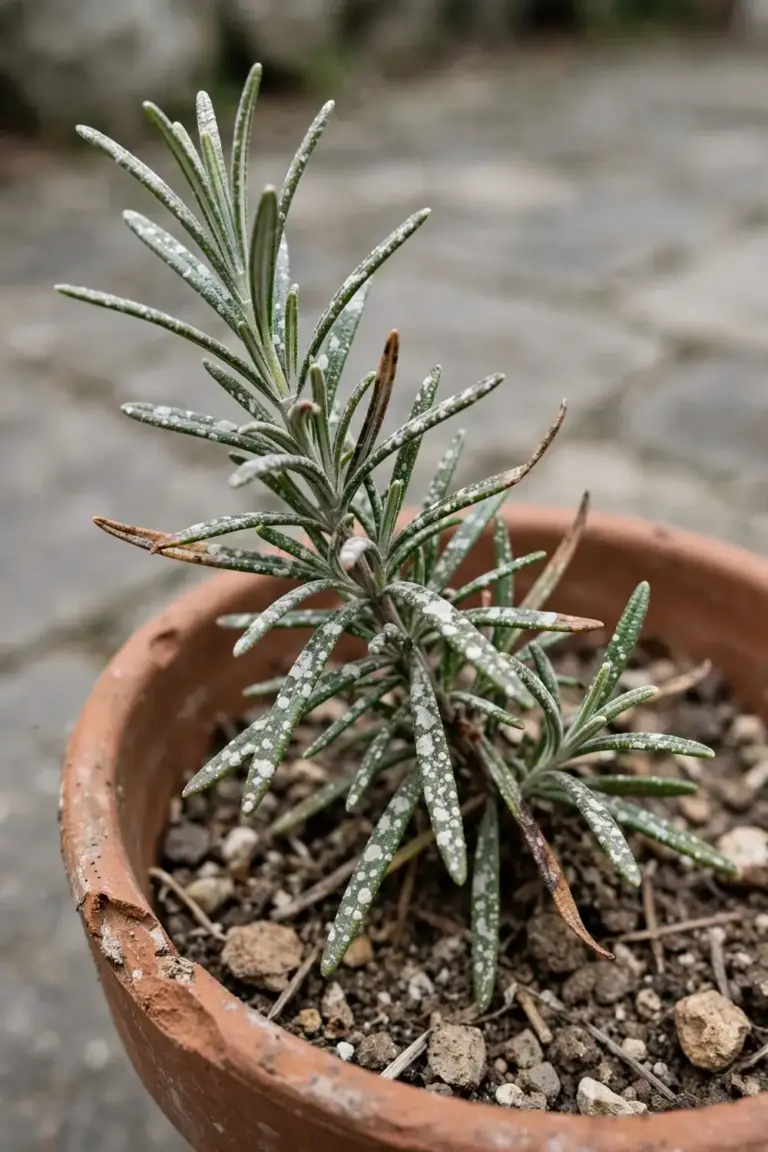
Powdery mildew dusts leaves with white powder. The coating sits on the leaf surface and spreads when air stands still.
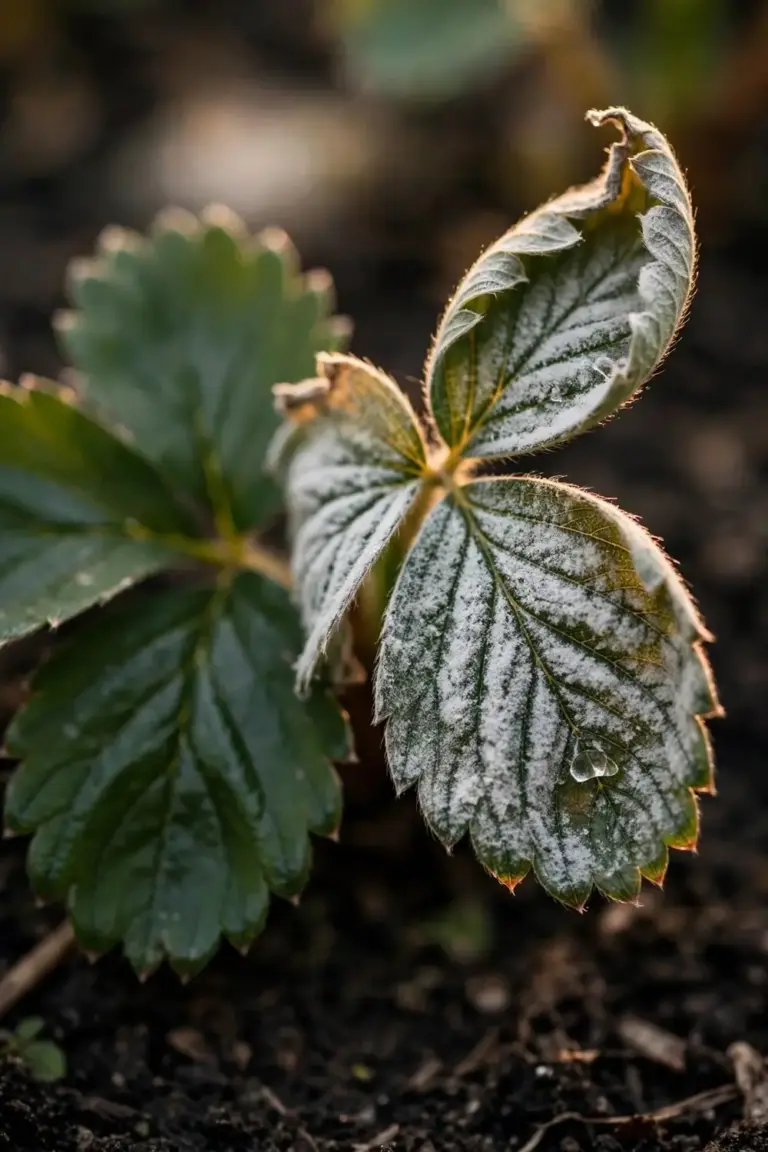
White powdery patches appear first on young leaves and leaf undersides. Leaves curl as the coating thickens. Growth slows while the coating blocks light. Cornell’s berry diagnostic list names powdery mildew among the common strawberry problems.
Remove the worst leaves and bin them. Thin the bed so air moves between plants. Water at the base and keep leaves dry. A sulfur spray, mixed exactly as its label directs, handles heavy cases. Do not spray in hot sun, and never spray open flowers.
Confirm mildew with a fingertip by rubbing one white patch gently. The coating smears under a fingertip, which separates mildew from spray residue and dust. Residue sits on the leaf and wipes clean in one pass, while mildew smears and returns on new growth within days.
Mildew spreads fastest in still air after warm days, so open the bed by thinning runners and lifting low leaves. A bed that dries fast after rain grows less mildew than a bed that stays damp.
5. Black Spot Sinks Into Fruit
Black spot sinks into fruit as dark, sunken patches. The rot behind it is anthracnose fruit rot, caused by Colletotrichum acutatum.
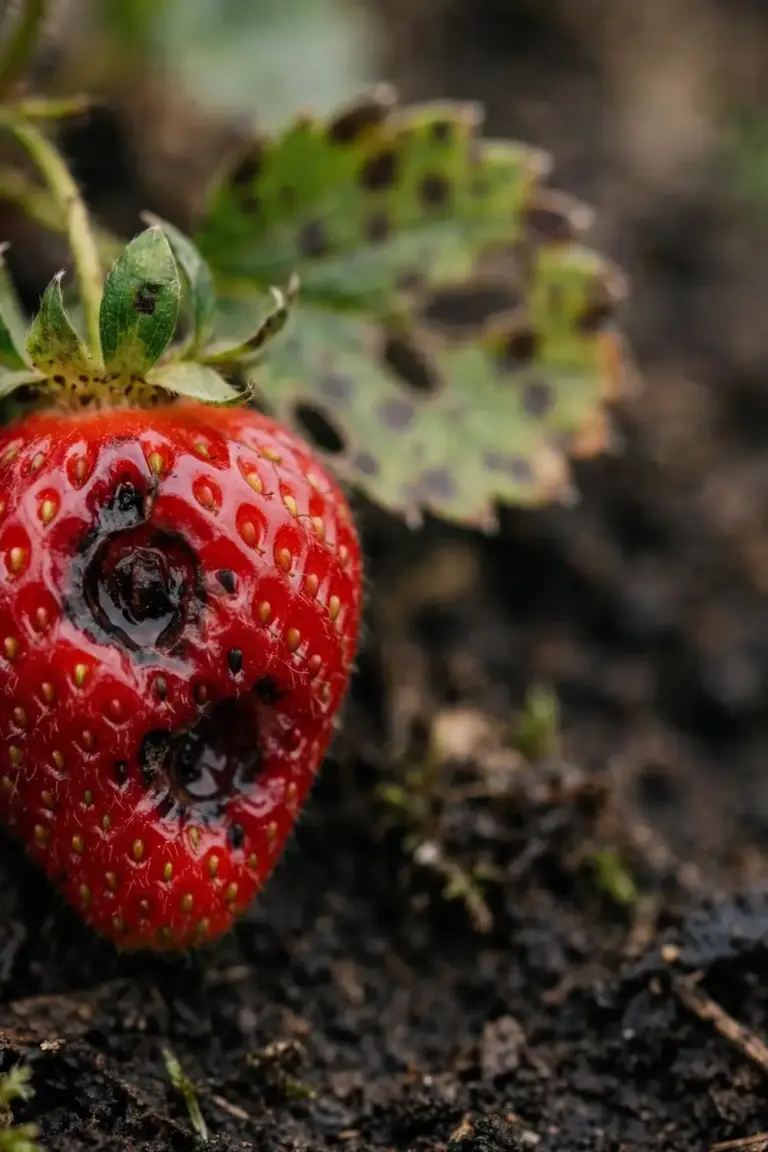
Sunken black spots spread across the fruit in wet weather. The fruit softens under the spot. Spots on green fruit stay small until the fruit ripens, then grow fast. Cornell’s berry diagnostic tool lists anthracnose fruit rot among strawberry problems. Anthracnose also attacks the crown. A soft crown with blackened tissue points to crown rot, covered below.
Pick off spotted fruit and bin it. Keep fruit off soil with mulch. Water at the base and space plants for air. Clean up fallen fruit at the end of the season, because spores rest in debris.
Confirm black spot by feel. Press the spot lightly. Anthracnose spots feel sunken and soft under the skin, while a bruise stays firm under its mark. Check the calyx end first, because rot gathers where water sits after rain.
Anthracnose likes the same wet weather as gray mold. The two rots can share one bed in a rainy week. Tell them apart by the spot: gray mold turns fruit soft and fuzzy, while anthracnose sinks black spots into firm fruit.
6. Leaf Spot, Scorch, and Blight Mark Leaves
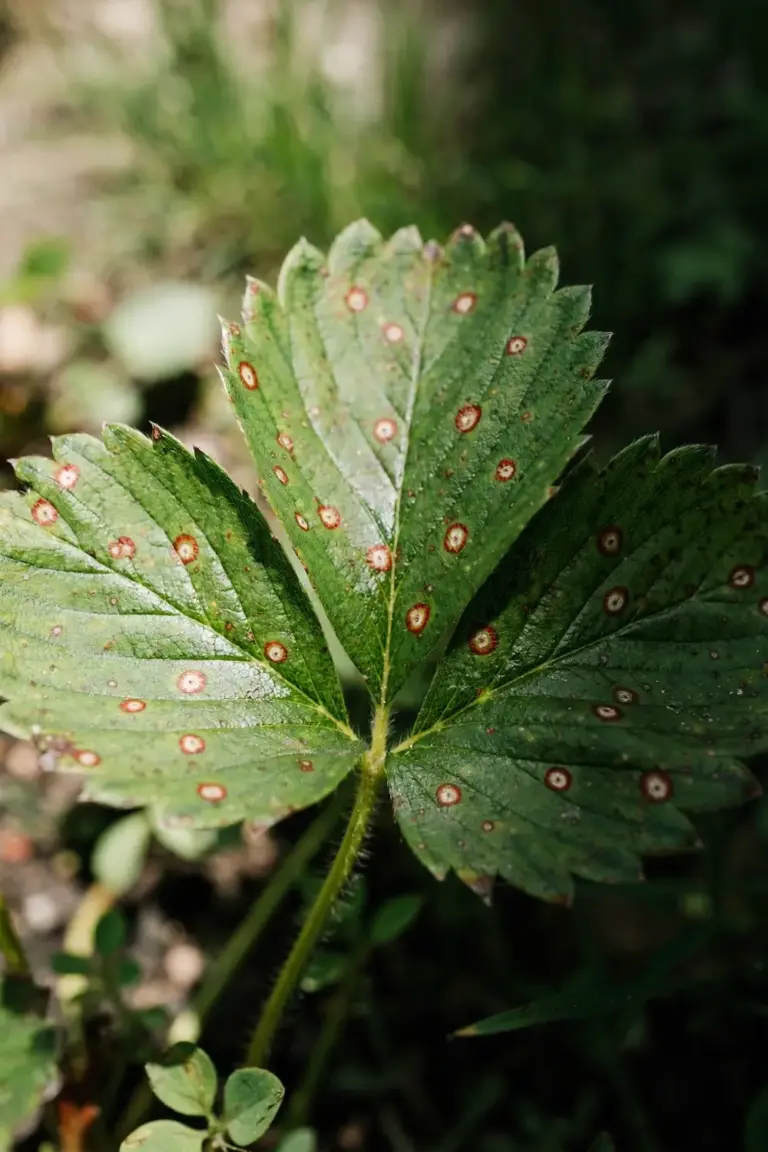
Leaf spot, scorch, and blight mark leaves three ways. Spot makes round marks. Scorch browns the edges. Blight kills larger patches.
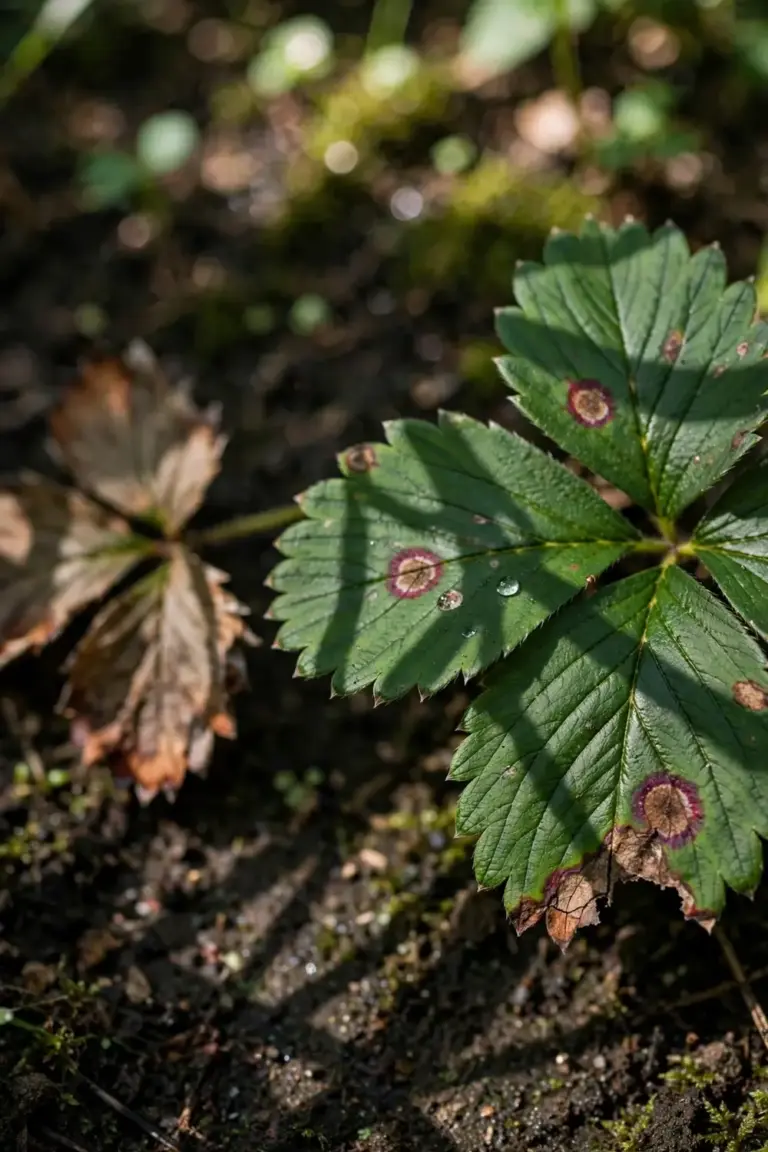
Leaf spot shows as reddish-purple spots with brown centers in rainy or humid weather, according to Yates’ strawberry problem notes. Scorch browns leaf edges, and the brown areas join as the damage spreads. Blight kills whole patches of leaf tissue. Fungi that ride wet leaves cause all three.
Confirm which leaf problem you have before you treat. Leaf spot makes round marks with brown centers. Scorch browns the edges first and moves inward, while blight kills whole patches that feel papery and dry. One bed can carry two of the three at once, so name the mark you see most.
Remove the worst leaves and bin them. Water at the base so leaves stay dry through the night. Space plants for air movement, and clear debris from the bed, because spores rest in dead leaves all winter. Keep mulch off the crown while you clean.
A few spotted leaves rarely end a crop. A bed that stays wet grows more spots each week.
7. Crown and Root Rot Collapse the Whole Plant
Crown and root rot collapse the whole plant, and leaves wilt even though the soil stays wet. The crown turns soft and brown, and the plant dies from the center out. Soilborne fungi, including Phytophthora and Fusarium, cause the rot. Wet soil feeds them, a buried crown stays wet and rots from the center, and poor drainage keeps the crown wet after every watering. NSW DPI’s strawberry disease notes list improving soil drainage, planting runners from accredited nurseries, and avoiding overwatering among the crown rot defenses, in its common diseases of strawberries guide.
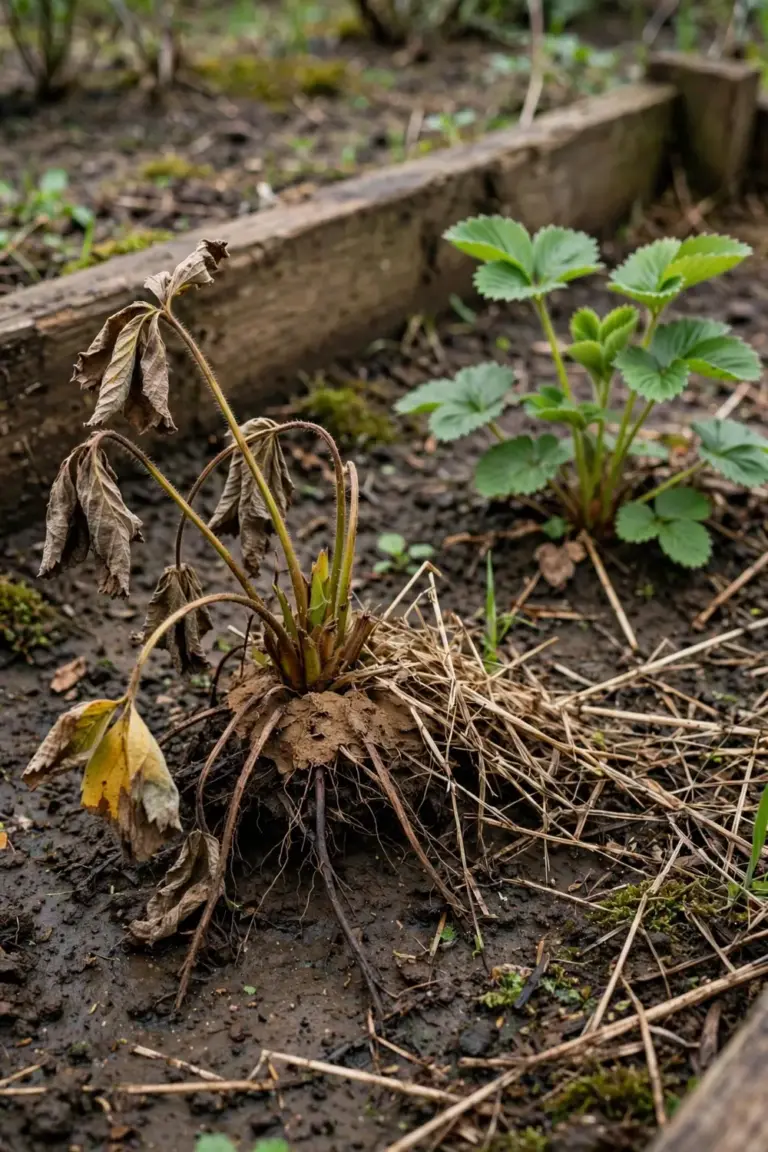
Confirm crown rot with a gentle pull. A plant with rotted roots lifts out with no resistance, so slice one crown open with a clean knife. Healthy crown tissue looks pale and firm, while rotted crown tissue looks brown and soft. Bin the plant after the check, and clean the knife before it touches another plant.
Lift the crown to soil level so it dries between waterings. Improve drainage before you replant. Water less often and let the top soil dry. Remove dead plants and bin them. Do not replant strawberries in the same soil. A crop rotation break keeps soilborne fungi from building up in one bed.
A rotted crown does not recover. Pull the plant, fix the drainage, and replant in fresh soil.
8. Slugs and Snails Chew Holes and Leave Slime
Slugs and snails chew deep holes in ripening fruit. They feed at night and hide by day.
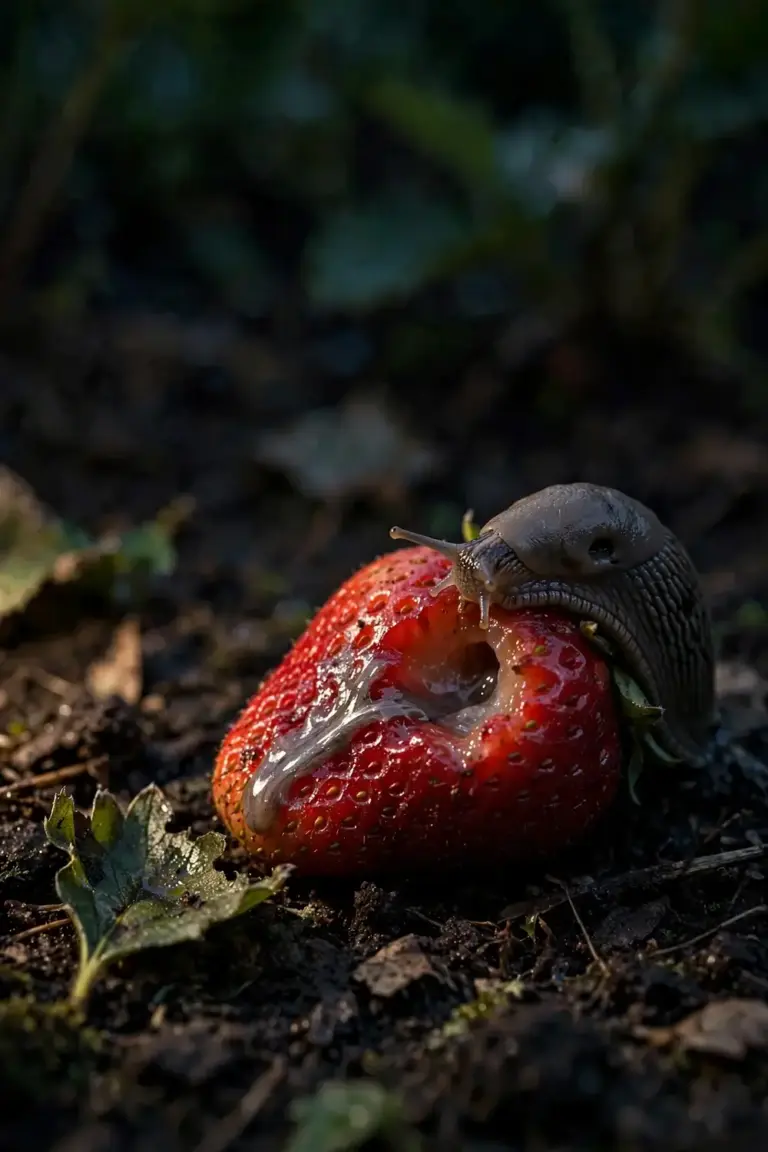
Holes sit in ripe fruit, often under the cap. Leaves carry chewed edges. Silvery mucous trails confirm slugs or snails, according to UC IPM’s snail and slug notes. Slugs hide under boards, stones, mulch, and debris by day, then feed after dark.
Confirm slugs with a dusk check. Walk the bed with a torch after dark. Slugs feed on fruit at night and hide by day. A torch check beats a morning guess, because morning shows only the damage.
Hand-pick at dusk with a torch, when slugs are out feeding, and clear boards, stones, and debris from the bed, because each one shelters slugs by day. Set beer traps sunk level with the soil. Scatter iron phosphate bait exactly as its label directs. Keep mulch thin and dry, because a thick wet layer shelters slugs through the day. The organic pest control for beginners guide covers the same hand-pick and habitat steps for the whole garden.
Prevention starts with habitat. Clear the bed edges of boards and debris before fruit ripens, and keep paths clean and grass short around the bed. A bed with nowhere to hide holds fewer slugs by night.
One night of feeding ruins a week’s ripening fruit, so check at dusk, when slugs are out.
9. Birds Peck Holes and Take Whole Berries
Birds peck clean holes in fruit and take whole berries. They work in daylight and leave no slime.
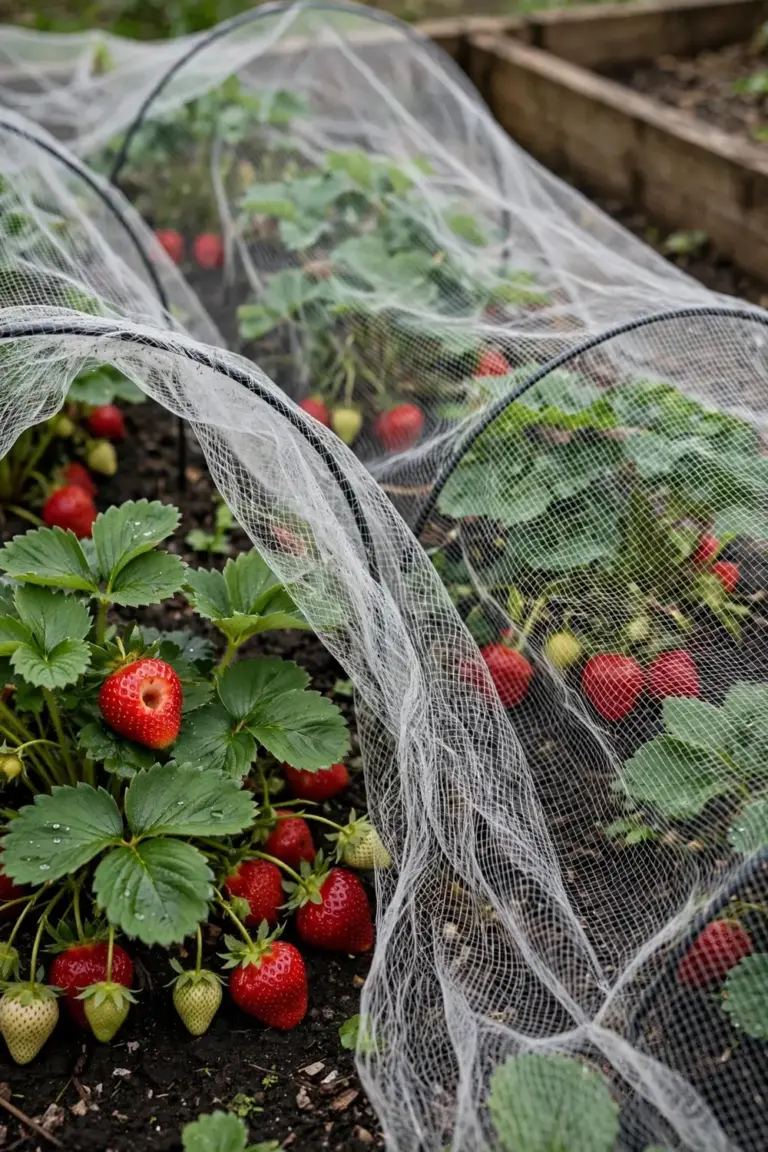
Pecked holes mark fruit as it colors, and whole berries vanish from the plant. Fruit stripped from one side of the row points to birds. Yates’ strawberry problem notes say birds peck holes in fruit or eat whole berries.
Confirm birds by timing. Bird damage appears in daylight, and berries vanish whole. Slugs work at night and leave slime. If the damage appears overnight with slime, the slugs above are the culprit, not birds.
Net before the fruit colors, and drape netting over hoops or a frame so it clears the plants. Peg the edges tight to the ground, and check the net daily so no bird tangles in it. A wire cage suits a permanent bed and holds netting off the fruit.
Drape netting with a mesh that stops birds but still lets bees through, and check the mesh before you buy. Drape it so it clears the fruit, because a net that rests on the fruit lets birds peck through it.
Netting put up after the fruit colors arrives too late, because birds learn the bed the day the first berry reddens. Net early, and the bed stays yours.
10. Nutrient Deficiency Yellows Leaves and Shrinks Fruit
Nutrient deficiency yellows older leaves and shrinks fruit. The plant shows the gap in its leaves before it shows it in its fruit.
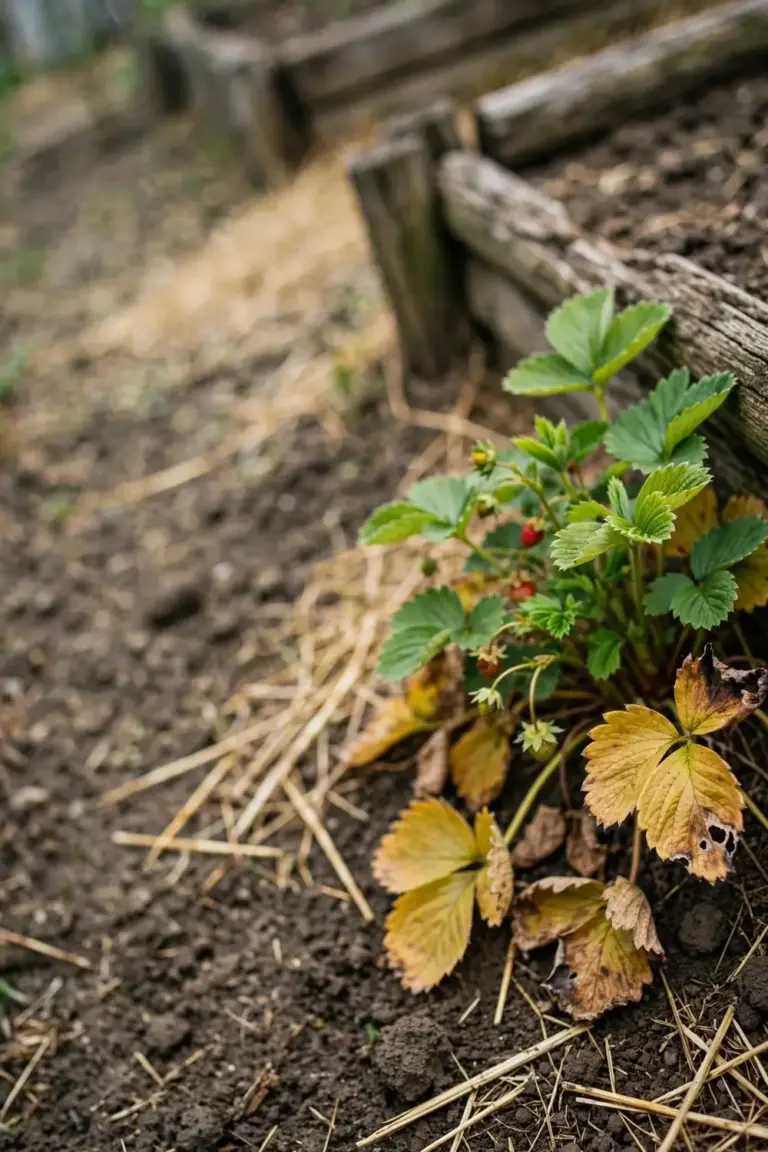
Nitrogen gaps yellow the older leaves first. Potassium and phosphorus gaps cut fruit size and quality. Fruit stays small while the plant looks thin. University of Minnesota Extension’s strawberry nutrient notes say nitrogen works best applied after harvest, during renovation, and that over-application can reduce fruit yield. University of Minnesota Extension’s small-fruit notes tie small fruit size to nutrient levels in the soil.
Confirm a nutrient gap by which leaves yellow first. Nitrogen gaps yellow the older leaves first, while the young leaves stay green. A gap that yellows young leaves first points to water trouble or crown trouble instead. A soil test settles the question when the leaves stay unclear.
Soil test before you feed. A test names the gap instead of guessing it. Feed after harvest, when the plant builds next season’s crowns. Add compost around plants and water the feed in. The soil health guide covers testing and compost steps for the whole bed.
Feeding a plant that is short of water fixes nothing. Water first, then feed, then watch the new leaves. A plant fed at the right time puts the feed into crowns and roots for next season. A plant fed at the wrong time pushes soft leaves that mildew and mold attack first.
11. Watering and a Buried Crown Rot the Center
Watering trouble and a buried crown rot the center. Too much water and too little water both wilt leaves, and the crown tells them apart.
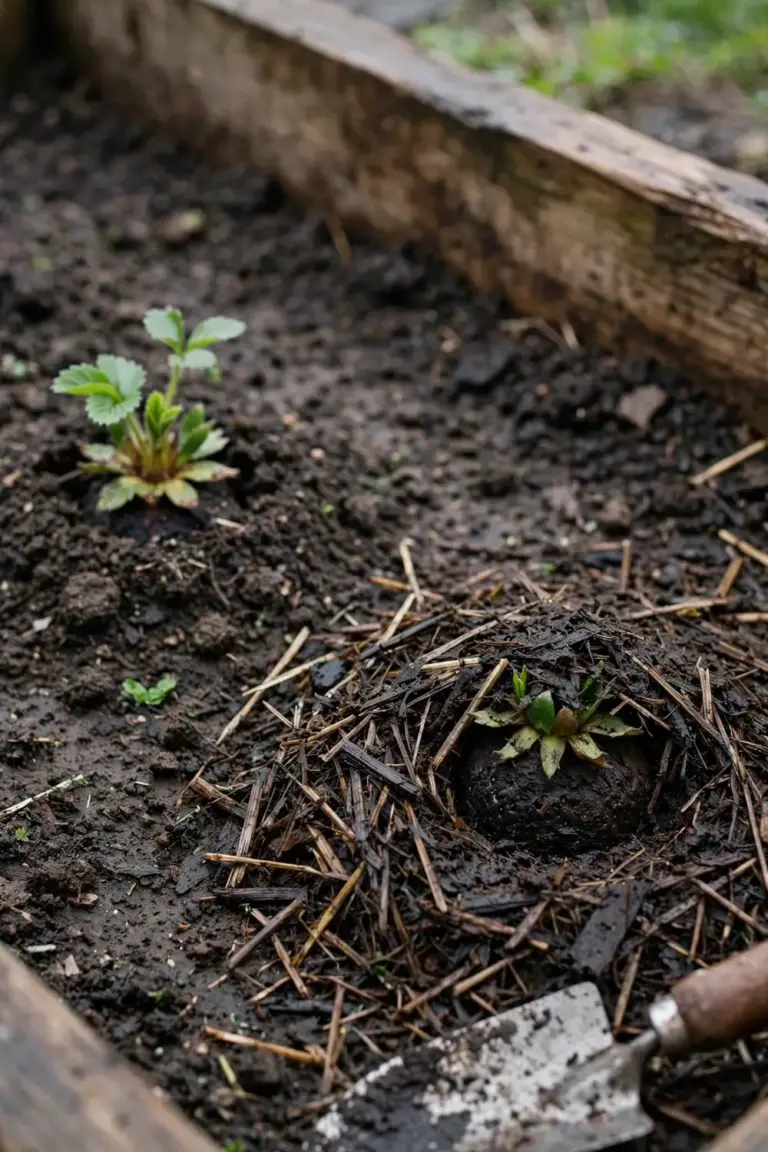
Push a finger 5 cm into the soil. Dry soil at that depth means water. Wet soil at that depth with a wilting plant means crown trouble. A buried crown sits under soil that stays wet, and it rots from the center. A crown set too high dries out and the plant stalls. UC Agriculture and Natural Resources’ strawberry notes say to plant the crown on top of the soil.
Confirm watering trouble with two checks. First, the finger test. Second, the crown height. A crown sitting below the soil line stays wet after every watering. A crown sitting proud dries out fast. Level with the soil surface is the only height that works.
Water at the base in the morning. Keep mulch off the crown so it dries between waterings. Set the crown level with the soil surface, roots below and crown above. Water deep and less often in dry spells, so roots grow down.
A crown buried under mulch rots the same way a crown buried under soil does, so keep both off it. The crown wants air around it, not cover.
12. Runner Crowding Chokes Air and Light
Runner crowding chokes air and light. A dense mat holds damp air, and damp air grows mold and spot.
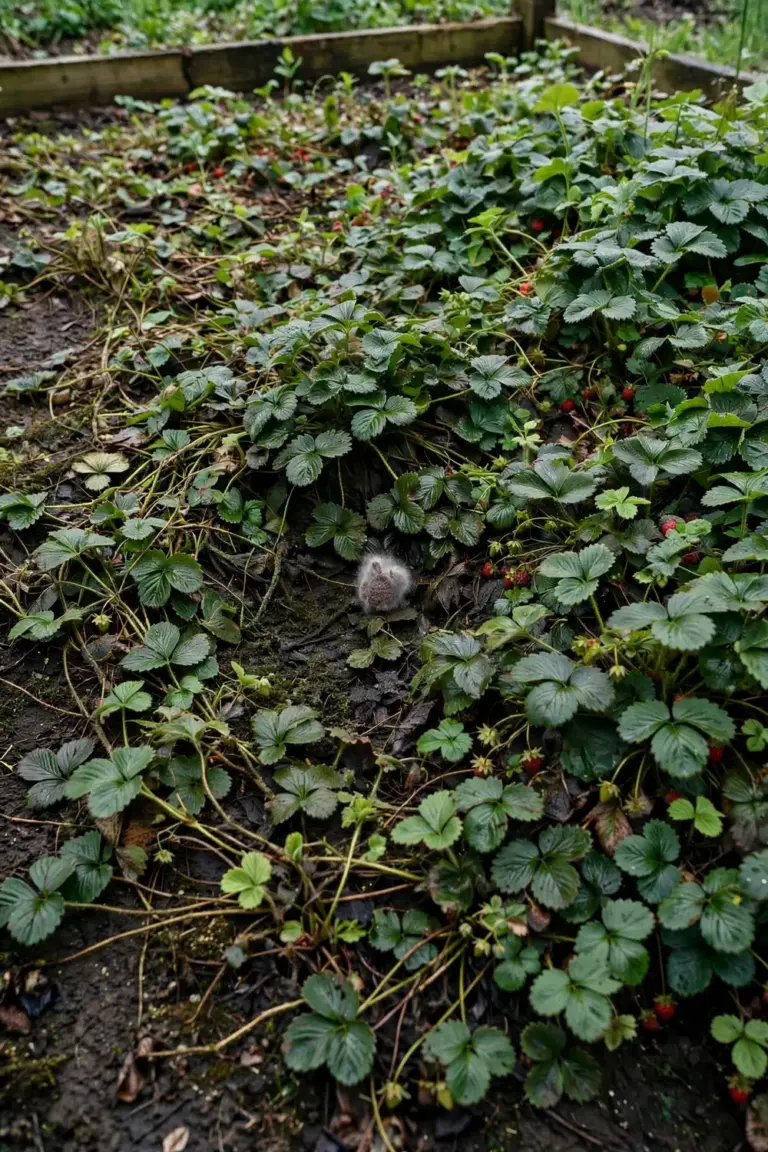
Fruit runs tiny in a crowded bed. Mold starts in the center, where leaves never dry. Leaves stay damp after rain. University of Minnesota Extension’s day-neutral strawberry notes set plants 30 to 46 cm apart and say runners take energy away from fruit production, in its day-neutral strawberry notes.
Confirm crowding by the center of the bed. The center stays damp longest after rain. Leaves there never dry, and mold starts there first. If the center stays damp while the edges dry, the bed needs thinning, not spraying.
Thin runners through the season. Keep the spacing open so air moves between plants. Root a few daughter plants for the next bed and bin the rest. Clear dead leaves as you thin, because debris holds spores.
A bed left to mat itself fruits less each year. Thinning is the cheapest yield fix in the bed.
13. Old Plants Past Year 3 Fade and Fruit Less
Old plants past year 3 fade and fruit less, and the bed gives fewer berries, with the berries it gives running smaller each season.
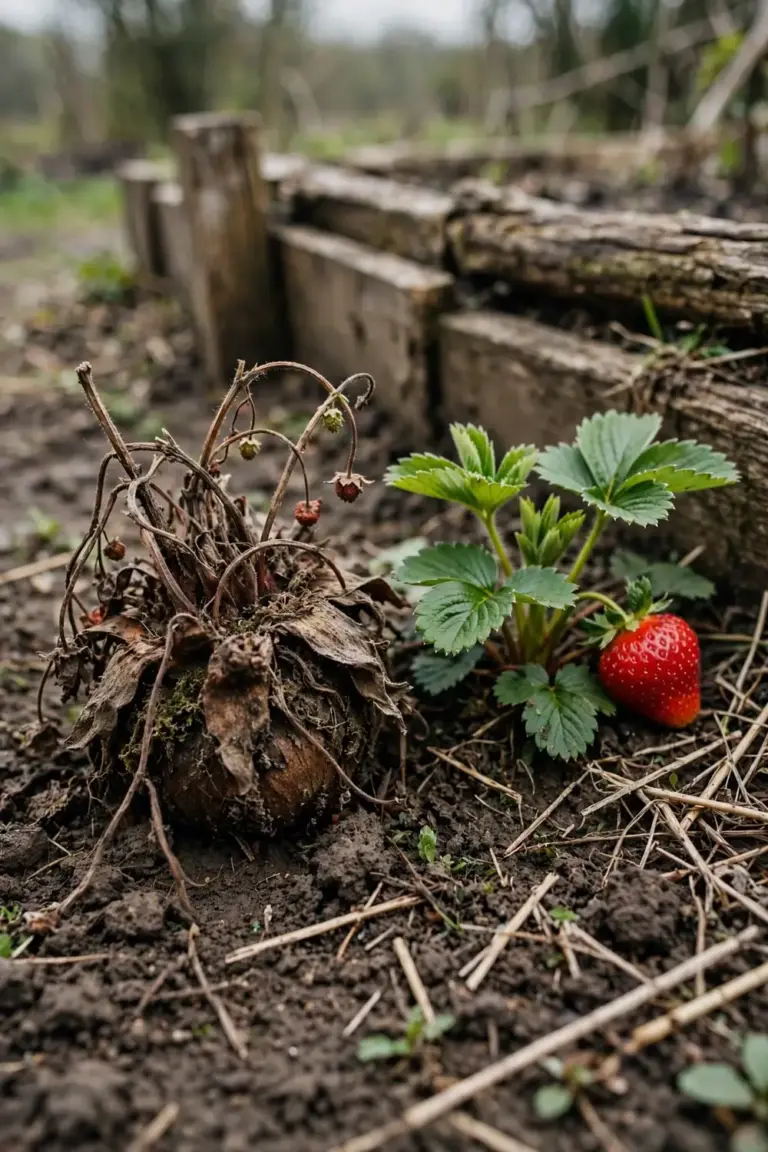
Confirm age trouble by the crown. Old crowns grow woody and thick, and the plant fruits less each year. A young plant with the same symptoms points to water or feeding instead. Age shows across the whole bed at once, while disease starts in one patch.
Decline is normal, not a disease. University of California strawberry notes say fruit production is highest in the first year and declines after that, while crowns grow woody with age and disease builds in an old bed year by year.
Renew the bed after 2 to 3 seasons. Start the new bed from certified disease-free runners. NSW DPI’s strawberry notes recommend planting runners from accredited runner nurseries. Keep the old bed one more season only if it still fruits well, and start the new bed alongside it.
A bed that fruits poorly for two seasons running will not bounce back. Renew it.
14. Run the Fix Order: Water, Sun, Pests, Then Disease
The fix order rules out the cheapest causes first. Check water, then sun, then pests, then disease.

Check water first. Run the finger test and check the crown level, because a dry bed and a buried crown each wilt leaves and each has a different fix. Check sun next. Strawberries fruit best in full sun, and a bed that slid into shade fruits less each year. Check pests third. Look for slime, pecks, and holes, because slugs, snails, and birds each leave a distinct mark.
Check disease last. Fuzz means gray mold, white dust means mildew, sunken spots mean black spot, and a soft brown crown means crown rot. Each answer points to one section above.
Write down what you found. One line per plant, with the date and the check you ran. Notes beat memory when the same symptom returns next season, because the pattern across weeks names the cause faster than one day’s look.
If the symptom matches nothing here, or the whole bed collapses suddenly with unusual marks, do not treat. Report a suspected exotic pest or disease to the state agriculture department. Keep the plant, keep photos, and do not move runners to another bed. Report early, because exotic pests spread fast in a home bed. The department decides what happens next, and an early report protects every strawberry bed nearby.
Most strawberry problems answer to the first three checks. Disease is the last check, not the first.
Frequently Asked Questions
Yellow older leaves point to a nitrogen gap or overwatering. Yellow young leaves point to water trouble or a crown problem. Run the finger test first. Dry soil at 5 cm means water, while wet soil with a wilting plant means crown trouble. Soil test before you feed, and feed after harvest.
Gray mold rots fruit before it ripens. Wet fruit invites it, and spores ride wind and splash. Remove moldy fruit the day you see it and bin it. Mulch under the fruit so berries sit off wet soil. Space plants for air. Water at the base in the morning so leaves dry by night. Pick ripe fruit often, because overripe fruit molds first.
Small fruit follows nutrient gaps, dry spells, and crowding. Misshapen fruit follows poor pollination and cold snaps during flowering. Soil test, then feed after harvest. Water deep and less often in dry spells. Thin runners so plants sit 30 to 46 cm apart. A bed that stays fed, watered, and spaced grows full berries.
Cut out spotted parts, wash the rest, and discard moldy, mushy, or fermented fruit, because mold spreads through soft flesh. Discard any fruit with an off smell. Never eat fruit sprayed within the withholding period on its label. When in doubt, bin it.
June-bearing beds renew after 2 to 3 seasons. Day-neutral types run as annuals in commercial practice, replanted each year. Home beds keep June-bearing plants for 2 to 3 seasons, then start a new bed from certified disease-free runners. A bed that fruits poorly for two seasons running will not bounce back. Renew it.
Where to Go From Here
Walk the bed with the table in mind. Check where the symptom sits, run its first check, then run the fix order. One change at a time shows you what worked. The plant that answers the first check is the plant you can save. Start today, while the symptom is still small.