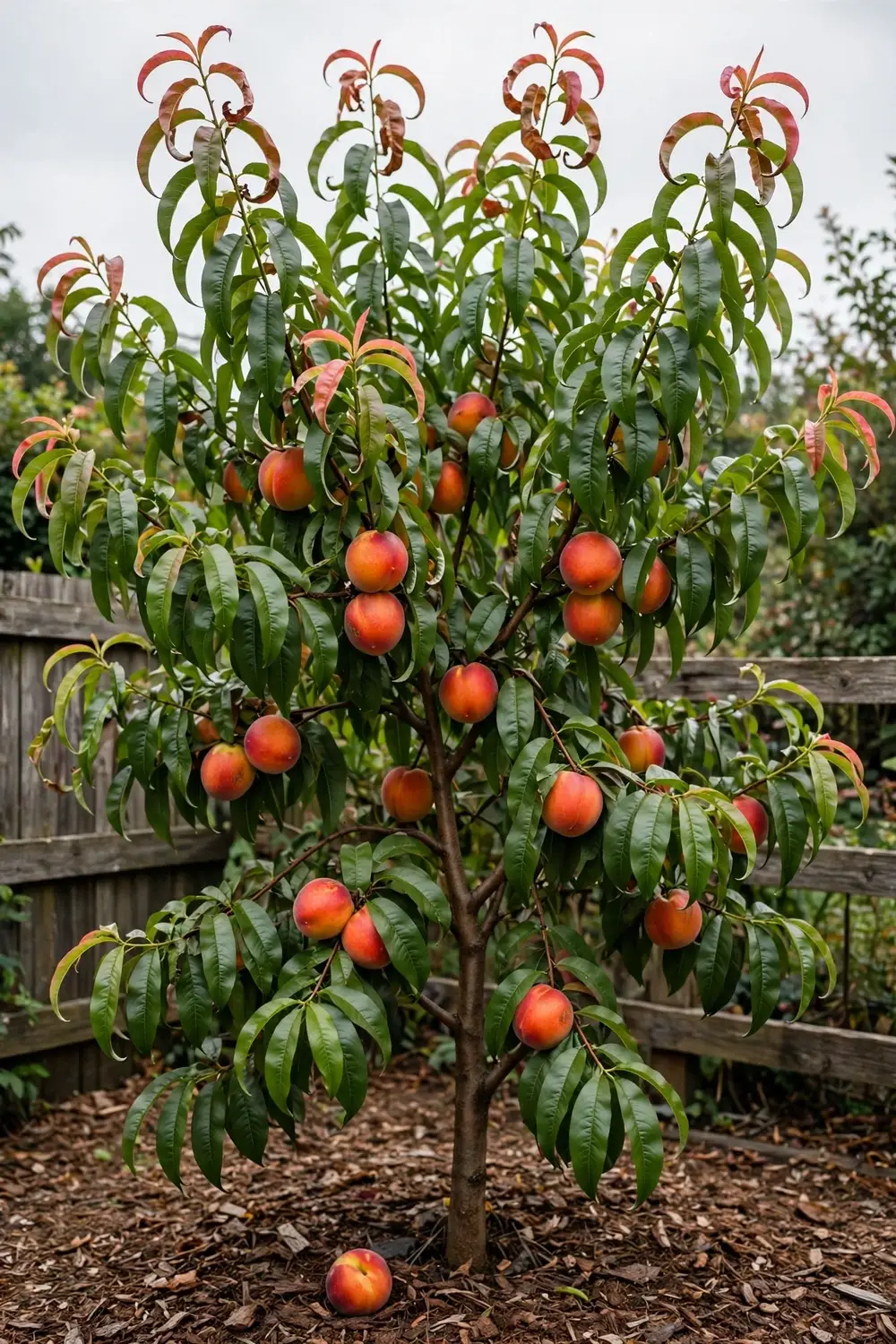

Start with one question: where does the symptom sit? A nectarine tree with a problem answers that question first. That one question sorts 11 problems faster than a close-up photo does.
A nectarine is Prunus persica var. nucipersica, a smooth-skinned peach mutant. Peach and nectarine are the same species. I have learned that the symptom’s address beats its appearance: where it sits on the tree names the problem faster than any close-up photo does.
The rest of this page answers what’s wrong with my nectarine tree with 11 problems, from curled leaves to a dying tree. Each one carries the sign, the confirming test, and the first fix. Work the problem in front of you, then move on.
What’s Wrong With My Nectarine Tree? Start With Where the Symptom Sits
The symptom’s location names the problem family. Leaves point to leaf diseases and sap feeders, fruit points to rot, fly, and drop, bark points to borers and canker, and the whole tree points to roots, water, and chill.
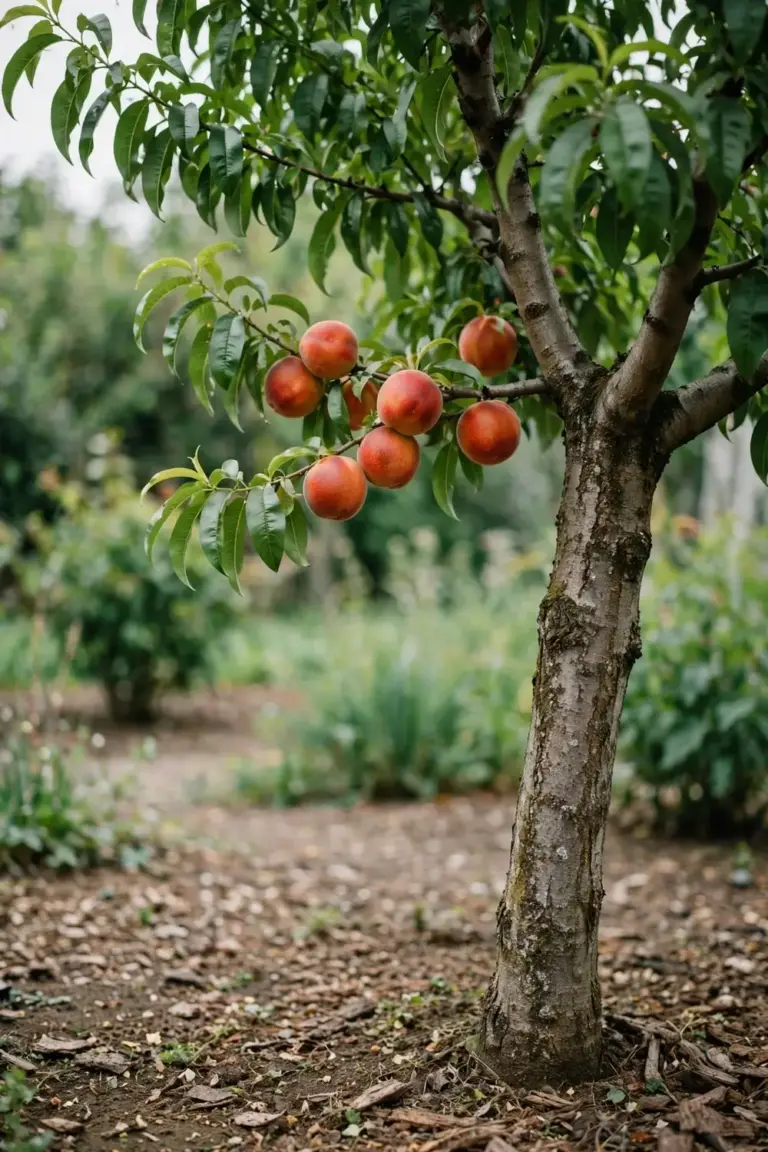
Start at the newest growth. Young leaves show leaf curl first, young shoots show aphids first, and young fruit shows brown rot first. Old leaves tell a different story. They yellow first when food or water runs short.
Check the trunk next. Gum, holes, and sunken bark live on wood, and wood problems move slowly. A single dead branch points to a local cause on that branch. A whole canopy in trouble points to roots, water, or a winter without enough chill. The location narrows the list before any spray comes out of the shed.
Match the Symptom to the Problem: The 11-Row Differential Table
The table below is the spine of this page. Find your symptom in the first column. Read across to the most likely problem. Run the first check before you treat anything.
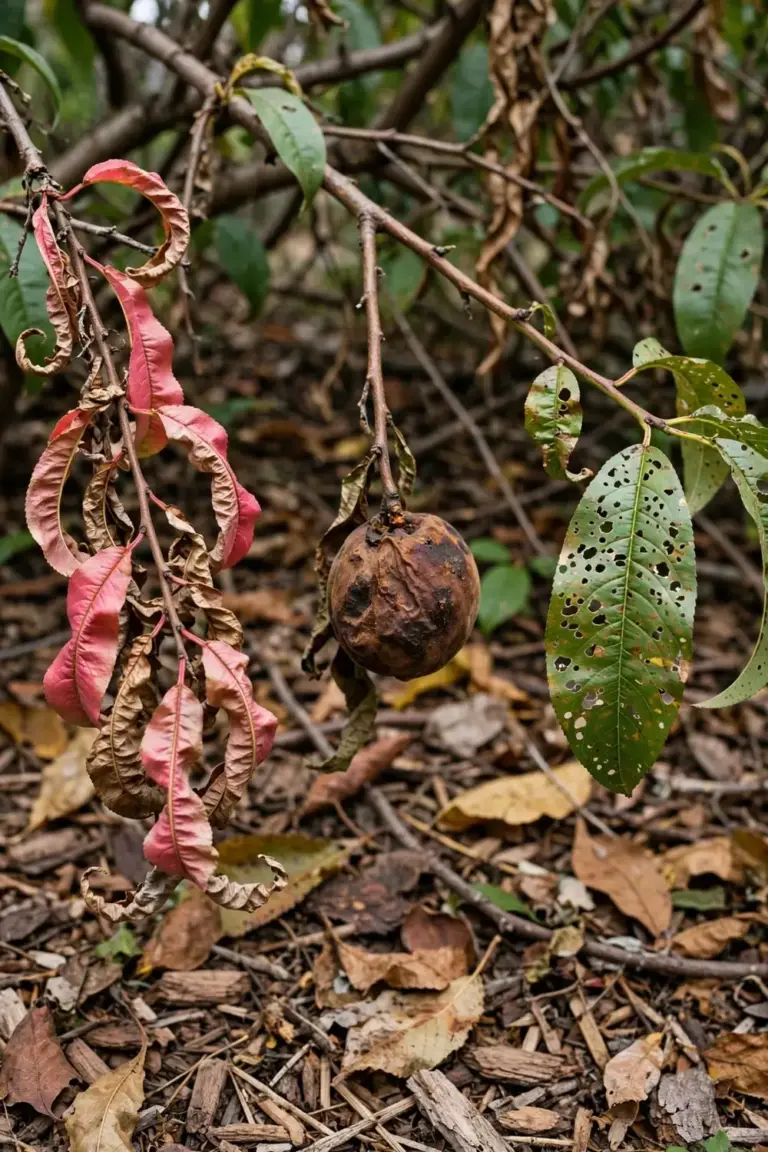
Treat the table as the starting point, not the verdict: the confirming test in each problem section proves the match before you spend money or spray anything.
| Symptom | Where | Most Likely Problem | First Check |
|---|---|---|---|
| Red, thickened, curling leaves | Leaves | Leaf curl | New leaves in spring show pink-red thickening |
| Soft brown fruit with gray spores | Fruit | Brown rot | Mummied fruit still hangs on the tree |
| Small holes in leaves, pitted fruit | Leaves and fruit | Shot hole / bacterial spot | Hole rims are red-brown, fruit spots feel rough |
| White powder on leaves | Leaves | Powdery mildew | Powder wipes off on a finger and returns |
| Curled shoot tips, sticky leaves | Shoot tips | Aphids | Clusters sit on leaf undersides near the tips |
| Small bumps on bark | Bark and twigs | Scale | A bump lifted with a fingernail stays attached while alive |
| Holes in trunk, sawdust, gum | Trunk | Borers | Fresh frass sits below a hole |
| Fruit falls before it ripens | Fruit | Fruit drop | Cut one fallen fruit open and look for maggots |
| Flowers open, no fruit sets | Whole tree | No fruit / poor fruit set | Flower centers turned brown after a cold night |
| Yellow leaves across the canopy | Leaves, whole tree | Yellowing leaves | Finger test 5 cm into the soil reads dry or sodden |
| Branches die back from the tips | Branches, whole tree | Dieback | Scratch test shows brown wood under the bark |
Leaf Curl: Red, Thickened Leaves That Drop Early
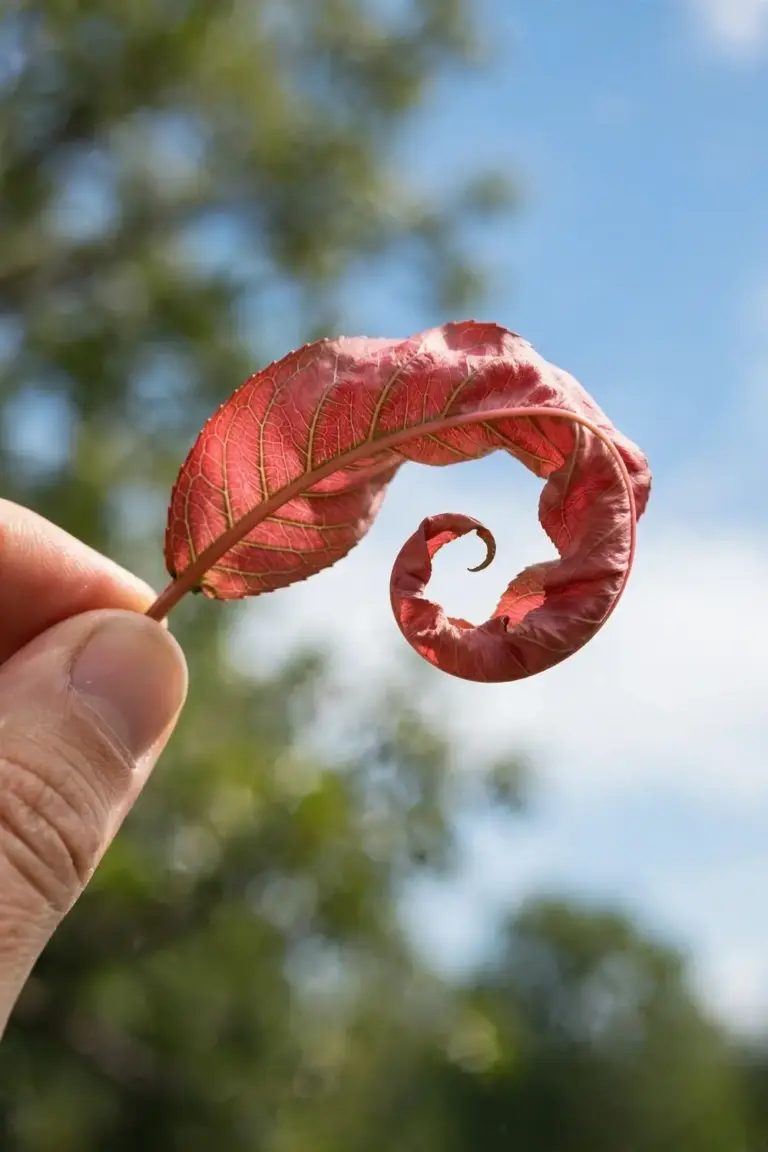
Leaf curl is a fungal disease. The fungus is Taphrina deformans. New leaves in spring come out pink-red, thickened, and curled. Infected leaves turn yellow and fall. The tree then spends stored energy growing a second set of leaves. That regrowth cuts fruit set and weakens the tree.
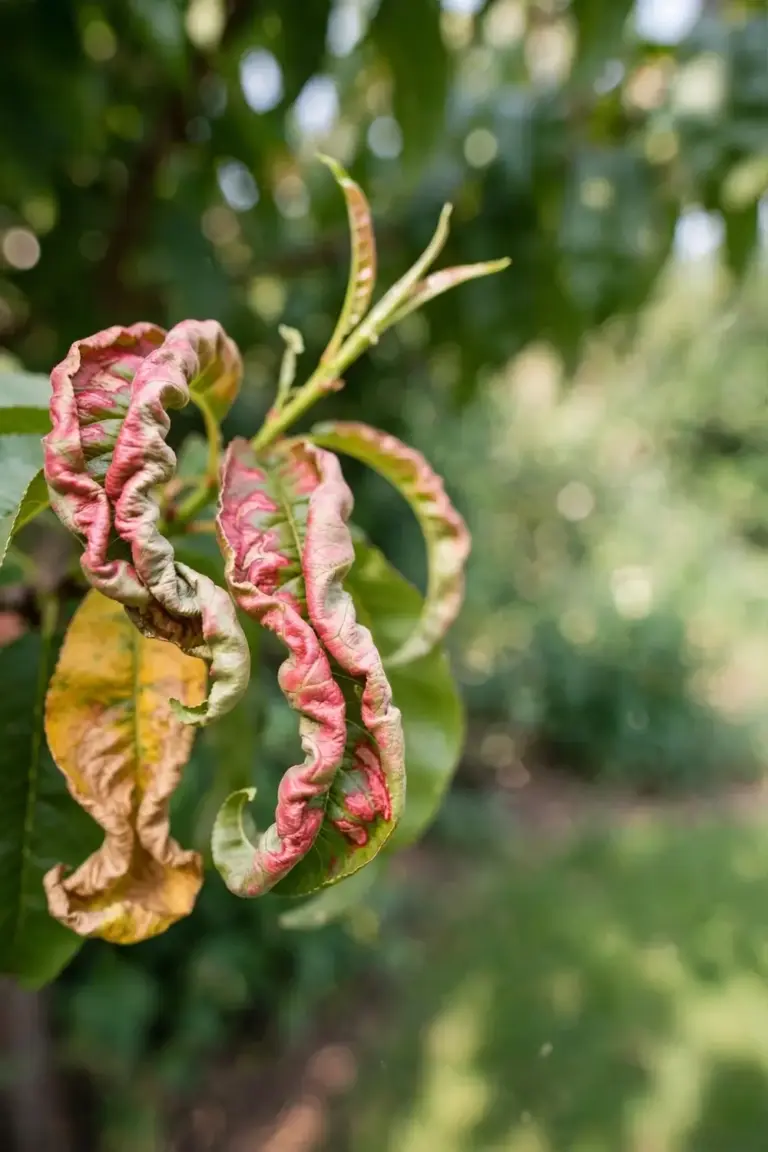
The confirming test is the spring flush. Check the youngest leaves first, and check the top of the canopy first. Spray coverage misses the top most often, so leaf curl shows there first. Infected fruit carries raised, rough patches on the skin. The NSW DPI peach leaf curl Primefact puts the optimum temperature for fungal growth at 20 to 26 °C, and it ties infection to a cool, wet spring around budswell followed by warm, humid growth.
The first fix this season is support, not spray. Spraying after symptoms appear is too late, because the fungus is already inside the leaf. Water the tree deeply, feed it lightly, and thin the fruit so the tree carries a lighter load while it regrows leaves. The spray fix belongs to next season. Apply a copper spray at leaf fall, then again at budswell before buds open. Two dormant sprays, timed to leaf fall and budswell, break the cycle. Keep fallen leaves out of the mulch. They carry spores into the next season.
Brown Rot: Soft Brown Fruit That Rots on the Branch
Brown rot is a fungal disease, and the main fungus is Monilinia fructicola. Blossoms shrivel and die, shoots die back from infected blossoms, and fruit develops soft brown decay. Gray-brown spores cover the rot as it matures. Infected fruit shrivels and hangs on the tree as a mummy, and that mummy is the source of next season’s spores.
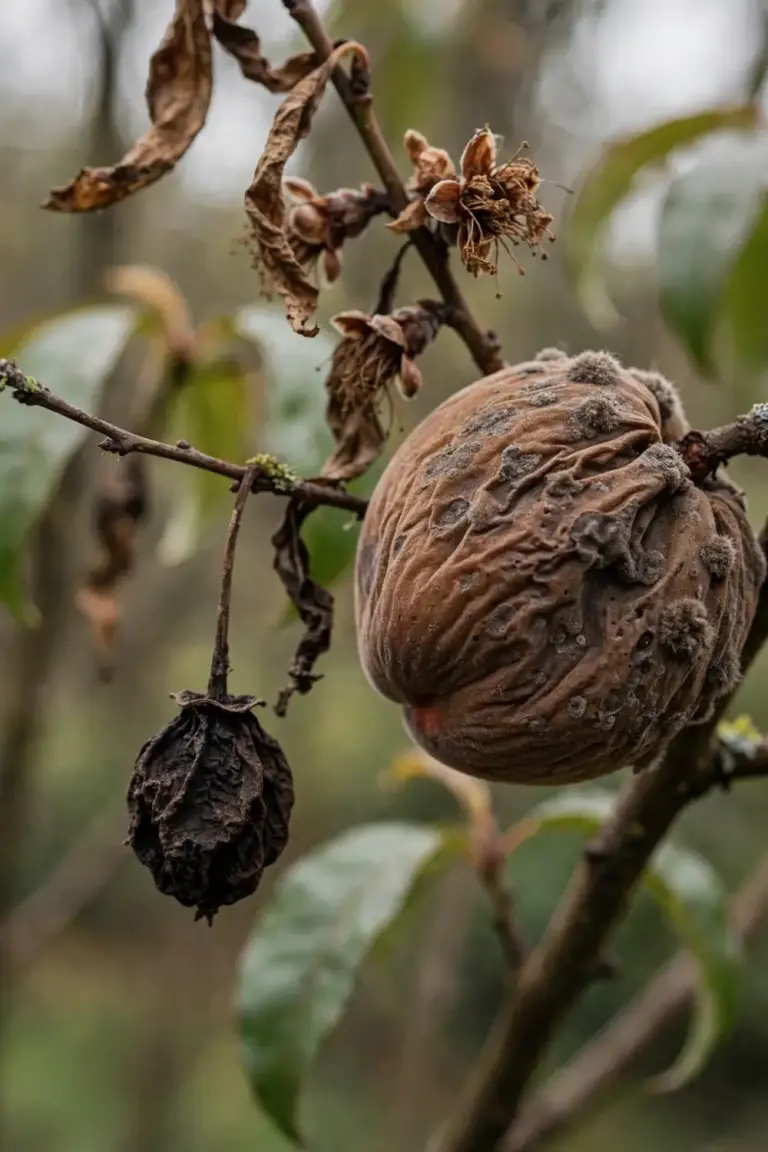
The confirming test is the mummy. Walk the tree and look for shrivelled fruit still hanging. Check the ground under the tree too. Mummies on the ground carry the same spores. Blossom blight in spring is the early warning. Dead flowers and dieback on fruiting shoots in spring mean the fungus is already active. The site’s blossom blight guide covers that early phase in full.
The first fix is sanitation. Remove every mummied fruit from the tree and from the ground. Bin the fruit. Do not compost it. Prune out blighted twigs and dead wood. Cut below the sunken canker on each twig. Cornell Extension’s brown rot guide makes sanitation the core of management: prune out dead wood and blighted twigs, and remove mummied fruit from the canopy and the orchard floor. Thin the fruit for airflow. Wet fruit rots faster than dry fruit. A tree with space between fruits dries faster after rain.
Shot Hole and Bacterial Spot: Small Holes in Leaves and Pitted Fruit
Shot hole is one look with two causes: Coryneum blight, the fungal cause, and bacterial spot, the bacterial cause. Both punch holes in leaves and pit fruit, and both spread in wet weather. The treatment differs, so the confirming test matters.
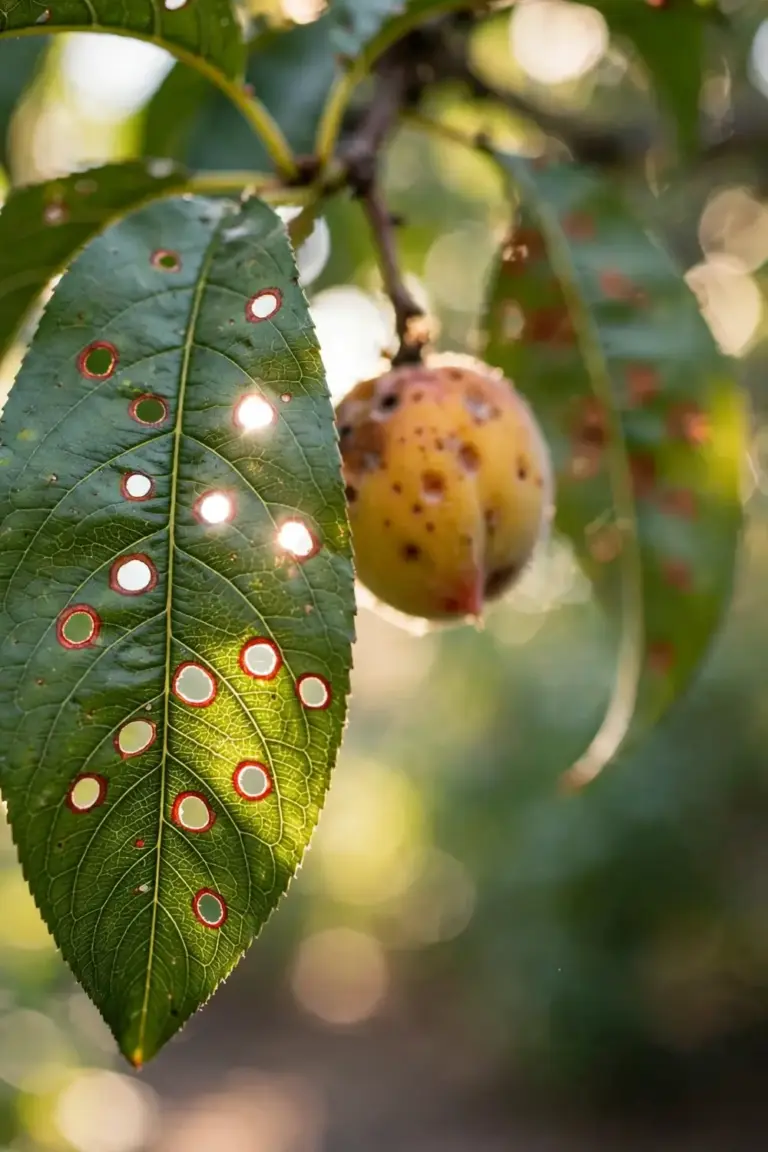
The confirming test starts with the leaf. Hold a spotted leaf to the light. Coryneum spots are round, purple to tan, with red-brown rims, and the dead center falls out and leaves a clean hole. Utah State University Extension’s Coryneum blight guide notes the leaf lesions are seldom wider than 6.4 mm. Bacterial spot looks different. Leaf spots start gray and watersoaked, then turn deep purple, brown, or black, while fruit spots feel rough and cracked and twig spots sink into the bark. Freckle looks close but differs: small dark spots stay on the fruit skin and never punch holes.
The first fix is cleanup plus dry leaves. Pick up fallen leaves and fruit, and do not water overhead, because wet leaves spread both causes. Prune for airflow so leaves dry fast after rain. A copper spray at leaf fall helps against both causes next season. Follow the label. Bacterial spot has no cure once it is inside the leaf, so prevention and cleanup carry the season.
Powdery Mildew: White Powder on Leaves and Young Fruit
Powdery mildew is a fungal disease. White powdery patches coat leaves, young shoots, and young fruit. Infected leaves curl and distort. Infected fruit carries white patches that turn into rough, russeted skin. The disease likes warm days and humid nights. It grows on the surface of the plant, not inside it.
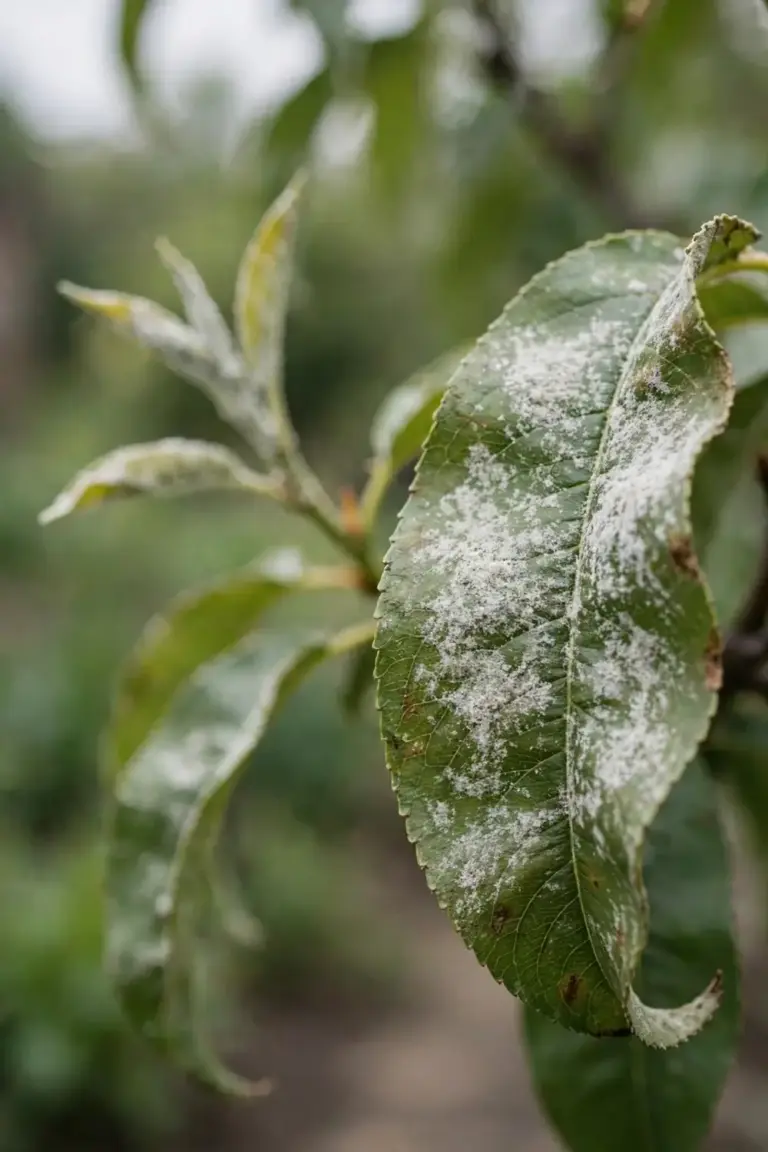
The confirming test is the wipe. Rub a white patch with a finger. Powdery mildew wipes off as a dry white dust, and the patch returns within days on the same leaf. Spray residue wipes off and stays off. Dust wipes off and stays off. Mildew comes back. Check the shaded side of the canopy first, where still air and shade favor the fungus.
The first fix is air and light. Prune out the worst infected leaves and shoots. Bin them. Do not compost them. Open the canopy so air moves through it. A sulfur spray or a potassium bicarbonate spray treats the surface fungus. Follow the label. Never mix sulfur and oil on the same tree. The combination burns leaves. Space sulfur and oil sprays apart, and read both labels before you spray anything.
Aphids: Curled Shoot Tips With Sticky Honeydew
Aphids are small sap-feeding insects that cluster on shoot tips and leaf undersides. They curl young leaves as they feed. They excrete honeydew, a sticky sugar water that coats leaves and grows sooty mold. Ants farm aphids for honeydew, so ants on the trunk often mean aphids above.
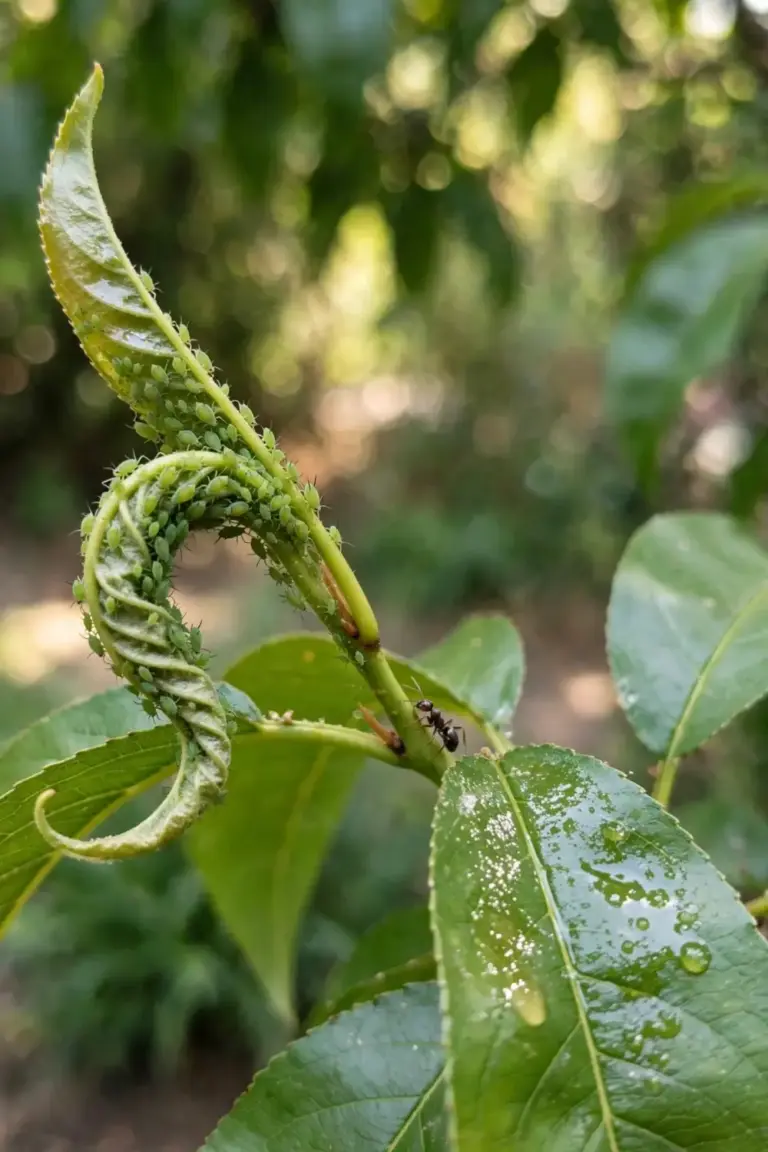
The confirming test is the underside. Turn over the curled shoot tips. Aphid clusters sit on the undersides near the tips. Look for ants walking up and down the trunk, and look for sticky leaves under the clusters. Sooty mold is black and powdery. It grows on honeydew, not on the leaf itself. A clean leaf with no clusters and no stickiness points elsewhere.
The first fix is water. Blast the clusters off with a strong jet of water. Repeat after a few days. Water knocks aphids off and breaks the colony. Leave the tree alone after the blast. Ladybirds, lacewings, and hoverflies eat aphids, and they arrive once the colony is exposed. A sticky band around the trunk stops ants from farming the aphids. Hold any spray until the water blasts have had two chances. Most aphid colonies collapse under water alone.
Scale: Small Bumps on Bark That Bleed Sap
Scale insects are small sap feeders that sit still on bark, twigs, and fruit. They look like small bumps. They drain sap all season, and a heavy infestation weakens twigs and cuts fruit size. Fruit under scale carries red halos around each feeding site. Dieback on small twigs follows a heavy colony.
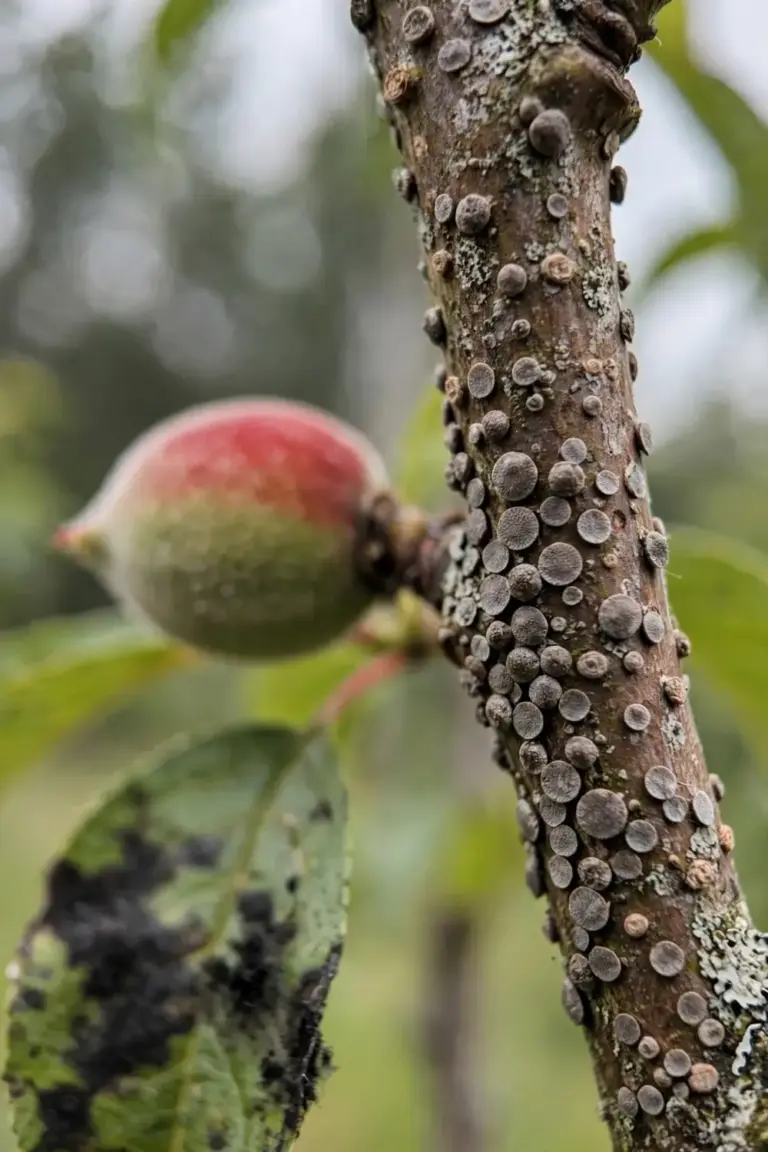
The confirming test is the lift. Pick at one bump with a fingernail: a living scale stays attached to the bark, while a dead scale flakes off. Check the twigs and the undersides of branches first, since scale hides where the eye passes over it. Check fruit for red halos. Check for honeydew and sooty mold on leaves below the colony. Honeydew under a branch means sap feeders feed above it.
The first fix is dormant oil. Apply horticultural oil while the tree is dormant, before buds swell. Oil smothers scale and its eggs. Follow the label. Prune out the worst infested twigs first, and bin the prunings. Do not leave them under the tree. Check the tree again in spring for crawlers, the small mobile stage. Crawlers are the window when a second treatment works. A tree with a few scales needs one oil spray. A tree covered in scales needs the prune plus the oil.
Borers: Holes in the Trunk With Sawdust and Gum
Borers are insect larvae. They tunnel under bark and into wood. They cut the flow of water and food through the limb. One limb wilts while the rest of the tree looks sound. Sawdust-like frass piles below a fresh hole. Gum oozes from the entry point. The limb above the tunnel dies back.
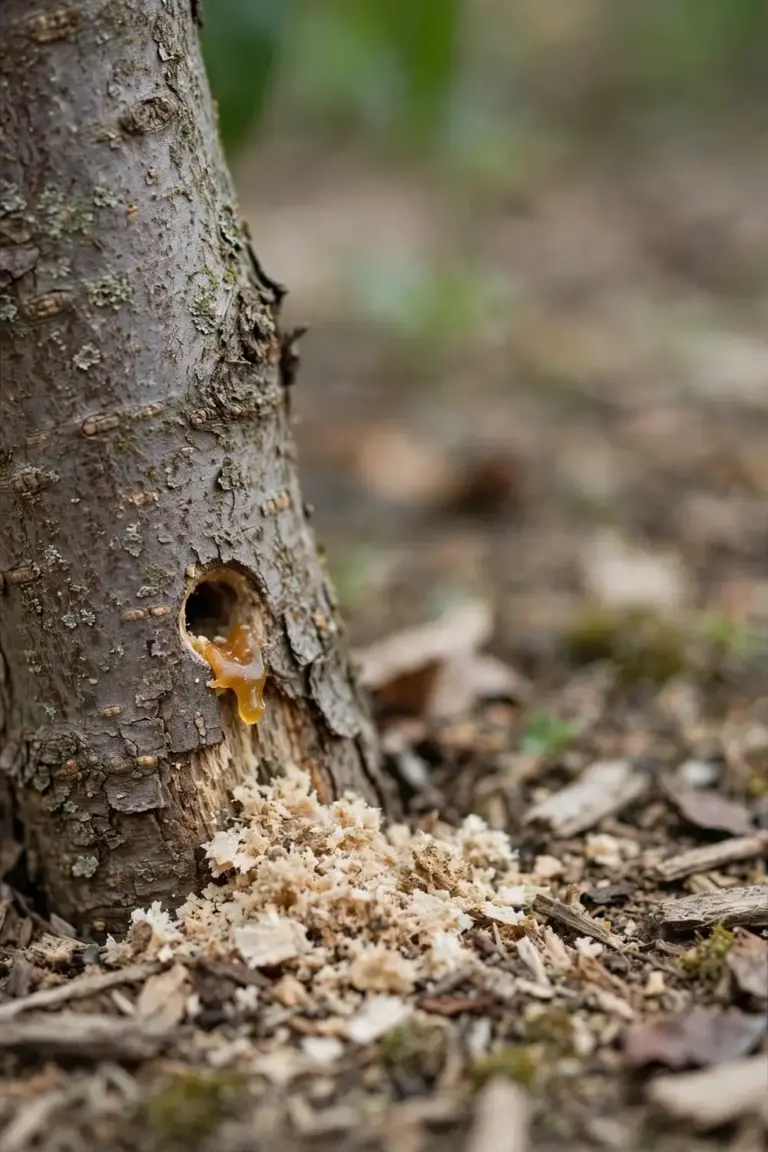
The confirming test is the hole. Look for a small round hole in the trunk or a limb, and look for fresh frass below it. Fresh frass is light in color and crumbly. Old frass is dark and packed. Probe the hole with a thin wire, which meets the tunnel and stops. Check the base of the trunk first, since borers often enter near the soil line. Check any wound, crack, or pruning cut. Borers use wounds as doors.
The first fix is removal. Cut out a badly infested limb back to sound wood. Bin the limb. Do not chip it into mulch. A single hole in a healthy tree needs watching, not surgery. Keep the tree vigorous with water and food. A vigorous tree pitches out borers with gum. Keep the trunk clear of mulch piled against bark. Keep wounds small and clean. A tree with many holes and a wilting canopy needs an arborist, not a spray.
Fruit Drop: Fruit Falls Before It Ripens
Fruit drop has three common causes. Natural thinning drops excess fruit after set, disease drops fruit that rots on the branch, and Queensland fruit fly drops fruit that carries maggots. The fallen fruit tells which cause is at work. The fix differs for each cause.
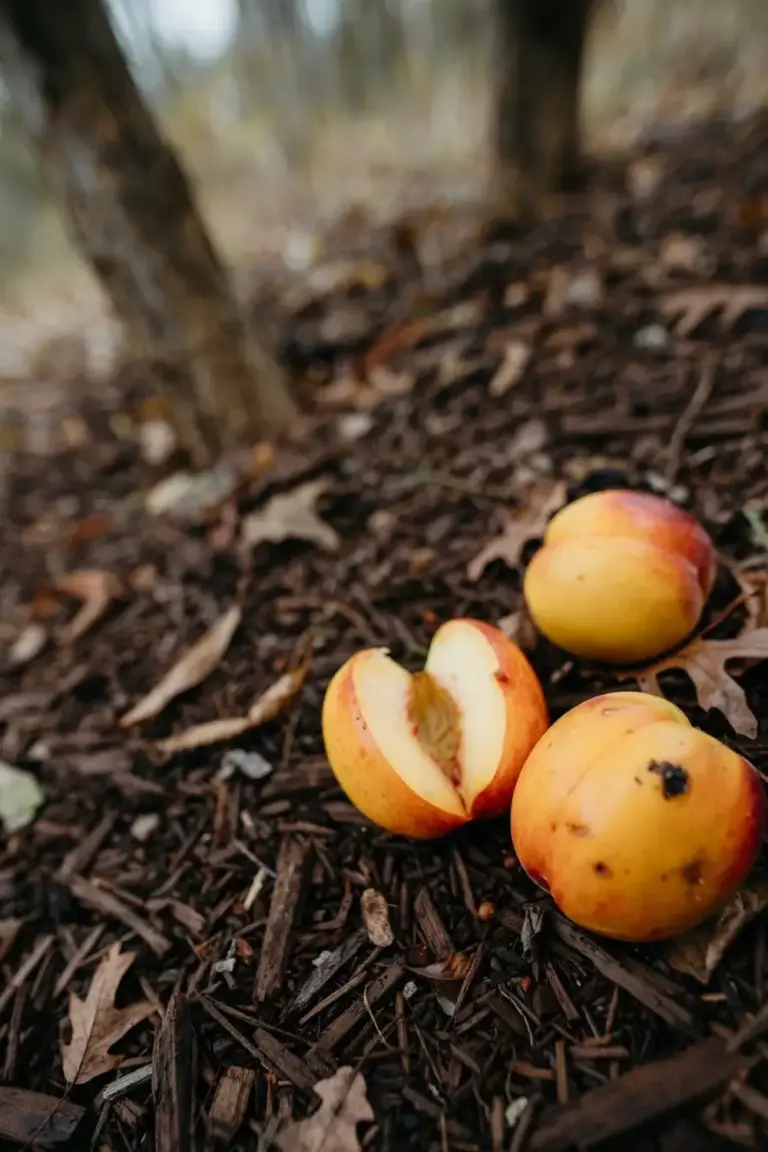
The confirming test is the cut. Pick up a fallen fruit and cut it open. Natural thinning drops small, clean fruit with no damage inside, brown rot drops fruit with soft brown decay, and fruit fly drops fruit with sting marks on the skin and maggots inside. Look for a small dark sting mark on the skin of fallen fruit. Look for maggots in the flesh. Maggots mean fruit fly. The Agriculture Victoria Queensland fruit fly guide calls exclusion the best control: netting, bags, or sleeves stop the female fly from reaching the fruit.
The first fix follows the cause. Natural thinning needs no action. Thin the remaining fruit by hand so the tree carries a load it can finish. Disease drop needs the brown rot cleanup from the earlier section. Fruit fly drop needs exclusion and hygiene. Net the tree after pollination, once fruit has set, and seal the netting at the trunk or the ground. Pick up fallen fruit every day, and destroy it by bagging and binning. Do not compost infested fruit. Do not leave fallen fruit on the ground. Fallen fruit breeds the next generation.
No Fruit or Poor Fruit Set: Flowers Come, Fruit Does Not
No fruit has four common causes: chill hours fall short, frost kills the flowers, over-pruning removes the fruiting wood, and excess nitrogen pushes leaves instead of flowers. The tree looks healthy in each case. The flowers tell the story.
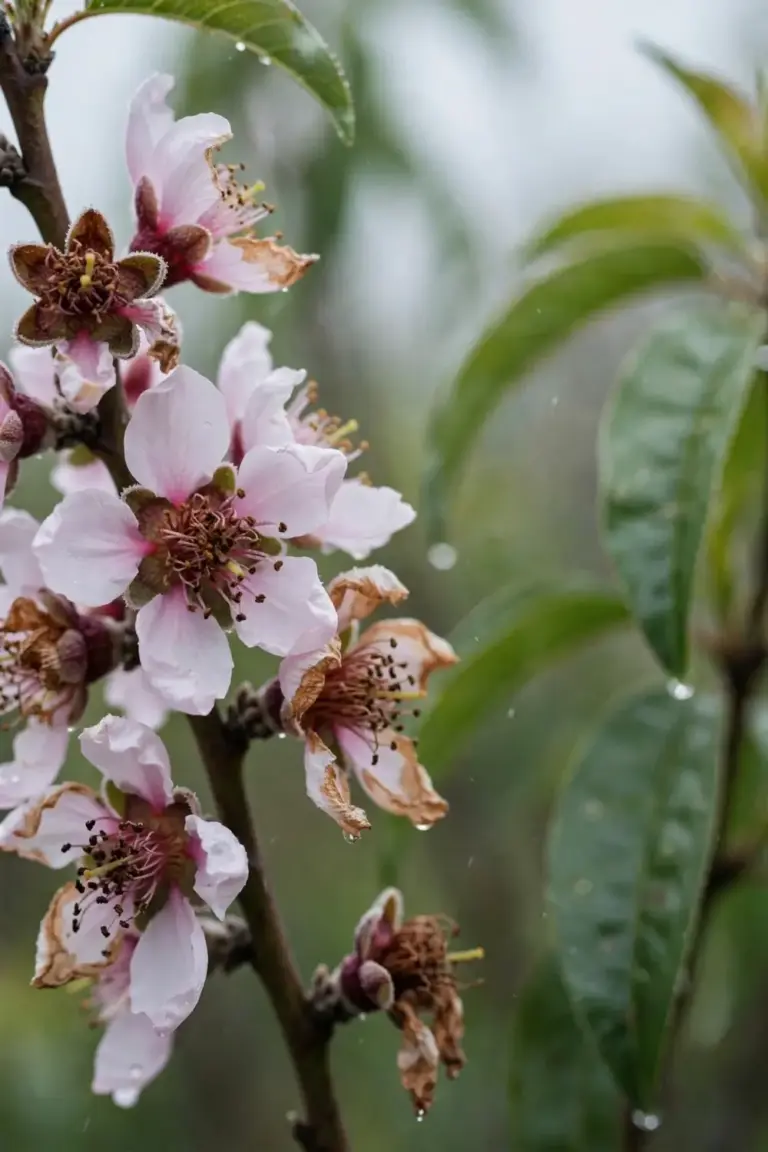
The confirming test is the flower. Check flower centers after a cold night: brown centers mean frost killed the flower. Check the pruning, since fruiting wood carries the crop and heavy winter pruning removes it. Check the feeding, since a tree fed heavily with nitrogen grows leaves at the expense of flowers. Check the winter. A warm winter without enough chill leaves buds uneven and fruit set poor. A peer-reviewed review of stone fruit chilling requirements puts the nectarine range at 90 to 426 chill hours across cultivars. Named cultivars show the spread: Aprilglo needs 12 chill portions, Mayglo 18, Sunlite 33, Flavortop 41, and Fantasia 42, per the University of California chill portions table.
The first fix is next season’s plan. This season holds no fix that forces fruit. Pick a low-chill variety for a warm district, and protect bloom from frost with a frost cloth on cold nights. Prune after harvest and keep the fruiting wood. Hold nitrogen feed. A young tree crops lightly in its first seasons, so give it time before you judge it.
Yellowing Leaves: Yellow Leaves Across the Canopy
Yellowing leaves have three common causes: water stress, nutrient shortage, and waterlogging. The pattern narrows the cause. The soil test settles it.
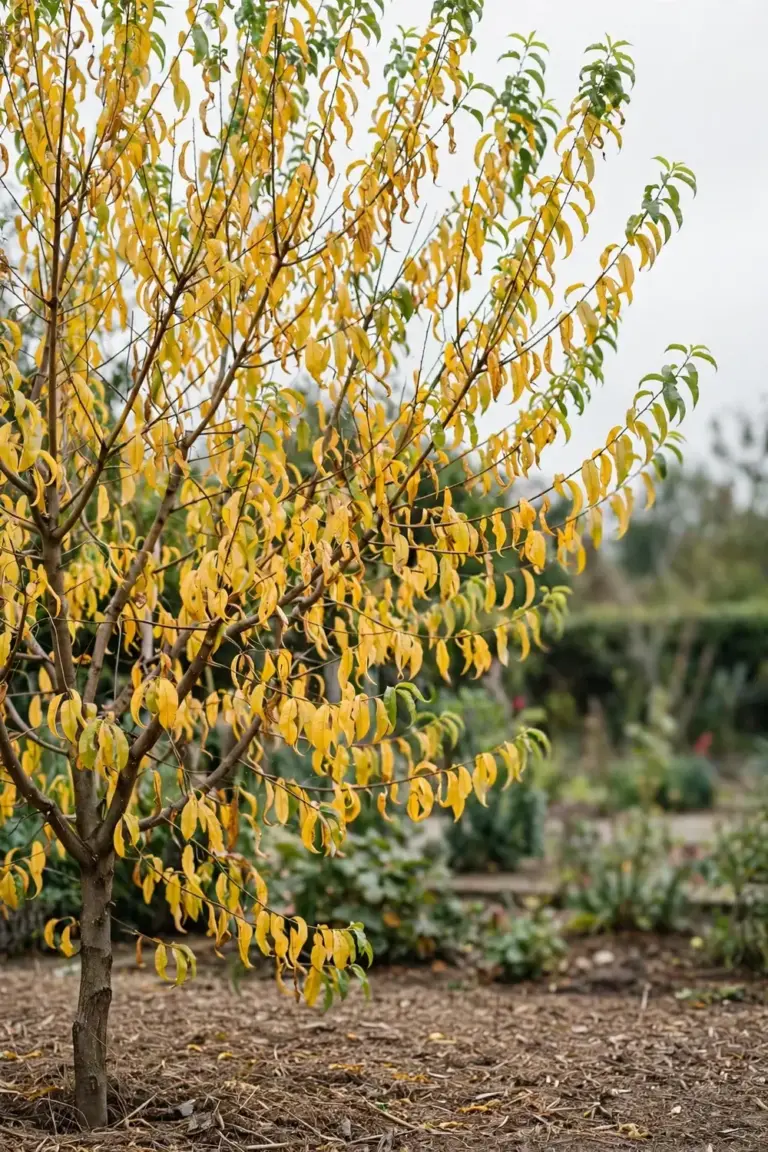
The confirming test is the finger test plus the pattern. Push a finger 5 cm into the soil. Dry soil means underwatering. Sodden soil means overwatering or poor drainage. Check the pattern. Old leaves yellow first when mobile nutrients run short. Young leaves yellow first when iron runs short. The whole canopy yellows at once with water trouble. Check the drainage. Water that sits on the surface after watering means the roots sit in water. Roots in water starve for air. Starved roots cannot feed leaves.
The first fix is water before food. Water deeply if the soil is dry, and stop watering and improve drainage if the soil is sodden. Feed only after the water is right. Food in sodden soil feeds nothing. A soil test settles a nutrient question that the finger test cannot answer. The site’s soil health guide covers testing and repair in full. Roots that smell sour and look brown and mushy mean root trouble, not a food shortage. Root trouble needs drainage and air, not fertilizer.
Dieback: Branches Die Back From the Tips
Dieback is a symptom, not a single disease. Branches die from the tips inward. Leaves wilt on one branch while the rest of the tree looks sound. Gum oozes from cankers. Cankers sink into bark. The cause sits where the death starts. The fix follows the cause.
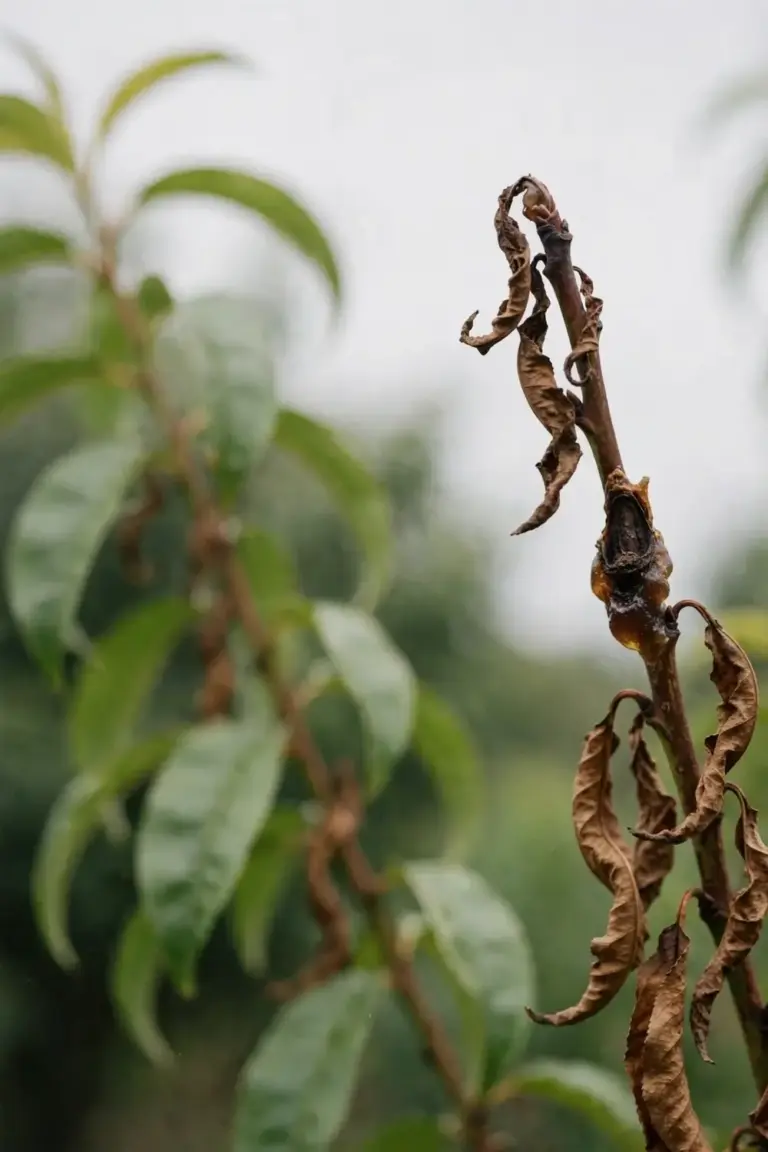
The confirming test is the scratch test: scratch the bark on a dying branch with a thumbnail. Green tissue under the bark means the wood is alive, and brown tissue means the wood is dead. Check for gum and cankers on the branch, since gum plus a sunken canker points to bacterial canker. The site’s bacterial canker guide covers that disease in full. Frass plus a hole points to borers. No gum, no hole, and a dead branch after a dry spell points to drought. Knobbly galls at the crown point to crown gall. The NSW DPI orchard protection guide notes that crown gall infects the crown root and can cause significant losses in stone fruit trees.
The first fix is the cut. Cut dead wood back to healthy green tissue. Disinfect tools between cuts. Bin the prunings. Do not compost them. Check the water after the cut. A tree that dies back in a dry spell needs water first. A tree with cankers at the base or a whole dead canopy needs a different call. Call an arborist when the trunk shows cankers at the base. Call an arborist when more than half the canopy dies in one season. A tree with living wood on one side still has a future. A tree with dead wood from the crown up does not.
Run the Fix Order: Water, Sun, Pests, Then Disease
The fix order rules out the cheapest causes first: water comes first, sun comes second, pests come third, and disease comes last. Most sick nectarines recover with water and one cleanup. A spray program comes last.
Start with water. Push a finger 5 cm into the soil. Dry soil gets a deep soak. Sodden soil gets a drainage fix. Check the mulch. Mulch piled against the trunk holds water against bark and breeds trouble. Pull it back from the trunk.
Check sun next. Count the hours of direct sun the tree gets. A nectarine crops best in full sun. A tree in shade fruits poorly and dries slowly. Slow drying feeds leaf disease. Shade is a site problem. Pruning nearby growth helps. Moving the tree does not. A tree that never sees direct sun needs a new site, and that is a next-season job.
Check pests next. Turn over shoot tips for aphids. Lift bark bumps for scale. Look for holes and frass on the trunk. Pests leave physical evidence. Disease leaves patterns. Pests come first because a pest fix is faster than a disease fix. Water blasts aphids off. Oil smothers scale. Removal takes out borers.
Check disease last. Match the pattern to the table at the top of this page. Leaf curl means next season’s copper, brown rot means sanitation now, shot hole means cleanup and dry leaves, and dieback means the scratch test and the cut. One problem at a time. Fix the water, then fix the pest, then fix the disease. A tree with two problems needs two fixes in that order.
Frequently Asked Questions
No. Spraying after symptoms appear is too late, because the fungus is already inside the leaf and no spray reaches it there. Support the tree instead. Water deeply, feed lightly, and thin the fruit so the tree carries a lighter load while it regrows leaves. Mark the calendar for next season. Apply copper at leaf fall, then again at budswell before buds open. Two dormant sprays break the cycle.
No. Bin fruit with brown rot. Do not eat it. Do not compost it. The fungus lives in the rot and in the mummy. Compost does not kill it reliably. Remove mummied fruit from the tree and from the ground. Prune out blighted twigs. Cut below each sunken canker. Sanitation is the whole fix. A tree cleaned this winter carries less rot next season.
Four causes cover most cases. Chill hours fell short in a warm winter, frost killed the flowers on a cold night, over-pruning removed the fruiting wood, and excess nitrogen pushed leaves instead of flowers. Check flower centers for frost browning. Check the pruning. Check the feeding. Pick a low-chill variety for a warm district. Protect bloom from frost. Prune after harvest and keep fruiting wood.
No. Gum is a symptom. Borers, canker, and injury all cause gum. Borers leave a hole with fresh frass below it, canker leaves a sunken patch of bark with gum, and injury leaves gum at a wound or a pruning cut. Find the cause before you treat. A borer hole needs removal of the limb. A canker needs a cut back to healthy wood. A wound needs time and a healthy tree.
Remove the tree when the scratch test shows dead wood from the crown up. Remove it when cankers ring the base of the trunk. Remove it when more than half the canopy dies in one season and no living wood remains on the trunk. A tree with living wood on one side still has a future. Prune the dead wood, fix the water, and give it one season. A tree with no living wood has no future.
Start With the Location, Then the First Fix
The symptom’s location names the problem family, the table narrows it to one problem, the confirming test proves it, and the first fix starts the recovery. Water first. Sun second. Pests third. Disease last.
Once the tree recovers, the nectarine growing guide carries the full season plan, from chill hours to harvest. A healthy tree still needs the dormant copper spray at leaf fall. A healthy tree still needs mummies picked off in winter. The diagnosis ends here. The growing season starts with the next spray.