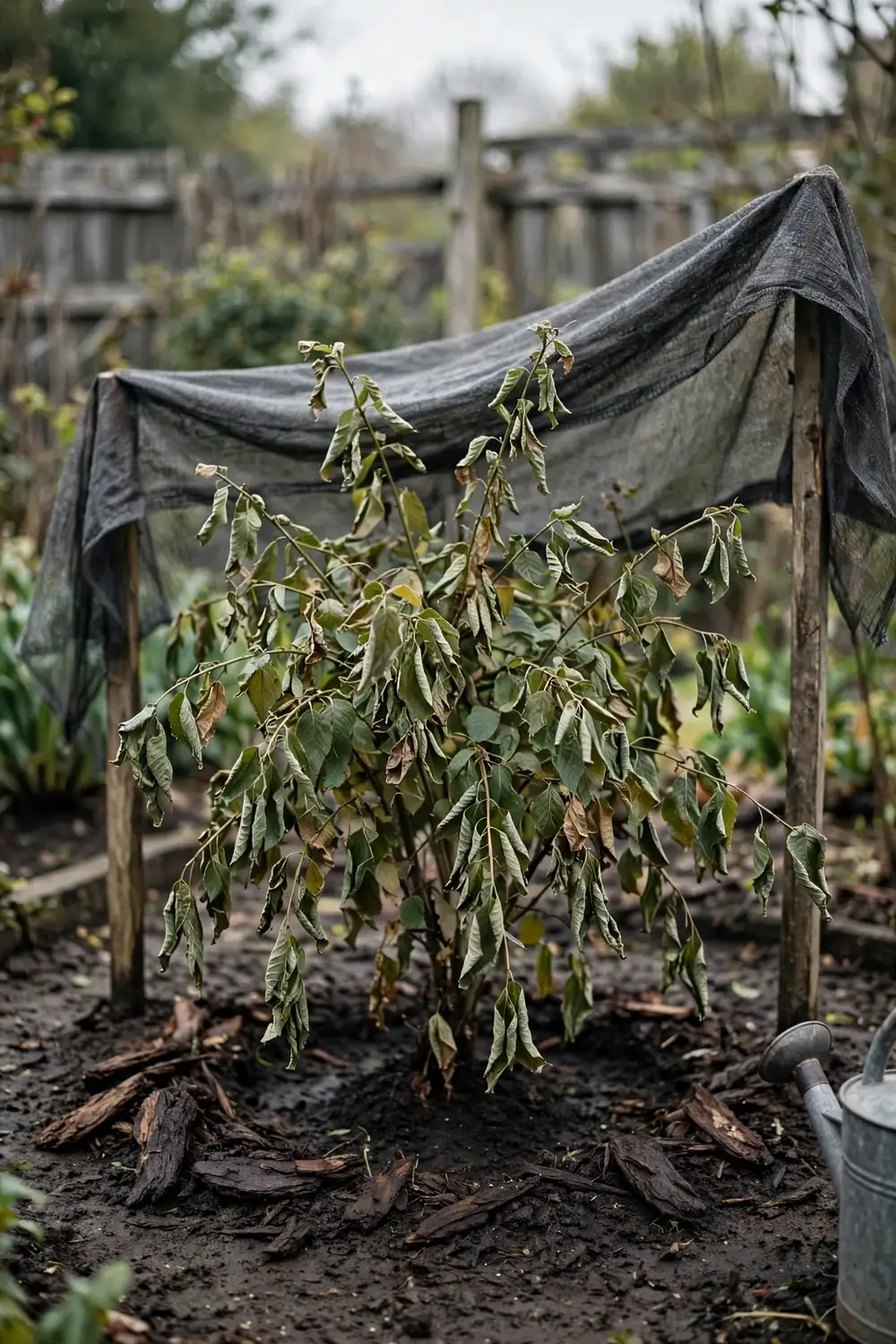

How to help a transplanted plant survive in Australia comes down to three moves in the first 72 hours. Water the root zone until it is moist right through. Shade it from hot sun and drying wind. Hold all fertilizer. Transplant shock means the roots cannot keep up with the water the leaves lose. The fix is less demand and steady moisture, not more product.
I have learned that the plant I water by feel, not by calendar, settles faster than the one I drown on a schedule. The finger test beats the calendar every time in the first two weeks.
The rest of this page runs the triage, the two-week rhythm, the five killers that finish a transplanted plant in Australia, the recovery signs, the failure signs, honest timelines, and when to leave the plant alone.
1. Run the First-72-Hours Triage: Water, Shade, Wind, No Feed
Run four checks in the first 72 hours: water, shade, wind, and feed. The plant is already in the ground. Your job now is to lower demand while the roots reconnect.
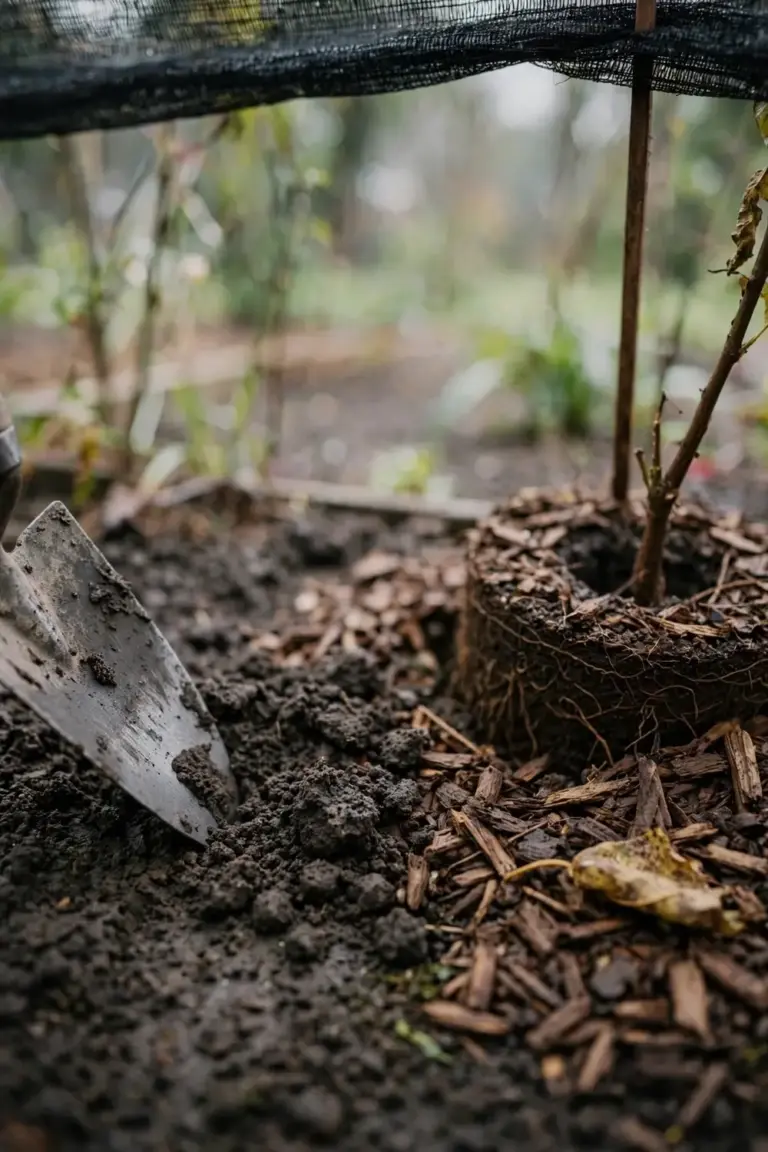
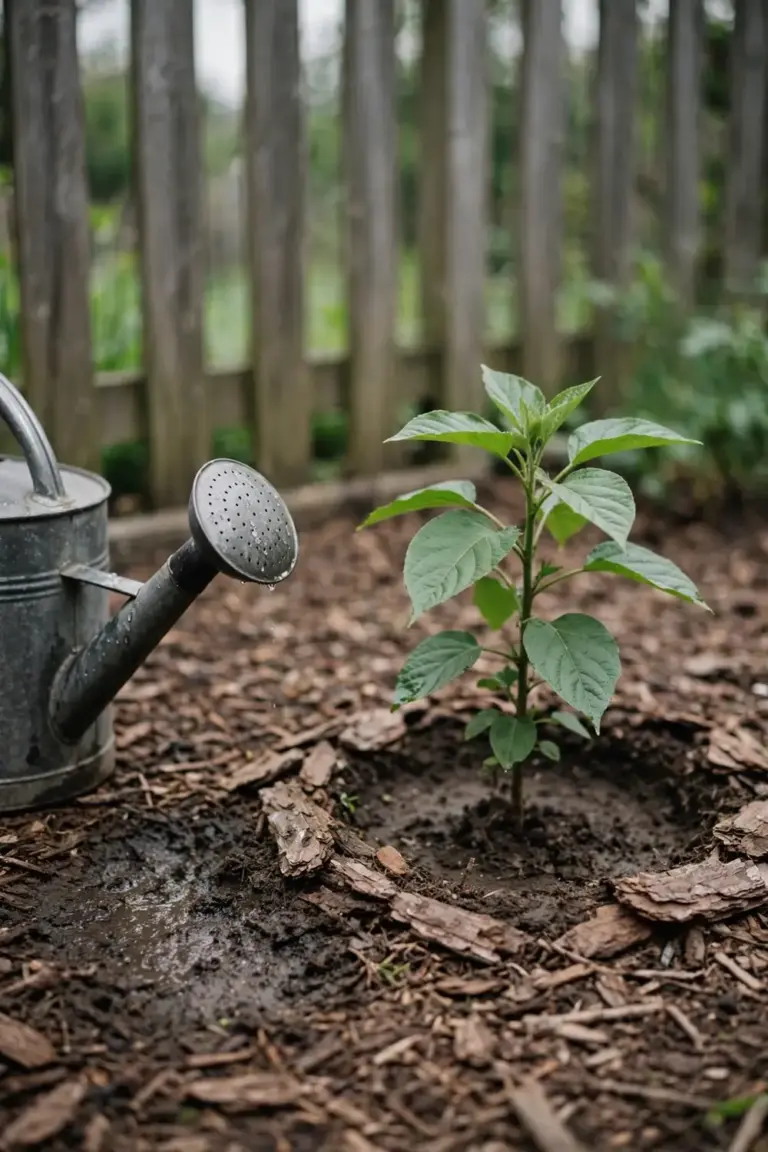
Push a finger 5 cm into the soil at the edge of the root ball. Dry soil at that depth means the plant needs water now. Damp soil means you wait. Water slowly at the base until the root zone is moist right through. Fast water runs off a dry root ball and leaves the middle dry. Slow water soaks in and settles the soil against the roots, which closes the air pockets that dry fine roots out.
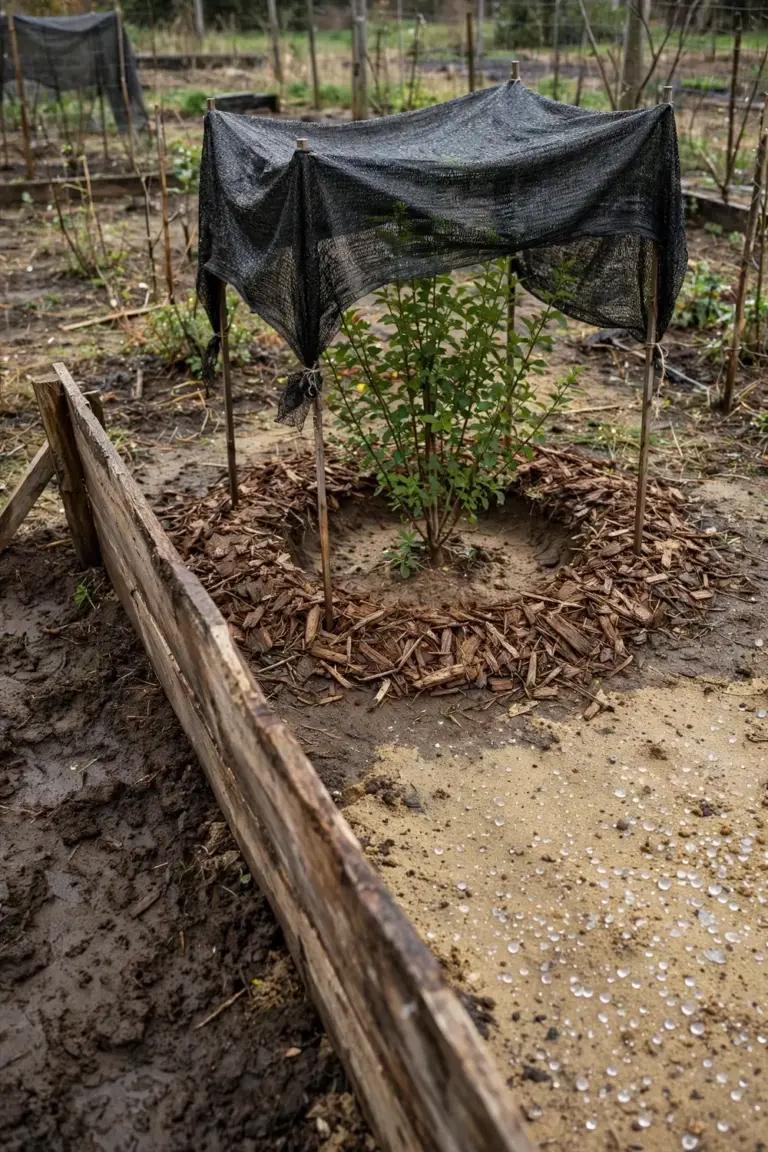
Shade the plant from hot afternoon sun for the first few days. A sheet of shade cloth on stakes, an upturned crate, or a taller pot moved to cast shade all work. Leave air moving under the cover. A plastic bag over the plant cooks it. Wind dries leaves faster than sun does. A board, a bin, or a fence panel on the windward side cuts the drying wind without sealing the plant in.
Check the planting depth while you are there. The place where the stem flares into roots should sit at the soil surface, not buried under it. A buried stem rots. A plant sitting far above the soil line dries out. If the depth is wrong, lift the plant and reset it at the right depth within the first 72 hours. That is the one correction worth making early. After that, leave the plant where it is.
Mulch the root zone and keep the mulch off the stem. A 5 to 8 cm layer of bark or wood chips holds moisture and cools the soil. Clemson Extension puts the band at 2 to 3 inches of mulch pulled away from the trunk, and warns that many plants die from too little or too much water in the first few months after planting, so the mulch and the moisture check work as a pair. Do not pile mulch against the stem. Wet mulch on bark invites rot.
Feed nothing in the first 72 hours. Fertilizer pushes soft new growth that the damaged root system cannot support. It also burns roots that are already wounded. The plant needs water and shade first. Food comes later, after new growth shows.
| Symptom | Action | When |
|---|---|---|
| Wilting in afternoon sun | Shade the plant and check soil moisture with the finger test | At once |
| Dry root ball | Water slowly at the base until the root zone is moist right through | At once |
| Soggy soil or standing water | Stop watering and check drainage before adding more | At once |
| Stem buried below the soil line | Lift and reset the plant at the right depth | Within 72 hours |
| Fertilizer already applied | Flush with plain water and add no more feed | At once |
| Leaves crisp and dry | Shade, water slowly, and check the stem with the scratch test | At once |
2. Follow the First-Two-Weeks Watering Rhythm
Water on a rhythm, not on a calendar. The rhythm starts daily, then stretches as the roots take hold. The University of Minnesota Extension sets the pace for newly planted trees and shrubs: water every day for 1 to 2 weeks after planting, then every 2 to 3 days for 12 weeks, then weekly until the roots are established. A steady 2.5 cm rain can replace one day of watering. The same guide puts the dose at 1 to 1.5 gallons per inch of trunk diameter, which converts to about 3.8 to 5.7 liters per 2.5 cm of trunk, and puts newly planted shrubs at about one quarter to one third of the volume of the container they came in.
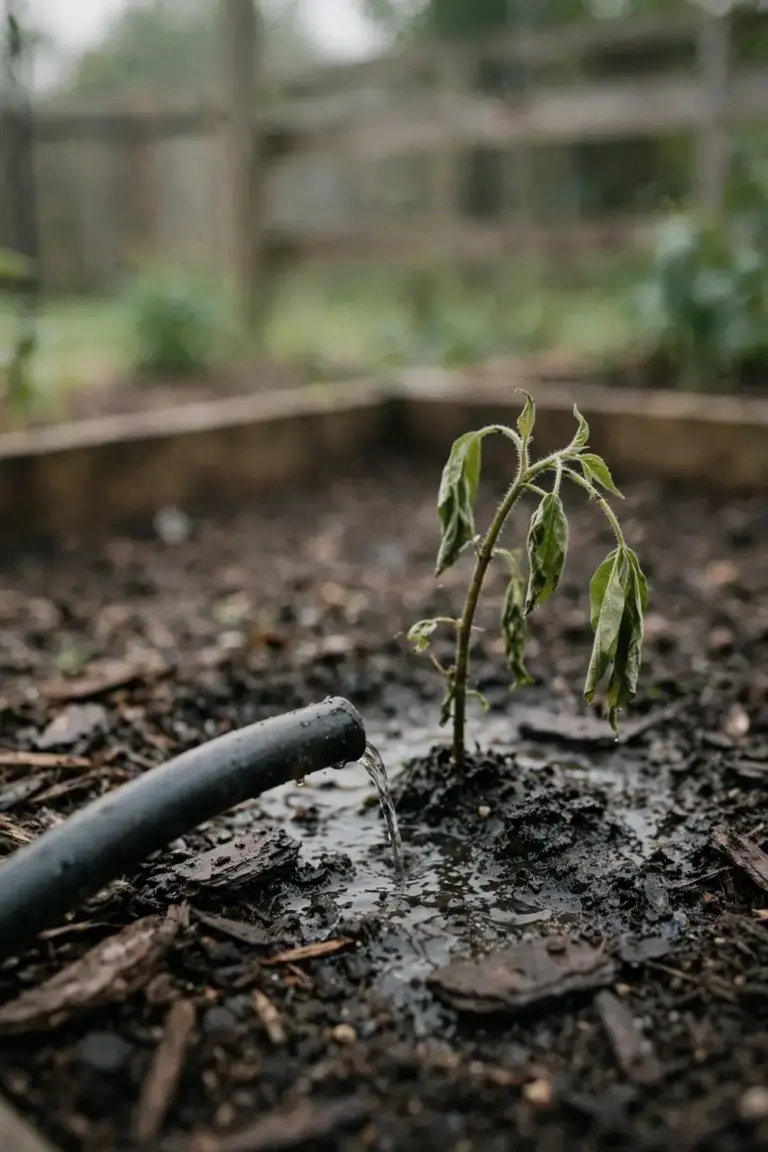
That schedule was written for Minnesota. Australian heat compresses it. In a hot week, check the soil twice a day and water in the early morning, when the plant loses the least water to evaporation. In a cool week, stretch the gap. The finger test still decides. Dry at 5 cm means water. Damp at 5 cm means wait. Watering on a fixed schedule in a cool week drowns the roots. Skipping checks in a hot week lets the root ball dry to a brick.
Water the root zone, not the leaves. Wet leaves in hot sun scorch. Wet leaves overnight invite fungus. Put the water where the roots are. A slow trickle from a hose at the base beats a hard spray from above. A watering can with a rose works for pots and small plants. For a large shrub or tree, leave the hose trickling at the base until the root zone is moist through, then stop.
Pots dry faster than ground soil. A transplanted plant in a pot needs a daily finger test in hot weather, because a small volume of potting mix can go from damp to bone dry in one hot afternoon. Move a struggling potted plant into light shade for the first week. A pot in full sun on a hot day bakes the root ball from every side. Ground-planted stock has the earth itself as insulation. Potted stock does not.
Keep the shade up through the first week in hot weather. Lift it gradually once the plant stops wilting by midday. Pulling the shade off on the hottest day of the week undoes the work. Ease the plant back into full sun over several days. A plant that holds its leaves up through a hot afternoon without wilting is ready for full sun.
Hold fertilizer through the first two weeks. A plant with no new growth has no use for feed. Once fresh growth appears, a half-strength seaweed tonic or a dilute starter solution is the usual Australian aftercare tonic. It feeds gently without forcing soft growth. Full-strength fertilizer still waits until the plant is growing steadily.
3. Beat the Five Killers That Finish a Transplanted Plant in Australia
Five killers finish most transplanted plants in Australian conditions. Each one has a simple counter, and the table below names all five before the paragraphs that follow give the fix for each.
| Killer | What It Does | Counter |
|---|---|---|
| Hot sun and drying wind | Leaves lose water faster than damaged roots can replace it | Shade cloth and a windbreak for the first week |
| Dry or hydrophobic soil | Water beads and runs off instead of soaking in | Slow soak, mulch, and a wetting agent if water beads |
| Waterlogging in clay | Roots sit in water with no air and rot | Stop watering, check drainage, and wait |
| Fertilizer too soon | Salts burn wounded roots and force soft growth | No feed until new growth shows |
| Moving the plant again | Each move tears new roots and restarts the shock | Leave it where it is |
Hot sun and drying wind are the first killer. A plant with a damaged root system loses water through its leaves all day. A hot westerly wind strips moisture faster than still sun does. Shade cloth on stakes cuts the sun. A board or bin on the windward side cuts the wind. Both stay up for the first week in hot weather. A plant that wilts every afternoon is losing more water than its roots can supply. Shade is the fastest way to close that gap.
Dry or hydrophobic soil is the second killer. Sandy soils in Australia often turn water repellent after a dry spell. The waxy skins on the sand grains bead water off instead of letting it soak in. CSIRO reports that more than 5 million hectares of Australian land are affected by water repellency, and that water either pools on the surface and evaporates or runs down a few preferred pathways while large volumes of soil stay dry. You can see it in a garden bed: water sits in beads on the surface and runs off instead of soaking in. The fix is a slow soak, not a harder spray. A wetting agent breaks the waxy coating and lets water reach the roots. A soil health program built on mulch and organic matter keeps the problem from coming back. Mulch shades the soil and slows the drying that makes repellency worse.
Waterlogging in clay is the third killer. Clay holds water and holds it for days. Roots in waterlogged soil run out of air and rot. The signs look like drought: wilting leaves, yellow foliage, no growth. The difference is the soil. Soggy soil means stop watering. Dig a small test hole beside the root ball. Water standing in the hole means drainage is the problem, not thirst. Let the soil dry before you water again. A plant in heavy clay needs less water, less often, than the same plant in sand.
Fertilizer too soon is the fourth killer. Fertilizer salts burn wounded roots. Nitrogen pushes soft leafy growth that the root system cannot supply with water. North Carolina State University Extension advises against a heavy application of fertilizer, especially nitrogen fertilizer, after planting, and recommends waiting until the roots are established and holding fertilizer until spring for a fall planting. Never put fertilizer in the planting hole where it touches roots directly. The rule is simple. No feed until the plant shows new growth. Then feed gently.
Moving the plant again is the fifth killer. Every move tears the fine roots that grew since the last move. The shock clock restarts. A plant that was moved twice is worse off than a plant moved once and left alone. Pick the spot, set the plant, and leave it. The only exception is the depth correction in the first 72 hours. After that, patience is the treatment.
4. Read the Signs It Is Recovering
A recovering plant shows new growth first. Fresh leaves, swelling buds, and firm leaves in the morning mean the roots are working again. The plant stops wilting by midday. The soil holds moisture longer between waterings. These signs arrive slowly. Watch for them weekly, not hourly.
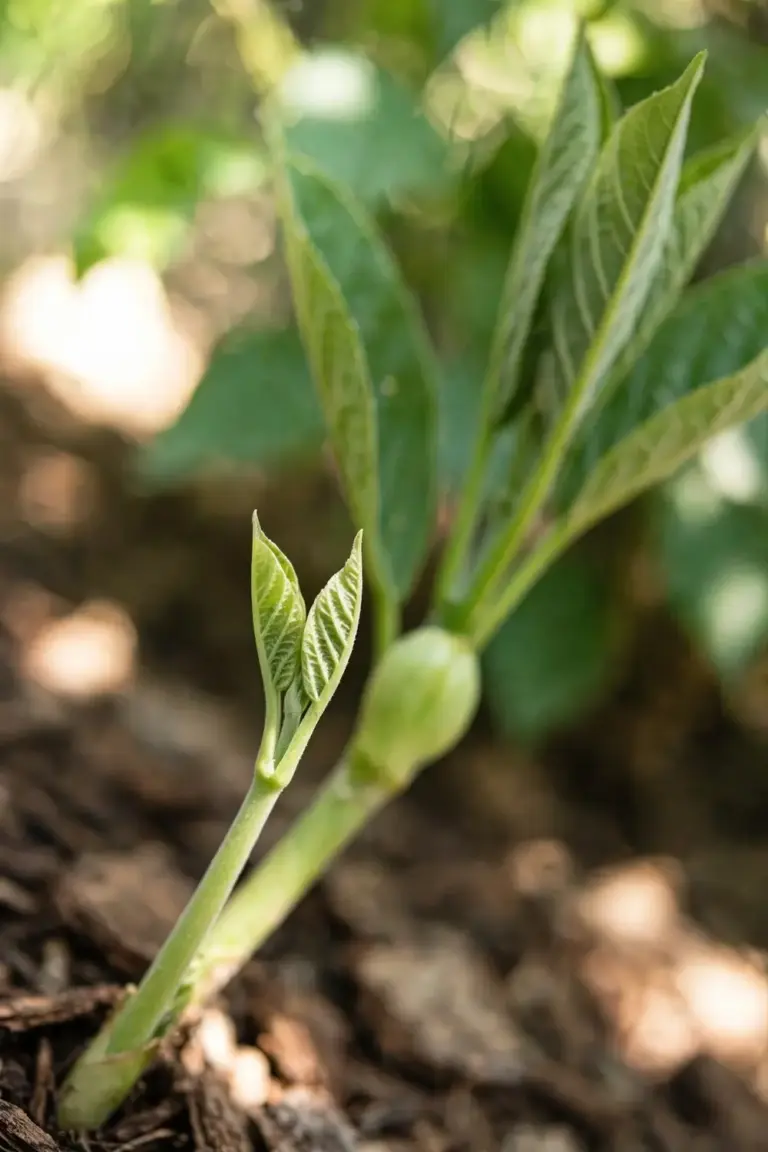
New growth is the clearest sign: a shoot tip that lengthens, a bud that opens, or a fresh leaf that unfurls means the root system is taking up water again. Growth may be small at first, because the plant spends energy on roots first and leaves second. A few millimeters of new shoot is enough. Small growth is real growth.
Firm leaves in the morning are the second sign. A shocked plant wilts in the afternoon and recovers overnight. A recovering plant holds its leaves up through the afternoon. The gap between morning firmness and afternoon wilt closes over days. When the leaves stay firm through a hot afternoon, the roots have caught up with the demand.
Buds tell the story on woody plants. Swelling buds mean the plant is alive and planning growth. Buds that stay hard and dry for weeks mean the plant is still struggling. Scratch a small patch of bark on a twig with a fingernail: green tissue under the bark means living wood, while brown, dry tissue means that twig is dead. Check several twigs before you judge the whole plant, because one dead twig does not mean a dead plant.
Soil behavior changes as the plant recovers. A root ball that dried out daily starts holding moisture for two or three days. The mulch stays damp longer. The finger test starts coming back damp at 5 cm on days you did not water, which means the roots are spreading into the surrounding soil and drinking from a bigger volume than the original root ball.
5. Read the Signs It Is Failing and Act Fast
A failing plant shows a different pattern. Leaves crisp at the edges and stay crisp overnight. Whole branches go brown. The stem turns soft at the base. No new growth appears after two months. Each sign points to a different problem, and each one has one action.
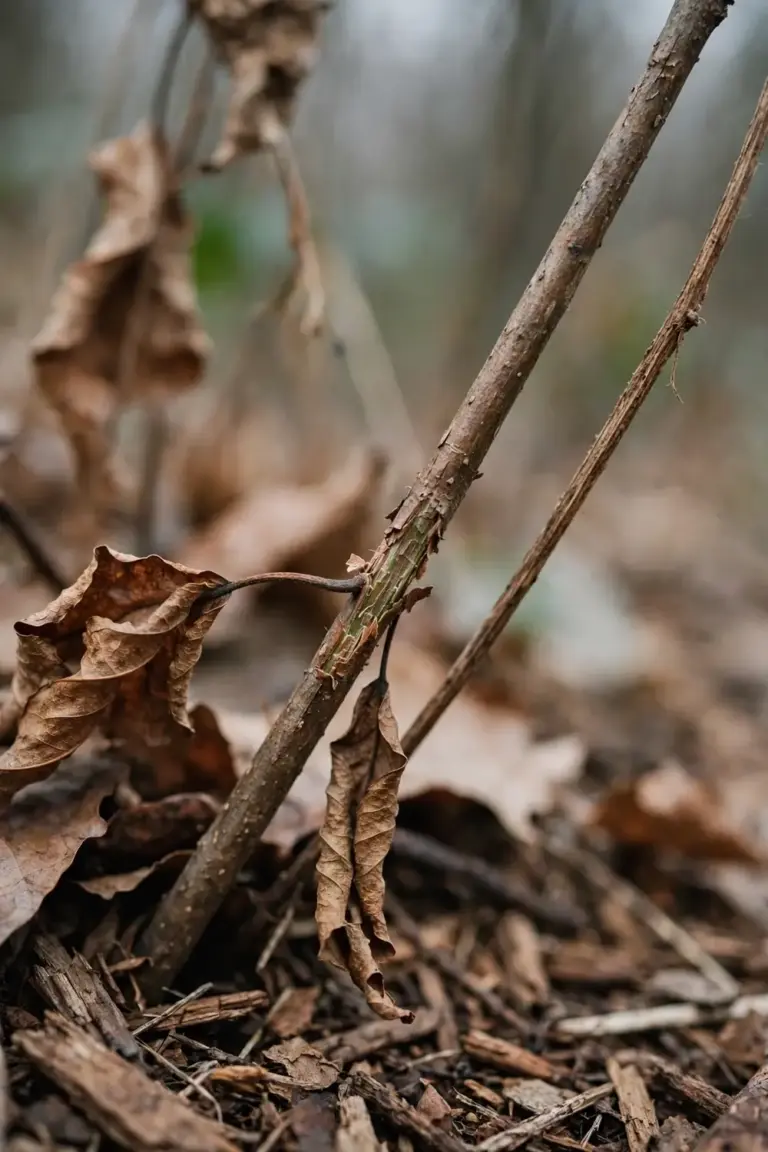
Leaves that crisp and stay crisp overnight mean the plant is not taking up water at all. Check the soil first. Bone-dry soil means a slow soak is needed. Soggy soil means the roots are drowning and watering more will finish the plant. The finger test decides. Water or wait, based on what your finger finds.
Brown branches mean dieback. Cut the dead wood back to living tissue. Living tissue shows green under the bark when you scratch it. Dead tissue is brown and dry all the way through. Prune only the dead wood. Cutting live wood off a struggling plant removes the leaves it needs to feed its recovery. The spring pruning techniques guide covers the cuts themselves. Keep the cuts small and clean.
A soft stem base means rot. Rot comes from water sitting against the stem. Pull the mulch back from the stem, stop watering, and let the base dry. A plant with a soft, mushy stem base rarely recovers, but drying the base gives it the only chance it has. Do not feed a rotting plant. Do not wrap the stem. Air and dry soil are the treatment.
No new growth after two months means the plant is stalled, not dead. Check the scratch test on several branches. Green under the bark means the plant is alive and still building roots. Keep watering on the rhythm and wait another month. Brown under the bark on every branch means the plant is gone. Replace it, and fix the cause before you plant the replacement. A replacement planted into the same dry hole, the same waterlogged clay, or the same buried depth fails the same way.
Pests and diseases are pointers only here. A plant weakened by transplant shock attracts aphids and fungus. Treat the shock first. The pests usually fade once the plant is growing again. A plant with a spreading disease needs its own diagnosis. That diagnosis belongs to a disease guide, not to aftercare.
6. Give It the Recovery Timeline It Actually Needs
Recovery takes weeks, not days. The timeline depends on the size of the plant. Small plants recover fast. Large plants take a full season. Expecting a tree to recover in a week sets you up to overwater, overfeed, and move it again.
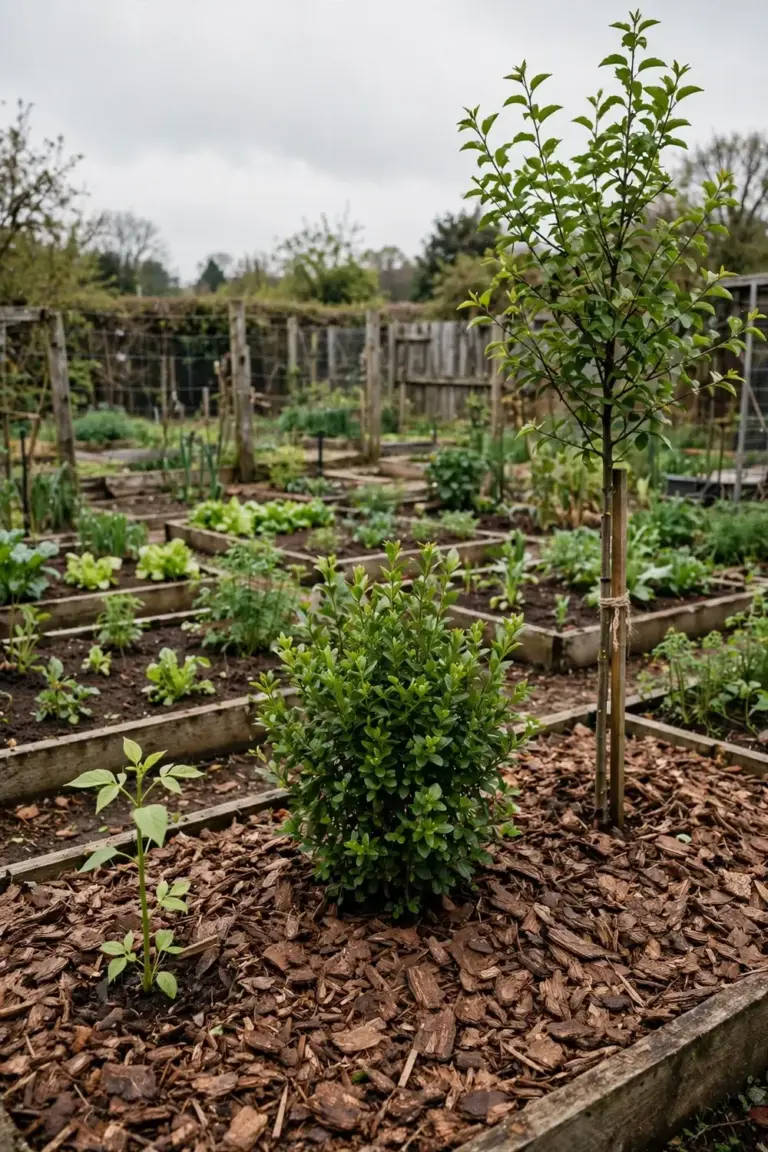
Seedlings and small potted plants recover fastest. New growth usually shows within one to two weeks of the move. A seedling that still wilts after two weeks needs the triage checks again: water, shade, wind, depth. A seedling that shows new leaves is on its way. Ease off the shade and stretch the watering gap.
Shrubs take longer. Four to eight weeks is the honest band for a shrub to show steady new growth. A shrub that drops some leaves in the first weeks is not failing. Leaf drop is the plant shedding demand it cannot supply. New leaves replace them once the roots catch up, so judge a shrub by the new growth it puts out, not by the leaves it shed in the first weeks.
Trees take a full growing season. A transplanted tree may look unchanged for months while it rebuilds its root system underground. The first season is about survival, not growth. The second season is when the tree starts to grow again. A tree that holds its leaves and shows buds in spring after a transplant has survived the hard part.
Bare-root stock recovers slower than container stock. Bare-root plants lose most of their fine roots in digging. Container plants keep their root ball intact. A bare-root plant that looks dead in the first month may still be alive. Run the scratch test before you give up on it. Green under the bark means wait.
Timing the move helps next time. Late autumn and late winter moves give the plant cool months to grow roots before summer heat arrives. A plant moved in late autumn has winter rain and cool soil on its side. A plant moved at the start of summer faces the hardest weeks with the fewest roots. The fall garden bed prep guide covers getting the bed ready before a cool-season move. A summer move is still survivable. Shade and water carry the whole job when the timing is against you.
7. Leave It Alone Once It Turns the Corner
A plant that shows new growth and holds its leaves through a hot afternoon has turned the corner. Your job now is to get out of the way. Remove the shade. Stretch the watering gap. Stop checking daily.
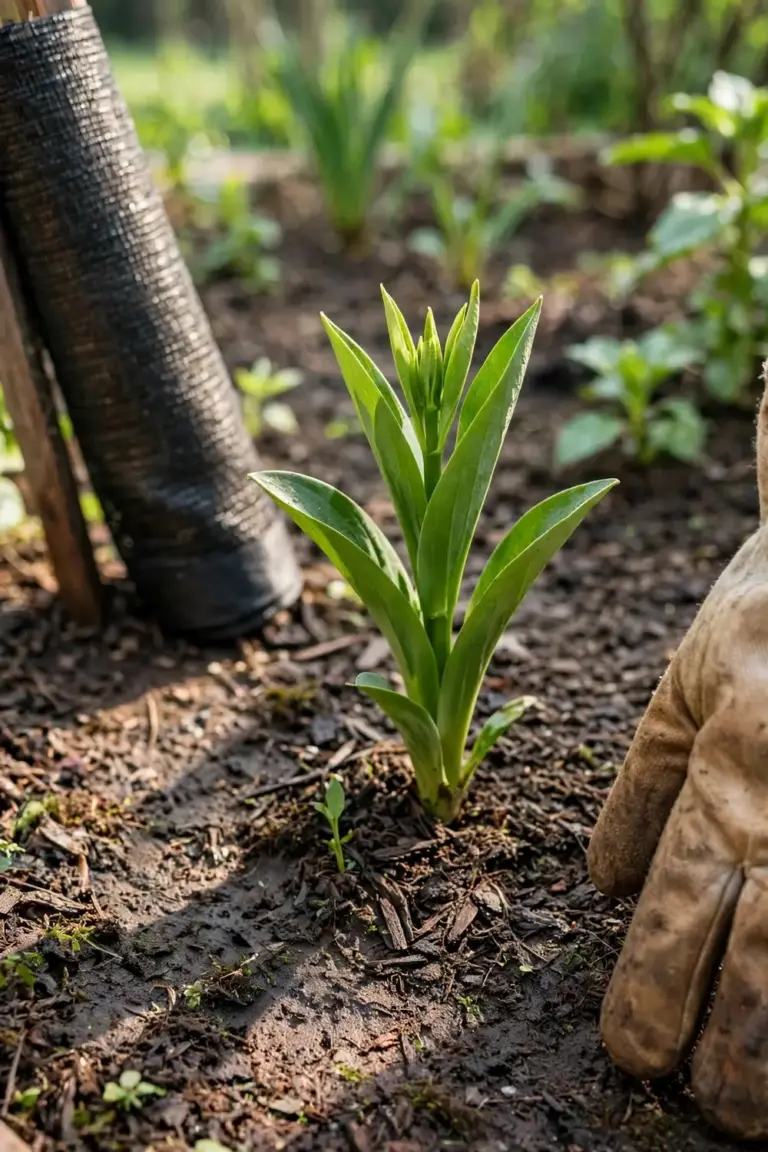
Pull the shade cloth once the plant holds firm through two hot afternoons in a row. Leaving shade up too long grows soft, weak leaves that scorch when the shade finally comes off. Ease the plant into full sun over a few days. A plant that was shaded for a month needs a week of mornings in sun before it takes a full hot afternoon.
Stretch the watering gap. Move from daily watering to every two or three days, then to weekly. The finger test still decides. A plant that holds moisture for three days does not need water on day two. Overwatering a recovering plant rots the new roots it just grew. The roots need air as much as water.
Feed only after steady growth shows. A half-strength seaweed tonic or a dilute starter solution is the gentle first feed. Full-strength fertilizer waits until the plant is growing on its own. A plant fed too early puts on soft growth that wilts at the first hot day. A plant fed after it is growing puts the feed into real growth.
Check weekly, not daily. Weekly checks catch real change. Daily checks invite fiddling. A plant left alone grows roots. A plant fussed over gets moved, pruned, fed, and watered on a schedule that suits the gardener, not the plant. The best aftercare after the first two weeks is a weekly look and a finger test.
Drop the stakes once the plant stands firm on its own. A stake left on for a season teaches the stem to lean on it instead of growing strong. A plant that rocks in wind needs the stake for one more month. A plant that stands still in a gust is ready to stand alone.
8. Frequently Asked Questions
Water daily for 1 to 2 weeks, then every 2 to 3 days for 12 weeks, then weekly until the roots are established. That is the University of Minnesota Extension rhythm for newly planted trees and shrubs. Check the soil with a finger test at 5 cm before each watering. Dry soil means water, while damp soil means wait. Hot weather compresses the schedule, while cool weather stretches it.
No. Hold all fertilizer until the plant shows new growth, because fertilizer salts burn wounded roots and nitrogen pushes soft leafy growth that a damaged root system cannot supply with water. North Carolina State University Extension advises against heavy fertilizer, especially nitrogen, after planting, and recommends waiting until the roots are established. Once new growth appears, a half-strength seaweed tonic or a dilute starter solution is the gentle first feed.
Wilting after watering means the roots cannot take the water up. The root system is damaged, and damaged roots cannot keep up with the water the leaves lose on a hot day. Shade the plant and cut the wind, then check the soil with a finger test. Soggy soil means stop watering and check drainage, while dry soil means a slow soak. Wilting that recovers overnight is shock, while wilting that stays overnight is a bigger problem.
Cut dead wood only. Dead branches show brown, dry tissue under the bark when you scratch them. Leave living wood alone. The leaves feed the recovery. Heavy pruning removes the food factory the plant needs to grow new roots. A plant that drops some leaves on its own is shedding demand it cannot supply. Let it drop them. New leaves replace them once the roots catch up.
Seedlings usually recover within one to two weeks. Shrubs take four to eight weeks to show steady new growth. Trees take a full growing season. Bare-root stock recovers slower than container stock because digging removes most of its fine roots. Judge recovery by new growth, not by the calendar. A plant with green tissue under the bark is still alive. Give it time before you replace it.
9. Walk Away and Let the Roots Work
Transplant shock is a root problem with a simple treatment. Water the root zone. Shade the leaves. Block the wind. Hold the feed. Check the soil with your finger, then leave the plant alone to grow the roots it needs.
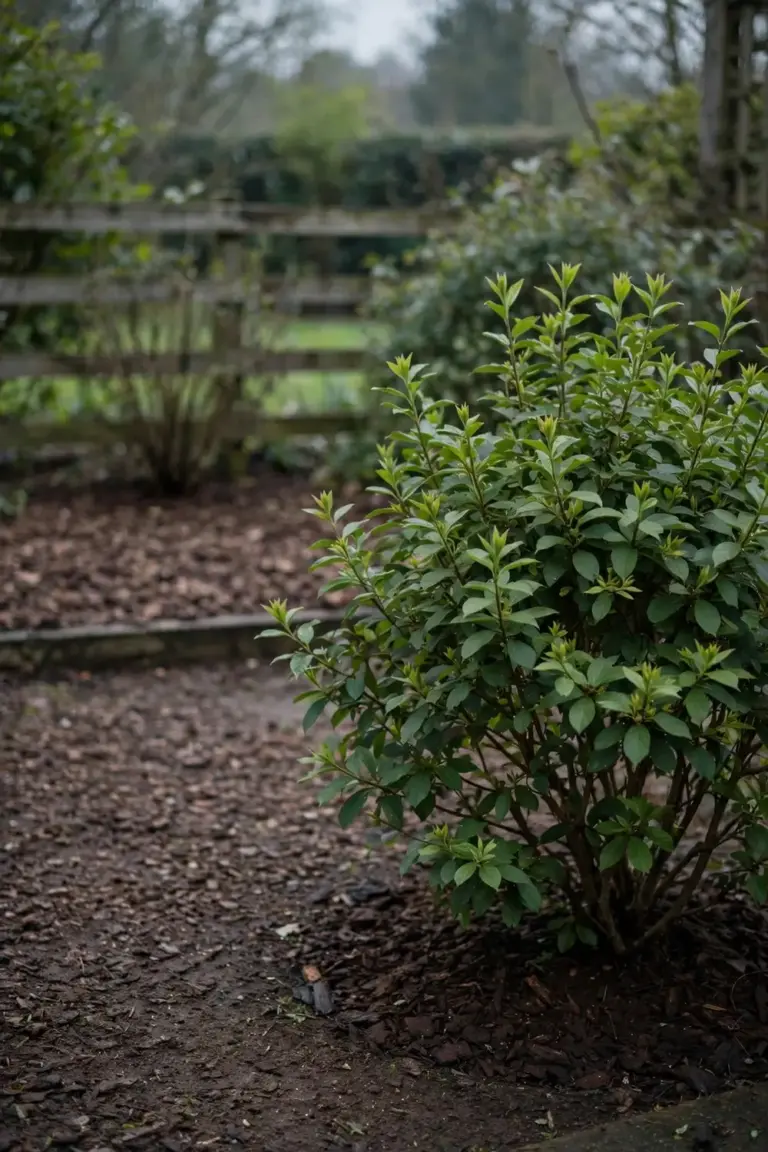
Most transplanted plants survive when the first 72 hours go right. The ones that fail usually fail from too much help: too much water, too much fertilizer, one more move. Do less, check weekly, and let the roots work. The plant will tell you when it has turned the corner. New growth is the signal. When it comes, step back and let the garden do the rest.