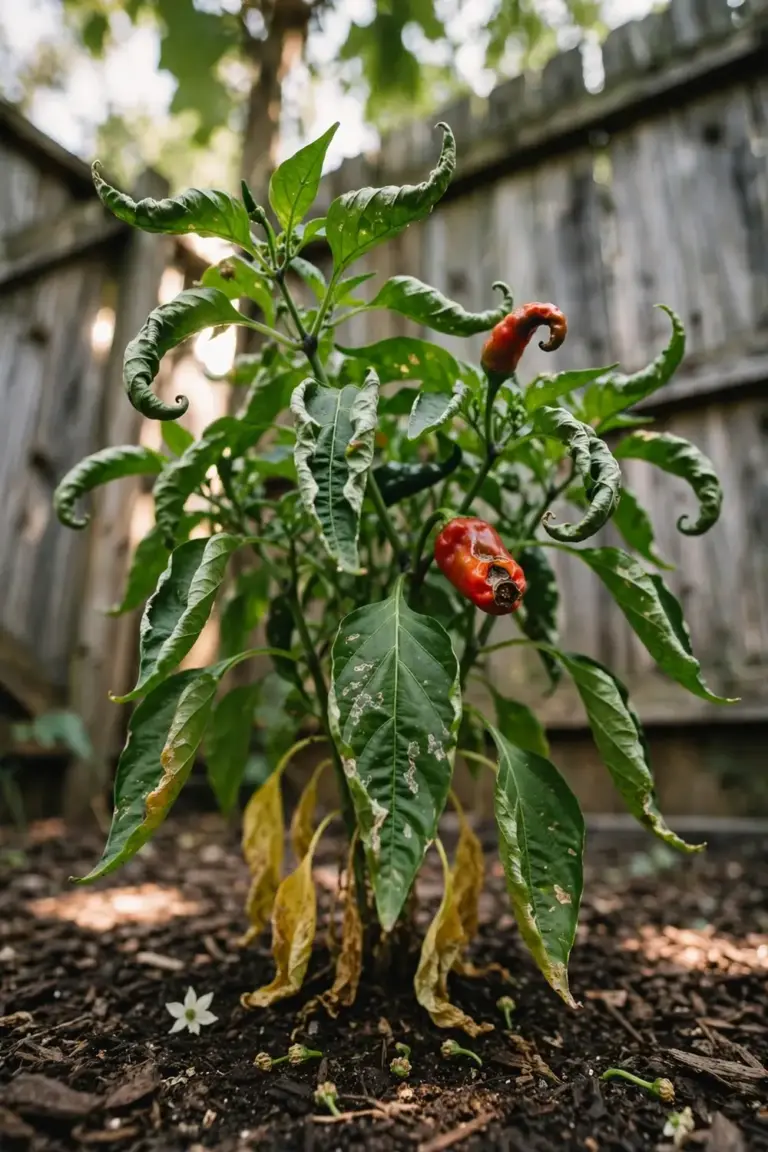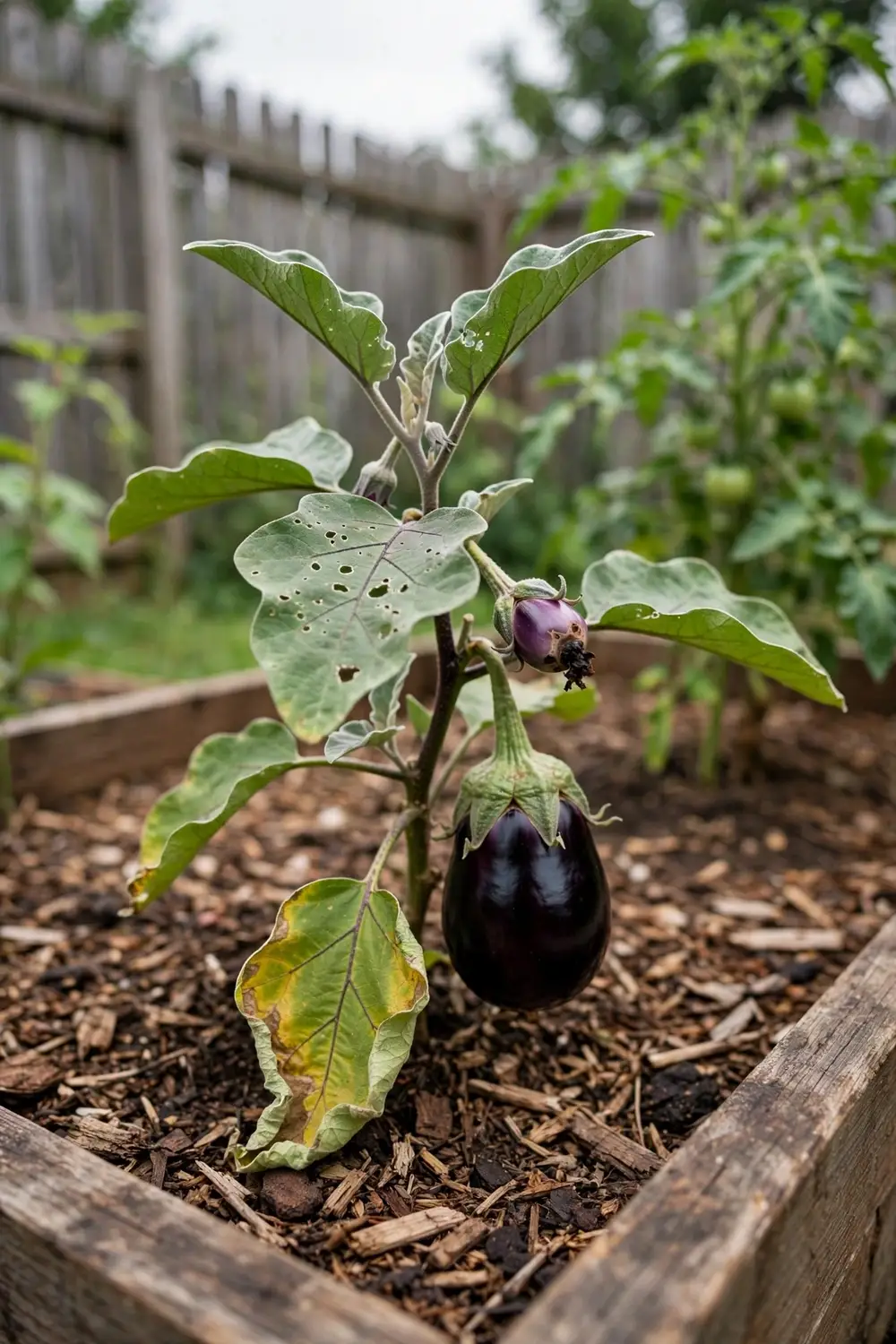

Eggplant problems in Australia follow a pattern, and 12 common causes cover nearly every complaint. Most are diagnosable from the symptom alone. Yellow leaves usually mean nitrogen or water trouble. Wilting in wet soil points to verticillium wilt, which the NSW Department of Primary Industries calls the most serious disease of eggplants. Shot holes mean flea beetles. This guide walks through each symptom, names the cause, and gives the fix.
Eggplant here means Solanum melongena, the purple fruit vegetable grown across Australia’s warm regions. “Wrong” means any problem that stops the plant growing or fruiting normally. Diagnosis means matching what you see to the cause, then acting on the match. This article covers diagnosis only. For growing instructions, the site’s eggplant growing guide covers planting and care.
1. Start With the Australian Context
Australia changes the eggplant calendar and the pest list. Eggplant is a heat-loving crop that needs warm soil and a long frost-free season. In temperate Australia, plant after the last frost and expect harvest through summer into autumn. In the subtropics and tropics, the season runs longer, but the wet season brings heavier pest and disease pressure.
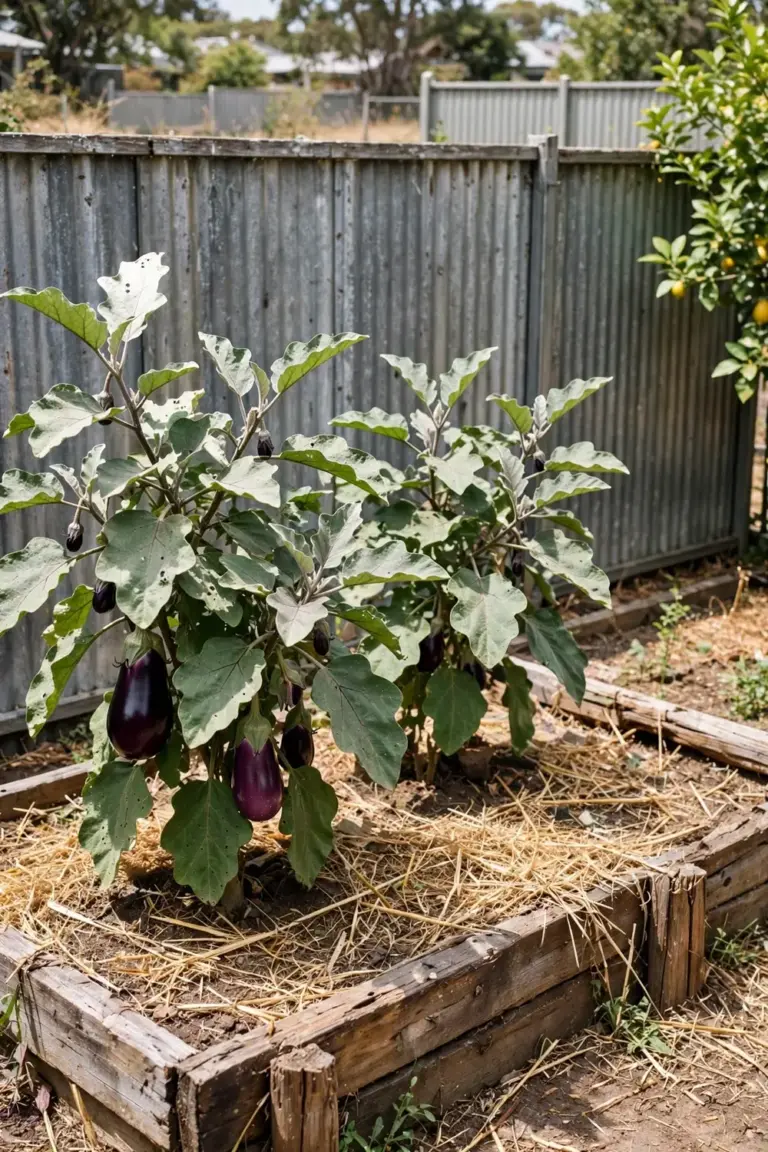
The pest list also shifts. Queensland fruit fly attacks eggplant fruit in eastern Australia, a pest northern-hemisphere guides never mention. The NSW Department of Primary Industries lists fruit flies among the main pests of eggplant fruit and flowers, alongside tomato caterpillars, eggplant caterpillars, aphids, and looper caterpillars. Leaf pests include leaf-eating ladybirds, spider mites, and tomato russet mites. Root pests include cutworms and root-knot nematodes.
Read every symptom below through this lens. A guide written for Ohio will not mention fruit fly. One written for Florida will not mention your frost dates. The causes are mostly the same worldwide, but the timing and the top pests are Australian.
Timing matters as much as identification. In Melbourne or Adelaide, a late spring frost can check young transplants and set them back weeks, which is why planting out too early is the beginner mistake behind most frost-checked transplants. In Brisbane or Darwin, the build-up humidity before the wet season favours fungal problems, so spacing for airflow matters more than it does in a dry climate. Match the advice below to your zone. A problem that peaks in February in Sydney may peak in April in Perth.
2. Yellow Eggplant Leaves: Check Nitrogen and Water First
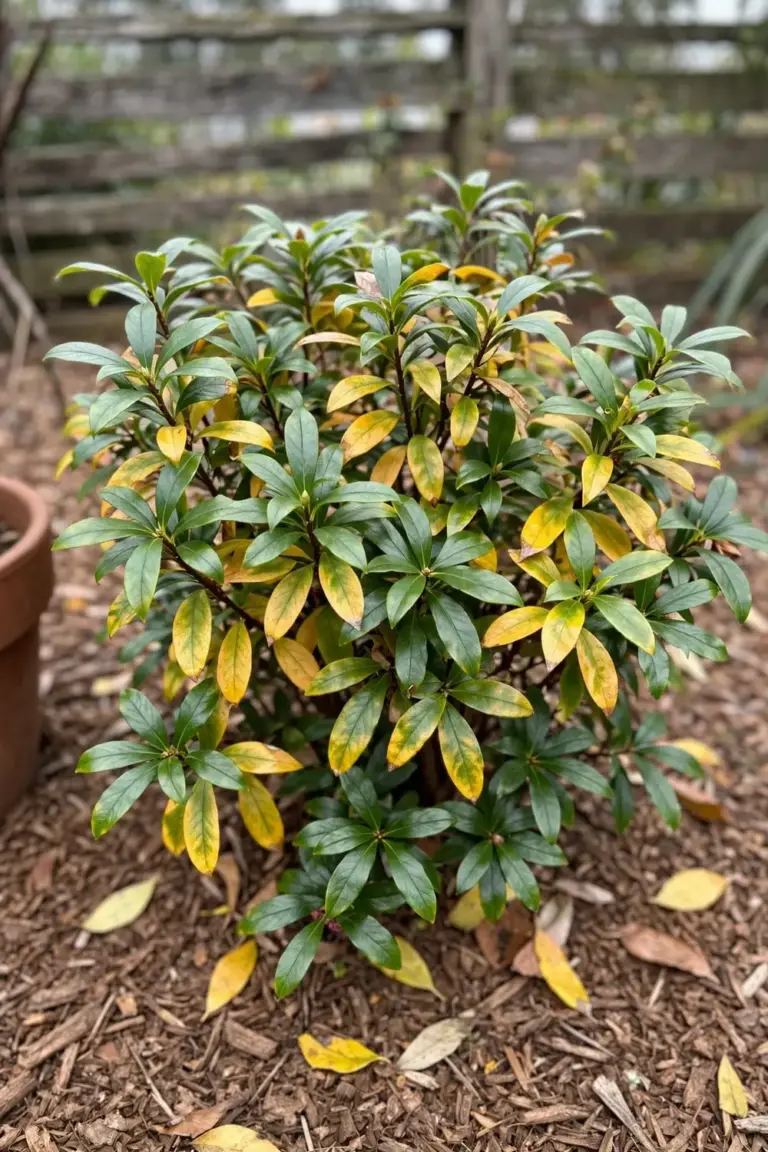
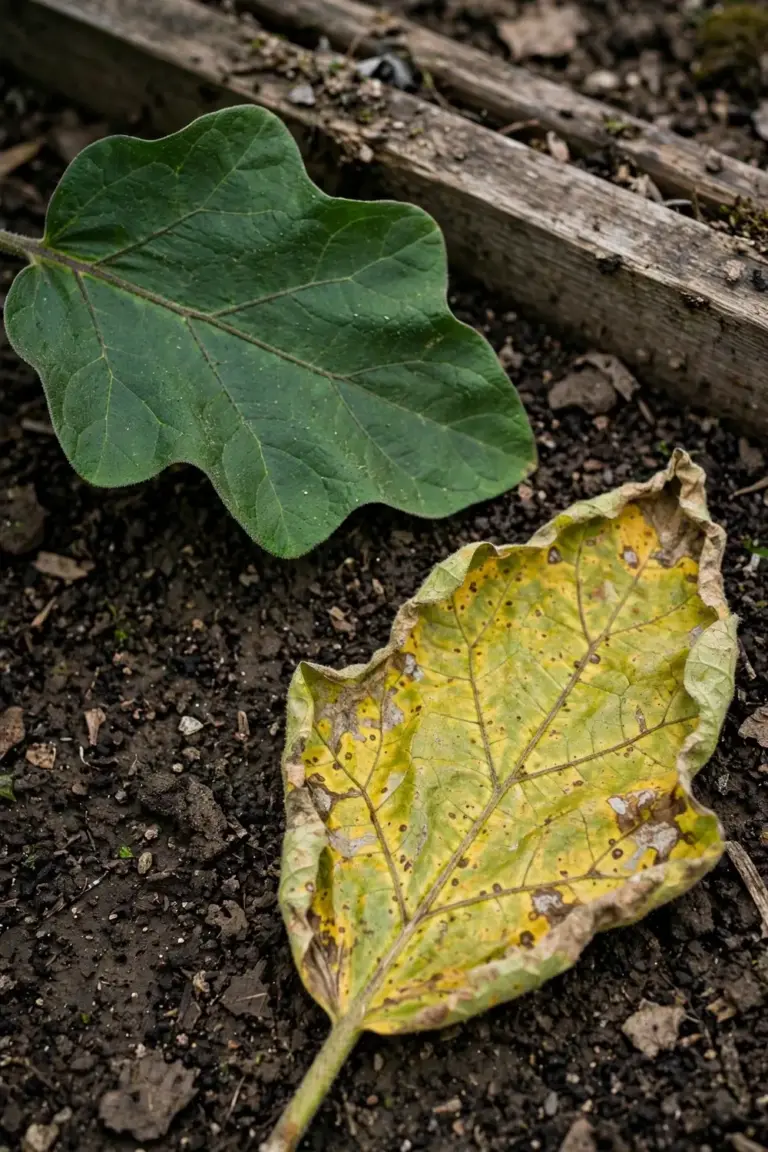
Yellow leaves are the most common eggplant complaint, and the cause is usually simple. Nitrogen deficiency yellows the oldest leaves first, starting at the bottom of the plant and moving up. The plant is moving nitrogen from old leaves to new growth, which is why the bottom goes first.
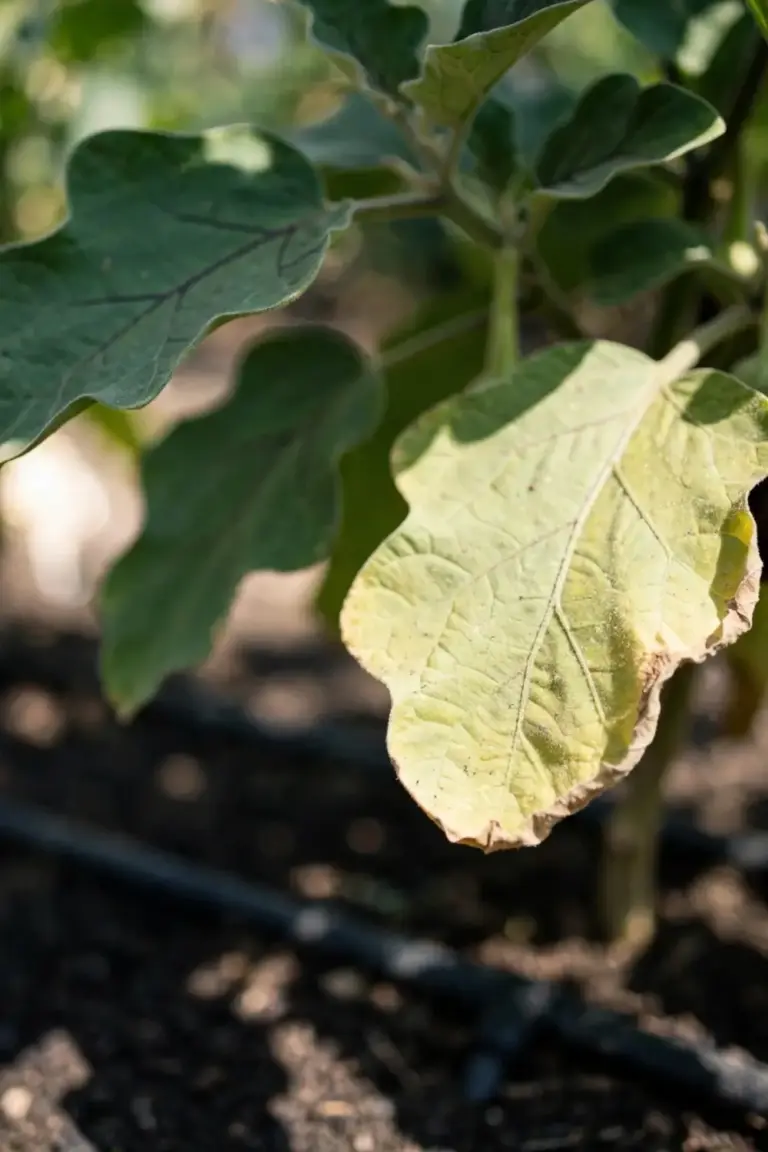
Overwatering yellows leaves too, but the pattern differs. Waterlogged roots cannot take up nutrients, so the whole plant pales at once instead of yellowing from the bottom up. Check the soil before you feed. Push your finger 5 cm into the soil. If it feels wet and the leaves are yellow, hold off on water and let the top dry. If it feels dry and the lower leaves are yellow, water deeply and consider a balanced feed.
A soil test settles the argument when the pattern is unclear. Do not guess at fertilizer rates. The fix for nitrogen deficiency is a balanced fertilizer applied at the label rate, not a handful extra. More nitrogen on an overwatered plant solves nothing.
3. Wilting in Wet Soil: Suspect Verticillium Wilt
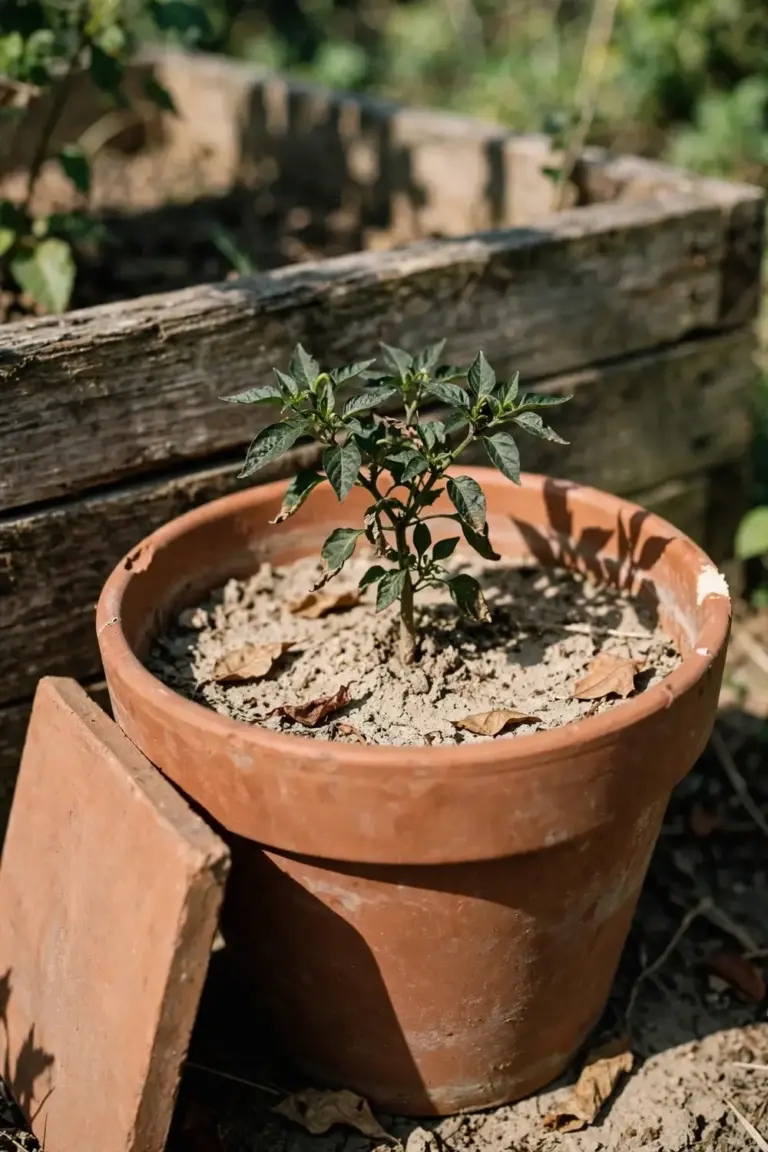
A plant that wilts when the soil is moist has a root or vascular problem, not a water problem. Verticillium wilt is the most serious disease of eggplants, according to the NSW Department of Primary Industries. The fungus blocks the water-conducting tissues, so the plant wilts even though water is available.
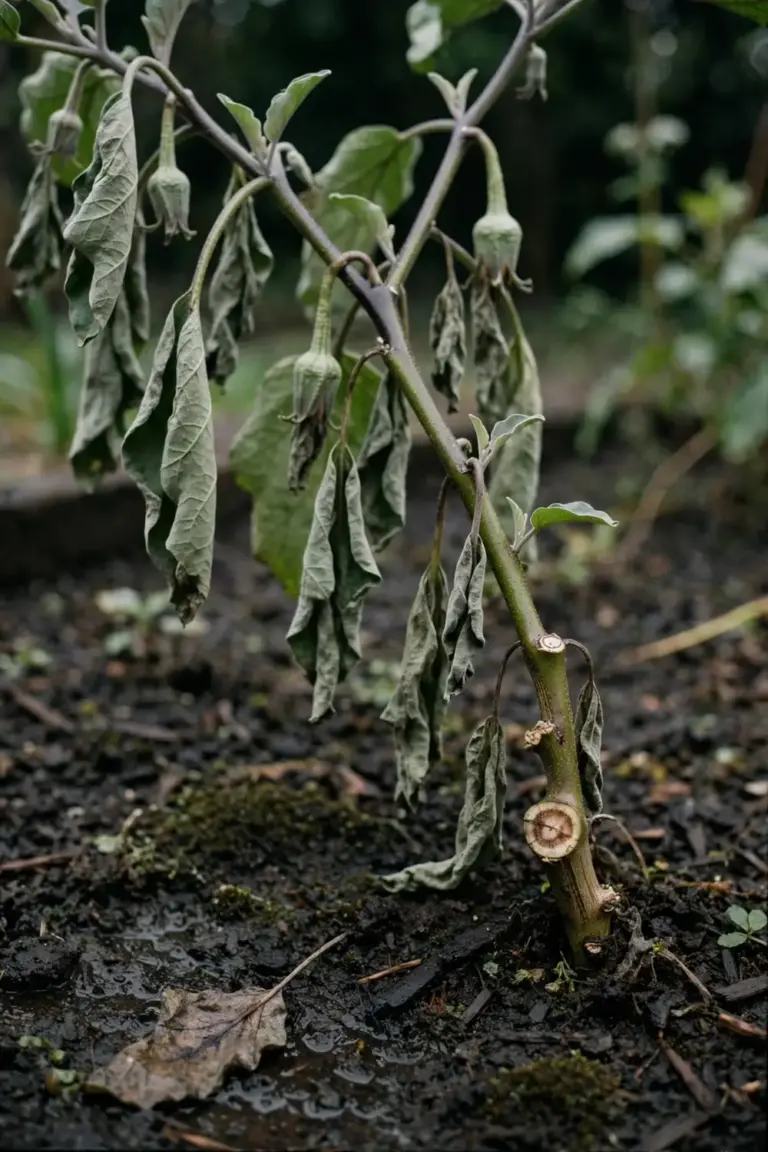
Cut a stem lengthwise to check. Discolouration of the conducting tissues in the roots and lower stem, followed by wilting and eventual plant death, marks verticillium wilt. The discoloured ring inside the stem is the giveaway. No cure exists for an infected plant. Pull it, bag it, and do not compost it.
Prevention is the only management. The NSW Department of Primary Industries advises avoiding planting in areas known to be affected, and avoiding planting after tomatoes, potatoes, or capsicums, which share the disease. Practise crop rotation with unrelated vegetables such as peas and beans. Once the fungus is in the soil, it persists for years, so rotation is a multi-season commitment, not a one-year fix. A four-year rotation away from all solanums is the standard recommendation for badly affected ground. During the rotation years, grow legumes, sweet corn, or leafy greens that do not host the fungus. Resistant rootstocks exist for commercial growers, but home gardeners rarely have access to grafted eggplant, so rotation and clean ground remain the practical tools.
4. Shot Holes in Leaves: Flea Beetles
Small round holes scattered across the leaves, like buckshot, mean flea beetles. The beetles themselves are tiny, black, and jump when disturbed, which is where the name comes from. Seedlings and young transplants take the worst damage. Mature plants usually outgrow it.
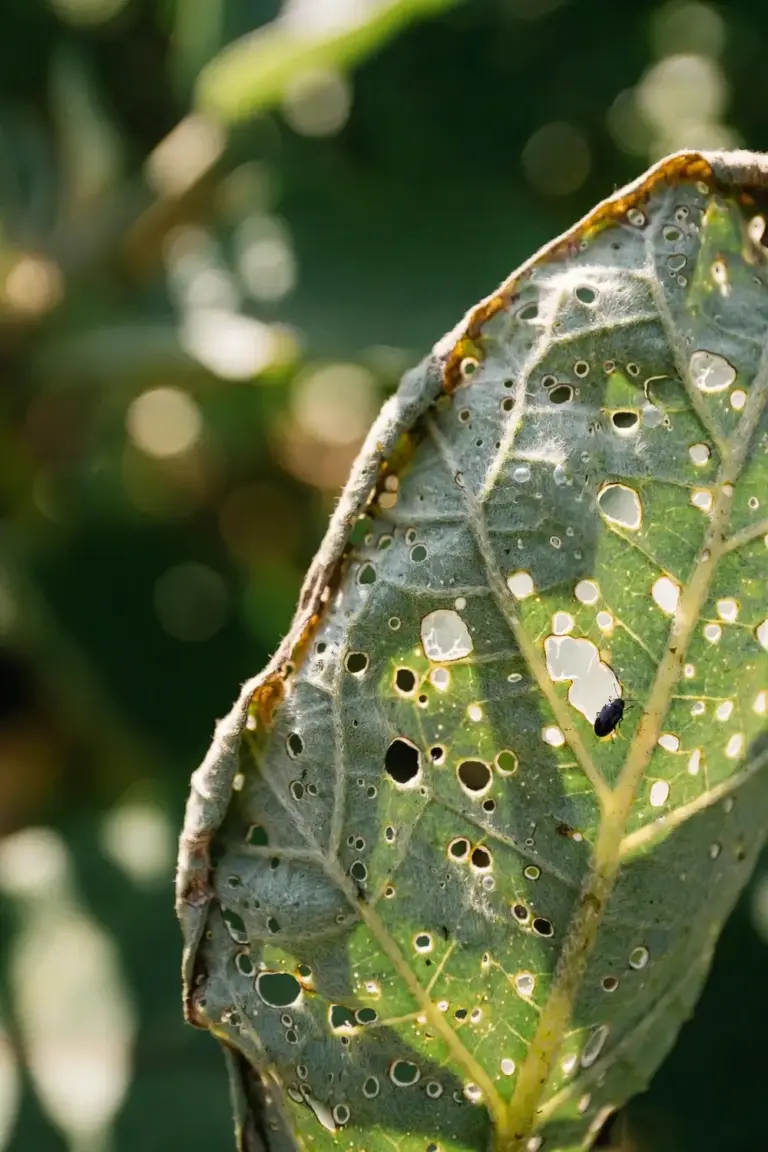
The University of Maryland Extension states plainly that flea beetles ravage eggplant, and that protecting newly transplanted eggplant from flea beetles is critical. Healthy, fast-growing plants outgrow light feeding, so anything that speeds establishment helps. Set out sturdy transplants rather than small ones, water regularly, and keep the soil fertile.
Physical exclusion beats spraying for home gardeners. Drape row cover over hoops above young plants, securing the edges to the ground so beetles cannot crawl under. Keep the cover on until plants start to flower, then remove it so pollinators can reach the blooms. Starting with sturdy, well-grown transplants rather than small weak ones gives the plant a head start against early feeding. Kaolin clay sprays create a particle barrier that deters feeding, but they must be reapplied after rain. I check the undersides of leaves first when I see shot holes, because the University of Maryland Extension notes that tiny black jumping beetles are the giveaway that confirms flea beetles rather than some other chewing pest.
5. Flowers Drop Without Setting Fruit: Heat or Pollination
Flowers that open, then fall without swelling into fruit, are usually a temperature problem. Eggplant pollen dies at extreme temperatures. Above about 32°C during the day, or above about 24°C at night, pollen is no longer viable, so the flower cannot be fertilised and it drops. These thresholds come from the National Gardening Association’s eggplant guide. Night temperature is the part most gardeners miss. A run of hot days that cools properly after dark does less damage than a stretch of warm nights.
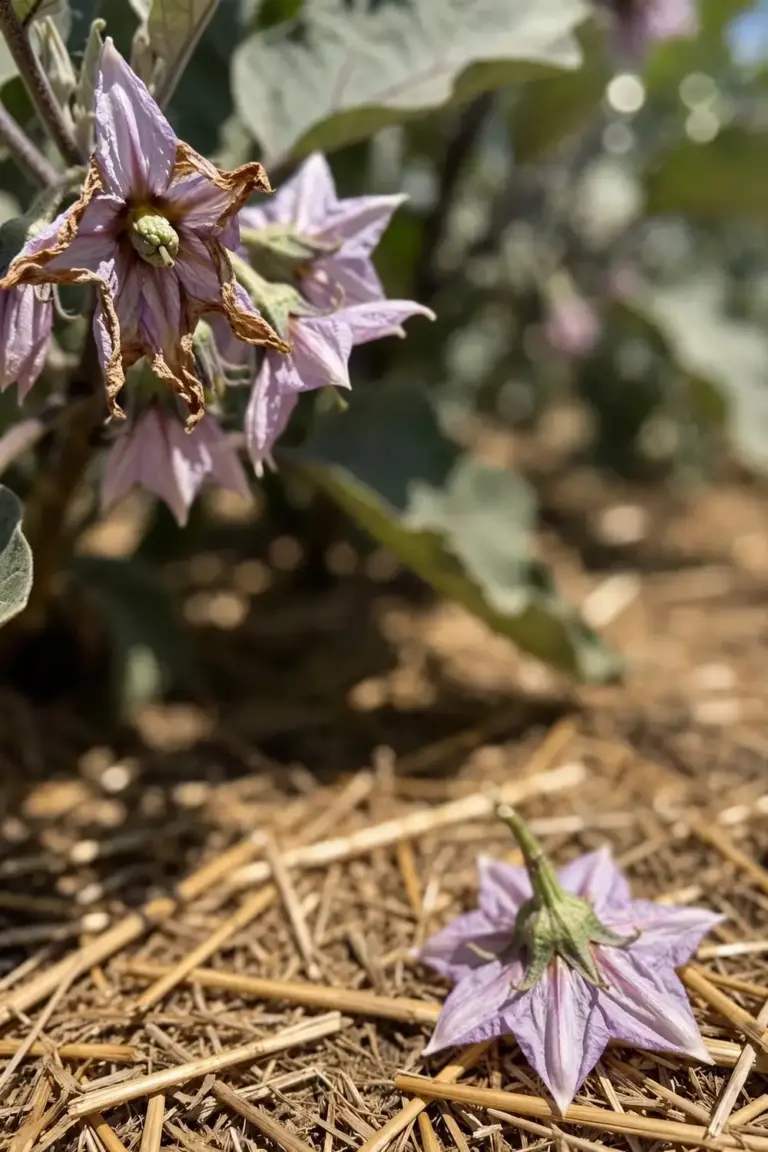
Weather is the one cause you cannot fix. Shade the plants through the worst of the afternoon with shade cloth, keep moisture steady so the plant is not carrying water stress on top of heat stress, and wait. The plant itself is not damaged. When temperatures come down, it sets fruit from the next flush of flowers.
Poor pollination also drops flowers, though eggplant is mostly self-pollinating. Each flower contains both male and female parts. Wind and buzzing insects normally shake the pollen loose. In a still, sheltered courtyard, gently shaking the flowering stems each morning can help. Native bees are excellent buzz pollinators for eggplant. A garden with flowering herbs and native plants nearby keeps them visiting. If flowers drop only during a heatwave and set normally before and after, temperature was the cause, not pollination.
6. Black Sunken Ends on Fruit: Blossom-End Rot
A dry, black, sunken area on the blossom end of the fruit is blossom-end rot. On eggplant it appears on the side or bottom of the fruit, with a dry, leathery surface. It is a physiological disorder, not a disease. No fungus or bacterium causes it, and it does not spread from fruit to fruit.
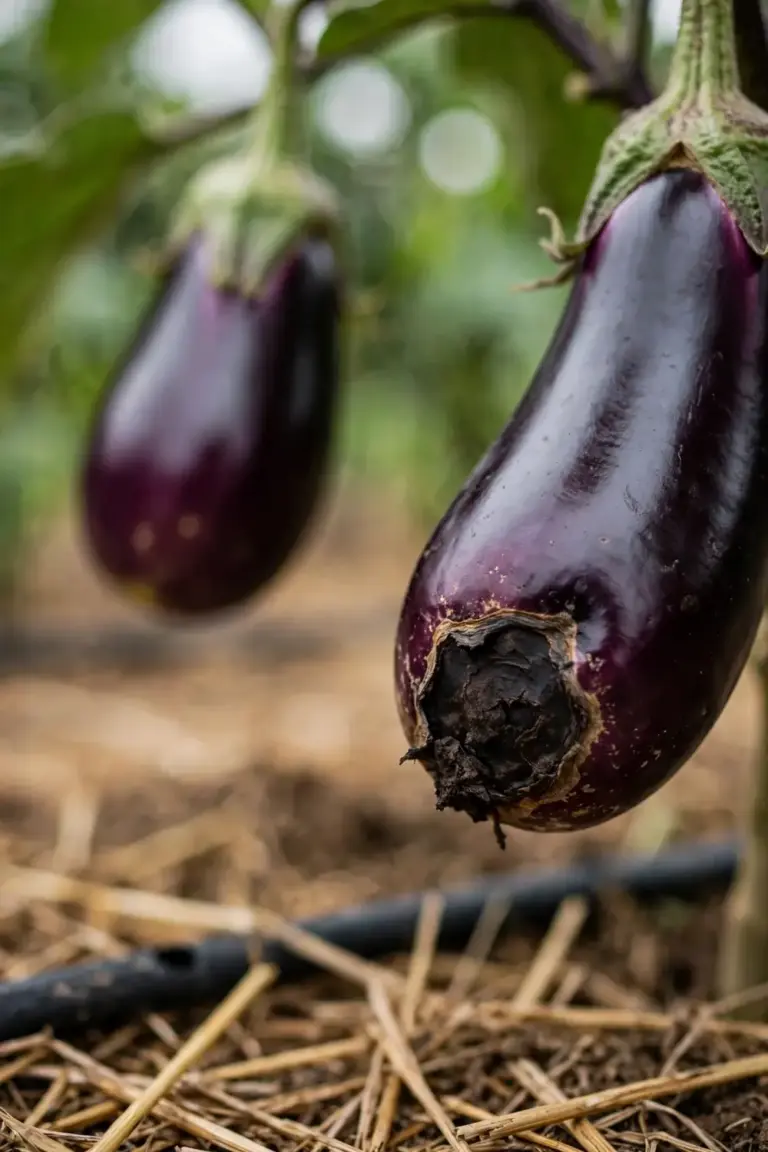
Blossom-end rot is directly related to soil moisture and the plant’s need for calcium, according to Rutgers Cooperative Extension. When anything interferes with the roots’ ability to absorb water carrying dissolved calcium, symptoms appear. The triggers include soil going too dry between waterings, waterlogging that starves roots of oxygen, root damage from deep cultivation, and excessive nitrogen pushing soft rapid growth.
Steady moisture is the fix, not calcium sprays. Rutgers notes that calcium sprays on the fruit are of little value because calcium moves poorly to the fruit. Mulch to even out soil moisture. A 5 to 8 cm layer of straw or sugarcane mulch keeps the soil temperature stable and slows evaporation between waterings, which smooths out the wet-dry swings that trigger the disorder. Water deeply and regularly once fruit starts forming, rather than light daily sprinkles that wet only the surface. Avoid hoeing close to the plant, as cut roots cannot take up water or calcium. Pick off affected fruit. Once a fruit shows blossom-end rot, it will not recover, and leaving it on the plant wastes the plant’s energy.
7. Maggots Inside the Fruit: Queensland Fruit Fly
Fruit that looks fine outside but contains creamy-white maggots when cut open has Queensland fruit fly. The female stings the skin to lay eggs, leaving a mark about the size of a match head. The larvae tunnel through the flesh, and decay organisms follow, leaving the interior a rotten mass. In severe cases there are multiple sting marks per fruit.
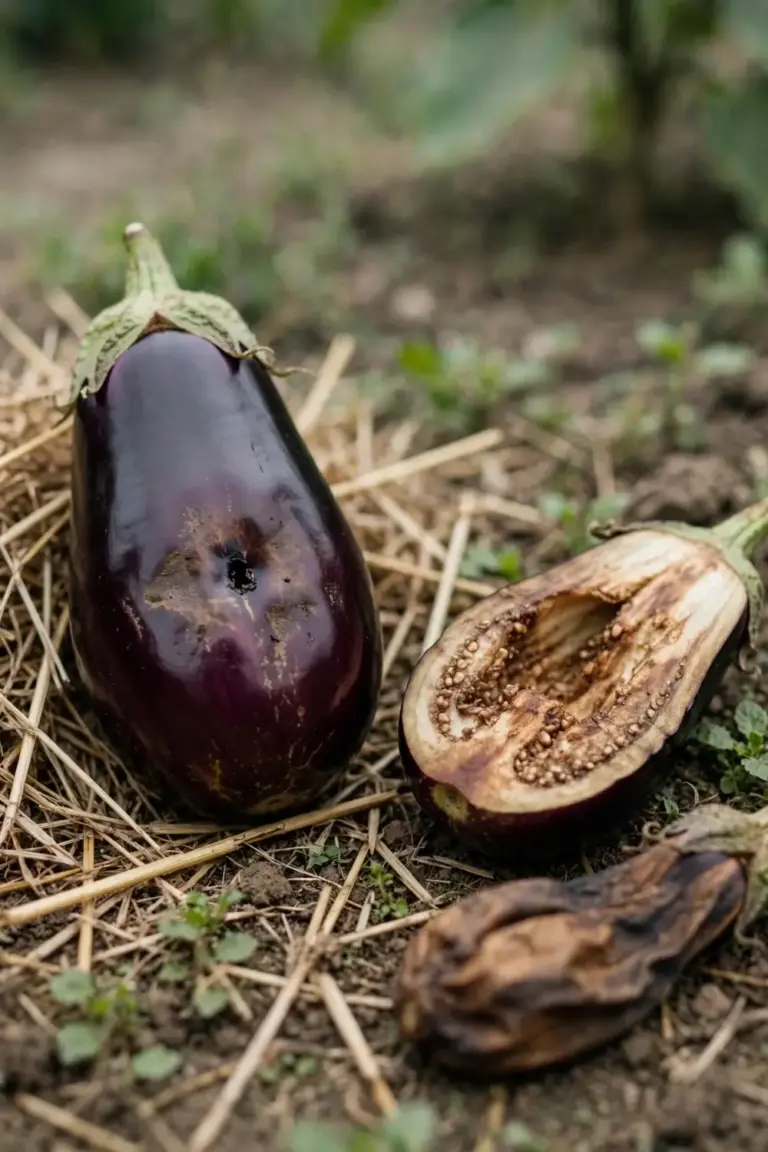
Queensland fruit fly is an Australian pest, present in New South Wales, Queensland, South Australia, and Victoria. The NSW Department of Primary Industries lists fruit flies among the main pests attacking eggplant fruit and flowers. Warm, humid conditions after rain bring peak activity.
Break the breeding cycle. Pick fruit before it overripens and falls, because larvae pupate in the soil under the plant. Remove and destroy fallen or infested fruit. Do not compost infested fruit at home, as home compost rarely gets hot enough to kill pupae. Exclusion netting over the plants is the most reliable home-garden control. Drape fine insect netting over the whole plant or the fruiting zone, sealed at the base so flies cannot enter from below. Traps monitor activity and warn when flies are about, but traps alone rarely protect a crop. Protein-bait sprays applied to foliage attract and kill female flies before they lay, and they are registered for home garden use in Australia. Apply to a few sacrificial foliage spots rather than the fruit itself, and reapply after rain. Combine netting, hygiene, and baiting for the best result.
8. Sticky Leaves and Black Soot: Aphids
Leaves coated in a sticky film, sometimes with black sooty mould growing on it, mean sap-sucking insects, usually aphids. The stickiness is honeydew, the sugary waste aphids excrete. Ants farming the aphids are a confirming sign. Heavy infestations distort new growth and weaken the plant.
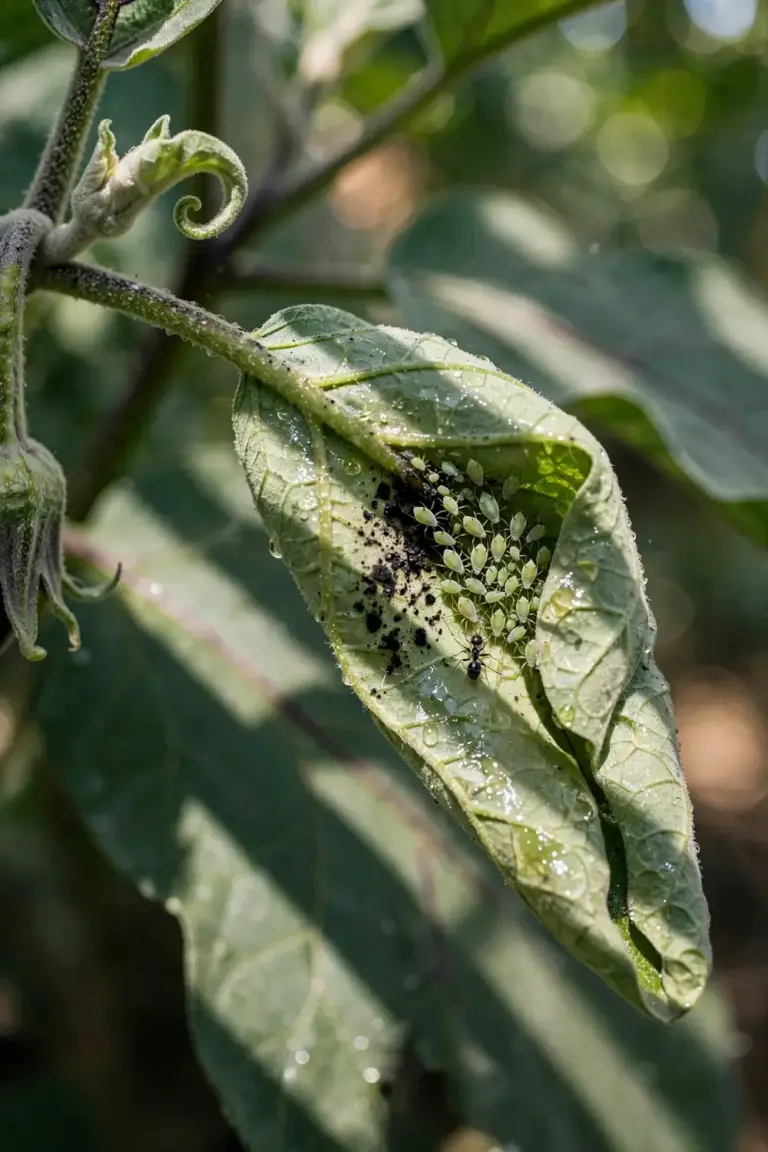
A strong jet of water dislodges most aphids, and doing it in the morning lets the foliage dry by evening, which avoids inviting fungal problems. Encourage predators rather than reaching for sprays. Ladybird larvae, lacewings, and hoverfly larvae all eat aphids, and a garden with diverse flowering plants supports them through the season. Dill, fennel, and alyssum flowers feed adult hoverflies and lacewings, keeping them in the garden even when aphid numbers are low. For persistent colonies that water and predators cannot shift, insecticidal soap or neem oil applied to the undersides of leaves works. Check the label for the withholding period before harvest, and spray in the cool of the evening to avoid leaf burn.
Do not reach for a broad-spectrum insecticide first. It kills the predators along with the aphids, and the aphids come back faster. The NSW Department of Primary Industries lists aphids among the main pests of eggplant fruit and flowers, so expect them and manage them as a routine job, not an emergency.
Control the ants if they are farming the aphids. Ants protect aphid colonies from predators in exchange for honeydew, and a colony with ant guards is much harder for ladybirds to clear. Sticky bands around the base of the plant stem block ants from climbing up. Remove the band once the aphids are gone, as it can trap beneficial insects too. Without their guards, the aphids are exposed to the predators already in the garden.
9. Fine Webbing Under Leaves: Spider Mites
Fine silk webbing on the undersides of leaves, with tiny stippled dots on the upper surface, means spider mites. The leaves take on a bronzed, dusty look as feeding continues. Mites thrive in hot, dry conditions, so the damage often peaks in midsummer.
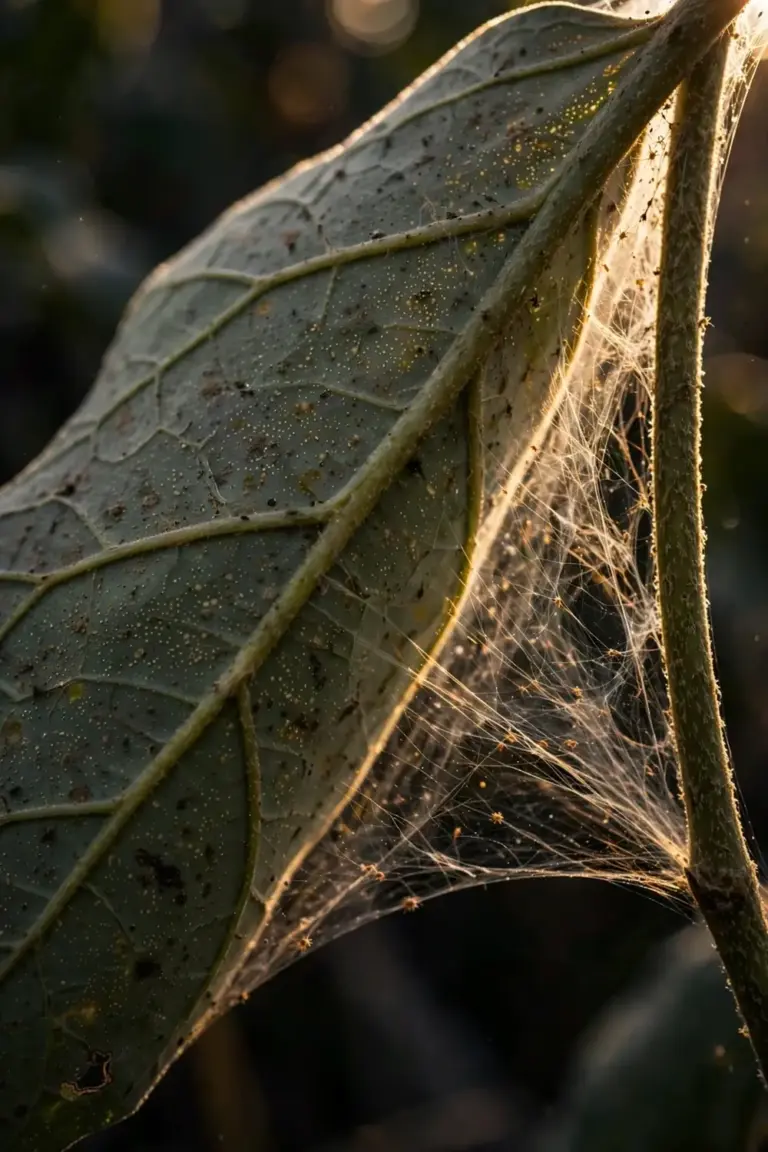
Spider mites are listed among the main leaf pests of eggplant by the NSW Department of Primary Industries, alongside leaf-eating ladybirds and tomato russet mites. Confirm with a hand lens. The mites themselves are barely visible, but the webbing and the stippling pattern are distinctive.
Water is the first treatment. Mites hate humidity, so regular overhead watering or hosing the undersides of leaves suppresses them. In a dry Australian summer, a daily hose-down of the foliage in the morning can keep a light infestation from exploding. Avoid broad-spectrum insecticides, which kill mite predators and turn a small mite problem into a disaster. In a bad infestation, horticultural oil smothers the mites, applied in the cool of the day to avoid leaf burn. Cover the undersides of the leaves thoroughly, since the mites feed there. Remove the worst-affected leaves and bin them.
10. Circular Sunken Spots on Ripe Fruit: Anthracnose
Circular, sunken spots on ripening fruit mean anthracnose. The spots darken and enlarge as the fruit matures, and the fruit becomes unmarketable. Anthracnose is the main disease that attacks ripening eggplant fruit, according to the NSW Department of Primary Industries.
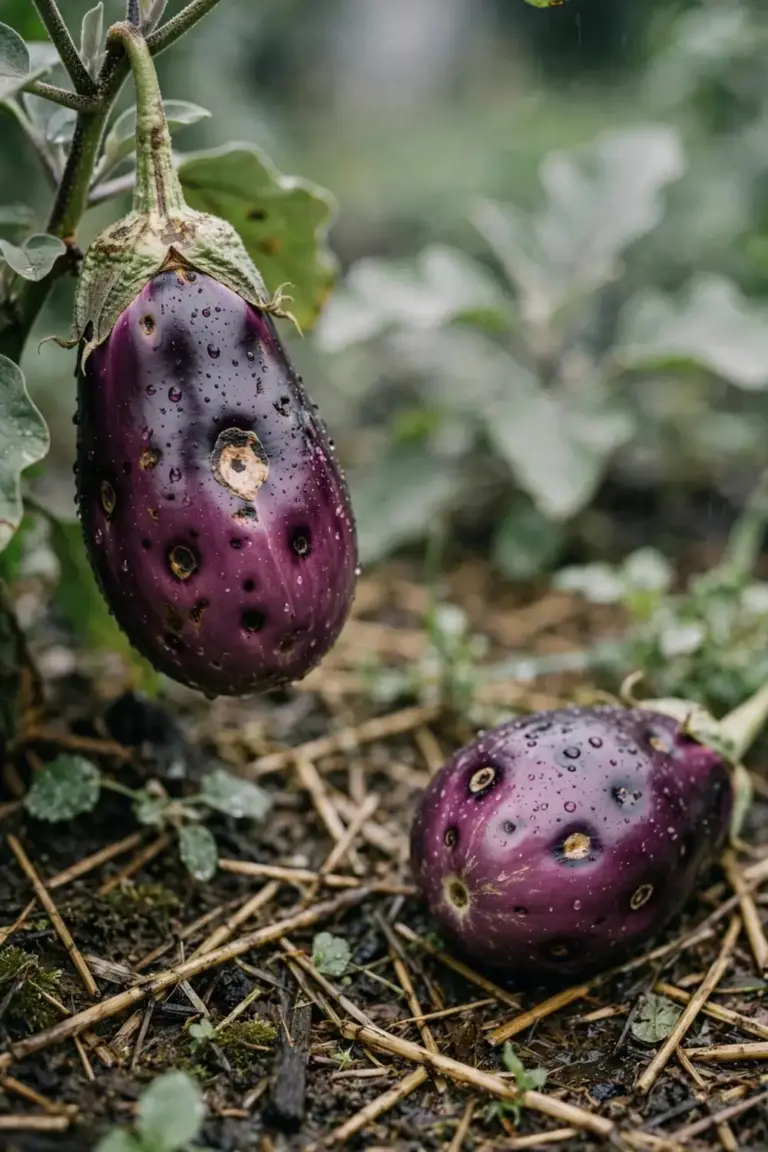
The fungus spreads by water splash, so overhead watering and rain spread it from fruit to fruit. Pick fruit as soon as it ripens rather than leaving it on the plant. A glossy, firm fruit with full color is ready. Overripe fruit left hanging is the first to spot. Remove affected fruit promptly and bin it, not compost it. Space plants for airflow and water at the base to keep foliage and fruit dry. In a wet season, these two habits matter more than any spray.
Crop rotation helps, since the fungus survives on debris. Do not plant eggplant where tomatoes, capsicums, or potatoes grew last season, as they share related diseases. The NSW Department of Primary Industries recommends rotating with unrelated vegetables such as peas and beans. Clean up all fallen fruit and leaf litter at the end of the season, as the fungus overwinters on debris left in the bed.
11. Seedlings Chewed at the Base: Cutworms
Seedlings cut cleanly at the base overnight, or with leaves chewed from the edges, point to cutworms or caterpillars. Cutworms hide in the soil by day and feed at night. The NSW Department of Primary Industries lists cutworms among the root pests of eggplant, and tomato caterpillars, eggplant caterpillars, and looper caterpillars among the fruit and flower pests.
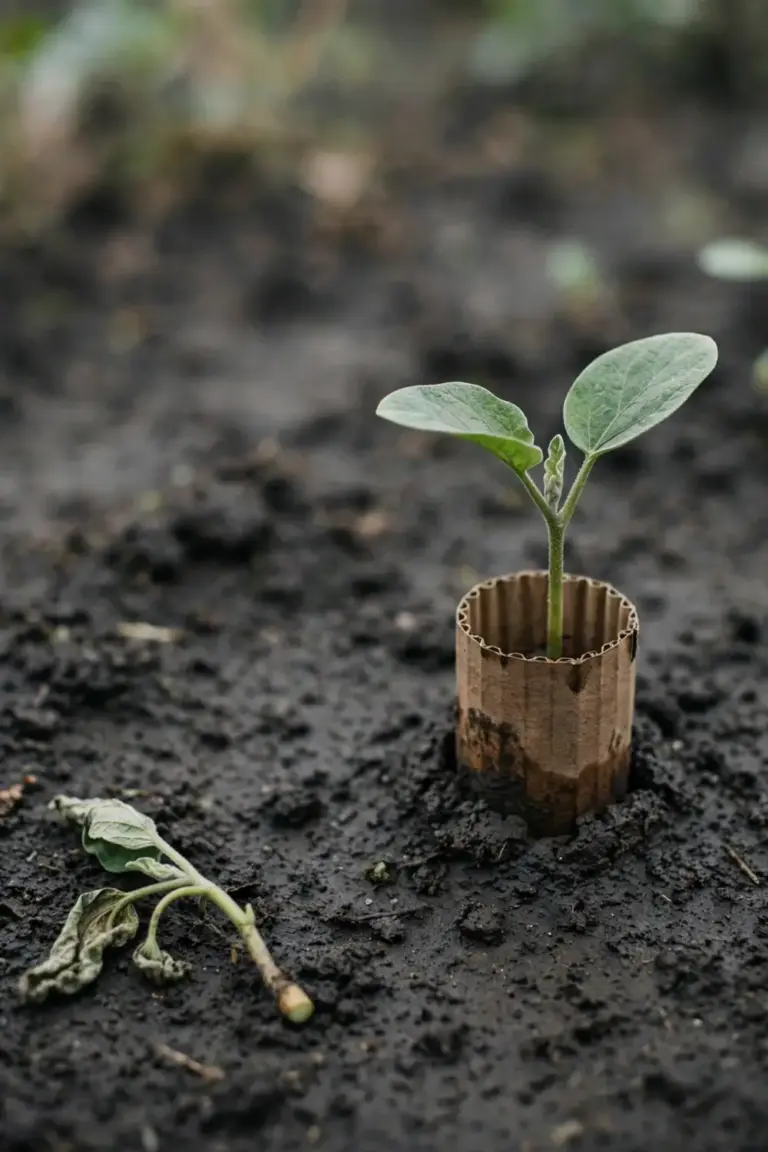
Collars stop cutworms. Push a cardboard or plastic collar 5 cm into the soil around each transplant, leaving a few centimetres above the surface. Go out after dark with a torch and hand-pick caterpillars. Bacillus thuringiensis (Bt) spray targets caterpillars specifically and is safe for other insects, but check that the product is registered for the pest and crop, and follow the label.
Keep the bed free of weeds and debris where cutworms shelter. A clean bed edge and bare soil around young transplants remove daytime hiding spots. This is routine garden hygiene, not a special treatment. Check new transplants every morning for the first two weeks. A seedling cut at the base can sometimes be saved if the stem is only partly chewed, by mounding soil around the wound and fitting a collar, but a cleanly severed stem will not regrow.
Watch for the larger caterpillars too. Tomato caterpillars and looper caterpillars chew ragged holes in leaves and can strip young plants quickly. The eggplant caterpillar bores into fruit, leaving a small entry hole with frass around it. Hand-picking at dusk catches most of them, since many feed in the cooler hours. Bacillus thuringiensis (Bt) spray targets caterpillars specifically and breaks down quickly in sunlight, so it is safe for bees and other insects when used as labelled. Apply in the late afternoon for the best effect.
12. Stunted Plants With Lumpy Roots: Root-Knot Nematodes
Plants that stay stunted despite good water and feed, with swollen lumps on the roots when you pull one up, have root-knot nematodes. The lumps are galls where the microscopic worms feed inside the roots. Affected plants yellow, wilt in the heat of the day, and produce little fruit.
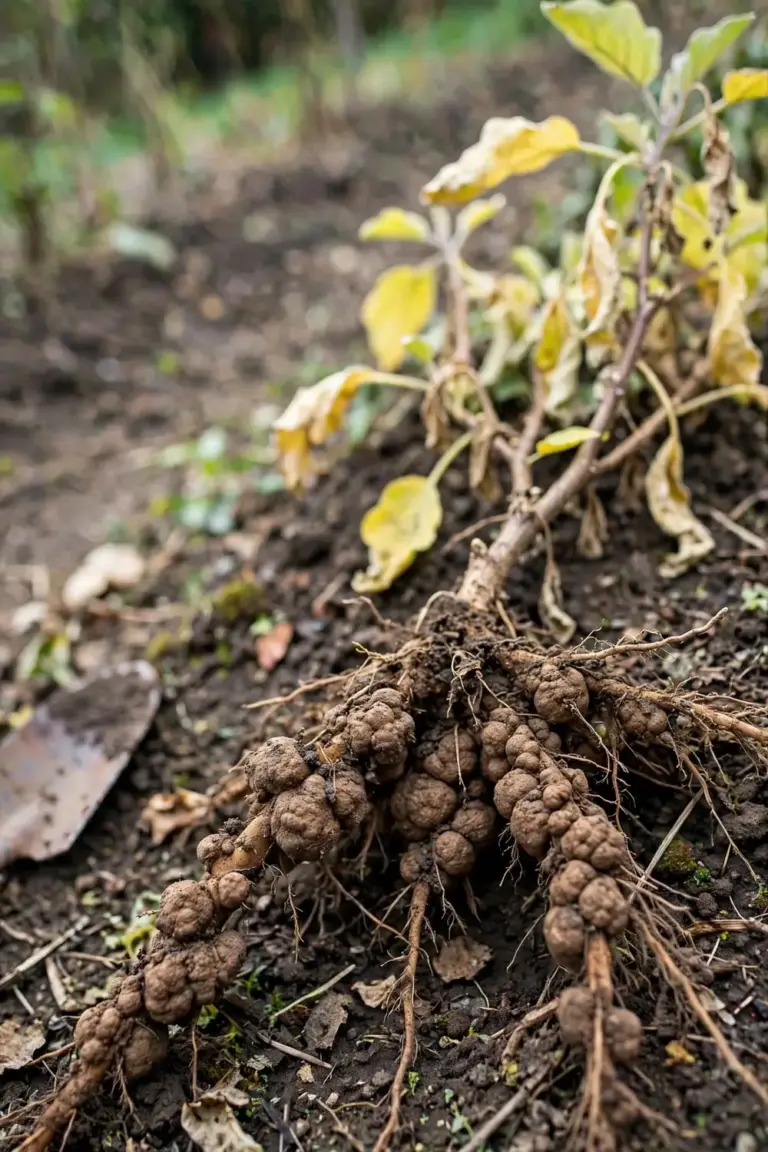
The NSW Department of Primary Industries lists root-knot nematodes among the root pests of eggplant. No home-garden cure exists once they are established. Pull badly affected plants and do not replant solanums in that spot. Solarising the soil under clear plastic through the hottest weeks can reduce numbers. Lay clear plastic tight over moist soil for four to six weeks in midsummer. The heat kills nematodes in the top layer of soil, though it will not reach deep populations.
Long-term management is rotation and organic matter. Rotate with non-host crops such as sweet corn or beans for several seasons. Three to four years away from solanums starves the population down. Heavy organic matter feeds the predatory fungi and bacteria that attack nematode eggs, keeping numbers down over time. Compost, aged manure, and a thick mulch layer all help. Marigolds are often recommended as a nematode-suppressing rotation crop, though results vary by species and conditions, so treat them as a supplement to rotation rather than a cure. Buy certified nematode-free seedlings. Do not bring infested soil in on tools or boots, and wash tools between beds if one bed is known to be infested.
13. The Quick Diagnosis Table
| What You See | Likely Cause | First Action |
|---|---|---|
| Oldest leaves yellow first | Nitrogen deficiency | Balanced fertilizer at label rate |
| Whole plant pale, soil wet | Overwatering | Let soil dry, reduce watering |
| Wilting in moist soil, brown ring in stem | Verticillium wilt | Pull and bin the plant, rotate crops |
| Small round shot holes in leaves | Flea beetles | Row cover until flowering |
| Flowers drop, no fruit, hot weather | Heat sterility of pollen | Shade cloth, steady water, wait |
| Dry black sunken area on fruit end | Blossom-end rot | Even out watering, mulch, remove fruit |
| Maggots inside intact-looking fruit | Queensland fruit fly | Pick early, destroy fallen fruit, net |
| Sticky leaves, black soot, ants | Aphids | Water jet, encourage predators |
| Fine webbing under leaves, bronzing | Spider mites | Hose undersides, avoid insecticides |
| Circular sunken spots on ripe fruit | Anthracnose | Pick ripe fruit promptly, bin affected |
| Seedlings cut at base overnight | Cutworms | Collars, night hand-picking |
| Stunted, lumpy roots | Root-knot nematodes | Pull plants, rotate, solarise |
Work down the table from the top. The most common causes sit at the top. Confirm with the section above before you act, because two problems can look alike and the fixes differ.
Frequently Asked Questions
Yellow leaves usually mean nitrogen deficiency or watering trouble. Nitrogen deficiency yellows the oldest leaves first, moving upward. Overwatering pales the whole plant at once because waterlogged roots cannot take up nutrients. Check soil moisture with your finger before feeding. If the soil feels wet, hold off and let it dry. A soil test gives the definitive answer when the pattern is unclear.
Heat is the usual cause in Australia. Eggplant pollen dies above about 32°C by day or 24°C at night, so flowers drop unfertilised during hot spells. Night temperature matters most. Shade cloth through the afternoon heat and steady moisture help, but the real fix is patience. The plant is not damaged. It sets fruit from the next flush of flowers once temperatures fall.
Shot holes are flea beetle feeding. The beetles are tiny, black, and jump when disturbed. Young transplants suffer most. Cover new plantings with row cover secured at the edges until flowering starts, then remove it for pollinators. Healthy, fast-growing plants outgrow light damage, so sturdy transplants, regular water, and fertile soil all help. Kaolin clay sprays deter feeding but need reapplying after rain.
It depends on the cause. Wilting from dry soil recovers with deep watering. Wilting in moist soil with a brown ring inside the stem is verticillium wilt, and the plant cannot be saved. Pull it, bag it, and do not compost it. Do not plant tomatoes, potatoes, capsicums, or eggplant in that spot for several seasons. Rotate with peas or beans instead.
Yes, in eastern Australia. The female stings ripening fruit to lay eggs, and the larvae tunnel inside, rotting the flesh. Affected fruit often looks intact outside. Pick fruit before it overripens, remove and destroy fallen fruit, and use exclusion netting for reliable protection. Home compost does not get hot enough to kill pupae, so bin infested fruit rather than composting it.
Walk the Patch Weekly and Catch Trouble Early
Most eggplant problems are easy when caught early and hard when ignored. A weekly walk that checks leaf undersides, new growth, and developing fruit catches flea beetles, aphids, mites, and fruit fly damage before they compound. Pull and bin diseased material rather than leaving it in the bed. Keep water steady through fruiting, as most fruit disorders trace back to moisture swings. Write down what you see and when. A simple note of the date, the symptom, and the weather helps you spot the pattern next season, and it turns a frustrating mystery into a solvable problem.