Watch 1 bee work 10 apple flowers in 2 minutes and you watch pollination. Pollination is the whole crop in motion: pollen moving from anther to stigma, flower by flower, until the tree can set fruit.
Pollination is the delivery job behind every fruit. No delivery, no fruit. The tree can bloom for a month and still crop nothing if the pollen never arrives, and the pollen never arrives without a carrier. Bees do most of the carrying, and the gardener job is to keep them flying through bloom week.
| Point | Detail |
|---|---|
| Definition | Pollen moves from anther to stigma inside a flower |
| Main carrier | Bees, honeybees first, wild bees close behind |
| Partner distance | Pollen source within 30.5 meters |
| Sun need | Apple trees need 8 hours of sun a day |
| Dwarf trees | Bear fruit 2 to 3 years after planting |
| Bloom rule | Partners must open at the same time |
What Is Pollination?
Pollination is the transfer of pollen from the anther to the stigma inside a flower. The anther is the male part that makes pollen, and the stigma is the female part that catches it. When pollen lands on a receptive stigma, it grows a tube to the ovary, fertilization follows, and the flower starts building a fruit. Without that transfer, the flower drops and no fruit forms.
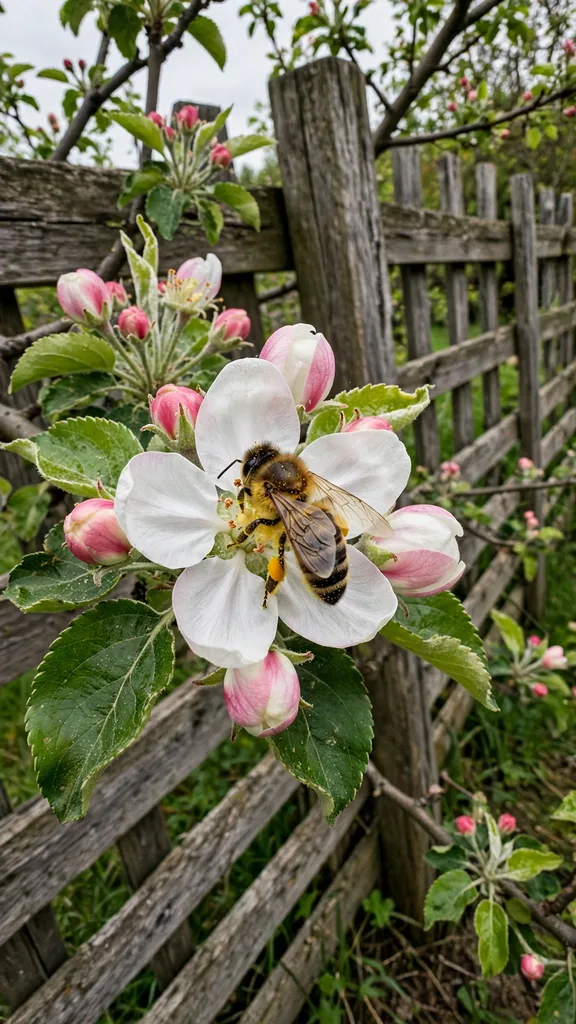
Pollen moves 3 ways: by insects, by wind, and by gravity. Insects carry most fruit-tree pollen, because the grains are heavy and sticky and built to cling to a bee. Wind carries the light dry pollen of walnuts, hazelnuts, and pecans. Gravity drops a little pollen inside a single flower. A fruit tree in a still courtyard with no insects sets almost nothing, however hard it blooms.
Self-pollination and cross-pollination are the 2 directions the transfer takes. Self-pollination moves pollen within one flower, between flowers on one tree, or between trees of one cultivar. Cross-pollination moves pollen between 2 different cultivars of the same fruit. The Alabama Cooperative Extension System guide to fruitfulness states the split plainly: self-pollination occurs when flowers are pollinated by pollen within the same horticultural variety, and a self-fruitful variety produces a satisfactory crop grown by itself.
How Pollination Works
A flower opens and offers nectar. A bee lands for the nectar and brushes the anthers, and pollen sticks to the hairs on its body. The bee flies to the next flower for more nectar, brushes the stigma, and leaves a few grains behind. The grains that land on a receptive stigma of a compatible flower germinate and grow tubes. One tube reaches the ovary, fertilization follows, and the fruit starts to swell.
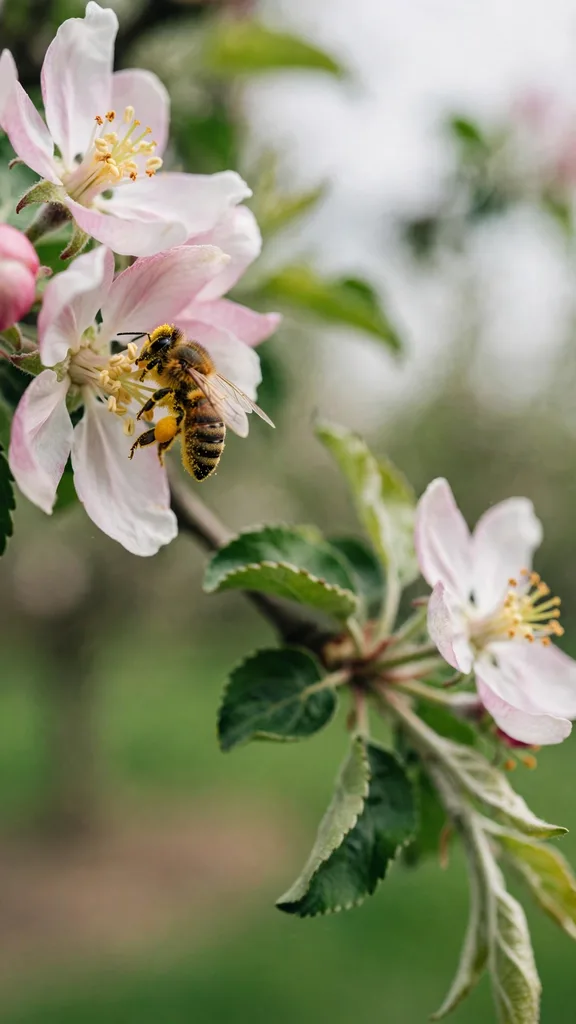
Timing rules the whole process. The stigma stays receptive for days, not weeks, and the pollen must arrive inside that window. The University of Minnesota Extension guide to growing apples notes that a pollen source needs to be within 30.5 meters of an apple tree to ensure pollen gets to it, and that 2 apple kinds are required for successful pollination, with a crabapple counting as the second kind. A partner across the road counts. A partner 3 gardens away rarely does.
Weather rules the bees. Honeybees fly best in dry air above 18.3 degrees Celsius, and they stay home in cold, rain, and strong wind. A bloom week of cold rain leaves flowers unpollinated even with partners close by. The tree cannot wait. The bloom window closes, the flowers drop, and the crop for the year is gone before the sun returns.
A flower needs more than one grain. A well-pollinated apple flower receives hundreds of grains, and each fertilized seed grows the fruit a little larger and a little better shaped. A poorly pollinated flower sets a small lopsided fruit or drops altogether. The bee count at bloom decides the fruit size at harvest.
Pollination vs Fertilisation
Pollination and fertilization are 2 steps in one chain, and gardeners mix them up because both happen inside the flower. Pollination is the delivery. Fertilisation is the joining. The delivery can happen without the joining, and the joining never happens without the delivery.
| Point | Pollination | Fertilisation |
|---|---|---|
| Meaning | Pollen moves to the stigma | Pollen joins the egg in the ovary |
| Where | On the flower surface | Inside the ovary |
| Carrier | Bees, wind, gravity | Pollen tube growth |
| Time | Hours, during bloom | Days after pollination |
| Visible sign | Bees on flowers | Fruitlet swelling |
| Fails when | No bees, rain, no partner | Incompatible pollen, frost, sterile pollen |
| Gardener job | Protect bees, plant partners | Match compatible kinds, avoid frost |
A flower can be pollinated and still drop. Incompatible pollen lands, germinates, and stalls, because the flower rejects pollen from its own cultivar or from a sterile kind. The delivery arrived. The joining failed. The flower falls as if no bee ever visited.
Frost breaks the chain at the second step. Pollen lands on a stigma that froze overnight, and the tube never grows. The bees did their job in the morning sun, and the frost undid it the night before. The fix is a later bloomer or a frost-free site, not more bees.
How to Recognise / Measure Pollination
Count bees at bloom. Stand by the tree for 5 minutes on a warm still morning and count the bees working the flowers. Ten or more bees in 5 minutes means strong pollination. Fewer than 3 means thin pollination, and the crop will show it. Count on 2 warm days, not on one cold one, because a cold morning keeps bees home and lies about the season.
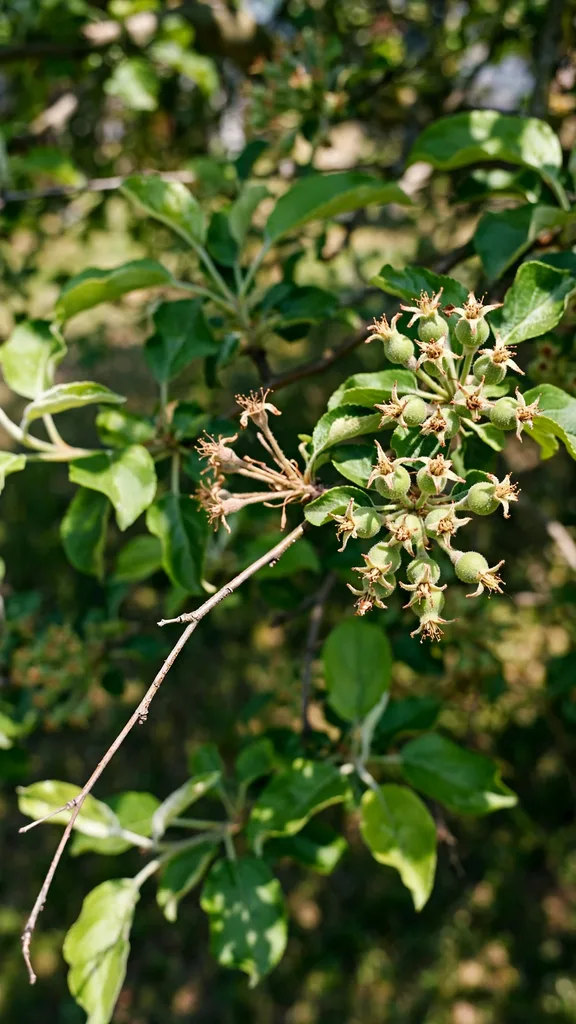
Count fruitlets 3 weeks after petal fall. A well-pollinated apple holds 1 to 2 fruitlets on most clusters. A poorly pollinated tree holds empty clusters and drops most of what it set by June. The fruit set page shows how the cluster count reads the pollination that already happened.
Check the fruit shape at harvest. A well-pollinated apple grows round and even, because each fertilized seed pulls the flesh evenly around it. A poorly pollinated apple grows lopsided, with one side flat where seeds never formed. The shape is the record of the bloom week, written in the fruit.
Check the bloom overlap on paper before you plant. Two kinds must open together for at least a few days, and the catalogue lists bloom groups for apples: early, mid, and late. Match the groups. An early bloomer beside a late bloomer never meets, even at 3 meters apart, and the bees carry pollen between flowers that never open together.
Common Mistakes With Pollination
The first mistake is spraying at bloom. Insecticide on open flowers kills the bees that carry the pollen, and a tree with dead bees sets as thin a crop as a tree with no partner. Hold every spray from first bloom to petal fall. The pests wait. The bloom does not.
The second mistake is planting partners too far apart. Two apples at opposite ends of a long garden may as well stand in separate suburbs, because bees work the nearest flowers first. Keep partners within 30.5 meters, and closer is better. A neighbor crabapple inside that distance counts as a partner, and it asks nothing of you.
The third mistake is planting 2 trees of one kind. Two Honeycrisp apples are one cultivar twice, and their pollen counts as self-pollen. A self-unfruitful tree needs a genetically different kind. Check the cultivar names, not the tree count. Two trees with one name are one tree for pollination.
The fourth mistake is mowing the whole yard at bloom. Dandelions, clover, and wildflowers feed bees before the fruit trees open, and a yard mown to bare grass starves the bees that the fruit trees need a week later. Leave a strip of flowers unmown through bloom, or plant a bee border beside the orchard. The weeds feed the workers.
The fifth mistake is blaming the tree for a cold bloom week. A week of rain and wind keeps bees in the hive, and no tree sets fruit from flowers that no bee visited. The tree did nothing wrong. Note the weather, protect the bees next year, and read the self-fertile page for kinds that set a crop with less bee work.
When Pollination Matters in Your Garden
Pollination matters most in bloom week, the 2 to 3 weeks when flowers open and bees fly. Every other garden job bends around that window. Prune before it, spray after it, and mow around it. The crop for the year is decided in those weeks, and no summer job changes it.
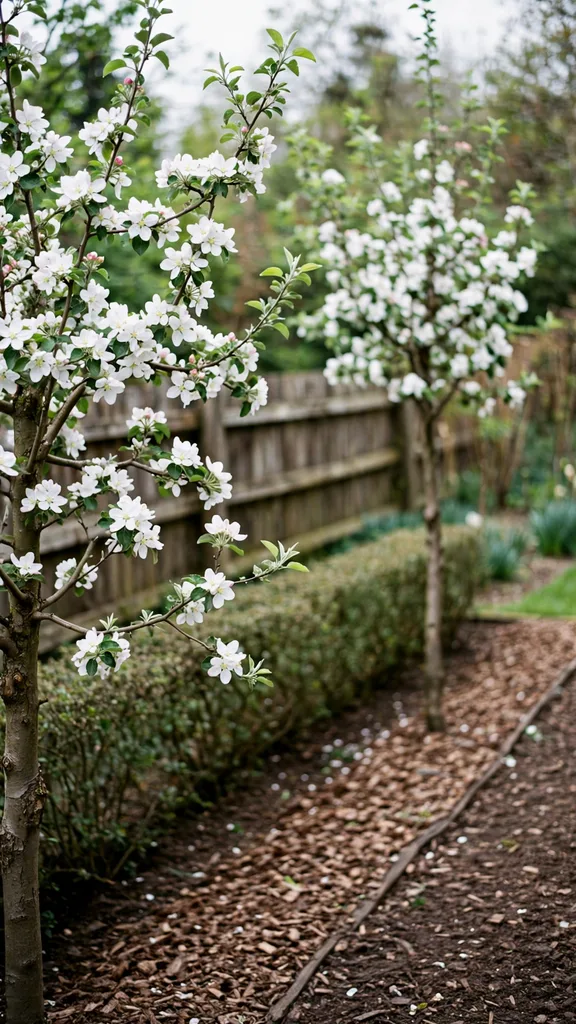
Pollination matters again at planting time. The partner decision is made once, when the trees go in, and it lasts for decades. Buy the partner with the tree, plant them within 30.5 meters, and match their bloom groups. A partner planted 5 years later still works, but the 5 empty years never come back.
Pollination matters least in a street full of fruit trees. A neighbor apple, a crabapple on the corner, and a plum over the fence all lend pollen for free, and a single apple in that street fruits without a partner of its own. The street is the orchard. Walk it in bloom week and count the trees.
Pollination never matters for figs, bananas, and some persimmons, which set fruit without it. Those fruits skip the whole chain and crop alone. The gardener who grows them skips the partner question entirely, and the bees go hungry on their flowers for nothing. The gardening glossary gathers every fruit term on this site in one place.
FAQ
Keep partners within 30.5 meters, and closer is better. Bees visit the nearest flower-rich tree first, so a partner across the garden works and a partner 3 gardens away rarely does. Dwarf trees need even closer partners, and a neighbor crabapple inside the distance counts as a partner.
Yes. Self-fertile means the tree accepts its own pollen, not that pollen moves by itself. Bees carry most of it from anther to stigma, inside one flower and between flowers on the same tree. A cold or wet bloom week keeps bees home, and the crop thins even on a self-fertile tree.
Unpollinated flowers drop within days of bloom. Bees carry the pollen, so a cold or wet bloom week, a missing partner, or a spray at bloom all leave flowers unpollinated. Frost on open bloom kills flowers before pollen moves. Count fruitlets next spring instead of admiring the bloom.
Bees work hardest in the warm middle of the day, from late morning to mid-afternoon, when the air sits above 18.3 degrees Celsius and the sun dries the dew. They slow in cool mornings and stop in rain and strong wind. A bloom week of warm still afternoons sets the heaviest crop.
Wind pollinates walnuts, hazelnuts, and pecans, which carry light dry pollen built for the air. It pollinates almost no apples, pears, peaches, or plums, because their pollen is heavy and sticky and built to cling to a bee. A fruit tree in a windy yard with no bees still sets a thin crop.