Pull 5.1 to 7.6 cm soil cores from a compacted lawn and leave them on the grass. Aeration is the practice of opening holes in turf so air, water and nutrients reach the roots. The holes relieve soil compaction, and the grass responds with deeper roots and thicker growth. A lawn that puddles after rain, thins under traffic or wilts fast in a dry spell is often a lawn that needs air in the soil.
That is the job in one sentence. The machine pulls plugs of soil out of the ground. The empty channels let the surrounding soil relax, let water soak in instead of running off and let roots grow down instead of sideways.
| Point | Detail |
|---|---|
| What it is | Pulling soil cores from turf to open channels for air, water and roots |
| Core depth | 5.1 to 7.6 cm, at least 7.6 cm on heavy clay |
| Best method | Hollow-tine core aerator, never solid spikes on clay |
| How often | At least once a year on compacted lawns, twice if compaction is severe |
| Aftercare | Leave the plugs on the lawn to break down |
What Is Aeration?
Aeration opens the soil under a lawn. A core aerator drives hollow tines into the turf and pulls out small cylinders of soil, leaving open holes behind. The plugs sit on the surface and crumble back into the lawn over the following weeks. The holes stay open long enough for air and water to move down to the roots, and the soil around each hole relaxes into the space.
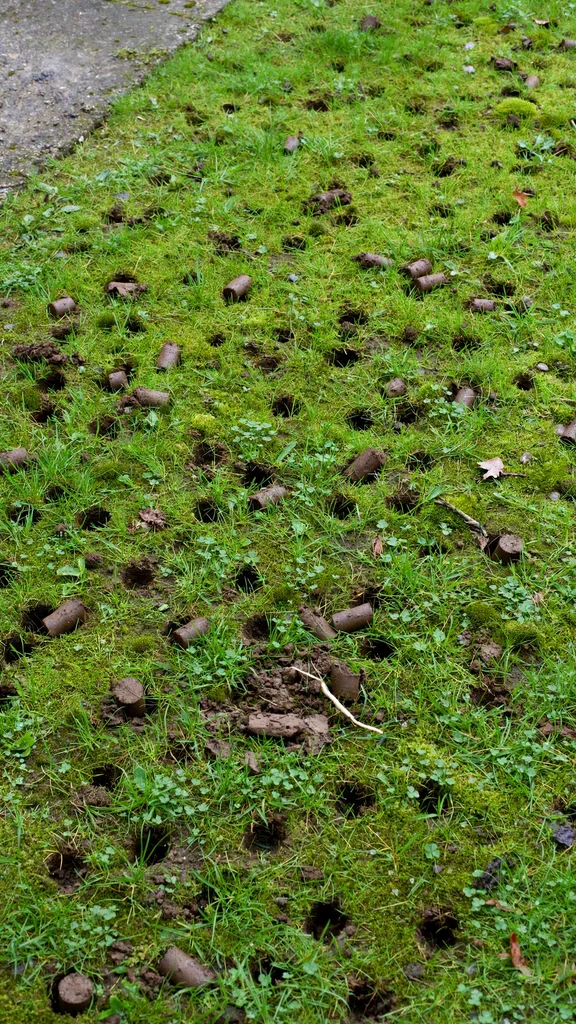
The deciding number is the core depth. Clemson Cooperative Extension’s lawn aeration guide describes core aeration as pulling 5.1 to 7.6 cm cores out of the soil. Cores in that range reach the root zone where compaction does its damage. Shallower holes miss the roots. Deeper holes add nothing and can damage the turf. The machine matters as much as the depth. Hollow tines remove soil. Solid tines push soil aside and below, which increases compaction around each hole. On clay soil, a spike aerator can leave the lawn worse than it found it.
Compost aeration tools turn a compost pile. That is a different job from lawn aeration, and the tools do not cross over. Compost aeration tools belong to the compost heap, where they stir air through rotting material. Lawn aeration belongs to turf, where hollow tines pull soil cores from living grass. This page stays with the lawn.
How Aeration Works
Soil is mineral particles, organic matter and the spaces between them. Small pores hold water. Larger pores hold oxygen. Roots need both. Compaction crushes the larger pores first, so a compacted soil holds water but starves roots of air. Foot traffic, pet traffic, vehicle wheels, heavy rain and construction equipment all press the soil tight. Clay soils compact easiest, though even sandy soils develop compaction under steady traffic.
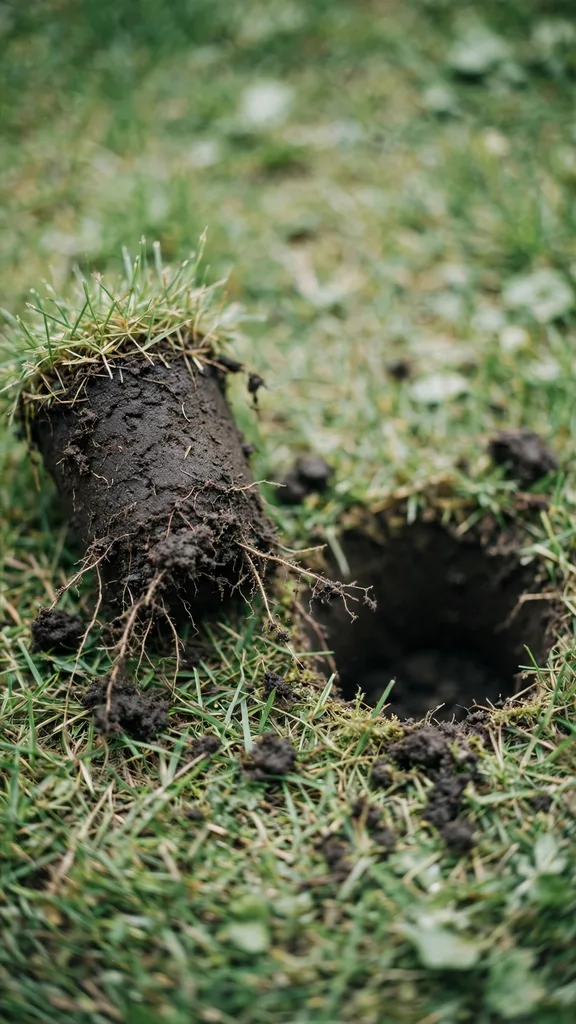
Core aeration reverses the squeeze by removing soil instead of moving it. Each hollow tine pulls a plug out and leaves a channel for air and water to reach the roots, while the roots grow into the loosened soil around each hole and run deeper than they could in pressed ground. The plugs left on the surface break down with rain, mowing and foot traffic, and the soil in them filters back into the turf with microbes that help break down thatch.
The effect lasts because the soil removed stays removed. A spike hole closes as soon as the tine pulls out, and the soil around it packs tighter. A core hole stays open until the surrounding soil relaxes into it. That is why extension guidance recommends core aeration over spike aeration on any lawn with real compaction. The Nebraska Extension aeration guide states that cores should be at least 7.6 cm deep to be most effective, and that hollow-tine core aeration is the most effective method on heavy clay soils.
Aeration vs Dethatching
Aeration and dethatching both open a lawn, and they often get booked together. They fix different problems. Aeration removes soil plugs to relieve compaction below the surface. Dethatching removes the organic mat on top of the soil. A lawn can need one, the other or both, and the tests for each give different answers.
| Point | Aeration | Dethatching |
|---|---|---|
| Problem fixed | Compacted soil below the surface | Thick organic mat above the soil |
| What comes out | Cylinders of soil, 5.1 to 7.6 cm deep | Matted stems, roots and crowns |
| Tool | Hollow-tine core aerator | Vertical mower or power rake |
| Main sign | Screwdriver will not push in, water puddles | Spongy feel, mower bounces, mat past 1.27 cm |
| Aftercare | Leave plugs on the lawn to break down | Rake up the debris and remove it |
| Prevention value | High, it also speeds thatch decay | Low, it removes the mat but not the cause |
A thick thatch layer and compacted soil feed each other. Low oxygen in compacted soil slows the earthworms and microbes that break down dead stems, so the mat builds faster. Core aeration feeds those microbes with air, and the cores left on the surface carry microbes onto the top of the mat. When a lawn needs both jobs, clear the mat first and then aerate, so the tines reach soil instead of punching through a thick organic pad.
How to Tell Your Lawn Needs Aeration
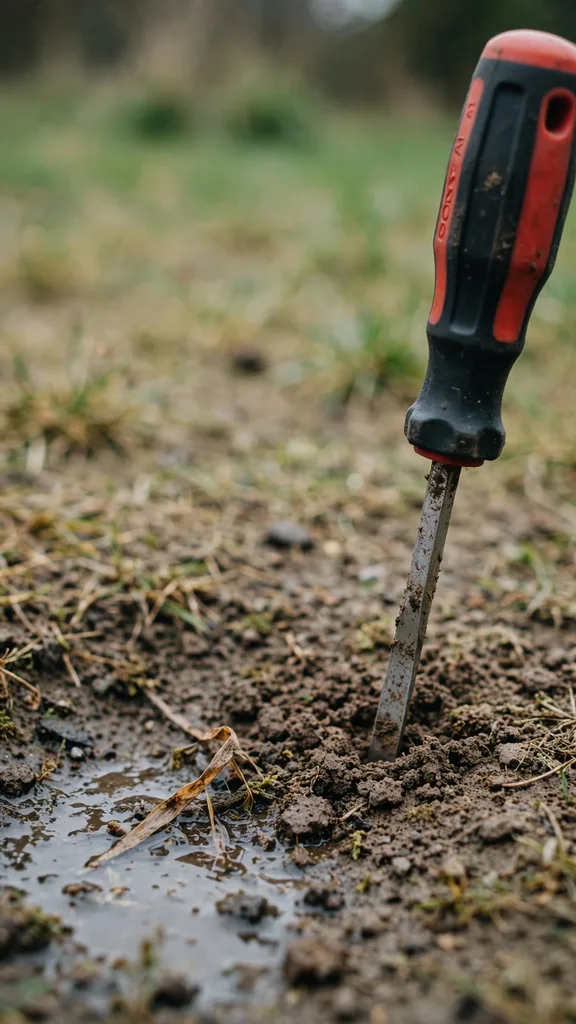
Push a screwdriver into moist soil. It should slide in easily to the handle. If it stops after a few centimetres and needs real force, the soil is compacted. Dig a small square of turf a spade deep and look at the roots. Healthy roots run deep into the soil. Roots that stop short and spread sideways are hitting a compacted layer.
Watch water after rain. A lawn that puddles while the neighbours drain, or a lawn where water runs off the surface during watering, is telling you the soil will not take water in. Watch the grass in a dry spell. A compacted lawn wilts faster than a loose one, because its roots sit shallow and cannot reach moisture deeper down. Watch traffic patterns. Paths across the lawn, the strip by the driveway and the play area thin out first, because feet press the soil tightest where they land most.
Test in spring or fall, when the soil is moist but not wet. Dry soil resists a screwdriver even when it is not compacted, and wet soil gives a false easy reading. One test spot can mislead, so check three or four places, including a high traffic area and a quiet corner. The comparison between the two tells the story. If the quiet corner takes the screwdriver and the path does not, compaction is the cause.
Common Mistakes With Aeration
Aerating with solid spikes is the first mistake. Spikes punch holes without removing soil, and on clay they pack the soil tighter around each hole. Rent or hire a hollow-tine core aerator, and check the tines before the machine runs. Aerating dry soil is the second mistake. Dry ground resists the tines, the cores come out short and broken, and the machine skips across the surface. Water the lawn the day before so the soil is moist and the tines cut cleanly to full depth.
Aerating once and expecting a cure is the third mistake. Compaction returns wherever traffic continues, so a compacted lawn needs aeration at least once a year, and twice a year when the compaction is severe. Aerating at the wrong time is the fourth mistake. Cool-season grasses want aeration in spring from early April through late May, or in fall from late August through late October. Warm-season grasses want aeration in late spring to early summer, once the grass has greened up. Aerating a dormant or heat-stressed lawn opens holes the grass cannot fill.
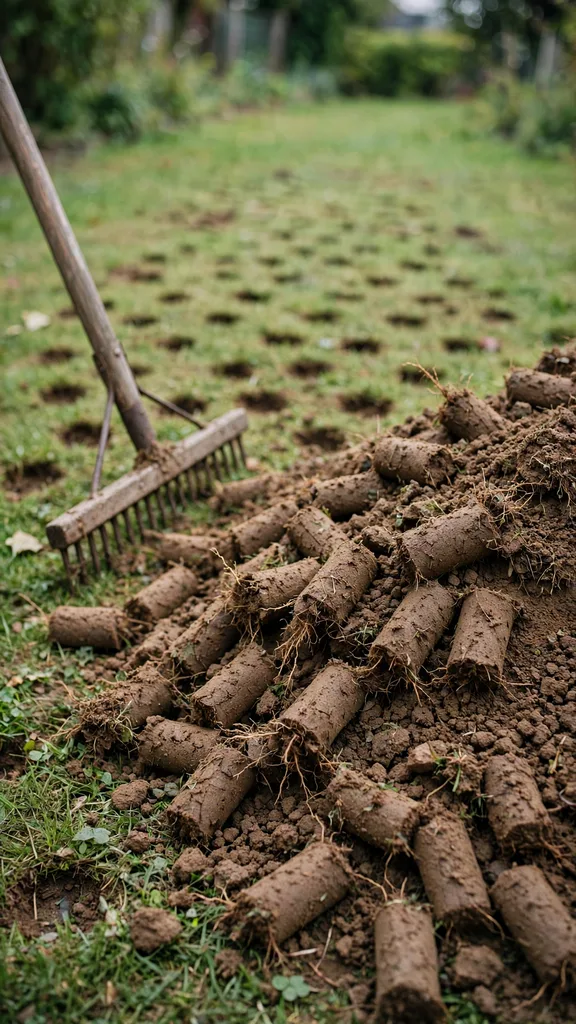
Raking up the plugs is the fifth mistake. The cores look untidy on the surface for a week or two, and the urge to clean them up is strong. Leave them. They break down with rain and mowing, return soil and microbes to the surface and feed the thatch layer from above. Removing them throws away the microbes the lawn needs. Skipping the marking step is the sixth mistake. Flag irrigation heads, shallow cables and invisible fence lines before the machine runs, because a tine through a sprinkler head costs more than the aeration saved.
When Aeration Matters in Your Garden
Aeration matters most on lawns that carry traffic. A family lawn, a dog run, a play area and the strip beside a driveway all take feet that press the soil tight. It matters on clay soil, which compacts under its own weight when wet and sets hard when dry. It matters on new lawns laid over construction fill, where heavy machines pressed the ground before the sod went down. It matters after building work, when trucks and scaffolding have crossed the garden.
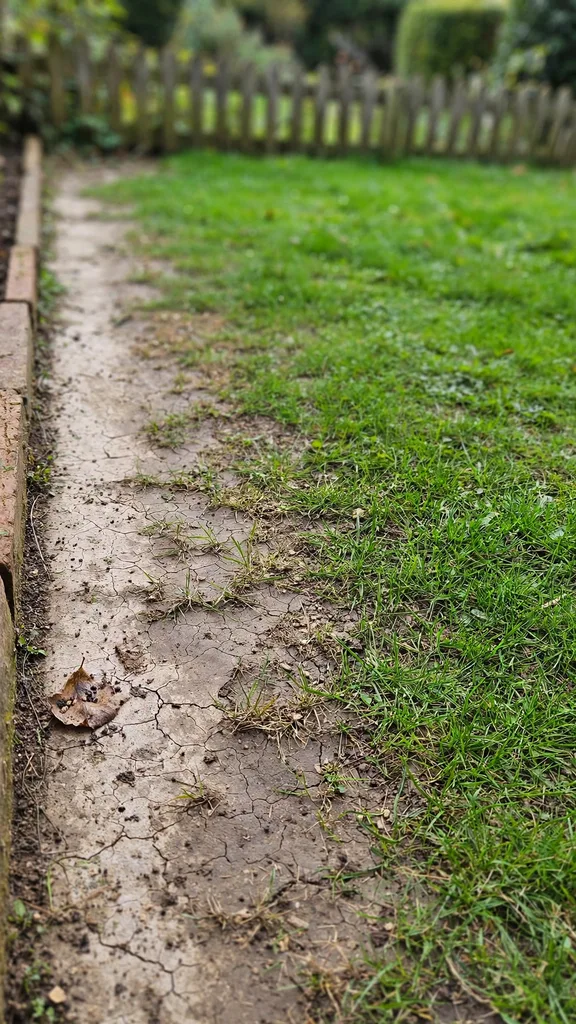
Aeration matters before overseeding. Seed sown onto compacted soil germinates and then stalls, because the young roots cannot push down. Open the soil first and the seedlings root deep in their first season. It matters before a dry summer, because deep roots reach moisture that shallow roots cannot. It matters on a lawn that keeps thinning despite feeding and watering, because food and water cannot reach roots through pressed soil. The gardening glossary defines the other lawn terms in the same plain words.
Aeration matters least on a sandy lawn with light traffic. Sand resists compaction, drains freely and lets roots run deep without help. A sandy lawn that thins is usually short of water or food, not air. Test before you book the machine. A lawn that takes the screwdriver easily and drains after rain needs seed or fertilizer, not holes.
FAQ
Aerate compacted areas at least once a year. Lawns with severe compaction do better with two passes a year. Healthy lawns on loose soil need aeration only when the screwdriver test shows resistance. Let the test decide, not the calendar. Traffic, clay soil and construction fill all shorten the interval between passes.
No. Leave the soil cores on the lawn. They break down with rain, mowing and foot traffic, and the soil filters back into the turf. The cores carry microbes that help break down thatch, and removing them throws that benefit away. Run a mower over the lawn once the plugs have dried and crumbled, and the surface looks tidy again.
Yes. Core aeration feeds the soil microbes that eat thatch by letting air and water reach them. The cores left on the surface carry microbes onto the top of the mat, where they work on the layer from above. Aeration alone will not remove a thick mat, which needs a vertical mower. Pair the two jobs when the mat measures thick and the soil tests compacted.
Aerate cool-season grasses in spring from early April through late May, or in fall from late August through late October. Aerate warm-season grasses in late spring to early summer, once the grass has greened up and grows actively. Work on moist soil, never dry or soaked ground. Aerate while the grass grows actively so the turf can fill the holes.
No chemical product replaces core aeration. Liquid treatments use wetting agents that help water soak into the surface, and they can help sandy or water-repellent soils. They do not remove soil, so they cannot open the pore space that compacted clay needs. There is no chemical substitute for core aeration in relieving soil compaction. Spend the money on a hollow-tine machine instead.