Steep 2 scoops of finished compost in a bucket of rainwater for 3 days. Compost tea is the brown liquid you get when you soak compost in water and strain it out. Compost tea is compost made pourable, so it reaches roots fast.
The tea carries a little of what the compost holds: soluble nutrients, microbes, and fine humus particles. It feeds the soil gently, and it never replaces solid compost. A bed fed only with tea stays thin, and a bed fed with compost plus tea grows strong.
Two kinds exist, and the pump decides which one you brew. A still bucket gives a watery extract, and a bubbling bucket gives an aerated tea. The aerated kind grows more of the aerobic microbes that live in good compost, and it needs an air pump to stay oxygenated.
| Point | Detail |
|---|---|
| Definition | Liquid made by steeping compost in water |
| Brew time | 2 to 3 days |
| Water | Unchlorinated, rainwater best |
| Two kinds | Still extract, aerated tea |
| Use it | Within hours of brewing, on soil |
| Worst mistake | Adding molasses or sugar |
What Is Compost Tea?
Compost tea is a liquid made by soaking finished compost in water, and the water pulls out some of the nutrients and microbes from the compost. The older kind is a compost watery extract: a shovelful of compost sits in a bucket of water for a few days, with no pump and no stirring machine, and its main benefit is as a dilute source of nutrients. The newer kind is actively aerated compost tea, where an air pump bubbles oxygen through the water while the compost steeps, and the aim is to grow more of the aerobic microbes that live in good compost.
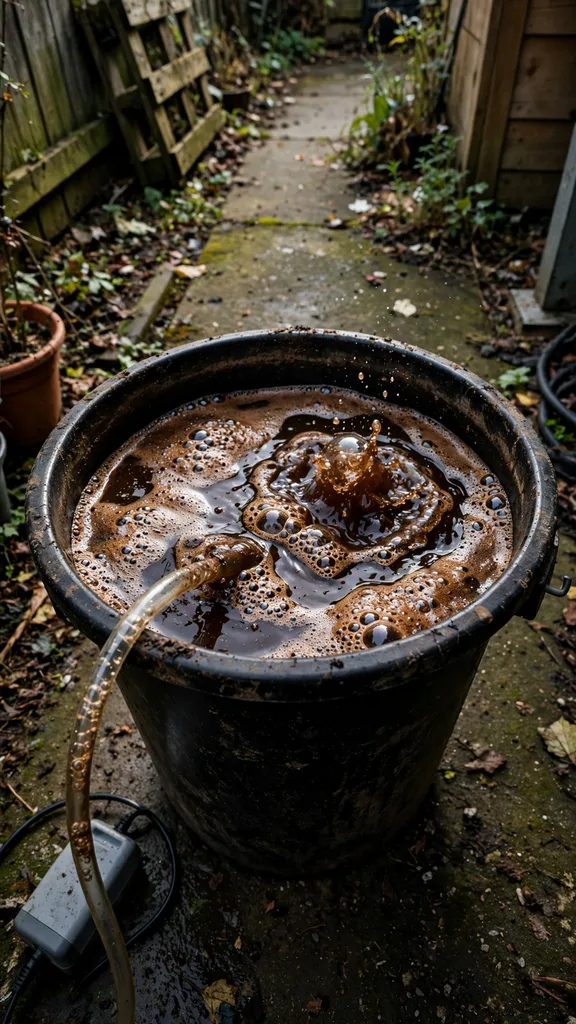
The bucket-bubbler method is the most common home setup, and it brews the mix for 3 days to fully extract the nutrients from the compost, according to the University of Arizona Extension compost tea guide. Aeration comes from 1 or 2 hoses, and diffusion mats or aquarium stones spread the air through the bucket. A trough method exists for commercial production, and it brews longer, for a larger volume.
Compost tea carries no pesticide registration in the United States. The claims around disease control run far ahead of the evidence, and field studies have found aerated tea failing to prevent leaf disease on apples and potatoes. The tea feeds soil gently, and it never replaces solid compost, good drainage, and the right plant in the right place.
How Compost Tea Works
Compost tea works by moving microbes and soluble nutrients from the pile to the bed in water. The compost holds bacteria, fungi, and protozoa, and the water carries a share of them onto the soil and around the roots. The microbes join the soil food web, and they break down organic matter, free nutrients, and crowd out some harmful organisms on the root surface.
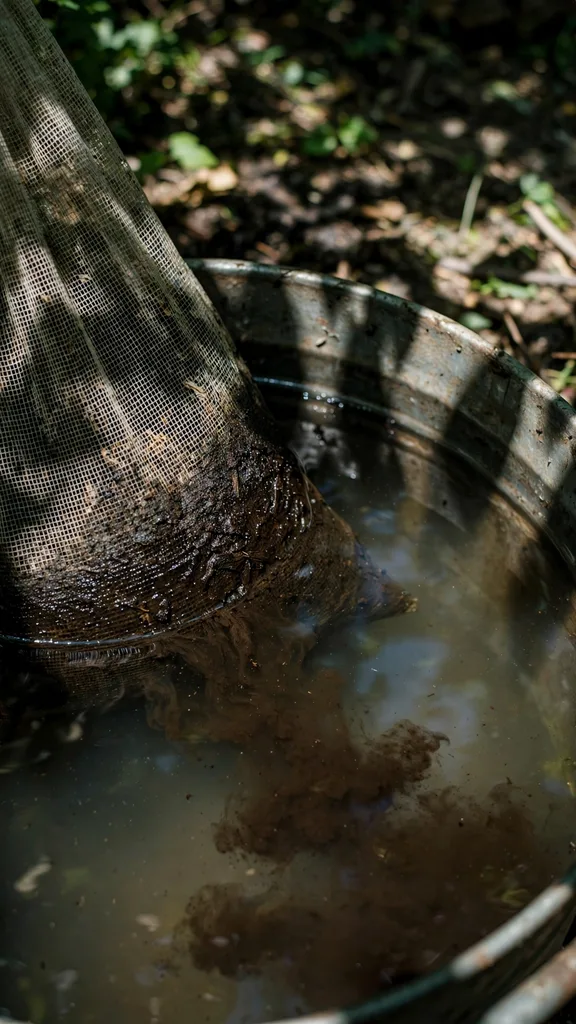
Oxygen decides which microbes grow. Aerobic microbes do the useful work in soil, and they need oxygen in the brew. An air pump keeps the water oxygenated, and the aerobic population grows through the brew. A still bucket loses oxygen within a day, and anaerobic microbes take over. The tea turns sour, and the wrong microbes dominate.
The nutrients in tea are dilute, and the dose is small. A bucket of tea carries a fraction of what a shovelful of solid compost carries, and the bed needs both. Tea feeds fast and fades fast, and compost feeds slow and lasts. The gardening glossary lists the soil terms that share this ground, and compost tea is the liquid member of the family.
Compost Tea vs Liquid Fertilizer
| Trait | Compost Tea | Liquid Fertilizer |
|---|---|---|
| What it is | Compost steeped in water | Concentrated mineral nutrients in water |
| Nutrients | Dilute, variable | Exact, printed on the label |
| Microbes | Yes, the point of brewing | No |
| Speed | Gentle, within days | Fast, within hours |
| Soil structure | Feeds microbes that build it | No effect |
| Worst mistake | Adding sugar, breeding pathogens | Overdosing and burning roots |
Compost tea and liquid fertilizer both pour from a can, and they work differently. Liquid fertilizer delivers exact nutrients fast, and the label states the dose. Compost tea delivers dilute nutrients plus microbes, and the dose varies with the compost. A hungry tomato asks for fertilizer, and a tired bed asks for tea.
The microbe load is the difference that matters. Liquid fertilizer feeds the plant and leaves the soil alone. Compost tea feeds the soil life, and the soil life feeds the plant over time. A garden that uses both gets fast feeding and slow building, and neither one replaces the other.
How to Brew and Measure Compost Tea
Fill a clean bucket with rainwater, and let tap water sit uncovered for a day if rainwater is missing. Chlorine kills microbes, and the whole point of the tea is to keep them alive. Put 2 scoops of finished compost in a mesh bag, tie the bag, and sink it in the bucket. The bag keeps the solids out of the can, and the tea pours clean.
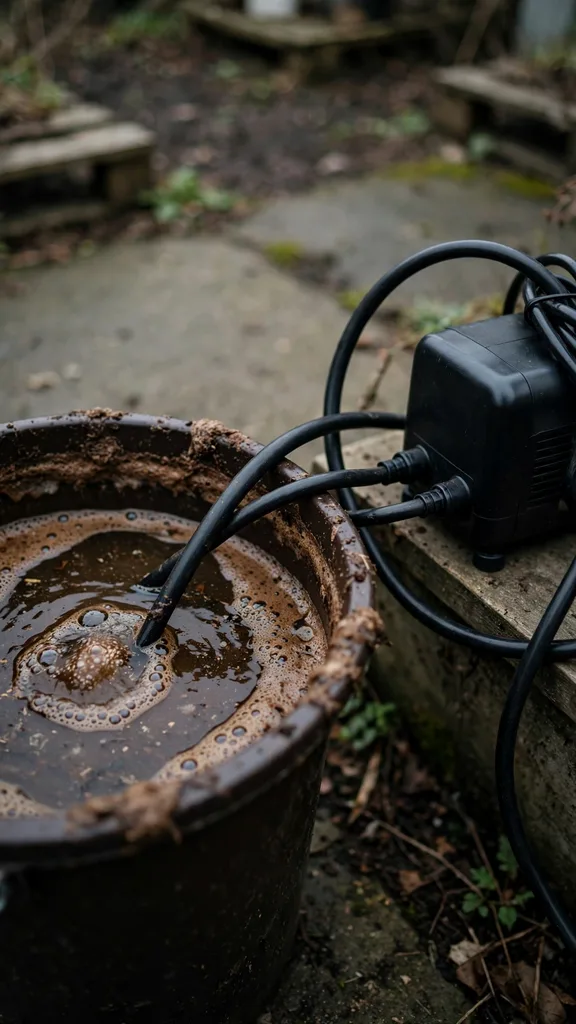
Add an air pump, and run it for the whole brew. A small aquarium pump with 1 or 2 hoses serves a bucket, and the bubbles keep oxygen in the water. Stir the water 2 or 3 times a day, and shift the bubblers so no corner goes still. Brew for 2 to 3 days, and use the tea within hours of finishing. Tea left standing turns anaerobic, and the wrong microbes take over.
Measure the dose by the bed, and dilute the tea before pouring. Mix 1 part tea with 4 parts rainwater, and pour it on the soil around the roots. A standard bed takes one bucket of diluted tea, and a second bucket follows in 2 weeks if the plants still look pale. Pour on soil, and never spray it on leaves meant for eating, because the tea carries soil microbes that belong in the ground.
Common Mistakes With Compost Tea
- Adding molasses or sugar to the brew. Sugars feed the wrong microbes, and they can encourage the growth of Salmonella and E. coli in the tea. Brew with compost and water only, and skip every additive.
- Brewing without air. A still bucket loses oxygen within a day, and anaerobic microbes take over. Run an air pump for the whole brew, and stir 2 or 3 times a day.
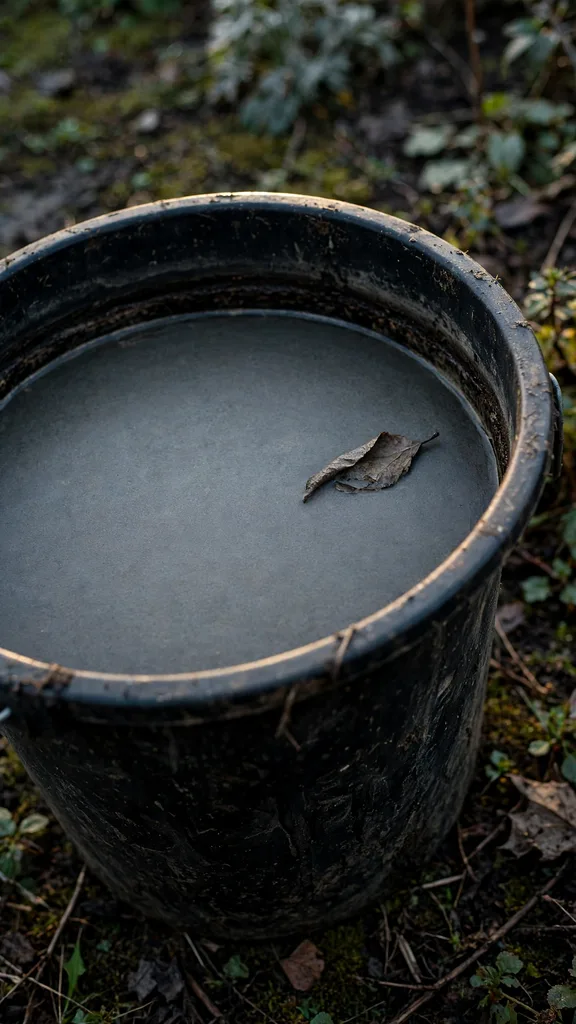
- Leaving the tea to stand. Tea left standing turns anaerobic, and the wrong microbes take over. Use the tea within hours of finishing, and pour leftovers on the compost pile.
- Spraying tea on food crops. Tea carries soil microbes, and leafy greens eaten raw should never meet it. Pour tea on the soil around the roots, and keep it off leaves meant for eating.
- Expecting tea to cure disease. Field studies found aerated tea failing to prevent leaf disease, and no tea is registered as a pesticide. Tea feeds soil gently, and it never replaces drainage, spacing, and the right plant.
When Compost Tea Matters in Your Garden
Compost tea matters most for seedlings and transplants, when roots are small and the soil around them is thin. A gentle pour of diluted tea feeds the root zone without burning, and the microbes colonize the new ground. A seedling watered with tea greens up faster than one watered with plain water, and the difference shows in a week.
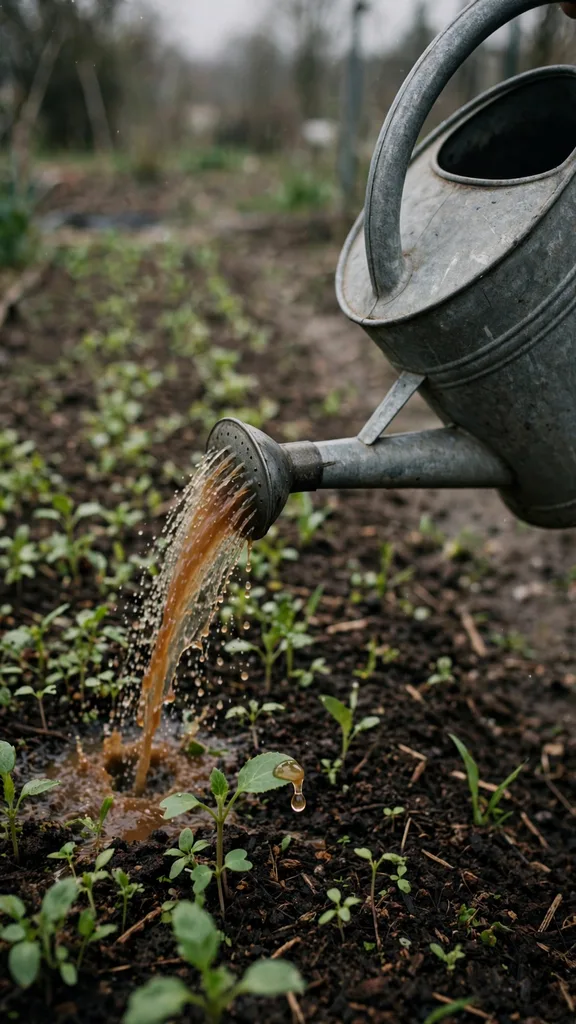
It matters in midsummer, when the bed is tired and the compost pile is empty. A bucket of tea bridges the gap between compost deliveries, and it keeps the soil life fed through the hungry weeks. The tea never replaces the next compost layer, and it keeps the bed alive until the pile is ready.
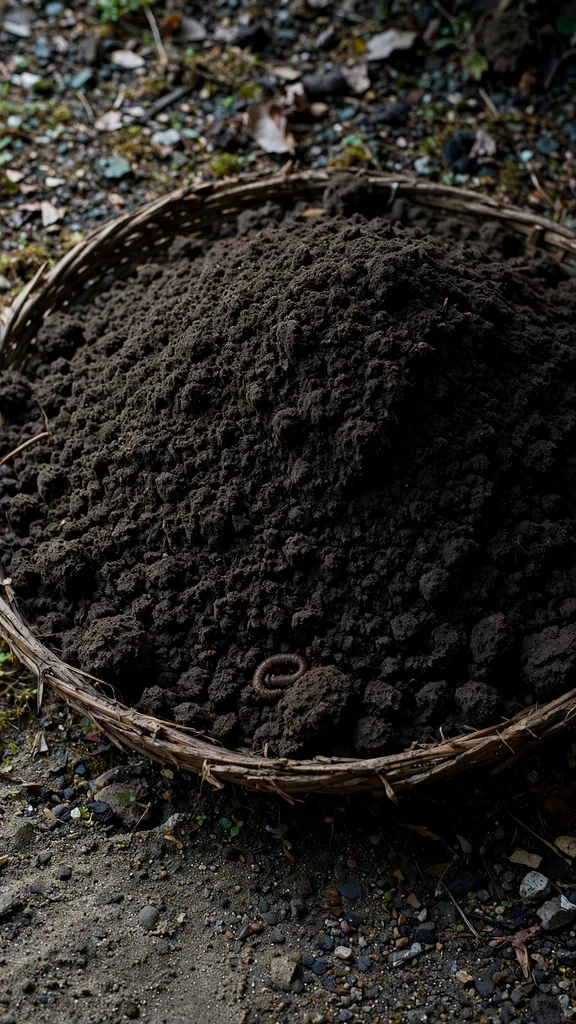
Compost is the source of the tea, and the pile is where the work starts. A 5.1 cm layer of solid compost feeds the bed for a season, and the tea stretches the pile further. Learn how to set up a compost bin and keep a steady supply, because tea without compost is water with a rumor in it. A mulching guide shows how a mulch layer keeps the bed damp after a tea pour, and damp ground holds the microbes the tea delivers.
FAQ
Compost tea feeds plants gently, and it suits seedlings, transplants, and tired midsummer beds. The tea carries dilute nutrients and microbes to the root zone, and the plants green up within a week. It never replaces solid compost, and it never cures disease. Use it as a supplement, and keep feeding the bed with compost.
Brew compost tea for 2 to 3 days, with an air pump running the whole time. Stir the water 2 or 3 times a day, and shift the bubblers so no corner goes still. Use the tea within hours of finishing, because tea left standing turns anaerobic. A still bucket gives a weaker extract.
Tap water works for compost tea only after the chlorine leaves it. Chlorine kills microbes, and the whole point of the tea is to keep them alive. Let tap water sit uncovered for a day, or use rainwater straight from the butt. Never brew with chlorinated water.
Compost tea does not prevent plant disease, and no tea is registered as a pesticide. Field studies found aerated tea failing to prevent leaf disease on apples and potatoes, and disease sometimes grew worse. The tea feeds soil life and supports plant health. It never replaces drainage, spacing, and the right plant in the right place.