Spot 2 smooth leaves on a sprouting bean, and you have found its cotyledons. A cotyledon is the first leaf a seed grows, holding stored food, opening before the plant can feed itself.
A cotyledon is a seed leaf, not a real leaf. It carries the food the seed stored, and it feeds the seedling until true leaves open and take over. Some cotyledons stay underground and never turn green. Some rise above the soil, turn green, and catch light for a few weeks. Both kinds vanish once the plant outgrows them, and their yellowing is normal, not a disease.
The count of cotyledons sorts the plant world. Grasses and corn carry 1. Beans, tomatoes, and most garden vegetables carry 2. Pines carry many. That count never changes for a species, and it tells a botanist the plant family at a glance. A gardener uses the same count to tell a seedling from a weed. The seed germination guide covers the sprouting stage that comes just before cotyledons open.
| Cotyledon at a Glance | Detail |
|---|---|
| What it is | First leaf of a seedling, grown from stored food |
| Count | 1 in monocots, 2 in dicots, many in pines |
| Job | Feed the seedling until true leaves take over |
| Lifespan | Days to weeks, then yellows and drops |
| Above or below soil | Rises in beans, stays below in peas and corn |
| Signal | Germination succeeded, seedling is alive |
What Is a Cotyledon?
A cotyledon is a seed leaf: the first leaf-like structure a seed produces when it germinates. It forms inside the seed before sowing, filled with stored starch, oil, or protein. When the seed sprouts, the cotyledon feeds the young plant until true leaves open and photosynthesis takes over.
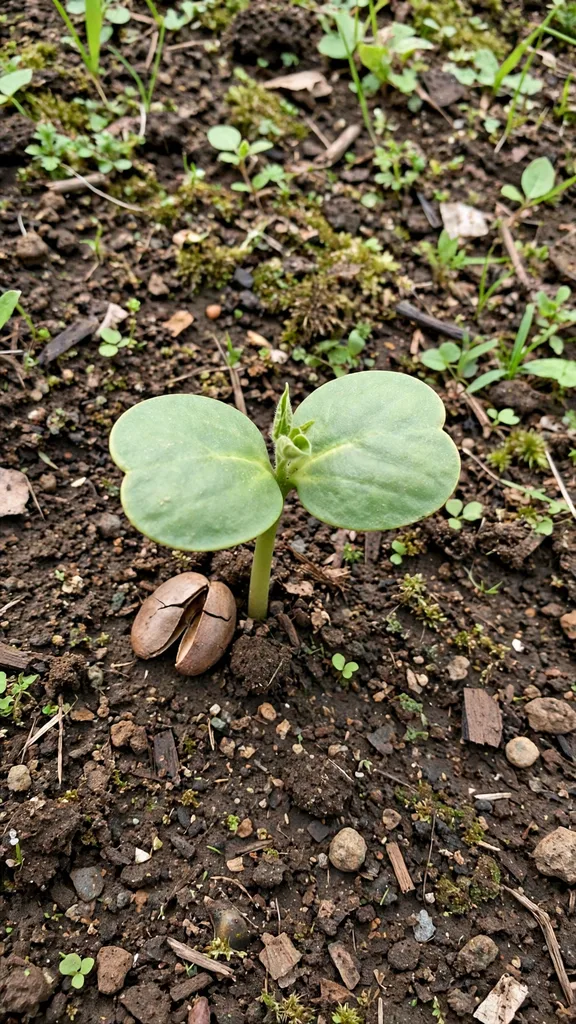
The deciding number is the count. Monocots such as corn produce only one cotyledon, dicots such as beans produce two cotyledons, and some gymnosperms such as pines have many cotyledons, according to the North Carolina Extension Gardener Handbook chapter on propagation. That count places a plant in its great group: monocot or dicot. A gardener who counts cotyledons on an unknown seedling narrows the identity to one group at once.
Cotyledons differ from true leaves in shape. The seed leaves differ in shape from the true leaves, and they look smooth, plain, and generic on every crop. A tomato cotyledon looks like a pepper cotyledon. A bean cotyledon looks like a squash cotyledon. True leaves carry the adult shape. Cotyledons carry none of it, and that plainness is the identification clue.
Cotyledons also differ in where they sit. In beans and squash, the cotyledons rise above the soil and open green in the light. In peas and corn, they stay below the surface while the shoot pushes up alone. Either way, the cotyledon sits at the bottom of the seedling, below the first true leaves. The lowest pair on the stem is the seed leaf pair. The true leaves page describes the adult-shaped leaves that follow.
How a Cotyledon Works
A cotyledon works as a packed lunch. The parent plant fills it with food before the seed dries and drops. Water wakes the seed, enzymes break the stored food into sugars, and the seedling burns those sugars to grow its first root and shoot. No light is needed for this stage. A seed germinates in the dark, fed entirely by the cotyledon.
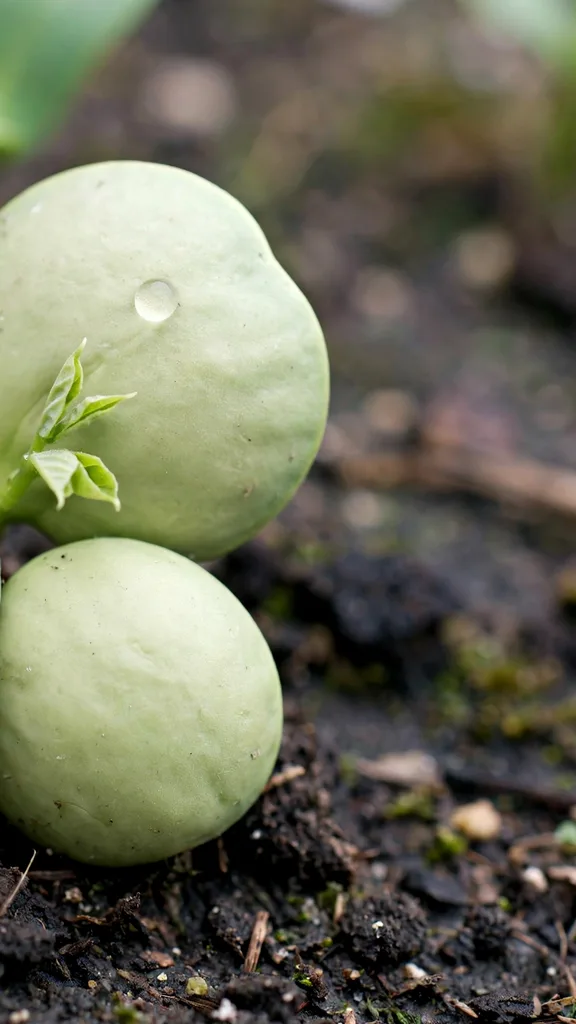
The food store runs out fast. A small seed such as lettuce carries food for days. A large seed such as a bean carries food for weeks. The seedling must open true leaves before the store empties, or growth stalls. That race sets the sowing depth: a seed buried too deep burns its store reaching the surface and arrives with nothing left.
Some cotyledons turn green and help with photosynthesis once above the soil. Bean cotyledons open green and catch light while the first true leaves grow. Pea cotyledons stay underground and feed from the dark, while the shoot carries the green work. Both designs succeed. The green kind adds light energy to the stored food, and the buried kind spends the store faster.
Feeding waits for the cotyledon stage to pass. Seedlings draw energy for germination from nutrients stored in the seed, and they need no fertilizer until they have several sets of true leaves, according to the University of Minnesota Extension guide to starting seeds indoors. Fertilizer on a cotyledon-stage seedling burns the root tips and the soft stem. Hold all feeding until true leaves stand, then feed weak and once a week.
Cotyledon vs True Leaves
| Feature | Cotyledon | True Leaves |
|---|---|---|
| Shape | Smooth, plain, generic | Adult shape of the plant |
| Number | 1, 2, or many by species | Many sets through the season |
| Food source | Stored food from the seed | Photosynthesis in the light |
| Lifespan | Days to weeks, then drops | Lasts the season |
| Position | Lowest on the stem | Above the cotyledons |
| Color | Pale green or yellow | Full green |
| Signal | Germination succeeded | Transplant and feeding time |
The two leaf types also age differently. Cotyledons yellow and drop on schedule, and their loss means nothing. True leaves yellow only when the plant lacks food, water, or warmth. A gardener who worries over yellowing cotyledons wastes worry. A gardener who ignores yellowing true leaves wastes a plant.
The two types also respond differently to damage. A seedling that loses a cotyledon to a pest still grows, since the true leaves take over, while a seedling that loses its first true leaves stalls, since the food factory is gone. Protect the true leaves first. The cotyledons can fend for themselves for a few days.
The count also tells the gardener which seedlings are weeds. A weed seedling in the row shows its own cotyledons, and the pair looks nothing like the crop pair. Pull the strangers while they are small, and the crop keeps the bed. Wait until the weeds set true leaves, and the roots tangle with the crop.
How to Recognise a Cotyledon
Recognise a cotyledon by position first. It sits lowest on the stem, at or just above the soil line, below every true leaf. A bean seedling shows 2 thick rounded leaves at the base, then a stem, then the first true leaves above. A corn seedling shows 1 narrow leaf at the base, then the shoot. The lowest leaf is the seed leaf.
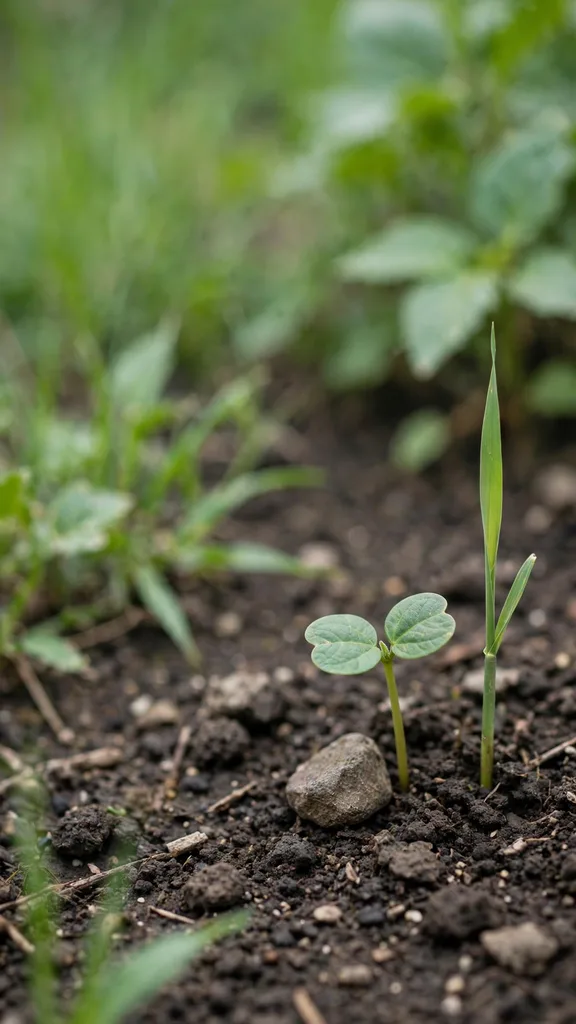
Recognise it by shape second. Cotyledons look smooth, thick, and plain, with a rounded or oval outline and no teeth, lobes, or hairs. True leaves show the adult edge at once: jagged on tomato, pointed on pepper, broad on squash. A leaf with no adult character is a cotyledon. A leaf with adult character is a true leaf.
Recognise it by feel third. A cotyledon feels thick and fleshy, since it holds stored food. A true leaf feels thin and papery by comparison. Pinch gently: the cotyledon resists and springs back, while the true leaf bends and creases. The thick feel fades as the store empties and the cotyledon thins, yellows, and drops.
Recognise it by timing fourth. Cotyledons open within days of emergence, before any true leaf. A seedling with only a smooth pair and no adult-shaped leaf above it is still on seed stores. A seedling with an adult-shaped pair above the smooth pair has moved past the cotyledon stage. Count the pairs from the soil up, and the story reads itself.
Common Mistakes With Cotyledons
Counting cotyledons as true leaves tops the list. A bean seedling with 2 cotyledons and no true leaves is not a 2-leaf seedling. It is a newborn still on seed stores. Thin it, move it, or feed it on that count and the seedling pays. Count true leaves only, from the first adult-shaped set upward.
Feeding a cotyledon-stage seedling burns the second error into the tray. Fertilizer on a seedling with no true leaves scorches the cotyledons and the root tips. The seedling stalls, and the gardener feeds again to fix the stall. Hold all fertilizer until several sets of true leaves stand, then feed weak.
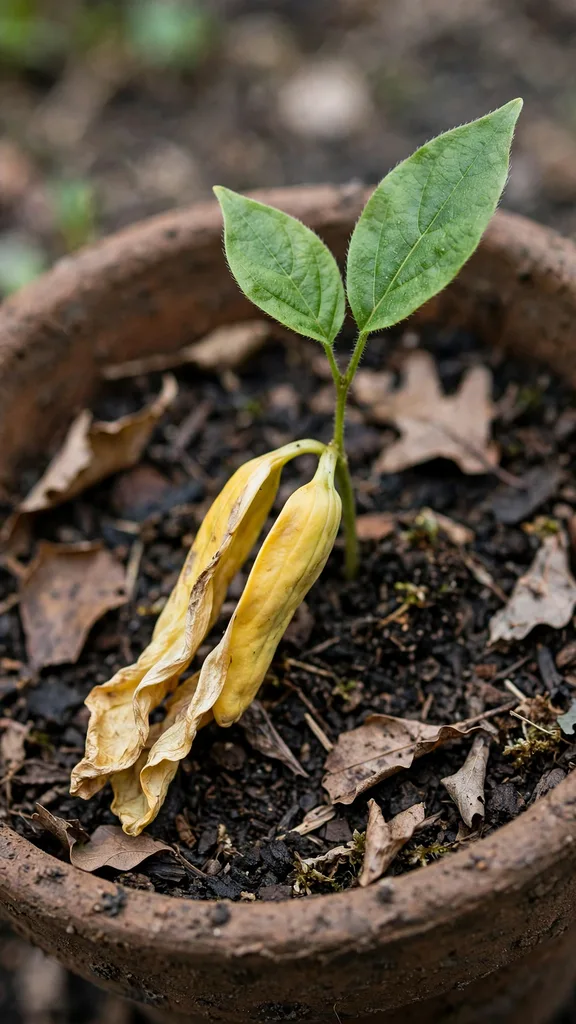
Pulling yellowing cotyledons wastes the third error. Cotyledons yellow and drop on schedule once true leaves take over, and their loss means nothing. Pulling them early starves a young seedling and opens a wound at the stem. Leave them alone, and they fall when the plant no longer needs them.
Sowing seed too deep starves the fourth error into the row. A seed buried past its food store burns the cotyledon food reaching the surface and arrives with nothing left. The seedling emerges pale, then stalls. Sow at twice the seed width, and the cotyledon store lasts until true leaves open.
When Cotyledons Matter in Your Garden
Cotyledons matter at germination checks. Their opening proves the seed was alive, the soil was warm enough, and the sowing depth was right. A row with no cotyledons after the packet window has a germination problem, not a feeding problem. Re-sow the gaps, and check the depth and the temperature first.
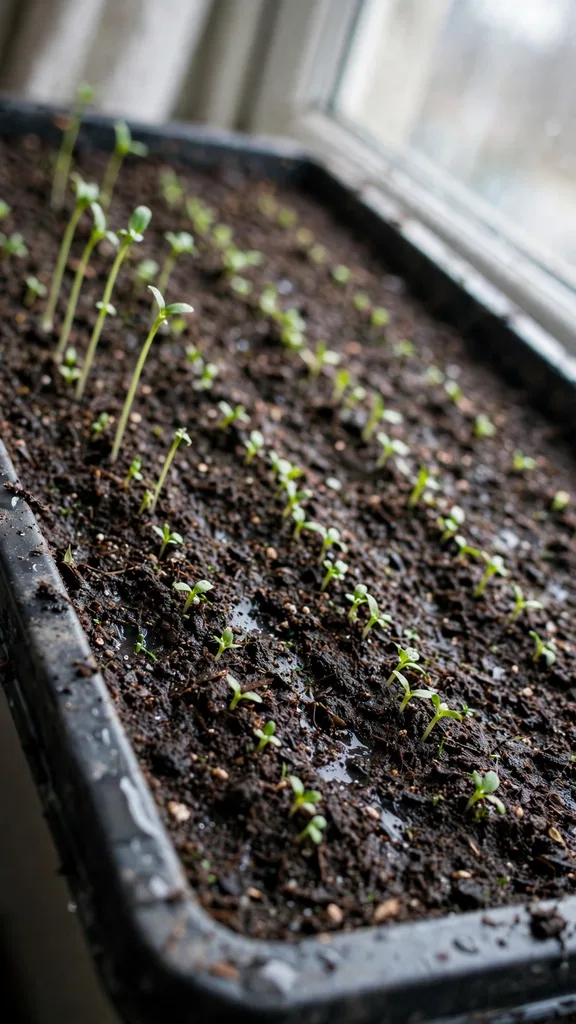
They matter at thinning time too. Thin a row when seedlings show their first true leaves, not when cotyledons open. A row thinned at the cotyledon stage loses seedlings that had no roots to hold the move. A row thinned at the true leaf stage keeps the strongest plants.
They matter for seed saving as well. A seed with large cotyledons carries a large food store, and it germinates in cool soil and deep sowing better than a seed with small cotyledons. Bean and pea seed forgive a rough start. Lettuce and carrot seed do not, and they need shallow sowing and warm soil. The full index of seed terms lives in the gardening glossary.
FAQ
A bean has 2 cotyledons, since beans are dicots. The pair rises above the soil, turns green, and opens before the first true leaves appear. Corn has 1 cotyledon, and pines have many. The count never changes for a species, and it places the plant in its great group at a glance.
Yes. Cotyledons yellow and drop once true leaves take over photosynthesis, usually within days to weeks of emergence. Their loss is normal and needs no action. Leave them alone while they feed the seedling, and let them fall when the plant no longer needs them.
Cold soil, dim light, and soggy mix all stall the first true leaves. Seedlings need warm soil and strong light to push new growth from the tip. Move the tray under a grow light, warm the mix, and let the surface dry between waterings. True leaves follow within days.
No. Yellow cotyledons are finishing their job, not signaling disease. They fall on their own once true leaves take over. Remove only a cotyledon that has turned brown and dry, and cut it with scissors rather than pulling it, so the stem stays intact.