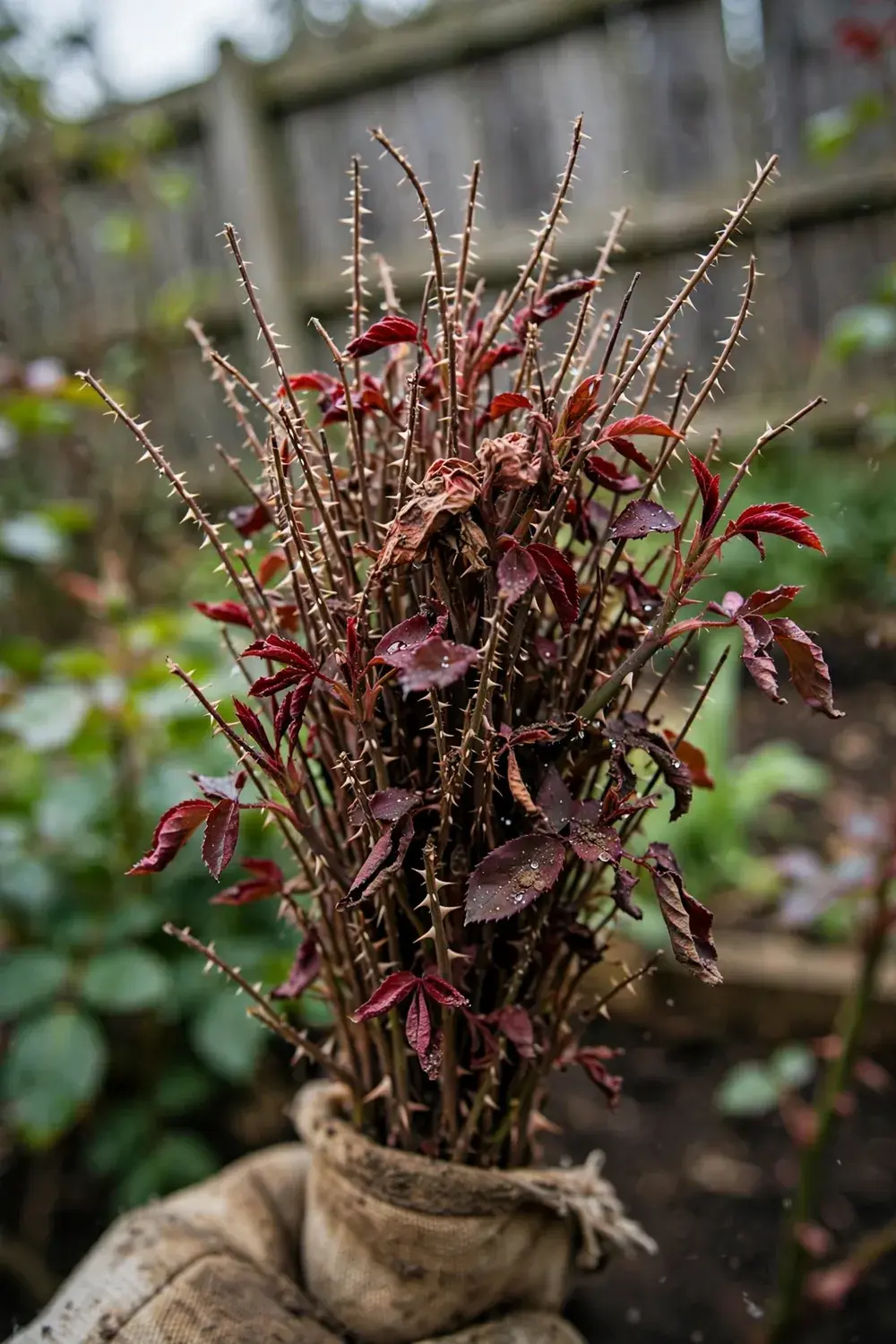

Rose rosette disease has no cure. A rose that shows its signature symptoms will decline over 2 to 4 seasons, and the only move that protects the rest of the bed is removing the whole plant, roots included. That verdict feels brutal when the bush in question is a favorite, and it is exactly why the first job is certainty, not speed.
I have learned to treat one strange cane as a whole-plant problem, not a pruning job.
The ten strategies below cover how to read the symptoms on each part of the plant, how to separate the disease from herbicide drift and from healthy spring growth, and how to protect the roses that still stand. The herbicide confusion is the heart of it. A drifted rose can look diseased, and a diseased rose can look drifted, and the two demand opposite responses.
1. What Rose Rosette Disease Actually Is
Rose rosette disease is a viral disease of roses, caused by Rose rosette virus, a member of the Emaravirus genus, and spread by a microscopic eriophyid mite. Rose rosette virus reaches every part of an infected plant, roots included, and no treatment reverses it.
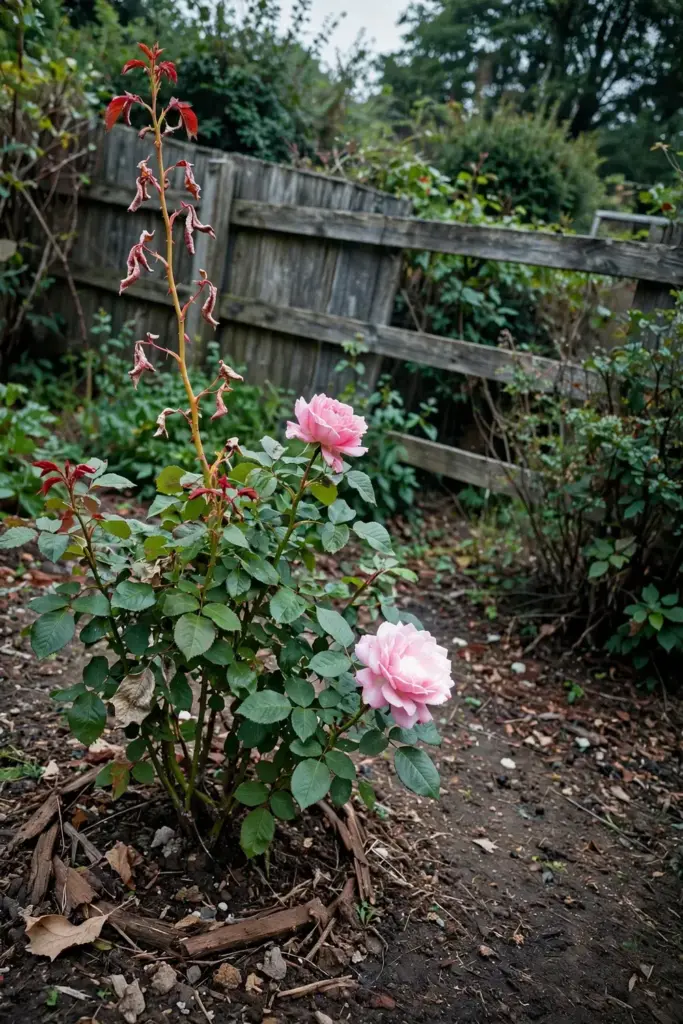
The University of Florida IFAS Extension publication on this disease states that Rose rosette virus belongs to the Emaravirus genus, that the eriophyid mite Phyllocoptes fructiphilus transmits it, and that grafting transmits it while sap does not. That last detail matters for daily garden work. You cannot spread rose rosette disease by brushing sap from one rose onto another. The mite does the spreading, and grafting does the rest, which is why infected nursery stock and infected cuttings carry the disease into new gardens.
Oklahoma State University Extension traces the first identification of rose rosette disease to the 1940s in the Rocky Mountains. Rosa species and hybrids are the only known hosts. Multiflora rose, a wild and invasive rose, is a common wild host, and the disease has spread across much of the United States on multiflora rose and other wild roses before reaching cultivated beds.
No cure means what it says. Oklahoma State University Extension notes that susceptible rose plants may die in two to four seasons, and that growers often remove infected plants before death because the plants stop looking appealing. The plant declines slowly, which tempts growers to wait. Waiting is the expensive choice, because a declining plant keeps feeding mites to its neighbors the whole time.
2. How to Identify Rose Rosette Disease on Shoots and Leaves
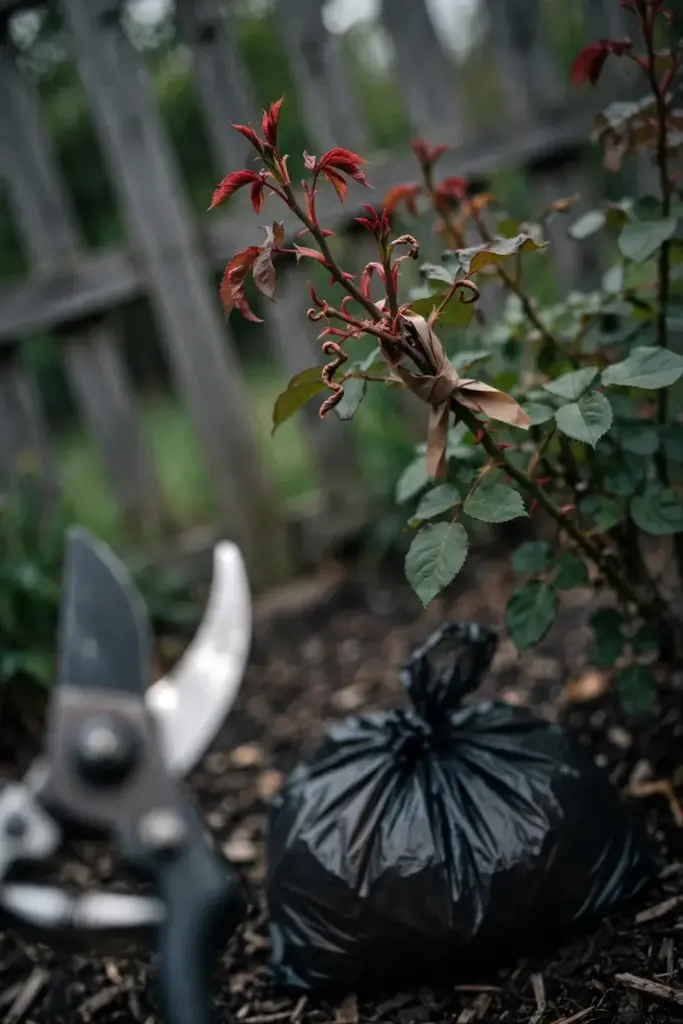
On shoots and leaves, rose rosette disease shows up as elongated shoots carrying small, distorted leaves with red or yellow mottling, usually on one part of the plant first. Healthy new growth turns green as it matures. Diseased foliage stays discolored and distorted.
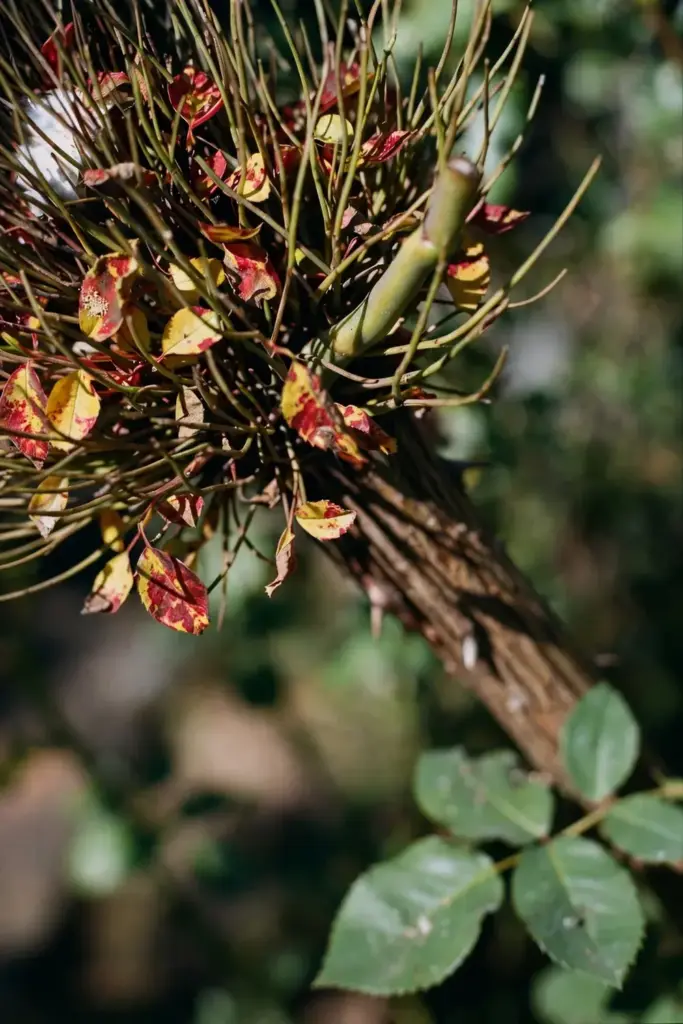
The Oklahoma State University Extension fact sheet on rose rosette disease lists the full symptom set, and the shoot symptoms lead it. Elongated shoots, red or yellow leaf mottle, leaf distortion, and succulent, thickened stems all appear on the same cane. A brush-like cluster of shoots or branches that all start at or near the same point is the classic presentation, called a witches broom or rosette. Leaves inside the cluster come out stunted, distorted, and pigmented red or yellow.
Compare the thickness of the new shoot to the cane it grew from. On a healthy rose, the new shoot runs thinner than the parent cane. On a rose rosette disease shoot, the new growth can come out thicker and more succulent than the cane it grew from. That thickness test works in seconds, and it works before the color clues settle.
Timing shapes what you see. Symptoms begin a few weeks to months after infection, so a plant can carry the virus through winter while showing nothing. The virus may sit inactive in the cold months, and symptoms then appear on new growth in spring. In the early stages, a plant may show only one or several elongated stems, which is why the comparison check matters. Hold the suspect growth against the rest of the same plant. If one cane looks like a different plant, believe the cane.
3. How to Identify Rose Rosette Disease on Thorns, Flowers, and Canes
On thorns, flowers, and canes, rose rosette disease packs on excessive thorns, deforms the blooms, and drives the cane toward dieback. Any single one of these signs means little. The cluster is what convicts the plant.
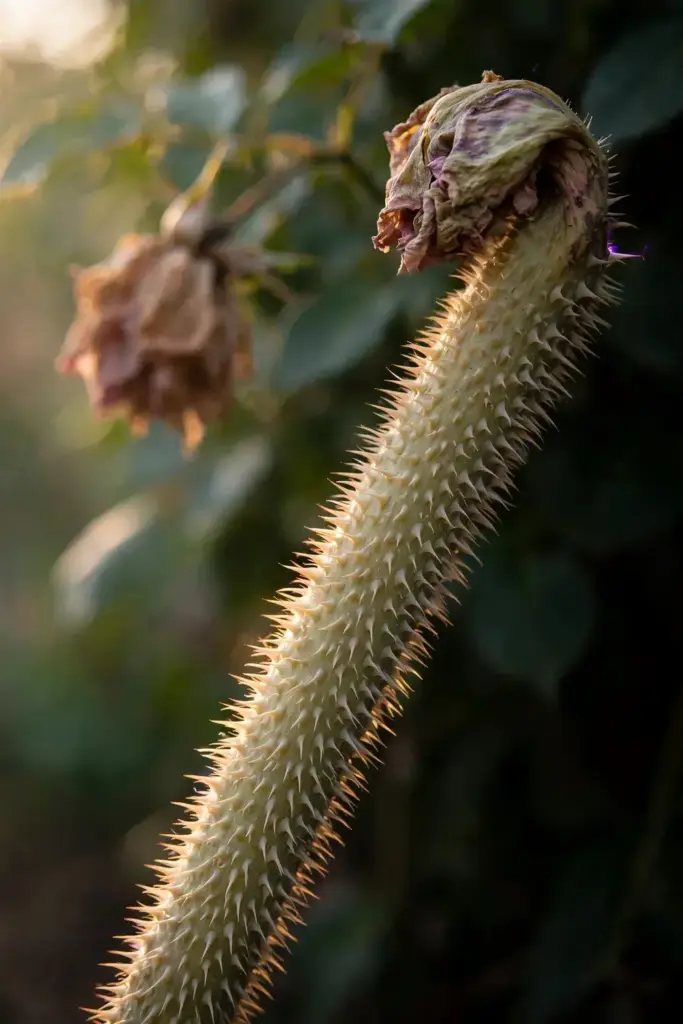
Excessive thorniness is the most telling of the three. Oklahoma State University Extension describes prickles that form in unusual numbers, soft and pliable at first, then hardening as they age. Run a gloved finger along a suspect cane and compare it to a healthy cane on the same bush. A diseased cane can feel almost furry with small thorns. That density has no equivalent in herbicide damage, which is the fact the whole differential rests on.
Flowers tell the next part of the story. Blooms on an infected cane may come out distorted, mottled, or blighted, and fail to open fully. Severely infected plants may stop producing flowers at all. A rose that keeps pushing deformed buds while its neighbor blooms normally is not having a bad week. Something systemic is wrong, and rose rosette disease belongs at the top of the suspect list.
Dieback finishes the pattern. Defoliation and dieback are common with rose rosette disease, and infected roses show reduced winter hardiness, so cold winters hit them harder than healthy plants. Infected plants also sit under stress, and stressed roses turn more susceptible to other diseases such as black spot and powdery mildew. A rose that picks up every passing leaf disease after a strange season may be fighting something deeper than the leaf disease.
4. Which Roses Get Hit Hardest
Every cultivated garden rose is susceptible to rose rosette disease. Hybrid teas, floribundas, grandifloras, shrub roses, miniatures, and Knock Out types all sit in the same risk pool, and no garden variety on the market carries proven resistance.
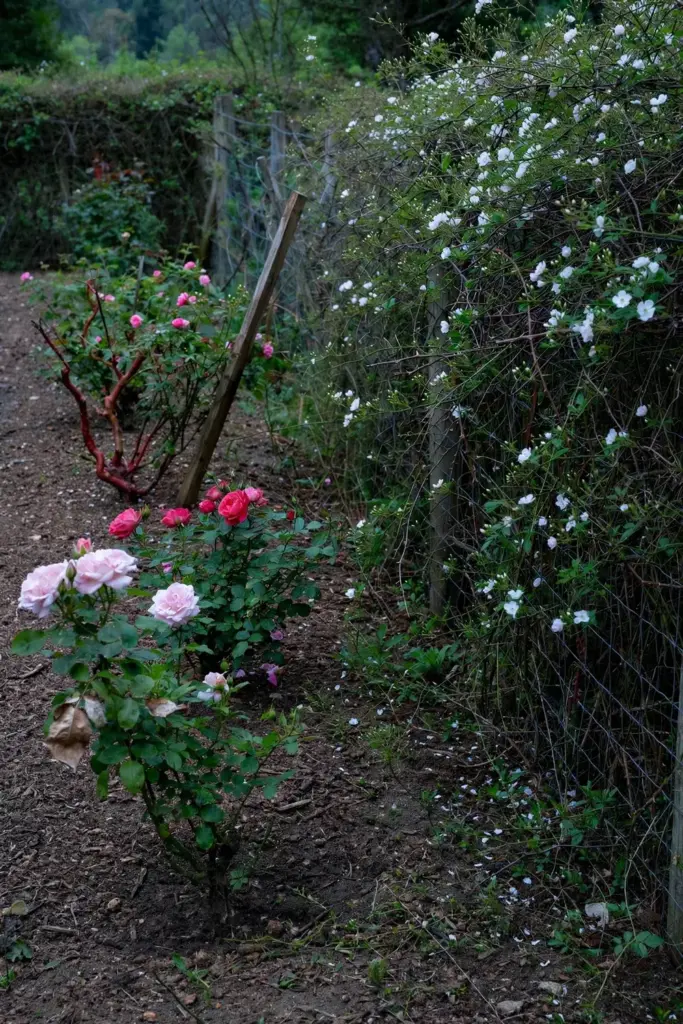
Size changes the timeline, not the outcome. The University of Delaware notes that smaller plants go through the disease stages faster than larger plants, with small plants usually killed in about 2 years, while a large plant may survive for 5 years in a deteriorated condition. A large bush that lingers for years looks like a reprieve. It is a reservoir with good PR, feeding mites to every rose downwind of it while it declines.
Multiflora rose sets the local risk level. This invasive wild rose is very susceptible to the disease and serves as a common source of infection for garden beds. Check fencerows, field edges, ditch banks, and neglected corners near the garden. A thicket of multiflora rose a short walk from the bed can re-infect replacement roses for years, which is why removing it belongs in the same plan as removing the garden plant.
Resistance research is real but unfinished. Oklahoma State University Extension reports that all garden roses are thought to be susceptible, and that studies are in progress to determine whether resistance or tolerance exists in cultivated roses. Until a university trial proves otherwise, treat every rose as susceptible, and treat any nursery claim of a resistant garden variety as unproven.
5. Rose Rosette Disease vs Herbicide Damage vs Normal New Growth
Thorniness and spread separate the three lookalikes. Rose rosette disease adds extra thorns and starts in one bush. Herbicide damage leaves thorn counts normal and usually marks many plants at once. Normal new growth turns green and grows normally.
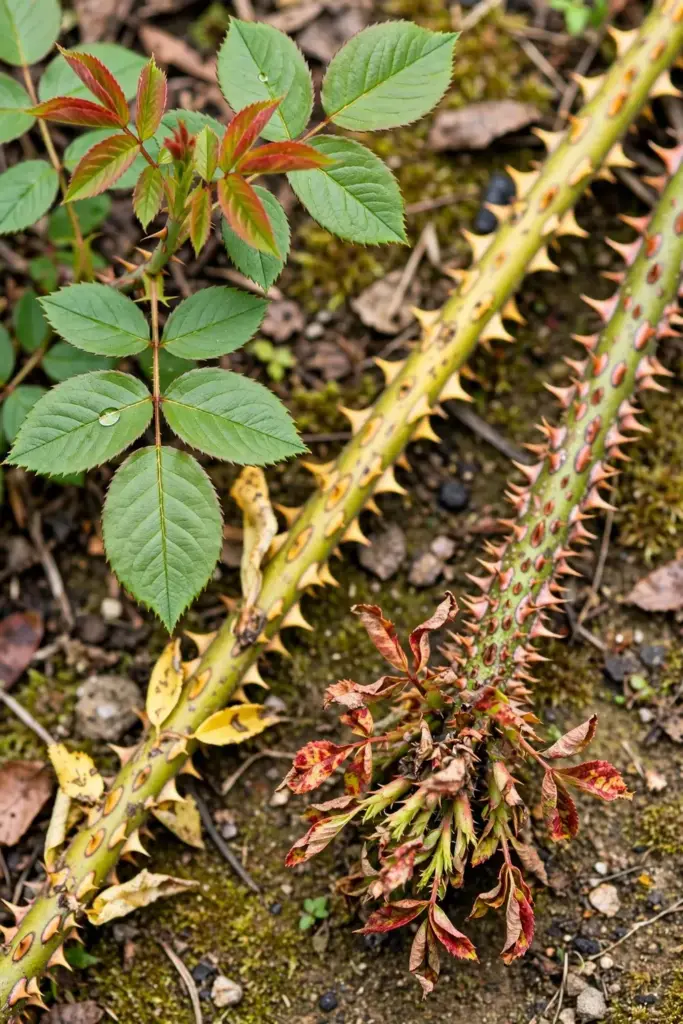
| Feature | Rose Rosette Disease | Herbicide Damage | Normal New Growth |
|---|---|---|---|
| Extra thorns | Dense extra thorns, soft at first, then hard | Thorn count stays normal | Thorn count stays normal |
| Red pigment | Red or yellow mottle that persists as leaves mature | Reddening possible, often with yellowing and narrowing | Red spring growth that turns green as leaves mature |
| Shoot growth | Elongated shoots, witches broom clusters, thickened succulent stems | Distorted, narrow, stunted leaves, and witches broom is possible with glyphosate | Even shoots, normal leaf size, no clustering |
| Spread | Starts in one bush, then moves to neighbors | Appears across roses and broadleaf plants the drift touched | Whole plant at once, every cane |
| Duration | Worsens season to season, and the plant declines over years | Fades by the following year if the plant is not injured again | Resolves in weeks as growth matures |
| Flowers | Distorted, mottled, or failing to open | May fail or distort in the injured flush | Normal blooms |
| First move | Confirm, then remove the whole plant | Wait, water, and watch the next flush | Nothing, enjoy it |
Use the table as a combination lock, not a single-key test. Red pigment alone proves nothing, because many rose cultivars push red new growth in spring. Thorniness is the strongest single clue, because herbicide injury does not produce it. Spread is the second strongest, because most herbicides are non-selective, so drift marks other plants in the area while rose rosette disease starts in one bush.
Herbicide timing explains the most confusing cases. Virginia Tech Extension explains that glyphosate, the active ingredient in Roundup, can contact green rose tissue in fall, move into the buds, and stay quiet until those buds emerge the following spring. The commonly used broadleaf herbicide 2,4-D can also distort rose leaves. Unless the plant is injured again, herbicide injury symptoms should disappear by the following year, which is the opposite of rose rosette disease, which worsens.
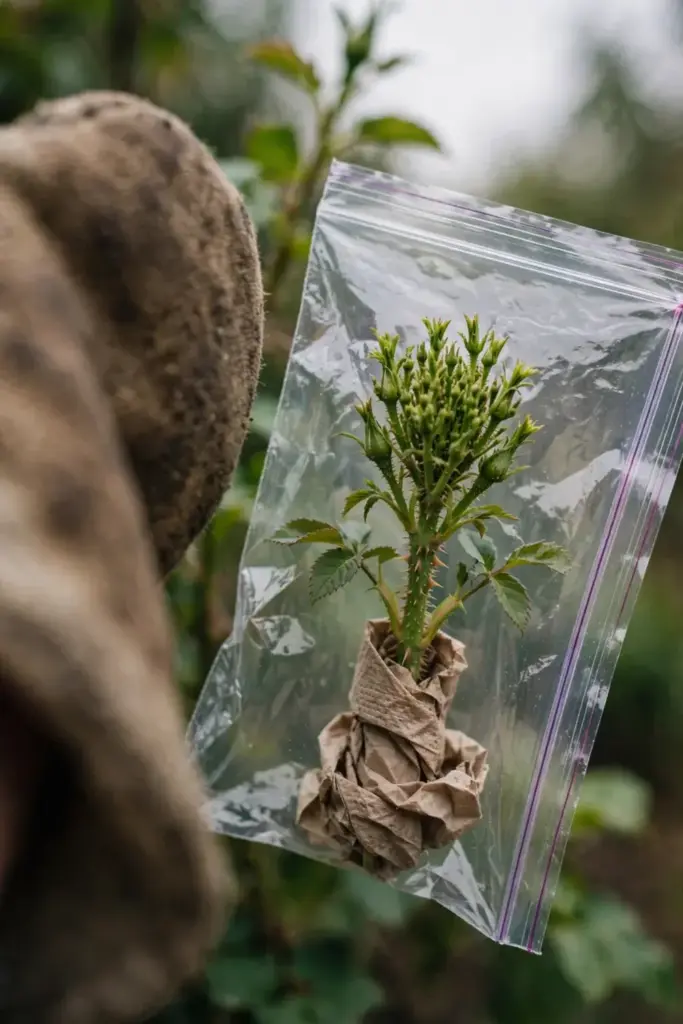
When the signs still point both ways, collect evidence instead of guessing. Cut symptomatic shoots that measure 6 to 12 inches long, preferably shoots carrying open flower buds. Wrap them in newspaper or dry paper towels, place them in a sealed plastic bag, and refrigerate the sample if it cannot be delivered right away. A county Extension office can forward the sample to a specialist, and digital photos of the whole plant help the diagnosis.
6. Why the Eriophyid Mite Makes Rose Rosette Disease So Hard to Stop
The eriophyid mite makes rose rosette disease so hard to stop because the vector is invisible, the virus goes systemic, and the plant can look healthy for months while both spread. By the time symptoms show, the infection is old news.

The mite itself is microscopic, far too small to see in the garden, and it hides where sprays and eyes rarely reach. Oklahoma State University Extension lists its shelter spots as buds, open flowers, sepals, the base of shoots, leaf axils, and under leaf scars. A gardener inspecting a bush sees a healthy-looking rose. The mites see a city of hiding places, and every one of them can hold an infective mite.
The University of Delaware lays out the mite calendar, and the numbers explain why the disease moves fast once it lands.
| Mite Stage | Timing |
|---|---|
| Egg laying | One egg per day across a laying run of 30 days per female |
| Hatching | 3 to 4 days after laying |
| Reaching adulthood | About one week after hatching, depending on temperature |
| Generations | Several per season, running until fall |
| Winter | Females shelter under bark or on bud scales of living roses |
The virus transmits most readily between May and mid-July, when plants grow actively, and symptoms from new infections usually start appearing in mid-July. That lag is the trap. A rose infected in June can look fine at the July barbecue and show its first witches broom in August, after mites have already moved on.
Movement is the last piece. Mites crawl short distances on a plant, and wind currents carry them to new roses. Infective mites also ride on gloves, clothing, and tools. Off the plant, the mites die fast, within about 8 hours on a bare surface according to the University of Delaware, though Oklahoma State University Extension notes they can survive for a few days on fallen debris. That debris clause is why cleanup matters as much as removal.
7. What Makes Rose Rosette Disease Worse in a Home Garden
Crowded roses, a multiflora rose reservoir nearby, spent blooms left standing, leaf blowers, and stressed plants all make rose rosette disease worse in a home garden. Every one of them helps the mite reach the next rose.
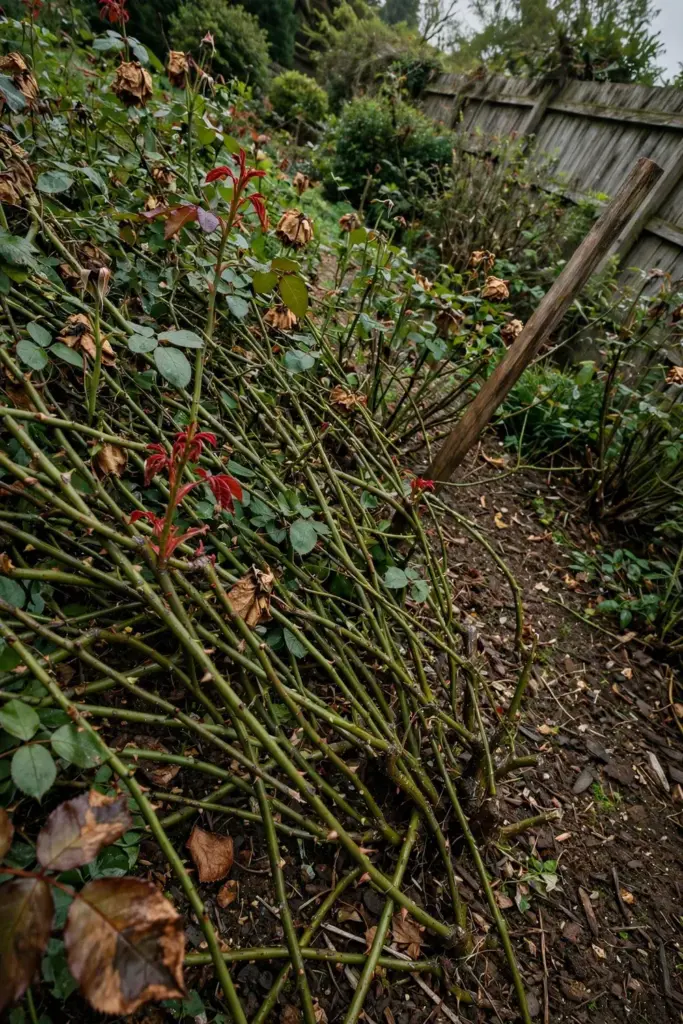
Crowding is the simplest accelerator. Mites crawl from plant to plant, and they do it easily when foliage touches. Space roses so canes never touch, and keep new plantings from closing into a hedge. A gap between bushes is a moat the mites must cross on the wind, and many never make it.
Wild roses near the garden act as a standing reservoir. Multiflora rose and other wild roses can harbor the virus and the mites, so scout the area around the bed and remove wild roses wherever practical. A garden that keeps its own roses clean while a thicket across the fence stays infected is bailing with the plug out.
Spent blooms feed the problem through the season. Mites accumulate around open blooms, so deadheading roses through the growing season cuts mite habitat. Bag the deadheaded material and dispose of it off-site instead of dropping it on the mulch, where it becomes a mite hotel.
Leaf blowers move mites the way wind does, only faster and aimed. Oklahoma State University Extension advises against using leaf blowers near roses, and recommends removing debris by hand. A blower pointed at a bed with one infected bush can seed the whole row in an afternoon.
Plant vigor sets the background risk. Stressed plants are more likely to become diseased, so irrigate during drought, maintain fertility guided by soil tests, and control fungal diseases on time. Building vigor starts underground, and the soil health guide covers the soil side of that job. Vigor will not stop a mite. A strong rose buys time, and time is what early detection needs.
Work order matters too. Always work healthy roses first and suspect or infected roses last. That sequence keeps mites off skin, tools, gloves, and clothing until the risky work is done, and it costs nothing.
8. Step 1: Confirm the Diagnosis Before You Touch the Shovel
Confirm the diagnosis before you touch the shovel, because removal is irreversible and the disease shares its symptoms with herbicide drift. A wrong removal costs a healthy rose. A wrong rescue keeps a reservoir standing.
Run the three-check field test before anything else. Check thorniness first, because herbicide damage does not pack on extra thorns. Check persistence second, because healthy red growth turns green while diseased foliage stays discolored and distorted. Check spread third, because rose rosette disease starts in one bush while drift marks many plants. All three checks together beat any single clue. Photograph the suspect cane, the thorns, and the whole bush, so the comparison survives even if the cane gets cut for a sample.
Send a sample when the field test leaves doubt. Cut symptomatic shoots 6 to 12 inches long, preferably shoots carrying open flower buds, and wrap them in newspaper or dry paper towels inside a sealed plastic bag. Refrigerate the sample if delivery must wait, then take it to the county Extension office for forwarding to a specialist. Digital photos help, since they can reveal clues the sample alone misses.
Handle suspect material like it is contagious, because it is. Do not carry live cuttings around the garden, and do not walk them into a nursery unbagged for a second opinion. Call ahead, keep everything sealed, and work the suspect bush last. Confirmation takes days. That delay costs nothing against a disease that measures its timeline in seasons.
9. Step 2: Remove the Whole Plant, Roots and All
Remove the whole plant, roots and all, and put it in the trash. Pruning the sick cane will not save the plant, because the virus already runs through the roots and through canes that still look healthy.
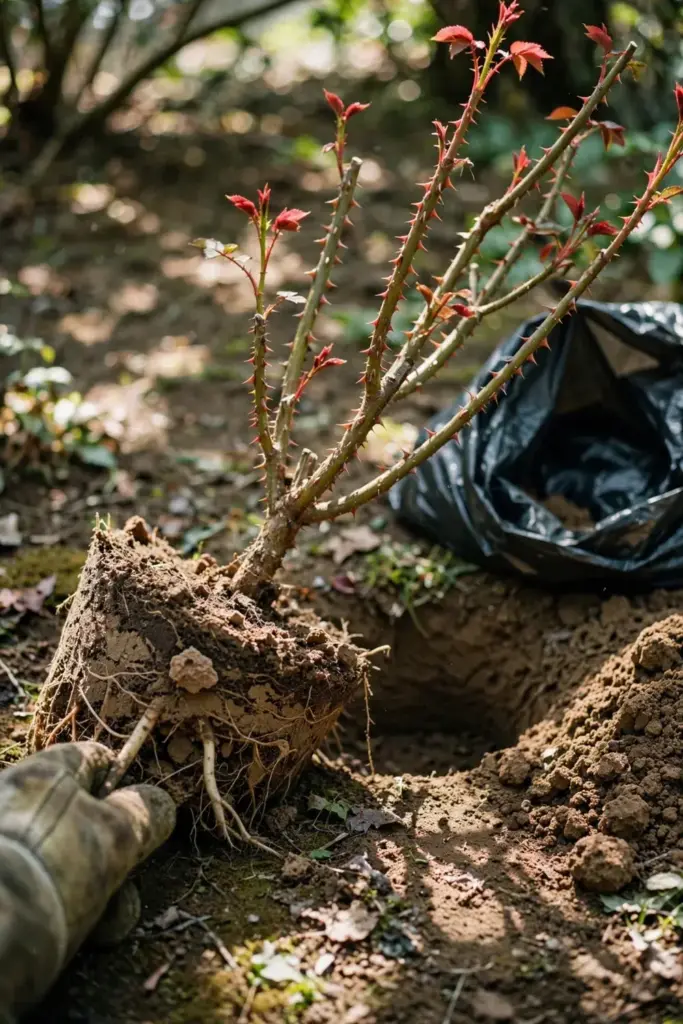
Bag the plant before you dig, so mites cannot scatter during removal. Slip a large bag over the bush or bag cut material as you go, then dig out the entire plant including the root ball. New research confirms the virus is present in roots, so leaving the root ball behind leaves the infection behind. A rose that regrows from a root fragment is not a second chance. It is the same disease, starting over.
Dispose of everything in the trash, sealed and off-site. Never put diseased material in the compost, where it keeps mites alive and returns the problem to the bed with the finished compost. The same rule covers pruned foliage, deadheaded blooms, and fallen leaves from the infected plant. If it came off that bush, it goes in the bag.
Clean up like the job is only half done, because it is. Mites ride on gloves, clothing, and tools, so wash tools, change gloves, and launder clothing after removal. Work healthy roses first on the next visit, and treat the removed plant’s spot as a work zone until the bed is clean.
Rest the bed before replanting. Oklahoma State University Extension recommends a one- to two-month fallow period before replanting roses, since some roses can sprout from root pieces. Use the wait to pull every root piece, fallen leaf, spent bloom, and bud from the bed, and destroy any sprouts that appear. The risk rides on living plant material, not on bare soil, so the work is pulling every scrap of that material, not hauling away soil. The bed itself still needs attention during the fallow, and the fall garden bed prep guide walks through soil tests, compost, and mulch for an empty bed.
10. Step 3: Protect the Roses That Are Still Healthy
Protect the roses that are still healthy with spacing, mixed planting, late-winter pruning, horticultural oil, deadheading, and scouting every two weeks. None of this guarantees safety. All of it lowers the odds.

Spacing and mixed planting break the mite highway. Keep rose foliage from touching, and interplant roses with non-rose species wherever the design allows. Oklahoma State University Extension notes that tall barrier plants on the windward side of the garden help reduce new infections, because they intercept mites riding the wind before the mites reach the roses.
Late winter is the one pruning that pays. Where rose rosette disease appeared the previous year, prune heavily in late winter or early spring before new buds break, then follow with dormant oil. The spring pruning techniques guide covers the timing and the cuts. Do not prune too early, since winter injury can follow, and remove the debris by hand instead of blowing it across the bed.
Horticultural oil suppresses mites on healthy plants, and suppression is the honest word. Oklahoma State University Extension lists monthly horticultural oil applications through the season, with use discontinued during high temperature periods as the product label directs. Miticides are not entirely effective in home gardens, because the mites hide in buds where sprays cannot reach them. Oil slows the spread. It does not cure a plant, and it does not make a bed bulletproof.
Deadhead and scout on a schedule. Deadhead through the season and bag the debris, since mites gather around open blooms. Scout the roses every two weeks during the growing season, and act on the first sign rather than the tenth. When you do buy, inspect every plant before it goes in the ground, and the roses for fall planting guide covers how to pick healthy stock. A healthy-looking plant with one odd cane deserves a second look, not a planting hole.
11. Living With Rose Rosette Disease Damage You Cannot Undo
If the disease has already taken roses, the bed still has a future, but it runs on roses only where the risk is managed, and on other plants where it is not. The virus attacks roses alone, so every non-rose in the bed is safe ground.

If removal must wait, contain the risk while you wait. Do not propagate from the infected plant, and do not share cuttings from it with anyone. Work it last, keep its tools separate, and set a removal date instead of letting the delay drift. A plant kept for one more bloom season keeps feeding mites for one more bloom season, and the neighbors it infects may be yours or the garden next door.
Replant with the host range in mind. Non-rose shrubs, perennials, and grasses can fill the gaps a removed rose leaves, and they break the mite highway at the same time. When roses go back in, they go back spaced, mixed with non-rose plants, and scouted every two weeks. The bed that lost roses to rose rosette disease can grow roses again. It just cannot grow them the crowded way it did before.
Tell the neighbors. Management works best when whole neighborhoods and communities learn to recognize the disease and act fast, because mites do not respect fences. A street where every gardener removes infected plants quickly is a street where replacement roses stand a chance. A street where one infected bush stands for years is a street where every rose is on borrowed time.
12. Frequently Asked Questions
No. Rose rosette disease has no cure, and no spray, soil drench, or pruning cut reaches a virus that has gone systemic through the plant, roots included. Products that promise a rescue waste the weeks when the infected plant keeps feeding mites to its neighbors. The only move that protects the rest of the bed is removing the whole plant, roots and all, and disposing of it in the trash.
Pruning the sick cane will not save the plant. The virus already runs through tissue that still looks healthy, including the roots, and the mites that spread it hide in buds and leaf axils across the whole bush. Cut growth grows back sick, and the weeks spent waiting let mites reach the next rose. Pruning has one narrow use here. It clears a sample for diagnosis, nothing more.
Check thorniness and spread first. Rose rosette disease packs extra thorns onto distorted shoots and starts in one bush, while herbicide drift leaves thorn counts normal and usually marks every broadleaf plant the drift touched. Red pigment alone proves nothing, since healthy spring growth runs red too. When the signs still point both ways, send a sample to the county Extension office before removing anything.
No. Rose rosette disease attacks roses only, and the mite that carries it feeds on roses only. Your tomatoes, herbs, shrubs, and perennials are safe, and the infected rose can even sit beside them without passing the virus along. That narrow host range is useful. Non-rose plants make the best barriers and replacements around a bed that has lost roses.
Wait one to two months after removing the infected plant, and use the wait to pull every root piece, fallen leaf, spent bloom, and bud from the bed, since mites linger on that debris and root fragments can sprout. Replant only inspected, healthy stock, and space the new roses so foliage never touches. If sprouts appear during the fallow, pull them and keep waiting.
13. Where to Go From Here
Rose rosette disease ends with removal, not rescue. The win is everything around that sentence: early ID, a clean differential, fast removal, and a bed rebuilt with spacing and mixed planting.

Walk the bed today. Compare each suspect cane against the rest of its own plant, and check thorniness before you check color. A rose caught in its first strange season costs one plant. A rose left for one more bloom season can cost the row.