Spend 10 minutes checking your winter cold tally before you order a peach tree. A chill hours check is the count that decides whether the tree blooms on time or sulks through spring with bare branches.
Chill hours sound like a weather report. They act like a combination lock. A fruit tree counts cold hours through winter, and it opens its buds only after the count reaches the number its cultivar needs. Buy a tree whose number fits your winters and the lock opens every spring. Buy one whose number runs past your cold season and the tree leafs out late, blooms in patches, or skips fruit for a year.
| Point | Detail |
|---|---|
| Definition | Hours between 0 and 7 degrees Celsius that break winter dormancy |
| Apple range | 200 to 1,000 hours, by cultivar |
| Peach range | 200 to 800 hours, by cultivar |
| Pear range | 400 to 900 hours, by cultivar |
| Warm-hour effect | Long spells above 15 to 21 degrees Celsius cancel part of the count |
What Is Chill Hours?
Chill hours count the winter hours cold enough to break a fruit tree out of dormancy. The count runs on the simple model most nursery labels use. One hour between 0 and 7 degrees Celsius counts as one chill hour, and hours below freezing count for nothing, according to the Mississippi State University Extension guide to chilling-hour requirements. The same guide puts apples at 200 to 1,000 hours, peaches at 200 to 800 hours, and pears at 400 to 900 hours, with the exact figure set by cultivar.
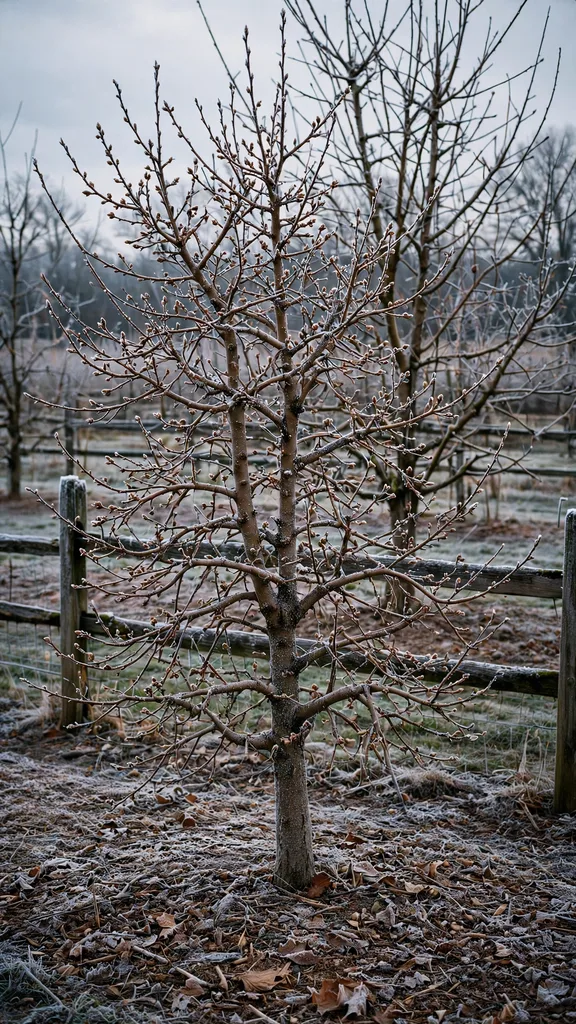
The tree does the counting in its buds. Cold hours switch off the dormancy hormones that hold buds shut through winter. Warm hours do the opposite. Long spells above 15.6 to 21.1 degrees Celsius cancel part of the cold count, so a mild winter with warm breaks delivers fewer useful hours than the raw tally suggests.
A cultivar label carries one number. Anna apple needs 200 hours. Contender peach needs more than 1,000 hours. That single number is the whole buying decision in a warm-winter yard. Match it to your local total and the tree behaves. Miss it by 300 hours and the tree blooms late or not at all.
How Chill Hours Work
Dormancy starts when temperatures hold below 10 degrees Celsius for a stretch. The tree drops its leaves, seals its buds, and waits. Each hour inside the 0 to 7 degree band adds one unit to the count. Hours colder than 0 degrees add nothing. The tree sits fully dormant and the count stalls.
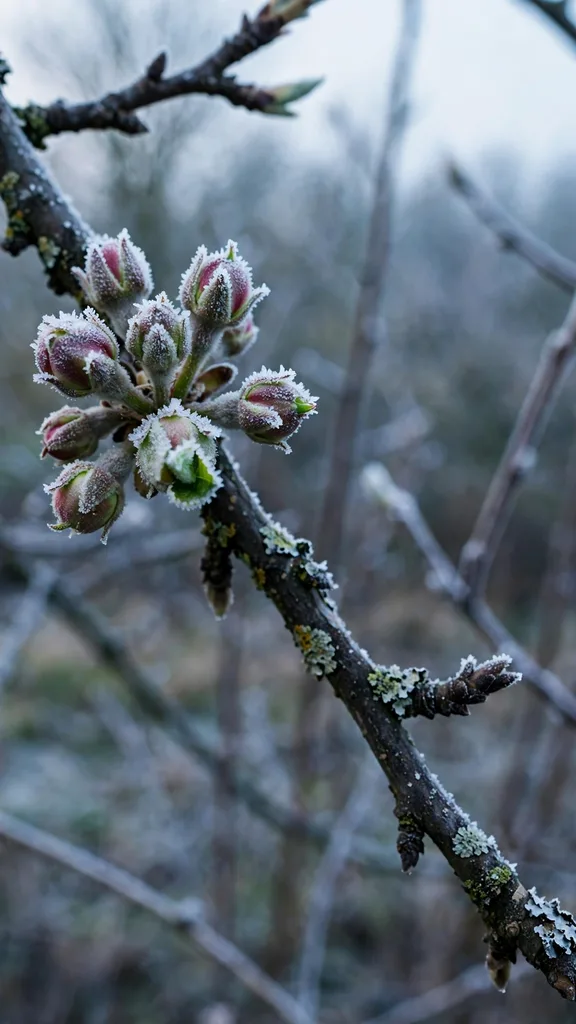
Warm breaks subtract from the total. The Illinois Extension notes on degree days and chilling hours record that any wintertime temperature above 15.6 degrees Celsius gets subtracted from the running total, and the same notes put apples at 800 to 1,750 hours under the 7 degree model, with peaches at 375 to 1,200 hours. A warm week in January can erase a cold week in December.
Once the count hits the cultivar target, the buds unlock. The tree still needs spring warmth to grow, and that warmth arrives on its own schedule. The lock opens in winter. The door opens in spring. A tree that never reaches its number keeps its buds shut while neighbors bloom, then leafs out in ragged patches through late spring.
Counting starts on 1 October in most models. Weather stations log the hours, and state extension services publish running totals through winter. Your own yard runs a few degrees warmer or colder than the nearest station, so treat the station total as a guide and pick a cultivar 100 hours under your local average for a safety margin.
Chill Hours vs Hardiness Zone
Chill hours and hardiness zone answer two separate questions. Chill hours ask how much cold a tree needs. Hardiness zone asks how much cold a tree survives. A tree can pass one test and fail the other, and the failure looks the same from the kitchen window: no fruit.
| Point | Chill Hours | Hardiness Zone |
|---|---|---|
| Question answered | How much cold breaks dormancy | How much cold kills the tree |
| Measured in | Hours between 0 and 7 degrees Celsius | Lowest average winter temperature |
| Too little cold | Late bloom, patchy leafing, no fruit | Tree grows fine |
| Too much cold | Buds open early, frost takes the bloom | Wood damage, dead branches, dead tree |
| Where to check it | Station chill-hour totals | Plant hardiness zone map |
| Buying rule | Pick a cultivar under your local total | Pick a tree rated for your zone or colder |
A low-chill peach survives a cold zone and still fails there. Its buds open during the first warm spell in February, and the next frost strips the bloom. A high-chill apple survives a warm zone and still fails there. Its buds never unlock, and spring passes with bare wood. Both trees live. Neither fruits.
Check both numbers before you buy. The zone tells you the tree lives through January. The chill hours tell you it wakes up in spring. One without the other leaves you with a healthy tree and an empty basket.
How to Recognise / Measure Chill Hours
A tree short on chill hours shows it in spring. Buds open late, and they open unevenly. One branch leafs out while the next stays bare. Bloom staggers across three weeks instead of one, so bees visit flowers that never meet. Fruit sets in patches, and some spurs stay empty all season.
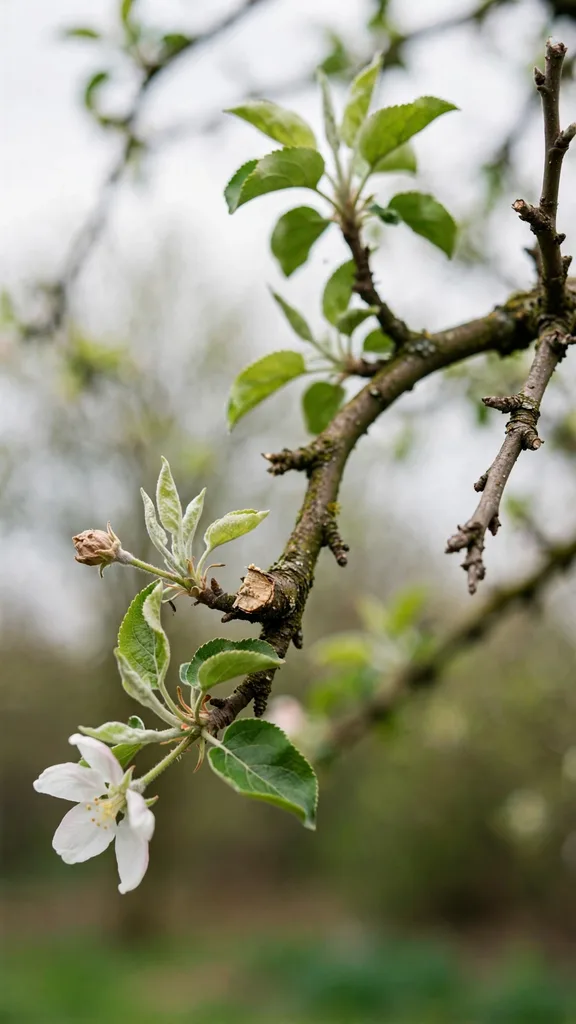
A tree with too few chill hours can also bloom too early. It hits a low target in December, then opens during a January warm spell. Frost follows and takes the open bloom. The tree leafs out fine after that, which fools the eye. Leaves mean the tree lived. Leaves never mean the crop survived.
Measure the count at the nearest weather station. State extension services publish chill-hour totals through winter, and the Mississippi State guide links to a free tool that pulls station data for your area. Record the total on 1 March. Compare it with the cultivar label. A gap under 100 hours is workable. A gap past 300 hours means the tree will struggle in most years.
Count your own yard with a min-max thermometer if the station sits far away. Log the hours between 0 and 7 degrees Celsius from 1 October. A sheltered courtyard runs warmer than an open field, and a frost pocket runs colder. Your tally is the one that matters.
Common Mistakes With Chill Hours
The first mistake is buying on the photo. A catalogue lists chill hours in small print under the fruit picture. Shoppers read the picture and skip the print. Read the number first. The picture never changes. The number decides the crop.
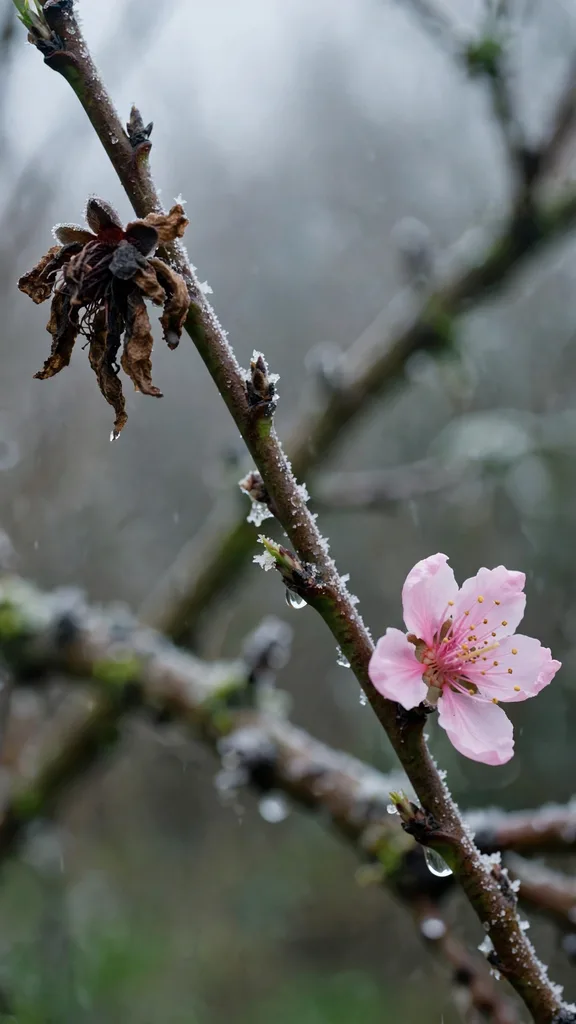
The second mistake is trusting one warm winter. A mild year gives a low total, and a tree that fruited last year fails this year. Judge a cultivar on the 10-year average, not on last winter. The average is the number the tree lives with.
The third mistake is planting against a warm wall to cheat the count. A south wall adds heat, and heat subtracts chill hours. The tree against the wall gets fewer useful hours than the tree in the open yard. Walls suit espalier training and sun traps, and they work against chill accumulation.
The fourth mistake is confusing chill hours with cold hardiness. A tree rated for zone 4 survives deep winter cold, and that rating says nothing about how many cold hours it needs to wake up. Zone and chill hours are two dials. Turn both before you buy.
The fifth mistake is planting two trees with mismatched chill needs side by side, so one blooms in February while the other waits until April and their bloom never overlaps. Cross-pollination fails. Match the chill numbers when you match the bloom times, and read the pollination page for how bloom overlap and bees carry the crop.
When Chill Hours Matter in Your Garden
Chill hours matter most at the nursery, before money changes hands, because every later decision in the garden bends around the cultivar you pick. Soil, pruning, and feeding fix problems after planting. A wrong chill number never gets fixed. The tree stays wrong for 20 years.
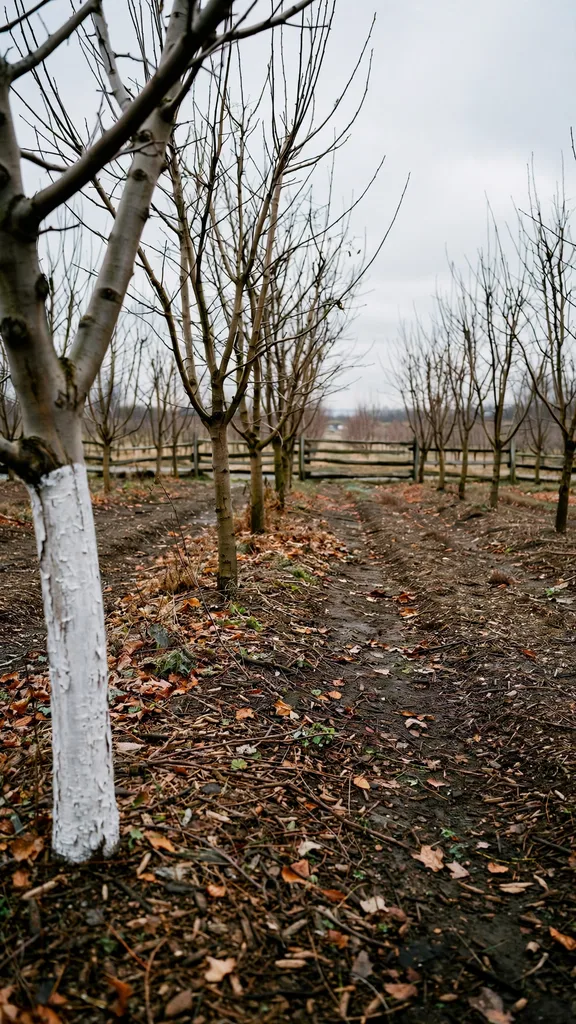
Chill hours matter again in a warm-winter yard. Zones 8 to 10 run short totals, and the margin between success and failure is narrow. A low-chill apple at 200 hours fruits where a standard apple at 800 hours never wakes. The whole fruit list for a warm yard comes from the low end of the table.
Chill hours matter less in a cold-winter yard. Zones 3 to 5 stack 1,000 hours before February, and most cultivars clear their target with room to spare. The risk flips. Early bloomers open too soon and frost takes them. Pick late bloomers there, and let the deep winter do the counting for you.
Chill hours matter least for citrus, figs, and other warm-climate fruit. Citrus needs 0 to 100 hours, and figs need 100 to 200 hours. Those trees wake on almost any winter. Their limits sit elsewhere: frost kills their wood long before chill hours trouble their buds. Check the zone for them, and skip the tally. The gardening glossary gathers every fruit term on this site in one place.
FAQ
Your nearest weather station publishes the total, and your state extension service usually posts running totals through winter. Totals run from under 200 hours in warm coastal yards to more than 1,500 hours in cold inland valleys. Compare the station total with the number on the cultivar label, and pick a tree rated at least 100 hours under your average for a safety margin.
Hours below 0 degrees Celsius add nothing to the count. The tree sits fully dormant in hard frost, and the chill model counts only the band between 0 and 7 degrees. A week of minus 10 degree nights banks zero hours. The cold still matters for hardiness, and it still kills tender wood, but it never moves the dormancy tally.
Buds open late and unevenly, bloom staggers across weeks, and fruit sets in patches or not at all. Some trees bloom early after a low target is met in December, then lose the open flowers to frost. The tree stays alive and leafs out, which hides the failure until harvest comes up empty.
You cannot add cold to a winter. Shade cloth and whitewash cool the buds slightly, and a north-facing slope holds cold longer, but neither move changes the tally by more than a few dozen hours. The fix is a different cultivar with a lower number. Replace the tree or accept the light crop.
Most temperate fruit trees need them, and the number runs from 100 hours for figs to more than 1,000 hours for some apples and peaches. Citrus needs almost none, at 0 to 100 hours. Tropical fruit skips dormancy entirely. The number belongs to the cultivar, so read the label before you buy.