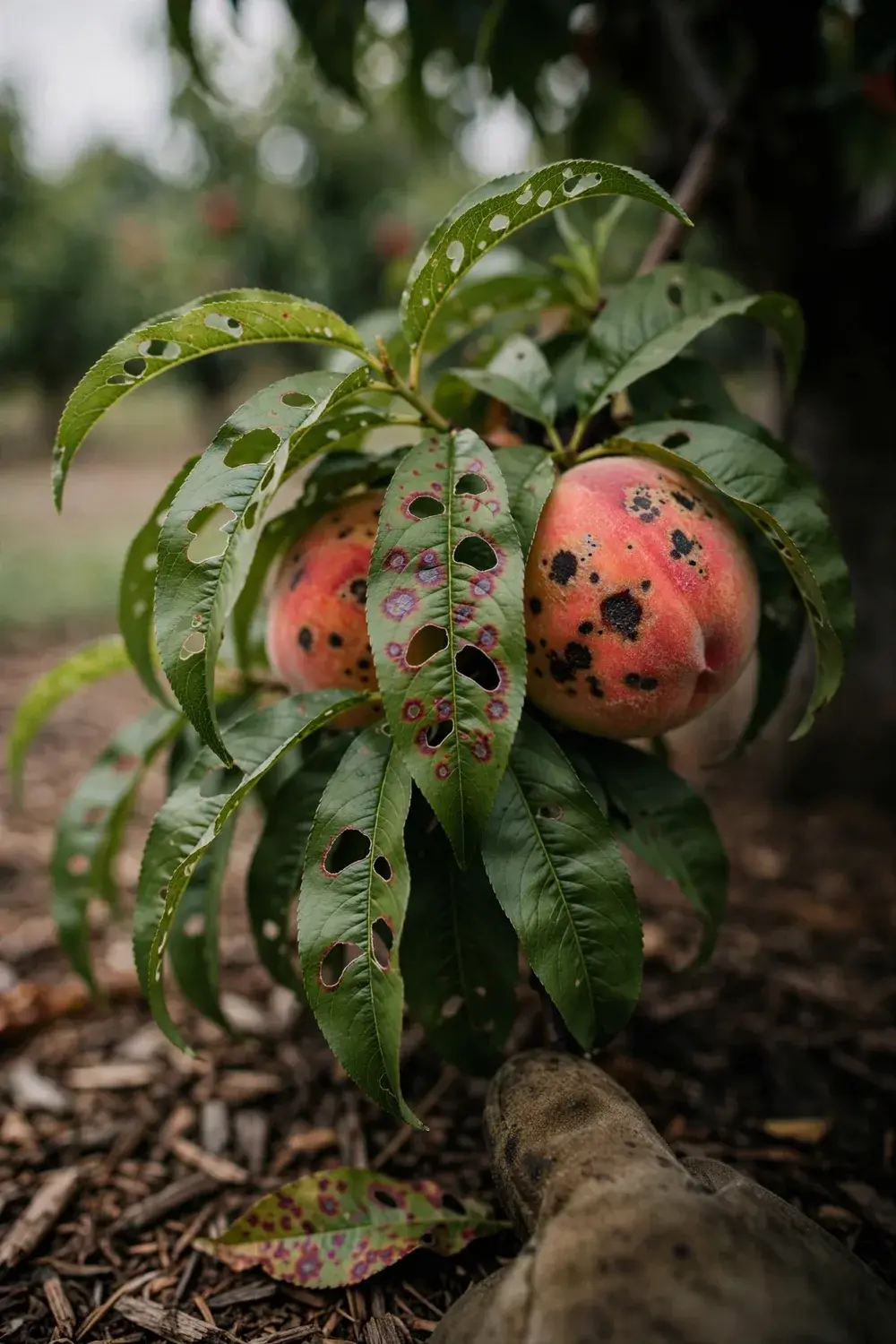

Shot-hole disease turns stone fruit leaves into lace. Small spots dry out, their dead centers drop away, and each leaf ends up pierced with round holes. The 9 strategies below start with the one decision that saves the most money: whether your tree needs treatment at all.
Two different pathogens cause the same holes. The fungus Wilsonomyces carpophilus causes fungal shot hole, also called Coryneum blight. The bacterium Xanthomonas arboricola pv. pruni causes bacterial spot, and its leaf spots also drop out and leave holes. Field clues separate the two much of the time. A lab sample settles the cases that stay unclear.
The rest of this page walks through identification on leaves, fruit, twigs, and buds, then the fungal-versus-bacterial comparison, then the 9 strategies in order. I have learned that the gardener who picks up every fallen leaf in autumn does more for next spring than the gardener who buys another spray.
What Shot-Hole Disease Actually Is
Shot-hole disease is a stone fruit disease in which leaf spots lose their dead centers and leave round holes. The fungus Wilsonomyces carpophilus causes the fungal form, known as Coryneum blight. The name Stigmina carpophila is the old name for the same fungus. Gardeners still meet the old name on nursery tags and older guides, so check the botanical name before following any advice written under it.
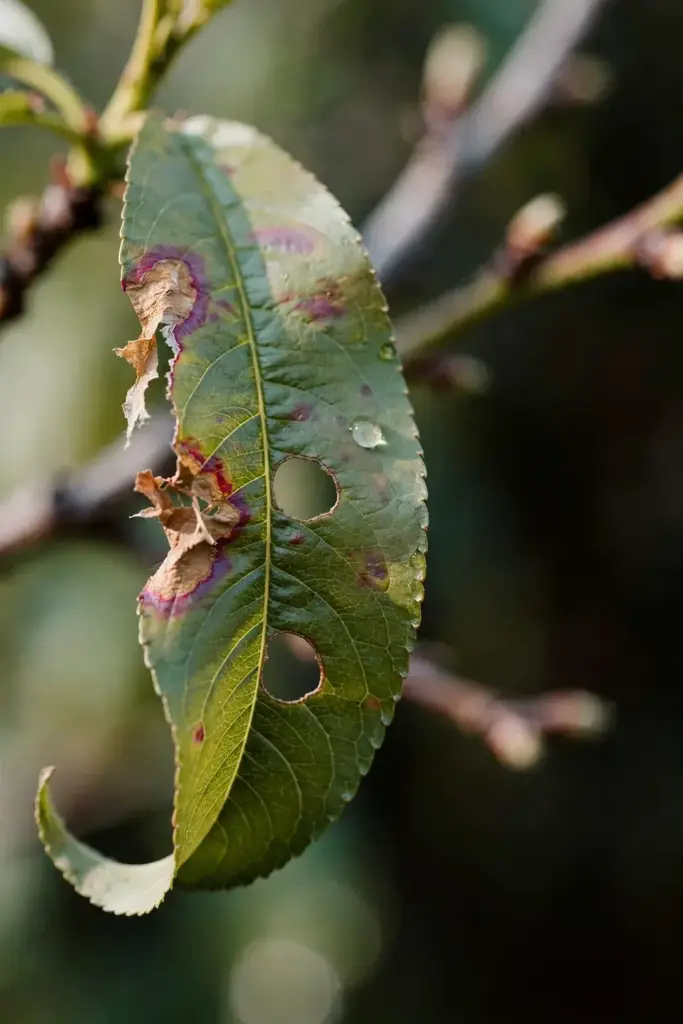
Stone fruit means the Prunus species with a single pit: peach, nectarine, apricot, cherry, plum, and almond. Ornamental flowering cherry and flowering almond belong in the same group, and the disease attacks them too. The fungus infects buds, twigs, branches, blossoms, leaves, and fruit. The bacterium behind bacterial spot attacks the same list of parts, which is why the two diseases look alike in the field.
The fungus survives winter on infected twigs and buds. Spores form through the winter and spread on splashing rain and wind. Wet weather opens the infection window, and the disease can strike at any point during a long wet spell. Infected buds carry the fungus into spring, infected twigs feed new spores all season, and the cycle repeats unless sanitation breaks it.
One name needs a fence. A spruce disease shares the old Stigmina name. Stigmina needle cast attacks spruce needles, drops needles, and weakens spruce trees. It is a different species on a different host, and none of the advice below applies to it. This article covers stone fruit shot-hole disease only.
Most home cases stay cosmetic. A healthy tree loses some leaves, grows new ones, and fruits again. The damage turns serious when defoliation repeats year after year. A study of shot hole on peach found that severe defoliation during early fruit development can drop young fruit, and that repeated defoliation weakens trees and reduces yield. That gradient sets the whole management plan. Light damage calls for sanitation alone. Repeated heavy damage calls for the full program.
How to Identify Shot-Hole Disease on Leaves
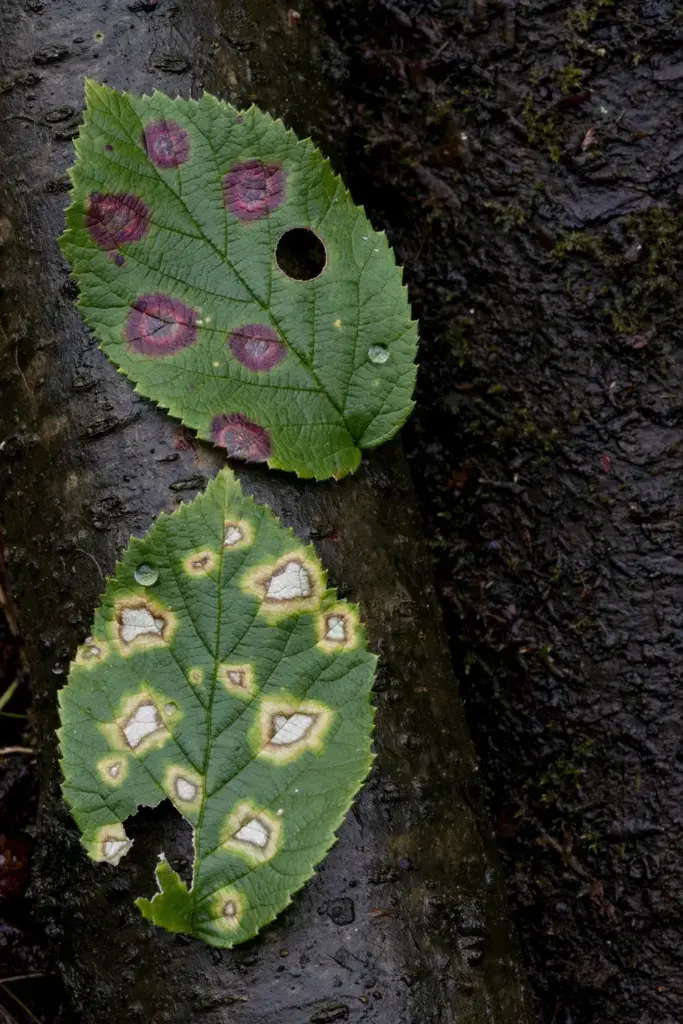
Shot-hole disease on leaves starts as small spots, purplish red at first. Each spot dries in the center while the leaf keeps growing around it. The dead center tears free and falls out, leaving a clean round hole with a narrow rim. A leaf with many holes looks shot through, which is where the name comes from.
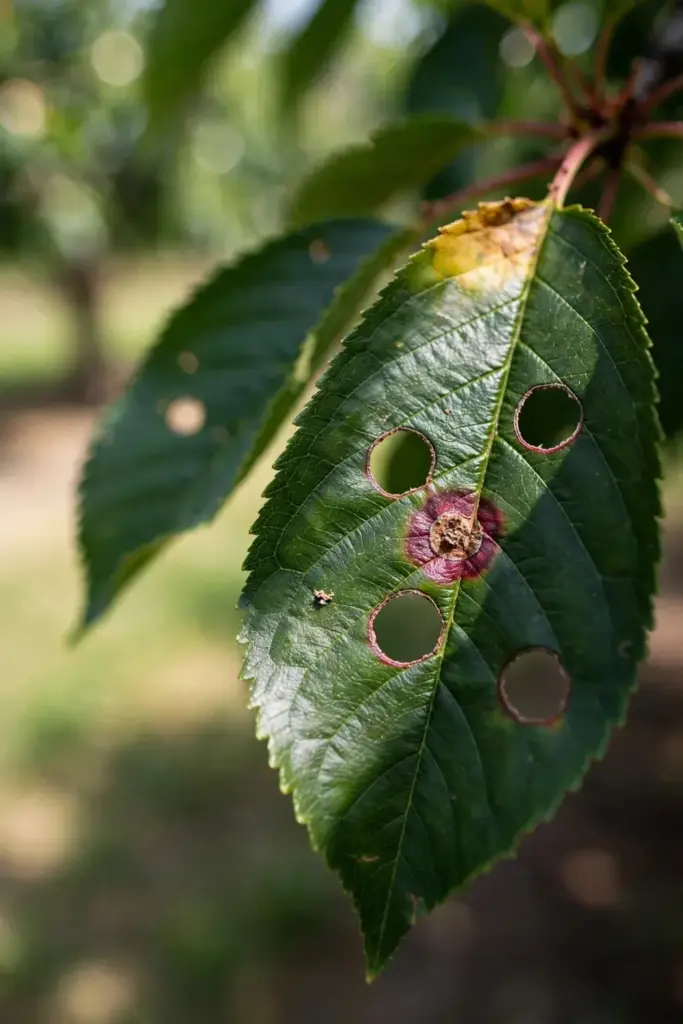
Border color gives the best field clue to the cause. Fungal spots tend to carry a reddish-violet border around the dead center. Bacterial spots tend to carry a light yellowish halo instead. Treat the border as a tendency, never a verdict. The two diseases overlap in the field, and a single leaf can mislead you. Read the border together with the twig and fruit signs in the next section, and send a sample to the lab when the signs point both ways.
Severe infections merge spots into large dead patches before the centers drop out. Leaves with heavy spotting yellow early and fall in midsummer. A healthy tree tolerates that early leaf drop and pushes new growth. A tree that drops leaves early two seasons in a row needs the full program in the steps below, because repeated defoliation drains the reserves that feed next spring’s buds.
Two lookalikes deserve a quick check before you settle on shot hole. Chewing insects leave holes with clean edges and no spot ring around them, and a close look usually finds the insect or its feeding marks. Cherry leaf spot, caused by the fungus Blumeriella jaapii, also punches holes in cherry leaves, but its spots yellow the leaf heavily before the centers drop. Cherry leaf spot is a different disease with its own management, so name it correctly before treating.
How to Identify Shot-Hole Disease on Fruit, Twigs, and Buds
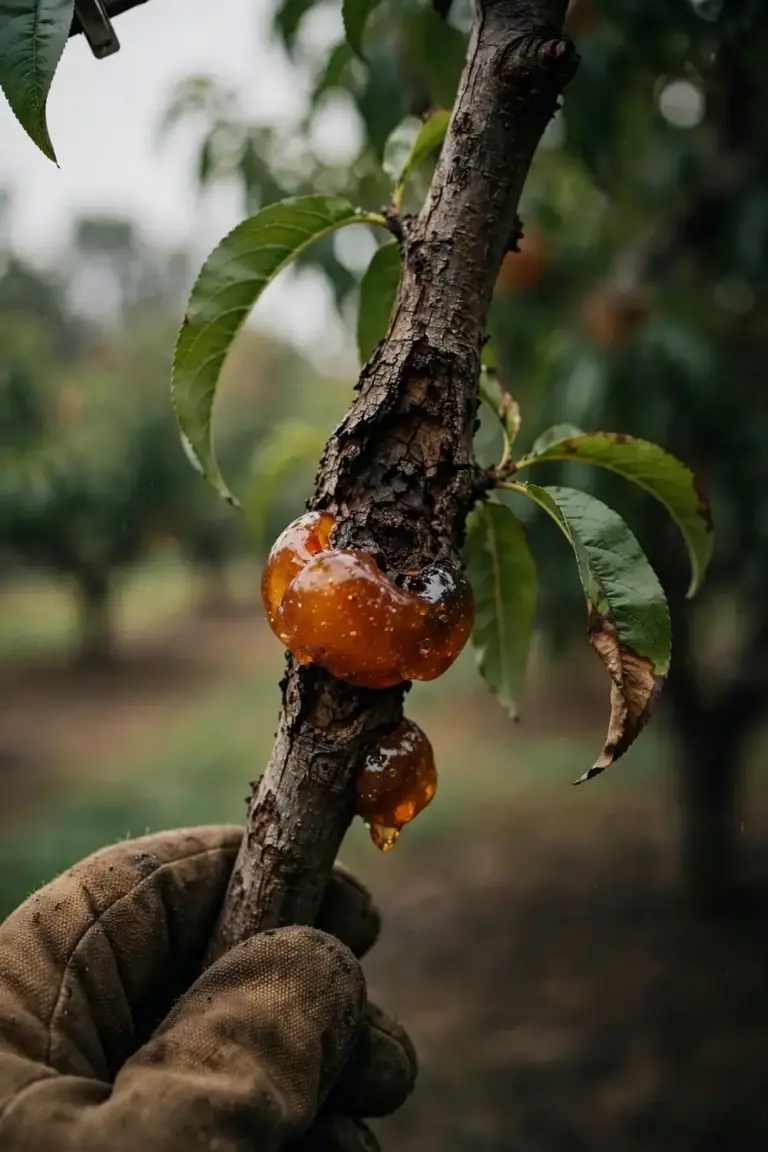
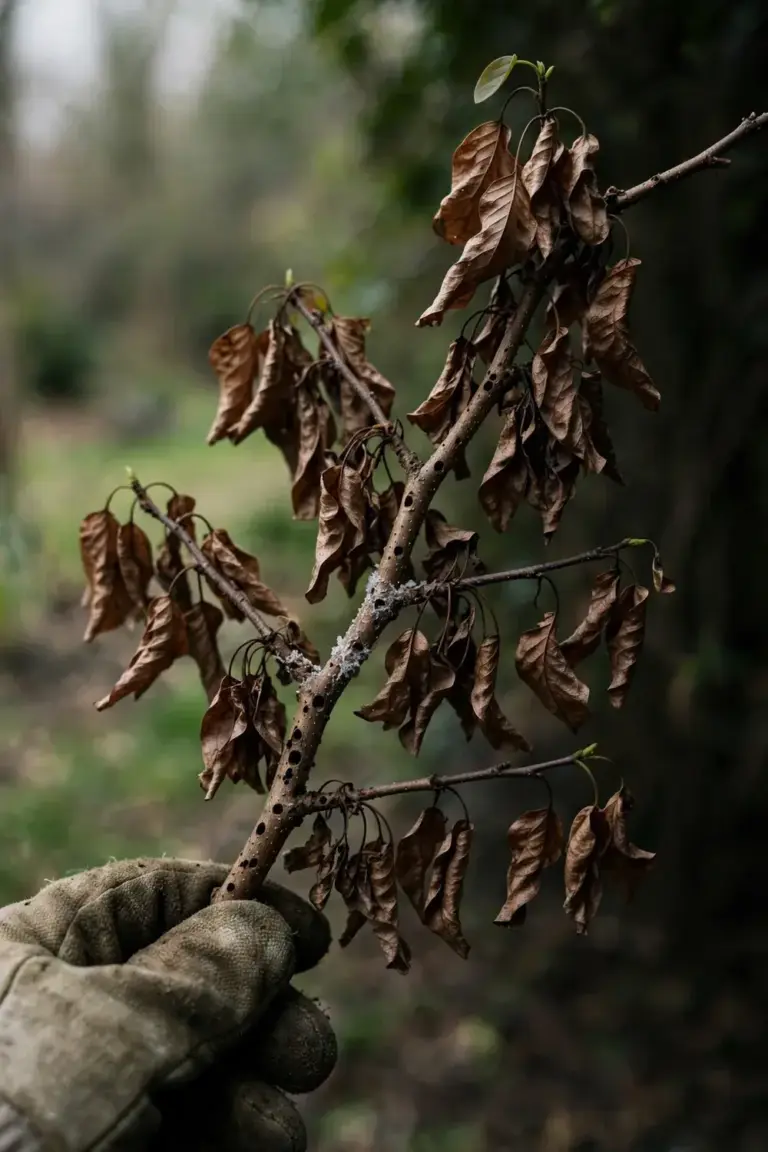
Shot-hole disease on fruit, twigs, and buds shows as spots, cankers, and gum. Fruit spots start small and dark, then sink into the skin as the fruit ripens. Twig lesions start as small purplish black spots that turn brown as they enlarge, often with a light center and a purplish brown margin. Buds turn dark brown or black, and killed buds may carry a shiny layer of exuded gum.
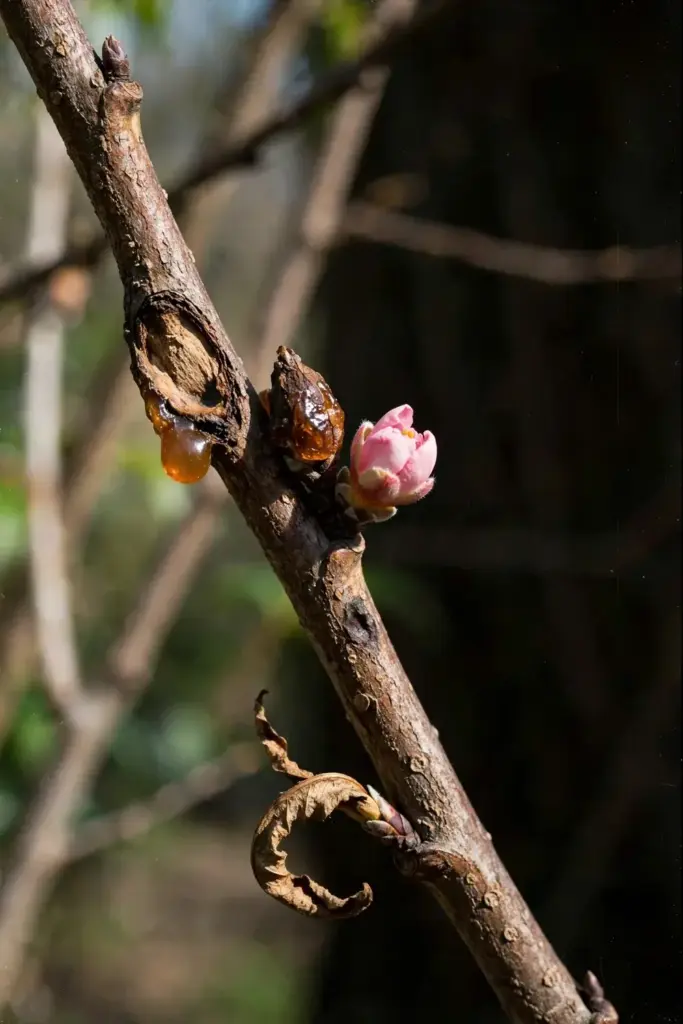
A hand lens settles whether a twig lesion is fungal. UC IPM describes the tell plainly: tiny dark brown bumps develop at the center of each fungal lesion. Those bumps are spore-forming structures called sporodochia, and they show clearly under a hand lens. Leaf lesions may carry a light green or yellowish zone around them, and the brown tissue in the center falls out to leave the hole that gives the disease its name. Buds killed by bacterial blast look similar but run much blacker, and the nearby foliage wilts.
Infected buds are the winter reservoir. The fungus overwinters in dormant leaf and blossom buds on twigs, then infects new growth at bud break. A bud that stays dark and sunken while its neighbors open is a dead bud, and the twig around it usually carries a canker. Cankers girdle twigs, cut off water and nutrients past the girdle, and kill the twig from that point outward. Pruning out cankered twigs removes both the reservoir and the spore source.
Blossoms carry the disease into the fruit season. The fungus infects blossoms during wet bloom weather, and infected blossoms feed the twig and fruit infections that follow. A tree that loses many blossoms to shot hole sets a light crop, and the fruit that does set faces spore pressure all season. Protecting bloom matters most on trees that showed twig cankers the previous winter.
Which Stone Fruit Gets Hit Hardest by Shot-Hole Disease
Apricot, peach, and nectarine take the worst of shot-hole disease. USU Extension names those three as the most commonly affected hosts. Apricot shows the damage early and visibly, with fruit spotting, twig cankers, and leaf holes in the same season. Peach and nectarine follow the same pattern, and a wet spring can strip a large share of their leaves before the fruit sizes up.
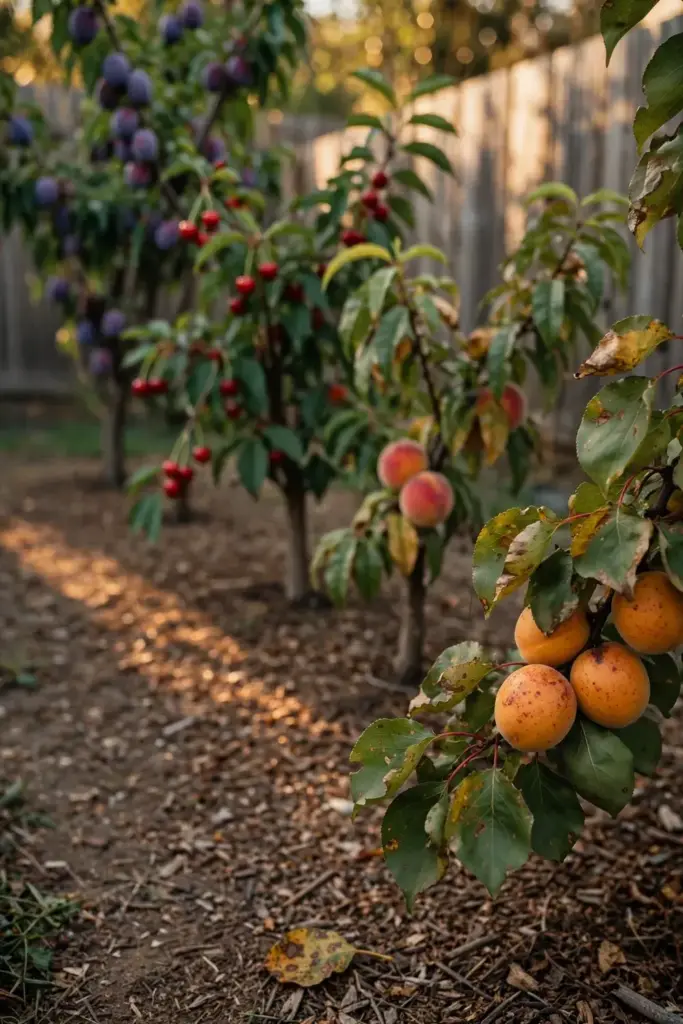
Cherries take a lighter hit in most years. USU Extension lists cherries, tart and sweet, as affected to a lesser degree. Ornamental flowering cherry carries the disease in home landscapes, and its owners usually notice the holes first because the tree stands near the door. Cherry laurel, a related landscape shrub, shows the same leaf holes. The nectarine growing guide covers chill hours and disease pressure for the tree as a whole, and shot hole is part of that pressure in wet climates.
Plum and almond sit in the middle of the risk list. Plum leaves, fruit, and twigs all show symptoms, and plum fruit spots sink and darken as the fruit ripens. Almond carries the disease on ornamental trees as well as nut-bearing trees. No stone fruit escapes the list entirely. The ranking matters because it tells you where to look first, and apricot always gets checked first in a wet spring.
Check last year’s damage first. The fungus overwinters on the trees it infected, so last year’s worst tree is this year’s most likely source. Walk the trees in late winter, before bud break, and mark every twig with cankers or dead buds. That walk takes an afternoon and sets the pruning list for Step 3.
Fungal Shot Hole vs Bacterial Spot
The field check is the lesion, read three ways at once. Look at the border color on the leaf, look at the twigs for cankers and gum, and look at the fruit for sunken spots. One clue alone misleads. Three clues together separate fungal shot hole from bacterial spot in most home cases. Read the table, then check your tree against it.
| Clue | Fungal Shot Hole | Bacterial Spot |
|---|---|---|
| Pathogen | Wilsonomyces carpophilus, a fungus, formerly Stigmina carpophila | Xanthomonas arboricola pv. pruni, a bacterium; Pseudomonas syringae pv. syringae causes similar bacterial symptoms |
| Leaf spots | Small purplish-red spots, centers dry and fall out | Angular spots, water-soaked at first, turning deep purple, brown, or black, then dropping out |
| Leaf spot border | Reddish-violet border around the dead center | Light yellowish halo around the spot |
| Fruit | Dark spots that sink as the fruit ripens, may adhere to the stone | Roughened, cracked, sunken spots; gum flow after rain or hail damage |
| Twigs and buds | Tan twig lesions with dark margins, profuse gumming, killed buds | Dark, slightly depressed, water-soaked twig lesions that may progress to dieback |
| Overwintering | Infected twigs, cankers, and killed buds | Twig cankers, fallen leaves, and infected plant parts |
| What confirms it | Hand lens shows sporodochia, tiny dark bumps at the lesion center | Lab isolation of the bacterium; no hand-lens structure |
| Response | Sanitation, pruning, dormant copper, dry canopy | Sanitation, pruning, dry canopy, clean nursery stock; copper helps bacterial forms only as a protectant, never as a cure |
Bacterial spot runs the same shot-hole pattern through different biology. The bacterial spot literature describes the sequence: leaf spots start water-soaked and angular, turn necrotic, and drop out to leave a shot-hole appearance. Fruit carries sunken lesions with gum flow after hail or rainy spells. Twig lesions look dark, slightly depressed, and water-soaked, and they may progress to dieback. Bacterial spot symptoms also resemble those caused by other bacteria, fungi, and abiotic damage, which is why visual identification alone stays presumptive.
Pseudomonas syringae pv. syringae adds a third bacterial player with similar symptoms, and it also causes bacterial canker on stone fruit. The bacterial canker guide covers canker identification and prevention for fruit trees. When twig cankers dominate the picture and leaf holes stay scarce, read that guide alongside this one before deciding on treatment.
Lab confirmation ends the argument. Researchers who study stone fruit spots warn that lesion characteristics alone should not be used to diagnose these diseases, and that isolation procedures are needed for an accurate diagnosis. Step 8 covers how to send a sample. Until the lab answers, treat field identification as a working guess, and pick management steps that work against both causes.
Why Wet Weather Drives Shot-Hole Disease
Wet weather drives shot-hole disease because the fungus needs continuous moisture to infect. Spores spread on splashing rain and wind, land on wet tissue, and germinate while the surface stays wet. Dry leaves stay safe even when spores land on them. The disease is most damaging in extended cool and moist spring weather, and it can strike at any time during a long wet spell.
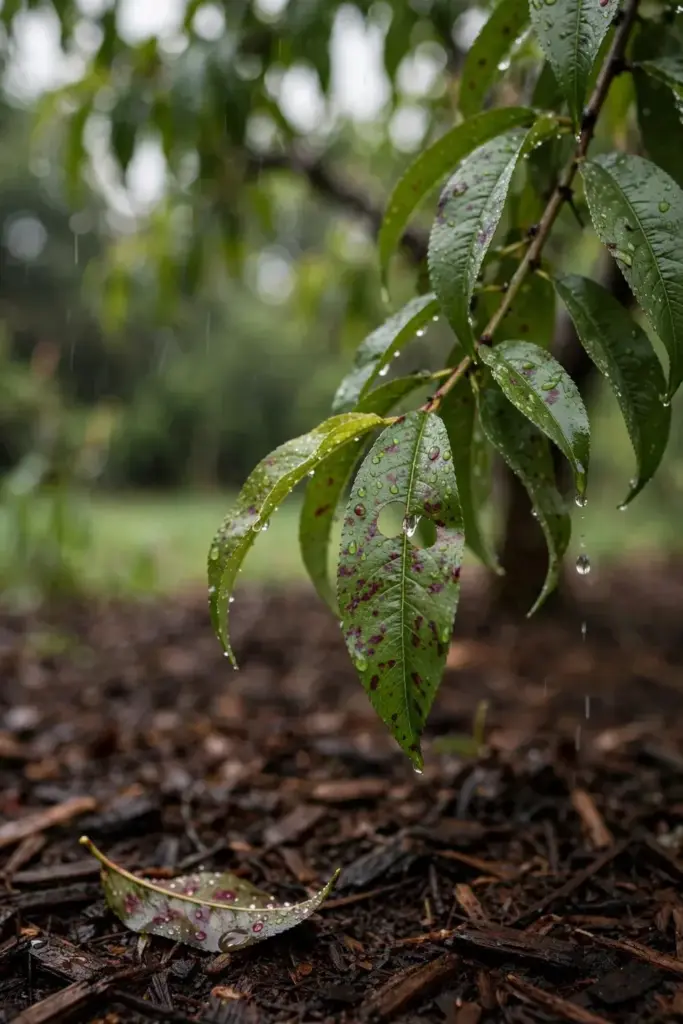
Temperature sets how long the wet period must last. USU Extension gives the two anchor points: under sustained moisture, the pathogen can colonize host tissue at temperatures as low as 36 degrees Fahrenheit in as few as 24 hours, while at 77 degrees Fahrenheit the fungus can infect suitable host tissue in as few as 6 hours. Cool weather does not stop it. Cool weather only stretches the wet window it needs.
The calendar splits into two infection seasons. Fall through mid-winter wetness feeds twig blight, when the fungus colonizes buds and twigs that carry it into spring. Summer rain and sprinkler irrigation encourage fruit infection, with more infection low in the tree where fruit stays wet longest. UC IPM notes that pattern directly: the lowest fruit stays wet longest and infects first. One wet fall can load the twigs, and one wet spring can spend that load on the leaves and fruit.
The practical conclusion is simple. Shorten every wet period you control. Water at ground level, open the canopy to airflow, and clear debris that holds moisture against the trunk. You cannot change the rain. You can change how long your tree stays wet after it.
What Makes Shot-Hole Disease Worse in a Home Garden
Dense canopy tops the risk list. A thick canopy traps humidity, slows drying after rain, and keeps lower leaves wet for hours longer than open branches. Spores germinate in that trapped moisture. A tree that never gets pruned builds its own wet climate inside the canopy, and shot hole follows.
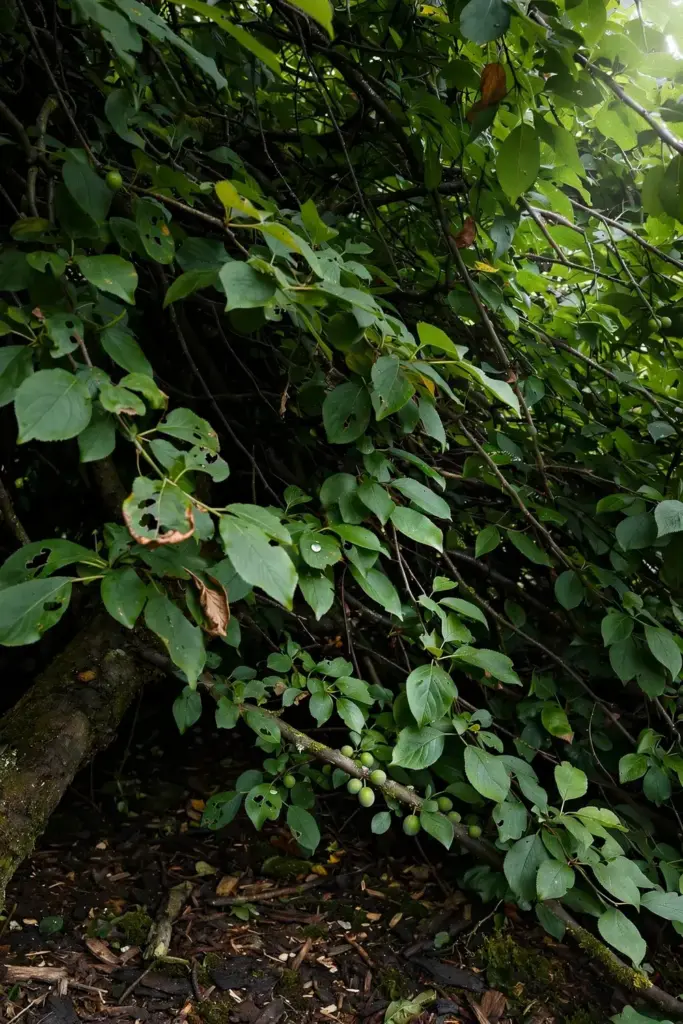
Overhead watering runs a close second. Sprinklers wet the leaves on a schedule the fungus can use, and evening sprinkling leaves the canopy wet all night. A sprinkler that hits the lower branches reproduces the exact condition that infects fruit low in the tree. Drip lines and soaker hoses at ground level keep the water where the roots are and the leaves dry.
Fallen leaves and fruit on the ground hold the third risk. Infected leaves under the tree shelter spores through winter, and spring rain splashes them back onto low leaves and fruit. A thick mulch layer over infected debris hides the problem without removing it. Clearing the ground under the tree each autumn removes the reservoir before winter rain starts moving spores.
Planting choices add the rest. A tree in a low spot where cold air and water settle stays wet longest after every rain. A tree crowded against a fence or a second tree loses the airflow that dries its canopy. Wounds from pruning, hail, insects, and harvest bruises open entry points the pathogens use. Buy nursery stock with clean bark and no cankered twigs, because a cankered tree arrives with the disease already installed.
Step 1: Decide Whether Treatment Is Worth It This Season
Treatment is worth it when the tree loses fruit or defoliates heavily two seasons in a row. Treatment is wasted money when a healthy ornamental tree shows a few holes and keeps its canopy. Make that call before buying anything, because no spray cures tissue that already shows holes.
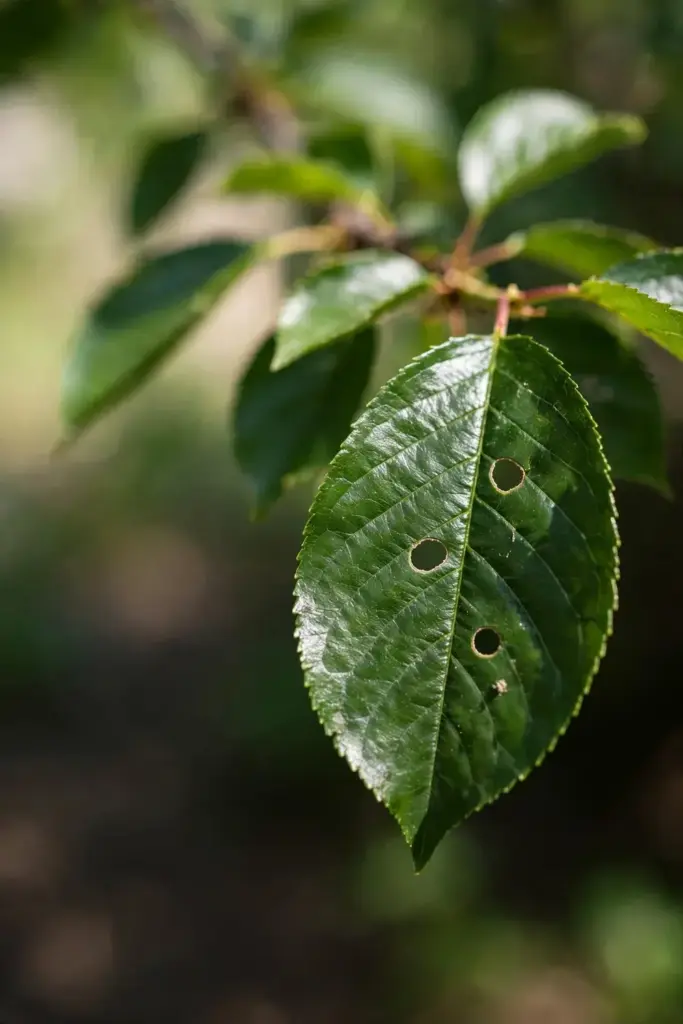
Ornamental flowering cherry sets the low end of the scale. UGA Extension describes the honest picture: the shot-hole appearance comes from infected tissue that dries up and falls out of the center of the leaf spot, leaving a hole about 1/8 inch in diameter. The disease is not lethal to cherries or any other trees, though it makes the tree look bad and can cause some leaves to drop in midsummer. That premature leaf drop stresses the tree, but healthy trees tolerate it quite well. Some years run worse than others, depending on the weather, and the disease favors warm, wet spring weather.
Fruit trees set the high end. A peach or apricot that drops leaves early two years running weakens, sets fewer buds, and yields less fruit. A tree that already carries twig cankers and dead buds in late winter will face heavy pressure in spring. Those trees earn the full program: sanitation, pruning, watering changes, and dormant copper. A tree with a few holes and a full canopy earns sanitation alone.
Write the decision down. Note which trees showed holes, how heavy the leaf drop was, and whether fruit spots appeared. That note becomes the baseline Step 9 compares against next season.
Step 2: Strip Fallen Leaves and Fruit From Under the Tree
Sanitation breaks the cycle at its cheapest link. Rake up every fallen leaf, every fallen fruit, and every pruned twig from under each stone fruit tree. Work in autumn after leaf fall, then repeat in late winter before bud break. The autumn pass removes the reservoir. The late-winter pass catches what winter storms dropped after the first pass.
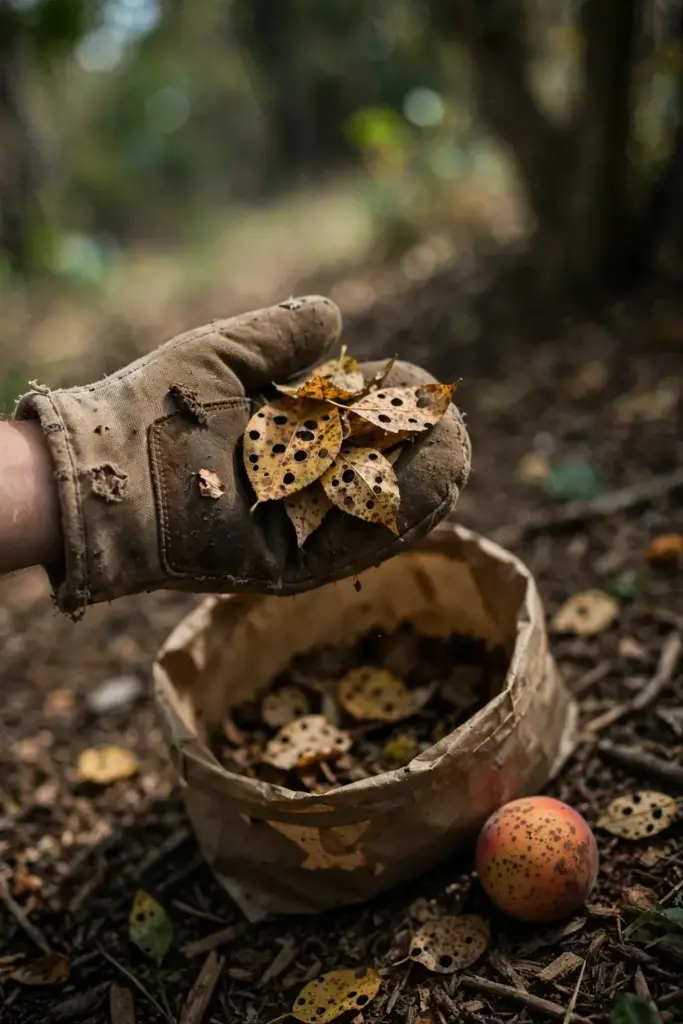
Bag the material and send it out with the trash. A home compost pile rarely runs hot enough to kill fungal spores, and a cold pile returns the disease to the garden with the finished compost. Diseased fruit goes in the bag too, including fruit with sunken spots that still clings to the branch. Pick it off and bag it rather than leaving it to drop.
Clean the ground under the tree, not just the tree itself. Spores in fallen leaves splash back onto low leaves and fruit with the first spring rain. A clean floor under the tree removes the launch pad. UGA Extension names cleaning up dead leaves as a direct way to break the cycle, and the same logic covers fallen fruit and twig debris.
Step 3: Prune Infected Twigs and Open the Canopy
Prune out every twig with cankers, dead buds, or gum. Cut into clean wood below the canker, where the bark looks sound and the inner wood runs pale and even. Remove the cut twigs from the tree and bag them with the sanitation waste. A cankered twig left on the tree feeds spores all season, so a half-finished pruning job keeps the disease alive.
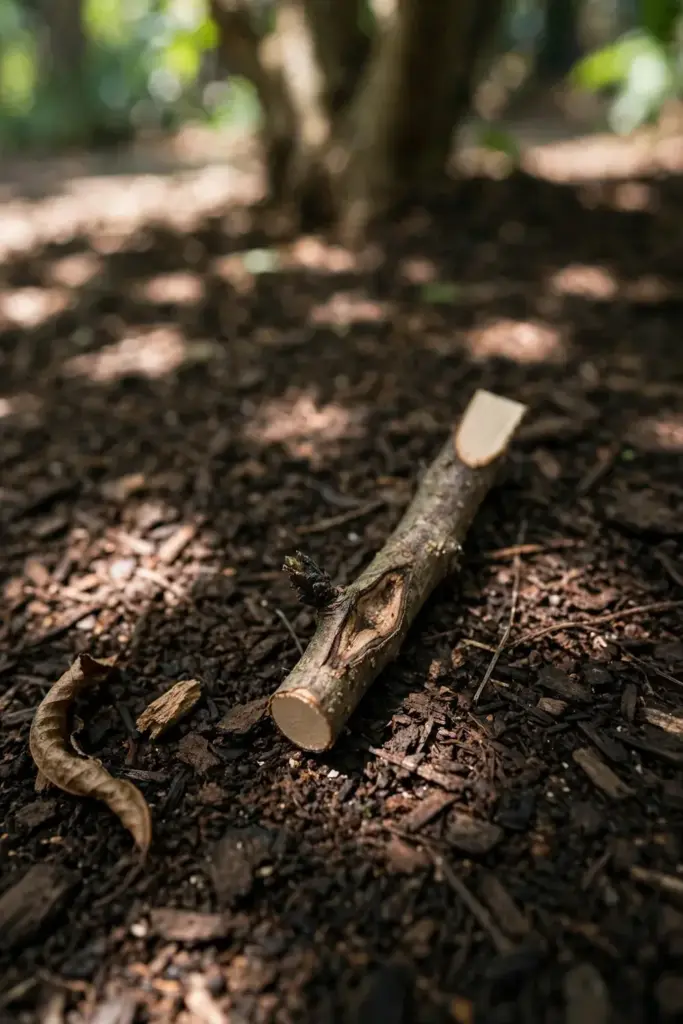
Open the canopy while you prune. Remove crossing branches that rub, thin crowded spurs, and let light and air reach the center of the tree. An open canopy dries hours faster after rain, and drying is the mechanism that stops infection. Cut for airflow first, and for shape second. A tree with a breathing canopy resists shot hole better than a tree with a perfect silhouette and trapped humidity.
Disinfect the blades between cuts on infected wood. Wipe or spray the blades, then let them dry before the next cut. Dirty blades carry spores from a cankered twig to a healthy cut. The spring pruning guide covers cut placement and tool care for fruit trees in detail. Prune in dry weather, and keep cuts clean and small.
Step 4: Water at Ground Level and Keep Leaves Dry
Water the roots, never the canopy. Drip lines, soaker hoses, and a slow hose at the root zone all deliver water without wetting leaves. Move any sprinkler that sprays into the canopy. A sprinkler that wets the lower branches on a schedule gives the fungus a standing invitation, because the lowest fruit and leaves stay wet longest.
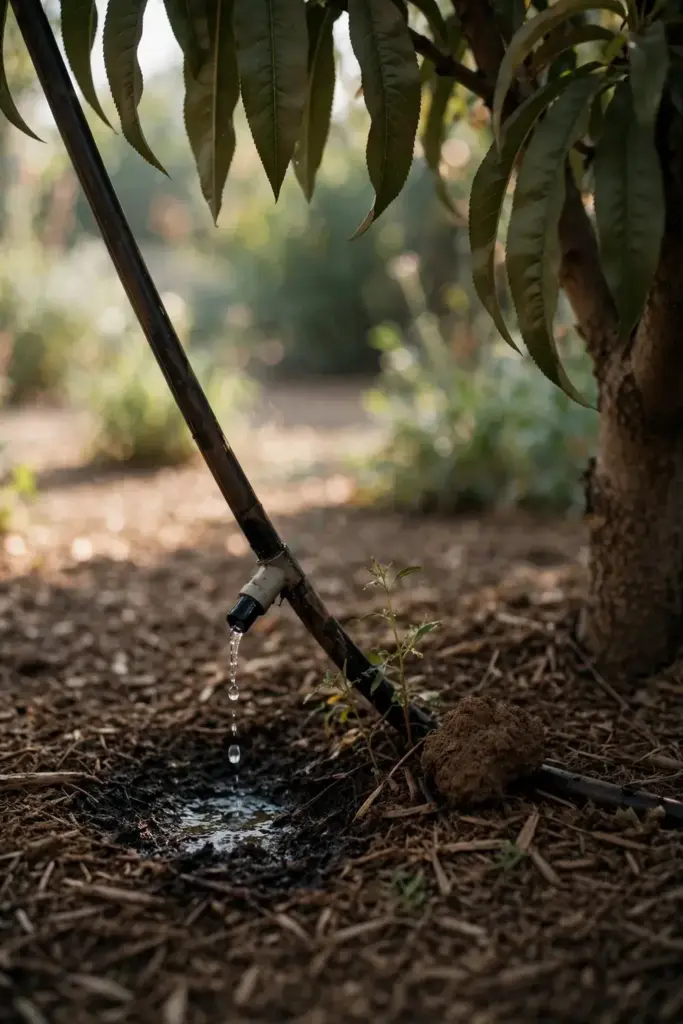
Water in the morning when the soil needs it. Morning watering gives any accidental splash time to dry before night. Evening watering leaves the canopy wet through the dark hours, and the fungus uses those hours. A soil surface that dries between waterings also slows the splash that lifts spores from the ground onto low leaves.
Space and sunlight finish the job. Thin crowded plantings so air moves between trees, and keep mulch pulled back from the trunk so the bark dries after rain. A tree that dries fast after every wetting faces short infection windows, and short windows mean few infections even in a wet spring.
Step 5: Apply a Dormant Copper Spray on Schedule
A dormant copper spray cuts the fungal burden before spring growth starts. Apply it while the tree is still dormant, at the delayed-dormant stage before buds open. The spray coats twigs, buds, and cankers with a protective layer that kills spores on contact. It works on the overwintering fungus, not on tissue that already shows holes.
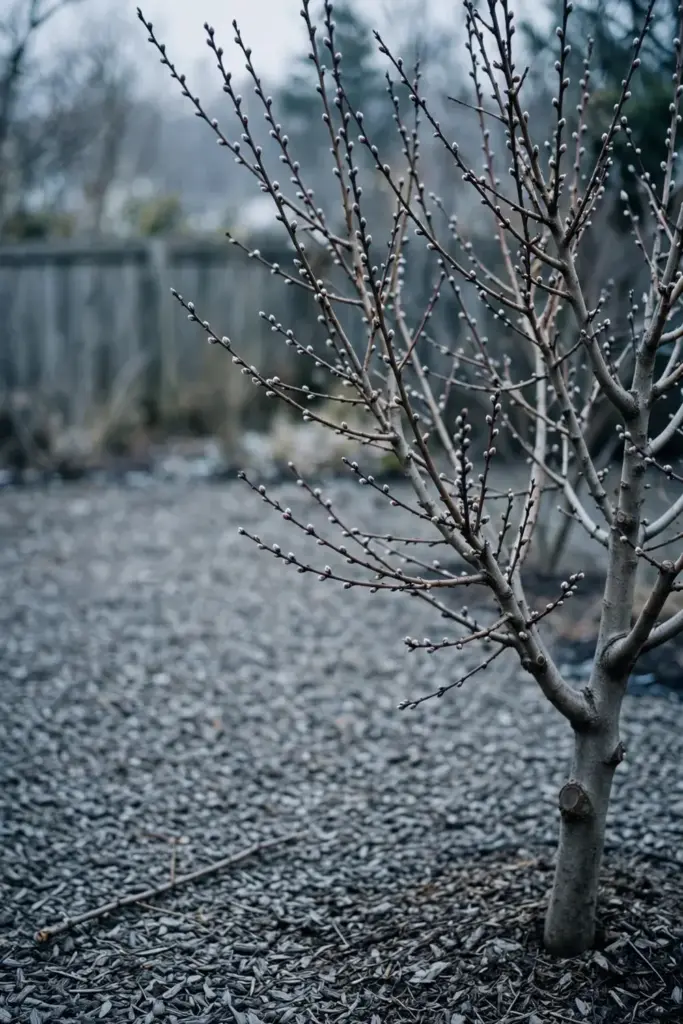
Treat copper as one layer, never a cure. Dormant copper reduces the fungal burden, and winter copper alone will not give total control. Sanitation and pruning carry the rest of the program. A tree that gets copper but keeps its cankered twigs and fallen leaves still faces heavy spring pressure, because the spray cannot reach spores sheltered inside dead buds and debris.
Read the label and follow it exactly. Use the rate and the cutoff date on the label for your product and your state, and stop before buds open. Copper applied after green tissue shows can injure leaves and fruit. Wear gloves and eye protection during mixing and spraying, keep pets and children away until the spray dries, and never spray on a windy day when drift reaches other plants.
Step 6: Check Leaves After Every Long Wet Spell
Inspection catches the disease while it is still a few spots. Walk the trees within a day or two after any long wet spell, and check the lower canopy first. Look for small purplish-red spots on the youngest fully open leaves, and for spots with reddish-violet borders. Early spots sit on leaves that still look healthy around them, which is what makes them easy to miss.
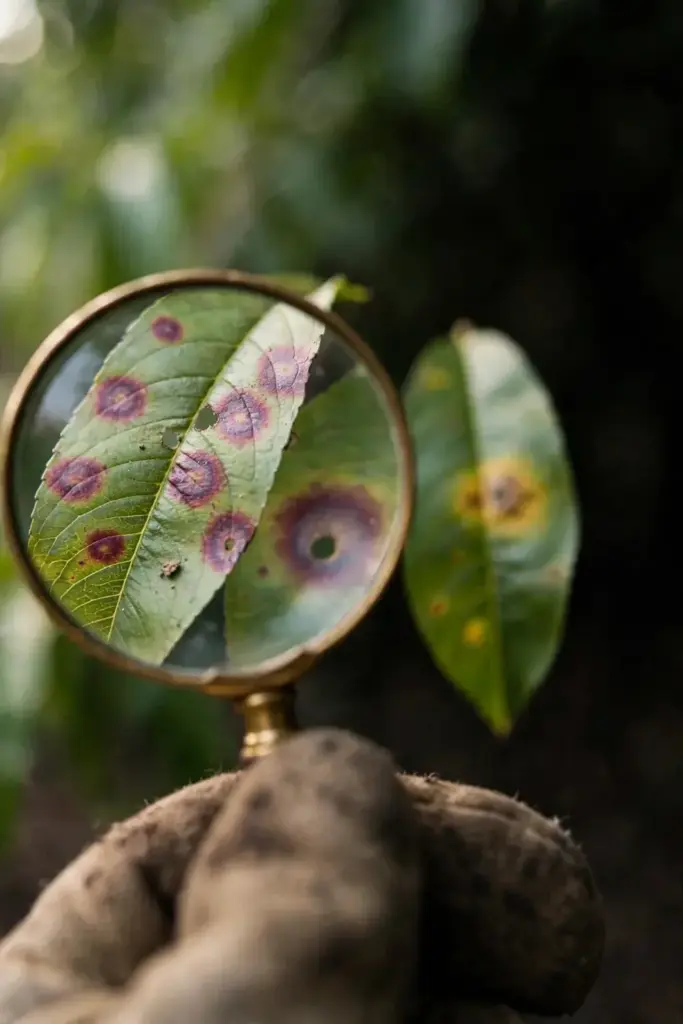
Carry a hand lens. A hand lens turns a guess into a check: fungal lesions show tiny dark sporodochia bumps at their centers, while bacterial spots show no such structure. Check the twigs on the same walk, and look for fresh gum, new cankers, and buds that stayed dark while their neighbors opened. A walk with a lens takes minutes, and it tells you whether Step 2 and Step 3 need repeating.
Log what you find. Note the date, the tree, and the rough spread: a few spots on one branch, or spots across the whole canopy. That log tells you whether the program is working, and it gives the lab a timeline if you send a sample later. A gardener who inspects after rain acts weeks before a gardener who waits for holes.
Step 7: Protect Fruit Through the Wet Spring Window
Fruit infection follows the same wetness rule as leaf infection. Summer rain and sprinkler irrigation encourage fruit infection, and the lowest fruit stays wet longest. Keep the ground-level watering rule through fruit season, and keep the canopy open so fruit dries after rain. Fruit that dries fast after every wetting faces short infection windows.
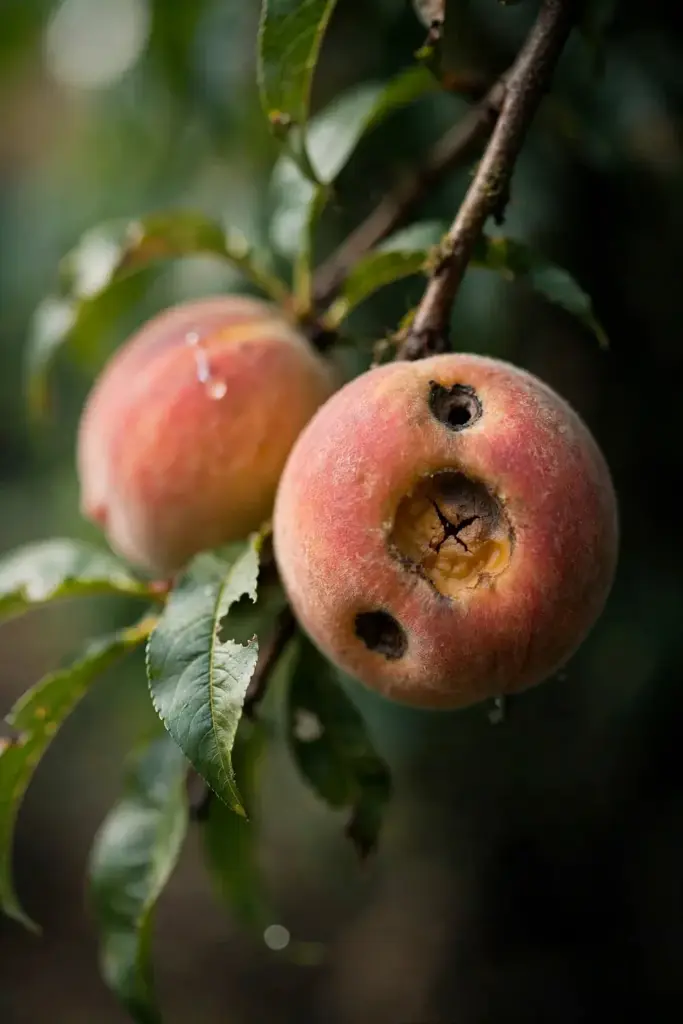
Pick infected fruit off the tree as soon as spots appear. A spotted fruit sheds spores onto its neighbors with every rain, and a fruit that stays on the branch through ripening seeds the ground below it. Bag the picked fruit with the sanitation waste. Do not leave spotted fruit on the ground under the tree, and do not compost it.
Harvest on time. Fruit grows more vulnerable as it colors up, and overripe fruit hanging through a wet spell invites infection and rot. Pick fruit at its normal ripe stage, handle it gently to avoid skin breaks, and move it indoors promptly. The tree keeps the fruit it can defend. Your job is to remove the fruit it cannot.
Step 8: Send a Sample to the Lab When the Cause Stays Unclear
Send a sample when the signs point both ways, when cankers dominate the picture, or when the disease returns after a full sanitation season. A lab answer changes the plan: bacterial spot calls for clean stock and strict sanitation, while fungal shot hole adds dormant copper to the same base. Guessing wrong costs a season.
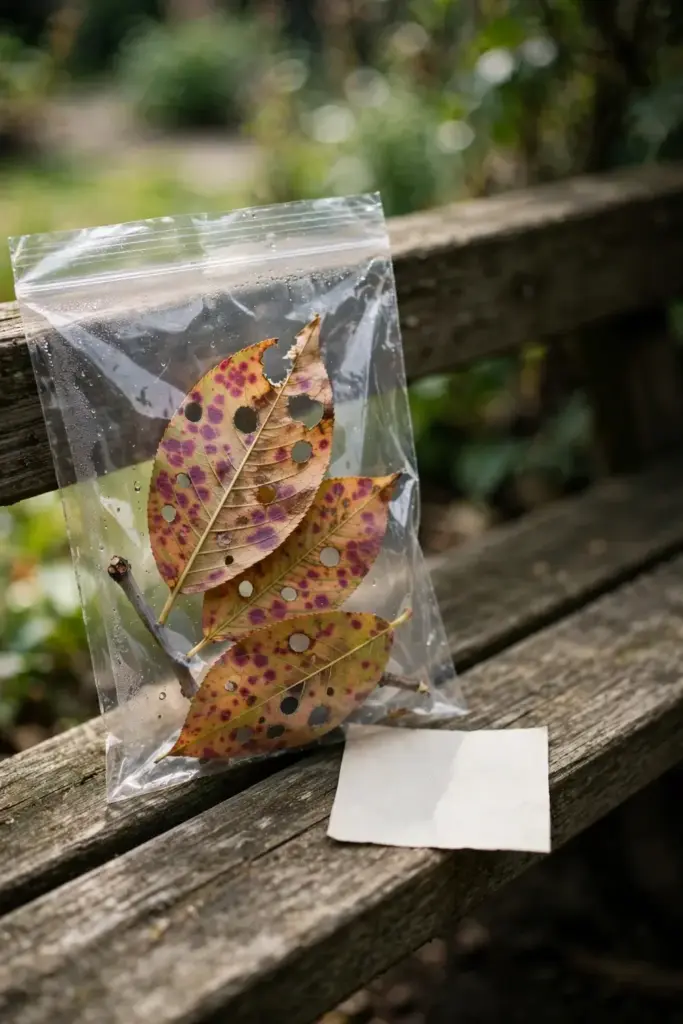
Collect fresh material. Cut several leaves with fresh spots, plus a twig section with a canker or dead buds. Seal the material in a plastic bag, keep it cool, and send it the same day if you can. Include a note with the tree species, the date, the symptoms you saw, and the treatments you already applied. Your local extension diagnostic lab handles the isolation and identification.
Expect a wait. Lab identification runs on culture and isolation, not on a glance, and results take days to weeks depending on the lab’s queue. Keep the sanitation and pruning program running while you wait. The steps that help against one cause help against the other, so the wait costs nothing as long as the base program stays in place.
Step 9: Repeat the Routine Next Season and Track What Changed
Repeat the routine next season, and compare against your notes. The program runs on a yearly loop: autumn sanitation, late-winter pruning, dormant copper, spring inspection, and fruit-season pickup. A single season of sanitation helps. Two seasons of the full loop change the tree’s trajectory, because each clean season lowers the spore load the next season starts with.
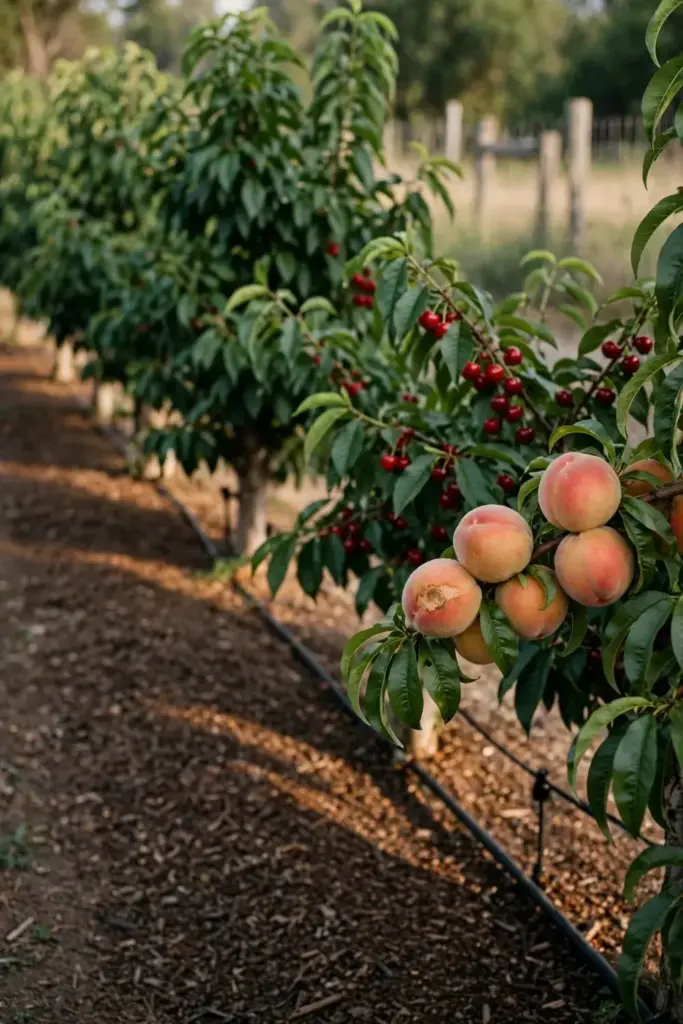
Track three things. Count the trees that showed holes, note how heavy the leaf drop was, and record whether fruit spots appeared. Compare this year’s numbers with last year’s note from Step 1. Falling numbers mean the program works. Rising numbers mean a step slipped, usually sanitation or pruning, and the next season needs that step done earlier and more thoroughly.
Adjust one variable at a time. If leaf holes fell but fruit spots stayed, the fruit-season watering needs attention. If twig cankers stayed, the pruning cuts need to reach further into clean wood. A program that changes one thing per year teaches you what your trees actually respond to. A program that changes everything at once teaches nothing.
Living With Shot-Hole Disease in a Tree You Already Own
Holes in a leaf never heal. The dead center stays gone, and the hole stays open for the life of that leaf. The tree compensates by growing new leaves, and a healthy tree replaces a damaged canopy across the season. Your job is to keep the tree healthy enough to outgrow the damage, not to repair leaves that cannot be repaired.
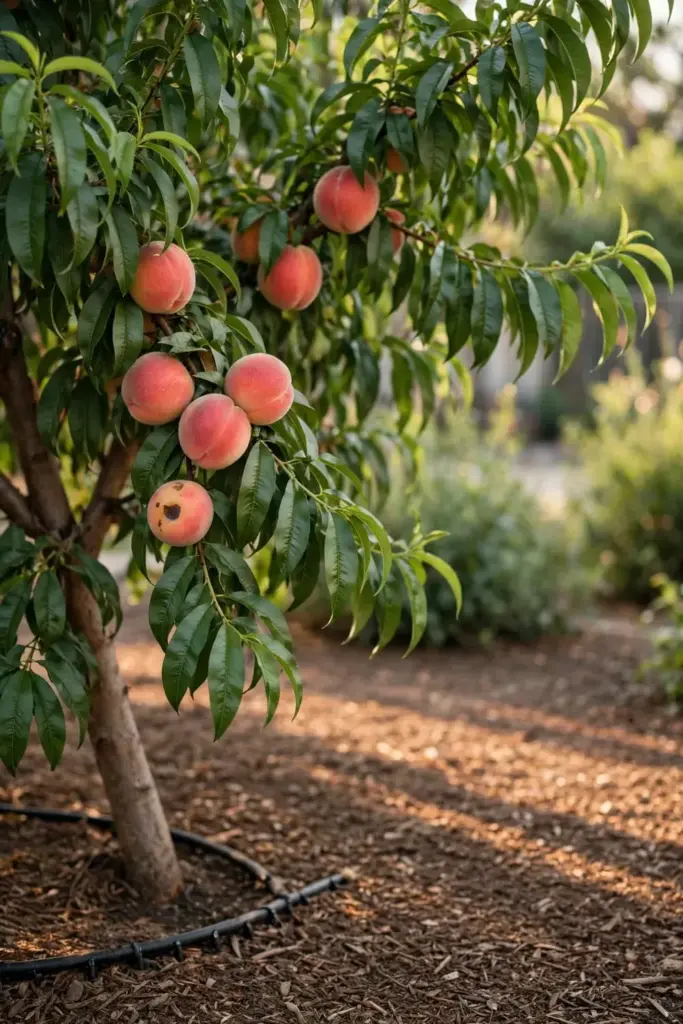
Keep feeding and watering the tree normally. A tree under disease stress needs steady water and balanced nutrition, not a rescue dose of fertilizer. Do not strip damaged leaves off the tree in a panic. The tree still photosynthesizes through holed leaves, and stripping them starves the tree faster than the disease does. Remove only leaves that have fallen, and let the tree keep the rest.
Watch the buds through winter. Buds that stayed dark and dead while their neighbors opened mark the twigs to prune first in late winter. A tree that leafs out fully in spring after a clean autumn has turned the corner, even if last year’s holes still show on old leaves. The proof of a working program is new growth with fewer spots, not a canopy with no history.
Frequently Asked Questions
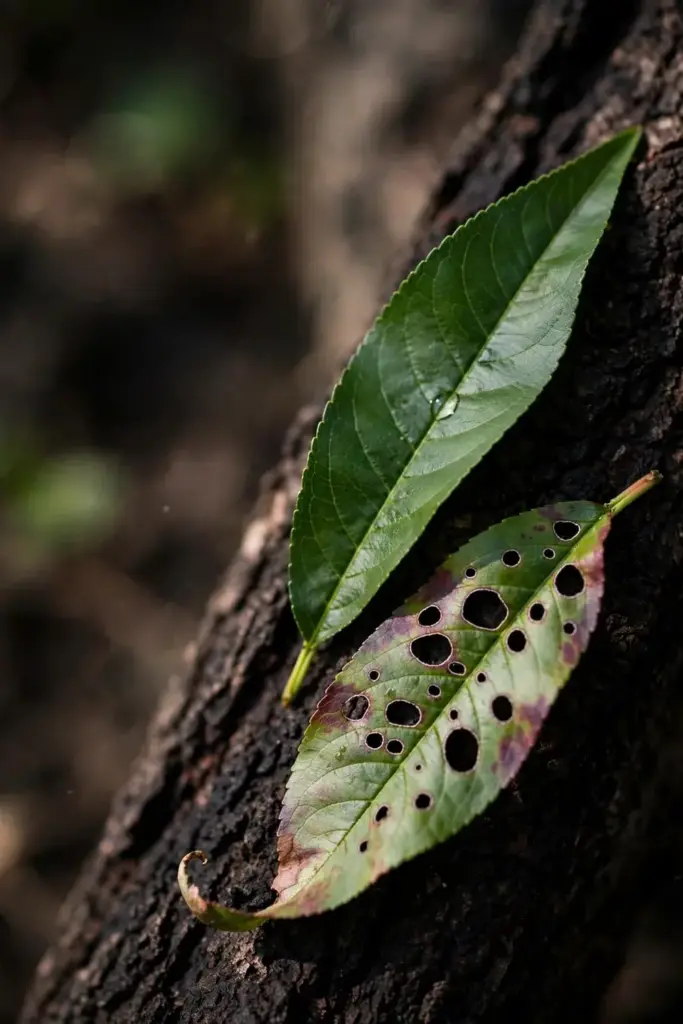
Shot-hole disease rarely kills a tree on its own. Healthy trees tolerate leaf holes and early leaf drop, and they push new growth across the season. The risk rises when heavy defoliation repeats year after year, because the tree spends its reserves replacing leaves instead of building buds and fruit. Repeated severe defoliation weakens a tree and cuts yield over time. Sanitation and pruning break that cycle before it compounds.
No. A hole left by a dropped-out leaf spot stays open for the life of that leaf. The dead center cannot regrow, and no spray closes the hole. The tree compensates by growing new leaves, and a healthy tree replaces a damaged canopy across the season. Judge recovery by new growth, not by old leaves. New leaves with few spots mean the program works, even while old leaves still show holes.
Neither one is clearly worse in a home garden. Both cause leaf holes, fruit spots, and twig damage, and both respond to sanitation, pruning, and a dry canopy. Fungal shot hole adds twig cankers and killed buds as overwintering sites, plus a dormant copper option. Bacterial spot adds water-soaked twig lesions and a stronger case for clean nursery stock. Lab identification settles which one your tree has when the field signs stay unclear.
Spray copper when the tree showed heavy damage last season. Skip it when damage stayed light. Dormant copper cuts the fungal burden before spring growth, but it never gives total control on its own. Sanitation and pruning carry the rest of the program, and a tree that gets copper without sanitation keeps its spore load. Read the label for the rate and cutoff date, and stop before buds open.
No. Send fallen leaves, fruit, and pruned twigs out with the trash. A home compost pile rarely runs hot enough to kill fungal spores, and a cold pile returns the disease to the garden with the finished compost. The same rule covers spotted fruit that still clings to the branch. Bag it and bin it. Clean ground under the tree removes the launch pad that spring rain uses to splash spores back up.
Read the border color, the twigs, and the fruit together. Fungal spots tend to carry a reddish-violet border, tan twig lesions with dark margins, and profuse gumming. Bacterial spots tend to carry a light yellowish halo, dark water-soaked twig lesions, and cracked sunken fruit spots. A hand lens helps: fungal lesions show tiny dark sporodochia bumps at their centers. Send a sample to the lab when the signs still point both ways.
Where to Go From Here
Shot-hole disease rewards the gardener who works the full loop. Start with the Step 1 decision, run sanitation and pruning through autumn and late winter, keep the canopy dry, and inspect after every long wet spell. The holes in old leaves stay, and the new growth tells you whether the program works. Fewer spots on new leaves means the spore load is falling, and the tree is winning.
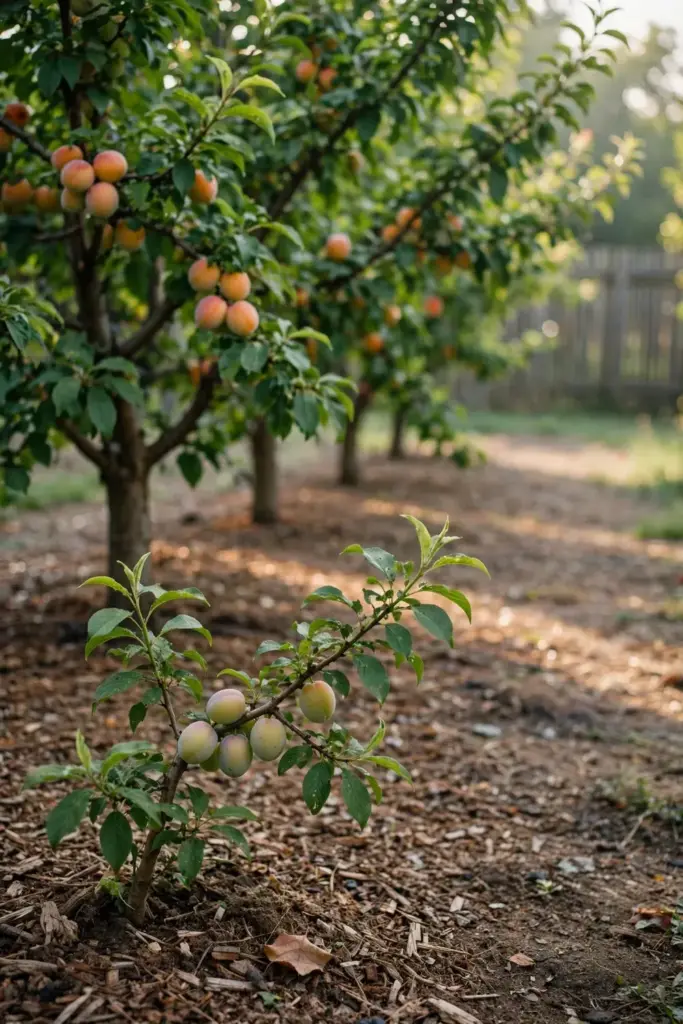
Starting fresh changes the odds. Growing a plum tree from a fresh plum seed takes patience, and a seedling started from clean stock in a sunny, airy spot begins life with no cankers and no reservoir. Whether you keep an old tree or start a new one, the same rule holds. Dry canopy, clean ground, and pruned twigs beat any spray alone.