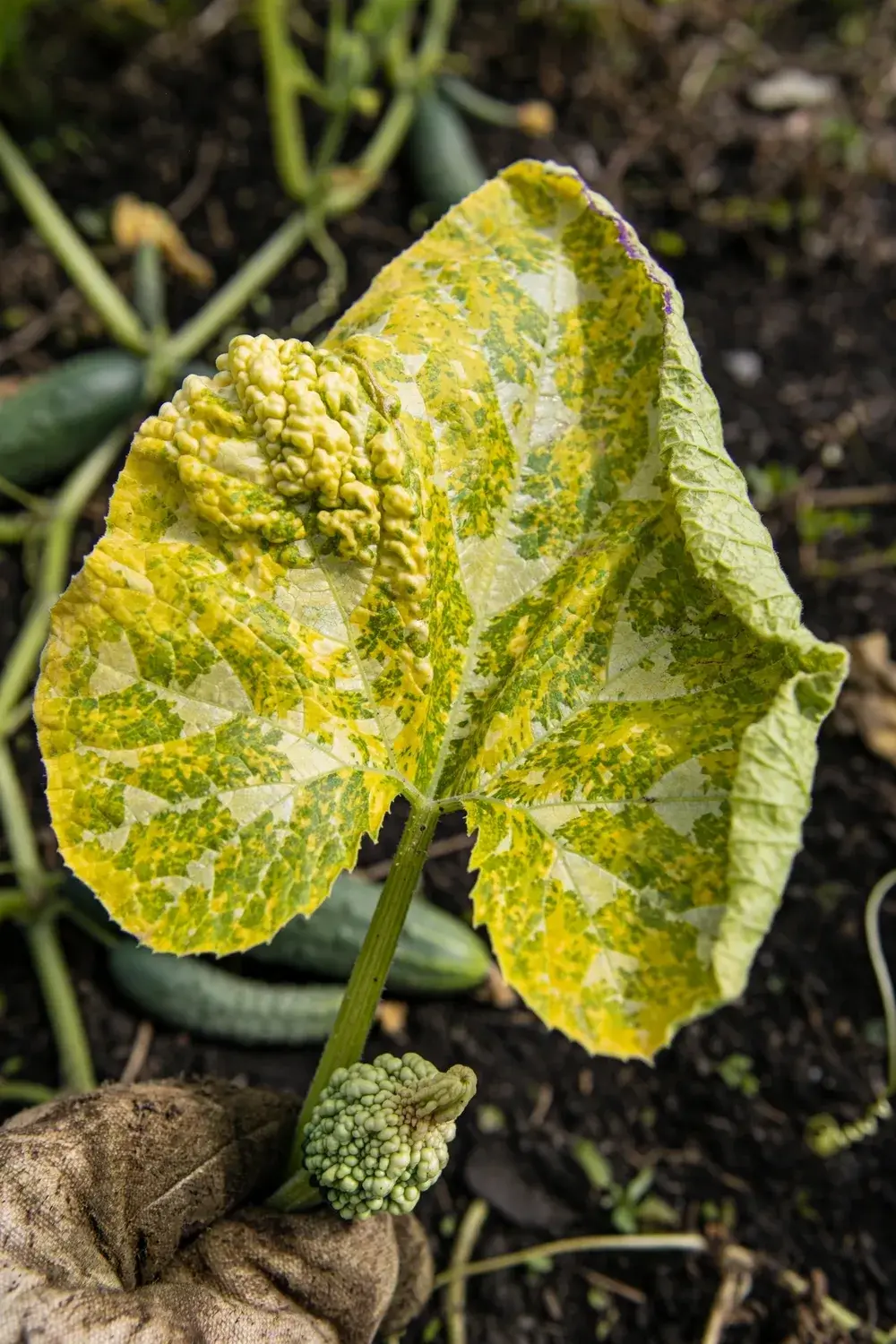

Watermelon Mosaic Virus 2 (WMV-2) is a plant virus with no cure. It stunts cucurbits, mottles their leaves, and warps their fruit. Once a plant shows the mosaic pattern, no spray restores it. Watch for it from June onward. The work is prevention: block the aphids that carry it, clear the weed hosts that harbor it, and pull infected plants before aphids move the virus on.
I have learned to walk the field edge first. Mottling usually shows up there. WMV-2 hits watermelon, muskmelon, cucumber, squash, zucchini, pumpkins, and gourds, plus legumes such as peas and alfalfa. The name trips up many gardeners. WMV-2 is the historic name for Watermelon Mosaic Virus, and the old WMV-1 is a different virus entirely, now called Papaya ringspot virus-W.
The rest of this page gives one leaf-and-fruit ID check, one correction on aphid sprays, and 6 moves that keep WMV-2 out of your patch. The moves are cultural. They starve the virus of hosts, block its carriers, and break the cycle between seasons.
What Watermelon Mosaic Virus 2 Actually Is
Watermelon Mosaic Virus 2 is the historic name for Watermelon Mosaic Virus, a potyvirus in the Potyvirus genus. The virus lives inside living plant tissue and moves from plant to plant on aphid mouthparts. It does not travel in seed. Aphids pick it up from infected weeds or alfalfa, then pass it to healthy cucurbits while they probe.
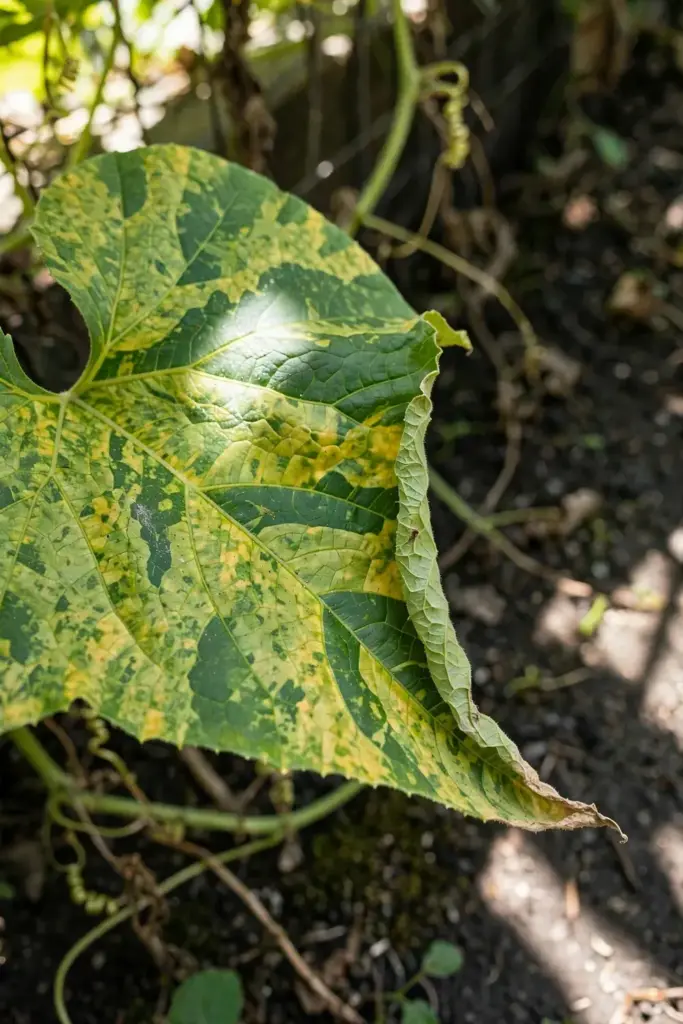
The old WMV-1 label belongs to a different virus now. Watermelon mosaic virus 1 is now Papaya ringspot virus-W (PRSV-W), and the University of Connecticut cucurbit virus guide lists the two as separate viruses. Gardeners who treat the two names as one virus chase the wrong host list and the wrong advice. Keep the names apart.
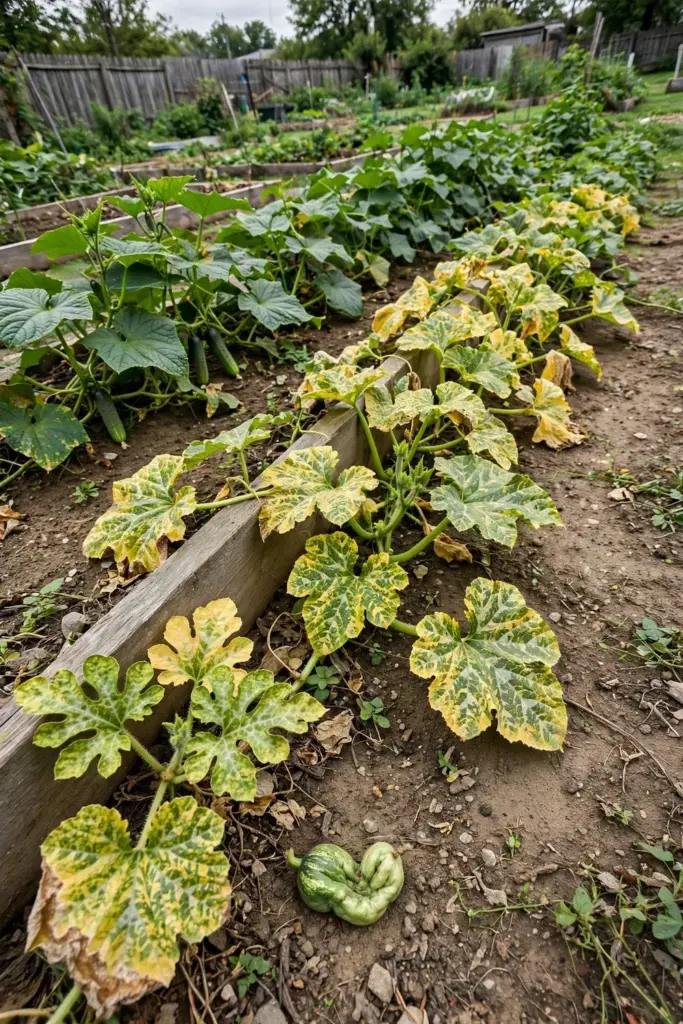
WMV-2 overwinters in perennial weeds or alfalfa. The USU fact sheet names infected perennial weeds and alfalfa as the winter reservoir. Spring aphids feed on that reservoir, then carry the virus into the cucurbit patch. Field-edge plants show symptoms first, and the infection spreads across the bed as aphids move.
How to Identify Watermelon Mosaic Virus 2 on Leaves and Fruit
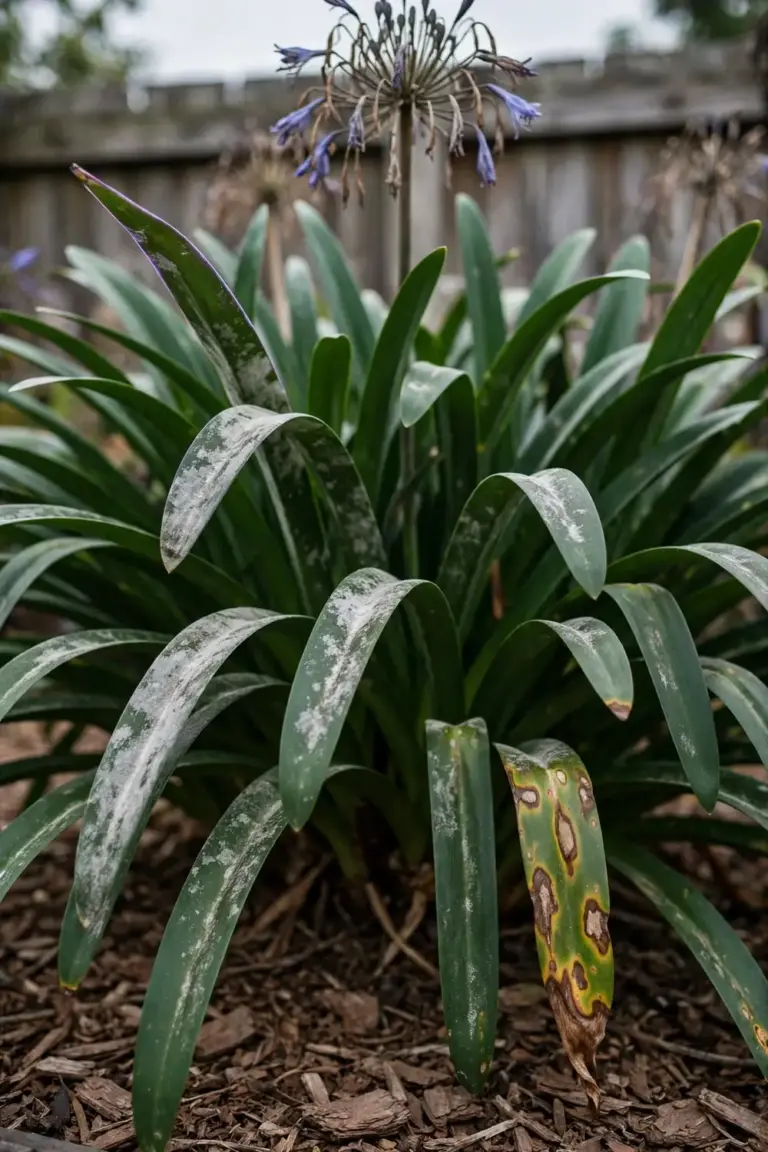
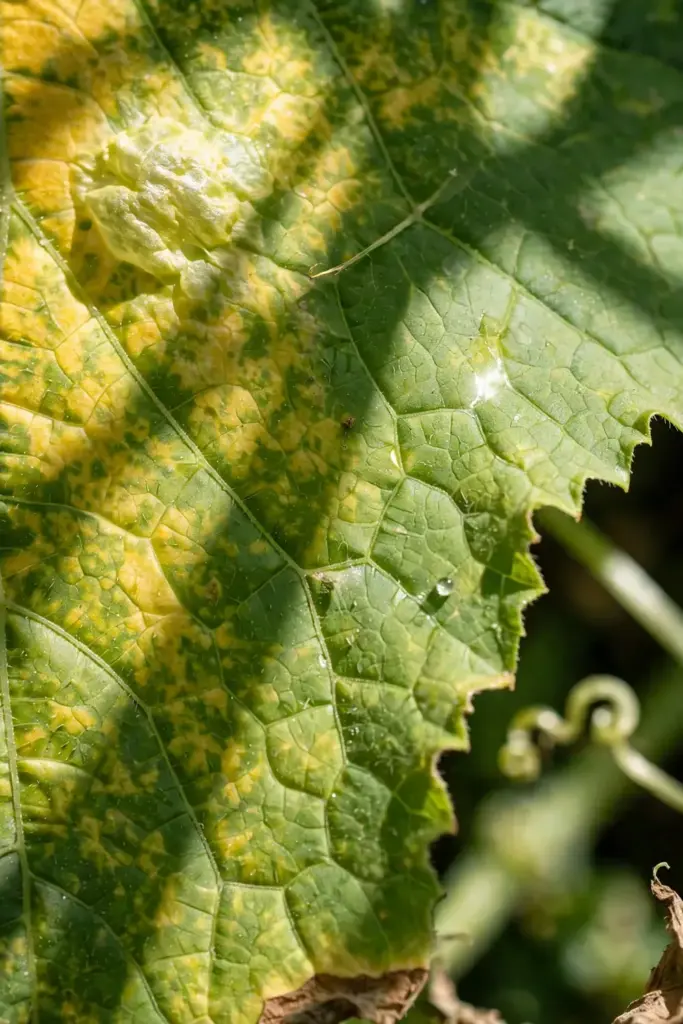
Watermelon Mosaic Virus 2 shows as a mosaic pattern on leaves: patches of light green and yellow scattered across the blade, with leaf distortion and malformation. The USU fact sheet lists stunted growth, leaf malformation, yellowing or light green mottling, and marginal chlorosis on foliage. Fruit turns dwarfed, mottled, or spotted, and often shows color breaking and warts.
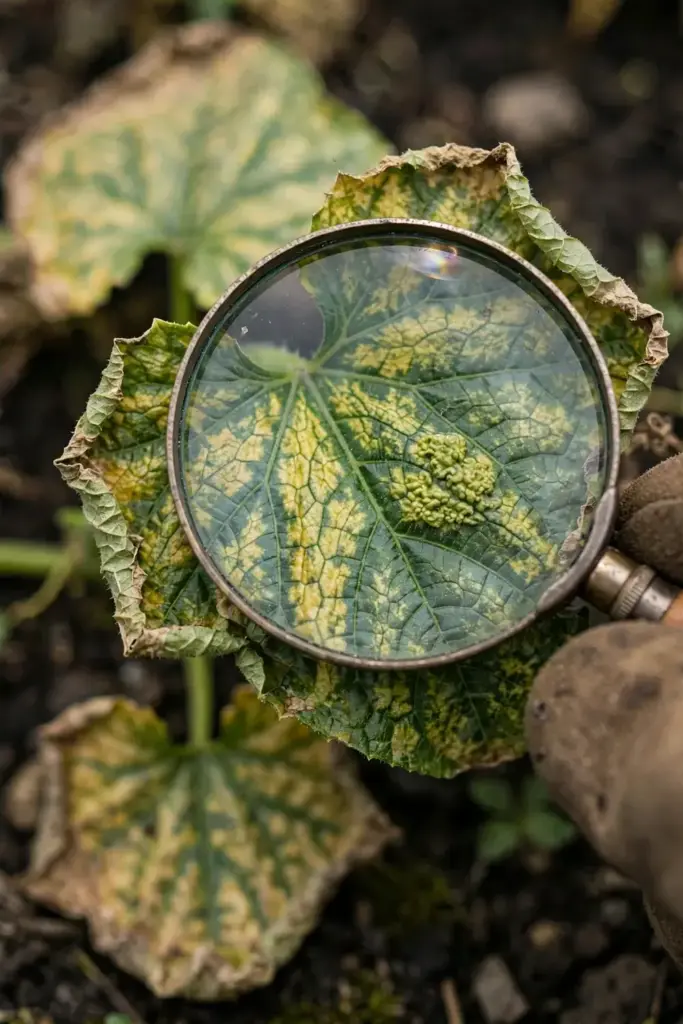
Check leaves first, then fruit. Young infected plants stunt hard. Older plants keep growing but carry mottled leaves and misshapen fruit. The mosaic may look faint on a cool morning and sharper in heat. Symptoms usually appear from June onward, and the Utah State University fact sheet advises watching for symptoms starting in June through the end of the season.
Field ID sorts suspects. Field ID never settles the case. Other cucurbit viruses paint the same mosaic, and mixed infections blur the picture further. A lab test names the virus. The lab section near the end of this page covers when to send a sample.
Which Plants Get Hit Hardest
WMV-2 hits cucurbits hardest, and legumes carry it too. Summer squash and zucchini show the damage early. Watermelon and muskmelon fruit warp badly when infection lands young. Cucumbers carry leaf mosaic with gnarled fruit. Winter squash and pumpkins show leaf mottle with knobby overgrowths on the fruit.
| Host Group | Leaf Signs | Fruit Signs |
|---|---|---|
| Watermelon and muskmelon | Stunted plants, malformed mottled blistered leaves | Misshapen, dwarfed, mottled, or spotted fruit |
| Cucumber | Uniform green to dark green mosaic or mottling | Shortened, gnarled, sometimes knobby fruit |
| Summer squash and zucchini | Mottled leaves, plants turning vine-like | Green overgrowths on yellow fruit, warty raised areas |
| Winter squash and pumpkins | Faint to severe yellow mottle, puckered or blistered leaves | Knobby overgrowths covering the fruit |
| Legumes (peas, alfalfa, vetch, clover) | Mottling and distortion on foliage | Reservoir hosts, fruit signs minor or absent |
The same UConn guide records these per-crop symptoms, and notes that WMV-2 also infects peas, alfalfa, vetch, and clover. Alfalfa matters twice: it feeds aphids and it shelters the virus through winter. A cucurbit bed beside an alfalfa field starts the season exposed.
Why Aphids Make Watermelon Mosaic Virus 2 So Hard to Stop
Watermelon Mosaic Virus 2 rides on aphids in non-persistent transmission. An aphid picks up the virus during a brief probe of an infected plant, then passes it to the next plant it probes. The aphid harbors the virus only a short time, so transmission is non-persistent, per the USU pest advisory. That short window is the whole problem.
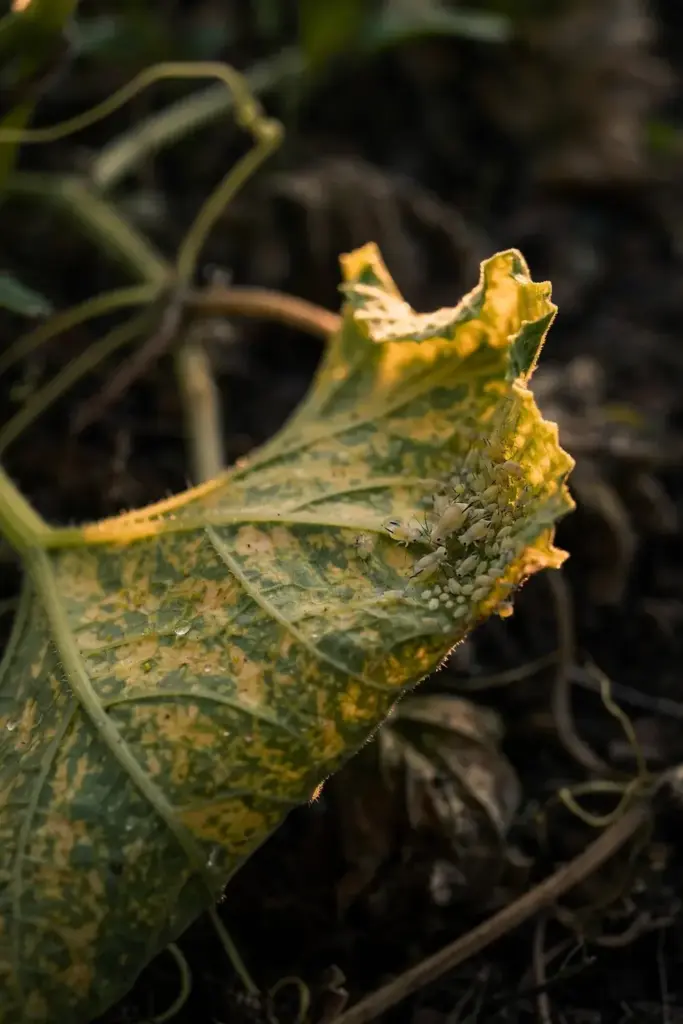
Spraying aphids will not save plants that already show mosaic. The aphid transmits the virus before any spray kills it. The UC IPM cucurbit virus page calls insecticide control of virus diseases impractical for exactly this reason, and the same USU fact sheet calls insecticides for aphids of limited value against this disease.
That failure sets the strategy. Barriers beat sprays. Reflective mulch repels landing aphids while row cover excludes them outright, and weed control removes the reservoir they feed on. When aphids slip through anyway, resistant varieties carry the crop. The next section turns those four ideas into 6 moves.
6 Moves That Keep Watermelon Mosaic Virus 2 Out of Your Patch
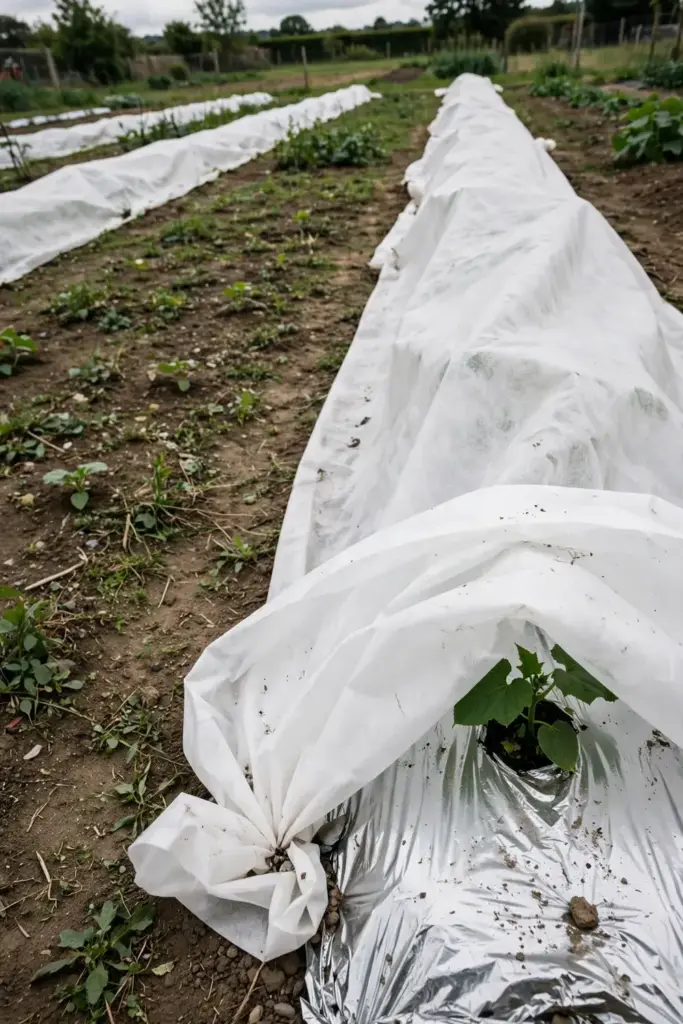
1. Cover Young Plants With Row Cover
Drape floating row cover over cucurbits at planting and keep it on through the start of bloom. The cover excludes aphids during the weeks when young plants are most exposed. The USU pest advisory recommends row covers in place at planting through the start of bloom. Remove the cover at bloom so bees reach the flowers. A cover left on past bloom costs you pollination.
2. Lay Reflective Mulch at Planting
Lay silver reflective mulch at planting. The bright surface confuses landing aphids and cuts early visits. The same UC IPM page notes that reflective mulches may reduce or delay infections by repelling insects from plants. The effect fades as expanding foliage covers the reflective surface, so the mulch buys early protection, and the other moves carry the rest of the season.
3. Clear Weeds and Volunteer Cucurbits
Pull weeds in and around the bed before planting, and keep pulling through the season. Weeds host both the virus and the aphids that move it. Volunteer cucurbits from last season carry the same risk. The USU pest advisory advises removing weeds and volunteer crops that can serve as aphid hosts before planting, then controlling weeds around fields and gardens all season.
4. Keep Cucurbits Away From Alfalfa
Do not plant cucurbits beside an alfalfa field. Alfalfa shelters WMV-2 through winter and feeds the spring aphids that carry it out. The same USU fact sheet lists avoiding cucurbit plantings near alfalfa fields among its general management steps. A bed on the far side of the garden, with a non-host barrier between it and the alfalfa, starts the season cleaner.
5. Plant Resistant Summer Squash and Zucchini
Plant a variety with rated resistance to WMV-2 when you grow summer squash or zucchini. Resistance does not mean immunity. It means fewer symptoms and a crop worth picking when aphids slip through. The same USU fact sheet notes resistant summer squash and zucchini varieties exist, some of them genetically modified, while no resistant winter squash or pumpkin varieties exist. Check the seed packet for the WMV rating before you order.
6. Rogue Infected Plants and Rotate the Bed
Pull an infected plant as soon as you confirm mosaic, and destroy it. Do not compost it. The same UC IPM page advises removing infected plants as soon as they are detected. Bag the plant and trash it. Then rotate the bed. The crop rotation guide covers how to place non-host crops so the bed still earns its keep while the virus loses its hosts.
When Field ID Is Not Enough: Send a Sample to a Lab
Field ID sorts suspects. A lab names the virus. Send a sample when the call decides next year’s planting plan, or when several viruses could explain the same mosaic. Cut fresh symptomatic leaves and one fruit with clear signs. Keep the sample cool and dry. Note the host, the planting date, and the field history on the submission form.
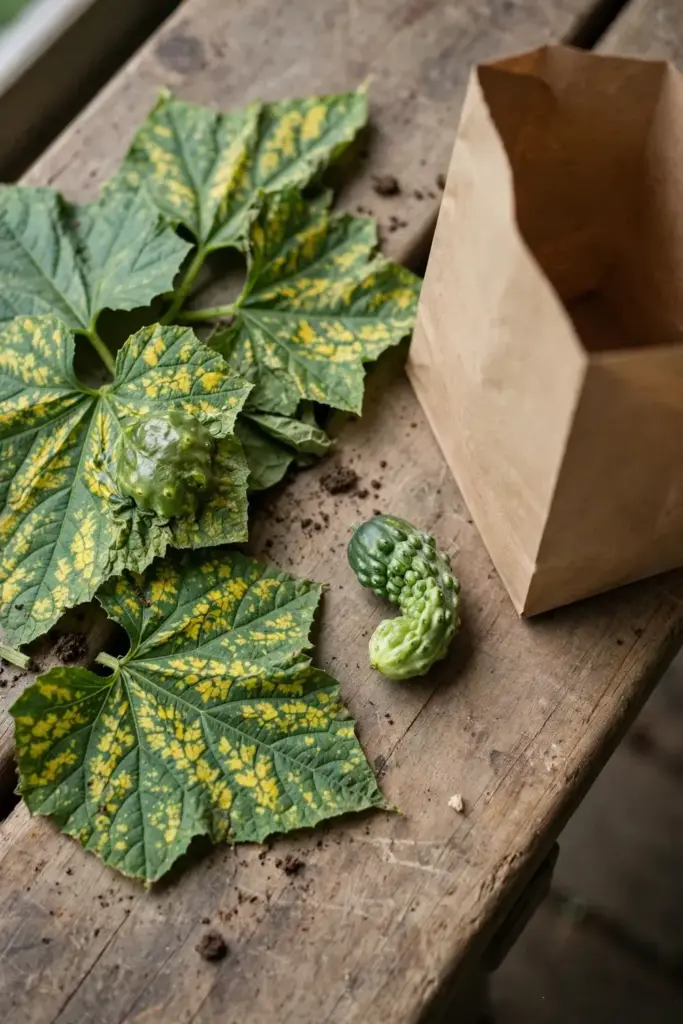
Expect a fee. Utah’s diagnostic lab lists $30 for virus testing, per the Utah State University pest advisory. Your own state lab sets its own fee. A lab result beats a second season of guessing, and it stops you from spraying a virus that no spray touches.
Frequently Asked Questions
No. No spray cures a plant virus, and an infected plant stays infected for the rest of its life. The plant may keep growing and may even set fruit, but the fruit runs small, mottled, or warped. Pull the plant, bag it, and trash it. Keep the bed’s remaining plants under row cover and weed-free so aphids find no second target.
No. The virus does not persist in bare soil on its own. It survives winter inside living hosts, mainly perennial weeds and alfalfa, and it moves on aphid mouthparts. Clear those living hosts and the virus loses its winter shelter. Rotation helps because it swaps host crops for non-hosts, and the virus finds nothing to infect in the bed.
No. Aphids transmit WMV-2 during a brief probe, before any spray kills them. A sprayed bed still gets infected plants, and the spray also kills the predators that keep aphid numbers down. Spend the effort on row cover, reflective mulch, weed control, and roguing. Use sprays only to hold aphid numbers down early, never as a cure for mosaic.
WMV-2 is not seedborne, so seed from an infected plant does not carry this virus. Still, buy fresh seed. An infected mother plant sets weak seed, and fresh certified seed starts the season with full vigor. Keep the seed packet, and note the variety and the WMV rating so next year’s order repeats what worked.
Where to Go From Here
Walk the field edge first. Check the youngest leaves for mosaic, then check the fruit for warts and color breaking. Cover the young plants, clear the weeds, and keep the bed away from alfalfa. Pull mosaic plants fast and trash them.
Prevention is the whole playbook for WMV-2. The soil health guide helps you build the bed the next crop grows in, and a strong bed carries resistant varieties through the season. Start with the field edge. End with a rotation plan.