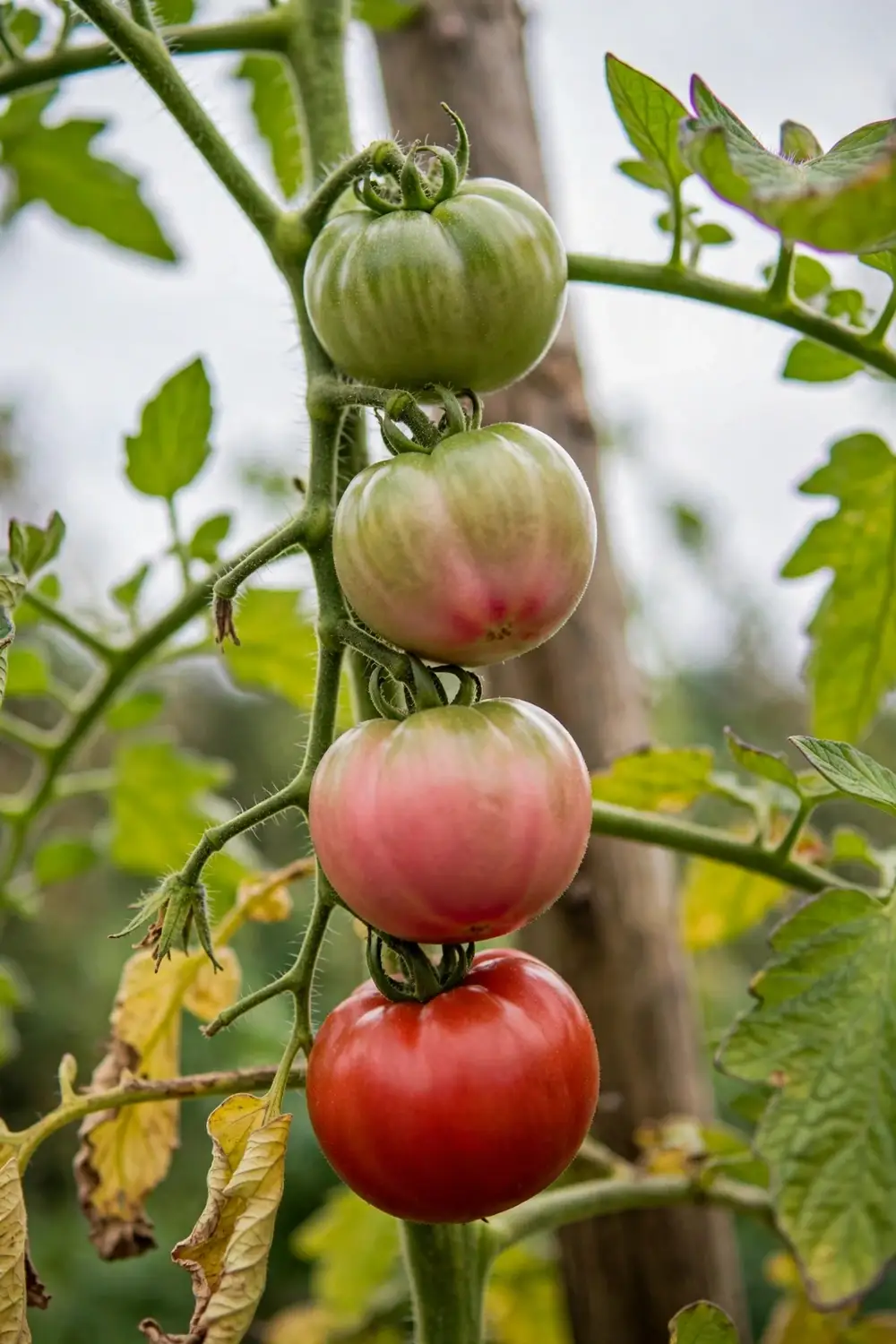

Pick at the breaker stage. Once a tomato shows its first blush of color at the blossom end, the vine has finished with it, and the fruit finishes on the counter in 5 to 7 days. Picking then loses nothing in flavor and dodges frost, possums, birds, splitting, and sunscald in one move.
Should you vine-ripen tomatoes or pick and ripen indoors? The answer comes down to risk, not flavor. Flavor ends in a tie. Risk decides. The rest of this page runs the decision tree, then the indoor method for each pile you pick.
Walk the rows daily once fruit starts to color. Check the forecast each morning. Pick at first blush when anything threatens the fruit, and leave the fruit on the vine when nothing does.
1. The Breaker-Stage Rule: Pick at First Color, Not Full Red
Pick when color first breaks at the blossom end. That first blush marks physiological maturity. The fruit can finish ripening off the vine with no help from the plant.
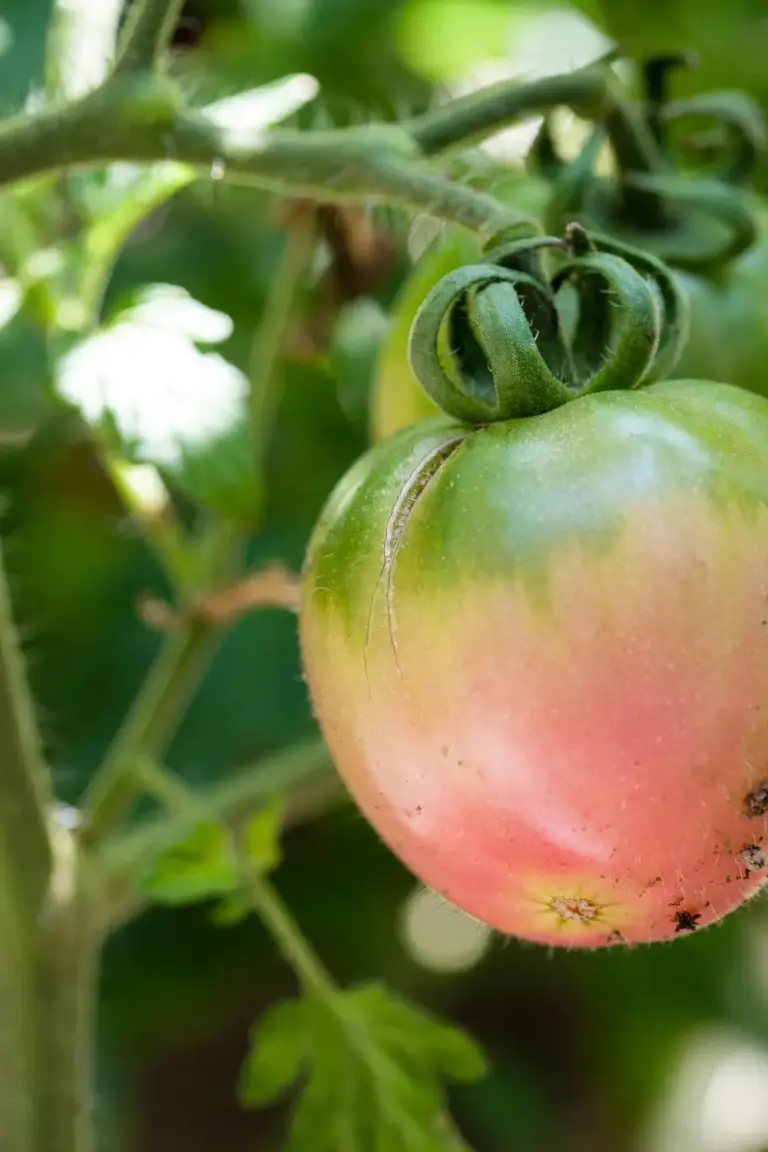
A skin forms between the plant stem and the fruit at the breaker stage, and that skin cuts off nutrients from the plant to the fruit, according to Penn State Extension. The vine adds nothing after that point. Leaving the fruit on the vine buys no extra flavor. It only buys extra exposure.
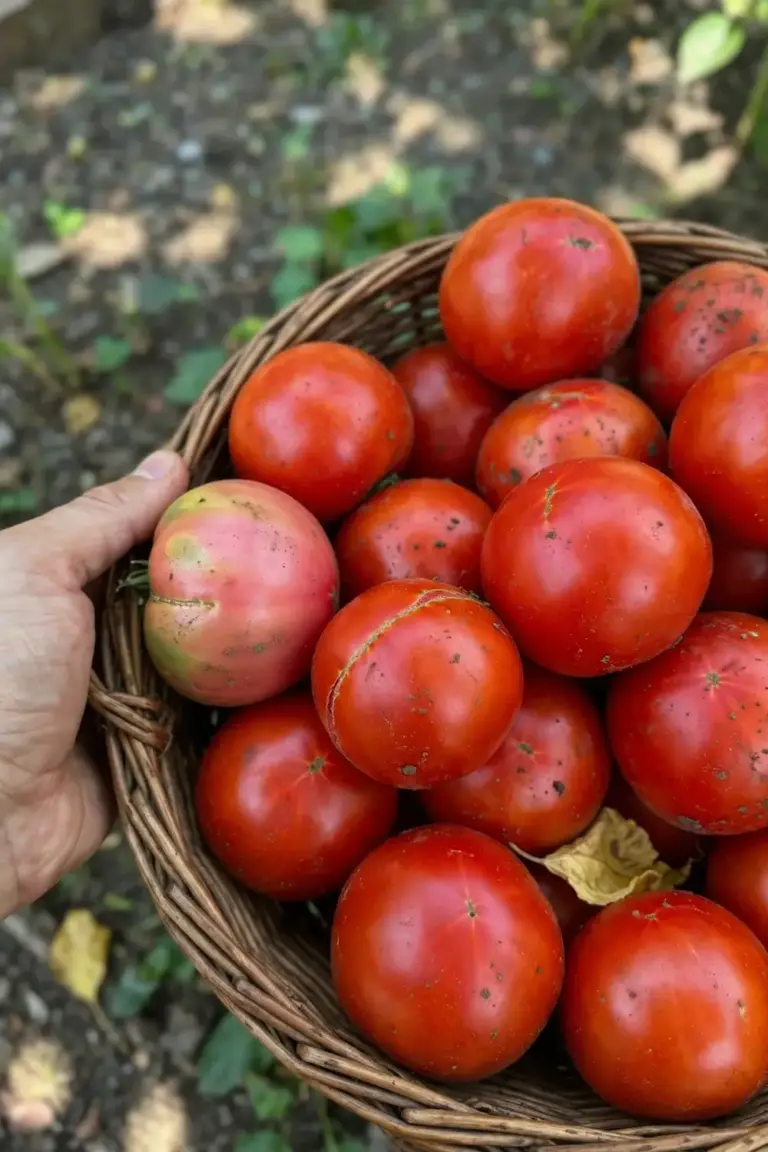
The ripening scale runs from there in clear bands. The turning stage covers 10% to 30% of the skin in pink, pinkish, or red color, according to Penn State Extension. The pink stage covers 30% to 60%, according to the same Penn State Extension guide. The light red stage covers 60% to 90%, according to the same Penn State Extension guide. The red and final stage means 90% of the skin carries the classic red color, according to the same Penn State Extension guide.
Taste settles the old argument. There is no taste or tenderness difference between tomatoes pulled from the vine at color break and those allowed to reach full red color on the vine, according to Texas A&M AgriLife Extension. The term vine-ripened works as marketing. The fruit is fully mature at break. Picking at break trades nothing away.
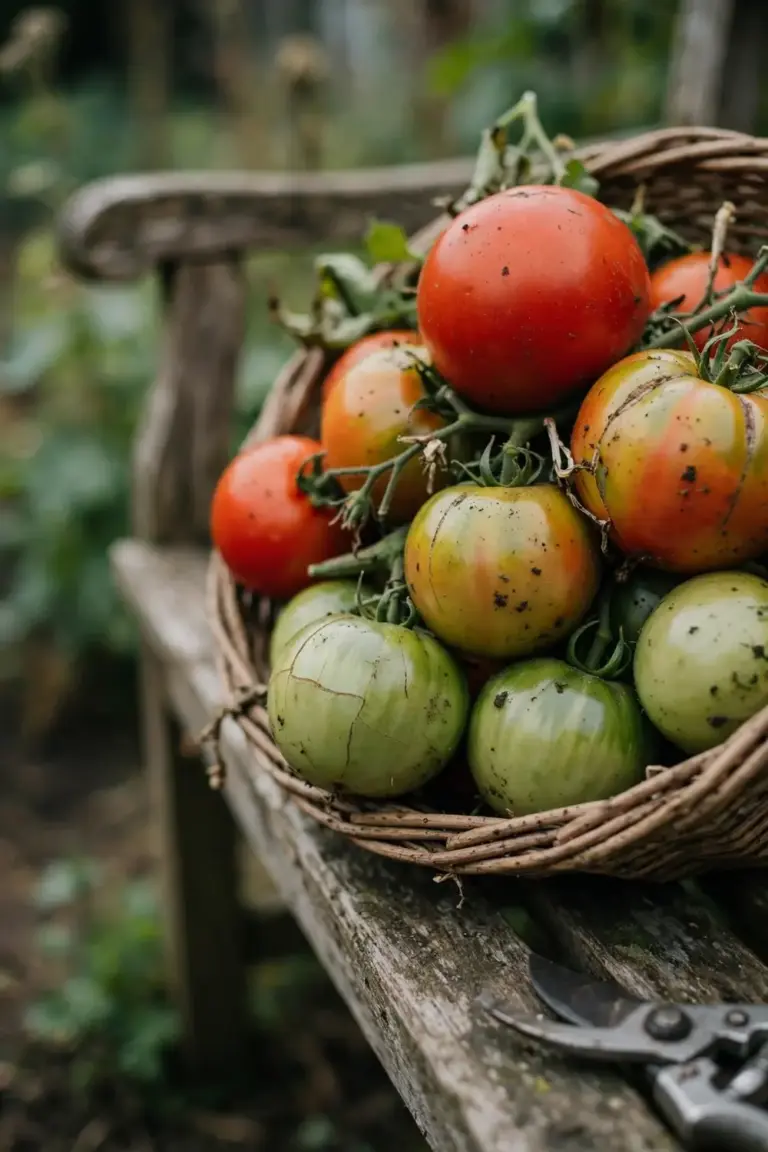
Spot the break at the blossom end. Breakers begin to turn a yellowish green and then fade into salmon-to-pink hues before turning red, according to the same Texas A&M AgriLife Extension guide. Tomatoes can be picked as soon as their green begins to yellow. The shoulders stay green longest, so ignore them. The blossom end tells the truth. A faint yellow wash at the blossom end means the breaker stage has arrived, and the fruit is ready to pick.
2. Should You Vine-Ripen or Pick and Ripen Indoors? Ask 5 Questions First
Ask 5 questions before you pick. A yes to any of the first 4 means pick at breaker. A no to all 5 means leave the fruit on the vine.
| Question | If yes | If no |
|---|---|---|
| Is frost forecast before you can pick again? | Pick everything at breaker or mature green | Move to the next question |
| Are possums, birds, or fruitworms active? | Pick at breaker | Move to the next question |
| Is heavy rain forecast after a dry spell? | Pick nearly ripe fruit now | Move to the next question |
| Is a heat wave above 29 degrees Celsius stalling color? | Pick at breaker and ripen indoors | Move to the next question |
| Is nothing threatening the fruit? | Leave it on the vine | Pick anyway if you need fruit today |
The tree runs in that order because frost kills the whole vine, pests take the reddest fruit first, rain splits ripe fruit within hours, and heat stalls ripening for days. Work down the list. Stop at the first yes.
One yes is enough. Two yes answers do not change the move. Pick at breaker, sort the pile, and ripen indoors. The tree saves the fruit that a fixed rule would lose.
Run the tree per truss, not per patch. One truss can sit in full sun while another hides under leaves. One truss can carry breaker fruit while the next truss still runs green. The forecast covers the whole patch, and the fruit tells you the rest. Check each truss, ask the questions, and pick what the tree says to pick. Leave the rest. Tomorrow brings another round.
3. Leave the Fruit on the Vine When Nothing Threatens It
Leave the fruit on the vine when the forecast is mild, the pests are quiet, and the soil stays evenly moist. The fruit keeps on the plant until you need it. No box, no checking, no bench space.
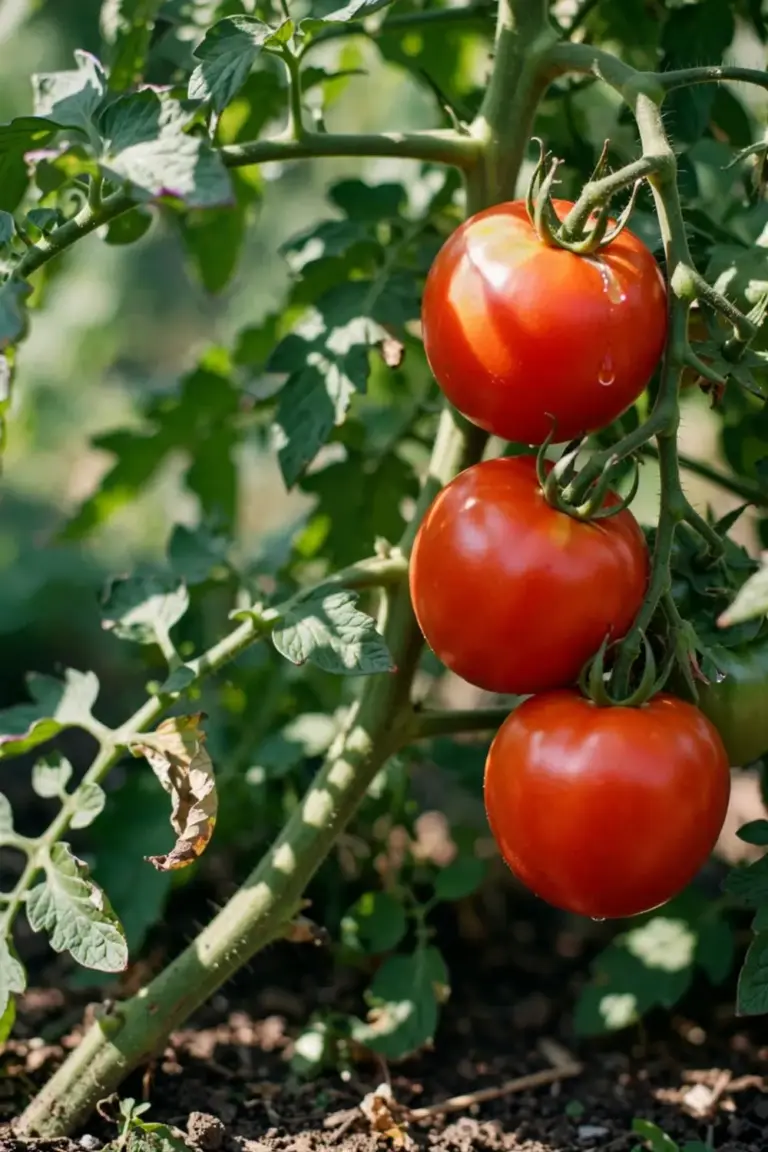
Leaving the fruit costs nothing in flavor when conditions are calm. Texas A&M AgriLife Extension found no taste or tenderness difference between color-break fruit and vine-red fruit, so the vine holds no flavor prize for patience. The vine holds convenience. Fruit on the plant waits. Fruit on the bench demands attention.
The calm case still needs a daily walk. Fruit left past full red softens fast, and soft fruit cracks, draws pests, and rots on the truss. Pick fruit at full red or just past breaker for the table. Never leave ripe fruit hanging for days because the vine felt safe yesterday. A calm week turns fast, since one hot afternoon, one storm, or one night of possums ends the calm case, and the tree in the section above tells you the move. Pick for today, check again tomorrow, and let the tree decide each round.
4. Pick at Breaker When Frost Is Forecast
Pick at breaker when frost is forecast before your next pick. Frost ends the vine. Fruit left on a frosted vine stops ripening and rots where it hangs.
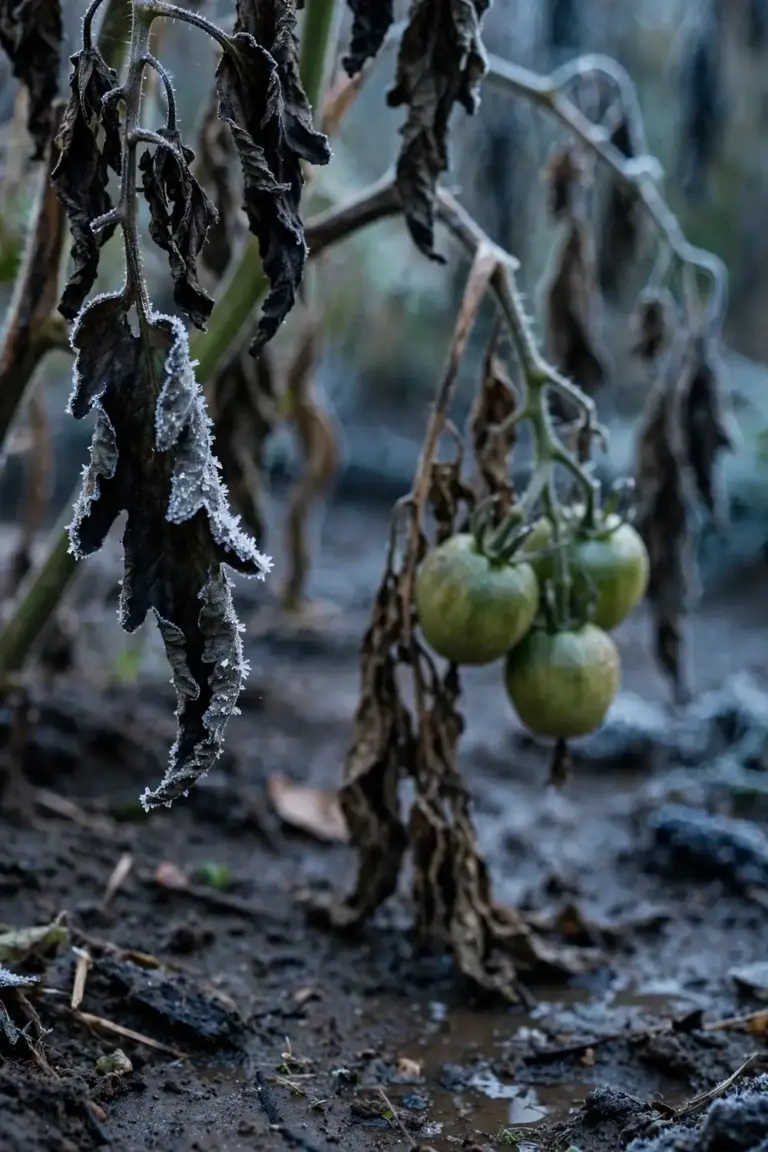
Sort the pick into the three piles from the sorting section below. Breaker fruit ripens on the counter. Mature green fruit ripens in a box. Immature fruit goes to green-tomato cooking. Nothing useful stays on a dead vine.
Frost timing runs on region, not on month. Temperate gardens in the south east and the southern tablelands meet autumn frosts that kill vines overnight, and a single clear still night can end a whole patch that looked healthy at dusk. The tropical north runs a dry season with cooler nights, and frost stays rare there. The forecast decides in every region. Check it each morning once fruit starts to color, and act on the first frost warning rather than waiting for the second.
Pick in daylight before the frost night. Work through the patch with a basket and take breaker fruit first, then mature green fruit, then any fruit worth cooking green. Leave nothing you would eat on a vine that frost will kill. The sorting section below tells you what each pile needs once the basket comes inside.
Frost cloth buys nights, not weeks. For protecting plants still in the ground, the site’s guide to protecting plants from late frost covers covers, timing, and removal. The decision here is simpler. When frost is coming and the vine cannot be saved, pick the fruit first.
5. Pick at Breaker When Possums, Birds, or Pests Circle
Pick at breaker when possums, birds, or fruitworms are working the patch. Red fruit draws them. Pale fruit stays under their radar a few days longer.
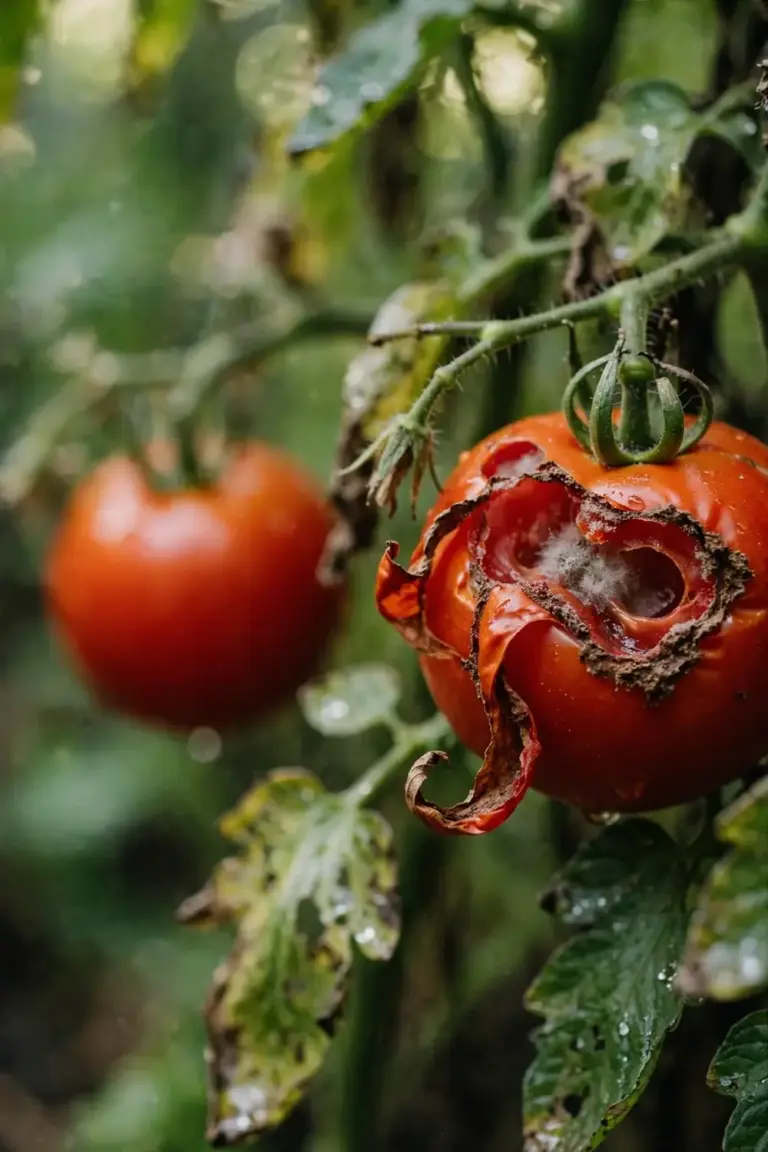
Birds target redness. Texas A&M AgriLife Extension notes that birds target the red color of ripening fruit, and picking at color break reduces the chance of birds and stinkbugs harming the fruit. Possums raid at night and take the ripest fruit first. Fruitworms burrow into fruit left hanging. Every extra day on the vine is another night of exposure.
I pick at the first blush now, because the reddest fruit is the fruit the birds find first. The move costs nothing in flavor. It saves the fruit that would have gone to the birds overnight.
Netting helps, and picking helps more. A net keeps birds off and does nothing about fruitworms already inside the patch. Picking at breaker cuts exposure to every pest at once. Net the patch for the fruit you leave, and pick the rest at first blush. Drape the net over hoops or stakes so it clears the foliage, and peg the edges to the ground so possums cannot slip underneath. A net lying flat on the leaves tangles birds and traps fruit against the mesh. A net held clear of the plants does its job without harming the wildlife it excludes.
Read the damage before you decide. Pecked fruit with torn skin points to birds. Fruit taken clean off the truss overnight points to possums. Small entry holes with frass nearby point to fruitworms. Every sign means the same move, whatever pest left it. Pick at breaker. The pests take the reddest fruit first, and pale fruit buys you days of safety while the rest of the truss catches up.
6. Pick at Breaker When Heavy Rain Follows a Dry Spell
Pick nearly ripe fruit when heavy rain is forecast after a dry spell. Dry soil followed by sudden water splits ripening fruit. The flesh swells faster than the skin can stretch.
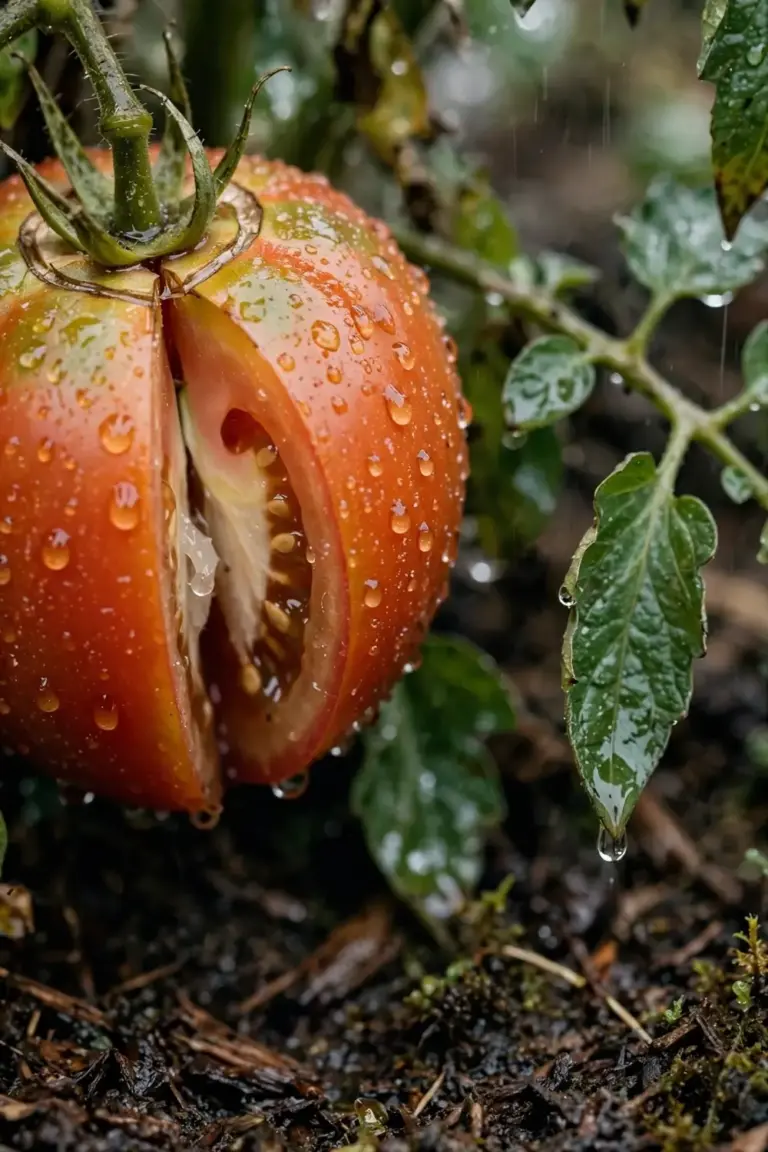
Too much irrigation or heavy rainfall after a dry period results in rapid uptake of water in plants, and that rapid uptake causes ripening fruit to split vertically or crack concentrically, according to University of Missouri Extension. Fruit left on the vine too long often cracks at the stem end. Fruit exposed to direct sun absorbs more heat during the day and splits more readily than shaded fruit.
If rain is expected after a droughty period, harvest any nearly ripe tomatoes, advises the same MU Extension guide. The picked fruit may carry a little less flavor than a fully vine-ripened tomato. It stays usable. After the rainfall, harvest any cracked or split fruit immediately and use it quickly before rot develops. Discard any sour-smelling, diseased, or rotted portions of the fruit.
Even moisture prevents most splitting. Mulch holds soil moisture steady between waterings, and steady moisture keeps fruit swelling at a pace the skin can match. The site’s guide to mulching covers materials, depth, and placement. Mulch is prevention. Picking before the storm is rescue.
7. Pick at Breaker When a Heat Wave Stalls Ripening
Pick at breaker when a heat wave stalls ripening. Heat above 29 degrees Celsius slows or stops ripening, and fruit left baking on the vine risks sunscald on top of the stall.
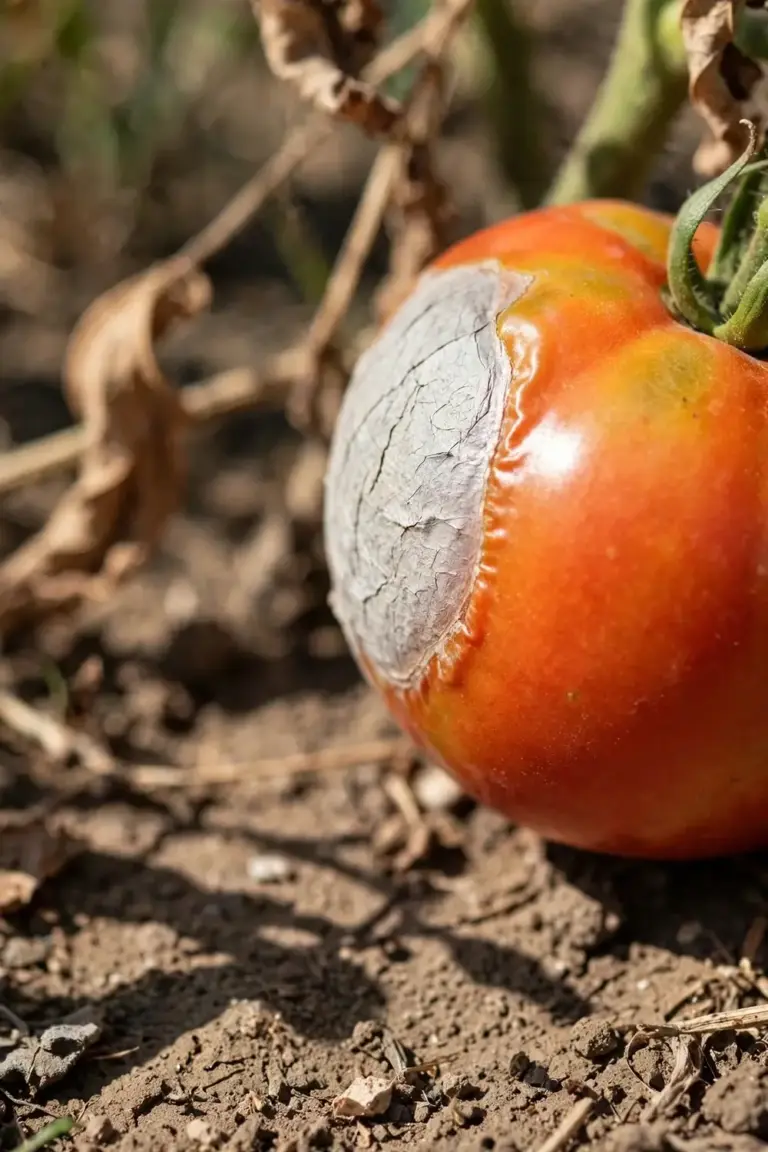
If weather stays very hot, above 85 degrees Fahrenheit, then ripening slows or stops, according to Penn State Extension. That 85 degree Fahrenheit line converts to 29 degrees Celsius. Australian summer heat clears it for days at a time. Fruit on the vine sits in the stall and gains nothing.
Sunscald strikes exposed fruit in the same heat. Pale white or yellow patches form where direct sun hits the skin, and the damaged area turns sunken and open to decay. Picking at breaker moves the fruit out of the sun and into a shaded room at ripening temperature. The fruit finishes color indoors while the vine waits out the heat.
Ripen the picked fruit at 13 to 21 degrees Celsius, out of direct sunlight. The counter method in the section below covers the exact setup. Shade does the work. Sunlight is not a factor in fruit ripening, according to Penn State Extension, so a sunny windowsill adds heat damage without speeding color.
Ripening resumes when the heat breaks. Fruit left on the vine through a heat wave colors again once temperatures fall back into the ripening range. Fruit picked at breaker during the wave finishes indoors on schedule either way. The pick costs nothing. The stall costs days. Picking through a heat wave keeps the harvest moving while the vine waits for cooler weather, and the counter keeps working through the hottest week of summer.
8. Sort Every Pick Into Three Piles: Breaker, Mature Green, Immature
Sort every pick into three piles before you carry the basket inside. The pile decides the method. Mixing piles mixes outcomes.
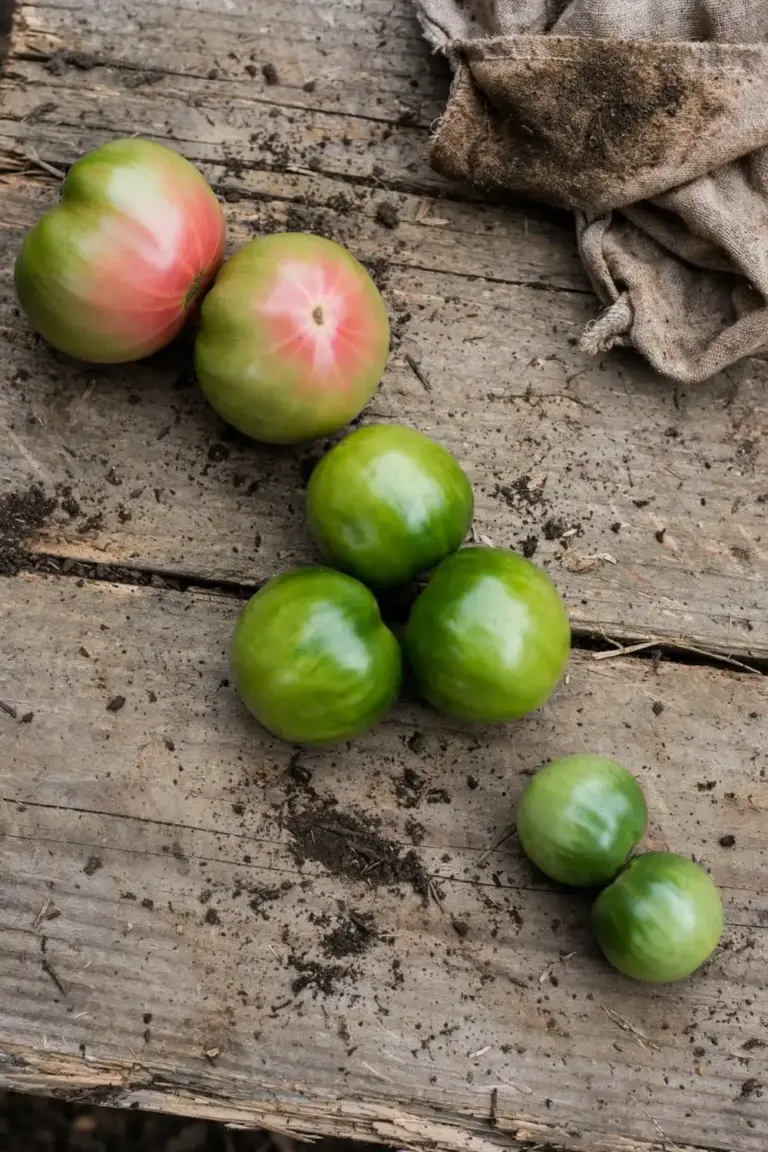
| Pile | How to spot it | What to do |
|---|---|---|
| Breaker | Pink blush starting at the blossom end | Ripen on the counter in 5 to 7 days |
| Mature green | Shiny green skin with a white to light green star shape on the blossom end | Ripen in a box in 2 to 4 weeks |
| Immature | Matte green skin, no star, small for the variety | Green-tomato cooking only; it will not ripen |
Breaker fruit ripens off the vine without any loss of flavor, according to Colorado State University Extension. Mature green fruit ripens off the vine, but its flavor will not fully develop. Immature fruit never ripens off the vine. Sorting honestly saves weeks of waiting on fruit that will never turn.
Check the blossom end, not the shoulders. Color breaks at the blossom end first. The star shape on mature green fruit sits on the blossom end too. Hold each fruit blossom-end up under good light and sort by what you see there.
Immature fruit still earns its place in the kitchen. Fried green tomatoes, relish, and salsa take the fruit that will never ripen, according to Colorado State University Extension. That is the whole immature pile handled in one line. No preserving detail belongs here. Green-tomato cooking uses the pile fresh.
9. Ripen Breaker Fruit on the Counter in 5 to 7 Days
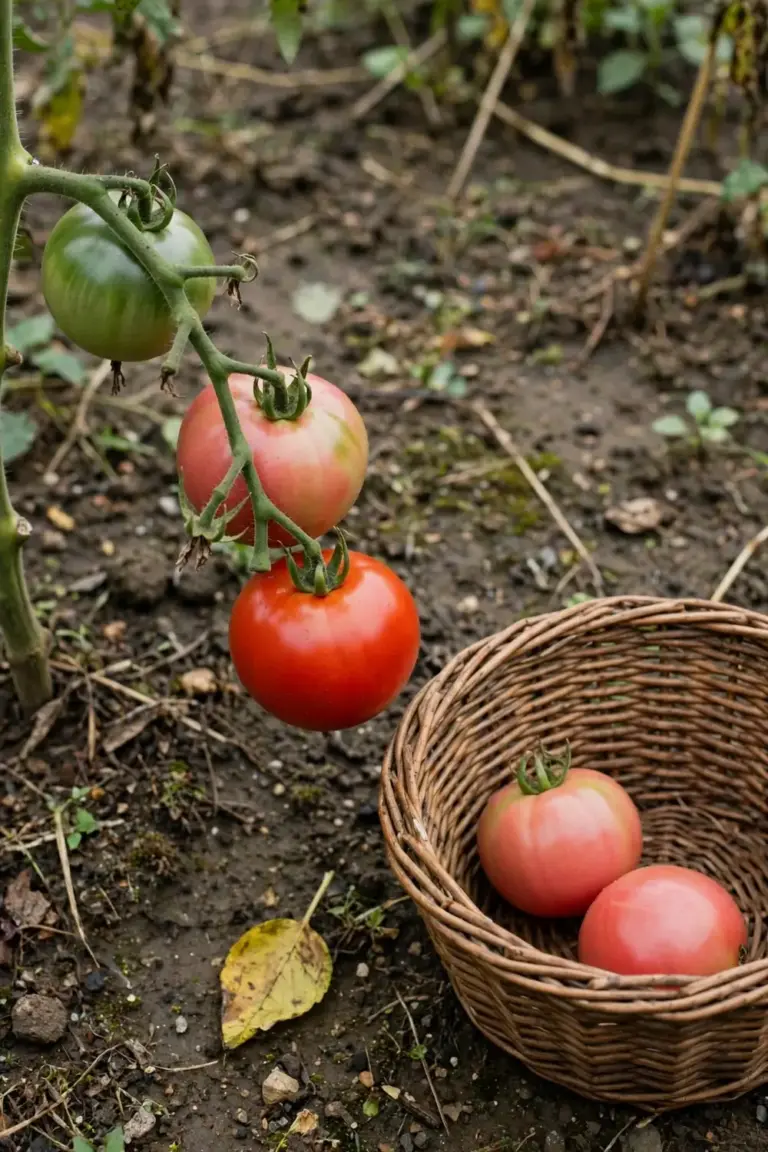
Ripen breaker fruit on the counter at room temperature. The fruit finishes in 5 to 7 days from color break. No bag, no banana, and no box belongs in this method, because breaker fruit already runs its own ethylene supply. The counter alone does the job for this pile.
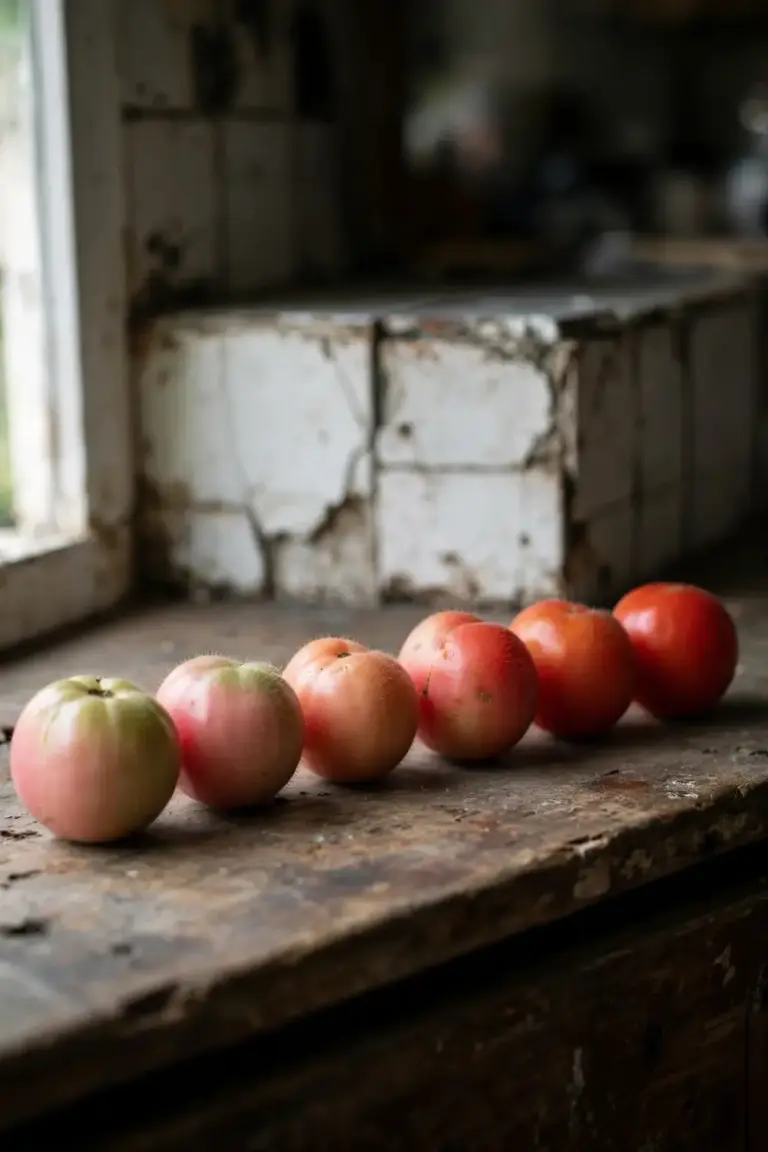
Place the fruit on a countertop at room temperature to ripen, advises Texas A&M AgriLife Extension. The process should take 5 to 7 days from color break. Set the fruit in a single layer, out of direct sunlight. Turn each fruit once a day so color spreads evenly. Pick out ripe fruit as it finishes, and eat the softest fruit first.
Keep the counter out of direct sun. Sunlight does not ripen fruit, and direct sun heats the skin and invites sunscald on the bench just as it did on the vine. A shaded bench at normal room temperature does the job, while a hot windowsill only damages the skin. Shade does the work here. Heat does the damage.
Check daily and eat ripe fruit promptly. Breaker fruit ripened indoors keeps its vine-ripened flavor, and ripe fruit softens fast at room temperature. Move ripe fruit to the fridge to hold it. The fridge rule in the section below covers exactly when cold helps and when it harms.
Judge ripeness by color, give, and smell together. Full color across the skin, a slight give under a gentle press, and a warm tomato smell at the stem end mean the fruit is ready. Color alone can fool you on varieties that stay yellow, orange, or striped at full ripeness. The press test never lies. Soft means ready. Hard means another day on the counter.
10. Ripen Mature Green Fruit in a Box in 2 to 4 Weeks
Ripen mature green fruit in a covered box in a dark, cool spot. The box method takes longer than the counter method because the fruit starts further back. Expect 2 to 4 weeks, and check the box every couple of days.
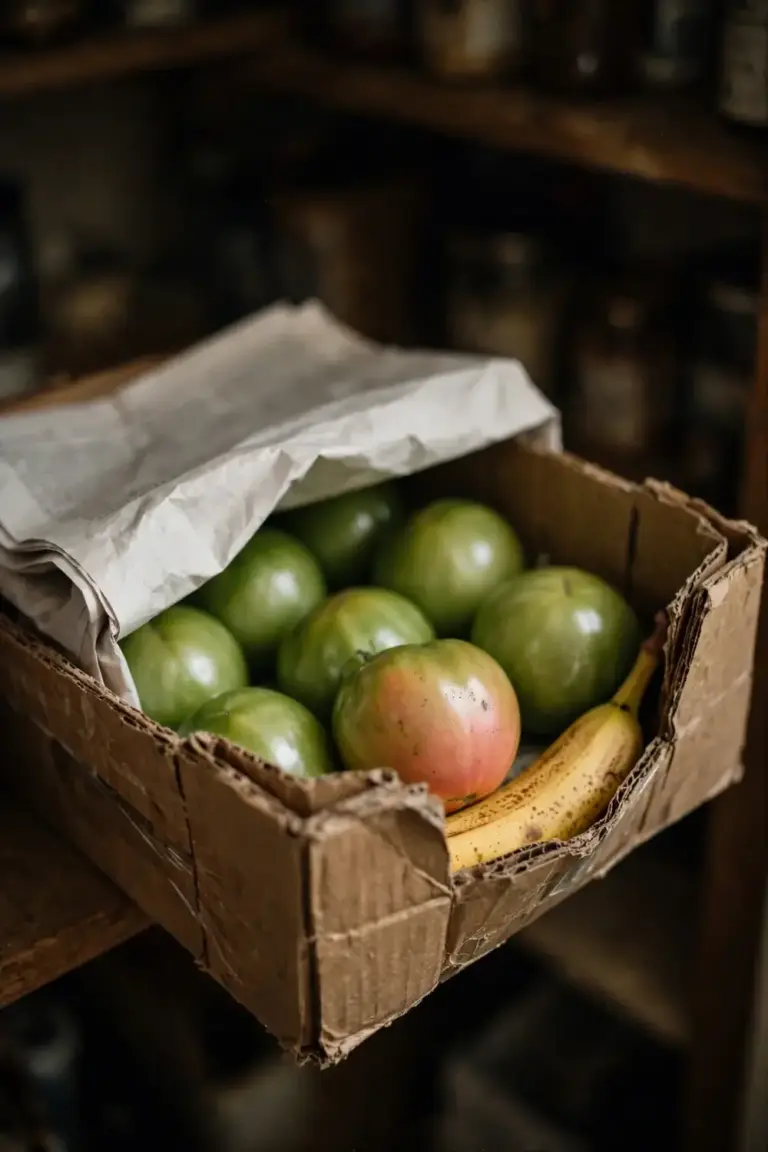
Remove any stems and wash and air dry the fruit on a clean paper towel out of direct sunlight, advises Colorado State University Extension. Place the dry fruit in layers 1 to 2 tomatoes deep in a covered box or a container with newspaper or cardboard covering them. Keep the box in a dark, cool location out of direct sunlight.
Hold the box between 13 and 21 degrees Celsius. Tomatoes stored closer to 70 degrees Fahrenheit ripen in a couple of weeks, and tomatoes stored closer to 55 degrees Fahrenheit ripen in about a month, according to the same Colorado State University Extension guide. Those two lines convert to 21 degrees Celsius for the fast end and 13 degrees Celsius for the slow end. Warmth speeds the box. Cold slows it.
Add a banana or one or two red tomatoes to the green fruit to speed ripening. The ripe fruit releases ethylene gas, and ethylene promotes ripening in the fruit around it. The box traps that gas near the green fruit. Check every couple of days and remove ripe or nearly ripe fruit as it finishes.
Watch humidity in the box. Too much humidity causes the fruit to mold, and too little humidity causes the fruit to shrivel, warns Colorado State University Extension. Leave the lid loose if condensation forms inside the box. Pull any fruit with soft spots at once, because one rotting fruit spoils the box and the mold spreads to its neighbours within days.
Expect less flavor from this pile. Mature green fruit ripens off the vine, but its flavor will not fully develop, according to Colorado State University Extension. The box rescues fruit that frost or rain would have destroyed. It does not match breaker fruit for flavor. Eat the box pile first when it ripens, and save the counter pile for the table. Serve the box pile cooked if the flavor disappoints raw. Heat covers the gap that the box cannot close.
Label each box with the pick date on a scrap of paper. A big end-of-season haul fills several boxes, and the labels keep the rotation honest. Open the oldest box first. Eat from the oldest box first. The labels cost nothing and stop a box from sitting forgotten in a dark corner until the fruit inside turns.
11. Keep Unripe Tomatoes Out of the Fridge
Keep unripe tomatoes out of the fridge. Cold pauses ripening and damages flavor. The fridge belongs at the end of the process, not the start.
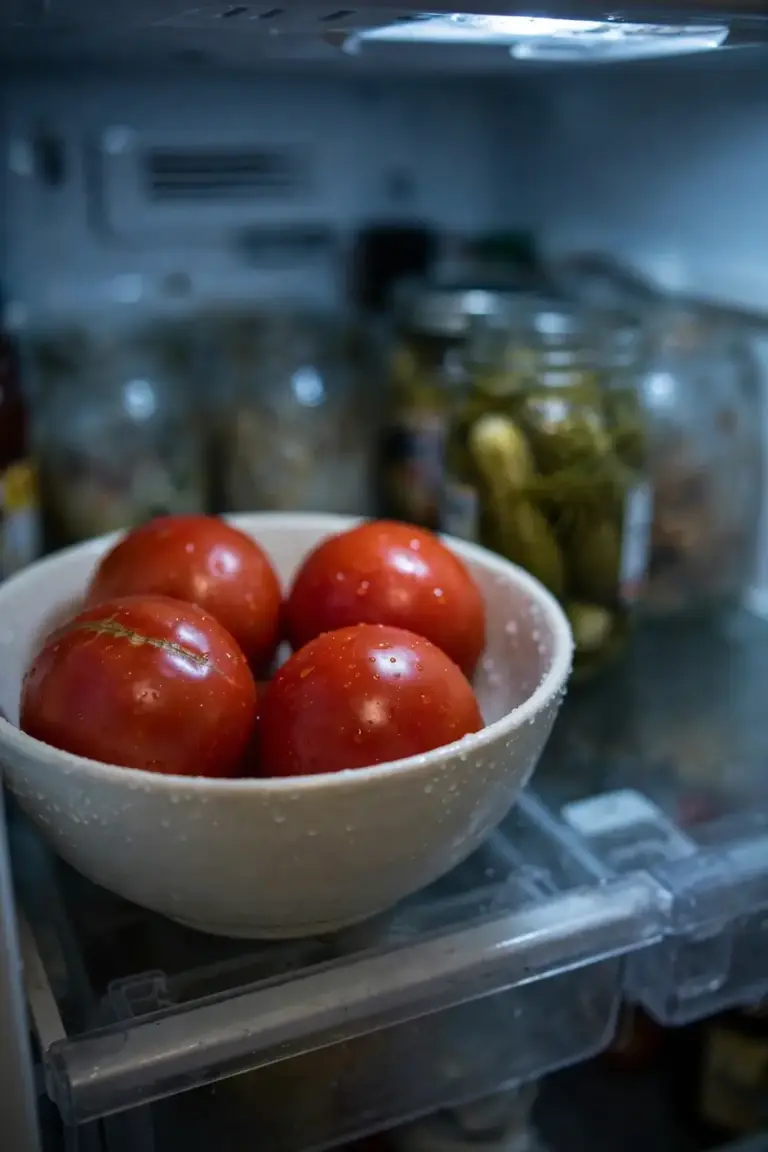
Refrigerating tomatoes picked earlier in the ripening process puts ethylene gas production on hold, according to Texas A&M AgriLife Extension. Ethylene drives ripening. A fridge full of green tomatoes is a fridge full of stalled tomatoes. The fruit waits in the cold and gains nothing.
Cold below 10 degrees Celsius leaves the fruit bland. Tomatoes ripened below 50 degrees Fahrenheit will be bland, according to Colorado State University Extension. That 50 degree Fahrenheit line converts to 10 degrees Celsius. A household fridge runs colder than that line. Unripe fruit in the fridge ripens bland or never ripens at all.
Use the fridge for ripe fruit only. The shelf life of ripe tomatoes can be extended in a refrigerator, according to Texas A&M AgriLife Extension. Ripe fruit has finished ripening, so cold holds it. The same cold stalls unripe fruit. The rule is simple. Fridge for ripe fruit you want to hold. Counter or box for everything still coloring.
Frequently Asked Questions
Neither wins on speed. Breaker fruit finishes in 5 to 7 days on the counter, and vine fruit colors on its own schedule. Flavor ends in a tie. The decision turns on risk. Pick when frost, pests, rain, or heat threaten the fruit. Leave the fruit on the vine when nothing threatens it. Speed never settles the question.
Yes. A paper bag traps ethylene gas around the fruit, and a ripe banana adds more ethylene. The method suits small batches of breaker or mature green fruit. Fold the top loosely so air still moves. Check daily and remove ripe fruit at once. Skip plastic bags. Plastic traps moisture and grows mold on the fruit inside.
The fruit was immature. Immature fruit carries matte green skin with no star shape on the blossom end, and it never ripens off the vine. Mature green fruit carries shiny skin with a white to light green star on the blossom end, and it ripens in a box. Sort by the blossom end next time. Send immature fruit to green-tomato cooking.
No. The fridge pauses ethylene production, and cold below 10 degrees Celsius leaves ripened fruit bland, according to Colorado State University Extension. Unripe fruit in the fridge stalls or ripens flat. Hold ripe fruit in the fridge. Ripen unripe fruit on the counter or in a box at 13 to 21 degrees Celsius. Cold helps only after ripening finishes.
Yes. Cherry and beefsteak fruit follow the same rule. The breaker stage marks maturity in both. The tree does not care about size. Check cherry trusses daily, since several fruit color at once on one truss. Pick each fruit at first blush and let the rest of the truss catch up.
Pick at Breaker and Stop Guessing
Pick at breaker and stop guessing. The breaker stage marks maturity, the vine adds nothing after it, and the indoor finish loses nothing in flavor. The tree covers every case: frost, pests, rain, heat, or nothing at all.
Run the 5 questions at every pick. Sort the pile. Counter for breaker fruit, box for mature green fruit, kitchen for immature fruit. Keep unripe fruit out of the fridge. The habit takes minutes a day and saves the fruit that weather and pests would have taken. Start tomorrow morning, basket in hand.
The breaker rule ends the argument for good. Vine-ripened sounds better, and the science says the fruit cannot tell the difference. Pick at first blush, ripen indoors, and eat tomatoes the vine never got the chance to lose. For the full growing season behind the harvest, the site’s guide to growing tomatoes covers planting, care, and harvest from the start.