
Squash mosaic virus has no cure. The 9 strategies below protect the cucurbits around an infection, starting with the seed decision that eliminates the primary source of the virus.
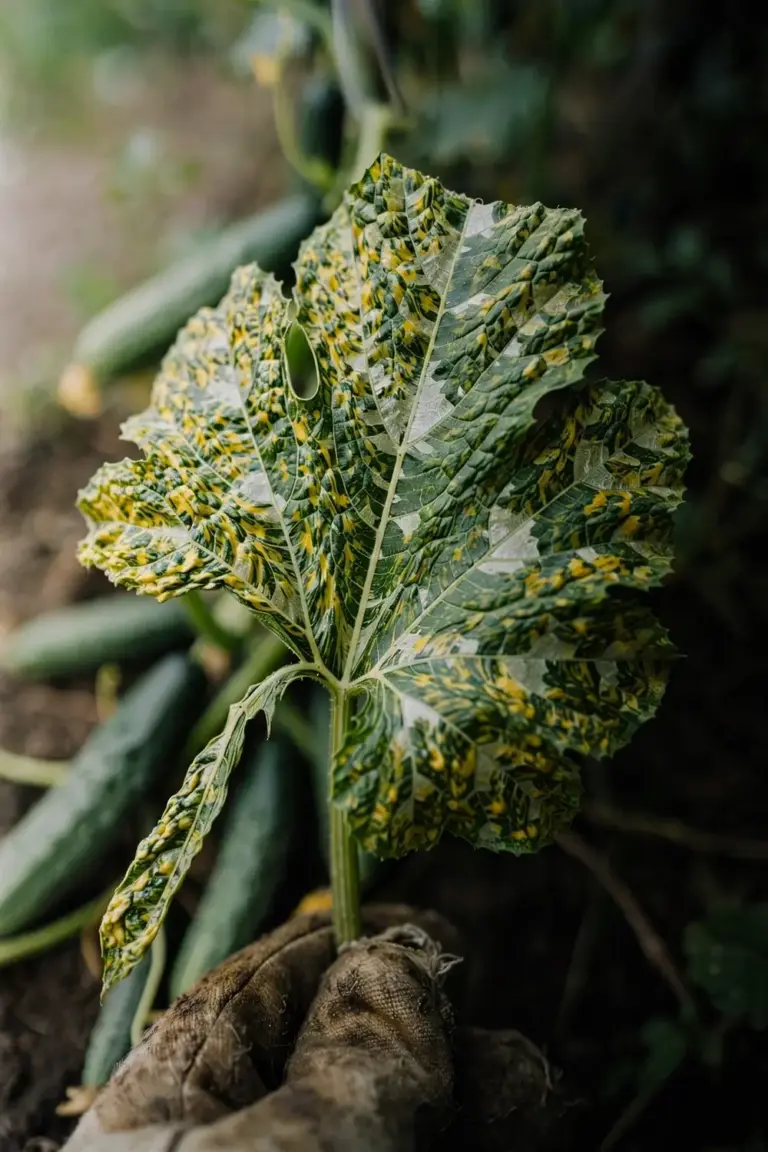
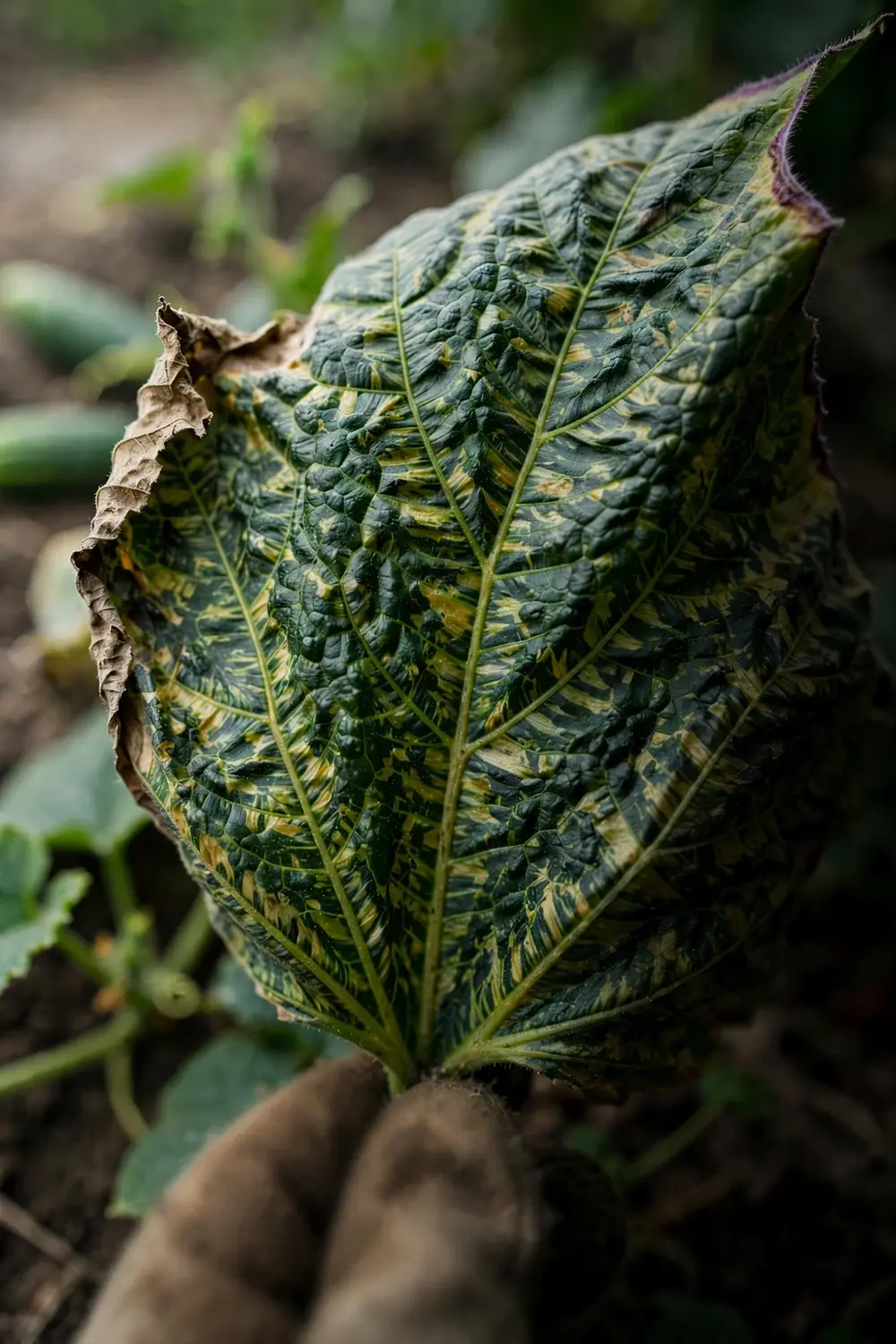
The signature is a dark green mosaic across blistered leaves, with green veinbanding, leaf distortion, and hardening that can look like herbicide damage. Fruit comes out mottled, bumpy, and misshapen, and melons lose their netting. Cucumber beetles carry the virus from plant to plant, and infected seed carries it from one season to the next.
The rest of this page runs the order a gardener should follow. Identify the virus first, then learn why seed and beetles drive every decision, then work the 9 strategies from certified seed to fruit timing. I have learned that clean seed and a covered transplant beat any rescue once mosaic shows.
What Squash Mosaic Virus Actually Is
Squash mosaic virus is a beetle-borne, seedborne virus of cucurbits. The pathogen is Comovirus cucurbitae, a member of the Secoviridae family, and it carries a bipartite positive-sense single-stranded RNA genome. The common name leads, and the scientific name appears once for precision.
The Cornell fact sheet on virus diseases of cucurbits calls the pathogen Squash Mosaic Comovirus. The same Cornell notes describe squash mosaic virus as an important disease of melons and squash. The virus is seedborne in muskmelon, and the virus travels within the seed. Hot water cannot eliminate the virus from seed. Chemical treatment with trisodium phosphate cannot eliminate it either.
Squash mosaic virus reaches every cucurbit crop a home gardener grows. Squash, melon, cucumber, pumpkin, and gourd all host the virus. Watermelon usually escapes. Cornell frames squash mosaic virus as an important disease of melons and squash, and watermelon rarely shows up in that picture. A watermelon bed beside infected squash can stay clean while the melon bed beside it does not.
No spray cures squash mosaic virus. The virus lives inside plant cells, so a chemical that kills the virus would kill the plant. Every strategy below removes virus sources, blocks beetle access, or protects the crop at its most vulnerable stage.
How to Identify Squash Mosaic Virus on Leaves
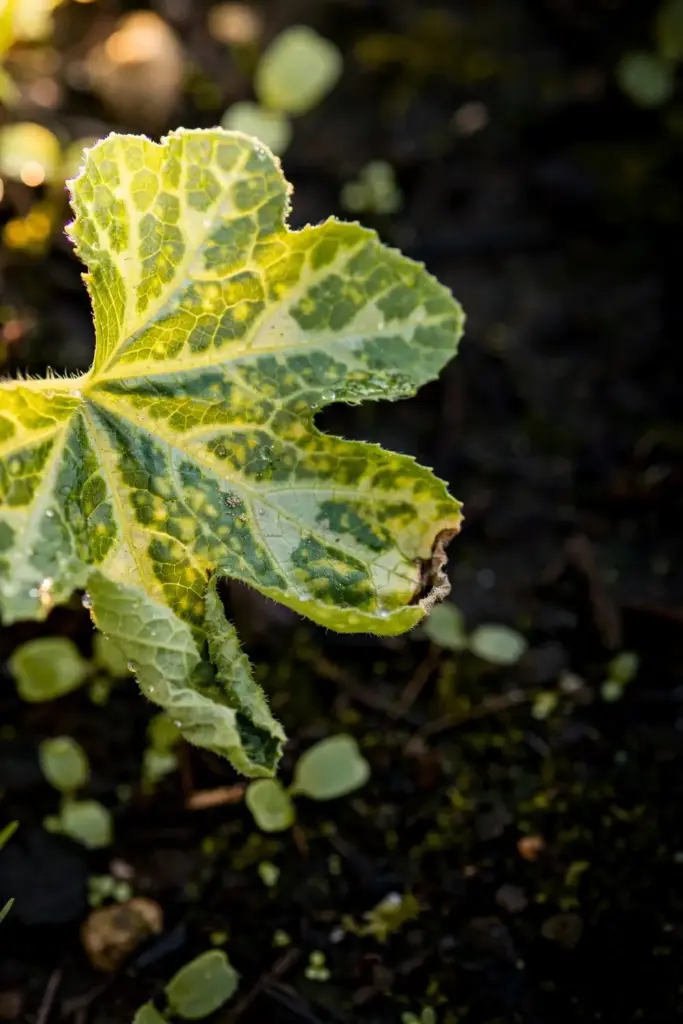
Look for green veinbanding on a young seedling first. A seedling leaf with a pronounced chlorotic mottle, green bands along the veins, and distortion carries squash mosaic virus until proven otherwise.
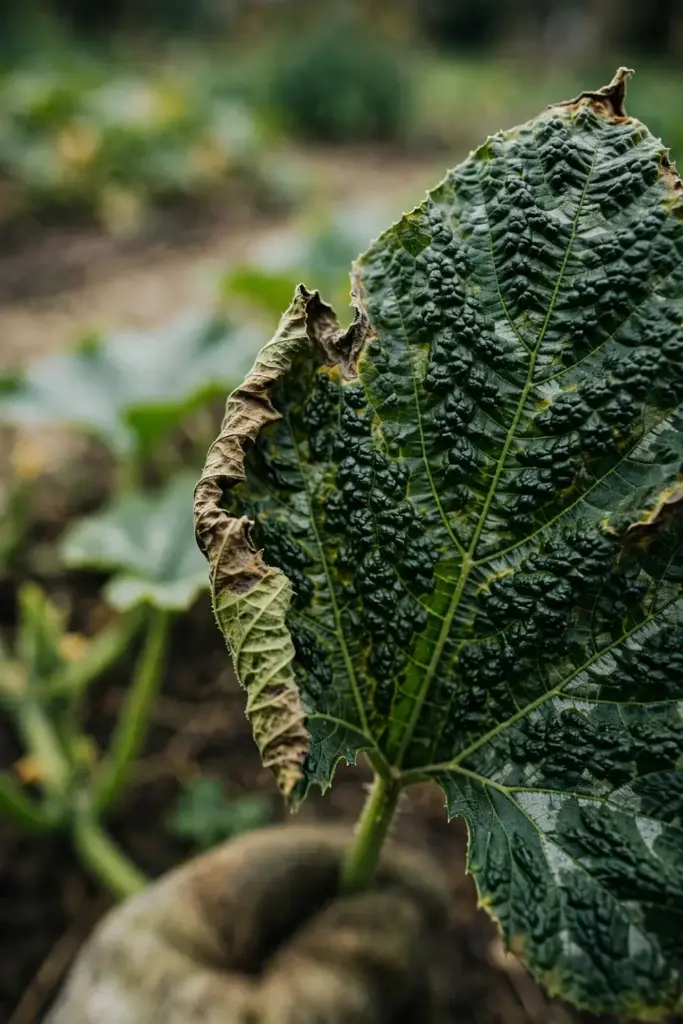
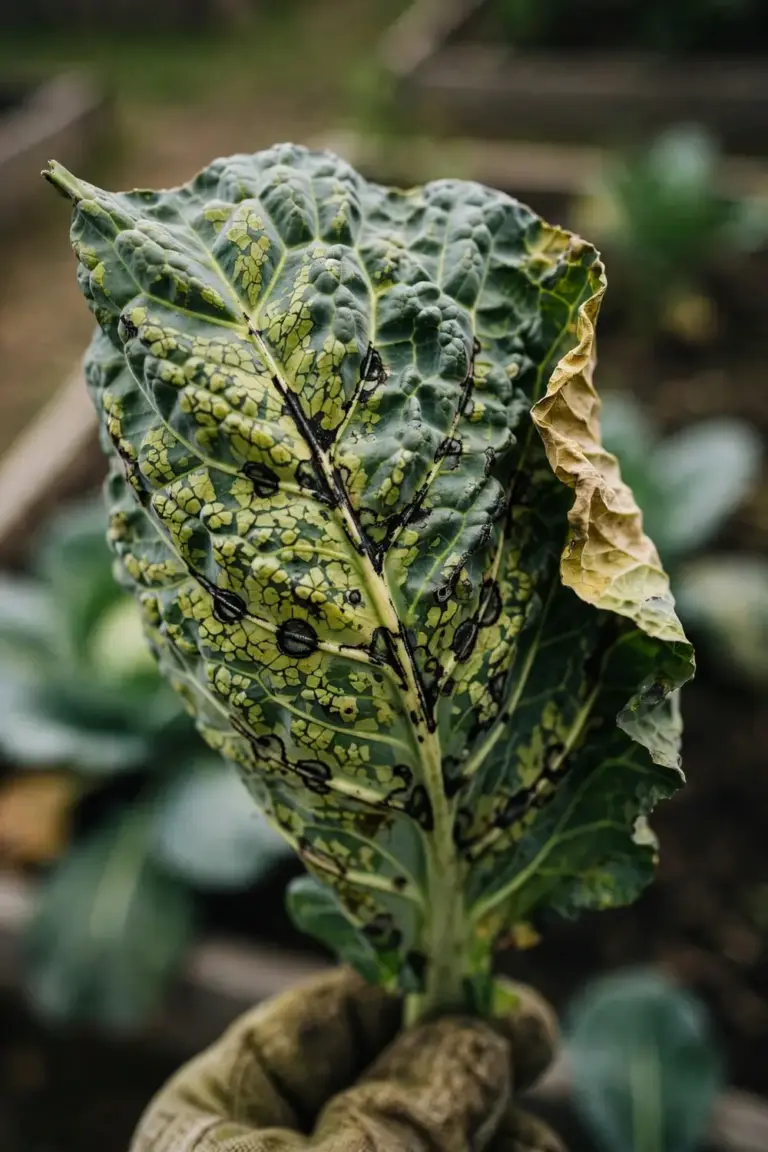
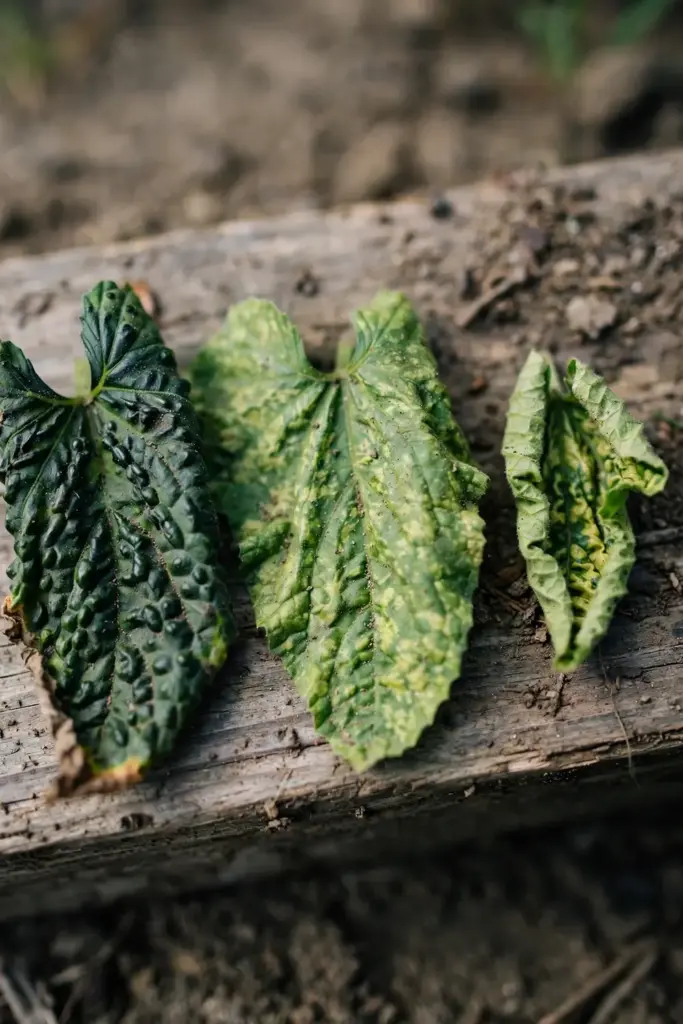
The same Cornell notes give the seedling pattern plainly. Young seedlings show pronounced chlorotic mottle, green veinbanding, and distortion of leaves. On mature plants, leaves show intense dark green mosaic, blistering, and hardening. The hardening can look like the effect of a hormonal herbicide. A leaf that blisters and hardens while its veins stay banded in green fits squash mosaic virus. A leaf that yellows evenly without mosaic, blistering, or distortion points at nutrition or water instead.
INRA notes that the seedling symptoms of squash mosaic virus are quite characteristic, with vein-banding and leaf deformation allowing rapid identification. Check the newest leaves at the growing tip when scouting, since the tip shows what the virus is doing right now. Older leaves may carry a milder mosaic while the newest growth comes out twisted and undersized.
How to Identify Squash Mosaic Virus on Fruit
Check the fruit next. Fruit that comes out strongly mottled, bumpy, and misshapen while the leaves mottle carries squash mosaic virus until proven otherwise.
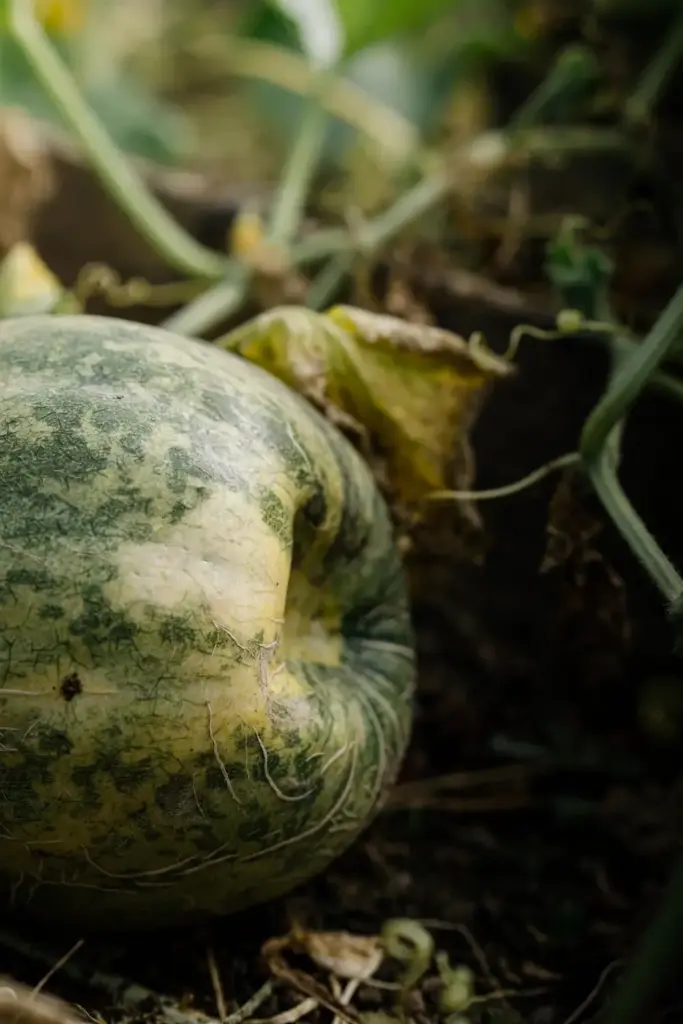
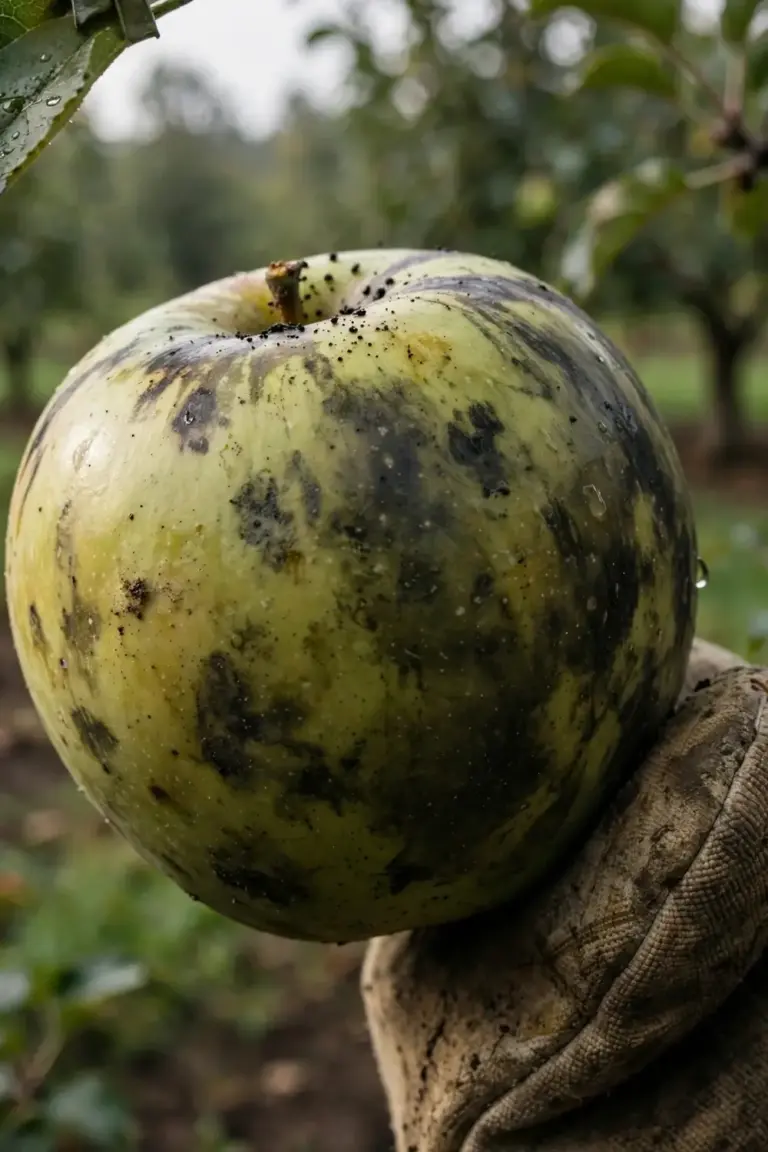
The same Cornell notes describe infected fruit with a strong mottled pattern. Melons infected with squash mosaic virus show a strong mottled pattern with a lack of netting. A cantaloupe that should net evenly and instead stays smooth and blotchy fits the diagnosis. A squash with green mottling over yellow skin, or a pumpkin with ridges across one side, fits the same pattern.
Timing decides how much fruit a plant still gives. The University of Delaware Weekly Crop Update on viruses in cucurbits describes the timing split for cucurbit viruses generally. Infection before pollination usually means no fruit production at all. Infection just at pollination may cause blotches or stripes of green or yellow color on the fruit. Fruit that was pollinated and started growing before infection may finish, sometimes with surface discoloration, bumps, or deformity. A plant that already holds sizing fruit deserves harvest, not rescue.
Fruit from an infected plant stays safe to eat. The virus harms yield and appearance, and it never makes the harvest unsafe to eat. Wash the fruit and cook it as usual. A mottled squash still roasts, and a blotchy melon still slices.
Which Cucurbits Get Hit Hardest by Squash Mosaic Virus
Melons and squash take the worst visible damage from squash mosaic virus. Pumpkin, cucumber, and gourd follow close behind, and watermelon usually escapes.
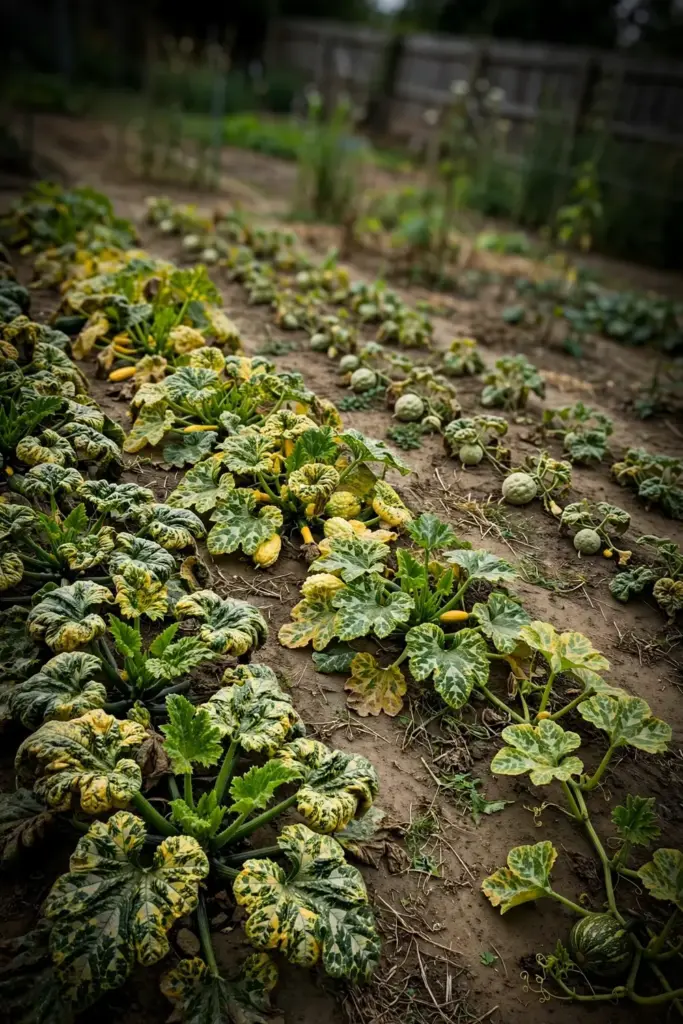
Melon earns the top spot. The same Cornell notes call squash mosaic virus an important disease of melons and squash, and the fruit symptom list hits melons hardest, with strong mottling and a lack of netting. A cantaloupe bed is where most home gardeners meet this virus in its most dramatic form. Squash shows the leaf symptoms in their most dramatic form, with intense dark green mosaic, blistering, and hardening across the whole plant. The guide to growing squashes covers the summer and winter types that share the same susceptibility, and a squash bed with mosaic deserves the same response as a melon bed.
Zucchini shows the damage early and clearly. The guide to growing zucchini from seed walks through spacing and harvest for a clean crop, and a zucchini bed is where many home gardeners meet this virus first. Cucumber shows mosaic and distortion on leaves with fruit damage on top. Pumpkin shows mottled, misshapen fruit across a large fruit that should have colored evenly. Gourds host the virus too. The virus stays largely inside the cucurbit family, and every cucurbit in the bed shares the risk except watermelon, which usually escapes.
Squash Mosaic Virus vs Watermelon Mosaic Virus vs Cucumber Mosaic Virus
Check the vector first. Beetles plus saved-seed history point at squash mosaic virus. Aphids plus mosaic point at watermelon mosaic virus or cucumber mosaic virus.
The table below lines up the three viruses that confuse cucurbit growers most. Read the vector row first, then the seed row, then the fruit row.
| Sign | Squash Mosaic Virus | Watermelon Mosaic Virus | Cucumber Mosaic Virus |
|---|---|---|---|
| Pathogen | Comovirus cucurbitae, Secoviridae, bipartite single-stranded RNA | Potyvirus, Potyviridae, single-stranded RNA | Cucumovirus, Bromoviridae, single-stranded RNA |
| Vector | Spotted and striped cucumber beetles | Aphids | Aphids |
| Seedborne | Yes, carried within the seed, no cleaning method works | No | Limited in some crops and weeds |
| Leaf signs | Intense dark green mosaic, blistering, hardening, green veinbanding | Milder mosaic on most hosts, leaf distortion | Downward cupping along the midvein, leaf reduction, mosaic |
| Fruit signs | Strong mottled pattern, misshapen fruit, lack of netting on melons | Fruit distortion and color breaking on yellow squash and zucchini | Color breaking on squash fruit, wrinkled and misshapen cucumber fruit |
| Host range | Cucurbits, largely inside the family; watermelon usually escapes | All commercially grown cucurbits, plus legumes such as clover | Cucurbits plus many vegetables, ornamentals, and weeds outside the family |
| First move | Certified virus-free seed, beetle control, rogue infected plants | Aphid management, weed control, rogue infected plants | Aphid management, weed control, resistant cucumber varieties |
Field symptoms alone can mislead. The INRA Ephytia page on squash mosaic virus states that many viruses cause mosaics in cucurbits, which often makes visual diagnosis difficult. The same INRA notes state that commercial ELISA diagnostic kits are available, along with primers for molecular diagnosis by RT-PCR. A home gardener who needs a certain answer sends a sample to a diagnostic lab, since the lab result settles what the eye cannot.
Co-infection is common and worse. The same University of Delaware update notes that a plant infected by one virus shows milder symptoms than a plant infected by two or more. Two viruses together bring strong mosaic and distortion on leaves, with smaller and smaller new leaves as the infection advances. A plant that looks far worse than its neighbors may carry two viruses at once.
Other cucurbit problems stay separate diagnoses. Zucchini yellow mosaic virus spreads by aphids with a prominent yellow mosaic and severe fruit damage. Papaya ringspot virus type W spreads by aphids too, with strong mosaic, distortion, and deep leaf serration. Bacterial wilt clogs the vascular system and travels by cucumber beetle, and it wilts vines rather than mottling them. Herbicide drift hardens and distorts leaves without any mosaic pattern. Each problem keeps its own diagnosis, and none of them merges into squash mosaic virus.
Why Seed and Beetle Transmission Decides Everything
Squash mosaic virus travels by two routes, and aphids are not one of them. Infected seed plants the virus in the bed. Cucumber beetles move it from plant to plant.
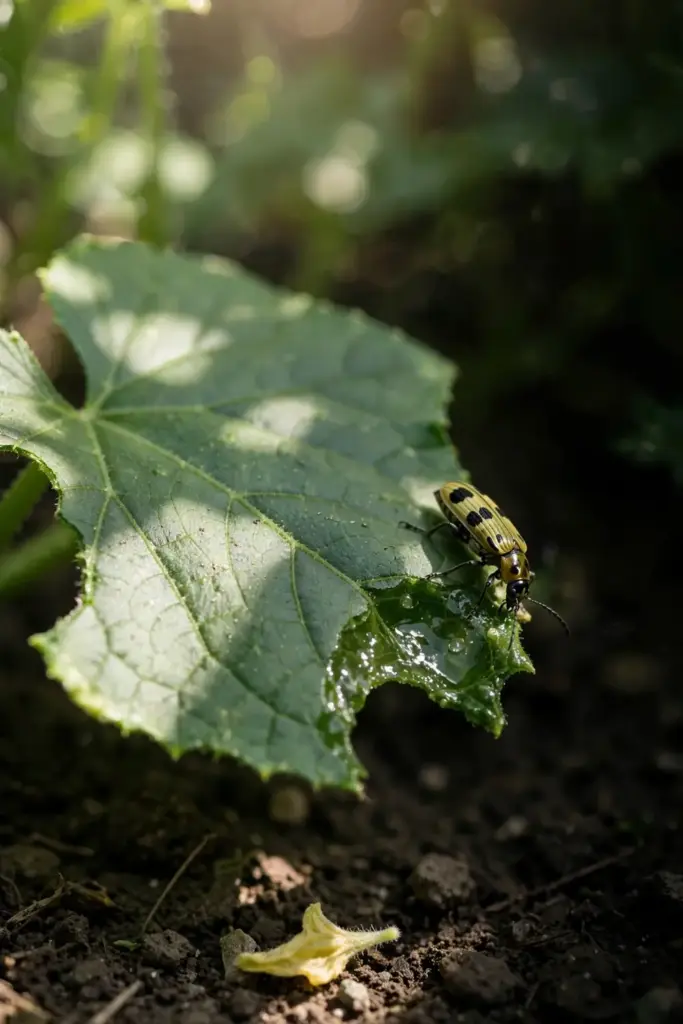
The UC IPM page on squash mosaic virus states the beetle rule plainly. The virus is vectored by the spotted cucumber beetle and other related beetles. The beetles can retain the virus 20 days after feeding on an infected plant. The virus is also seedborne. A beetle that fed on an infected plant three weeks ago can still carry the virus to a healthy plant today.
Beetles transmit the virus through regurgitated fluid at the feeding site. The same University of Delaware update states that the spotted cucumber beetle can carry the virus for 10 to 20 days and transmit the virus when it regurgitates fluid into the feeding site. The beetle does not need a long feed. The virus moves with the fluid the beetle pushes back into the wound.
Seed carries the virus inside, where no wash reaches it. The same Cornell notes state that the virus is carried within the seed and cannot be eliminated by hot water or chemical treatment with trisodium phosphate. A seed lot from an infected bed plants the virus beside every healthy seed in the row. Certified virus-free seed eliminates that source before it starts.
Two strain groups exist. The same University of Delaware update notes two strains, with SqMV-I infection usually bringing mild plant symptoms and SqMV-II infection bringing severe plant symptoms. The strain split explains why one bed shows a light mottle and the next bed over shows blistering, hardening, and ruined fruit.
Mechanical transmission adds a third route. The same INRA notes state that squash mosaic virus spreads by beetles, by seed, and by contact. Pruning work and friction between neighboring plants can move the virus without any insect. Tools and hands carry sap from an infected stem to the next cut. Work the healthy plants first and the suspect plants last, so the dirtiest work lands at the end of the session.
Aphid sprays do not stop squash mosaic virus. Aphids do not carry this virus, so an aphid spray protects nothing against it. Aphid control belongs to watermelon mosaic virus and cucumber mosaic virus management, not this one. Beetle control and clean seed carry this article.
What Makes Squash Mosaic Virus Worse in a Home Garden
Young plants, high beetle activity, and infected seed decide how bad squash mosaic virus gets. A bed with all three fills with mosaic fast. A bed with none of the three often escapes.
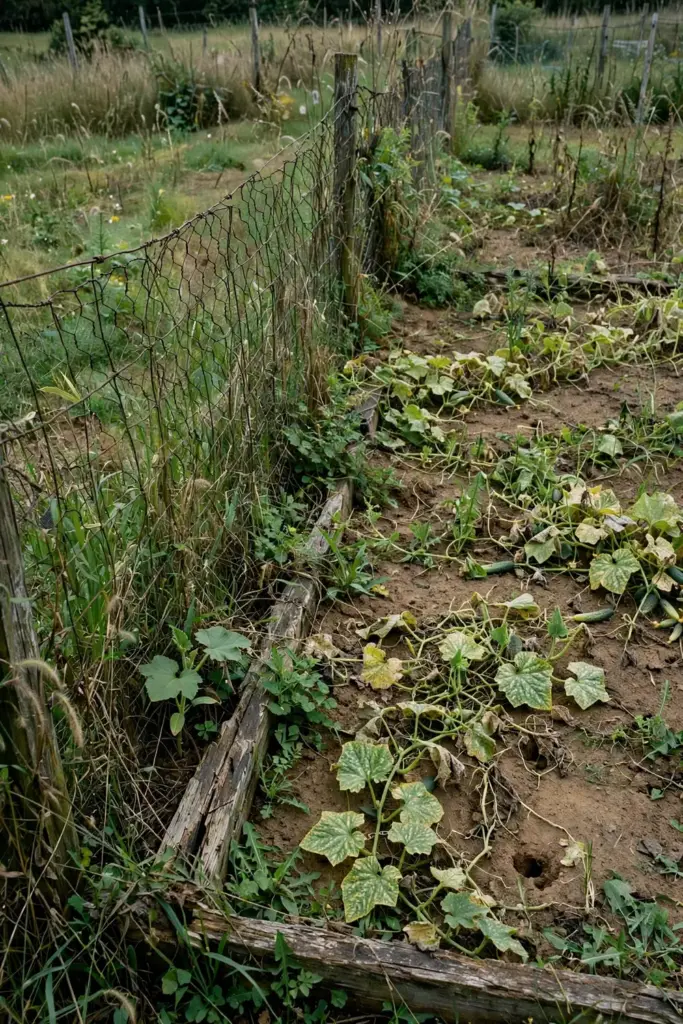
Early infection does the worst damage. A seedling infected in its first weeks may never produce a marketable fruit. A plant infected late in the season, with fruit already sizing, loses far less. The timing gap sets the triage call. A small bed with early symptoms repays protection. A bed with every plant mottled and stunted repays removal and replanting more than protection.
Beetle activity drives the spread. A week of heavy beetle feeding can infect a whole row while the next bed over stays clean. Beetles gather on young plants first, and young plants take the worst damage from early infection. The two facts multiply. Guard the seedling stage above every other stage.
Infected plants left standing feed every beetle that lands. A mottled plant in the middle of the bed is a virus source with leaves. Pull it the day it shows, and the beetles lose their source. Leave it, and every beetle that feeds on it carries the virus to the next plant.
Volunteer cucurbits and overlapping crops keep the virus beside the new planting. A volunteer squash from last season sprouts beside the new bed carrying the virus. A new cucurbit row planted beside the old infected row sits inside the beetle flight path. Distance and a cucurbit-free gap break that chain.
Strategy 1: Plant Certified Virus-Free Seed
Buy certified virus-free seed for every cucurbit you plant. Certified seed removes the seed question entirely, and it costs nothing extra at planting time.
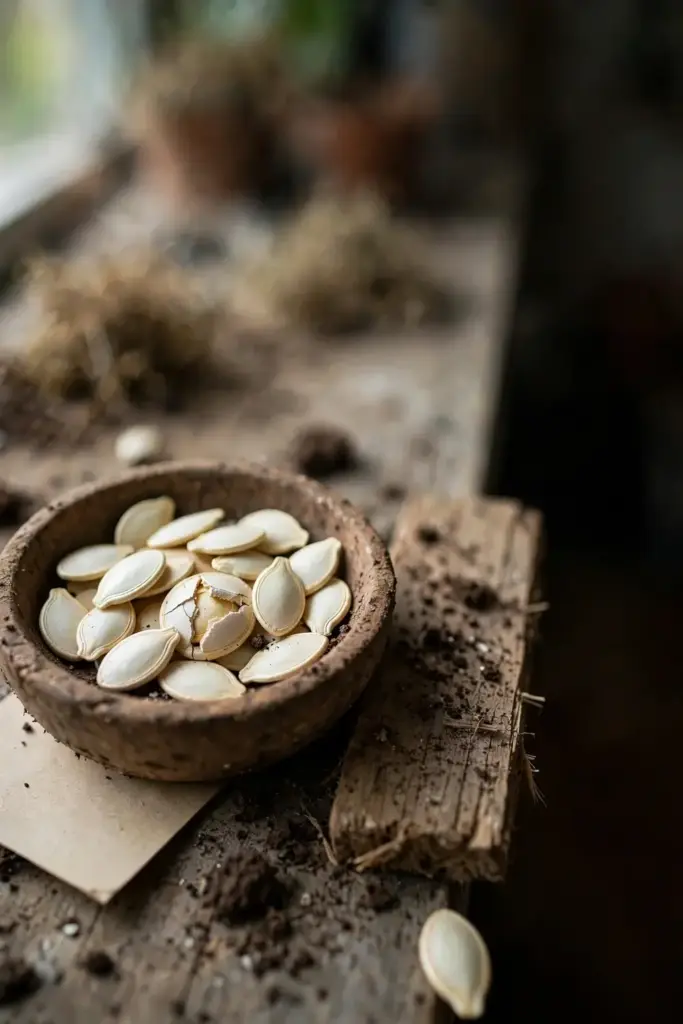
The same UC IPM notes give certified seed as the management move. The UC IPM management line reads: use virus-free seed to eliminate primary inoculum. Primary inoculum means the first virus source in the bed, and certified seed removes it before the season starts. A packet with a certified virus-free label carries no such doubt.
Check the label before you buy. A packet that names no seed health claim is an ordinary packet. A packet that claims virus-free seed has passed testing. The testing matters because the virus hides inside the seed, where no home wash or soak can reach it. Spend the seed money once, at the packet stage, and the bed starts clean.
Strategy 2: Never Save Seed From Infected Plants
Do not save seed from infected plants. No home method cleans the virus from seed, and the saving is small against the risk.
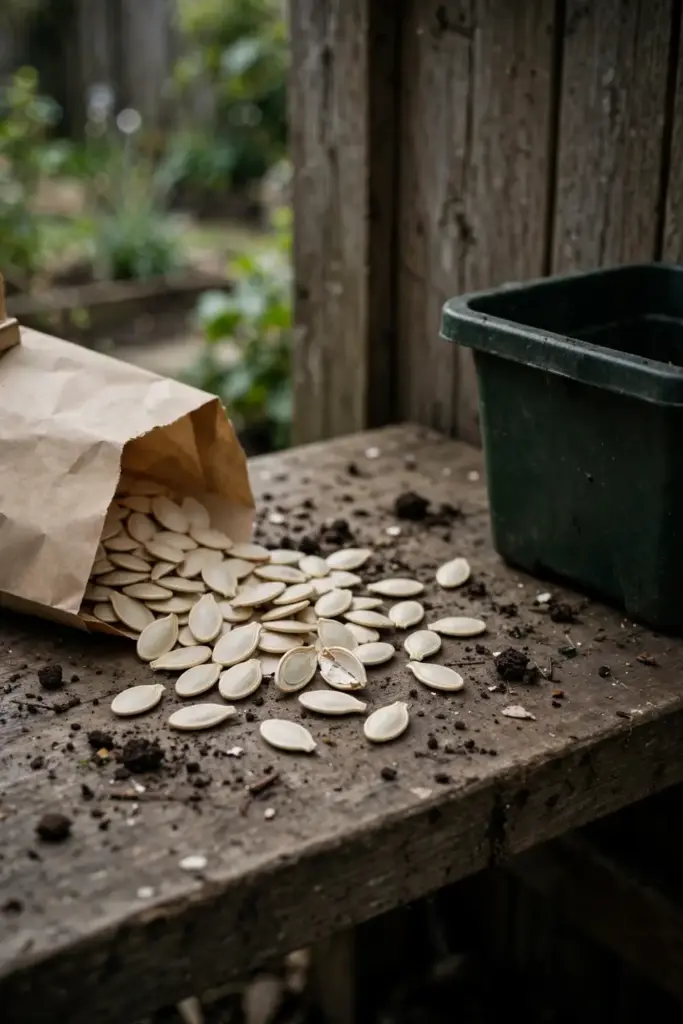
The same Cornell notes close the cleaning question. Hot water cannot eliminate the virus from seed. Chemical treatment with trisodium phosphate cannot eliminate it either. A seed lot from a bed that carried the virus is suspect, and no soak, rinse, or drying step changes that. The seed carries the virus inside, and the seedling that grows from it starts infected.
Save seed only from healthy plants in a bed that showed no mosaic all season. Buy fresh certified seed when the parent bed showed any mosaic at all. A bed with one mottled plant at the far end still counts as a bed that showed mosaic. The beetles had weeks to move the virus to plants that never showed symptoms.
Strategy 3: Rogue Infected Seedlings Early and Destroy Them
Pull an infected seedling the day you see mosaic. Bag it, bin it, and keep it out of the compost pile.
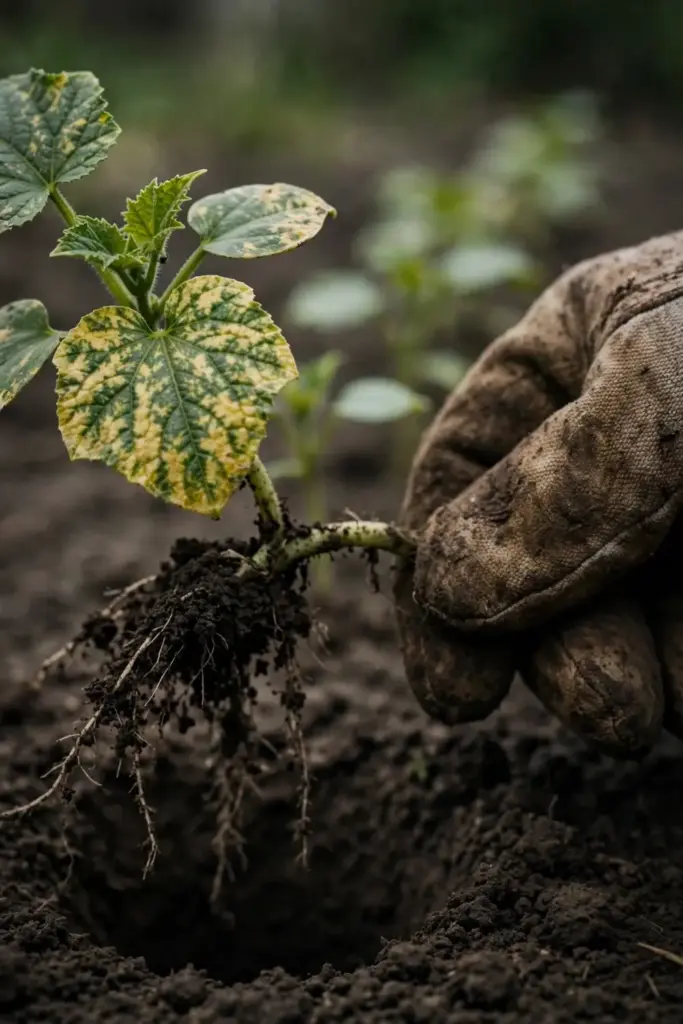
Seedlings show the characteristic pattern early. Veinbanding and chlorotic mottle on a young seedling mark the virus before the plant grows large enough to feed many beetles. The same INRA notes call the seedling symptoms quite characteristic, with vein-banding and leaf deformation allowing rapid identification. A seedling pulled at the first mottled leaf never becomes a virus source. A seedling left standing feeds beetles for weeks.
Handle debris the same day. Bag the pulled plant, seal the bag, and bin it or burn it where burning is allowed. Do not compost infected plants. Do not leave pulled plants on the soil beside healthy plants. Beetles work ground-level leaves first, and a pulled plant left on the soil keeps the virus beside the bed.
Strategy 4: Cover Transplants to Block Cucumber Beetles
Cover transplants with row cover the day they go into the ground. The cover blocks cucumber beetles during the weeks when the plants take the worst damage from infection.
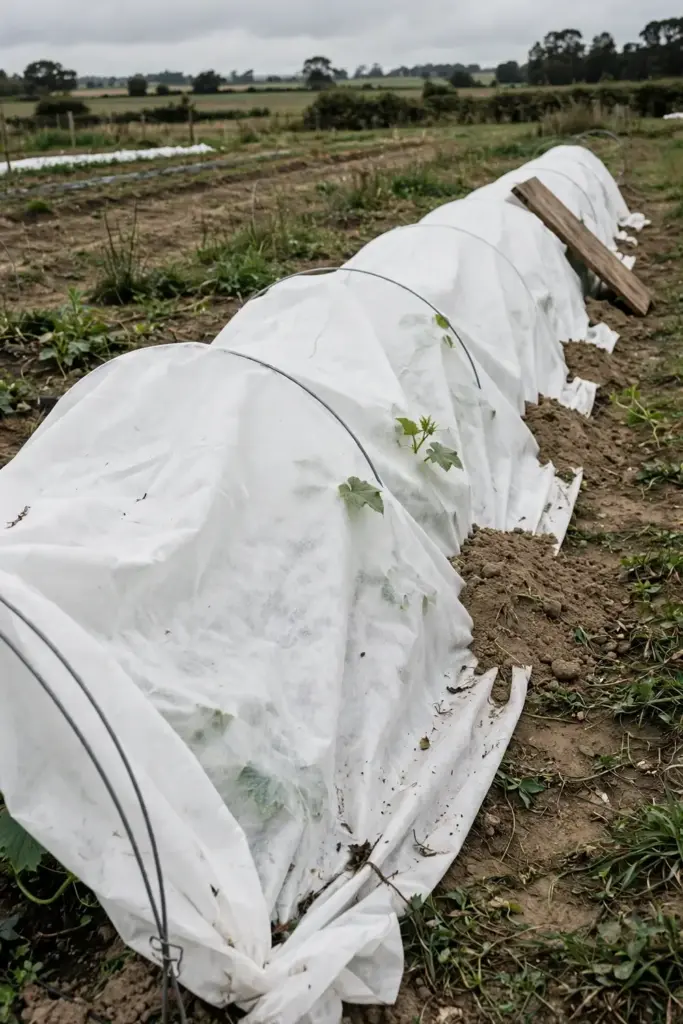
Lay the cover before beetles find the plants. A cover laid after the first beetle flights protects nothing, since the virus may already sit inside the plants. Hoops hold the fabric clear of the leaves, and soil or pins seal the edges. A gap at the edge is an open door, and beetles find it fast.
Remove the cover once blossoms appear. West Virginia University Extension advises removing row covers once blossoms appear to allow pollination by bees. Cucurbits need insect pollination, and a cover left on through flowering starves the fruit set. By flowering time the plants have grown past their most vulnerable stage, and the cover has done its job. A plant infected after flowering loses far less than a seedling infected in its first weeks.
Strategy 5: Control Cucumber Beetles Before Fruit Set
Scout for cucumber beetles weekly from the day transplants go in. Check the undersides of young leaves and the base of stems, where beetles gather first.
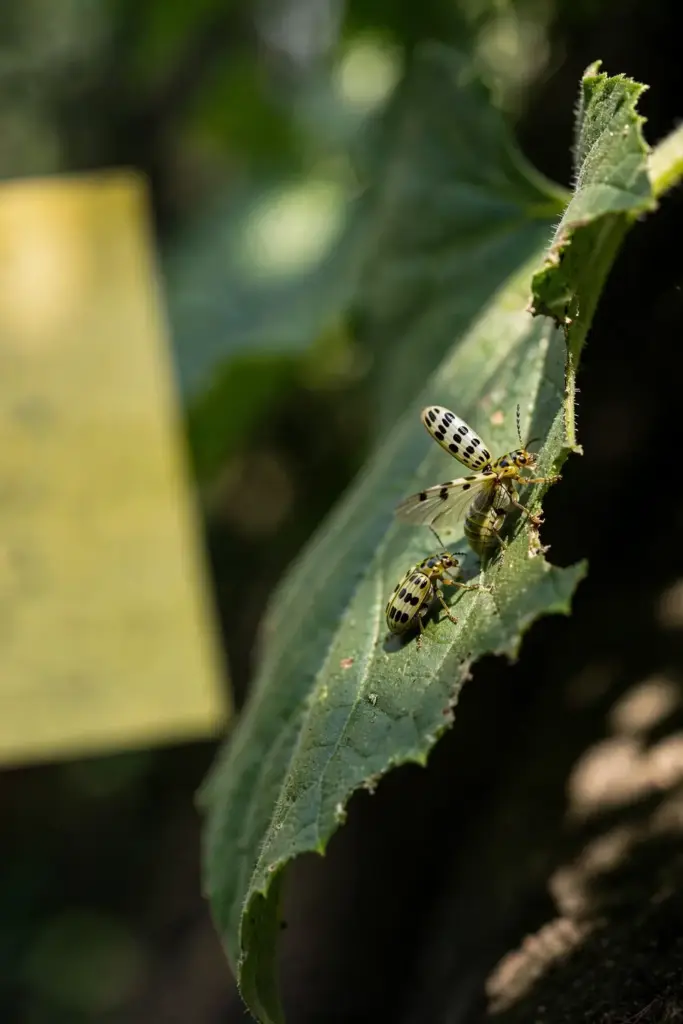
Beetles gather on young plants, and young plants take the worst damage. A beetle found on a seedling matters more than a beetle found on a mature vine. Hand-pick beetles off small plantings, and drop them into soapy water. A small bed with daily hand-picking often needs nothing else.
Treat beetle control as beetle control, never as virus control. No insecticide kills the virus inside the plant. The same UC IPM notes list no insecticide for squash mosaic virus itself, and the only management line is virus-free seed. A spray aimed at beetles cuts the vector population, and a smaller beetle population moves less virus. A spray aimed at a bed that already carries the virus protects nothing, since the virus already sits inside every plant.
Follow the product label when you spray, and spray in the evening when flowers are closed and bees are not foraging. West Virginia University Extension gives the evening rule for cucumber beetle sprays, and the rule protects pollinators while the spray still reaches beetles. Do not borrow old carbaryl or cryolite recommendations from outdated garden articles. Current label directions and current Extension guidance decide the product, the rate, and the timing.
Strategy 6: Remove Volunteer Cucurbits and Weed Hosts
Pull every volunteer cucurbit before the new crop goes in. A volunteer squash from last season sprouts beside the new bed carrying the virus, and beetles move it into the new plants within days.

Clear the bed, the paths, the fence rows, and the ditch banks beside the bed. Volunteer cucurbits hide in the compost heap, at the edge of the old bed, and along the fence where a fruit rotted last fall. Each one is a virus source with leaves. Pull them the week before planting, not after the new crop goes in.
Clear cucurbit-family weeds too. Wild cucurbits and gourd volunteers carry the same risk as garden volunteers. A clean border breaks the chain from one season to the next. A bed cleared a week before planting starts clean.
Strategy 7: Remove and Destroy Infected Debris
Clear infected debris the day you pull an infected plant. Infected leaves left on the soil keep the virus beside healthy plants, and beetles work the ground-level leaves first.
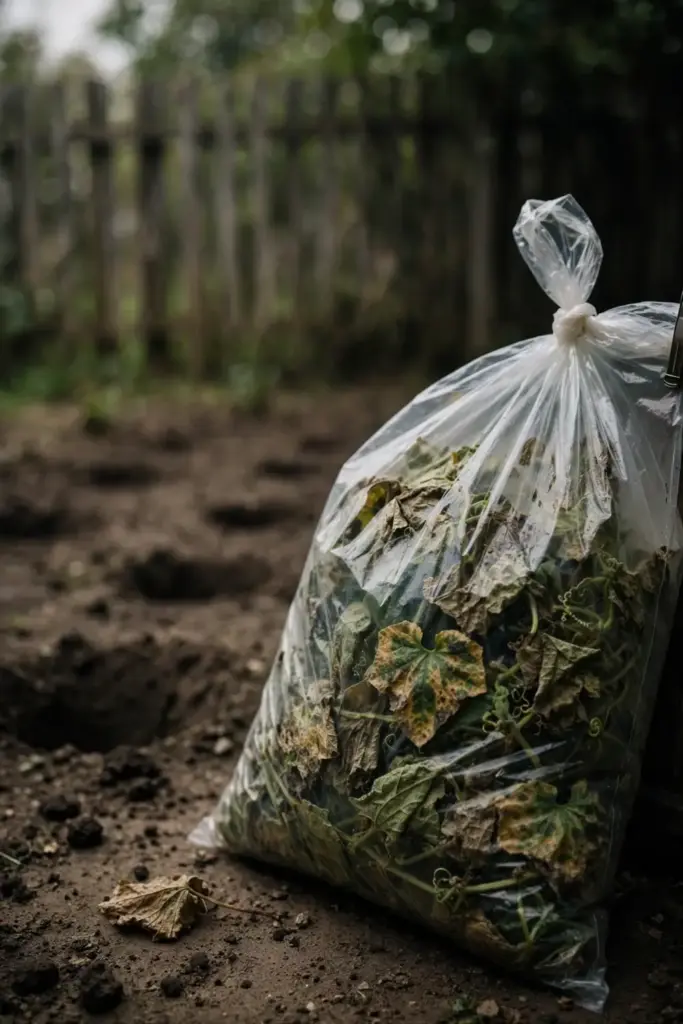
Bag debris, bin it, or burn it where burning is allowed. Do not leave debris in the garden. Do not compost infected plants. A compost pile does not reliably kill this virus, and finished compost spread back on the bed returns the risk to the soil surface.
Clean tools at the end of the session, not the start of the next one. The same INRA notes list contact transmission among the routes for this virus. A blade that cuts an infected stem carries sap to the next cut. Wash blades with soap and water. Dry them. Store them clean.
Strategy 8: Rotate Away From Cucurbits and Avoid Overlapping Crops
Move cucurbits to fresh ground next season. Keep the old bed cucurbit-free while you clear volunteers and debris, and let the new bed start without a virus source beside it.

Do not overlap cucurbit crops in time or space. A new cucurbit row planted beside an old infected row sits inside the beetle flight path. A fall cucurbit crop planted beside a spring crop still standing hands the virus straight over. Separate cucurbit plantings by time and distance, so the first beetles of the new season meet clean plants.
Plan the next planting before the current season ends. Order certified virus-free seed early. Set the new bed away from the old bed and away from weedy borders. One clean season plus the volunteer clearing in Strategy 6 gives the next cucurbit planting a fresh start.
Strategy 9: Read Fruit Timing to Judge the Damage
Use fruit timing to decide whether to pull a plant or let it finish. The timing rule comes from the same University of Delaware update on cucurbit viruses. Infection before pollination usually means no fruit production. Infection just at pollination may cause blotches or stripes of green or yellow color on the fruit. Fruit that was pollinated and started growing before infection may finish, sometimes with surface discoloration, bumps, or deformity.
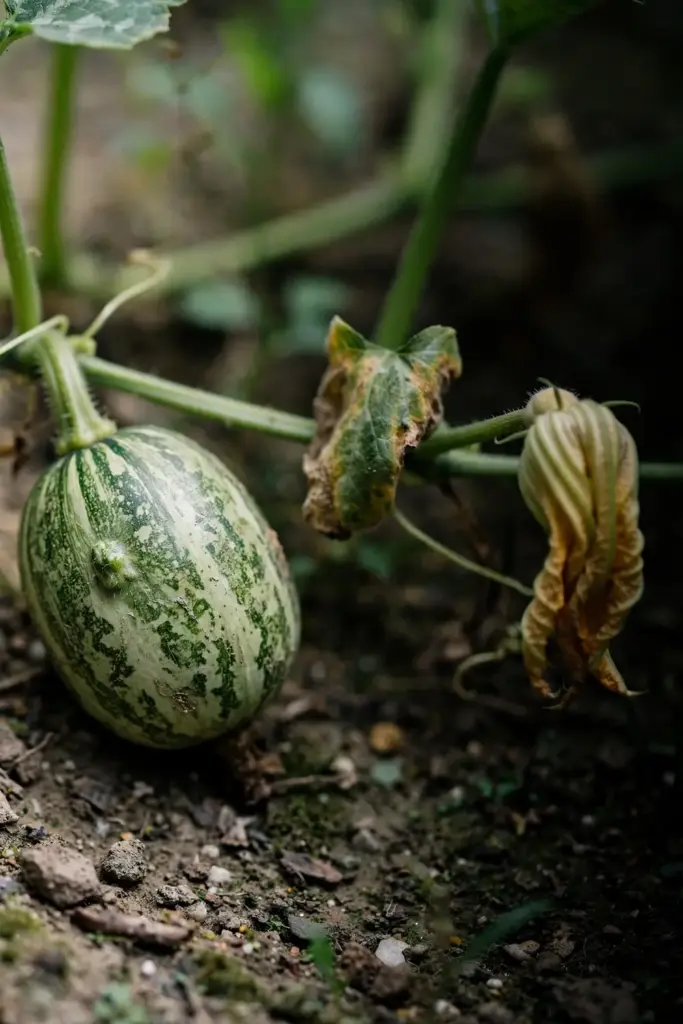
Walk the bed with that rule in mind. A plant infected before any flower opened has no harvest ahead of it. Pull it, and the healthy plants beside it gain the space. A plant with sizing fruit already on the vine still has a harvest. Let it finish, pick the fruit, and clear the plant after harvest.
Do not read fruit timing as a cure. A plant that finishes its fruit still carries the virus, and beetles still move it to healthy plants. Harvest the fruit, then pull the plant. The timing rule decides the harvest, not the rescue.
Living With Squash Mosaic Virus Damage You Cannot Undo
A bed with squash mosaic virus still produces food. Harvest what formed, eat it fresh, and keep the virus out of next season.
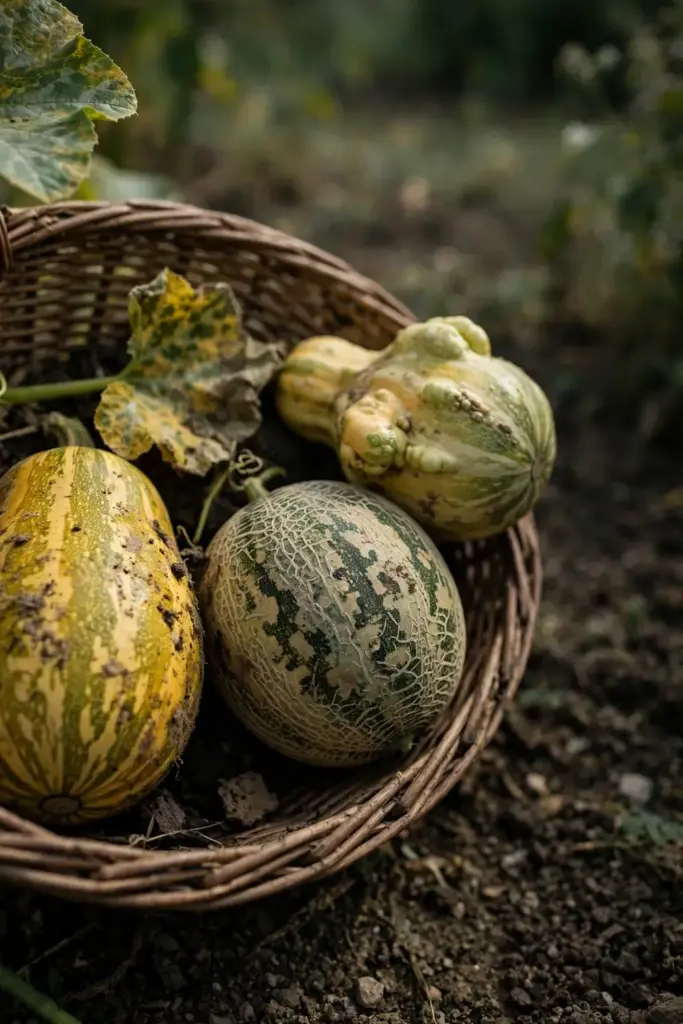
Infected fruit stays edible when the plant is otherwise sound, and a mottled squash still cooks. The virus harms yield and appearance, not the cook. Wash the harvest and cook it as usual.
Do not store infected fruit for long. Eat the harvest fresh, and clear the bed after harvest. Pull volunteers that follow, and keep the bed clean through the off-season, so the next planting starts without a virus source beside it.
Rotate cucurbits to fresh ground next season. The seed starting guide covers clean containers, fresh mix, and strong light for seedlings that start clean and grow fast. A bed that held infected squash gets a non-cucurbit crop next, while the cucurbits move to a bed with a clean volunteer history. One rotation cycle plus the volunteer clearing in Strategy 6 gives the next cucurbit planting a fresh start.
Frequently Asked Questions
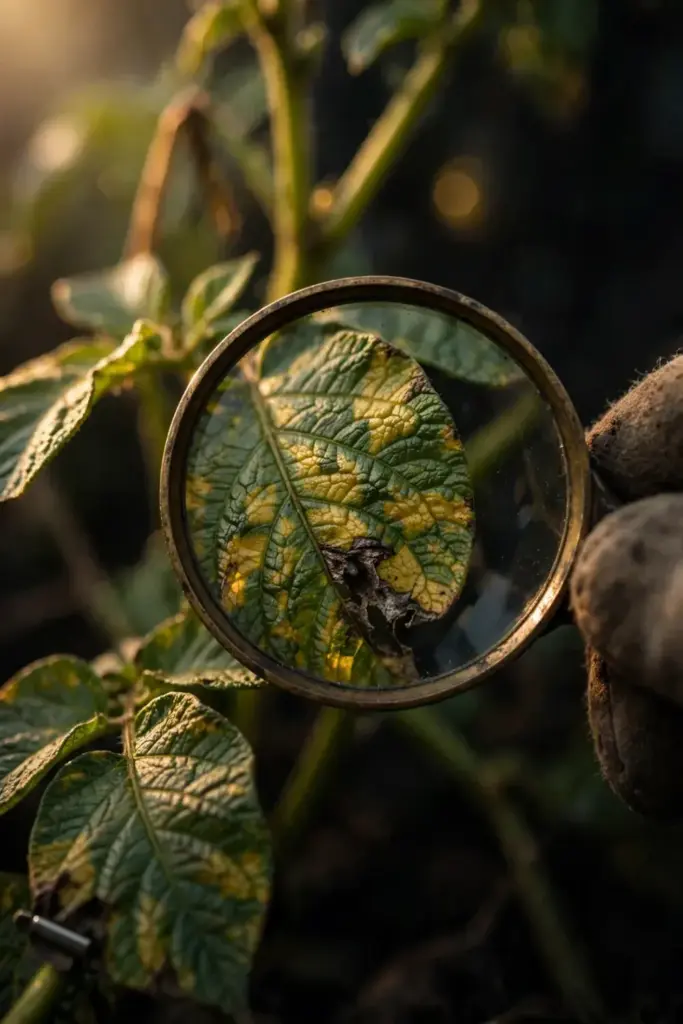
Squash mosaic virus rarely kills an established plant outright. Infected plants stunt, distort, and drop leaves early, and fruit stays small, mottled, and misshapen. Early infection ends the season for a young plant, while late infection costs far less. A seedling that stalls and mottles in its first weeks may never fruit. Pull it early. The healthy plants beside it gain the space.
Eat fresh fruit from infected plants. The virus harms yield, appearance, and fruit shape, and it never makes the harvest unsafe to eat. Wash the fruit and cook it as usual. A mottled squash still roasts, and a blotchy melon still slices. Do not save seed from infected plants, since the virus travels inside the seed and no home method cleans it.
No spray stops squash mosaic virus, and aphid sprays miss the vector entirely. Aphids do not carry this virus. Cucumber beetles carry it, and beetles can retain it 20 days after feeding on an infected plant. Spend spray effort on beetle control for clean plants, and spend the rest on certified seed, row covers, and infected-plant removal. Aphid control belongs to other mosaic viruses.
Squash mosaic virus is seedborne. The virus travels inside the seed, and hot water cannot eliminate it. Chemical treatment with trisodium phosphate cannot eliminate it either. Buy certified virus-free seed for every cucurbit you plant, and save seed only from healthy plants in a bed that showed no mosaic all season. A bed with one mottled plant still counts as a bed that showed mosaic.
Check the vector and the seed history. Beetles plus saved seed point at squash mosaic virus. Aphids plus mosaic point at watermelon mosaic virus, which brings milder leaf symptoms with fruit distortion and color breaking. Squash mosaic virus brings blistering and hardening on leaves with a strong mottled pattern on fruit. Field symptoms alone can mislead. A lab test settles the identification.
Squash mosaic virus returns when infected seed, volunteers, or debris carry it through winter. Beetles move the virus from those sources into the new crop. Buy certified virus-free seed, clear volunteers before planting, destroy infected plants and debris, and rotate cucurbits to fresh ground. A clean bed with certified seed, row covers, and a volunteer-free border breaks the cycle in one season.
Where to Go From Here
Start with one walk around the cucurbit bed. Mark every mottled plant, then pull it the same day.
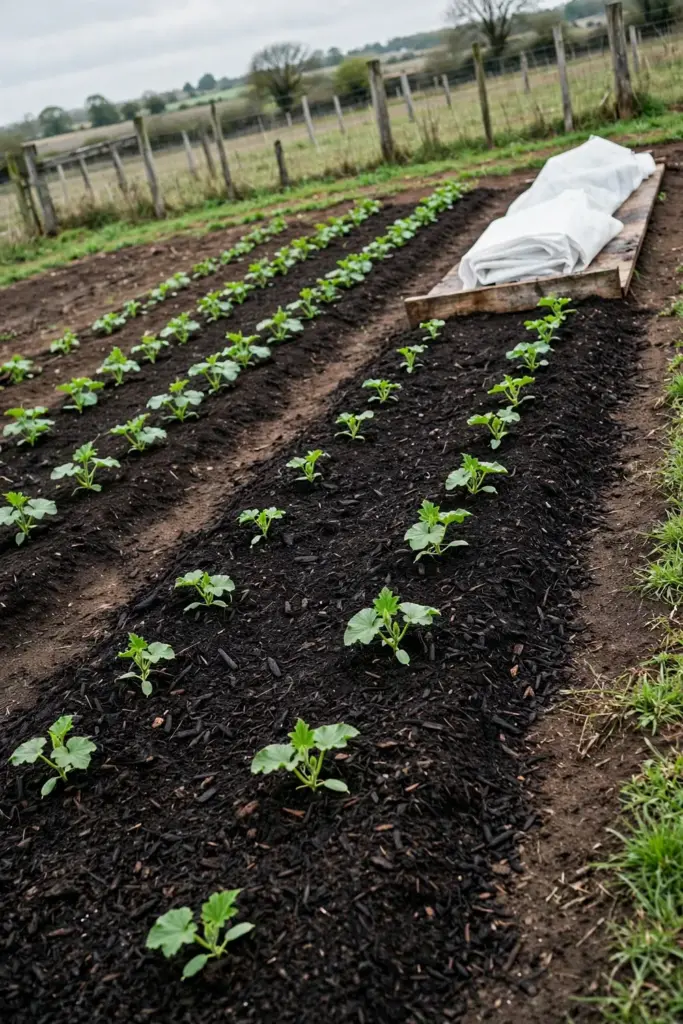
Buy certified virus-free seed, cover the next transplants, and clear the volunteers. The virus has no cure, and the bed that beats it is the bed with cleaner seed, fewer beetles, and seedlings guarded in their first weeks.
One clean season resets the bed. Work the 9 strategies in order, and next year’s cucurbits start without the virus beside them.