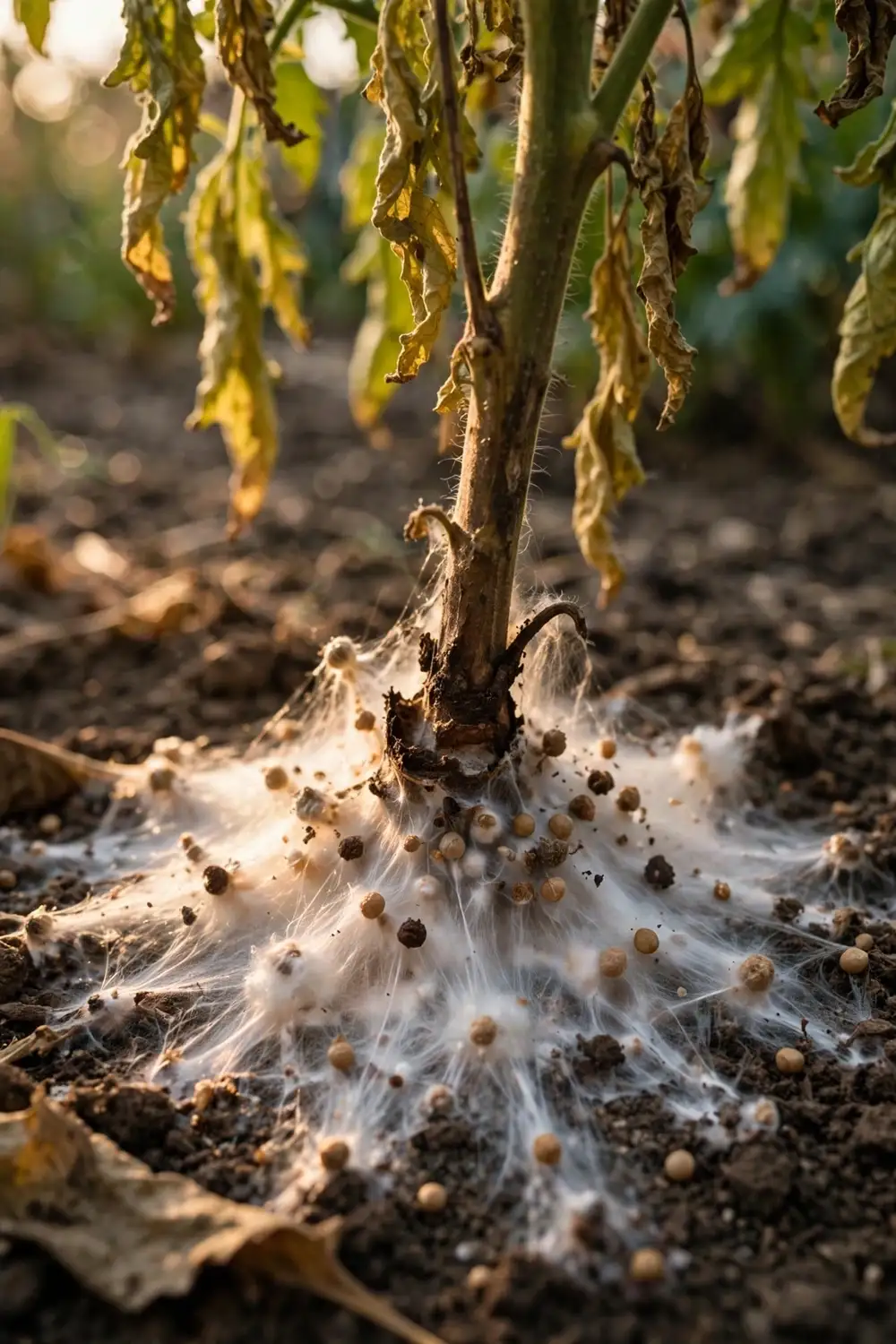

Your tomato plant looked fine yesterday. Today it is wilted flat, and when you part the mulch at its base you find a fan of white threads crawling across the stem, studded with tiny tan balls the size of mustard seeds. That is southern blight, a soilborne fungus with more than 500 known host species, and southern blight treatment starts with one hard truth: the wilted plant is already gone. Everything useful you do from here is about the soil it stood in and the plants that will grow there next.
Southern blight is a soilborne fungal disease, and in a warm-climate vegetable garden few diseases kill faster. Infected plants can collapse within days of the first wilt. But the same disease responds well to management, because its survival strategy is visible to the naked eye. Those mustard-seed balls are sclerotia, the resting bodies the fungus uses to wait out bad years in your soil. Once you know what they are and how they move, you can break the cycle with sanitation, heat, and patience instead of chemistry.
What Southern Blight Actually Is
Southern blight is caused by Sclerotium rolfsii, a soilborne fungus (its rarely seen sexual stage is called Athelia rolfsii). It is a true fungus, not a water mold, which matters because the oomycete-specific treatments that work on Pythium and Phytophthora do nothing here.
The fungus lives in soil and plant debris and attacks the lower stem of plants at or near the soil line. It does not need a wound. Warm, wet conditions wake it up, and from there it girdles the stem, cutting off water transport. The plant above the girdle wilts and dies even though its roots may look fine at first. LSU AgCenter notes the pathogen attacks more than 500 plant species, including tomatoes, peppers, eggplants, cucurbits, potatoes, and many ornamentals.
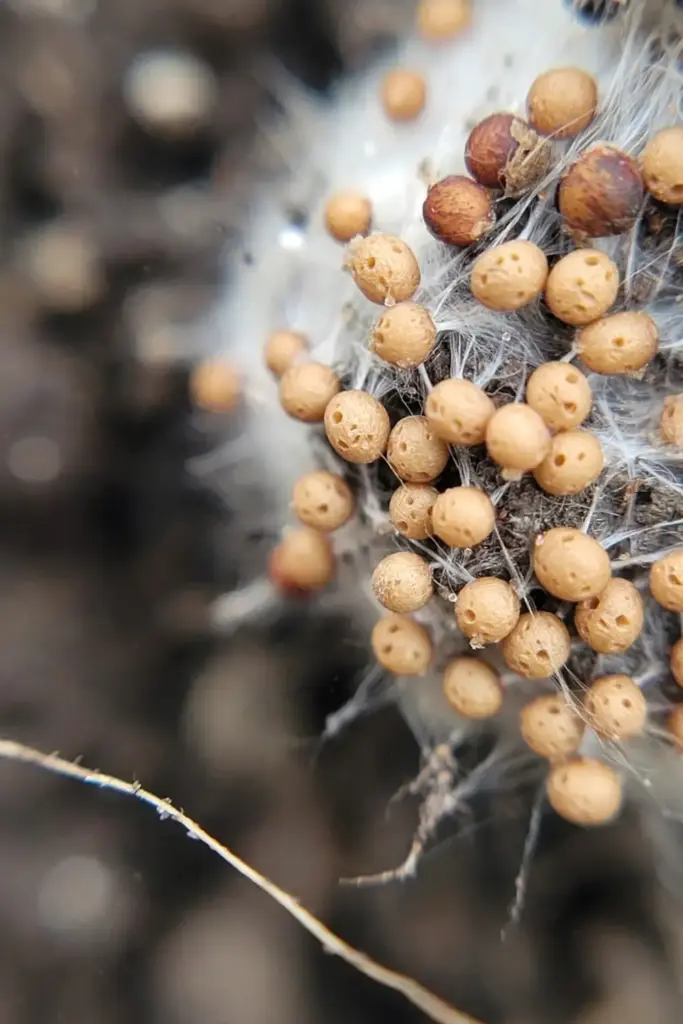
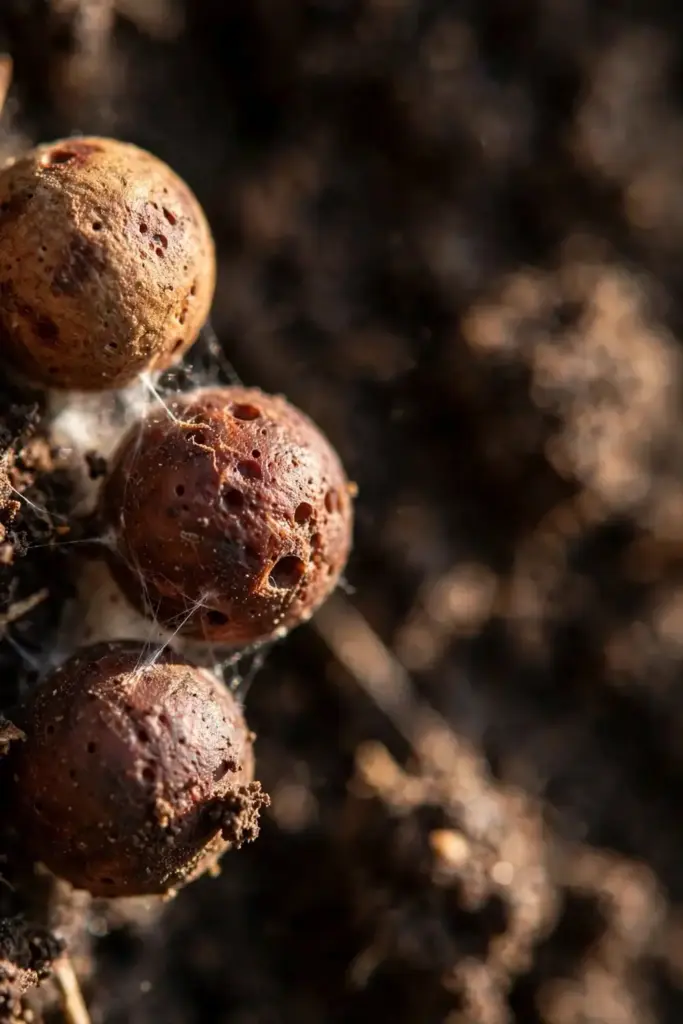
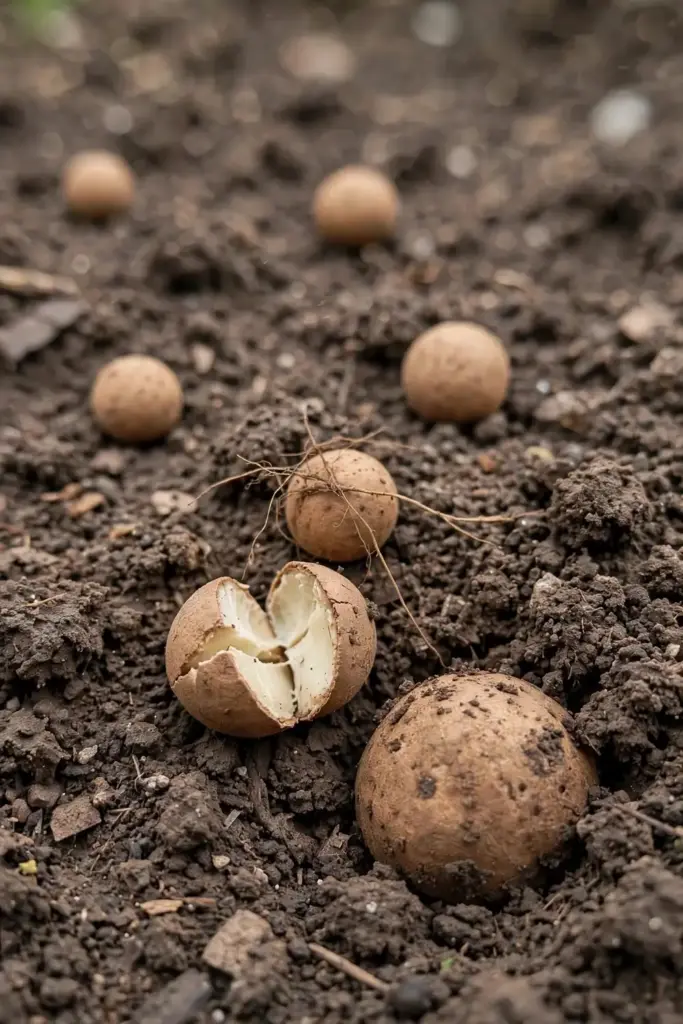
What makes southern blight different from most garden diseases is its resting structure. The fungus packs itself into sclerotia: hard, round survival capsules that start white, turn tan, then mature to reddish brown or dark brown. Each one is 0.5 to 1.5 millimeters across, about the size of a mustard seed, and each one can sit in your soil for years waiting for a warm, wet week and a susceptible stem.
The fungus spreads in an unusual way. It produces no airborne spores at all, so it never drifts in on the wind the way early blight does. It moves by growing outward through soil and debris as mycelium, and by hitching rides as sclerotia on soil, tools, water, and plant material. That is good news in one sense: southern blight cannot blow in from three counties away. It arrives by contact, which means your sanitation habits genuinely control it.
How to Identify Southern Blight on Stems
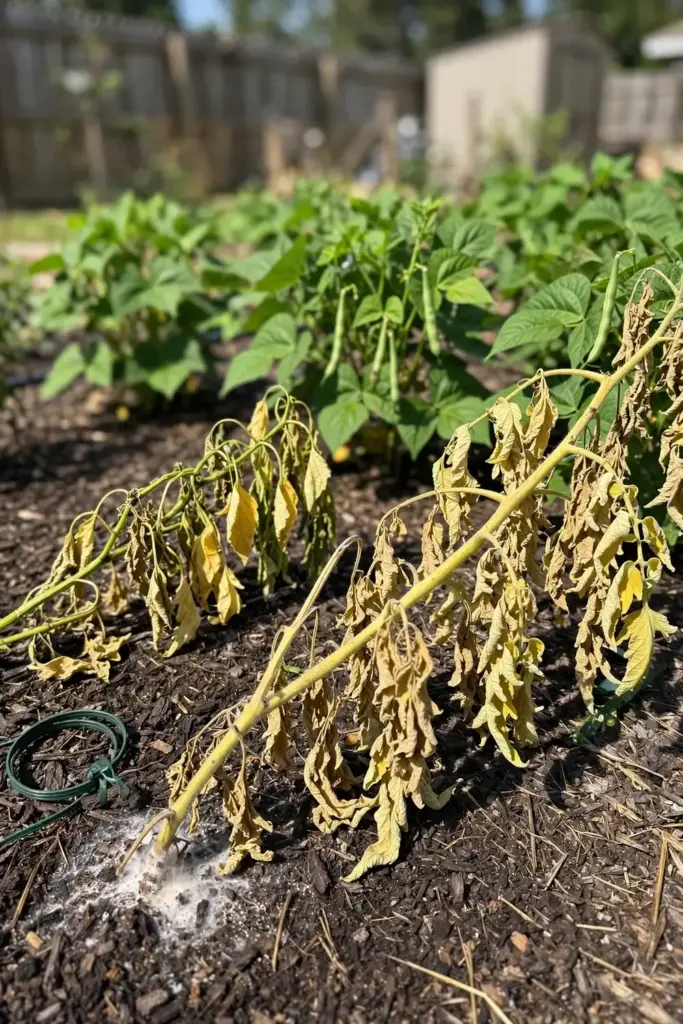
Look at the stem right where it meets the soil. The first sign is a dark, water-soaked lesion that wraps around the stem. Within days the plant wilts, starting with the lower leaves yellowing, then the whole plant flags even though the soil is moist.
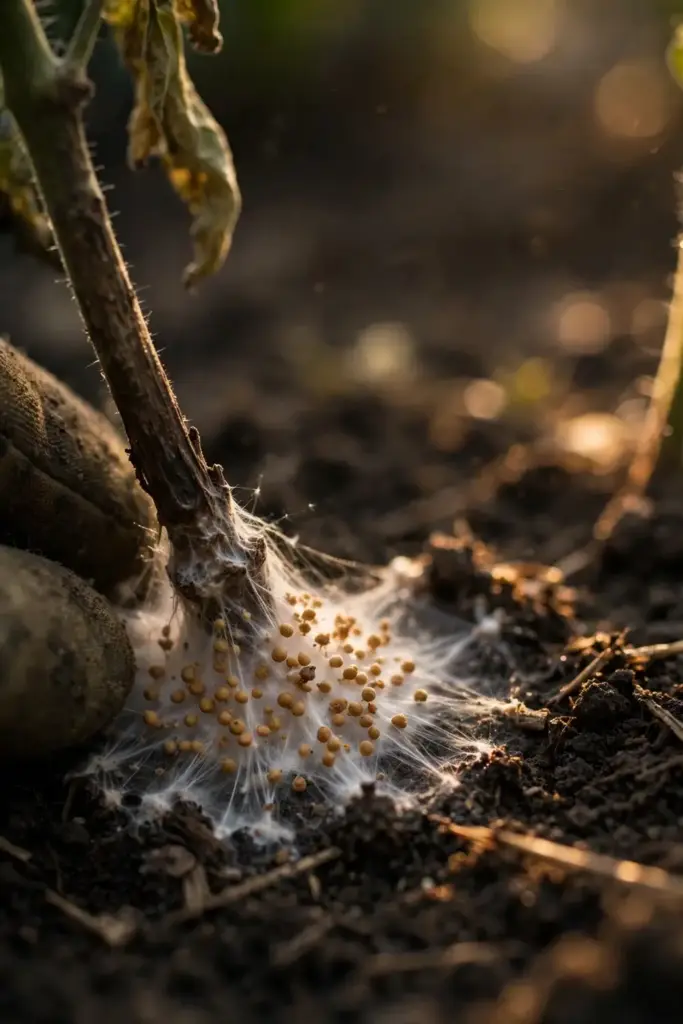
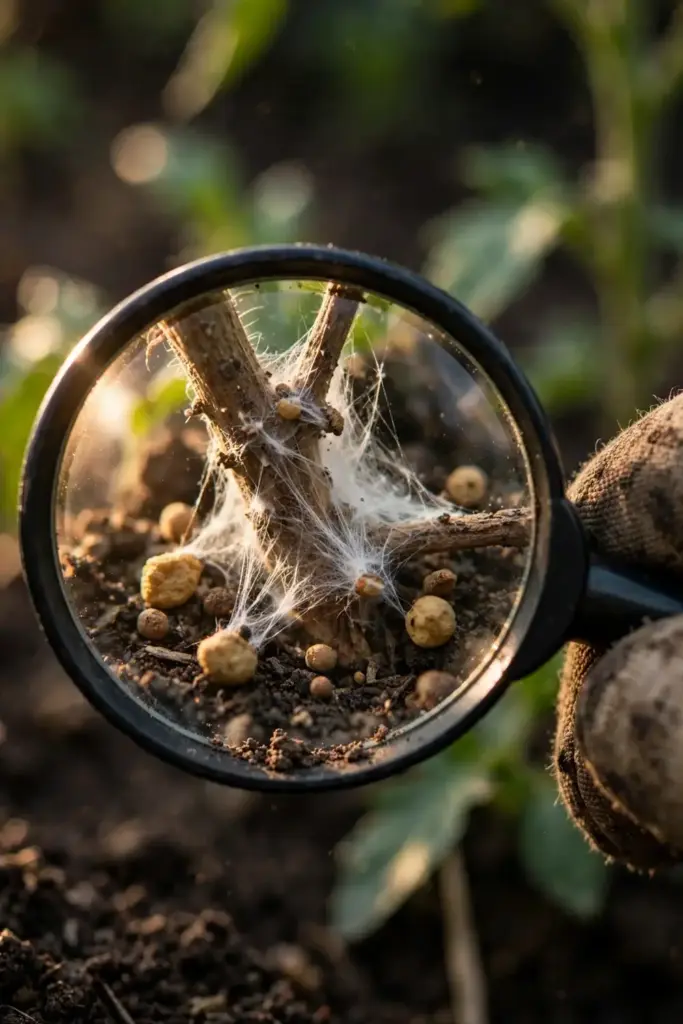
The confirmation mark is unmistakable. A white, cottony fan of mycelium spreads across the lower stem and onto the surrounding soil surface, and embedded in that white mat are the tan mustard-seed sclerotia. As the sclerotia age they darken to brown or black. If you see the white fan plus the seed-like balls, you have southern blight. Few other garden diseases produce both at once.
Pull the plant and the stem will often snap at the girdled point. The rot is at the soil line, not deep in the root system. That distinction matters, because it separates southern blight from root rots that attack below ground.
How to Identify Southern Blight on Leaves and Fruit
Leaves do not get spotted the way they do with early blight. They yellow from the bottom up and wilt. It looks like drought, but here is the tell: watering does nothing. A drought-stressed tomato perks up overnight after a deep soak. A southern-blight tomato stays flat no matter how much water you give it.
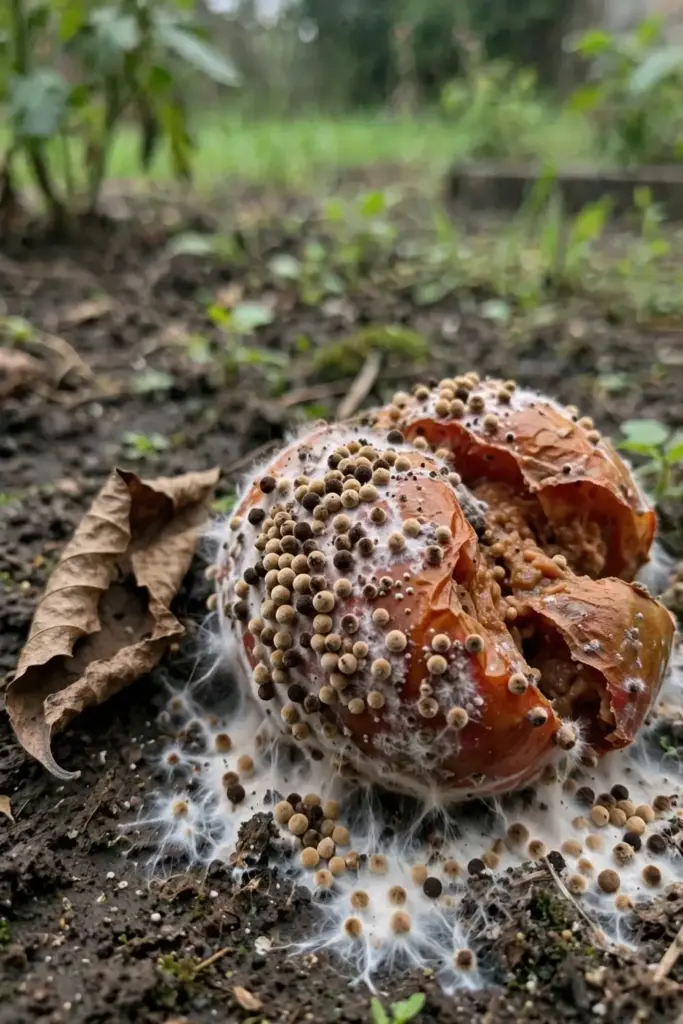
Fruit that touches infested soil or mulch can rot directly. The rot starts as a soft, watery spot that spreads fast in warm weather, and white mycelium may grow over the rotted area with sclerotia forming on the fruit surface. This is why the disease is sometimes first noticed on a fallen tomato or a pepper resting on mulch.
Do not confuse this with blossom end rot, which is a physiological calcium problem that blackens the blossom end of otherwise firm fruit. Southern blight fruit rot is wet, fast, and accompanied by the white fungal mat.
Which Vegetables Get Hit Hardest
Tomatoes and peppers are the classic home-garden victims. Eggplant, potatoes, beans, cucumbers, squash, and melons are all susceptible, and Wisconsin horticulture’s southern blight guide notes the disease also hits many ornamentals and weeds, which is how it lingers in a bed between vegetable seasons. Many ornamentals and even some weeds host the fungus without showing dramatic symptoms, which is how it persists in a bed between vegetable seasons.
No common home-garden tomato or pepper variety carries meaningful resistance to southern blight. Unlike fusarium wilt, where VFN codes on the seed packet actually help, there is no resistant variety to buy your way out with. Management is cultural and environmental, not genetic.
Grasses are generally poor hosts, which is why the rotation advice works: a bed rested under grass or a non-host cover crop starves the sclerotia out over a few seasons.
Greenhouses and high tunnels deserve a special warning. The warm, humid, irrigated conditions inside are close to ideal for the fungus year-round, and the confined soil means sclerotia concentrate fast. If you grow tomatoes under cover in a warm climate, treat the structure’s soil as permanently suspect and lean harder on containers with fresh mix.
Weeds are the silent reservoir most gardeners miss. The fungus colonizes many common weeds without killing them dramatically, so a weedy bed edge keeps the sclerotia bank topped up between vegetable crops. Clean cultivation around the bed is part of the rotation, not just tidiness.
Southern Blight vs Fusarium Wilt vs Bacterial Wilt vs Timber Rot
Four stem-base killers look alike from a distance. The table sorts them by the field marks you can actually check.
| Feature | Southern Blight | Fusarium Wilt | Bacterial Wilt | Timber Rot (Sclerotinia) |
|---|---|---|---|---|
| White fungal mat at stem base | Yes, fan-shaped with mustard-seed sclerotia | No | No | Yes, but with black irregular sclerotia, not tan round ones |
| Sclerotia | Tan to dark brown, round, 0.5 to 1.5 mm, like mustard seeds | None | None | Black, irregular, larger, like mouse droppings |
| Stem cross-section | Girdled at soil line, mushy outside | Brown ring in the vascular tissue inside the stem | Milky bacterial streaming in water from a cut stem | White cottony rot, often higher on the stem |
| Speed | Days from wilt to collapse | Weeks of progressive yellowing | Very fast, sometimes overnight | Moderate, cool-weather disease |
| Weather driver | Hot and humid | Warm soil | Hot and wet | Cool and wet |
| Cured by fungicide | Rarely once infected | No | No | Sometimes, early |
The sclerotia are the decider. Tan, round, mustard-seed-sized means southern blight. Black, irregular, larger means timber rot. No sclerotia at all points toward the wilts.
Why Sclerotia Make Southern Blight So Hard to Beat
A sclerotium is a survival capsule, and understanding it explains every management step below. The fungus weaves dense hyphae into a hard ball with a protective rind, packs it with food reserves, and goes dormant. In that state it tolerates drought, cold down to about 14 F, and years without a host plant.
When warm, moist soil returns, the sclerotium germinates and sends mycelium hunting for a stem to colonize. One sclerotium can start one infection, but a single infected plant can produce thousands of new sclerotia. That is the math that makes sanitation the highest-impact step: every sclerotium you remove or bury deep is an infection that never happens.
Deep burial works because sclerotia germinate best near the surface. Turned 8 to 12 inches down, most never reach a stem, and their lifespan shortens. LSU AgCenter recommends exactly that depth for burying sclerotia after cleanup.
What Makes Southern Blight Worse in a Home Garden
Heat and moisture are the master switches. The disease is favored by hot, humid weather, which is why it is called southern blight and why northern gardeners see it mainly in heat waves and greenhouses.
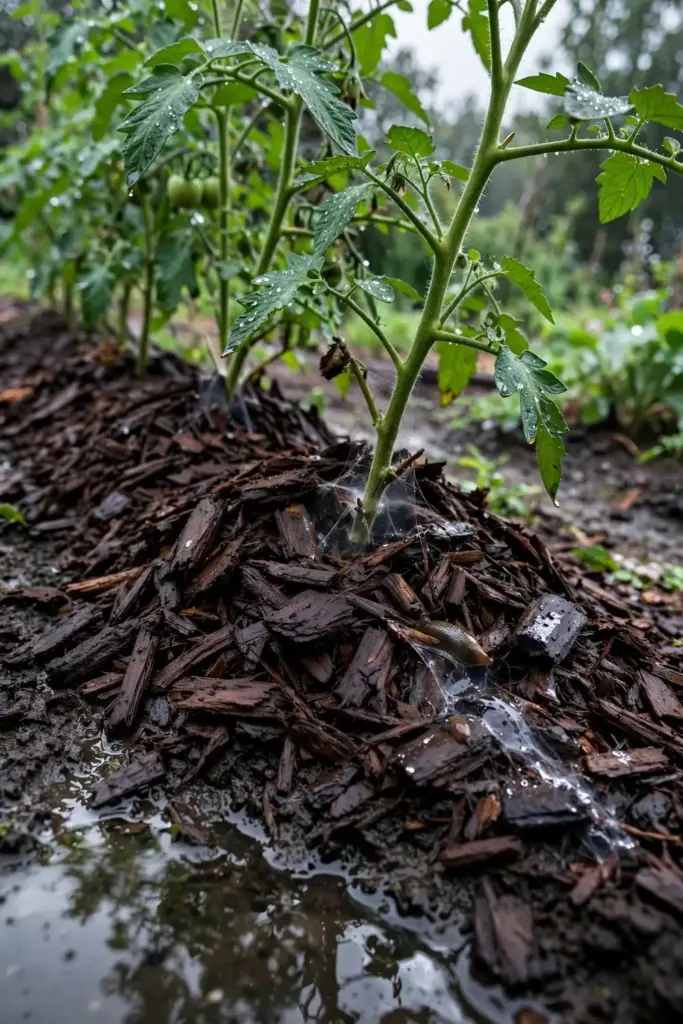
Mulch piled against stems is the most common home-garden mistake. Organic mulch holds exactly the warm, moist microclimate the fungus wants, pressed right against the tissue it attacks. Keep mulch a few inches back from every stem.
Infested transplants and contaminated soil move it bed to bed, riding on nursery stock, tools, muddy boots, and irrigation water. One load of infested compost can seed a new bed. That is why the “start clean” step matters more than it looks. Even a garden cart earns suspicion: haul soil from the bad bed to the good one, and you have hand-delivered next year’s outbreak yourself. Keep one set of tools for the infested bed until its rotation is done.
Overhead watering and poor drainage extend leaf and soil wetness. Drip irrigation at the root zone, morning watering, and beds that drain within hours all shorten the wet window the fungus needs.
Suspect mulch and compost deserve scrutiny too. The fungus can arrive in a load of wood chips, straw, or unfinished compost carrying sclerotia from someone else’s outbreak. If blight appears the season after a big mulch delivery, that delivery is a prime suspect. Buy from sources you trust, and never spread fresh, unknown-origin mulch thick against stems in a bed with a blight history.
Warm nights matter as much as hot days. The fungus grows fastest when nighttime temperatures stay high, which is why outbreaks explode in heat waves and stall when cool weather returns. If your region gets both, the disease calendar follows the thermometer, not the month.
Step 1: Decide Whether This Plant Is Worth Saving
It is not. Say it plainly and move on, because this decision saves more gardens than any spray. Once the stem is girdled and the white mat is visible, no fungicide, home remedy, or pruning cut brings that plant back. The vascular highway is severed.
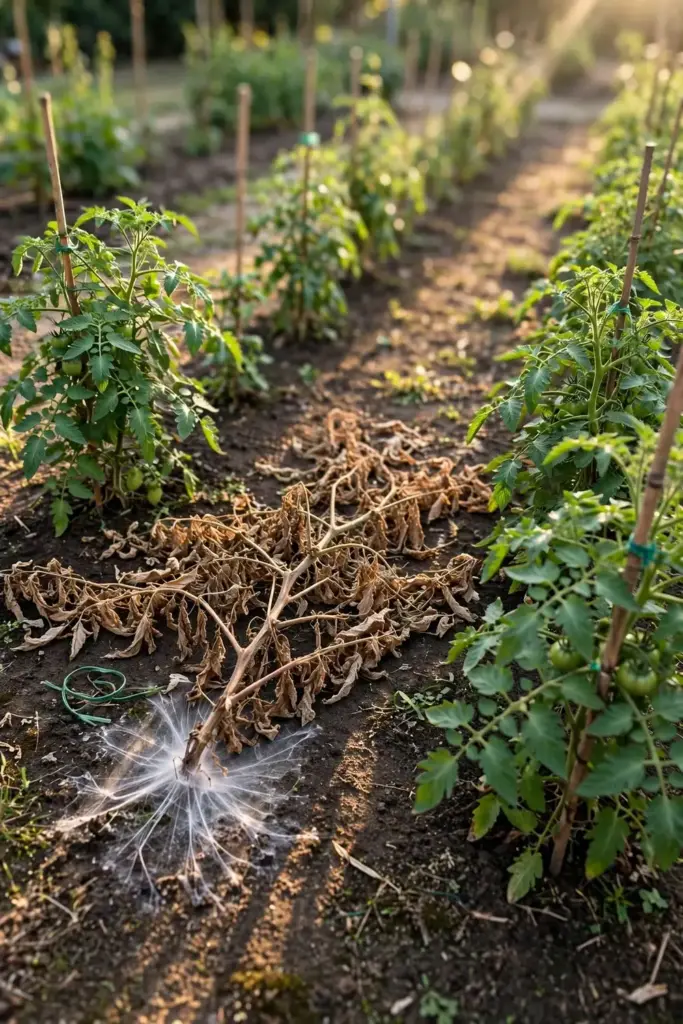
Southern blight treatment is therefore almost entirely about the soil and the neighboring plants. Pulling the infected plant promptly is itself the treatment: every day a diseased plant stands in the bed, it manufactures thousands of new sclerotia that rain into your soil. A fast pull is worth more than any product.
The only exception is a very early catch: a plant with a small lesion, no girdling yet, and no sclerotia. Even then, the honest odds are poor. Rogue it, and spend your effort on the bed.
Step 2: Remove and Bag the Diseased Plant
Pull the entire plant, roots and all. Then remove the top 3 inches of soil from at least 12 inches beyond the visibly infested area, working from the clean edge toward the center so you do not drag infested soil outward. The University of Wisconsin plant disease diagnostics clinic gives exactly this protocol in its southern blight fact sheet, revised April 2026.
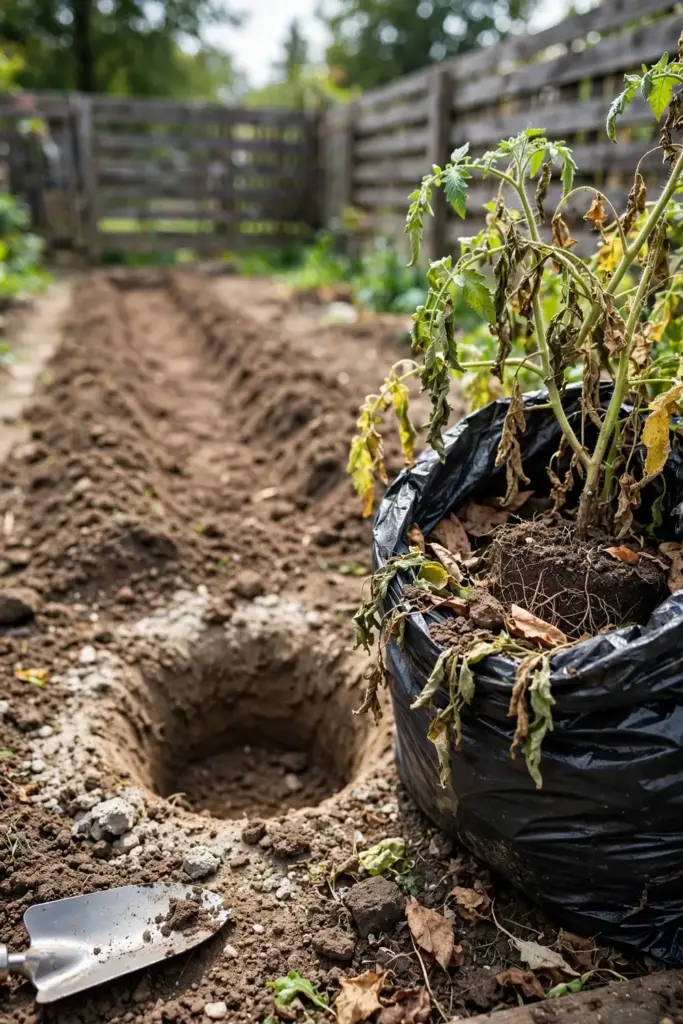
Bag everything, plants and soil, and send it to the landfill. Do not compost it. Home compost piles do not reliably reach the sustained temperatures that kill sclerotia, and municipal green-waste programs vary. The landfill is the honest answer.
Disinfect your tools and gloves afterward. A 10 percent bleach dip or alcohol wipe between beds is cheap insurance, and the University of Wisconsin’s southern blight fact sheet lists contaminated tools and equipment as a key way the fungus travels.
Step 3: Bury What You Missed
Turn the remaining soil in the infested area 8 to 12 inches deep. This buries any sclerotia you missed below the zone where they germinate best, which shortens their survival. Both LSU AgCenter and the Wisconsin clinic recommend this depth.
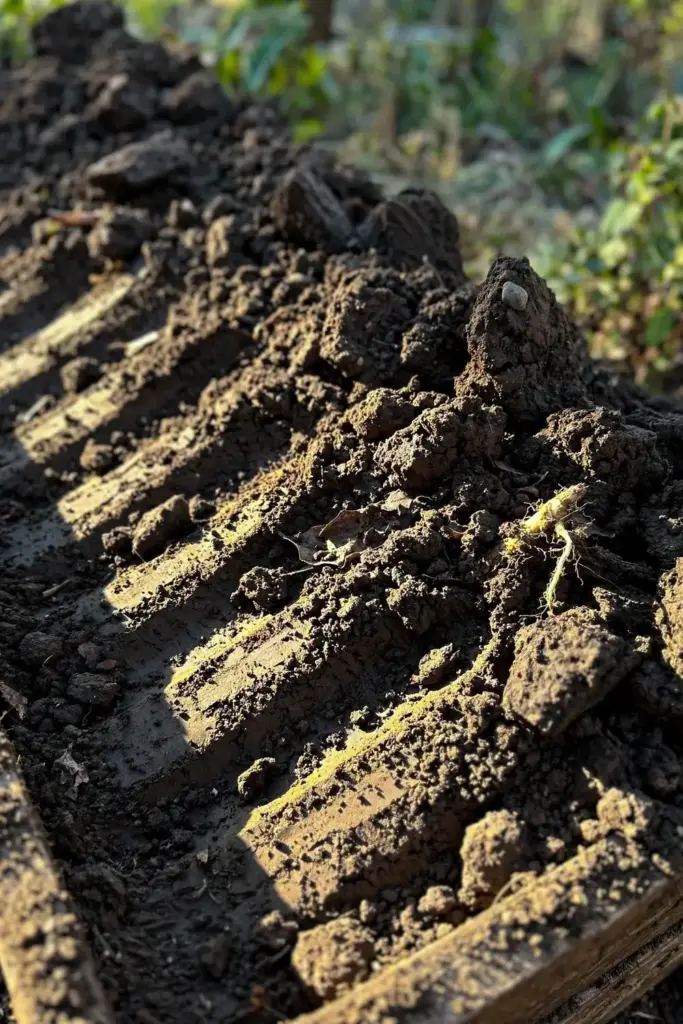
This is not tilling for fun. One deep inversion after cleanup beats repeated shallow cultivation, which just redistributes sclerotia through the germination zone. Do it once, do it deep, and then leave the bed alone.
Step 4: Solarize the Bed With Honest Expectations
Soil solarization, covering moist soil with clear plastic for 4 to 6 weeks in peak summer heat, can suppress southern blight. The honest framing: it reduces sclerotia in the top few inches of soil, it does not sterilize the bed, and it works best where summers are reliably hot.
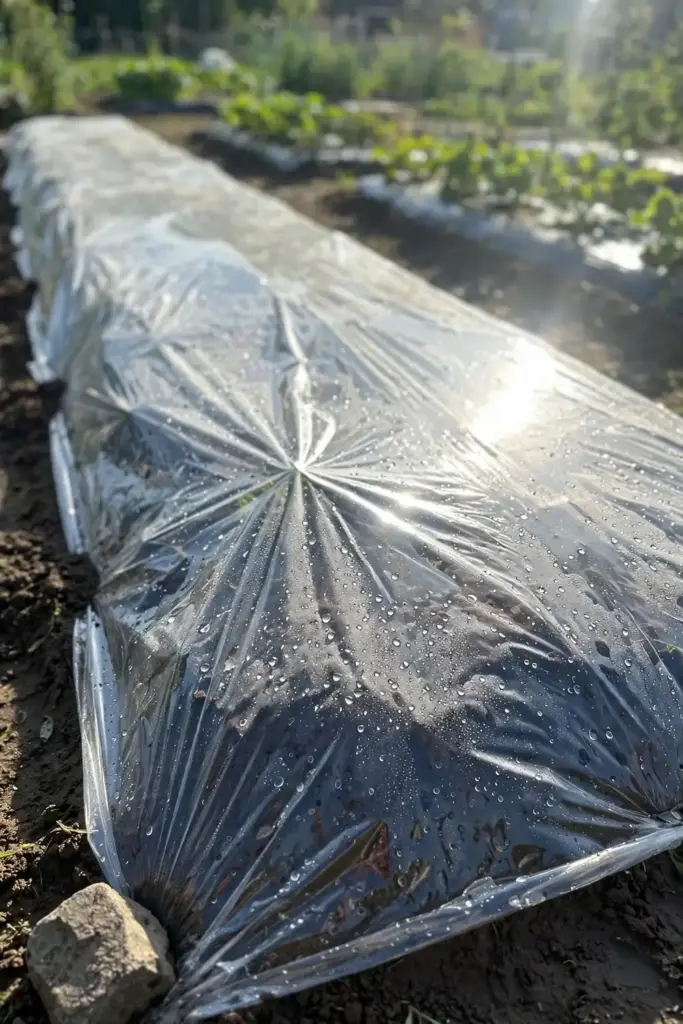
Lay the plastic tight against moist soil during the hottest stretch of your summer. Water the bed deeply first, then stretch clear (not black) plastic over it, burying the edges in soil so heat cannot escape. Leave it for 4 to 6 weeks. Temperatures under the plastic need to hold high enough, long enough, to cook the sclerotia near the surface. In cooler climates, treat solarization as a helpful supplement to burial and rotation, not a cure.
Time it for the gap between spring and fall crops, when the bed would sit empty anyway. A bed solarized in July and August can take fall garlic or cover crops on schedule, so the treatment costs you little growing time.
Do not solarize and then immediately replant a susceptible crop into the same bed. The deeper sclerotia survived. Solarization buys you a cleaner surface, not a clean bed.
Step 5: Fix Your Mulch and Watering
Pull all organic mulch back 3 to 4 inches from every stem in the bed. The fungus attacks at the soil line, so bare soil around the stem base removes its favorite microclimate. This single habit prevents more infections than any spray.
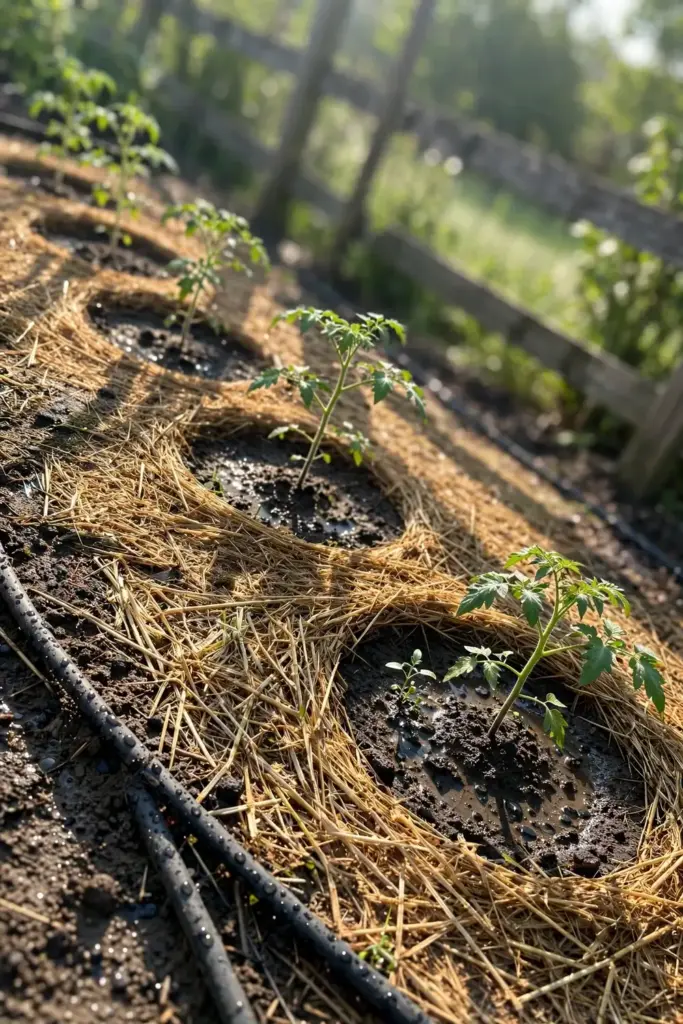
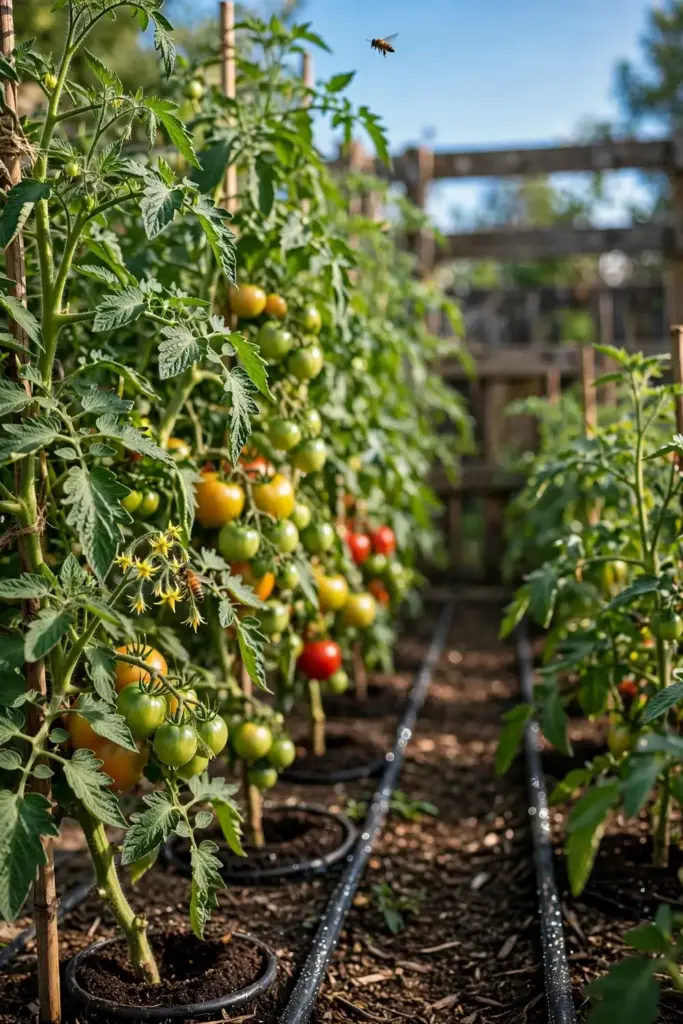
Switch to drip irrigation or soaker hoses if you can. Overhead watering splashes soil, and soil carries sclerotia. Water in the morning so foliage and the soil surface dry by evening.
Improve drainage where water stands. Southern blight loves the wettest corner of the bed. A bed that drains within a few hours of rain gives the fungus a much shorter wet window, and building healthy, well-structured soil is the long game that makes every bed drain faster.
Step 6: Rotate and Rest the Bed
Do not plant tomatoes, peppers, eggplant, potatoes, beans, or cucurbits in the infested bed for 2 to 3 years. The Wisconsin clinic gives this rotation length, and LSU AgCenter advises avoiding susceptible crops in known-infested areas for two or more years. The sclerotia starve out without a host.
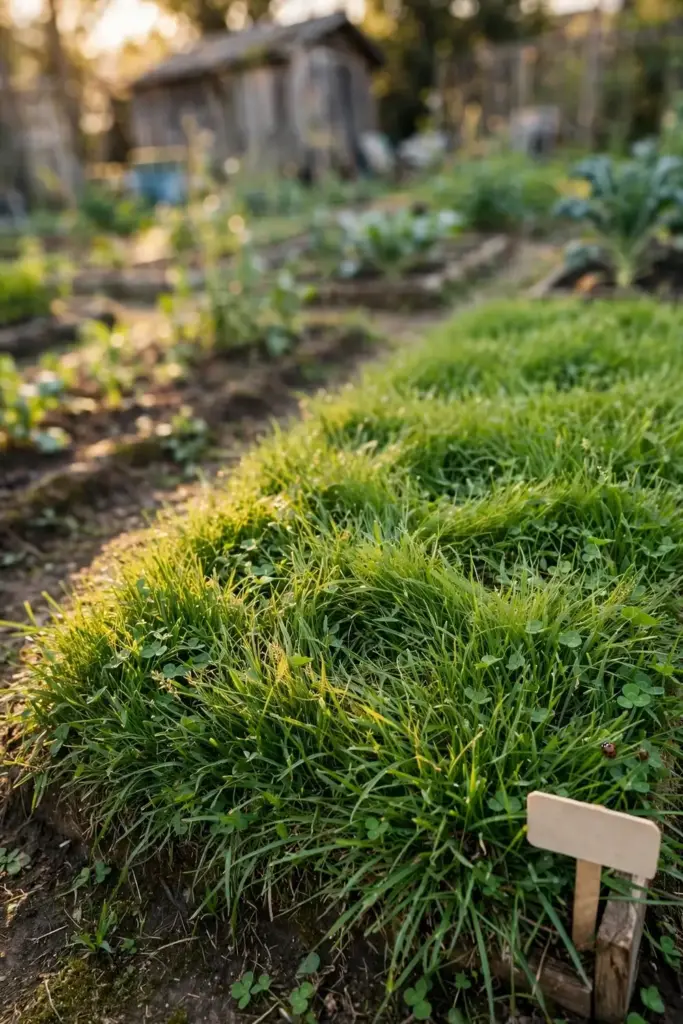
Plant grasses, corn, or other non-hosts in the rotation. A grass cover crop is ideal: it is a poor host, it improves the soil while it grows, and it gives you a productive use for a bed that cannot hold tomatoes. Keep the resting bed in good shape with a steady fall garden bed prep routine each autumn so it is ready when tomatoes return.
Mark the bed. Gardeners forget which bed had the outbreak by next spring. A stake, a garden map, or a phone photo of the bed with a note saves you from replanting tomatoes into a sclerotia bank.
Step 7: Consider Fungicides With Eyes Open
Several fungicide active ingredients are labeled for southern blight, including azoles such as tebuconazole and propiconazole, fludioxonil, flutolanil, PCNB, strobilurins such as azoxystrobin, thiophanate-methyl, and triadimefon, per the Wisconsin clinic. Here is the honest framing for home gardeners.
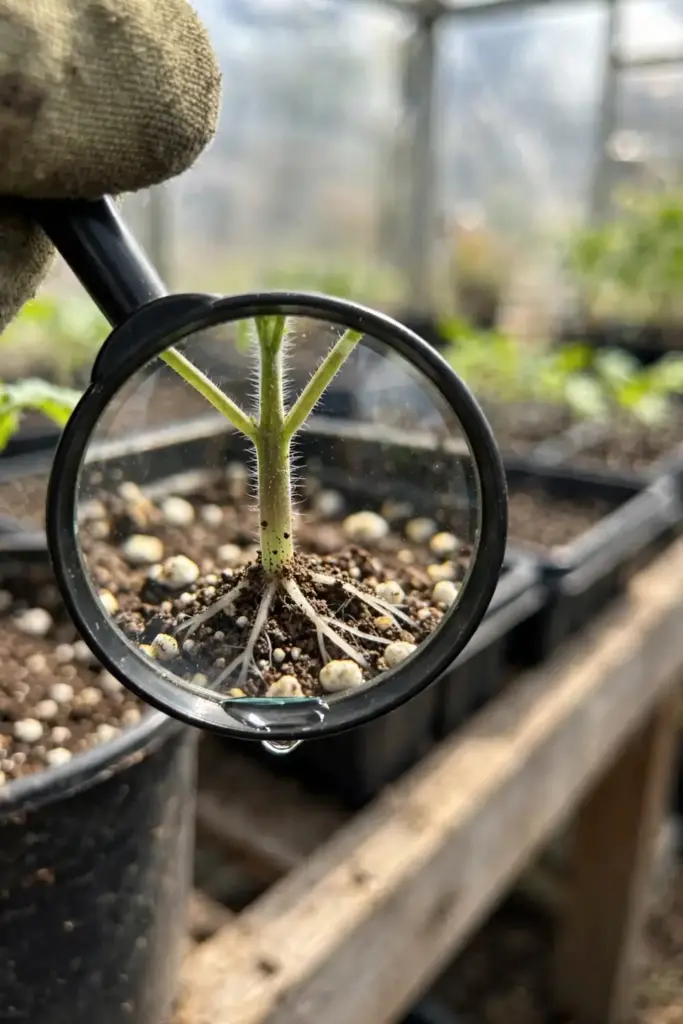
These products protect healthy plants. They do not cure infected ones. Applied preventively around the stem base of healthy transplants in a known-infested bed, they can reduce losses. Timing is everything: the application needs to be in place before the fungus reaches the stem, which means at transplant time or at the first sign of disease in a neighboring plant. Sprayed on a wilted plant with visible mycelium, they are theater.
Check the label for home-garden use on your specific crop. Many effective actives are labeled for commercial production or turf, not for backyard tomatoes. The label is the law: crop, rate, timing, and pre-harvest interval all matter, and off-label use is both illegal and unreliable.
For most home gardeners, the cultural steps above outperform chemistry. Fungicides earn their place mainly for growers who must plant susceptible crops in infested soil and accept the cost and the calendar.
Step 8: Start Clean Next Season
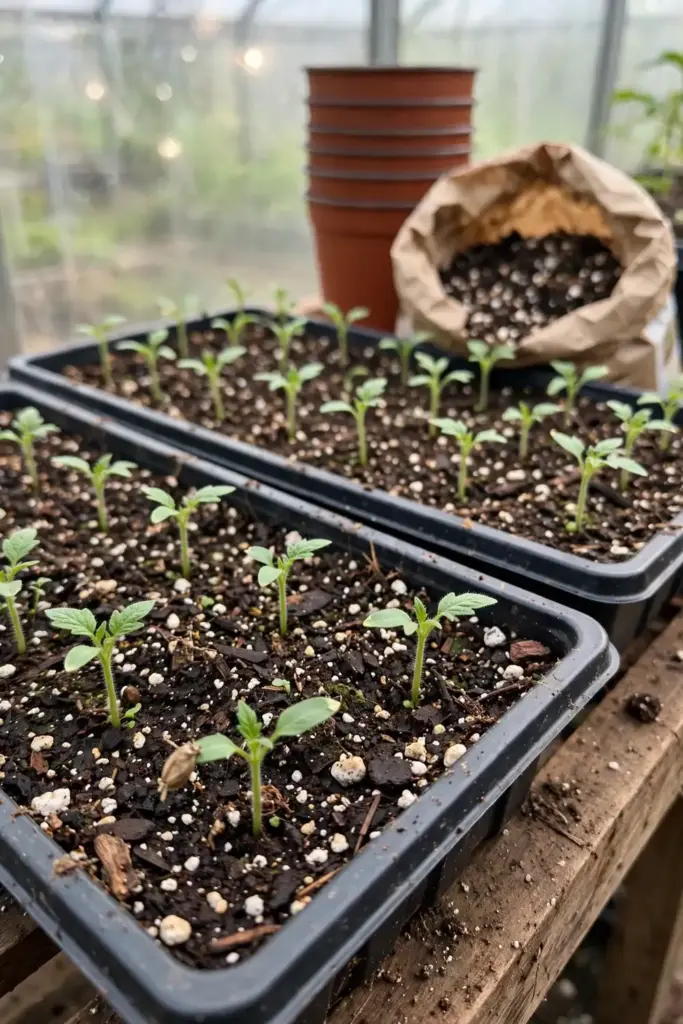
Buy certified disease-free transplants from reputable nurseries, or start your own from seed with a clean seed-starting routine that keeps damping-off and hitchhiking pathogens out of your trays. Southern blight can arrive on infected nursery stock, and one sick transplant seeds a whole bed.
Inspect bagged soil and compost. You cannot see sclerotia reliably in a bag, so buy from sources you trust and avoid bargain soil of unknown origin for beds with a blight history.
Quarantine new plants when you can. A week of observation in a pot before a transplant goes into a clean bed costs nothing and catches more than blight.
Clean tools, boots, and pots between the infested bed and clean beds. The fungus moves on mud. A stiff brush and a disinfectant wipe break the chain.
Living With Southern Blight in a Garden That Already Has It
If the fungus is established in your soil, you garden around it. That is a normal, workable situation, not a failure. Many southern gardeners grow tomatoes for decades in blight-prone ground by treating the disease as a permanent resident with known habits.
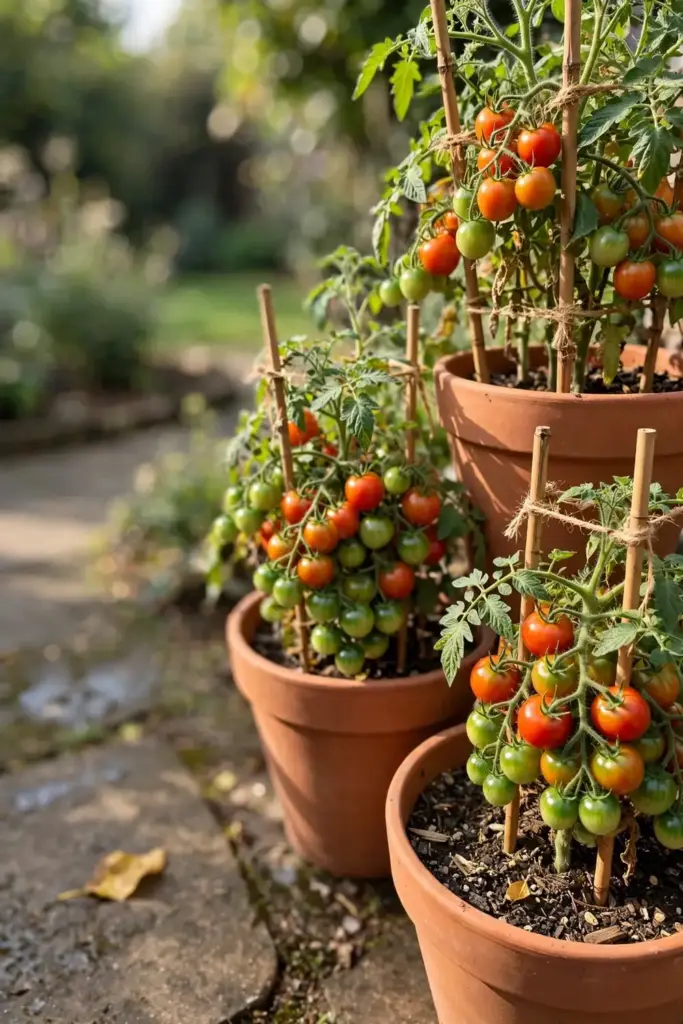
Grow tomatoes in containers or raised beds with fresh, clean mix while the in-ground bed rests through its rotation. A 5-gallon container with fresh potting mix is a blight-free island, and a row of them on a sunny patio can outproduce a struggling in-ground bed. Do not reuse last year’s container mix for tomatoes if blight appeared; the sclerotia survive in pots just as they do in beds. Grafted tomatoes on vigorous rootstocks can also outrun early infections in marginal beds.
Scout weekly in warm, wet weather. The white mycelial fan is visible before the plant collapses if you look at stem bases. Early pulls, done the same day you spot the mat, keep sclerotia counts from compounding year over year.
Keep a simple log: which bed, which date, which variety. Patterns emerge. You will learn which corner of the garden runs hottest and wettest, and you will stop planting your best tomato there.
Frequently Asked Questions
No. Once the stem is girdled and the white mycelial mat is visible, the plant cannot be saved by any fungicide, home remedy, or pruning cut. The honest move is to pull and bag the plant immediately, because every day it stands there it manufactures thousands of new sclerotia. Spend your effort on the soil and the next crop, not on rescuing the dying plant.
No. Baking soda sprays have some evidence against foliar powdery mildew, which is a completely different disease on the leaf surface. Southern blight is a soilborne stem-base fungus protected by soil and debris, and there is no credible evidence that baking soda drenches control it. Save the baking soda for powdery mildew and put your southern blight effort into sanitation and rotation.
Years. The sclerotia are built for dormancy and can persist in soil for several years without a host plant, tolerating cold down to about 14 F. That is why the rotation advice runs 2 to 3 years and why a single season of skipping tomatoes does not clean a bed. Deep burial shortens survival, and starving the fungus with non-host crops is the reliable clock.
Not reliably. Neem oil is primarily an insecticide and foliar fungicide with limited soil activity, and there is no strong evidence it controls the sclerotia or the stem-base infection of southern blight. Use neem for the pests it actually controls. Do not count on it as your southern blight plan. Sanitation, burial, solarization, and rotation are the steps with evidence behind them.
It can spread bed to bed, but it does not teleport. It moves on infested soil, tools, boots, transplants, debris, and running water. Clean your tools between beds, do not move soil from an infested bed to a clean one, and pull infected plants before they sporulate heavily. With those habits, most gardeners contain it to the original bed while the rotation clock runs.
Only when you have a reason. Solarization is real work, it ties up the bed for 4 to 6 weeks in peak season, and it only suppresses sclerotia near the surface. Use it on a bed with a known southern blight history during a hot summer, combined with deep burial and rotation. As a yearly ritual on healthy beds, it is effort better spent on compost and mulch.
Where to Go From Here
Southern blight treatment is mostly southern blight prevention wearing work gloves. Pull the dead plant today, bag the soil around it, bury the rest deep, and give the bed its 2 to 3 year rest under non-hosts. The fungus cannot be reasoned with or sprayed away once it has girdled a stem, but it can be starved, buried, and cooked into irrelevance.
Start with Step 2 this afternoon if you have a wilted plant in the ground right now. The sclerotia it is making today are next year’s outbreak, and every hour you wait is more of them. Then walk the rest of the bed, pull the mulch back from every stem, and mark the bed on your garden map so next spring’s tomato plan routes around it. For a companion guide to a different blight on the fruit-tree side of the garden, see how blossom blight is identified and managed.