
You can keep Rhizoctonia out of your seedlings and transplants, but you cannot sterilize your garden against it. That is the honest starting point. The fungus behind rhizoctonia root rot survives for more than 3 years in soil as tiny hardened resting bodies, and no product or practice available to a home gardener wipes them out completely. Prevention works by denying the fungus what it needs: dirty starting mix, wet stems, still air, and plant debris to live on.
The culprit is Rhizoctonia solani, a true soilborne fungus with one of the widest host ranges in the garden. It attacks stems at or just below the soil line, and seedlings are its favorite victims. That vulnerability window is short, and our seed starting guide shows how to move seedlings through it fast. Everything here targets the home garden: seed trays, potting mix, beds, and transplants. Identifying the disease and rescuing infected plants is a separate topic.
Here is the plan: what the pathogen is and how it waits you out, a ranked table of every prevention lever so you spend effort where it counts, eight numbered steps in order of impact, deeper dives on seed-starting hygiene, biological preventives, and soil defenses, then honest answers to the questions gardeners actually ask.
What Rhizoctonia Root Rot Actually Is
Rhizoctonia root rot is caused by Rhizoctonia solani, a soilborne fungus, not an oomycete. That distinction matters because much generic “root rot” advice targets water molds like Pythium and Phytophthora. Different kingdom, different weaknesses. Rhizoctonia infects at the soil line, where the stem meets damp soil. On seedlings it causes damping-off: stems pinch, turn brown, and topple. On older plants it makes sunken brown cankers at the base of the stem that can girdle and kill.
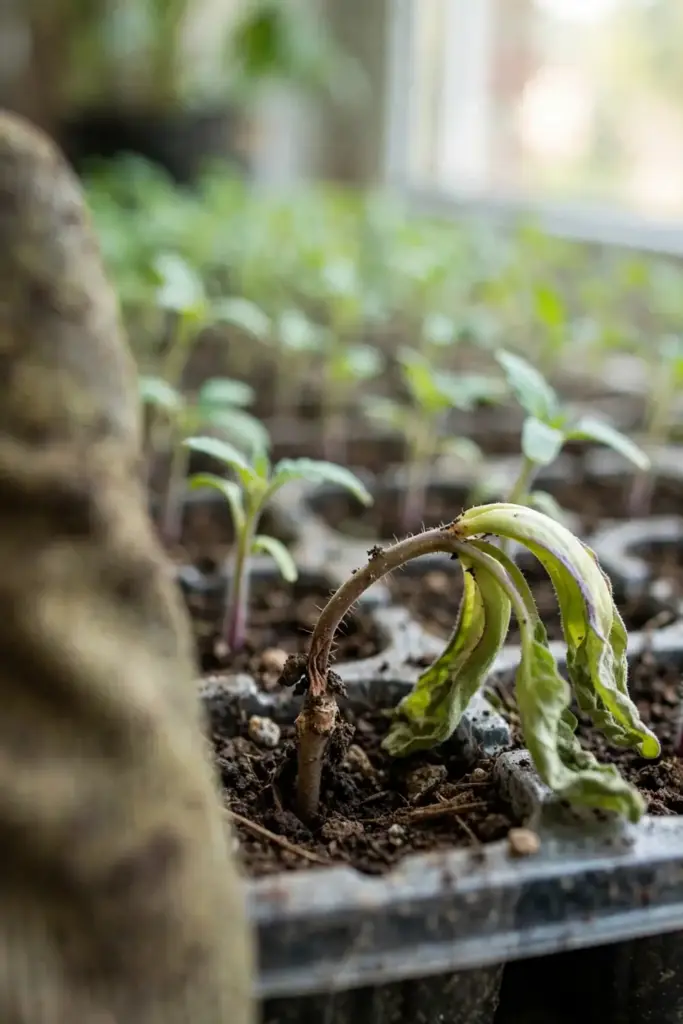
The host list is enormous. Vegetables, herbs, ornamentals, turf, even woody cuttings. Practically any herbaceous plant grown from seed or set out as a transplant can meet this fungus. Young tissue is the most vulnerable because it has not yet built tough, lignified stem walls. Once a plant is sturdy and growing fast, the same inoculum level often fails to take hold. That single fact shapes the whole prevention strategy: get plants past the vulnerable window quickly, in conditions the fungus hates.
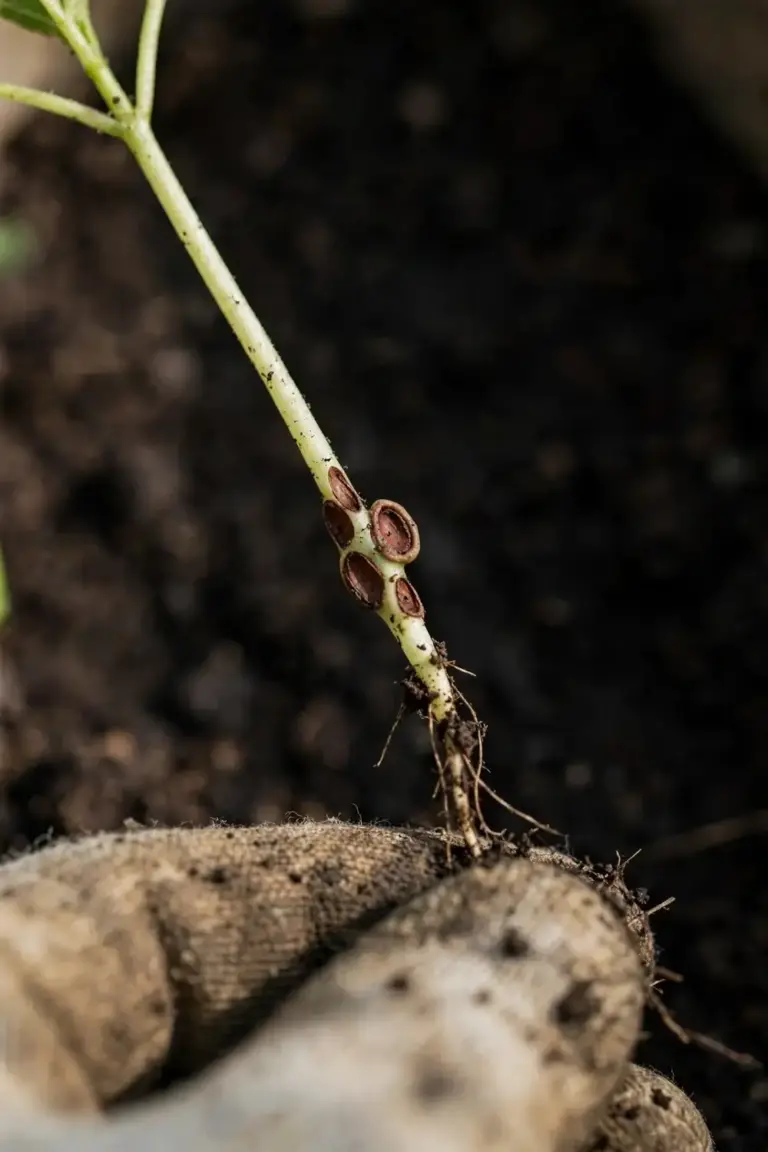
On seeds, the damage happens before you ever see a sprout. The fungus rots the seed or kills the young root underground, and the gardener blames bad seed. After emergence, the classic sign is a pinched, water-soaked stem at the soil line that turns brown and topples. Older transplants develop firm, sunken, reddish-brown cankers instead. One useful field mark from Rutgers pathologists: Rhizoctonia lesions rarely climb more than about an inch above the soil surface. Damage reaching higher up the stem points toward a different culprit, usually Phytophthora. Knowing that boundary keeps you from fighting the wrong enemy.
How Rhizoctonia Survives and Spreads
Rhizoctonia waits. It produces sclerotia, tiny irregular brownish-black resting structures that persist in soil and on plant debris for years. Rutgers University’s plant pathology team puts the number at more than three years, and Ohio State University’s soybean pathology guide notes the pathogen can survive for years as mycelium on crop residue or as sclerotia in soil. It also lives saprophytically, feeding on dead organic matter, which means it never fully starves even without a host.
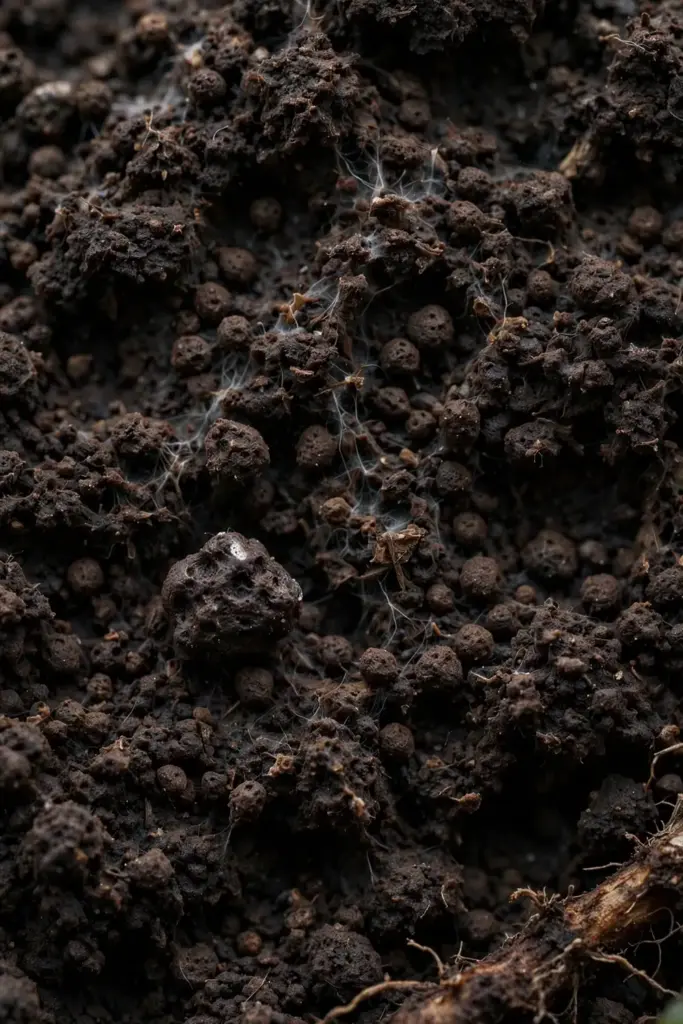
It moves the way soil moves. Splashing water carries it onto low stems and leaves. Dirty pots, trays, tools, and hose ends harbor it. Infested bagged mix is rare but possible; reused mix is a classic source. Infected transplants carry it straight into clean beds. Warmth plus moisture favors infection, and Ohio State researchers found isolates infecting across 60 to 95 degrees Fahrenheit and from fairly dry to saturated soil. The takeaway for prevention: you are not fighting one invasion, you are managing a permanent resident. Every lever below either shrinks the sclerotia bank or closes an infection court.
Temperature widens its opportunity rather than narrowing it. Ohio State researchers documented isolates infecting from 60 to 95 degrees Fahrenheit, which covers essentially the entire growing season in most regions. Moisture matters more than heat: free water on stems and saturated surface soil are what trigger attacks. That is why two gardens with the same inoculum level can have wildly different outcomes. The one that waters in the morning, spaces plants for airflow, and keeps mulch pulled back from stems gives the fungus almost nothing to work with.
Which Prevention Levers Matter Most
Not all prevention effort is equal. Ranked for a home gardener, by impact per unit of effort:
| Rank | Lever | Impact | Effort | Honest Note |
|---|---|---|---|---|
| 1 | Fresh, clean potting mix for every sowing | Highest for seedlings | Low | The single biggest damping-off reducer indoors |
| 2 | Sterilized pots, trays, and tools | High | Low | A 10-minute bleach soak; sclerotia ride surfaces |
| 3 | Watering discipline (bottom water, dry surface) | High | Low | Infection happens at the wet soil line |
| 4 | Airflow, spacing, and warmth for seedlings | High | Medium | Fast, sturdy growth outruns the fungus |
| 5 | Removing diseased debris from beds | Medium-High | Medium | Sclerotia form in infected tissue left behind |
| 6 | Trichoderma preventive at sowing or transplant | Medium | Low | Preventive only; needs to establish first |
| 7 | Crop rotation in beds | Medium | Medium | 3+ years with non-hosts; real but slow |
| 8 | Resistant varieties | Low-Medium | Low | Limited availability for most garden crops |
Work the list from the top. Most gardeners lose plants at ranks 1 through 4 and never need to think about the rest.
A note on how to read the impact column. “Highest” means this single change prevents the most losses for the least money and time, based on how the disease actually spreads in home gardens. Seedlings die indoors from dirty mix and dirty trays far more often than from anything happening in the bed. Outdoor beds matter too, but the losses there are slower and more diffuse. If you only adopt three habits this season, take ranks 1, 2, and 3. They cost almost nothing and cover the majority of real-world infections.
Step 1: Get Honest About What Prevention Can and Cannot Do
Prevention lowers two things: how much inoculum is present and how easily it infects. It never zeroes either one in open garden soil. Sclerotia already in your beds will outlast any single season of good behavior. Internalize that before spending money, because the garden industry sells certainty this pathogen does not allow.
| Prevention Theater (Skip It) | What Actually Works |
|---|---|
| Drenching healthy beds with fungicide “just in case” | Sanitation and clean inputs before planting |
| Hydrogen peroxide drenches as routine prevention | Bottom watering and dry stem bases |
| Reusing old potting mix to save a few dollars | Fresh mix for every sowing |
| Spraying foliage when the enemy lives in soil | Treating the soil line zone, not the leaves |
Hydrogen peroxide comes up constantly in forums as a preventive drench. The evidence for it as a reliable Rhizoctonia preventive in home gardens is thin, and it can harm the beneficial microbes you are trying to recruit. Save it for cleaning empty pots, not for routine soil treatment. The steps below are the ones with real returns.
Step 2: Start Every Seed in Clean Mix
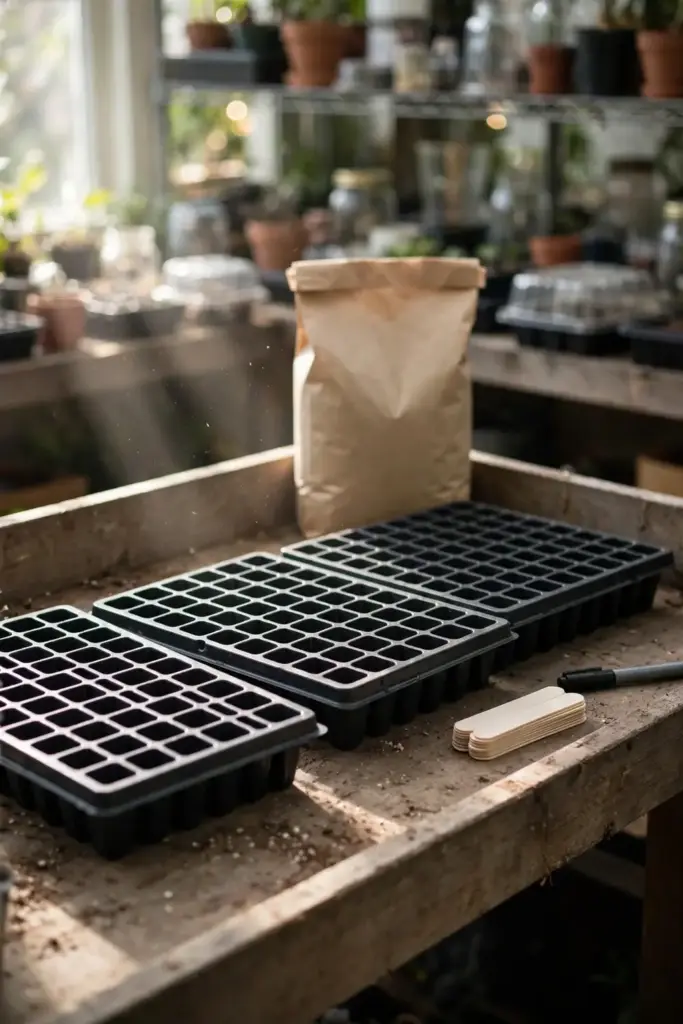
Never start seeds in reused potting mix. A bag opened last season, scooped with dirty hands, and stored open in the shed is not clean anymore. Buy fresh, bagged, soilless mix for every sowing round, keep the bag sealed and off bare soil, and scoop with a clean container. For a home gardener, this one habit prevents more damping-off than everything else combined.
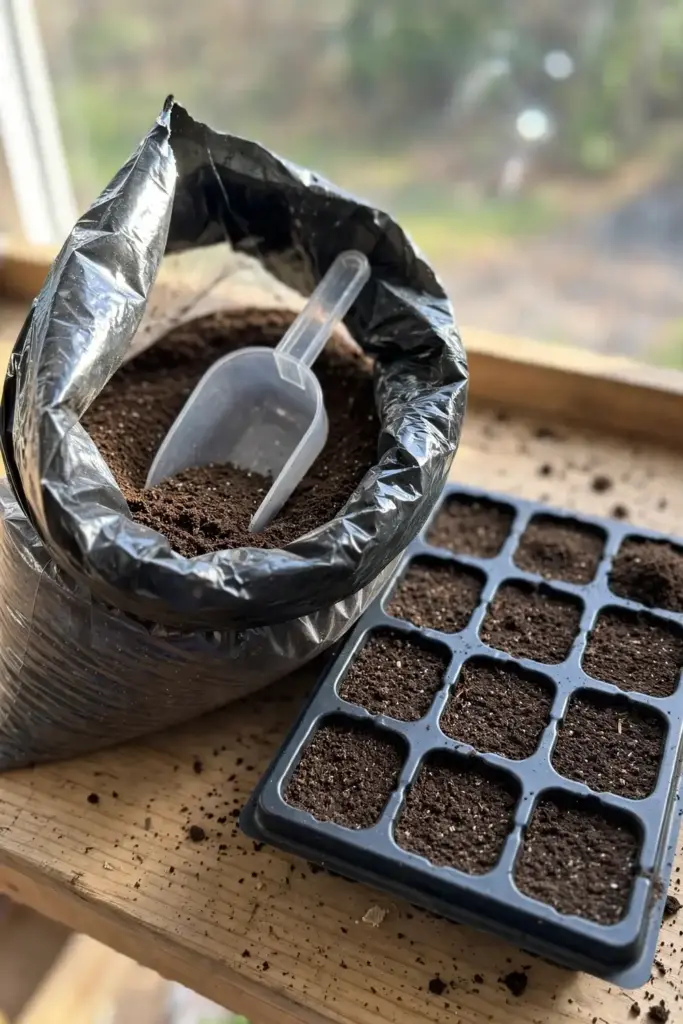
If you mix your own starting medium, pasteurize it. Moisten the mix, heat it to 180 degrees Fahrenheit, the standard pasteurization temperature in university extension guidance, and hold it there for 30 minutes. A probe thermometer in the center of the batch keeps you honest. Let it cool completely before sowing. Do not bake it hotter or longer than needed; overheated mix can release compounds that harm seedlings and kills the beneficial microbes along with the bad.
Buy mix formulated for seed starting, not general potting soil. Seed-starting mixes are finer-textured and drain faster, which matters because Rhizoctonia loves the soggy, coarse pockets that cheap mixes develop. Check the bag for a recent pack date if one is printed, and avoid bags stored outdoors at the garden center where rain may have soaked through torn plastic.
Step 3: Sterilize Every Pot, Tray, and Tool
Sclerotia survive on surfaces: pot walls, cell trays, pruner blades, trowels, hose ends. Scrub off soil first, because organic matter shields the pathogen from disinfectants, then soak hard goods for 10 minutes in a 1-to-9 household bleach solution and rinse well. Air-dry before use. That is the whole protocol, and it is enough.
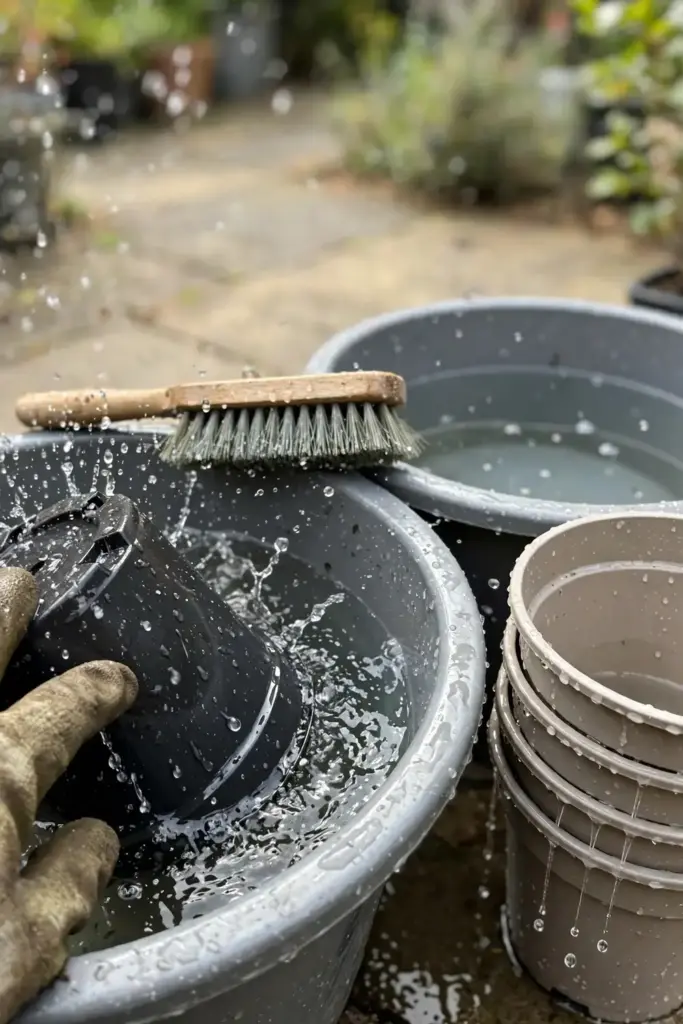
Make it a habit at the points that matter: before sowing season, between batches of seedlings, and whenever you pot up. Wipe pruners and trowels between beds if you have had disease anywhere. This is unglamorous work with an outsized payoff, because a sterile mix poured into a dirty tray is not sterile anymore.
Step 4: Water From Below and Let the Surface Dry
Rhizoctonia infects where the stem meets wet soil, so keep that zone dry. Bottom-water seedling trays by setting them in a shallow reservoir and letting the mix wick moisture up, then drain fully. Water in the morning so surfaces dry by evening. A moisture meter takes the guesswork out, but the finger test works: water only when the top inch of mix feels dry. For trays, lift them. A tray that feels light needs water; a heavy one does not. Seedlings in small cells dry out and drown faster than you expect, so check twice a day in warm weather instead of watering on a schedule.
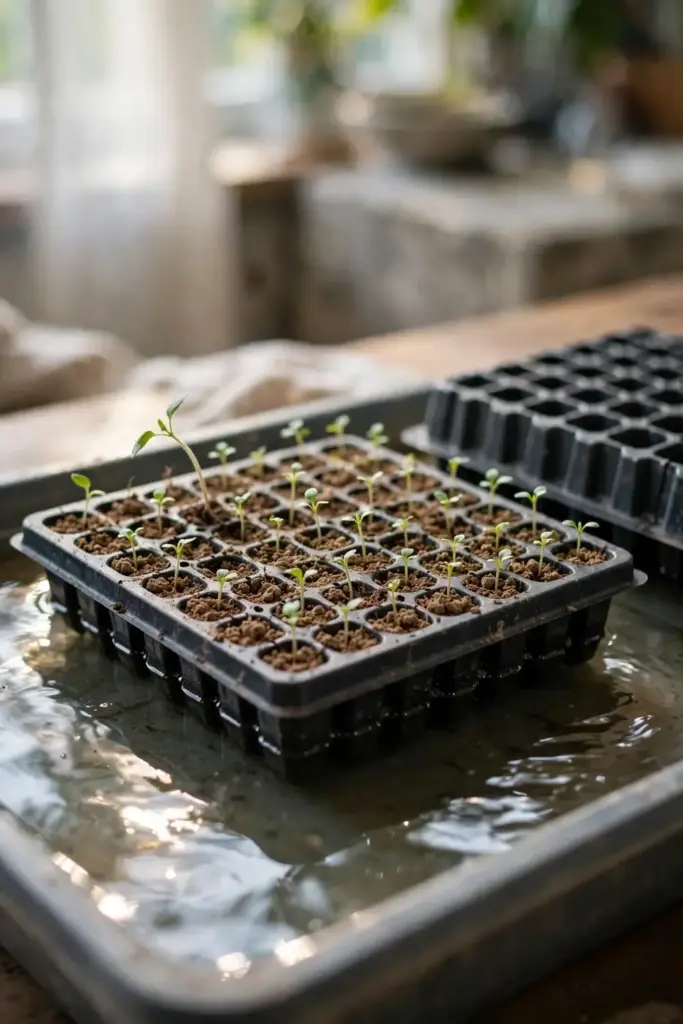
One honesty note: good drainage is necessary but not immunity. Research notes infections occurring in well-drained soils too, when plants are stressed. Drainage removes the easy wins for the fungus; the rest of the steps close the remaining doors. If you are growing in heavy native soil, raised beds or mounded rows are the structural fix, not wishful watering.
Step 5: Give Seedlings Air, Light, and Elbow Room
Crowded, dim, still-air seedlings are Rhizoctonia’s ideal victims. Thin or space seedlings so leaves do not touch. Run a small fan nearby on low; gentle air movement dries the soil surface and strengthens stems. Give strong light so growth is stocky, not stretched. And keep things warm: fast emergence shortens the vulnerable window, since the fungus does its worst on slow, struggling seedlings.
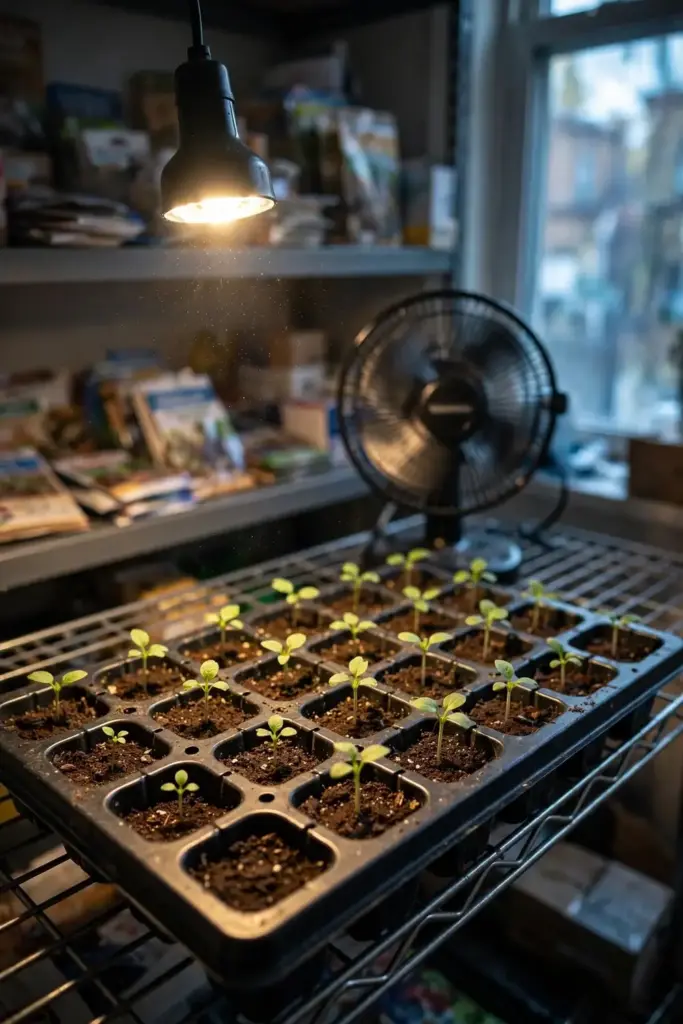
Resist the urge to overseed “for insurance” and then leave the extras. Every extra seedling is extra humidity and extra stem tissue touching damp mix. Sow thinly, thin early, and grow fewer, stronger plants.
Light quality matters as much as duration. A sunny windowsill is rarely enough in early spring; a simple shop light hung a few inches above the seedlings for 14 to 16 hours a day grows the stocky stems that resist infection. Leggy seedlings have thin cell walls and stay wet longer. If yours are stretching, the light is too far or too weak, and no amount of careful watering fully compensates.
Step 6: Clear Diseased Debris Out of Beds
At season’s end, remove dead and diseased plant material from beds instead of tilling it in. Sclerotia form inside infected tissue, so every leftover stem base is a survival pod for next year. Do not put suspect material in a cold compost pile; most home piles never get hot enough throughout to kill resting structures. Bag it and trash it if you have had confirmed disease.
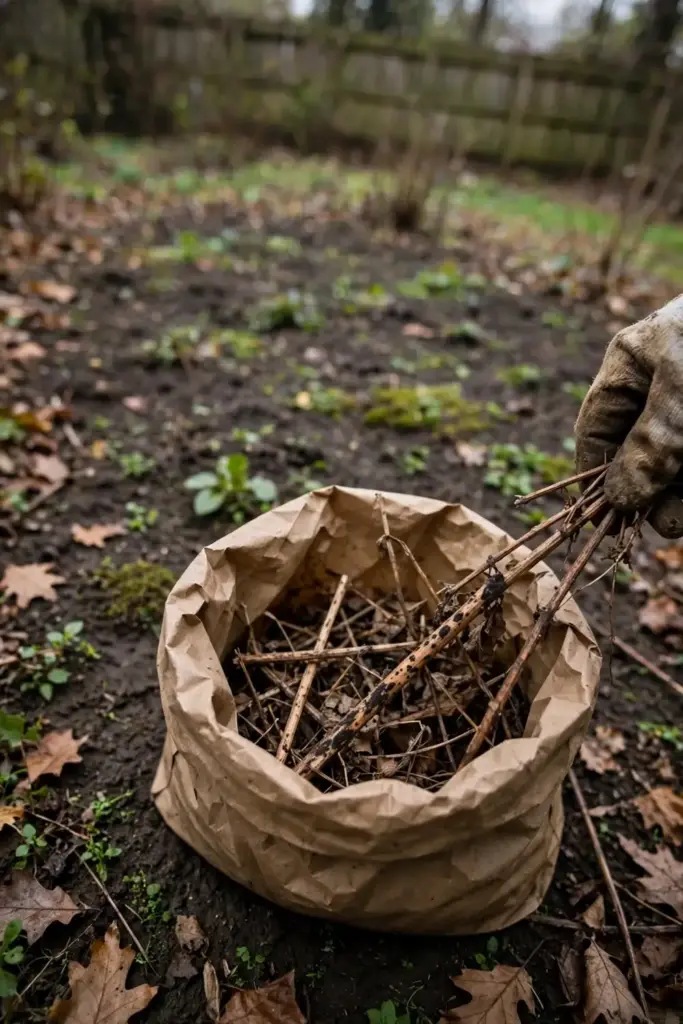
This is also the moment to reset beds properly, a job our fall garden bed prep guide walks through in full. Clean beds going into winter mean less inoculum waking up in spring, and the habit compounds year after year.
Step 7: Rotate Crops and Give Beds a Break
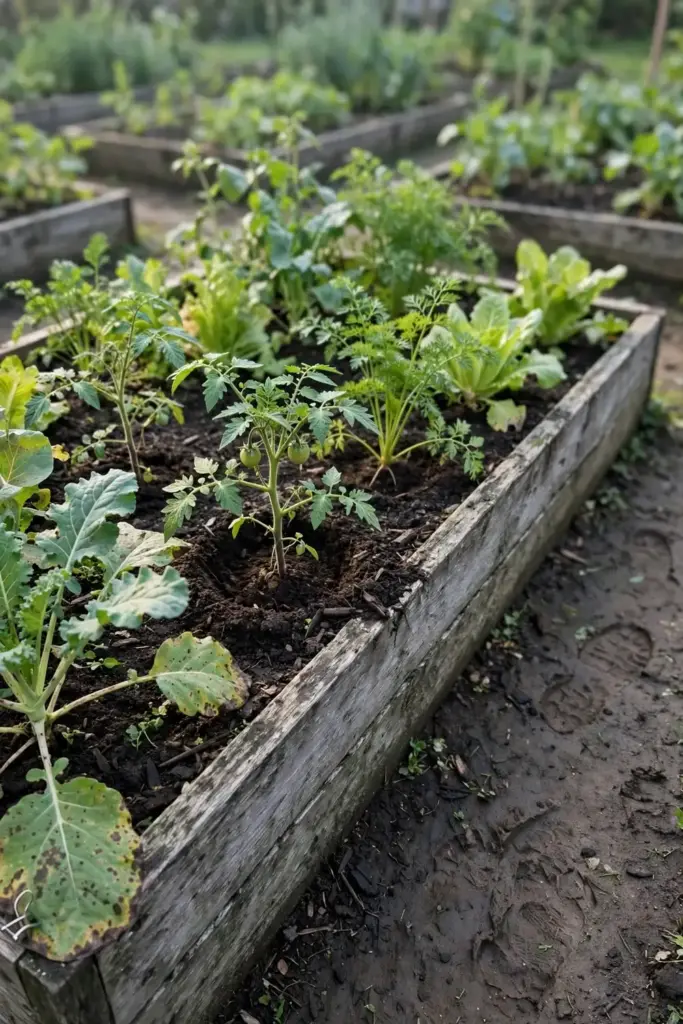
Rhizoctonia’s huge host range makes rotation harder than for picky pathogens, but it still helps. North Dakota State University’s extension guidance recommends rotations of three or more years with small grains before susceptible crops to cut disease pressure. Translate that to a home garden: do not plant the same plant family in the same spot year after year. Move beans, beets, tomatoes, and greens around the beds. Slip in a season of grains, grasses, or a cover crop where you can.
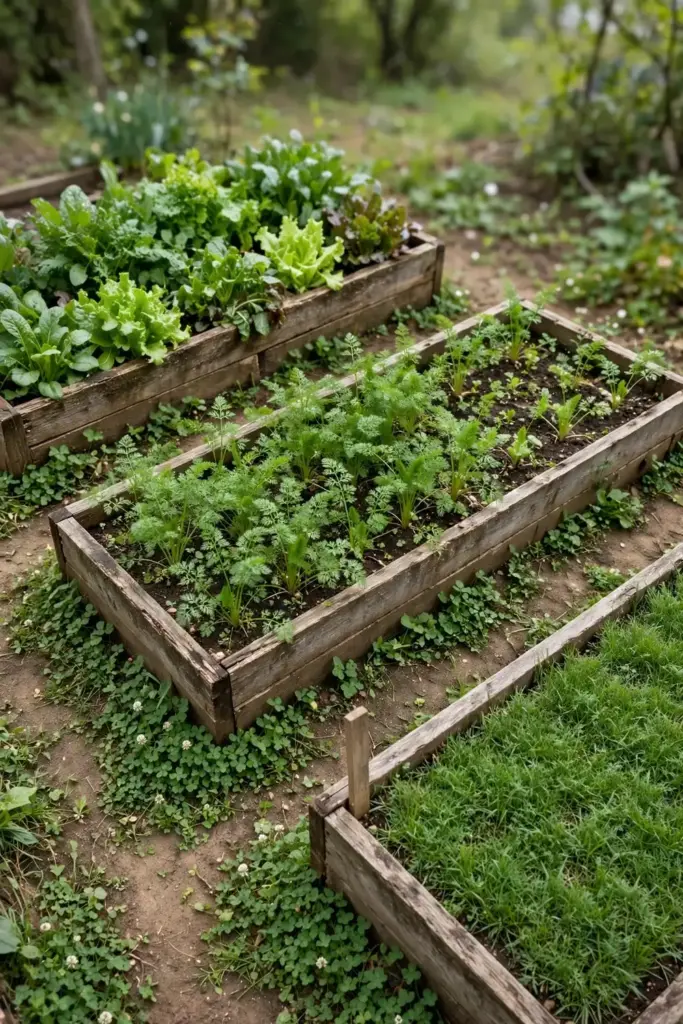
Rotation is the slowest lever on the list, which is why it sits at rank 7. It will not save this spring’s seedlings. It steadily drains the sclerotia bank over years, and it pairs well with debris removal, which stops you from depositing new inoculum while the old stock declines.
Step 8: Quarantine New Plants and Ask About Resistance
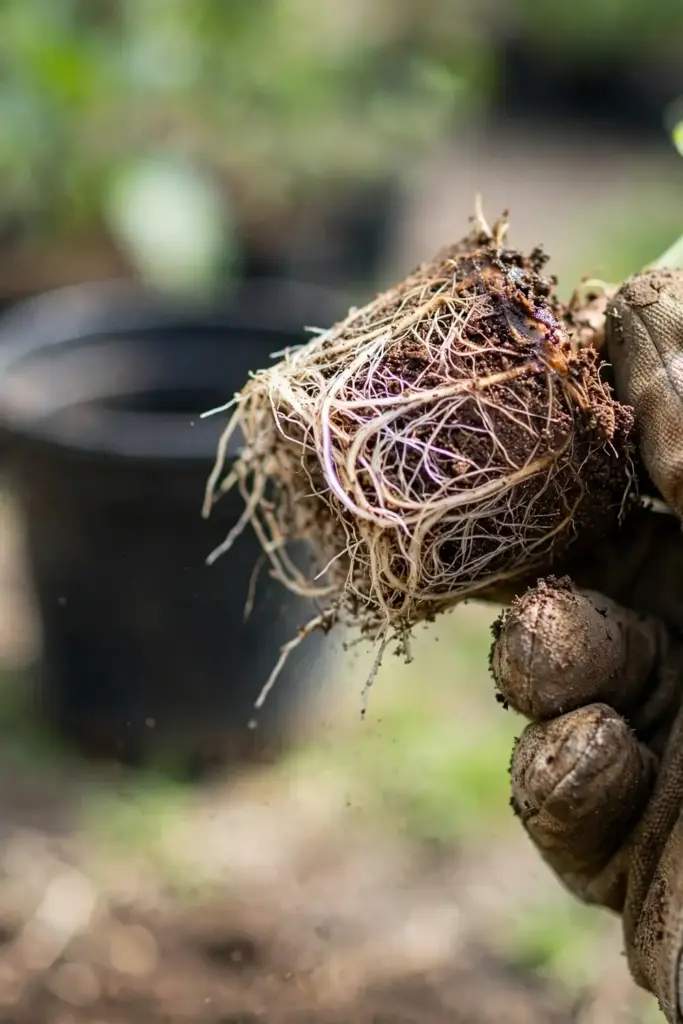
Every nursery transplant is a potential delivery vehicle for infested soil. Buy from reputable growers, inspect root balls before planting. Skip dropping new plants straight into beds; hold suspect ones in quarantine pots for a week or two. If roots look brown and mushy at the crown, return the plant or trash it. Do not try to rescue it into your clean bed.
Ask about resistance when you buy seed. Partial resistance to Rhizoctonia exists in some field crops, and breeders continue to work on it, but for most home garden vegetables and ornamentals there is no resistant variety on the market. Do not pay a premium for a trait that does not exist in the catalog. Where resistance is documented for your crop, it is worth choosing; where it is not, spend that effort on the steps above instead.
Where do you even check? Start with the seed catalog description, then your state’s extension variety trial reports, which sometimes score disease resistance. For turfgrasses, national trial programs rate brown patch, the lawn face of Rhizoctonia, by cultivar, and those ratings are genuinely useful when you overseed. For vegetables the information is patchier, which is itself an answer: if no reputable source lists resistance for your crop, assume it does not exist and lean on sanitation instead of shopping.
Seed-Starting Hygiene That Actually Works
Put the seed-starting steps together and they form one unbroken sterile chain: fresh mix from a sealed bag, sterilized trays and tools, clean water, bottom watering only, warmth and light for fast sturdy growth, and spacing that lets air move. Break any one link and the chain fails. The most common break is reusing last year’s mix in this year’s clean trays.
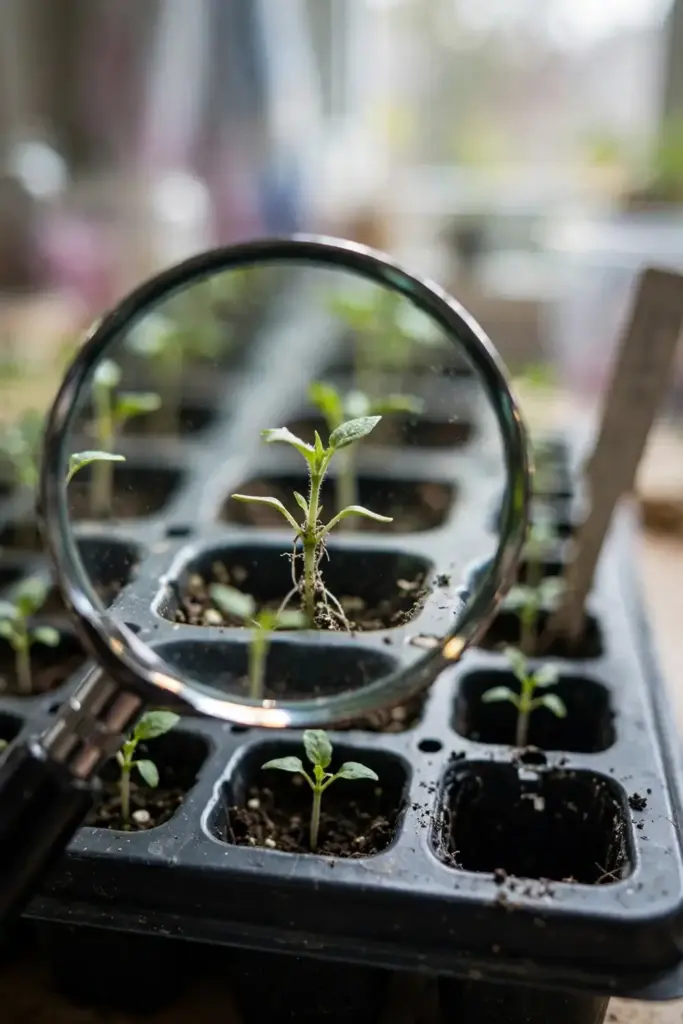
Know what to do when damping-off appears anyway. If one cell collapses, remove that cell and its immediate neighbors entirely. Do not try to save them with drenches, and do not keep the tray’s healthy-looking seedlings in the same dome without improving airflow. The fungus is already in that tray’s microclimate. Isolate survivors, increase air movement, let the surface dry, and consider that batch a lesson, not a rescue mission.
Label everything. When a tray fails, the label tells you which seed lot, which mix batch, and which sowing date were involved. Patterns emerge fast: the same mix bag behind three failures is not a coincidence.
Biological Preventives: Trichoderma and Friends
Trichoderma harzianum is the best-studied biological preventive for Rhizoctonia. It colonizes the root zone and attacks the pathogen directly, a habit researchers call mycoparasitism. In published trials, wheat-bran cultures of the fungus protected radish seedlings from Rhizoctonia damping-off across five successive plantings, and later work showed it cutting pathogen populations in soil substantially. That is real efficacy, not marketing.
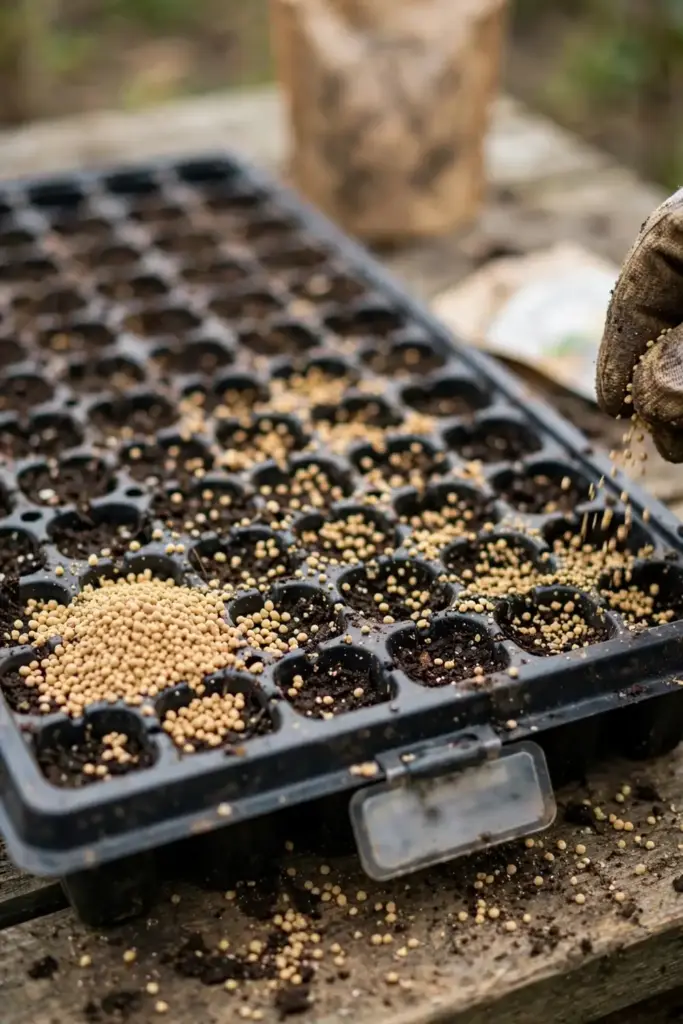
The honest limits matter just as much. Trichoderma is preventive, not curative: it must establish in the root zone before the pathogen attacks, so apply it at sowing or transplanting, mixed into the mix or as a drench per the product label. It will not rescue a plant that is already girdled. Results vary by strain, product freshness, and soil conditions. Bacillus species show similar preventive promise in greenhouse work. Think of biologicals as reinforcements for the sanitation steps, not replacements for them.
Application timing decides most of the outcome. Mix granular products into the potting mix before sowing, or drench at transplanting so the organism colonizes the root zone as roots grow into it. Reapply after heavy rains wash through containers, since the population can thin out. Store products cool and check expiry dates; Trichoderma is a living organism, and a two-year-old packet from a hot garage shelf is mostly dead weight.
Feeding Your Soil’s Defenses
Soil with active microbial life suppresses Rhizoctonia on its own. Cornell’s vegetable pathology notes that sclerotia degrade faster where microbial activity is high, which gives you a genuine long-term lever: feed the soil food web. Finished, hot-composted compost added regularly supports the microbes that compete with and consume resting structures. Unfinished or cold-piled compost can do the opposite, carrying the very debris the fungus survives on.
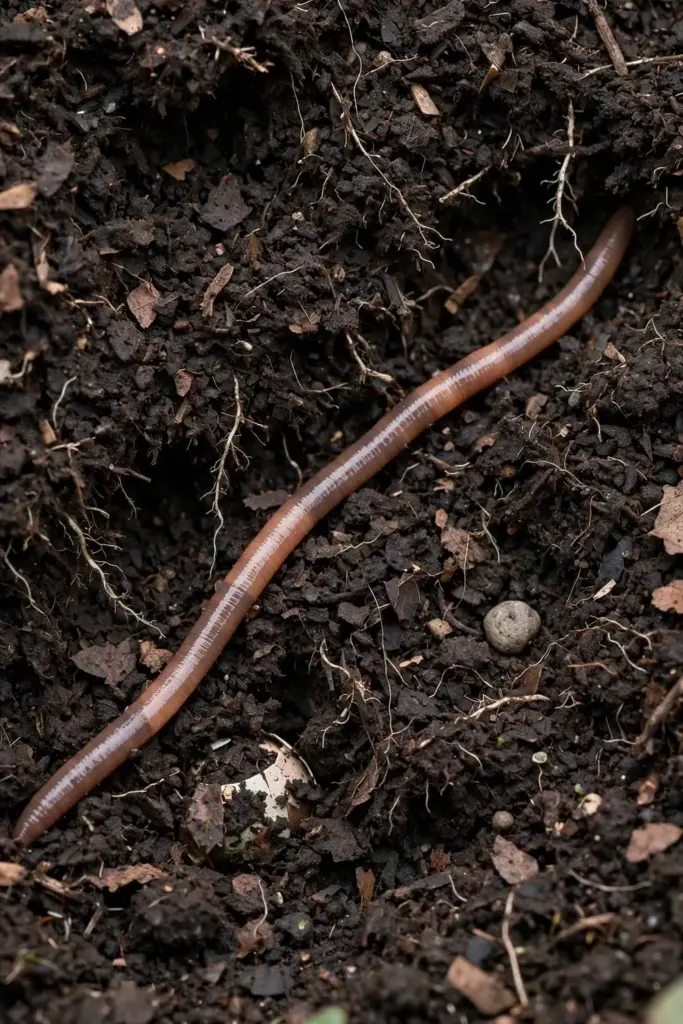
Get a soil test and fertilize to its recommendations instead of guessing. Ohio State’s Rhizoctonia management guidance specifically warns against over-fertilizing, which encourages the disease. Rich, balanced, biologically active soil grows fast plants and starves sclerotia at the same time. Our soil health guide covers the full foundation this section builds on.
One more input deserves a warning: fresh wood chips and uncomposted bark worked into the soil can temporarily tie up nitrogen and feed the very saprophytic growth Rhizoctonia enjoys. Use woody mulches on the surface, where they belong, and keep them pulled back a few inches from stems. The soil line must stay open to air. Mulch piled against stems is an invitation, not protection.
Living With the Risk
Here is the part no product label will tell you: in most established gardens, Rhizoctonia is already there, and it is staying. Sclerotia outlast rotations, survive compost piles that never fully heat, and ride in on the occasional nursery plant despite your screening. The goal was never eradication. It is keeping inoculum low and plants vigorous enough that the two rarely meet at the wrong moment.
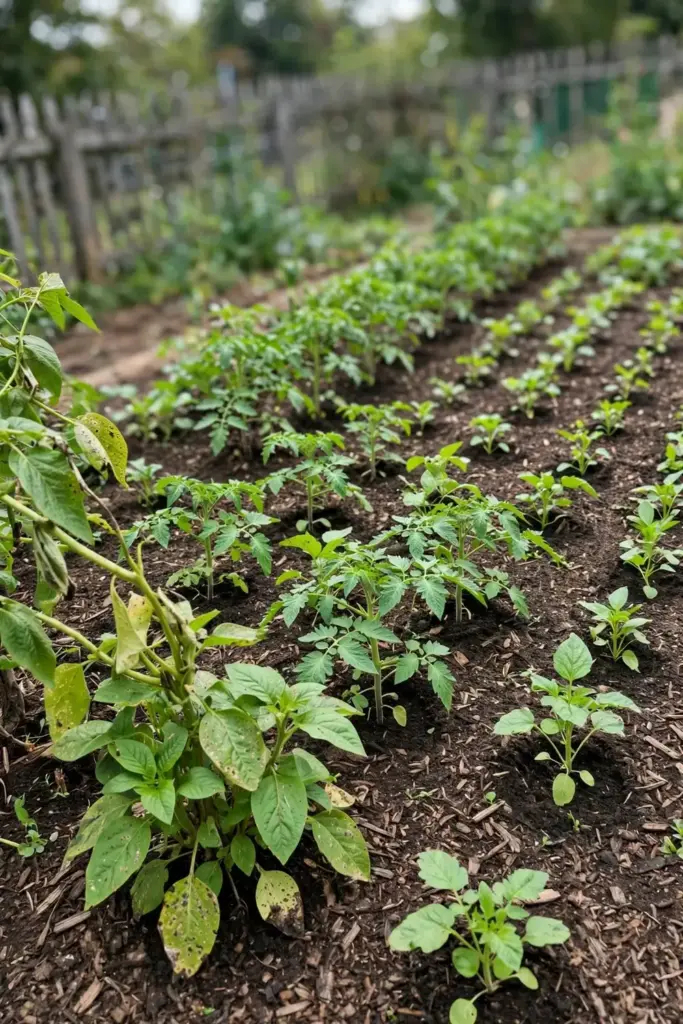
That reframes the job from anxiety to routine: clean mix every spring, sterilized trays, disciplined watering, debris out in fall. These are habits, not projects. And they protect against Pythium and Fusarium damping-off at the same time, so one routine quietly covers the whole seedling-disease complex.
Keep records, even rough ones. Note which bed had trouble, what was planted there, and what you changed. Memory fades by next spring, but a few lines in a notebook turn vague suspicion into a rotation plan. Over three or four seasons, those notes become the most valuable prevention tool you own, because they tell you where your inoculum actually lives instead of where you fear it might. Gardeners who run this routine stop losing whole trays because the fungus never gets its opening.
Frequently Asked Questions
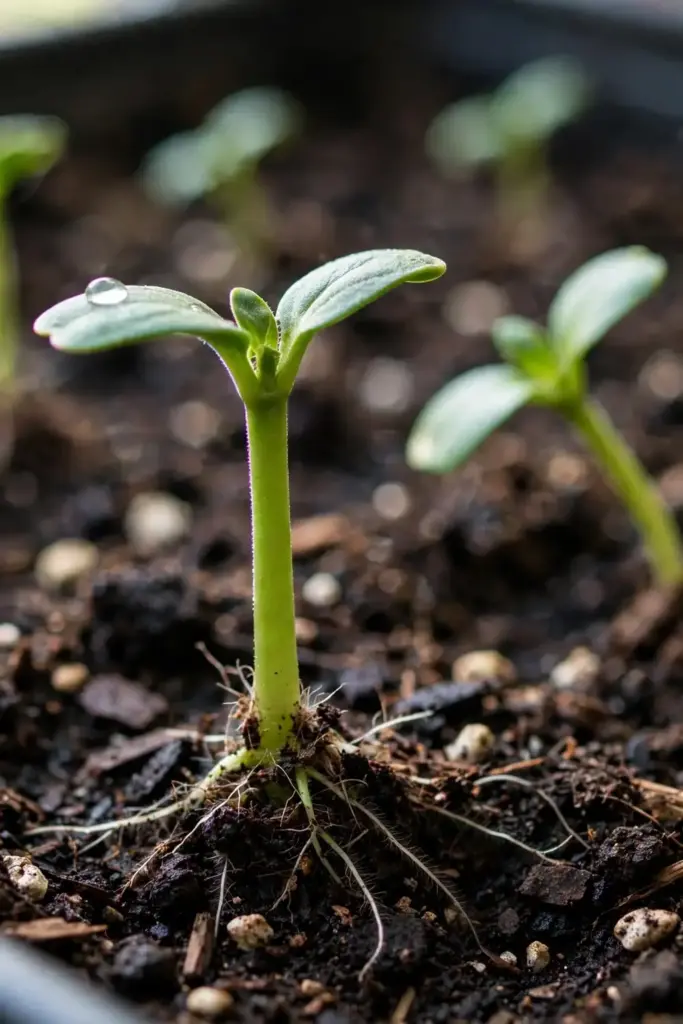
Practically no. Sclerotia survive for years in soil and debris, and the fungus feeds saprophytically on dead organic matter, so it never fully starves. Home-garden prevention aims to shrink the inoculum bank and deny infection courts, which reliably prevents most losses. Think suppression and avoidance, not eradication, and you will make better decisions.
Evidence is thin. Peroxide kills microbes on contact but breaks down within minutes in soil, so it cannot provide lasting protection, and it harms beneficial organisms too. It is fine for disinfecting empty pots and tools. As a routine soil drench for prevention, it is theater. Spend the effort on sanitation and watering discipline instead.
You can pasteurize used mix at 180 degrees Fahrenheit for 30 minutes, and that does kill most pathogens. But for seed starting, fresh bagged mix is cheaper than your time and far more reliable, since pasteurization is easy to do unevenly at home. Relegate reused mix to established outdoor containers, never to seed trays.
No. Trichoderma and other biologicals are preventive colonizers; they must establish in the root zone before the pathogen attacks. Once a stem is girdled or roots are rotted, no biological product reverses it. Apply at sowing or transplanting, and treat rescue attempts as learning experiences rather than expectations.
Yes, at the family level. You do not need a farm-scale plan. Just avoid planting the same family in the same spot in consecutive years, and work in a season of grasses, grains, or cover crops where space allows. It is the slowest lever, draining the sclerotia bank over years, so pair it with debris removal for the fastest combined effect.
No. Damping-off is a symptom: seedlings collapsing at the soil line. Rhizoctonia solani is one of several pathogens that cause it, alongside Pythium, Fusarium, and others. The prevention routine here covers all of them at once, which is convenient, because you rarely know which one took your seedlings.
Where to Go From Here
Start with the top of the ranked table and work down. This week: buy fresh seed-starting mix and sterilize your trays and tools. This season: bottom-water, space seedlings for airflow, and add a Trichoderma product at sowing. This year: pull diseased debris in fall and sketch a simple rotation so no family repeats in the same bed. None of these steps is expensive, and together they close nearly every door Rhizoctonia uses. The fungus will still be in your soil. It just will not be in your seedlings. Prevention is a season-long habit, not a single purchase, and the gardeners who treat it that way are the ones who stop losing plants.