
Stubby root nematode is a microscopic soil roundworm that feeds on root tips and carries Tobacco Rattle Virus into potato, where the virus causes corky ringspot. A load with only a small share of symptomatic tubers can face rejection of the whole lot. That virus math is why this pest belongs in a commercial grower conversation, and why guessing from aboveground symptoms alone loses money.
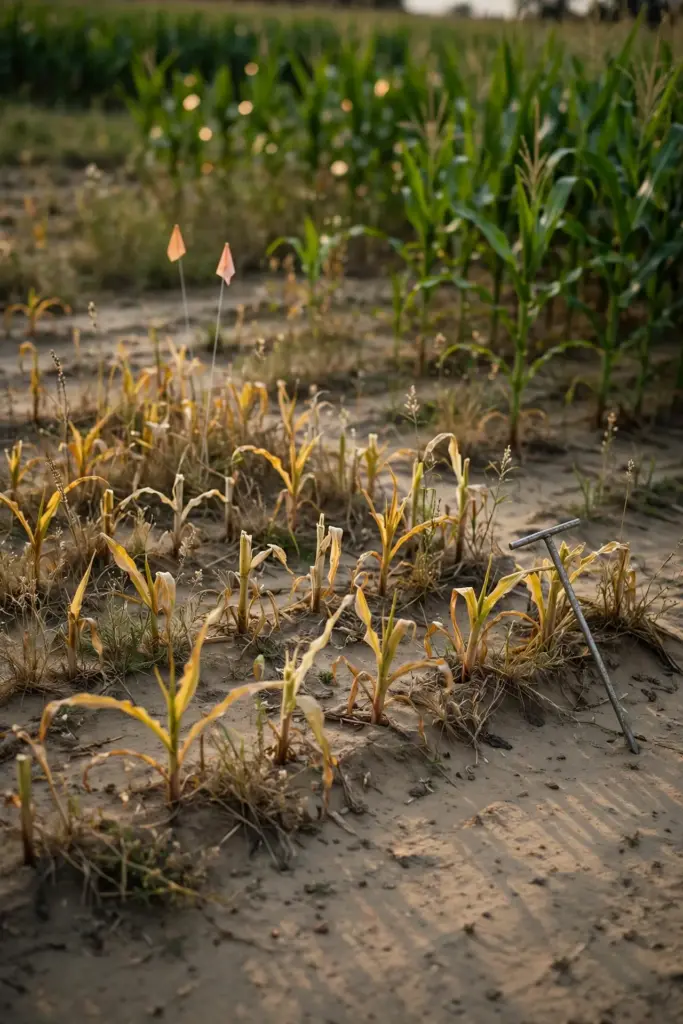
Stubby root nematode lives in the soil and feeds from outside the root. It attacks root tips, and the attacked tips stop elongating. The root system turns short and branched. Aboveground, the damage looks like nutrient deficiency or drought stress. Sandy soils show the worst damage, and the damage arrives in irregular patches across a field rather than in an even wash.
I have learned to trust the assay over the aboveground symptoms. The assay comes first. Rotation and chemistry follow the assay result.
1. What Stubby Root Nematode Actually Is
Stubby root nematode is the common name for soil roundworms in the family Trichodoridae, in the genera Trichodorus and Paratrichodorus. The species most often named in Florida work is Nanidorus minor, a synonym of Paratrichodorus minor. The group carries one name from here on. That name is stubby root nematode.
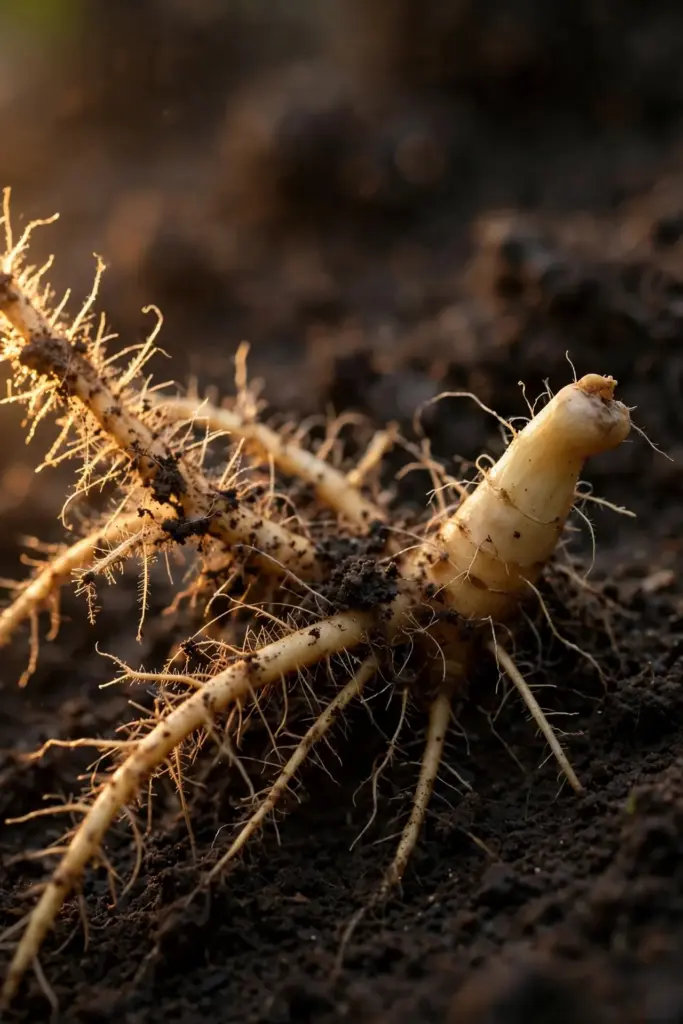
Stubby root nematode is an ectoparasite. The worm stays in the soil and feeds from outside the root. It feeds mainly on the meristem cells of root tips. The feeding tool is an onchiostyle, a curved solid stylet that no other plant-parasitic nematode group carries. The nematode punctures a cell, secretes saliva that hardens into a hollow feeding tube, and drinks the cell contents through that tube. Then it moves to the next cell and builds a new tube.
The life cycle runs fast in warm soil. Females lay eggs that rest in the soil until they hatch as second-stage juveniles. A juvenile that finds a root molts three times before it becomes an egg-laying adult. The UF/IFAS Extension profile of Nanidorus minor puts the full cycle as short as 16 days at 84 degrees Fahrenheit, with longer cycles at cooler temperatures. NC State Extension gives 16 to 27 days across species and temperatures. Warm months stack generations on top of each other.
Stubby root nematode is an obligate parasite. It must feed on living plant roots to survive and reproduce. Fallow ground starves it. A living host, even a weed host, keeps it fed. Most individuals are female, and the species reproduces without mating, so a small founding population can grow without waiting for males.
The host list is long. The UF/IFAS Extension profile of Nanidorus minor credits Nanidorus minor with over 100 known hosts. Florida hosts include corn, sorghum, bermudagrass, St. Augustinegrass, cabbage, mustard, tomato, eggplant, sugarcane, peanut, and soybean. The breadth of that list is the reason rotation choices need checking against the host range instead of habit.
2. How to Identify Stubby Root Nematode Damage in the Field
Field identification of stubby root nematode damage means matching field signs with a lab assay. Patchy stunting aboveground and short stubby roots belowground point at the suspect. The assay confirms it.
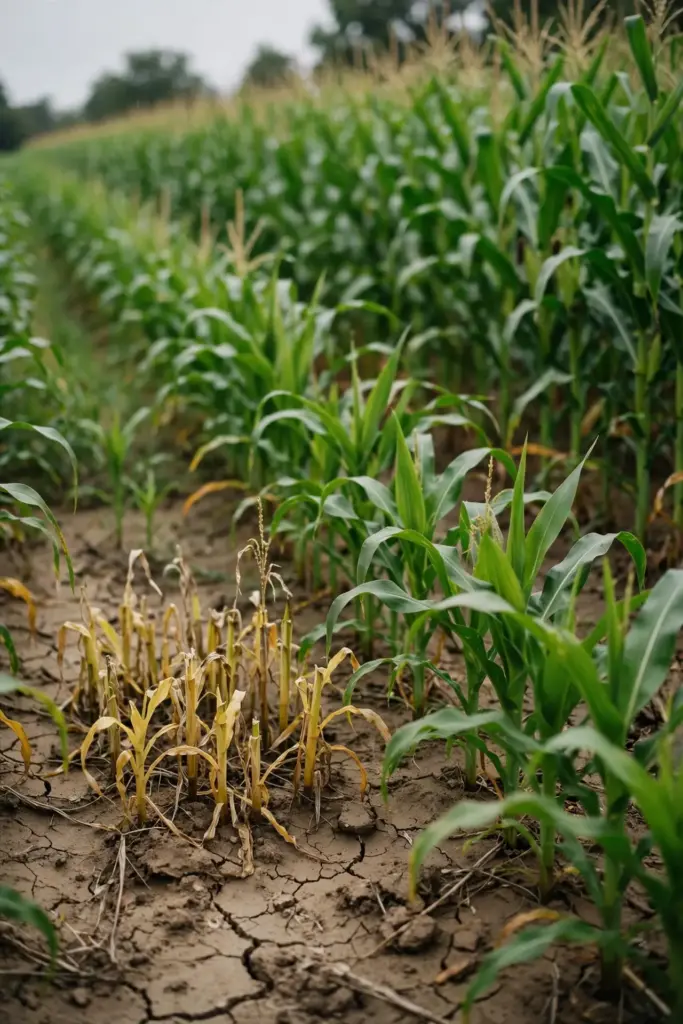
Aboveground symptoms stay vague. Plants stunt. Stands thin. Leaves yellow with nutrient deficiency patterns. Plants wilt under stress and lodge more readily. The UF/IFAS Extension profile of Nanidorus minor lists stunting, poor stand, wilting, nutrient deficiency, and lodging, and notes that damage usually appears in irregularly shaped patches within a field. Sandy soils show more severe symptoms than heavier soils. A patchy pattern that follows sandy ground deserves a closer look than a uniform pattern across a whole field.
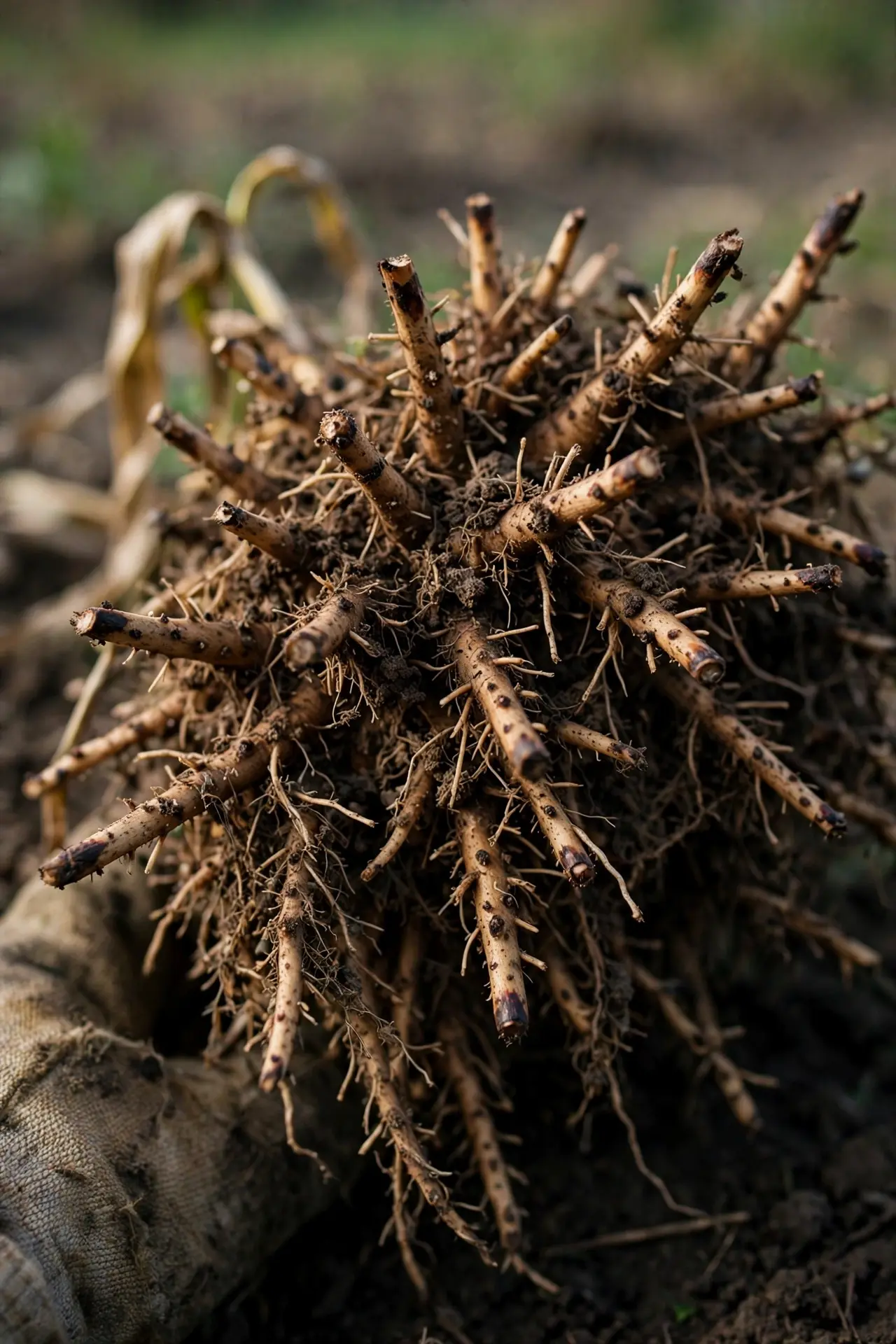
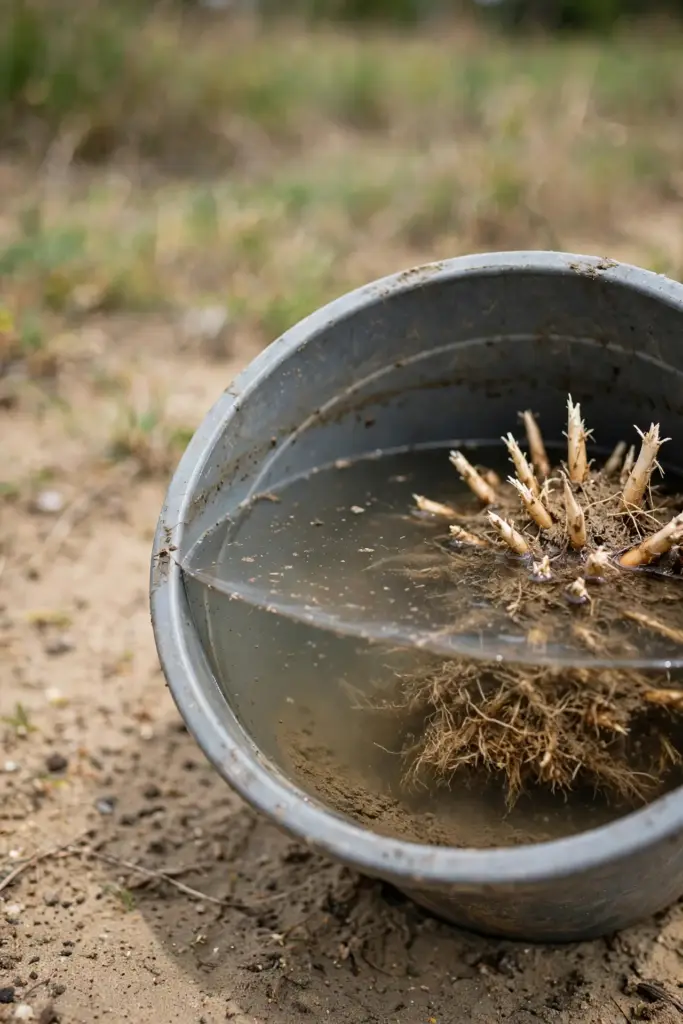
Roots carry the clearer sign. Dig plants with care and keep as much of the root system intact as possible. Wash the soil off in a bucket or under running water. Look for roots that appear abbreviated or stubby, with branching at the points where feeding stopped tip growth. NC State Extension adds that stubby roots often carry brown lesions on the tips, and that some infestations show only an overall reduction in root volume, with fewer and shorter secondary roots. A root system that looks small for the size of the top growth is a warning even when no single root looks dramatic.
Aboveground symptoms mimic other problems. NC State Extension states that damage in corn may be hard to detect because aboveground symptoms often mimic nutrient deficiencies or drought stress, and that low populations may show no aboveground symptoms at all. High populations bring stunted or uneven growth, leaf yellowing, small ears and kernels, and poor stands. The same mimicry applies across hosts. A grower who treats the yellow leaves without checking the roots treats a symptom.
Only the assay settles it. The UF/IFAS Extension profile of Nanidorus minor states that all the listed symptoms can be caused by other factors, and that the only way to verify a Nanidorus minor problem is a nematode assay from a credible diagnostic lab. Dig the plants, wash the roots, and send soil plus roots to the lab. The field exam points at the suspect. The assay names it.
3. Which Commercial Crops Get Hit Hardest
Potato takes the hardest economic hit, and onion takes the hardest direct hit. Corn takes the hardest rotational hit. The three crops lose in three different ways, and each way calls for a different response.
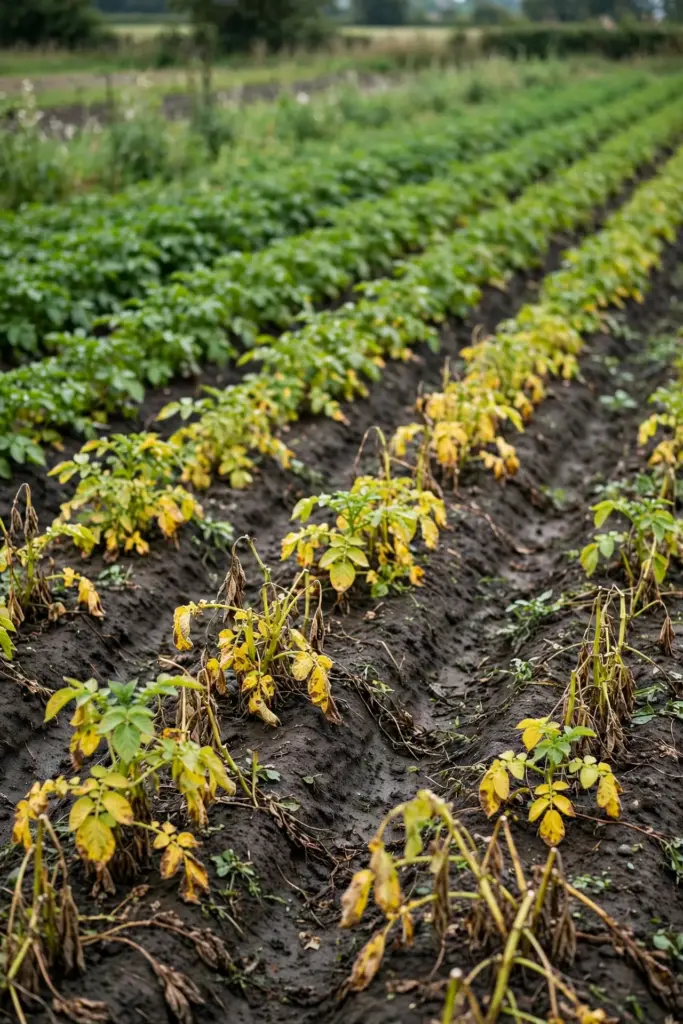
Potato loses through the virus. Stubby root nematode feeds on potato roots and delivers Tobacco Rattle Virus. The virus causes corky ringspot, and corky ringspot makes tubers unmarketable. The damage sits inside the tuber where a buyer finds it at grading. A field can look acceptable at harvest and still lose the lot at the shed. The virus section below carries the numbers.
Onion loses through direct feeding. The University of Georgia guide to stubby-root nematodes on onion calls Paratrichodorus minor an important pest of onions in Georgia, with damage observed across multiple fields in the Vidalia area. The most obvious aboveground symptom is poor stunted growth of onion seedlings. Seedlings carry the worst of it because a seedling owns a small root system, and a small root system has little room to lose root tips.
Corn loses through stand and fill. NC State Extension names corn a preferred host of stubby root nematode. High populations bring stunted or uneven growth, leaf yellowing, small ears and kernels, and poor stands. Corn also carries other pressures on the same ground, such as Curvularia leaf spot on corn, so a corn field with thin stands and yellow leaves needs the root exam before any foliar diagnosis earns trust.
| Crop | Main Loss | Why It Matters Commercially |
|---|---|---|
| Potato | Corky ringspot from Tobacco Rattle Virus | Tubers look marketable until grading, then the lot faces rejection |
| Onion | Stunted seedlings from direct root feeding | Seedbed losses cut transplant supply for the whole planting |
| Corn | Poor stands, small ears, uneven growth | A preferred host that builds populations for the next crop |
| Sorghum, peanut, soybean, sugarcane | Root pruning and stunting | Susceptible rotation crops that keep populations fed |
| Cabbage, mustard, tomato, eggplant | Root pruning and stunting | Vegetable hosts that carry populations between cash crops |
| Turf grasses | Thinning and stunting | Bermudagrass and St. Augustinegrass host the nematode on non-crop ground |
The University of Georgia guide to stubby-root nematodes on onion lists a wide host range that includes sugar beets, potatoes, corn, cotton, peanuts, wheat, onions, grasses, and other vegetable crops commonly grown in Georgia. A rotation that moves from corn to soybean to peanut never leaves the host list. A rotation that moves from corn to a verified poor host breaks it.
4. Stubby Root Nematode vs Root-Knot Nematode vs Dagger Nematode
Several soil nematodes prune roots. The field signs separate them, and the separation matters because each group answers to different management.
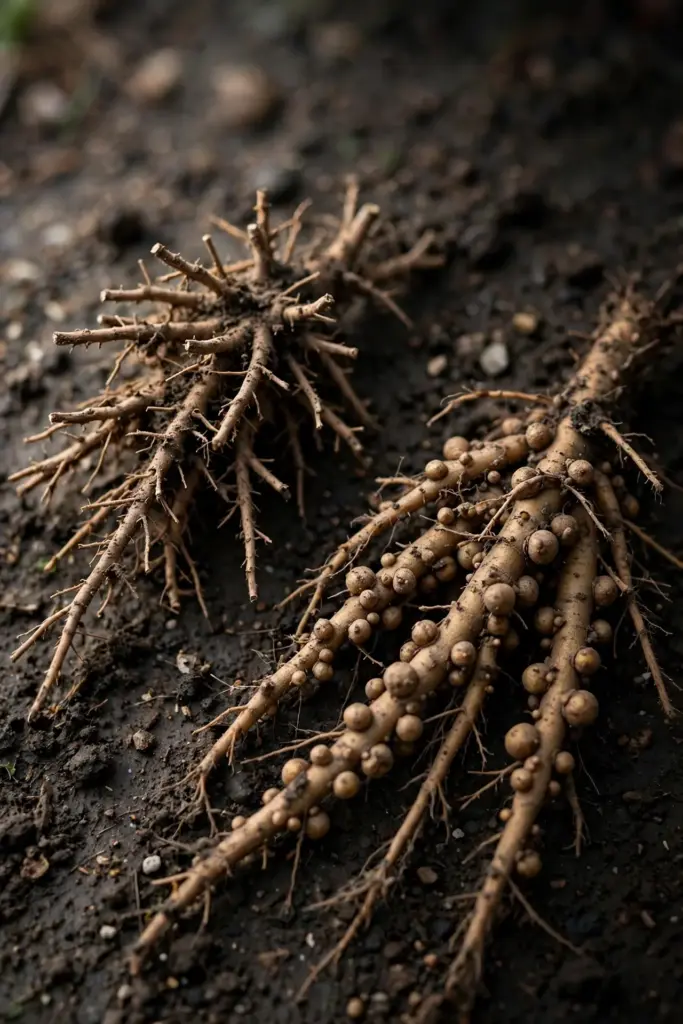
Root-knot nematodes feed inside roots. NC State Extension draws the contrast plainly: stubby-root nematodes feed on roots while remaining outside the root in the soil, while root-knot nematodes and lesion nematodes feed on roots while inside the host root. Root-knot feeding produces galls, the swollen knots on roots that give the group its name. Stubby root feeding produces short branched root tips with no galls. A root system covered in knots points at root-knot. A root system with short tips and no knots points at stubby root.
Dagger nematode belongs to the same ectoparasite habit as stubby root nematode. Both feed from outside the root. Dagger nematode also vectors viruses, but the virus group differs from the Tobacco Rattle Virus story that defines stubby root nematode. Dagger nematode is a companion article on this site, named here without a link because it is not yet live. The two articles together cover the virus-vector nematodes a grower is most likely to meet in a soil assay report.
The table below carries the working separation. Use it at the wash bucket, then confirm with the assay.
| Feature | Stubby Root Nematode | Root-Knot Nematode | Dagger Nematode |
|---|---|---|---|
| Feeding site | Outside the root, at root tips | Inside the root | Outside the root |
| Signature root symptom | Short stubby tips, branching, no galls | Galls or knots on roots | Coarse stubby roots, pruning |
| Virus role | Vectors Tobacco Rattle Virus | No virus vector role | Vectors a different virus group |
| Field pattern | Irregular patches, worse in sandy soils | Patchy, worse in warm sandy soils | Patchy, tied to host history |
| Confirming test | Soil assay plus root wash | Root exam for galls plus soil assay | Soil assay |
One caution applies to every row. Mixed populations are common. A field can hold stubby root nematode and root-knot nematode at the same time. The assay report lists each genus it finds. Treat the report as a roster, not a single diagnosis.
5. Why Tobacco Rattle Virus Makes This Nematode Expensive
Tobacco Rattle Virus turns a minor root feeder into a lot-rejection problem. Without the virus, stubby root nematode prunes roots and stunts plants. With the virus, the same feeding delivers a pathogen that no spray and no cure can remove from an infected plant.
The virus path runs through feeding. A stubby root nematode feeds on the roots of an infected plant and picks up Tobacco Rattle Virus. The nematode moves to a healthy plant, and the next feeding delivers the virus. The University of Wisconsin Plant Pathology fact sheet on tobacco rattle describes exactly that sequence: feeding on infected roots, acquiring the virus, then spreading it through later feeding on healthy plants. The nematode is the courier. The virus is the damage.
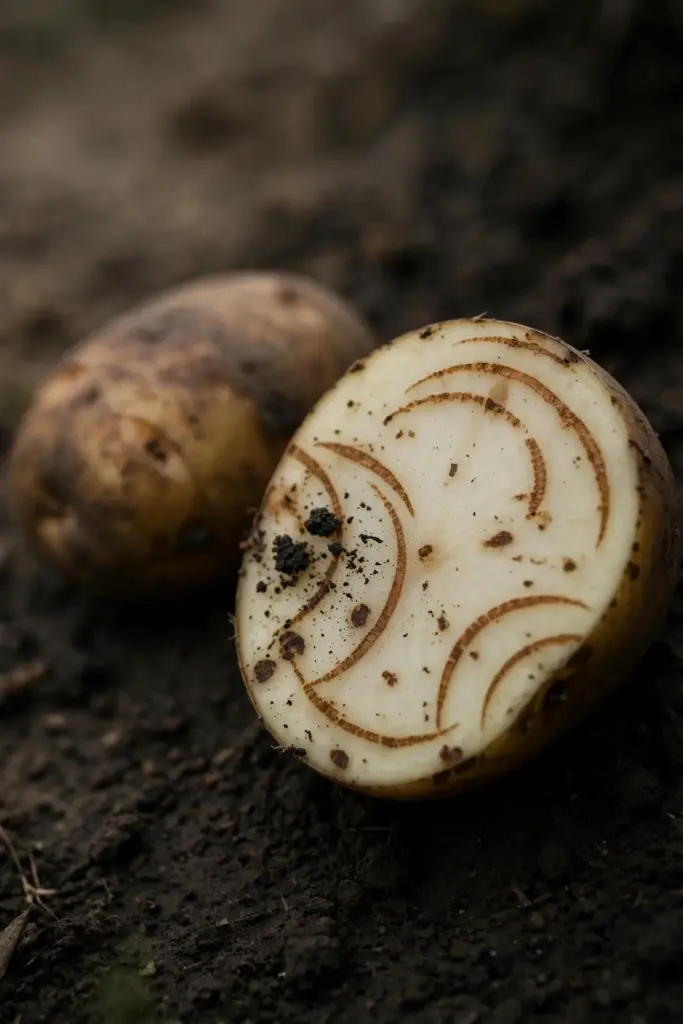
In potato, the virus causes corky ringspot. The UF/IFAS Extension profile of Nanidorus minor describes brown rings on the tuber surface and brown arcs or flecking inside infected potatoes. Those symptoms make symptomatic tubers unmarketable. The UF/IFAS Extension profile of Nanidorus minor gives the number that sets the economics: as few as 5 percent of tubers with corky ringspot symptoms can cause rejection of the entire lot of potatoes. A defect rate that small is a rounding error in most grading. In a corky ringspot lot, it ends the sale.
The virus reaches beyond potato. The University of Wisconsin Plant Pathology fact sheet on tobacco rattle lists herbaceous ornamentals including astilbe, bleeding heart, coral bells, daffodil, epimedium, gladiolus, hyacinth, marigold, tulip, and vinca, plus vegetable crops including beans, beets, peppers, potatoes, and spinach. Symptoms vary with host and conditions: mottling, yellow ring spots, line patterns, necrotic lesions, chlorotic spots or streaks, and notched leaves. Plants infected young can show leaf and stem deformities.
No cure exists for an infected plant. The University of Wisconsin Plant Pathology fact sheet on tobacco rattle states that once plants become infected with Tobacco Rattle Virus, they remain infected indefinitely, and that an infected plant cannot be treated in any way to eliminate the virus. Remove infected plants and dispose of them. The same fact sheet notes mechanical spread through contaminated pruning tools or knives, through grafting, and through seed from infected plants. Clean tools between cuts with a 30-second dip in the detergent solution the University of Wisconsin Plant Pathology fact sheet on tobacco rattle specifies. Buy clean planting stock and inspect susceptible plants for symptoms before purchase.
The management consequence is blunt. A grower cannot spray the virus out of a field. The levers are the vector population and the host sequence. Clean planting stock closes the remaining path.
6. How to Take a Soil Sample That Actually Diagnoses Stubby Root Nematode
A soil sample that actually diagnoses stubby root nematode follows the lab protocol for cores, depth, pattern, and handling. A single trowel of soil from one spot does not diagnose anything. The field is patchy, and the sample must cover the patchiness.
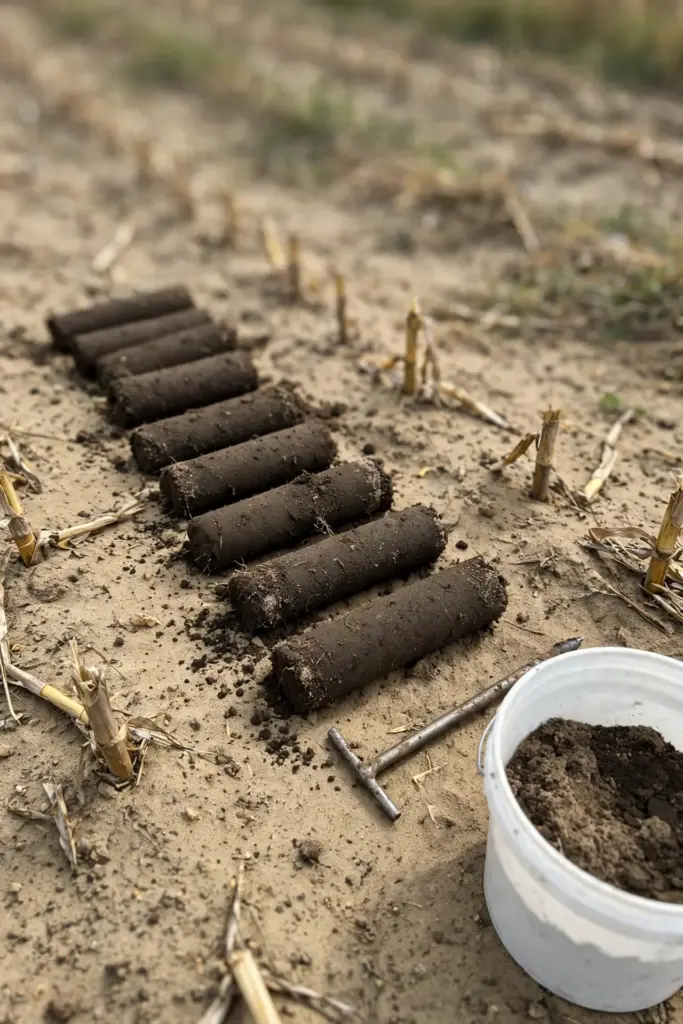
Start with the pattern. NC State Extension directs growers to collect 20 to 30 soil cores across a 5-acre block, at a depth of 6 to 8 inches from each area, using a grid-like or zig-zag pattern across the area. Combine the cores in a clean plastic bucket. Remove a smaller portion of that composite soil to submit to the nematode assay laboratory. Twenty cores across a patchy field beat 30 cores from one corner.
Sample the affected ground and the ground around it. Take cores from several areas in the affected field, not only from the worst patch. A sample from the worst patch alone inflates the count. A sample that covers affected and nearby ground shows the gradient. Mark each composite by field and block so the report maps back to the ground it came from.
Send roots with the soil. Dig plants with care and preserve as much of the root system as possible. Wash the roots in a bucket or under running water. NC State Extension notes that a visual root inspection will not show the level of nematode pressure in the field, and that diagnosis is confirmed through assessment of soil and root samples by a plant disease diagnostic laboratory or nematode assay laboratory. Soil alone can miss the feeding population. Roots alone cannot set the count. Send both.
Send the sample to a state nematode assay laboratory or a credible diagnostic lab. The UF/IFAS Extension profile of Nanidorus minor points growers to the University of Florida Nematode Assay Laboratory for routine diagnosis at a nominal fee. NC State Extension points North Carolina growers to the NCDA and CS Nematode Assay Laboratory. Use the lab that serves the state where the field sits, and follow that lab’s handling and shipping instructions.
Time the sample to the decision it serves. Sample symptomatic ground during the season to confirm the cause. Sample before planting to set rotation and chemistry choices. Sample after a management change to check whether the change moved the count. One assay answers one question. A grower who assays every season builds the trend line that single samples cannot give.
7. What Your Nematode Assay Report Means
A nematode assay report lists genera, counts, and sometimes a threshold note. Read it for the genus first, then for the count. The count sets the next crop.
The genus line names the pest. Trichodorus, Paratrichodorus, and Nanidorus all sit in the stubby root group. The lab may report any of the three names depending on its taxonomy. Treat them as one management problem. A report that lists stubby root nematode alongside root-knot or lesion nematodes describes a mixed population, and each genus earns its own line in the plan.
The count line sets the pressure. Counts rise and fall with host sequence, soil moisture, and season. Compare counts across fields and across years rather than reading one count in isolation. A count that climbs after a corn crop and drops after a poor host crop tells the grower the rotation is working. A count that climbs through two rotations tells the grower the rotation is not.
The virus line is the one the report may not carry. A nematode count alone does not prove Tobacco Rattle Virus is present. The vector and the virus travel together, so a positive stubby root count in a potato field carries TRV risk even before tubers show rings. Confirm the virus from plant or tuber symptoms and lab testing. Do not plant potato into a field with a known stubby root population and a TRV history on the assumption that a clean-looking crop last year cleared the virus.
| Report Line | What It Means | Next Move |
|---|---|---|
| Stubby root genera present | The vector is established in that field | Plan rotation and chemistry around the vector |
| Count climbing across seasons | Host sequence feeds the population | Change the host sequence |
| Count falling after a poor host | The rotation is working | Keep the rotation and assay again |
| No detection in one sample | The sample may have missed patchy ground | Re-sample the affected patches before declaring the field clean |
| TRV history plus vector present | Corky ringspot risk rides with the nematode | Keep potato out of that field |
A clean report deserves the same skepticism as a bad one. Stubby root populations sit in patches. A composite that misses the patches returns a clean report for an infested field. Re-sample ground that showed symptoms before trusting a clean result.
8. How to Reduce Stubby Root Nematode Pressure Before Planting
Reduce stubby root nematode pressure before planting with rotation, fallow, cover crops, and chemistry, in that order. None of them works well once the crop is up.
Rotation is the first lever. NC State Extension names tobacco and rye as poor or non-host crops for rotation. The UF/IFAS Extension profile of Nanidorus minor adds that summer legumes such as velvetbean or cowpea tend to keep populations of Paratrichodorus minor low and may reduce reliance on nematicides. The same profile warns that continuous cultivation of highly susceptible crops such as corn or sorghum can build populations to damaging numbers. NC State Extension adds that corn is hard to manage in corn and soybean rotations because both crops are susceptible. A rotation that moves from corn to soybean to sorghum never breaks the host chain. A rotation that inserts a poor host breaks it.
Cover crops carry the rotation through the off season. The University of Georgia guide to stubby-root nematodes on onion supports fallow crop rotation with non-host cover crops, and its full publication names resistant cultivars of oat, pearl millet, velvet bean, cowpea, and sunn hemp as cover or green manure crops for suppressing Paratrichodorus minor. The same publication warns against sorghum-sudangrass and hairy vetch, which can build the nematode population. A cover crop chosen by habit can feed the pest it was meant to starve. Check each candidate cover against the host list before sowing. Fall cover crops fit this slot in a vegetable rotation, and soil health work in the same field supports the crop that follows.
Fallow is the blunt lever. Leaving infested ground fallow for several months appears to suppress the nematode population enough to provide good control, according to the University of Georgia guide to stubby-root nematodes on onion. Fallow works because stubby root nematode is an obligate parasite. No living roots means no food. Fallow costs a season of income, so it fits the worst fields rather than every field.
Fumigation is the weakest lever for this pest. The UF/IFAS Extension profile of Nanidorus minor reports that a large share of Nanidorus minor populations occurred between 8 and 16 inches deep, below the typical treatment zone of soil fumigants. Many individuals escape treatment. Population numbers are known to rebound following soil fumigation to numbers higher than if no treatment were used. The same profile concludes that soil fumigants, while effective treatments for other plant-parasitic nematodes in Florida, often are not recommended for management of Nanidorus minor. A grower who fumigates for stubby root nematode pays for a treatment that misses the deep population and then rebounds.
Chemical control fits narrow windows. NC State Extension lists pre-plant soil fumigation, at-plant non-fumigant nematicides, and seed treatments as the chemical options that can reduce populations below economic thresholds. Its table includes terbufos at 5.0 pounds per acre applied in furrow and abamectin as a seed treatment at 0.15 milligrams per seed, per NC State Extension. Older organophosphate and carbamate nematicides such as aldicarb and fenamiphos were once very effective, but the UF/IFAS Extension profile of Nanidorus minor notes that those products were withdrawn over environmental and health concerns. Follow the current label for any product used, and confirm registration for the crop and state before purchase.
| Tactic | What It Does | Limit |
|---|---|---|
| Rotation to poor hosts | Starves the population between cash crops | Needs a verified non-host, not a habitual rotation |
| Fallow for several months | Removes all living roots the nematode needs | Costs a season of income |
| Resistant cover crops | Suppresses populations in the off season | Wrong cover choice feeds the pest |
| Fumigation | Kills shallow populations of other nematodes | Misses the 8 to 16 inch zone and rebounds |
| Non-fumigant nematicide or seed treatment | Cuts populations at planting | Narrow window, label limits, threshold dependent |
Total eradication is not a realistic goal. The University of Georgia guide to stubby-root nematodes on onion frames the management strategy as reducing nematode populations in soil because eradicating nematodes is not likely. Set the goal as a count low enough to plant the intended crop safely, and verify the count with an assay before planting.
9. How to Manage an Infested Field During the Season
In-season management of stubby root nematode is narrow. No product in the extension programs cited here targets established populations in a standing crop. The in-season work is crop support and spread prevention, with record keeping for the next pre-plant window.
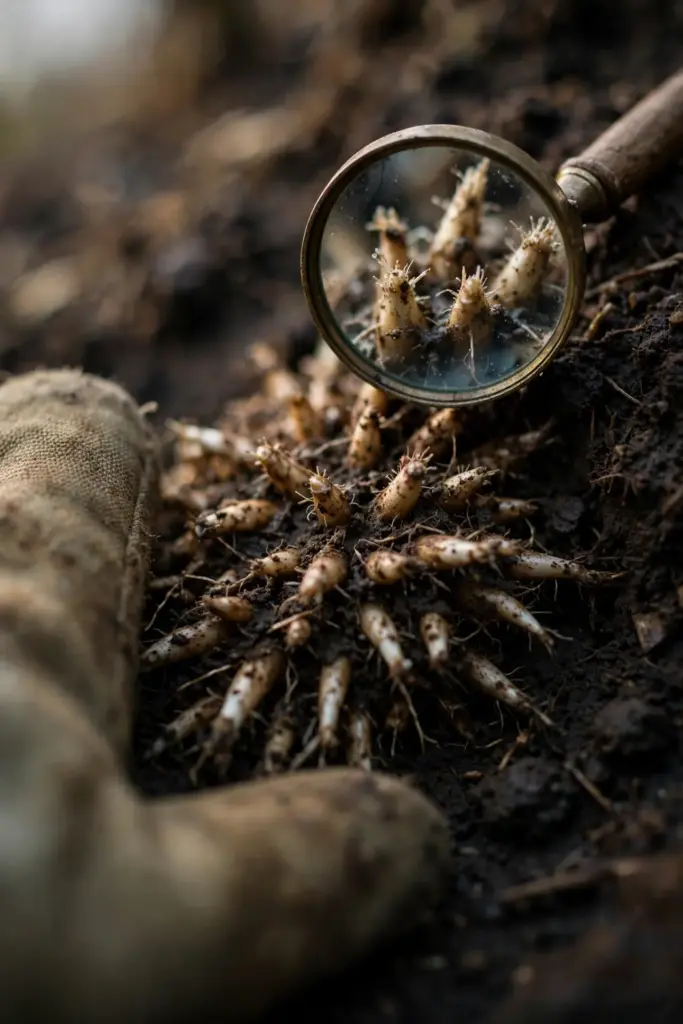
Support the crop that is already in the ground. NC State Extension notes that maintaining adequate moisture and fertilization may help support plants affected by stubby root nematode. A pruned root system pulls less water and fewer nutrients. Steady moisture and nutrition narrow the gap between what the roots can take up and what the crop needs. Support does not cure the infestation. It holds yield while the season runs.
Stop the spread between fields. NC State Extension calls equipment sanitation highly beneficial, since stubby root nematodes are extremely hard to remove once populations establish in a field. Following NC State Extension, wash equipment moved between fields with a solution of 10 percent household bleach, remove any stuck soil, then rinse with clean water and dry before moving to unaffected fields or areas. Soil on a tire or a shovel carries the pest to clean ground. A five-minute wash protects a field that would take years to clean.
Mark the patches and sample after harvest. Flag the stunted patches during the season so the post-harvest sample covers them. A map of patches from this season sets the sampling pattern for the next assay. A field record that pairs patch maps with assay counts across years is the most useful document a grower owns for this pest.
Watch the crop for virus symptoms even when the nematode counts look low. A low vector population can still deliver TRV to a susceptible crop. Flag plants with ring spots, line patterns, or mottling, and pull them for testing rather than leaving them in the row. The virus section above gives the removal rule: infected plants stay infected, and no treatment clears them.
10. When to Accept the Field and Plant Around the Problem
Some fields are not worth fighting for a given crop. The honest call is to plant around the problem rather than to pour chemistry into a field that will keep the vector.
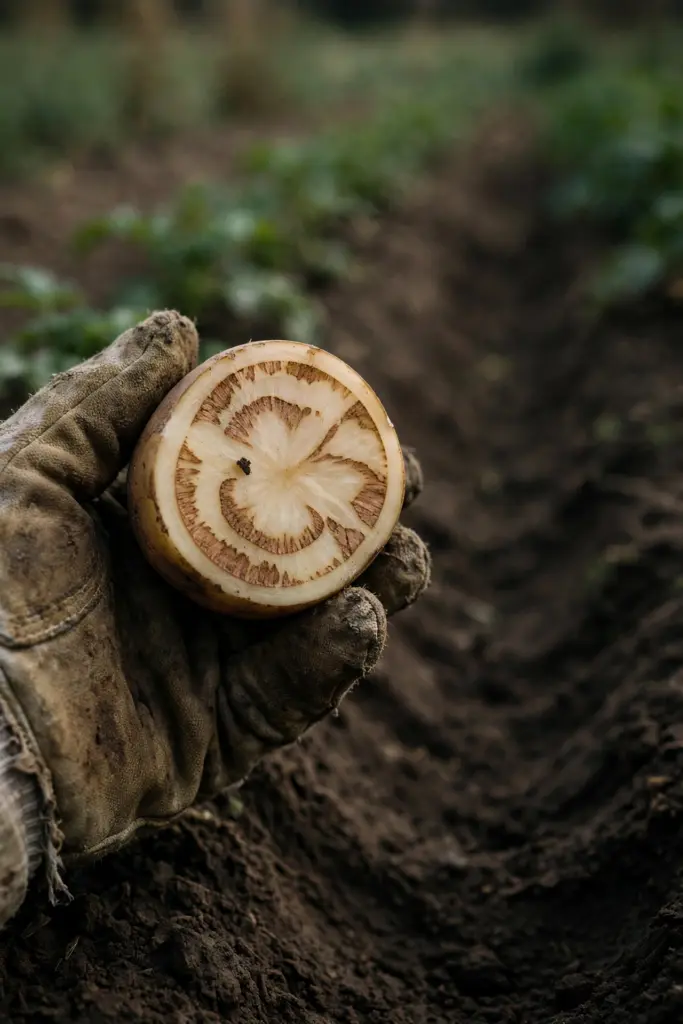
A potato field with a TRV history and a positive stubby root count is the clearest stop sign. That rejection figure sets the economics. A field with that combination should not carry potato again until assays show the vector suppressed and the virus absent. Plant a poor host there instead. The income from a poor host crop beats the loss of a rejected potato lot.
Onion in infested ground needs a different calculation. The University of Georgia guide to stubby-root nematodes on onion supports treating seedbeds with suitable fumigant and non-fumigant nematicides. Seedbed treatment protects the transplant supply, which is the bottleneck for the whole onion planting. A grower who protects the seedbed and plants transplants into clean ground gets more value from chemistry than a grower who treats the whole production field.
Corn and soybean country faces the hardest rotation math. NC State Extension states that corn is difficult to manage in corn and soybean rotations because both crops are susceptible. A corn and soybean grower with stubby root nematode needs a third crop in the sequence, a fallow window, or a verified poor-host cover. Two susceptible crops in alternation feed the population every year.
Weigh the options in dollars, not in effort. Compare the expected loss from a rejected potato lot or a stunted onion planting against the income from a poor-host crop or a fallow season. Include the assay cost and the chemistry cost. Add the value of the field in the following year. A field that grows a poor host this year and returns to potato next year earns more than a field that grows a rejected potato crop this year and still holds the vector next year.
Living with the pest means assaying on schedule. Sample before each planting decision. Keep the patch maps. Keep the counts. A field with stubby root nematode is manageable ground, not ruined ground, as long as the grower plants what the assay allows and refuses what it forbids.
11. Frequently Asked Questions
No. Total eradication is not a realistic goal, and extension guidance frames management as population reduction. Rotation to poor hosts, fallow, resistant cover crops, and targeted chemistry can push counts down to a level that allows safe planting. Counts rebound when a susceptible host returns. Assay before each planting decision and treat suppression, not eradication, as the working goal.
Direct feeding damage on potato is usually minor. The expensive damage comes from Tobacco Rattle Virus, which the nematode delivers while feeding. The virus causes corky ringspot, with brown rings on the tuber surface and brown arcs inside. As few as 5 percent of tubers with corky ringspot symptoms can cause rejection of the entire lot, according to the UF/IFAS Extension profile of Nanidorus minor, so a small vector population carries outsized economic weight.
The life cycle runs 16 to 27 days across species and temperatures, and as short as 16 days at 84 degrees Fahrenheit. Warm soil stacks generations through a single season. One season of a susceptible crop such as corn can lift a low population to damaging numbers. A season of a verified poor host or fallow pulls the count back down. The assay trend line shows which direction the field is moving.
Fumigation often performs poorly against this pest. A large share of the population sits 8 to 16 inches deep, below the typical fumigant treatment zone. Survivors rebound after fumigation, sometimes to numbers higher than in untreated ground. Do not rely on fumigation alone for stubby root nematode. Pair rotation and fallow with cover crops and an assay that verifies the result.
Visual signs alone cannot confirm it. Dig plants with care, wash the roots, and check for short stubby root tips. Then send soil and roots to a state nematode assay laboratory. Collect 20 to 30 soil cores across a 5-acre block at 6 to 8 inches in a grid or zig-zag pattern, combine them, and submit a subsample.
12. Where to Go From Here
Stubby root nematode is a soil pest with a virus problem attached. The nematode prunes roots, and the virus rejects loads. The assay separates a guess from a plan.
Order the assay before the next planting decision. Sample the patches that stunted this season and read the report for the genus and the count, then for the trend across seasons. Then choose the rotation and the cover crop that the report allows, and set chemistry to match. A field with stubby root nematode still earns its keep. It earns it on the assay schedule, not on habit.