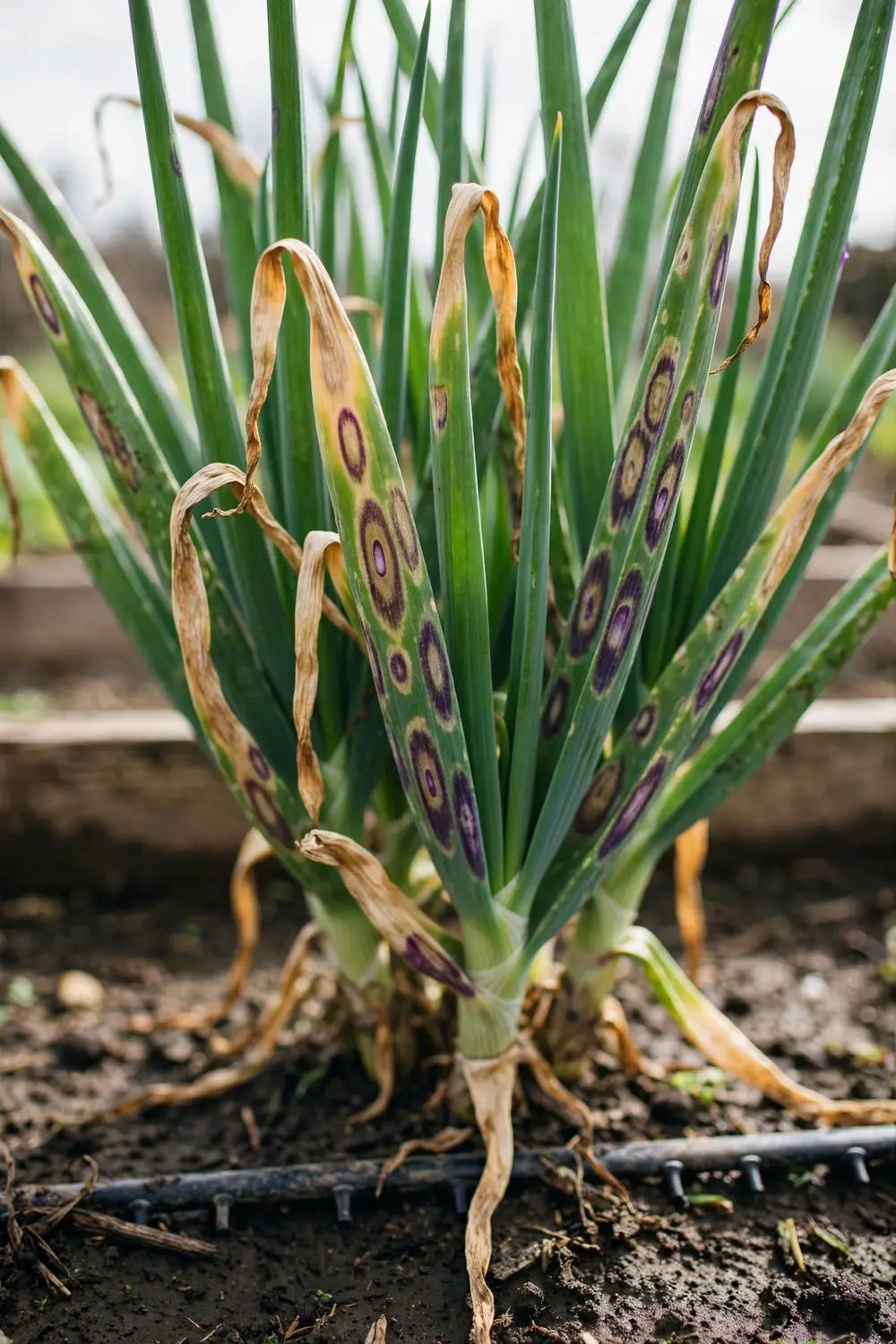

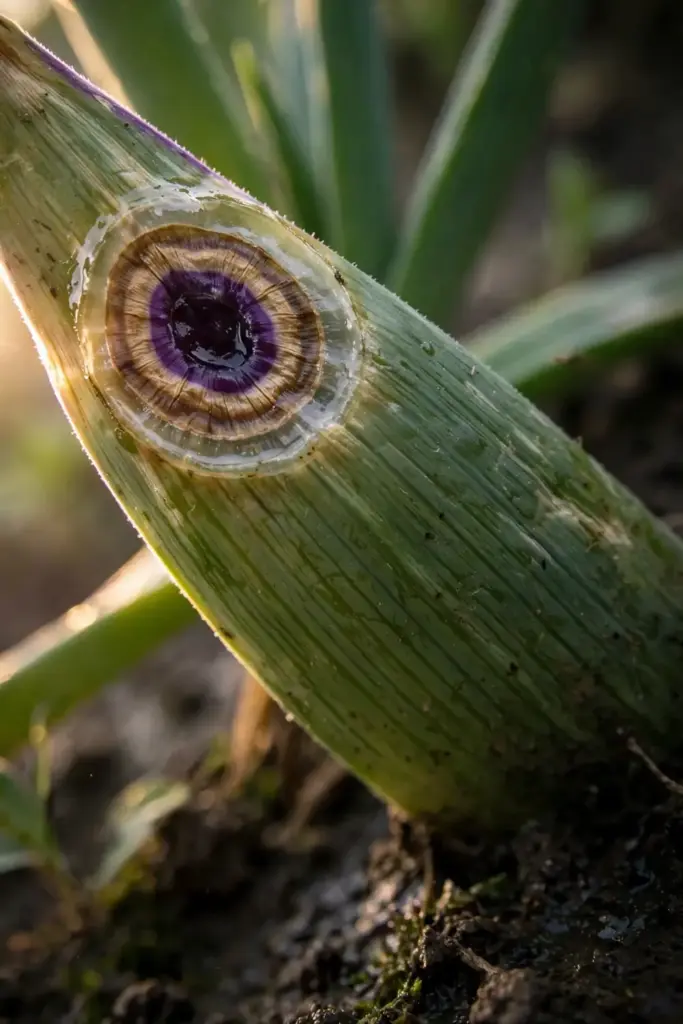
Check the center of the lesion first. Purple blotch on onions shows a purple center inside a tan to white lesion, and that purple center is the tell that separates it from 2 lookalikes: Stemphylium leaf blight and Botrytis leaf blight.
I have learned to check the center of the lesion before I decide which of the 3 leaf diseases I face. Purple blotch is a fungal disease of onion leaves caused by Alternaria porri. It starts as small water-soaked spots, then grows into oval blotches that turn brown to purple.
This page gives one ID check, one three-way comparison, and 5 moves that keep the fungus off your onions. The moves are cultural. They starve the fungus, dry the leaves, and break the cycle between seasons.
What Purple Blotch on Onions Looks Like
Purple blotch on onions starts on older leaves. Small water-soaked spots with white centers appear first. The spots enlarge into oval blotches with a brown to purple tint and concentric rings, and the oldest leaves show damage first.
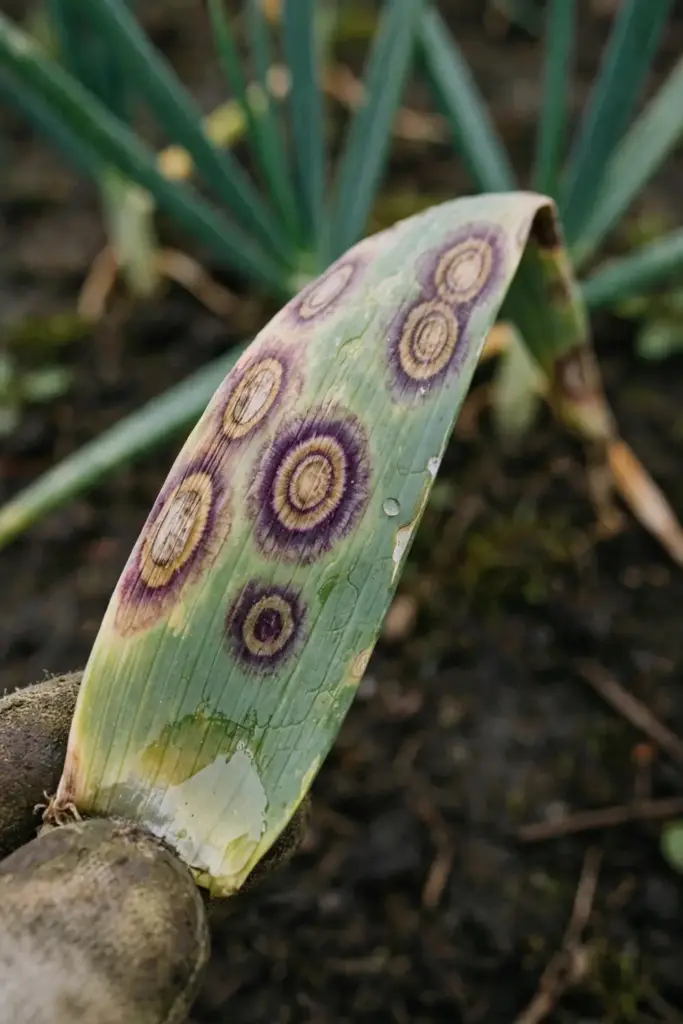
Lesions merge and girdle the leaf. The tissue above a girdled lesion wilts, collapses, and dies. Leaf tips take infection early, so tip dieback is a common first sign.
Catch it early. Small spots are easy to pull. A full canopy of merged lesions is not.
Purple Blotch vs Stemphylium vs Botrytis Leaf Blight
Purple blotch on onions shares its look with two other leaf diseases. Purple blotch, Stemphylium leaf blight, and Botrytis leaf blight all open as small spots on onion leaves. The center of the lesion sorts them.
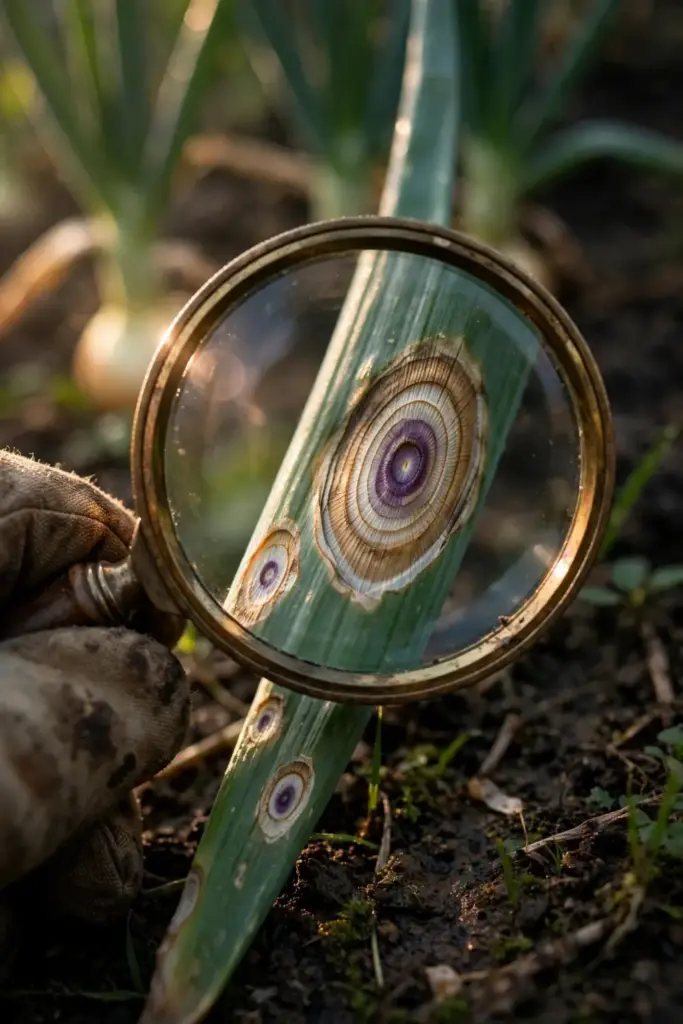
ONvegetables compares the three side by side: purple blotch shows tan to white lesions with purple centers, Stemphylium leaf blight shows tan lesions with black centers, and Botrytis leaf blight shows smaller, irregular, grayish white lesions. Cornell adds that older purple blotch lesions turn elliptical with a target pattern and a magenta pink-purple color, while Stemphylium leaf blight centers darken to olive brown and black as spores form.
| Disease | Fungus That Causes It | Lesion Center | Lesion Shape and Color |
|---|---|---|---|
| Purple blotch | Alternaria porri | Purple | Oval, tan to white with purple centers and concentric rings |
| Stemphylium leaf blight | Stemphylium vesicarium | Tan to black, no purple | Elongated, tan at first, then olive brown to black in the center |
| Botrytis leaf blight | Botrytis squamosa | Grayish white, no purple | Smaller, irregular, grayish white |
Downy mildew is the one lookalike outside this table. It shows pale spots plus a fuzzy grayish purple growth in cool, humid weather.
Two diseases can share one leaf. Purple blotch and Stemphylium leaf blight can infect the same plant, and their lesions can sit side by side. Field ID sorts suspects. A lab names the agent.
1. Plant Certified Disease-Free Sets and Seed
Buy certified disease-free sets or seed. Clean starting material keeps the fungus out of a fresh bed, and a fresh bed is worth more than any rescue spray later. Inspect every set before it goes into the soil. Discard sets that feel soft or show spots.
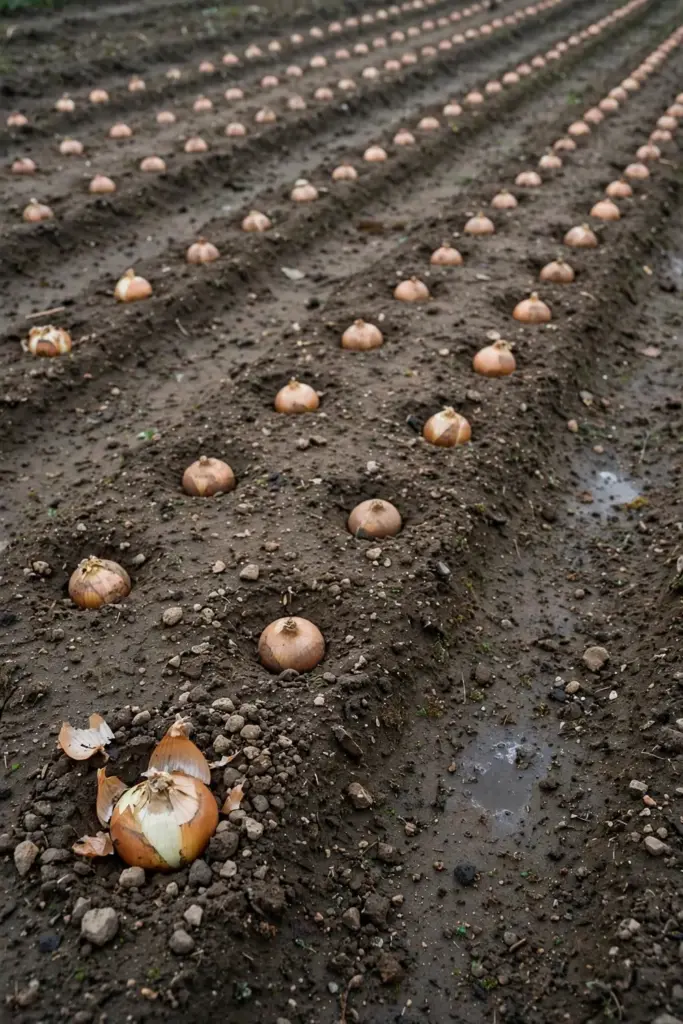
Start from seed when you can control the source. The seed starting guide covers clean seed starting step by step.
Failure looks quiet. One infected set carries the fungus into clean soil, and the first spots show weeks later on older leaves.
2. Space for Airflow and Water at the Soil Line
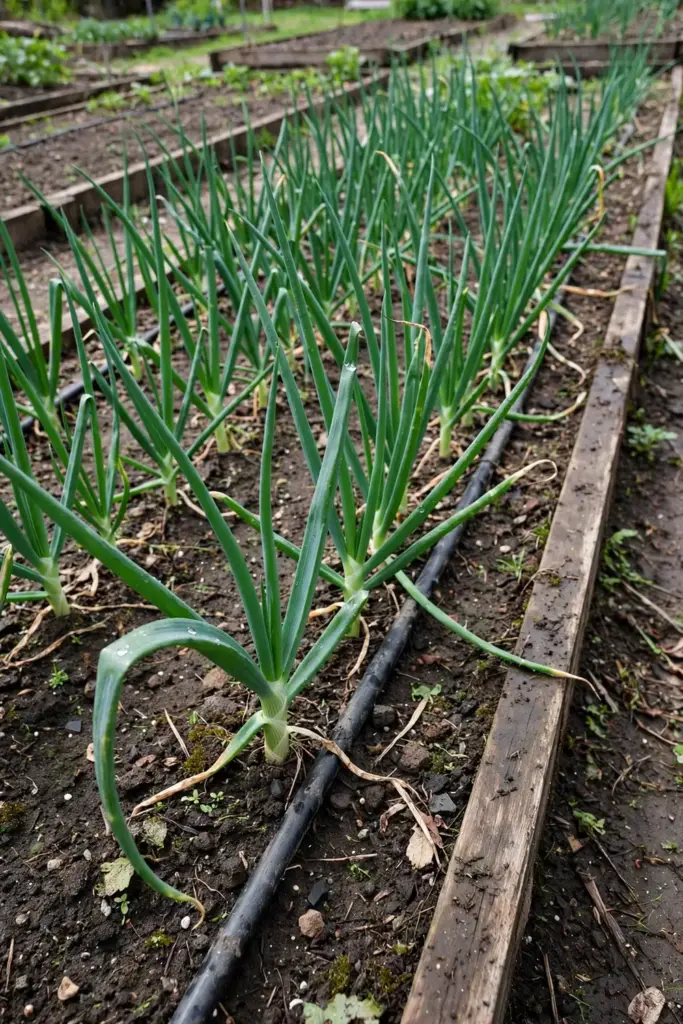
Give each plant room to dry. Airflow moves dew off the leaves. Water at the soil line with drip tubing or a soaker hose. Dry leaves starve the fungus of the wet surface it needs.
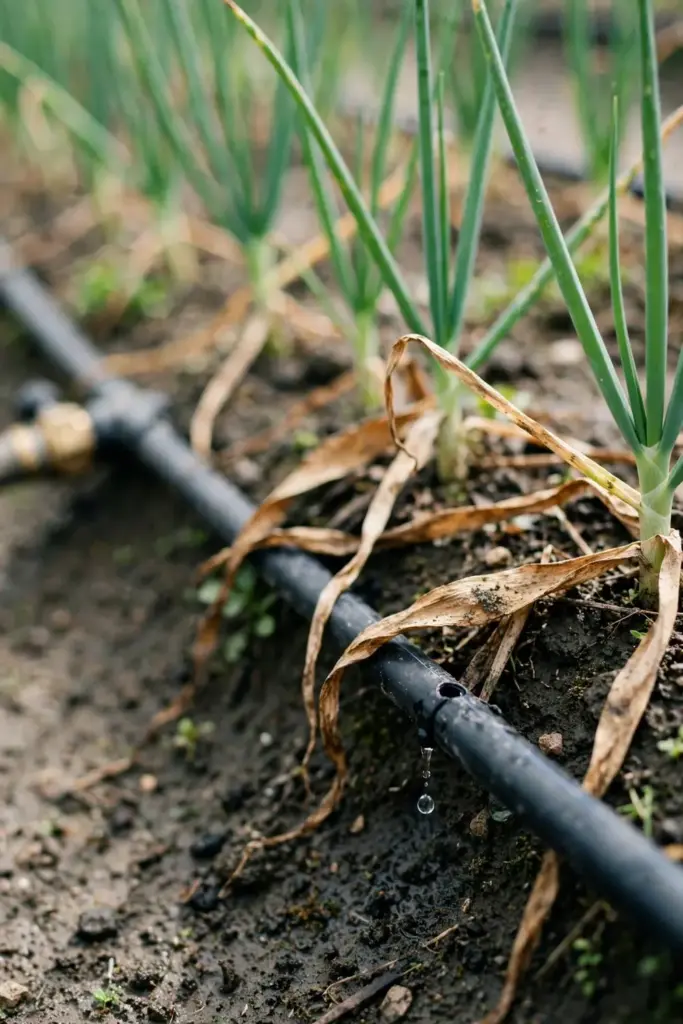
Overhead watering soaks the canopy and holds it wet for hours. A morning watering dries faster than an evening watering, because the sun has the whole day to dry the leaves. Water early.
Failure looks like a dense bed after rain. Leaves stay wet, spots spread, and the whole row blights.
3. Limit Thrips Damage and Stay Out of Wet Plants
Control onion thrips early. Thrips feeding wounds leaves, and purple blotch often appears on leaves that already carry damage.
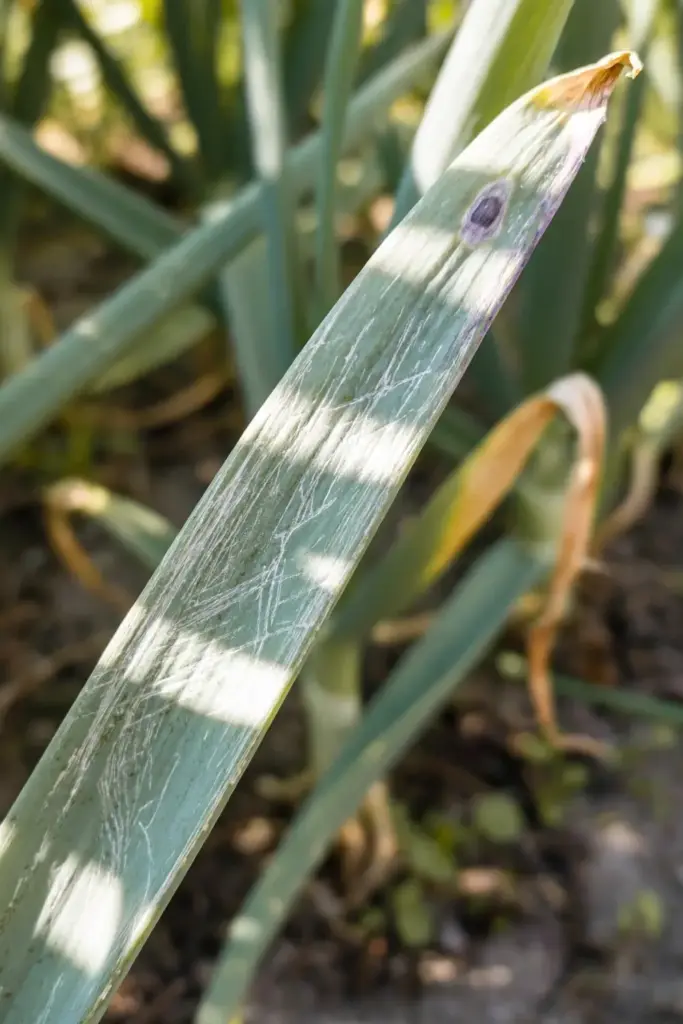
Warm, wet periods from 18 to 30°C favor purple blotch, according to the Ontario guide to onion diseases. Stay out of the bed while leaves are wet. Hands and tools move spores from leaf to leaf across wet foliage.
Skip the wet walkthrough. Dry leaves and clean tools break that chain.
4. Clear Debris and Rotate Alliums for 3 to 4 Years
Pull all onion debris at season end. Bury it or bag it for the trash. Do not compost infected leaves.
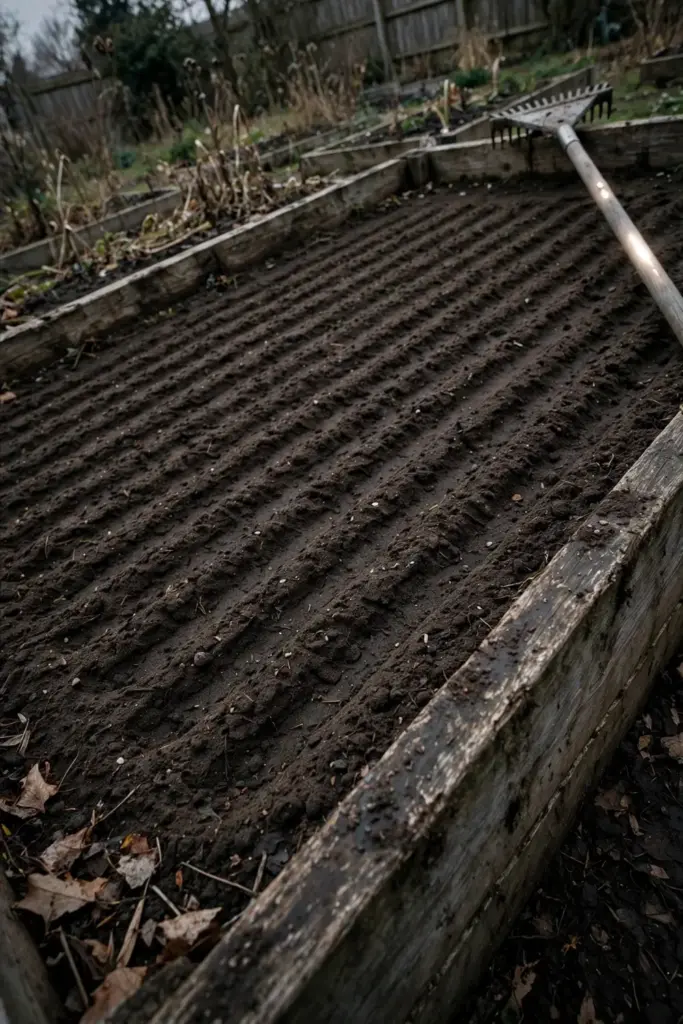
Utah State University notes that a 3 to 4 year rotation reduces inoculum and disease incidence, and that debris belongs buried or in the trash. Keep onions out of the bed for 3 to 4 years. Do not follow them with garlic or shallots, since the same fungus attacks other alliums.
Fold this cleanup into fall garden bed prep. A clean bed plus a real rotation breaks the cycle between seasons.
5. Harvest Dry, Cure Fully, and Destroy Infected Leaves
Harvest on a dry day. Lift bulbs when the tops fall over. Cure bulbs in a dry, airy spot until the necks feel papery and sealed.
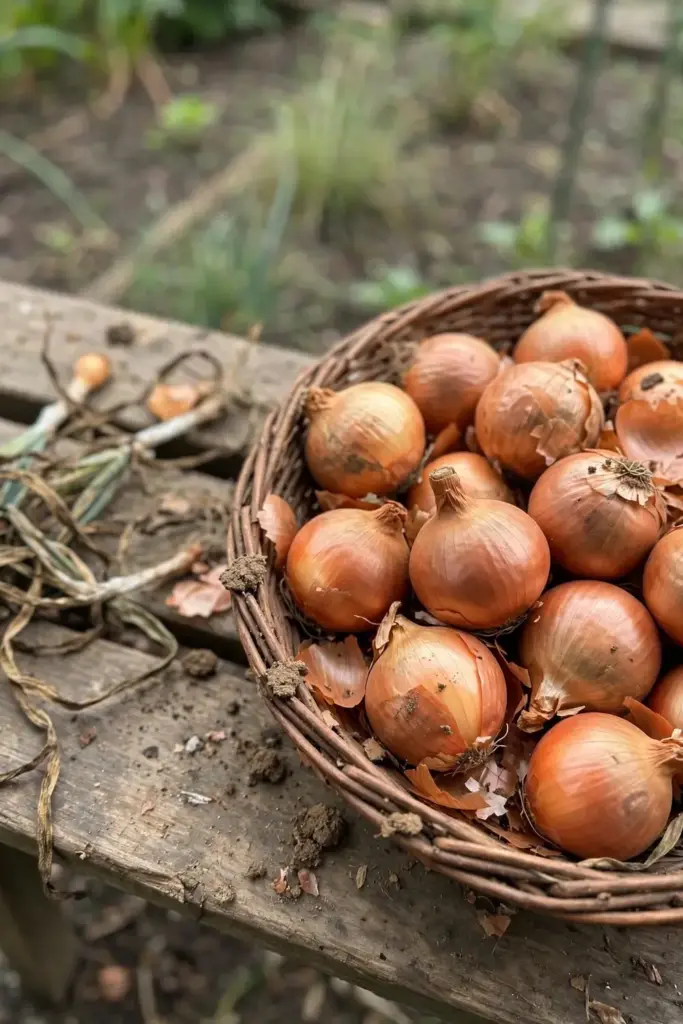
Bulb onions need a full cure. Green onions pulled young skip this step, as the guide to growing green onions from seed shows.
Strip the worst infected leaves before harvest and bag them for the trash. Bulbs stored damp rot from the neck. Dry bulbs keep. Wet bulbs fail.
Frequently Asked Questions
No. Purple blotch is caused by Alternaria porri. Stemphylium leaf blight is caused by Stemphylium vesicarium. The two diseases share symptoms and management, so growers treat them the same way. The lesion center separates them in the field. Purple blotch shows a purple center. Stemphylium leaf blight shows a tan to black center with no purple. A lab test settles any case that stays unclear.
Leaves with spots are not worth eating. Bulbs from lightly affected plants are fine when the bulb feels firm and the neck stays dry. Discard any bulb with a soft neck or watery rot. Wash your hands and tools after handling infected plants. Cook healthy bulbs as usual. The disease harms the plant, and it does not make firm bulbs unsafe to eat.
The fungus survives on infected debris in the bed. Spores wait through winter on old leaves and cull piles. Spring rain and wind move them onto new leaves. A 3 to 4 year rotation plus full debris cleanup breaks that cycle. Skip either step and the fungus returns with the next wet spell. Cleanup and rotation are the long fix.
Cultural control is the playbook in a home bed. Spacing, dry leaves, thrips control, debris cleanup, and rotation cover the disease. Home fungicides are a last resort. They do not rescue leaves that already show large lesions. Check the label for onion use before you spray anything. Skip products that lack onion directions.
Where to Go From Here
Walk the row this week. Check the center of every spotted lesion. Pull the worst leaves and bag them for the trash.
Plan next year now. A fresh bed, clean sets, and a 3 to 4 year rotation beat any rescue spray. The fall vegetables to plant guide helps you place onions in a bed that has not grown alliums.
Purple blotch on onions is beatable with dry leaves and clean beds. Start with the lesion center. End with a rotation plan.