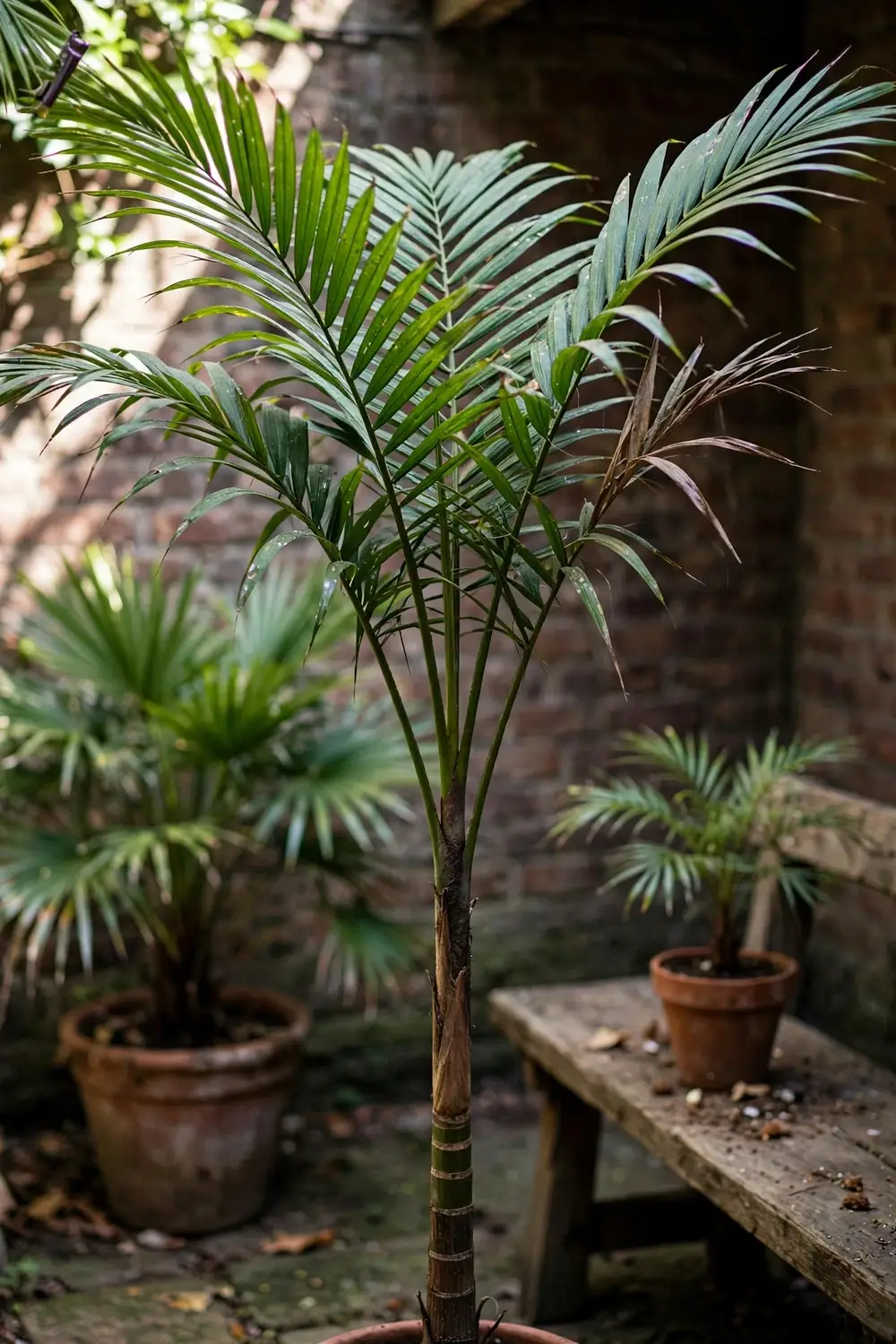

Measure the space first, then pick 1 of the 8 palms below. That is how you choose the best palms for Australian gardens that stay small. The rest of this page is 8 picks, from the shade-tolerant Kentia to the frost-proof Windmill palm.
“Small garden” here means a palm that fits a small space or a pot. “Best” means best for a small garden, not best overall. Each pick carries its mature height, its pot rating, its climate band, and one line on why it fits a small garden.
Use the comparison table to shortlist 2 palms, then read those 2 picks in full. A palm bought for its pot size beats a palm bought for its nursery photo. Check the mature height before you check the price tag.
Compare the 8 Best Palms for Small Australian Gardens at a Glance
The table below lines up the 8 picks on the 4 facts that decide the buy. Read the height column as the in-ground figure unless the cell says pot. A palm that reads tall in the ground can still suit a small garden when the pot column says yes and the pot stays its home. The pot column is the one that matters most. A palm with a yes in the pot column lives in a pot for years. A palm with a pot-only rating never leaves the pot.
| Palm | Mature height | Pot suitable | Climate band | Why it fits a small garden |
|---|---|---|---|---|
| Kentia palm | 12.2 m in ground; 1.5 to 3.6 m in pot | Yes | Subtropical, warm-temperate; cool-temperate sheltered pot | Shade-tolerant; slow growth keeps it pot-sized for years |
| Lady palm | 2.1 m clump | Yes | Subtropical, warm-temperate; cool-temperate sheltered | Clumps to shrub height; fills a shaded corner |
| Parlour palm | 1 to 2 m indoors | Yes | Tropical, subtropical; elsewhere pot plant | Smallest palm here; fits a tabletop pot when young |
| Pygmy date palm | 3.7 m | Yes, large pot | Tropical, subtropical; warm-temperate sheltered | Slow; one slim trunk suits a courtyard corner |
| Golden cane palm | 6.1 to 10.7 m in ground; 1.8 to 2.4 m in pot | Yes, pot only | Tropical, subtropical; warm-temperate sheltered pot | Pot confines it; never plant it out in a small garden |
| European fan palm | 2 to 4 m; older plants to 5 m | Yes | All four bands | Clumping fan palm; handles frost to -10 °C |
| Windmill palm | 3.0 to 6.1 m cultivated | Yes, large pot | All four bands | Single slim trunk; handles frost to -12 °C |
| Chinese fan palm | 3.0 to 6.1 m; slow | Yes, young | Subtropical, warm-temperate; cool-temperate sheltered pot | Slow growth buys a decade in a pot |
Read the climate band column second. A palm that fits your band and your pot wins. A palm that fits neither loses, no matter how good it looks at the nursery.
1. Kentia Palm: The Shade-Tolerant Classic
Kentia palm fits a small garden because it grows slowly and tolerates shade. A Kentia in a pot stays 1.5 to 3.6 m for years, according to Gardenia’s growing notes. That size suits a shaded courtyard, a covered balcony, or a bright room.
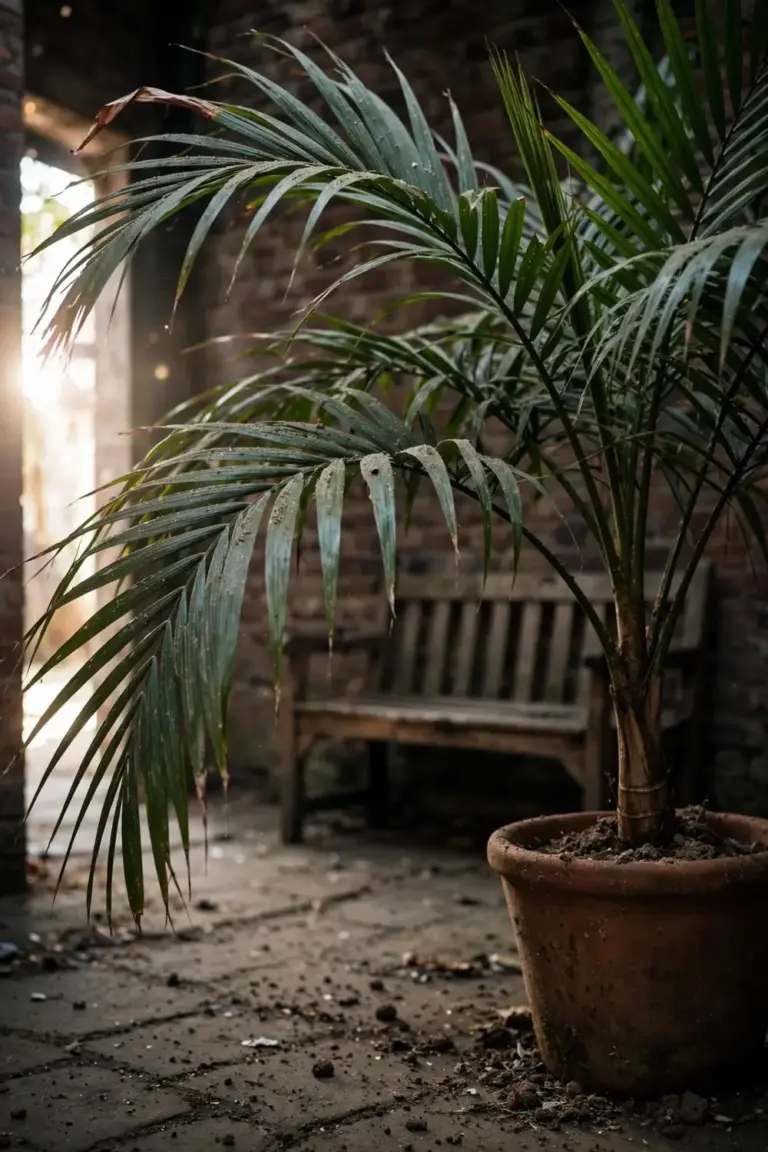
In the ground, Kentia palm reaches 12.2 m with a spread of 1.8 to 3.0 m, per the University of Florida IFAS Extension Kentia palm profile. The same profile rates it hardy to -3.9 °C in USDA zones 9b to 11. Kentia prefers shade to partial shade. Container palms suit a deck or patio in a shady spot, per the same profile.
A Kentia in a pot wants shade and steady water. A terracotta pot dries fast in summer. A glazed pot holds water longer. Pick the pot for the spot, then water when the top few centimetres dry. A pot without drainage holes drowns the roots.
Buy a Kentia with deep green fronds and a firm trunk. Yellow fronds mean stress. A Kentia in a pot far too small for its height topples in wind. Check the label for Howea forsteriana. A Kentia with new fronds rising from the crown grows well. A plant labelled only ‘palm’ is a gamble.
Skip Kentia when the only spot is full sun, because a Kentia in full sun burns at the leaf tips within a season. A Kentia in a dark hallway stalls. Shade with bright indirect light grows it best. A shaded corner lets it grow slowly for years without outgrowing the space.
2. Lady Palm: The Clumping Screen That Stays Short
Lady palm fits a small garden because it clumps to shrub height and never grows a tall trunk. The clump tops out at 2.1 m. That height suits a shaded corner, a narrow bed, or a large pot.
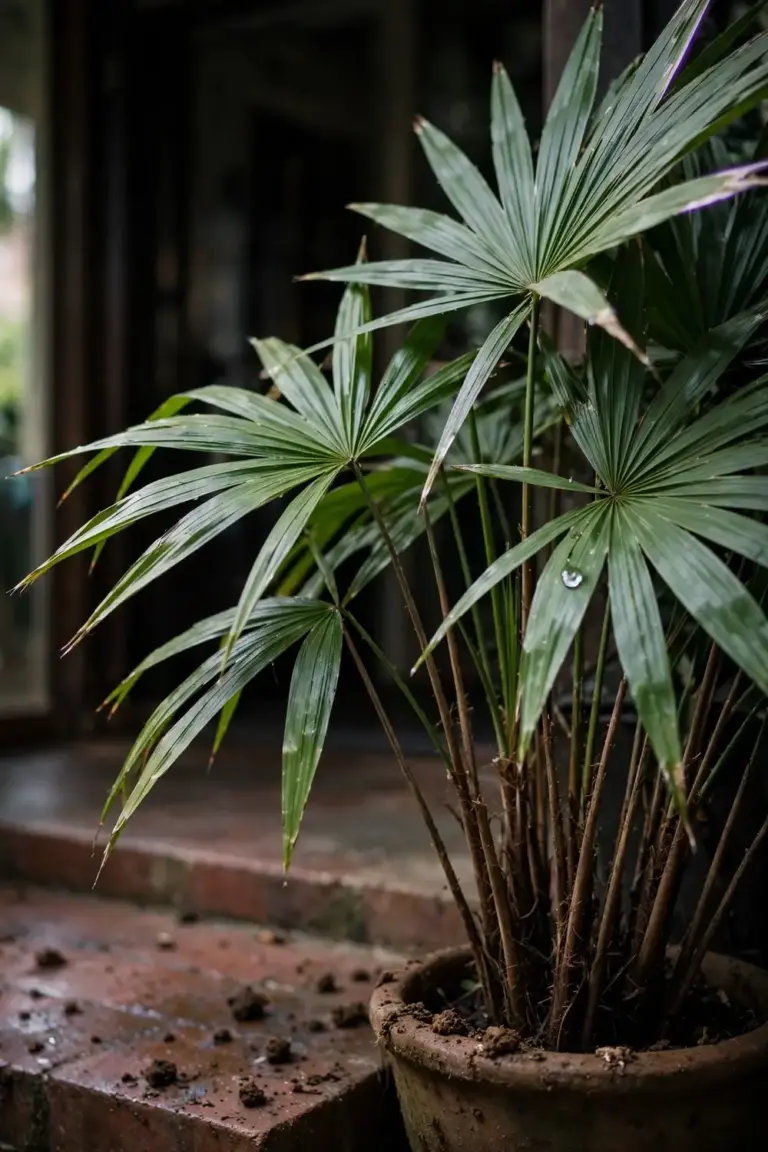
The University of Florida IFAS Extension lady palm profile describes thickets up to 2.1 m tall. The same profile rates lady palm hardy to USDA zone 9A. Lady palm does well in containers as a patio plant, per the same profile. It ranks among the best palms for low-light spots.
A lady palm in a pot wants shade and room to clump. A wide pot suits the rhizomes better than a tall narrow one, because the clump spreads sideways, not down. Pull out extra suckers when the clump crowds the pot. A root-bound lady palm still grows, but the new stems stay thin.
Buy a lady palm with glossy green fans and new stems rising from the base. Yellow fans mean too much sun. A clump with bare stems in the middle needs thinning. Check the label for Rhapis excelsa. A lady palm with fresh fans and rising stems settles fast. A plant sold as ‘bamboo palm’ may be a different species.
Buy lady palm for shade and screening. One clump fills a shaded corner without pruning and holds its shape for years. Pull out extra suckers when the clump crowds the pot. Full sun fades the leaves to yellow-green, so keep it shaded.
3. Parlour Palm: The Smallest Palm on the List
Parlour palm fits a small garden because it is the smallest palm on this list. It reaches 1 to 2 m indoors with a spread of 0.5 to 1 m, per Sunshine Coast Nursery. That footprint suits a tabletop pot, a shelf, or a shaded courtyard corner.
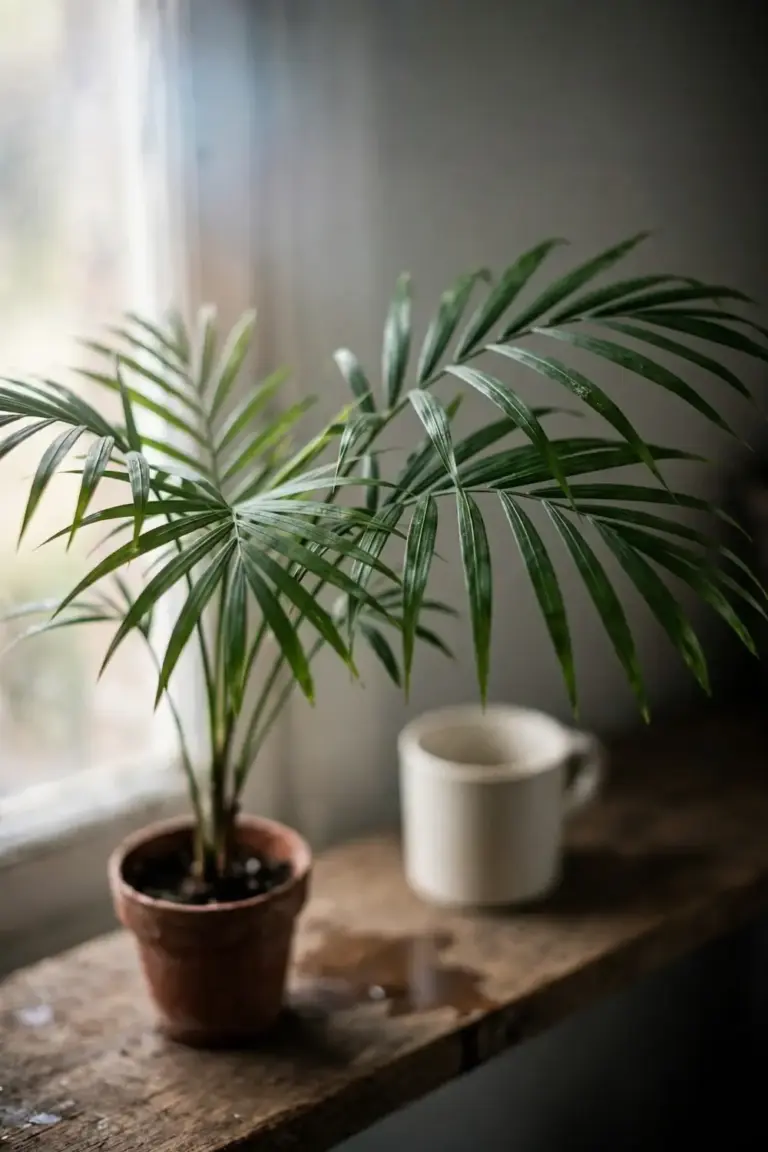
Parlour palm suits frost-free gardens outdoors in USDA zones 10 to 12, per Gardenia. Cooler states grow it as a pot plant. It thrives in low to medium light, per Sunshine Coast Nursery. A parlour palm in direct sun burns.
A parlour palm in a pot wants low to medium light and steady water. A small pot suits a young plant. Repot when roots circle the pot. A parlour palm in a pot too big stays wet and rots.
Buy a parlour palm with upright fronds and new growth at the crown. Brown tips mean dry air or salts. A parlour palm in a pot with algae on the mix sat wet. Check the label for Chamaedorea elegans. A parlour palm with limp fronds sat wet. A plant labelled ‘Neanthe bella’ is the same palm under an old name.
Buy parlour palm when the space is truly tiny. No other palm here stays this small. A pot on a shaded balcony holds it for years. Move it indoors when frost threatens.
4. Pygmy Date Palm: The Sun-Loving Courtyard Palm
Pygmy date palm fits a small garden because one slim trunk tops out near 3.7 m. That height suits a sunny courtyard corner or a large pot by the door. It grows slowly enough to hold its spot for years.
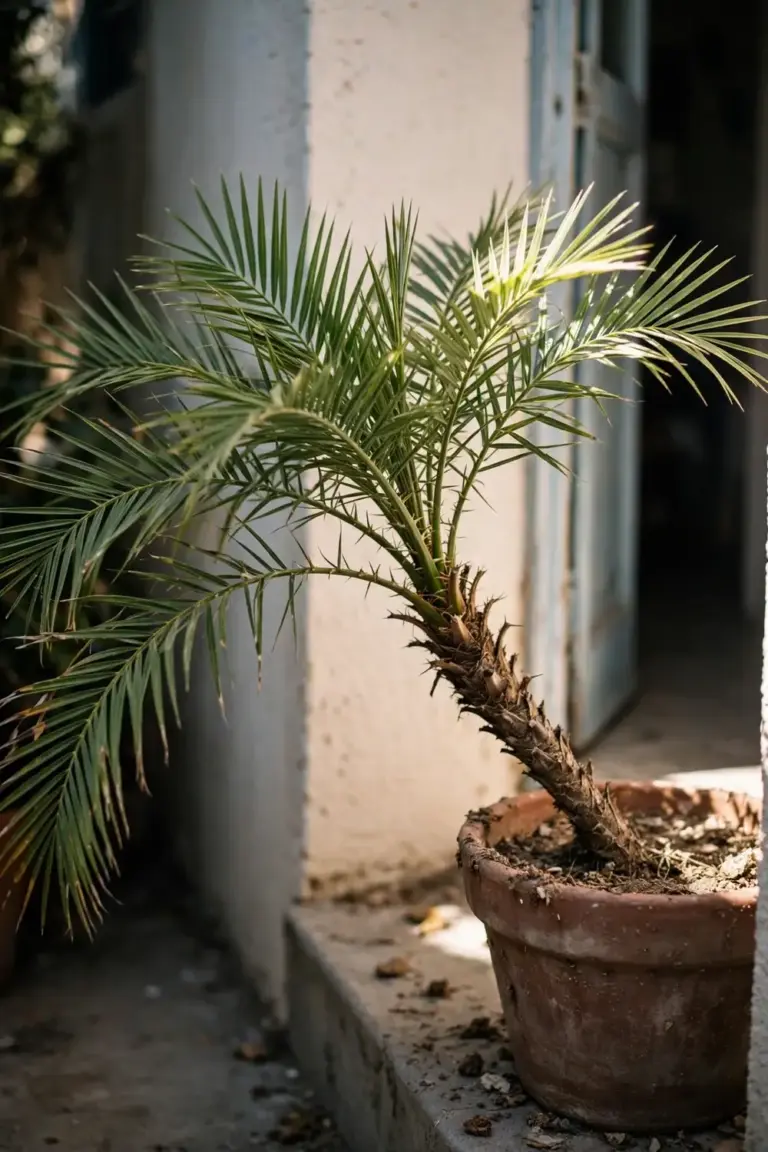
The University of Florida IFAS Extension pygmy date palm profile gives a height of about 3.7 m with a spread of 1.8 to 2.4 m. The same profile rates it hardy to USDA zone 10A, down to -1.1 °C, and notes it grows widely in zone 9B, down to -3.9 °C. Its basal leaflets harden into spines 5.1 to 7.6 cm long, per the same profile.
A pygmy date palm in a large pot suits a sunny door or balcony. A heavy pot stops it toppling in wind. A pot with drainage holes stops winter wet. Move the pot to sun after frost nights pass.
Buy a pygmy date palm with green fronds and a firm trunk. Yellow older fronds mean hunger. A pygmy date palm with a soft trunk rots. Check the label for Phoenix roebelenii. A pygmy date palm with a firm trunk and green fronds is the one to buy. A plant labelled only ‘date palm’ grows far bigger.
Skip pygmy date palm when kids play beside the path, because the spines sit at the leaf bases where hands brush past. A pot set back from the path keeps the spines out of reach. A thornless pick suits a play area better.
5. Golden Cane Palm: The Pot-Only Pick
Golden cane palm fits a small garden only in a pot. In the ground it grows 6.1 to 10.7 m tall with a spread of 3.0 to 6.1 m, and it grows best where the average annual low sits between 1.7 and 4.4 °C, per the University of Florida IFAS Extension areca palm profile. That size swallows a small garden. A pot confines it to 1.8 to 2.4 m, per Gardenia.
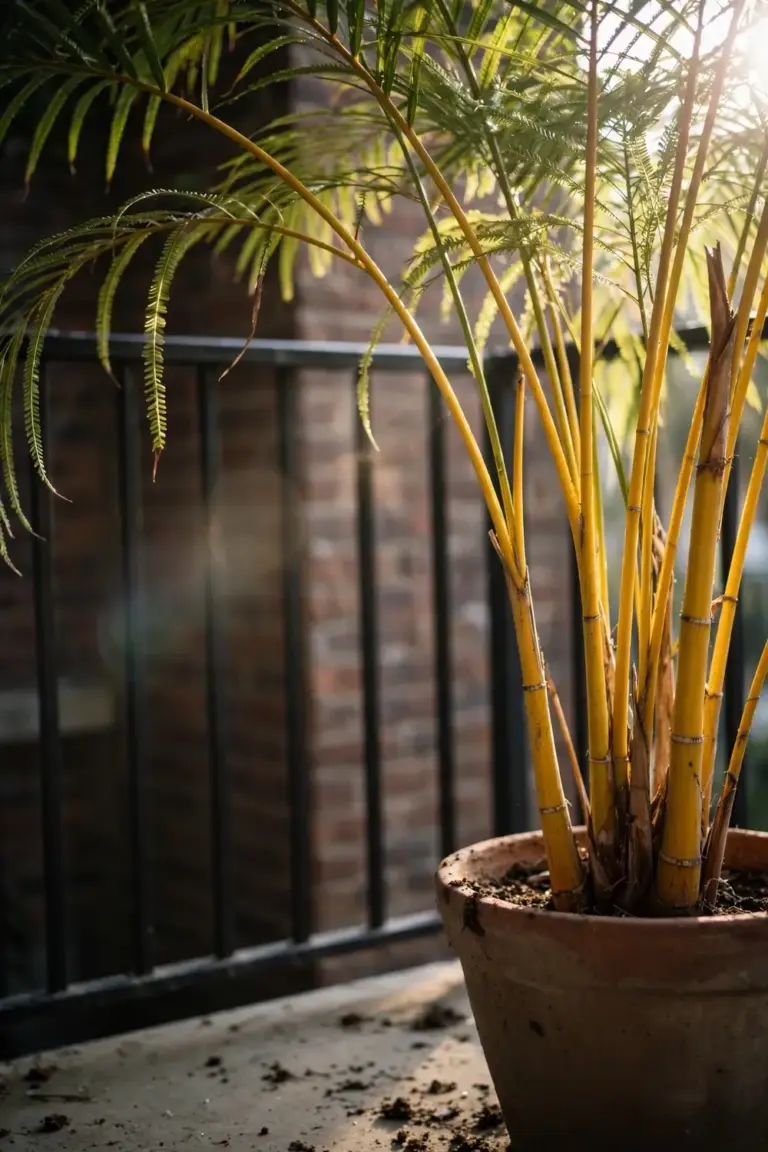
Brisbane and the tropics suit it outdoors. Sydney suits it in a sheltered pot. Melbourne suits it indoors. I have learned that the palm I buy for its pot size beats the palm I buy for its nursery photo.
A golden cane palm in a pot wants bright light and room for new stems. A large pot holds a clump for years. New stems rise from the base each season. Cut out the oldest stem when the clump crowds the pot.
Buy a golden cane palm with green-gold stems and fresh fronds. Brown fronds mean cold damage. A golden cane palm with crowded stems needs a bigger pot. Check the label for Dypsis lutescens. A golden cane palm with new stems rising from the base grows well. A plant labelled ‘areca palm’ is the same palm.
Buy golden cane palm for a pot, never for a small garden bed. A pot on a sheltered balcony gives the tropical look without the 10 m tree, and it moves indoors when frost threatens. Repot when roots circle the pot. A golden cane palm planted out in a small garden becomes a removal job.
6. European Fan Palm: The Cold-Hardy Clumper
European fan palm fits a small garden because it clumps low and handles frost. It grows 2 to 4 m tall and 1 to 2 m wide, per Evergreen Trees. Older plants reach 5 m. That size suits a sunny bed, a large pot, or a windy corner.
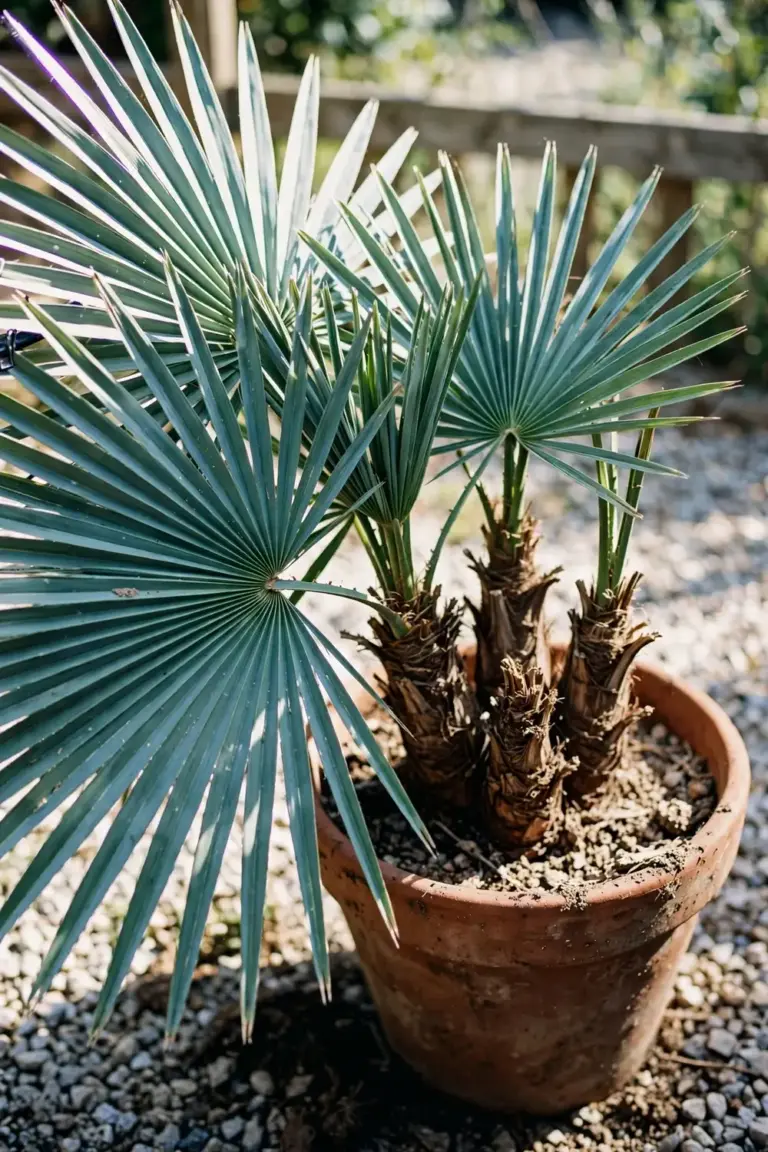
European fan palm tolerates frost to -10 °C, per Seagrave Nurseries. That rating covers every Australian climate band, including Melbourne and Canberra. It suits full sun or light shade in well-drained soil, per the same nursery. It also suits a pot, per the same nursery.
A European fan palm in a pot wants sun and sharp drainage. A terracotta pot suits it. A saucer under the pot holds winter water. Empty the saucer after rain. A pot that sits in water rots the crown.
Buy a European fan palm with stiff fans and a firm crown. Floppy fans mean shade or wet feet. A European fan palm with black leaf bases rots. Check the label for Chamaerops humilis. A European fan palm with new fans rising from the crown grows well. A plant labelled ‘Mediterranean fan palm’ is the same palm.
Buy European fan palm for cold and wind. Its compact habit suits exposed corners better than a tall single trunk. Give it sun and drainage. A waterlogged pot rots it.
7. Windmill Palm: The Frost-Proof Fan Palm
Windmill palm fits a small garden because one slim trunk carries a compact fan crown. Cultivated plants reach 3.0 to 6.1 m. That height suits a narrow bed, a courtyard corner, or a large pot.
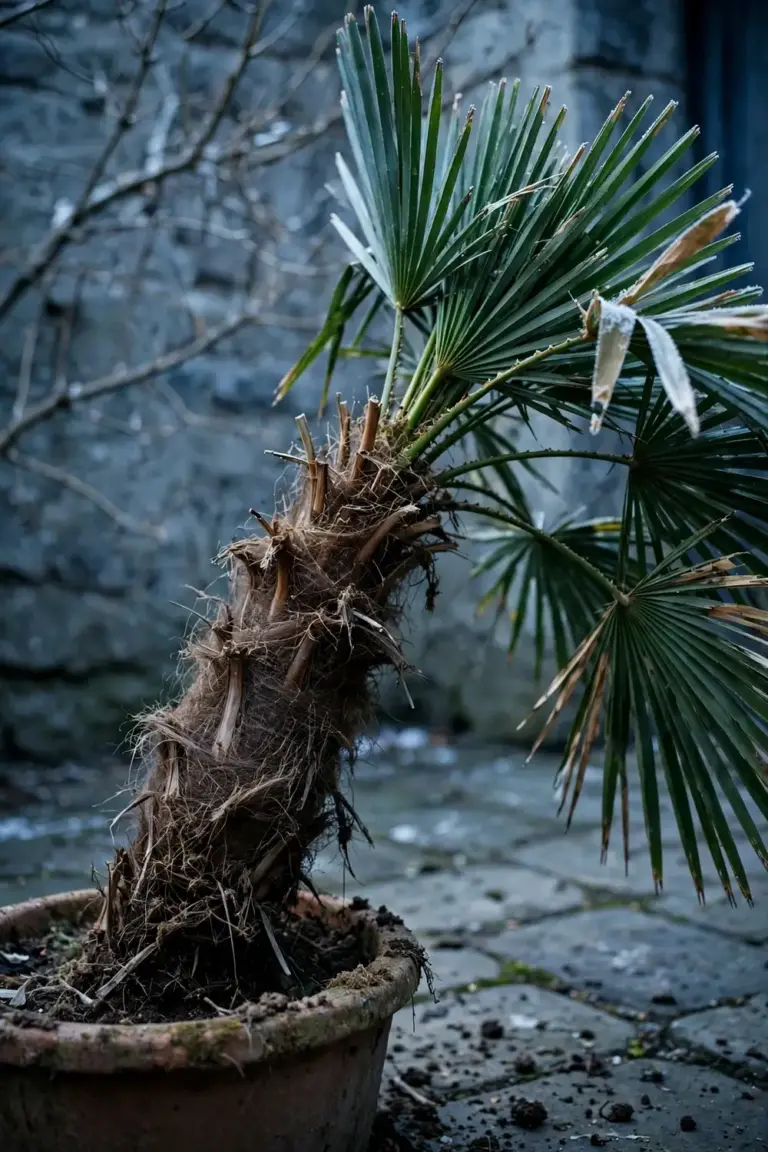
Windmill palm tolerates cold to -12 °C, per Three Timbers nursery. That rating covers USDA zones 7 to 11, per the same nursery. No other palm here takes that much cold. That range covers Melbourne to Hobart.
A windmill palm in a large pot suits a sunny courtyard. A heavy pot anchors the trunk in wind. A pot with drainage holes stops winter wet. A pot on a sunny wall grows faster than one in shade.
Buy a windmill palm with a hairy trunk and stiff fans. A windmill palm with a smooth trunk is a different palm. Yellow fans mean wet feet. Check the label for Trachycarpus fortunei. A windmill palm with new fans rising from the crown is the one to buy. A plant labelled ‘Chusan palm’ is the same palm.
Buy windmill palm when frost rules out the tropical picks. A windmill palm in a sheltered courtyard outlasts a golden cane palm left out in a frost. Give it sun to partial shade. A windmill palm in deep shade grows thin and leans.
8. Chinese Fan Palm: The Slow Grower With Fountain Fronds
Chinese fan palm fits a small garden because it grows slowly and holds a fountain crown. It reaches 3.0 to 6.1 m at maturity, per Top Tropicals. A young plant in a pot stays small for years. That slow start suits a courtyard or a balcony.
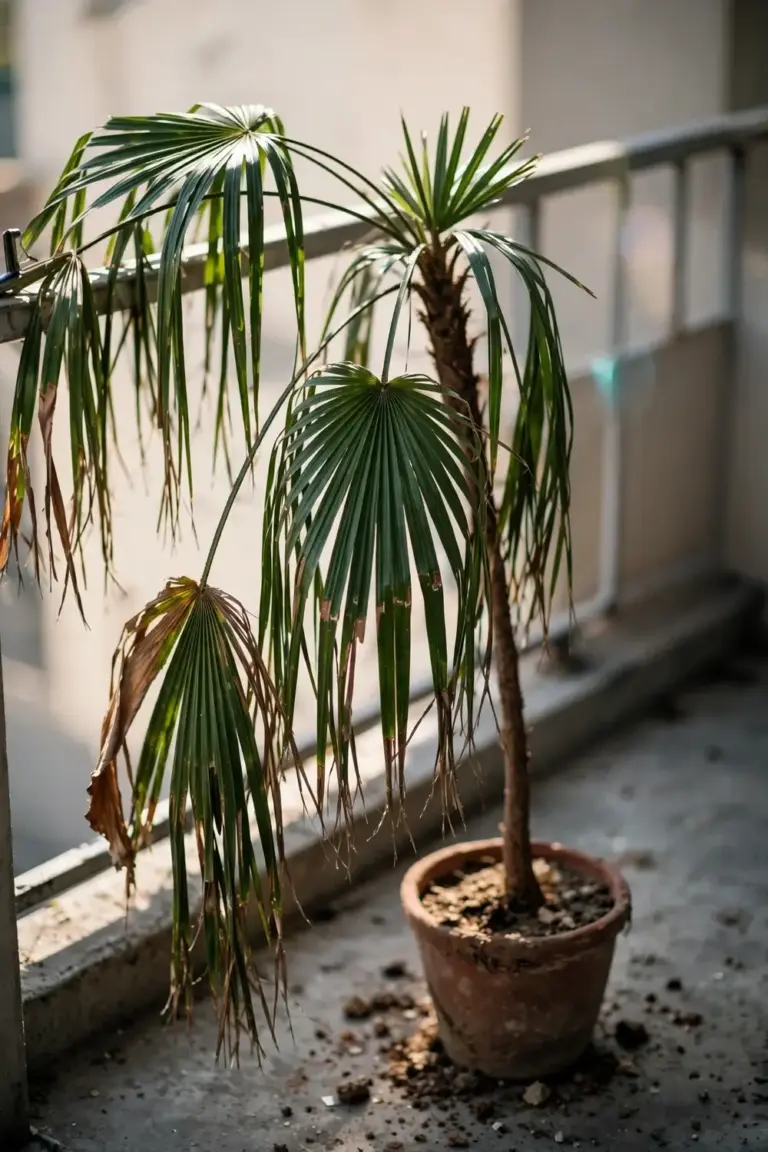
Chinese fan palm suits USDA zones 9 to 11, per Top Tropicals. Mature plants tolerate cold to -4 °C, per a UK palm nursery listing, so a sheltered Melbourne courtyard suits it in a pot. It adapts well to pot cultivation, per Promesse de Fleurs. Sydney and Brisbane suit it outdoors.
A Chinese fan palm in a pot wants sun or bright light and steady water. A young plant suits a pot for years. Repot only when roots circle the pot. A Chinese fan palm in a pot too big stays wet.
Buy a Chinese fan palm with drooping fan tips and a straight trunk. A Chinese fan palm with upright fans is young. Brown leaf edges mean dry air or salts. Check the label for Livistona chinensis. A Chinese fan palm with new fans rising from the crown grows well. A plant labelled ‘fountain palm’ is the same palm.
Buy Chinese fan palm for patience, because a fast palm outgrows a small garden in 5 years while a Chinese fan palm takes a decade to look big. Give it sun or bright light, and a pot keeps it where the light is.
Buy the Pot Before You Buy the Palm
Buy the pot before you buy the palm. The pot decides the palm’s size and its winter home. A palm in the wrong pot fails no matter how good the nursery plant looked. The pot is the garden when the garden is small. A palm in the right pot grows slowly and stays put.
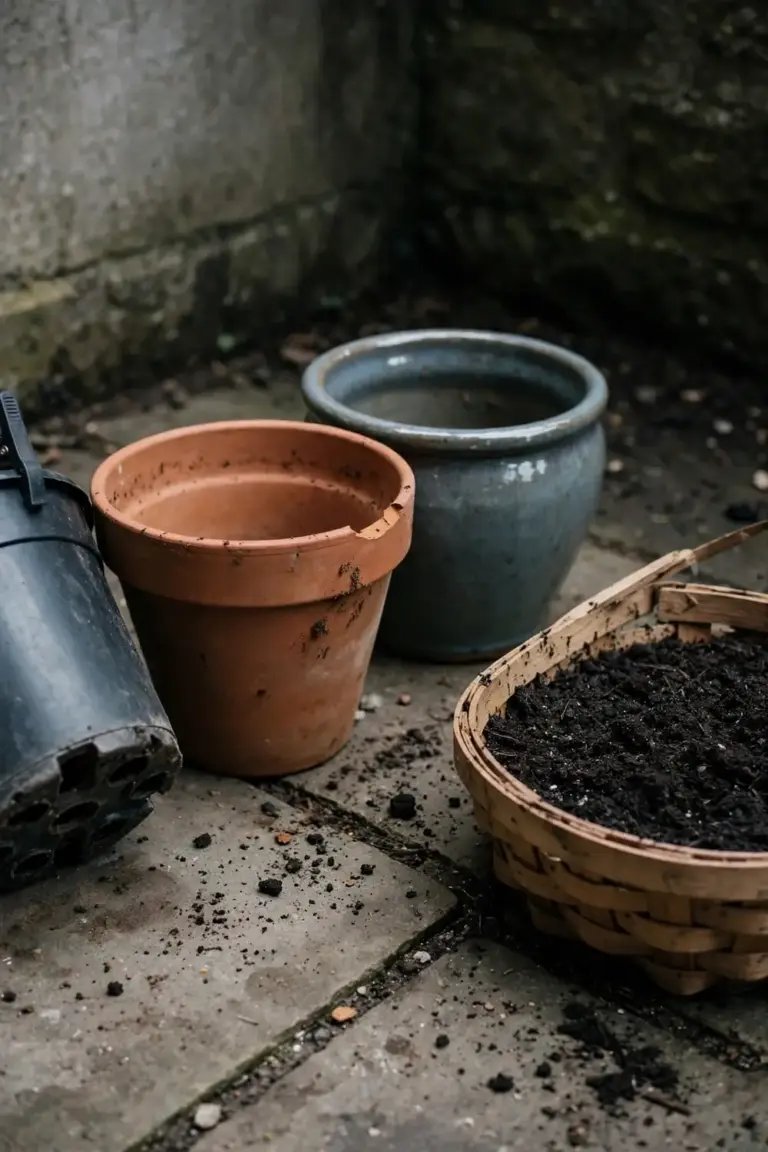
Pick a pot with drainage holes. A pot without holes drowns the roots in the first wet week. Pick a pot heavy enough to hold the palm upright in wind. A tall palm in a light pot topples. Pick a pot with a saucer for indoor palms. Empty the saucer after watering so the roots never sit in water.
Terracotta dries fast. Glazed pots hold water. Plastic pots weigh little and move easily. Match the pot material to the spot. A terracotta pot suits a wet courtyard, because terracotta dries fast and pulls water from the mix. A glazed pot suits a dry balcony.
Move tender palms with the seasons. A golden cane palm winters indoors, and a Kentia palm moves under cover on frost nights. A pot on wheels moves a heavy palm without straining your back. A palm that moves with the seasons outlives a palm left in the wrong spot.
Skip These 3 Palms in a Small Garden
Three palms tempt small-garden buyers and punish them later, because each one looks small at the nursery and grows past a courtyard. Skip all 3 when the garden is small.
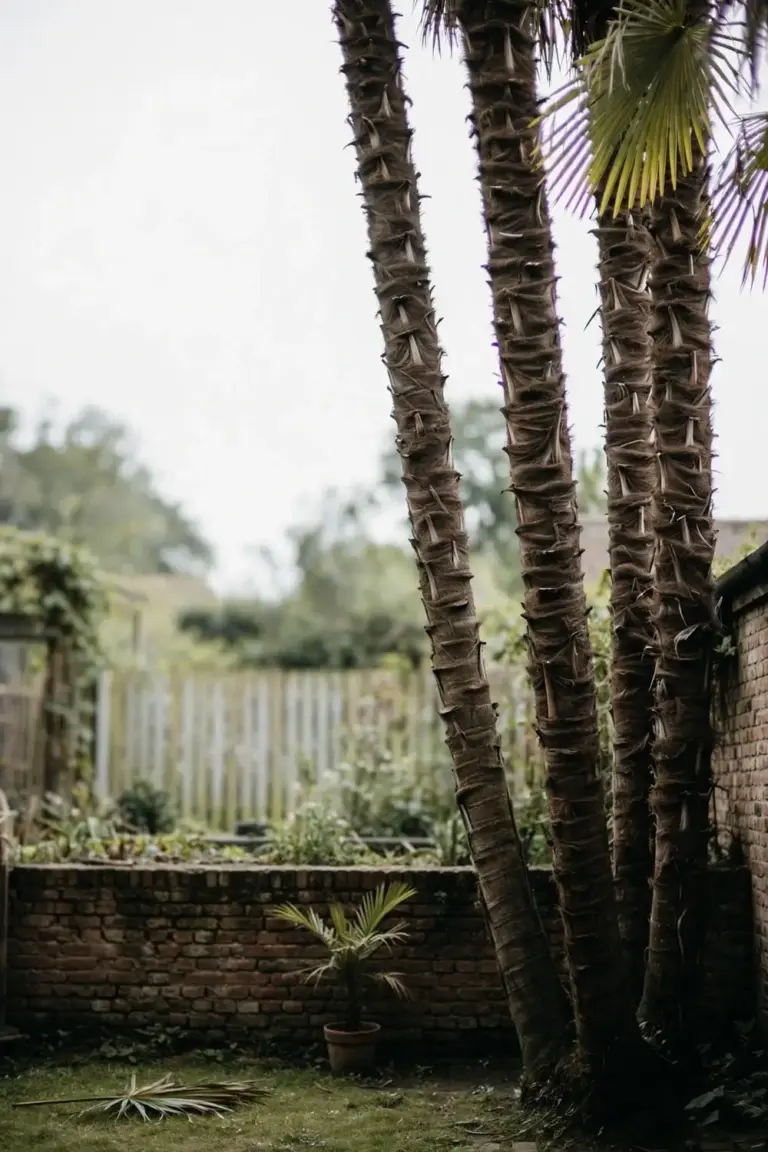
Bangalow palm grows into a tall rainforest tree with a single trunk and a crown that keeps rising. It drops large fronds that fill a courtyard. It suits a big garden, a park, or a street. A small garden has no room for it.
Alexandra palm is Bangalow palm’s northern cousin, and it grows just as tall. It needs space for its crown and its roots. A courtyard gives it neither. Pick lady palm when you want the look in a small space.
Foxtail palm carries a wide crown of foxtail fronds. The crown needs full sun and open air. A courtyard wall shades it and crowds it. A foxtail palm in a courtyard leans toward the light and loses its shape.
Nursery plants lie about size. A palm in a small pot looks small. The label tells the truth. Read the mature height on the label before you read the price. A skipped palm is not a lost palm. It waits for a bigger garden. Buy the palm that fits the garden you have.
Match the Palm to Your Climate Band
Your climate band decides the shortlist before the nursery visit. Tropical covers far-north Queensland and the Northern Territory, where frost rarely lands, while subtropical runs from Brisbane to northern New South Wales. Warm-temperate covers Sydney, Perth, and Adelaide. Cool-temperate covers Melbourne, Canberra, and Hobart, where frost is a regular winter visitor.
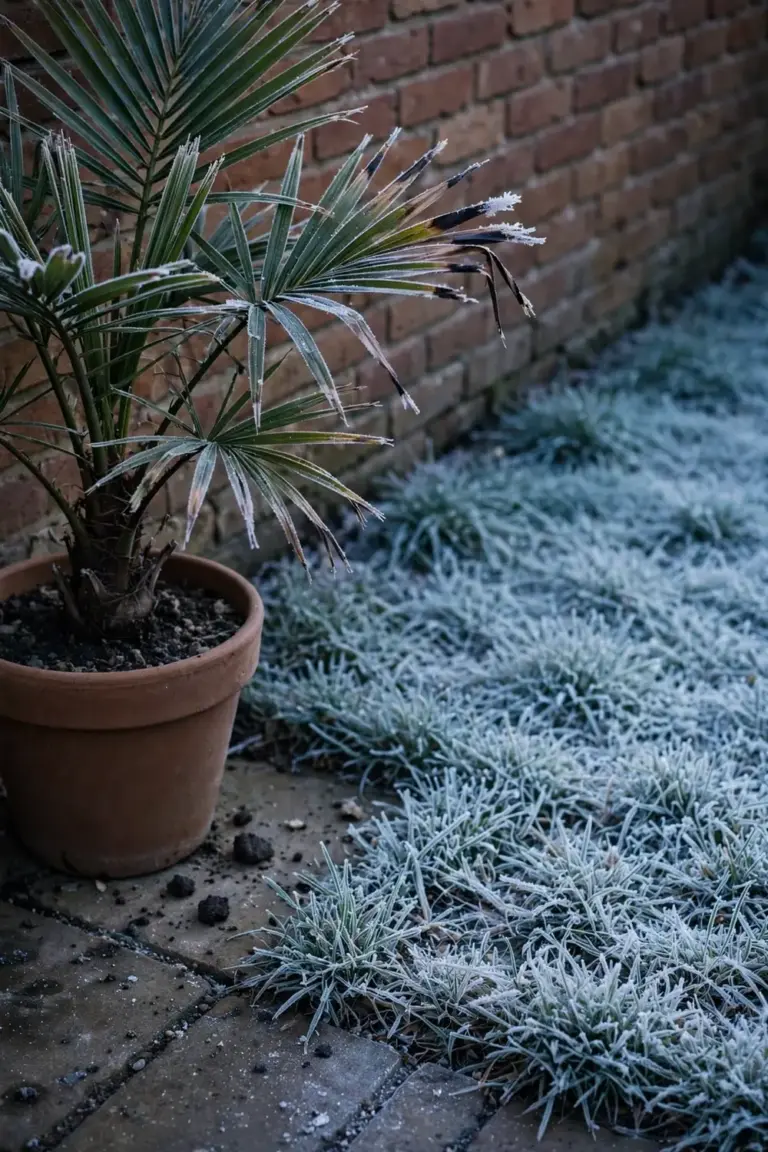
Tropical and subtropical gardens take any palm on this list. Warm-temperate gardens take all 8 with shelter for the frost-tender picks. Cool-temperate gardens take European fan palm and windmill palm outdoors, and the rest in pots with winter shelter. A sheltered courtyard buys one band of warmth. A frost pocket loses one band.
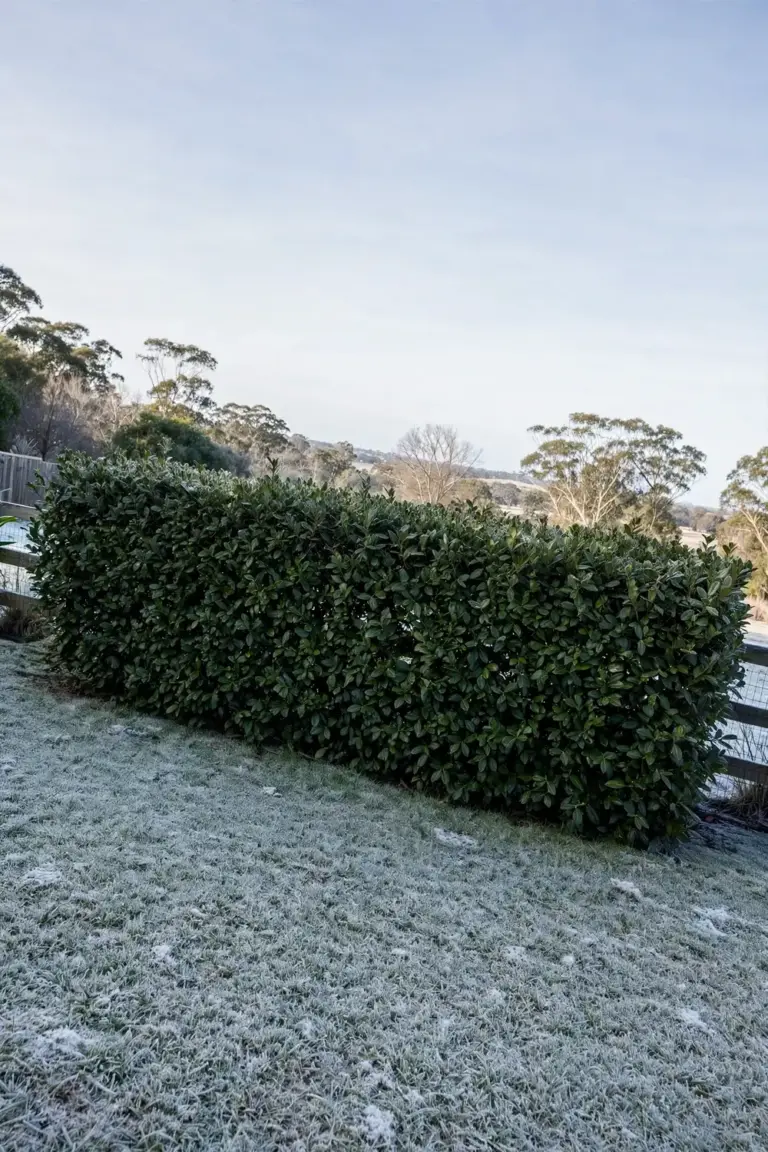
A frost pocket sits low and cold. A courtyard wall holds daytime heat. A palm against a north-facing wall survives frosts that kill the same palm in an open lawn. Walk the garden on a frost morning. The white grass shows the cold spots. Plant tender palms where the grass stays green.
Measure your coldest night before you buy. A min-max thermometer on the wall records the winter low through the coldest months. One winter of readings beats a zone map. A garden that never drops below -2 °C takes Kentia, lady palm, and pygmy date palm in the ground, while a garden that drops to -8 °C takes windmill palm and European fan palm.
A pot moves the palm, so the pot is the climate tool. A golden cane palm in a pot winters indoors, and a Kentia palm in a pot moves under cover on frost nights. Good soil decides whether an in-ground palm drains after rain. Building soil health covers the organic matter and structure that keep a bed draining. How to protect plants from late frost covers the covers and moves that save a tender palm on a cold night.
Frequently Asked Questions
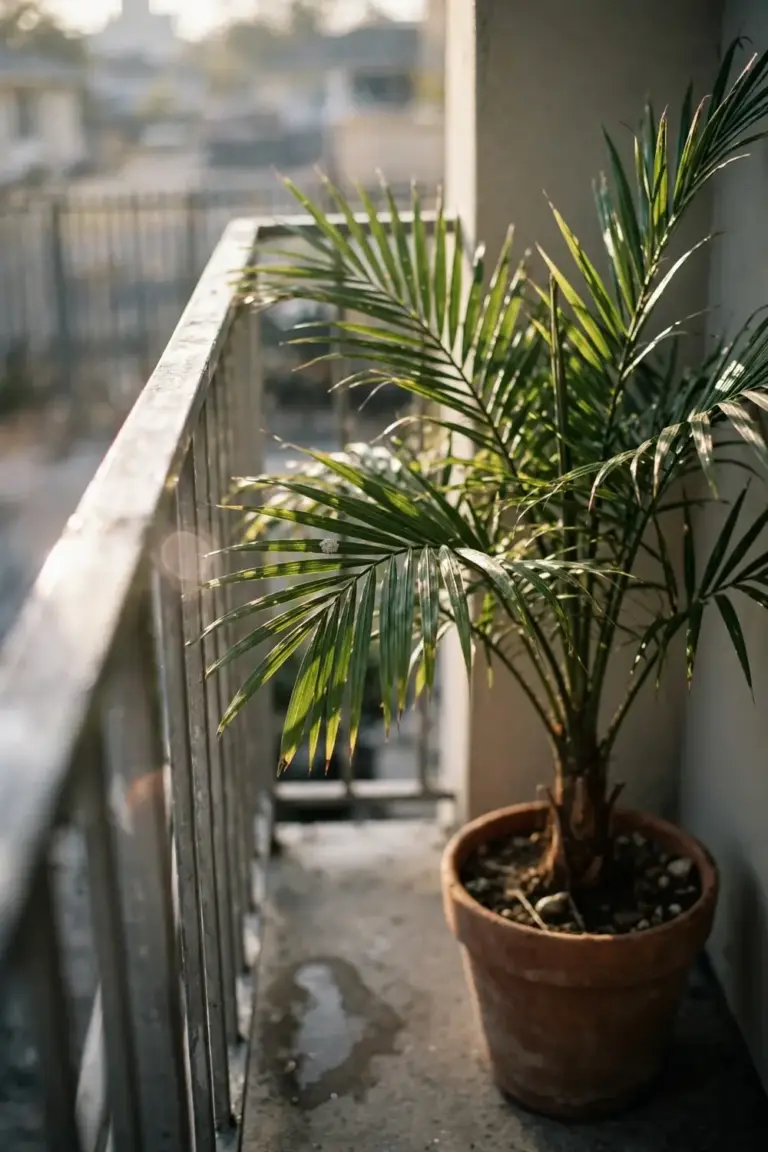
Parlour palm stays smallest. It reaches 1 to 2 m indoors with a spread of 0.5 to 1 m, per Sunshine Coast Nursery. That size suits a tabletop pot when young and a floor pot when older. No other palm on this list stays this small. Buy parlour palm when the space measures under 1 m wide. Water when the top of the mix dries.
Yes, when the pot drains and the balcony carries the weight. Pick a palm whose pot column says yes in the table, because a palm that suits a pot stays small while a palm that needs the ground outgrows the balcony. Parlour palm, lady palm, and Kentia palm suit shaded balconies, while pygmy date palm and windmill palm suit sunny ones. A pot with drainage holes stops winter wet from rotting the roots. Move tender palms indoors on frost nights.
Windmill palm and European fan palm survive a Melbourne winter outdoors. Windmill palm tolerates cold to -12 °C, per Three Timbers nursery, and European fan palm tolerates frost to -10 °C, per Seagrave Nurseries. Kentia palm and pygmy date palm survive in sheltered courtyard pots. Golden cane palm and parlour palm winter indoors. A courtyard wall holds daytime heat through a frost night.
A Kentia palm in a pot stays 1.5 to 3.6 m for years, according to Gardenia’s growing notes. A Kentia palm in the ground reaches 12.2 m, per the University of Florida IFAS Extension profile. The pot is what keeps it small. Keep it potted and it stays a courtyard palm. Plant it out and it becomes a 12 m tree. Move a potted Kentia under cover when frost threatens, and leave it there until morning.
Parlour palm is listed as non-toxic to pets by the ASPCA. Pygmy date palm carries spines on its leaf bases. The spines run 5.1 to 7.6 cm long, per the University of Florida IFAS Extension profile. Keep spiny palms away from paths where kids brush past. Check the label before buying any palm for a play area, because parlour palm suits a play area better than pygmy date palm: it carries no spines at all.
Start With One Palm This Weekend
Pick 1 palm from the table, then measure the spot it will sit in. A pot buys time. A palm in a pot moves with the seasons. A layer of mulch for moisture retention keeps an in-ground palm’s root zone moist and cool through summer. Start with the palm that matches your coldest night. A palm that survives your winter needs no rescue. Buy the palm for the space you have. A palm bought for a fantasy space outgrows the real one.
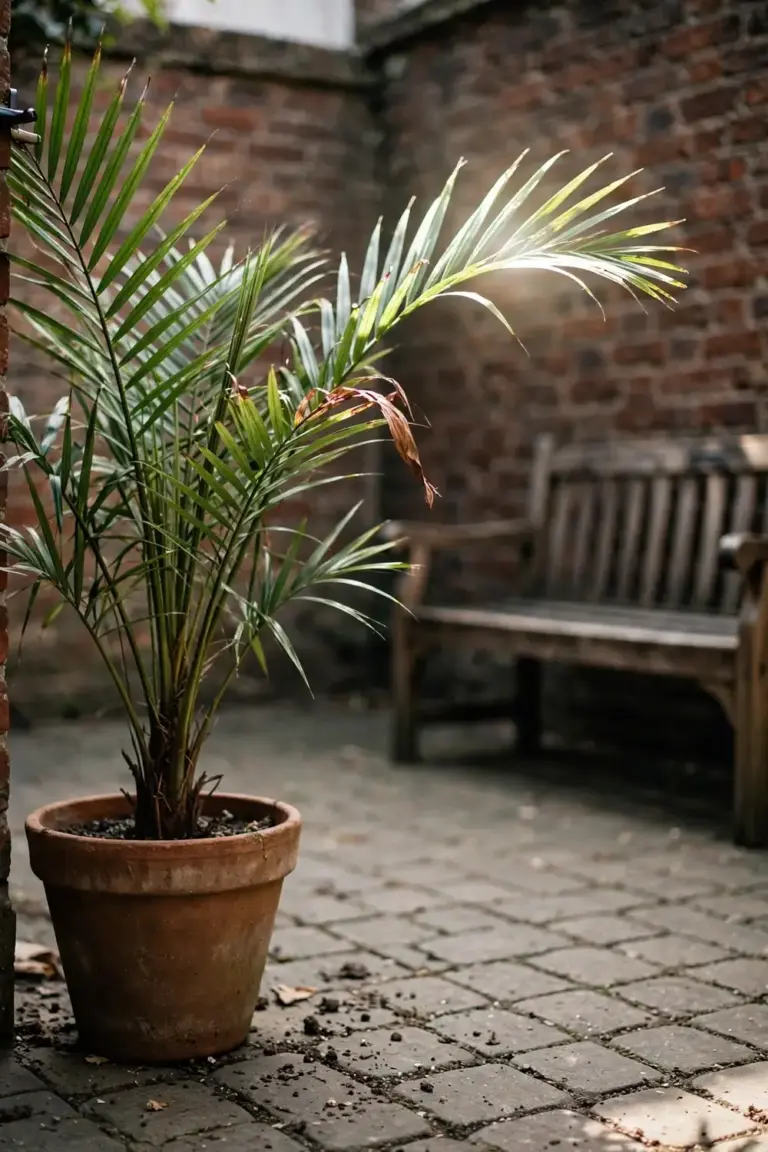
Walk the garden once more before you buy, and note the sunniest wall and the coldest hollow. Match the palm to the spot, not the spot to the palm. A palm in the right spot needs no rescue.