
Soak the whole trunk for 2 to 3 days before it goes in the ground, then water the crown and trunk every day until new fronds unfurl. That is how a transplanted tree fern survives in Australia. The trunk is a column of living roots, so the plant drinks from above, not only from the soil below. The rest of this page is 12 moves, from the lift to the first full year, plus the three mistakes that kill transplants.
A tree fern here means Dicksonia or Cyathea, the two genera sold across Australian nurseries. Dicksonia antarctica, the soft tree fern, is the one you will meet most often in Australian nurseries, and most of the specific advice here was written with it in mind. Transplanted means lifted and moved, whether it arrives as a nursery log or comes out of another corner of your garden. A nursery log is a trunk cut with no roots at all. An established plant comes with a root ball, however small. Survive means establishment: roots growing out of the trunk base and a crown pushing new croziers. Until both of those are happening, the plant is still in transit, no matter how long it has been in the ground.
This page covers the move and the year after it. Nothing else.
1. Water the Trunk and Crown First, Not Just the Soil
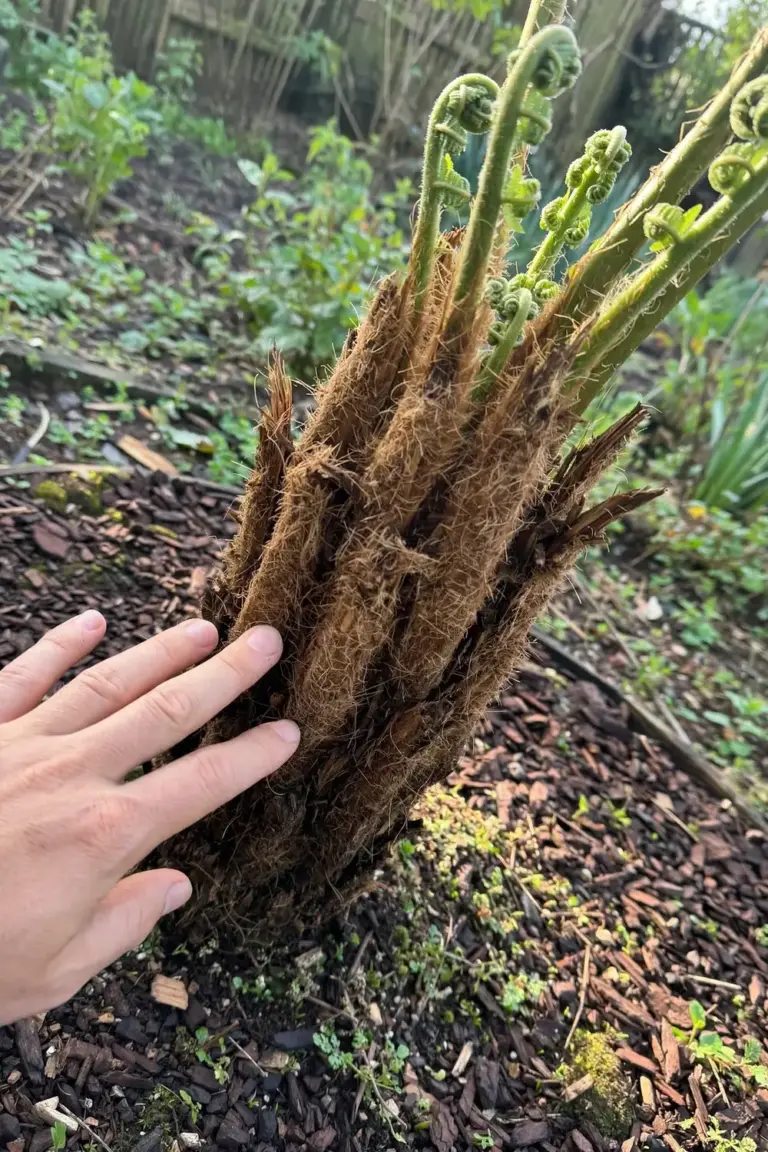
Water the crown, the trunk, and the ground around the trunk every day after planting. The roots run down from the crown to the ground on the outside of the trunk, so soaking only the soil misses half the plant, according to the Exotic Fern Group’s tree fern growing guide. Pour water straight into the crown and let it run down the fibrous trunk. Use a watering can or a gentle hose, not a jet. A hard jet blasts the soft new croziers and compacts the surface roots. Slow water soaks in. Fast water runs off.
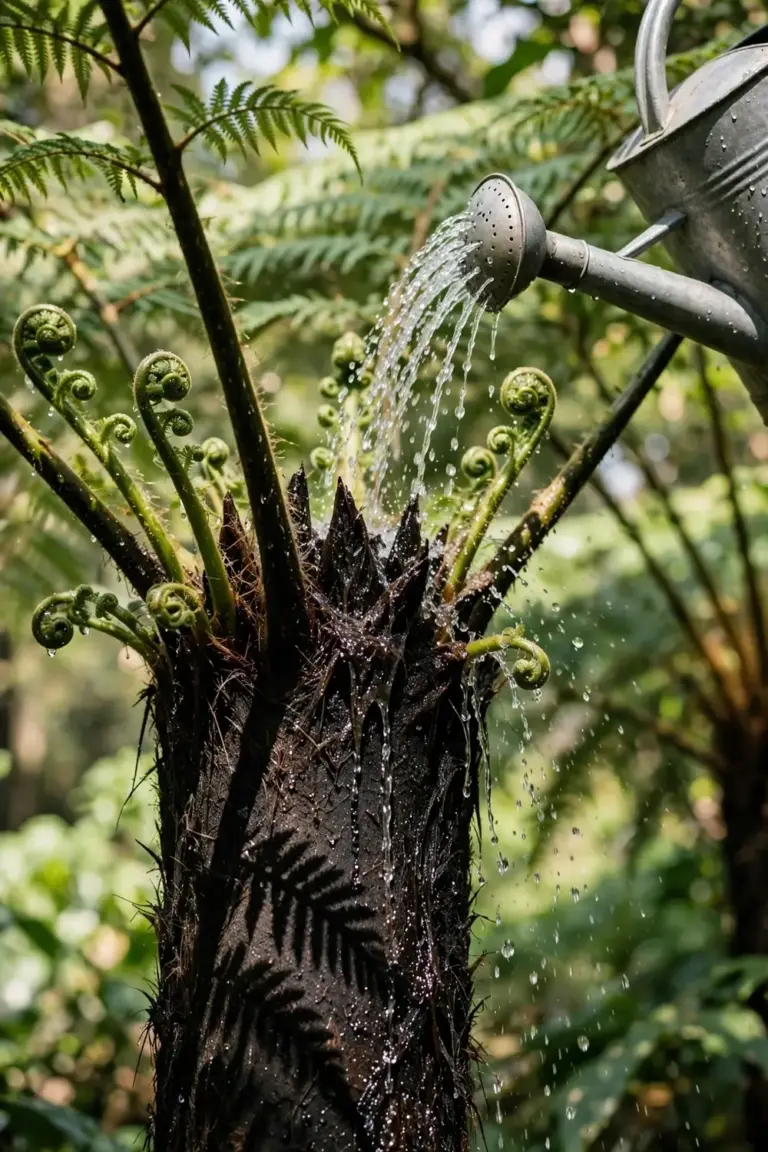
I water the trunk before the soil, because the crown drinks first and the roots catch up later.
In the wild, Dicksonia antarctica grows in wet gullies and on moist mountain slopes across south-eastern Australia, often forming dense layers under trees and reaching 15 metres, as the Australian National Botanic Gardens rainforest guide records. Your garden version wants the same deal: constant moisture on the trunk. A tree fern left to dry on the trunk stalls. Fronds emerge smaller, then stop. Think of the daily trunk watering as replacing the gully humidity the plant evolved in. The crown sits at the top of that trunk, and it is the growing point for every frond the plant will ever make. Keep it wet and it works. Let it dry and it shuts down.
2. Move It on a Cool, Overcast Day
Move the tree fern on a cool, overcast day, never in hot sun or strong wind. Heat and wind strip moisture from the fronds faster than a rootless trunk can replace it. Early morning works. Late afternoon works. Midday in January does not. Autumn is the kindest season for the move in most of Australia, because the heat has passed and the winter rains are coming. Spring runs second. If you must move in summer, do it at dawn and have the shade screen ready before the plant goes in.

Dig the plant the same morning you replant it. A trunk sitting bare in the sun for hours loses moisture through every exposed root hair on its surface. The surface of a tree fern trunk is not bark. It is a mat of roots and old frond bases, and it dries fast in sun and wind. If the move must wait a day, stand the trunk in shade and wrap the base in wet hessian or an old towel. Rewet the wrapping whenever it dries.
Plan the hole before you lift. Measure the trunk, dig, then move. The less time the plant spends out of the ground, the less shock it carries into the new spot. A move planned in advance takes an hour. A move improvised on the day takes all afternoon, and the plant pays for every extra hour.
3. Cut the Fronds Back Before You Lift
Cut the fronds back hard before you lift the plant. Fewer fronds mean less water loss while the roots re-establish. Take off the lower and outer fronds first, and leave the curled new croziers in the center untouched. Those curled fronds are the next canopy. Cut each frond at the base of its stalk, close to the crown, with a clean sharp saw or loppers. Ragged tears heal slowly and invite rot. Work around the crown evenly so the remaining croziers are not left lopsided, and step back every few cuts to check the shape.
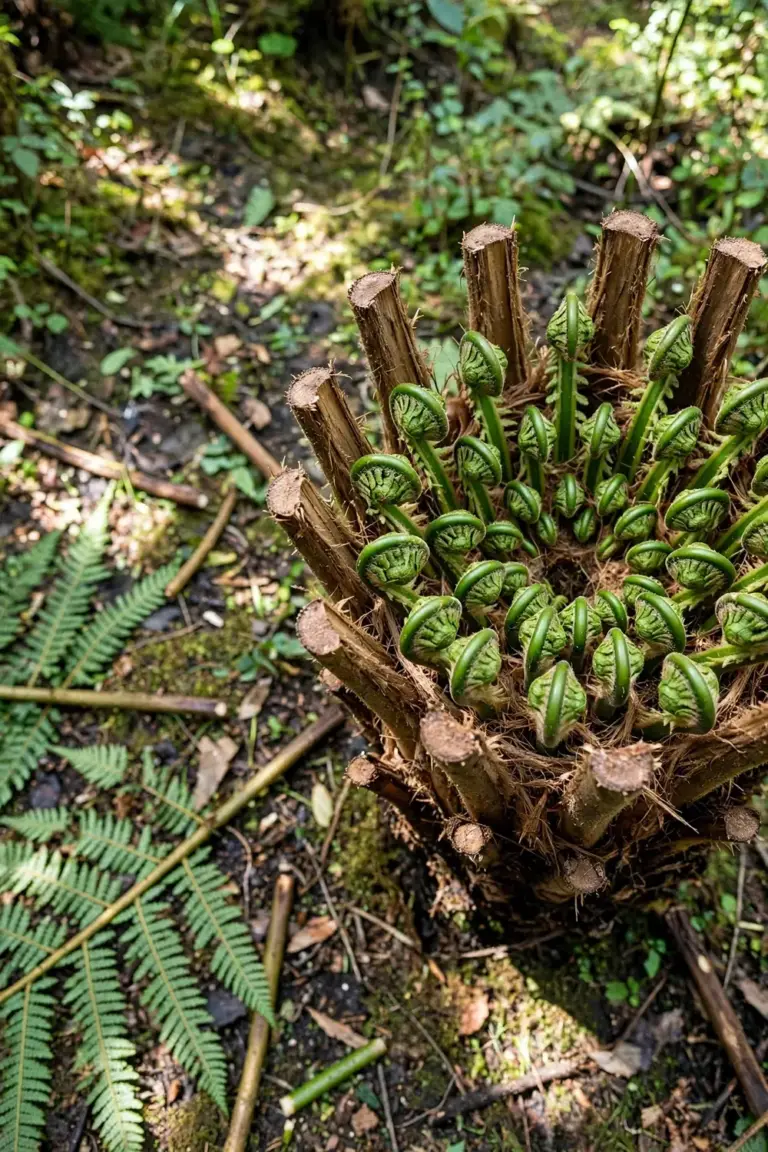
Australian nursery advice for trunk-cut replanting goes further: remove all leaves except the curled center ones, then water every three days until the plant is growing strongly. That drastic haircut looks brutal. It is the fastest way to balance a crown with no working roots yet. Every frond left on the plant is a sail catching wind and a surface losing water. Fewer fronds mean the limited moisture goes to the crown, where the next generation of fronds is waiting.
Keep every frond you cut. Lay them over the crown as temporary shade, or chop them into the mulch ring. Nothing from a tree fern needs to go in the bin. The cut fronds break down into exactly the kind of organic matter the plant likes around its base.
4. Soak the Trunk for Two to Three Days
Soak the trunk for two to three days before planting, according to the Exotic Fern Group’s tree fern growing guide. Stand it upright in a drum or wheelie bin of water with the base submerged. A nursery log that has been out of the ground for weeks is drier than it looks, and planting it dry asks the first watering to do a month of work in an afternoon. Weigh the trunk down if it floats, or wedge it so it stays upright. A trunk that tips over in the drum and lies in the water unevenly soaks unevenly, and the dry side is the side that struggles first.
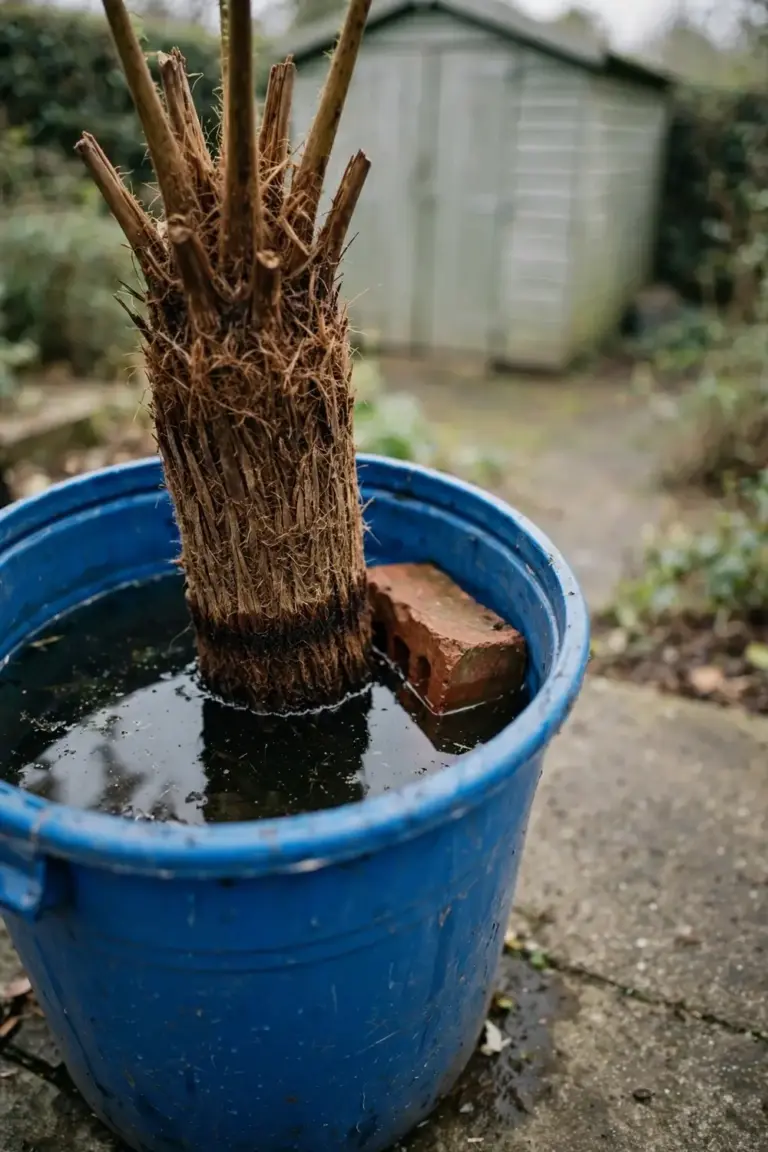
If you cannot soak the whole trunk, soak the base for a few minutes at minimum and water copiously all over and around the trunk the moment it is in position. The goal is the same: every fiber of that trunk should be wet when planting finishes. A trunk planted dry starts its new life already behind on water, and the first week is when it can least afford the deficit.
Do not soak past three days in warm weather. Standing water with no air movement can turn the base soft. Two to three days is the window. Change the water if it starts to smell, and keep the soaking trunk out of direct sun while it waits.
5. Plant It Shallow and Stake It Firm
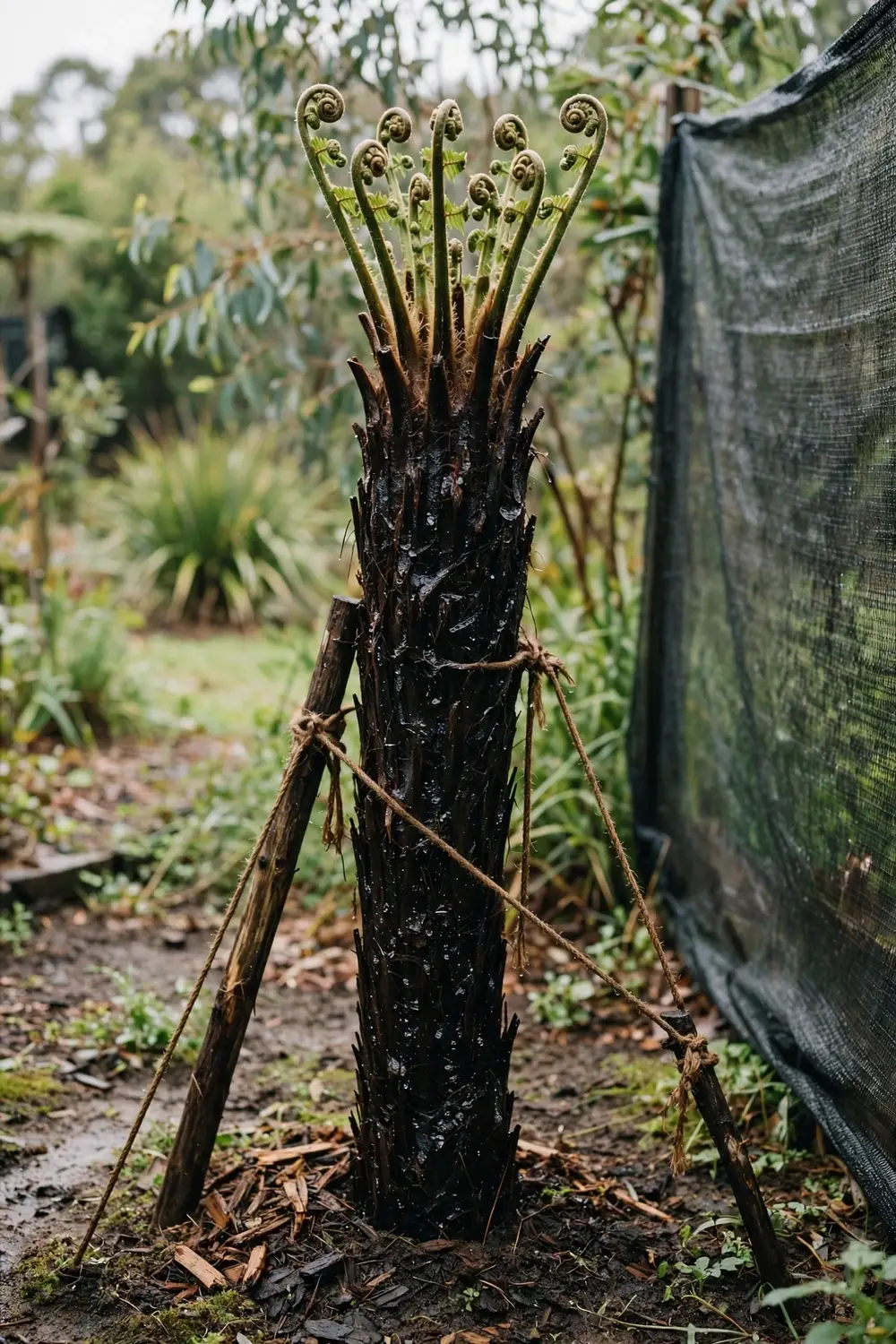
Plant the trunk as shallowly as possible while keeping it stable. Bury as little of the trunk as you can get away with, because the priced length of the trunk is above ground and buried fiber can rot. Dig the hole at least 30 cm deep for the base to sit in, then secure the trunk with guy ropes or sturdy stakes so it cannot rock, as the Exotic Fern Group’s tree fern growing guide recommends.
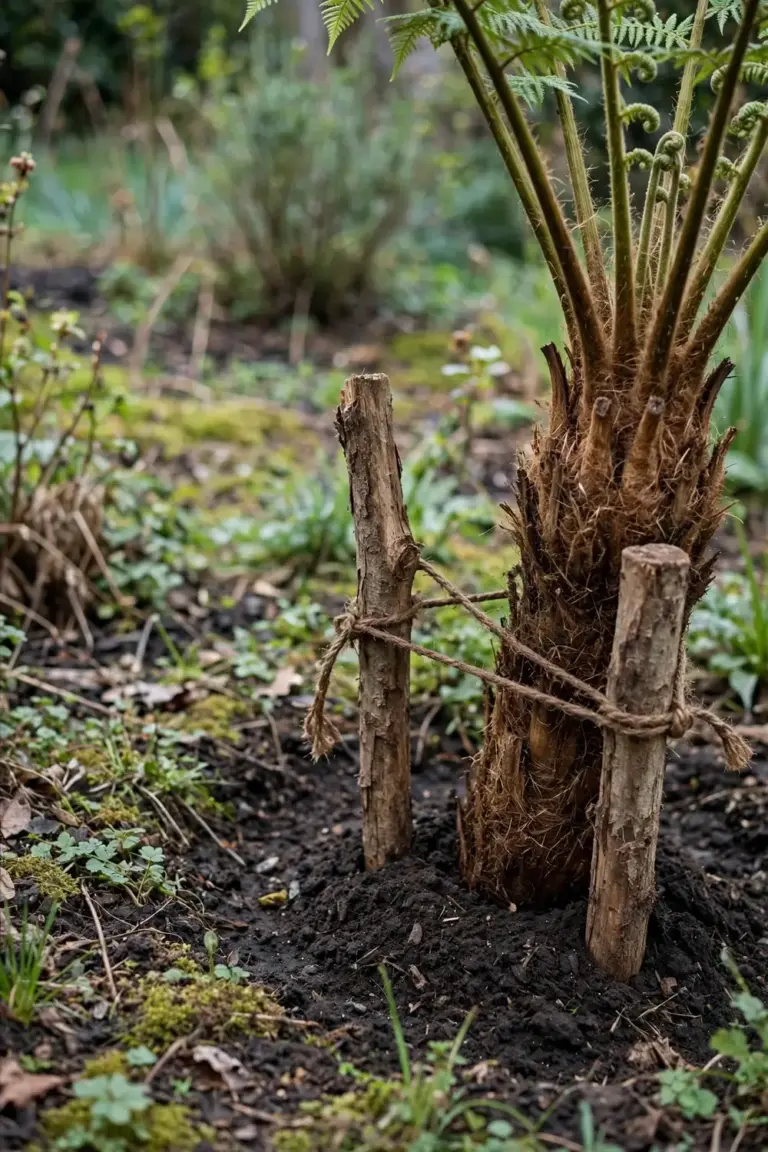
Backfill with the soil you dug out, mixed with compost. Firm it gently, a little at a time, so the trunk stays upright and no air pockets remain around the base. Then water deeply to settle the roots, following the same approach the site’s soil health guide recommends for building soil health around any new planting: organic matter in the backfill, no air pockets, water to settle. Do not add fertilizer to the backfill. The compost carries enough nutrition for the establishment phase, and the roots do not exist yet to use anything stronger. Check the stakes again after the first watering, because wet soil shifts and a trunk that was firm can start to lean.
Know which genus you planted. A Dicksonia trunk consists entirely of living roots, so the top can be sawn off and the crown replanted to reroot. A Cyathea must keep roots underground and makes only limited use of the roots in its trunk. The watering is the same for both, but a Cyathea punishes deep planting and rough root handling more. If your plant arrived as a bare log with no roots at all, it is almost certainly a Dicksonia, because Cyathea logs are sold with their root balls intact. Handle either one gently at the base, where the new roots will emerge.
6. Follow the Weaning Watering Schedule
Water daily for the first week, every second day for the second week, then weekly through the first season. That weaning schedule comes from Gardening Know How’s Australian tree fern transplant guide, and it matches what the plant needs: constant moisture while rootless, then a gradual handover to rainfall and routine watering. The logic is simple. In week one the trunk has no roots in the soil at all, so every drop must arrive from above. By week three the first roots are reaching out, and the soil watering starts to count. The schedule follows the roots.
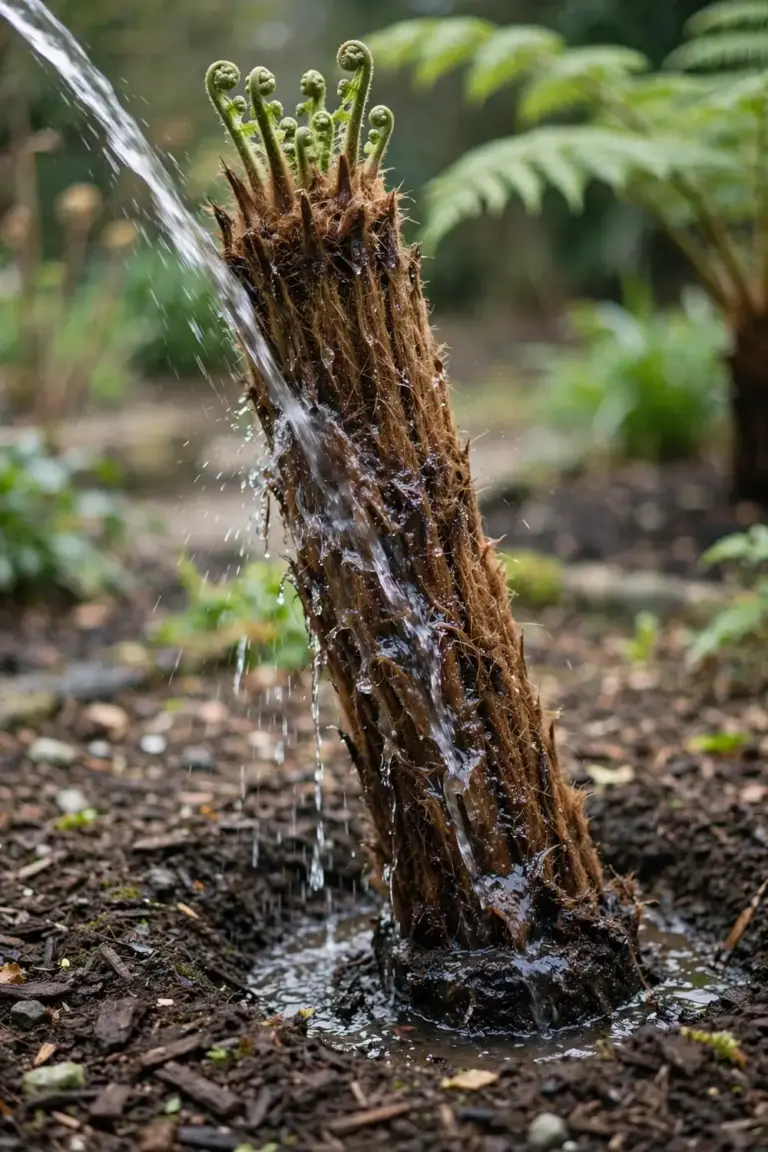
Water the crown and trunk, not just the soil. In hot months, pour water straight into the crown. One nursery guide suggests tipping a full watering can over the crown about once a week to once a fortnight through summer, on top of ground watering. That crown watering matters most on still, hot days, when the air itself pulls moisture out of the fronds and the trunk surface.
Ease off only when new fronds emerge and expand. New fronds are the signal that roots are working. Until then, the trunk is the root system, and a dry trunk is a dying trunk. The weaning schedule is a guide, not a cage. In a heatwave, water daily no matter what week you are in.
7. Give It Shade Through the First Summer
Give the transplant dappled shade or a shade cloth screen for its first summer. Tree ferns tolerate sun once established if water is constant, but a fresh transplant in full Australian sun cooks. The fronds scorch, the trunk dries, and recovery stalls. Western sun is the killer, because it arrives when the day is already hottest and the trunk is driest. If you can only shade one side, shade the west. Morning sun is gentler and the plant can take it sooner.
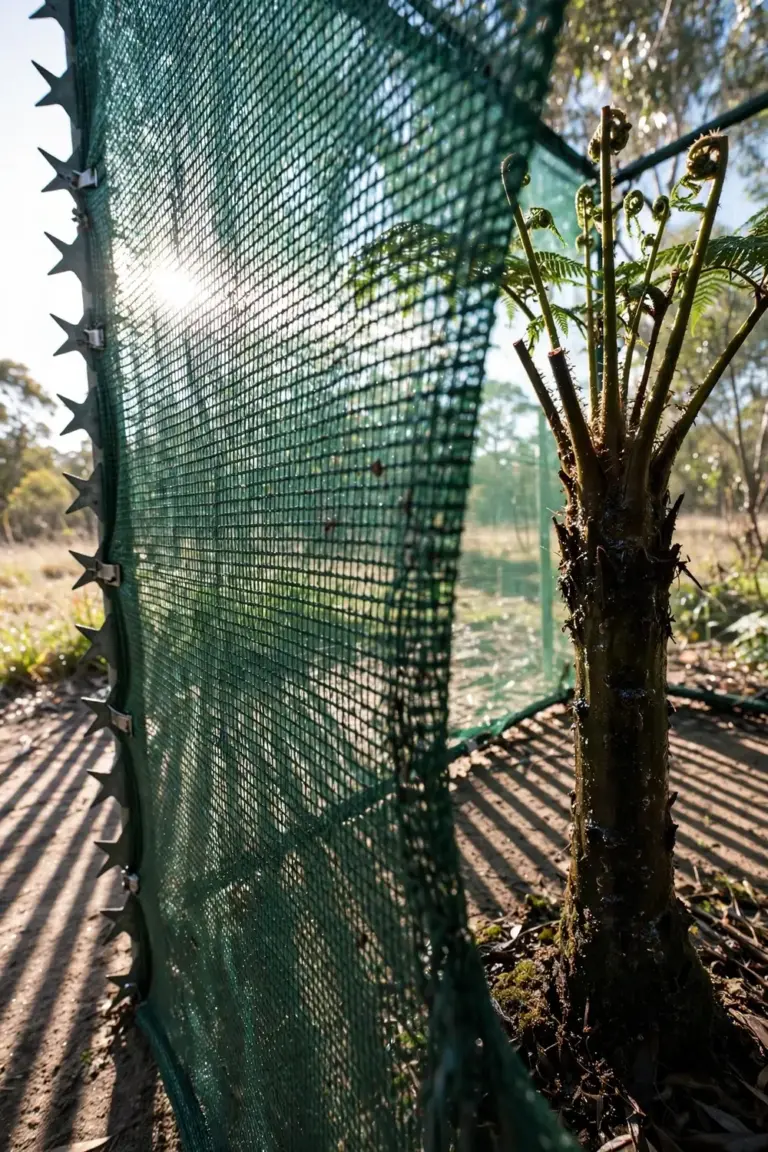
A shade cloth screen on the western side does the job, and so does planting under an existing tree canopy. What the fern wants is protection from the harsh afternoon blast, not darkness. Full shade all day slows recovery, because the crown still needs light to push new growth.
Leave the screen up until the second flush of fronds hardens off. Pulling shade too early in the first hot spell undoes months of careful watering. When the crown is pushing full-size fronds on its own, the plant is telling you it can take more light. Take the screen down gradually if you can, a few hours more sun each week, rather than all at once. A fern eased into brighter light adjusts. A fern thrown into it scorches.
8. Mulch the Ring and Keep It Off the Trunk
Spread a 5 to 7 centimetre layer of organic mulch over the root zone, keeping it 5 centimetres clear of the trunk, as Evergreen Trees’ soft tree fern care guide recommends. Mulch holds the soil moisture the shallow new roots depend on, and it keeps the soil cool through summer. Coarse bark or wood chips suit a tree fern better than fine mulch, because water passes through easily and the pieces knit into a stable blanket. Avoid mushroom compost straight against the trunk, since its salts can burn tender new roots.
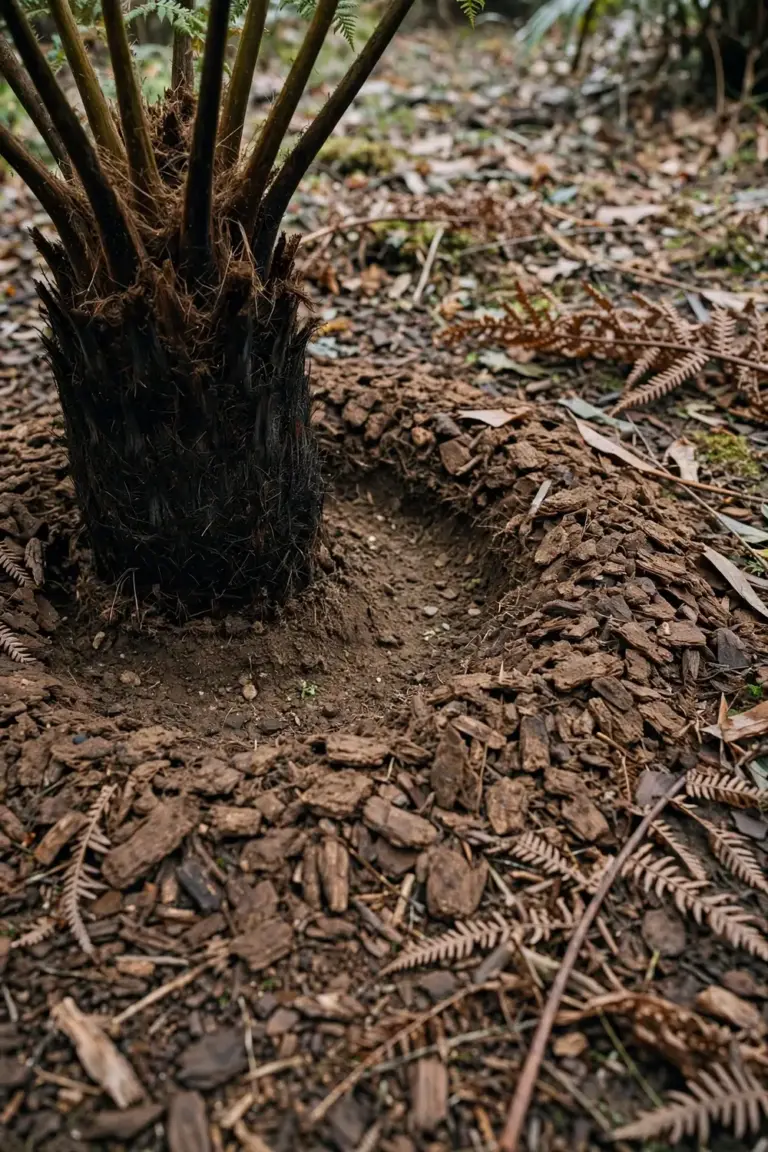
Do not pile mulch against the trunk. Wet mulch sitting on trunk fiber invites rot at the exact point where new roots need to emerge. The 5 centimetre gap is not decoration. It is a dry collar around the most vulnerable part of the plant.
Top the mulch up as it breaks down. A thin, patchy ring in February is doing nothing. The site’s mulching guide explains how mulch holds moisture through the mechanisms that matter here: less evaporation, cooler soil, steadier water for shallow roots. Check the ring every month through the first summer. Mulch compacts and thins faster than you expect, especially under daily watering, and a ring that was 7 centimetres in spring can be 3 by midsummer.
9. Hold the Fertilizer Until the Roots Develop
Feed a transplanted tree fern only after its roots are fully developed. Feeding too early, especially with high nitrogen, pushes a flush of foliage the undeveloped root system cannot support, and the plant can collapse the first time watering slips. That warning comes from nursery growers who watch it happen every season. The temptation is strongest in spring, when everything else in the garden is getting fed and the fern looks like it should join in. Resist it. The fern’s calendar is not the garden’s calendar.
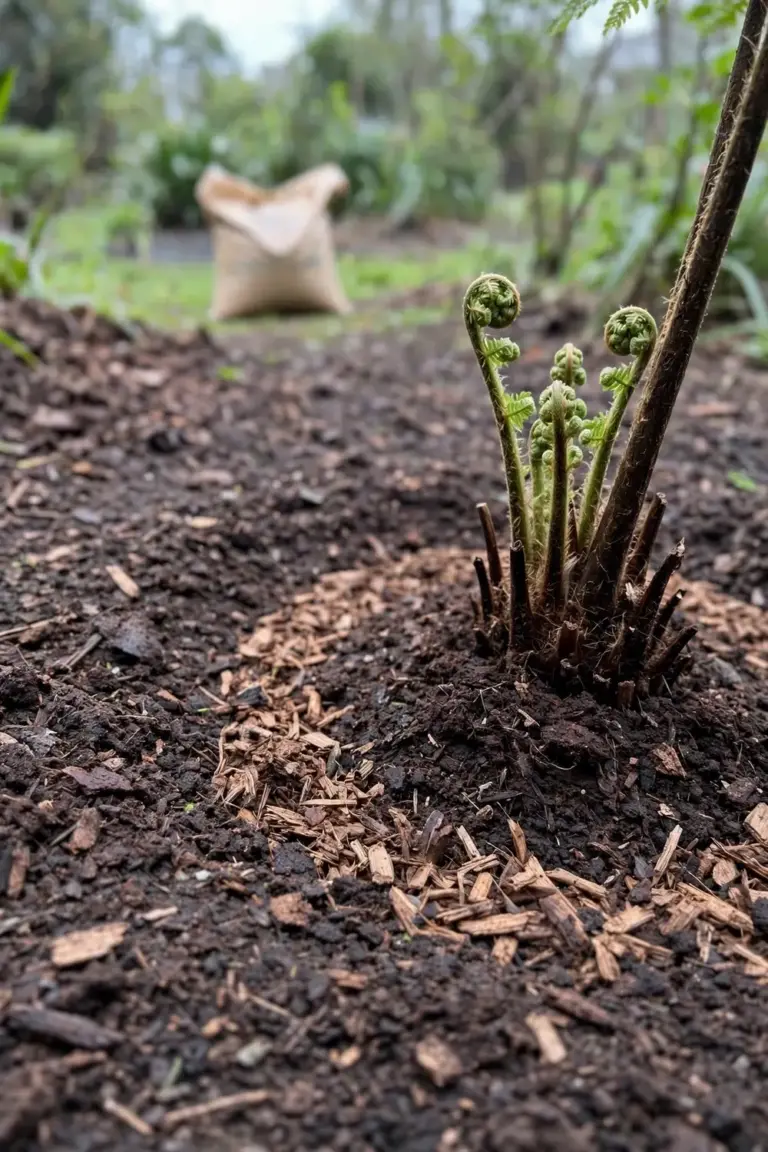
When feeding starts, use a slow-release native blend in early spring and again in autumn, and avoid high-phosphorus formulations as a precaution, following Evergreen Trees’ soft tree fern care guide. Some transplant guides suggest bone meal in the planting hole. Bone meal is high in phosphorus, so skip it at planting and let the compost in the backfill do the early work.
Water the fertilizer in. Dry granules sitting on a dry trunk do nothing, and a heavy dose on stressed roots burns. Light, watered-in, and only once roots exist. If you are unsure whether the roots have developed, wait. A hungry tree fern grows slowly. A burned one may not grow at all. The compost you mixed into the backfill on planting day is still feeding the soil while you wait.
10. Read the Crown for Signs of Life
Read the crown, not the old fronds, for signs of life. Old fronds dying back after a move is normal. It is transplant shock, not death. The crown is the verdict. New croziers uncurling from the center mean the plant is establishing. Watch for the croziers in spring, when the plant puts its energy into new growth. A crozier that uncurls fully into a frond is the plant voting for life. One that blackens at the tip and stalls is the plant telling you the water or shade still needs work.
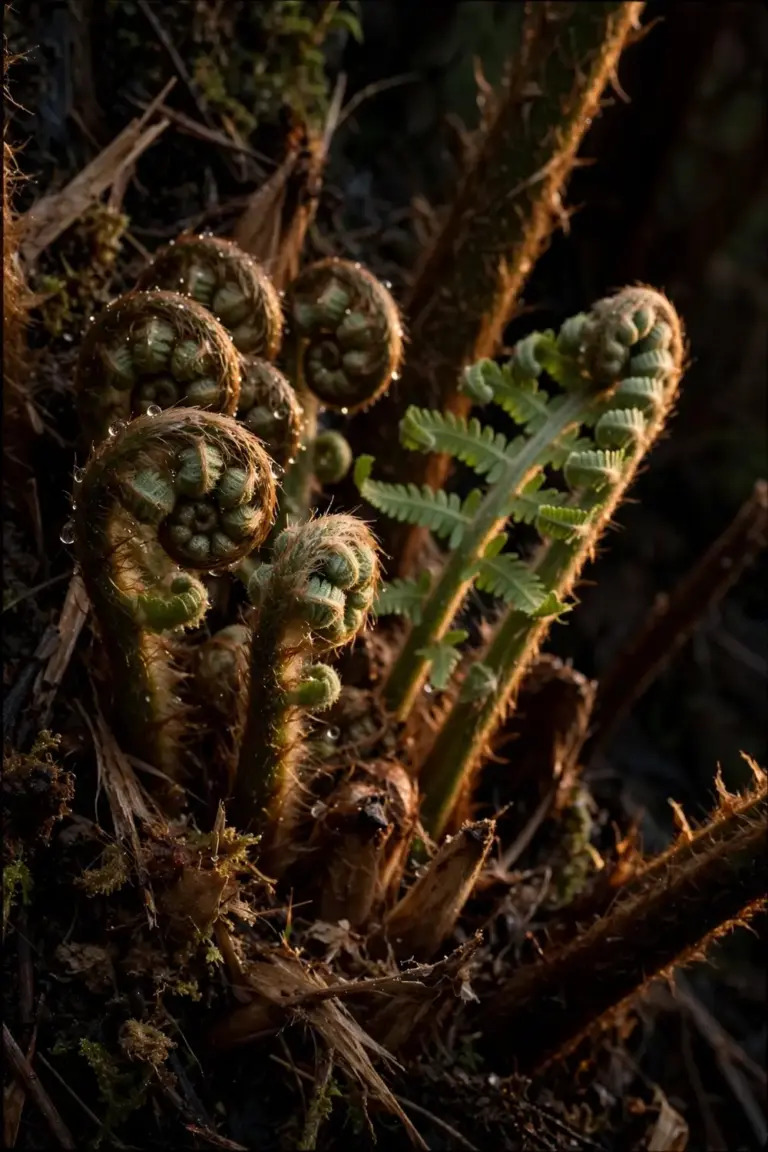
Give the crown at least one full growing season before you call it. Tree ferns are slow. Dicksonia antarctica builds only about 3 cm of trunk per year, according to Thompson and Morgan’s Australian tree fern guide, so a transplant that looks unchanged for months may still be quietly rooting. Patience is part of the method. Mark the date of the move on a calendar or a plant tag. Without a date, every gardener misjudges how long the plant has been in, usually by months, and digs up living plants out of impatience.
If the crown turns soft and mushy with a foul smell, that is rot, and the plant is gone. A firm crown with no new growth yet is a waiting plant, not a dead one. Learn the difference before you dig it up. Press the crown gently with a thumb. Firm and springy means alive. Soft and sinking means rot has set in. That one test saves more tree ferns from premature removal than any other check you can do. It takes five seconds, it needs no tools, and it answers the only question that matters: alive or not.
11. Fix the Three Mistakes That Kill Transplants
Planting too deep kills more transplants than any pest. A trunk buried to look stable rots at the soil line, and by the time the crown shows the damage, the base is gone. Plant shallow, stake instead, and let the guy ropes do the holding. If the trunk wobbles after staking, add a third stake rather than more soil. Soil is not a stake. It is a blanket that smothers.
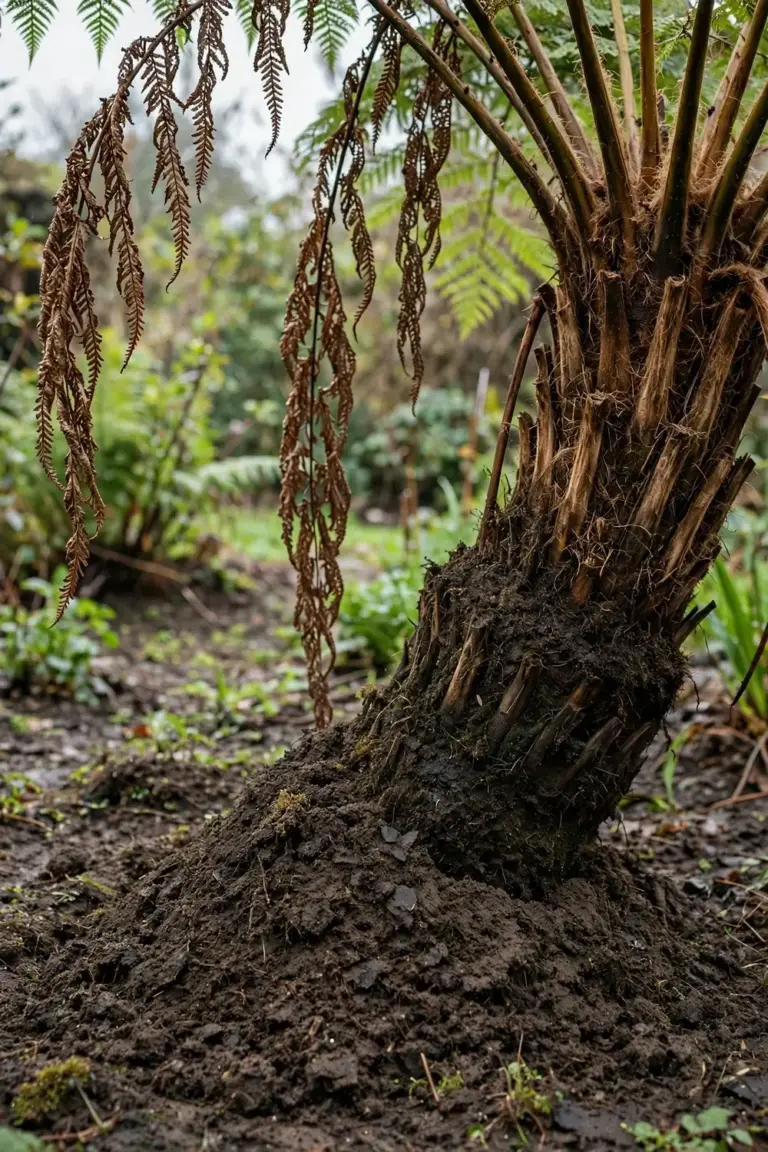
Watering the crown in cold, damp weather invites rot. One nursery guide warns against filling the crown with water when the weather is cold and damp, because the practice encourages rot in a crown that cannot dry. In winter, water the trunk and the soil instead. Keep the crown merely moist and let the air do the rest.
Planting in full sun with no water plan finishes the job. Dicksonia antarctica tolerates temperatures down to about minus 5 degrees Celsius and handles sun only with constant water, per Thompson and Morgan’s Australian tree fern guide. In most Australian gardens frost is the smaller risk. Baking sun on a dry trunk is the bigger one. If the only spot available is sunny, commit to the shade screen and the daily watering as non-negotiable, not optional. A sunny position with disciplined water beats a shady position with erratic water.
12. Work the First-Year Calendar
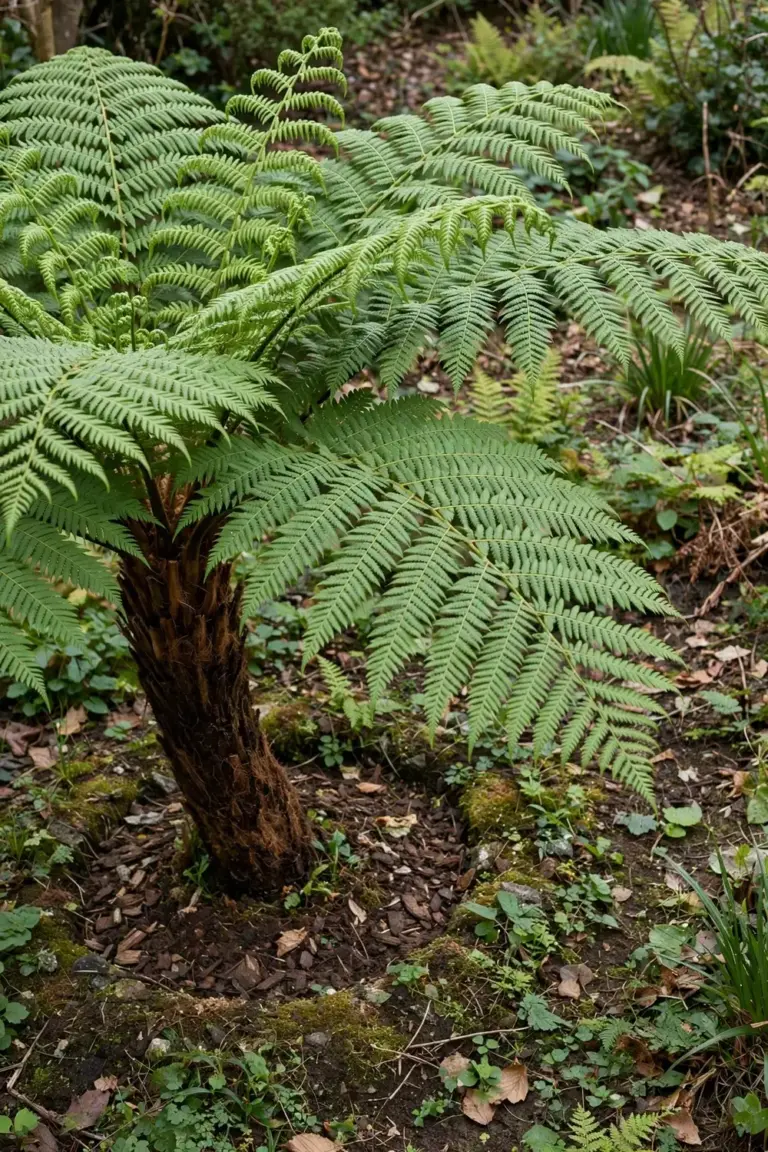
The first year after transplanting has a rhythm, and the table below lays it out season by season. Follow it and the fern establishes. Skip it and the fern stalls, quietly, while you wonder what went wrong.
| Period | Water | Other jobs |
|---|---|---|
| Move day | Soak trunk 2 to 3 days before; water copiously at planting | Cut fronds back; plant shallow; stake firm |
| Week 1 | Daily: crown, trunk, and soil | Check stakes after wind; keep shade screen up |
| Week 2 | Every second day | Top up mulch if it has settled |
| Weeks 3 to 12 | Weekly deep watering, more in heat | Watch the crown for new croziers |
| First summer | Weekly crown watering plus ground watering | Keep shade screen up; never let the trunk dry |
| Autumn | Ease back as rain returns | Apply slow-release native fertilizer only if roots are established |
| Winter | Water trunk and soil; keep crown only moist | Protect the crown from frost in cold districts |
| Second spring | Normal routine watering | Remove shade screen once new fronds harden off |
Expect the first fronds to be smaller than the ones you cut off. That is normal. Each flush should come back larger as the root system builds. Do not judge the plant by that first small flush. Judge it by the trend across flushes. A fern pushing full-size fronds by the second spring has survived the transplant, and it will keep building from there.
Frequently Asked Questions
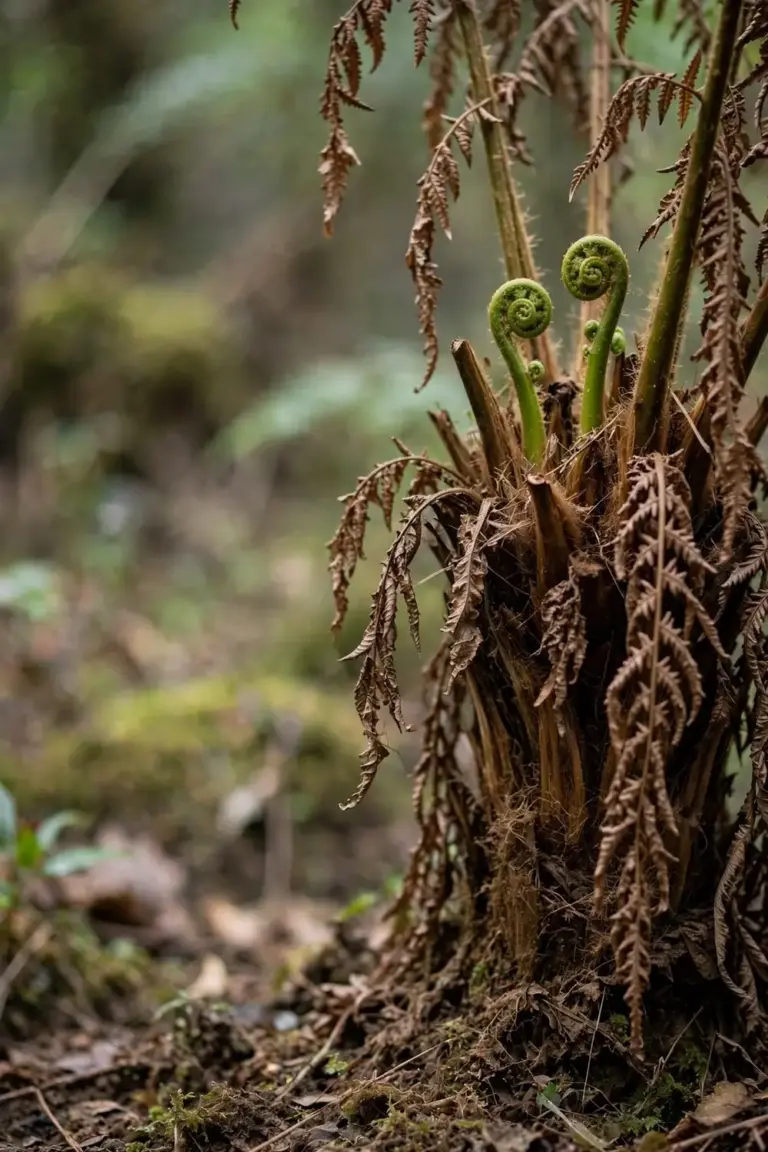
Expect old fronds to die back within weeks of the move, and allow one full growing season before judging the plant. New croziers from the crown are the sign of recovery, not the old fronds greening up. Dicksonia antarctica grows only about 3 cm of trunk per year, so visible progress is slow even in a healthy transplant. A firm crown with no new growth yet is still alive. Give it the season.
Water both, but treat the crown and trunk as the priority. The trunk is a column of living roots that absorbs water along its whole length, so pour water into the crown and let it run down the trunk, then soak the soil around the base. In cold, damp winter weather, ease off the crown and water the trunk and soil instead, because a waterlogged crown can rot when it cannot dry.
You can, but summer is the hardest season for it. Heat and wind strip moisture from the fronds faster than a rootless trunk can replace it, so the watering demand doubles and the margin for a missed day disappears. If summer is the only option, add shade cloth on the western side, cut the fronds back harder, and commit to daily crown and trunk watering without gaps.
No. Hold all fertilizer until the roots are fully developed, which means new fronds emerging and expanding on their own. Early feeding, especially high-nitrogen feeds, pushes foliage the undeveloped roots cannot support, and the plant may collapse the first time watering slips. When feeding starts, use a slow-release native blend in early spring and autumn, avoid high-phosphorus formulations, and always water the feed in well.
Probably not. Complete frond loss after a move is classic transplant shock, and many tree ferns drop every frond before re-establishing. Check the crown: firm means alive, soft and foul-smelling means rot. If the crown is firm, keep watering the trunk and soil daily, keep the shade up, and wait for new croziers. Some transplants sit quiet for months before the crown moves, and the quietest months are often the ones when the roots are doing the most work underground.
Walk the Fern Every Morning
Walk past the fern every morning for the first month, and keep it up through the first summer whenever you can. Touch the trunk. If it feels dry, water it. That daily check catches every problem before it turns fatal: the slipped stake, the dry trunk, the mulch piled against the fiber, the shade cloth blown down. Make it part of an existing habit, the same walk you already take with the morning coffee. A transplanted tree fern survives on attention more than on technique, and attention is completely free. Start tomorrow morning, rain or shine.