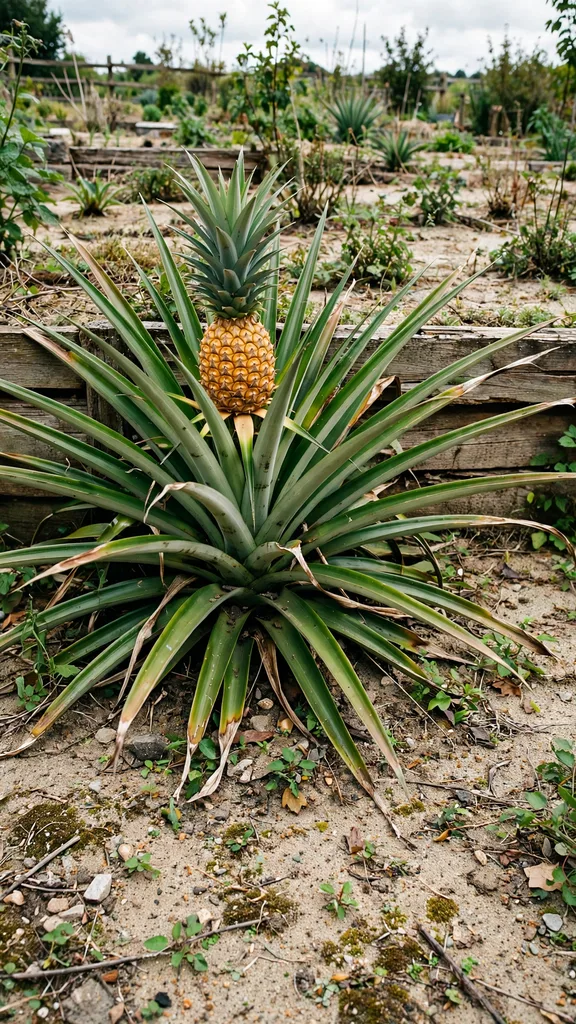
Spend 10 minutes twisting the crown off 1 ripe pineapple and stripping its lowest leaves, and the free plant on top of the fruit is ready to dry. That is how to grow pineapple from a store-bought top, and the method costs nothing beyond the fruit you already bought to eat. The plant then asks for patience. A crown takes 18 to 32 months from planting to a ripe fruit, according to the University of Florida IFAS Gardening Solutions pineapple guide. Gardeners who accept that calendar on day one grow a better plant than gardeners who fight it.
| Attribute | Detail |
|---|---|
| Botanical name | Ananas comosus |
| Plant family | Bromeliaceae, the bromeliad family |
| Plant type | Terrestrial perennial rosette |
| Mature size | 0.9 to 1.8 m high and wide |
| Leaves before flowering | 70 to 80 |
| Time to mature size | 14 to 18 months |
| Flowering to ripe fruit | 5 to 7 months |
| Planting to harvest, crown | 18 to 32 months |
| Best growth temperature | 20 to 30 degrees Celsius |
| Cold damage threshold | Growth slows below 15.6 degrees Celsius |
| Soil | Sandy loam, neutral to mildly acid, free draining |
| Container size | 11.4 to 26.5 liters |
| Fruit per plant | 1, plus a possible ratoon crop |
Pick a Ripe Fruit With a Full Crown
Buy the fruit for the crown first and the flesh second. The crown is the plant. A crown with a tight green center, firm leaves, and no soft black core grows. A crown with a mushy center rots in the pot within a fortnight, and no rooting method rescues it.
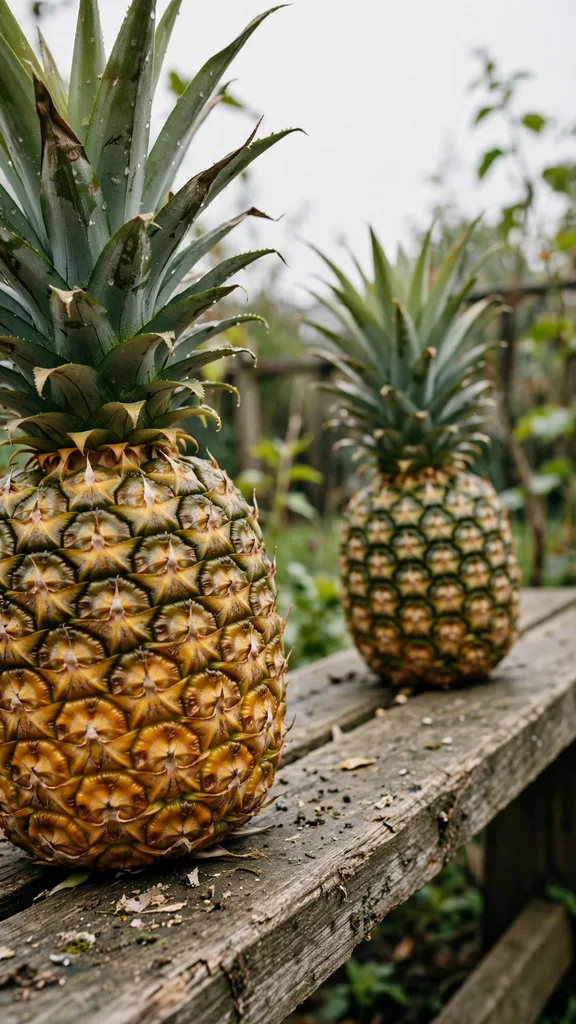
Judge ripeness by smell and shell color together. A ripe pineapple smells sweet at the base, and the shell has started turning from green toward gold at the lower third. The fruit itself is a fused cluster of many individual flowers, and the UF/IFAS EDIS guide to pineapple growing in the Florida home landscape records ripe fruit weights up to 2.3 kg, with the common grocery variety MD2 carrying fruit of 1.3 to 1.8 kg. Weight matters less than crown condition at the shop. Heft tells you the flesh is full. The crown tells you the plant is alive.
Skip fruit with a loose crown. Tug one center leaf gently, with two fingers and almost no force behind the pull. A healthy crown holds its leaves tight. One leaf resists. A crown that sheds leaves at a touch has started to rot from the inside, usually after long cold storage, and cold storage damage shows as a brown, watery core when the crown comes off. That damage is final.
Pick a fruit with untrimmed leaves. Some shops cut the crown short for display, and a scalped crown has lost the young center leaves it needs for fast growth. A full crown with leaves 15 to 30 cm long carries stored energy for the rootless weeks ahead. Short crowns root slowly and stall.
Eat the fruit the day you buy it, or the day after at the latest. Every extra day on the counter dries the crown base and invites mold into the cut surface you are about to make. The crown work takes 10 minutes. Do it while the fruit is still firm.
Twist the Crown Free and Strip the Lower Leaves
Grip the fruit in one hand and the crown in the other, then twist. A ripe crown turns free with a quarter turn and a firm pull, and it brings a small cone of core with it. A crown that refuses the twist is underripe. Cut that one off with a knife, taking a thin slice of the top with the leaves.
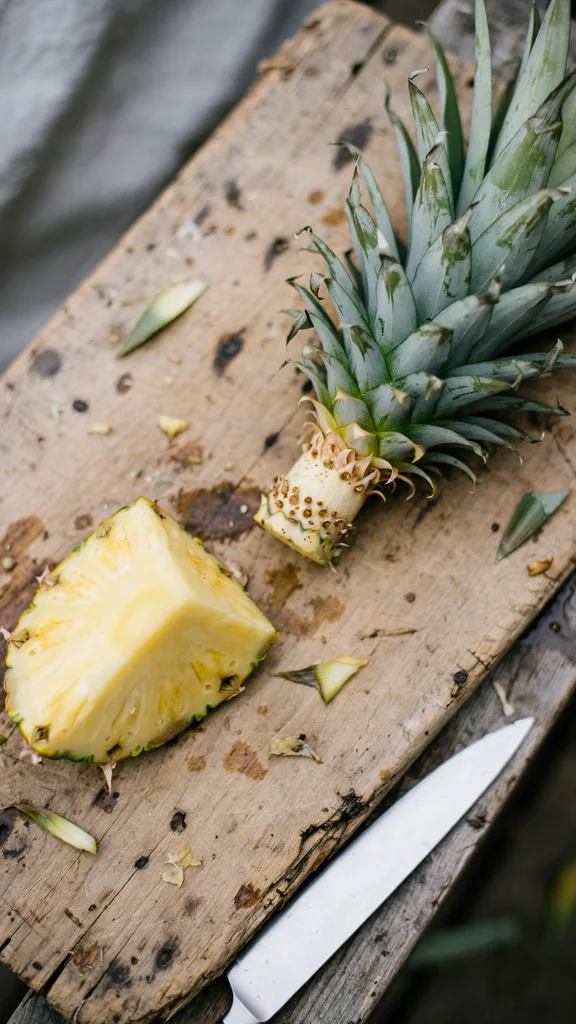
Cut away every trace of flesh from the crown base. Flesh left on the stem rots in damp mix, and the rot climbs into the stem within days. Pare the cone down to the pale, firm stem tissue with a clean knife. The crown itself is the leaves plus the top 1.3 to 1.9 cm of the fruit, per the EDIS pineapple propagation notes, and anything soft or translucent below that band comes off.
Strip the lowest leaves next. Pull 8 to 12 small leaves off the base, one at a time, peeling each one downward. The peeling exposes a band of bare stem 2.5 to 4 cm long, and along that band sit small brown bumps. Those bumps are pre-formed root initials. They are the whole point of the stripping step. A crown planted with its lower leaves still on buries leaf tissue in wet mix, and buried leaves rot where roots should form.
Work the knife once more if the base looks ragged. A clean, flat cut surface calluses evenly. A torn surface calluses in patches and holds pockets of moisture against the stem. Pockets of moisture grow mold. Mold at the base in week one is the most common quiet killer of shop crowns.
Dry the Crown Base for 2 Days Before Rooting
Stand the stripped crown upside down, or lay it on its side, in a dry shaded spot for 1 to 2 days. The cut base dries, pales, and forms a thin callus skin. That skin is the rot barrier for the wet weeks of rooting. The EDIS guide directs growers to air dry crowns and offshoots in the shade for a day or two before planting, and the same instruction covers every kind of pineapple planting material.
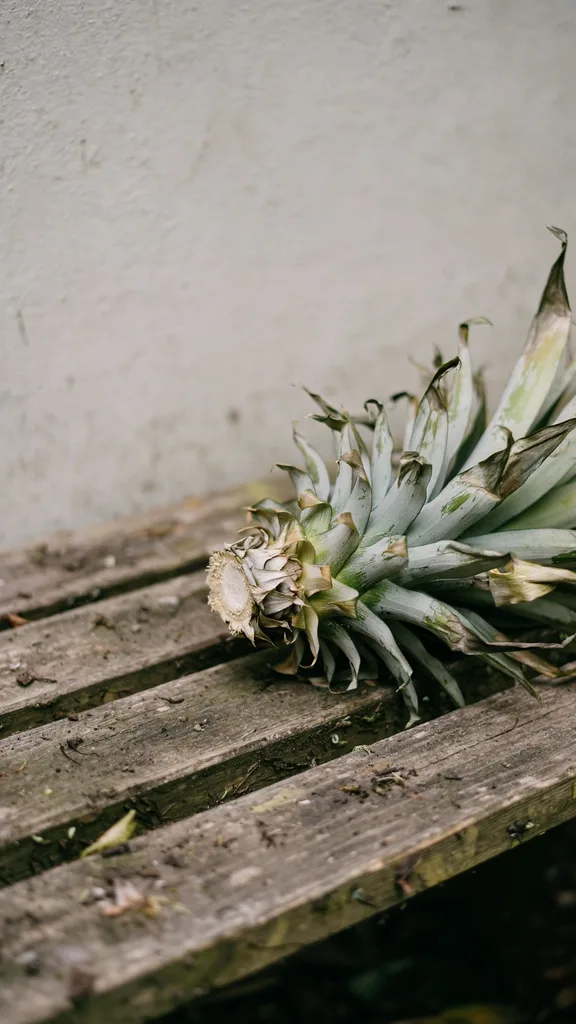
Skip the drying step and the failure arrives on schedule. A fresh cut planted straight into wet mix takes up water through open tissue faster than the stem can seal itself. The base turns translucent, then brown, then soft. By the time the leaves yellow, the stem core is gone.
Dry the crown away from direct sun. A shaded bench, a garage shelf, or a kitchen counter out of the sun patch all work. Sun on a rootless crown pulls moisture from the leaves faster than the base can callus, and the crown wilts before it starts. Shade and still air are the whole recipe.
Check the base at the end of day two. A ready base feels dry and slightly leathery to a fingertip, with no slime and no sweet rot smell. A base that still weeps gets a third day. A base with black spots gets trimmed back to clean tissue and dried again. Planting a doubtful base wastes a month. Trimming it costs a day.
Root the Crown in Water or Straight Into Mix
Two rooting routes work, and they suit different gardeners. Water rooting shows the roots forming, which settles beginners. Soil rooting skips a transplant step, which suits gardeners who hate disturbing young roots. Both routes end at the same plant.
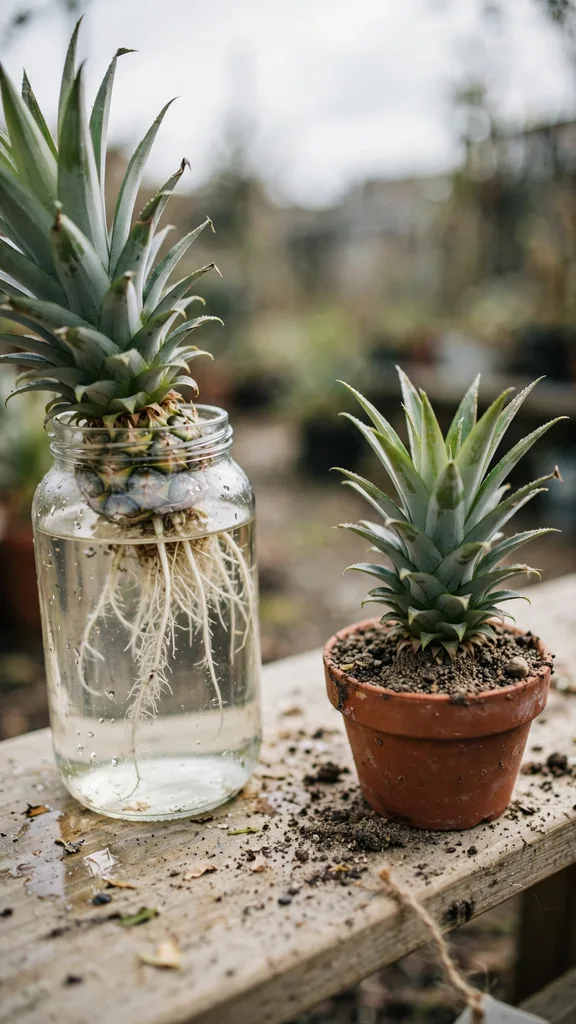
For water rooting, set the crown in a jar with the bare stem band submerged and the leaves clear of the water. Change the water every 2 to 3 days. Roots push from the brown bumps within 2 to 4 weeks in a warm room, and the crown moves to mix once the longest roots reach 5.1 to 7.6 cm. Roots left in water for months grow brittle and snap at potting. The jar is a nursery, and a nursery has a checkout date.
For soil rooting, fill a 15 cm pot with the sandy mix described below and push the crown base into it so the lowest leaves sit just above the surface. Water once to settle the mix, then keep the pot barely moist. Roots form unseen over 4 to 6 weeks. Test with a gentle tug at week five. Resistance means roots. A crown that lifts free gets replanted and another fortnight.
Warmth decides the speed of both routes. Growth across the whole plant slows below 15.6 degrees Celsius and above 32.2 degrees Celsius, according to the Gardening Solutions pineapple guide, and root initials obey the same limits. A jar on a cold windowsill in spring roots at half speed. A jar in a warm room at 20 to 30 degrees Celsius roots on the fast end of every range in this section.
Keep the rooting crown in bright light with no direct midday sun. The leaves feed the rooting work from stored light energy, and a crown in a dark corner starves before it roots. A bright bench under a roof edge is ideal. Scorched leaf tips in week one mean the light is too hard, and the crown moves a step back into shade.
Pot the Crown Into Sandy Mix in Full Sun
Pineapple grows best in moderately fertile, well drained, sandy loam soil of neutral to mildly acid pH, per the EDIS soil notes for pineapple. Build that soil in a pot with equal parts coarse sand or perlite, fine bark, and compost based potting mix. Heavy garden soil in a pot holds water against the stem, and a pineapple stem in standing water rots from the base upward.
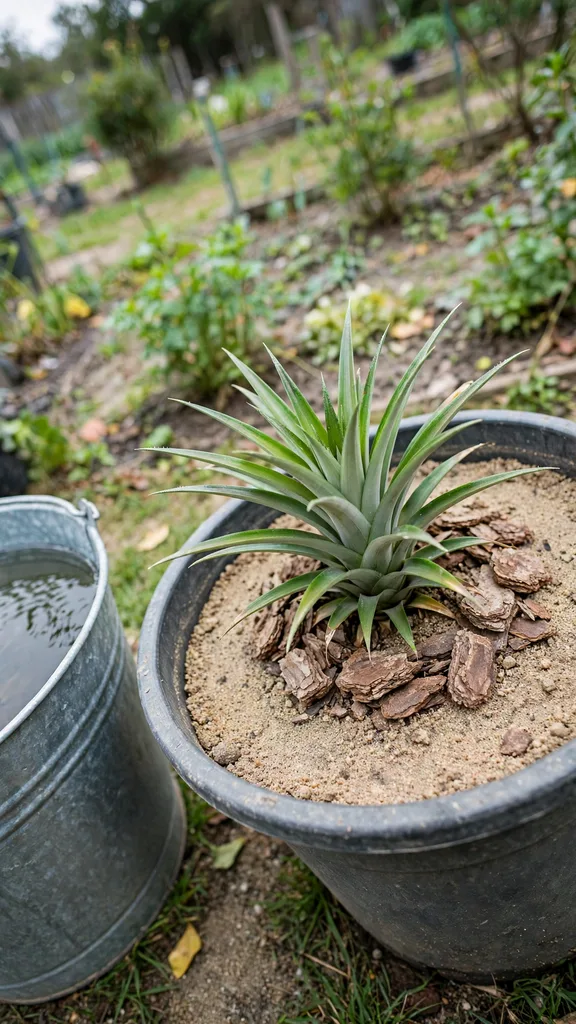
Plant the crown 7.6 to 10.2 cm deep, the depth the Gardening Solutions guide gives for setting a crown in a container. Firm the mix around the stem so the crown stands upright on its own. A crown that wobbles works its base loose with every watering, and loose contact means slow roots. Water the pot deeply once, then let the surface dry before the next drink.
Set the pot in full sun. In the ground, plants want a site at least 1.5 m away from trees, buildings, and structures where shading stays minimal, per the EDIS spacing guidance. Ground spacing runs 30.5 to 91.4 cm between plants, and wider spacing grows larger plants and larger fruit. A shaded pineapple grows thin leaves, delays flowering, and shrinks the fruit. Sun is a fertilizer this plant collects itself.
Mulch the surface once the crown is growing. A 5 to 15 cm layer of bark or wood chips holds moisture and cuts weeds, kept 7.6 to 15 cm clear of the plant base, following the EDIS mulch measurements. Mulch piled against the stem traps wet air at the base. The base is the rot frontier. Keep it dry and aired.
A sunny tropical bed that carries pineapple also carries other slow fruit. Gardeners building that bed in this same planting season can pair the pineapple row with how to grow star fruit, a tree crop that shares the full sun and free drainage rules and fruits on a longer calendar.
What Temperature Does a Pineapple Plant Need?
Warmth is the hard limit on this crop, and the numbers are plain. Pineapple plants do not tolerate freezing temperatures below minus 2.2 degrees Celsius, and growth slows below 15.6 degrees Celsius and above 32.2 degrees Celsius, per the EDIS climate section. The best growth band sits between 20 and 30 degrees Celsius. A plant in that band grows a new leaf every few weeks through the warm season. A plant below it sits still.
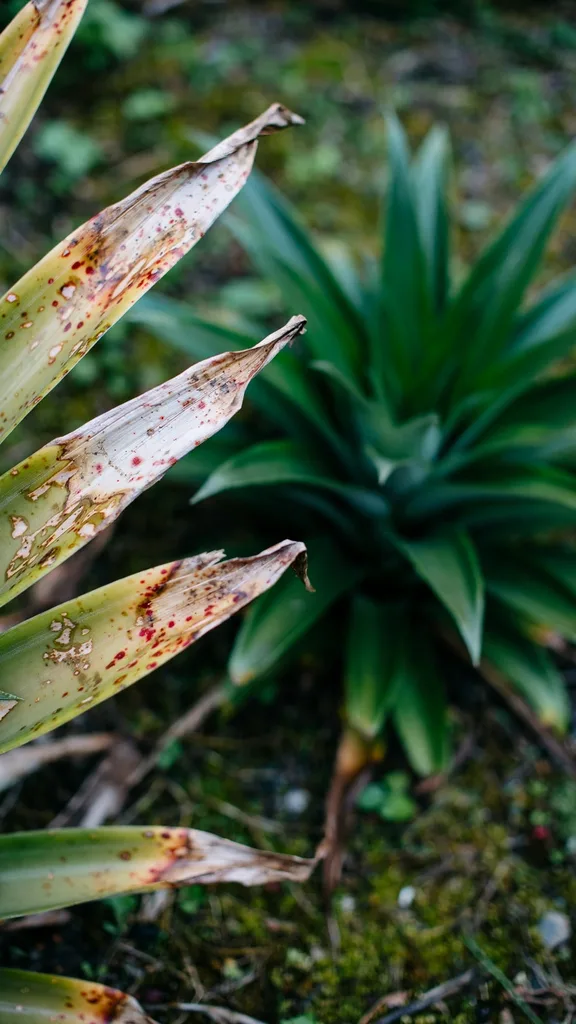
Cold injures before it kills. Chilling from near freezing temperatures or light frost marks the upper leaf surfaces with red and white flecks and a scorched look, and the same cold rots the pulp inside a developing fruit. Cover outdoor plants with blankets or mulch ahead of a cold night. A plant that survives a frost with flecked leaves recovers. A plant that takes a hard freeze to the core does not.
Container plants dodge cold by moving. Bring pots indoors, into a garage, or under a roof before any night forecast to fall below 15.6 degrees Celsius if the plant is young, and before any frost at all for plants of any age. The pot route turns a climate problem into a carrying job. That trade is the entire reason cold district gardeners grow this crop in containers.
Heat alone rarely stops a pineapple. Sustained heat above 32.2 degrees Celsius slows growth, and dry heat wilts the older leaves first. Shade cloth during a heatwave week and a deep watering at the start of it carry a plant through. The wilting of older leaves is also the drought signal on this plant, and it appears slowly, over days. A grower who walks the row twice a week catches it in time.
Water Lightly and Feed Every 6 to 8 Weeks
Pineapple tolerates dry soil and punishes wet soil. Water during dry periods lasting more than 6 or 7 days in hot weather, and every 10 to 14 days during cooler winter months, following the EDIS watering schedule. In sandy ground, the Gardening Solutions guide puts the dry spell interval at about once a week. The shared rule underneath both schedules is drainage. Water deeply, then let the mix dry.
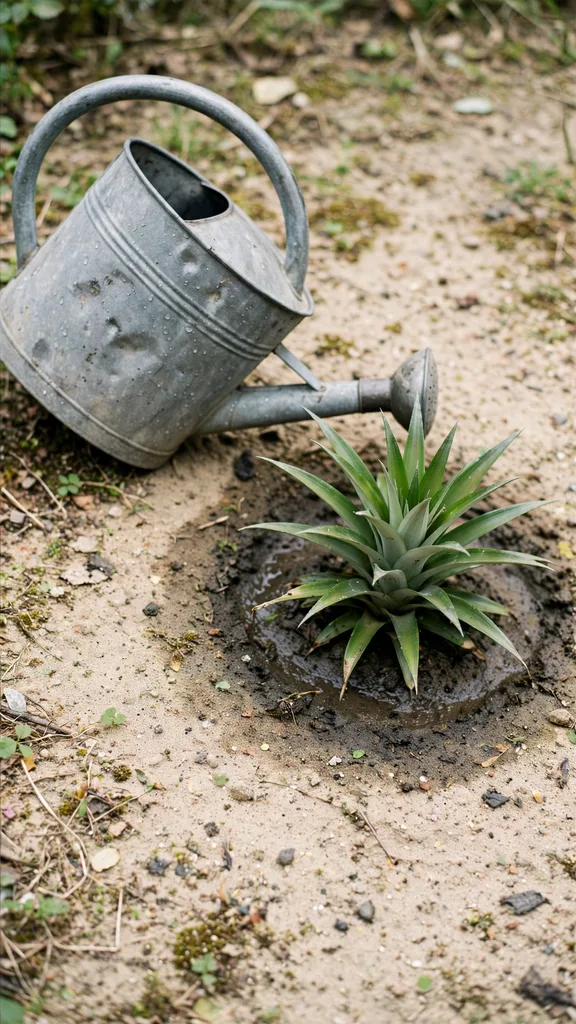
Overwatering kills more home pineapples than drought ever will. Roots in soil that stays wet rot, and the rot announces itself late, as reddish leaves, browning leaf margins, and a plant that stops growing. Lawn sprinklers on timers are a named cause of decline in the EDIS notes, because they water on a schedule the soil never asked for. Hand water this plant. The hand learns the pot weight, and pot weight is the honest moisture meter.
Feed little and often. The EDIS calendar calls for small fertilizer applications every 6 to 8 weeks through the first 14 to 16 months, with dry feed rising from 28.3 to 56.7 g per plant in months 1 to 3 up to 141.7 to 226.8 g per plant in months 17 to 24, per the EDIS fertilizer table. Scatter dry feed across the soil surface and water it in. Feed poured into the leaf cup sits against tender tissue and burns it.
Growth before flowering is the crop. The bigger the plant at flowering, the bigger the fruit it can carry, and steady light feeding with periodic watering is the cultural pattern the EDIS forcing notes credit for large fruit. Starved plants flower early and small. A small plant that flowers at month 10 gives a fruit the size of a fist, and the season is spent. Feed the rosette first. The fruit is a later argument.
Grow Pineapple in a Pot Outside the Tropics
Containers turn a tropical crop into a movable one, and the sizes are generous. Pineapples grow well in containers of 11.4 to 26.5 liters, and the larger the container, the larger the plant and the fruit, according to the Gardening Solutions container notes. Start a crown in the 15 cm rooting pot, then move it to a 26.5 liter final pot once the rosette reaches 30 cm across. Each move up happens before the roots circle hard.
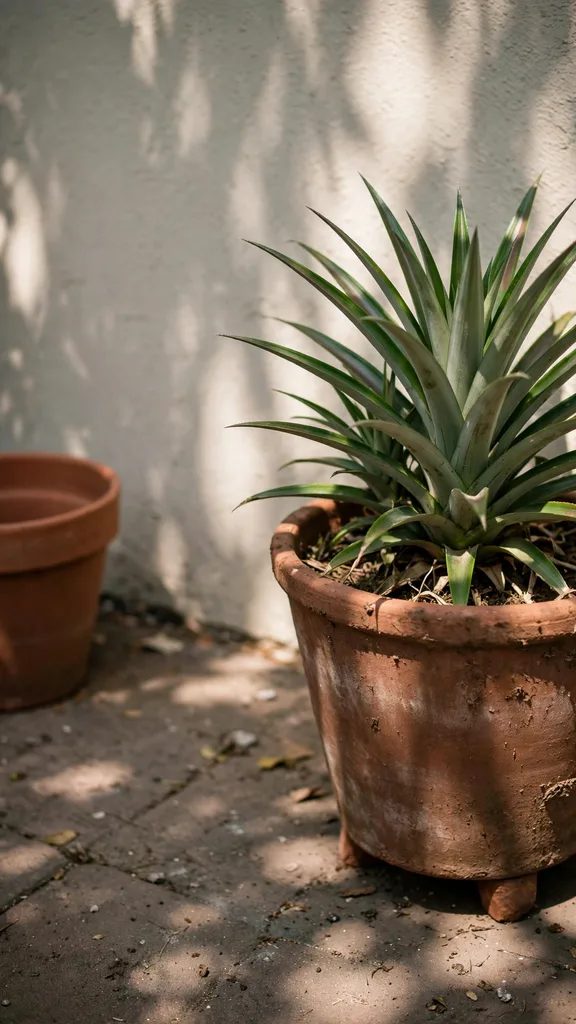
Pot culture changes the watering rhythm. A pot in full sun on paving dries in 2 to 3 summer days, far faster than ground soil. Check pots with a fingertip pushed 5 cm into the mix. Dry at that depth means water today. The leaf cup holds a small reserve, and the plant draws on it, but a cup kept full of standing water in cool weather rots the center. Tip the cup out in winter. Fill it in summer.
Winter quarters decide whether a potted plant fruits at all. The plant needs bright light indoors, close to the brightest window, and room temperatures inside the 20 to 30 degrees Celsius growth band for as many hours as the house allows. A plant wintered in a dark, cold room survives and loses a season. It resumes growth in spring from a smaller size, and the flowering calendar slides by the months it sat still.
Move pots out in stages after the last cold night. Two weeks of bright shade, then morning sun, then full sun hardens leaves that grew soft indoors. Leaves moved straight from a windowsill to midday sun scorch white in a day. Scorched leaves still work, at reduced area, and the plant replaces them slowly. The staged move costs nothing and saves a month of leaf production.
Force Flowering With Ethylene After Month 16
A pineapple plant flowers on its own schedule, triggered by short days, cool weather, and drought stress, and a well fed plant in a warm pot can stay leafy long past the point where the grower wants fruit. Forcing answers that delay. Forcing means exposing a mature plant to ethylene, the ripening gas, so the growing point switches from leaves to a flower stalk.
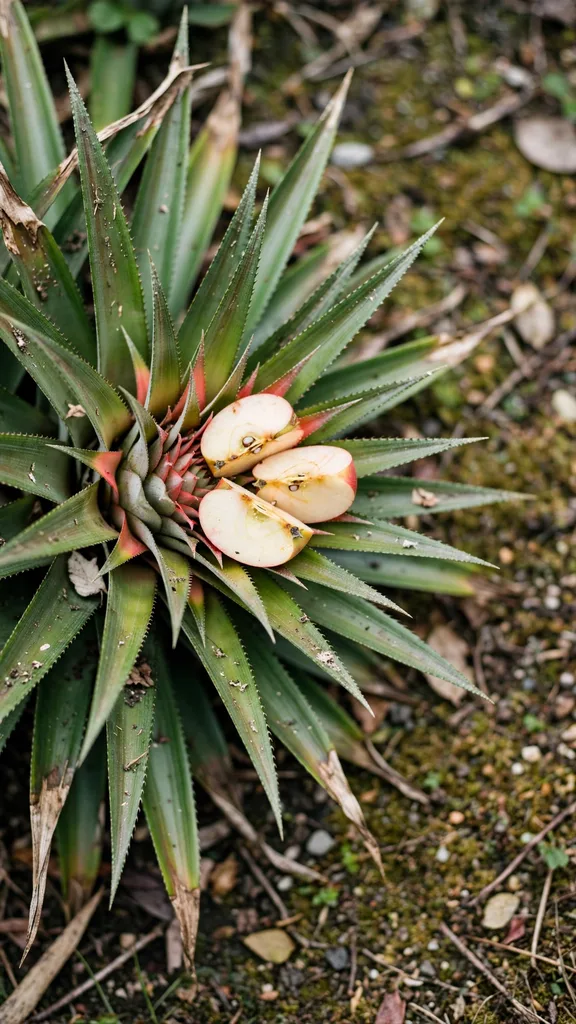
Maturity comes first, and forcing an immature plant is the classic waste. A plant is ready once it has produced 70 to 80 leaves and reached mature size at 14 to 18 months from planting, per the EDIS forcing section. The Gardening Solutions guide sets the forcing age at 16 months or older. Count the leaves before reaching for the apple. A plant forced at 40 leaves gives a small fruit on a stunted stalk, and the plant spends its one main crop on that small return.
The safe home method uses a ripe apple. Place ripe apple slices in the center of the plant, where the youngest leaves form a cup, and cover the whole plant with a bag or cloth for several days if the weather is dry. As the apple slices continue to ripen they release ethylene, which stimulates flowering, in the words of the EDIS forcing notes. A whole ripe apple or a ripe banana skin set in the cup works on the same gas. Replace slices that turn black and slimy, since rotten tissue invites mold into the plant center.
Skip calcium carbide entirely. Commercial growers once used it to generate a forcing gas on contact with water, and the EDIS guide states plainly that the application of calcium carbide is not recommended, because some sources carry impurities toxic to humans and contaminate the soil and water. Carbide is also banned or restricted as a fruit ripening agent in many countries, and the home apple method reaches the same ethylene result with none of that risk. The apple is slower by days. The apple is also legal, cheap, and safe to handle with bare hands at the kitchen counter.
Watch the center for the answer. A forced plant shows the red heart stage, a flush of reddish bracts at the center, within roughly 6 to 8 weeks of treatment. The first flowers open 50 days after flower induction, flowering continues for 20 to 40 days, and the time from flower induction to fruit harvest runs 5 to 7 months, per the EDIS inflorescence and forcing notes. No red heart by week eight means the plant was too young or the gas escaped. Wait until the plant adds more leaves, then force again. A second forcing on a bigger plant is a normal season, and it usually succeeds.
Forcing also synchronizes a row. Plants forced in the same week flower together and ripen together, which suits gardeners who want one harvest glut for preserving. Plants left to natural triggers scatter their fruit across months. Choose the pattern the kitchen wants. The plant obeys either schedule once it is mature.
Harvest When One Third of the Shell Has Turned
One plant gives one main fruit, and the picking moment decides its sweetness. For optimum sweetness, harvest when one third to two thirds or more of the shell color has turned from green to light green to greenish yellow, following the EDIS harvest guidance. The color change starts at the base of the fruit and climbs toward the crown. A fruit picked fully green and hard never sweetens properly, because pineapple carries no starch reserve to convert after picking. Sugar is made on the plant or it is absent from the slice.
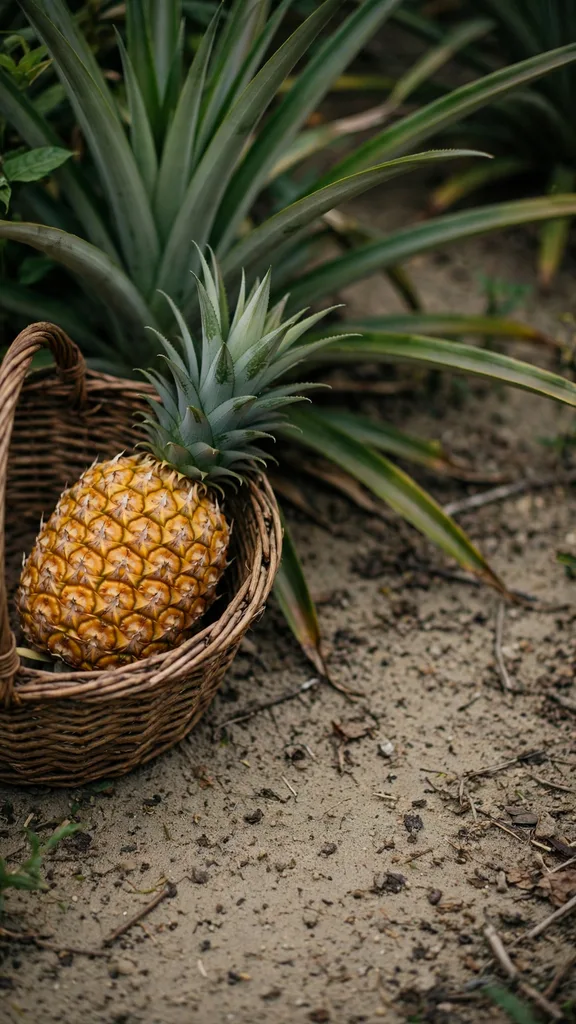
Smell the base before cutting. A ripe fruit gives a sweet pineapple smell through the shell at the bottom end. No smell means wait, even when the color looks close. Cut the fruit with a short piece of stalk attached, using a clean knife, and leave the plant standing. The plant has a second act after harvest, covered in the next section, and cutting the whole rosette down throws that act away.
Stake a heavy fruit before it leans. The weight of the fruit bends or breaks the fruiting stalk on some plants, and a fallen fruit sunburns on its side and develops poorly. Tie the stalk to a wooden or bamboo stake with cotton or natural fiber string, per the EDIS staking notes. Wire and nylon rope cut into the stalk as it swells. Soft string degrades before it strangles.
Finish ripening on the counter, then chill briefly. Complete ripening happens at room temperature between 26 and 28 degrees Celsius, and ripe fruit holds in the refrigerator for up to a week, per the EDIS storage notes. Green fruit kept in the refrigerator suffers chilling injury and never ripens properly afterward. The counter first, the cold box second, and only once the fruit is ripe.
Cut the harvested fruit and check the core. A sound fruit has pale golden flesh, a sweet smell, and a core that is firm and edible in the center slices. A fruit with a dark, watery core took cold damage or sat too long. Eat the sound parts the same day. A home grown pineapple at full ripeness beats a shipped fruit on sweetness every time it is picked at the right third of color, and that margin is the entire payoff for the 18 to 32 month wait.
Pups, Slips, Suckers, and Ratoons: The Next Plants
A fruiting pineapple plant replaces itself, and the replacement parts have names worth learning. Pineapples propagate from four kinds of vegetative growth: the crown of the fruit; slips and hapas, which arise from the stalk below the fruit; suckers, which arise from the leaf axils; and ratoons, which arise from underground portions of the stem, in the classification given by the EDIS propagation section. Each type grows into a full plant, and each runs on a different clock.
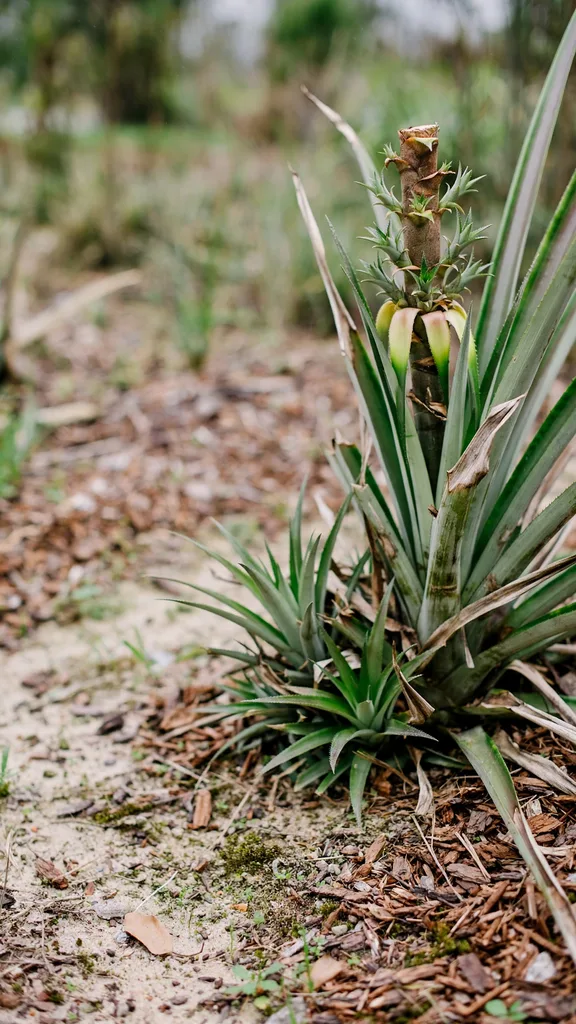
Slips grow on the fruit stalk directly below the fruit, and they carry a curved base that gives them away. Hapas look similar and grow lower on the stalk, well below the fruit base, with no curve at the base of the leaves. Leave slips and hapas on the stalk for several weeks after harvesting the fruit so they reach a usable size before removal. A slip pulled at harvest is a thumbnail of leaves with no reserves. A slip left for a month is a plant.
Suckers grow from the bases of the leaves along the stem, and they are the ratoon crop in waiting. After the first fruit is harvested, remove all suckers and hapas but one, and that one develops into the ratoon crop in the same spot, per the EDIS production notes. A plant may produce up to two fruit this way, the plant crop and the ratoon crop. The ratoon fruit usually runs smaller. It also costs no new pot, no new mix, and no new crown.
Size decides speed for every offshoot type. The larger the crown, slip, hapa, sucker, or stem piece at planting, the faster the growth and the shorter the time to fruiting. Detach each offshoot cleanly, air dry it in the shade for 1 to 2 days, and plant it in clean mix at the same depth rules as a crown. Offshoots skip the grocery store entirely, and a healthy parent plant supplies planting material for years.
Removing suckers during fruit development is also a fruit size tool. A plant feeding one fruit plus four suckers splits its resources, and the fruit pays. Removing developing slips and suckers hastens plant growth and increases the size of the fruit the plant carries. Keep one strong sucker as the ratoon heir. Remove the rest while they are small, and pot the best of them as new plants rather than composting them.
Removing a pup at the wrong size or the wrong week is a different job. That timing lives on when to remove pineapple pups from the parent plant. This page stays on growing the parent plant through its first fruit and naming each offshoot it produces.
Keep the multiplication loop tidy. Label each potted offshoot with the parent plant and the removal date, in pencil on a plastic tag. A bench of unlabelled green rosettes all look identical by month three, and the label is the only record of which plant came from the sweet fruit and which came from the sour one. The loop rewards the gardener who tracks it. Next season starts with the best parent already chosen.
Frequently Asked Questions
Plan on 18 to 32 months from planting a crown to cutting a ripe fruit. The plant reaches mature size at 14 to 18 months, flowers once it carries 70 to 80 leaves, and then needs 5 to 7 months from flower induction to harvest. Warmth, full sun, and steady feeding hold a plant to the fast end of that range.
Yes, in a large pot at the brightest window, with room temperatures inside the 20 to 30 degrees Celsius growth band. Indoor plants grow slower than outdoor plants in the tropics, and the fruit calendar stretches past the 32 month mark. A plant that summers outdoors and winters indoors keeps most of its speed and still fruits.
The usual cause is size. A plant flowers after it produces 70 to 80 leaves, and a plant in a small pot, shade, or a starved feeding pattern may sit below that count for years. Grow the plant bigger first, then force it with ripe apple slices in the center once it passes 16 months. Cold nights can also trigger early flowering on small plants, which gives small fruit.
The main stem declines after fruiting, and the plant replaces itself through its offshoots. One sucker left in place becomes the ratoon crop and fruits in the same spot. Slips, suckers, and the crown of the harvested fruit each start a new plant. A planting therefore continues for years from a single shop bought fruit, as long as each generation gets potted or left in place.
One main fruit per stem, plus a possible second ratoon fruit from a sucker left to grow after harvest. Gardeners who want more fruit grow more stems. Each crown, slip, and sucker becomes its own fruiting stem on its own calendar, and a bench of six offshoots from one parent plant gives a staggered supply across two seasons.
Grow the first plant for its fruit. Keep it for its offshoots. The second generation is where this crop turns generous.