
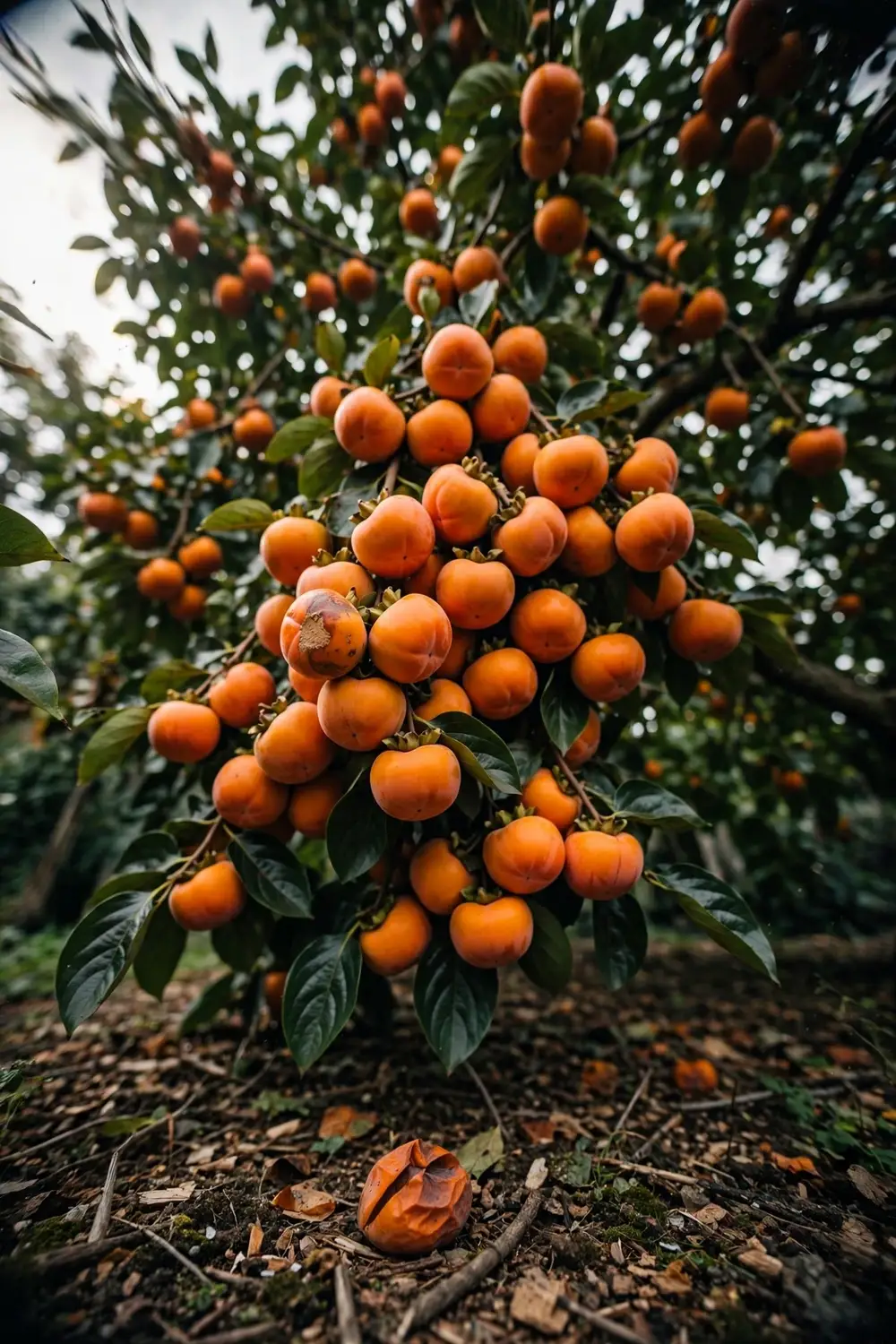

You can grow a persimmon tree from seed, and the seed will germinate reliably if you give it what it wants: two to three days of soaking, 60 to 90 days of cold stratification in the refrigerator, and a deep pot for the taproot it sends down first. The honest part is the timeline. A seed-grown persimmon takes six to ten years to bear its first fruit, and no amount of care shortens that wait. I have learned that patience is the real skill in this project, more than any technique. Plan in decades.
Persimmons reward that patience with fruit you cannot buy fresh. The American persimmon (Diospyros virginiana) carries small, plum-sized fruit with a deep, date-like flavor once dead ripe, and it survives winters down to zone 4. The Asian persimmon (Diospyros kaki), sold as Fuyu or Hachiya, grows larger peach-sized fruit on a smaller tree but needs the warmth of zones 7 to 11. Persimmon seed behaves like pawpaw seed in one important way: both demand a long cold rest before they wake, so the fridge method you use for growing pawpaw from seed transfers almost directly here.
A persimmon asks three things of you: the right species for your winters, a patient seed routine, and a pollination plan if you choose the American tree. Get those right and the tree handles the rest.
Persimmon at a Glance
| Trait | Detail |
|---|---|
| Latin names | Diospyros virginiana (American), Diospyros kaki (Asian) |
| Growth habit | Deciduous fruit tree; American species grows 30 to 40 ft |
| Hardiness | American zones 4 to 9; Asian zones 7 to 11 |
| Light | Full sun, 6+ hours per day |
| Soil | Deep, well-drained, slightly acidic to neutral |
| Seed treatment | Soak 2 to 3 days, cold stratify 60 to 90 days |
| Sowing depth | 2 in deep in tall pots (4 to 5 in wide, 12 in tall) |
| Time to fruit | 6 to 10 years from seed; 3 to 5 years from grafted tree |
| Pollination | Asian usually self-fertile; most American need male + female |
| Fruit types | Astringent (Hachiya, eat soft) vs non-astringent (Fuyu, eat firm) |
1. Accept the 6-to-10 Year Seed Timeline Before You Start
A persimmon grown from seed fruits in six to ten years. Write that number on the seed packet before you begin, because every other decision here flows from it. A seedling tree is also non-uniform: each seed is a genetic gamble, so fruit quality varies from tree to tree, exactly as Clemson Extension warns about native seedling persimmons.
This does not make seed-growing foolish. Seedlings are hardier than grafted trees, they cost nothing, and an American persimmon seedling can become a century tree for your yard or wildlife patch. The real failure mode is mismatched expectations: planting a seed in year one, expecting a harvest in year three, then blaming yourself when the tree is barely knee high.
Decide now what the tree is for. If the goal is fruit on the table in the next few years, buy a grafted tree and skip the seed tray. If the goal is the experience, the hardiness, and a tree that may outlive you, seeds are the right choice.
2. Pick American or Asian Using Winter Cold as the Decider
Winter cold is the chief decider when choosing a persimmon, because the two species split sharply on hardiness. American persimmon (Diospyros virginiana) survives temperatures of 20 to 25 degrees below zero Fahrenheit and grows in USDA zones 4 to 9. Oriental persimmon (Diospyros kaki) is killed or injured when winter temperatures fall below the 10-degree-Fahrenheit mark, especially after a warm spell in winter, and belongs in zones 7 to 11.
Match your zone first, then your taste. In zones 7 to 9 you can grow either species. Below zone 7, the American persimmon is the only safe choice. The two will not cross-pollinate, so they cannot help each other fruit.
| Feature | American (D. virginiana) | Asian (D. kaki) |
|---|---|---|
| Hardiness zones | 4 to 9 | 7 to 11 |
| Cold limit | Survives -20 to -25 F | Injured below 10 F |
| Mature height | 30 to 40 ft | Slightly smaller |
| Fruit size | Plum-sized | Peach-sized |
| Flavor when ripe | Rich, date-like, intense | Mild, sweet, crisp or soft |
| Pollination | Most need male + female | Usually self-fertile |
| Seed timeline | 6 to 10 years | 6 to 10 years |
3. Choose Fuyu, Hachiya, or Early Golden for Your Climate
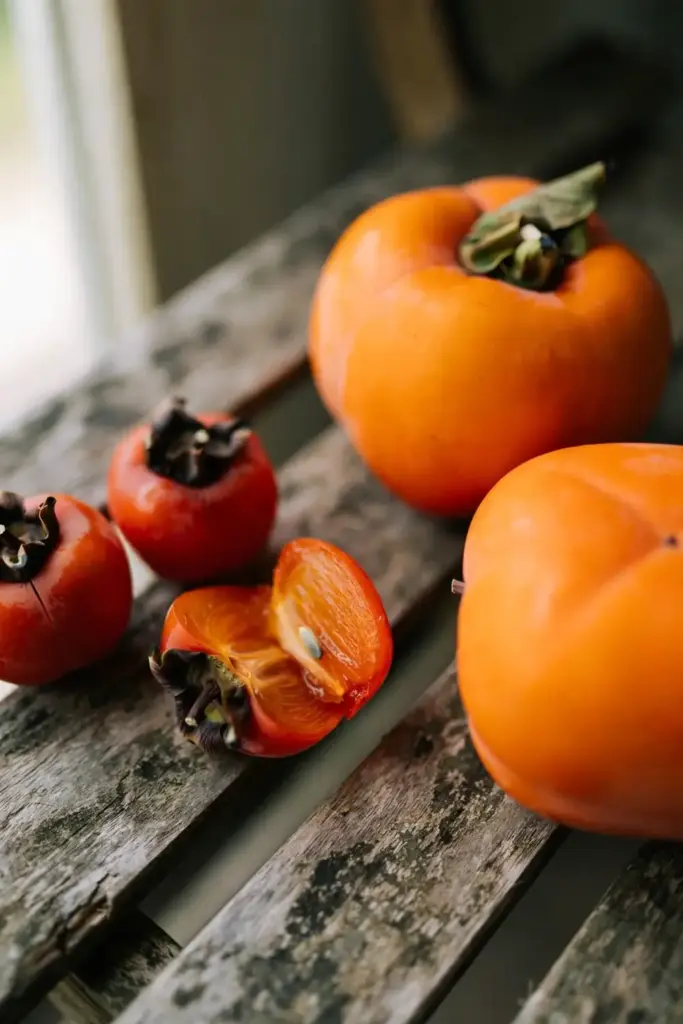
Variety selection matters more in persimmons than in most fruits. The astringent versus non-astringent split decides how you eat the harvest: Hachiya must be completely soft, almost jelly, before eating, while Fuyu can be eaten firm like an apple.
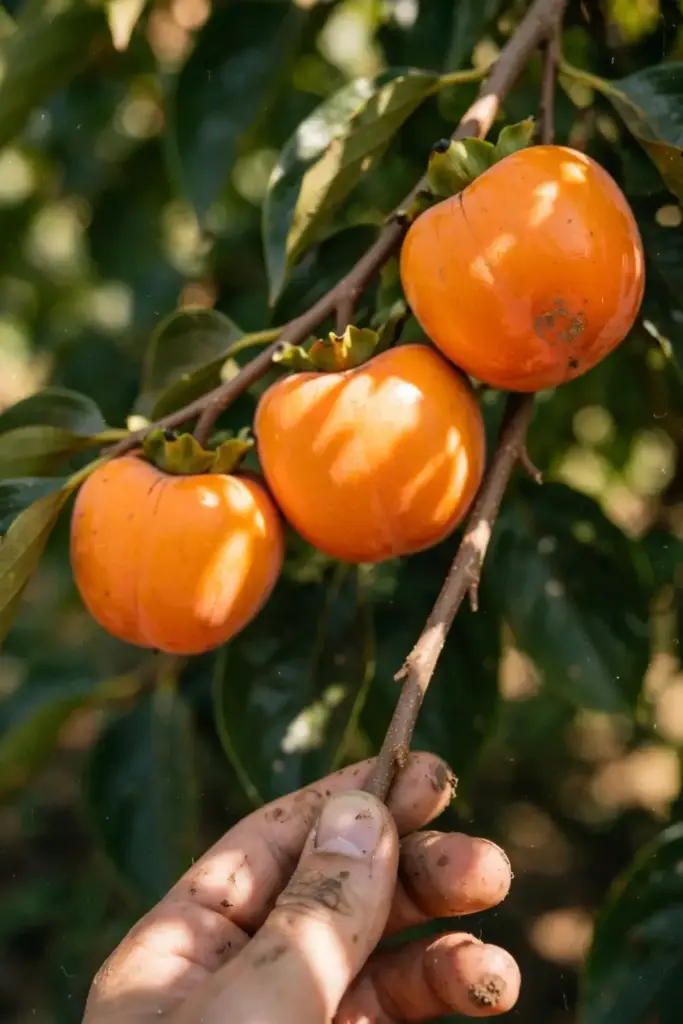
For cold zones, Early Golden is the classic American pick. It is a named selection of Diospyros virginiana, hardy to zone 4, with medium-sized fruit that carries 3 to 8 seeds. For warm zones, Fuyu gives non-astringent fruit you can slice firm, while Hachiya gives the traditional soft, spoonable fruit for baking. Per Clemson Extension’s persimmon factsheet, several Oriental cultivars suit the Southeast, including Fuyu, Jiro, and Hana Fuyu among the non-astringent types, though non-astringent varieties may suffer cold injury north of the fall line.
Check chill hours against your location the way you would for any temperate fruit tree. Most Asian cultivars need only a few hundred chill hours, which suits warm-winter regions, while American selections shrug off deep freezes.
4. Collect Fresh Seeds From Fully Ripe Fruit in Autumn
Fresh seed germinates; old seed disappoints. Persimmon seeds sprout best when taken from fully ripe fruit in autumn, then started on their cold treatment within weeks. A single berry holds 5 to 8 seeds, so one good fruit gives you a whole seed tray.
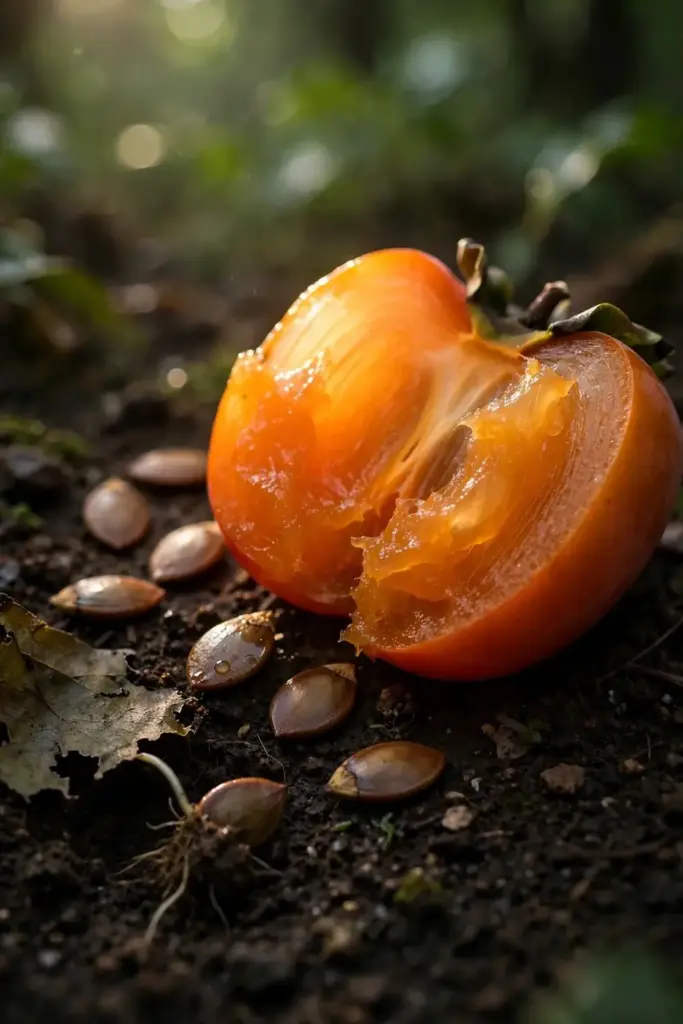
Cut the fruit with a clean knife and lift out the brown, flat seeds. Rub off every trace of pulp under running water, because leftover flesh ferments and invites mold in the fridge. Soak the cleaned seeds in warm water for two to three days to loosen any remaining sticky coating, changing the water daily.
Dry them lightly after soaking. Do not let them sit on a counter for weeks. Seed that dries out hard goes dormant in a way no fridge treatment fixes, so move straight into stratification.
5. Stratify Seeds for a Full 60 to 90 Days of Moist Cold
Cold stratification is the make-or-break step, and it is simpler than it sounds. Wrap the soaked seeds in a damp paper towel or damp sphagnum moss, seal them in a plastic bag, and refrigerate for 60 to 90 days. One seed grower documented this exact process with Early Golden persimmon and saw first germination about two weeks after the cold period ended on a heat mat.
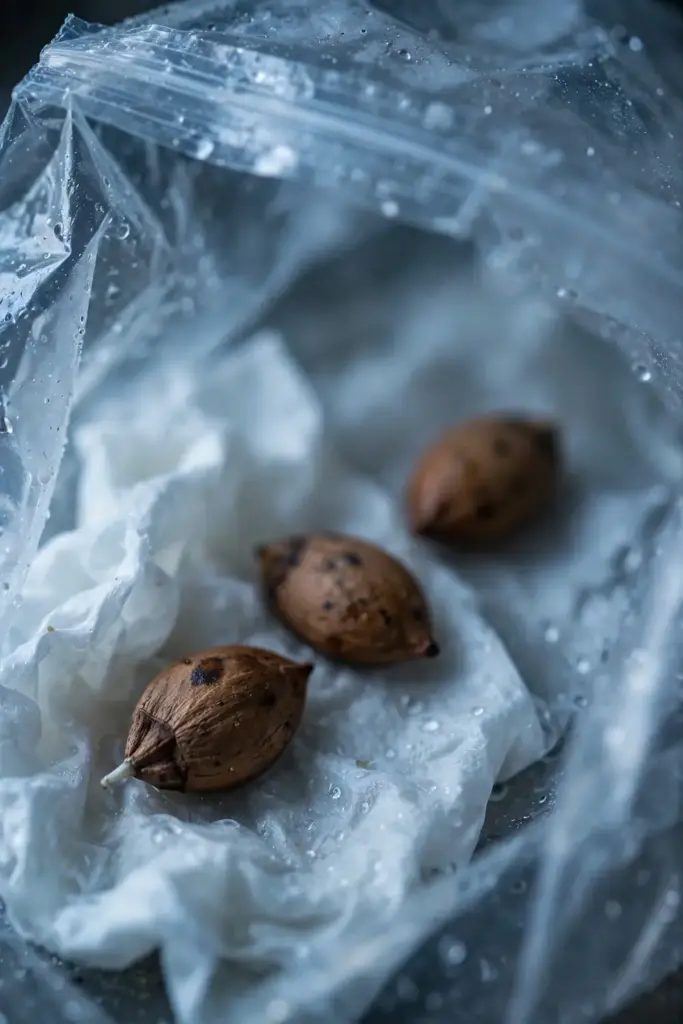
Check the bag every week or two. Spritz the towel or moss if it dries, and discard any seed that turns mushy or smells off before it infects the rest. Some seeds sprout inside the fridge near the end of the period. That is fine. Move them to pots immediately when you spot a root tip.
Two mistakes ruin this step. Starting the clock late pushes germination into summer heat, when seedlings stall. Using a dry medium gives you no germination at all, because the cold alone is not the trigger. Moist cold is.
6. Sow Seeds 2 Inches Deep in Tall Pots for the Taproot
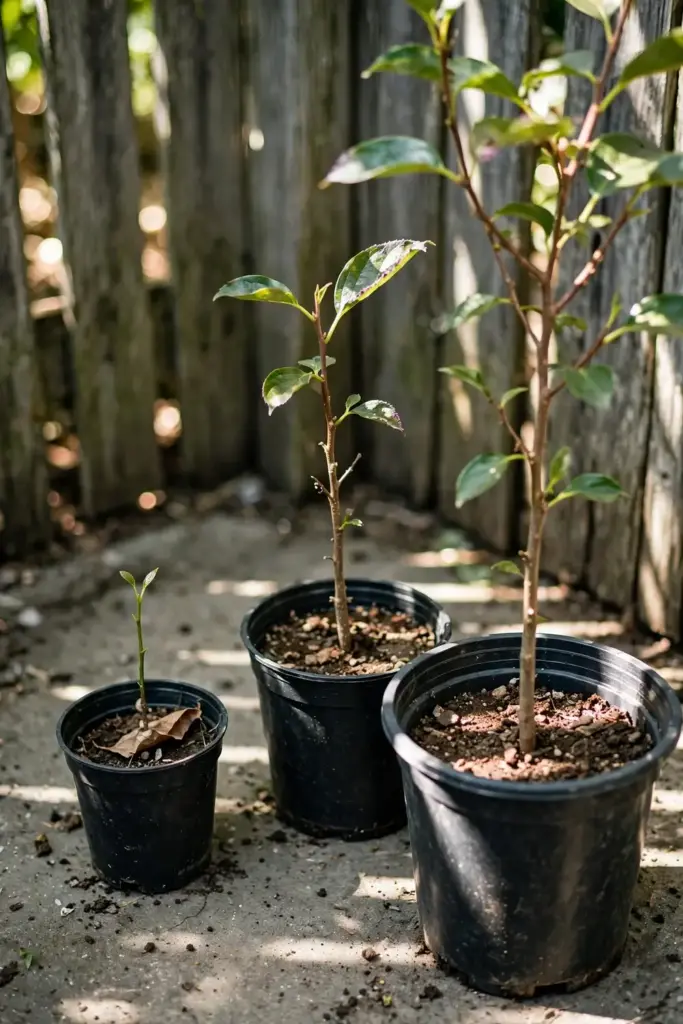
Persimmons grow a strong taproot before they grow leaves, and a standard seed tray cripples that root. Sow each stratified seed 2 inches deep in a tall nursery pot, roughly 4 to 5 inches wide and 12 inches tall, filled with a well-draining potting mix. The deep pot lets the taproot run straight down instead of circling.
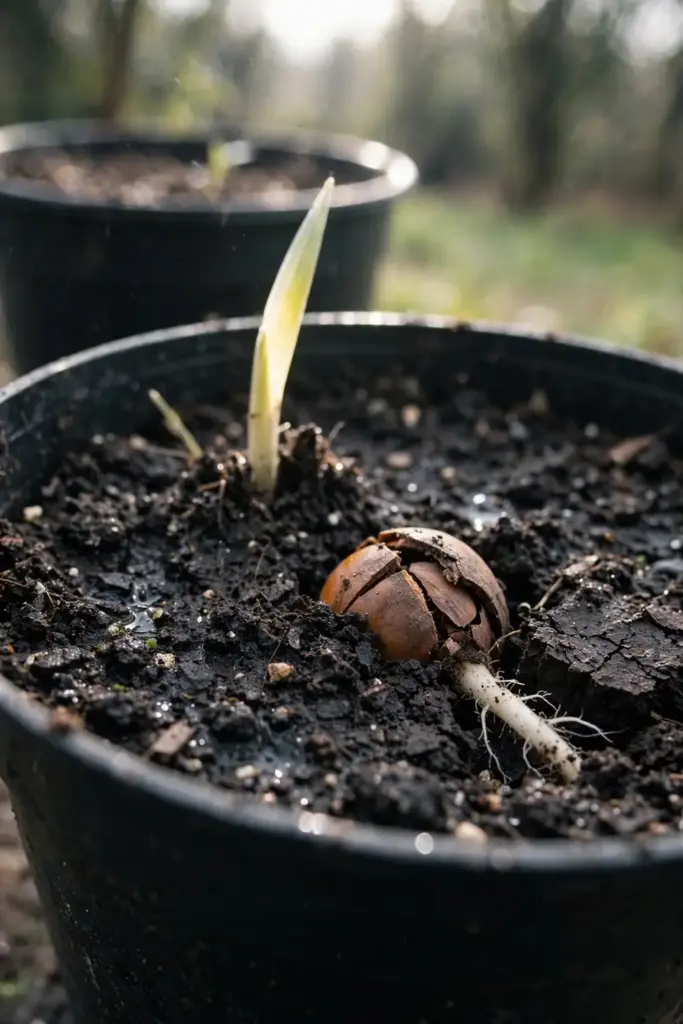
Do not crowd seeds into one flat. One seed per pot keeps roots undisturbed later. Cover with a thin layer of mix and water gently until moisture reaches the bottom of the pot.
Keep the pots warm but not hot, around 65 to 75 degrees Fahrenheit, and out of direct sun until shoots appear. The documented timeline runs slow: germination started in mid-March in one grower’s diary, but seedlings did not break the soil surface until late June. Roots first, leaves months later. Expect the wait.
7. Nurse Seedlings Through Their Slow First Summer
Once seedlings emerge, move them into bright, indirect light and then gradually into morning sun. Keep the soil evenly moist but never soggy. A seedling in a tall pot dries from the top while the taproot sits in wet mix at the bottom, so water when the top inch feels dry and let excess drain freely.
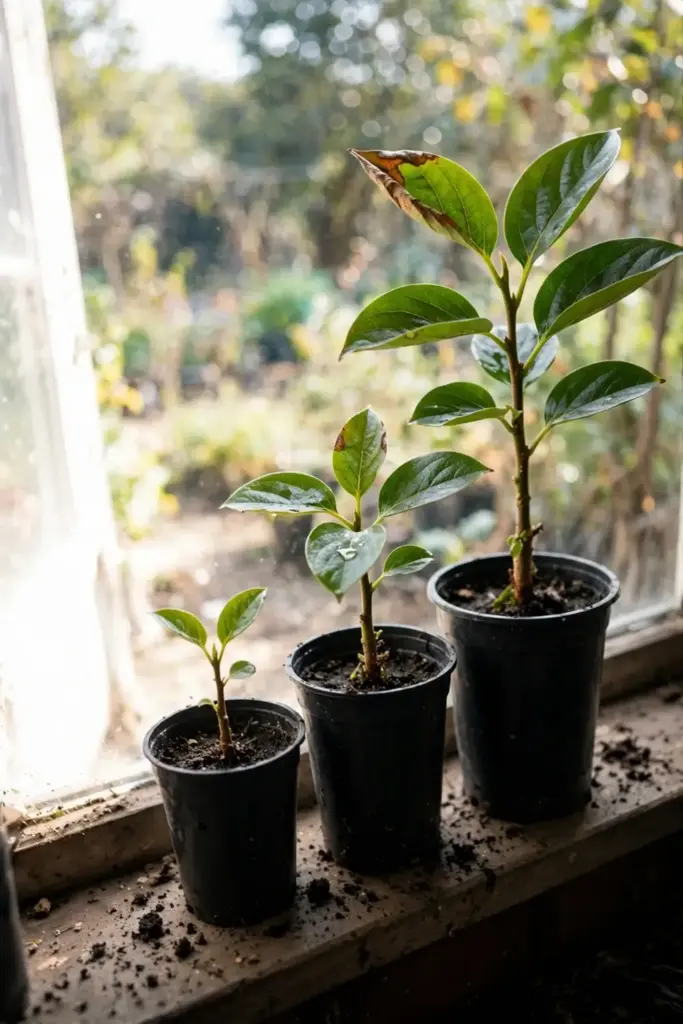
Do not fertilize in the first month. The seed carries enough stored energy, and fertilizer salts burn tender new roots. After the seedling holds four to six true leaves, a half-strength balanced liquid feed every three weeks supports steady growth.
Watch for damping off in humid weather. Airflow around the pots and watering at the soil surface instead of overhead keeps stems firm. If a seedling wilts at the soil line, remove it promptly so the fungus does not spread to its neighbors. For the general seedling-care rhythm that applies here, the same watering discipline used in seed starting steps works pot for pot.
8. Harden Off Seedlings Before Their First Outdoor Summer
Move seedlings outdoors only after all frost danger passes and night temperatures hold above 50 degrees Fahrenheit. Harden them off over 10 to 14 days: two hours of shade on day one, lengthening the stay and the sun exposure each day, until they spend full days outside.
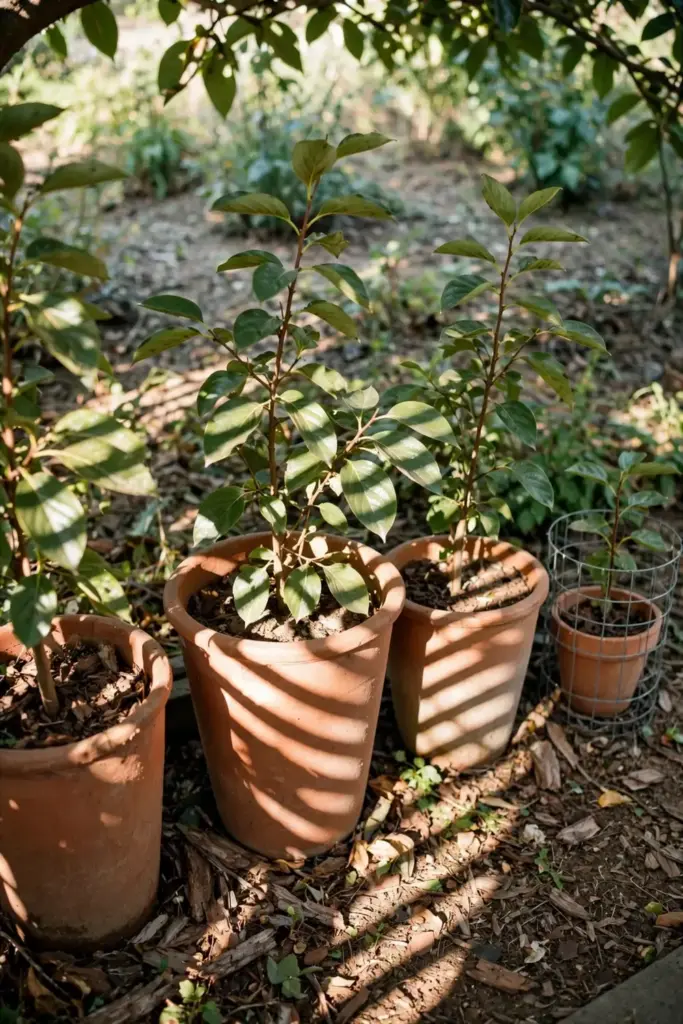
Skip this step and the leaves scorch white within hours. Seedlings raised under lights or behind glass have thin cuticles, and direct afternoon sun destroys them. Morning sun with afternoon shade is the safe landing zone for the first summer.
Set the pots where rabbits and deer cannot reach the tender stems. A simple wire cage around each pot costs less than a lost season. Keep watering deep and steady through the first summer, because a drought-stressed seedling drops its leaves and spends the rest of the year recovering instead of growing.
9. Transplant Into a Deeper Hole With Native Soil Only
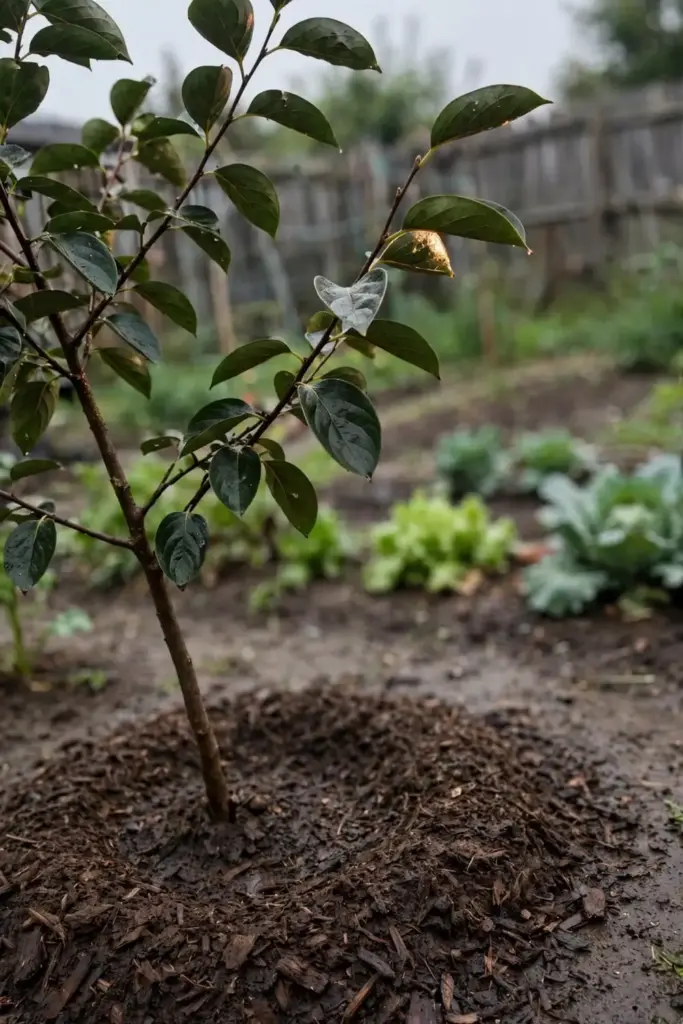
Dig the planting hole twice as wide as the pot and a few inches deeper than the root ball. Persimmon taproots demand depth, and the deeper hole gives the root room to keep driving down. Backfill with the native soil you removed, with no compost, manure, or fertilizer mixed in.
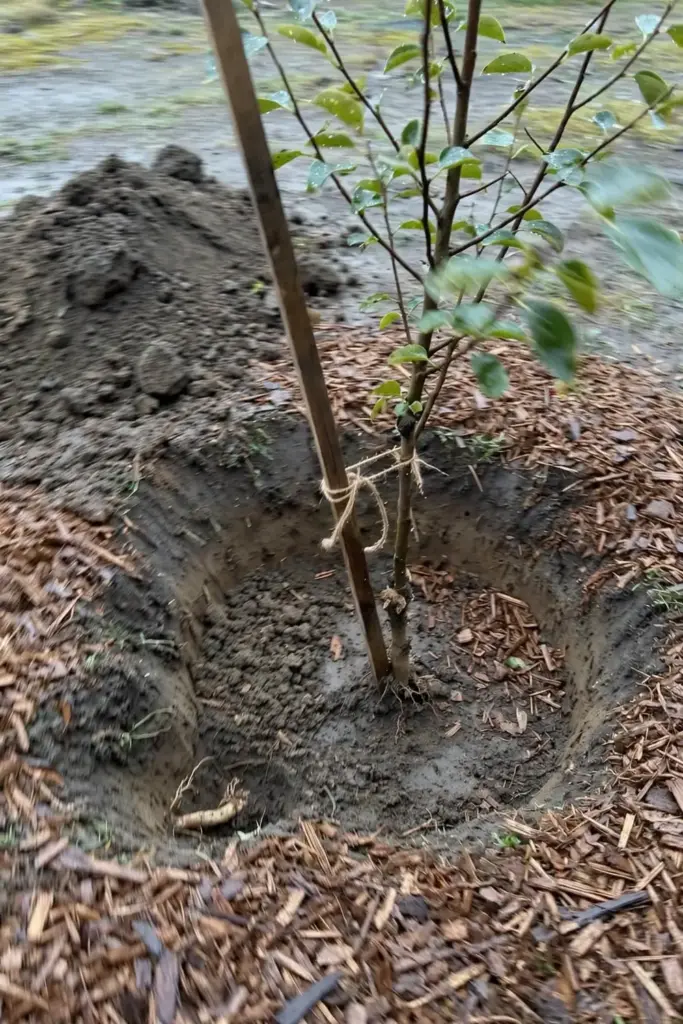
That last instruction surprises gardeners, but it protects the tree. Rich amendments in the hole discourage roots from exploring outward and create a soggy pocket that invites root rot. Plant at the same depth the seedling grew in its pot, never deeper on the trunk.
Spread a 3-inch layer of mulch in a wide ring around the tree, keeping it a few inches clear of the trunk. Water deeply right after planting to settle the soil around the taproot. If the seedling is tall and top-heavy, stake it loosely for the first season and remove the stake once the trunk firms up.
10. Weigh a Seedling Against a Grafted Tree Honestly
A grafted persimmon fruits in 3 to 5 years. A seedling takes 6 to 10. That four-year gap is the entire argument, and it cuts both ways depending on what you want from the tree.
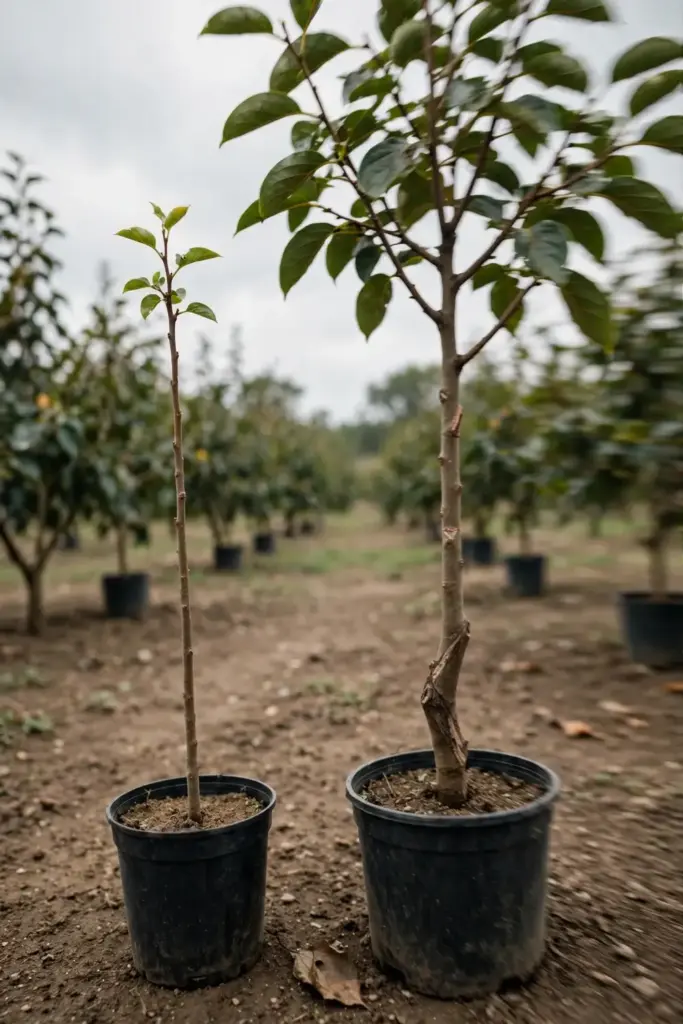
Buy grafted if fruit is the goal. A grafted Fuyu or Hachiya fruits years sooner, and the fruit matches the variety name on the tag exactly. Seedlings are genetic wild cards: the fruit may be superb or mediocre, and you will not know until the tree matures. This is the same tradeoff that runs through growing a plum tree from a fresh seed, where seed-grown trees surprise and grafted trees deliver.
Grow from seed if hardiness, cost, or the project itself is the goal. Seedling American persimmons are tougher than grafted stock, shrug off zone 4 winters, and make outstanding wildlife and ornamental trees. Many growers plant a row of seedlings and graft their favorite varieties onto the strongest ones later, which gives both the hardy root system and the known fruit.
11. Plant Male and Female Trees for American Persimmons
Pollination rules split by species, so plant the right combination. Native American persimmons are typically dioecious: individual trees bear either male or female flowers, and you need both sexes for a full fruit crop. Oriental persimmons produce male, female, and sometimes perfect flowers on the same tree and usually set fruit without any cross-pollination.
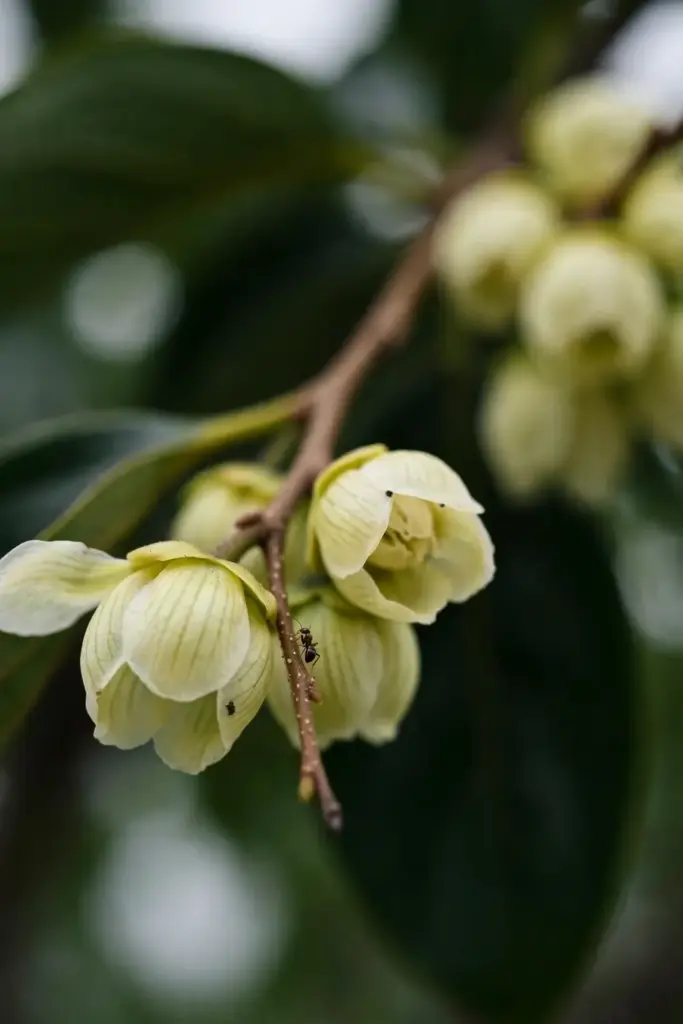
Since you cannot sex a seedling until it flowers years later, plant three or four American seedlings to make a female likely, then remove extras or graft onto them. One male tree pollinates several females within bee range.
Asian trees fruit alone but fruit better with company. Pollination increases fruit set and improves skin coloration on some cultivars such as Fuyu, according to University of California trials. If you have room for two Asian trees, plant two different cultivars and let the bees do the rest.
12. Give the Tree Full Sun and 20 to 35 Feet of Room
Site a persimmon in full sun with at least 6 hours of direct light. Fruit ripens sweeter and the tree stays healthier in open sun than in partial shade. Air circulation matters too: a breezy site dries leaves faster after rain and cuts fungal pressure.
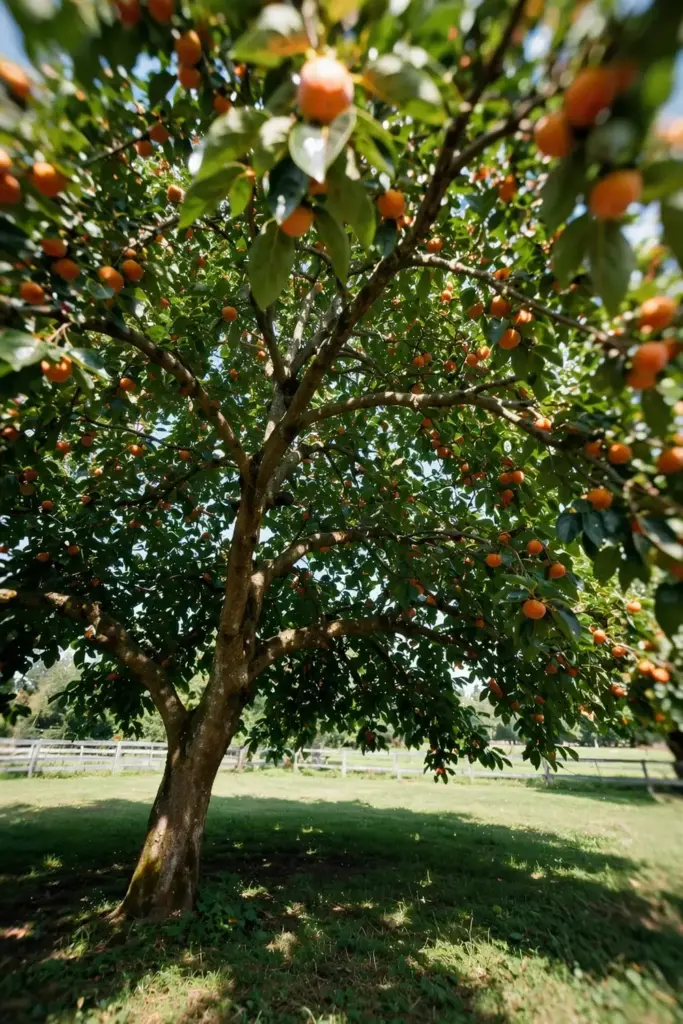
Space trees 20 to 35 feet apart. American persimmons reach 30 to 40 feet at maturity with a broad crown, so crowding them invites weak, shaded branches. Dwarf Asian cultivars such as Fuyu can sit 12 to 18 feet apart, but measure your specific cultivar before committing.
Soil should be deep, well-drained, and slightly acidic to neutral, in the range of about 6.0 to 7.5. Persimmons tolerate clay and poor soil better than most fruit trees, and the American species handles drought once established. What they do not tolerate is a waterlogged hole. Skip low spots where water stands after rain. If your ground needs structural help, start with building soil health a season before planting.
13. Water Deeply Through the First Growing Season
Newly planted persimmons need deep, regular watering for their first full growing season. Soak the root zone thoroughly once a week in dry weather, letting water penetrate at least a foot down where the taproot is working. The mulch ring keeps that moisture in the ground instead of evaporating.
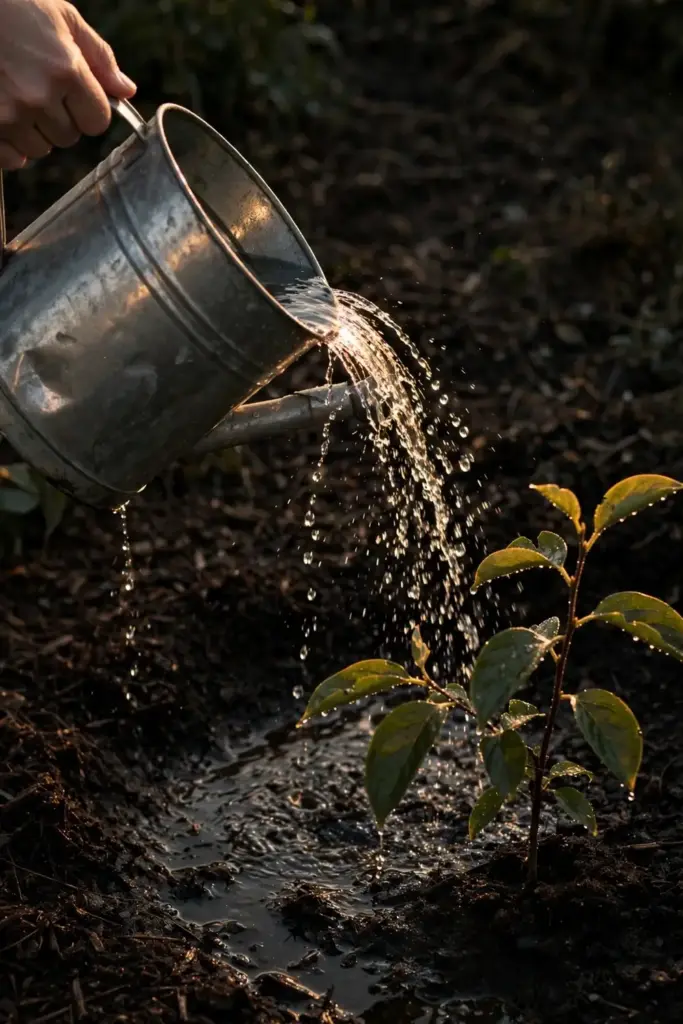
After the first year, back off. Established American persimmons are genuinely drought tolerant, and Asian types need only moderate summer water for good fruit size. Overwatering an established tree does more harm than a dry spell.
Watch the leaves for the water signal. Slight afternoon wilt that recovers by morning is normal in heat. Wilt that persists into morning means the root zone is dry and the tree needs a deep soak that day.
14. Feed Lightly and Skip the Nitrogen Push
Persimmons ask for almost no fertilizer. Normal lawn fertilization nearby is usually adequate if the tree grows in a landscape setting, and many healthy persimmons never see a bag of fertilizer at all.
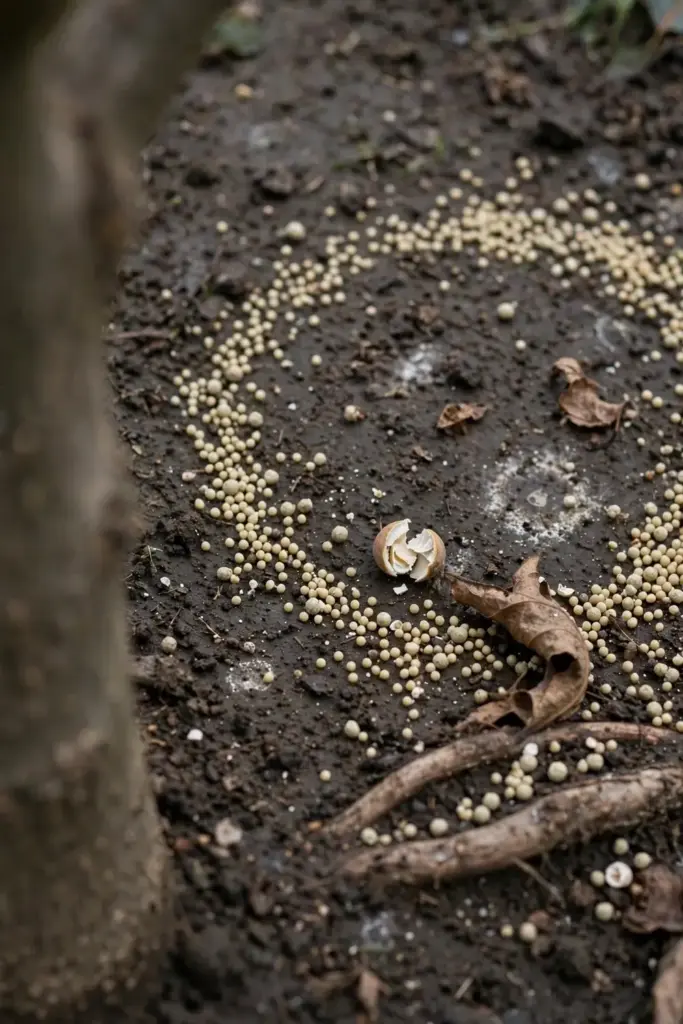
If growth is weak and leaves run pale, apply a balanced low-nitrogen fertilizer in late winter, before bud break. Keep the dose modest. Excess nitrogen pushes soft leafy growth, delays fruit ripening, and can cause the tree to drop its fruit.
Never fertilize at planting time. The roots need to settle into native soil first, and fertilizer salts in the planting hole burn the tender new root tips. For gardeners weighing organic options for the wider garden, the principles behind fertilizer choices for fall vegetables apply here too: feed the soil lightly, avoid nitrogen excess, and let the tree set its own pace.
15. Prune in Late Winter for a Central Leader and 6 to 8 Scaffolds
Prune persimmons lightly in late winter while the tree is dormant. Train young trees to a central leader with 6 to 8 well-spaced scaffold branches spiraling around the trunk. This open structure carries heavy fruit loads without splitting.
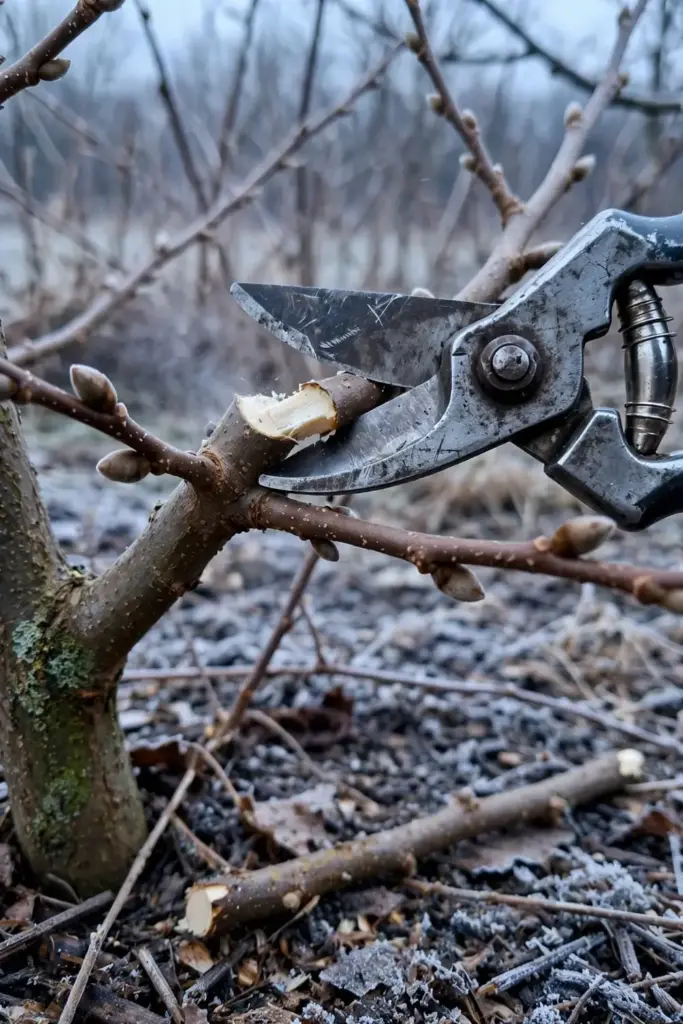
Each winter, remove only what is dead, damaged, or crossing. Persimmons fruit on current-season wood, so heavy pruning removes the coming crop along with the branches. Clemson Extension describes persimmon pruning as minimal: take out dead or injured wood and crossing branches, and stop there.
Mature branches weep under heavy fruit, sometimes badly enough to need propping. Plan for that at planting time by keeping the scaffold angles wide, around 45 degrees, which builds stronger crotches than narrow upright angles. For the dormant-season technique in detail, the method in spring pruning techniques transfers directly to young persimmon trees.
16. Thin Fruit Clusters to Save the Branches
A persimmon tree sets more fruit than its branches can carry. Thin each cluster down to one fruit when the fruitlets are marble-sized, spacing survivors 6 to 8 inches apart along the branch. This single chore prevents most branch breakage.
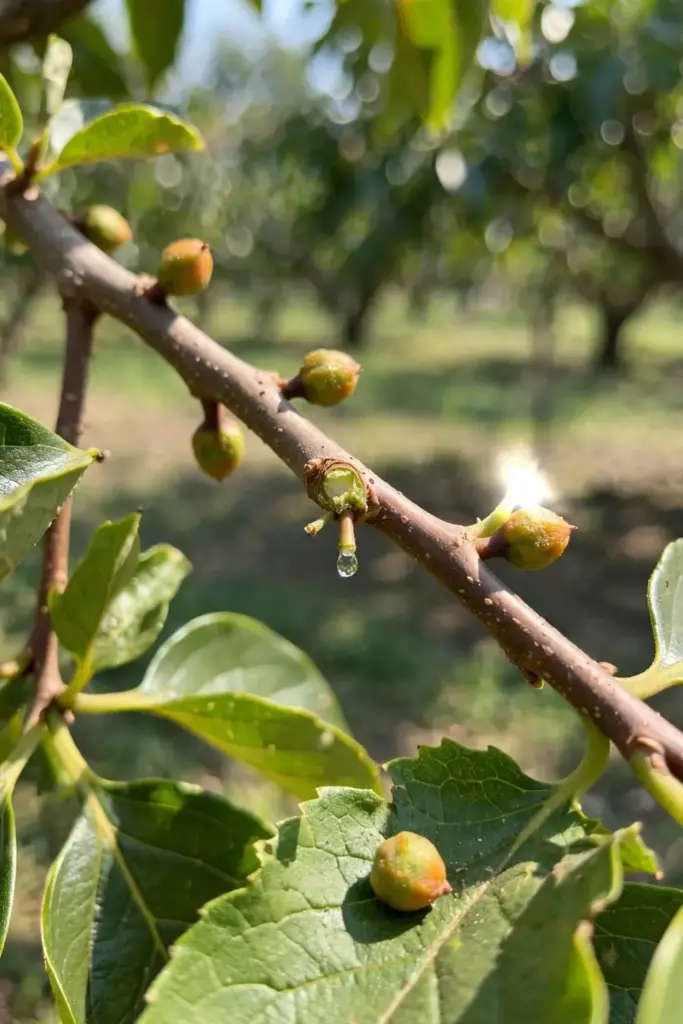
Thinning also improves fruit size and ripening. A thinned tree pours its energy into fewer fruits, which grow larger and color up more evenly. Unthinned trees alternate between a crushing crop one year and almost nothing the next.
Prop branches that still sag despite thinning. A padded 2-by-4 under a loaded limb, set before the fruit ripens, keeps the branch from splitting at the crotch. Remove props after harvest so the bark does not grow around them.
17. Ripen Astringent Fruit With the Apple in a Bag Trick
Astringency is the persimmon’s famous trap, and ripeness is the only escape. Astringent varieties like Hachiya must be completely soft, with jelly-like flesh, before eating, and one early bite puckers your mouth for an hour. Non-astringent varieties like Fuyu can be eaten firm and crisp.
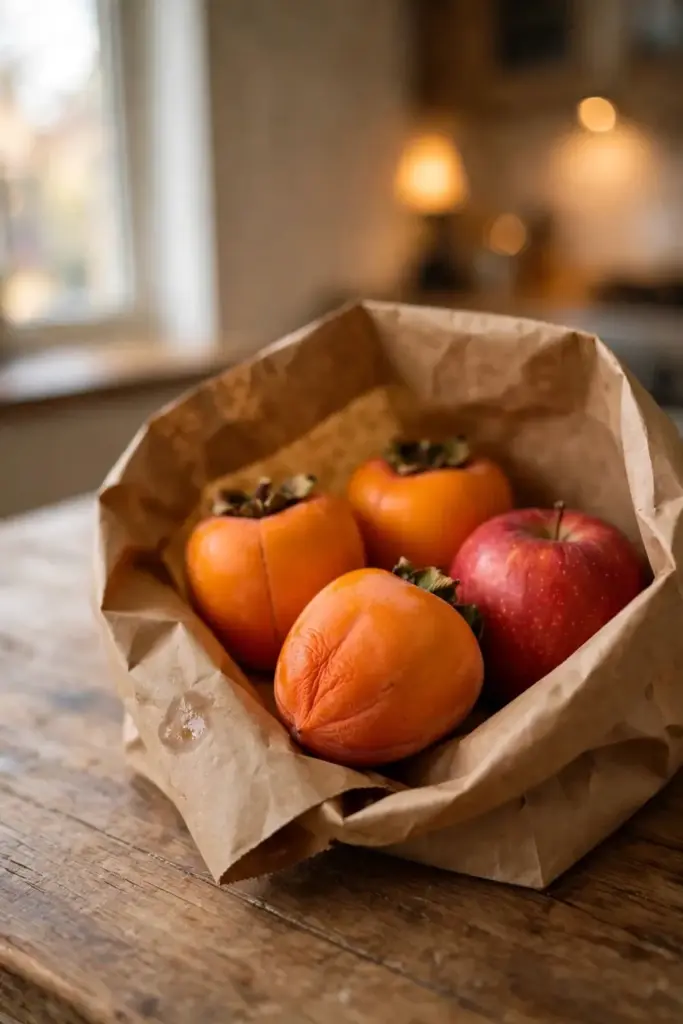
To ripen firm astringent fruit off the tree, seal it in a paper bag with an apple or banana for three to five days. The ethylene gas from the companion fruit dissolves the tannins and softens the flesh evenly. Check daily, because the window between perfectly ripe and fermented is short.
Never freeze unripe astringent fruit hoping cold fixes it. Frost is not required for ripening, and it ruins immature fruit on the tree. Harvest astringent types when fully colored but still firm, then ripen them indoors where you control the process.
18. Grow Persimmons in Pots Only With Deep Containers
Persimmons grow in containers, but the taproot sets the terms. Use a pot at least 22 to 24 inches wide and equally deep, with generous drainage holes. Standard shallow pots stunt the taproot and stunt the tree with it.
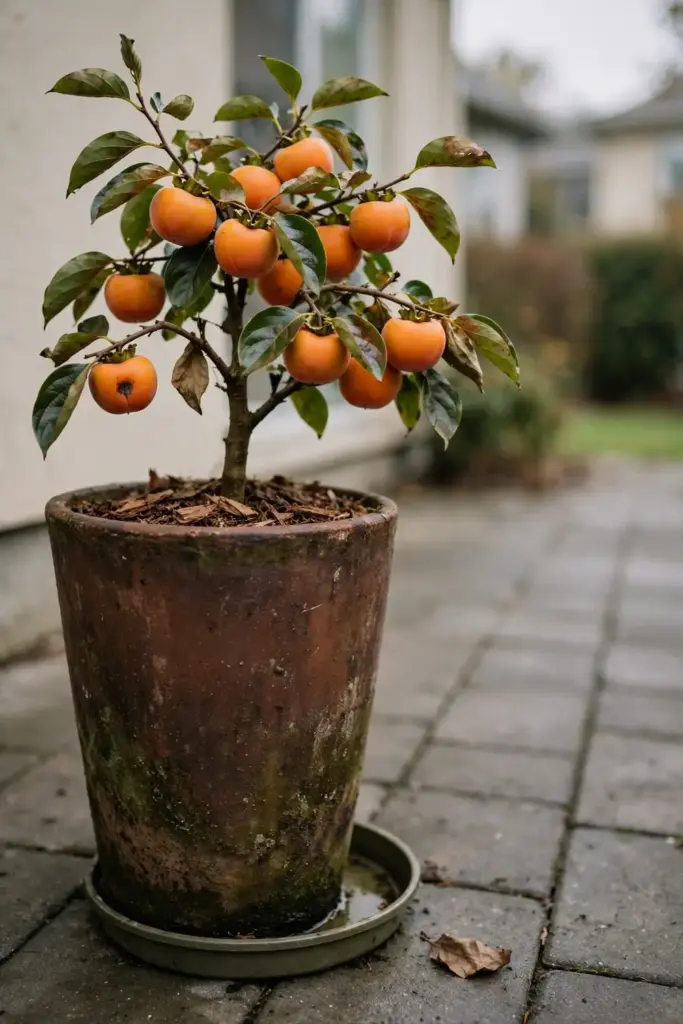
Choose a naturally compact Asian cultivar for pot culture. Fuyu and Jiro stay smaller than American seedlings and fruit younger on dwarfing habits. Expect to repot every two to three years, root-pruning lightly each time, because a pot-bound persimmon stops growing and drops its fruit.
Container trees need more water and more winter protection than planted ones. Water when the top two inches dry out, mulch the surface, and move the pot against a sheltered wall or into an unheated garage in zones at the cold edge of the cultivar’s range. One patio tree works. A container orchard never pays off.
19. Harvest When the Fruit Is Dead Ripe, Not by the Calendar
American persimmons ripen in autumn and often hang on the tree into early winter. Harvest them when they are fully colored and soft to the touch, almost to the point of splitting. Underripe American fruit is intensely astringent and inedible.
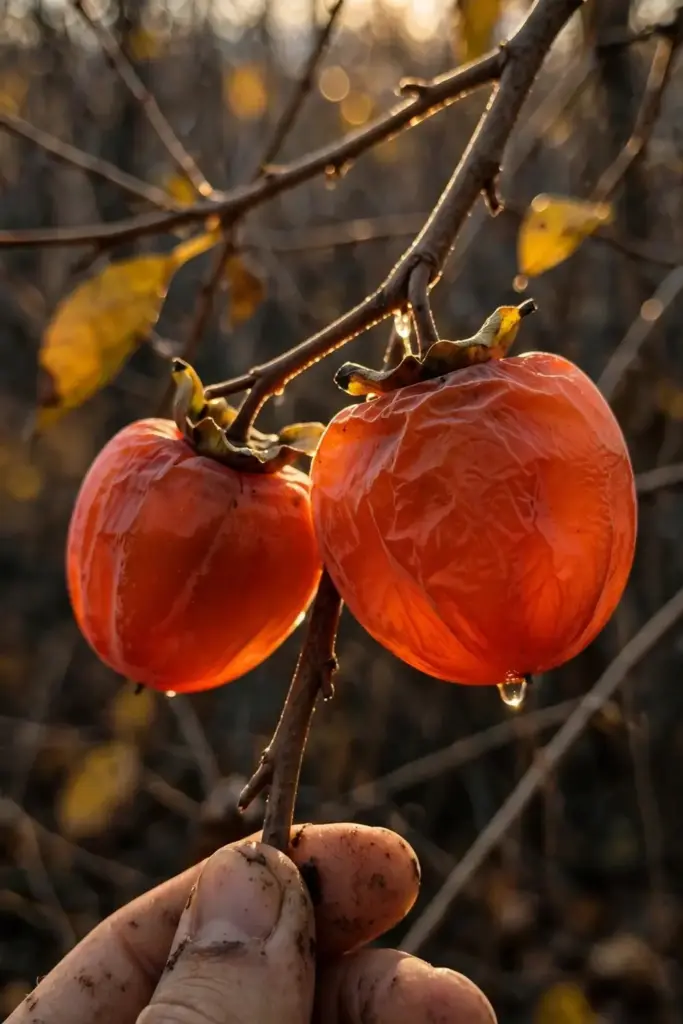
Asian astringent types harvest when fully colored but still firm, then finish ripening indoors with the bag trick. Non-astringent Fuyu types harvest firm and eat like apples straight off the tree. Fruit continues to ripen after picking. A slightly early harvest beats leaving fruit to the birds.
Handle ripe fruit gently. A dead-ripe Hachiya bruises if you look at it sideways, and American persimmons split their skins at full softness. Pick into a shallow tray. A deep bucket crushes the bottom fruit.
20. Share the Bounty With Wildlife and Read the Seed Omen
A fruiting American persimmon feeds more than your family. Deer, raccoons, opossums, turkeys, and songbirds all eat fallen persimmons, and the fruit hangs on bare branches deep into winter when other food is gone. Wildlife managers plant persimmons specifically for this late-season value.
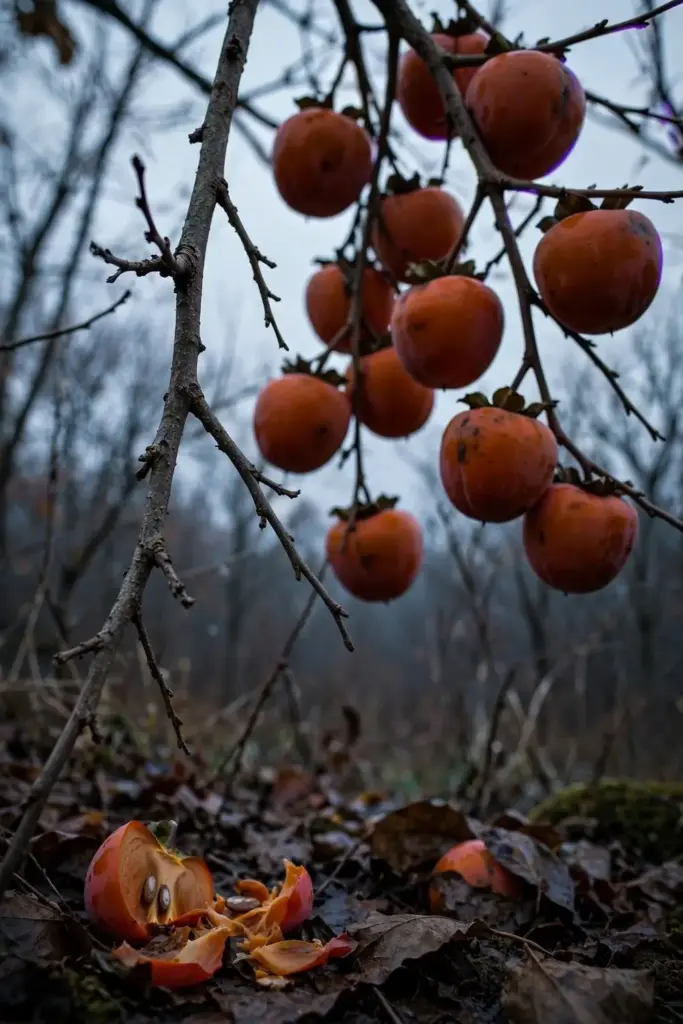
Plant one tree near the wild edge of your property and let the wildlife have the drops. You will still harvest plenty from the branches, and the tree earns its space twice over.
Now the old wives tale, since every persimmon article owes you this one. Split a ripe American persimmon seed lengthwise and look at the kernel inside. Folk wisdom says a spoon shape means a snowy winter, a fork means a mild one, and a knife means a winter so cold it cuts. It predicts nothing, but it turns a seed-splitting afternoon into a story worth telling.
21. Diagnose the 6 Most Common Persimmon Problems
Persimmons have few serious problems, which is part of their charm. Run through this checklist when something looks wrong.
No fruit after many years. A seedling younger than six years is not mature yet. A mature American tree with no fruit is likely a male, or a lone female with no male pollinator nearby. Graft a known female branch onto it or plant a companion.
Fruit drops before ripening. Excess nitrogen is the usual cause, often from heavy lawn fertilizer nearby. Drought stress during fruit sizing drops fruit too. Correct the feeding, water deeply, and the tree usually holds its next crop.
Branches split under load. Skipped thinning. Thin to one fruit per cluster next season and prop the remaining loaded limbs now.
Astringent bite. The fruit was eaten before it was ripe. Astringent types need jelly-soft flesh or the ethylene bag treatment.
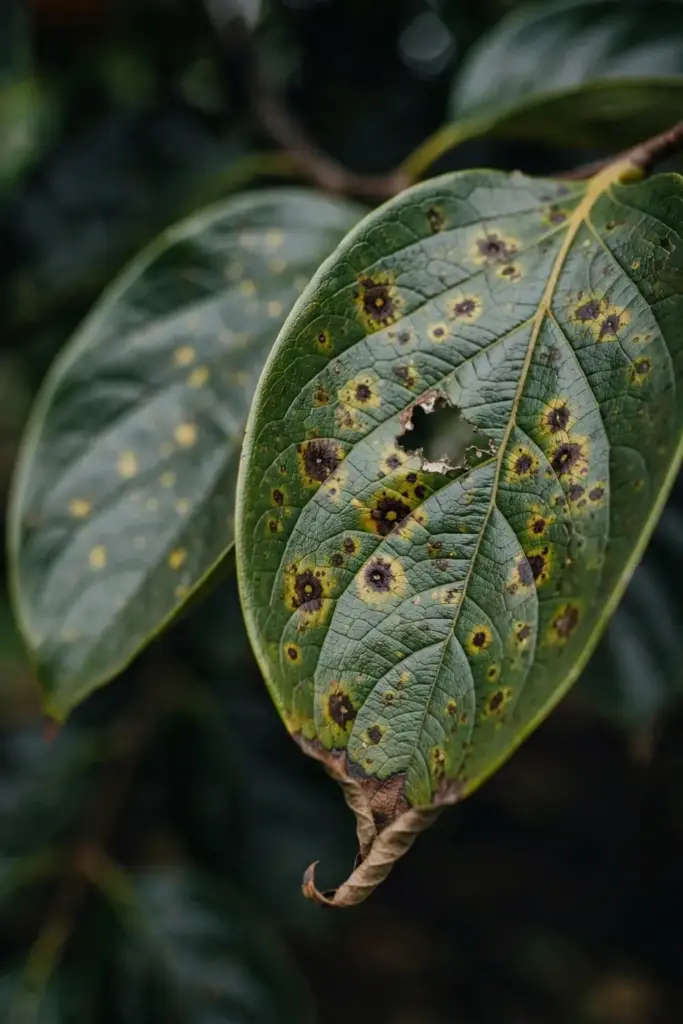
Leaf spot and twig dieback. Fungal leaf spot and twig dieback appear in wet seasons. Rake up fallen leaves, improve air circulation with light pruning, and avoid overhead watering.
Scale, psyllids, and borers. Scale insects, persimmon psyllid, and leaf-chewing caterpillars show up occasionally. The persimmon borer deserves real attention: check the trunk and exposed roots for damage, because borer injury on a large tree is hard to treat once established.
Frequently Asked Questions
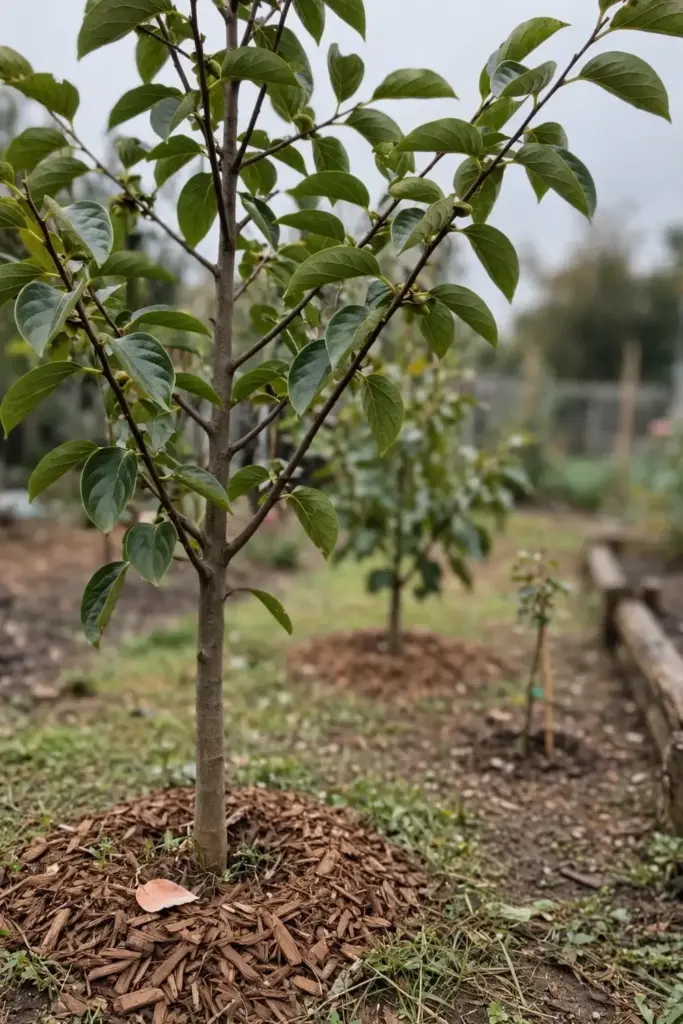
Yes, once the tree is established. Persimmons need full sun, deep well-drained soil, and almost no fertilizer or spraying, and they suffer fewer pests than most fruit trees. The hard part is patience, not skill. Seed-grown trees take six to ten years to fruit, so beginners who want faster results should start with a grafted tree, which fruits in three to five years.
Six to ten years from seed, which is the longest honest wait among common home-orchard fruits. Grafted trees cut that to three to five years because the grafted top is already mature wood. American seedlings sometimes fruit a year or two earlier than Asian seedlings, but the range overlaps heavily, so plan on the full decade and celebrate anything earlier.
Split a ripe American persimmon seed lengthwise and read the kernel shape: a spoon predicts a snowy winter, a fork predicts a mild winter, and a knife predicts a bitterly cold one. It is pure folklore with no predictive power, but it is a beloved autumn ritual in persimmon country. The seed shapes are real; the weather forecasts are not.
Only for American persimmons. Most Diospyros virginiana trees are dioecious, bearing either male or female flowers, so plant both sexes for a full crop. Asian persimmons (Diospyros kaki) are usually self-fertile and fruit alone. Since seedlings cannot be sexed until they flower, plant three or four American seedlings to make a female likely.
Yes, with a deep enough container and the right cultivar. Use a pot at least 22 to 24 inches wide and deep for the taproot, choose a compact Asian variety like Fuyu, and repot every two to three years. Container trees need more frequent watering and winter protection than planted trees. One patio tree works well. A container orchard never pays off.
Seal the firm fruit in a paper bag with an apple or banana for three to five days. The ethylene gas from the companion fruit dissolves the tannins and softens the flesh evenly. Check daily, since the gap between perfectly ripe and overripe is short. Non-astringent types like Fuyu need no treatment and can be eaten firm.
Put the Seeds in the Fridge Tonight
Stratification is the only step with a deadline. Seeds started on their 60 to 90 days of moist cold today germinate on a heat mat in late winter and spend next summer building the taproot that carries the whole tree. Every other step waits for that cold clock to run.
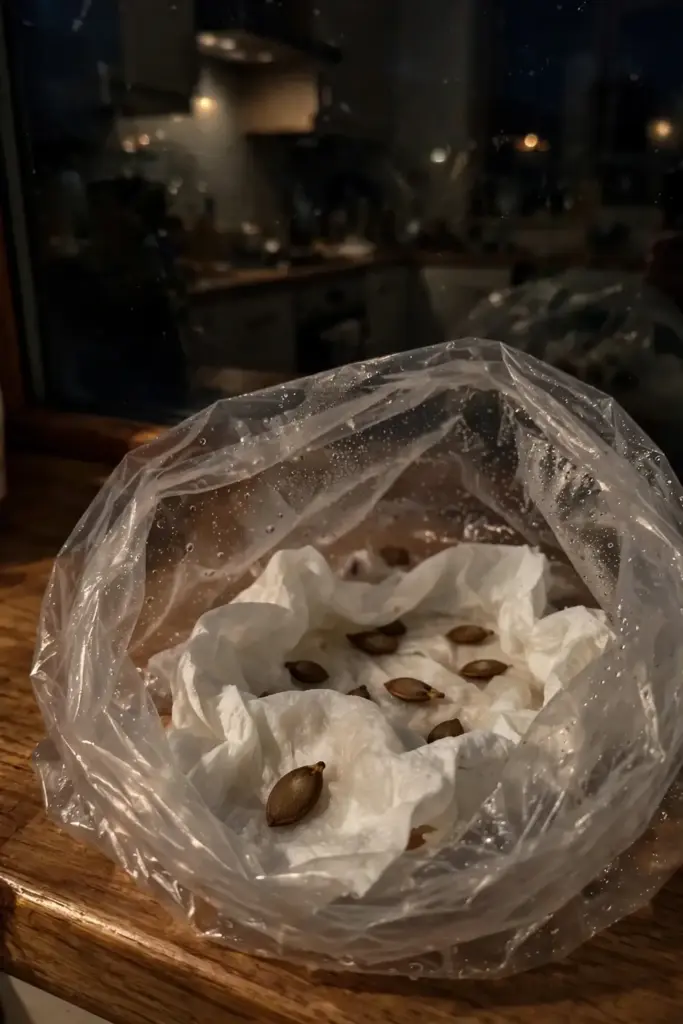
Start five or six seeds, not one. Some will be male, some may be weak, and the strongest seedling of the batch becomes your tree. In six to ten years you will eat fruit from a tree that began tonight in your refrigerator, and that is a story worth the wait.








