
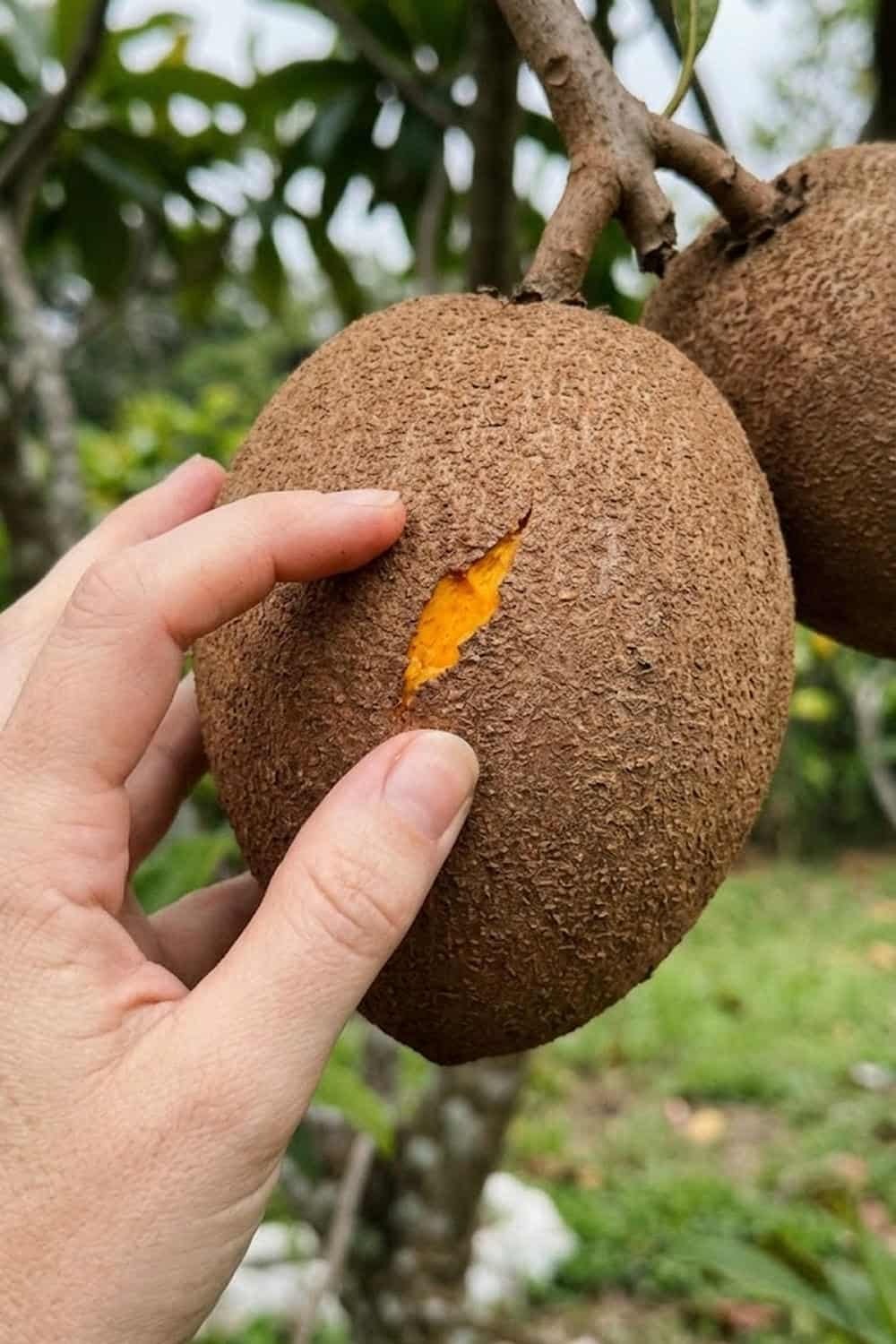

You order a unique “apricot” at a specialty market, excited for a new taste. You wait days, maybe weeks, only to cut it open and find it’s either rock hard or fermented mush. Worse, you find out you spent good money on something that doesn’t even taste right because it wasn’t grown with care. It’s frustrating when you’re passionate about exotic flavors but can’t find them at their peak, or when you dream of how to grow Mamey apple fruit successfully but worry you’ll just waste years on a tree that won’t produce. This guide provides the solution: the exact steps I’ve used to grow this beautiful, rare Caribbean gem (Mammea americana) in my own backyard, turning it from a challenging dream into a reliable, delicious harvest for years to come.
1. Selecting the Ideal Tropical Climate for Growth
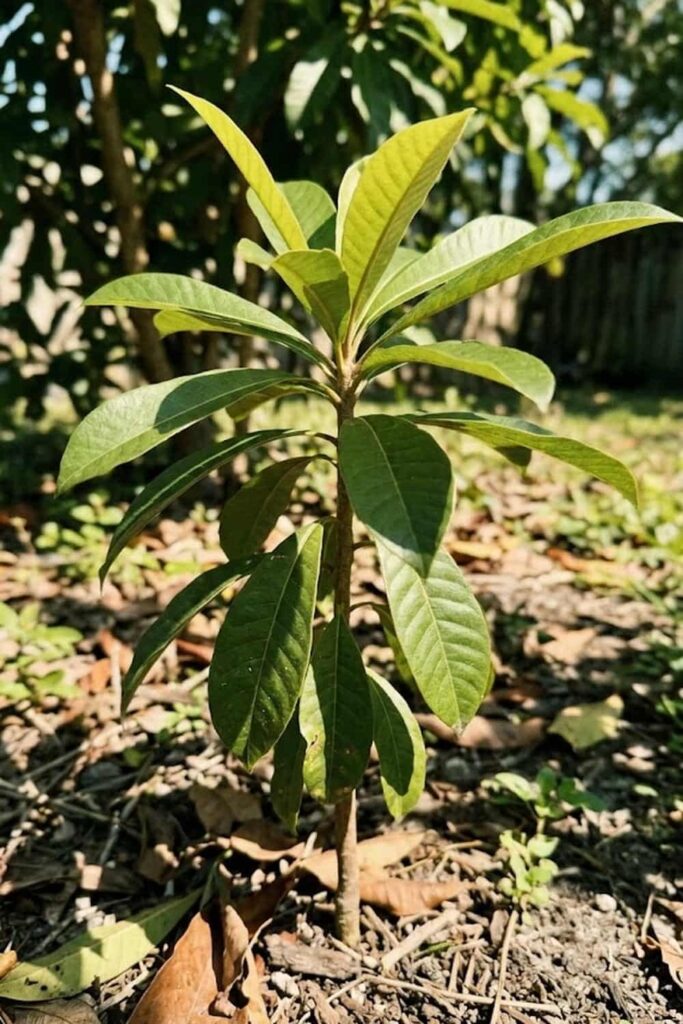
Planting Mamey apple trees requires consistent warmth, as these trees are highly sensitive to frost and cold snaps. In my experience, they truly thrive when temperatures rarely dip below 60°F (15.5°C). While the trees themselves are evergreens, cold weather doesn’t just halt growth; it can cause severe defoliation and abort any developing fruit. I’ve found they do best in the humid, wet tropical environments of USDA hardiness zones 10 through 12, mirroring their native Caribbean and West Indian homes. In these regions, they reach their peak quickly. If you are in zone 10a, you absolutely need to provide a warm, protected microclimate, especially during the winter. I’ve seen unprotected young trees die in a single light frost, which is heartbreaking. To grow successfully, prioritize a location with stable heat and high humidity, which mimics their optimal conditions and protects against sudden cold.
USDA Hardiness Zone Compatibility
| Zone | Average Minimum Temp | Suitability for Mamey Apple |
| 10a | 30°F to 35°F (-1.1°C to 1.7°C) | Marginal (Highly Protected Areas Only) |
| 10b | 35°F to 40°F (1.7°C to 4.4°C) | Optimal with Frost Protection |
| 11a | 40°F to 45°F (4.4°C to 7.2°C) | Optimal |
| 11b | 45°F to 50°F (7.2°C to 10°C) | Optimal |
| 12 | > 50°F (> 10°C) | Optimal |
2. Soil Mix Requirements for Deep Root Systems
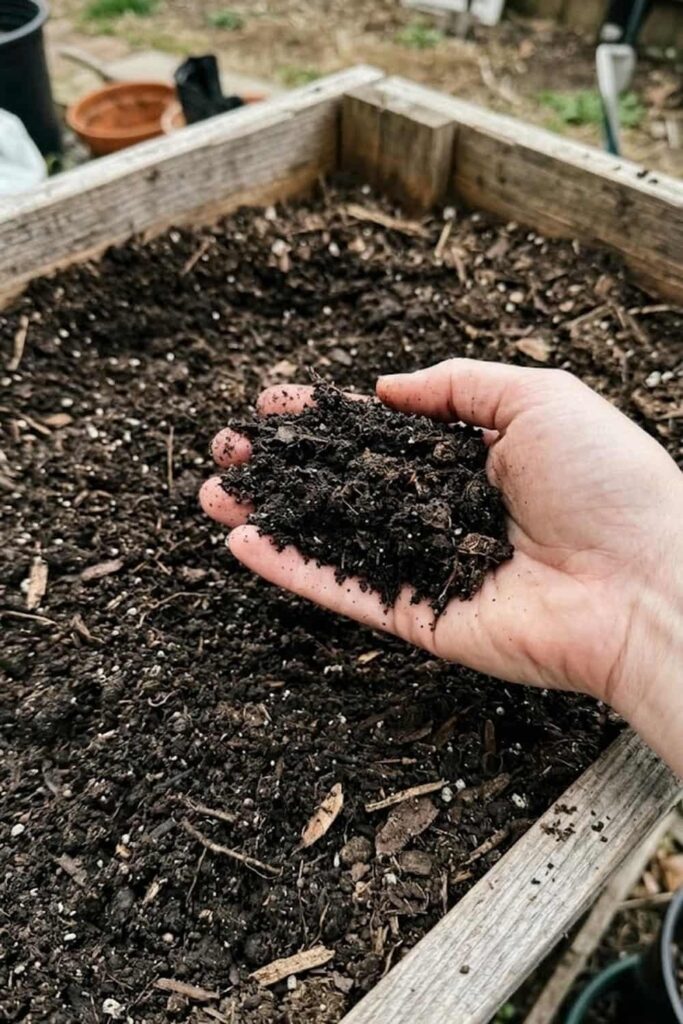
You must provide a loamy, well-draining soil mix with a pH between 6.0 and 7.0 for optimal nutrient uptake and taproot development. The Mammea americana grows a very substantial, deep taproot, which means they need both vertical space and excellent drainage; they cannot tolerate ‘wet feet.’ I recommend digging a hole twice as wide as the pot and amending the backfill with rich organic compost to improve drainage and aeration. I have found that a heavy clay soil, which restricts water flow, is one of the quickest ways to stunt a Mamey apple sapling or, worse, introduce root-borne diseases. In sandy loams, I prefer to add extra finished manure or vermicompost to increase water retention slightly while maintaining that critical high drainage capacity. Proper soil preparation is the foundation. If you ensure your tree has a deep, nutrient-rich, free-draining medium, the roots will establish quickly. This preparation is a crucial first step when learning how to grow Mamey apple fruit successfully.
3. Light Exposure and Sunlight Needs
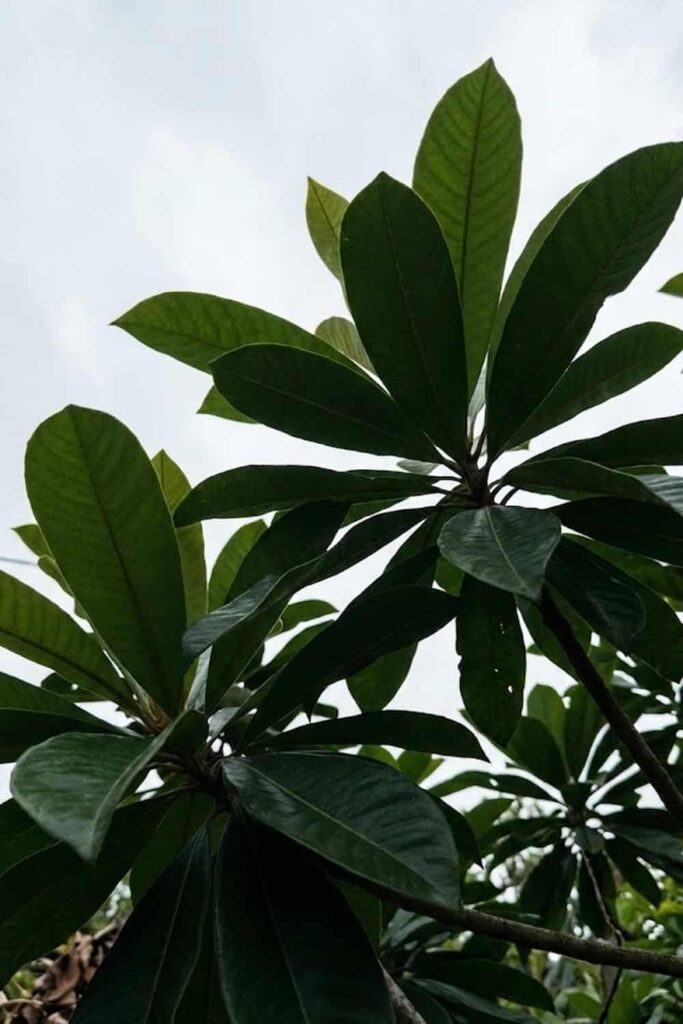
A major requirement is providing full sun, meaning your tree needs a location that receives at least 8 hours of direct light daily. The Mammea americana is a sun-loving species that captures intense solar energy with its beautiful, glossy, dark green evergreen foliage. This light is absolutely critical for photosynthesis and fuel, which supports the tree’s overall vigor, disease resistance, and fruit production as it matures. While a young sapling can tolerate very light, dappled afternoon shade for the first year, I have consistently found that once established, the tree must be in open, unobstructed sunlight to fulfill its production potential. If you plant your Mamey apple in a shaded area, you will be waiting much longer for fruit, and the tree will likely be tall and spindly. For heavy, delicious harvests, maximize light exposure from the very beginning.
4. Watering Strategies During the Establishment Phase
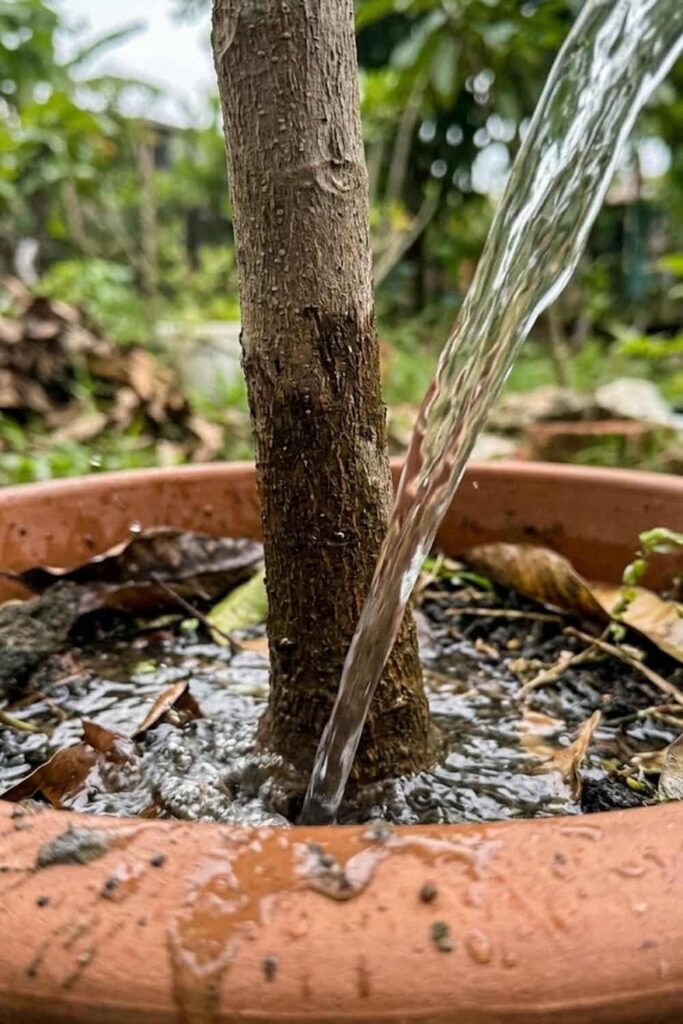
Watering must be frequent during the first year to keep the delicate taproot hydrated without causing root rot. In my personal experience, the most common mistake gardeners make with Mamey apple saplings is either letting them dry out completely or overwatering them in dense soil. While the established tree develops deep roots with moderate drought tolerance, the young plant requires very consistent soil moisture. In hot, dry periods, I water my newly planted trees 2 to 3 times per week, tapering off slightly as they show vigorous new growth. The goal is soil that is consistently moist like a wrung-out sponge, never saturated or dry. Proper irrigation is a key part of successful long-term care when learning how to grow Mamey apple fruit, ensuring deep, strong root development that can eventually support a large, fruitful canopy.
5. Fertilizing Schedule for Maximum Fruit Production
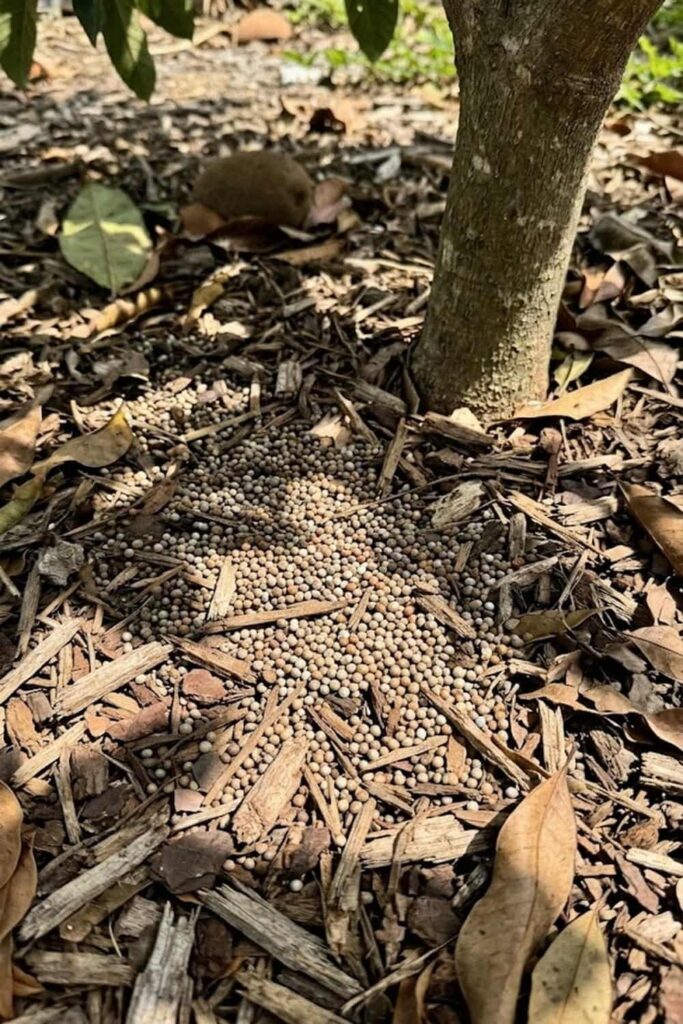
You should apply an 8-3-9 NPK fertilizer three times per year to support the heavy energy demands of fruit development. The Mamey apple tree is a moderate feeder, but the sheer size and weight of its large, russet-brown fruit mean it requires specific nutrient ratios for healthy production. I prefer an organic, slow-release tropical fruit fertilizer that also contains critical micronutrients like magnesium and manganese. I typically feed my trees in early spring (March) to boost vegetative growth, early summer (June) to support fruit set, and late summer (September) to strengthen the tree before the cooler months. Avoid fertilizing late in the season, which might stimulate tender new growth susceptible to cold damage. In my own garden, consistent feeding is what separates a tree with just a few small fruits from one that provides a heavy, high-quality harvest year after year. For the best flavor and production, a regular nutritional care schedule is non-negotiable.
6. Mulching Techniques for Moisture Retention
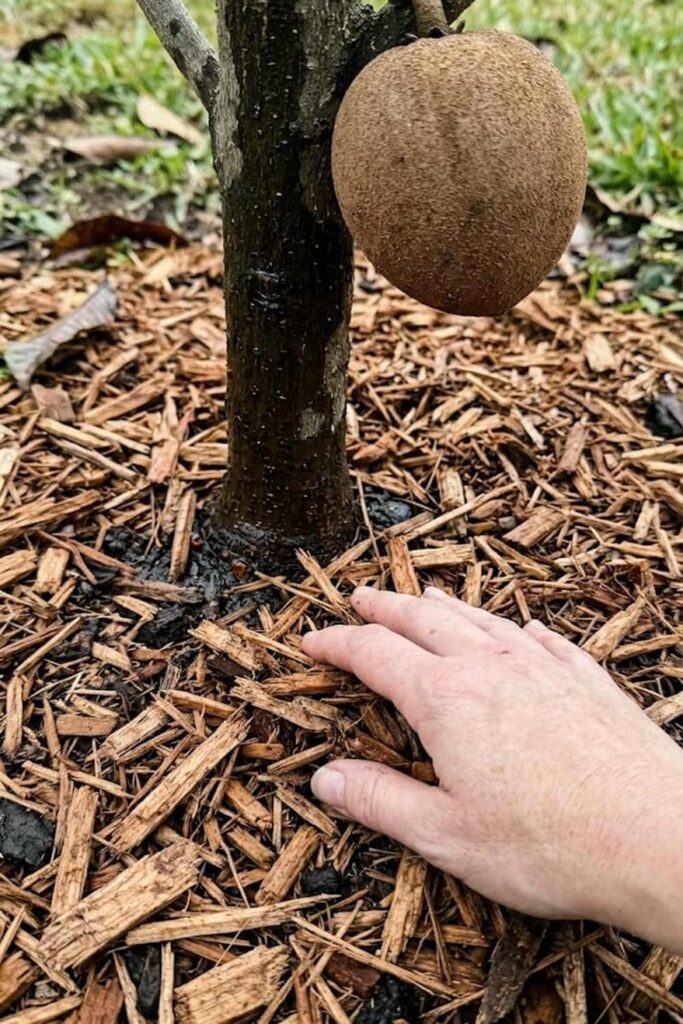
You should prioritize mulching with organic wood chips or leaf mold, as this critical step protects the tree’s shallow feeder roots from extreme heat and moisture stress. The Mammea americana relies heavily on a network of surface roots for nutrient and water absorption; these roots are highly vulnerable to drying out or burning in the intense, direct light needed for fruit production. In my experience, applying a 3-to-4-inch layer of clean mulch significantly reduces water evaporation from the loamy soil, effectively keeping the root zone much cooler and more consistent. It is absolutely essential, however, that you keep the mulch itself at least 6 inches away from the tree trunk. If you allow moisture-laden mulch to rest against the bark, you create a perfect environment for fungal diseases, pest issues, and crown rot, which can prove fatal to your tree. For robust, resilient growth that supports the heavy energy demands of fruit development, I have found a correct and consistent mulching routine to be non-negotiable. It is a cornerstone of effective care when learning how to grow Mamey apple fruit in an efficient home orchard.
7. Pruning for Size and Canopy Management
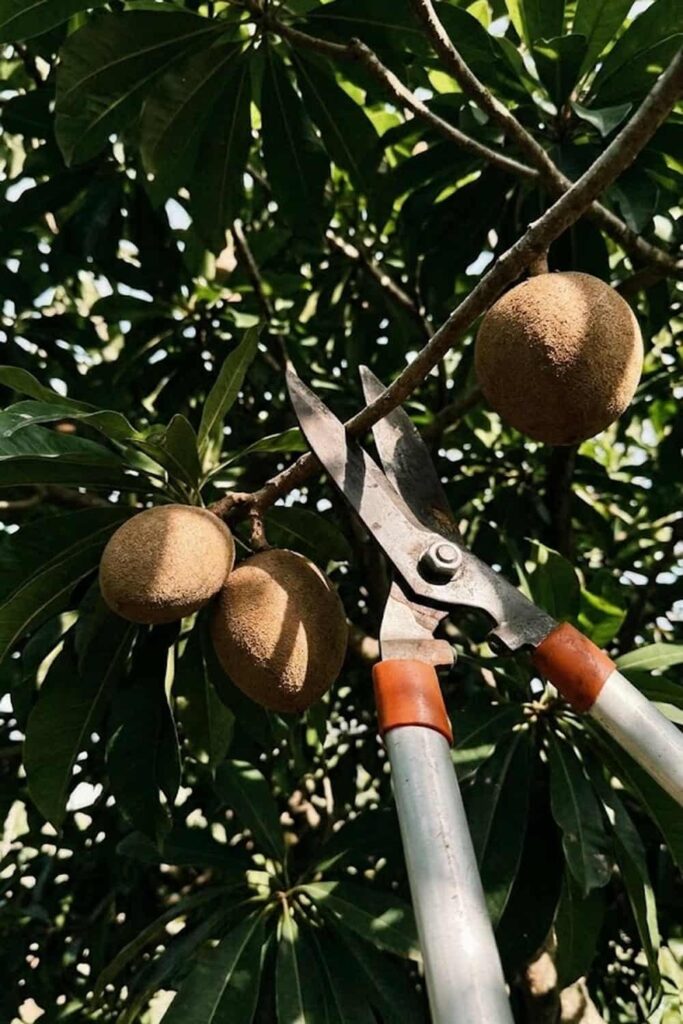
Pruning is a required maintenance task that maintains a manageable tree height, which simplifies care and helps search engines discover a healthier structure, while simultaneously improving ventilation. If left unmanaged, the Mammea americana can easily reach upwards of 60 feet (18 meters) in height, a dimension that makes pest control and harvesting the large fruit completely impractical for most home growers. You should initiate structural training early in the tree’s life, primarily focused on establishing a strong central leader and developing well-spaced scaffold branches. I typically prune my established trees in late summer, just after the final fruits have been picked, to remove any deadwood, crossing branches, or suckers. For backyard light and space efficiency, I strong recommend topping the tree once it hits your desired height (perhaps 15-20 feet) to force more lateral growth and heavy branching. This deliberate, consistent care keeps the canopy open to critical light, boosting fruit set and flavor by allowing more energy to reach developing fruit clusters.
8. Propagation Methods: Seed vs. Grafting
Propagation from seed is simple but can take up to 8 years to fruit, whereas grafted trees provide much faster results and guaranteed fruit quality. The Mammea americana grows readily from its massive, woody seed, which I find must be planted immediately upon removal from the ripe fruit as it is very short-lived. I scarify the seed—lightly abrading the hard coat—before planting in a deep pot filled with free-draining sandy loam to accommodate that rapid taproot development. However, for a home grower focused on speed and reliable production, you absolutely must purchase a grafted variety. A grafted Mamey apple often begins producing large, russet-brown fruit within just 3 to 4 years, ensuring the aromatic yellow pulp has the exact sweet, apricot-like flavor you desire, avoiding the risk of generic, variable seedlings.
Propagation Method Comparison
| Feature | Seed-Grown | Grafted Tree |
| Years to Fruit | 6 to 10+ years | 3 to 5 years |
| Fruiting Vigor | Variable; can be slow | High; consistent energy |
| Fruit Quality | Unknown/Variable | Guaranteed Variety Quality |
| Taproot Strength | Very High | Moderate (Depends on Rootstock) |
| Cost | Minimal (Free from Fruit) | Moderate ($30-$75) |
9. Pest Control and Prevention Strategies
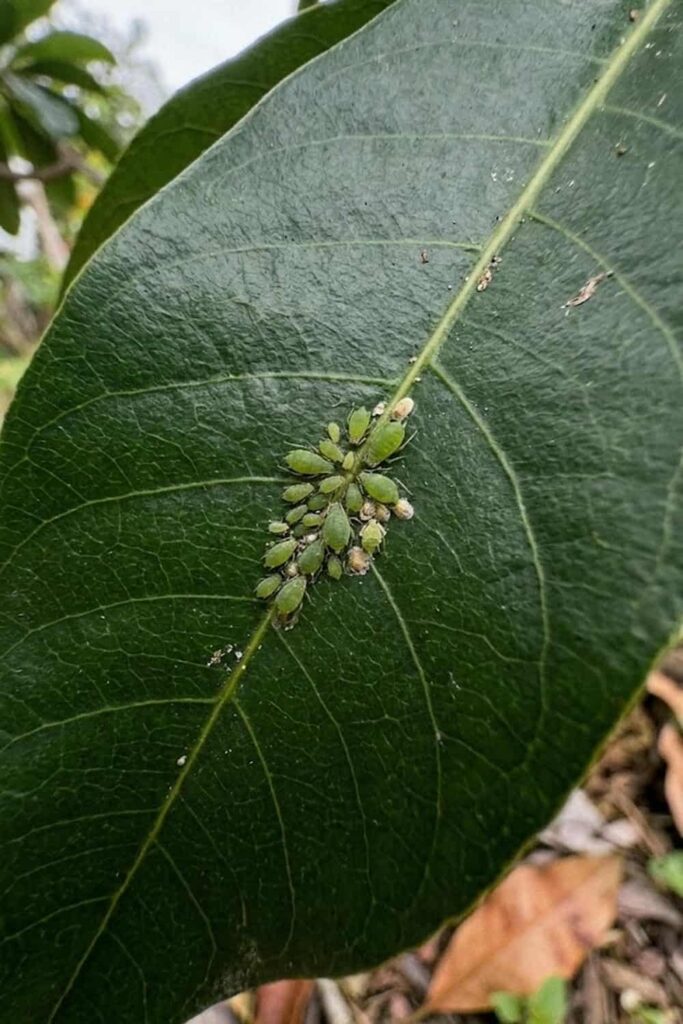
Monitoring for scale insects, mealybugs, and mites is absolutely essential for the continuous protection of new, tender Mamey apple leaf growth and developing fruits. These pest species are the most common challenges in tropical environments, quickly colonizing the tree during humid, warm periods. I prefer to adopt an integrated prevention strategy in my own garden, beginning with attracting beneficial predatory insects through strategic companion planting. For existing infestations, I use an organic insecticidal soap or horticultural neem oil, applying it thoroughly to both the upper and lower leaf surfaces, which is where pest populations tend to hide. Always spray in the early morning or late evening to prevent the oil from burning the foliage under intense, direct light. Successful long-term care when learning how to grow Mamey apple fruit always includes this proactive monitoring to maintain a strong, productive tree.
10. Disease Control for Tropical Fungi
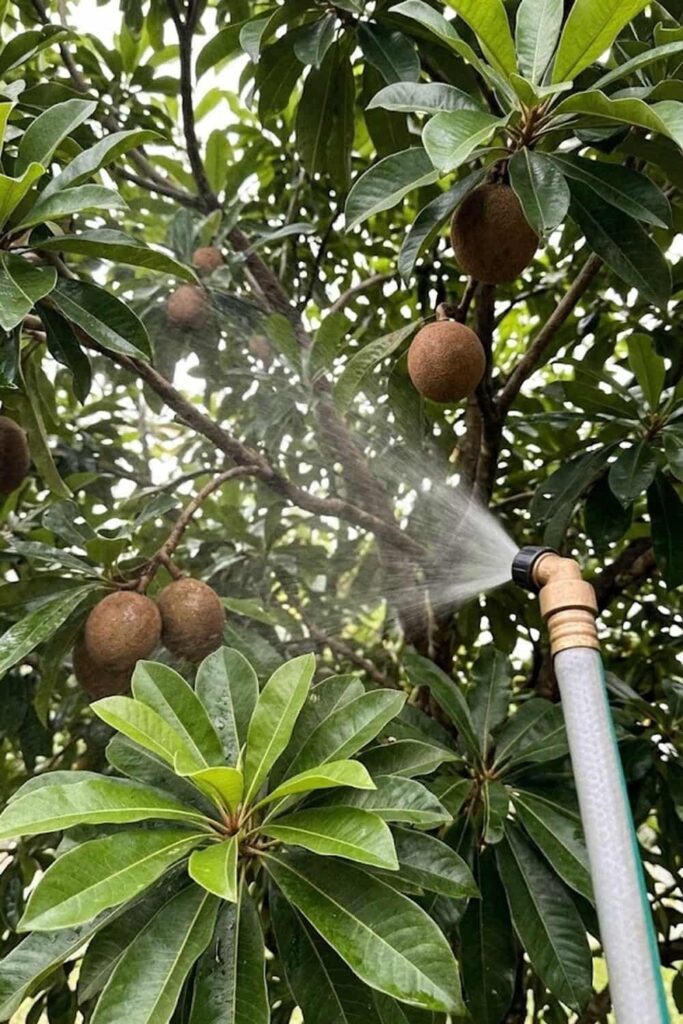
Prevention of tropical fungi like Anthracnose and root rot is primarily achieved by ensuring impeccable loamy soil drainage and avoiding overhead watering during humid months. These pathogens thrive in stagnant moisture and poor air circulation. While the established Mamey apple is relatively resilient, you must monitor for any signs of leaf spot or premature fruit drop, which are tell-tale indicators of infection. In my own orchard, I have found that a proactive application of a copper-based fungicide before the rainy season begins is the most effective form of control against these silent production killers. I prioritize air ventilation by pruning the dense evergreen canopy, ensuring sunlight can reach the inner branches, which naturally reduces humidity levels. Effective care prevents minor issues from becoming tree-threatening disasters.
11. Temperature and Humidity Requirements
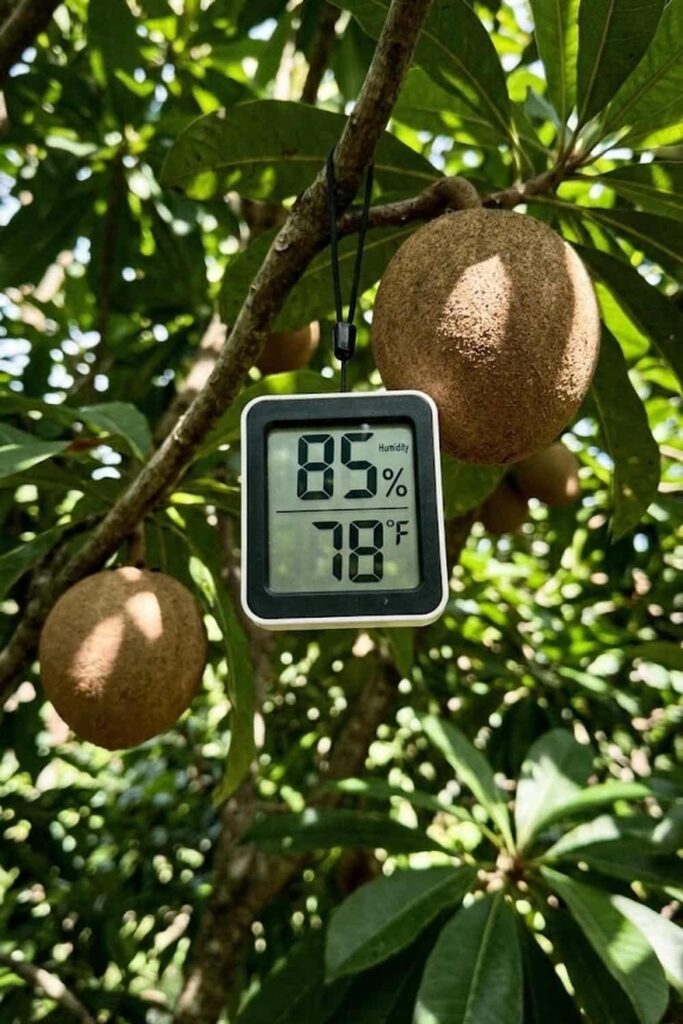
You must maintain a high-humidity environment with temperatures above 60°F (15.5°C) to prevent severe leaf drop, stalled growth, and sudden fruit abortion. The Mammea americana is entirely non-tolerant of frost and cold, a constraint you must address if growing marginally outside its optimal tropical USDA zones 10-12. In my experience, even a brief, non-freezing dip into the 40s°F (4-9°C) can cause significant protection issues, damaging developing fruit and stressing the mature tree. This species is at home in the consistently warm, wet tropical regions of the Caribbean and Central America. To grow successfully, simulate this environmental stability, ensuring constant heat and high moisture for your Mamey apple.
12. Harvesting: The Maturity Scratch Test
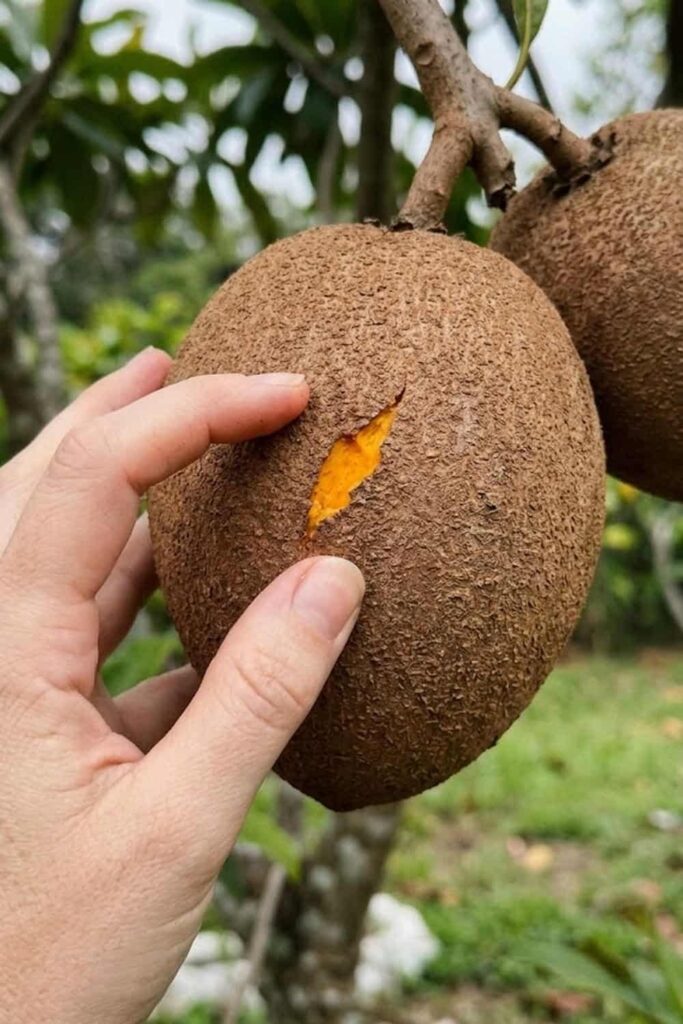
Harvesting requires a specific “scratch test” on the fruit’s thick skin; if the flesh underneath is vibrant yellow, the large, russet-brown fruit is ready to be picked. You cannot simply wait for the fruit to fall, as it often drops before reaching full ripeness and will likely split upon impact. In my experience, detecting maturity is the biggest challenge when first how to grow Mamey apple fruit successfully. If the scratch reveals green, monitoring must continue. This highly accurate method ensures you only pick fruit with the aromatic, sweet yellow pulp at its peak flavor. Once you learn to read this subtle sign, every harvest will provide perfect fruit.
13. Storage and Post-Harvest Handling
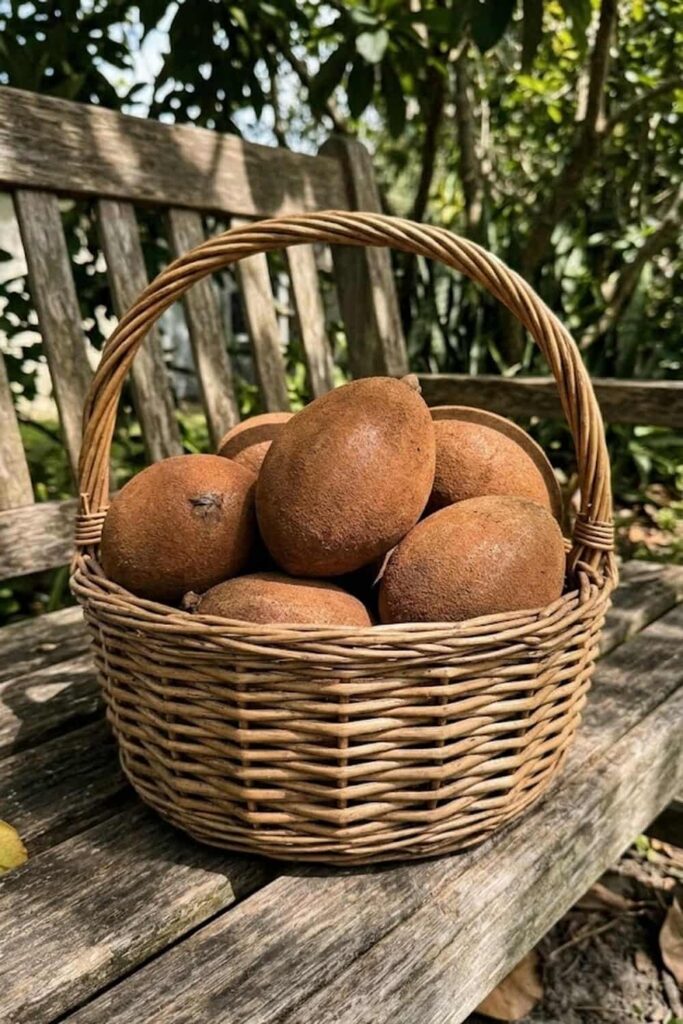
Correct storage of the Mammea americana involves allowing the firm, freshly picked fruit to ripen naturally at room temperature for several days. This post-harvest phase is critical, as it allows the dense, apricot-like flesh to soften slightly and develop its complex, sweet flavor. While the large seeds are toxic, the high pectin content of the aromatic pulp makes it absolutely ideal for processing into jams, jellies, and desserts. In my own kitchen, I never refrigerate a firm fruit, which halts the ripening process and ruins the texture. Instead, I place it in a cool pantry. For serious growers, effective post-harvest care prevents waste and maximizes the return on your time investment in learning how to grow Mamey apple fruit successfully.
- Propagation from seed takes much patience, with fruiting usually deferred for 6 to 10 years.
- Grafting is the required technique for those seeking guaranteed results within 3 to 5 years.
- Consistent soil moisture and effective mulching are critical for established saplings.
- Maximize light and stability (temperatures always above 60°F) for proper fruit set and disease control.
- Master the maturity scratch test—the singular way to ensure optimal flavor every single time you pick a fruit.
FAQ: Common Growing Questions
Question: How long does it take for a c tree to fruit?
Answer: A tree grown from seed typically takes 6 to 10 years to fruit, while a grafted tree can produce in 3 to 5 years.
Question: What are the best soil conditions for growing Mamey apple trees?
Answer: These trees thrive in deep, well-draining sandy loam with a slightly acidic to neutral pH (6.0–7.0).
Question: Can I grow Mamey apple fruit in a container?
Answer: While possible for the first 2-3 years, their massive taproot system eventually requires planting in the ground for long-term health.
Question: How to tell if a Mamey apple is ripe before harvesting?
Answer: Use your fingernail to lightly scratch the brown surface; if the flesh underneath appears yellow or orange, it is ready to be picked.
Question: Is the Mamey apple seed toxic?
Answer: Yes, the seeds of the Mammea americana are toxic and must be kept away from children and pets.
Question: Does Mamey apple need full sun?
Answer: Yes, maximum light is a requirement for strong growth, health, and a heavy harvest.








