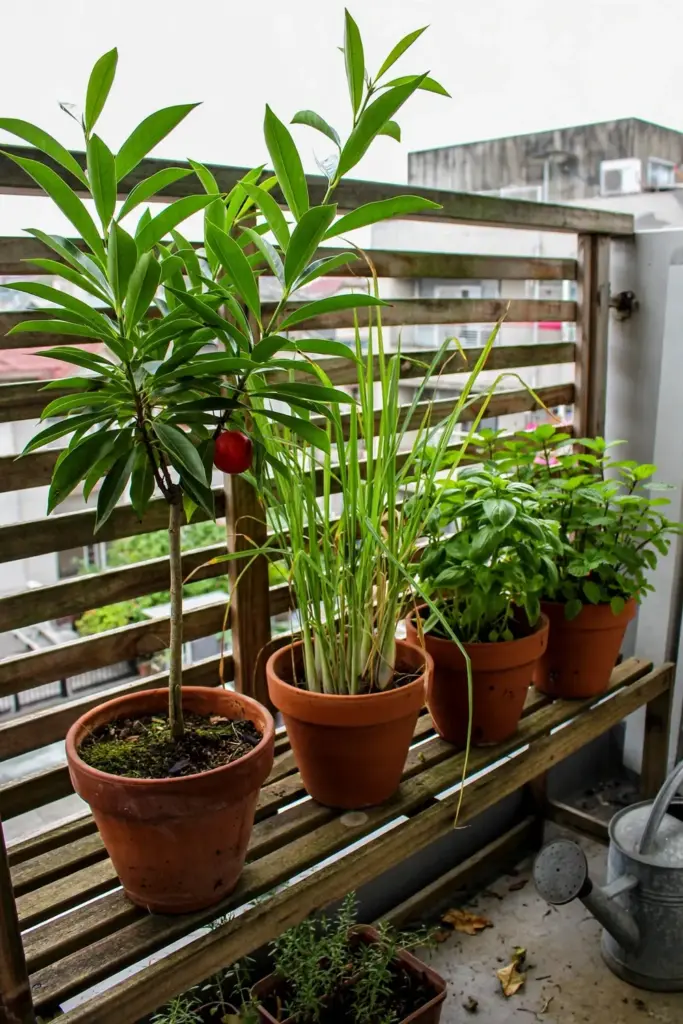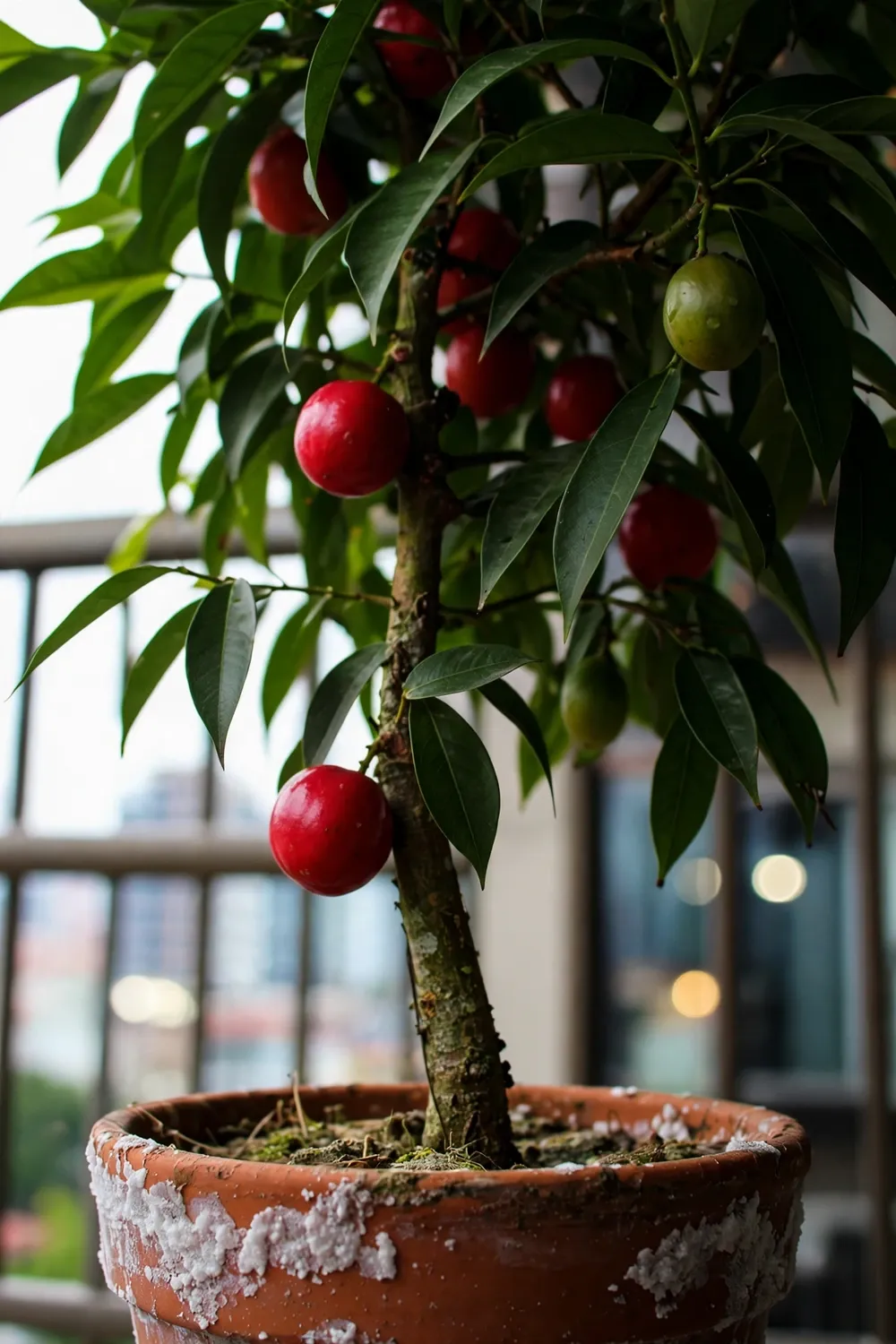

Sow fresh God’s crown seed at 25 to 28 degrees Celsius and sprouts break the surface within 10 to 14 days. That is how to grow God’s crown from Indonesia in a temperate climate: a tropical tree that spends its life in a pot, moves indoors before cold nights, and still fruits on a balcony. Expect the first flowers about 18 months after sowing, and keep one rule above every other: no part of this plant is food in its raw state.
That is Phaleria macrocarpa (Scheff.) Boerl., mahkota dewa, a dense evergreen tree of the Thymelaeaceae family from Indonesia and Papua. The rest of this page is 16 moves, from buying true-to-name seed to handling the ripe red fruit with gloves on. If you have started tomatoes or peppers from seed, you already own every skill this plant asks for. The seed starting guide covers trays, domes, and lights once more, in case your setup needs a refresh.
Work from the top if your last frost still sits weeks out. Sow while nights are cold. Move the pot out after the frost date. Bring it back in before the first autumn chill. One rule runs through all 16 moves. The seed carries the highest toxicity in the plant, and the raw fruit is never food.
| Spec | God’s Crown |
|---|---|
| Botanical name | Phaleria macrocarpa (Scheff.) Boerl., family Thymelaeaceae |
| Common names | God’s crown, mahkota dewa, pau |
| Origin | Indonesia and Papua (New Guinea) |
| Life form | dense evergreen small tree |
| Height in the ground | 1 to 18 m wild; 3 to 6 m in gardens |
| Height in a pot | about 1 m, pruned to fit |
| Outdoor range | USDA zones 9 to 10; frost sensitive |
| Sun | full sun or bright light indoors |
| Soil | draining loam with organic matter |
| Germination | 10 to 14 days at 25 to 28 degrees Celsius |
| First fruit | about 18 months from seed |
| Toxicity | all parts poisonous; seeds most toxic; never eat raw |
1. Buy Named Phaleria macrocarpa Seed or a Young Plant
Buy seed or a young plant sold under the exact binomial Phaleria macrocarpa (Scheff.) Boerl. Common names alone will mislead you, and this plant carries a name collision that has already confused buyers.
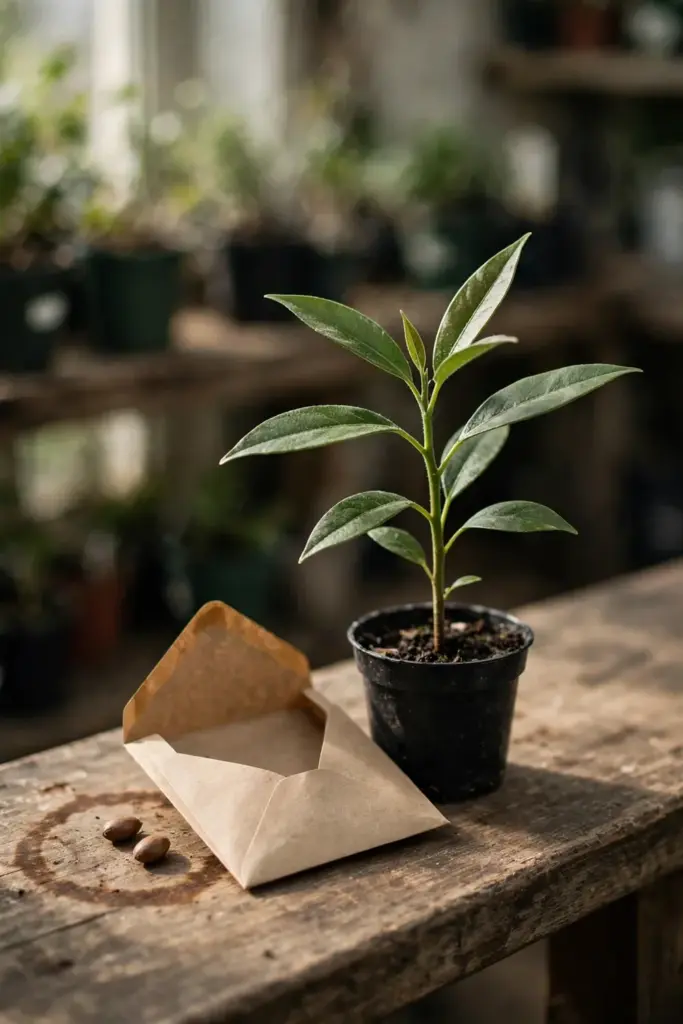
The tree grows 1 to 18 m tall in its native range, with green tapering leaves 7 to 10 cm long and 3 to 5 cm wide, flowers in clusters of 2 to 4 ranging from green to maroon, and eclipse-shaped fruit about 3 cm across, according to a 2013 review of the species in Pharmacognosy Reviews. Each fruit holds 1 to 2 brown ovoid seeds, and the round white pit inside is poisonous. The same review notes that the unprocessed form of the plant can be poisonous and toxic, which is why every handling step on this page assumes gloves and care.
Crown of thorns is a different plant entirely. Crown of thorns is Euphorbia milii, a spiny succulent shrub from Madagascar in the spurge family, with thick thorny stems and milky sap. God’s crown is a Thymelaeaceae tree from Indonesia and Papua, with smooth leaves and round red fruit. The two share only a crown in the name. Check the botanical name on the label before buying, and check it again before following any growing advice written for the other plant.
Nurseries sometimes list the older synonym Phaleria papuana on the packet. Treat that as the same plant. Seed is the cheapest way in, and a young nursery plant or a layered plant is the faster way in. Buy from a seller that prints the binomial and the packed date, not from a marketplace listing with a stock photo of a different plant. If the packet prints only a common name with no Latin name, skip it. Seed without a Latin name is a guess you pay for in lost months.
2. Sow Fresh Seed While It Still Holds Moisture
Sow God’s crown seed fresh, as soon as you get it. Dried-out seed loses viability fast, and this species punishes long storage.
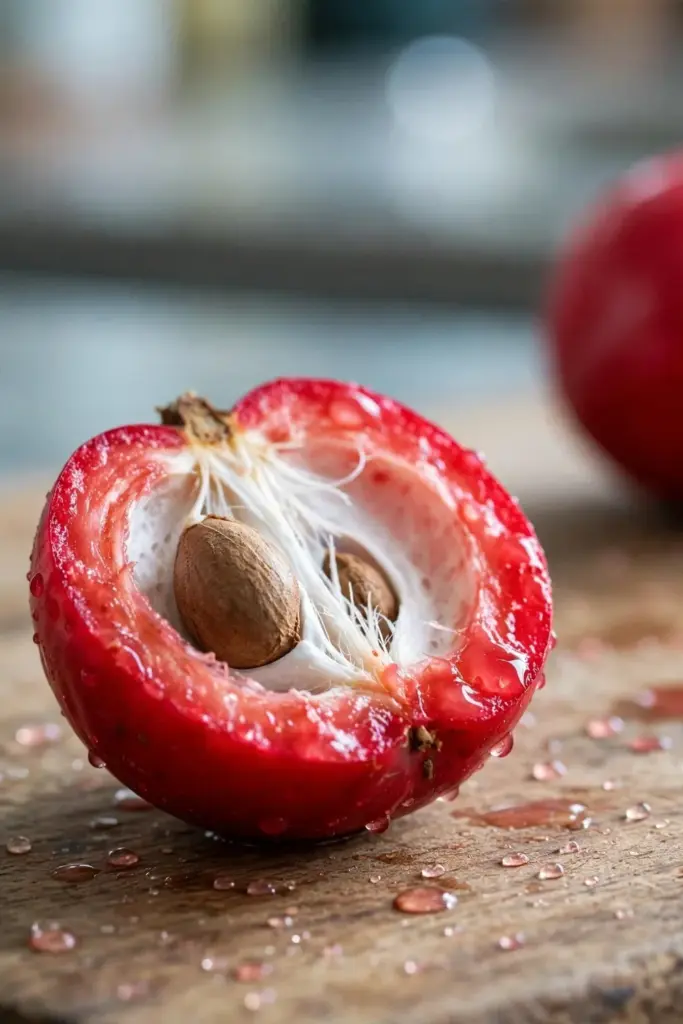
The seed germinates well if it is fresh, according to the Monaco Nature Encyclopedia entry on the species. Extract seed from a fully ripe fruit, rinse off the pulp, and sow the same week. Do not hold the seed in a dry envelope through winter and expect spring germination. If a delay is unavoidable, keep the seed in barely damp coco fiber in a sealed bag in the refrigerator for a few days at most, and sow at the first chance. A seed that rattles dry in your palm has already lost its best chance.
One fruit gives you 1 to 2 seeds, so a single fruit is a small trial, not a crop. Buy or collect several fruits if you want a row of seedlings to choose from. Sow more than you need. Thin later to the strongest plant, and give the extras away with a written toxicity warning attached.
3. Hold the Tray at 25 to 28 Degrees Celsius
Hold the seed tray at 25 to 28 degrees Celsius until sprouts appear. Warmth is the switch that starts germination in this species, and a cold windowsill in early spring will not flip it.
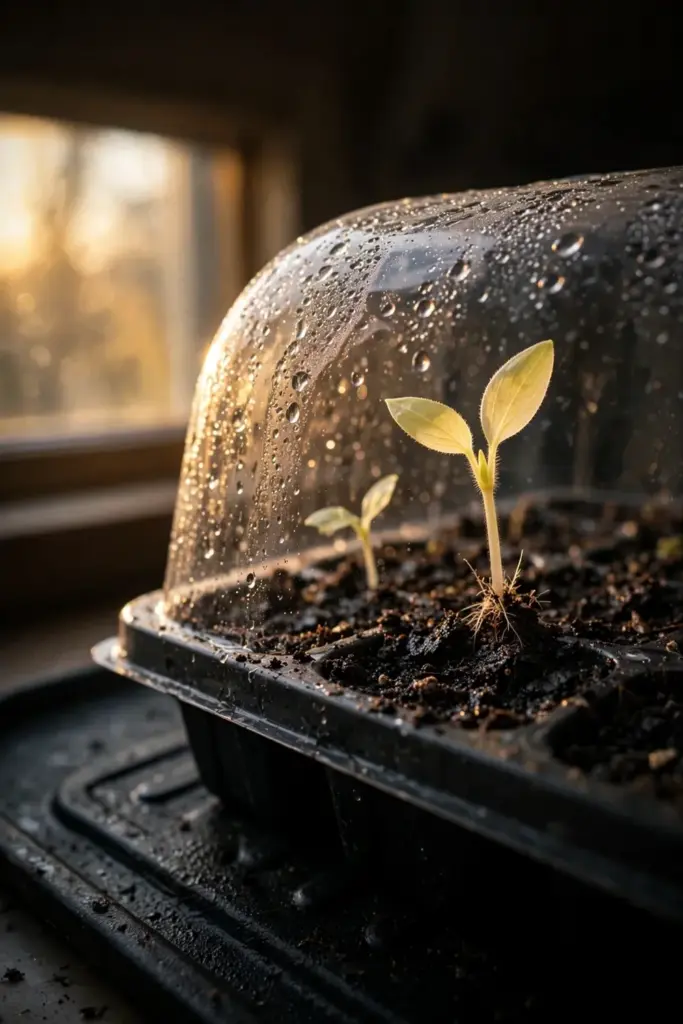
The same encyclopedia gives 25 to 28 degrees Celsius as the germination temperature, and a Malaysian grower’s container record puts sprouting at 10 to 14 days. A heat mat under the tray holds the temperature steady through cold nights. A humidity dome or a clear plastic bag over the tray holds moisture in. Set the tray where it gets bright light but no direct midday sun, and check daily for mold on the mix surface. Vent the dome for an hour each day.
Sow the seed shallow, about 1 cm deep, in moist seed mix. Cover the tray, keep the mix damp, and wait. Seedlings emerge unevenly, so do not discard the tray at day 14 if half the cells still look empty. Give the tray 3 full weeks before you call a cell dead. That timing is the first proof that how to grow God’s crown in a temperate climate starts with heat, not with the calendar. Once green shows, move the tray into bright light and drop the dome.
4. Give Seedlings Bright Light and Steady Warmth
Give God’s crown seedlings bright light and steady warmth from the day they emerge. A seedling that stretches toward a dim window never recovers its compact shape.
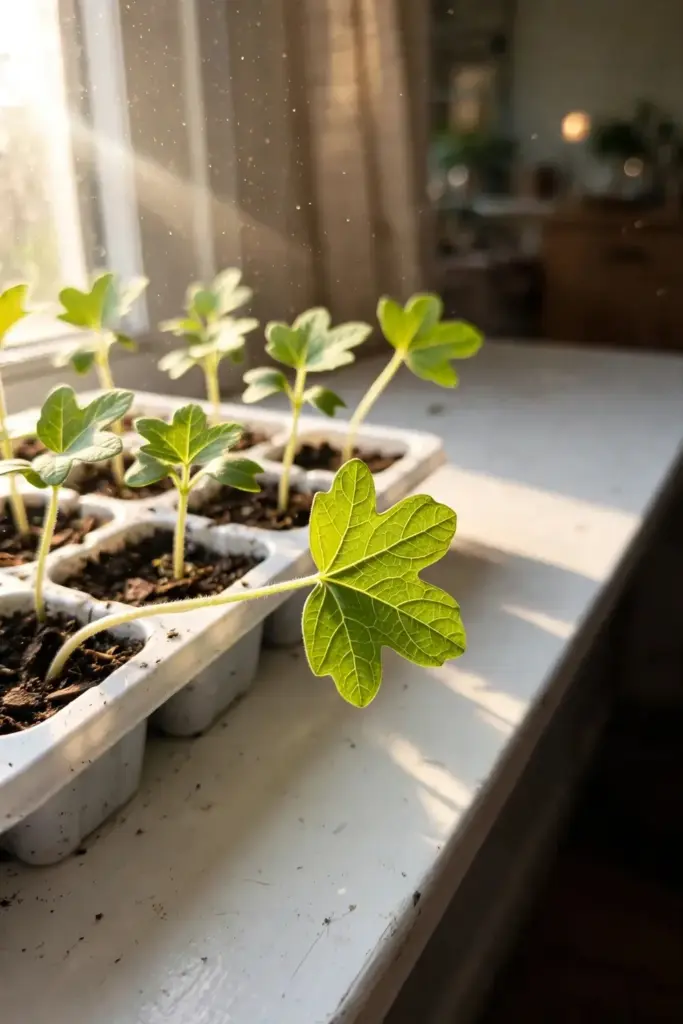
A south-facing windowsill, a balcony that catches morning sun, or a grow light on a 14-hour timer all qualify. Hang a grow light close above the tray and raise it as the seedlings grow. Light too far away is the quiet cause of most leggy indoor seedlings. Rotate the tray a quarter turn every two days so the seedlings do not lean into the glass. Keep the tray away from cold drafts and from radiators that bake one side dry.
Watch the stem between the leaves. Short, sturdy gaps mean the light is right. Long, pale gaps mean move the tray closer to the source. Seedlings stretch and pale when light falls short, and no amount of water or feed fixes a light deficit later. If the only window faces north, the grow light stops being optional.
5. Harden Off Seedlings Across 7 Days
Harden off God’s crown seedlings over 7 days before they move outside for good, because indoor leaves scorch in direct sun and wind without this transition week.
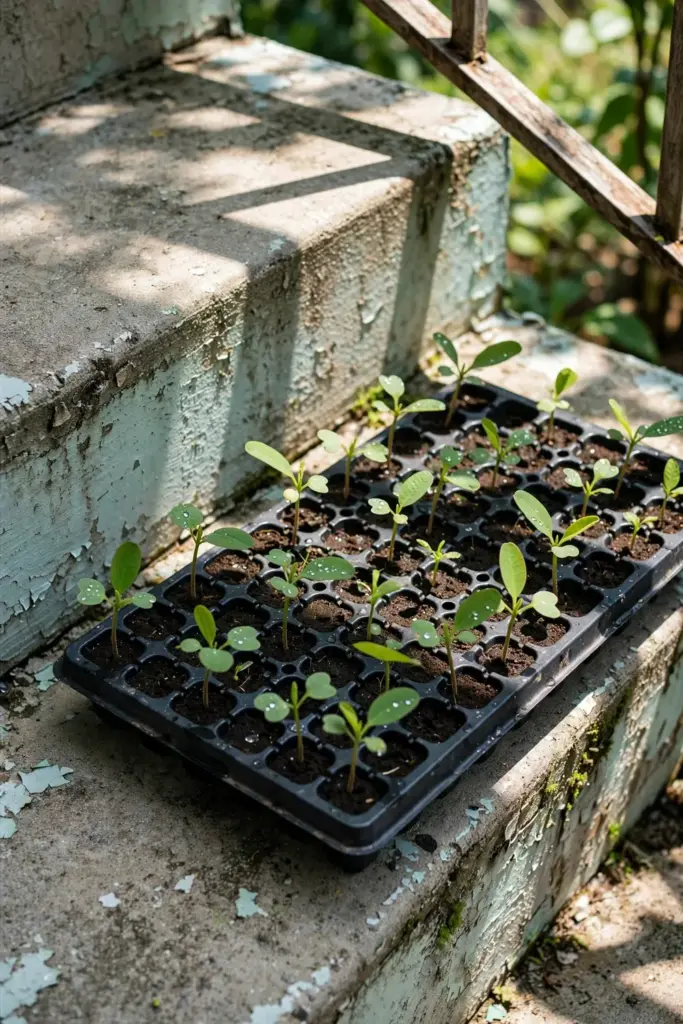
Start with 2 hours of morning shade on day one. Add an hour or two of outdoor time each day after that, and finish with a full day and night outside before transplanting. Bring the tray in if a late cold snap threatens, since seedlings this young have no frost tolerance at all. The routine is boring. It also prevents the single most common transplant death: a seedling moved straight from a windowsill to a windy balcony. On the last two days, leave the tray out overnight if the low stays above 10 degrees.
6. Pot Up Into a 30 cm Container With Drainage
Pot the seedling into a container 30.5 cm across and 45.7 cm tall, with drainage holes in the base. One grower’s container record used a polybag of that size and had a flowering, fruiting tree about 1 m tall in it.
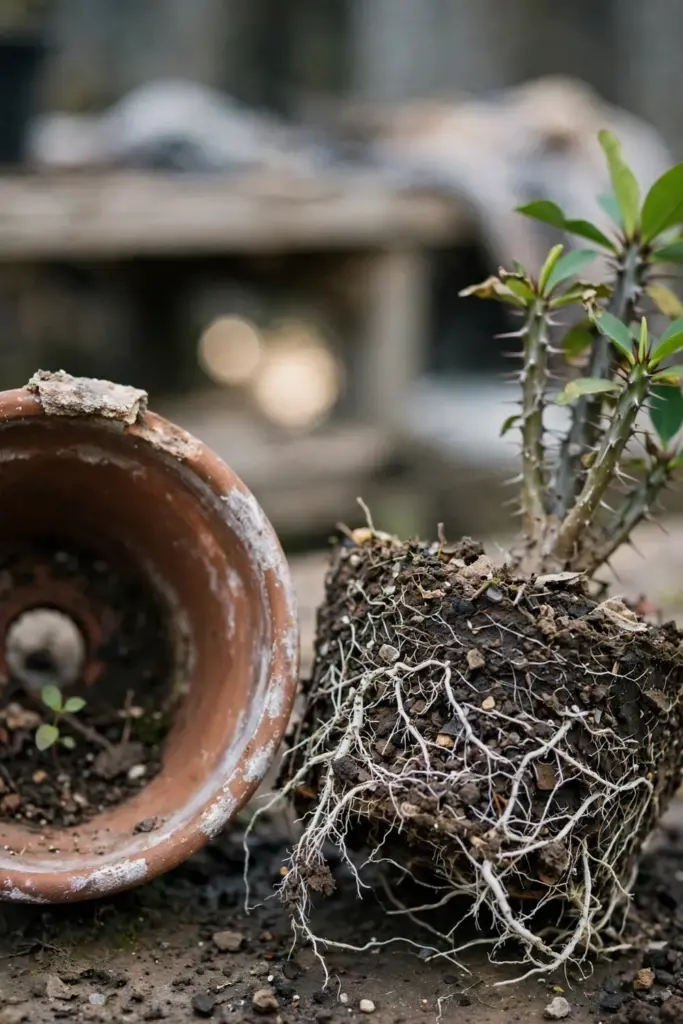
Terracotta breathes and forgives heavy-handed watering. Plastic holds moisture longer and suits hot balconies where pots dry by noon. Glazed ceramic sits between the two and looks better on a patio table, though it costs more. Either works. What does not work is a decorative pot with no hole and a layer of pebbles at the bottom pretending to be drainage. Drill the hole or pick another pot.
Set the seedling at the same depth it grew at in the tray. Burying the stem deeper invites rot at the soil line. Water the pot well after transplanting, then leave it in light shade for 3 days while the roots settle. Group the God’s crown pot with your other warm-season pots so one watering round covers them all, and give each pot its own saucer so a thirsty neighbor never steals its share.
7. Mix 3 Parts Soil to 1 Part Organic Matter
Mix 3 parts soil to 1 part organic matter, the ratio the container grower used, then add 30 percent siliceous sand or perlite to the organic loam for drainage.
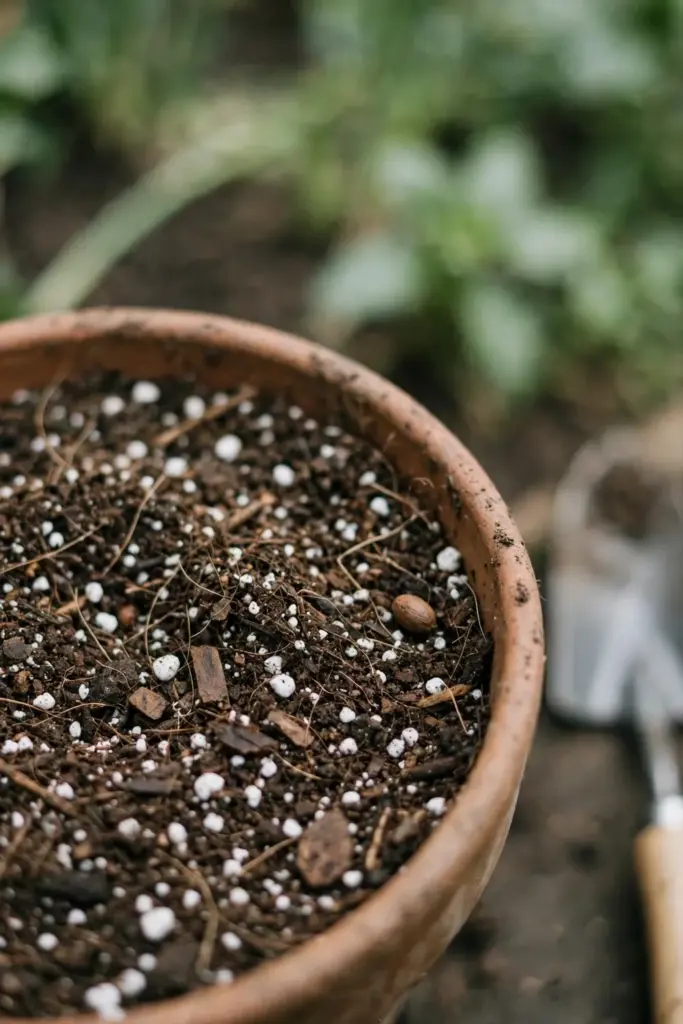
That trio holds moisture without going soggy, which matches what this tree wants. It wants damp tropical ground. A swamp drowns it. Healthy soil does half the pest and disease work before it starts, so spend the effort here rather than on rescue treatments later. Skip garden soil straight from the bed. It compacts in pots, drains badly, and carries weed seeds that outcompete a young tree.
Mix the batch in a bucket before filling the pot. Dry pockets of perlite in one corner and wet soil in another give the roots an uneven home. Water the filled pot once and let it drain before transplanting, so the mix settles and you can top it up to the right level.
8. Water Regularly and Let the Topsoil Dry Slightly
Water so the top 2 cm of mix dries slightly between waterings while the root zone stays evenly moist. God’s crown comes from wet tropical climates and resents both drought and waterlogging in equal measure.
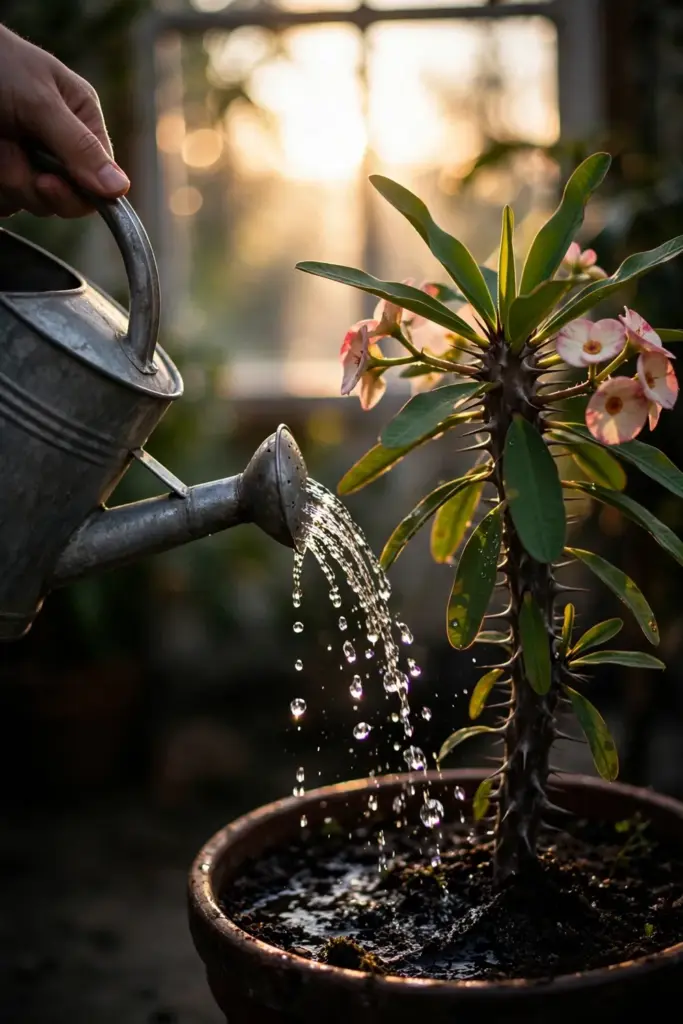
Check with a finger, not a schedule. Hot weeks may need daily watering. Cool cloudy stretches may need none for days. Water in the morning so the leaf surface dries by evening, and empty the saucer 30 minutes after watering. Roots sitting in a full saucer invite the root rot that kills more potted trees than any pest. A pot that dries out completely between waterings will drop its lower leaves, and on a young tree they do not regrow fast.
In a heatwave, shift the pot to afternoon shade. Do not double the water. The roots cannot drink faster than the soil drains. A tree that wilts by afternoon and recovers by evening is asking for a bigger pot or a shadier corner. More water in the same small pot will not fix it.
9. Feed Quarterly With a Balanced Organic Fertilizer
Feed God’s crown quarterly with a balanced organic fertilizer. The same grower fertilized quarterly with an organic mix that also carried calcium, magnesium, nitrogen, phosphorus, and potassium, and saw a clear jump in fruit set after switching from twice-yearly feeding.
Start feeding 3 weeks after transplanting, once the roots have claimed the pot. Water first, then feed onto damp mix. Fertilizer on dry mix burns root tips. Pale older leaves that yellow from the bottom up usually signal hunger. Dark green, leggy stems with wide leaf gaps usually signal too much feed, and the fix is to cut back, not add more. A top-dress of compost at transplanting covers most of what this tree will ever ask for.
Skip heavy synthetic doses. This tree fruits on modest nutrition, and a salt buildup in a pot is harder to flush than in open ground. If you already feed a mixed tropical pot on a quarterly rhythm, God’s crown fits that schedule without any special treatment.
10. Prune Lightly to Hold a 1 m Container Tree
Prune lightly to hold the tree near 1 m in its pot. Left alone, the tree outgrows a balcony fast, and a tree that outgrows its pot stops being a plant you can move indoors in autumn.
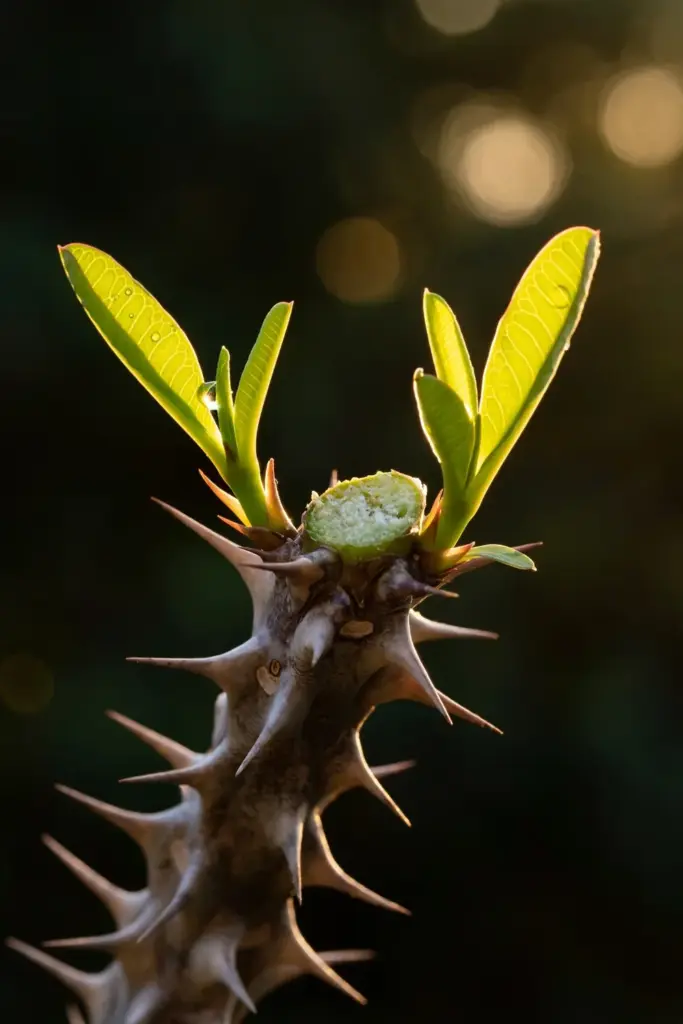
Pinch the growing tips once the young tree reaches 40 cm. Removing the top few centimeters of each main stem forces side branches, and side branches are where the flowers and fruit live. Use clean snips, and cut directly above an outward-facing leaf. The tree responds within weeks, pushing new shoots from below each cut. Skip the pinch and the tree grows one straight, lanky stem with leaves only at the top, which looks sparse in a pot and fruits less.
Cut back after fruiting, not before. Pruning in spring removes the flower buds that would have become that year’s fruit. Take out dead wood and crossing branches first, then shorten the longest stems by one third. Step back after every few cuts and look at the shape. A container tree needs an open center that light can reach, not a dense ball of leaves.
11. Move the Pot Indoors Before Nights Fall Below 16 Degrees Celsius
Move the pot indoors before night temperatures fall below 16 degrees Celsius, because this tree has zero frost tolerance. One hard freeze kills the top growth and can kill the tree outright.
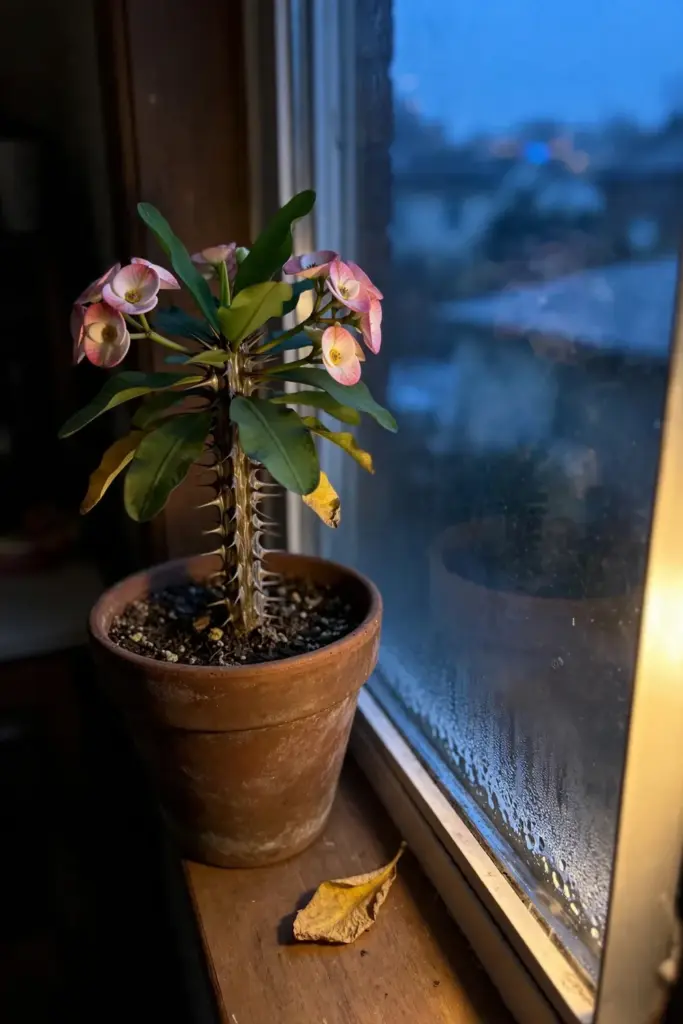
The species sits in USDA zones 9 to 10 and is frost sensitive, according to the TopTropicals plant encyclopedia. The same entry lists containers and indoor growing as suitable for this tree, and gives a mature height of 3 to 6 m in the ground. The encyclopedia’s cultivation notes put the lowest safe winter night temperature at 16 degrees Celsius, so treat that number as your move trigger, not the first frost date. Watch the 10-day forecast from early autumn. Set your move date two weeks ahead of the first expected frost.
Indoors, give the tree your brightest window and water lighter, since growth slows in short days. Expect some leaf drop in the first two weeks inside. The tree is adjusting to lower light. It is not dying. A pebble tray of water under the pot helps with dry indoor air, though the tree tolerates a normal room. Most temperate growers treat the indoor months as a holding pattern. The tree rests, you wait, and the season resumes in spring.
12. Give the Indoor Tree Bright Light Through Winter
Give the indoor tree bright light through winter, or it spends the cold months shedding leaves it cannot afford to lose. The nursery entry lists full sun or bright light indoors as the sun requirement, and a south-facing window is the minimum that satisfies it in winter.
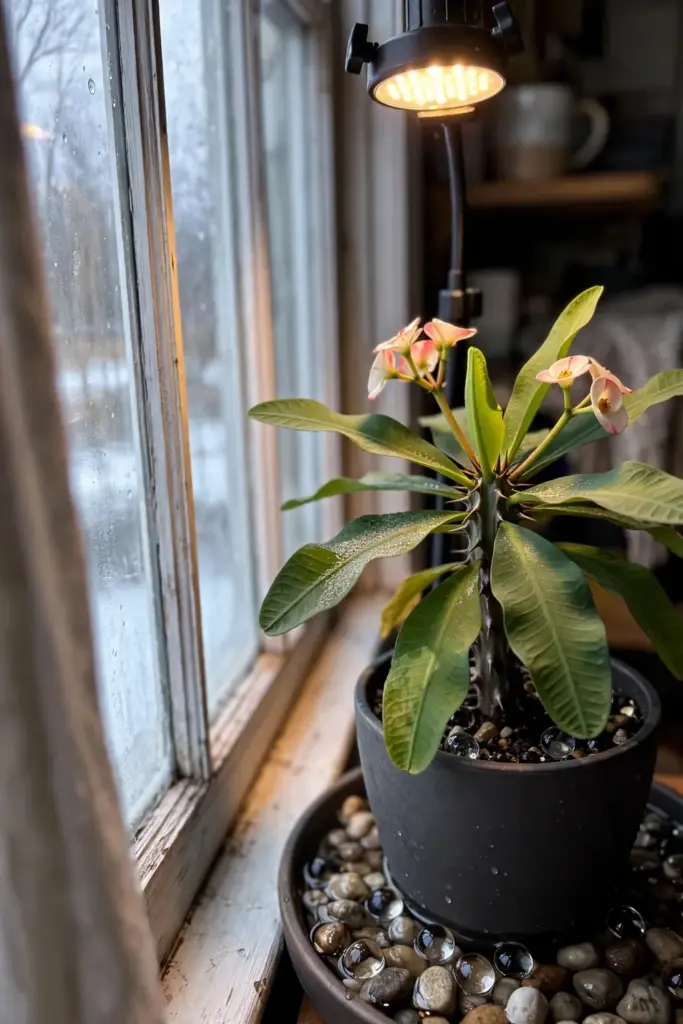
A grow light on a 12-hour timer beats a dim north window. Keep the tree away from heating vents, which dry the leaves faster than the roots can replace the water. Keep it away from cold glass, which chills the leaves on clear nights. Your God’s crown pot joins the indoor shelf beside lemongrass, another Indonesian tropical that winters in a pot and moves out after the frost date. Water only when the top 2 cm of mix feels dry. Do not feed in winter. Feeding a resting tree pushes soft growth that pests love and that the low light cannot support.
Check the tree weekly through winter. Wipe dusty leaves with a damp cloth so they can catch what light there is. If the tree drops a third of its leaves by January, it is usually asking for more light, not more water. Move it closer to the window or switch the grow light on.
13. Inspect Leaf Undersides Weekly for Sap Feeders
Inspect the undersides of the leaves once a week for sap feeders. The routine below covers the usual indoor-tropical suspects. No documented enemy list exists for this species.
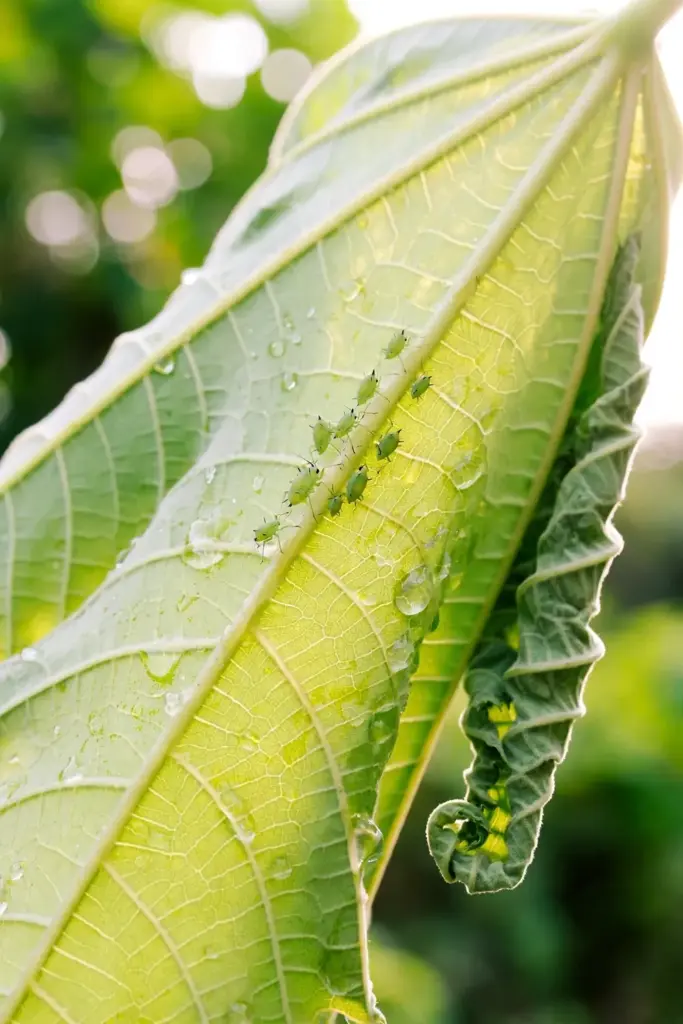
Aphids, mealybugs, spider mites, and scale all colonize stressed indoor trees, and all four cluster where you do not look. A strong jet of water dislodges aphids. A cotton swab dipped in rubbing alcohol lifts mealybugs one by one. Insecticidal soap handles all four when numbers climb. Isolate a badly infested tree from your other pots for 2 weeks so the pests do not walk across to the neighbors.
Prevention here is mostly airflow and light. Give each pot elbow room. Do not pack the windowsill tight. Wipe the leaves monthly. Never spray anything on a tree you plan to handle for fruit within the week. A weekly inspection also catches the early leaf spots and powdery patches before they spread, and removing one sick leaf beats treating ten.
14. Keep Every Fruit Away From Children and Pets
Keep every fruit away from children and pets, from the first green fruit to the last red one. The round red fruit looks like a cherry, and that resemblance is the danger.
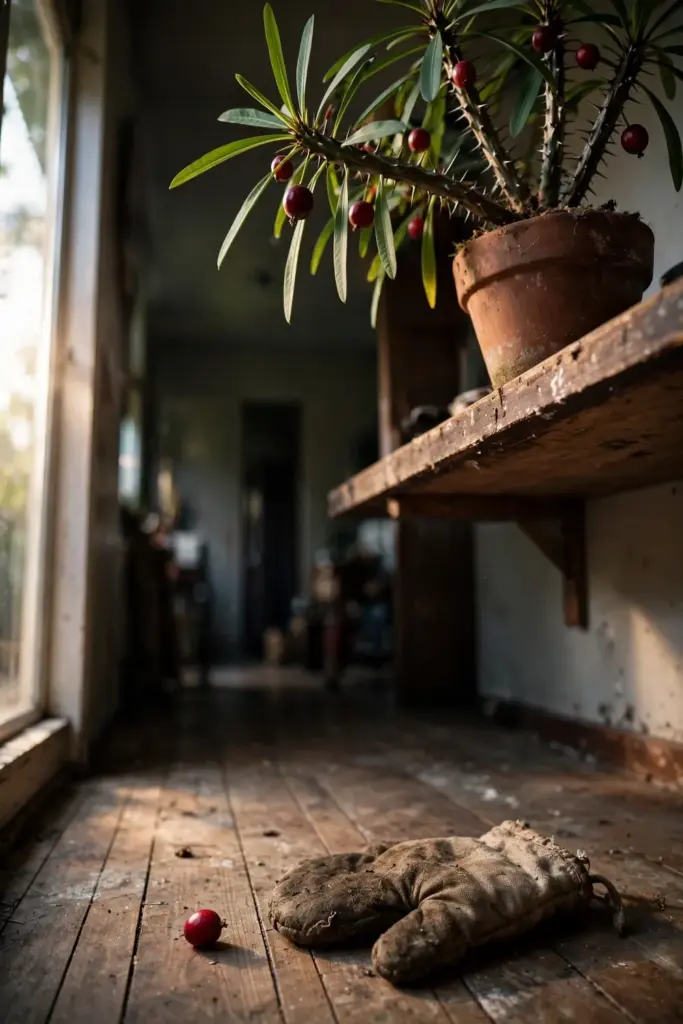
Direct consumption of the plant can cause swelling, mouth sores, tongue numbness, stiffness, fever, and even fainting, according to a toxicity study published in the journal Biodiversitas. The same study’s introduction records those symptoms as the known result of eating the plant directly. The seed carries the highest toxicity in the plant. Wear gloves whenever you handle fruit or seed. Wash your hands, your snips, and your work surface after. Keep the pot where small children and pets cannot reach the fruit, and pick up fallen fruit the day it drops. Do not leave fruit on a table, a bench, or a compost pile where a child or a dog can find it.
If anyone eats any part of this plant, call your local poison control center right away. Do not wait for symptoms, and do not try to treat it at home. Bring a fruit or a photo of the plant so the responders can identify it. Give them the botanical name, Phaleria macrocarpa. Common names confuse. The Latin name does not.
15. Harvest Ripe Red Fruit for Processing, Never for Eating Raw
Harvest fruit when it turns fully dark red, and handle it as processing material, never as food. I have learned to treat every red fruit as handling material, never as food, because the seed inside carries the highest toxicity in the plant.
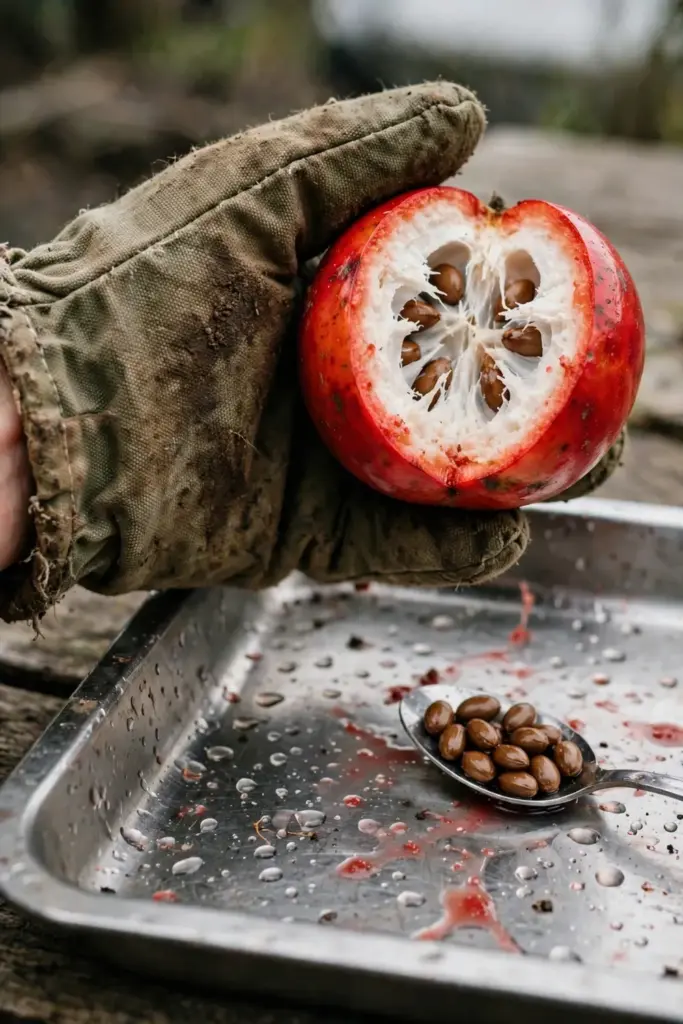
The grower’s record describes the ripe fruit as dark red, with a slightly waxy outer skin and white fibrous flesh inside. Traditional practice slices the fruit and dries it before any further use, and the review of the species confirms that traditional use relies on the processed form, not the raw one. Pick with gloves on. Cut the fruit open over a tray, lift the seeds out with a spoon, and bag the seeds for the trash. Keep them out of the compost. Rinse the knife, the board, and your gloves before they touch anything else in the kitchen. Do not taste the flesh, the juice, or the seed. Do not let children help with this step.
Dry the sliced fruit in a single layer on a rack in a shaded, airy spot, turning the pieces once a day until they feel crisp. Store the dried pieces in a labeled jar, out of reach, with the botanical name and the word toxic on the label. This article gives no recipe and no dose. Drying is a handling and storage step, not a recommendation to consume.
16. Read the Safety Facts Before Any Traditional Use
Read the safety facts before brewing, dosing, or recommending God’s crown for any health purpose. The traditional-use reputation is real, but the clinical evidence is thin. This page is a gardening guide. It is not a prescription.
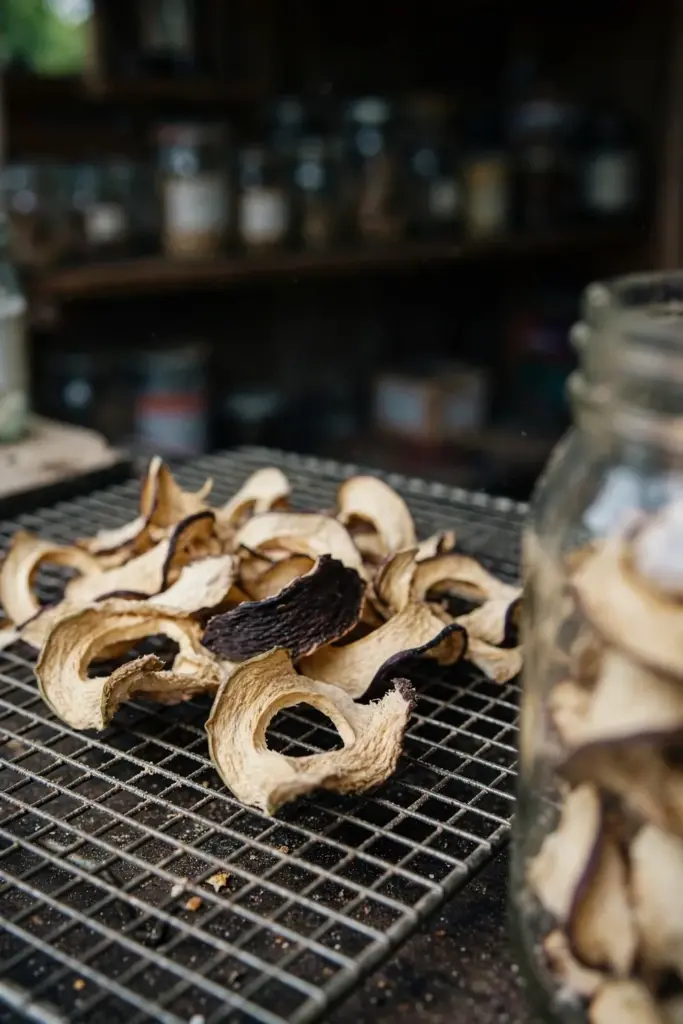
The same review lists extracts of the plant as studied for anti-tumor, anti-hyperglycemic, anti-inflammatory, anti-bacterial, anti-fungal, anti-oxidant, and vasorelaxant effects, mostly in laboratory and animal work. Those are research findings. They are not proven therapies, and the extracts in those studies are not standardized. No major medical guideline recommends this plant as standard treatment for any condition. There is no established safe dose. Anyone considering traditional use needs professional medical guidance.
Grow the tree with confidence. Dose the plant only with professional guidance. If a seller or a video promises a cure, a dose, or a guaranteed result from this fruit, walk away. The honest version is shorter. This is an ornamental tree with a toxic fruit and a long traditional history, and the history is background, not a prescription.
Frequently Asked Questions
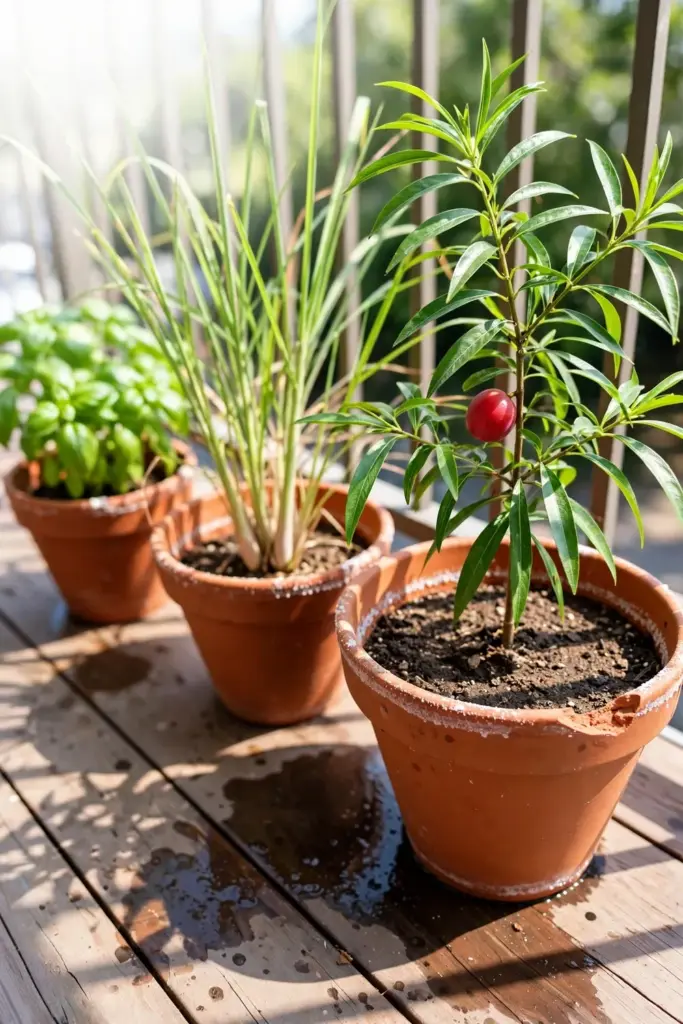
No. God’s crown is Phaleria macrocarpa, a Thymelaeaceae tree from Indonesia and Papua, with smooth tapering leaves and round red fruit. Crown of thorns is Euphorbia milii, a spiny succulent shrub from Madagascar in the spurge family, with thorny stems and milky sap. The two share only a crown in the name. Check the botanical name before buying or following any growing advice.
No. All parts of the plant are poisonous, and the seed carries the highest toxicity. Raw fruit can cause swelling, mouth sores, tongue numbness, stiffness, fever, and fainting. Traditional practice processes and dries the fruit before any further use. Grow this tree as an ornamental and handling project. It is not table fruit, and keep every fruit away from children and pets.
About 18 months from seed for the first flowers and fruit, per one grower’s container record. A second account from the same grower reports fruiting in about 1 year. Temperate pots run slower than tropical ground, so treat 12 to 18 months as the honest band. Pruning, quarterly feeding, and a warm bright summer shorten the wait. Cold, dim winters lengthen it.
No. The species sits in USDA zones 9 to 10 and is frost sensitive. One hard freeze kills top growth and can kill the tree outright. Move the pot indoors before nights fall below 16 degrees Celsius. Indoors, bright light and lighter watering carry it through winter. Treat the frost date as a hard deadline, not a suggestion, and set your move date two weeks early.
About 1 m in a container with light pruning, and it still flowers and fruits at that size. In the ground in zones 9 to 10 it reaches 3 to 6 m. Wild trees reach 1 to 18 m. The pot, not the plant, sets the size in a temperate garden. Repot only when roots circle the pot, and step up one size at a time.
Only with strict placement. The fruit looks like a cherry and attracts curious hands and mouths. Keep the pot out of reach, pick up fallen fruit at once, and wear gloves when handling fruit or seeds. If anyone eats any part, call your local poison control center right away. Bring a fruit or a photo so responders can identify the plant.
Where to Go From Here
God’s crown earns its pot the way lemongrass does: a tropical plant that asks for one warm season, a sunny corner, and a frost deadline on the calendar. Mastering how to grow God’s crown in a pot is mostly calendar discipline: sow fresh seed, hold the tray warm, feed quarterly, move the pot indoors before nights fall below 16 degrees Celsius, and wear gloves at harvest. The routine above is the entire cold-climate strategy for anyone growing below zone 9. The how-to-grow-herbs archive holds the sibling guides for the rest of the warm-season herb shelf, so your God’s crown never sits alone on the balcony.