
Hibiscus rust shows up as tiny orange-brown pustules on the underside of rose-of-Sharon leaves, and it can strip the shrub early. The pustules rupture, release spores, and the leaf drops. The 5 strategies below tell you how to read the pustules, why you cannot tell which rust you have without a microscope, and how to keep the shrub healthy through the season.
Hibiscus rust is a fungal rust disease of rose-of-Sharon (Hibiscus syriacus) and its mallow relatives. The pathogen named in the Clemson index and the Florida authority circular is Kuehneola malvicola, with the newer placement Cerotelium malvicola noted once. One fungus, two placements, one disease. This article uses Kuehneola malvicola throughout.
One honesty note up front: you cannot tell which rust your hibiscus has in the field. A second rust, Puccinia malvacearum, also infects hibiscus and hollyhock and causes the same orange-pustule syndrome. Distinctions among these rusts are possible only by microscopic examination of the spores. The field ID is presumptive. The microscope settles it. The management is the same either way.
What Hibiscus Rust Actually Is
Hibiscus rust is a rust fungus of the mallow family. Kuehneola malvicola frequently infects three mallow genera: Alcea (hollyhock), Hibiscus, and Malvaviscus. The rust is autoecious, meaning it completes its entire life cycle on a single host species, while many other rusts require two host species to complete the life cycle. This rust needs one.
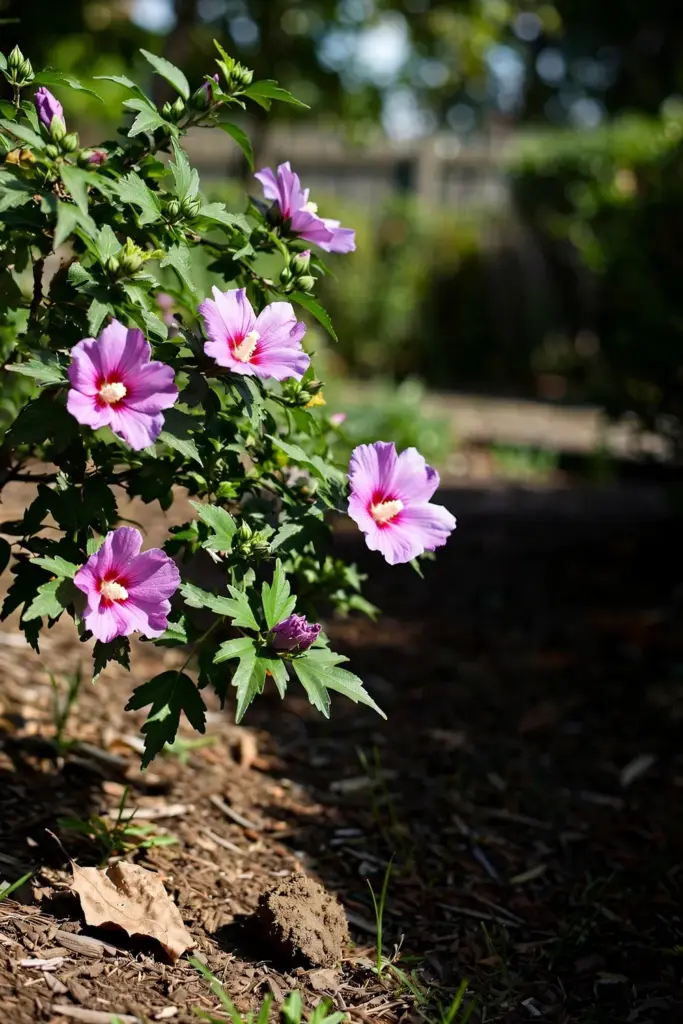
The rust is common throughout the Gulf States, and it has also been reported in Central America, the West Indies, and South America. The documented home host is hardy rose-of-Sharon (Hibiscus syriacus) in the Gulf States. This article does not present hibiscus rust as a tropical-hibiscus (Hibiscus rosa-sinensis) disease. Zero evidence was found for that host.
The literature is thin. The Florida authority circular notes a paucity of literature on Kuehneola malvicola, with most references listing occurrences of the disease with no mention of pathogenicity or conditions required for disease development. This article says plainly what is known and does not invent what is not.
How to Identify Hibiscus Rust on Your Rose-of-Sharon
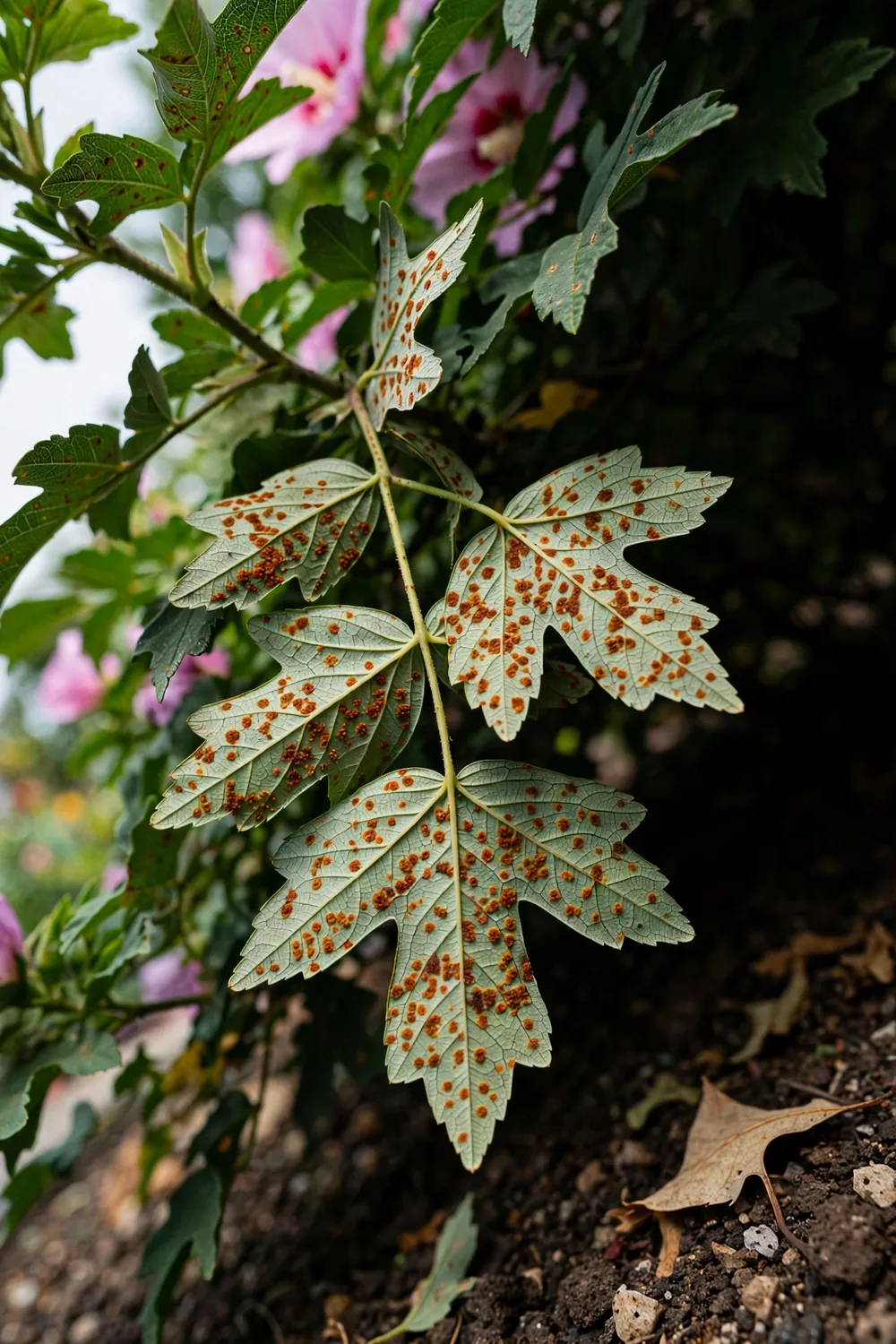
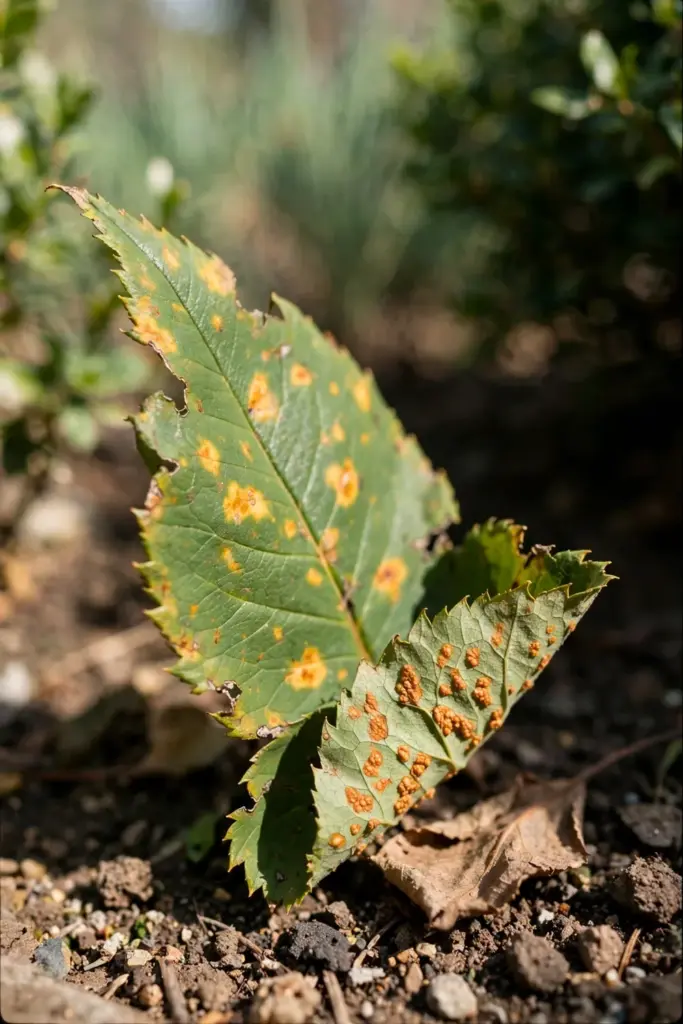
Check the leaf underside first. Small (1 mm) orange-brown pustules develop on the leaf undersurface. The pustules eventually rupture, releasing spores known as uredospores. The underside is where the rust lives. The top side shows the shadow.
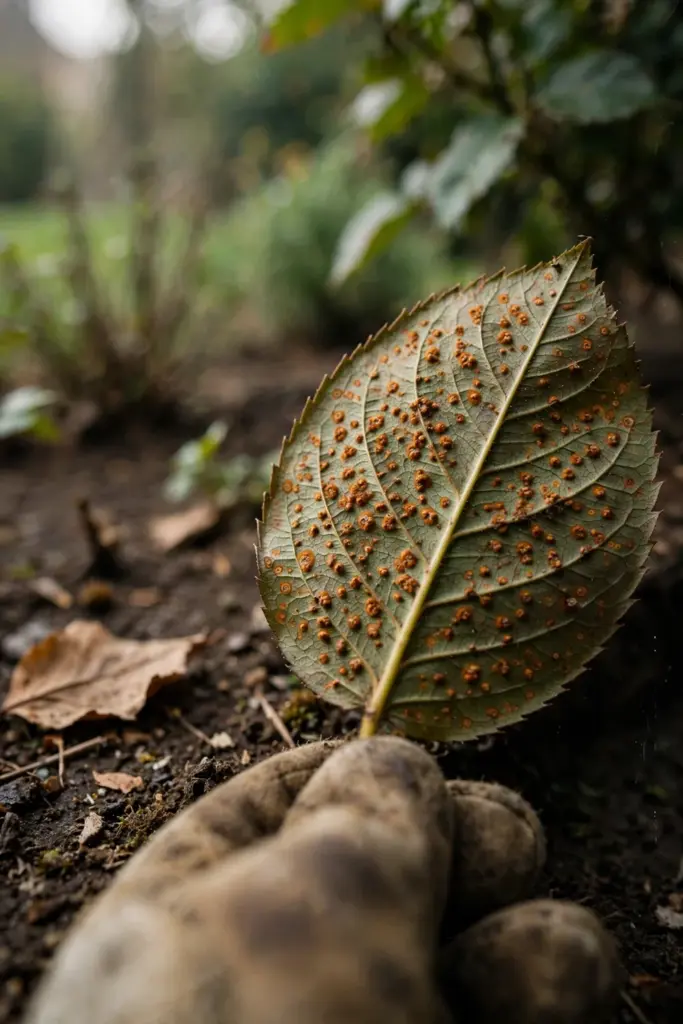
Check the leaf top second. Corresponding areas on the upper leaf surface appear as slightly larger yellow-orange spots, and they do not develop pustules, so the top spot is the shadow, the underside pustule is the rust, and the pair is the diagnosis.
Watch for early defoliation. Premature defoliation may occur, resulting in weakened plants. The rusted leaf drops early. The defoliated shrub weakens. The leaf drop is the damage.
Watch for the black hyperparasite. In Florida, uredial pustules are often nearly completely occupied or overrun by the black, pycnidial rust hyperparasite Sphaerellopsis filum, so black pustules on a rusted leaf are often the hyperparasite, not a second disease. The black is the parasite on the rust. The rust is the host.
Check the whole shrub. Rust starts on scattered leaves and spreads across the canopy. A shrub with a few pustuled leaves is an early case. A shrub dropping leaves across the canopy is a heavy case. The canopy is the gauge.
Why You Cannot Tell Which Rust You Have
Two rusts cause the same syndrome. Kuehneola malvicola and Puccinia malvacearum both infect hibiscus and hollyhock, and both cause the same orange-pustule syndrome. Home-garden sources disagree on which rust a hibiscus has, because the field distinction does not exist. The disagreement is the proof.
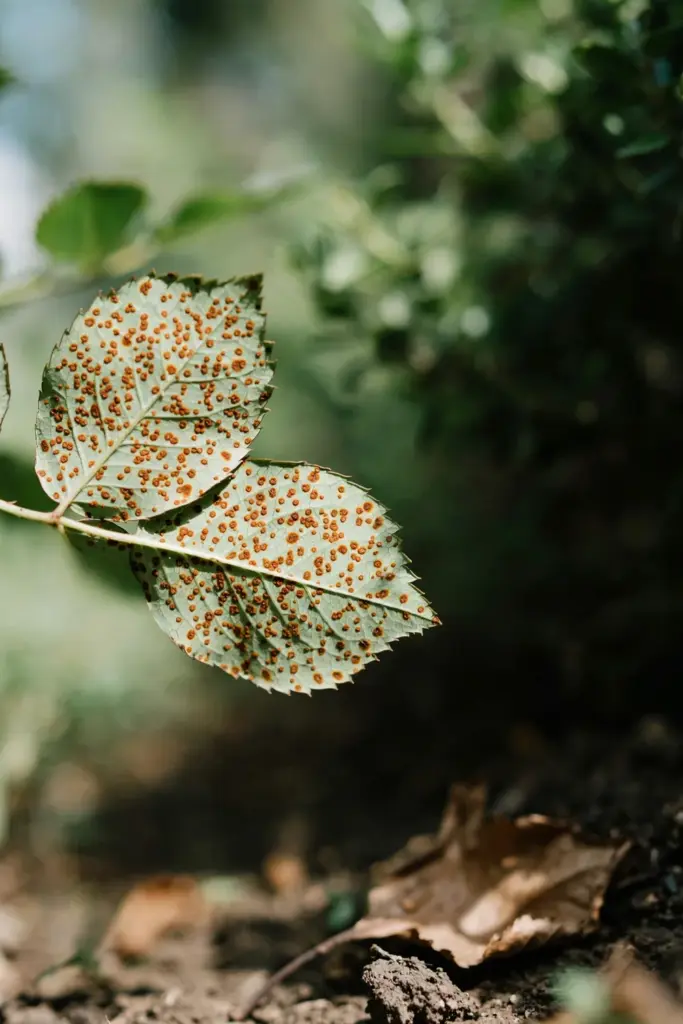
Microscopy is the only separation. Distinctions among these rusts are possible only by microscopic examination of the spores. A home gardener cannot tell Kuehneola malvicola rust from Puccinia malvacearum rust in the field. The field ID is presumptive. The microscope settles it.
Do not trust blog attributions. Some home blogs attribute hibiscus rust to Puccinia species or to Puccinia heterospora. Puccinia heterospora is abutilon rust, not a rose-of-Sharon rust. The Clemson index and the Florida authority name Kuehneola malvicola as the hibiscus-rust pathogen. The blog attribution is the trap.
Management converges. Both rusts take the same home management: remove and destroy infected leaves, sanitation, airflow, water at the base, fall cleanup, and protective fungicide last resort. The microscopy matters for the record, not for the response. The response is the same.
Strategy 1: Confirm the Pustules on the Leaf Underside
Check the underside. Small orange-brown pustules on the leaf undersurface are the rust mark. The top-side yellow-orange spot without a pustule is the shadow. The underside pustule is the diagnosis.
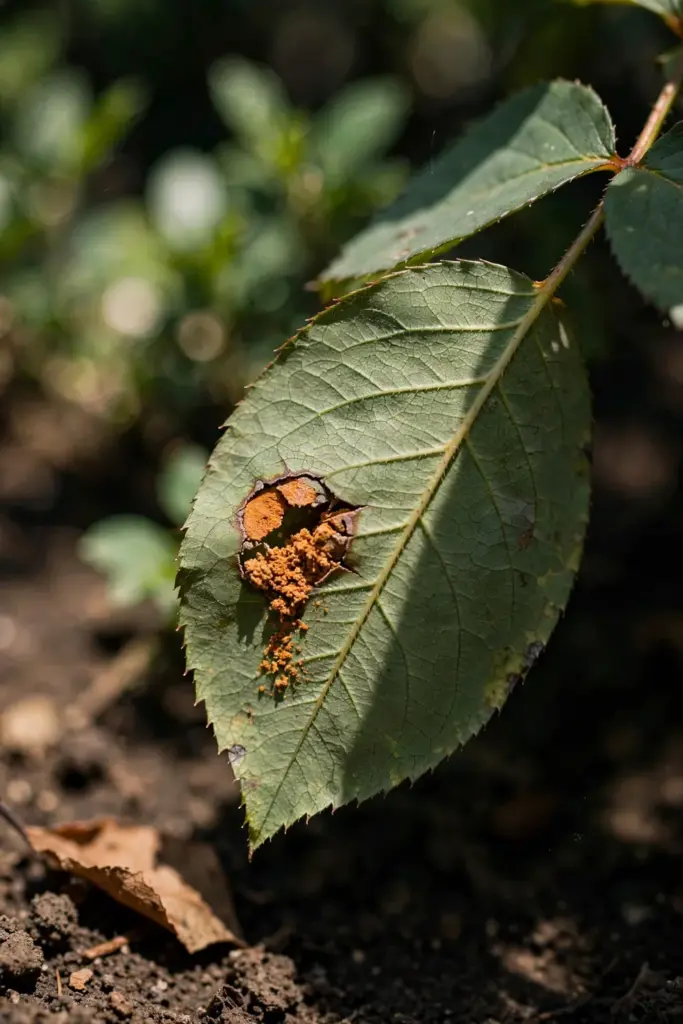
Check for rupture. The pustules eventually rupture, releasing uredospores, so a ruptured pustule is an active spore source, the intact pustule is the early stage, and the rupture is the spread.
Do not confuse rust with leaf spot. Leaf spot shows spots without pustules. Rust shows pustules on the underside. The pustule is the separator. The flat spot is the spot.
Strategy 2: Remove and Destroy Infected Leaves
Pull infected leaves off the shrub. Remove and destroy infected material. The removed leaf is the removed inoculum. The leaf on the shrub is the spore factory. The removal is the cut.
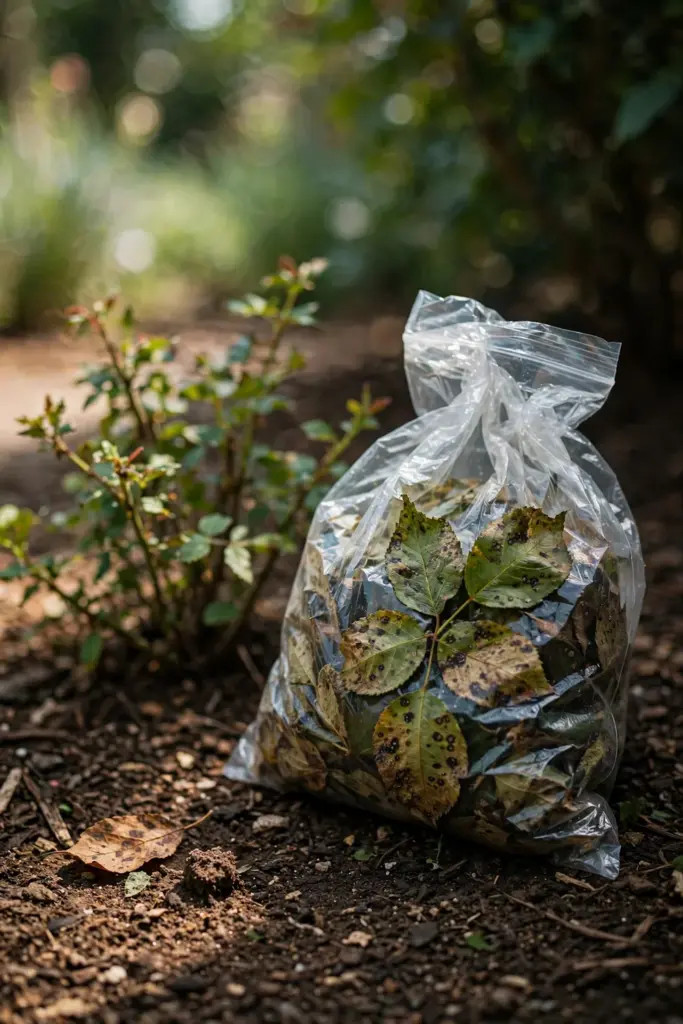
Do not compost infected leaves. Compost spreads the spores, the compost pile is a distribution route, the composted leaf is the next infection, and the trash is the disposal.
Do not work the shrub when wet. Wet work spreads spores on gloves and tools. The wet glove is the vector. The dry work is the safe work.
Strategy 3: Water at the Base and Open the Canopy
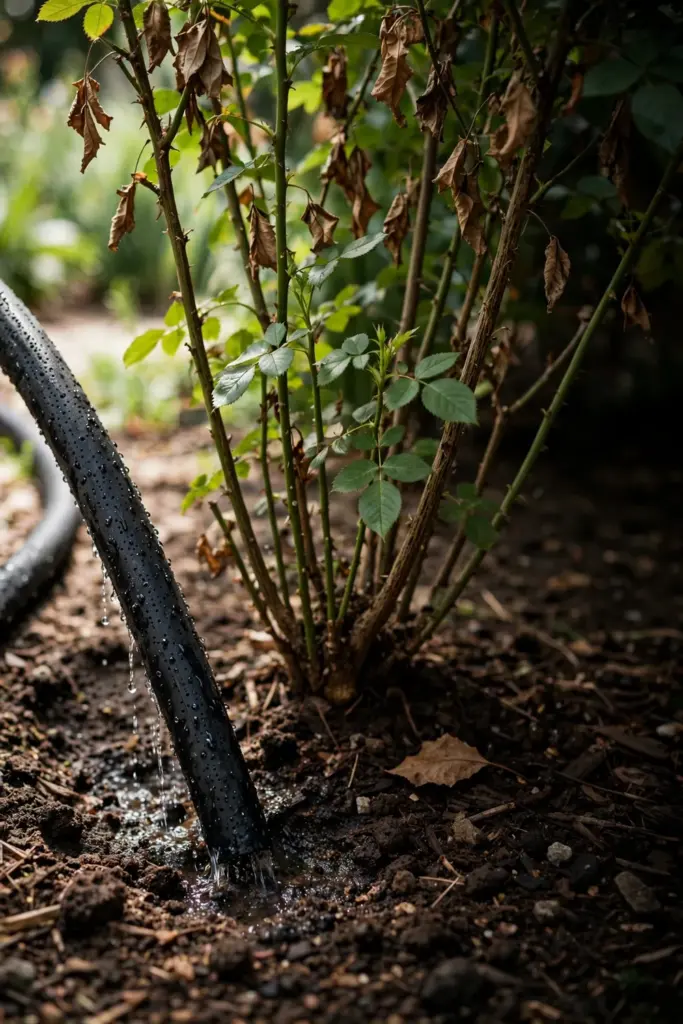
Water at the base. Water at the base, not overhead. Overhead water wets the leaves and spreads spores. The soaker is the safe water. The sprinkler is the spreader.
Improve air circulation. Improve air circulation around the shrub. A crowded shrub holds humidity and stays wet. The aired shrub dries faster. The spacing is the airflow.
Prune to open the canopy. Prune to open the canopy and let air through. The open canopy dries faster. The dense canopy stays wet. The pruning is the airflow.
Strategy 4: Do the Fall Cleanup
Remove fallen leaves in fall. Fallen leaves carry the rust into next season, so the uncleaned bed is the spring inoculum, the cleaned bed is the clean bed, and the fall cleanup is the break.
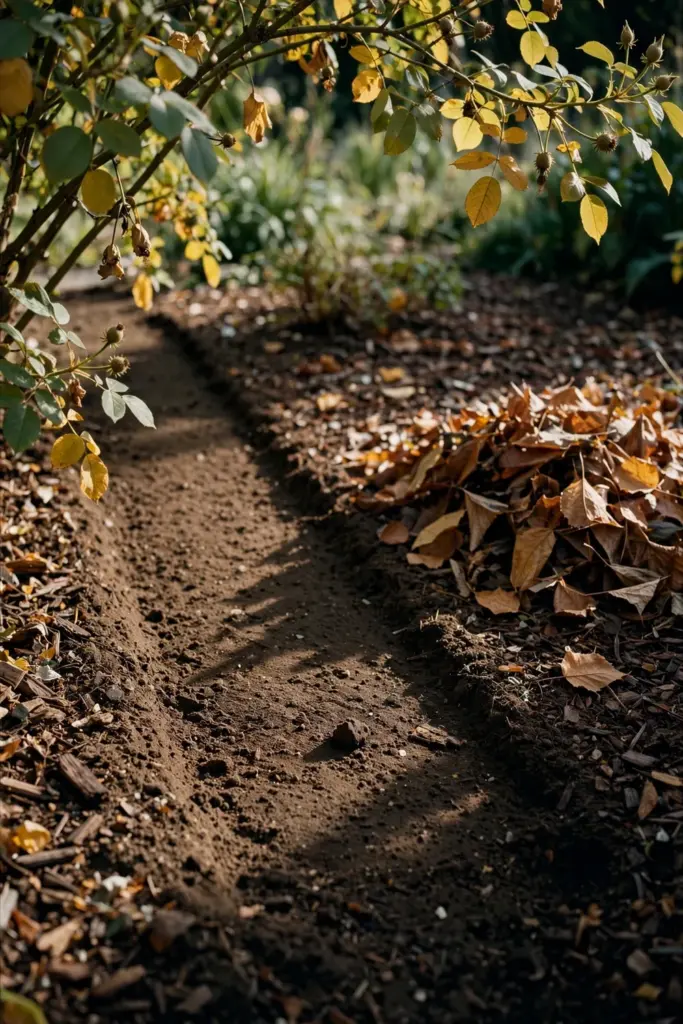
Destroy the fallen material. Bag and trash the fallen leaves. Do not compost them. The bag is the disposal route. The landfill is the containment.
Clean up around the shrub. Clean up leaf litter around the shrub, not just under it. The litter is the reservoir. The clean ground is the safe ground.
Strategy 5: Use Protective Fungicide Last, Never as a Cure
Know that fungicide is preventive-only. A protective fungicide shields healthy leaves, it does not cure rusted leaves, the spray is the shield, never the cure, and the cultural steps lead.
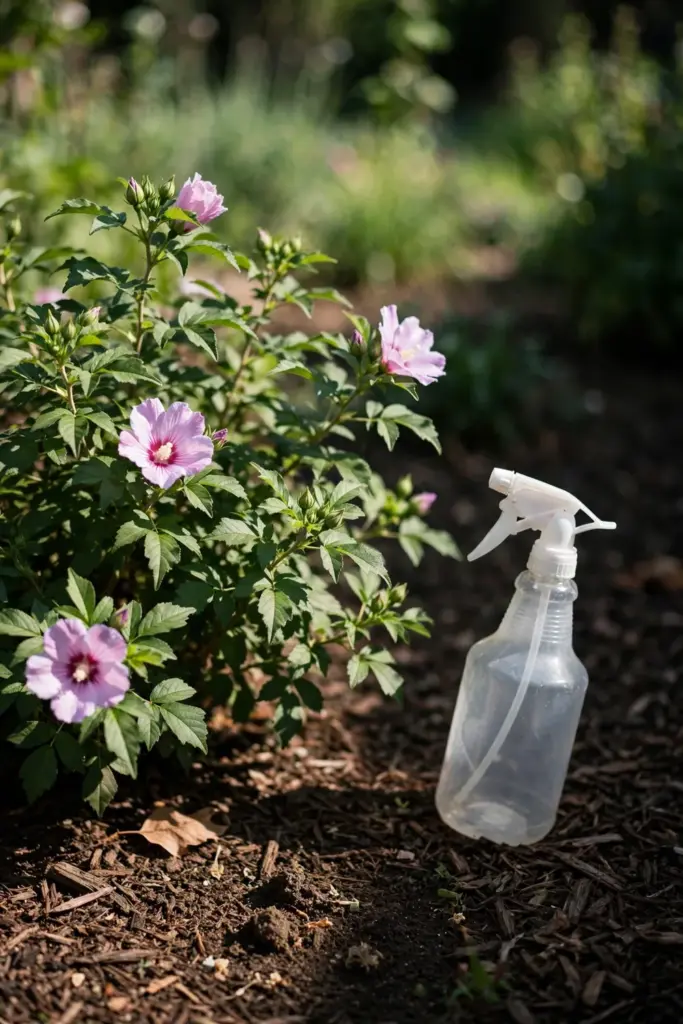
Use copper-based fungicide where you spray. Copper-based fungicide is the standard home protective option for rust. The label governs. The rate is the label rate. The label is the law.
Mind the sulfur heat caveat. Sulfur above 85 degrees Fahrenheit can damage the plant, per a home-blog report that this article carries as reported, not verified. Do not spray sulfur in heat. The heat is the damage. The cool morning is the spray time.
Do not use neem on hibiscus flowers. Neem-oil products must not be used on sensitive plants including hibiscus flowers, per the LSU AgCenter home-landscape guidance. Do not spray neem on open hibiscus blooms. The bloom is the sensitive part. The neem is the risk.
Living With Hibiscus Rust on Shrubs You Already Own
A rose-of-Sharon with hibiscus rust is a shrub to manage, not a shrub to abandon. Pull infected leaves. Water at the base. Open the canopy. Do the fall cleanup. Spray last, preventive only. The rust will still appear, but it will appear as a few pustuled leaves, not as a defoliated shrub.
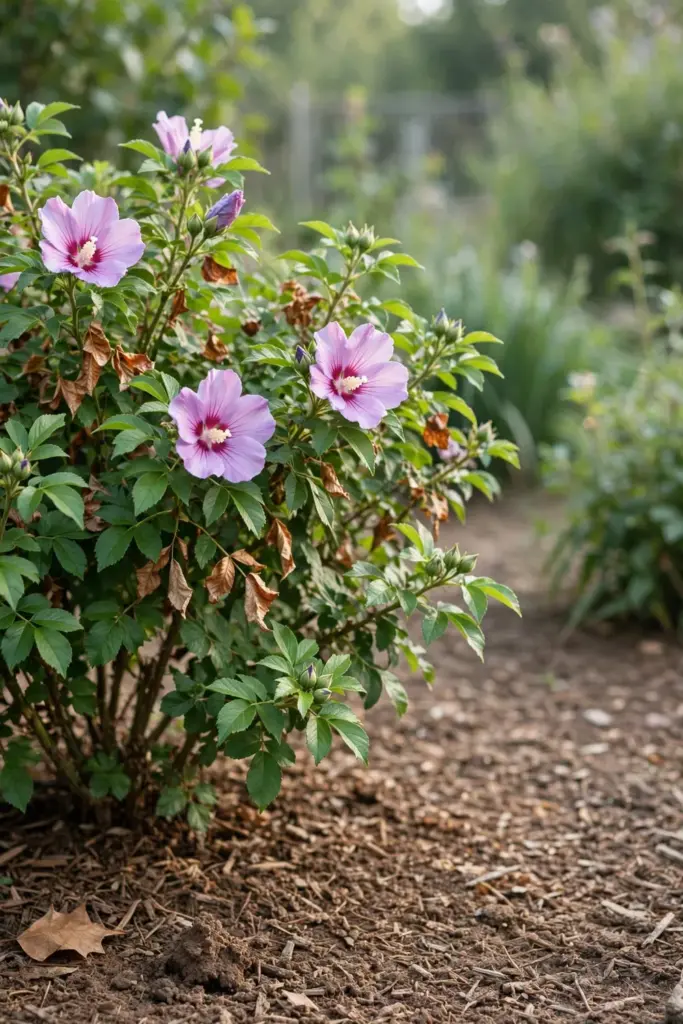
Stop three habits. Do not leave infected leaves on the shrub. Do not water overhead. Do not skip the fall cleanup. Keep those three lines unbroken and the rust stays cosmetic. The Plant Care archive collects the site’s disease coverage for the next problem the garden throws up.
Frequently Asked Questions
Not in the field. Kuehneola malvicola and Puccinia malvacearum both infect hibiscus and cause the same orange-pustule syndrome. Distinctions among these rusts are possible only by microscopic examination of the spores. A lab settles it. The management is the same either way. The field ID is presumptive. The microscope is the settlement.
Rarely outright. Premature defoliation may occur, resulting in weakened plants. A shrub that drops leaves early is weakened, not dead. A shrub that defoliates year after year loses vigor. The rust is the weakening disease. The death is the rare severe end, not the norm.
Usually no. Sanitation, water management, and fall cleanup lead. A protective fungicide shields healthy leaves and never cures rusted leaves. Copper-based fungicide is the standard home protective option, and the label governs. Mind the sulfur heat caveat, and do not use neem on hibiscus flowers. The spray is the backup. The culture is the program.
No evidence was found for tropical hibiscus (Hibiscus rosa-sinensis) as a host. The documented home host is hardy rose-of-Sharon (Hibiscus syriacus) in the Gulf States. This article does not present hibiscus rust as a tropical-hibiscus disease. The rose-of-Sharon is the host. The tropical hibiscus is the unproven host.
It can, if the fallen leaves stay. Fallen leaves carry the rust into next season. Remove fallen leaves in fall, bag and trash them, and the cycle breaks. The fall cleanup is the break. The skipped cleanup is the return. The litter is the reservoir.
Where to Go From Here
Hibiscus rust rewards the gardener who pulls infected leaves, waters at the base, opens the canopy, and does the fall cleanup. Confirm the pustules on the leaf underside. Remove and destroy infected leaves. Water at the base and open the canopy. Do the fall cleanup. Use protective fungicide last, never as a cure.
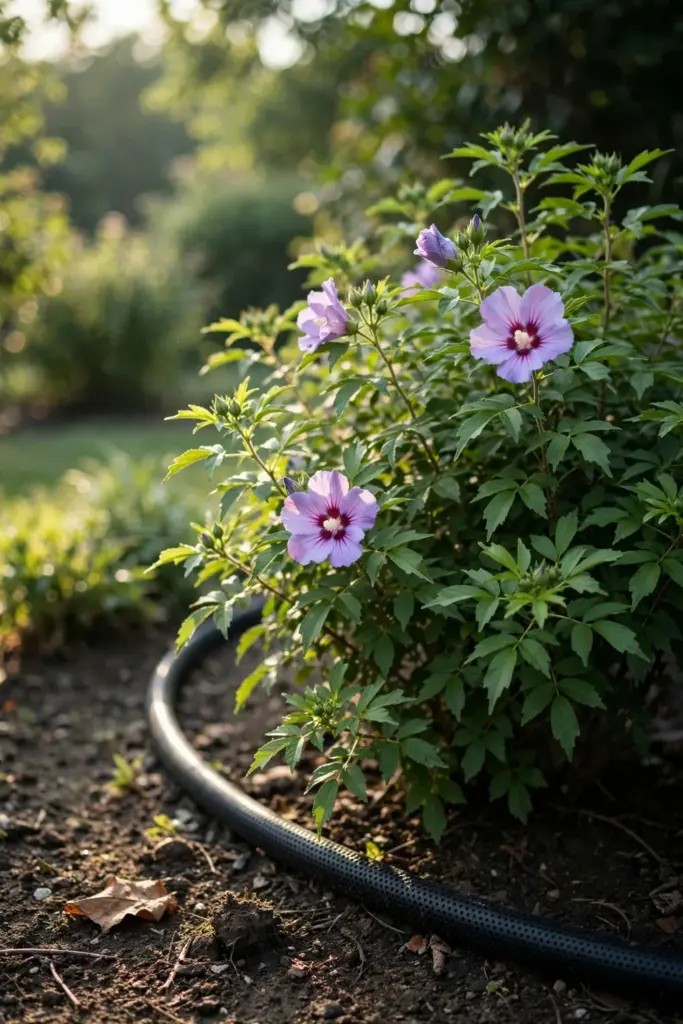
Next season, start with a cleaned bed. A shrub with removed fall litter, base watering, an open canopy, and pulled infected leaves will hold hibiscus rust to a few pustuled leaves. The FDACS circular on hibiscus rust is a useful companion for the full authority picture, since it sets the home-garden response here against the diagnostic evidence behind it.