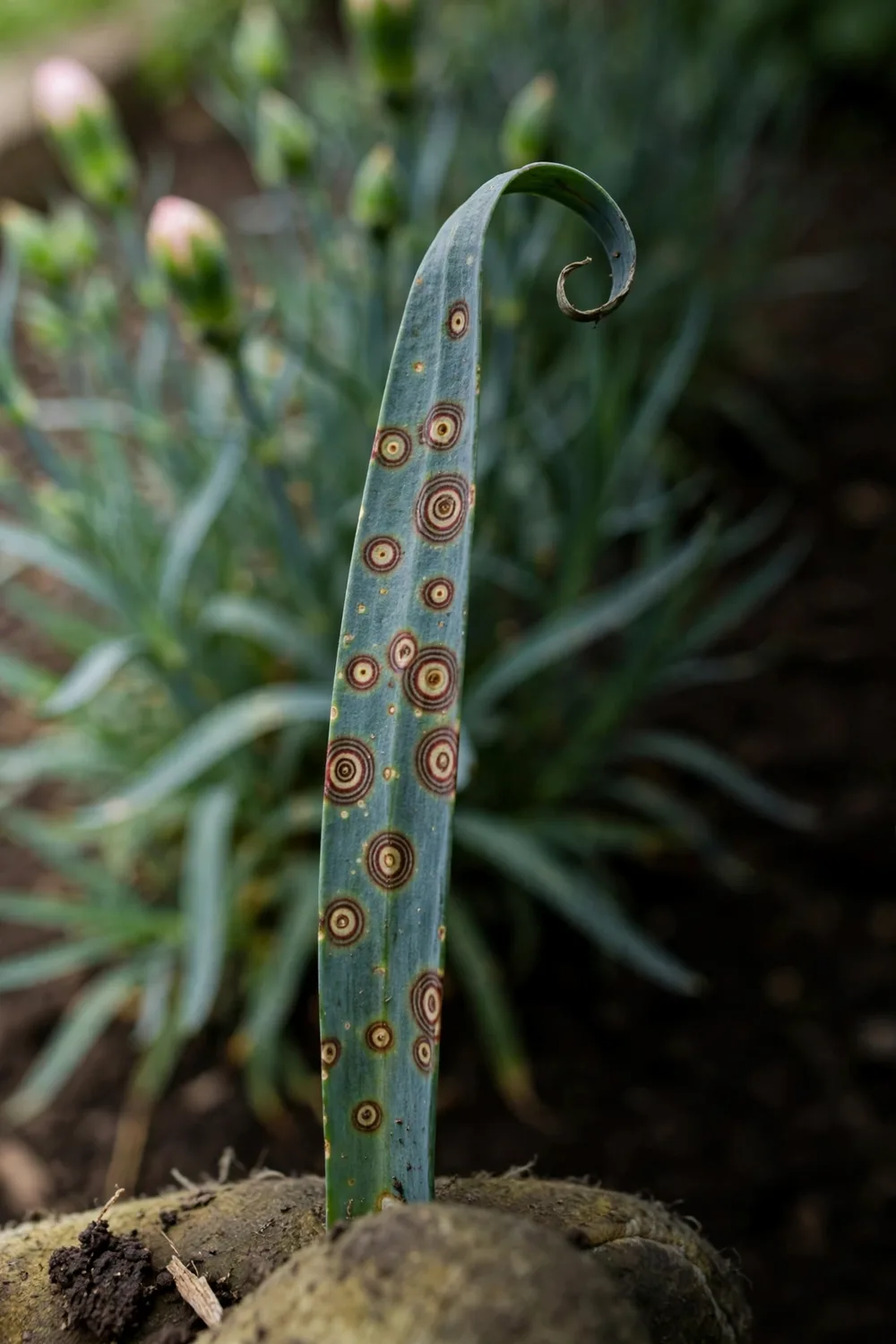

Fairy ring leaf spot on carnations is a leaf disease of Dianthus, not the fairy rings of lawns. Turf fairy rings are a different disease entirely: rings of dark-green or dead grass in lawns, sometimes with mushrooms, caused by soil fungi. This article covers the carnation disease only, and the 5 ways below keep it off your pinks: ringed leaf spots on carnations, caused by the fungus Davidiella dianthi.
The first fact to hold is the honesty frame. Fairy ring leaf spot is primarily a greenhouse cut-flower disease, rare in home gardens. The 5 ways below are the standard Dianthus leaf-spot cultural controls applied to fairy ring, not fairy-ring-specific trial results. I have learned that a gardener who keeps carnation leaves dry and removes spotted leaves promptly already has the prevention this disease needs.
The rest of this page walks the identification, the 5 prevention moves, and the honest limits of home control. The disease name leads. The pathogen, Davidiella dianthi, stays in the background after this introduction.
What Fairy Ring Leaf Spot on Carnations Actually Is
Fairy ring leaf spot is a fungal disease of carnation and other Dianthus. The pathogen is Davidiella dianthi, with the anamorph Cladosporium echinulatum and the teleomorph Mycosphaerella dianthi, and the teleomorph is the same fungus in its sexual stage, not a separate disease, just as Dianthus ringspot is the same pathogen under another name, also not a separate disease.
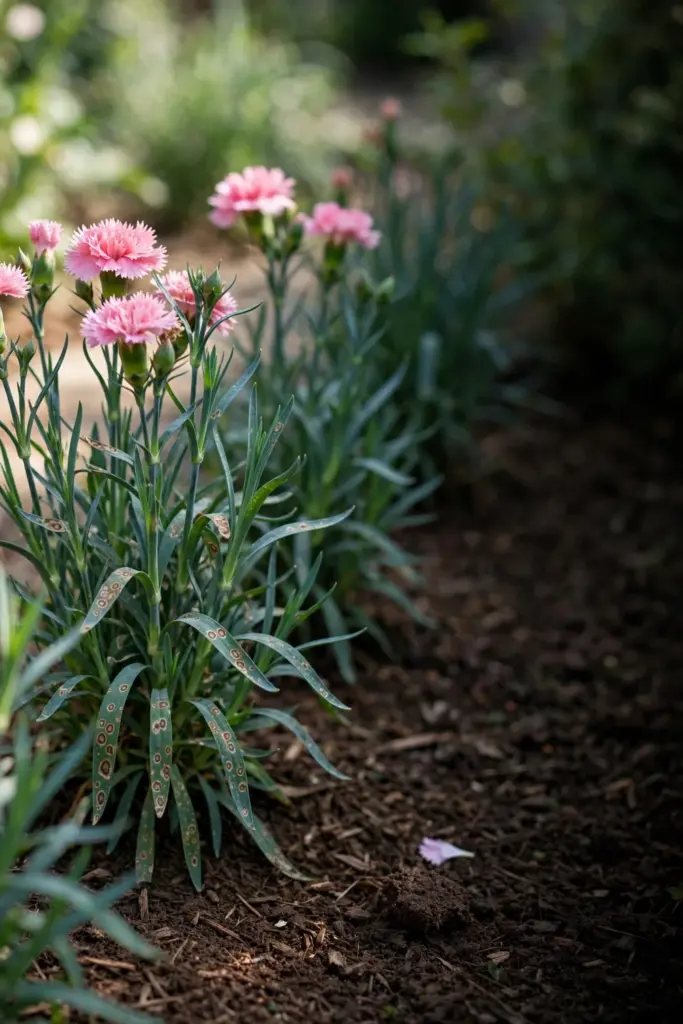
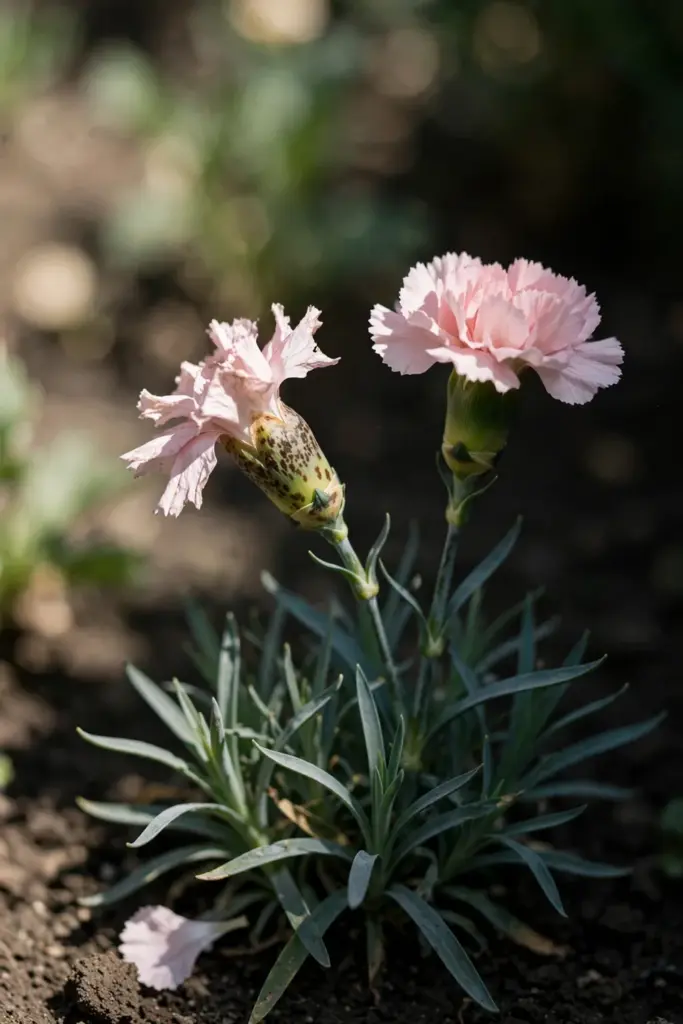
The disease hits leaves, calyx, epicalyx, petiole, and blooms. Spots on the calyx matter most for bloom quality: severe calyx infection reduces marketable bloom quality and makes affected flowers grow irregularly, so a spotted calyx is a spoiled bloom even when the petals look fine.
The host scope stays inside the genus Dianthus. Carnation, Dianthus caryophyllus, is the flagship host. Sweet william, Dianthus barbatus, also shows similar symptoms. Pinks generally. Do not extend this disease to other genera. Purple leaf spot of carnation, a newer Japanese disease caused by Stemphylium species, has similar ring symptoms and is a different disease. Do not confuse the two.
How to Spot Fairy Ring Leaf Spot on Carnations
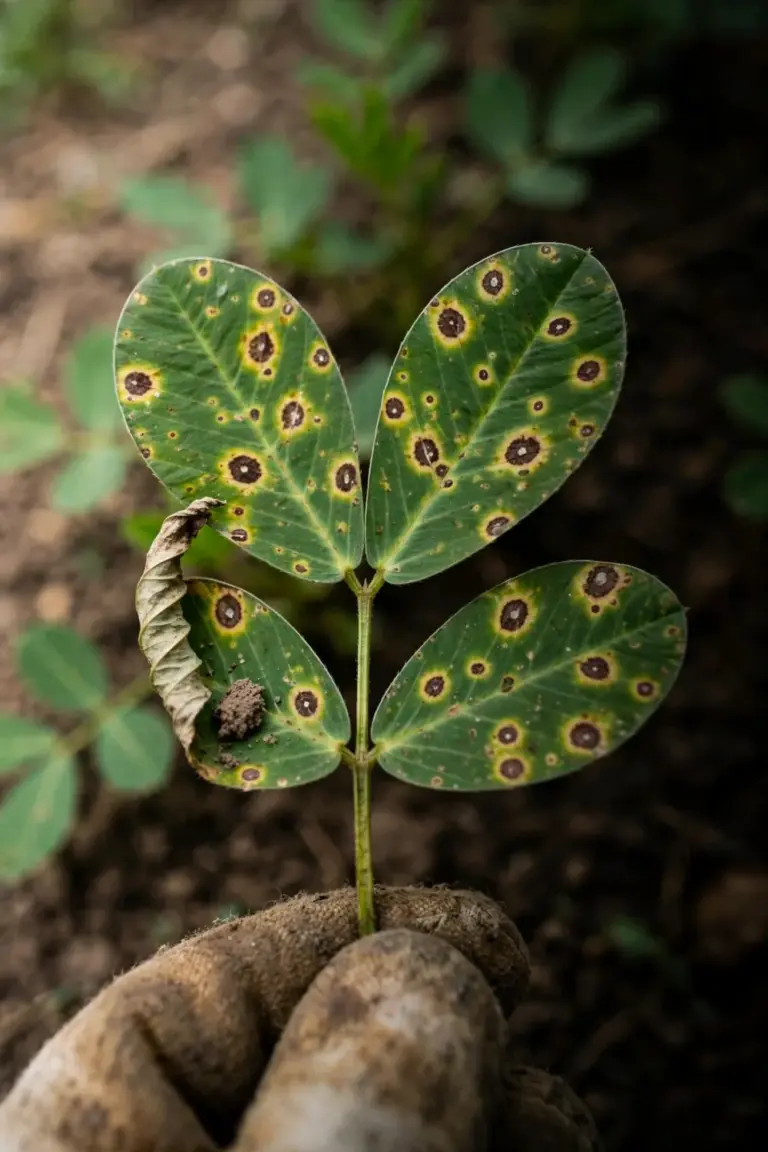
Fairy ring leaf spot shows as bleached spots with concentric dark zones. The spots are round or oval, yellow or brown, with a red margin. The signature is the ring: concentric dark zones around a pale center, with a spore mass at the center. A ringed spot on a carnation leaf is the first sign to learn.
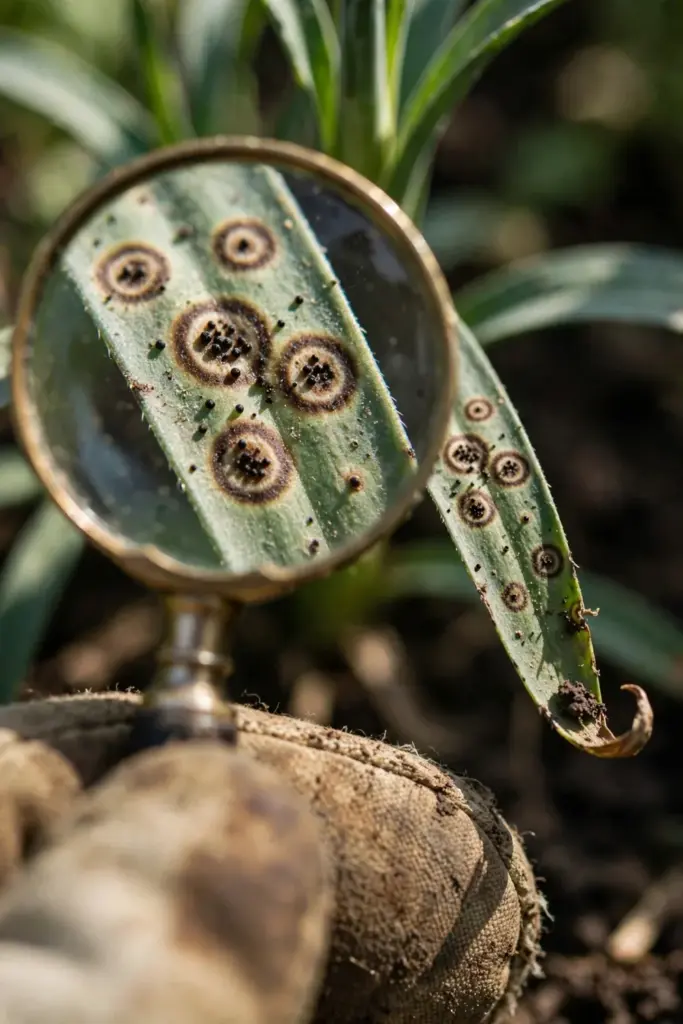
Check the spot centers with a hand lens. A commercial carnation manual describes whitish-tan spots with a narrow red-purple margin and black pin-head-sized spore masses in concentric rings, on leaves, stems, and calyces. The black pin-head dots in rings are the spore masses. A hand lens settles the question. A spot without ring structure is probably another leaf spot.
Check the calyx and the blooms. Spots on the calyx and epicalyx accompany leaf spots in this disease. Affected flowers follow an irregular pattern of growth. A carnation whose calyx is spotted and whose bloom opens lopsided is a carnation with a leaf-spot problem, whatever the species. The calyx check separates a leaf problem from a bloom problem.
Way 1: Stop Overwatering and Water at the Base Only
Stop overwatering. The AussieGreenThumb carnation guide gives the one fairy-ring-specific prevention line: stop overwatering the plant. Carnations want steady moisture, not wet feet and not wet leaves. Overwatering keeps foliage wet, and wet foliage feeds leaf-spot fungi.
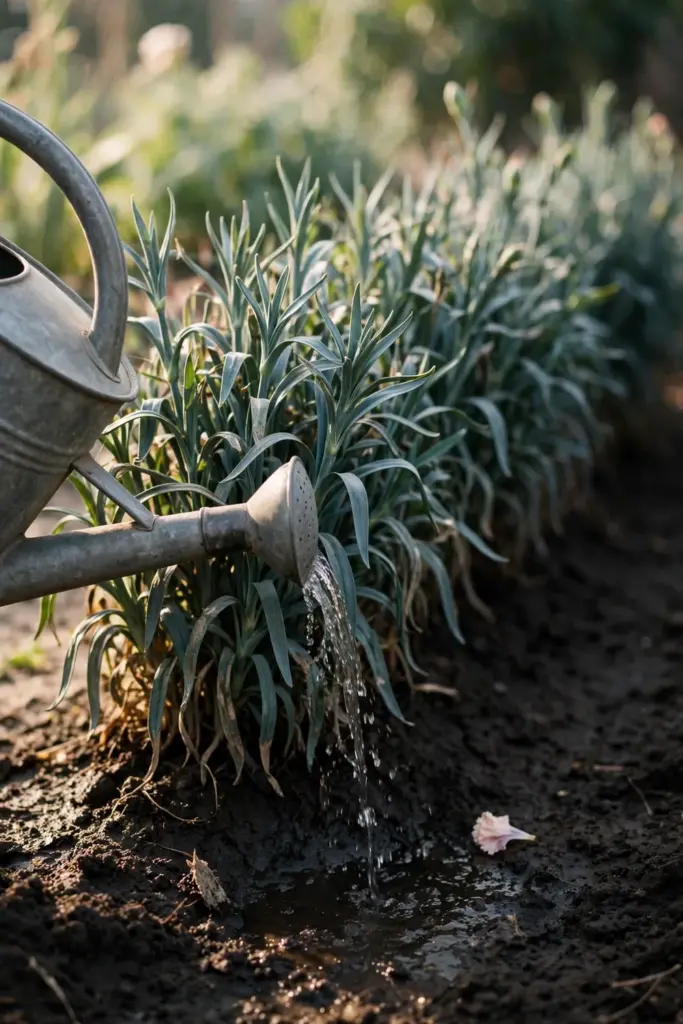
Water at the base only, never overhead. A watering can at the soil line, a soaker hose, or a drip line all keep leaves dry.
Let the soil surface dry between waterings. Carnations in soggy soil yellow and weaken, and weak plants spot faster. A finger test settles it: dry at the surface, moist an inch down, water; wet at the surface, wait. The finger test beats the calendar.
Way 2: Keep Foliage Dry With Morning Watering
Water in the morning. Morning water dries fastest, and leaves that dry by midday give spores the shortest germination window. Evening water leaves leaves wet all night. The same amount of water, given in the morning, carries less disease risk.
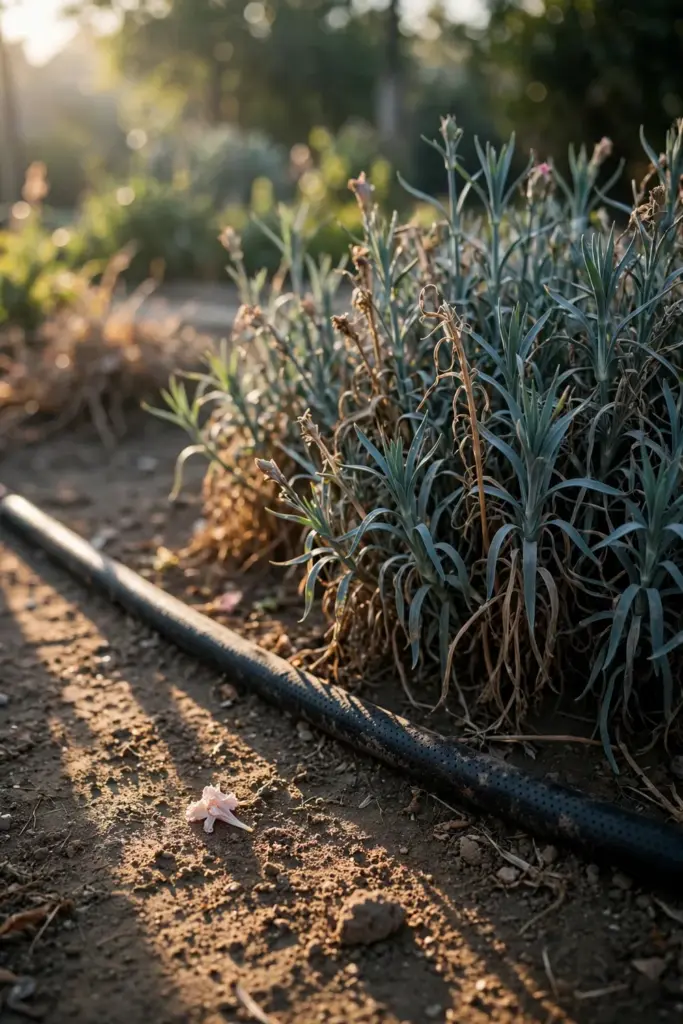
Prefer drip or soaker irrigation. Drip lines and soaker hoses deliver water to the soil and keep foliage dry by design. A sprinkler delivers water to the foliage by design. The irrigation choice is the disease choice. A drip line on a carnation bed is prevention installed once.
Keep rain in perspective. Rain wets leaves and cannot be scheduled. Morning sun after rain dries the canopy. The gardener controls irrigation, not rain. Dry irrigation plus a sunny morning beats wet irrigation in any weather.
Way 3: Space for Airflow and Avoid Dense Plantings
Space carnations so foliage dries. Dense plantings hold humidity in the canopy, and humidity feeds sporulation. Give carnations room to breathe, and thin where the canopy closes too early. A bed with moving air dries faster after rain and after watering.
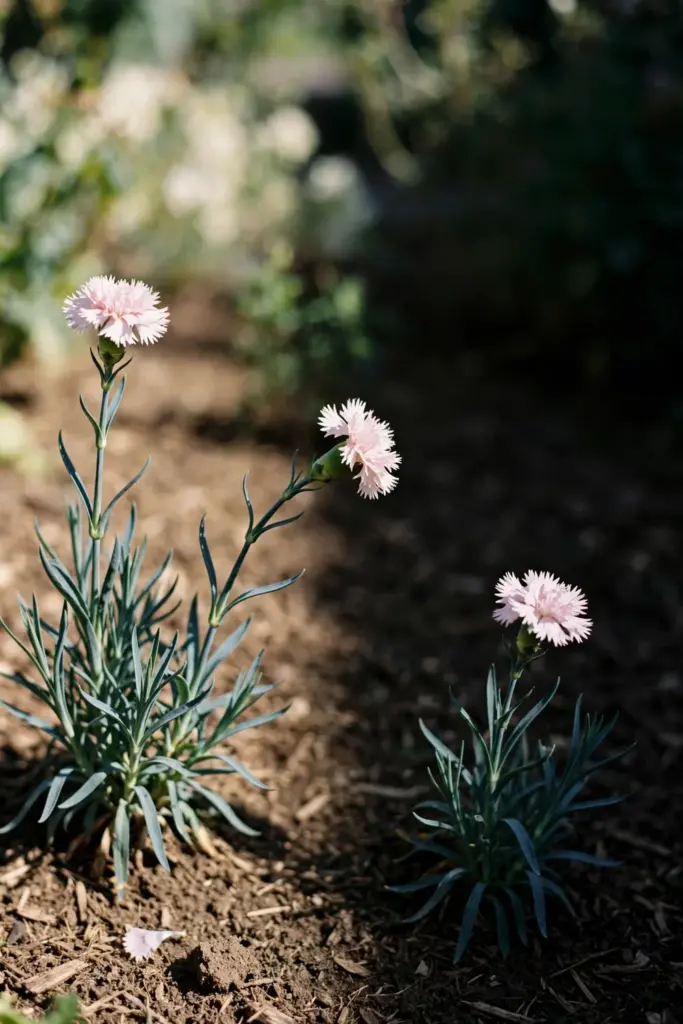
Avoid dense planting from the start. Crowded carnations shade each other’s leaves, and shaded leaves stay wet longest. Spacing at planting is cheaper than thinning later. A bed planted with air in mind stays healthier than a bed planted edge to edge.
Prune for airflow where needed. Pinch spent blooms and remove dead leaves promptly, since dead leaves trap moisture and harbor spores, and a clean, open plant dries faster than a cluttered one. Airflow is a cultural control, not a cosmetic one.
Way 4: Remove Spotted Leaves Promptly and Sanitize
Remove spotted leaves at once. Pick the spotted leaves, bag them, and put them in municipal waste. Do not compost diseased material: home compost does not reliably kill the fungus, and the pile returns spores to the garden. Burn only where local rules allow it, and default to bag and trash.
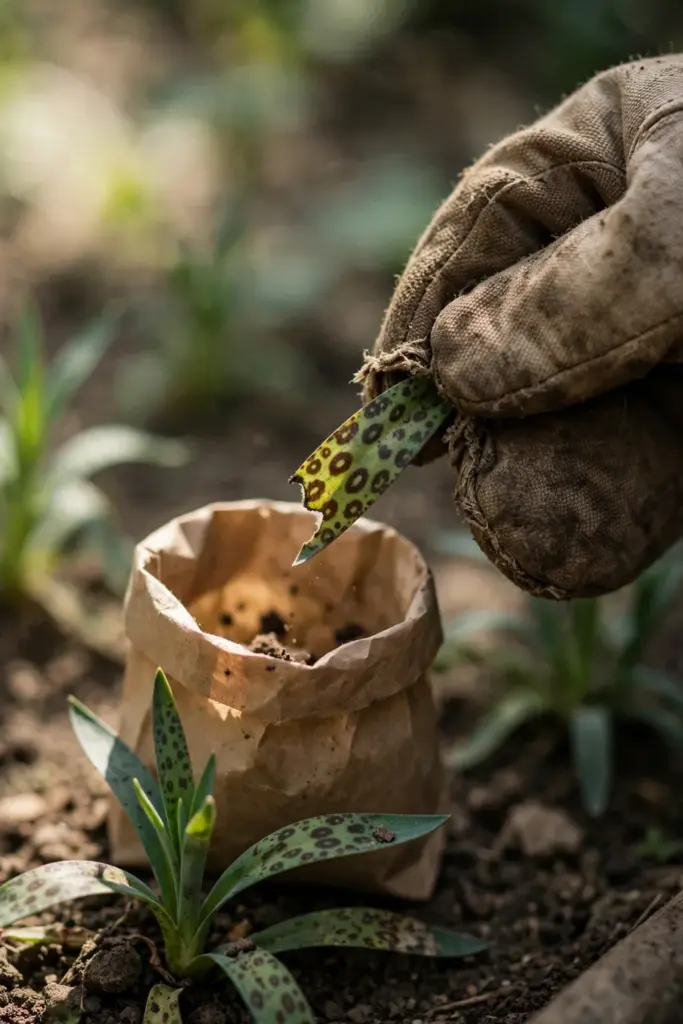
Clean up debris around the plants, since fallen leaves, spent blooms, and prunings all harbor spores, and a clean bed starts each week with a smaller reservoir. Wash tools and hands after handling spotted material, because spores move on hands, tools, and clothing, and a quick wash after handling spotted leaves keeps the spread down and stops the gardener from becoming the vector.
Way 5: Mulch to Reduce Splash and Plant in Well-Drained Sites
Mulch to reduce soil splash. Rain and watering splash soil onto lower leaves, and soil carries spores. A mulch layer breaks the splash. A carnation grow guide recommends mulch to limit soil splash, along with removing infected leaves and watering at the base. Mulch is the splash barrier.
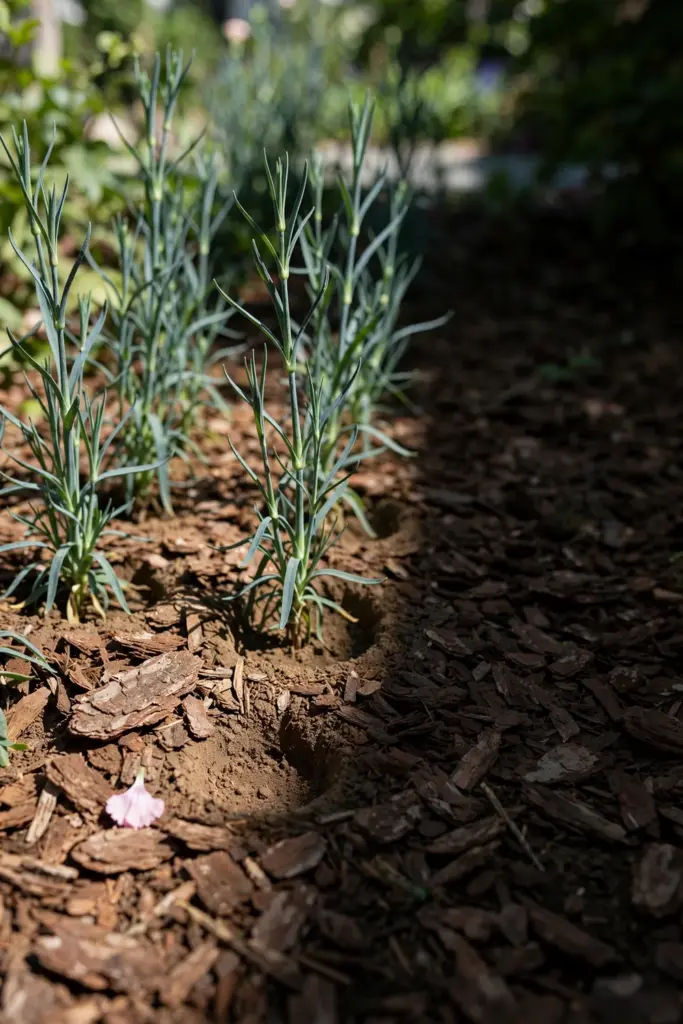
Plant in well-drained sites. Carnations in waterlogged soil weaken, and weak plants spot faster. A raised bed or a sunny, draining spot keeps roots healthy and foliage drier. Drainage is the site choice that keeps paying.
Keep mulch off the stems. Mulch against the stem holds moisture at the crown and invites rot. Leave a gap around each stem. The mulch belongs on the soil between plants, not piled against the crown.
Living With Fairy Ring Leaf Spot in a Carnation Bed You Already Grow
A bed with fairy ring leaf spot is a bed to manage, not a bed to abandon. Keep watering at the base. Keep removing spotted leaves. Keep the canopy open. The disease will still appear in a wet season, but it will appear slowly, and the plants will keep blooming.
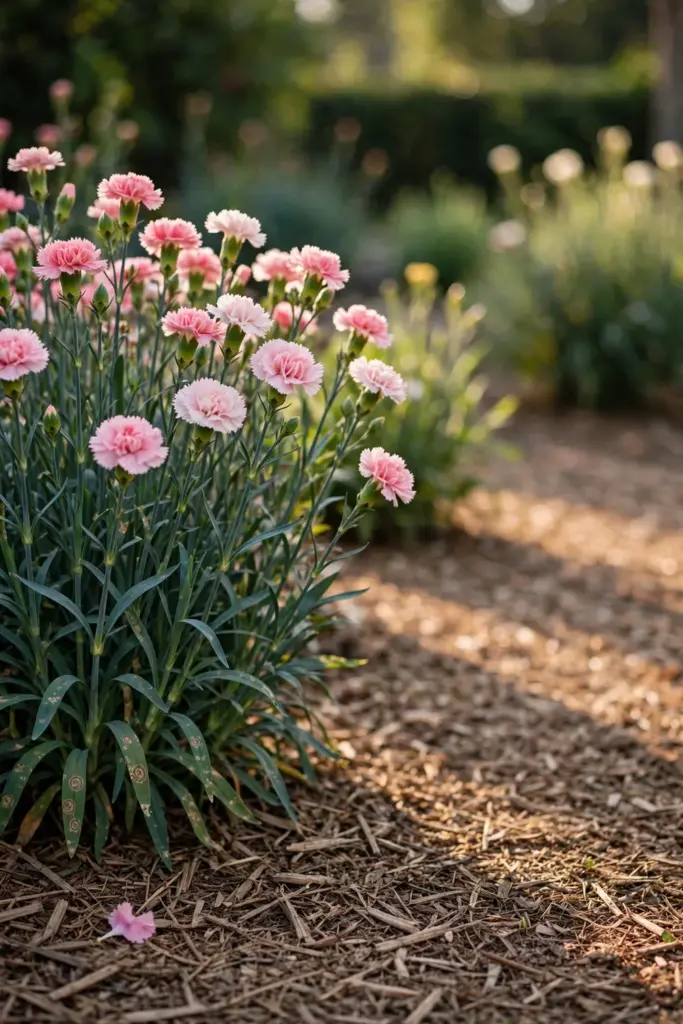
Stop three habits. Do not water overhead. Do not compost spotted material. Do not let the bed crowd itself shut. Keep those three lines unbroken and the disease starts each season from a smaller reservoir.
The Plant Care archive collects the site’s disease coverage, and the cut-flowers-from-seed guide covers carnations as a cut flower. Neither replaces the 5 ways here. Dry leaves, open spacing, and prompt removal carry the season.
Frequently Asked Questions
No, not on leaves that already show spots. A spotted leaf stays spotted, and no spray heals it, so control means stopping new infections: remove spotted leaves, keep the rest dry, and clean up debris. The season is saved by prevention, not by cure.
No. Turf fairy rings are a different disease: rings of dark-green or dead grass in lawns, sometimes with mushrooms, caused by soil fungi. Fairy ring leaf spot is a leaf disease of carnations and pinks, with ringed spots on leaves, calyx, and blooms. Different host, different syndrome, different disease. The shared name is a collision, not a connection.
Rarely outright, but it weakens them. Spotted leaves drop, spotted calyxes spoil blooms, and a heavily spotted plant blooms poorly. A plant that keeps most of its leaves, through prompt removal and dry foliage, blooms normally. The difference is the gardener’s response. A greenhouse cut-flower crop faces more pressure than a home bed.
Not as a first step. Cultural prevention carries the home garden: base watering, dry foliage, spacing, prompt removal, and mulch. Commercial greenhouse fungicide programs, with weekly schedules and trial rates, do not translate to a home bed. If the season forces a fungicide, the label governs, and the choice is a home-garden product, never a greenhouse program.
Yes, from healthy stems. Fairy ring leaf spot is a plant disease, not a human one. Blooms from clean stems are safe to cut and bring indoors. Discard spotted leaves and spotted calyxes. Wash hands and tools after handling spotted material. The loss is the bloom quality on spotted stems, not your health.
Where to Go From Here
Fairy ring leaf spot rewards the gardener who keeps leaves dry and removes spots promptly. Know the ringed spots. Stop overwatering, water in the morning at the base, space for airflow, remove spotted leaves, and mulch against splash.
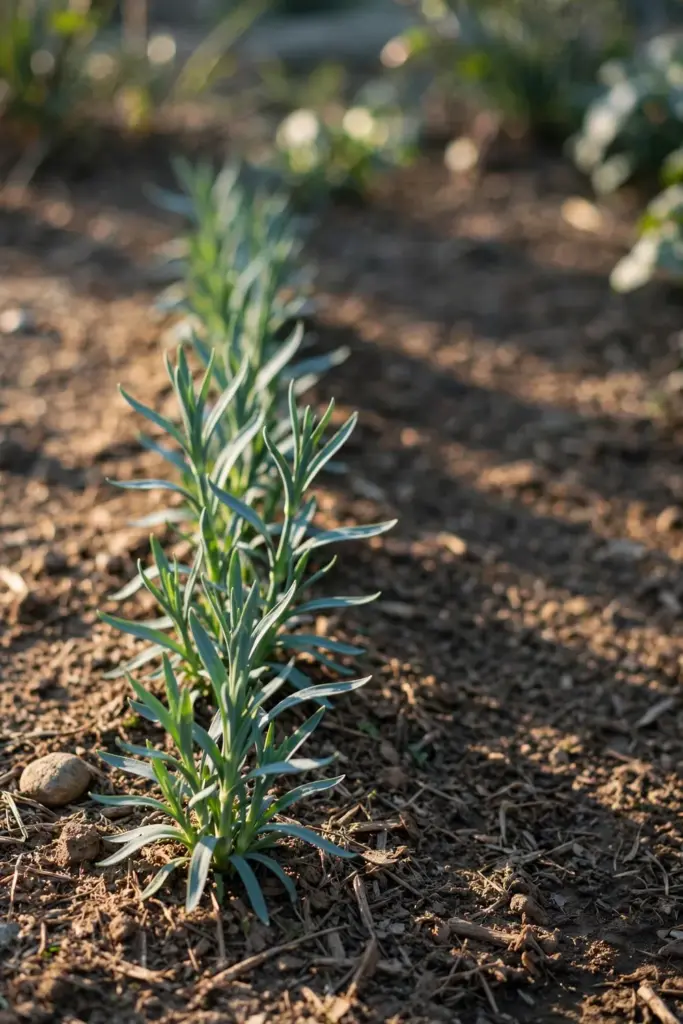
Next season, start dry. A well-drained bed, base watering, and a weekly leaf check will do more than any product. The AussieGreenThumb carnation guide is a useful companion for the full carnation picture, since it sets the home-garden response here against the grow-guide evidence behind it.