
Ramularia leaf spot on strawberries is mostly cosmetic. The 7 strategies below spot it, tell it from leaf scorch, and protect the patch, starting with the resistant variety that lowers the pressure before the season opens.
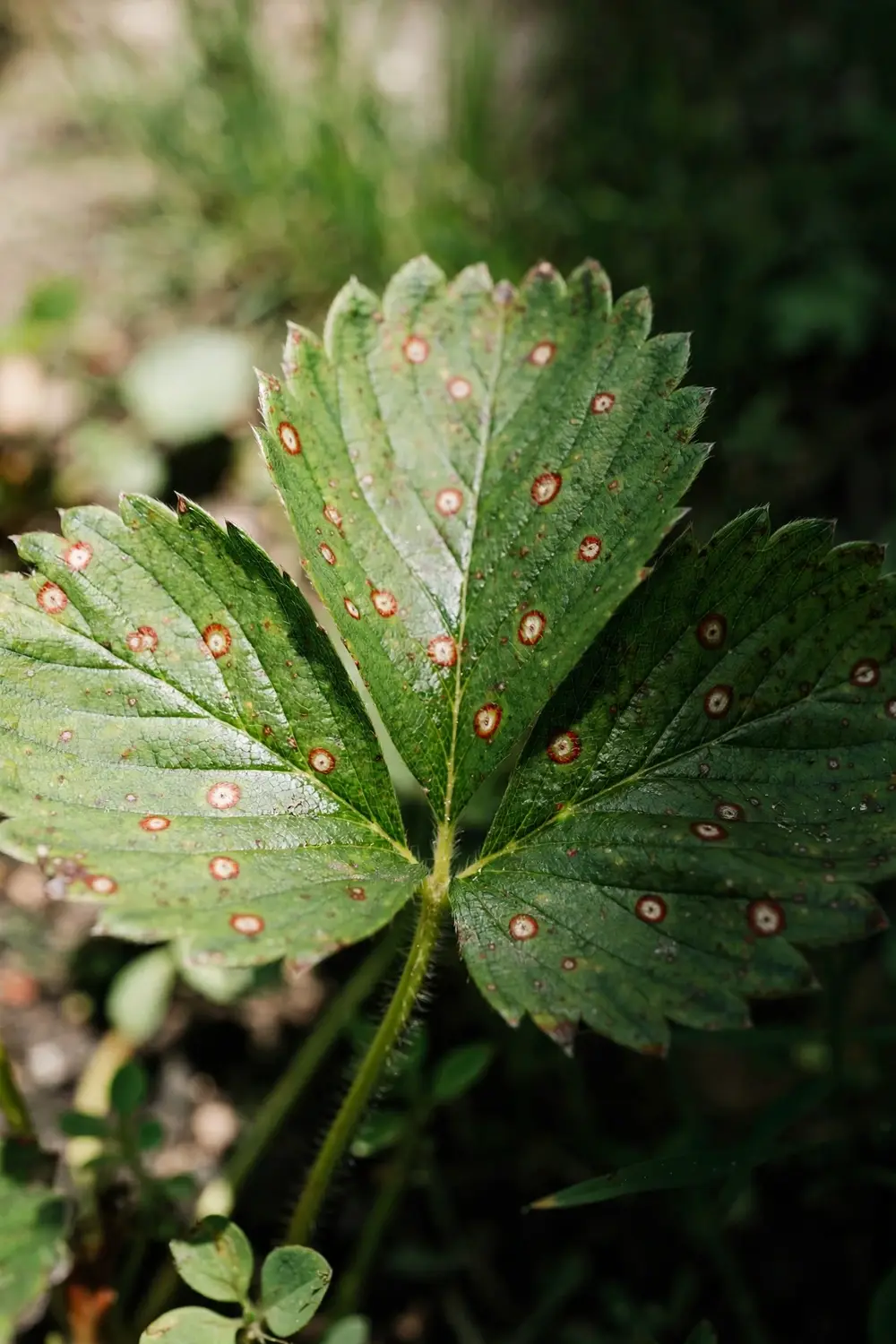
The signature is a small, round spot with a whitish center and a reddish margin, staying discrete rather than merging. The fungus is Ramularia grevilleana, the strawberry species of a large genus. The disease rarely cuts yield or fruit quality on a home patch.
The rest of this page runs the order a gardener should follow. Understand the fungus first, learn its signs, separate it from leaf scorch in the differential table, then work the 7 strategies from resistant varieties to debris removal. I have learned that the spotted leaf I strip in spring is the clean leaf that feeds the berries in June.
What Ramularia Leaf Spot on Strawberries Actually Is
Ramularia leaf spot on strawberries is a fungal disease of strawberry leaves. The fungus Ramularia grevilleana causes Ramularia leaf spot on strawberry.
The genus honesty comes first. Ramularia is a genus, not one disease. This article covers the strawberry species only: Ramularia grevilleana on strawberry. Barley, beet, pansy and viola, rhubarb, and meadowsweet each host their own Ramularia species. Each is a different species on a different host, with different management. This article covers strawberry only. The other species get one line and no more.
The University of Wisconsin-Madison Plant Disease Diagnostics Clinic gives the cosmetic framing: today, Ramularia leaf spot is often a cosmetic problem and typically has little impact on yield or fruit quality, thanks to resistant varieties and better growing methods. The University of Wisconsin-Madison Extension page on common leaf spot of strawberry carries the core guidance for growers, and its lessons transfer directly to home strawberry patches.
The fungus is also called common leaf spot of strawberry. The two names describe the same disease. This article uses Ramularia leaf spot throughout, because the focus keyword names it. The common name appears once here and no more. The article never swaps names mid-page.
The fungus survives winter on infected leaves and debris. Spores splash from debris onto new leaves in spring. Wet leaves give spores the hours they need to germinate. Dry leaves break the chain. The disease starts on older leaves and climbs the plant. The lower leaves are the beachhead. The upper leaves and the fruit are the prize. The strategies below defend the upper leaves by cleaning the lower ones.
The scope stays on home strawberry patches, wild and cultivated. Commercial nursery programs, commercial fungicide rates, and barley programs stay out. This article is a prevention-first care guide, not a treatment guide.
A taxonomy note belongs here and nowhere else. Pacific Northwest guidance gives the name Ramularia grevilleana, with the sexual stage Mycosphaerella fragariae. Older California literature gives the name Ramularia tulasnei. This article uses the Pacific Northwest name, notes that an older name appears in older literature, and does not assert that the two names are synonyms without verification. The name question is a footnote. The prevention is the article.
How to Spot Ramularia Leaf Spot on Strawberry Leaves
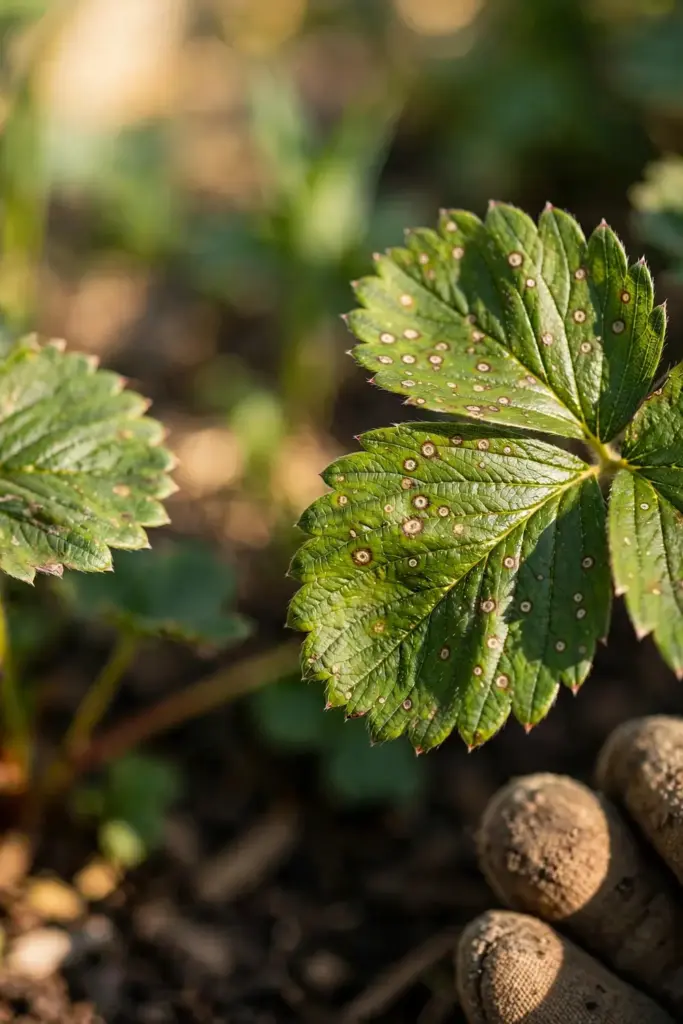
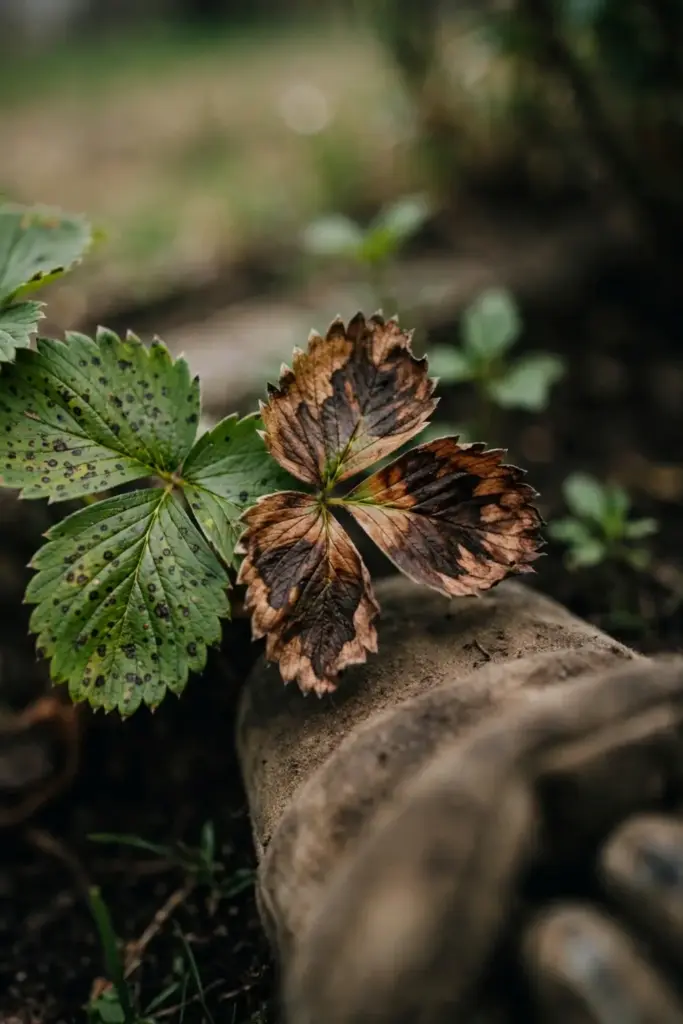
Small, round spots with a whitish center and a reddish margin, staying discrete rather than merging, point at Ramularia leaf spot.
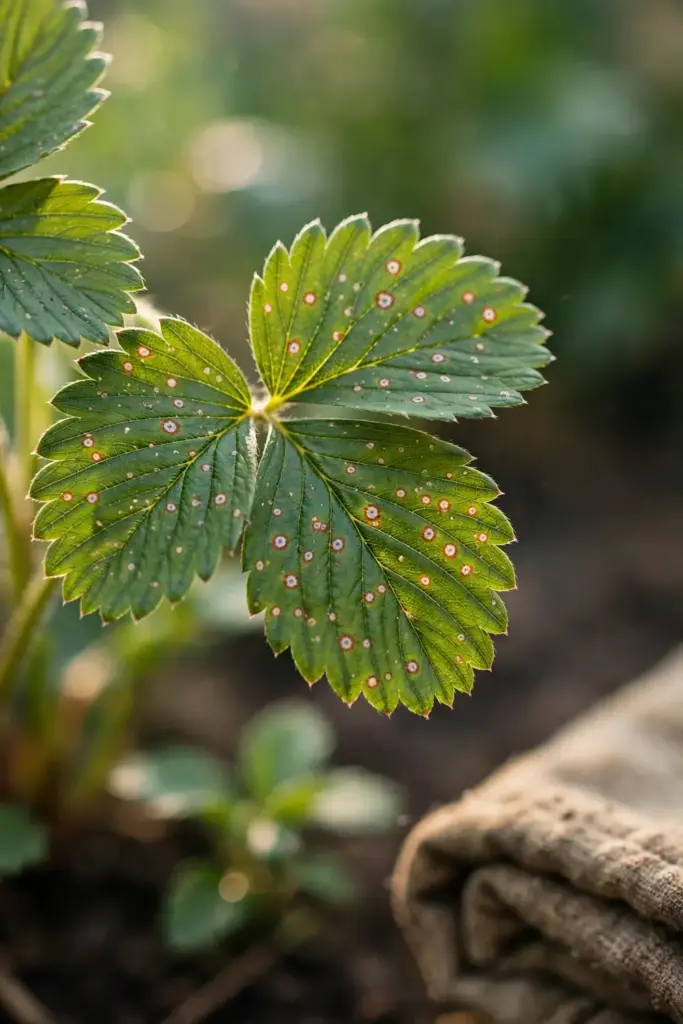
Look at the leaves first. The spots start small and round, with a whitish or gray center and a reddish or purple margin. The spots stay discrete. They do not merge into large blotches. A leaf with a dozen small, round, whitish-centered spots with reddish margins is a Ramularia leaf. A leaf with spots that merge and scorch is a leaf scorch leaf. The discrete-versus-merging contrast is the field mark.
Look at the fruit next. Ramularia can cause black seed disease on fruit: individual seeds turn black and the fruit around them stays sound. Black seed disease is a cosmetic fruit symptom. The fruit is edible. The fruit is not ruined. A berry with a few black seeds is a Ramularia berry. A berry with rot is a different disease.
Look for the consequences. Leaf loss from Ramularia can expose fruit to sunscald. Leaf loss in fall can predispose the plant to winter injury. Cornell Long Island guidance lists both consequences. The leaf loss is the damage. The sunscald and winter injury are the consequences. A patch that loses leaves to Ramularia needs the debris routine and the renovation routine to protect the next season.
Field identification is presumptive. The discrete spots with whitish centers are strong, but other leaf spots overlap. A home gardener cannot separate every leaf spot by eye. Treat discrete spots as a prompt to act: strip the spotted leaves, dry the foliage, and clean the debris. The spots are enough to start the routine. The lab names the fungus where it matters.
Check the whole patch, not one plant. Ramularia on one plant in a patch points at that plant’s debris. Ramularia across a whole patch after a wet spring points at the patch’s watering and spacing. The spread of spots across the patch tells the gardener whether the problem is one plant or one habit.
Ramularia Leaf Spot vs Leaf Scorch: The Field Differential
Ramularia leaf spot shows small, round, discrete spots with a whitish center and a reddish margin. Leaf scorch shows spots that merge into scorched patches. The table below lays out the contrast.
| Feature | Ramularia Leaf Spot (Common Leaf Spot) | Leaf Scorch |
|---|---|---|
| Pathogen | Ramularia grevilleana | Diplocarpon earlianum |
| Spot shape | Small, round, discrete | Irregular, merging |
| Spot center | Whitish or gray center | Brown to dark center |
| Spot margin | Reddish or purple margin | Dark margin, often purplish |
| Merging | Spots typically remain discrete | Spots merge into scorched patches |
| Leaf effect | Spotted leaves, some leaf loss | Scorched leaves, heavier leaf loss |
| Fruit effect | Black seed disease on fruit, cosmetic | Fruit exposed to sunscald by leaf loss |
| Severity on home patches | Often cosmetic, little impact on yield or fruit quality | Can defoliate and weaken the plant |
| Home response | Strip spotted leaves, dry foliage, clean debris | Strip scorched leaves, dry foliage, clean debris |
Read the table with a leaf in hand. A leaf with small, round, discrete spots with whitish centers is Ramularia. A leaf with spots that merge into scorched patches is leaf scorch. The discrete-versus-merging contrast comes from Cornell Long Island guidance: leaf-spot spots typically remain discrete in contrast with leaf scorch. The contrast is the field mark. The table is the tool.
Do not treat the table as a laboratory diagnosis. The table separates the two diseases at the level a home gardener can use. A lab sample settles the identity where it matters. The table’s job is to get the gardener to act correctly on the spot: strip the spotted leaves, dry the foliage, and clean the debris. The routine overlaps for both diseases. The identity matters for the variety choice and the renovation timing, not for the stripping.
Do not carry barley traits into the strawberry differential. Barley Ramularia shows rectangular, vein-restricted lesions. Strawberry Ramularia shows small, round spots. The barley character belongs to the barley species, Ramularia collo-cygni. The strawberry character belongs to the strawberry species, Ramularia grevilleana. The genus shares a name. The species differ. The article never mixes them.
Strategy 1: Plant Resistant Strawberry Varieties
Plant resistant strawberry varieties. Resistance is the strongest lever on this page.
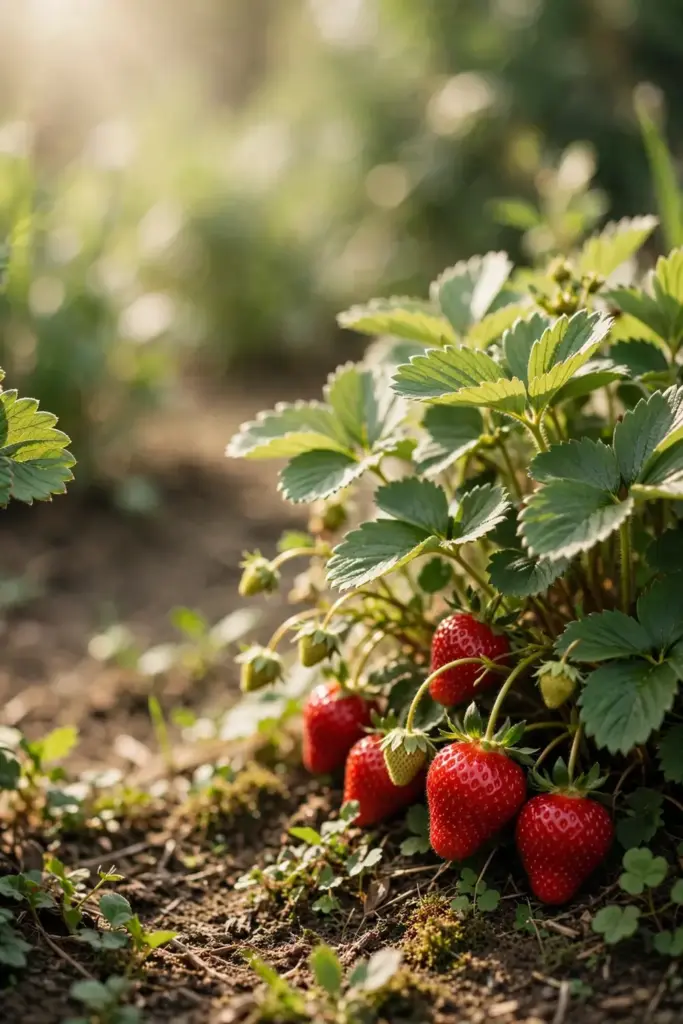
The University of Wisconsin-Madison Plant Disease Diagnostics Clinic names resistant varieties: ‘Crimson King’, ‘Earliglow’, ‘Glooscap’, ‘Ogallala’, and ‘Ozark Beauty’. Those five names are the clinic’s list. Check current availability before planting. A variety on the list may not be in the current catalog. A variety off the list may carry resistance that the clinic did not name. The catalog is the shopping list. The clinic’s list is the starting point.
Do not present resistant varieties as immune. No variety is completely immune. Resistance lowers the odds and slows the spread. Resistance does not remove the need for dry foliage, clean tools, and debris cleanup. Plant the resistant variety and run the routine anyway. The variety is the first layer. The routine is the rest.
Match the variety to the type. June-bearing varieties fruit once, in early summer, and renovate after harvest. Everbearing and day-neutral varieties fruit through the season and do not renovate the same way. The variety choice sets the renovation routine in Strategy 6. A June-bearing patch earns a post-harvest mowing. A day-neutral patch does not. The type matters. Read the tag. Plant to the type.
Do not present a variety list as a promise. A resistant variety in a wet, crowded, overhead-watered patch still shows spots. A susceptible variety in a dry, spaced, drip-watered patch shows fewer spots. The variety is one layer. The site and the routine are the other layers. All three layers work together. No single layer carries the patch.
Strategy 2: Start With Certified, Disease-Free Nursery Stock
Start with certified, disease-free nursery stock. Never plant stock of unknown disease status beside healthy plants.
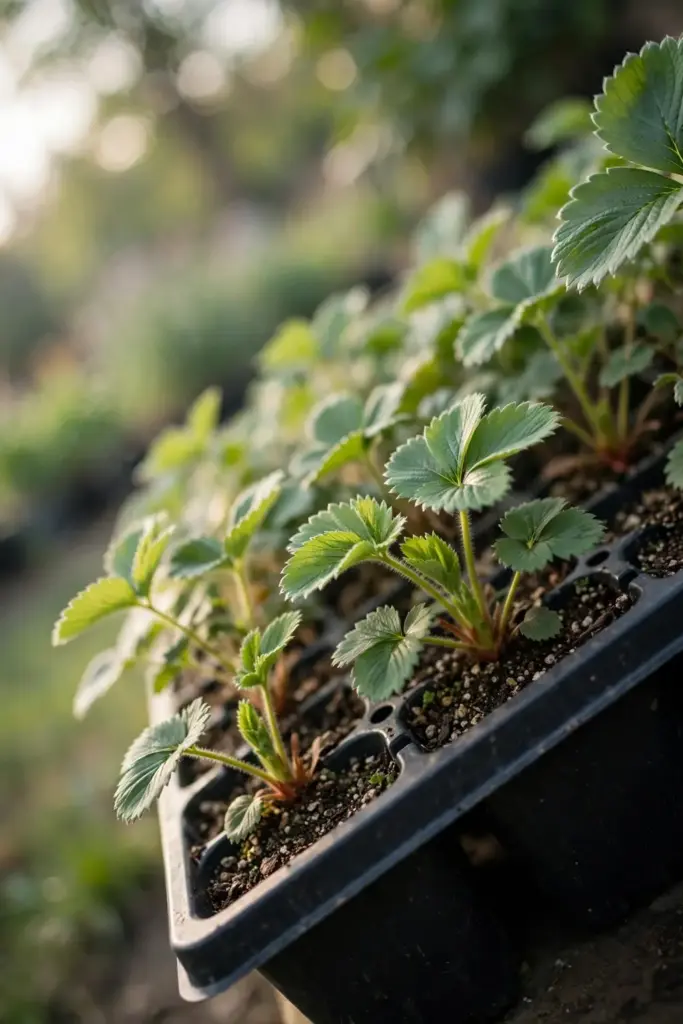
Certified stock passed inspection for the diseases that matter in strawberry. A certified plant starts clean. A plant of unknown status may carry the fungus without symptoms. The price difference between certified and uncertified stock is small. The cost difference between a clean patch and an infected patch is large. Buy certified. Plant certified. Keep the patch certified.
Inspect new plants before planting, even certified ones. Look at the leaves for spots with whitish centers and reddish margins. Look at the crowns for rot. Look at the plants beside the one you want. A whole flat of strawberries with spotted leaves is a nursery problem, not a bargain. Buy the clean flat from the clean bench.
Quarantine new plants when the garden already holds a valuable patch. Hold a new flat apart from the main patch for a few days, water it at the base, and watch the leaves. A flat that shows spots in quarantine stays out of the main patch. A flat that stays clean joins the patch. Quarantine costs nothing and catches the infection that inspection missed.
Do not accept free plants of unknown status. A neighbor’s extra runners, a friend’s spare plants, a cutting from an unknown patch: each carries unknown disease status. A free plant that brings Ramularia costs more than the most expensive certified plant. Buy clean. Plant clean. Keep the patch clean.
Strategy 3: Site for Dryness With Sun, Drainage, and Spacing
Site for dryness. Full sun, well-drained soil, and proper spacing for air circulation keep leaves dry.
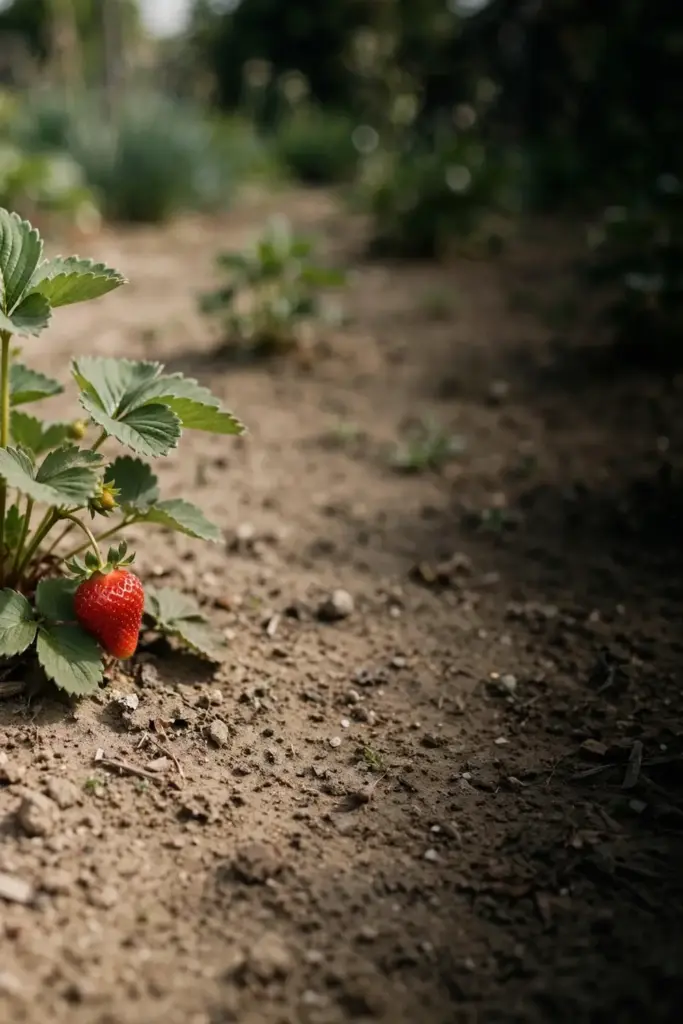
Give the patch full sun. A patch in full sun dries fast after rain and after dew. A patch in shade stays wet longer. Wet leaves give spores the hours they need to germinate. Dry leaves break the chain. Site the patch for sun first, and the spacing second. The sun is free. The shade is costly.
Give the patch well-drained soil. A patch in soil that stays wet through spring grows soft tissue and holds moisture on its leaves. A patch in well-drained soil grows steady tissue and dries fast. Improve drainage where soil stays wet. A raised bed, a drainage channel, or a different corner all help. The drainage is part of the site.
Space the plants for air circulation. A patch planted tight for instant fill pays for that fill with wet foliage and leaf spot. Read the mature width on the tag, and plant at that spacing. A patch with air between plants at maturity needs less thinning, dries faster, and shows fewer spots. Wide spacing plus good weed management keeps the patch dry. The weeds are the competition for air. The spacing is the air.
Do not plant strawberries in a low spot that ponds. A low spot that ponds after rain holds the fungus’s favorite conditions for days. A low spot filled and graded drains in hours. Fill the low spot. Grade the soil. A patch that drains in hours faces a lighter fungus load than a patch that ponds for days.
Strategy 4: Water With Drip or Soaker, Never Overhead
Water with drip or soaker hose, never with an overhead sprinkler. Overhead watering splashes the pathogen from plant to plant.
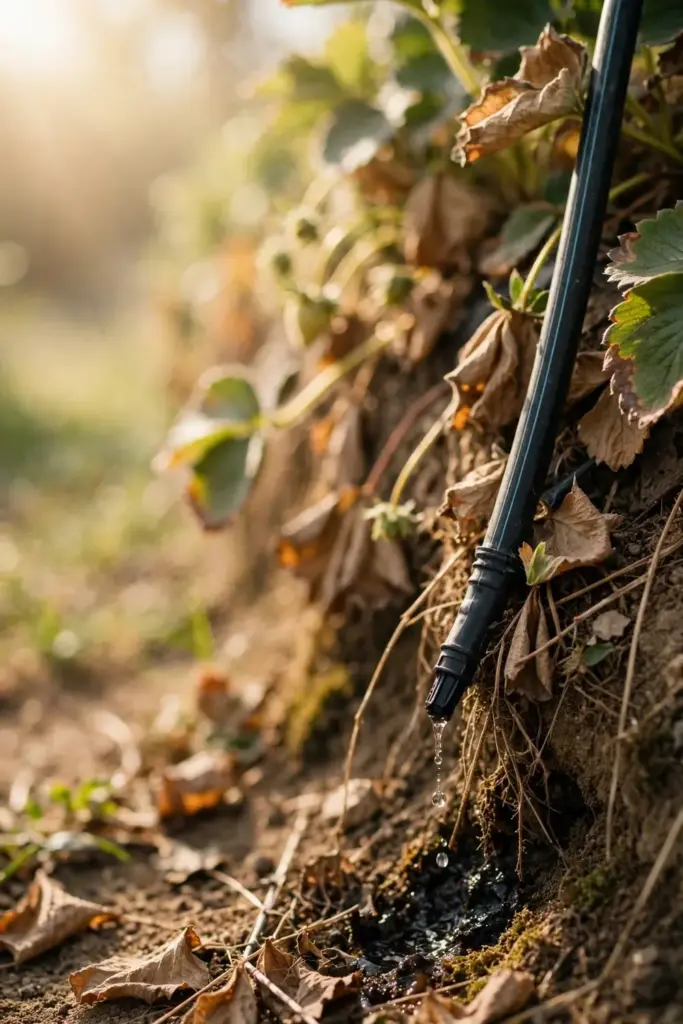
Overhead sprinklers soak the canopy and splash spores from leaf to leaf. A sprinkler that arcs across a strawberry patch every evening is an overhead irrigation system by accident. The splash carries spores from a spotted leaf to a clean leaf. The wet canopy gives the spores the hours they need to germinate. The overhead sprinkler is the disease’s best friend.
Use drip or soaker watering at the root zone. Lay drip line or a soaker hose along the patch, not over the plants. Water slowly so the soil absorbs it without runoff. Water in the morning so any splash that reaches low foliage dries during the day. A morning base watering that splashes a little beats an evening overhead watering that soaks the patch overnight.
Fix sprinklers that hit the patch. A lawn sprinkler that arcs across a strawberry patch every evening is an overhead irrigation system by accident. Redirect the head, shorten the arc, or move the sprinkler. A patch that gets sprayed every night will show leaf spot no matter how well the rest of the routine runs.
Reduce leaf wetness after rain too. Rain cannot be controlled, but its aftermath can. An open patch dries fast after rain. A mulched, well-drained bed does not pond water under the plants. Plants with space around them catch wind that dries the foliage. The spacing in Strategy 3 and the watering in Strategy 4 work together. One dries the patch from inside. The other stops wetting it from above.
Strategy 5: Never Work in the Patch When Wet
Never work in the patch when wet. No weeding, no thinning, no harvesting until the foliage dries.
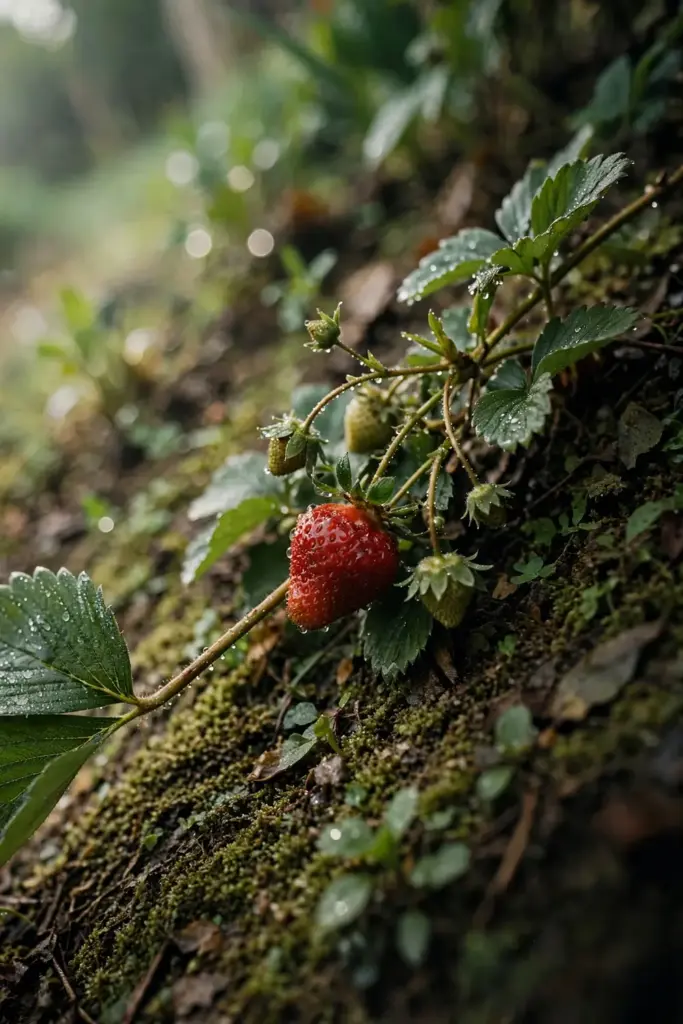
Wet tissue tears easier than dry tissue, and wet hands and tools move spores. A gardener who weeds a wet patch carries spores from a spotted leaf to a clean leaf on every hand and tool. A gardener who harvests a wet patch carries spores from berry to berry. A gardener who waits until the foliage dries works clean. The wait costs an hour. The wet work costs a patch.
Wait until the dew dries. A morning wait until the dew dries costs an hour. A wet-weather work session costs a patch. The rule is simple: dry plants, dry hands, dry tools. A gardener who follows the rule works clean. A gardener who breaks the rule spreads the fungus.
Harvest in dry weather when possible. A berry picked wet carries moisture into the harvest basket. A berry picked dry keeps. Pick in the morning after the dew dries. The dry pick keeps the harvest clean and the berries sound in storage. The dry pick also keeps the gardener’s hands dry, and dry hands move fewer spores.
Thin and weed in dry weather. A thinning cut made in dry weather closes fast. A thinning cut made in wet weather stays open and invites the fungus. A weed pulled in dry weather leaves clean soil. A weed pulled in wet weather leaves wet soil and spores. The dry work is the clean work. The wet work is the spreading work.
Strategy 6: Renovate June-Bearing Beds After Harvest
Renovate June-bearing beds after harvest. Mow the leaves about half an inch above the crown to remove inoculum.
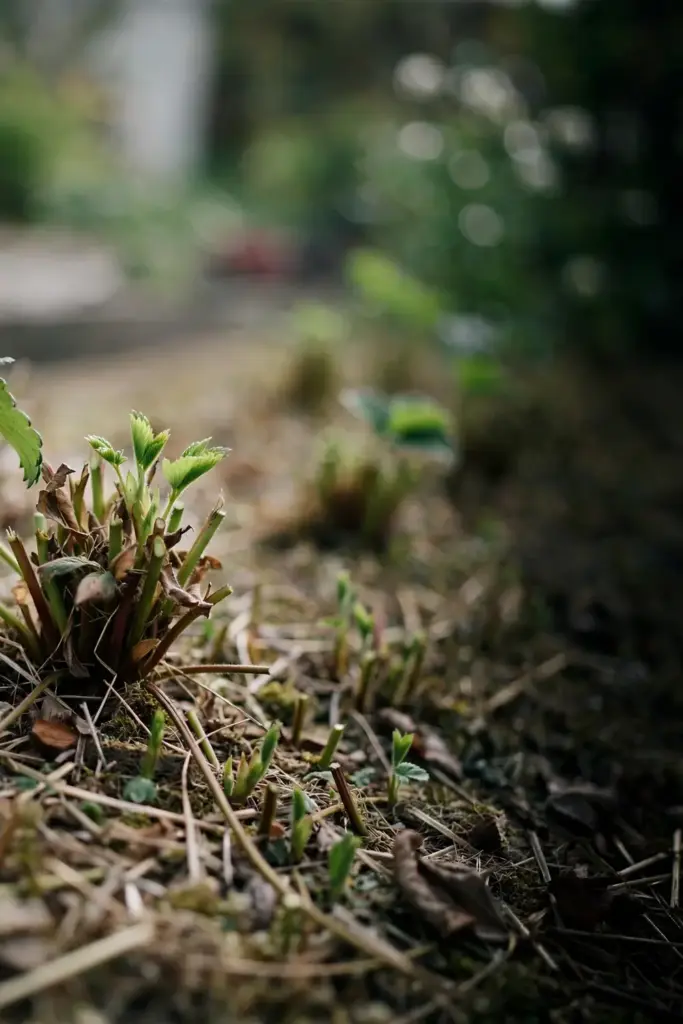
Mow the June-bearing bed after harvest, about half an inch above the crown. The mowing removes the spotted leaves that carry the fungus. The crown stays. The roots stay. The plant pushes new leaves from the crown. The new leaves start clean. The mowing is the renovation. The renovation is the reset.
Do not mow everbearing or day-neutral types. Everbearing and day-neutral varieties fruit through the season and do not renovate the same way. A mowing that resets a June-bearing bed destroys an everbearing bed’s next crop. The renovation is type-specific. Read the tag. Mow the June-bearing bed. Leave the everbearing and day-neutral beds alone.
Time the mowing right after harvest. A June-bearing bed mowed right after harvest pushes new leaves with a full season to grow. A June-bearing bed mowed late pushes new leaves with no time to harden before winter. The timing matters. Mow right after the last pick. The plant uses the rest of the season to grow clean leaves.
Feed and water after mowing. A mowed bed needs water and a balanced feed to push new leaves. Water at the base. Feed to the soil test. The new leaves grow clean when the bed is watered at the base and fed to the test. The new leaves grow spotted when the bed is overhead-watered and overfed. The aftercare is part of the renovation.
Strategy 7: Remove Debris at Season’s End
Remove strawberry plant debris at season’s end. Debris removal cuts the overwintering sites.
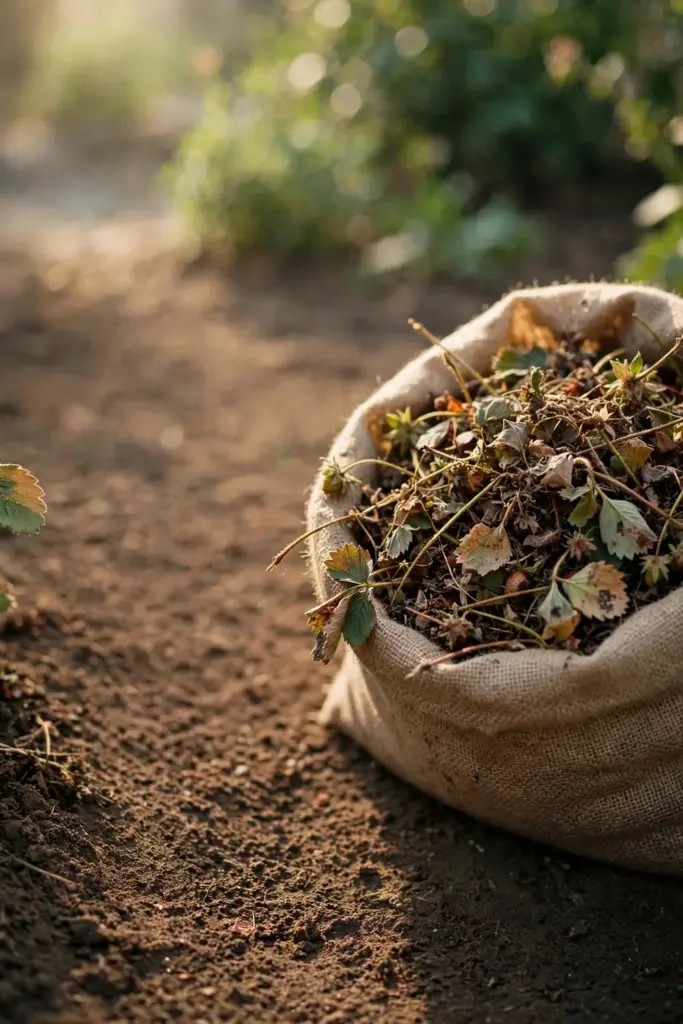
Remove all plant debris from the patch at season’s end. Pull spent plants, including roots. Rake up fallen leaves. Bag everything and trash it, deep bury it, burn it where allowed, or hot compost it. Do not cold compost it. A cold compost pile runs too cool to kill the fungus in thick tissue. A hot compost pile kills it. A cold pile returns it. The disposal method matters.
Do not leave debris piled beside the patch for later. Later rarely comes, and the pile sheds spores all winter. Bag the debris. Dispose of it. The bag is the whole strategy. A bagged leaf leaves the garden. A dropped leaf feeds the next spring.
Clean the bed to bare soil. A bed that looks clean but holds old leaves and runners is not clean. A bed raked to bare soil, with every scrap out, starts clean. The clearing costs an afternoon. The clean start saves the next patch. The clearing is the cheapest disease prevention a gardener owns.
Do not leave runners to overwinter on the soil. Runners that lie on the soil through winter carry the fungus. Runners that are removed and trashed carry nothing. Clear the runners at season’s end. The clearing is part of the debris routine. The debris routine is the winter reset.
Living With Ramularia Damage You Cannot Undo
Some damage stays. A spotted leaf never heals, and a defoliated patch never regrows its leaves until the next flush.
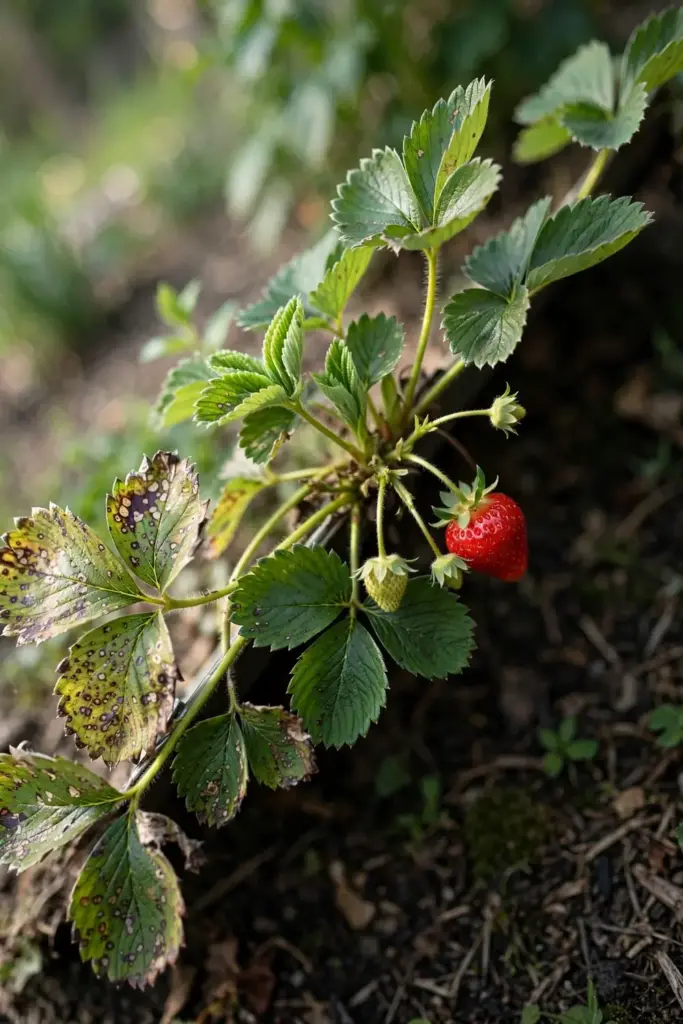
Strip the spotted leaves and let the plant replace them. A strawberry pushes new leaves from the crown. The new leaves need the same routine: dry foliage, clean tools, steady spacing. A plant that keeps its new leaves clean earns its place. A plant that spots every new flush needs a harder look at site, drainage, and watering.
General bacterial blight care follows the same order: cut, clean, destroy, then keep the canopy dry. The guide to bacterial blight simple solutions covers that order for bacterial blight problems across the garden. The pathogens differ. The habits do not.
Treat fungicides with caution. The University of Wisconsin-Madison Plant Disease Diagnostics Clinic notes that fungicides may be used only with label verification and caution, and that cultural steps carry the prevention. This article names no fungicide program, no rate, and no schedule. Commercial nursery trial fungicides, Pacific Northwest commercial rates, and barley triazole and SDHI programs stay out. A labeled protectant, used after a lab confirmation, is the last resort, not the default. The cultural steps carry the prevention.
Do not replant strawberries in the same dirty patch and expect a different result. The fungus stays. The debris stays. The wet soil stays. A new patch in the same spot faces the same season with the same disadvantage. Fix the patch first: clean it, space the plants, fix the watering, and give the new patch sun and air flow from the day it goes in. The guide to spring pruning techniques covers clean cut placement for garden plants in full.
Frequently Asked Questions
No cure exists for leaves with Ramularia leaf spot. Fungicides protect new growth only. They do not cure a spotted leaf. Remove and destroy spotted leaves, protect the rest, and prevent the next infection. The 7 strategies above are the prevention. A spotted leaf stripped today protects the healthy leaves above it. A spotted leaf left in place sheds spores onto the healthy leaves below it. Prevention is the whole game.
Ramularia leaf spot shows small, round, discrete spots with a whitish center and a reddish margin. Leaf scorch shows spots that merge into scorched patches. The discrete-versus-merging contrast comes from Cornell Long Island guidance: leaf-spot spots typically remain discrete in contrast with leaf scorch. The differential table above lays out the contrast in full. The lab confirms where it matters. The routine overlaps for both diseases.
Ramularia on barley and Ramularia on strawberries are different species. Barley hosts Ramularia collo-cygni. Strawberry hosts Ramularia grevilleana. The genus shares a name. The species differ. Barley Ramularia shows rectangular, vein-restricted lesions. Strawberry Ramularia shows small, round spots. The barley character belongs to the barley species. The strawberry character belongs to the strawberry species. This article covers strawberry only.
Do not mow everbearing or day-neutral strawberry beds. Renovation mowing applies to June-bearing beds only. Everbearing and day-neutral varieties fruit through the season and do not renovate the same way. A mowing that resets a June-bearing bed destroys an everbearing bed’s next crop. Read the tag. Mow the June-bearing bed after harvest. Leave the everbearing and day-neutral beds alone. The renovation is type-specific.
Do not cold compost strawberry debris with Ramularia. A cold compost pile runs too cool to kill the fungus in thick tissue, and the finished compost carries the fungus back into the patch. Bag the debris and trash it, deep bury it, burn it where allowed, or hot compost it. The disposal method matters. A hot compost pile kills the fungus. A cold pile returns it. The trash rule protects next season’s patch.
Ramularia leaf spot typically has little impact on yield or fruit quality. The University of Wisconsin-Madison Plant Disease Diagnostics Clinic states that the disease is often a cosmetic problem today, thanks to resistant varieties and better growing methods. Leaf loss can expose fruit to sunscald and predispose the plant to winter injury. Those consequences are the real damage. The spots themselves are cosmetic. The routine prevents the consequences by preventing the leaf loss.
Where to Go From Here
Start with the lowest leaves. Strip the spotted ones, bag them, and trash them today.
The order is resistant varieties, certified stock, site for dryness, drip watering, never work wet, renovate June-bearing beds, and remove debris. One next action beats ten good intentions. Strip the lower leaves. Clean the patch. The patch stays clean next season because the gardener cleaned it this season.